

Submitted:
17 October 2026
Posted:
19 October 2026
You are already at the latest version
Abstract
Lamiaceae contains many medicinal and aromatic plants for which accurate identification can be problematic due to morphological resemblance of related species, environmental plasticity, renaming (e.g., Rosmarinus officinalis, currently considered Salvia rosmarinus), and substitution/adulteration of herbal material dried and processed. This narrative review, based on laboratory and in Silico data as examples, provides a workflow for the identification and molecular authentication of some species of Lamiaceae, starting from their field collection. Literature regarding plant barcoding (e.g., rbcL, matK, ITS2, trnH-psbA) and additional methods such as species-specific PCR, high-resolution melting, digital PCR and metabarcoding was synthesised. The workflow includes field collection and botanical identification of voucher specimens; CTAB DNA extraction procedure, optionally supplemented with spin-column DNA purification; assessment of DNA quality and amplicon size using agarose gel electrophoresis; SYBR Green real-time qPCR (targeting GAPDH and ITS2); GenBank and BOLD search followed by MUSCLE multiple alignment and phylogenetic analysis in MEGA 12.1.3 (1,000 bootstrap replicates). However, no one marker is considered to be able to discriminate all taxa, rbcL and matK markers form the basis, while ITS2 and trnH-psbA can be used as complementary markers. For example, in the case of the rbcL tree based on the alignment of ten reference sequences, the maximum level of support (100%) could be seen for the Origanum majorana- Ocimum tenuiflorum clade only, while the other nodes have low levels of support (less than 50%). Taxonomic identification thus needs to involve voucher information, sequence comparison, phylogenetic placement and, when necessary, chemical composition.
Keywords:
Lamiaceae
; DNA barcoding
; CTAB extraction
; qPCR
; rbcL
; phylogenetics
; herbal adulteration
; molecular authentication
1. Introduction
1.1.. Lamiaceae Family or Mint Family Medicinal Plants
Medicinal and aromatic plants form very important biological sources for traditional medicine, pharmaceutical applications, food preparation, cosmetics, and natural product development. Within important medicinal plant families, the Lamiaceae family commonly known as mint family, is characterized by a rich variety of aromatic herbs, shrubs, and small trees (Uritu et al., 2018). Plants from this family are distributed worldwide, and they are included in economically and pharmacologically valuable genera like Ocimum, Origanum, Salvia, Mentha, Thymus, Rosmarinus (which is now included in the genus Salvia), Lavandula, and Vitex (Avasiloaiei et al., 2023; Nazar et al., 2022). The biological importance of these genera is connected with their essential oils, phenols, flavonoids, terpenoids, and other secondary metabolites (Uikey, 2024).
1.1.. The Requirement of Molecular Level Studies
However, despite their economic significance, identification of Lamiaceae plants may cause certain problems because closely related species can have similar morphology, while leaf form, inflorescence organization, pigmentation, and composition of the essential oil depend on environment, growth phase, growing methods, and processing (Diani Gohar & Soorni, 2025).
Figure 1.
Workflow of field collection, morphological identification, DNA barcoding, phylogenetic analysis, and molecular detection of adulteration in selected Lamiaceae plants.
Figure 1.
Workflow of field collection, morphological identification, DNA barcoding, phylogenetic analysis, and molecular detection of adulteration in selected Lamiaceae plants.
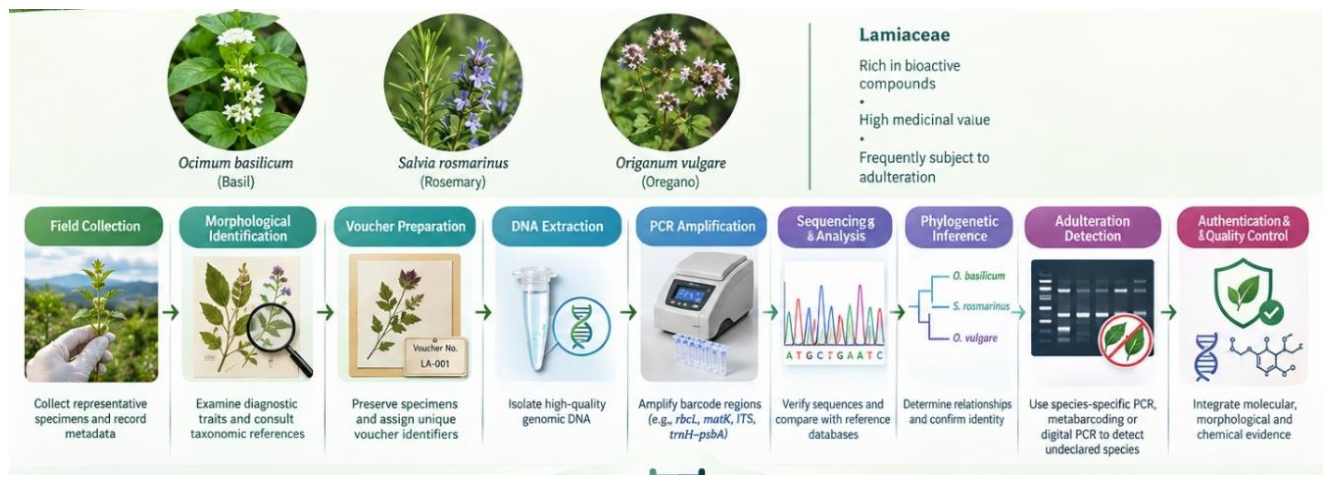
In addition, some taxonomic changes can affect the names of species and their positions in genera. For example, rosemary, which was known as Rosmarinus officinalis L., is now considered as Salvia rosmarinus Spenn. These changes and molecular level studies should be considered when preparing specimen labels, conducting literature review, sequencing records, and creating reference libraries (Gul et al., 2019).
1.1. Preliminary Authentication Process
The collection of the plant material is the very first vital procedure in an authentication process. It is hard to authenticate a plant which has been collected without proper information about the site of collection, diagnostic features or a voucher. Therefore, it is important that the collection should go hand in hand with the botanical identification, preparation of voucher, taxonomic confirmation, and recording of collection details. The vouchers ensure the identity which has been attributed to the plant.
Botanical identification is the traditional approach, and there is molecular evidence also where the morphological features fail to provide the answer. The DNA barcoding employs specific or standard sequences of DNA for organism identification based on the sequence comparison. In case of plants, some of the commonly studied areas include rbcL and matK regions of the chloroplast genes, the nuclear ribosomal ITS region and ITS2 sub-region, and trnH–psbA spacer of chloroplast (Philippe et al., 2022).
1.1.. DNA Barcoding and Phylogenetic Analysis
DNA barcoding is also useful in conducting phylogenetic analysis. After alignment of the homologous sequences, it will be possible to conduct proper phylogenetic analysis in order to determine the relationship among the samples collected and the reference organisms. It will assist in determining if the samples fall under proper taxonomy. However, a phylogenetic tree is not automatically a species identification tool since its interpretation depends on factors such as the marker used, quality of the sequence, sampling of taxa, evolutionary assumptions, and statistical support (Hafez et al., 2025).
Another use of DNA barcoding is the discovery of substitutions and adulterations in medicinal plant samples. Herbs that have been dried, pulverized, fragmented, or combined can lack the characteristics necessary for conventional identification. Molecular identification will help to authenticate the botanical composition of the herbs; however, some of the factors limiting its performance include DNA degradation, inhibitors, poor quality of reference sequences, and presence of more than one species. Notably, the presence of a different taxon compared to the declared ingredient does not necessarily mean fraud (Nazar et al., 2022).
This review hence further analyzes the association between field sampling and molecular identification of certain Lamiaceae species with consideration of sample traceability, choice of DNA barcodes, sequence analysis, phylogenetic analysis, and adulterant detection. The paper will also highlight challenges faced and future possibilities of establishing molecular techniques for the identification and quality assessment of medicinal herbs.
2. Materials and Methods
2.1. Review Design
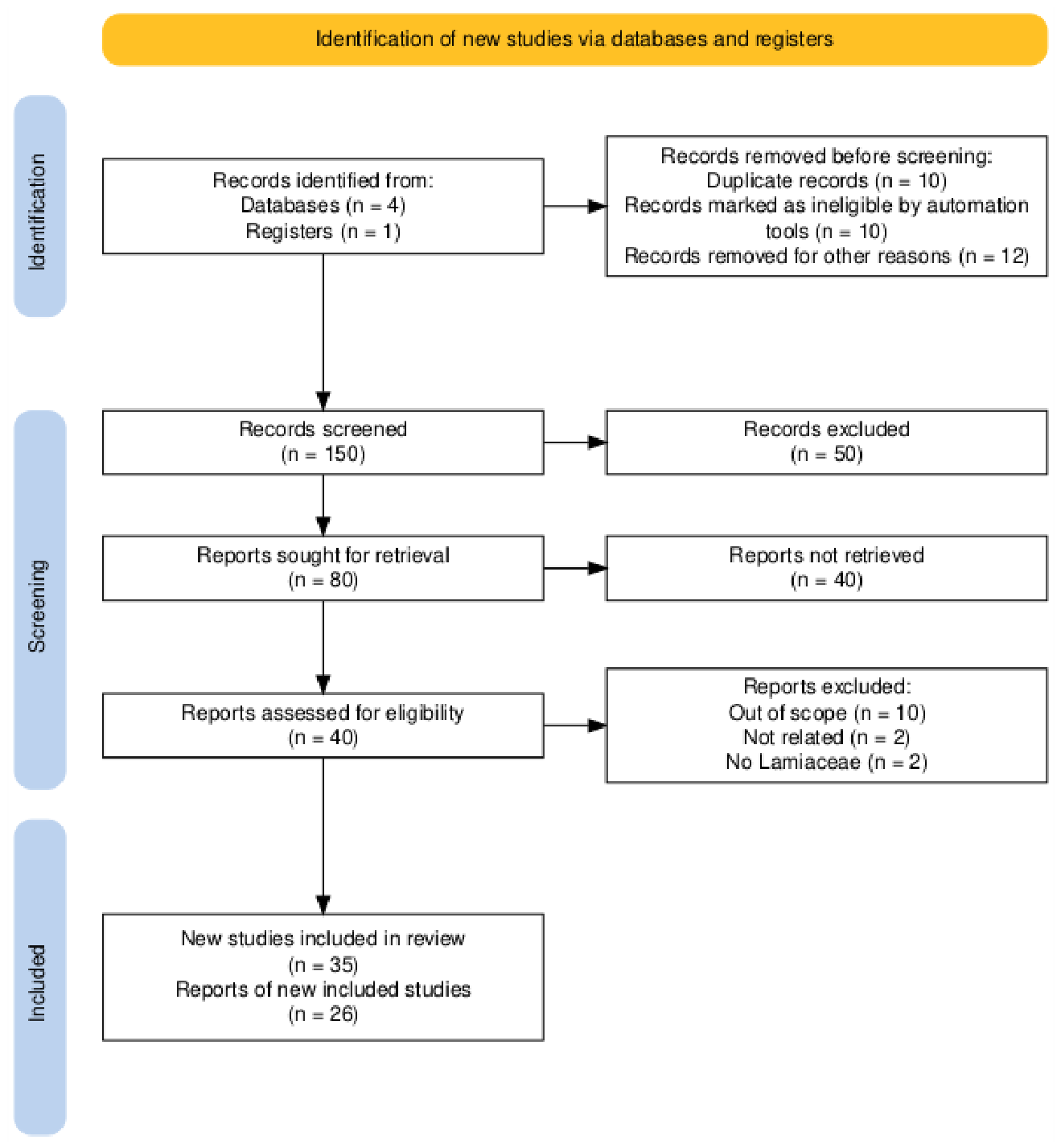
This review is structured as a narrative review of literature pertaining to the field collection, taxonomic identification, DNA barcoding, phylogenetics, and adulteration identification of selected Lamiaceae species. The finalization of the review follows a systematic literature search and validation of the references included in the review. Since no experimental dataset or systematic screen will be discussed in this review, there would be no lab data but Bioinformatics and PRISMA counts (Haddaway et al., 2022).
2.2. Literature Search Strategy
Related studies are available on PubMed, Scopus, Web of Science, Google Scholar, and scientific publications via the websites of publishers. The NCBI GenBank and Barcode of Life Data System (BOLD) are useful databases that contain information about sequences along with taxonomic references (Balasubramaniam et al., 2024).
The following search terms may be considered:
- “Lamiaceae medicinal plants DNA barcoding”
- “Lamiaceae molecular authentication and phylogeny”
- “Ocimum basilicum ITS2 identification”
- “Origanum vulgare DNA barcode”
- “Salvia rosmarinus molecular identification”
- “Lamiaceae herbal adulteration species-specific PCR”
- “medicinal plant voucher specimens molecular identification”
- “rbcL, matK, ITS2 and trnH–psbA plant barcoding”
The searches included both names of plants and keywords like specimen collection, morphological identification, molecular markers, phylogenetic analysis, herbal substitution, and quality control (Perveen et al., 2026).
Figure 2.
Prisma flow diagram for DNA Barcoding of selected family Lamiaceae or Mint Family plants (Haddaway et al., 2022).
Figure 2.
Prisma flow diagram for DNA Barcoding of selected family Lamiaceae or Mint Family plants (Haddaway et al., 2022).
Haddaway, N. R., Page, M. J., Pritchard, C. C., & McGuinness, L. A. (2022). PRISMA2020: An R package and Shiny app for producing PRISMA 2020-compliant flow diagrams, From Field Collection to Molecular Authentication: DNA Barcoding, Phylogenetics, and Adulteration Detection in Selected Lamiaceae Plants. Campbell Systematic Reviews, 18, e1230. https://doi.org/10.1002/cl2.1230
2.3. Eligibility and Evidence Selection
More weight was attached to peer-reviewed research papers on original research, taxonomical literature, methodologies and reviews. Researches on medicinal and aromatic plants, molecular markers validated, sequence-based identification and validation of herbal products were most pertinent.
Assessment criteria of these publications are taxonomic accuracy, selection of molecular markers, sampling methods, methodology, quality of sequences and pertinence to the family of Lamiaceae. Publications on other plant families were considered where they provide methodological evidence that is widely applicable but their results were not to be taken as evidence of performance in the Lamiaceae family (Vokálek & Drahanský, 2026).
2.4. Field Collection and Specimen Documentation
In any study involving the collection of new plant specimens (Table 1), sampling should include the species, collection sites, and the variation of morphological characters that are available (Babaei et al., 2025).
The following were documented:
1. The scientific name and its synonyms (if any).
2. Collection site, geographic coordinates (if possible), elevation, and date of collection.
3. Habitat, growth habit, and diagnostic features.
4. Collector’s name and unique identifier for the plant.
5. Photos of the whole plant and the diagnostic features.
6. Number of voucher specimen and herbarium/institution where it was stored.
7. Method of tissue preservation and the identifier of molecular sample.
Identification of plant specimens were done based on literature, floras, and the expertise of a botanist. The identifiers of the plant match those of the sequence record in the database (Naseem et al., 2025).
2.5. DNA Extraction and Quality Assessment
Genomic DNA can be purified from fresh or properly preserved leaf material using a proven method of plant DNA isolation like a cetyltrimethylammonium bromide (CTAB) method or commercial kit. Since Lamiaceae family plants may contain significant amounts of essential oils, polyphenols, polysaccharides and other secondary metabolites, the isolation procedure may need to be optimized to minimize inhibitors co-isolation.

Table 1.
Selected plants of family lamiaceae.
| No. | Botanical name | Spice | اردو نام | پښتو نوم | Adulterants |
|---|---|---|---|---|---|
| 1 | Lallemantia royleana | Black Chia Seed Plant | تخم ملنگا | ملنگا | Not yet verified |
| 2 | Lavandula angustifolia | Lavender | اسطوخودوس | اسطوخودوس | Other Lavandula species or undeclared plant material; specific adulterants require verification |
| 3 | Melissa officinalis | Lemon balm | بادرنجبویہ | بادرنجبویه | Other Melissa or similar-looking dried leaves; specific adulterants require verification |
| 4 | Mentha piperita | Peppermint | پودینہ | نعناع | Corn mint (Mentha arvensis) |
| 5 | Mentha spicata | Spearmint | پودینہ | سپېرمنټ / نعناع | Corn mint (Mentha arvensis) or other Mentha species |
| 6 | Ocimum basilicum | Basil | تلسی / نیازبو | نیازبو | Other Ocimum species or unidentified leafy plant material; specific adulterants require verification |
| 7 | Ocimum tenuiflorum (syn. Ocimum sanctum) | Holy basil | تلسی | تلسی | Other Ocimum species or undeclared leafy material; specific adulterants require verification |
| 8 | Origanum majorana | Marjoram | مرزنجوش | مرزنجوش | Oregano (Origanum vulgare) or other undeclared Origanum material |
| 9 | Origanum vulgare | Oregano | اوریگانو | اوریګانو | Myrtle, olive myrtle, hazelnut leaves, sumac, cistus, olive leaves, Cistus incanus, Rubus caesius |
| 10 | Salvia officinalis | Sage | سیج | سیج | Olive leaves |
| 11 | Salvia rosmarinus (syn. Rosmarinus officinalis) | Rosemary | روزمیری | روزمېري | Other rosemary-like leaves or undeclared leafy material; specific adulterants require verification |
| 12 | Thymus vulgaris | Thyme | اجوائن خراسانی / تھائم | توم, سپرکئی | Triticum species |
| 13 | Vitex negundo | Five-Leaved Chaste Tree | سنبھالو / مروان | مرواندهۍ | Not yet verified |
Test: Select specie specific primers for adulterant
Purity and quantity of DNA can be determined by appropriate spectrophotometric, fluorometric or electrophoretic technique. The use of negative control in DNA extraction is helpful for identification of contamination. For the cases when isolated DNA is used for conventional PCR analysis, the quality of DNA needs to be checked through amplification of appropriate target.
In case of commercial herbal preparations, problems of DNA fragmentation and PCR inhibitors are more relevant than in fresh leaves. Therefore, the isolation procedure needs to be carefully verified (Muftah et al., 2026).
2.5.1. CTAB DNA Extraction
The CTAB DNA extraction in modified method was used (Jabeen et al., 2022; Salehi et al., 2023).
1.Take 0.05 g (50mg) plant (Herb) leaves sample
2. Sorbitol Pre-Wash (The Clean-Up Step): Before adding any lysis buffer or exposing the DNA, wash your homogenized, raw plant tissue pellet with a Sorbitol Homogenization Buffer (containing 0.1 M Tris-HCl, 5 mM EDTA, and 0.3 M Sorbitol). Centrifuging and discarding, these supernatant washes away soluble phenols, tannins, and pigments while leaving the intact cells behind.
3.Add warm (65 ℃) 1ml CTAB (2% CTAB (0.6g/30mL),
-
NaCl (1.4 M Required final, (Molar mass of NaCl = 58.44 g/mol), dissolve 35.1 g of sodium chloride (NaCl) in water to a final volume of 100 mL to prepare 6M stock):
- ➤
- stock C1=6 M V1=?mL, C2= 1.4M, V2= 30 mL, V1=1.4 Mx 30mL/6M=7mL
- ➤
- Add 7mL NaCl (1.4 M final): per 30 mL buffer final volume to get 1.4M final concentration.
-
EDTA (Required Final 0.02M, (Na₂H₂EDTA·2H₂O, Molar Mass = 372.24 g/mol) dissolve 18.6 g of EDTA disodium salt dihydrate in 100 mL water to prepare 0.5 M stock):
- ➤
- Stock C1=0.5M, V1=? mL, C2=0.02M, V2=30mL, V1= 0.02M x 30 mL/0.5 M= 1.2mL
- ➤
- Add 1.2 mL EDTA (0.5M) per 30 mL buffer to get 0.02M final concentration.
-
Tris HCl (Required 100mM final, (Molecular Weight ≈ 157.6 g/mol), dissolve 31.5 g of Tris-HCl powder in 100mL water to prepare 2M stock):
- ➤
- Stock C1=2M, V1=? mL, C2=100mM, V2= 30mL, V1=100mM x 30mL/2000 mM=1.5mL (1.5 mL/30mL-final 100mM
- added 2% freshly β-mercaptoethanol and 1% PVP. pH of the buffer was adjusted to 8.0 sharp.
4. Pestle and mortar crush add to Eppendorf tube.
5. Incubate at 65 ℃ for 40 minutes in water bath (better overnight for single band without contamination and clean PCR).
6. Add 400 µL chloroform: isoamylalcohol (24:1)., for phase separation. Organic and aqueous. The aqueous layer upper has DNA dissolved.
7. Centrifuge 12,000 RPM for 10 minutes at preferred 4 ℃ (Hyder et al., 2024).
8. Add 700 µL isopropanol and 70 µl Na-Acetate, mix and chill at -20 ℃ for 10 minutes at preferred 4 ℃.
9. Centrifuge again 10,000 RPM for 10 minutes at preferred 4 ℃. DNA precipitates.
10. Discard supernatant.
11. Add chilled 400 µL 70% ethanol to the pellet and centrifuge Centrifuge at 10,000 RPM for 10 minutes at preferred 4 ℃.
12. Discard ethanol, invert on tissue to dry for 10 minutes.
13. Dissolve in 40 µL of TE buffer (1 mM EDTA, 60 µL from stock 0.5 M EDTA and 10 mM Tris, accurately add 150 µL of the 2 M Tris stock solution Add distilled or nuclease-free water to a final volume of 30 mL.) pH=8.0. May add 0.5 µL RNase.
14. Run on 0.8 % agarose gel. Electrophoresis 0.4g/50 mL, Et-Br 2.5 µL, add separate loading dye 2 µL + 5 µL sample= total 7 µL sample loaded in each well (Ayaz, 2020).
2.5.2... TE Buffer Solution for DNA (100 mL) for 30 mL
In order to make 100 mL of 1X TE buffer (10 mM Tris-HCl, 1 mM EDTA, pH 8.0) from 2M Tris-HCl and 0.5M EDTA stocks, the dilution equation C₁V₁ = C₂V₂ should be used (Salehi et al., 2023).
100 mL of 1X TE Buffer
• Tris-HCl (10 mM final)
- ➤
- V1 = 10 x 100 mL/2000 mM = 0.5 mL (500 µL ) of 2M Tris-HCl
• EDTA (1 mM final)
- ➤
- V1 = 1mM x 100 mL/500 mM = 0.2 mL (200 µL) of 0.5M EDTA
• Deionized/Distilled Water
- ➤
- 100 mL - 0.5 mL - 0.2 mL = 99.3 mL
Step-by-Step Preparation Procedure
1. Measurement of Stocks:
- ➤
- To add 0.5 mL of 2M Tris-HCl stock solution to a glass bottle or graduated cylinder.
- ➤
- For dispensing and transfer of 0.2 mL (200 µL) of 0.5 M EDTA stock solution using either glass bottle or graduated cylinder.
2. Dilution with water
- ➤
- A 99.3 mL of nuclease-free distilled water is added to achieve a total volume of 100 mL.
3. Solution’s Measurement/Adjustment of pH:
- ➤
- Hold the pH constant to be 8.0 (or 7.5 in case of DNA application) with the help of pH meter.
4. Solution Mixing and Sterilization:
- ➤
- Autoclaving of the solution, if required for molecular biological purposes.
Mix & Store: Cap the tube and invert it several times to ensure it is thoroughly mixed. If necessary, you can filter sterilize or autoclave the buffer before using it for long-term DNA/RNA storage.
Note: For 30 mL final volume multiply by 0.3 e.g Tris V1= 500 x0.3= 150 µL and EDTA 200 x 0.3= 60 µL i.e add 150 µL Tris stock and 60 µL EDTA stock 0.5 M , make volume up to 30 mL with nuclease free distilled water.
2.5.3. DNA Purification and Wash (If needed, in case of smear on gel electrophoresis)
TE with dissolved DNA can be added to the Column. The Column can be spun down at 6,000 × g for 1 minute (Hyder et al., 2024). Dispose of the flow through solution from the collection tube. Transfer the GeneJET™ Genomic DNA Purification Column or other commercially available purification columns to a new 2 mL collection tube.
Note: The bag containing GeneJET™ Genomic DNA Purification Columns needs to be tightly closed after each use.
1. Add 500 µL of Wash Buffer I (added with ethanol). Spin at 8,000 × g for 1 minute. Discard the flow through and transfer the purification column into the collection tube.
2. To the GeneJET™ Genomic DNA Purification Column add 500 µL of Wash Buffer II (added with ethanol). Spin at ≥12,000 × g for 3 minutes.
3. (optional) If there is some leftover solution in the purification column, then empty the collection tube and spin the column at ≥12,000 × g for 1 minute.
4. Discard the collection tube containing the flow-through solution then transfer the GeneJET™ Genomic DNA Purification Column to a sterile 1.5 mL microcentrifuge tube.
5. Add 200 µL of Elution Buffer to the center of the GeneJET™ Genomic DNA Purification Column membrane to elute genomic DNA. Incubate at room temperature for 2 minutes then centrifuge at 8,000 × g for 1 minute.
Note:
- For maximum DNA yield, repeat the elution step with an additional 200 µL of Elution Buffer.
- If more concentrated DNA is required or DNA is isolated from a small amount of starting material (for example, ≤less amount of plant cells than 50 mg) the volume of the Elution Buffer added to the column can be decreased to 50–100 µL. Smaller volumes of Elution Buffer, however, can result in a smaller final quantity of eluted DNA.
6. Discard the purification column
Note: Either use the DNA immediately for Electrophoresis 0.4g/50 mL, Et-Br 2.5 µL, add separate loading dye 2 µL + 5 µL sample= total 7 µL sample loaded in each well in your experiment or freeze it at -20°C.
2.6. Selection of Molecular Markers
The approach in choosing the markers must consider the amplification efficiency, sequence variation, discriminating ability, availability of a reference sequence, and the biological question to be answered. rbcL and matK have been suggested as the core DNA barcodes for plants, and the nuclear ITS/ITS2 and the chloroplast trnH-psbA may complement each other (Table 2). Performance of the markers must be assessed on the specific species of interest and not as universal for the whole family (CBOL Plant Working Group, 2009).
The precise trnL region must be specified; the trnL intron and the trnL–trnF intergenic spacer are not interchangeable. Similarly, ITS1, ITS2, and complete ITS sequences should be clearly distinguished in sequence analyses and reporting (Table 3).
2.7. PCR Amplification Marker regions and Sequence Generation for DNA Barcoding
Selected regions with barcodes were amplified using the existing primer sequences for the particular taxa and by designing new primers after in-silico and lab testing. PCR conditions were optimized for maximum primer specificity, template purity, and amplification product size.
The PCR products were analyzed using gel electrophoresis. The size of the product were considered in relation to positive and negative controls, the presence of the correct size product only proves the presence of DNA but does not prove the species' identity. In cases where Sanger sequencing is performed, the two strands sequenced in both directions, if available, will be aligned and compared for all selected species (Letsiou et al., 2024).
2.7.1. RT PCR/ Quantitative PCR
The reaction flow is as given (Uh & Jang, 2023):
Table 3.
Components of one real time PCR reaction.
| No | Components for one RealTime PCR reaction | Concentartion |
| 1 | Master mix(Buffer, dNTPs, Taq Polymerase, MgCl2) +CYBER GREEN | 2.5 µL |
| 2 | GAPDH Forward Primer/ FP | 0.125 µL |
| 3 | GAPDH Reverse Primer/ RP | 0.125 µL |
| 4 | H2O | 1.75 µL |
| 5 | Template DNA, added at the end | 0.5 µL |
| Total Volume | 5 µL |
Calculate according to samples consider, If we have 8 samples
Table 4.
Preparing Master mix for 8-9 reactions
| No. | Components for 8-9 samples | Concentration | Total |
| 1 | Master mix(Buffer, dNTPs, Taq Polymerase, MgCl2) +CYBER GREEN | 9 x 2.5 µL | 22.5 µL |
| 2 | GAPDH Forward Primer/ FP | 9 x 0.125 µL | 1.125 µL |
| 3 | GAPDH Reverse Primer/ RP | 9 x 0.125 µL | 1.125 µL |
| 4 | H2O | 9 x 1.75 µL | 15.75 µL |
| Total | 40.5 v | ||
| 40.5/9=4.5 µL |
Add 4.5 µL master mix to each PCR tube (has built in numbered 1-8 strip) and add 0.5 µL of template DNA (Plant herb) to each tube
Table 5.
Adding Template DNA and master mix to each individual PCR tube.
| 5 | Template DNA, added at the end | 0.5 µL (e.g. DNA1, DNA,2, DNA,3 etc) | Add 0.5 µL template DNA to each tube seperately |
| Total Volume | 5 µL | ||
| Note: Add to each labeled tube, Master mix 4.5 µL + individual extracted Template DNA 0.5 µL = Total PCR reaction volume (5 µL) | |||
Figure 3.
PCR thermal cycling profile showing initial denaturation, denaturation, primer annealing, extension, final extension, and final holding temperature (4°C).
Figure 3.
PCR thermal cycling profile showing initial denaturation, denaturation, primer annealing, extension, final extension, and final holding temperature (4°C).
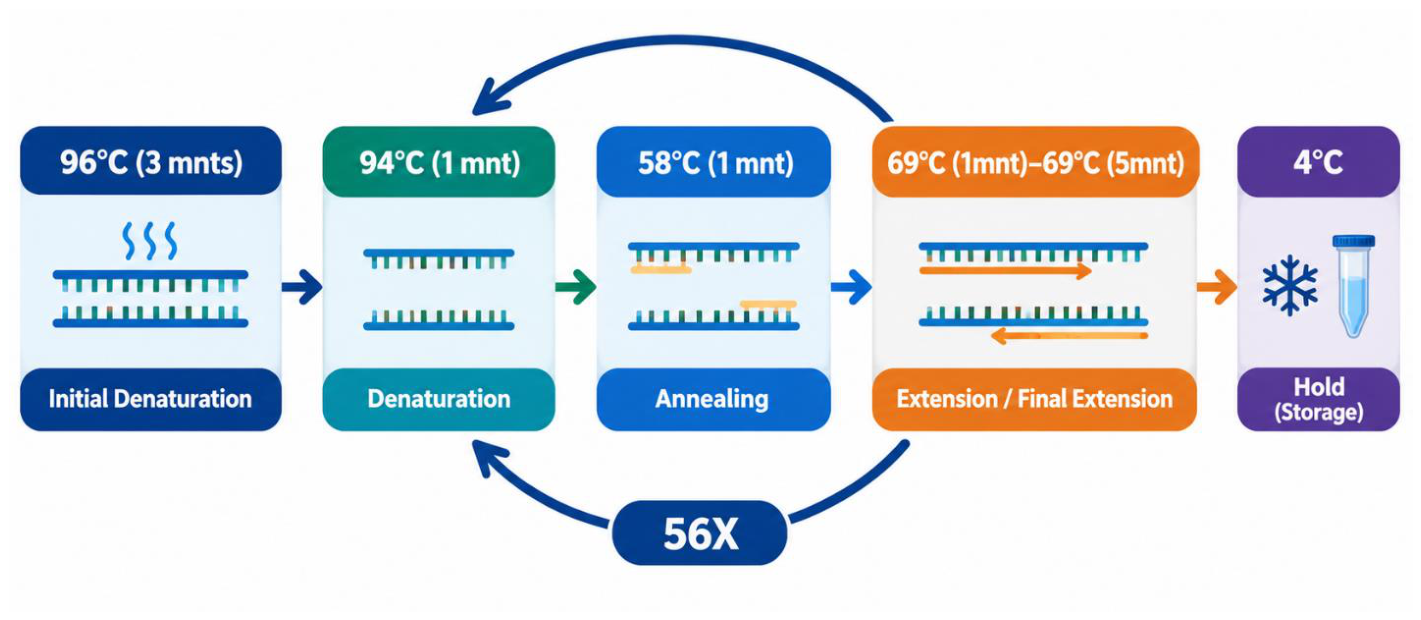
ITS PCR= 51 ℃, rbcL = 58 ℃ annealing temperature is required (May vary for your primers).
Initial denaturation → Denaturation → Annealing → Extension → Final extension → Hold (storage)
For PCR electrophoresis 0.75/50 mL, loading dye may be added in the master mix and no separate addition is needed.
2.8. Sequence Identification and Phylogenetic Analysis
Sequences should be compared against curate or taxonomically confirmed records from GenBank and BOLD. Similarity search algorithms like BLAST could reveal closely related reference sequences (Zarshenas et al., 2025). However, the top hits from the databases cannot be considered definitive identification without considering details such as reference voucher information, length of the sequence, marker information, taxonomic consistency, and existence of competing closely related species (Naseem et al., 2025).
The sequence should be aligned by means of multiple-sequence alignment software,e.g. Maximum likelihood (Thakur et al., 2021) and using MUSCLE. Manual inspection of the sequences is also needed when necessary. Trimming should eliminate low-quality terminals or nonhomologous parts of the sequences. However, unnecessary trimming must be avoided because it would lose useful discrimination information.
The process of reconstructing the phylogenetic tree can be done in the MEGA program or other software as needed by the researcher using an appropriate method for the data set, e.g., maximum likelihood and neighbor joining. The criteria used in selecting a model, handling gaps, and the bootstrap analysis must be clearly stated.
For the purpose of reproducing the results, the following information about the final report must be clearly presented: accession numbers, length of the alignment, number of taxa used, phylogenetic method, substitution model, and number of bootstraps (Diani Gohar & Soorni, 2025).
2.8.1. Circular Phylogenetic Tree Construction using MEGA 12.1.3
Simplest way in Word Document
1. Open Word document having DNA sequence data in the correct format “>accession No. Name of the plant, next line sequence in fasta format.”
2. Upload .docx file.
3. Then extract the sequence names and DNA sequences and create a valid .fasta file.
4. Or else, use AI chatbot like claude (file upload and convert file to name.fasta format and prompt “convert to .fasta format for MEGA analysis in downloadable form”)
5. Download the modified file and open MEGA 12.1.3.
6. Choose menu Align → Edit/Build Alignment → Create New Alignment → DNA and then Import FASTA file.
7. Import sequences -> MUSCLE alignment -> check alignment -> pairwise distances -> phylogenetic tree.
8. Go to menu Data -> Export Alignment/save/export choice.
9. Export this alignment data as either .meg or .fasta file type.
10. Close the specific Alignment Explorer.
11. Choose the aligned .meg file if prompted by MEGA for selecting a data file.
12. For the analysis preference, select nucleotide data type.
13. Whenever possible, first apply Models → Find Best DNA/Protein Models (ML) for identifying a suitable substitution model.
14. For ML setting, select Standard Bootstrap and set Bootstrap Replications = 1,000.
15. Select appropriate gaps/missing-data treatment, for barcode alignments having large gaps, check the effect of selected treatment in the usable alignment.
16. Click Compute; resulting tree will open in Tree Explorer.
17. Save tree session using File → Save Current Session.
18. Choose Construct/Test Neighbor-Joining Tree for fast analysis or Construct/Test Maximum Likelihood Tree for actual analysis.
19. Check for the Tree, View or tree layout toolbar menu items.
20. Select the layout from Radial, Circular, or Topology depending upon version and tree display.
21. Select Circular or as preferred.
2.9. Assessment of Adulteration Detection
The adulteration screening test should differentiate between the identification of an individual unknown sample and determination of the presence of multiple botanicals in a blend. Traditional DNA barcoding methods would be applicable in case of intact or pure botanical samples, while species-specific PCR tests may be designed for the identification of a particular declared botanical or a putative adulterant.
The species-specific test needs to be evaluated on authentic target sample, credible substitute species, and non-target species. The sensitivity, specificity, and reproducibility of the species-specific method in relation to the specific herbal matrix need to be evaluated. The negative results should be treated cautiously since they could be attributed to degraded DNA, PCR inhibition, primer mispriming, or simply low amount of DNA (Zarshenas et al., 2025).
3. Results
3.1. Field Collection Provides the Foundation for Reliable Identification
As regards the plant identification validation literature, it emphasizes the need for the combination of results of molecular analysis and the specimen, which can be validated. Validation of the DNA sequence is based solely upon the specimen and the taxonomical information about it.
Field work confers familiarity with the features which are going to be lost during dehydration and preparation of the specimen, namely the habit, leaf structure, structure of the inflorescence, structure of the flower and other features. Pictures and specimens are complementary information which helps resolve contradictions raised by the sequencing information.
In the case of certain selected plants belonging to the family Lamiaceae, there is a special need to correlate specimen data and molecular information due to the fact that the family Lamiaceae includes a number of related species, valuable economically aromatic plants, hybrids and taxonomically rearranged plants.
3.2. DNA Barcode Markers Provide Complementary Information via qPCR
The comparative analysis of different regions used as plant barcodes has revealed the absence of the universally best marker for all plant species. According to the recommendations of the CBOL Plant Working Group, the use of both rbcL and matK is recommended as core plant barcode due to the optimal ratio of the recovery and discriminating power of these regions. If the two markers are not enough for distinguishing between the closely-related species, then additional regions have to be used.
The nuclear ITS/ITS2 region can provide greater variability when it comes to some species and chloroplast regions will complement the information about plastid lineages. The trnH-psbA spacer can become a source of variation as well. However, because of its highly variable and complex structure, this region presents a great challenge in terms of quality control of data generation.
One specific review article deals with medicinal and aromatic plants of the Lamiaceae family and discusses possibilities and challenges of the conventional barcoding approach as well as the importance of using markers tested in relation to their effectiveness in regard to specific genera and species and not just the entire family.
Figure 4.
A hypothetical Illustrative RT-qPCR amplification plot of selected Lamiaceae plant species targeting the ITS2 region for molecular identification and DNA fingerprinting, the way it looks on RT-qPCR. CT value better 15-22 or 25.
Figure 4.
A hypothetical Illustrative RT-qPCR amplification plot of selected Lamiaceae plant species targeting the ITS2 region for molecular identification and DNA fingerprinting, the way it looks on RT-qPCR. CT value better 15-22 or 25.
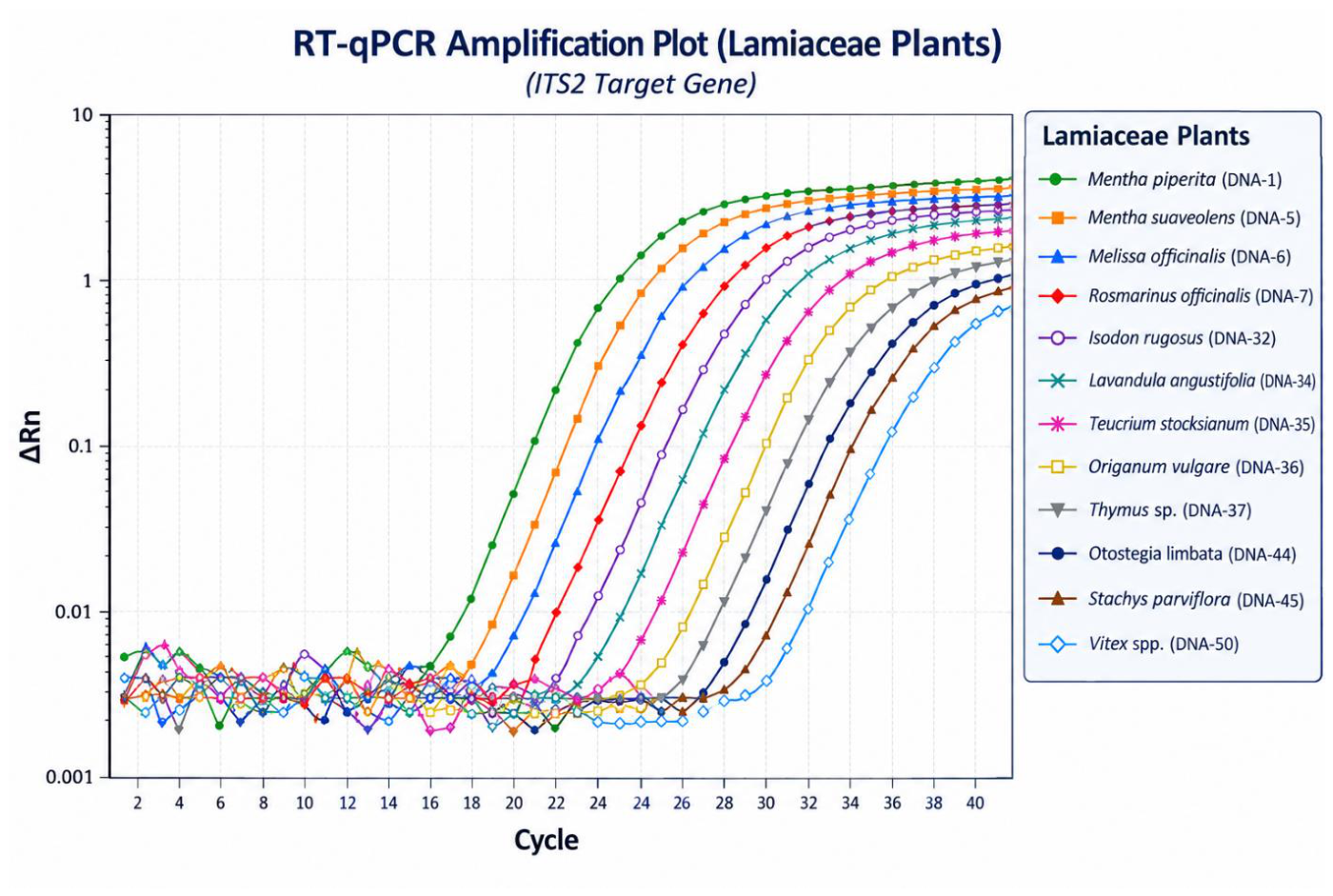
CT value ideal= 15-22 or 25, >25 small or degraded DNA hard to reach threshold more time taken.
3.3. Molecular Identification Depends on Reference Quality
Sequence similarity searches through databases provide a convenient starting point for the identification of unknown sequences in plants. However, sequence similarity is not equivalent to taxonomic validation. Similarity may arise from a sequence with an incorrect name, obtained from an incorrectly identified specimen, too short to carry sufficient variation for identification purposes, or shared among various taxa (Diani Gohar & Soorni, 2025; Nazar et al., 2022; Thakur et al., 2021).
Identification of a plant with molecular techniques demands the use of an exact query sequence with correct base calls that represents the marker in question, and that is consistent with various reliable reference sequences. When there is disagreement in the reference sequences or several species display the same result, then the result should be inconclusive at the species level.
Figure 5.
An Actual qPCR Amplification Plot of GAPDH and ITS2 Targets in Selected unknown medicinal Plants.
Figure 5.
An Actual qPCR Amplification Plot of GAPDH and ITS2 Targets in Selected unknown medicinal Plants.
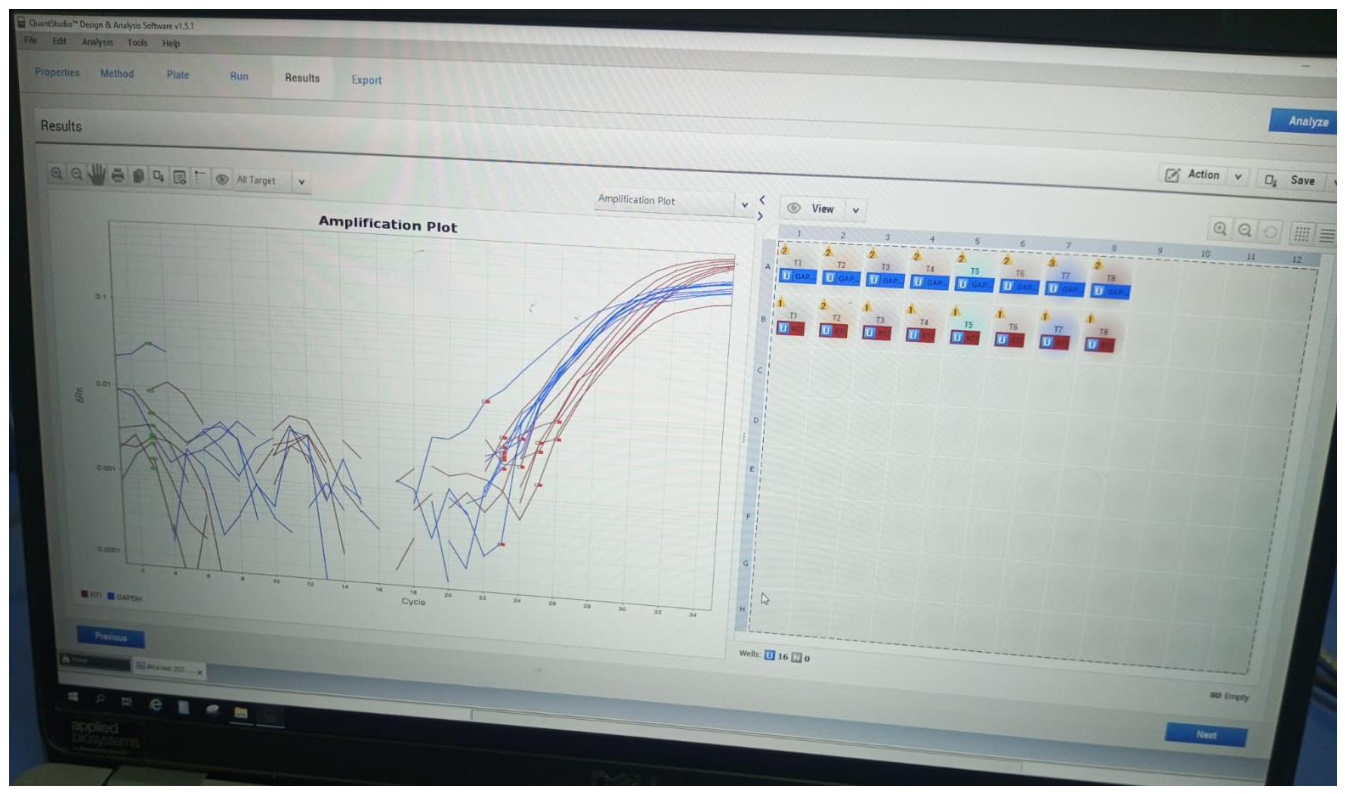
Figure 6.
Agarose gel electrophoresis 1.8 % for PCR (Lower lanes) and 0.8 % for CTAB extractions of Unknown Plant DNA(Upper lanes) showing bands of purified extracted DNA.
Figure 6.
Agarose gel electrophoresis 1.8 % for PCR (Lower lanes) and 0.8 % for CTAB extractions of Unknown Plant DNA(Upper lanes) showing bands of purified extracted DNA.
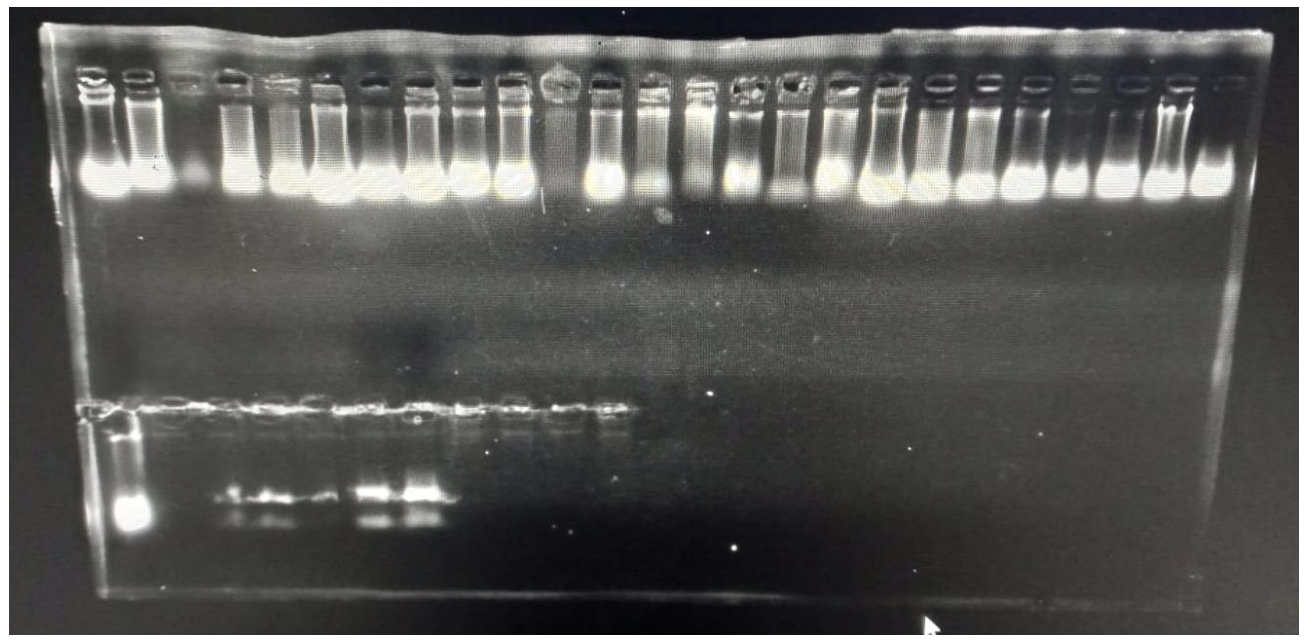
Note: Single band PCR samples stocks may be processed for sanger sequencing and barcoding phylogeny.
Figure 5 is a plot of the qPCR amplification graph, where ΔRn is fluorescence versus PCR cycle numbers (Peerzada et al., 2026). GAPDH and ITS2 have been chosen to be the target sequences. GAPDH can act as a reference gene for studying gene expression. ITS2 is a nuclear ribosomal DNA sequence which is used for the identification of plants. These graphs depict increased fluorescence following the initial baseline stage, due to amplification of the target sequences. However, the graph itself cannot prove anything regarding the amplification and/or the identification; for that purpose, it is necessary to examine the Ct/Cq values.
Figure 6 is an autoradiograph of the extracted DNA Upper lanes and PCR product lower lanes which shows purification and are processed for further steps through the flow pipeline.
3.4. Phylogenetic Analysis Complements Sequence-Based Identification
It is possible to tell whether the sample clusters with reference sequences of the same species/related taxa on the basis of the phylogenetic tree (Le et al., 2026).
Table 6.
Proposed workflow for collection-to-authentication studies of selected Lamiaceae plants.
| Stage | Procedure | Evidence or output |
|---|---|---|
| 1. Field collection | Collect representative specimens and record locality and collection metadata | Traceable plant samples |
| 2. Botanical identification | Examine diagnostic morphology and consult taxonomic references | Preliminary species identification |
| 3. Voucher preparation | Preserve specimens and assign unique voucher identifiers | Verifiable botanical reference |
| 4. DNA extraction | Extract genomic DNA and assess its suitability for PCR | DNA template of acceptable quality |
| 5. Barcode amplification | Evaluate appropriate regions such as rbcL, matK, ITS2 or trnH–psbA | Target amplicons |
| 6. Sequence verification | Inspect sequence quality and compare with curated database records | Quality-controlled barcode sequences |
| 7. Multiple-sequence alignment | Align homologous regions and inspect ambiguous positions | Alignment suitable for analysis |
| 8. Phylogenetic reconstruction | Infer relationships using an appropriate method and assess support | Phylogenetic tree and supported groupings |
| 9. Adulteration testing | Apply validated species-specific PCR or metabarcoding where required | Evidence for presence or non-detection of target taxa |
| 10. Integrated authentication | Compare molecular findings with voucher, taxonomic and, where appropriate, chemical evidence | Final authentication assessment |
Phylogenetic inference is influenced by the amount of nucleotide variation, taxonomic sampling, alignment, evolutionary model, and statistical support. The well-supported cluster is considered to be a good evidence, but the tree built solely on the basis of one highly conserved barcode will not resolve all species boundaries. However, weak statistical support does not necessarily mean incorrect classification of the initial specimen because the marker itself may lack variation (Table 6).
4. Discussion
4.1. Integrating Botanical Collection with Molecular Evidence
One of the major conclusions from the literature review is that effective authentication is achieved even prior to the DNA extraction procedure. The process of sample collection, identification of specimens, submitting the vouchers and collecting necessary metadata, allow the independent verification of all molecular results. Thus, DNA barcoding should be viewed as an additional element of integrative taxonomy rather than as an alternative to botany.
This method will be of great value in the case of Lamiaceae genus since there are many similarities between the species within it along with possible taxonomic changes that may create certain challenges in data interpretation. Particularly, it concerns Salvia rosmarinus and Rosmarinus officinalis which are the same species, however, at different times. This information should be taken into account when searching for sequences in the databases and analyzing the literature.
The collection of the samples in the known localities and submitting the vouchers may become an important reference source in the study of regional diversity of medicinal herbs (Hafez et al., 2025; Peerzada et al., 2026).
4.2. Choosing an Appropriate Barcode for Selected Lamiaceae species
The choice of molecular markers were determined by the kind of taxonomic problem to be solved. The use of the ITS regions and rbcL genes for the identification of plants was proposed by the Medicinal Botanic Centre, PCSIR, Peshawar, MEDICen group. The use of such molecular markers can be considered a standardized baseline. Nevertheless, there is no guarantee that species recognition will work for all taxa.
Challenges in Medicinal and Aromatic Plants DNA Barcoding, Lessons from the Lamiaceae is a focusing on the problems of traditional DNA barcoding in the Lamiaceae family. The challenges include problems associated with the richness of the genera, the presence of hybrids and possible alternatives in the Lamiaceae family. This confirms the importance of taxon-specific validation as the use of certain molecular markers in one genus does not imply their use in another genus.
ITS2 might prove useful when more variation in nuclear sequences is required, while matK and trnH-psbA can serve as a complement for chloroplast sequences. Nevertheless, ITS sequences could consist of several different types of sequences, and the intergenic spacers might be challenging to align for more distant taxa.
In case of studying Ocimum basilicum, Origanum vulgare, and Salvia rosmarinus, the recommended approach would be to check the effectiveness of candidate markers separately and then choose the set of markers for further identification. A marker cannot be chosen on the basis of the availability of its sequences in GenBank alone.
4.3. Sequence Alignment, Trimming, and Phylogenetic Interpretation
The multiple-sequence alignment is very important in phylogenetic reconstruction since the process of establishing phylogenies relies upon the comparison of homologous bases. Algorithms like MUSCLE aid in the determination of homology between sequence alignments, yet, there is need to verify that the alignment is not ambiguous especially where there are noncoding variable spacers (Le et al., 2026).
Analysis using MEGA for phylogeny can be used to compare collected samples with reference samples. Nonetheless, an unrooted circular tree (Figure 9) serves more as a presentation of relationships, and the circular nature of the tree cannot, on its own, show the direction of evolution. There must be justification for the use of rooting.
Likewise, bootstrap value shows how likely it is to find such a grouping through resampling of the alignment. It is not a probability that the taxonomic identification is correct. Taxonomic authentication should include sequence similarity, phylogenetic placement, and verification of vouchers.
Figure 7.
The MEGA 12.1.3. fasta file being aligned for DNA rbcL gene region in selected Lamiaceae Plants.
Figure 7.
The MEGA 12.1.3. fasta file being aligned for DNA rbcL gene region in selected Lamiaceae Plants.
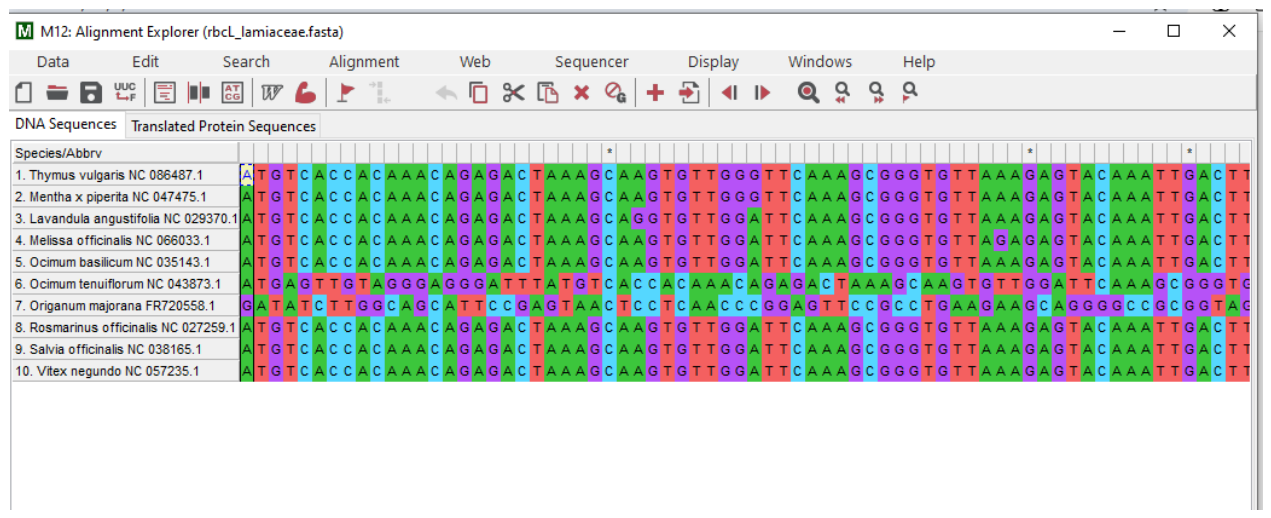
Figure 8.
The MUSCLE aligned file by MEGA 12.1.3 to be exported as MEGA file for tree construction.
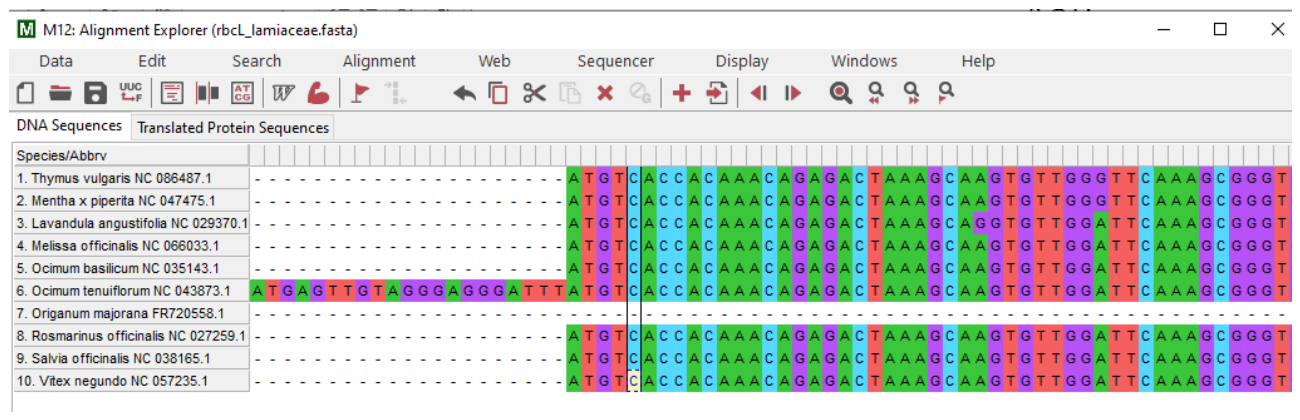
Figure 9.
Circular phylogenetic tree of selected Lamiaceae (Mint family) plants based on rbcL gene DNA barcode sequences, constructed using MEGA 12.1.3.
Figure 9.
Circular phylogenetic tree of selected Lamiaceae (Mint family) plants based on rbcL gene DNA barcode sequences, constructed using MEGA 12.1.3.
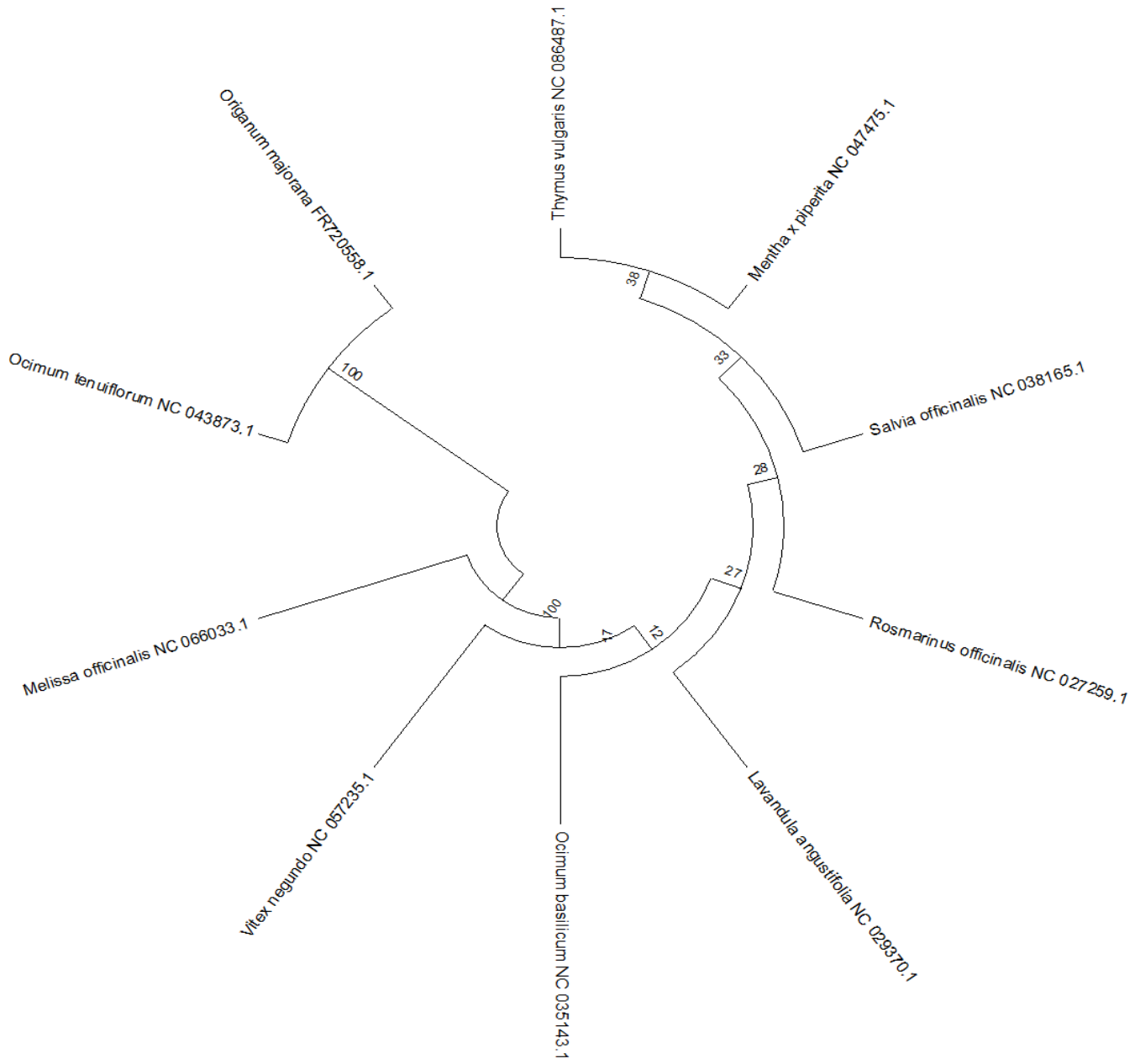
The phylogenetic tree (Figure 9) is an example of the evolutionary relationships between selected representatives of the Lamiaceae family in accordance with the analyzed rbcL gene DNA sequences. Origanum majorana and Ocimum tenuiflorum belong to a highly related pair with bootstrap support of 100, while Thymus vulgaris and Mentha x piperita constitute a pair with lower support of 38. Salvia officinalis and Rosmarinus officinalis can be found in neighboring branches, but Melissa officinalis, Vitex negundo and the two Ocimum species have different locations within the tree. Bootstrap supports differ between the internal nodes, thus revealing that there is some diversity in the level of support for inferred groups. Thus, the tree represents genetic relationship between selected Lamiaceae species; nevertheless, the validity of the results may depend on the quality of sequence alignment, DNA marker, and on phylogenetic analysis itself.
4.4. Combining DNA-Based Methods with Conventional Quality Assessment
Barcoding of DNA recognizes biological materials, and not the concentration of active compounds, essential oil composition, toxicity, or the efficacy of the preparation as therapy. Therefore, molecular identification should augment and not substitute for the pharmacognostic assessment of quality (Roychowdhury & Halder, 2026).
A quality assurance program for medicinal plants belonging to the Lamiaceae family may involve the following steps:
• Identification based on morphological criteria and verification using vouchers.
• DNA barcoding done to identify the species.
• Special PCR for species-specific detection of suspected adulterants.
• Metabarcoding of DNA to analyze the complex botanical formulations.
• Characterization of chemicals using analytical methods such as HPLC/ chromatography.
• Microscopy and other pharmacognostic approaches when appropriate.
The combination of techniques is especially useful when the identity of the botanical material and its chemical content are both important. The correct species can still vary in chemical content because of environmental factors, ripeness, storage conditions, processing, or chemotypes (Hafez et al., 2025; Perveen et al., 2026).
4.5. Limitations and Challenges of the Available Evidence in DNA Barcoding
Some limitations have to be taken into account while analyzing the literature. First, efficiency of molecular markers is species- and genus-specific. Second, publicly available genome sequence database can include partially annotated information, as well as misidentified taxa. Third, successful PCR reaction depends on DNA integrity, proper primer binding, and chemical composition of the sample (Hafez et al., 2025).
Fourth, investigation of fresh plant specimens does not necessarily provide reliable information about the performance in complex herbal products. Fifth, presence of a particular species in a mixture does not automatically mean that its quantity is known. Finally, results obtained for a single genus of Lamiaceae family cannot be applied to all other genera (Perveen et al., 2026).
The current paper is a preliminary version of narrative review. Publication-worthy version should contain literature search details, reference list and comparative analysis of original researches concerning selected species and molecular markers (Nazar et al., 2022).
Table 7.
Research gaps and priorities identified from the literature.
| Research gap | Recommended future direction | Expected benefit |
|---|---|---|
| Incomplete or unreliable reference sequences | Develop voucher-linked, taxonomically verified barcode records | More dependable sequence identification |
| Limited species-level resolution | Compare multiple nuclear and chloroplast markers | Improved discrimination of closely related taxa |
| Degraded DNA in processed herbs | Validate short barcode regions and extraction procedures | Better recovery of DNA from difficult samples |
| Complex herbal mixtures | Evaluate metabarcoding and targeted PCR approaches | Improved detection of multiple or undeclared species |
| Limited validation of diagnostic assays | Test specificity, sensitivity, repeatability and matrix effects | Greater confidence in routine screening |
| DNA results do not establish chemical quality | Combine molecular methods with HPLC or mass spectrometry | More comprehensive assessment of identity and quality |
Conclusion
Field sampling, botanical classification, DNA barcoding, and phylogenetic analysis provide complementary tools for identification and evaluation of selected Lamiaceae plants. The accurate record of specimens and depositing them as vouchers creates the basis for reliable molecular studies, and sequencing becomes an extra tool when the identification based on morphology is inconclusive or processed plant materials are used.
The use of chloroplast genes rbcL and matK has become a universally accepted standard for plant DNA barcoding. Moreover, nuclear ITS/ITS2 and chloroplast trnH-psbA spacer might be considered when the need arises. Nonetheless, no one marker can be expected to identify each and every species within such a diverse family as Lamiaceae.
When assessing quality of herbal medicine, conventional DNA barcoding, species-specific PCR, and DNA metabarcoding may serve as complementary approaches that have different strengths and weaknesses depending on the target organism, the state of the sample, complexity of the product and the selected assay validation. Molecular methods should be combined with botanical and chemical information for a comprehensive evaluation.
Thus, a reliable and traceable workflow from field collected samples to molecular reference database will contribute to research in medicinal plants, detection of botanical substitution and development of authentication system for Lamiaceae resources
Future Prospects
Future research should focus on developing molecular techniques that are affordable and accurate to authenticate certain members of the Lamiaceae family. A combination of DNA barcoding, species-specific PCR, and DNA metabarcoding along with morphological and phytochemical analysis may be used as a way of improving species discrimination and identifying adulterants in herbal medicines. Development of authenticated regional database, DNA sequences associated with vouchers and laboratory methods may enhance molecular authentication of medicinal plants.
Statements and Declarations
The authors have nothing to disclose.
Author Contributions
All authors contributed equally.
Funding
We the authors are very grateful to the Director General of Science and Technology (DGST), Government of Khyber Pakhtunkhwa, Pakistan for financially supporting the study..
Data Availability
All the data related to this study have been included in the manuscript and are not present elsewhere.
Permissions
All the figures have been recreated different from respective data properly referenced.
Ethical responsibilities
The first draft of the manuscript is submitted as a preprint to preprints.org (mdpi) but is not published in any journal previously. As such it needs no any ethical approval. All authors contributed equally and agree to the final manuscript. No animals are human participants were involved in the review manuscript.
Additional Information
The is no previous version of the manuscript.
Acknowledgments
We the authors are very grateful to the Director General of Science and Technology (DGST), Government of Khyber Pakhtunkhwa, Pakistan for financially supporting the study. We are very much thankful to Dr. Ayaz Ali Khan, Department of Biotechnology, University of Malakand, Chakdara, Dir (L), Khyber Pukhtunkhwa, Pakistan.
Competing Interest:
"The authors have no relevant financial or non-financial interests to disclose."
References
- Avasiloaiei, D. I.; Calara, M.; Brezeanu, P. M.; Murariu, O. C.; Brezeanu, C. On the future perspectives of some medicinal plants within Lamiaceae botanic family regarding their comprehensive properties and resistance against biotic and abiotic stresses. Genes 2023, 14(5), 955. Available online: https://pmc.ncbi.nlm.nih.gov/articles/PMC10217939/. [CrossRef] [PubMed]
- Ayaz, A. G. M. Phylogeny and diversity of Lamiaceae based on rps14 gene in Pakistan. Genetika. 2020. Available online: https://web.archive.org/web/20200820042146id_/http://www.doiserbia.nb.rs/img/doi/0534-0012/2020/0534-00122002435A.pdf.
- Babaei, A.; Kazempour-Osaloo, S.; Nohooji, M. G.; Sonboli, A. Phytochemical and morphometric authentication of medicinal plants marketed as Ostokhudus in Iran. Sci. Rep. 2025, 15(1), 26015. Available online: https://www.nature.com/articles/s41598-025-11671-x. [CrossRef] [PubMed]
- Balasubramaniam, S. L.; Ganeshan, S.; Natesan, S.; Gnanajothi, K. DNA barcoding and annotation study on Anisomeles malabarica (L.) R. Br in BOLD system v. 4. Int. J. Bioinform. Res. Appl. 2024, 20(2), 97–115. Available online: https://www.inderscienceonline.com/doi/abs/10.1504/IJBRA.2024.138710. [CrossRef]
- Diani Gohar, S.; Soorni, A. Plastome diversity and phylogenomic analysis of Satureja (Lamiaceae): uncovering evolutionary patterns and diagnostic markers. Planta 2025, 262(6), 149. Available online: https://link.springer.com/article/10.1007/s00425-025-04875-y. [CrossRef] [PubMed]
- Gul, S.; Ahmad, M.; Zafar, M.; Bahadur, S.; Celep, F.; Sultana, S.; Begum, N.; Hanif, U.; Zaman, W.; Shuaib, M. Taxonomic significance of foliar epidermal morphology in Lamiaceae from Pakistan. Microsc. Res. Tech. 2019, 82(9), 1507–1528. Available online: https://analyticalsciencejournals.onlinelibrary.wiley.com/doi/abs/10.1002/jemt.23420. [CrossRef] [PubMed]
- Haddaway, N. R.; Page, M. J.; Pritchard, C. C.; McGuinness, L. A. PRISMA2020: An R package and Shiny app for producing PRISMA 2020-compliant flow diagrams, with interactivity for optimised digital transparency and Open Synthesis [https://doi.org/10.1002/cl2.1230]. Campbell Syst. Rev. 2022, 18(2), e1230. [Google Scholar] [CrossRef]
- Hafez, A. O.; Elwahy, A. H.; Radwan, K. H.; Mahmoud, N. F.; Mahdy, E. M.; Fouad, A. S. DNA barcoding for species resolution in Egyptian lamiaceae: regional insights and conservation applications using rbc L, mat K, and trn H-psb A markers. Genet. Resour. Crop Evol. 2025, 72 (Suppl 1), 717–732. Available online: https://link.springer.com/article/10.1007/s10722-025-02617-3. [CrossRef]
- Hyder, Z.; Rizwani, G. H.; Shareef, H.; Azhar, I.; Zehra, M. Authentication of important medicinal herbal species through DNA-based molecular characterization. Saudi J. Biol. Sci. 2024, 31(6), 103985. Available online: https://www.sciencedirect.com/science/article/pii/S1319562X24000639. [CrossRef] [PubMed]
- Jabeen, R.; Habiba, U.; Khalid, S.; Shirazi, J. H. Extraction and comparison of quality and purity of DNA of medicinal plants by CTAB and kit method. J. Contemp. Pharm. 2022, 6(1), 19–22. Available online: https://ammanif.com/journal/jcp/index.php/home/article/view/9/69. [CrossRef]
- Le, L. T. T.; Hoang, T. L. T.; Do, P. T.; Pham, L. T. Characteristics and phylogenetic analysis of the complete chloroplast genome of Gmelina asiatica. J. Plant Biotechnol. 2026, 53(1), 35–46. Available online: https://www.kspbtjpb.org/journal/view.html?uid=2525&vmd=Full. [CrossRef]
- Letsiou, S.; Madesis, P.; Vasdekis, E.; Montemurro, C.; Grigoriou, M. E.; Skavdis, G.; Moussis, V.; Koutelidakis, A. E.; Tzakos, A. G. DNA barcoding as a plant identification method. Appl. Sci. 2024, 14(4), 1415. Available online: https://www.mdpi.com/2076-3417/14/4/1415. [CrossRef]
- Muftah, E.; Shaaban, A.; Lazzarg, K.; Masoud, A.; Al Fallah, I.; Marzog, B.; Buweden, S.; Dehoom, S.; Eldallal, M.; Galib, W. Influence of Extraction Method and Leaf Age on Genomic DNA Quality in Rosemary (Rosmarinus officinalis L). Attahadi Med. J. 2026, 573–582. Available online: https://attahadi.ly/journal/index.php/amj/article/view/217/171.
- Naseem, I.; Khan, M. A.; Habib, U.; Rana, R. M.; Qasim, M.; Alwahibi, M. S.; Khanum, R.; Shafiq, M.; Iqbal, R. Morphological profiling and DNA barcoding revealed genetic diversity and phylogeny of Mentha species cultivated in Pakistan. Genet. Resour. Crop Evol. 2025, 72(3), 2977–2995. Available online: https://www.researchgate.net/profile/Rashid-Iqbal/publication/383456437_Morphological_profiling_and_DNA_barcoding_revealed_genetic_diversity_and_phylogeny_of_Mentha_species_cultivated_in_Pakistan/links/66ce09042390e50b2c1aaf07/Morphological-profiling-and-DNA-barcoding-revealed-genetic-diversity-and-phylogeny-of-Mentha-species-cultivated-in-Pakistan.pdf. [CrossRef]
- Nazar, N.; Howard, C.; Slater, A.; Sgamma, T. Challenges in medicinal and aromatic plants DNA barcoding—lessons from the Lamiaceae. Plants 2022, 11(1), 137. Available online: https://www.mdpi.com/2223-7747/11/1/137. [CrossRef] [PubMed]
- Peerzada, I. A.; Sofi, P.; Shabir, S.; Mohammad, I.; Gupta, L.; Malik, A.; Rafeeq, J. ITS AND RBCL DNA BARCODING FOR MOLECULAR AUTHENTICATION OF THYMUS LINEARIS (LAMIACEAE) FROM THE KASHMIR HIMALAYA: A FIRST REPORT. In Genetics and Molecular Research; 2026; Available online: https://geneticsmr.com/index.php/gmr/article/view/5813/3697.
- Perveen, M.; Ashraf, S.; Masoodi, K. Z. Genetic fingerprints of flora: revolutionizing plant identification with DNA barcoding. Genet. Resour. Crop Evol. 2026, 73(4), 162. Available online: https://www.researchgate.net/profile/Maqsooda-Perveen/publication/403269858_Genetic_fingerprints_of_flora_revolutionizing_plant_identification_with_DNA_barcoding/links/69d777845518257d60e8f9eb/Genetic-fingerprints-of-flora-revolutionizing-plant-identification-with-DNA-barcoding.pdf. [CrossRef]
- Philippe, F.; Dubrulle, N.; Marteaux, B.; Bonnet, B.; Choisy, P.; Berthon, J. Y.; Garnier, L.; Leconte, N.; Milesi, S.; Morvan, P. Y. Combining DNA Barcoding and Chemical fingerprints to authenticate Lavender raw material. Int. J. Cosmet. Sci. 2022, 44(1), 91–102. Available online: https://onlinelibrary.wiley.com/doi/full/10.1111/ics.12757. [CrossRef] [PubMed]
- Roychowdhury, D.; Halder, M. Applications and Emerging Trends in Techniques for Assessing Genetic Diversity in Medicinal Plants. Genet. Divers. Med. Plants Chall. Threat. Future Appl. 2026, 89–115. Available online: https://link.springer.com/chapter/10.1007/978-981-95-7281-6_4. [CrossRef]
- Salehi, Z.; Amirahmadi, A.; Rezaei, A.; Farrokh, P.; Ghasemian, J. Comparison of five DNA extraction methods in three medicinal plants: Peganum harmala L., Tamarix ramosissima Ledeb., and Potentilla reptans L. Mol. Biol. Res. Commun. 2023, 12(1), 1. Available online: https://pmc.ncbi.nlm.nih.gov/articles/PMC10186858/. [CrossRef] [PubMed]
- Thakur, V. V.; Tripathi, N.; Tiwari, S. DNA barcoding of some medicinally important plant species of Lamiaceae family in India. Mol. Biol. Rep. 2021, 48(4), 3097–3106. Available online: https://pubmed.ncbi.nlm.nih.gov/33913093/. [CrossRef] [PubMed]
- Uh, Y. R.; Jang, C. S. Establishing DNA markers to differentiate Agastache rugosa and Pogostemon cablin, which are confusedly used as medicinal herbs, using real-time PCR: YR Uh and CS Jang. Food Sci. Biotechnol. 2023, 32(2), 239–247. Available online: https://pmc.ncbi.nlm.nih.gov/articles/PMC9839904/. [PubMed]
- Uikey, J. Reviewing of plant belonging to Lamiaceae family. Int. J. Sci. Dev. Res. 2024, 9(3), 186–191. Available online: https://www.researchgate.net/profile/Jyoti-Uikey/publication/382996305_REVIEWING_OF_PLANT_BELONGING_TO_LAMIACEAE_FAMILY/links/66b6554e51aa0775f277a808/REVIEWING-OF-PLANT-BELONGING-TO-LAMIACEAE-FAMILY.pdf.
- Uritu, C. M.; Mihai, C. T.; Stanciu, G.-D.; Dodi, G.; Alexa-Stratulat, T.; Luca, A.; Leon-Constantin, M.-M.; Stefanescu, R.; Bild, V.; Melnic, S. Medicinal plants of the family Lamiaceae in pain therapy: A review. Pain Res. Manag. 2018, 2018(1), 7801543. Available online: https://pmc.ncbi.nlm.nih.gov/articles/PMC5964621/. [CrossRef] [PubMed]
- Vokálek, T.; Drahanský, M. Forensic Acquisition of Latent Fingerprints from Plant Leaves: Visualization Techniques, Environmental Durability, and Quality Assessment. Forensic Sci. 2026, 6(3), 55. Available online: https://www.mdpi.com/2673-6756/6/3/55. [CrossRef]
- Zarshenas, M. M.; Torabinezhad, N.; Morowvat, M. H. Comprehensive Comparative Analysis of Lippia citriodora and Stachys lavandulifolia from Iran: Integrating GC-MS, Micromorphological, and 18S rRNA Phylogenetic Approaches. Trends Pharm. Sci. Technol. 2025, 11(4), 373–396. Available online: https://tips.sums.ac.ir/article_51628_bd571c082af6653134c3fbf6b8970e5e.pdf.
Table 2.
Summary of the Principal Markers Relevant to Selected Lamiaceae Plants.
| Marker | Genomic location | Potential application | Main limitation |
|---|---|---|---|
| rbcL | Chloroplast, protein-coding | Initial identification and broad taxonomic comparison | May not distinguish closely related species |
| matK | Chloroplast, protein-coding | Species discrimination and phylogenetic analysis | Amplification can be difficult for some taxa |
| ITS/ITS2 | Nuclear ribosomal DNA | Discrimination among closely related species | Alignment complexity, paralogy, and intragenomic variation |
| trnH–psbA | Chloroplast intergenic spacer | Additional sequence variation for discrimination | Length variation and alignment ambiguity |
| trnL intron or related regions | Chloroplast | Potential applications with fragmented DNA, depending on the selected region | Short fragments may provide limited species resolution |
Table 3.
Comparison of molecular techniques for detecting adulteration in herbal products.
| Technique | Main purpose | Advantages | Limitations |
|---|---|---|---|
| Conventional DNA barcoding | Identify an unknown plant sample | Sequence-based identification and comparison with reference databases | May fail to distinguish closely related species |
| Species-specific PCR | Detect a predefined species or suspected adulterant | Targeted, potentially economical, and suitable for routine screening | Requires validated primers and appropriate controls |
| DNA metabarcoding | Identify multiple taxa in mixed plant samples | Suitable for complex herbal formulations | Primer bias, degraded DNA and incomplete reference databases |
| Digital PCR | Detect or quantify a defined DNA target | Sensitive target-specific detection and quantification under validated conditions | Usually requires prior target selection and assay validation |
| High-resolution melting (HRM) | Discriminate DNA variants using melting profiles | Can support rapid screening without routine sequencing of every sample | Similar profiles may occur among related species |
| Chemical profiling by HPLC or mass spectrometry | Characterize metabolites and chemical composition | Provides evidence of chemical quality and characteristic constituents | Chemical composition alone may not establish botanical identity |
Disclaimer/Publisher’s Note: The statements, opinions and data contained in all publications are solely those of the individual author(s) and contributor(s) and not of MDPI and/or the editor(s). MDPI and/or the editor(s) disclaim responsibility for any injury to people or property resulting from any ideas, methods, instructions or products referred to in the content. |
© 2026 by the authors. Licensee MDPI, Basel, Switzerland. This article is an open access article distributed under the terms and conditions of the Creative Commons Attribution (CC BY) license (http://creativecommons.org/licenses/by/4.0/).
Copyright: This open access article is published under a Creative Commons CC BY 4.0 license, which permit the free download, distribution, and reuse, provided that the author and preprint are cited in any reuse.