

Submitted:
16 November 2026
Posted:
17 November 2026
You are already at the latest version
Abstract
Streptomyces griseorubens strain MEPSL1 is an endophytic actinomycetes isolated from sweet potato roots, with its 16S rRNA gene and genome sequence previously deposited in the NCBI database. To clarify both its taxonomic position and its strain-level biological significance, phylogenomic, comparative genomic and functional genome-mining analyses were performed. Using the Type Strain Genome Server (TYGS), digital DNA–DNA hybridization (dDDH) and phylogenetic analysis were performed to clarify its taxonomic status. The dDDH results showed that the d0 values between MEPSL1 and the type strains S. griseorubens JCM 4383 and DSM 40160 were 81.2% and 81.9%, respectively, both above the 70% prokaryotic species threshold, with G + C content differences below 1% and d4 similarity up to 91.6%, confirming MEPSL1 as Streptomyces griseorubens. Average nucleotide identity (ANI) analysis among 20 Streptomyces strains verified its generic affiliation. Pan-genome analysis revealed a typical open pan-genome with 19,872 pan-genes and 3056 core genes. COG annotation showed that metabolism-related genes were the most abundant, supporting its environmental adaptability and secondary metabolite biosynthesis potential. AntiSMASH predicted 24 secondary metabolite biosynthetic gene clusters (BGCs), including four 100% identical to known clusters and seven putative novel clusters. Compared with previously reported S. griseorubens genomes from type collections, soil and animal-associated sources, MEPSL1 provides new genomic information for a sweet-potato-root endophytic lineage, including a desferrioxamine-like siderophore cluster, an ectoine stress-protection cluster, and predicted genes associated with nutrient adaptation, biofilm formation and host colonization. Antimicrobial resistance gene analysis detected multiple resistance determinants against macrolides, tetracyclines, β-lactams, and other classes. Virulence factor profiling identified genes related to nutritional adaptation, immune modulation, and biofilm formation. This study provides genomic insights into the taxonomy, adaptability, metabolic potential, resistance, and virulence features of MEPSL1, thereby supporting future applications in natural product discovery and plant-associated microbial resource development.
Keywords:
Streptomyces griseorubens
; endophyte
; genome
; pan-genome
; microbial ecology
1. Introduction
Streptomyces are among the most important producers of microbial secondary metabolites and widely exist in various ecosystems [1,2,3]. As typical actinobacteria, they possess complex developmental cycles and strong metabolic plasticity, contributing greatly to drug discovery, agricultural disease control and industrial biotechnology [1,2,3,4,5]. With the wide application of high-throughput sequencing, comparative genomics and pan-genome analysis have become key strategies to clarify taxonomic status, genetic diversity and functional evolution at the whole-genome level [6,7,8]. Endophytic Streptomyces colonize plant tissues stably and participate in host growth and stress resistance, making them ideal materials for mining new functional strains and bioactive compounds [9,10,11,12,13,14,15].
More recently, Streptomyces research has benefited from an integrated toolbox that connects genome mining with strain engineering, including antiSMASH- and MIBiG-based biosynthetic gene cluster annotation, BiG-SCAPE/CORASON family comparison, pan-genomic platforms, CRISPR/Cas-assisted genome editing, Red/ET recombineering, transposon mutagenesis, integrative vectors, conjugation-based DNA delivery, promoter/RBS engineering, and heterologous expression in genetically tractable Streptomyces hosts [5]. These Streptomyces-oriented bioinformatic and genetic engineering tools make it possible to prioritize cryptic BGCs, activate silent metabolic pathways, and link genomic predictions with experimentally validated metabolites and phenotypes.
Sweet potato is an important food and economic crop, and its root system contains abundant endophytic microbes [9,10,16,17]. However, the taxonomic characteristics, genomic structure and metabolic potential of endophytic Streptomyces from sweet potato roots are still insufficiently studied. In recent years, digital DNA-DNA hybridization (dDDH) and average nucleotide identity (ANI) have become genome-based standards for prokaryotic species definition [18,19,20,21,22]. Meanwhile, pan-genome analysis can reveal the open or closed genome structure and reflect the environmental adaptability and gene acquisition ability of strains [6,7,8]. These methods provide reliable technical support for the systematic study of new endophytic Streptomyces.
Streptomyces griseorubens has been reported to exhibit excellent properties in antimicrobial activity, enzyme production and metabolic regulation, showing broad application prospects in agriculture and industry [1,2,3,13]. In this study, Streptomyces griseorubens strain MEPSL1, an endophytic strain isolated from sweet potato roots, was subjected to whole-genome sequencing and systematic bioinformatic analysis. Using TYGS, dDDH, ANI and pan-genome analysis, we clarified its taxonomic status, phylogenetic relationships, genome structure and functional characteristics [23]. Meanwhile, secondary metabolite biosynthetic gene clusters, antibiotic resistance genes and virulence factors were predicted and analyzed. This study not only enriches the genomic data of endophytic Streptomyces from sweet potato, but also provides a solid genomic basis for further exploring its secondary metabolic mechanism, environmental adaptation strategy and biotechnological application potential.
Although S. griseorubens is an established species, available genome reports do not fully explain how individual strains differ in endophytic adaptation, BGC composition, plant-associated functions or application potential. Therefore, the novelty of the present work lies in the strain-level genomic interpretation of MEPSL1 as a sweet-potato-root endophyte, rather than in proposing a new species. By comparing MEPSL1 with representative Streptomyces genomes and integrating BGC, COG, resistance and virulence factor predictions, this study highlights genomic features that may distinguish MEPSL1 from previously reported S. griseorubens strains and provides testable hypotheses for plant-microbe interaction and natural product studies.
2. Materials and Methods
2.1. Genome Acquisition of Streptomyces griseorubens Strain MEPSL1
Streptomyces griseorubens strain MEPSL1 is an endophytic bacterium isolated from sweet potato roots. Its 16S rRNA gene sequence (accession no. PQ533238.1) and whole-genome sequence (accession no. SRR30330531) were sequenced by Majorbio Bio-Pharm Technology Co., Ltd.(Shanghai, China), and deposited in the NCBI database [24,25,26]. The strain is preserved at Jiangsu Normal University.
2.2. Comparative Genomic Analysis
The genome sequence of Streptomyces griseorubens strain MEPSL1 was submitted to the Type Strain Genome Server (TYGS, https://tygs.dsmz.de/, accessed on 18 April 2026) for digital DNA-DNA hybridization and phylogenetic analysis [20,23]. A phylogenetic tree was constructed using the Genome BLAST Distance Phylogeny (GBDP) approach implemented in TYGS [23]. Supplementary analytical data, including the 16S rRNA gene sequence, genomic G + C content variation, and other indicators, were obtained to determine the taxonomic status and phylogenetic relationships of Streptomyces griseorubens strain MEPSL1 [26].
2.3. Reference Genome Download
Based on the TYGS analytical results, reference genomes of the species S. griseorubens and the genus Streptomyces were downloaded from the NCBI database (https://www.ncbi.nlm.nih.gov/, accessed on 18 April 2026) [24]. Strict screening was performed during the download process, with priority given to genome sequences labeled as “Reference Genome” or “Complete Assembly” in the NCBI RefSeq database, as well as sequences aligned by TYGS [24]. All downloaded reference genomes were saved in FASTA format, with relevant information including accession ID and source recorded for each genome.
2.4. Pan-Genome Analysis
Pan-genome analysis was performed using the online tool IPGA (https://nmdc.cn/ipga/, accessed on 18 April 2026, v 1.09) [27]. The genome sequences of a total of 20 Streptomyces strains were uploaded to the IPGA platform. The ANI analysis module was run with default parameters to evaluate the genetic relatedness between strains and clarify the species association of Streptomyces griseorubens strain MEPSL1 [18,19,20,21,22]. For pan-genome analysis, seven analytical modules including Roary、OrthoMCL、OrthoFinder、Panaroo、PPanGGOLiN、PanX、PANOCT were used for combined analysis to improve the comprehensiveness and reliability of results [28,29,30,31,32,33,34]. Functional categorization was interpreted according to COG annotations [35]. The parameters were set as follows: sequence identity = 70, core gene ratio = 0.95, and support value = −1. Only orthologous gene clusters detected by ≥5 out of 7 pipelines were retained for final pan-genome statistics; clusters supported by fewer than 5 tools were discarded as false orthologs caused by algorithmic bias.
2.5. Genome Mining of Secondary Metabolite Biosynthetic Gene Clusters Using AntiSMASH
The genome sequence of strain MEPSL1 was subjected to genome-wide mining for secondary metabolite biosynthetic gene clusters (BGCs) using the antiSMASH 6.0 web server (https://antismash.secondarymetabolites.org/, accessed on 18 April 2026), following the standard bacterial analysis pipeline [36]. Briefly, the genomic contigs in FASTA format were uploaded to the platform, and the analysis was performed with the default parameters optimized for bacteria. The detection of BGCs was carried out using the built-in Hidden Markov Model (HMM)-based profile searches against a curated database of known biosynthetic domains, including nonribosomal peptide synthetases (NRPSs), polyketide synthases (PKSs), terpenes, bacteriocins, siderophores, and other secondary metabolite pathways [36]. Predicted BGCs were automatically annotated and classified according to their biosynthetic type, and similarity comparisons with experimentally characterized BGCs in the Minimum Information about a Biosynthetic Gene cluster (MIBiG) database were performed [37,38].
2.6. Antibiotic Resistance and Virulence Factor Analysis
The genome sequence of strain MEPSL1 was analyzed for the presence of antibiotic resistance genes (ARGs) using the Comprehensive Antibiotic Resistance Database (CARD, version 3.2.7) and its associated Resistance Gene Identifier (RGI) pipeline [39,40]. Briefly, the genomic sequence in FASTA format was submitted to the CARD web server (https://card.mcmaster.ca/analyze/rgi, accessed on 1 May 2026) and processed with default parameters, including both strict and loose matching criteria. The pipeline identified known and putative ARGs by aligning query sequences against the curated CARD reference dataset, which is annotated with the Antibiotic Resistance Ontology (ARO) [39,40]. Only ARG hits with ≥80% sequence identity and ≥90% query coverage were retained for further analysis. Detected ARGs were classified according to their corresponding antibiotic classes and resistance mechanisms. For virulence factor profiling, the genome was screened against the Virulence Factors Database (VFDB, version 2024) using the VFanalyzer pipeline [41]. Briefly, the draft genome was uploaded to the VFDB web server (http://www.mgc.ac.cn/VFs/, accessed on 1 May 2026) and analyzed with default bacterial settings. The pipeline identified putative virulence factors by sequence alignment against the core dataset of experimentally verified virulence genes [41]. Only hits with ≥70% sequence identity and ≥80% query coverage were considered significant. Identified virulence factors were categorized based on their functional roles, including nutritional/metabolic adaptation, immune modulation, adherence, motility, biofilm formation, toxin production, and stress survival. The distribution of ARGs and virulence factors across functional categories was summarized and visualized using donut charts.
2.7. Data Analysis
Figures were generated using Microsoft Paint (v5.1.26), and tables were prepared using Microsoft Excel (2016). All experiments and analyses were performed in at least three biological replicates.
3. Results
3.1. Phylogenetic Placement and dDDH-Based Taxonomic Assignment
The genome exhibited acceptable overall quality, with a total assembled size of 7.53 Mb, a GC content of 71.82%, and a sequencing depth of 184.95×. The sufficient sequencing coverage guaranteed reliable assembly data, and the CheckM-estimated genome completeness was 94.3% (Figure 1a) [26]. The genome of strain MEPSL1 was analyzed via TYGS for phylogeny reconstruction and dDDH estimation. Phylogenomic treeing revealed that MEPSL1 clustered most closely with S. griseorubens JCM 4383 and S. griseorubens DSM 40160 (Figure 1b).The dDDH results showed that the d0 values between MEPSL1 and the two type strains were 81.2% and 81.9%, respectively, both exceeding the 70% threshold for prokaryotic species delineation. G + C content differences among these strains were below 1%. MEPSL1 also showed d0 values >70% with Streptomyces matensis JCM 4277 and Streptomyces althioticus JCM 4344, indicating membership in the same species complex. All other reference strains displayed d0 values <70%, representing distinct species; notably, Streptomyces tendae JCM 4610 was the most distantly related (Table 1). The d4 index, which reflects conserved genomic fragment similarity, reached 91.6% among MEPSL1, JCM 4383, and DSM 40160, indicating exceptionally high conserved genome homology. The d6 values closely mirrored d0 with minimal variation, confirming analytical stability. Collectively, strain MEPSL1 was definitively classified as Streptomyces griseorubens.
3.2. ANI Analysis and Genomic Relatedness
Based on TYGS output, 19 representative Streptomyces reference genomes were downloaded and curated (Table 2). The color gradient of the ANI heatmap represents the ANI similarity. The cooler colors indicate a relatively lower genomic relationship, while the warmer colors indicate a higher genomic relationship. The phylogenetic tree summarizes the hierarchical clustering results. The results conducted on all 20 strains indicated that the ANI values of MEPSL1 with the reference strain S. griseorubens JCM 4383 and DSM 40160 in the TYGS results were both above 90%. Moreover, the strain MEPSL1 had the closest genetic relationship with the strain S. griseorubens strain JSD-1 isolated from Scotland, United Kingdom. Based on the results of the analysis of TYGS and ANI, the classification of strain MEPSL1 within the S. griseorubens was confirmed. (Figure 2).
3.3. Pan-Genome Analysis of Streptomyces
Pan-genome analysis of the 20-strain dataset revealed a typical open pan-genome structure. The total pan-genome size expanded continuously with increasing strain number, reaching 19,872 genes. In contrast, the core genome contracted and stabilized at 3056 genes. This pattern indicates that Streptomyces possesses an open pan-genome architecture that provides a genomic basis for potential acquisition of exogenous genes, which underpins its adaptation to diverse ecological niches and extensive metabolic diversity (Figure 3).
Pan-genome analysis of Streptomyces griseorubens strain MEPSL1 and related strains was performed to investigate its genomic characteristics and functional profiles (Figure 4). Genomic quality assessment confirmed that the MEPSL1 genome exhibited high completeness, with GC content, genome size, gene number, and contig count all consistent with typical Streptomyces genomic features, supporting the reliability of the assembled genome for subsequent pan-genome and functional analyses. Functional annotation based on the Clusters of Orthologous Groups (COG) database revealed that genes of MEPSL1 were distributed across four major functional categories, among which metabolism-related genes were the most abundant. This dominant enrichment of metabolism-associated genes is consistent with the known capability of Streptomyces species to produce diverse secondary metabolites, suggesting that MEPSL1 possesses strong genetic potential for primary nutrient utilization and secondary metabolite biosynthesis, which provides a foundation for its adaptability to complex environments and potential natural product production. Genes involved in information storage and processing, including DNA replication, transcription, and translation, as well as those related to cellular processes and signaling, including transmembrane transport and signal transduction, were also well-represented, supporting core cellular functions and environmental adaptation. Additionally, a proportion of genes remained poorly characterized or unannotated, warranting further functional validation using transcriptomic and metabolomic approaches in future studies. Collectively, these findings demonstrate that the genome of MEPSL1 is functionally centered on metabolic pathways while maintaining complete sets of genes for essential cellular processes and environmental adaptation, aligning well with the typical genomic features of Streptomyces and providing a key pan-genomic basis for further exploration of its secondary metabolic mechanisms and biotechnological potential.
3.4. Analysis of Metabolite Biosynthetic Gene Clusters
Genome-wide mining of secondary metabolite biosynthetic gene clusters (BGCs) in strain MEPSL1 was performed using antiSMASH. A total of 24 BGCs were identified, belonging to 12 distinct types (Table 3). Type distribution revealed that terpene clusters were the most abundant, followed by RRE-containing and NRPS-like clusters. Comparison against the Minimum Information about a Biosynthetic Gene Cluster (MIBiG) database showed similarities ranging from 0% to 100%. Five clusters exhibited high similarity (≥70%), and four showed 100% identity to known clusters responsible for the biosynthesis of geosmin, albaflavenone, and ectoine. Notably, seven clusters had no homologous sequences in public databases, representing potentially novel biosynthetic loci. The presence of a desferrioxamine-like siderophore BGC and an ectoine BGC further suggests possible roles in iron acquisition and stress tolerance in the root endosphere. These findings demonstrate that strain MEPSL1 possesses high metabolic diversity, with both highly conserved biosynthetic pathways and untapped potential for discovering new bioactive metabolites.
3.5. Antibiotic Resistance and Virulence Factor Profiles of Strain MEPSL1
Genomic analysis of strain MEPSL1 uncovered a diverse repertoire of antibiotic resistance and virulence determinants. Regarding antimicrobial resistance, the strain carried resistance genes associated with multiple clinically important antibiotic classes, including macrolides, tetracyclines, peptide antibiotics, fluoroquinolones, β-lactams (penams and cephalosporins), aminoglycosides, and phenicols, together with genes conferring resistance to disinfectants and antiseptics (Figure 5A). The largest fraction of resistance genes was assigned to the “other” category, implying the existence of additional or uncharacterized resistance mechanisms.
In parallel, virulence factor profiling detected a wide range of putative pathogenic determinants, which were mainly enriched in nutritional and metabolic adaptation, followed by immune modulation and virulence regulation. Other virulence categories included effector delivery systems, exotoxins, biofilm formation, motility, adherence, stress survival, and exoenzymes (Figure 5B).
In summary, these results indicate that the genome of the strain MEPSL1 demonstrates its potential for multiple drug resistance and a comprehensive virulence profile, encompassing adaptive mechanisms that support environmental persistence, host colonization, and potential pathogenicity.
4. Discussion
The principal contribution of this study is not the description of a novel species, but the strain-level genomic interpretation of Streptomyces griseorubens strain MEPSL1 as an endophyte from sweet potato roots. By integrating TYGS/dDDH-based taxonomy, ANI comparison, pan-genome analysis, COG annotation, antiSMASH mining and resistance/virulence factor screening, the present work links species assignment with ecological and application-oriented genomic traits [6,7,8,23,26,27]. The results systematically clarified its taxonomic status, genomic relatedness, genome structure and functional characteristics, which deepened the understanding of endophytic Streptomyces diversity and environmental adaptation [9,10,11,12,13].
The dDDH and phylogenomic results confirmed that MEPSL1 belongs to S. griseorubens, because its d0 values with S. griseorubens JCM 4383 and DSM 40160 exceeded the 70% species threshold and G + C content differences were below 1% [18,19,20,21,23]. This taxonomic confirmation is important because it allows the biological value of MEPSL1 to be interpreted at the strain level. In other words, MEPSL1 expands the genomic and ecological representation of a known species by adding a sweet-potato-root endophytic isolate rather than merely repeating species identification [20,21,22,23].
The ANI and genome-relatedness analyses further placed MEPSL1 within the Streptomyces griseorubens [18,19,22]. However, Table 2 shows that the comparative dataset includes strains from type collections, soil, animal-associated and other non-sweet-potato sources. The root endophytic origin of MEPSL1 therefore provides a useful contrast for discussing niche-associated genome content, especially BGCs, nutrient-acquisition genes and colonization-related traits. The open pan-genome pattern observed among the 20 Streptomyces genomes indicates that strain diversification in this group is strongly influenced by accessory genes and horizontal gene acquisition [6,7,8,27]. For MEPSL1, the dominance of metabolism-related COG categories suggests broad nutrient-utilization capacity, which is relevant to survival in plant roots where carbon sources, iron availability and stress conditions fluctuate. Thus, the pan-genome and COG results support a biological interpretation of MEPSL1 as a metabolically flexible endophyte rather than only a taxonomically assigned isolate [1,35,42,43].
The BGC repertoire represents one of the most important strain-specific features of MEPSL1. The genome encodes 24 predicted BGCs across 12 types, including conserved clusters for geosmin, albaflavenone and ectoine as well as seven clusters without MIBiG homologs [36,43]. These orphan or poorly matched loci are potential sources of uncharacterized metabolites, whereas the siderophore- and ectoine-associated clusters provide plausible mechanisms for iron acquisition and stress protection in the plant endosphere. This combination of conserved and putatively novel BGCs strengthens the significance of MEPSL1 for natural product discovery and endophyte-function studies.
Predicted ARGs and virulence-associated genes should be interpreted cautiously and in ecological context [39,40]. In environmental and endophytic Streptomyces, resistance determinants may primarily reflect self-protection against endogenous antibiotics or competition with other microbes, while genes annotated as virulence-related may support adhesion, biofilm formation, nutrient acquisition and stress survival. Nevertheless, these loci also represent biosafety considerations. Future work should therefore combine phenotypic antibiotic susceptibility testing, genome mobility assessment and plant-inoculation assays before MEPSL1 is developed for biocontrol, plant growth promotion or metabolite production.
Compared with recent large-scale Streptomyces comparative genomic studies, the open pan-genome detected in the present 20-strain dataset is consistent with the general evolutionary pattern of this genus [44,45]. The 19,872 pan-genes and 3056 core genes therefore indicate not only strain-level diversity, but also continuous gene acquisition, genome plasticity and niche-specific functional differentiation. MEPSL1 possesses abundant strain-specific genes associated with root colonization, stress tolerance and iron acquisition, while such gene enrichment is absent in animal-derived Streptomyces strains. This directly demonstrates that the microenvironment of host plant roots shapes the unique pan-genomic composition of this strain. By comparing conspecific strains isolated from distinct niches, this work reveals the endophyte MEPSL1 from sweet potato roots has potential adaptability to its growth environment. For an endophytic strain from sweet potato roots, such genomic flexibility may be important for adaptation to fluctuating nutrient availability, oxidative stress and microbial competition in plant tissues. The taxonomic assignment of MEPSL1 as Streptomyces griseorubens should also be interpreted through combined genome-based evidence, because dDDH, G + C content difference, TYGS phylogenomics and phylogenetic clustering provide stronger support than any single index alone.
The BGC profile further links the taxonomy of MEPSL1 with its ecological and application potential. Updated genome-mining resources, including antiSMASH, MIBiG and BiG-SCAPE/CORASON, have improved BGC detection, annotation and family-level comparison [46,47,48]. In this context, the seven MEPSL1 clusters without MIBiG homologs are valuable targets for future discovery rather than simple unannotated regions. Because many Streptomyces BGCs are silent under routine culture conditions, medium optimization, co-culture, elicitor treatment, promoter engineering and heterologous expression may be needed to activate their products [49,50]. In addition, the conserved geosmin, albaflavenone and ectoine clusters may contribute to signaling, oxidative or osmotic stress resistance and microbial competition in the root endosphere. Genome mining combined with transcriptomics, metabolomics and LC-MS/MS molecular networking will help connect these BGCs with actual metabolites and plant-associated functions [51].
Although CARD and VFDB are useful for screening resistance and virulence determinants, sequence-based prediction alone cannot confirm gene expression, mobility or phenotypic activity [52,53]. In Streptomyces, such genes may function mainly in self-resistance, stress tolerance, adhesion, biofilm formation or nutrient acquisition rather than pathogenicity. Therefore, before MEPSL1 is developed as a biocontrol, plant growth-promoting or natural product-producing candidate, future work should verify root colonization and growth promotion under greenhouse and field conditions, identify active metabolites and corresponding BGCs, assess biosafety and resistance-transfer risk, and optimize fermentation or formulation strategies. These studies will convert the present genomic evidence into mechanistic and application-oriented support.
In the context of plant-root colonization, MEPSL1 may also be considered within a tripartite root-microbiome framework involving Streptomyces, arbuscular mycorrhizal fungi (AMF), and other plant-beneficial microorganisms. AMF hyphae can modify root exudation and form a hyphosphere that recruits bacteria, while mycorrhiza-helper bacteria may promote AMF spore germination, hyphal growth, and root colonization [54,55]. Therefore, MEPSL1 may not act only as a solitary endophyte; it could interact with AMF by producing antimicrobial metabolites, siderophores, osmoprotectants, or signaling molecules that stabilize the mycorrhizal interface. Conversely, AMF-mediated changes in phosphorus acquisition, carbon allocation, root architecture, and microbial recruitment may create favorable niches for MEPSL1 and for free-living nitrogen-fixing bacteria [56]. Such synergy could enhance N and P cycling, pathogen suppression, and plant growth, but it is likely to be host-, soil-, and community-dependent. Future work should therefore test dual- or tripartite-inoculation systems using MEPSL1, AMF, and diazotrophic bacteria, combined with fluorescence microscopy, quantitative colonization assays, nifH/nitrogenase activity measurements, and 15N-based tracing, to determine whether AMF-assisted bacterial penetration, hyphal dispersal, or indirect niche facilitation occurs.
In conclusion, this study clarified the taxonomic status, genomic characteristics, pan-genome structure, secondary metabolic potential, antibiotic resistance, and virulence characteristics of Streptomyces griseorubens strain MEPSL1 [18,19,20,21,22,23,27,36,39,40,41]. The results enrich the genomic resources of endophytic actinobacteria from sweet potato and provide a theoretical basis and genetic material for the development and utilization of beneficial endophytic microbial resources, secondary metabolite discovery, and research on plant-microbe interaction mechanisms [9,10,11,12,13,43,57,58].
5. Conclusions
This study performed genomic and comparative genomic analyses of Streptomyces griseorubens strain MEPSL1, an endophyte from sweet potato roots. Phylogeny and dDDH results confirmed that MEPSL1 belongs to Streptomyces griseorubens, with high homology to type strains JCM 4383 and DSM 40160. ANI analysis verified its taxonomic placement within the Streptomyces griseorubens. Pan-genome analysis revealed a typical open pan-genome, indicating strong horizontal gene transfer and environmental adaptability. Functional annotation showed abundant metabolism-related genes, suggesting considerable potential for secondary metabolite biosynthesis. AntiSMASH predicted 24 biosynthetic gene clusters with four known and seven putative novel clusters. The strain also harbors multiple antibiotic resistance and adaptive virulence-related genes. The major novelty of this work is the genomic characterization of MEPSL1 as a sweet-potato-root endophytic S. griseorubens strain with candidate plant-associated functions. This work clarifies the taxonomic status and genomic features of MEPSL1, enriches endophytic actinobacterial genomic resources, and provides a foundation for exploring its biotechnological applications in natural product discovery and plant-microbe interactions. Future experimental validation should focus on root colonization, plant growth promotion, siderophore production, stress tolerance, metabolite identification and biosafety assessment.
Author Contributions
Conceptualization, Y.W.; methodology, Y.W.; software, C.W.; validation, S.C. and Y.W.; formal analysis, J.G.; investigation, J.G.; resources, J.G.; data curation, S.C.; writing—original draft preparation, J.G.; writing—review and editing, Y.W.; visualization, Y.W.; supervision, C.W.; project administration, J.G.; funding acquisition, J.G. All authors have read and agreed to the published version of the manuscript.
Funding
This research was funded by the Postgraduate Research & Practice Innovation Program of Jiangsu Province, China (grant no. KYCX22_2814).
Institutional Review Board Statement
Not applicable.
Informed Consent Statement
Not applicable.
Data Availability Statement
The whole-genome sequencing data generated in this study have been deposited in the NCBI Sequence Read Archive (SRA) under BioProject accession no. PRJNA1128792, with the associated SRA run SRR30330531.1.
Acknowledgments
J.G. acknowledges the funding from the Postgraduate Research & Practice Innovation Program of Jiangsu Province, China (grant no. KYCX22_2814).
Conflicts of Interest
The authors declare no conflicts of interest.
References
- Barka, E.A., et al., Taxonomy, Physiology, and Natural Products of Actinobacteria. Microbiol Mol Biol Rev, 2016. 80(1): p. 1-43. [CrossRef]
- Genilloud, O., Actinomycetes: still a source of novel antibiotics. Nat Prod Rep, 2017. 34(10): p. 1203-1232. [CrossRef]
- van der Meij, A., et al., Chemical ecology of antibiotic production by actinomycetes. FEMS Microbiol Rev, 2017. 41(3): p. 392-416. [CrossRef]
- Wang, Y., et al., Cultivable Endophyte Resources in Medicinal Plants and Effects on Hosts. Life (Basel), 2023. 13(8). [CrossRef]
- Krysenko, S., Current Approaches for Genetic Manipulation of Streptomyces spp.—Key Bacteria for Biotechnology and Environment. 2025. 14(1): p. 3.
- Tettelin, H., et al., Genome analysis of multiple pathogenic isolates of Streptococcus agalactiae: implications for the microbial "pan-genome". Proc Natl Acad Sci U S A, 2005. 102(39): p. 13950-5. [CrossRef]
- Medini, D., et al., The microbial pan-genome. Curr Opin Genet Dev, 2005. 15(6): p. 589-94. [CrossRef]
- Vernikos, G., et al., Ten years of pan-genome analyses. Curr Opin Microbiol, 2015. 23: p. 148-54. [CrossRef]
- Hardoim, P.R., et al., The Hidden World within Plants: Ecological and Evolutionary Considerations for Defining Functioning of Microbial Endophytes. Microbiol Mol Biol Rev, 2015. 79(3): p. 293-320. [CrossRef]
- Viaene, T., et al., Streptomyces as a plant's best friend? FEMS Microbiol Ecol, 2016. 92(8). [CrossRef]
- Seipke, R.F., M. Kaltenpoth, and M.I. Hutchings, Streptomyces as symbionts: an emerging and widespread theme? FEMS Microbiol Rev, 2012. 36(4): p. 862-76. [CrossRef]
- Matsumoto, A. and Y. Takahashi, Endophytic actinomycetes: promising source of novel bioactive compounds. J Antibiot (Tokyo), 2017. 70(5): p. 514-519. [CrossRef]
- Sousa, J.A.d.J., F.L.J.C. Olivares, and B.T.i. Agriculture, Plant growth promotion by streptomycetes: ecophysiology, mechanisms and applications. 2016. 3.
- Zhang, Y., et al., Multi-omics analysis of Streptomyces djakartensis strain MEPS155 reveal a molecular response strategy combating Ceratocystis fimbriata causing sweet potato black rot. Food Microbiol, 2024. 122: p. 104557. [CrossRef]
- Zhang, Y., et al., Postharvest biocontrol ability and antagonistic mechanism of Streptomyces djakartensis MEPS155 against Ceratocystis fimbriata in sweetpotato. Postharvest Biology and Technology, 2025. 229. [CrossRef]
- Wang, Y., et al., Genome-Driven Functional Validation of Bacillus amyloliquefaciens Strain MEPW12: A Multifunctional Endophyte for Sustainable Sweet Potato Cultivation. Microorganisms, 2025. 13(6). [CrossRef]
- Zhang, Y.-J., et al., Potential utility of endophytic Bacillus altitudinis strain P32-3 as a biocontrol agent for the postharvest prevention of sweet potato black rot. Biological Control, 2023. 186. [CrossRef]
- Richter, M. and R. Rosselló-Móra, Shifting the genomic gold standard for the prokaryotic species definition. Proc Natl Acad Sci U S A, 2009. 106(45): p. 19126-31. [CrossRef]
- Goris, J., et al., DNA-DNA hybridization values and their relationship to whole-genome sequence similarities. Int J Syst Evol Microbiol, 2007. 57(Pt 1): p. 81-91. [CrossRef]
- Auch, A.F., et al., Digital DNA-DNA hybridization for microbial species delineation by means of genome-to-genome sequence comparison. Stand Genomic Sci, 2010. 2(1): p. 117-34. [CrossRef]
- Chun, J., et al., Proposed minimal standards for the use of genome data for the taxonomy of prokaryotes. Int J Syst Evol Microbiol, 2018. 68(1): p. 461-466. [CrossRef]
- Kim, M., et al., Towards a taxonomic coherence between average nucleotide identity and 16S rRNA gene sequence similarity for species demarcation of prokaryotes. Int J Syst Evol Microbiol, 2014. 64(Pt 2): p. 346-351. [CrossRef]
- Meier-Kolthoff, J.P. and M. Göker, TYGS is an automated high-throughput platform for state-of-the-art genome-based taxonomy. Nat Commun, 2019. 10(1): p. 2182. [CrossRef]
- O'Leary, N.A., et al., Reference sequence (RefSeq) database at NCBI: current status, taxonomic expansion, and functional annotation. Nucleic Acids Res, 2016. 44(D1): p. D733-45. [CrossRef]
- Leinonen, R., H. Sugawara, and M. Shumway, The sequence read archive. Nucleic Acids Res, 2011. 39(Database issue): p. D19-21. [CrossRef]
- Gu, J., et al., Endophytic Streptomyces griseorubens MEPSL1 from sweetpotato promotes plant growth and enhances γ-tocopherol accumulation. Microbiol Spectr, 2026. 14(4): p. e0307025. [CrossRef]
- Liu, D., et al., IPGA: A handy integrated prokaryotes genome and pan-genome analysis web service. Imeta, 2022. 1(4): p. e55. [CrossRef]
- Page, A.J., et al., Roary: rapid large-scale prokaryote pan genome analysis. Bioinformatics, 2015. 31(22): p. 3691-3. [CrossRef]
- Li, L., C.J. Stoeckert, Jr., and D.S. Roos, OrthoMCL: identification of ortholog groups for eukaryotic genomes. Genome Res, 2003. 13(9): p. 2178-89. [CrossRef]
- Emms, D.M. and S. Kelly, OrthoFinder: phylogenetic orthology inference for comparative genomics. Genome Biol, 2019. 20(1): p. 238. [CrossRef]
- Tonkin-Hill, G., et al., Producing polished prokaryotic pangenomes with the Panaroo pipeline. Genome Biol, 2020. 21(1): p. 180. [CrossRef]
- Gautreau, G., et al., PPanGGOLiN: Depicting microbial diversity via a partitioned pangenome graph. PLoS Comput Biol, 2020. 16(3): p. e1007732. [CrossRef]
- Ding, W., F. Baumdicker, and R.A. Neher, panX: pan-genome analysis and exploration. Nucleic Acids Res, 2018. 46(1): p. e5. [CrossRef]
- Fouts, D.E., et al., PanOCT: automated clustering of orthologs using conserved gene neighborhood for pan-genomic analysis of bacterial strains and closely related species. Nucleic Acids Res, 2012. 40(22): p. e172. [CrossRef]
- Galperin, M.Y., et al., COG database update: focus on microbial diversity, model organisms, and widespread pathogens. Nucleic Acids Res, 2021. 49(D1): p. D274-d281. [CrossRef]
- Blin, K., et al., antiSMASH 6.0: improving cluster detection and comparison capabilities. Nucleic Acids Res, 2021. 49(W1): p. W29-w35. [CrossRef]
- Medema, M.H., et al., Minimum Information about a Biosynthetic Gene cluster. Nat Chem Biol, 2015. 11(9): p. 625-31. [CrossRef]
- Kautsar, S.A., et al., MIBiG 2.0: a repository for biosynthetic gene clusters of known function. Nucleic Acids Res, 2020. 48(D1): p. D454-d458. [CrossRef]
- Alcock, B.P., et al., CARD 2020: antibiotic resistome surveillance with the comprehensive antibiotic resistance database. Nucleic Acids Res, 2020. 48(D1): p. D517-d525. [CrossRef]
- Jia, B., et al., CARD 2017: expansion and model-centric curation of the comprehensive antibiotic resistance database. Nucleic Acids Res, 2017. 45(D1): p. D566-d573. [CrossRef]
- Liu, B., et al., VFDB 2019: a comparative pathogenomic platform with an interactive web interface. Nucleic Acids Res, 2019. 47(D1): p. D687-d692. [CrossRef]
- D'Costa, V.M., et al., Antibiotic resistance is ancient. Nature, 2011. 477(7365): p. 457-61. [CrossRef]
- Cimermancic, P., et al., Insights into secondary metabolism from a global analysis of prokaryotic biosynthetic gene clusters. Cell, 2014. 158(2): p. 412-421. [CrossRef]
- Caicedo-Montoya, C., M. Manzo-Ruiz, and R. Ríos-Estepa, Pan-Genome of the Genus Streptomyces and Prioritization of Biosynthetic Gene Clusters With Potential to Produce Antibiotic Compounds. Front Microbiol, 2021. 12: p. 677558. [CrossRef]
- Otani, H., D.W. Udwary, and N.J. Mouncey, Comparative and pangenomic analysis of the genus Streptomyces. Sci Rep, 2022. 12(1): p. 18909. [CrossRef]
- Blin, K., et al., antiSMASH 7.0: new and improved predictions for detection, regulation, chemical structures and visualisation. Nucleic Acids Res, 2023. 51(W1): p. W46-w50. [CrossRef]
- Terlouw, B.R., et al., MIBiG 3.0: a community-driven effort to annotate experimentally validated biosynthetic gene clusters. Nucleic Acids Res, 2023. 51(D1): p. D603-d610. [CrossRef]
- Navarro-Muñoz, J.C., et al., A computational framework to explore large-scale biosynthetic diversity. Nat Chem Biol, 2020. 16(1): p. 60-68. [CrossRef]
- Lee, N., et al., Mini review: Genome mining approaches for the identification of secondary metabolite biosynthetic gene clusters in Streptomyces. Comput Struct Biotechnol J, 2020. 18: p. 1548-1556. [CrossRef]
- Nguyen, C.T., et al., Recent Advances in Strategies for Activation and Discovery/Characterization of Cryptic Biosynthetic Gene Clusters in Streptomyces. Microorganisms, 2020. 8(4). [CrossRef]
- Malfent, F., et al., Genomes and secondary metabolomes of Streptomyces spp. isolated from Leontopodium nivale ssp. alpinum. Front Microbiol, 2024. 15: p. 1408479. [CrossRef]
- Alcock, B.P., et al., CARD 2023: expanded curation, support for machine learning, and resistome prediction at the Comprehensive Antibiotic Resistance Database. Nucleic Acids Res, 2023. 51(D1): p. D690-d699. [CrossRef]
- Liu, B., et al., VFDB 2022: a general classification scheme for bacterial virulence factors. Nucleic Acids Res, 2022. 50(D1): p. D912-d917. [CrossRef]
- Frey-Klett, P., J. Garbaye, and M. Tarkka, The mycorrhiza helper bacteria revisited. New Phytol, 2007. 176(1): p. 22-36. [CrossRef]
- Artursson, V., R.D. Finlay, and J.K. Jansson, Interactions between arbuscular mycorrhizal fungi and bacteria and their potential for stimulating plant growth. Environ Microbiol, 2006. 8(1): p. 1-10. [CrossRef]
- Akyol, T.Y., et al., Impact of Introduction of Arbuscular Mycorrhizal Fungi on the Root Microbial Community in Agricultural Fields. Microbes Environ, 2019. 34(1): p. 23-32. [CrossRef]
- Rutledge, P.J. and G.L. Challis, Discovery of microbial natural products by activation of silent biosynthetic gene clusters. Nat Rev Microbiol, 2015. 13(8): p. 509-23. [CrossRef]
- Wang, Y., et al., Isolation of Endophytic Fungi and Effects on Secondary Metabolites in Hairy Roots of Salvia miltiorrhiza. J Microbiol Biotechnol, 2025. 35: p. e2411051. [CrossRef]
Figure 1.
Circular genome map and phylogenetic tree of strain MEPSL1. (a) Circular genome map of MEPSL1; (b)The genomic phylogenetic tree of MEPSL1.
Figure 1.
Circular genome map and phylogenetic tree of strain MEPSL1. (a) Circular genome map of MEPSL1; (b)The genomic phylogenetic tree of MEPSL1.
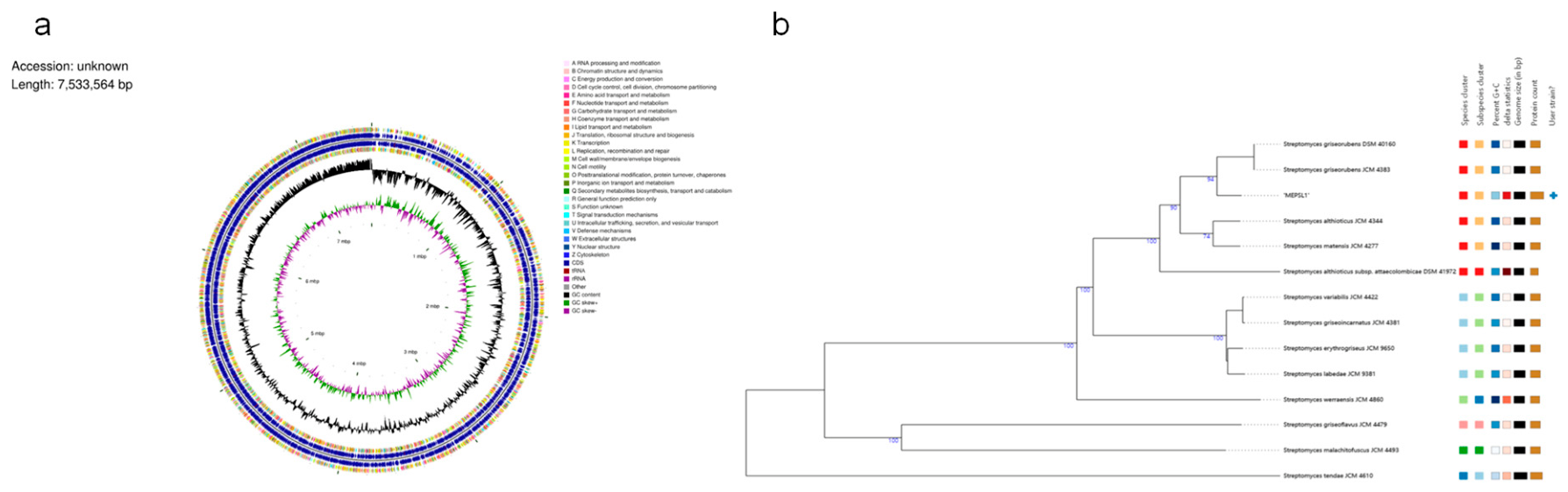
Figure 2.
ANI analysis of 20 species of Streptomyces.
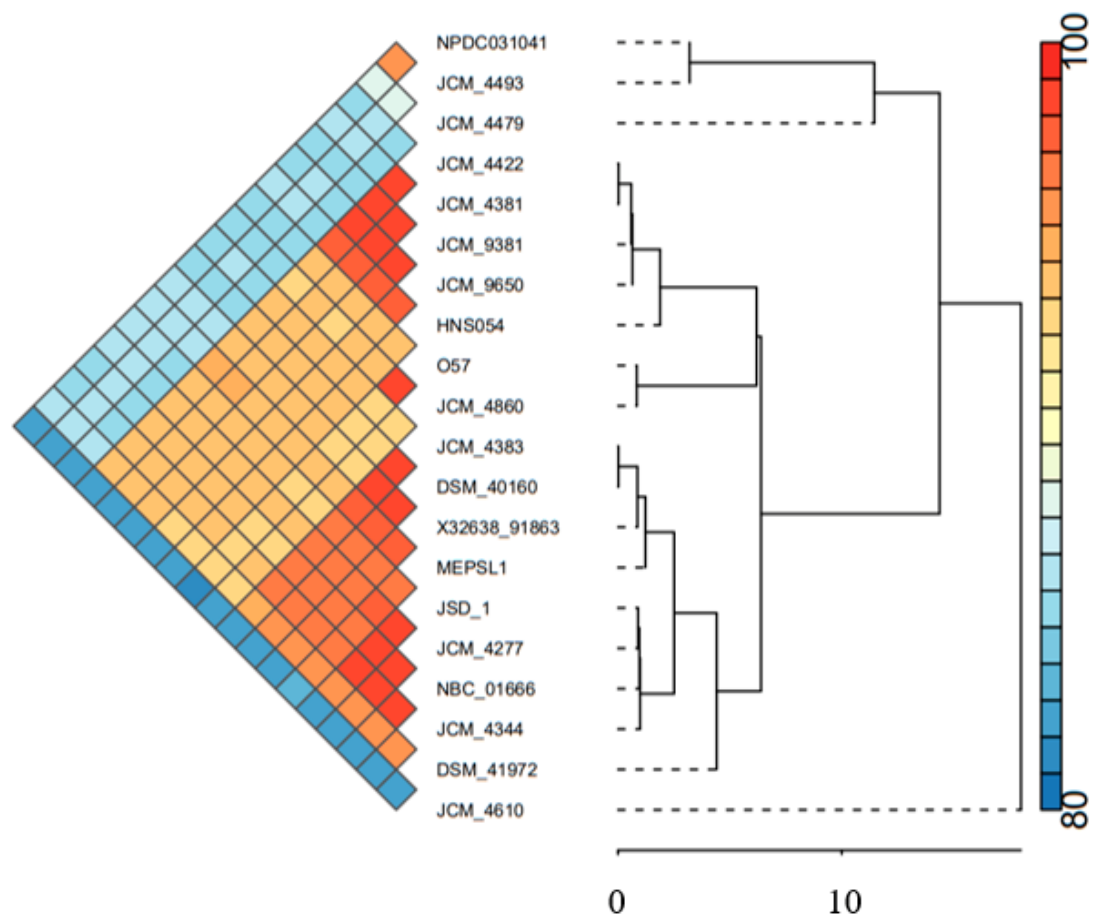
Figure 3.
Pan-genome analysis of Streptomyces. Blue boxes/lines represent the pan-genome, whereas orange boxes/lines represent the core genome. The continuous expansion of the pan-genome together with the contraction and stabilization of the core genome indicates an open pan-genome and substantial accessory-gene diversity among the analyzed Streptomyces strains.
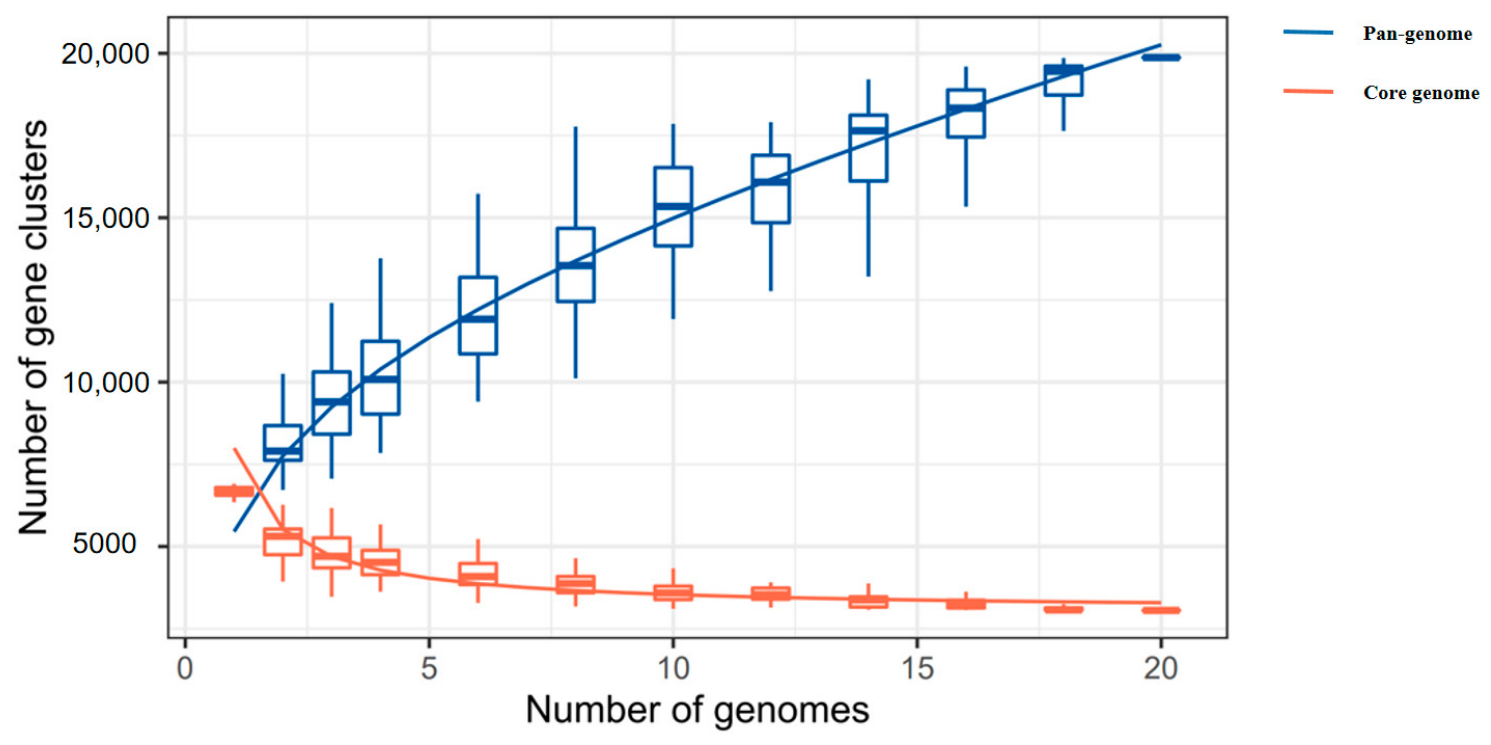
Figure 4.
Pan-genome map based on COG annotation. In the circular COG map, blue indicates cellular processes and signaling, yellow indicates information storage and processing, red/orange indicates metabolism, and white/light sectors indicate poorly characterized or unannotated genes. The dominant metabolic category supports the strong nutrient-utilization capacity and secondary metabolite potential of MEPSL1 and related Streptomyces strains.
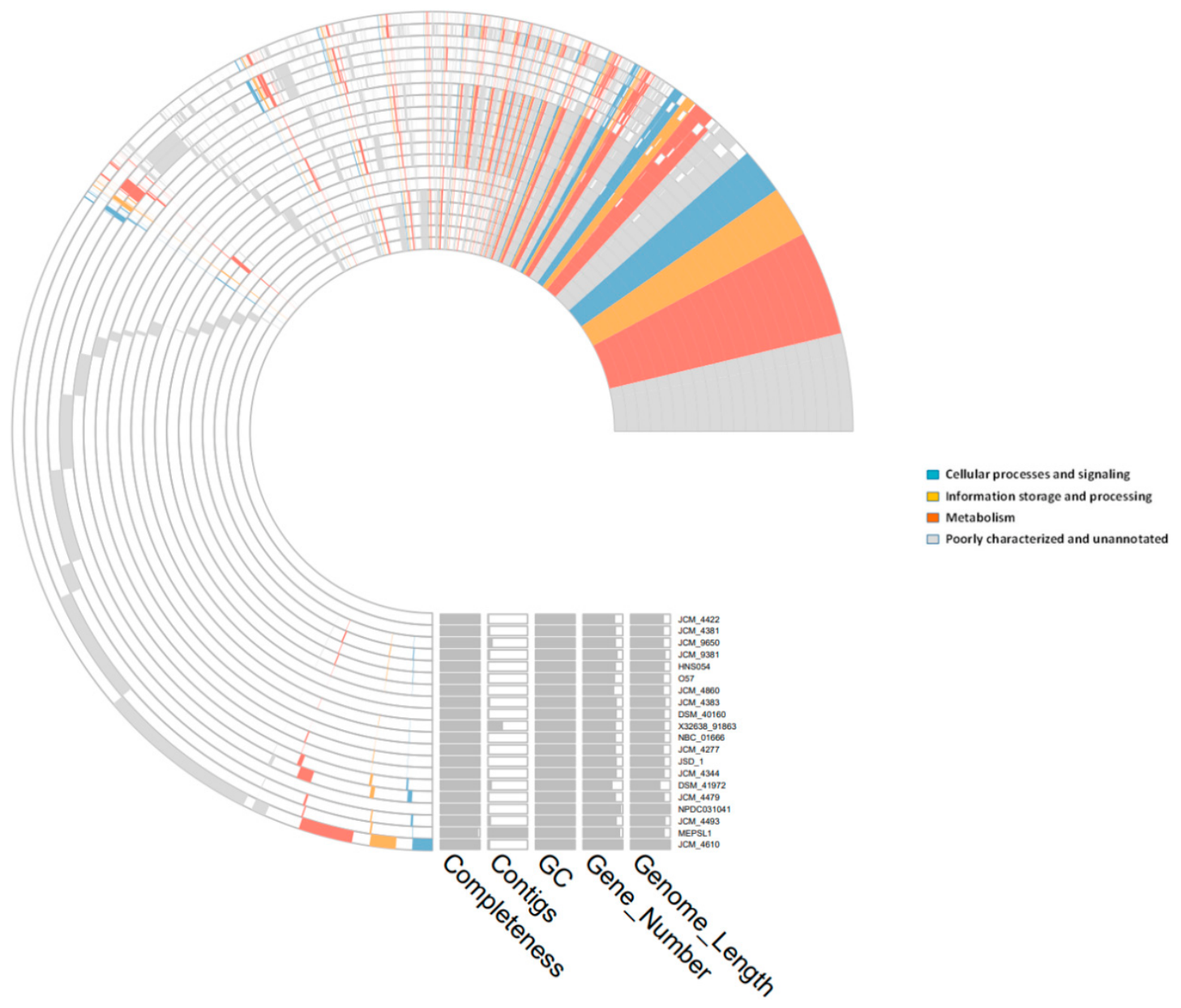
Figure 5.
Distribution of antibiotic resistance genes (A) and virulence factors (B) in Streptomyces griseorubens strain MEPSL1.
Figure 5.
Distribution of antibiotic resistance genes (A) and virulence factors (B) in Streptomyces griseorubens strain MEPSL1.
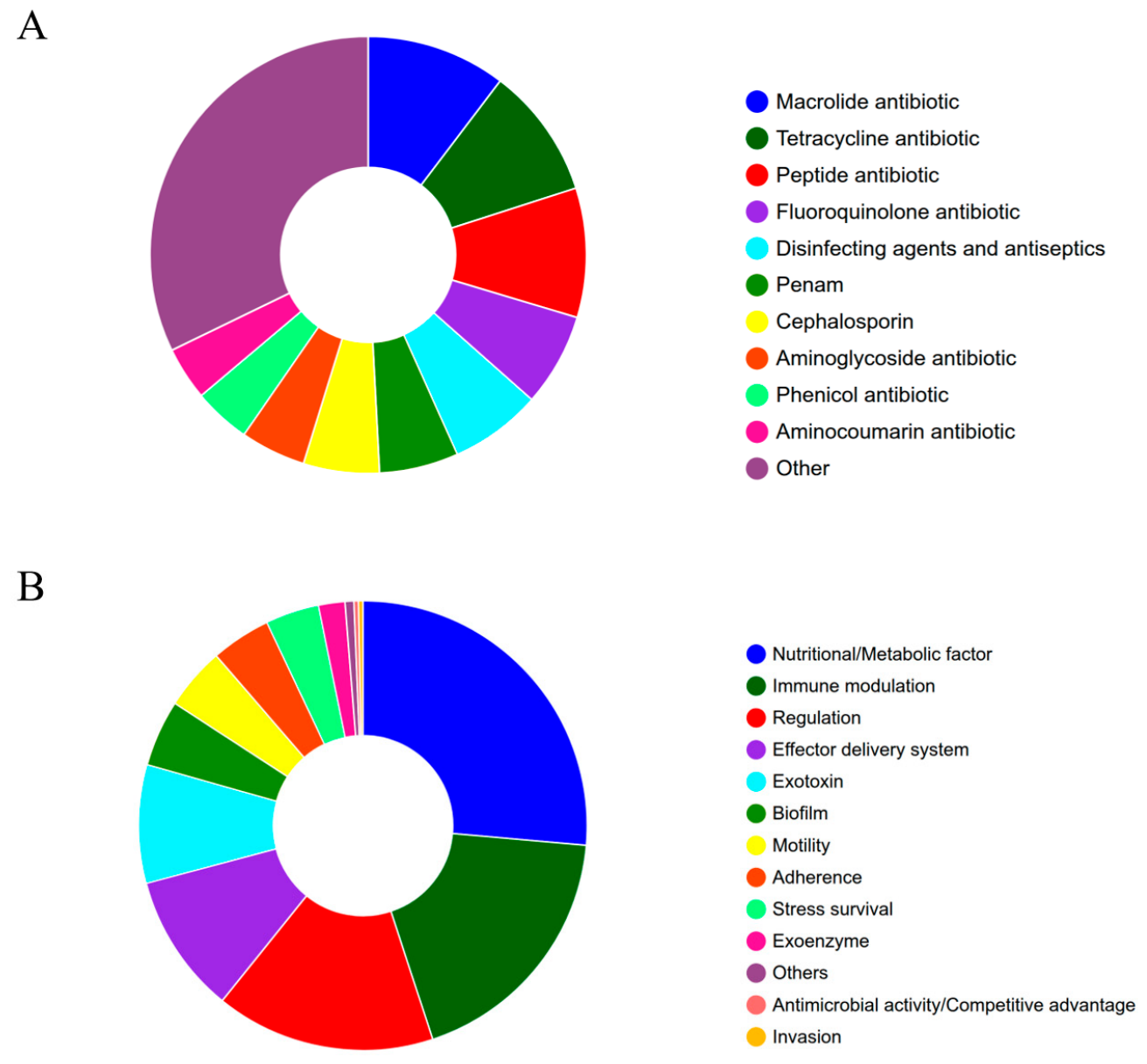

Table 1.
dDDH results of MEPSL1.
| Query Strain | Subject Strain | dDDH (d0, in %) | C.I. (d0, in %) | dDDH (d4, in %) | C.I. (d4, in %) | dDDH (d6, in %) | C.I. (d6, in %) | G + C Content Difference (in %) |
|---|---|---|---|---|---|---|---|---|
| MEPSL1 | Streptomyces griseorubens JCM 4383 | 81.2 | [77.3–84.6] | 91.6 | [89.5–93.4] | 85.9 | [82.8–88.5] | 0.41 |
| MEPSL1 | Streptomyces griseorubens DSM 40160 | 81.9 | [78.0–85.2] | 91.6 | [89.5–93.4] | 86.4 | [83.3–89.0] | 0.52 |
| MEPSL1 | Streptomyces matensis JCM 4277 | 80.5 | [76.6–83.9] | 82.7 | [79.9–85.2] | 83.8 | [80.6–86.6] | 0.65 |
| MEPSL1 | Streptomyces althioticus JCM 4344 | 78 | [74.0–81.5] | 82.6 | [79.7–85.1] | 81.7 | [78.3–84.6] | 0.53 |
| MEPSL1 | Streptomyces althioticus subsp. attaecolombicae DSM 41972 | 51.8 | [48.4–55.3] | 70.7 | [67.7–73.5] | 55.4 | [52.2–58.5] | 0.25 |
| MEPSL1 | Streptomyces griseoincarnatus JCM 4381 | 62.2 | [58.5–65.8] | 62.2 | [59.3–65.0] | 63.8 | [60.4–67.0] | 0.26 |
| MEPSL1 | Streptomyces variabilis JCM 4422 | 63 | [59.3–66.6] | 62.2 | [59.4–65.1] | 64.5 | [61.1–67.7] | 0.38 |
| MEPSL1 | Streptomyces erythrogriseus JCM 9650 | 64.4 | [60.6–68.0] | 62 | [59.1–64.8] | 65.6 | [62.3–68.9] | 0.34 |
| MEPSL1 | Streptomyces labedae JCM 9381 | 61.2 | [57.5–64.8] | 61.9 | [59.0–64.7] | 62.7 | [59.4–65.9] | 0.25 |
| MEPSL1 | Streptomyces werraensis JCM 4860 | 62.9 | [59.2–66.5] | 57.5 | [54.7–60.3] | 63.3 | [60.0–66.5] | 0.61 |
| MEPSL1 | Streptomyces malachitofuscus JCM 4493 | 38.8 | [35.5–42.3] | 33.8 | [31.4–36.3] | 36.8 | [33.9–39.9] | 0.35 |
| MEPSL1 | Streptomyces griseoflavus JCM 4479 | 38 | [34.6–41.4] | 33.3 | [30.9–35.8] | 36 | [33.1–39.1] | 0.3 |
| MEPSL1 | Streptomyces tendae JCM 4610 | 28.3 | [25.0–31.9] | 28 | [25.6–30.5] | 27 | [24.1–30.2] | 0.02 |
Table 2.
Information of 19 reference genomes of Streptomyces species.
| Strains | Name | Bio Project Number | Host/Isolation Source | Geographic Location |
|---|---|---|---|---|
| Streptomyces griseorubens | Streptomyces griseorubens strain JSD-1 | PRJNA243545 | Soil | China: Shanghai |
| Streptomyces griseorubens | Streptomyces griseorubens JCM 4383 | PRJDB10510 | Not applicable | Not applicable |
| Streptomyces griseorubens | Streptomyces griseorubens strain 32638_91863 | PRJNA1144824 | Cat | United Kingdom: Scotland |
| Streptomyces griseorubens | Streptomyces griseorubens strain DSM 40160 | PRJNA709645 | Not applicable | Not applicable |
| Streptomyces matensis | Streptomyces matensis JCM 4277 | PRJDB10510 | Not applicable | Not applicable |
| Streptomyces griseoincarnatus | Streptomyces griseoincarnatus JCM 4381 | PRJDB10510 | Not applicable | Not applicable |
| Streptomyces griseoincarnatus | Streptomyces griseoincarnatus strain HNS054 | PRJNA1046305 | Mycale sp. | China: Fujian |
| Streptomyces althioticus | Streptomyces althioticus JCM 4344 | PRJDB10510 | Not applicable | Not applicable |
| Streptomyces althioticus subsp. Attaecolombicae | Streptomyces althioticus subsp. attaecolombicae strain DSM 41972 | PRJNA1016140 | Atta colombica refuse dump | Panama |
| Streptomyces althioticus | Streptomyces althioticus strain NBC 01666 | PRJNA747871 | Soil | Netherlands: Hegelsom, chicken field |
| Streptomyces erythrogriseus | Streptomyces erythrogriseus JCM 9650 | PRJDB10510 | Not applicable | Not applicable |
| Streptomyces variabilis | Streptomyces variabilis JCM 4422 | PRJDB10510 | Not applicable | Not applicable |
| Streptomyces werraensis | Streptomyces werraensis JCM 4860 | PRJDB10510 | Not applicable | Not applicable |
| Streptomyces werraensis | Streptomyces werraensis strain O57 | PRJNA592362 | Potato tuber | Not applicable |
| Streptomyces griseoincarnatus | Streptomyces griseoincarnatus JCM 9381 | PRJDB10510 | Soil | Mexico |
| Streptomyces malachitofuscus | Streptomyces malachitofuscus JCM 4493 | PRJDB10510 | Not applicable | Not applicable |
| Streptomyces malachitofuscus | Streptomyces malachitofuscus strain NPDC031041 | PRJNA1106891 | Not applicable | Not applicable |
| Streptomyces griseoflavus | Streptomyces griseoflavus JCM 4479 | PRJDB10510 | Not applicable | Not applicable |
| Streptomyces tendae | Streptomyces tendae JCM 4610 | PRJDB10510 | Not applicable | Not applicable |
Table 3.
Predicted secondary metabolite biosynthetic gene clusters in MEPSL1.
| Cluster ID | Type | MIBiG Accession | Similar Cluster | Similarity (%) | Gene No. |
|---|---|---|---|---|---|
| cluster 1 | RRE-containing | - | - | - | 19 |
| cluster 2 | lanthipeptide-class-i | BGC0001735 | pentostatine/vidarabine | 6 | 34 |
| cluster 3 | NRPS-like | BGC0000379 | glycinocin A | 23 | 11 |
| cluster 4 | siderophore | BGC0000940 | desferrioxamin B/desferrioxamine E | 83 | 6 |
| cluster 5 | NRPS | BGC0000379 | glycinocin A | 13 | 4 |
| cluster 6 | betalactone | BGC0001979 | LL-D49194α1 (LLD) | 13 | 8 |
| cluster 7 | terpene | BGC0000663 | hopene | 15 | 8 |
| cluster 8 | terpene | BGC0001181 | geosmin | 100 | 5 |
| cluster 9 | NRPS-like | BGC0000354 | friulimicin A/friulimicin B/friulimicin C/friulimicin D | 15 | 5 |
| cluster 10 | RiPP-like | BGC0000518 | informatipeptin | 25 | 5 |
| cluster 11 | T2PKS | BGC0000271 | spore pigment | 41 | 5 |
| cluster 12 | terpene | BGC0000660 | albaflavenone | 100 | 5 |
| cluster 13 | RiPP-like | - | - | - | 4 |
| cluster 14 | ectoine | BGC0000853 | ectoine | 100 | 5 |
| cluster 15 | terpene | BGC0000663 | hopene | 15 | 3 |
| cluster 16 | NRPS-like | BGC0001230 | salinamide A/salinamide B/salinamide C/salinamide D/salinamide E/salinamide F/desmethylsalinamide C/desmethylsalinamide E | 28 | 2 |
| cluster 17 | RRE-containing | - | - | - | 4 |
| cluster 18 | PKS-like | - | - | - | 3 |
| cluster 19 | NRPS | - | - | - | 1 |
| cluster 20 | T3PKS | BGC0000282 | alkylresorcinol | 66 | 3 |
| cluster 21 | terpene | BGC0000633 | carotenoid | 18 | 2 |
| cluster 22 | siderophore | - | - | - | 2 |
| cluster 23 | RRE-containing | - | - | - | 1 |
| cluster 24 | terpene | BGC0001181 | geosmin | 100 | 1 |
Abbreviations: RRE, RiPP, NRPS, PKS, T2PKS and T3PKS denote RiPP recognition element, ribosomally synthesized and post-translationally modified peptide, nonribosomal peptide synthetase, polyketide synthase, type II PKS and type III PKS, respectively.
Disclaimer/Publisher’s Note: The statements, opinions and data contained in all publications are solely those of the individual author(s) and contributor(s) and not of MDPI and/or the editor(s). MDPI and/or the editor(s) disclaim responsibility for any injury to people or property resulting from any ideas, methods, instructions or products referred to in the content. |
© 2026 by the authors. Licensee MDPI, Basel, Switzerland. This article is an open access article distributed under the terms and conditions of the Creative Commons Attribution (CC BY) license (http://creativecommons.org/licenses/by/4.0/).
Copyright: This open access article is published under a Creative Commons CC BY 4.0 license, which permit the free download, distribution, and reuse, provided that the author and preprint are cited in any reuse.