
Submitted:
14 October 2026
Posted:
15 October 2026
You are already at the latest version
Abstract
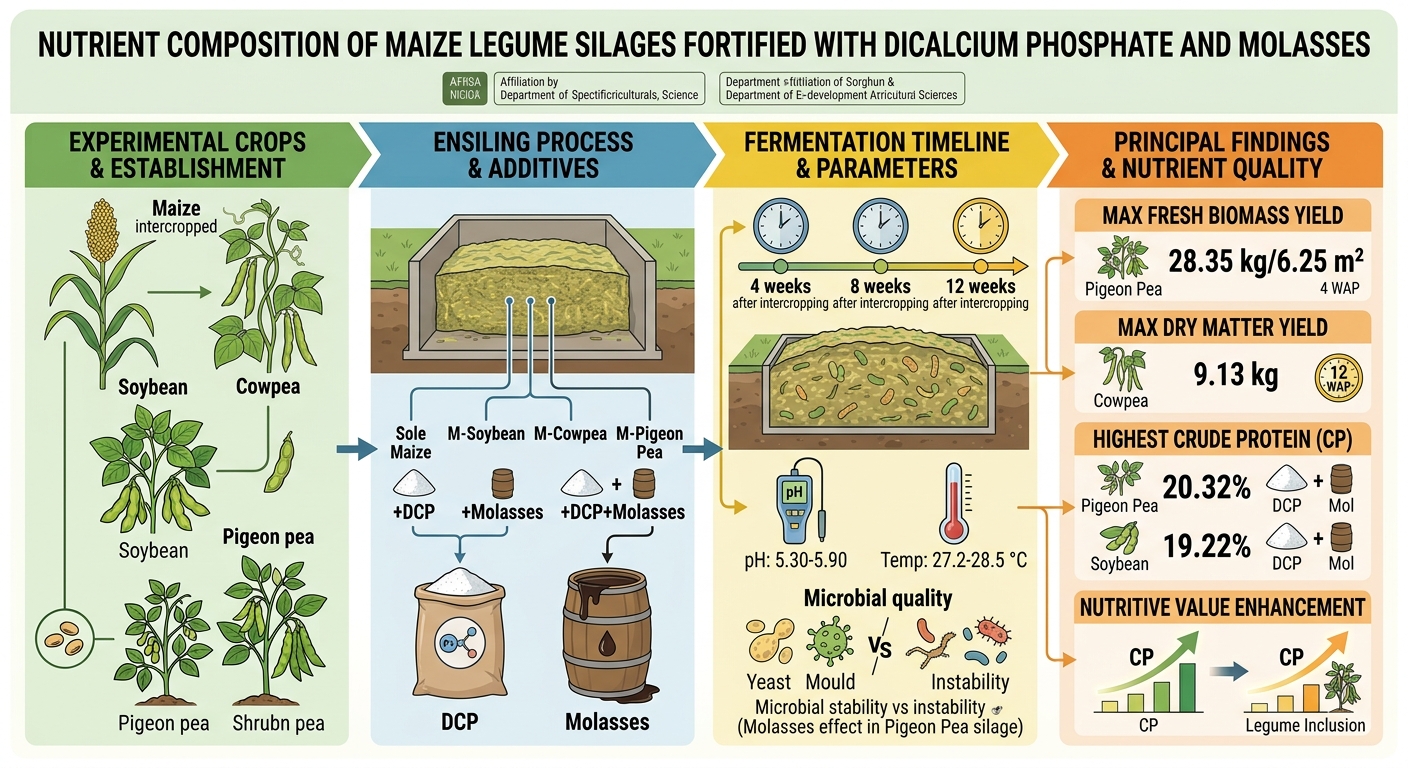
Integrating legumes into maize silage systems may improve forage yield, nutritive value, and fermentation quality, but responses vary with legume species, harvest stage, and additive use. This study evaluated the effects of soybean, cowpea, and pigeon pea inclusion, harvest stage, and silage additives on biomass yield, proximate composition, microbial quality, and fermentation characteristics of maize-legume silages. Maize was intercropped with each legume and harvested at 4, 8, and 12 weeks after planting. Silages were prepared from sole maize and maize-legume mixtures and treated with dicalcium phosphate (DCP), molasses, or their combination. Pigeon pea mixtures produced the highest fresh biomass yield at 4 weeks (28.35 kg/6.25 m²), whereas cowpea mixtures recorded the highest dry matter yield at 12 weeks (9.13 kg). Crude protein was highest in pigeon pea and soybean mixtures receiving DCP plus molasses (20.32% and 19.22%, respectively). Soybean-based silages showed relatively stable pH values (5.40–5.56), while overall fermentation pH ranged from 5.30 to 5.90 and temperature from 27.2 to 28.5 °C. Molasses improved moisture retention and fat content but was associated with increased yeast and mould counts in pigeon pea silage. Overall, legume inclusion improved nutritive characteristics, with responses dependent on legume species, harvest stage, and additive combination.
Keywords:
maize‐legume silage
; fermentation quality
; crude protein
; microbial stability
; intercropping system
; feed additives
1. Introduction
Maize (Zea mays L.) is an important cereal crop used in human nutrition and livestock feeding because of its high biomass productivity, energy content, and suitability for ensiling. Maize silage is widely used in ruminant production systems; however, its relatively low crude protein concentration can limit its capacity to meet the protein requirements of growing and lactating animals when supplied as the principal forage source [1]. Integrating legumes into maize production and silage systems offers an opportunity to improve forage nutritive value while diversifying crop production [2]. Legumes such as soybean (Glycine max L.), cowpea (Vigna unguiculata (L.) Walp.), and pigeon pea (Cajanus cajan (L.) Millsp.) differ in their growth characteristics, protein concentrations, and interactions with companion cereal crops. Consequently, the choice of legume can influence total biomass production, nutrient composition, and the quality of the resulting silage [1,2,3]. Research on maize–legume systems has demonstrated that intercropping can improve crude protein concentration and some indicators of feeding value, although responses depend on the legume species, planting arrangement, and environmental conditions. Kızılşımşek et al. [1] reported improvements in crude protein concentration when maize was intercropped with legumes, while Htet et al. [2] demonstrated that maize–soybean cropping arrangements and harvest maturity affected forage production and nutritional characteristics. Similarly, Javanmard et al. [3] reported that maize–legume intercropping could improve forage yield and quality, although the magnitude of the response varied among legume species. These findings suggest that legume integration should be evaluated not only in terms of total biomass but also in relation to nutrient composition and the suitability of the harvested material for conservation as silage.
The nutritional and preservation characteristics of maize–legume silage may also be influenced by the stage at which the crops are harvested. Plant maturity affects dry matter accumulation, moisture concentration, structural carbohydrates, soluble nutrients, and the proportion of leaves and stems. Harvesting too early may result in excessive moisture, whereas harvesting too late can increase fiber accumulation and alter the availability of fermentable substrates. The optimum harvesting stage therefore represents a balance between biomass production, nutrient concentration, and ensiling suitability. Recent work on maize intercropped with legumes has confirmed that crop composition and harvest conditions influence silage nutritive value and fermentation characteristics [2,3,4]. In addition, the proportions of maize and legume in the ensiled material may determine the extent to which the protein contribution of the legume offsets the energy contribution of maize. These relationships are particularly important in tropical livestock production systems, where seasonal fluctuations in forage availability and quality frequently increase dependence on purchased concentrates and crop residues.
Silage additives provide another means of influencing preservation and nutrient composition. Molasses is a sugar-rich feed ingredient that can supply fermentable carbohydrates to microorganisms involved in silage fermentation [4,5]. Under suitable conditions, this can support lactic acid production and the development of an acidic environment that limits undesirable microbial activity [6,7]. Nevertheless, the effect of molasses depends on the characteristics of the ensiled crop, application rate, moisture concentration, and microbial population. Silage additives do not invariably produce the same fermentation response across different crops and management conditions [4,5]. Dicalcium phosphate (DCP), in contrast, is principally a source of calcium and phosphorus. Its inclusion may influence the mineral composition of the ensiled material, but its effects on fermentation should not be assumed to be equivalent to those of a readily fermentable carbohydrate source [8,9]. The combined application of molasses and DCP may therefore affect nutritional and fermentation characteristics through different mechanisms, making it important to evaluate the additives individually and in combination.[6,7,8,9]
Despite the growing interest in cereal–legume intercropping, the relative effects of soybean, cowpea, and pigeon pea harvested at different growth stages and treated with DCP and molasses require further investigation under the conditions of southwestern Nigeria.[10] In particular, comparisons involving biomass yield, proximate composition, pH, temperature, and microbial counts can help identify crop combinations that offer nutritional advantages without compromising silage preservation. This information is relevant to the development of locally adaptable forage conservation strategies for ruminant production.
Therefore, this study evaluated the effects of intercropping maize with soybean, cowpea, and pigeon pea at 4, 8, and 12 weeks after planting, together with the application of DCP and molasses, on biomass yield, proximate composition, microbial quality, and fermentation characteristics of maize–legume silages. It was hypothesized that legume species, harvest stage, and additive treatment would significantly influence these response variables. The study was intended to identify combinations that improve forage nutritive value while maintaining acceptable fermentation characteristics.
2. Results
This figure illustrates the biomass yield of various plant species under different environmental conditions. It compares the growth rates, efficiency of nutrient uptake, and overall productivity, providing insights into the most effective strategies for enhancing biomass production in agricultural and bioenergy contexts.
Table 1 and Figure 1 reports the fresh and dry biomass yields of maize-legume combinations harvested at weeks 4, 8, and 12, using a 6.25 m2 plot for each treatment. The treatments include T1 (Maize Only), T2 (Maize + Soybean), T3 (Maize + Cowpea), and T4 (Maize + Pigeon Pea). Superscripts denote statistically significant differences (p < 0.05) between treatments within the same harvest week and yield type.
In Week 4, T4 (Maize + Pigeon Pea) recorded the highest fresh yield (28.35ᶜ), significantly surpassing all others. This shows the early vigorous growth of pigeon pea. However, its dry yield (5.49ᵇ) was not significantly higher than that of maize alone (8.27ᵃ), which retained the highest dry matter content at this stage. Legume mixtures generally yielded lower dry matter early in growth due to higher moisture content.
By Week 8, fresh yields declined slightly for T1 (14.33ᵃ) and dramatically for T2, T3, and T4, all around 11 kg. Interestingly, T3 (Maize + Cowpea) recorded the highest dry yield (4.63ᵃ) at this stage, indicating a better dry matter conversion rate. This suggests that cowpea starts contributing more meaningfully to biomass quality by mid-stage.
In Week 12, fresh yields of all treatments except T1 (14.45ᵃ) continued to decline, indicating a natural plateau or senescence. However, T3 (Maize + Cowpea) showed a sharp increase in dry yield (9.13ᶜ)—the highest across all stages—highlighting its superior late-season dry matter contribution, pigeon pea (T4) dominates early growth in fresh biomass but falls short in dry matter later. Cowpea (T3) provides the best dry yield by Week 12. Maize alone (T1) offers consistent performance, particularly in early dry yield. These findings inform optimal harvest timing based on silage goals—whether maximizing bulk (fresh) or nutrient density (dry matter).
Table 2 presents the proximate composition of various maize-legume silages, with or without supplementation using Di-calcium phosphate (DCP) and molasses. The composition includes six key nutritional parameters: moisture, ash, fat, fibre, protein, and carbohydrate (CHO). Superscripts indicate statistically significant differences at p < 0.05.
Moisture content was highest in M+PP ONLY (35.71ᵃ) and M+SB MOLASSES ONLY (34.59ᵃ), which implies that molasses and pigeon pea significantly increased water retention. On the other hand, treatments with DCP, particularly M+PP MOLASSES ONLY (26.18ᵉ), showed the lowest moisture, suggesting DCP may aid in moisture reduction and improve silage preservation.
Ash content, indicative of total mineral content, was significantly higher in M+CP ONLY (8.66ᵃ) and M+PP DCP ONLY (8.73ᵃ), showing that cowpea and pigeon pea combinations contribute more minerals. Fat content was highest in M+PP DCP ONLY (9.59ᵃ), followed closely by molasses-supplemented treatments, reinforcing molasses’s role in increasing energy-dense compounds.
Fibre was highest in M+PP DCP + MOLASSES (16.96ᵃ) and M+CP DCP + MOLASSES (13.91ᵃ), suggesting synergistic effects of DCP and molasses in enhancing structural components. Protein content, critical for animal growth, peaked in M+PP DCP + MOLASSES (20.32ᵃ) and M+SB DCP + MOLASSES (19.22ᵃ), confirming the benefits of combined supplementation.
Carbohydrate levels were highest in M+SB ONLY (35.94ᵃ), with no additives, indicating that supplementation may trade off carbohydrate content for higher protein or fibre.
FIGURES
The pie chart illustrates the proportion of total coliform counts contributed by each treatment. It provides a visual summary of contamination levels across all samples, highlighting which maize-legume silages have the highest or lowest hygiene-related microbial presence.
Dot Plot for Aerobic Plate Count
This dot plot shows the distribution of aerobic plate counts across all silage samples. Each point represents the microbial load in a specific treatment, allowing for clear visualization of microbial variation and potential spoilage risk among treatments.
Table 3 and Figure 2 and Figure 3 explores the microbial characteristics of maize-legume silages subjected to various treatments including Di-calcium phosphate (DCP), molasses, or their combination. The microbial parameters measured are aerobic plate count, total coliforms, and mould & yeast counts, which are critical for assessing the hygienic and preservation quality of silage. Superscript letters denote significant differences at p < 0.05.
The aerobic plate count, representing the general load of aerobic microorganisms, was highest in M+CP DCP ONLY (34.55ᵃ) and M+PP MOLASSES ONLY (32.5ᵃ). These high values may suggest increased microbial activity or spoilage risk, especially in cowpea and pigeon pea silages when only DCP or molasses is used. In contrast, M+SB ONLY (19.45ᶜ) and M+CP MOLASSES ONLY (19.7ᶜ) had the lowest aerobic counts, indicating potentially better aerobic stability or lower spoilage risk.
Total coliform counts, used as indicators of hygiene and contamination, were significantly highest in M+PP MOLASSES ONLY (24.5ᵃ). This suggests that molasses may create an environment conducive to coliform proliferation, particularly in pigeon pea silage. The lowest coliform count was observed in M+SB MOLASSES ONLY (5.5ᵈ), highlighting the potential of soybean with molasses to suppress coliform growth effectively.
Mould and yeast counts, which indicate spoilage organisms, were highest in M+PP MOLASSES ONLY (15.5ᵃ) and M+SB MOLASSES ONLY/M+SB DCP + MOLASSES (14.0ᵃ), again showing the molasses influence on fungal growth. The lowest value was in M+PP ONLY (6.0ᵇ), which had no additives.
Overall, while molasses and DCP may enhance nutritional properties, they also increase microbial loads, especially in pigeon pea silage. Proper fermentation control and storage practices are essential to balance nutrition with microbial safety in these treated silages.
The bar chart displays the average pH levels for each maize-legume silage treatment. It allows visual comparison of fermentation effectiveness, where lower pH values indicate better lactic acid production and higher values suggest weaker fermentation or spoilage risks.
This dot graph presents temperature data for each silage sample, showing fermentation heat levels. Consistent temperatures indicate stable microbial activity, while outliers may suggest elevated spoilage risk or inconsistent fermentation across different maize-legume silage treatments.
This chart compares Aerobic Plate Count, Total Coliform, and Mould & Yeast levels across different maize-legume silage samples. Each sample is displayed along the x-axis with microbial counts on the y-axis for easy comparison and assessment.
Table 4 and Figure 4, Figure 5 and Figure 6 presents the pH and temperature values of various maize-legume silages treated with Di-calcium phosphate (DCP), molasses, or both. These physical parameters are essential indicators of the quality of silage fermentation. A lower pH typically indicates successful lactic acid fermentation, while moderate temperatures suggest stable microbial activity and minimal spoilage. Superscript letters indicate statistically significant differences at p < 0.05.
In terms of pH, most treatments showed similar values ranging from 5.30 to 5.72, which are within acceptable ranges for silage. The only significantly higher pH was found in M+CP ONLY (5.90ᵃ), suggesting poorer acidification and potentially less desirable fermentation. In contrast, the lowest pH values were recorded in M+PP MOLASSES ONLY (5.30ᵇ) and M+PP DCP + MOLASSES (5.34ᵇ), indicating better acidification when pigeon pea is combined with molasses and/or DCP. These treatments may have enhanced the activity of lactic acid bacteria due to higher soluble carbohydrate availability from molasses.Regarding temperature, most treatments maintained values between 27.2 °C and 28.5 °C, which is ideal for proper silage fermentation. The highest temperatures were noted in M+CP ONLY (28.5ᵃ) and M+PP ONLY (28.4ᵃ). Elevated temperatures may reflect increased microbial activity or fermentation heat but can also signal early spoilage if uncontrolled. The lowest temperatures were observed in M+SB MOLASSES ONLY (27.2ᵇ) and M+SB DCP ONLY (27.5ᵃᵇ), suggesting more stable fermentation and reduced microbial metabolism.Overall, the results suggest that the inclusion of molasses and DCP does not significantly disrupt silage pH or temperature but can improve acidification—especially in pigeon pea mixtures. Treatments with only legumes and no additives showed higher pH or temperatures, indicating the need for supplementation to enhance fermentation quality
3. Discussion
3.1. Effects of Legume Species and Harvest Stage on Biomass Yield
The results of this study demonstrated that biomass production in maize–legume cropping systems varied with legume species and harvest stage. Pigeon pea mixtures produced the highest fresh biomass yield at 4 weeks after planting (WAP), reaching 28.35 kg per 6.25 m2, whereas cowpea-based mixtures recorded the highest dry matter yield at 12 WAP, at 9.13 kg. These findings suggest that the advantages associated with different legume species depend partly on the stage of crop development and whether productivity is assessed using fresh or dry biomass. Fresh biomass yield is influenced by both plant material accumulation and moisture content. Consequently, a treatment producing the highest fresh yield does not necessarily produce the greatest dry matter yield. The relatively high early fresh biomass of pigeon pea mixtures may be associated with differences in crop establishment, canopy development, and the combined biomass contribution of maize and pigeon pea. However, these possible explanations require supporting measurements of plant growth and moisture content. The superior dry matter yield recorded in cowpea mixtures at 12 WAP suggests that this cropping combination performed favourably at the later harvest stage. Differences in plant architecture, leaf development, stem production, and competition for light, water, and nutrients may contribute to variation in biomass accumulation among intercrops. Nevertheless, these mechanisms cannot be established from biomass measurements alone. Previous studies have similarly demonstrated that cereal–legume intercropping can influence forage production and nutritional composition. [11] evaluated maize–soybean and maize–cowpea mixtures and reported differences in silage yield, nutritional quality, and fermentation characteristics among cropping combinations. Marques et al. [12] also investigated maize–soybean intercropping and demonstrated that the composition of the intercrop influenced silage production and quality. These findings support the importance of evaluating legume species and cropping arrangements when selecting forage combinations for conservation. The present results also highlight the importance of harvest timing [11,12]. Harvesting at an early stage may provide substantial fresh biomass but may result in material with high moisture content. Conversely, harvesting later may increase dry matter accumulation while altering fiber concentration, nutrient availability, and the proportions of leaves and stems [15,16]. Therefore, the selection of an appropriate harvest stage should consider biomass yield alongside nutritional composition and ensiling suitability. For livestock production systems in Nigeria, where seasonal feed shortages can constrain animal productivity, identifying appropriate maize–legume combinations could help improve the availability of conserved forage. However, the present findings establish differences in crop and silage characteristics rather than direct improvements in animal performance.
3.2. Crude Protein Concentration and Nutritional Improvement
Crude protein concentration was highest in pigeon pea and soybean mixtures receiving the combined application of dicalcium phosphate (DCP) and molasses, with reported values of 20.32% and 19.22%, respectively. These results indicate that the corresponding treatment combinations produced material with relatively high crude protein concentrations.
The nutritional advantages of cereal–legume mixtures arise partly from the complementary composition of the component crops. Maize generally contributes substantial fermentable carbohydrate, whereas legumes can provide additional protein and nitrogenous compounds. Incorporating legume biomass into maize-based forage can therefore increase the protein concentration of the resulting material.
[11] reported differences in crude protein concentration and other nutritional characteristics among maize–soybean and maize–cowpea mixtures. Similarly, Marques et al. [12] investigated maize–soybean intercropping and demonstrated the importance of crop composition in determining silage nutritional quality. These studies support the potential of cereal–legume systems to improve the nutritional composition of conserved forage.
In the present study, pigeon pea mixtures recorded a higher crude protein concentration than soybean mixtures under the combined DCP and molasses treatment. This difference suggests that the response to additive application may depend on the legume species. Pigeon pea and soybean differ in their growth characteristics, nutrient composition, and proportions of leaves and stems. Such differences could influence the nutritional composition of the harvested material.
However, the higher crude protein concentrations observed under the combined treatment do not establish that DCP or molasses directly increased protein synthesis. DCP primarily supplies calcium and phosphorus, whereas molasses provides fermentable carbohydrates. Any differences in crude protein concentration may reflect the original composition of the crop material, changes during fermentation, differences in dry matter concentration, or interactions among these factors.
Furthermore, crude protein concentration should not be interpreted as a direct measure of protein availability to ruminants. Crude protein analysis estimates nitrogen concentration using an appropriate conversion factor but does not independently establish amino acid composition, ruminal degradability, or metabolizable protein supply.
Accordingly, the reported values should be interpreted alongside dry matter concentration, ash content, nitrogen recovery, and other indicators of fermentation quality. The manuscript should also clearly state whether crude protein values are expressed on an as-fed or dry matter basis.
3.3. Effects of Dicalcium Phosphate and Molasses on Nutritional Composition
The highest reported crude protein concentrations were obtained from pigeon pea and soybean mixtures treated with both DCP and molasses. This finding suggests that the effects of additive treatment on nutritional composition may vary according to the crop combination.
Molasses is a carbohydrate-rich ingredient that can supply fermentable sugars to microorganisms involved in silage fermentation. When fermentable carbohydrate is limiting, molasses may support lactic acid production and contribute to the development of conditions favourable for forage preservation. Nevertheless, its effectiveness depends on the characteristics of the ensiled crop, moisture concentration, application rate, and microbial population.
[13] reviewed the effects of silage additives and showed that different additives influence preservation through distinct mechanisms. Their review emphasized that the effectiveness of an additive depends on the crop and the specific outcome being evaluated. DCP differs from molasses in its primary function. It is principally a mineral supplement and a source of calcium and phosphorus rather than a readily fermentable carbohydrate. Consequently, its effects on mineral composition should be distinguished from the effects of molasses on fermentative activity. The higher crude protein concentrations observed in the combined treatment may indicate a response associated with the overall treatment combination, but further evidence is needed to determine the underlying mechanism. The effects of DCP and molasses should be evaluated separately and jointly to establish whether the combination provides an advantage beyond that attributable to either additive alone. The reported increase in fat content associated with molasses treatment should also be interpreted cautiously. Molasses does not necessarily increase lipid synthesis during ensiling. Changes in the percentage of ether extract may arise from differences in the relative proportions of sample components or from variation in moisture and dry matter concentrations. Therefore, conclusions about additive effectiveness should be based on the complete set of measured nutritional and fermentation variables rather than on crude protein or fat concentration alone.
3.4. Fermentation pH and Temperature
The fermentation pH values ranged from 5.30 to 5.90, while the recorded temperatures ranged from 27.2 to 28.5 °C. Soybean-based silages treated with molasses showed relatively consistent pH values between 5.40 and 5.56.
These results demonstrate variation in fermentation pH among the treatments. However, the suitability of these values for silage preservation must be assessed in relation to crop dry matter concentration, buffering capacity, fermentable carbohydrate availability, and fermentation duration.
During successful ensiling, lactic acid bacteria convert fermentable sugars into organic acids, contributing to a reduction in pH. The extent and speed of acidification depend on the initial microbial population, the composition of the forage, and the conditions under which the material is ensiled. [14] reviewed the role of lactic acid bacteria in silage production and highlighted their importance in fermentation and microbial preservation.
The relatively consistent pH values observed in soybean-based silages treated with molasses may indicate a comparatively uniform response within those treatments. Nevertheless, pH consistency alone does not establish superior fermentation quality. The interpretation would be strengthened by measurements of lactic acid, acetic acid, butyric acid, and ammonia nitrogen.
The reported temperature range was relatively narrow. However, temperature measurements should be interpreted with caution unless the measurement conditions were standardized. Temperature can vary with the stage of fermentation, sampling time, exposure to oxygen, and the location at which the measurement was taken [18].
Consequently, the pH and temperature findings should be considered together with the microbial counts and other fermentation indicators before drawing conclusions about preservation quality.
3.5. Yeast and Mould Counts and Microbial Quality
Molasses treatment was associated with increased yeast and mould counts, particularly in pigeon pea silage. This finding is important because the addition of fermentable carbohydrate does not necessarily improve every aspect of silage preservation.[17]
Although molasses can supply substrates for desirable fermentative microorganisms, readily available sugars may also support other microbial populations under suitable conditions. Yeasts are particularly important because some species can metabolize organic acids when silage is exposed to oxygen, potentially contributing to pH increases and aerobic deterioration. Mould development may also indicate undesirable storage conditions or exposure to contamination [17,18,19].
[13] described the different mechanisms through which silage additives influence fermentation and aerobic stability. [15] also discussed the role of microbial populations and inoculants in silage preservation, emphasizing that microbial interactions influence the final characteristics of conserved forage. [14,15]
The increased yeast and mould counts observed in molasses-treated pigeon pea silage therefore suggest that the microbial consequences of additive application should be considered alongside nutritional benefits.[16]
4. Materials and Methods
4.1. Study Area and Experimental Period
The field experiment was conducted at the Teaching and Research Farm of the Federal University Oye-Ekiti, Ikole Campus, Ekiti State, Nigeria, located approximately at 7.7830° N and 5.5170° E. The study area lies within the tropical rainforest zone of southwestern Nigeria and is characterized by a bimodal rainfall pattern. Annual rainfall is approximately 1200–1600 mm, with the rainy season generally extending from April to October and the dry season from November to March. The reported average annual temperature is approximately 24.6 °C.
4.2. Experimental Design and Cropping Treatments
The field experiment was arranged in a randomized complete block design (RCBD) consisting of four cropping treatments, each replicated three times, giving a total of 12 experimental plots.
The treatments were:
- T1: Sole maize.
- T2: Maize intercropped with soybean.
- T3: Maize intercropped with cowpea.
- T4: Maize intercropped with pigeon pea.
The crops were harvested at 4, 8, and 12 weeks after planting (WAP). Seeds of maize (Zea mays L.), soybean (Glycine max L.), cowpea (Vigna unguiculata (L.) Walp.), and pigeon pea (Cajanus cajan (L.) Millsp.) were reportedly obtained from the International Institute of Tropical Agriculture (IITA), Ibadan, and other relevant seed sources.
Intercropping was established by alternating rows of maize with rows of the corresponding legume. The exact seed sources, varieties, planting rates, row spacing, plot dimensions, and crop-management practices should be specified according to the original field records. Weed control and pest management were carried out according to the original experimental protocol.
4.3. Biomass Harvesting and Yield Determination
Above-ground biomass was harvested at 4, 8, and 12 WAP. Fresh biomass was weighed immediately after harvesting using a calibrated weighing balance. Representative samples were collected for dry matter determination and laboratory analysis. Biomass was collected from a quadrat, the dimensions of the quadrat and the method used to select sampling locations should be specified.
4.4. Silage Preparation and Additive Treatments
The harvested maize and legume forages were processed and ensiled following standard procedures for laboratory-scale silage production, with modifications to suit the experimental treatments. The harvested forage materials were carefully sorted to remove foreign materials and damaged plant parts and were subsequently chopped into approximately 2–3 cm lengths using a forage chopper. The chopped maize and legume materials were thoroughly mixed according to their respective cropping treatments to ensure uniformity of the ensiling substrate.
Following preparation of the forage mixtures, the materials were assigned to four additive treatments: (i) untreated silage (control), (ii) silage supplemented with dicalcium phosphate (DCP), (iii) silage supplemented with molasses, and (iv) silage supplemented with a combination of DCP and molasses. Dicalcium phosphate was incorporated at 1% of the fresh forage weight, while molasses was incorporated at 3% of the fresh forage weight. For treatments receiving both additives, the respective quantities of DCP and molasses were applied to the same forage mixture. The additives were thoroughly distributed throughout the chopped forage to promote uniform treatment application.
Approximately 2 kg of the treated fresh forage was weighed into each 5-L airtight plastic container. The forage was firmly compacted manually to expel entrapped air and increase packing density. Particular attention was given to minimizing air pockets because rapid establishment of anaerobic conditions is essential for desirable lactic acid fermentation and preservation of ensiled forage. The containers were immediately sealed with airtight lids to prevent oxygen ingress and stored at ambient room temperature (approximately 25–30 °C) for 30 days.
Three independent silos were prepared for each additive treatment, giving three experimental replicates per treatment. The silos were maintained under the same storage conditions throughout the ensiling period. At the end of the 30-day fermentation period, the silos were opened individually, and representative silage samples were collected for determination of pH, temperature, proximate composition, and microbial characteristics, as appropriate to the experimental objectives.
The experimental arrangement therefore consisted of four additive treatments: control (no additive), 1% DCP, 3% molasses, and 1% DCP + 3% molasses, each replicated three times. All additive inclusion rates were calculated on a fresh-forage weight basis. The general principles of chopping, compaction, exclusion of oxygen, and evaluation of silage fermentation can be supported with established silage methodology and reviews [7,11,12].
4.5. Proximate Composition Analysis
Plant and silage samples were analyzed for moisture, ash, crude protein, ether extract, crude fiber, and nitrogen-free extract using standard laboratory procedures. Nitrogen-free extract was calculated by difference, and nutrient concentrations were expressed on a clearly specified analytical basis [18].
4.6. Mineral Analysis
Mineral composition was determined after sample digestion. Calcium, potassium, and sodium were analyzed using a Jenway PFP7 flame photometer, phosphorus by the vanadate–molybdate colorimetric method at 470 nm, and magnesium, iron, zinc, and copper using a Buck Scientific 211 atomic absorption spectrophotometer.
4.7. Fermentation Characteristics
Silage fermentation quality was assessed by measuring pH using a calibrated pH meter and temperature using a calibrated thermometer. Measurements were taken following the laboratory procedures used for the experiment.
4.8. Microbiological Analysis
Silage samples were analyzed for yeast and mould populations using microbiological procedures. Microbial counts were expressed as colony-forming units per gram (CFU/g), where applicable.
5. Statistical Analysis
Data were analyzed using an appropriate statistical model reflecting the experimental design. Treatment means were compared using a suitable mean-separation procedure, and differences were considered statistically significant at (p < 0.05).
6. Conclusions
The study demonstrated that the effects of legume inclusion on maize-based silage characteristics varied according to legume species, harvest stage, and additive treatment. Pigeon pea mixtures produced the highest reported fresh biomass yield at 4 WAP, whereas cowpea mixtures recorded the highest reported dry matter yield at 12 WAP. The highest crude protein concentrations were observed in pigeon pea and soybean mixtures receiving combined DCP and molasses treatment.
Soybean-based silages treated with molasses exhibited relatively consistent pH values, while increased yeast and mould counts were associated with molasses treatment in pigeon pea silage. These findings indicate that improvements in nutritional composition should be evaluated alongside fermentation and microbial characteristics. Overall, maize–legume intercropping offers potential for diversifying forage resources and improving the nutritional composition of conserved feeds. However, the selection of an appropriate combination should consider biomass yield, crude protein concentration, fermentation quality, microbial stability, and production costs.
Author Contributions
Conceptualization, J.F.O.; methodology, J.F.O., D.B..; investigation, J.F.O., D.B.G..; data curation, J.F.O. and D.B ; formal analysis- J.F.O and A,B.; writing—original draft preparation, J.F.O.; writing—review and editing, J.F.O. A,B and D.B.G; supervision, J.F.O .; project administration, J.F.O. All authors have read and agreed to the published version of the manuscript.
Funding
This research received no external funding.
Data Availability Statement
The data supporting the findings of this study are available from the corresponding author upon reasonable request.
Acknowledgments
The authors acknowledge the support of the Teaching and Research Farm, Federal University Oye-Ekiti, Ikole Campus, Ekiti State, Nigeria, during the conduct of the field experiment.
Conflicts of Interest
The authors declare no conflicts of interest.
Patents
Not applicable.
References
- Castro-Montoya, J. M., & Dickhoefer, U. (2020). The nutritional value of tropical legume forages fed to ruminants as affected by their growth habit and fed form: A systematic review. Animal Feed Science and Technology, 269, Article 114641. [CrossRef]
- Gülümser, E., Mut, H., Başaran, U., & Doğrusöz, M. Ç. (2021). An assessment of ensiling potential in maize × legume (soybean and cowpea) binary mixtures for yield and feeding quality. Turkish Journal of Veterinary & Animal Sciences, 45(3), 547–555. [CrossRef]
- Marques, K. O., Jakelaitis, A., Guimarães, K. C., Pereira, L. S., Cardoso, I. S., & Lima, S. F. (2019). Production, fermentation profile, and nutritional quality of silage from corn and soybean intercropping. Semina: Ciências Agrárias, 40(6 Suppl. 2), 3143–3156. [CrossRef]
- Xu, Z., Li, C., Zhang, C., Yu, Y., van der Werf, W., & Zhang, F. (2020). Intercropping maize and soybean increases efficiency of land and fertilizer nitrogen use: A meta-analysis. Field Crops Research, 246, Article 107661. [CrossRef]
- Yang, F., Liao, D., Wu, X., Gao, R., Fan, Y., Raza, M. A., Wang, X., Yong, T., Liu, W., Liu, J., Du, J., Shu, K., & Yang, W. (2020). Relay-intercropping soybean with maize maintains soil fertility and increases nitrogen recovery efficiency by reducing nitrogen input. The Crop Journal, 8(1), 140–152. [CrossRef]
- Fan, Y., Wang, Z., Liao, D., Raza, M. A., Wang, B., Chen, J., Feng, L., Wu, X., Liu, C., Yang, W., & Yang, F. (2020). Uptake and utilization of nitrogen, phosphorus and potassium as related to yield advantage in maize–soybean intercropping under different row configurations. Scientific Reports, 10, Article 9504. [CrossRef]
- Feng, L., Yang, W., Zhou, Q., Tang, H., Ma, Q., Huang, G., & Wang, S. (2021). Effects of interspecific competition on crop yield and nitrogen utilisation in maize–soybean intercropping system. Plant, Soil and Environment, 67(8), 460–467. [CrossRef]
- Evaluation of nutritive values through comparison of forage yield and silage quality of mono-cropped and intercropped maize–soybean harvested at two maturity stages. (2021). Agriculture, 11(5), Article 452. [CrossRef]
- Bolson, D. C., et al. (2022). Intercropped maize–soybean silage: Effects on forage yield, fermentation pattern and nutritional composition. Grassland Science. [CrossRef]
- Muck, R. E., Nadeau, E. M. G., McAllister, T. A., Contreras-Govea, F. E., Santos, M. C., & Kung, L. (2018). Silage review: Recent advances and future uses of silage additives. Journal of Dairy Science, 101(5), 3980–4000. [CrossRef]
- Borreani, G., Tabacco, E., Schmidt, R. J., Holmes, B. J., & Muck, R. E. (2018). Silage review: Factors affecting dry matter and quality losses in silages. Journal of Dairy Science, 101(5), 3952–3979. [CrossRef]
- Kung, L., Jr., Shaver, R. D., Grant, R. J., & Schmidt, R. J. (2018). Silage review: Interpretation of chemical, microbial, and organoleptic components of silages. Journal of Dairy Science, 101(5), 4020–4033. [CrossRef]
- Fabiszewska, A. U., Zielińska, K. J., & Wróbel, B. (2019). Trends in designing microbial silage quality by biotechnological methods using lactic acid bacteria inoculants: A minireview. World Journal of Microbiology and Biotechnology, 35, Article 76. [CrossRef]
- Ávila, C. L. S., & Carvalho, B. F. (2020). Silage fermentation—Updates focusing on the performance of micro-organisms. Journal of Applied Microbiology. [CrossRef]
- Liu, B., Yang, Z., Huan, H., Gu, H., Xu, N., et al. (2020). Impact of molasses and microbial inoculants on fermentation quality, aerobic stability, and bacterial and fungal microbiomes of barley silage. Scientific Reports, 10, Article 5342. [CrossRef]
- Li, Y., Du, S., Sun, L., Cheng, Q., Hao, J., et al. (2022). Effects of lactic acid bacteria and molasses additives on dynamic fermentation quality and microbial community of native grass silage. Frontiers in Microbiology, 13, Article 830121. [CrossRef]
- Tatlı Seven, P., Yıldırım, E. N., Seven, İ., Kaya, C. A., & İflazoğlu Mutlu, S. (2024). An evaluation of the effectiveness of sumac and molasses as additives for alfalfa silage: Influence on nutrient composition, in vitro degradability and fermentation quality. Journal of Animal Physiology and Animal Nutrition, 108, 1096–1106. [CrossRef]
- Oluwadele, J. F., Ekeocha, A. H., & Aganga, A. A. (2024). Forage growth biomass, yield, and quality responses of three varieties of Napier grass at cutting intervals in Southwest Nigeria. Scientia Agriculturae Bohemica, 55(3), 88–94. [CrossRef]
Figure 1.
Biomass yield (Fresh and Dry).
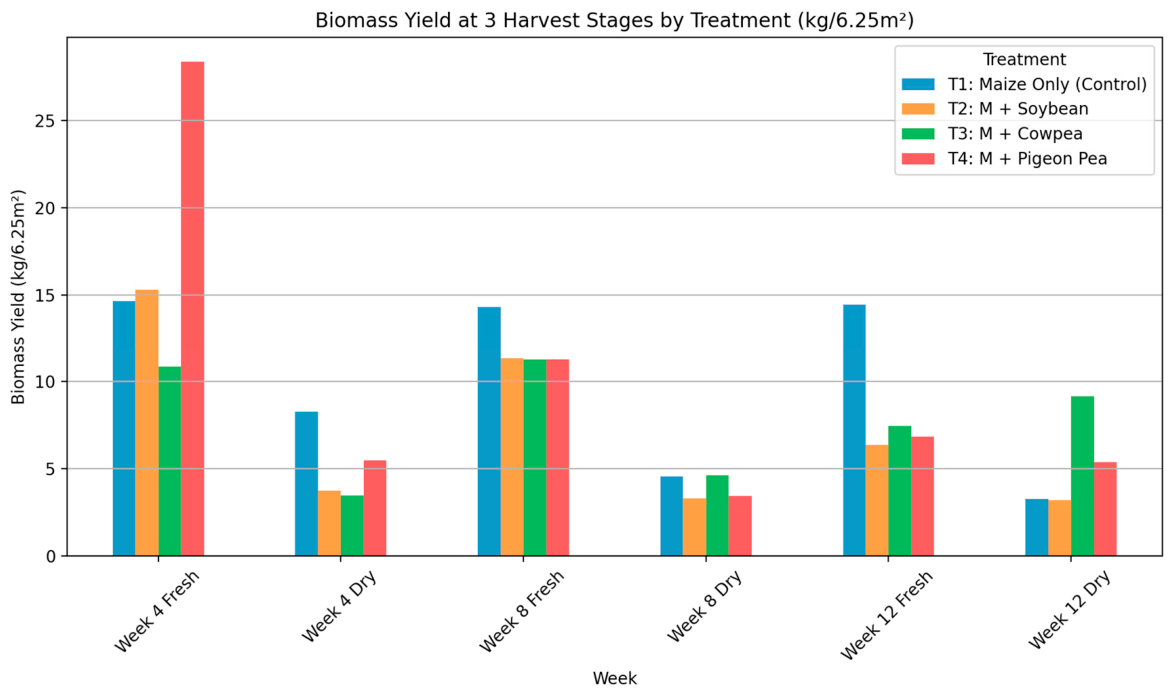
Figure 2.
Pie Chart for Total Coliform Distribution.
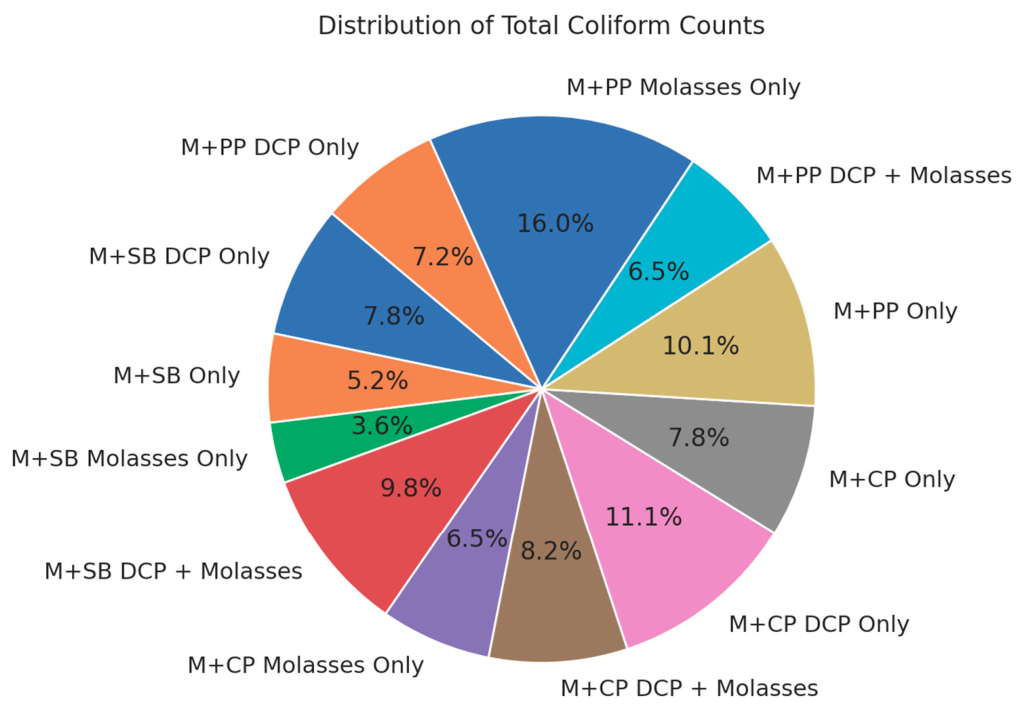
Figure 3.
Dot Plot for Aerobic Plate Count.
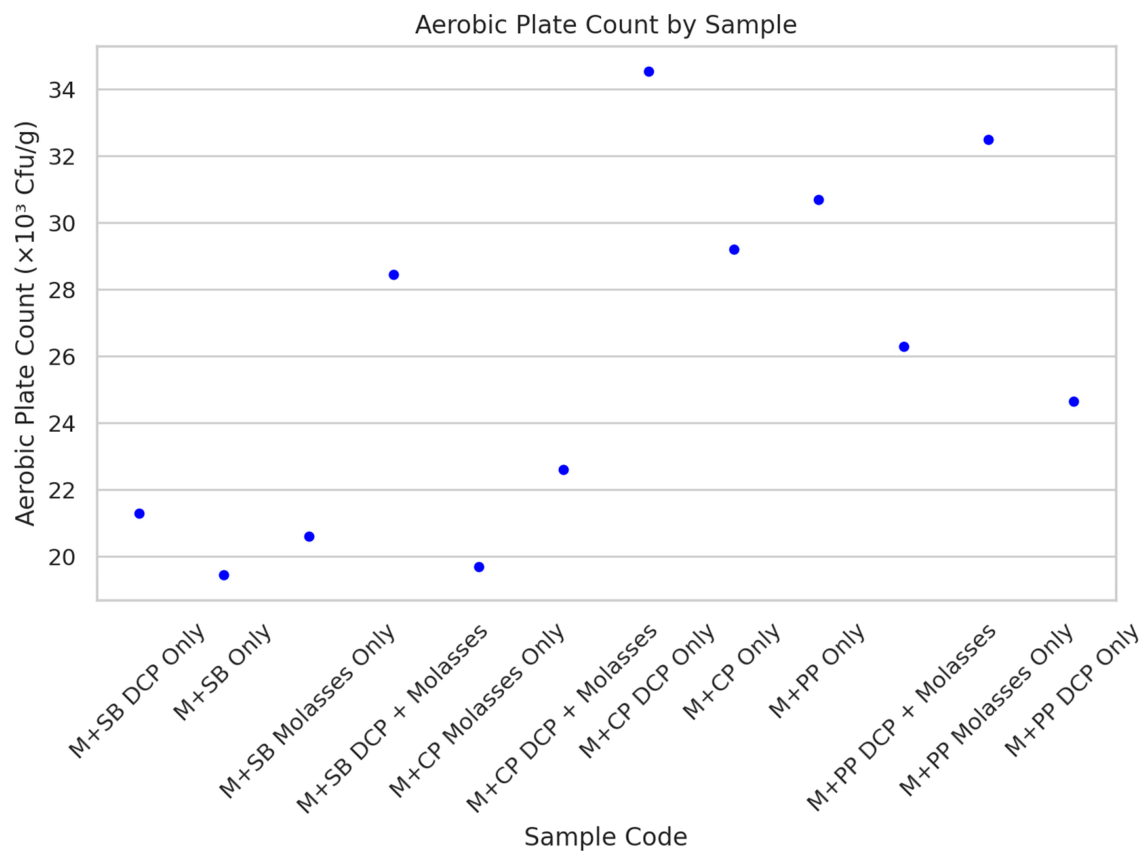
Figure 4.
Bar Chart of pH Levels by Sample Code.
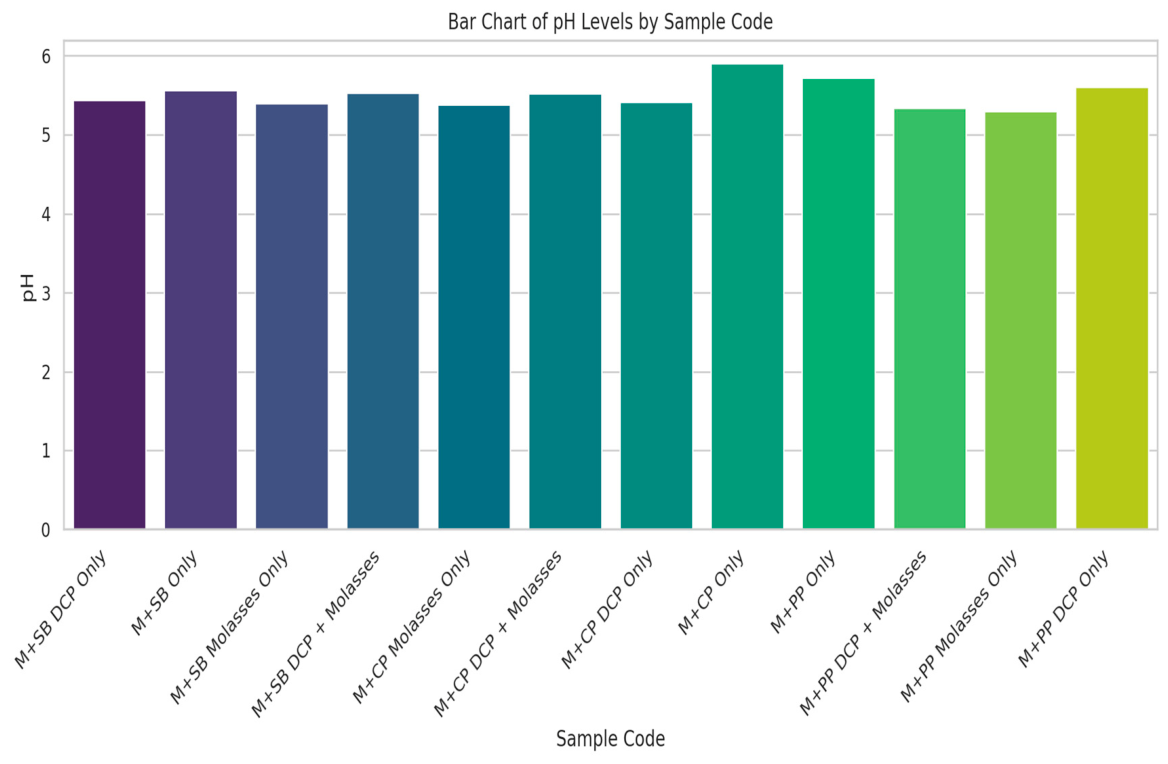
Figure 5.
Dot Graph of Temperature by Sample Code.
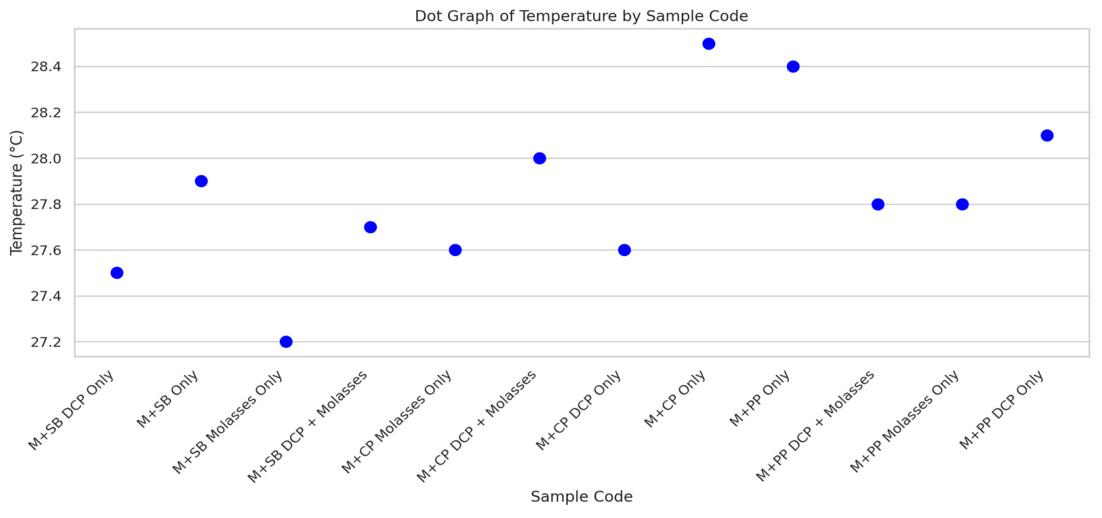
Figure 6.
Grouped Bar Chart of Microbial Quality.
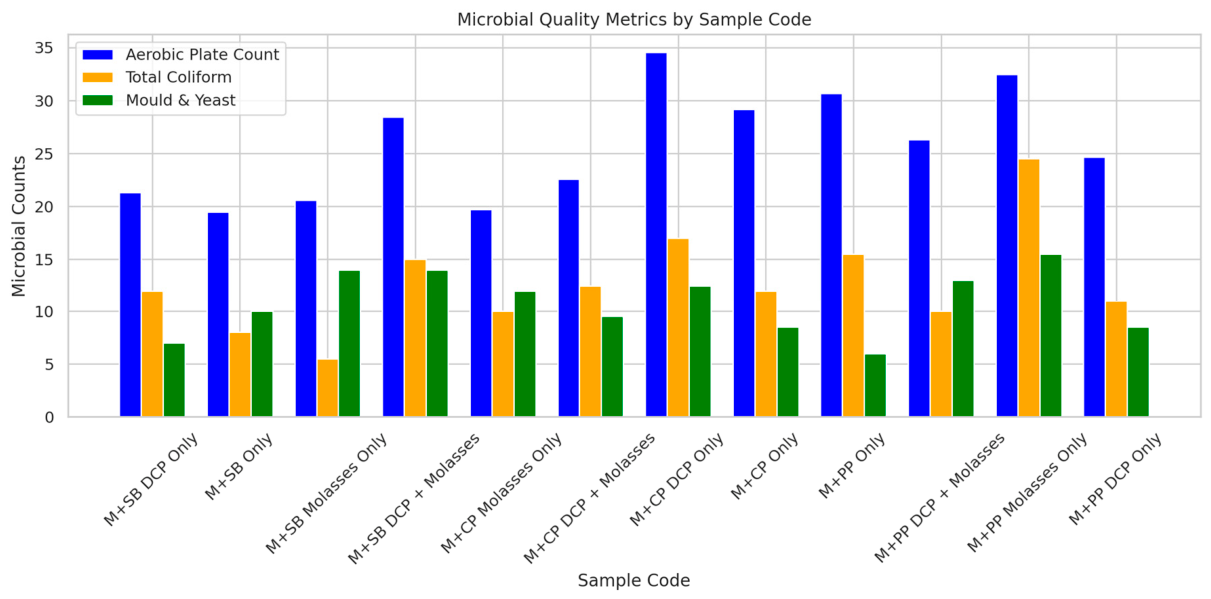

Table 1.
Biomass Yield (Fresh and Dry) at 3 Harvest Stages by Treatment (kg/6.25m2).
| Week |
T1: Maize Only (Control) |
T2: M + Soybean |
T3: M + Cowpea |
T4: M + Pigeon Pea |
| Week 4 Fresh | 14.65 ± 0.55ᵃ | 15.3 ± 1.10ᵃ | 10.83 ± 3.25ᵇ | 28.35 ± 0.45ᶜ |
| Week 4 Dry | 8.27 ± 0.17ᵃ | 3.73 ± 1.31ᵇ | 3.48 ± 0.66ᵇ | 5.49 ± 0.65ᵇ |
| Week 8 Fresh | 14.33 ± 1.23ᵃ | 11.32 ± 3.28ᵇ | 11.25 ± 2.33ᵇ | 11.27 ± 1.91ᵇ |
| Week 8 Dry | 4.57 ± 2.04ᵇ | 3.28 ± 1.07ᵇ | 4.63 ± 0.72ᵃ | 3.42 ± 0.96ᵇ |
| Week 12 Fresh | 14.45 ± 0.89ᵃ | 6.35 ± 1.53ᶜ | 7.45 ± 1.92ᶜ | 6.83 ± 1.28ᶜ |
| Week 12 Dry | 3.27 ± 1.73ᵇ | 3.18 ± 0.64ᵇ | 9.13 ± 0.63ᶜ | 5.38 ± 0.77ᵇ |
Note: Superscripts (a, b, c) indicate statistically significant differences within each week and yield type (p < 0.05).
Table 2.
Proximate Composition (%) of Sorghum-Based Mixed Rations 60:40 (Mean ± SEM).
| Sample Code | Moisture (%) | Ash (%) | Fat (%) | Fibre (%) | Protein (%) | CHO (%) |
| M+SB DCP ONLY | 28.28ᵃ | 6.37ᵇ | 7.91ᵇ | 10.54ᵇ | 18.74ᵇ | 28.17ᵇ |
| M+SB ONLY | 30.54ᵇ | 6.59ᵇ | 7.59ᵇ | 7.98ᵇ | 10.35ᵇ | 35.94ᵃ |
| M+SB MOLASSES ONLY | 34.59ᵃ | 7.62ᵃ | 9.17ᵃ | 11.26ᵃ | 12.59ᵇ | 24.77ᵇ |
| M+SB DCP + MOLASSES | 26.62ᵇ | 6.80ᵇ | 8.51ᵇ | 12.75ᵃ | 19.22ᵃ | 26.28ᵇ |
| M+CP MOLASSES ONLY | 32.46ᵃ | 7.52ᵃ | 8.39ᵇ | 9.48ᵇ | 13.61ᵇ | 28.54ᵃ |
| M+CP DCP + MOLASSES | 30.72ᵇ | 6.84ᵇ | 7.25ᵇ | 13.91ᵃ | 15.50ᵃ | 25.77ᵇ |
| M+CP DCP ONLY | 32.36ᵃ | 7.48ᵇ | 7.85ᵇ | 10.41ᵇ | 18.33ᵇ | 23.57ᵇ |
| M+CP ONLY | 29.58ᵇ | 8.66ᵃ | 8.28ᵇ | 9.87ᵇ | 16.94ᵇ | 26.67ᵇ |
| M+PP ONLY | 35.71ᵃ | 7.32ᵇ | 6.59ᵇ | 10.41ᵇ | 14.76ᵇ | 25.22ᵇ |
| M+PP DCP + MOLASSES ONLY | 30.94ᵇ | 6.90ᵇ | 7.73ᵇ | 16.96ᵃ | 20.32ᵃ | 17.14ᵇ |
| M+PP MOLASSES ONLY | 26.18ᵇ | 8.16ᵃ | 9.16ᵃ | 12.60ᵇ | 15.74ᵇ | 28.16ᵇ |
| M+PP DCP ONLY | 32.31ᵃ | 8.73ᵃ | 9.59ᵃ | 13.23ᵇ | 13.91ᵇ | 22.22ᵇ |
| SEM | ±0.01 | ±0.01 | ±0.01 | ±0.01 | ±0.01 | ±0.01 |
Note: Values with different superscripts (a–b) within each column are significantly different (p < 0.05). M+SB = Maize + Soybean ,M+CP = Maize + Cowpea,M+PP = Maize + Pigeon Pea,DCP = Defluorinated Dicalcium Phosphate, MOLASSES = Molasses.
Table 3.
Microbial Quality of Maize-Legume Silages with DCP and/or Molasses.
| Sample Code | Aerobic Plate Count (×103 Cfu/g) | Total Coliform (MPN/100g) | Mould & Yeast (Sfu/g) |
| M+SB DCP Only | 21.3ᵇ | 12.0ᵃᵇ | 7.0ᵃᵇ |
| M+SB Only | 19.45ᶜ | 8.0ᶜ | 10.0ᵃᵇ |
| M+SB Molasses Only | 20.6ᵇᶜ | 5.5ᵈ | 14.0ᵃ |
| M+SB DCP + Molasses | 28.45ᵃ | 15.0ᵃ | 14.0ᵃ |
| M+CP Molasses Only | 19.7ᶜ | 10.0ᵇᶜ | 12.0ᵃᵇ |
| M+CP DCP + Molasses | 22.6ᵇ | 12.5ᵇ | 9.5ᵃᵇ |
| M+CP DCP Only | 34.55ᵃ | 17.0ᵃ | 12.5ᵃ |
| M+CP Only | 29.2ᵇ | 12.0ᵃᵇ | 8.5ᵃᵇ |
| M+PP Only | 30.7ᵃᵇ | 15.5ᵃᵇ | 6.0ᵇ |
| M+PP DCP + Molasses | 26.3ᵇ | 10.0ᶜ | 13.0ᵃ |
| M+PP Molasses Only | 32.5ᵃ | 24.5ᵃ | 15.5ᵃ |
| M+PP DCP Only | 24.65ᵇᶜ | 11.0ᵇᶜ | 8.5ᵃᵇ |
| SEM | 1.43 | 1.54 | 0.99 |
| P VALUES | 0.021 | 0.018 | 0.026 |
Note: Superscripts indicate significant differences (p < 0.05) within each column.
Table 4.
4 Physical Parameters (pH and Temperature) of Maize-Legume Silages.
| Sample Code | pH (Mean ± SD) | Temperature (°C ± SD) |
| M+SB DCP Only | 5.44ᵇ ± 0.94 | 27.5ᵃᵇ ± 0.5 |
| M+SB Only | 5.56ᵇ ± 2.04 | 27.9ᵃᵇ ± 1.48 |
| M+SB Molasses Only | 5.40ᵇ ± 1.48 | 27.2ᵇ ± 0.2 |
| M+SB DCP + Molasses | 5.53ᵇ ± 2.04 | 27.7ᵃᵇ ± 0.7 |
| M+CP Molasses Only | 5.38ᵇ ± 1.43 | 27.6ᵃᵇ ± 2.0 |
| M+CP DCP + Molasses | 5.52ᵇ ± 0.25 | 28.0ᵃᵇ ± 3.0 |
| M+CP DCP Only | 5.41ᵇ ± 1.43 | 27.6ᵇ ± 0.2 |
| M+CP Only | 5.90ᵃ ± 1.16 | 28.5ᵃ ± 2.5 |
| M+PP Only | 5.72ᵇ ± 0.2 | 28.4ᵃ ± 1.5 |
| M+PP DCP + Molasses | 5.34ᵇ ± 1.43 | 27.8ᵃᵇ ± 1.0 |
| M+PP Molasses Only | 5.30ᵇ ± 0.3 | 27.8ᵃᵇ ± 2.5 |
| M+PP DCP Only | 5.60ᵇ ± 0.2 | 28.1ᵃᵇ ± 1.0 |
| SEM | 0.38 | 0.97 |
| p-value | ||
| 0.032 | 0.028 |
Note: Superscripts (ᵃ, ᵇ) denote significant differences (p < 0.05) within each column.SD = Standard deviation of three replicates.
Disclaimer/Publisher’s Note: The statements, opinions and data contained in all publications are solely those of the individual author(s) and contributor(s) and not of MDPI and/or the editor(s). MDPI and/or the editor(s) disclaim responsibility for any injury to people or property resulting from any ideas, methods, instructions or products referred to in the content. |
© 2026 by the authors. Licensee MDPI, Basel, Switzerland. This article is an open access article distributed under the terms and conditions of the Creative Commons Attribution (CC BY) license (http://creativecommons.org/licenses/by/4.0/).
Copyright: This open access article is published under a Creative Commons CC BY 4.0 license, which permit the free download, distribution, and reuse, provided that the author and preprint are cited in any reuse.