

Submitted:
14 October 2026
Posted:
15 October 2026
You are already at the latest version
Abstract
The scientific work of Professor William W. Muir addresses a fundamental problem in oxygen therapeutics: increasing oxygen transport capacity does not necessarily mean that oxygen reaches the tissues where it is needed. Over several decades, Muir investigated cardiovascular physiology, respiratory gas exchange, hemorrhagic shock, microvascular perfusion, hemoglobin-based oxygen carriers (HBOCs), and tissue oxygenation. His scientific involvement with Biopure, collaboration with Carl W. Rausch, and subsequent reported advisory activities in veterinary product development form an important part of this history. This article traces the development of these ideas and their experimental evaluation, leading to a proposed next step: Precision Oxygen Therapeutics based on Biological Hemoglobin Oxygen Carrier (BHOC), with oxygen delivery treated as a distinct therapeutic function rather than an attempt to replace blood.
Keywords:
William W. Muir
; oxygen delivery
; tissue oxygenation
; veterinary medicine
; hemoglobin-based oxygen carriers
; oxyglobin
; microcirculation
; precision oxygen therapeutics
Review Approach and Source Selection
This narrative review brings together selected scientific publications, regulatory assessments, archival case reports, and supplied historical accounts relevant to William W. Muir's research and the development of veterinary oxygen therapeutics. Sources were selected for their direct relevance to cardiorespiratory physiology, microvascular perfusion, tissue oxygenation, hemoglobin-based oxygen carriers, and the associated development history. Key bibliographic identifiers and numerical claims were checked against available publisher and regulatory records. Experimental studies, controlled clinical endpoints, selected uncontrolled reports, historical testimony, and the proposed BHOC research direction are considered separately. Source selection was purposive; this review does not use a systematic-search protocol or meta-analysis and does not establish completeness of the literature.
1. The Beginning: Is Restoring Circulation Enough?
William W. Muir began his scientific career by examining the physiology of the cardiovascular system and the measurement of cardiac function.
His research into cardiac output in horses during the 1970s established methods for evaluating circulatory performance [1].
He had already investigated ventilatory responses to changes in inspired oxygen and carbon dioxide in 1975 [13].
The importance of these early studies becomes clearer when viewed alongside his subsequent investigations.
Cardiac output describes the volume of blood circulated by the heart. Blood oxygen content describes the amount of oxygen transported within that circulating volume.
Neither measurement, considered alone, establishes whether oxygen reaches individual tissues in sufficient quantities.
In 1986, Muir and Swanson published a particularly interesting finding: increasing cardiac output with dobutamine did not enhance respiratory gas exchange in anesthetized, recumbent healthy horses [14].
This result was specific to the experimental conditions, but it raised a broader physiological question.
If an improvement in cardiac output does not necessarily improve gas exchange, which parameters should determine whether oxygen delivery is actually effective?
Muir continued to investigate this question through studies of hemorrhagic shock, resuscitation, anesthesia, and regional perfusion [2].
By 1999, the problem appeared explicitly in the title of one of his educational publications: Tissue in Desperate Need of Oxygen [15].
The scientific focus was increasingly directed toward the tissues themselves.
Figure 1 The Evolution of Muir's Scientific Research.
2. Biopure: A New Dimension in Oxygen Transport
The development of hemoglobin-based oxygen carriers introduced a different scientific challenge.
Hemoglobin normally transports oxygen within red blood cells. The development of extracellular hemoglobin solutions meant that oxygen could also be carried by hemoglobin distributed directly within plasma.
This changed more than the location of hemoglobin.
It introduced questions about molecular size, oxygen affinity, diffusion, vascular resistance, nitric oxide interactions, and microcirculatory regulation.
Carl W. Rausch, BS, MS, brought substantial chemical engineering and biotechnology experience to this field.
His education included chemical engineering and medical engineering at Tufts University and chemical engineering at the Massachusetts Institute of Technology.
According to the biographical record supplied for this article, Rausch was a founder of Biopure Corporation and served in senior leadership roles, including Director, Chairman, and CEO, during 1984–2005 [19].
He also served as Director of the Massachusetts Biotechnology Council (1998–2005), Director of the New England Medical Research Institute (1996–2004), and participated in the Tufts University Engineering Board of Overseers and Chemical Engineering Visiting Committee (2000–2010) [19].
Muir's relationship with Biopure extended beyond ordinary academic interest.
According to the firsthand historical account provided for this retrospective, he served as Head of the company's Scientific Advisory Board [8].
His expertise in cardiovascular physiology, shock, and veterinary critical care was highly relevant to the scientific evaluation of extracellular hemoglobin oxygen carriers.
The connection between Muir's research and Biopure's products is documented in the published scientific record.
In 2000, Muir, de Morais, and Constable investigated the effects of HBOC-301, associated with the veterinary product Oxyglobin, on left ventricular systolic function in anesthetized dogs [16].
This study is particularly important to the historical sequence.
Muir was experimentally investigating the cardiovascular effects of a hemoglobin-based oxygen carrier before publication of his major review on tissue oxygenation in 2003.
3. The 2003 Scientific Turning Point
In 2003, Muir and Maxey L. Wellman published Hemoglobin Solutions and Tissue Oxygenation in the Journal of Veterinary Internal Medicine [3].
The article examined the physiological consequences of transporting oxygen through extracellular hemoglobin.
Its importance lies in the relationship between three different processes: oxygen transport, microvascular perfusion, and tissue oxygenation.
Hemoglobin concentration determines part of the oxygen-carrying capacity of blood, but the amount of oxygen delivered to tissues also depends on circulation and oxygen unloading.
Muir and Wellman examined how the presence of extracellular hemoglobin could alter the physical environment of oxygen transport.
Unlike erythrocyte-contained hemoglobin, extracellular hemoglobin is distributed within plasma and may contribute to facilitated oxygen movement.
The authors discussed the influence of P50, the Bohr effect, blood viscosity, oxygen affinity, and molecular characteristics on oxygen transport.
They also examined functional capillary density, vascular regulation, and the effects of nitric oxide scavenging.
The potential advantages were accompanied by physiological concerns.
A carrier might increase oxygen availability while simultaneously changing vascular tone or reducing blood flow through parts of the microcirculation.
These interactions could limit the intended therapeutic benefit.
The paper therefore provided an important physiological argument: improving oxygen transport requires attention to the conditions under which oxygen actually becomes available to tissues.
In our interpretation, this is one of the most important contributions of Muir's work.
Hemoglobin concentration, oxygen-carrying capacity, and actual tissue oxygenation are related, but they are not interchangeable measurements.
4. From Perfusion to Direct Measurement of Tissue Oxygen
Muir continued studying the physiological determinants of oxygen delivery.
In 2009, Cooper, Bateman, and Muir examined the effects of hyperviscous fluid resuscitation in a canine model of hemorrhagic shock [4].
This work returned to the importance of fluid characteristics and circulation.
The viscosity of a resuscitation solution can influence hemodynamic responses even when the solution is not itself an oxygen carrier.
In 2011, Muir and colleagues published Vital Organ Tissue Oxygenation after Serial Normovolemic Exchange Transfusion with HBOC-201 in Anesthetized Swine [5].
The investigators directly measured tissue oxygen tension in the heart, brain, and kidneys during progressive normovolemic hemodilution.
This represented an important experimental development.
The investigation assessed oxygen availability in vital organs rather than depending exclusively on blood hemoglobin concentration or systemic measurements.
Tissue oxygen tension was maintained during substantial hemodilution, although preservation of tissue PO₂ was also observed in the comparator group.
The results therefore should not be interpreted as proof of superiority across all physiological endpoints.
Their importance lies in the direct measurement of organ oxygenation during experimental evaluation of an extracellular hemoglobin carrier.
5. The 2014 Study: Muir, Rausch, and the Question of Oxygen Debt
In 2014, William W. Muir, Carl W. Rausch, and colleagues published Dose-Dependent Hemodynamic, Biochemical, and Tissue Oxygen Effects of OC99 following Severe Oxygen Debt Produced by Hemorrhagic Shock in Dogs [6].
This investigation addressed an increasingly specific question.
Could a stabilized extracellular hemoglobin carrier improve tissue oxygen availability and support recovery from the metabolic consequences of severe hemorrhagic shock?
Following pilot experiments, 24 dogs were assigned to four experimental groups.
The investigators measured systemic and pulmonary hemodynamics, plasma hemoglobin concentrations, tissue oxygen tension, lactate, and base excess.
The experimental design therefore connected three essential questions:
Did oxygen become available in the tissue?
Was improvement accompanied by a favorable metabolic response?
What cardiovascular consequences followed administration of the oxygen carrier?
At OC99 doses of 0.325 and 0.65 g/kg, the corresponding mean plasma hemoglobin concentrations were approximately 0.63 and 1.11 g/dL.
Both doses were associated with improvements in tissue oxygen tension and metabolic variables compared with the control and lowest-dose groups [6].
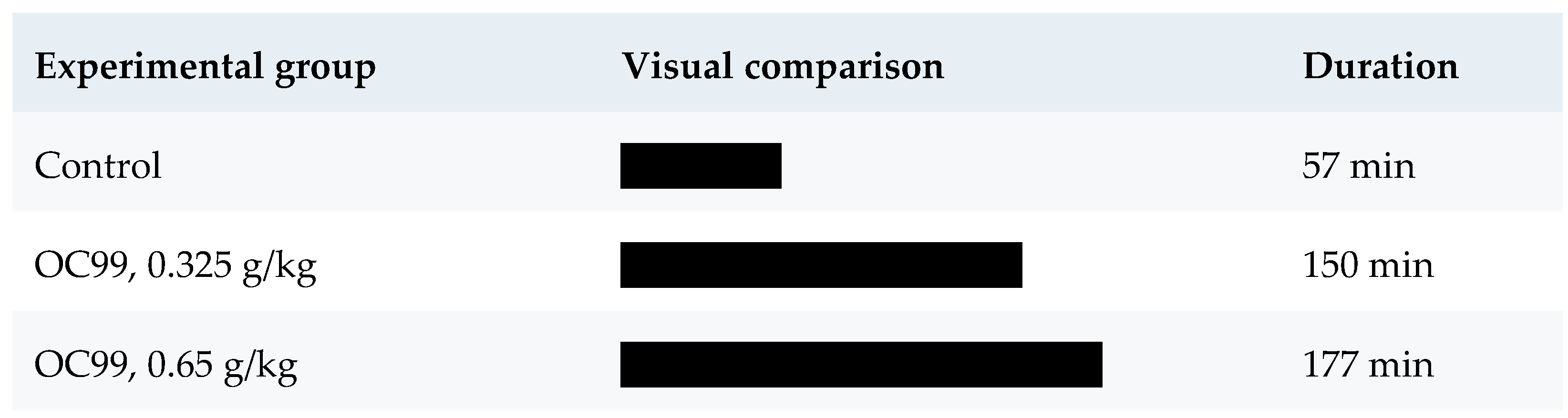
One of the most informative observations concerned the duration for which tissue oxygen tension remained above an experimental threshold of 10 mmHg.
Figure 2 OC99 and the Duration of Tissue Oxygen Availability
Mean time during which tissue PO₂ remained above 10 mmHg, minutes
The intermediate-dose group maintained tissue PO₂ above the selected threshold for approximately 2.6 times as long as the control group.
However, increasing the dose also introduced additional physiological effects.
The highest dose significantly increased pulmonary arterial pressure.
The study therefore demonstrated that improvements in tissue oxygen availability must be considered alongside dose-dependent vascular responses.
This is an important aspect of the scientific collaboration between Muir and Rausch.
The experiment did not simply ask how much hemoglobin could be introduced into the circulation.
It investigated what happened to tissue oxygen tension, metabolic variables, and cardiovascular physiology after treatment.
These findings were obtained in an experimental canine model and should not be presented as established clinical efficacy.
6. The Continued Development of Veterinary Oxygen Therapeutics
The scientific investigation of oxygenation continued beyond the OC99 study.
In 2015, Muir and John A. E. Hubbell published Oxygenation, Oxygen Delivery and Anaesthesia [17].
This publication continued to address the relationships among respiratory oxygenation, circulation, and oxygen delivery during veterinary anesthesia.
The broader professional relationship between Muir and Rausch also reportedly continued beyond Biopure.
According to the historical account supplied for this retrospective, Muir advised veterinary projects associated with companies where Rausch subsequently worked.
Between 2017 and 2020, he reportedly served as Head of the Scientific Advisory Board supporting the WTE II U.S. Index filing and assisted with preparation, submission, and scientific defense of the regulatory dossier [8].
These activities represent an important stage in the reported history of veterinary oxygen-carrier development.
Scientific research produces experimental evidence, but regulatory development requires that evidence to be organized, evaluated, and defended within an established regulatory process.
The published OC99 study independently documents direct scientific collaboration between Muir and Rausch. The Biopure and WTE II advisory positions remain part of the supplied historical account and require separate corporate or regulatory documentation for independent verification.
From experimental research to regulatory evidence and real-world veterinary experience
The history of veterinary hemoglobin-based oxygen therapeutics includes controlled clinical trials, regulatory assessment and substantial clinical experience with Oxyglobin (HBOC-301). These are distinct forms of evidence. They complement, but do not replace, Muir’s experimental work on perfusion and tissue oxygenation.
In the pivotal FDA canine-anemia field trial, the predefined 24-hour treatment-success endpoint was met by 20 of 21 evaluable Oxyglobin-treated dogs (95%), compared with 9 of 28 controls (32%). In the intent-to-treat analysis, success was 22 of 30 (73%) versus 10 of 34 (29%). The endpoint was no additional need for oxygen-carrying support within 24 hours. It did not mean survival, a cure for anemia, or restoration of every physiological function [20].
The European scientific assessment stratified the same practical endpoint by mechanism of anemia. The results deserve presentation by category rather than as a universal claim of 100% efficacy [21].
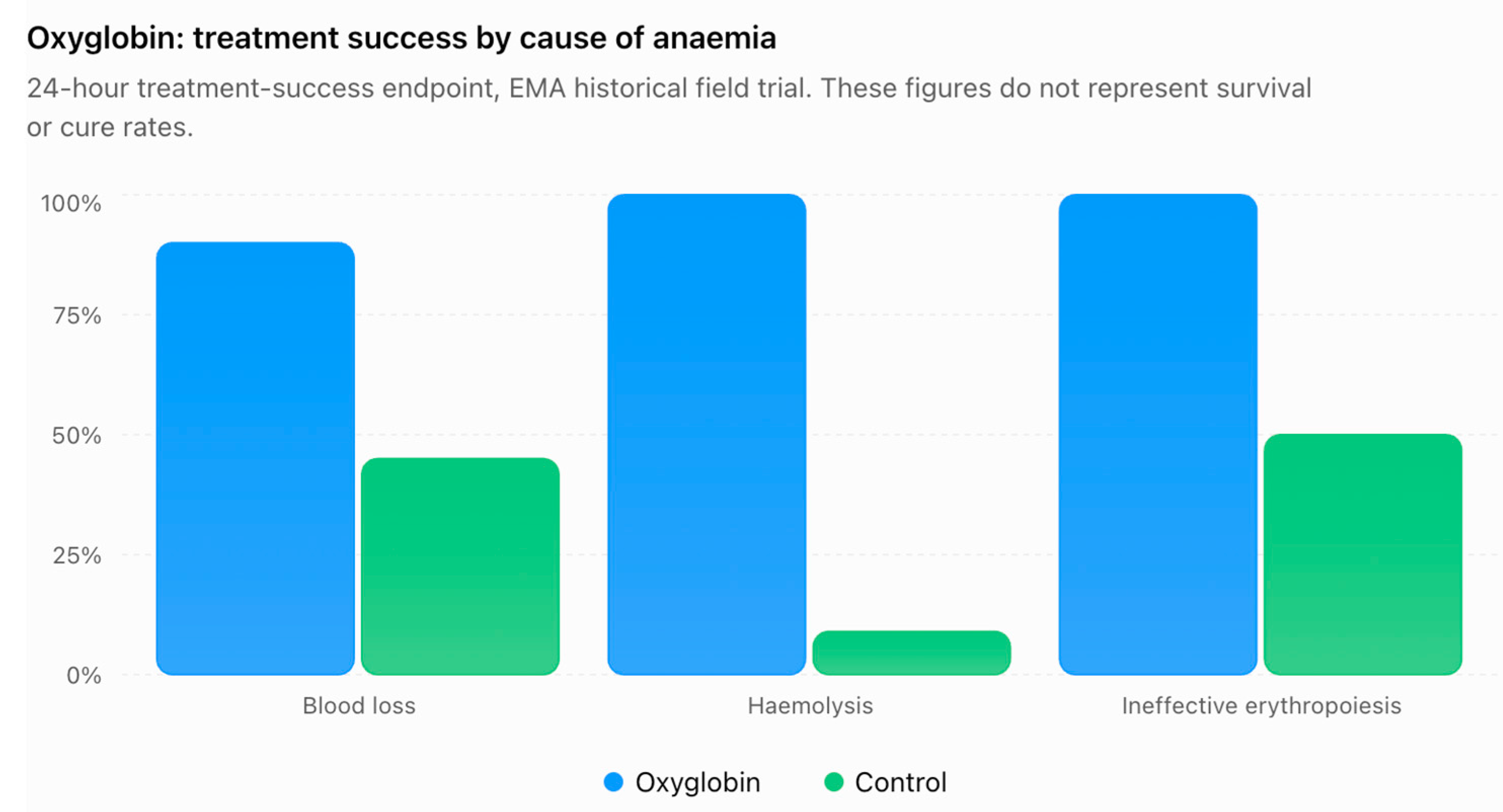

Table 1.
Historical Oxyglobin treatment success by cause of canine anemia (24-hour endpoint).
| Cause of anemia | Oxyglobin | Control |
| Blood-loss anemia | 90% | 45% |
| Hemolytic anemia | 100% | 9% |
| Anemia due to ineffective erythropoiesis | 100% | 50% |
Figure 3.
Oxyglobin treatment success by cause of canine anemia. EMA historical field-trial data: blood loss 90% versus 45%, hemolysis 100% versus 9%, and ineffective erythropoiesis 100% versus 50% (Oxyglobin versus control). Success means no additional oxygen-carrying support during the defined 24-hour assessment period, not survival or cure [21].
The 100% values applied only to evaluable dogs in the hemolytic-anemia and ineffective-erythropoiesis subgroups. They are not overall efficacy, survival, or cure rates. These three mechanisms include blood loss from surgery, trauma or gastrointestinal disease; red-cell destruction from immune-mediated, parasitic or toxic conditions; and insufficient effective red-cell production associated with marrow or other disease.
Clinical experience extended beyond registration trials. Between December 1998 and August 1999, Biopure received 885 reports describing Oxyglobin use in anemic dogs. The historical Case Listing Book II, printed in October 2000, contains 146 selected case narratives [22]. The source covers surgical and traumatic hemorrhage, anticoagulant rodenticide toxicity, gastrointestinal ulcers, immune-mediated hemolysis, parasitic disease, drug- or zinc-associated toxicity, neoplasia, marrow disease and renal failure. These are overlapping clinical circumstances, not ten mutually exclusive classifications of anemia.
In the 146 printed narratives, 109 were categorized as Oxyglobin-only cases, with no preceding or following whole-blood or packed-red-cell transfusion recorded in the case sequence. This documents historical use as oxygen-carrying support without a recorded donor-blood transfusion in many selected cases. It does not, on its own, demonstrate independent clinical efficacy or identify 109 unique patients with verified successful outcomes.
The 885 reports were manufacturer-collected, and the 146 narratives were selected for publication. Reporting bias, incomplete follow-up and possible classification overlap prevent estimation of treatment success, adverse-event incidence, or survival from this archive alone. Similarly, estimates of hundreds of thousands of commercial product units or treatment episodes must not be treated as an exact count of administered doses until sales, treatments and pharmacovigilance records have been reconciled.
This experience remains important. It shows how earlier products were administered, what physiological and clinical outcomes were measured, which problems clinicians confronted, and which vascular or infusion-related risks required recognition and management. It strengthens the rationale for asking precise questions about BHOC while providing no automatic evidence of efficacy or safety for a new formulation.
Our Veterinary Evidence Library brings together the product-specific regulatory findings, historical case archive, clinical reports and experimental research. It is a source-navigation collection, not an independent clinical trial or an additional patient cohort [23].
7. The Next Step: Precision Oxygen Therapeutics Based on BHOC
Concept and terminology proposed
We believe that the next development in oxygen therapeutics requires a more precise definition of the therapeutic objective.
Blood is a complex biological system that performs numerous functions.
Oxygen transport is only one of them.
Our proposal is not to recreate blood or to develop another temporary replacement until donor blood becomes available.
It is to investigate oxygen delivery as a distinct therapeutic function.
BHOC, Biological Hemoglobin Oxygen Carrier, is proposed as a technology dedicated to oxygen transport and tissue oxygen availability [9].
The concept, which we describe as the Oxygen Bridge from Lungs to Cells, connects pulmonary oxygen loading, hemoglobin-mediated transport, oxygen unloading, diffusion into tissues, and availability for cellular metabolism.
The intended biological objective extends beyond circulating hemoglobin.
It concerns oxygen availability to cells, including the mitochondrial processes responsible for oxidative phosphorylation and ATP production.
The concept does not eliminate the physiological requirement for circulation.
Diffusion is driven by oxygen partial-pressure gradients, while delivery across substantial distances ordinarily requires perfusion.
Our research question is whether a characterized extracellular hemoglobin carrier can improve local oxygen availability under impaired or reduced-flow conditions, with measurable therapeutic limits and acceptable vascular safety.
We also propose investigating the biological fate of the carrier after its oxygen-transport function declines.
Hemoglobin-derived material may enter physiological heme and iron-processing pathways. However, controlled degradation, safe iron recycling, and subsequent contribution to erythropoiesis require independent experimental confirmation.
A proposed 24–78-hour biological processing interval remains a hypothesis, not an established product characteristic.
8. Conclusion
The work of William W. Muir represents a sustained scientific investigation into the physiology of oxygen transport and tissue oxygen availability.
From early measurements of cardiovascular performance and respiratory function, his research progressed toward the evaluation of extracellular hemoglobin, microvascular perfusion, and direct tissue oxygen tension.
The experimental investigations of HBOC-301, HBOC-201, and OC99 provide important milestones in this scientific history.
His documented collaboration with Carl W. Rausch in the OC99 study, together with the reported advisory activities at Biopure and WTE II, connects physiological research with veterinary therapeutic development.
We believe this scientific history supports an important direction for future research.
The objective should not be defined exclusively by how much oxygen a carrier binds or how much hemoglobin is present in the circulation.
It should be defined by the oxygen-delivery function that can be demonstrated, measured, controlled, and related to tissue metabolism.
BHOC proposes to take this question further: from oxygen transport toward Precision Oxygen Therapeutics, with the ultimate objective of supporting oxygen availability from the lungs to living cells.
Ethics Statement
No new experiments involving humans or animals were conducted for this narrative review. The manuscript discusses previously published studies and historical records.
Data Availability Statement
No new experimental dataset was generated. Scientific and regulatory sources are identified in the references. Supplied historical accounts and biographical documents are distinguished from independently published evidence in the text and source notes.
Use of Artificial Intelligence
During preparation of this manuscript, ChatGPT (OpenAI) was used to assist with grammar and language editing, source searching and reference checking, drafting, and manuscript organization. The author is responsible for the final text, source attribution, and scientific interpretation.
Conflicts of Interest
Archil Jaliashvili leads BHOC Therapeutics and has current professional and commercial interests in the development of Biological Hemoglobin Oxygen Carriers and Precision Oxygen Therapeutics discussed in this review.
References
- Muir, W.W.; Skarda, R.T.; Milne, D.W. Estimation of cardiac output in the horse by thermodilution techniques. Am. J. Vet. Res. 1976, 37(6), 697–700. [Google Scholar] [CrossRef] [PubMed]
- Schmall, L.M.; Muir, W.W.; Robertson, J.T. Haemodynamic effects of small volume hypertonic saline in experimentally induced haemorrhagic shock. Equine Vet. J. 1990. [Google Scholar] [CrossRef]
- Muir, W.W.; Wellman, M.L. Hemoglobin Solutions and Tissue Oxygenation. J. Vet. Intern. Med. 2003, 17(2), 127–135. [Google Scholar] [CrossRef] [PubMed]
- Cooper, E.S.; Bateman, S.W.; Muir, W.W. Evaluation of hyperviscous fluid resuscitation in a canine model of hemorrhagic shock. J. Trauma 2009. [Google Scholar] [CrossRef]
- Muir, W.W.; Ilangovan, G.; Zweier, J.L.; Moon-Massat, P.F.; Rentko, V.T. Vital Organ Tissue Oxygenation after Serial Normovolemic Exchange Transfusion with HBOC-201 in Anesthetized Swine. SHOCK. 2011, 35(6), 597–603. [Google Scholar] [CrossRef]
- Muir, W.W.; del Rio, C.L.; Ueyama, Y.; Youngblood, B.L.; George, R.S.; Rausch, C.W.; Lau, B.S.H.; Hamlin, R.L. Dose-Dependent Hemodynamic, Biochemical, and Tissue Oxygen Effects of OC99 following Severe Oxygen Debt Produced by Hemorrhagic Shock in Dogs. Crit. Care Res. Pract. 2014, 2014, 864237. [Google Scholar] [CrossRef] [PubMed]
- Muir, W.W.; Hughes, D.; Silverstein, D.C. Editorial: Fluid Therapy in Animals: Physiologic Principles and Contemporary Fluid Resuscitation Considerations. Front. Vet. Sci. 2021, 8, 744080. [Google Scholar] [CrossRef]
- Historical account provided for this retrospective concerning Muir's Biopure and WTE II SAB leadership and WTE II U.S. Index filing activities. Not independently corroborated in the cited scientific publications.
- Rausch, C.W.; Jaliashvili, A. Precision Oxygen Therapeutics: From Blood Substitutes to the Biological Hemoglobin Oxygen Carrier (BHOC) Framework for Controlled Microvascular and Tissue-Level Oxygen Delivery. 2026. [Google Scholar] [CrossRef]
- Rausch, C.W.; Wong, B.-L.; Jaliashvili, A. BHOC - Biological Hemoglobin Oxygen Carriers in Emergency, Prehospital, and Military Medicine: Historical Development, Product Characterization, and the Evolution Toward Precision Oxygen Therapeutics. Preprint, not peer reviewed. 2026. [Google Scholar] [CrossRef]
- Wong, B.-L.; Rausch, C.W.; Jaliashvili, A.; Lee, Ka Yan Karen. Before Blood Arrives: Function-Based Resuscitation for Military Medicine and EMS in the Era of Prolonged and Drone-Contested Evacuation. not peer reviewed. 2026. [Google Scholar] [CrossRef]
- Rausch, C.W.; Wong, B.-L.; Jaliashvili, A. The RESUS Decision Pathway in US Military Trauma Research from 2003 to 2008. Preprint, not peer reviewed. 2026. [Google Scholar] [CrossRef]
- Muir, W.W.; Moore, C.A.; Hamlin, R.L. Ventilatory alterations in normal horses in response to changes in inspired oxygen and carbon dioxide. Am. J. Vet. Res. Muir curriculum vitae, refereed publications no. 4. 1975, 36, 155–159. [Google Scholar] [CrossRef]
- Swanson, C.R.; Muir, W.W. Dobutamine-induced augmentation of cardiac output does not enhance respiratory gas exchange in anesthetized recumbent healthy horses. Am. J. Vet. Res. Muir curriculum vitae, refereed publications no. 94. 1986, 47, 1573–1576. [Google Scholar] [CrossRef]
- Muir, W.W. Tissue in Desperate Need of Oxygen. Vet. Forum Source: Muir curriculum vitae, scholarly publications no. 127. 1999, 16(4), 50–57. [Google Scholar]
- Muir, W.W.; de Morais, H.A.S.; Constable, P.D. The effects of a hemoglobin-based oxygen carrier (HBOC-301) on left ventricular systolic function in anesthetized dogs. Vet. Surg. 2000, 29, 449–455. [Google Scholar] [CrossRef]
- Hubbell, J.A.E.; Muir, W.W. Oxygenation, oxygen delivery and anaesthesia in the horse. Equine Vet. J. 2015, 47(1), 25–35. [Google Scholar] [CrossRef] [PubMed]
- Muir, William Wallace, III. Curriculum Vitae (40 pages), supplied historical document. Professional experience, academic degrees, graduate advising, and awards; document date not specified.
- Rausch, Carl W. Professional positions and education, biographical information supplied for this historical account (Tufts University, MIT, Biopure, Massachusetts Biotechnology Council, New England Medical Research Institute). Independent documentary verification pending.
- U.S. Food and Drug Administration. Oxyglobin (hemoglobin glutamer-200, bovine). NADA 141-067, Freedom of Information Summary, canine-anemia field trial. Available online: https://animaldrugsatfda.fda.gov/adafda/app/search/public/document/downloadFoi/3700.
- European Medicines Agency. Oxyglobin (haemoglobin glutamer-200, bovine). Regulatory scientific discussion and anemia-stratified treatment-success results. Available online: https://bhoctherapeutics.com/evidence/library/veterinary/Vet-EMA-approvals-summary.html#efficacy-data.
- Biopure Corporation. Oxyglobin Solution – Case Listing Book II. October 2000. Historical archive of 885 canine reports and 146 printed clinical narratives. Critical source analysis. Available online: https://bhoctherapeutics.com/evidence/library/veterinary/Vet-archive-Oxyglobin-Case-Listing-Book-II.html.
- BHOC Therapeutics. Veterinary Real-World Evidence & Cases. Source-navigation library encompassing clinical, regulatory and historical veterinary oxygen-carrier evidence. Available online: https://bhoctherapeutics.com/evidence/library/veterinary/Vet-index.html (accessed on October 2026).
Figure 1.
Author's synthesis of the chronological development of Muir's research and its relationship to subsequent oxygen therapeutics development. The WTE II advisory period is based on the separately supplied historical account. The 2026 concept is proposed by Archil Jaliashvili and is not attributed to Muir.
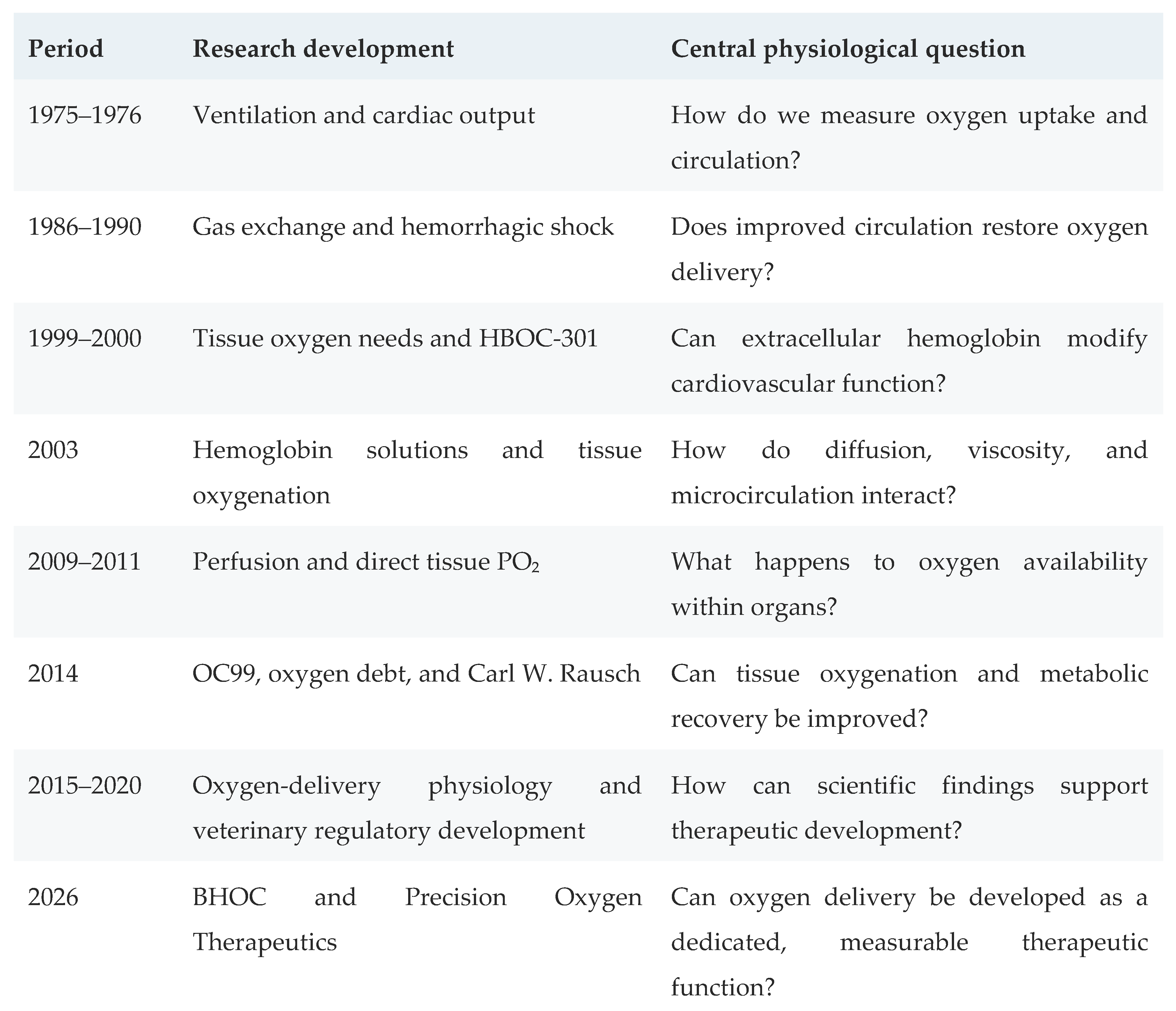
Figure 2.
Rounded mean durations based on the 2014 experimental study [6]. The bars are proportional visual approximations. They do not represent clinical survival, treatment efficacy in patients, or statistical uncertainty.
Figure 2.
Rounded mean durations based on the 2014 experimental study [6]. The bars are proportional visual approximations. They do not represent clinical survival, treatment efficacy in patients, or statistical uncertainty.
Disclaimer/Publisher’s Note: The statements, opinions and data contained in all publications are solely those of the individual author(s) and contributor(s) and not of MDPI and/or the editor(s). MDPI and/or the editor(s) disclaim responsibility for any injury to people or property resulting from any ideas, methods, instructions or products referred to in the content. |
© 2026 by the authors. Licensee MDPI, Basel, Switzerland. This article is an open access article distributed under the terms and conditions of the Creative Commons Attribution (CC BY) license (http://creativecommons.org/licenses/by/4.0/).
Copyright: This open access article is published under a Creative Commons CC BY 4.0 license, which permit the free download, distribution, and reuse, provided that the author and preprint are cited in any reuse.