
Submitted:
07 October 2026
Posted:
08 October 2026
You are already at the latest version
Abstract
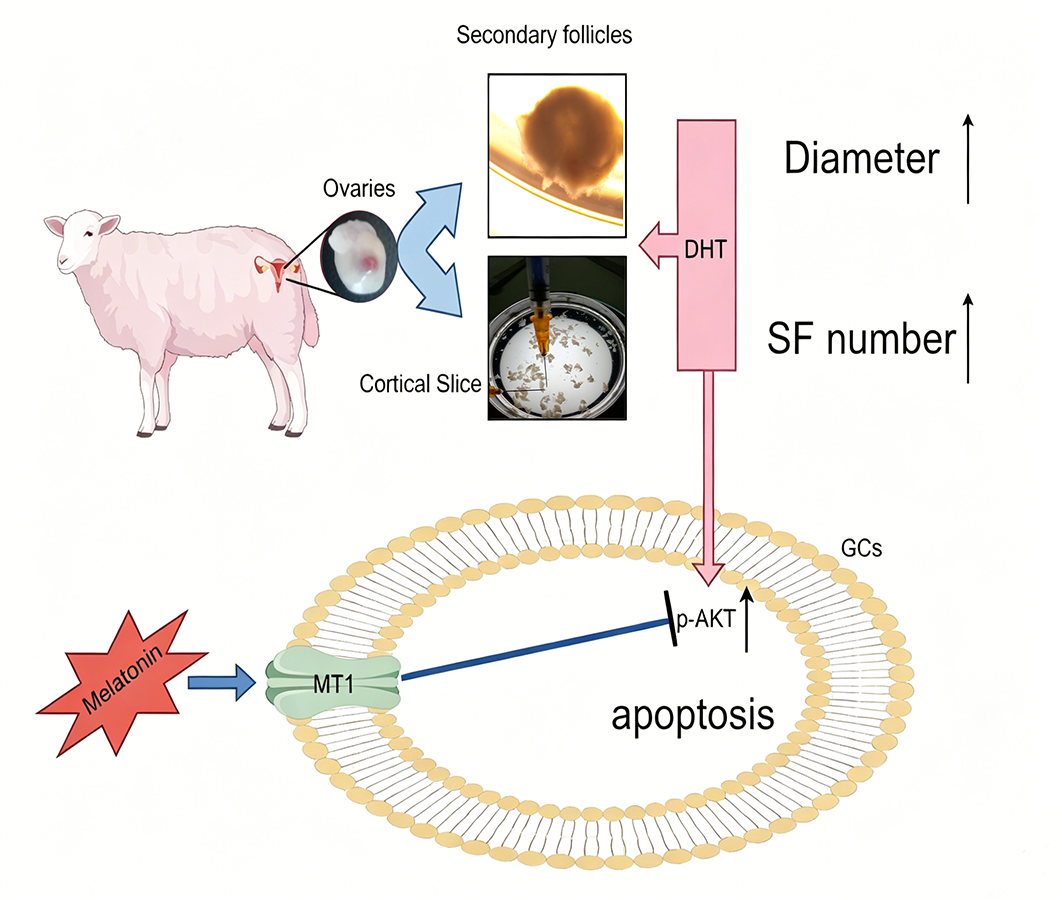
Premature ovarian failure, resulting from the premature activation of follicles in animals, has been linked to excessive levels of 5α-dihydrotestosterone (DHT). Additionally, melatonin has been demonstrated to be autonomously synthesized and secreted by sheep follicles. However, it remains unclear whether melatonin can counteract excessive DHT in sheep ovaries to support normal follicular development. Here, we investigated the effects of DHT and melatonin on early folliculogenesis in ovine ovaries. Ovarian cortices (~2×2 mm) and secondary follicles (280–360 μm) were cultured for 4 days with high-dose DHT (10⁻⁷ M) and/or melatonin (10⁻⁹ M). H&E staining, TUNEL assay, Western blotting, and RT-qPCR were used to examine the underlying mechanisms. DHT increased the number and diameter of secondary follicles (p < 0.05), but also induced granulosa cell apoptosis, which melatonin alleviated. Mechanistically, DHT upregulated cleaved caspase-3 and caspase-3 expression in granulosa cells, whereas co-treatment with melatonin reduced the Bcl-2/Bax ratio. Using the MT1 inhibitor Luzindole, melatonin was shown to suppress DHT-stimulated granulosa cell proliferation via MT1-mediated Akt phosphorylation, thereby counteracting the DHT-induced decline in follicular reserve. This study elucidates the pathogenic mechanism of DHT-triggered premature ovarian insufficiency and validates the melatonin-mediated protective regulation of follicular development, which provides a theoretical basis for the improvement and protection of reproductive function in reserve breeding ewes.
Keywords:
sheep
; ovarian cortex
; secondary follicles
; DHT
; melatonin
; granulosa cells
Copyright: This open access article is published under a Creative Commons CC BY 4.0 license, which permit the free download, distribution, and reuse, provided that the author and preprint are cited in any reuse.