

Submitted:
05 October 2026
Posted:
08 October 2026
You are already at the latest version
Abstract
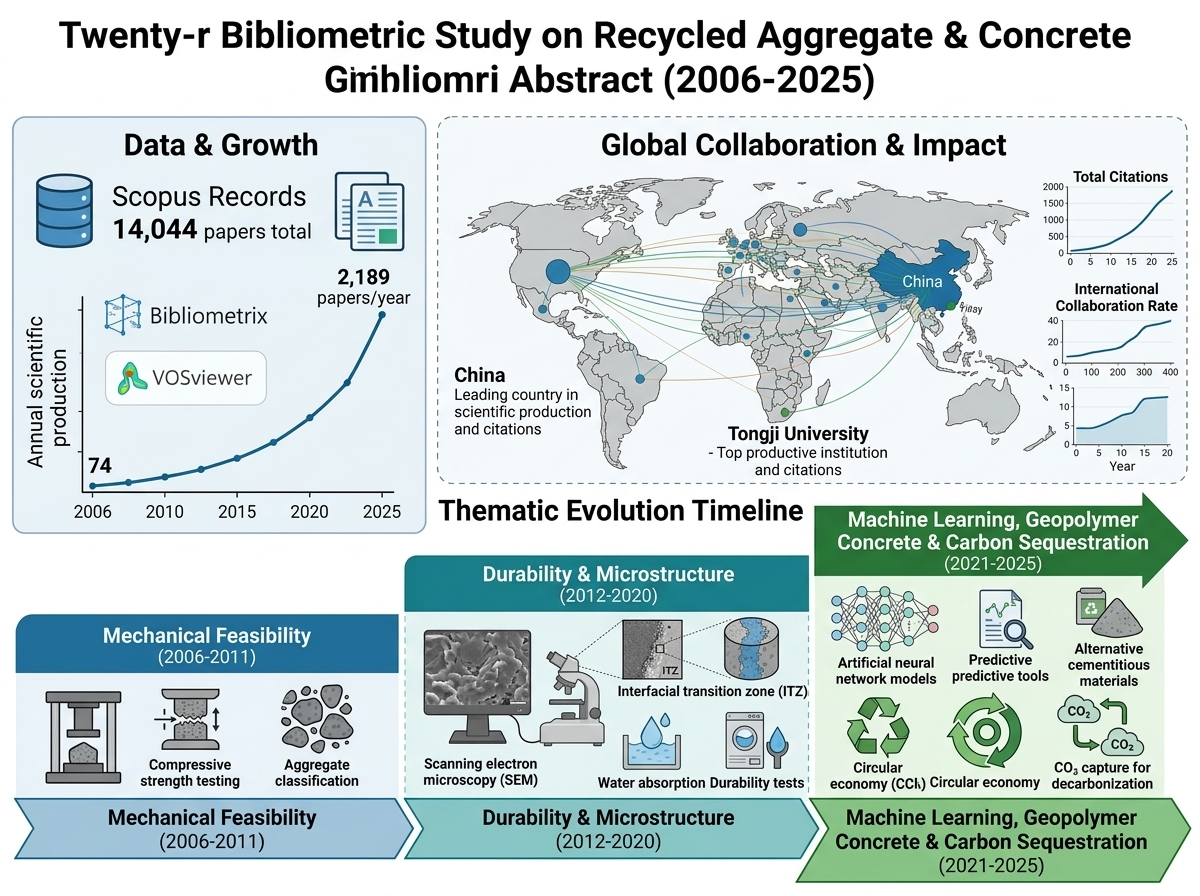
The increasing interest in recycled aggregates as an alternative to natural resources has generated a rapidly expanding body of scientific literature; however, the global evolution, intellectual structure, and emerging research directions of this field require comprehensive assessment. This study ana-lyzes two decades of research on recycled aggregates in concrete through a bibliometric and sci-ence-mapping approach. Bibliographic records indexed in Scopus between 2006 and 2025 were retrieved using the search terms “recycled aggregate” and “concrete” and analyzed using Biblio-metrix/Biblioshiny and VOSviewer. A total of 14,044 documents from 1,513 sources were identified, showing an annual growth rate of 19.51%, with publications increasing from 74 in 2006 to 2,189 in 2025. China emerged as the leading country in scientific production, while Tongji University was the most productive institution. Keyword co-occurrence analysis revealed three major conceptual domains associated with recycled aggregate utilization, mechanical performance and durability, and sustainability and environmental impact. Thematic evolution showed a progressive transition from research focused primarily on compressive strength and technical feasibility toward more integrated approaches involving durability, microstructure, sustainable development, and waste utilization. Recent topics such as machine learning, forecasting, carbon sequestration, and geo-polymer concrete indicate an emerging shift toward predictive tools and decarbonization-oriented strategies. Overall, the findings demonstrate that recycled aggregate concrete research has evolved from establishing technical feasibility toward optimizing material performance, environmental benefits, and advanced predictive assessment.
Keywords:
recycled aggregates
; recycled concrete
; bibliometric analysis
; science mapping
; sustainable concrete
; construction and demolition waste
; circular economy
; research trends
; con-crete durability
; machine learning
1. Introduction
Concrete is one of the fundamental materials used in the development of infrastructure and buildings, and its production requires large quantities of natural aggregates. The continuous extraction of sand, gravel, and other mineral resources, together with the growing generation of construction and demolition waste (CDW), has increased the environmental pressure associated with the construction sector. In this context, the use of waste materials as secondary raw materials has become a relevant strategy for reducing natural resource consumption, minimizing waste disposal, and advancing toward circular economy models [1,2,3]. The use of recycled aggregates, mainly derived from construction and demolition waste, represents one of the most widely studied alternatives for partially or fully replacing natural aggregates used in concrete production.
Recycled aggregates can be obtained from the processing of demolished concrete and other mineral wastes, allowing previously used materials to be reintegrated into new production cycles. However, their characteristics generally differ from those of natural aggregates due, among other factors, to the presence of adhered mortar, higher porosity, lower density, and greater water absorption [4,5,6]. These characteristics can affect the workability, mechanical strength, and durability of recycled aggregate concrete, particularly when high replacement ratios or aggregates of heterogeneous quality are used [4,5]. The literature also indicates that the quality of the source concrete, the amount of adhered mortar, and the crushing, classification, and treatment processes directly influence the final performance of concrete produced with recycled aggregates [6,7].
In recent years, research has evolved from the basic assessment of mechanical properties toward more comprehensive studies addressing durability, microstructure, aggregate treatment, and environmental performance. Variables such as compressive strength, water absorption, chloride penetration, carbonation, shrinkage, and the behavior of the interfacial transition zone have received particular attention because of their influence on the service life of recycled aggregate concrete [5,8,9]. Likewise, different treatment strategies, the incorporation of supplementary cementitious materials, and aggregate carbonation have shown potential to reduce porosity and improve specific material properties [7,10]. More recently, environmental assessment through life cycle analysis has broadened the discussion to include indicators such as energy consumption, greenhouse gas emissions, and resource depletion, showing that the environmental benefits of recycled aggregate concrete depend on variables such as transportation, processing, mix design, and the functional unit used in the assessment [11].
The growth and diversification of this literature have generated a sufficiently extensive body of knowledge to require tools capable of analyzing not only individual experimental results but also the overall evolution of the research field. In this regard, bibliometric and science mapping studies make it possible to examine patterns of productivity, collaboration, impact, co-citation, term co-occurrence, and thematic evolution. Previous studies have applied these approaches to the analysis of recycled aggregates and recycled aggregate concrete. Sánchez-Roldán et al. [12] analyzed the scientific evolution of the use of recycled aggregates in the construction sector, while Zhang et al. [13] conducted a scientometric analysis of 2,180 documents on recycled aggregate concrete published between 2001 and 2021. Similarly, Marvila et al. [3] analyzed 1,580 documents related to recycled aggregates, concrete, and sustainable construction published during 2013–2022. These studies confirmed the growth of scientific production and the importance of topics related to mechanical properties, durability, and sustainability.
More recently, a bibliometric analysis published in 2026 examined 1,624 Scopus-indexed documents covering the period 1983–2025 and identified a shift from early studies focused on mechanical feasibility toward research addressing durability, environmental assessment, and artificial intelligence-assisted optimization [14]. Nevertheless, the rapid expansion of the literature and the recent emergence of topics related to sustainability, carbon capture, predictive tools, and novel cementitious systems justify the need to further examine the transformation of the field’s scientific structure. Furthermore, the combined use of performance indicators, collaboration networks, intellectual structure analysis, keyword co-occurrence, thematic maps, and temporal evolution enables an integrated interpretation of how knowledge on recycled aggregates in concrete is organized and transformed over time.
Therefore, the objective of this study is to analyze the scientific evolution of research on recycled aggregates in concrete during the 2006–2025 period using a bibliometric and science mapping approach based on records indexed in Scopus. Specifically, the study examines the evolution of scientific production, the most relevant sources, authors, institutions, and countries, international collaboration networks, the intellectual structure through co-citation analysis, the conceptual structure through keyword co-occurrence, and the evolution of the main thematic lines. The study aims to provide an integrated overview of two decades of research, identify well-established areas, and recognize emerging trends that may guide future studies related to the performance, durability, sustainability, and decarbonization of recycled aggregate concrete.
2. Materials and Methods
This study was conducted using a quantitative bibliometric and science mapping approach to analyze the evolution of scientific production related to the use of recycled aggregates in concrete over a twenty-year period. The study combined bibliometric performance indicators with network analysis and conceptual structure techniques, enabling the examination of scientific productivity, publication impact, the geographical distribution of research, collaboration networks, and the thematic evolution of the field [15,17].
The unit of analysis consisted of scientific documents indexed in the Scopus database that met the established search and selection criteria. Scopus was selected as the bibliographic source because of its broad multidisciplinary coverage and the availability of the metadata required to conduct analyses of scientific productivity, citation impact, research collaboration, and knowledge mapping. Bibliometric processing and analysis were subsequently performed using Bibliometrix/Biblioshiny, tools specifically designed to support comprehensive and reproducible science mapping analyses [15,17].
2.1. Search Strategy and Data Collection
The bibliographic search was conducted in the Scopus database on September 3, 2026, using the title, abstract, and keyword fields (TITLE-ABS-KEY). The search query employed was:
The study period covered January 1, 2006, to December 31, 2025, thereby allowing the analysis of twenty complete years of scientific production. The year 2026 was excluded because, at the time of the search, it represented an incomplete publication year, and its inclusion could have introduced an artificial decline in annual scientific production indicators.
The inclusion criteria comprised documents indexed in Scopus, published between 2006 and 2025, related to the study of recycled aggregates in concrete, and classified as research articles or review articles published in English. Documents published outside the established period, records corresponding to other document types, and records lacking sufficient bibliographic information for analysis were excluded.
After applying the established criteria, an initial dataset of 14,044 documents was obtained, which constituted the bibliographic basis for the subsequent screening and analysis stages.
2.2. Data Extraction, Cleaning, and Normalization
The selected records were exported from Scopus in BibTeX format, including the metadata available for each document. The retrieved information comprised authors, title, year of publication, source, institutional affiliations, country of origin, abstract, author keywords, indexed keywords, DOI, citation count, cited references, and document type.
Prior to the bibliometric analysis, the metadata were reviewed and normalized to reduce potential inconsistencies arising from terminological variations. Particular attention was given to keywords, author names, institutions, and countries.
2.3. Bibliometric Performance Analysis
The descriptive and scientific performance analyses were conducted using the Bibliometrix package and its graphical interface, Biblioshiny, implemented in the R environment, version 4.6.1.
Initially, the document dataset was characterized using general indicators related to the number of documents, scientific sources, authors, references, keywords, average citations per document, author collaboration, and the annual growth rate of scientific production.
Subsequently, the following indicators were analyzed:
- annual evolution of scientific production;
- most productive scientific sources;
- authors with the highest productivity and impact;
- most highly cited documents;
- most productive institutional affiliations;
- countries with the highest scientific production;
- national and international collaboration patterns;
- global and local citations within the document dataset.
For the geographical analysis, publications produced exclusively within a single country (Single Country Publications, SCP) were distinguished from those resulting from international collaboration (Multiple Country Publications, MCP), allowing both research productivity and the degree of internationalization to be assessed.
2.4. Network Analysis and Science Mapping
The social, intellectual, and conceptual structures of the research field were analyzed using science mapping techniques implemented in Biblioshiny.
The social structure was examined through co-authorship and country collaboration networks, enabling the identification of the main scientific cooperation groups and international connections within research on recycled aggregates in concrete.
The intellectual structure was investigated through co-citation analysis, considering the relationships established when two documents, authors, or sources are cited together within the analyzed literature. This procedure made it possible to identify the main intellectual foundations and influential reference works that have contributed to the development of the field.
A bibliographic coupling analysis was also conducted based on the number of references shared among documents. This technique enabled the identification of clusters of contemporary publications linked by common bibliographic foundations and the recognition of the main current research fronts.
For each network, minimum occurrence or frequency thresholds were established to ensure adequate readability and relevance of the resulting maps. The final values of these parameters were determined according to the size of each network and are reported together with the corresponding results. VOSviewer was additionally used for the visualization and exploration of selected bibliometric networks [16].
2.5. Co-Occurrence Analysis and Conceptual Structure
The conceptual structure of the field was examined primarily through a keyword co-occurrence analysis using author-provided keywords. The frequency of occurrence and simultaneous relationships among terms made it possible to identify the main thematic research clusters.
The resulting networks were represented through visualization maps. In these maps, node size represents the frequency of occurrence of each term, while the links indicate co-occurrence relationships. The proximity between nodes reflects the degree of thematic association, and the different colors represent the clusters identified by the analysis algorithm.
Each cluster was subsequently interpreted by considering the terms with the highest occurrence, their link strength, and their conceptual relationships with the other components of the network, thereby enabling the characterization of the main knowledge domains developed during the analyzed period.
2.6. Thematic Evolution and Research Trends
To assess the transformation of knowledge throughout the two decades analyzed, thematic mapping, thematic evolution, and trend topic analyses were conducted using Biblioshiny.
The thematic map enabled the classification of research areas according to their centrality and density, distinguishing four categories: motor themes, basic themes, niche themes, and emerging or declining themes.
Thematic evolution was examined by dividing the overall study period into five temporal intervals: 2006–2011, 2012–2016, 2017–2020, 2021–2024, and 2025, with the aim of identifying the continuity, transformation, emergence, and disappearance of the main research themes.
Additionally, the trend topics analysis made it possible to determine which terms gained greater relevance during different stages of the study period and to identify emerging areas within recent research on recycled aggregates in concrete.
2.7. Integration and Interpretation of Results
Finally, the results obtained from the different bibliometric indicators and science mapping techniques were analyzed in an integrated manner. The combined analysis of productivity, impact, collaboration, co-citation, co-occurrence, and thematic evolution made it possible to characterize the scientific development of the field from three complementary dimensions: global research trends, knowledge evolution, and the structure of scientific networks.
This strategy enabled the identification of both well-established research lines and emerging topics, as well as potential knowledge gaps that may guide future research related to the use of recycled aggregates in concrete.
Overall, this procedure provided a comprehensive view of the scientific evolution of the field by simultaneously considering its productivity, impact, social structure, intellectual foundations, and thematic development throughout the 2006–2025 period.
3. Results
3.1. General Characteristics of Scientific Production
The analyzed bibliographic dataset comprised 14,044 scientific documents published between 2006 and 2025 across 1,513 sources. During this period, scientific production showed an annual growth rate of 19.51%, indicating a sustained expansion of academic interest in the study of recycled aggregates in concrete over the past two decades.

Table 1.
General Characteristics of the Analyzed Bibliographic Dataset.
| Indicator | Result |
| Timespan | 2006–2025 |
| Sources | 1,513 |
| Documents | 14,044 |
| Annual Growth Rate | 19.51% |
| Authors | 20,815 |
| Authors of single-authored docs | 471 |
| International Co-Authorship | 21.82% |
| Co-Authors per Doc | 3.9 |
| Author’s Keywords (DE) | 18,381 |
| References | 29,784 |
| Document Average Age | 5.72 |
| Average citations per doc | 31.87 |
Scientific production involved 20,815 authors, with an average of 3.9 co-authors per document, while 471 authors contributed to single-authored publications. In addition, the rate of international co-authorship was 21.82%, indicating a relevant level of collaboration among researchers from different countries within the field.
From a documentary perspective, the analyzed dataset included 18,381 author keywords and 29,784 bibliographic references, providing a broad basis for the subsequent co-occurrence, co-citation, and bibliographic coupling analyses. The average document age was 5.72 years, indicating a substantial presence of recent literature within the corpus. Likewise, the average of 31.87 citations per document reflects a considerable level of scientific visibility and impact among publications related to the use of recycled aggregates in concrete.
Overall, these indicators show that the field experienced significant growth during the 2006–2025 period, accompanied by broad researcher participation, thematic diversity, and the progressive development of scientific collaboration networks.
3.2. Temporal Evolution of Scientific Production
The annual evolution of scientific production related to recycled aggregates in concrete during the 2006–2025 period shows an overall trend of sustained growth. Scientific output increased from 74 documents in 2006 to 2,189 publications in 2025, demonstrating a substantial expansion of scientific interest in this field over the past two decades.
As shown in Figure 1, during the early years of the analyzed period, from 2006 to 2010, scientific production remained relatively limited, with fewer than 200 publications per year. From 2011 onward, a more evident increase began to emerge, reaching 269 documents in that year and 420 publications in 2013. In 2014, a temporary decline in scientific output was observed, followed by a gradual recovery.
Growth intensified particularly from 2017 onward, when annual production exceeded 500 publications. This trend continued in the following years, reaching 719 documents in 2018 and 823 in 2019, and surpassing 1,000 annual publications for the first time in 2020, with 1,024 documents. Scientific output subsequently continued to increase, reaching 1,250 publications in 2021, 1,387 in 2022, 1,610 in 2023, and 1,856 in 2024. The highest value of the entire period was recorded in 2025, with 2,189 publications.
This pattern is consistent with the annual growth rate of 19.51% obtained for the bibliographic dataset and indicates a significant acceleration in scientific activity during the most recent years. The progressive concentration of publications toward the end of the study period suggests the consolidation of recycled aggregate concrete as a relevant research line within contemporary studies on sustainable construction materials.
3.3. Most Relevant Scientific Sources
The analysis of publication sources revealed a marked concentration of documents within a relatively small group of journals specializing in construction materials, civil engineering, and sustainability. As shown in Figure 2, Construction and Building Materials exhibited the highest scientific output within the analyzed dataset, with 1,923 documents, substantially exceeding the production of the remaining sources.
Journal of Building Engineering ranked second, with 577 documents, followed by Materials, with 470 publications, and Lecture Notes in Civil Engineering, with 439 documents. Likewise, Journal of Cleaner Production accounted for 362 publications, highlighting the presence of a source strongly associated with sustainability and cleaner production among the most prominent journals in the field.
Other relevant sources included Journal of Materials in Civil Engineering with 252 documents, Case Studies in Construction Materials with 239, Advanced Materials Research with 210, Materials Today: Proceedings with 207, and Buildings with 205 publications.
The observed distribution indicates that research on recycled aggregates in concrete is primarily concentrated in journals related to construction materials, concrete performance, civil engineering, and sustainability. The substantial difference between Construction and Building Materials and the remaining sources suggests that this journal has played a particularly important role as a platform for disseminating knowledge related to the development, characterization, and application of recycled materials in cementitious systems.
3.4. Most Influential Authors and Documents
The productivity analysis showed that Xiao J was the most prolific author in the bibliographic dataset, with 256 documents and De Brito J, with 237 publications. They were followed by Wang Y with 202 documents, Wang J with 198, Zhang Y with 191, Li J with 160, Wang X with 157, Wang C with 149, and Li L with 147 publications.
Figure 3.
Authors with the Highest Number of Published Documents on Recycled Aggregates in Concrete during the 2006–2025 Period.
Figure 3.
Authors with the Highest Number of Published Documents on Recycled Aggregates in Concrete during the 2006–2025 Period.
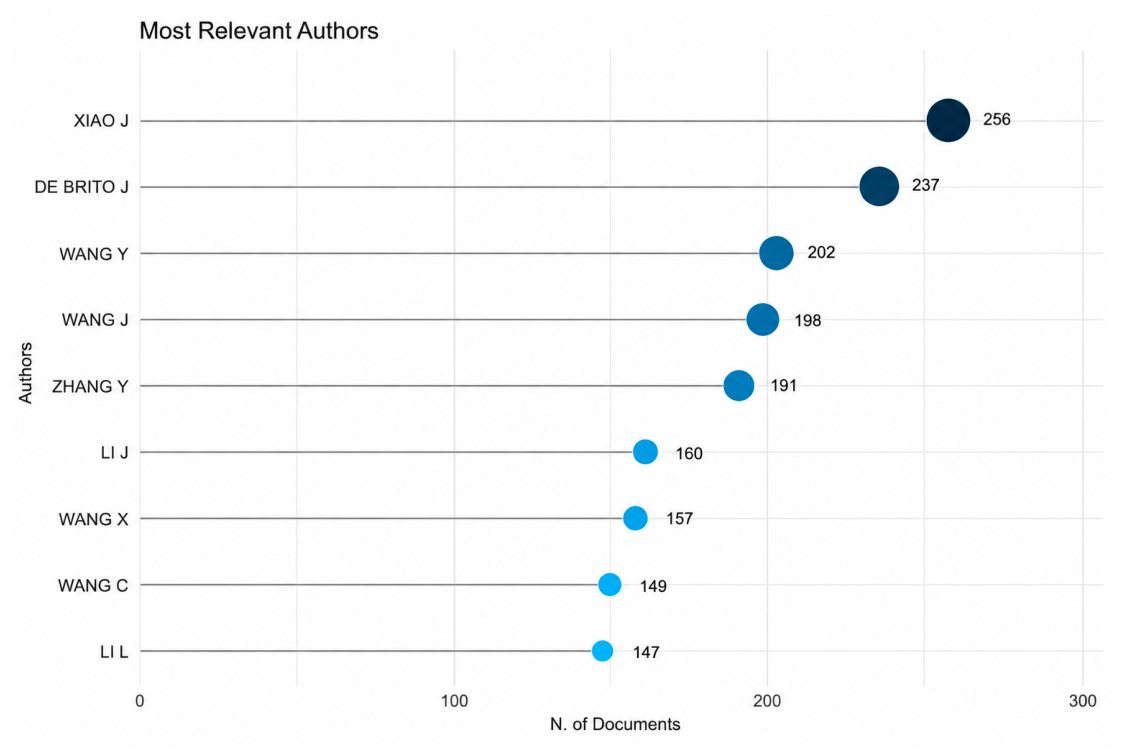
Scientific productivity did not show a direct correspondence with the bibliometric impact of the researchers. When considering the local h-index, calculated within the analyzed document set, De Brito J showed the highest value, with h = 85, followed by Poon CS with h = 80 and Xiao J with h = 68. These results indicate that, although Xiao J had the highest productivity in terms of number of publications, De Brito J and Poon CS achieved a stronger combination of scientific output and citation impact within the field.
Table 2.
Authors with the Highest Bibliometric Impact within the Analyzed Document Dataset.
| Author | h-Index | Total Citations | Documents |
| De Brito J | 85 | 24,047 | 237 |
| Poon CS | 80 | 20,937 | 131 |
| Xiao J | 68 | 16,903 | 256 |
| Li L | 53 | 7,793 | 147 |
| Wang Y | 50 | 8,514 | 202 |
| Wang J | 48 | 8,332 | 198 |
| Tam VWY | 46 | 8,756 | 106 |
| Wang C | 43 | 5,597 | 149 |
| Arulrajah A | 42 | 6,011 | 100 |
| Zhang Y | 42 | 5,047 | 191 |
Other researchers with high impact values included Li L (h = 53), Wang Y (h = 50), Wang J (h = 48), and Tam VWY (h = 46). Overall, these results identify a group of researchers who have contributed consistently to both the productivity and the intellectual consolidation of research on recycled aggregates in concrete.
The analysis of the documents with the greatest global impact showed that the most influential publications in the field were primarily published in journals specializing in cementitious materials, sustainable construction, and waste valorization. As shown in Figure 4, the document led by Etxeberria M. (2007) received the highest number of global citations, with 1,663 citations, followed by Meyer C. (2009), with 1,488 citations.
Among the remaining documents, Behera M. (2014) stood out with 1,183 citations, followed by Akhtar A. (2018) with 1,168, Tam VWY (2018) with 1,157, Shi C. (2016) with 1,147, Silva RV (2014) with 1,118, and Xiao J. (2012) with 1,117 citations. Likewise, Evangelista L. (2007) received 1,002 citations, while Wang B. (2021) reached 977 citations.
Beyond the accumulated number of citations, temporal normalization reveals relevant differences among documents published at different stages of the analyzed period. For example, although the work by Etxeberria M. recorded the highest total number of citations, Wang B. (2021) showed the highest citation rate per year among the ten leading documents, with approximately 162.8 citations per year, followed by Akhtar A. (2018) and Tam VWY (2018), with approximately 129.8 and 128.6 citations per year, respectively. This indicates that some relatively recent studies have been rapidly incorporated into the scientific literature of the field.
Overall, these results show that scientific influence is not concentrated exclusively in older publications; rather, foundational studies coexist with more recent contributions exhibiting high citation rates. This combination reflects both the historical consolidation of knowledge on recycled aggregates and the emergence of new contributions with growing scientific impact.
3.5. Most Productive Institutions and Countries
The institutional analysis revealed a significant concentration of scientific production in Asian universities, particularly in institutions located in China. As shown in Figure 5, Tongji University had the highest scientific output within the analyzed dataset, with 441 documents, followed by Guangxi University with 239 publications and Universidade de Lisboa with 221 documents.
Among the other highly productive institutions were Southeast University with 179 documents, The Hong Kong Polytechnic University with 174, Zhejiang University with 161, and Beijing University of Technology and Xi’an University of Architecture and Technology, both with 151 publications. Shenzhen University also recorded 150 documents, while Zhengzhou University accounted for 143. The predominance of Chinese universities among the ten most productive institutions highlights the central role of China in the scientific development of this field.
At the geographical level, scientific production showed a broad international distribution, although with a marked concentration in specific countries. As shown in Figure 6, China represented the main center of scientific production, with 9,338 records, followed by India with 3,160, the United States with 1,449, Australia with 1,154, and Spain with 1,032. Other countries with notable participation included Iraq, Portugal, Thailand, Italy, the United Kingdom, Brazil, Türkiye, Malaysia, and Iran.
China’s leadership was not limited to publication volume but was also reflected in its accumulated scientific impact. The country-level citation analysis showed that China recorded 113,612 citations, a value considerably higher than that of the other countries. It was followed by Australia with 29,957 citations, India with 28,800, Portugal with 21,530, Spain with 20,830, and Hong Kong with 18,515 citations. The United States recorded 16,495 citations, while Italy, Iran, and the United Kingdom also exceeded 8,000 citations.
The comparison between productivity and impact shows that scientific leadership in the field does not depend exclusively on publication volume. While China combines exceptionally high scientific output with the largest number of citations, countries such as Australia and Portugal exhibit considerable scientific influence despite their lower publication volumes. This pattern suggests the coexistence of major centers of scientific production with other research systems that, although generating fewer publications, achieve substantial visibility within the international literature.
3.6. Scientific Collaboration Networks
International scientific collaboration showed a broad and densely interconnected structure among the countries involved in research on recycled aggregates in concrete. As shown in Figure 7, co-authorship relationships extended across Asia, Europe, Oceania, the Americas, and some regions of Africa, indicating that the field has a clearly international scope.
The analysis of bilateral relationships showed that China constituted one of the main nodes of international collaboration. The most frequent partnership was observed between China and Australia, with 257 collaborations, followed by China–Hong Kong with 172, China–United States with 160, and China–United Kingdom with 126. Other notable international partnerships included Saudi Arabia–Pakistan with 99 collaborations, Australia–Thailand with 83, Saudi Arabia–Egypt with 66, and United States–Australia with 63.
Within the European context, particularly relevant relationships were identified between Spain and Portugal, with 53 collaborations, and between Spain and Italy, with 47. These results indicate that scientific networks are not organized exclusively around a single country; rather, different regional and interregional hubs contribute to knowledge transfer and the joint development of research on recycled materials.
In addition to international relationships, the co-authorship analysis among researchers revealed a structure composed of several scientific collaboration clusters. As shown in Figure 8, authors such as Xiao J., Zhang Y., Wang J. and Wang Y. occupy central positions within the main research groups.
The network structure revealed differences between individual productivity and position within scientific collaboration links. According to the centrality metrics, Zhang Y showed the highest PageRank value among the leading authors in the network (0.0407), followed by Wang Y (0.0367), Wang X (0.0340), Wang C (0.0324), Wang J (0.0321), and Xiao J (0.0307). This indicates that these researchers not only exhibit high levels of scientific activity but also occupy influential positions within the collaboration structure of the field.
In addition, the betweenness centrality analysis showed that some researchers play a particularly important role in connecting different collaboration groups. Zhang L exhibited the highest betweenness value within the network, followed by Arulrajah A., Wang Y., Zhang Y., and Wang J., suggesting that these authors may act as bridges between scientific communities that would otherwise be less interconnected.
Overall, the observed networks show that the scientific development of research on recycled aggregates in concrete is supported both by major national centers of production and by an increasingly international collaboration structure. The strong participation of China and Australia, together with significant connections among Asia, Europe, the Americas, and the Middle East, reflects the progressive internationalization of the field and the formation of scientific networks capable of integrating different approaches related to materials, concrete performance, and sustainability.
3.7. Keyword Co-Occurrence and Conceptual Structure
The keyword co-occurrence analysis identified three main thematic clusters within the scientific literature on recycled aggregates in concrete. The resulting network shows a highly interconnected conceptual structure in which topics related to material recycling, mechanical performance, and sustainability converge.
Figure 9.
Thematic Cluster Associated with Recycling and the Use of Recycled Aggregates in Concrete.
Figure 9.
Thematic Cluster Associated with Recycling and the Use of Recycled Aggregates in Concrete.
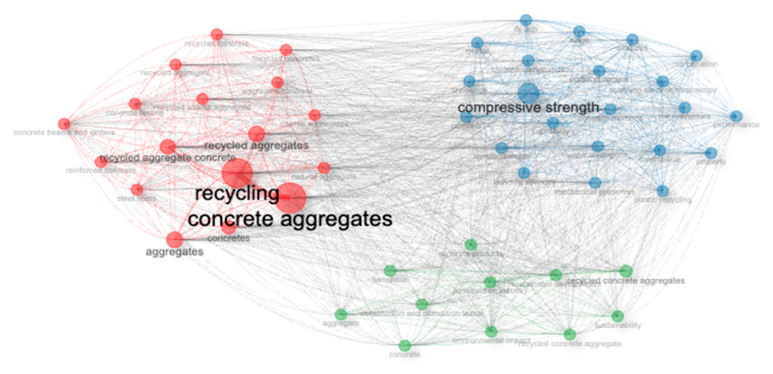
The red cluster was primarily concentrated on terms directly associated with the use of recycled materials as aggregate substitutes in concrete. Among the most representative concepts were recycling, concrete aggregates, recycled aggregate concrete, recycled aggregates, recycled concrete, recycled coarse aggregate, coarse aggregates, natural aggregate, and reinforced concrete. This group reflects a research line focused on the incorporation of recycled aggregates, their comparison with conventional aggregates, and their application in concrete systems.
The blue cluster was mainly related to mechanical performance, durability, and material characterization. The dominant term was compressive strength, accompanied by tensile strength, bending strength, mechanical properties, durability, water absorption, microstructure, scanning electron microscopy, carbonation, shrinkage, Portland cement, fly ash, and slags. This cluster highlights the recurrent interest in understanding how the incorporation of recycled materials modifies the physical, mechanical, and microstructural properties of concrete.
The green cluster, in turn, was associated with the environmental and sustainability dimension, integrating terms such as construction and demolition waste, sustainability, sustainable development, environmental impact, construction industry, demolition, recycled concrete aggregate, and recycled concrete aggregates. This group reflects the growing relevance of waste valorization and sustainability principles in the development of cementitious materials.
Overall, the conceptual network shows that research on recycled aggregates in concrete is structured around three complementary dimensions: recycling and aggregate substitution, technical performance of concrete, and environmental sustainability. The high number of connections among the clusters indicates that these research lines do not develop in isolation but rather exhibit strong thematic integration within the field.
3.8. Intellectual Structure Through Co-Citation Analysis
The co-citation analysis made it possible to identify the intellectual structure underpinning research on recycled aggregates in concrete. The resulting network was organized into three main clusters composed of documents that tend to be cited together and therefore represent closely related conceptual foundations and knowledge domains within the field.
Figure 10.
Document Co-Citation Network in Research on Recycled Aggregates in Concrete during the 2006–2025 Period.
Figure 10.
Document Co-Citation Network in Research on Recycled Aggregates in Concrete during the 2006–2025 Period.
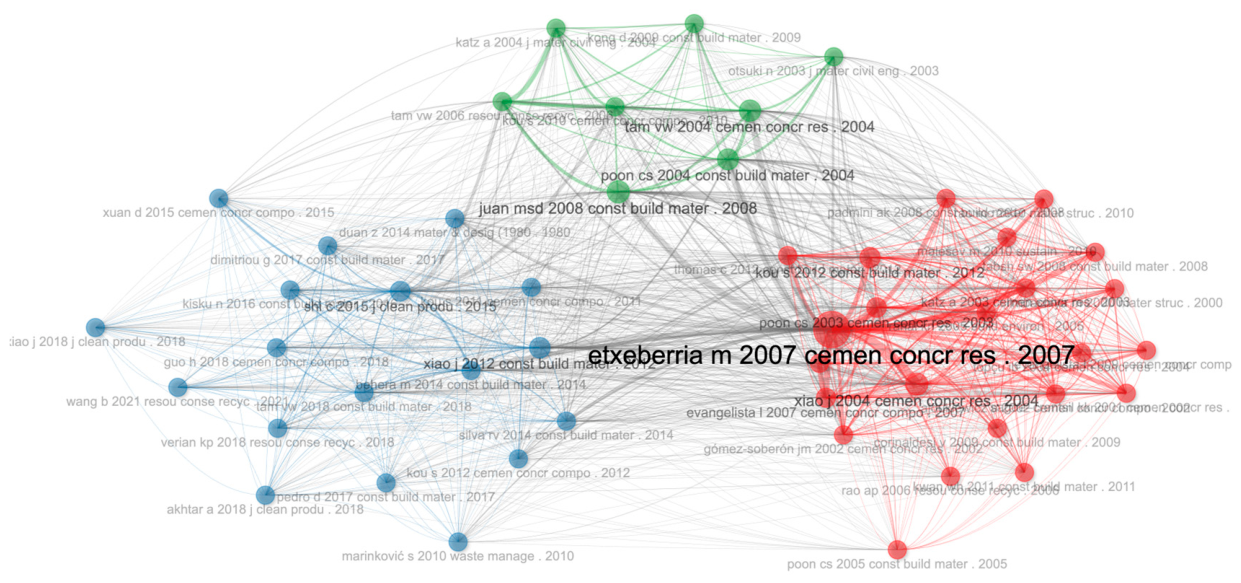
The first cluster, comprising 23 documents, was led by the study of Etxeberria et al. (2007), published in Cement and Concrete Research, which exhibited the highest PageRank value in the entire network (0.0484) and a high betweenness centrality (27.03). Other notable studies within this group included those by Xiao et al. (2004), Poon et al. (2003), Evangelista et al. (2007), Katz (2003), and Kou et al. (2012). The central position of these documents indicates that they constitute an important part of the historical knowledge base related to the behavior and use of recycled aggregate concrete.
The second cluster, composed of 18 documents, was associated with later publications that expanded the analysis toward material performance, sustainability, and comprehensive evaluation. Among the studies with the greatest structural relevance were Shi et al. (2015), which showed the highest PageRank value within the group (0.0257), followed by Xiao et al. (2012), Behera et al. (2014), Tam et al. (2018), Guo et al. (2018), and Silva et al. (2014). Within this cluster, Xiao et al. (2012) and Behera et al. (2014) also exhibited high betweenness centrality values, indicating their relevant role in connecting different intellectual lines within the field.
The third cluster, comprising eight documents, was mainly represented by studies by Tam et al. (2004), Juan et al. (2008), and Poon et al. (2004). Although this group was numerically smaller, it contained some of the highest betweenness centrality values in the entire network. In particular, Juan et al. (2008) recorded a betweenness centrality of 37.39, followed by Poon et al. (2004) with 32.71 and Tam et al. (2004) with 31.27. This suggests that these documents play an important bridging role between different knowledge domains.
Overall, the co-citation network shows that the intellectual structure of the field has been built upon a historical core of studies addressing the properties and behavior of recycled aggregate concrete, followed by research aimed at broadening its technical and environmental assessment. The coexistence of highly central documents and others with strong bridging capacity reflects a consolidated scientific structure that remains interconnected through publications linking different stages and research approaches.
3.9. Thematic Evolution and Emerging Topics
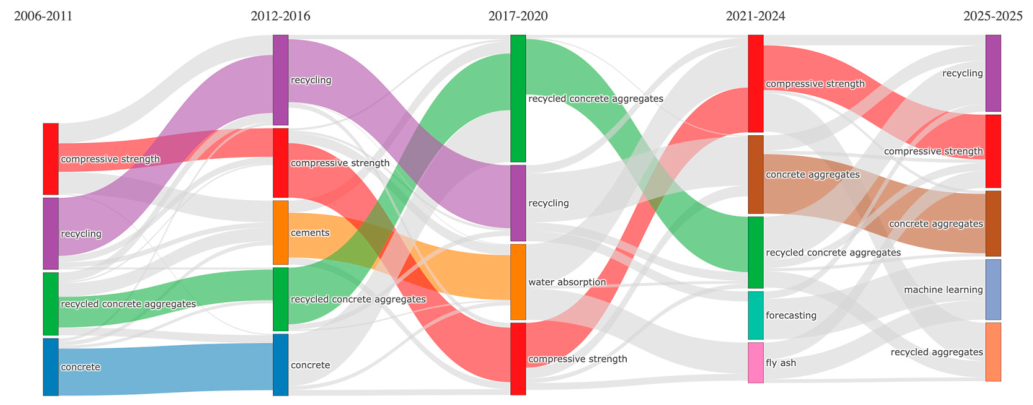
The thematic evolution analysis made it possible to identify the progressive changes in the main research lines on recycled aggregates in concrete during the 2006–2025 period. The temporal structure reveals the persistence of fundamental themes related to mechanical strength and recycling, together with the gradual incorporation of variables associated with durability, supplementary materials, and predictive tools.
During the 2006–2011 period, the main thematic cores were dominated by compressive strength, recycling, recycled concrete aggregates, and concrete. This stage reflects an initial phase of consolidation of the field, in which research focused primarily on demonstrating the technical feasibility of using recycled aggregates and evaluating their influence on the basic properties of concrete.
Between 2012 and 2016, the terms recycling and compressive strength maintained a central position, while cements and recycled concrete aggregates gained greater prominence. This evolution suggests a broadening of the field toward the study of interactions among recycled aggregates, the cementitious matrix, and material performance.
During 2017–2020, recycled concrete aggregates became consolidated as one of the main thematic axes, accompanied by water absorption, recycling, and compressive strength. The prominent emergence of water absorption indicates a transition toward a more comprehensive assessment of recycled concrete, incorporating physical properties and durability-related aspects in addition to mechanical behavior.
In the 2021–2024 period, the dominant themes included compressive strength, concrete aggregates, and recycled concrete aggregates. Terms such as forecasting and fly ash also emerged, indicating a diversification of research toward predictive tools and the incorporation of supplementary materials into recycled aggregate concrete systems.
Finally, in 2025, the terms recycling, compressive strength, concrete aggregates, and recycled aggregates continued to form part of the conceptual core of the field. However, the emergence of machine learning represents one of the clearest signs of recent change, suggesting the increasing incorporation of computational tools for predicting, modeling, and optimizing the behavior of recycled aggregate concrete.
Figure 11.
Thematic Evolution of Research on Recycled Aggregates in Concrete during the 2006–2025 Period.
Figure 11.
Thematic Evolution of Research on Recycled Aggregates in Concrete during the 2006–2025 Period.
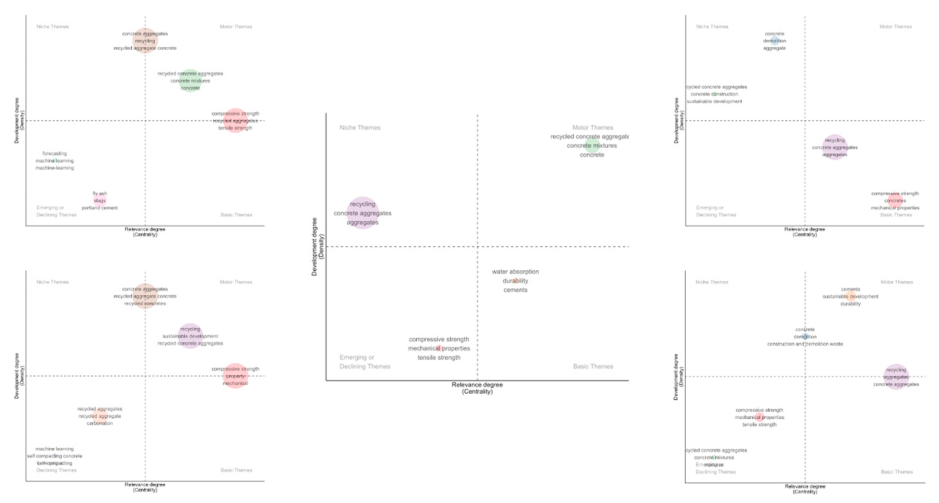
The thematic map analysis complemented this interpretation by classifying the main research themes according to their centrality and density. In the earlier periods, topics associated with compressive strength, mechanical properties, and recycling occupied prominent positions within the conceptual structure. As the study period progressed, concepts related to recycled concrete aggregates, durability, water absorption, and sustainable development gained greater relative importance.
In particular, the evolution of the thematic maps shows that compressive strength remained a cross-cutting criterion throughout the entire period, although it gradually ceased to be the sole differentiating axis of the field. At the same time, variables related to durability and sustainability became increasingly prominent, reflecting a transition toward more comprehensive assessments of recycled concrete performance.
In the most recent periods, the terms forecasting and machine learning were positioned in areas associated with emerging themes or themes with lower internal development. Given their recent appearance, this position can be interpreted as evidence of research lines that are still undergoing consolidation, particularly those focused on property prediction, mix optimization, and performance assessment using computational tools.
Figure 12.
Evolution of the Thematic Structure of Research on Recycled Aggregates in Concrete: (a) 2006–2011, (b) 2012–2016, (c) 2017–2020, (d) 2021–2024, and (e) 2025.
Figure 12.
Evolution of the Thematic Structure of Research on Recycled Aggregates in Concrete: (a) 2006–2011, (b) 2012–2016, (c) 2017–2020, (d) 2021–2024, and (e) 2025.
Overall, the results show an evolution from research initially focused on technical feasibility, recycling, and mechanical strength toward a broader field that integrates durability, sustainability, supplementary materials, and predictive tools. This transformation reflects the progressive maturation of research on recycled aggregates in concrete and the emergence of new research lines oriented toward a more comprehensive and computational assessment of the material.
3.10. Trend Topics and Emerging Research Lines
The trend topic analysis made it possible to identify temporal changes in the most frequently used terms within the literature on recycled aggregates in concrete. The observed evolution shows a transition from broad topics related to materials, construction, and waste utilization toward more specific research lines associated with mechanical performance, durability, microstructure, and, more recently, carbon capture and waste valorization.
During the early stages of the analyzed period, the dominant terms were mainly associated with broad concepts such as materials, building materials, civil engineering, experimental studies, and conservation of natural resources. Subsequently, between approximately 2014 and 2020, terms such as aggregates, concrete construction, mechanical properties, recycled aggregate concrete, and recycled aggregates gained greater prominence, reflecting the progressive specialization of the field toward the behavior and application of recycled aggregates in concrete systems.
From 2021 onward, the terms showing the greatest frequency and continuity were recycling, recycled aggregates, recycled aggregate concrete, concrete aggregates, and compressive strength. In particular, concrete aggregates exhibited the highest frequency in the analyzed dataset, with 8,271 occurrences, followed by recycling with 7,873, compressive strength with 4,921, aggregates with 3,480, recycled aggregates with 3,455, and recycled aggregate concrete with 3,436. These results confirm that recent literature continues to be structured around recycling, aggregate replacement, and the assessment of mechanical performance.
In the most recent years, thematic diversification can be observed toward concepts such as carbonation, microstructure, geopolymer concrete, performance, waste utilization, and carbon sequestration. The latter term showed a temporal median corresponding to 2025, as did waste utilization and mechanical, indicating their recent incorporation into the analyzed literature. The presence of carbon sequestration is particularly relevant, as it suggests a growing connection between the use of recycled aggregates and strategies aimed at reducing the climate impact of construction materials.
Likewise, the recent emergence of terms related to geopolymer concrete and microstructure reflects an evolution toward studies that integrate novel cementitious systems and advanced characterization techniques. Overall, these results show that the field has progressed from a stage focused primarily on technical feasibility and mechanical strength toward a broader research landscape in which durability, microstructural performance, waste valorization, and emission-reduction strategies are gaining increasing importance.
Figure 13.
Temporal Evolution of the Main Research Topics on Recycled Aggregates in Concrete during the 2006–2025 Period.
Figure 13.
Temporal Evolution of the Main Research Topics on Recycled Aggregates in Concrete during the 2006–2025 Period.
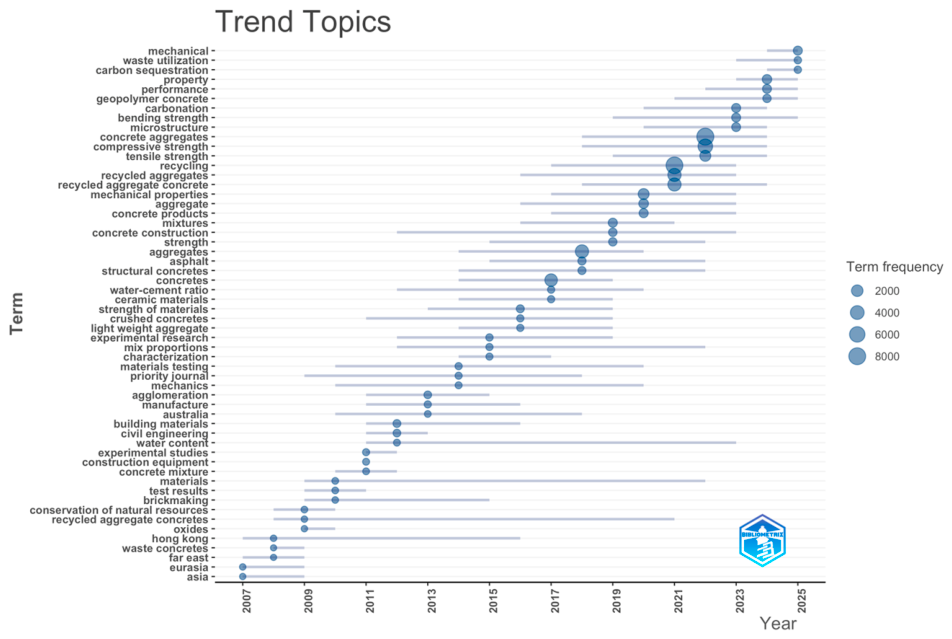
The temporal distribution of terms confirms that traditional topics such as compressive strength and recycling continue to represent core pillars of the field, whereas concepts such as carbon sequestration, waste utilization, and geopolymer concrete constitute more recent research lines with potential for further growth in the coming years. Recent studies have indicated that the carbonation of recycled aggregates can contribute both to the improvement of specific material properties and to CO2 capture strategies and the reduction of the environmental impact of concrete [7,10]. Likewise, waste utilization and the development of alternative cementitious systems, including geopolymer concretes, have been identified as relevant approaches within circular economy and decarbonization strategies for the construction sector [2,18]. This coexistence of consolidated and emerging topics highlights a transition toward a more integrated research landscape, focused not only on the technical performance of recycled concrete but also on its potential contribution to sustainability and the reduction of emissions associated with construction materials.
4. Discussion
The bibliometric results show that research on recycled aggregates in concrete has undergone a significant transformation over the past two decades. Beyond the quantitative growth in publications, the evolution of scientific networks, intellectual structure, and thematic patterns reveals the progressive consolidation of a field that was initially focused mainly on demonstrating the technical feasibility of recycled materials and that now incorporates perspectives related to durability, sustainability, waste utilization, and computational tools. This evolution is consistent with previous scientometric analyses that have identified sustained growth in research on recycled aggregate concrete and a progressive thematic diversification toward performance, durability, and sustainability [13]. Likewise, recent reviews indicate that the current development of recycled concrete is increasingly influenced by aggregate quality, durability, environmental impact reduction, and the need to optimize mix design through more advanced approaches [7,9].
The combined interpretation of the results shows that this evolution has not occurred in a linear manner. Some topics, particularly compressive strength, recycling, and recycled concrete aggregates, have maintained a constant presence throughout almost the entire 2006–2025 period. However, new research lines related to microstructural behavior, environmental impact, sustainable development, alternative cementitious materials, and predictive methods have progressively emerged around these core themes. This diversification is consistent with reviews highlighting the growing importance of durability and variables such as water absorption, carbonation, and microstructural behavior in recycled aggregate concrete [5]. Similarly, life cycle assessment has become an increasingly relevant tool for comparing the environmental benefits of concrete produced with natural and recycled aggregates [11], while the development of machine learning models reflects the expansion of the field toward computational methods capable of predicting properties and supporting material optimization [19]. Overall, these changes reflect a transition from a predominantly experimental and mechanical perspective toward an increasingly comprehensive assessment of recycled aggregate concrete.
4.1. Growth and Consolidation of Research on Recycled Aggregates
The temporal evolution of scientific production constitutes one of the clearest indicators of the consolidation of the field. The increase from 74 publications in 2006 to 2,189 documents in 2025, together with an annual growth rate of 19.51%, shows that academic interest in recycled aggregates in concrete has intensified considerably over the past two decades. In particular, the acceleration observed after 2017 suggests that the topic has moved beyond an initial exploratory stage and is currently undergoing a phase of scientific expansion and diversification.
This growth can be interpreted within the context of the increasing need to reduce the consumption of natural aggregates and improve the management of waste generated by construction and demolition activities. In this regard, recycled aggregates represent an alternative that directly links concrete technology with the principles of waste valorization and material circularity.
The concentration of publications in recent years is also consistent with the average document age of 5.72 years, indicating that a substantial proportion of the knowledge currently shaping the field comes from relatively recent research. At the same time, the high average of 31.87 citations per document demonstrates the existence of both a consolidated scientific foundation and influential reference studies with sustained impact.
The distribution of publications among the leading sources further supports this interpretation. Construction and Building Materials accounted for 1,923 documents, followed by Journal of Building Engineering and Materials. This pattern shows that research on recycled aggregates is strongly embedded within the fields of construction materials and building technology. However, the presence of Journal of Cleaner Production among the leading sources also reflects the expansion of the topic toward approaches related to sustainability, waste valorization, and environmental impact reduction.
The analysis of the most highly cited documents also reveals the coexistence of foundational studies and more recent contributions with high citation rates. Publications such as the study led by Etxeberria in 2007 continue to exert strong influence within the field, while relatively recent documents have rapidly achieved high citation levels. This pattern indicates that knowledge on recycled aggregates simultaneously possesses a stable intellectual foundation and a continuing capacity to incorporate new approaches.
Overall, these patterns support the characterization of research on recycled aggregates in concrete as a consolidated yet still expanding scientific field, marked by increasing publication output, broad international participation, and progressive diversification of research questions. The persistence of traditional topics alongside the emergence of new research lines suggests that the future development of the field will likely be driven less by demonstrating the basic feasibility of recycled aggregates and more by optimizing their performance, reducing their variability, and demonstrating quantifiable environmental benefits under real-world application conditions.
4.2. Global Leadership and Scientific Collaboration Networks
The geographical distribution of scientific production showed a marked concentration in specific countries and institutions, with China emerging as the main research hub for recycled aggregates in concrete. This leadership was reflected both in publication volume and accumulated scientific impact, as China recorded the highest research output in the dataset as well as the greatest number of citations. The dominant presence of Chinese universities among the most productive institutions, led by Tongji University, further reinforces this position and suggests the existence of a well-established academic infrastructure focused on recycled materials and concrete technology.
However, scientific leadership in the field is not determined exclusively by publication volume. Countries such as Australia, Portugal, Spain, and Hong Kong showed high citation levels relative to their scientific output, indicating that research influence also depends on the quality, visibility, and connectivity of the studies produced. In this regard, the comparison between productivity and impact reveals two complementary patterns: large scientific systems with high publication output and countries with lower production volumes but particularly influential participation in the international literature.
The institutional structure showed a significant concentration in Asian universities, although European institutions also played a relevant role. The presence of Universidad de Lisboa among the most productive institutions demonstrates that knowledge development on recycled aggregates has an international rather than exclusively regional distribution. This pattern is consistent with the structure observed in the collaboration networks, where scientific links connect Asia, Oceania, Europe, the Americas, and other regions.
The international collaboration analysis showed that China functions as one of the central nodes of the global network, with particularly strong relationships with Australia, Hong Kong, the United States, and the United Kingdom. The China–Australia partnership exhibited the highest frequency of collaboration within the analyzed dataset, suggesting the existence of a stable and sustained scientific relationship between these two research communities. Other relevant regional and interregional links were also identified, including Spain–Portugal, Spain–Italy, and Saudi Arabia–Pakistan, demonstrating the formation of multiple scientific cooperation hubs.
This collaborative structure is particularly important because research on recycled aggregates is influenced by local factors, including the availability and composition of waste materials, the characteristics of natural aggregates, construction practices, and regulatory frameworks. Therefore, international research networks can facilitate the comparison of results obtained under different conditions and contribute to the development of more generalizable evaluation criteria.
At the researcher level, the results also revealed differences between productivity and scientific influence. Xiao J. recorded the highest number of publications, whereas De Brito J. and Poon CS showed the highest h-index values within the corpus. This difference confirms that publication productivity alone does not necessarily constitute a sufficient measure of scientific leadership, as influence also depends on citation impact and the capacity of individual studies to become integrated into the intellectual structure of the field.
The co-authorship networks further showed that researchers such as Zhang Y., Wang Y., Wang J., Wang X., and Xiao J. occupy central positions within different collaboration clusters. The presence of authors with high centrality and betweenness values indicates that certain researchers play an important role in connecting scientific communities, thereby facilitating the circulation of knowledge across different research groups and thematic areas.
Overall, these results show that the field of recycled aggregates in concrete exhibits an increasingly internationalized scientific structure, although leadership remains strongly concentrated in Asia, particularly in China. At the same time, the influence of Australia and several European countries demonstrates that knowledge consolidation depends on a broader network of collaboration and citation. The future evolution of the field will likely be associated with greater integration of these networks, particularly in areas requiring international comparability, such as durability, environmental assessment, standardization of recycled materials, and industrial-scale implementation.
4.3. Evolution of the Intellectual and Conceptual Structure of the Field
The combined analysis of co-citation, keyword co-occurrence, and thematic evolution shows that research on recycled aggregates in concrete has developed an increasingly complex intellectual structure over the past two decades. The results suggest a transition from a knowledge base focused primarily on the characterization of recycled materials and their mechanical behavior toward a more integrated field in which performance, durability, sustainability, and advanced analytical tools converge.
The co-citation network made it possible to identify three main intellectual cores. The first comprised foundational studies associated with the behavior of recycled aggregate concrete, including prominent publications by Etxeberria et al., Xiao et al., Poon et al., Katz, and Kou et al. The high centrality of these documents indicates that they constitute an important part of the historical knowledge base and have served as recurrent references for subsequent research.
A second intellectual core consisted of studies that broadened the analysis toward more comprehensive approaches to performance, durability, and environmental assessment. This group included prominent publications by Shi et al., Behera et al., Tam et al., Guo et al., and Silva et al. The position of these documents within the network suggests a stage of conceptual diversification in which the assessment of recycled concrete began to incorporate variables beyond mechanical strength.
The third intellectual core was represented by documents that played an important bridging role between different research lines. Studies by Juan et al., Poon et al., and Tam et al. exhibited high betweenness centrality values, suggesting that they functioned as bridges between different scientific communities and contributed to integrating distinct perspectives within the field.
This intellectual evolution is consistent with the conceptual structure identified through keyword co-occurrence analysis. The three main clusters reflect an organization of knowledge around: (i) recycling and aggregate replacement, (ii) mechanical performance, durability, and microstructural characterization, and (iii) sustainability, construction and demolition waste, and environmental impact. The high connectivity among these groups demonstrates that the thematic lines have not evolved in isolation but rather through continuous interaction between technical feasibility and environmental performance.
The temporal evolution further supports this interpretation. During the initial periods, terms such as compressive strength, recycling, and recycled concrete aggregates dominated the conceptual structure. Subsequently, concepts related to durability, water absorption, and sustainable development gained greater relevance, indicating a progressive broadening of the research questions addressed within the field.
In the most recent years, the emergence of terms such as forecasting, machine learning, carbon sequestration, geopolymer concrete, and microstructure suggests a new stage of diversification. This transition indicates that the field is increasingly incorporating computational tools, emission-reduction strategies, and alternative cementitious systems, thereby extending beyond the traditional approach based solely on aggregate replacement.
Overall, the results reveal a trajectory of scientific maturation characterized by three general stages: an initial phase focused on technical feasibility and mechanical strength, a second stage oriented toward durability and comprehensive performance assessment, and a recent phase in which sustainability, decarbonization, and predictive tools have gained increasing relevance.
This evolution demonstrates that research on recycled aggregates in concrete is no longer centered solely on proving the feasibility of replacing natural aggregates. The scientific challenge is now shifting toward performance optimization, reduction of material variability, quantitative environmental assessment, and the integration of predictive methods capable of supporting the design of recycled materials with greater reliability and applicability.
4.4. From Mechanical Assessment to Sustainability and Decarbonization
The thematic evolution identified through the bibliometric analysis shows that research on recycled aggregates in concrete has progressively shifted from a perspective focused primarily on mechanical performance toward a broader approach that incorporates durability, environmental sustainability, and the reduction of impacts associated with construction materials. This transition does not imply that traditional variables such as compressive strength have lost relevance; rather, they are now considered within a more comprehensive framework for material assessment.
During the early stages of the analyzed period, terms such as compressive strength, recycling, and recycled concrete aggregates dominated the conceptual structure. This configuration reflects a stage in which a substantial proportion of the research focused on determining whether recycled aggregates could be incorporated into concrete without significantly compromising mechanical performance. Compressive strength therefore served as one of the main indicators of the material’s technical acceptability.
Subsequently, the emergence and consolidation of terms such as durability, water absorption, microstructure, and carbonation reflected a broadening of the experimental approach. This evolution indicates that research began to recognize that the feasibility of recycled aggregates cannot be established solely on the basis of mechanical strength, but also depends on properties related to fluid transport, internal structure, matrix–aggregate interactions, and resistance to deterioration mechanisms.
The co-occurrence analysis also showed that concepts related to construction and demolition waste, sustainable development, environmental impact, and waste management form a clearly differentiated thematic cluster that remains closely connected to the mechanical and technological aspects of concrete. This relationship indicates that sustainability is no longer merely a complementary consideration but has become a central dimension of contemporary research on recycled aggregates.
The trend topics further support this interpretation. In the most recent years, terms such as waste utilization and carbon sequestration have emerged, indicating the progressive incorporation of approaches related to waste valorization and climate impact mitigation. The presence of carbon sequestration is particularly relevant because it reflects an expansion of the field toward strategies that seek not only to reduce the extraction of natural resources but also to explore mechanisms that may contribute to lowering the carbon footprint associated with construction materials.
The emergence of geopolymer concrete among recent trends also suggests a convergence between research on recycled aggregates and the development of alternative cementitious systems. This pattern indicates that the study of recycled concrete is beginning to integrate with other sustainability strategies, broadening the discussion from aggregate replacement toward the combined design of cementitious matrices and recycled components with lower environmental impacts.
Nevertheless, the bibliometric results also show that mechanical strength remains one of the central axes of the field. The term compressive strength remained present throughout all stages of thematic evolution and continued to rank among the most frequently occurring topics. This suggests that the transition toward sustainability is not replacing traditional technical criteria but rather expanding the evaluation framework. Consequently, the development of recycled aggregate concrete still requires a balance among mechanical performance, durability, and environmental benefits.
Overall, the observed evolution reveals an important conceptual shift: the scientific question has progressively moved from “Can recycled aggregate be used without compromising strength?” toward the more complex issue of “How can recycled aggregate concrete be designed to maintain adequate technical performance while simultaneously reducing resource consumption and environmental impact?” This transformation represents a clear sign of the maturation of the field and indicates that future research should more systematically integrate mechanical, durability, and environmental indicators to assess the true contribution of recycled aggregates to concrete sustainability.
4.5. Emerging Research Fronts and Future Research Directions
The results obtained from the thematic evolution and trend topic analyses show that research on recycled aggregates in concrete is entering a stage characterized by greater integration of computational tools, advanced characterization techniques, and decarbonization-oriented strategies. The recent emergence of terms such as machine learning, forecasting, carbon sequestration, microstructure, and geopolymer concrete indicates that the field is expanding its objectives beyond the conventional assessment of mechanical properties.
Among these research lines, the use of machine learning represents one of the most relevant emerging trends. Its appearance in the most recent periods suggests growing interest in developing models capable of predicting properties such as compressive strength, durability, water absorption, or mechanical behavior based on variables related to mixture composition and the characteristics of recycled aggregates. This approach may be particularly useful in a field characterized by substantial variability in recycled material properties arising from differences in origin, processing, composition, and waste quality.
Complementarily, the presence of forecasting among recent trends indicates an evolution toward tools aimed at anticipating the behavior of recycled concrete and supporting design and optimization processes. These techniques could reduce dependence on extensive experimental campaigns and facilitate the comparison of multiple material combinations, provided that the models are developed from sufficiently large, representative, and standardized datasets.
The growing presence of terms related to microstructure also indicates that future research will likely explore more deeply the relationship between the internal structure of the material and its macroscopic behavior. Characterization of the interfacial transition zone, porosity, adhered mortar, and moisture transport mechanisms may contribute to a more precise explanation of variations in strength and durability. This integration of microstructural characterization and mechanical performance represents an opportunity to advance toward more robust behavioral models that are less dependent on exclusively empirical results.
Another emerging research front is associated with carbon capture and storage, reflected by the recent appearance of the term carbon sequestration. Within the context of recycled aggregates, this line may gain relevance through accelerated carbonation strategies and treatments aimed at simultaneously improving aggregate properties and their potential CO2 uptake capacity. Incorporating this approach could broaden the role of recycled aggregates from a resource-conservation strategy to a potential tool within the decarbonization of construction materials.
Likewise, the presence of geopolymer concrete suggests a convergence between recycled aggregates and alternative cementitious systems. Combining matrices with reduced dependence on Portland cement with aggregates derived from waste materials may create new opportunities to lower the environmental impact of concrete. However, this integration also introduces challenges related to chemical compatibility, durability, raw material availability, and standardization of design procedures.
Based on the identified patterns, future research should move toward a more integrated evaluation of recycled aggregates by simultaneously considering mechanical performance, durability, material variability, microstructural behavior, and environmental impact. Greater standardization of characterization and classification methods for recycled aggregates will also be necessary, as material heterogeneity remains one of the main barriers to comparing results across studies and transferring laboratory-scale solutions to real-world applications.
Finally, future development of the field should place greater emphasis on industrial scaling and validation under real production conditions. The high level of scientific output observed in recent years demonstrates that experimental knowledge has expanded considerably; however, the technological consolidation of recycled aggregates will depend on their incorporation into specifications, standards, quality control procedures, and production systems capable of ensuring consistent performance.
Overall, the results suggest that the next stage of research will be defined by the convergence of recycled materials, predictive modeling, advanced characterization, alternative cementitious systems, and carbon-reduction strategies. This integration may support the development of more reliable, optimized, and environmentally competitive recycled concrete, thereby expanding its application within construction practices increasingly oriented toward the circular economy and decarbonization.
4.6. Implications, Limitations, and Research Opportunities
The results obtained in this study provide an integrated view of the scientific evolution of research on recycled aggregates in concrete during the 2006–2025 period. From an academic perspective, the bibliometric analysis shows that the field has reached an important level of consolidation, characterized by sustained publication growth, broad international participation, and progressive thematic diversification. This evolution confirms that recycled aggregates are no longer an exclusively experimental topic but have become a multidimensional research area in which mechanical performance, durability, sustainability, waste valorization, and computational tools converge.
From a scientific perspective, one of the main implications of this study is the identification of a thematic transition from approaches centered on mechanical strength and replacement feasibility toward broader research lines related to durability, microstructural behavior, environmental impact, and property prediction. This transformation suggests that future assessments of recycled aggregate concrete should incorporate integrated indicators capable of simultaneously representing technical performance and environmental benefits, avoiding sustainability evaluations based solely on reductions in natural aggregate consumption.
Likewise, the international collaboration structure highlights the need to strengthen comparative studies across regions. The properties of recycled aggregates can vary significantly depending on the origin of the waste, demolition, crushing, classification, and treatment processes, as well as the characteristics of the original materials. For this reason, greater international cooperation may contribute to the development of more standardized characterization protocols and facilitate the comparison of results obtained under different conditions.
Despite the broad scope of the analyzed bibliographic dataset, this study has several limitations. First, the research was based exclusively on documents indexed in Scopus; therefore, publications included only in other databases, such as Web of Science or other specialized sources, were not considered. Consequently, the identified patterns primarily represent the scientific structure captured by Scopus during the analyzed period.
Second, bibliometric analysis depends directly on the quality and consistency of the available metadata. Variations in author names, institutions, keywords, and references may generate fragmentation within the networks. Although review and normalization procedures were applied, inconsistencies inherent to large bibliographic datasets cannot be completely eliminated.
Another limitation concerns the search strategy used. The query (“recycled aggregate” AND “concrete”) retrieved a broad body of literature directly related to the central topic of the study; however, studies using alternative terminology without explicitly including these concepts may not have been identified. Therefore, the results should be interpreted within the conceptual scope defined by the search equation.
In addition, citation indicators should be interpreted cautiously because they depend on the exposure time of each publication. Older documents have had more time to accumulate citations, whereas recent studies may show lower total citation counts despite exhibiting strong emerging influence. For this reason, the combined interpretation of total citations, citations per year, co-citation networks, and thematic evolution is more appropriate than relying on a single indicator in isolation.
Based on these limitations, several opportunities for future research can be identified. One research direction involves expanding the analysis by incorporating additional databases and comparing the stability of the resulting bibliometric patterns. A second opportunity lies in developing specialized bibliometric studies by type of recycled aggregate, including construction and demolition waste, glass, rubber, plastics, and ceramic materials, thereby allowing a more detailed assessment of their individual scientific trajectories.
It would also be valuable for future research to integrate experimental information with bibliometric indicators. Combining scientific trends with data on strength, absorption, durability, carbon emissions, costs, and replacement ratios could make it possible to identify not only the most extensively studied materials, but also those with the greatest technical and environmental potential.
Finally, the emerging research lines identified in this study, particularly machine learning, forecasting, carbon sequestration, microstructure, and geopolymer concrete, represent important opportunities for interdisciplinary research. Integrating these areas may contribute to improving predictions of recycled concrete behavior, optimizing mixture designs, understanding microstructural mechanisms, and more rigorously quantifying the environmental benefits associated with the use of recycled materials.
Overall, the identified implications and limitations indicate that research on recycled aggregates in concrete has reached a significant level of maturity while still offering substantial opportunities for further development. Future progress in the field will depend on greater material standardization, stronger integration of technical and environmental performance, expanded international research networks, and the adoption of advanced tools capable of transferring scientific knowledge into larger-scale construction applications.
5. Conclusions
The bibliometric analysis of scientific production on recycled aggregates in concrete during the 2006–2025 period identified a well-established and expanding research field. The analyzed dataset comprised 14,044 documents, with an annual growth rate of 19.51%, increasing from 74 publications in 2006 to 2,189 in 2025. This evolution demonstrates a sustained increase in scientific interest in the use of recycled aggregates as an alternative for reducing natural resource consumption and promoting greater circularity within the construction sector.
The scientific structure of the field showed a marked concentration of production among specific authors, institutions, and countries. China emerged as the main center of knowledge generation, while institutions such as Tongji University exhibited high productivity. At the researcher level, Xiao J. stood out in terms of publication volume, whereas De Brito J. and Poon CS showed particularly high influence in terms of bibliometric impact. At the same time, collaboration networks revealed a broadly interconnected international structure, with relevant links among Asia, Oceania, Europe, and the Americas.
From a conceptual perspective, research was organized mainly around three major themes: recycling and aggregate replacement, assessment of mechanical performance and durability, and environmental sustainability associated with waste utilization. Thematic evolution showed that the early stages were strongly focused on demonstrating the technical feasibility of recycled aggregates, particularly through variables such as compressive strength. As the field developed, greater importance was given to aspects related to water absorption, durability, microstructure, construction and demolition waste, and sustainable development, reflecting a transition toward more comprehensive material assessments.
In the most recent years, emerging research lines related to machine learning, forecasting, carbon sequestration, geopolymer concrete, and microstructural analysis were identified. These topics suggest a new stage of scientific development oriented toward the incorporation of predictive tools, alternative cementitious systems, and strategies for reducing environmental impact. In this context, mechanical strength remains a fundamental criterion, but it is increasingly integrated with indicators of durability, sustainability, and microstructural behavior.
Overall, the results show that research on recycled aggregates in concrete has evolved from a stage focused primarily on demonstrating mechanical feasibility toward a multidimensional approach aimed at optimizing both technical and environmental performance. Future research should strengthen the standardization and characterization of recycled aggregates, reduce variability associated with their origin, integrate technical and environmental assessment methodologies, and expand validation under real production conditions. The incorporation of computational tools and decarbonization strategies represents a particularly relevant opportunity to advance toward more reliable and efficient recycled concrete systems that are consistent with the principles of circular economy and sustainability in the construction industry.
6. Patents
This section is not mandatory but may be added if there are patents resulting from the work reported in this manuscript.
Author Contributions
Conceptualization, Jhovanny Arias, Manuel Gutierrez, Julio Calderon and Jose Arcos; methodology, Jhovanny Arias, Jose Arcos and Manuel Gutierrez; software, Jhovanny Arias; validation, Luis Valenzuela, Erubey Soriano, Israel Miranda, and Jose Arcos; investigation, Luis Valenzuela, Erubey Soriano and Israel Miranda; resources, Manuel Gutierrez, Julio Calderon and Jose Arcos; writing—review and editing, Jhovanny Arias, Manuel Gutierrez, Julio Calderon and Jose Arcos; supervision, Manuel Gutierrez, Julio Calderon and Jose Arcos; project administration, Jhovanny Arias and Manuel Gutierrez. All authors have read and agreed to the published version of the manuscript.
Funding
This research received no external funding.
Institutional Review Board Statement
Not applicable.
Informed Consent Statement
Not applicable.
Data Availability Statement
The data supporting the findings of this study were obtained from the Scopus database. The bibliographic records analyzed were exported in BibTeX format and processed using Bibliometrix/Biblioshiny and VOSviewer. Due to database licensing restrictions, the complete Scopus dataset cannot be publicly redistributed. However, the search strategy, study period, inclusion criteria, and analytical procedures are fully described in the Materials and Methods section to ensure reproducibility of the study. Additional processed data may be made available by the corresponding author upon reasonable request.
Acknowledgments
The authors acknowledge the academic and institutional support provided during the development of this research. During the preparation of this manuscript, the authors used ChatGPT (GPT-5.6 Sol, OpenAI) for assistance with manuscript structuring, scientific writing refinement, and interpretation and presentation of bibliometric results. The authors reviewed, verified, and edited all generated content and take full responsibility for the accuracy, integrity, and content of this publication.
Conflicts of Interest
The authors declare no conflicts of interest.
References
- Luo, H.; Aguiar, J.; Wan, X.; Wang, Y.; Cunha, S.; Jia, Z. Application of Aggregates from Construction and Demolition Wastes in Concrete: Review. Sustainability 2024, 16, 4277. [Google Scholar] [CrossRef]
- Aslam, M.S.; Huang, B.; Cui, L. A Comprehensive Review on Recycling of Construction Demolition Waste in Concrete. Sustainability 2023, 15, 4932. [Google Scholar] [CrossRef]
- Marvila, M.T.; de Matos, P.R.; Rodriguez, E.D.; Monteiro, S.N.; de Azevedo, A.R.G. Recycled Aggregate: A Viable Solution for Sustainable Concrete Production. Materials 2022, 15, 5276. [Google Scholar] [CrossRef] [PubMed]
- Piccinali, A.; Diotti, A.; Plizzari, G.; Sorlini, S. Impact of Recycled Aggregate on the Mechanical and Environmental Properties of Concrete: A Review. Materials 2022, 15, 1818. [Google Scholar] [CrossRef] [PubMed]
- Guo, H.; Shi, C.; Guan, X.; Zhu, J.; Ding, Y.; Ling, T.C.; Zhang, H.; Wang, Y. Durability of Recycled Aggregate Concrete A Review. Cem. Concr. Compos. 2018, 89, 251–259. [Google Scholar] [CrossRef]
- Muhammad, F.; Harun, M.; Ahmed, A.; Kabir, N.; Khalid, H.R.; Hanif, A. Influence of bonded mortar on recycled aggregate concrete properties: A review. Constr. Build. Mater. 2024, 432, 136564. [Google Scholar] [CrossRef]
- Xiao, J.; Yu, C.; Wang, B.; Liu, H.; Poon, C.S.; de Brito, J.; Xiao, X.; Liu, J.; Shah, S.P.; et al. Recycled Aggregate Concrete Design, Application and Challenges. Nat. Rev. Clean Technol. 2026, 2, 67–83. [Google Scholar] [CrossRef]
- Bu, C.; Liu, L.; Lu, X.; Zhu, D.; Sun, Y.; et al. The Durability of Recycled Fine Aggregate Concrete: A Review. Materials 2022, 15, 1110. [Google Scholar] [CrossRef] [PubMed]
- Trivedi, S.S.; Das, B.B.; Barbhuiya, S. Performance of Construction and Demolition Waste as Recycled Aggregates in Concrete-Review. Proc. Inst. Civ. Eng. Constr. Mater. 2025, 178, 20–47. [Google Scholar] [CrossRef]
- Zhang, Z.; Angst, U.; Troian, V.; Guo, B.; Zeng, Q. Durability Performance of Concrete Incorporating Carbonated Recycled Coarse Aggregates: A Review. npj Mater. Sustain. 2025, 3, 27. [Google Scholar] [CrossRef] [PubMed]
- Hasheminezhad, A.; King, D.; Ceylan, H.; Kim, S. Comparative Life Cycle Assessment of Natural and Recycled Aggregate Concrete: A Review. Sci. Total Environ. 2024, 950, 175310. [Google Scholar] [CrossRef] [PubMed]
- Sanchez-Roldan, Z.; Zamorano, M.; Martin-Morales, M. The Use of Recycled Aggregates in the Construction Sector: A Scientific Bibliometric Analysis. Mater. Construcc. 2022, 72, e277. [Google Scholar] [CrossRef]
- Zhang, B.; Ahmad, W.; Ahmad, A.; Aslam, F.; Joyklad, P. A Scientometric Analysis Approach to Analyze the Present Research on Recycled Aggregate Concrete. J. Build. Eng. 2022, 46, 103679. [Google Scholar] [CrossRef]
- Cornejo-Meza, M.; Rubio-Cunishpuma, G.; Escobar-Segovia, K.; Garcia-Troncoso, N. Recycled Aggregate Concrete Research 1983-2025: A Global Bibliometric and Thematic Evolution Analysis for Sustainable Material Design. Buildings 2026, 16, 1898. [Google Scholar] [CrossRef]
- Aria, M.; Cuccurullo, C. bibliometrix: An R-tool for comprehensive science mapping analysis. J. Informetr. 2017, 11, 959–975. [Google Scholar] [CrossRef]
- van Eck, N.J.; Waltman, L. Software survey: VOSviewer, a computer program for bibliometric mapping. Scientometrics 2010, 84, 523–538. [Google Scholar] [CrossRef] [PubMed]
- Aria, M.; Cuccurullo, C.; D’Aniello, L.; Spano, M. Biblioshiny and the SAAS Workflow: An Integrated Framework for Transparent and Reproducible Science Mapping. J. Informetr. 2026. [Google Scholar] [CrossRef]
- Xie, J.; Wang, J.; Rao, R.; Wang, C.; Fang, C. Effects of Combined Usage of GGBS and Fly Ash on Workability and Mechanical Properties of Alkali Activated Geopolymer Concrete with Recycled Aggregate. Compos. Part B Eng. 2019, 164, 179–190. [Google Scholar] [CrossRef]
- Zhao, Z.; Liu, Y.; Lu, Y.; Ji, C.; Lin, C.; Yao, L.; Pu, Z.; de Brito, J. Prediction of Properties of Recycled Aggregate Concrete Using Machine Learning Models: A Critical Review. J. Build. Eng. 2024, 90, 109516. [Google Scholar] [CrossRef]
Figure 1.
Annual Evolution of Scientific Production on Recycled Aggregates in Concrete during the 2006–2025 Period.
Figure 1.
Annual Evolution of Scientific Production on Recycled Aggregates in Concrete during the 2006–2025 Period.
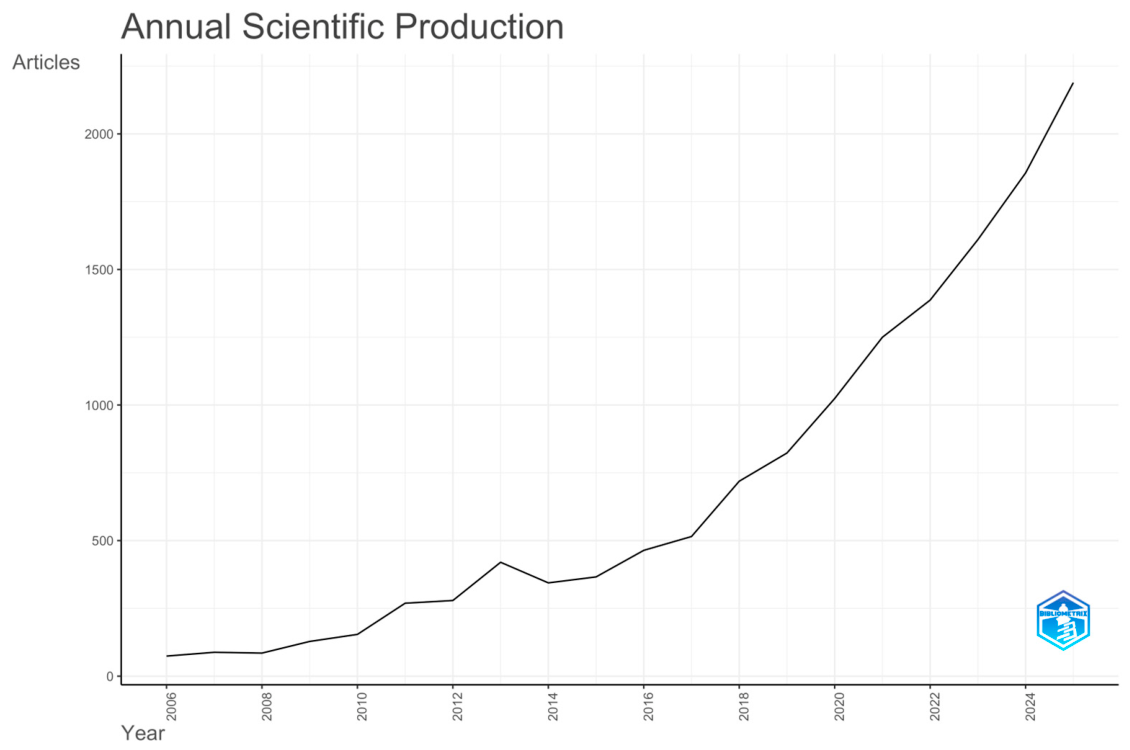
Figure 2.
Scientific Sources with the Highest Number of Published Documents on Recycled Aggregates in Concrete during the 2006–2025 Period.
Figure 2.
Scientific Sources with the Highest Number of Published Documents on Recycled Aggregates in Concrete during the 2006–2025 Period.
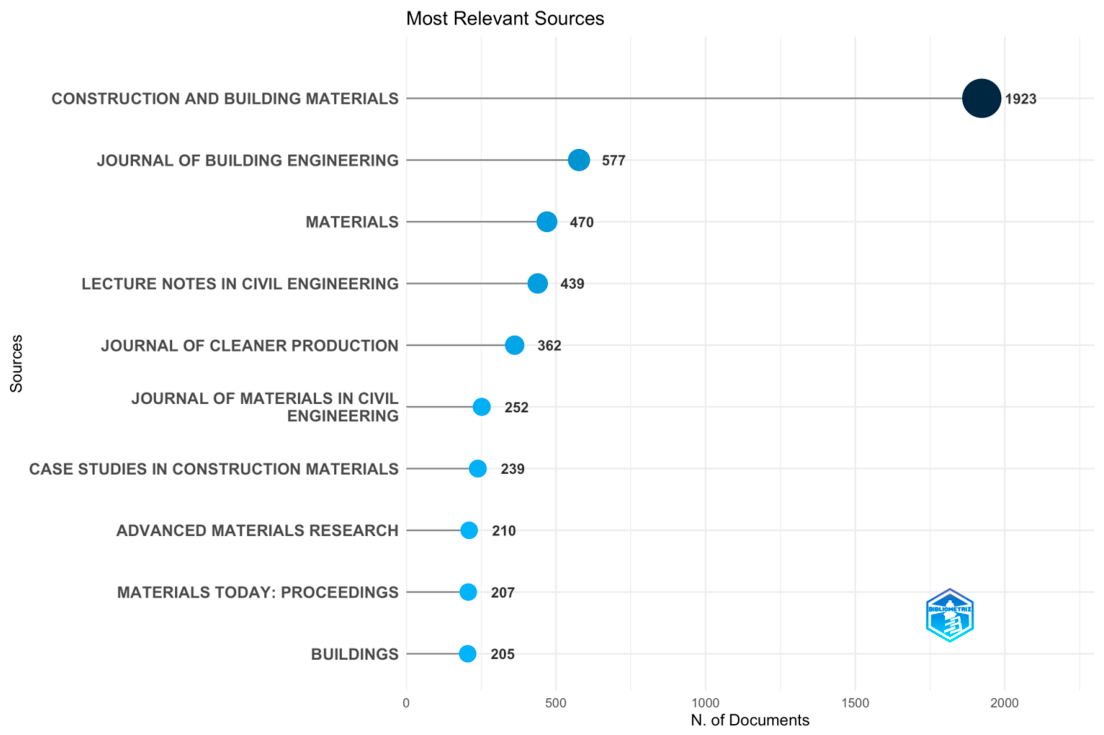
Figure 4.
Documents with the Highest Number of Global Citations in the Literature on Recycled Aggregates in Concrete during the 2006–2025 Period.
Figure 4.
Documents with the Highest Number of Global Citations in the Literature on Recycled Aggregates in Concrete during the 2006–2025 Period.
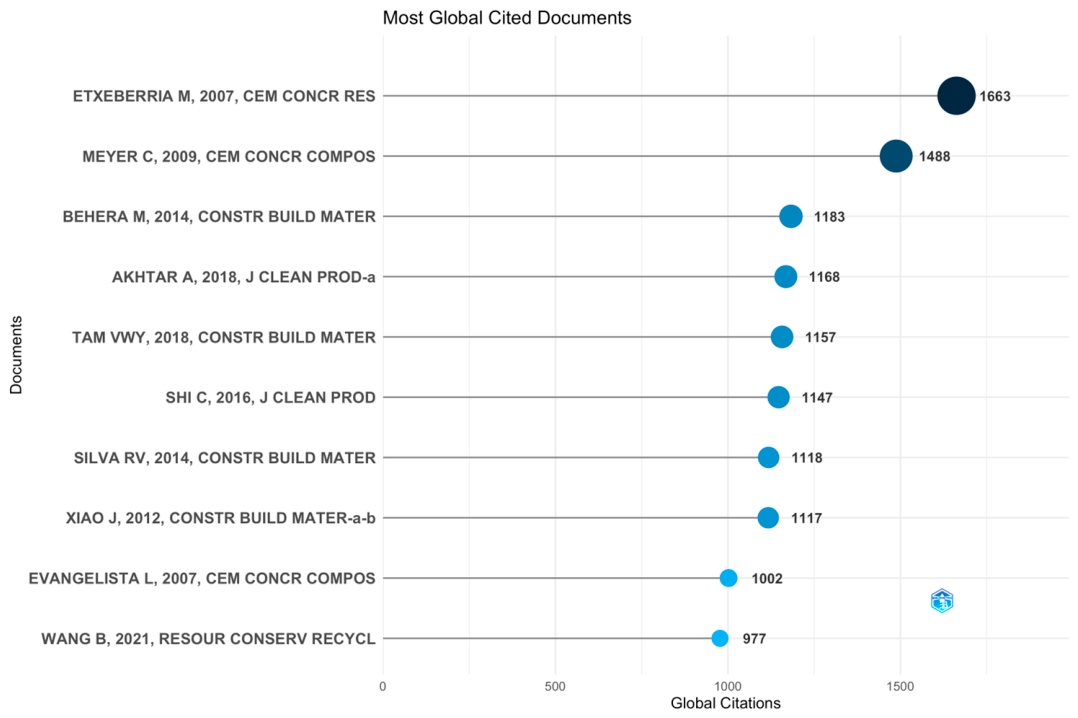
Figure 5.
Institutions with the Highest Scientific Production on Recycled Aggregates in Concrete during the 2006–2025 Period.
Figure 5.
Institutions with the Highest Scientific Production on Recycled Aggregates in Concrete during the 2006–2025 Period.
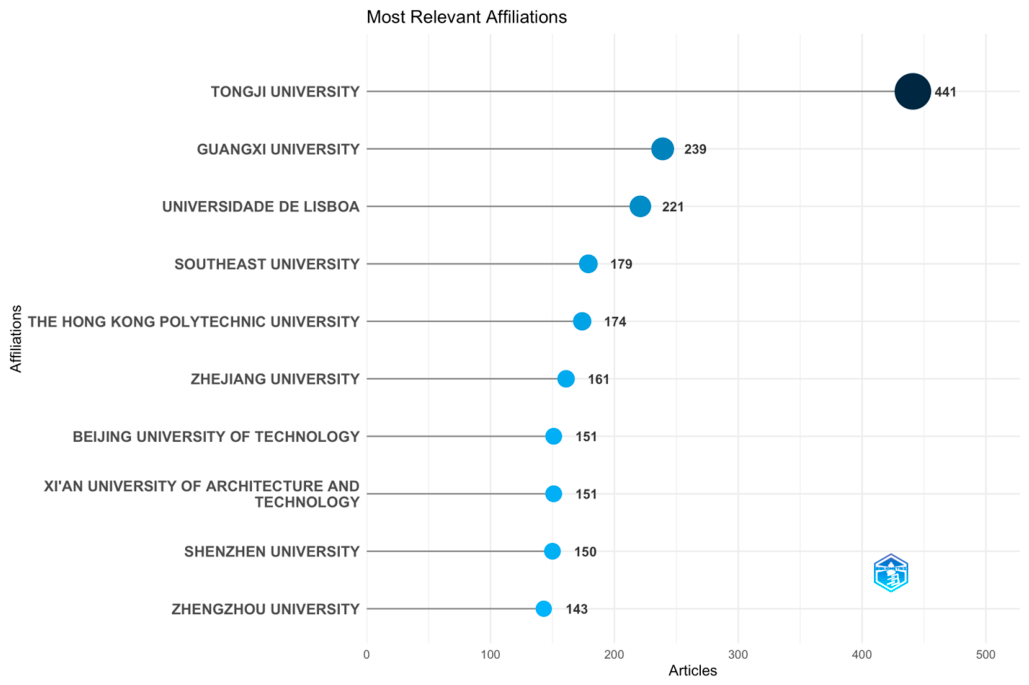
Figure 6.
Geographical Distribution of Scientific Production on Recycled Aggregates in Concrete during the 2006–2025 Period.
Figure 6.
Geographical Distribution of Scientific Production on Recycled Aggregates in Concrete during the 2006–2025 Period.
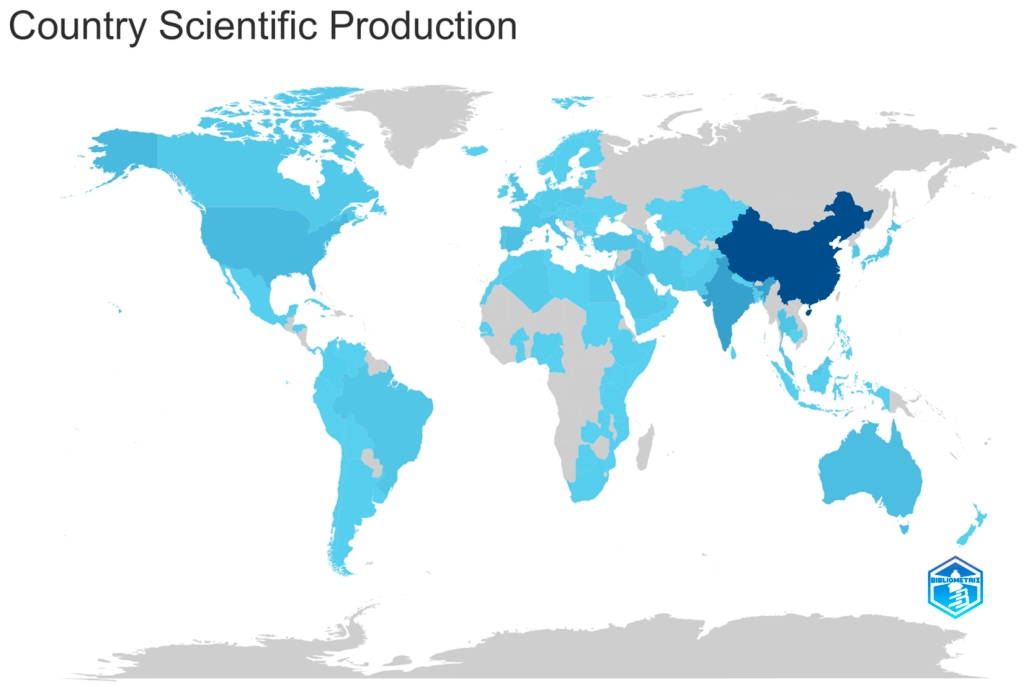
Figure 7.
International Scientific Collaboration Network among Countries in Research on Recycled Aggregates in Concrete during the 2006–2025 Period.
Figure 7.
International Scientific Collaboration Network among Countries in Research on Recycled Aggregates in Concrete during the 2006–2025 Period.
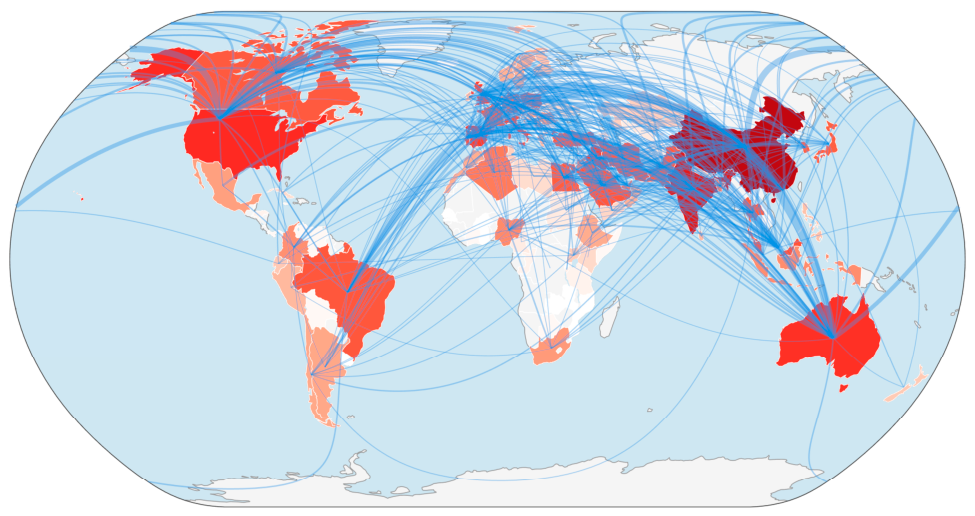
Figure 8.
Author Collaboration Network in Research on Recycled Aggregates in Concrete during the 2006–2025 Period.
Figure 8.
Author Collaboration Network in Research on Recycled Aggregates in Concrete during the 2006–2025 Period.
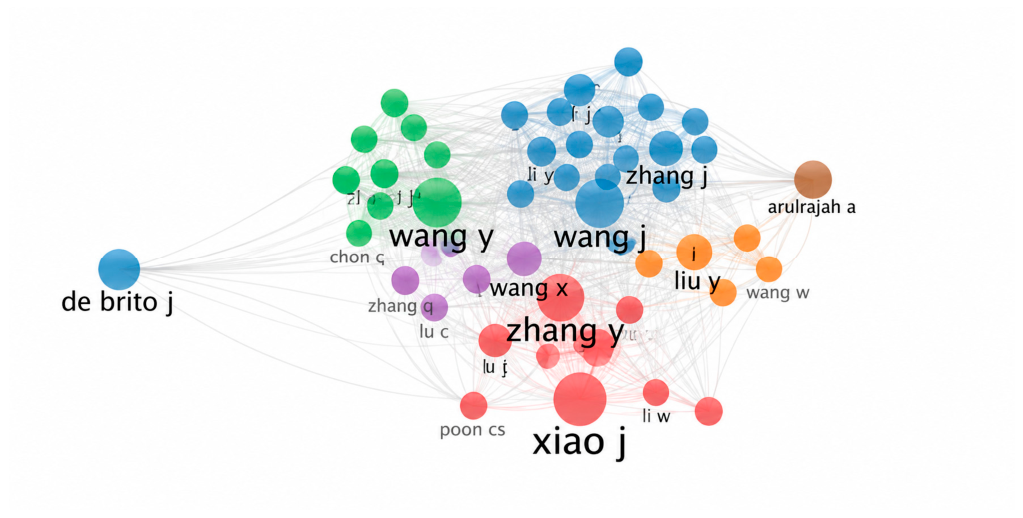
Disclaimer/Publisher’s Note: The statements, opinions and data contained in all publications are solely those of the individual author(s) and contributor(s) and not of MDPI and/or the editor(s). MDPI and/or the editor(s) disclaim responsibility for any injury to people or property resulting from any ideas, methods, instructions or products referred to in the content. |
© 2026 by the authors. Licensee MDPI, Basel, Switzerland. This article is an open access article distributed under the terms and conditions of the Creative Commons Attribution (CC BY) license.
Copyright: This open access article is published under a Creative Commons CC BY 4.0 license, which permit the free download, distribution, and reuse, provided that the author and preprint are cited in any reuse.