

Submitted:
05 October 2026
Posted:
08 October 2026
You are already at the latest version
Abstract
Leeches are significant medicinal invertebrates, particularly well-known for their strong bioactive substances and therapeutic uses in analgesia, anticoagulation, and anti-inflammatory conditions. Despite this, insufficient information is available about the molecular processes driving species-specific functional diversity. We conducted a comparative transcriptomic study of three medically valuable leech species, Hirudinaria manillensis, Hirudo nipponia, and Whitmania pigra, and explored the interspecies differences in gene expression and regulatory networks. In total, 18,107 mRNAs and 183 long non-coding RNAs (lncRNAs) were identified from 27 cDNA libraries, and pairwise comparison differential gene expression analysis retrieved 1681, 2156, and 468 DEGs in HM vs HN, HM vs WP, and HN vs WP, respectively, with 81 common genes among all species. These DEGs are mainly enriched in muscle growth, metabolic regulation, and cytoskeletal structure. Muscle-related genes (TPM, TNNT, and TNNI) exhibited higher expressions in H. nipponia, suggesting greater contractile adaptability, whereas H. manillensis displayed high expression of anticoagulant (HIRM2, ANTA, FLNA, PROS), analgesic (AGRIN, MMEL1, NEP), and anti-inflammatory (MMP17, MMP25, TLR4, CYTB) genes, highlighting its robust pharmacological potential. In contrast, W. pigra had comparatively lower expression of these functional genes. Besides, co-expression evaluation presented DElncRNAs, including MSTRG.1617, MSTRG.484, and MSTRG.1673 were shown to be crucial cis-regulators of muscle and bioactive genes (TPM, TNNT, PROS, and MMP25), demonstrating intricate lncRNA–mRNA connections influencing physiological specificity. Together, we provided the first transcriptome comparison of medicinal leech species, signifying their molecular basis of muscle function and therapeutic efficiency, establishing a fundamental resource for future multi-omics integration, functional gene validation, and targeted molecular breeding to advance leech-derived medicinal applications.
Keywords:
comparative transcriptomics
; medicinal leeches
; muscle adaptation
; anticoagulant and anti-inflammatory genes
; long non-coding RNAs (lncRNAs)
1. Introduction
Typically, the medicinally significant leeches belong to the phyla Annelida, order Arhynchobdellida, and families Haemadipsidae and Hirudinidae [1,2]. The frozen complete carcasses of many species belonging to the Hirudinidae family, including Whitmania pigra (broad-banded leech), Hirudo nipponia (Japanese medicinal leech), and Whitmania acranulata (willow-leaf leech), are approved medicinal resources, according to the Chinese Pharmacopoeia (2015 edition) [3,4]. These species are widespread throughout China and exhibit a unique parasitic lifestyle. They briefly affix themselves to fish, mammals, and reptiles to feed on their blood or, occasionally, mollusks. Because of their significant therapeutic potency, Hirudo nipponia, Whitmania pigra, and Hirudinaria manillensis gained distinctive scientific interest in recent decades [5,6].
Over the past centuries, leeches have long been considered exceptional medical resources. Leeches were commonly used in medicine in ancient Egypt, Rome, and Greece. In 19th-century Europe, leech bloodletting was so widespread that it was sometimes hailed as a "panacea," or a universal remedy [6,7,8]. According to the classical Shennong Bencao Jing, a traditional Chinese medicine document, it describes the neutral and salty taste of leeches [9], which are mainly used to suck out bad blood, unblock menstruation, resolve stasis accumulation, relieve blood dyscrasia, counter infertility, and promote water flow [10]. Since leeches have been demonstrated to have strong bioactive chemicals with a variety of physiological effects, including antithrombotic, anticancer, lipid-regulatory, and anti-atherosclerotic properties, these early observations anticipated contemporary pharmaceutical developments [3,4].
Initially, in the 20th century, Jacoby discovered hirudin, a substance found in the European medicinal leech (Hirudo medicinalis), marking the beginning of the contemporary era of leech pharmacology [11,12]. Hirudin remains the most effective natural thrombin inhibitor discovered to date, which is unique for its ability to preserve the biological properties even at extremely low storage temperatures (-70 °C) [13,14]. Hirudin, a precise therapeutic anticoagulant agent, is more effective than traditional medications such as heparin or aspirin. Later on, Renhuai Huang's research documented that hirudin, derived from the Japanese medicinal leech, exhibits the same biological activity as its European counterpart, while displaying a minor sequence change at the N-terminus (ITYTDCTE) [15]. A variety of anticoagulant proteins, especially hirudin, hirudin A (BDA), hirudin B (BDB), and similar peptides, are produced by other Asian species, especially the buffalo leech [16]. Additionally, an array of anticoagulant substances, particularly fibrinolytic proteins, for example, WPI01, are produced by the broad-striped golden leech (Whitmania pigra) [17,18]. Nowadays, medicinal leeches and their byproducts are being used in clinical settings to treat a variety of illnesses, including musculoskeletal disorders such as osteoarthritis in the knee, diabetes, wound healing, cardiovascular problems, and cancers [19,20,21]. Traditional therapeutics for conditions ranging from blood stasis with amenorrhea, post-stroke hemiplegia, and severe contusions retain dried leech carcasses. Leeches are also used in decoctions, capsule formulations, and even live therapy in microsurgical settings, such as the management of venous emergencies after finger implantation surgery, as part of integrated medical treatments [19,21].
Research on medicinal leeches has become a growing area of interest due to the increased demand worldwide and the rapid expansion of traditional Chinese medicine [3,4]. Recent advances in high-throughput sequencing technologies have enabled the assembly of increasingly complete leech genomes, allowing for a more systematic investigation of their molecular biology [3,4]. However, comparative omics evaluations of several leech species remain limited, and the majority of current research continues to focus on pharmacologically active ingredients and breeding techniques. The current research addresses the discrepancy by analyzing interspecific variations in gene expression profiles using transcriptome sequencing of Hirudo nipponia, Whitmania pigra, and Hirudinaria manillensis, providing a valuable basis for breeding strategies, extending the understanding of leech biology, and facilitating the discovery of novel functional genes relevant to their medicinal properties.
2. Materials and Methods
2.1. Sample Collection
Individual samples of Whitmania pigra (broad-bodied leech) have been obtained from its natural habitat, while adult Hirudo nipponia and Hirudo philippina samples were acquired from Qinzhou Zhanhong Chinese Herbal Medicine Company. After hatching, each individual was approximately two years old. All the tissue samples were collected from three body sections, including the surviving body, the tail sucker, and the mouth sucker. In total, 27 tissue samples were collected (Table S1). All samples were immediately frozen in liquid nitrogen and stored at -80 °C until further processing.
2.2. RNA Extraction, cDNA Library Construction, and Sequencing
Total RNA was extracted from various parts of the leech samples using TRIzol reagent, and the RNA was then purified using the RNeasy Mini Kit. Then, cDNA libraries were constructed by Beijing Annoroad Gene Technology Co., Ltd. Sequencing was performed on the Illumina HiSeq 4000 platform (NEB, USA) to generate 150 bp paired-end reads. All the raw data of each sample underwent stringent quality control using Fastp [22]. The clean reads were then aligned to the reference genome using HISAT2 [23], and the resulting SAM files were sorted and converted to BAM format with Samtools v1.11 [24]. Transcript assembly and merging were conducted with StringTie [25], and the merged transcripts were compared with reference annotations using Gffcompare [26]. Finally, FeatureCounts [27] was employed to annotate and normalize read counts across all samples.
2.3. Differential Gene Expression Analysis
The gene expression levels were calculated in Transcripts Per Million (TPM). To elucidate the differentially expressed genes, the differential expression analysis among species was carried out using DESeq2 [28]. Those genes were considered to be differentially expressed genes (DEGs) if they met the thresholds of false discovery rate (FDR) < 0.05 and |log2FC| ≥ 1.
2.4. Functional Enrichment Analysis
For functional enrichment, all the DEGs were subjected to Gene Ontology (GO) (http://www.geneontology.org/) and Kyoto Encyclopedia of Genes and Genomes (KEGG) using the clusterProfiler R package [29]. For significant pathways or GO terms, FDR values < 0.05 were considered statistically significant.
2.5. Identification and Characterization of lncRNAs
Afterwards, to acquire putative long non-coding RNAs (lncRNAs), strict screening criteria were adopted, including transcripts (1) classified as "u," "x," "i," "j," or "o" by Cuffcompare, (2) exceeding 200 nucleotides and comprising multiple exons, (3) predicted to be non-coding by both CPC2 and LGC, and (4) cis-regulatory target genes predicted within 100 kb upstream or downstream of candidate lncRNAs. The Position Frequency Matrix was used to perform connectivity and enrichment analysis, and subsequent GO/KEGG studies were conducted to infer biological activities [30].
3. Results
3.1. Histological Observation of H. nipponia, H. manillensis, and W. pigra
First, the body morphology of H. manillensis, H. nipponia, and W. pigra was examined as demonstrated in Figure 1A. Then the body weight was recorded for each species, and statistically highly significant differences in body weight among the three leech species (P <0.0001) were observed (Figure 1B). Concurrently, the recorded body weights of the three species were H. manillensis 8.329 ± 2.1g, H. nipponia 1.524 ± 0.045 g, and W. pigra 13.734 ± 3.623 g, respectively.
3.2. RNA Sequencing Data and Gene Expression Profiling
All 27 tissue samples from tail sucker, oral sucker, and remaining body regions of three leech species, including W. pigra, H. nipponia, and H. manillensis, were successfully used to create cDNA libraries and resulted in nine combined transcriptome datasets (HM1–HM3, HN1–HN3, and WP1–WP3). In total, 85.80 GB of clean and high-quality data with a Q30 score >92.7% and GC content ranging between 41% and 45% in all samples, representing excellent sequencing accuracy and reliability (Table S2). The collected dataset demonstrated that the data quality met the standards required for reliable downstream transcriptome analysis.
RNA-seq analysis identified a total of 18,107 mRNAs expressed in all three leech species. Transcripts Per Million (TPM) values were used to normalize levels of expression and quantify transcript extent. The box plot (Figure S1A) shows that the overall gene expression patterns across the nine samples were similar (Figure S1A). All three leech species were clearly categorized into separate groups using principal component analysis (PCA), which demonstrated significant interspecific heterogeneity in gene expression patterns (Figure S1B). Strong internal uniformity within each species group was also observed by the sample correlation heatmap (Figure S1C), which added credence to the transcriptome datasets' reliability and repeatability. All of these findings indicate the effectiveness of the RNA sequencing and data assembly process, which provided high-quality, physiologically significant expression patterns appropriate for further functional screening and differential expression analysis.
3.3. Differential Gene Expression Analysis
Further, for differential gene expression identification, we did pairwise comparisons among three different leech species using FDR < 0.05 and |log2FC| ≥ 1 as significant criteria to categorize DEGs. The comparison of HM vs HN revealed a total of 1,681 DEGs, comprising 946 upregulated and 735 downregulated genes. In contrast, HM vs WP identified 2,156 DEGs, including 1,410 upregulated and 746 downregulated genes. Additionally, a set of 468 DEGs was identified in HN vs WP, with 213 upregulated and 255 downregulated genes (Figure 2A-B). Moreover, the Venn diagram (Figure 2C) illustrated a total of 81 common DEGs from all three leech species comparisons, and the expression patterns of all the DEGs were presented in a heatmap via cluster analysis (Figure 2D). Accordingly, H. manillensis shows greater variation in gene expression patterns than the other two species, while there is less variability across H. nipponia and W. pigra. Thus, it is obvious that the three distinct species H. manillensis, H. nipponia, and W. pigra have substantial gene expression pattern differences.
3.4. GO and KEGG Enrichment Analysis of DEGs
The DEGs of all the pairwise comparisons (HM vs HN, HM vs WP, and HN vs WP) were further analyzed for GO and KEGG enrichment. The GO enrichment analysis of HM vs HN showed that the DEGs were primarily enriched in biological processes such as compound catabolic processes (heterocyclic compounds, intracellular nitrogen compounds, aromatic compounds) and regulation of cytoskeletal organization, cellular components such as supramolecular fibers and cytoskeletal proteins, and molecular functions such as GTPase binding and actin binding (Figure 3A). The KEGG functional enrichment analysis revealed significant involvement in pathways such as thermogenesis, adrenergic signaling in cardiomyocytes, regulation of cytoskeletal proteins, etc. (Figure 3B). But, the DEGs of group HM vs WP were mainly enriched in biological processes, such as regulation of protein transport and striated muscle cell differentiation. The cellular component distribution includes supramolecular fibers and cytoskeletal proteins, and the molecular functions involved include ATP binding, oxidoreductase activity, and actin binding (Figure 3C). However, the KEGG analysis revealed significant enrichment in pathways such as adrenergic signaling in cardiomyocytes, focal adhesion, and ribosome biogenesis (Figure 3D). Additionally, the HN vs WP group DEGs were mostly have their functional role in biological processes including negative regulation of catalytic activity, negative regulation of phosphate metabolic process, and positive regulation of cellular component biogenesis as well as the cellular components such as supramolecular fibers and contractile fibers, and the associated molecular functions such as structural molecule activity, enzyme activator activity, and ATP-dependent activity (Figure 3E). The KEGG functional enrichment showed a significant role in pathways such as renal cell carcinoma and ribosome (Figure 3F). According to GO and KEGG enrichment analyses, DEGs across all three leech species were predominantly enriched in cytoskeletal proteins, fibers, and muscle development, potentially correlating with the variations in body size among H. nipponia, H. manillensis, and W. pigra (Figure 3).
3.5. Expression of Genes Associated with Muscle Function, Anticoagulation, Anti-Inflammation, and Analgesia in H. nipponia, W. pigra, and H. manillensis
Moreover, further analysis revealed significant interspecies variation in the expression of genes associated with muscle fibers, cytoskeletal organization, and muscle development among H. nipponia, W. pigra, and H. manillensis. H. nipponia and W. pigra markedly exhibited higher expression of muscular structural components related genes compared to H. manillensis, suggesting active or complex muscle development in these species (Figure 4A). In the case of the myosin gene family, predominantly the tropomyosin (TPM) encoding genes expression was highest in H. nipponia, followed by H. manillensis and W. pigra (Figure 4B). Likewise, the troponin gene expression pattern displayed species-specific trends where H. nipponia exhibited the highest expression of troponin T (TNNT), followed by H. manillensis and W. pigra. In contrast, W. pigra exhibited higher troponin I (TNNI) gene expression than H. nipponia and H. manillensis (Figure 4C). These transcriptional-level differences suggested potential structural and functional diversity in the contractile machinery of the muscle fibers among the three leech species, likely reflecting adaptations to their diverse locomotor and ecological behaviors.
Beyond muscle-related genes, we further analyzed DEGs and identified several genes associated with anti-inflammation, anticoagulation, and analgesia, all of which underscore the well-established therapeutic benefits of medicinal leeches. The anticoagulation-associated gene, such as hirudin (HIRM2), antistasin (ANTA), filamin A (FLNA), protein S (PROS), neprilysin (NEP), guamerin (GUAM), C-type lectin domain family 4 member A (CLC4A), and collagen alpha-1 (COOA1), expression was highest in H. manillensis, followed by H. nipponia, and the lowest expression was observed in W. pigra. On the other hand, only a few genes, including EGLN1, PROS2, and MMP18, were highly expressed in W. pigra (Figure 5A and Figure 5B). Furthermore, H. manillensis exhibited elevated levels of expression of the genes associated with anti-inflammatory activity, such as matrix metalloproteinase-17 (MMP17), matrix metalloproteinase-25 (MMP25), leukocyte elastase inhibitor (ILEU), hyaluronoglucuronidase (LHYAL), membrane metallo-endopeptidase-like 1 (MMEL1), Toll-like receptor 4 (TLR4), Toll-like receptor 13 (TLR13), and cystatin-B (CYTB). In contrast, H. nipponia showed upregulation of genes such as leukocyte elastase inhibitor C (ILEUC) and neprilysin (NEP), whereas W. pigra exhibited lower expression of these genes (Figure 5C-D). Additionally, H. manillensis exhibited strong expression of analgesia-related genes, including agrin (AGRIN), neprilysin (NEP), membrane metallo-endopeptidase-like 1 (MMEL1), and cystatin-B (CYTB), which are associated with sensory neurons. In contrast, W. pigra exhibited little expression of these genes (Figure 5E-F).
3.6. Analysis of DElncRNAs in H. manillensis, H. nipponia, and W. pigra
Employing the lncRNA prediction tools CPC2 and LGC, a total of 183 lncRNAs were identified, and the value of FDR < 0.05 and |log2FC| ≥ 1 as a screening criterion was used for the identification of DElncRNAs (Figure 6A). Furthermore, pairwise comparison among three leech species was carried out (Figure 6B). In total, 115 DElncRNAs were obtained, including 70 DElncRNAs in the HM vs HN comparison, 108 in HM vs WP, and 6 in HN vs WP (Figure 7B). Among these, only 3 were the commonly identified DElncRNAs. Additionally, the expression of these DElncRNAs is presented through clustering analysis, as shown in Figure 6C. The GO enrichment analysis indicates that DElncRNA-targeting genes have been significantly enriched in biological processes, ranging from cell differentiation, cellular component biogenesis, and organ development in animals, to cellular components such as cytoplasm and nucleoplasm, and to molecular functions such as organic cyclic compound binding and transferase activity (Figure 6D). Meanwhile, KEGG pathway analysis revealed that the target genes of DElncRNA were primarily linked with platelet activation and actin cytoskeleton regulation (Figure 6E).
3.7. Co-Expression Network Analysis of DElncRNAs and their Cis-Target Genes in H. manillensis, H. nipponia, and W. pigra
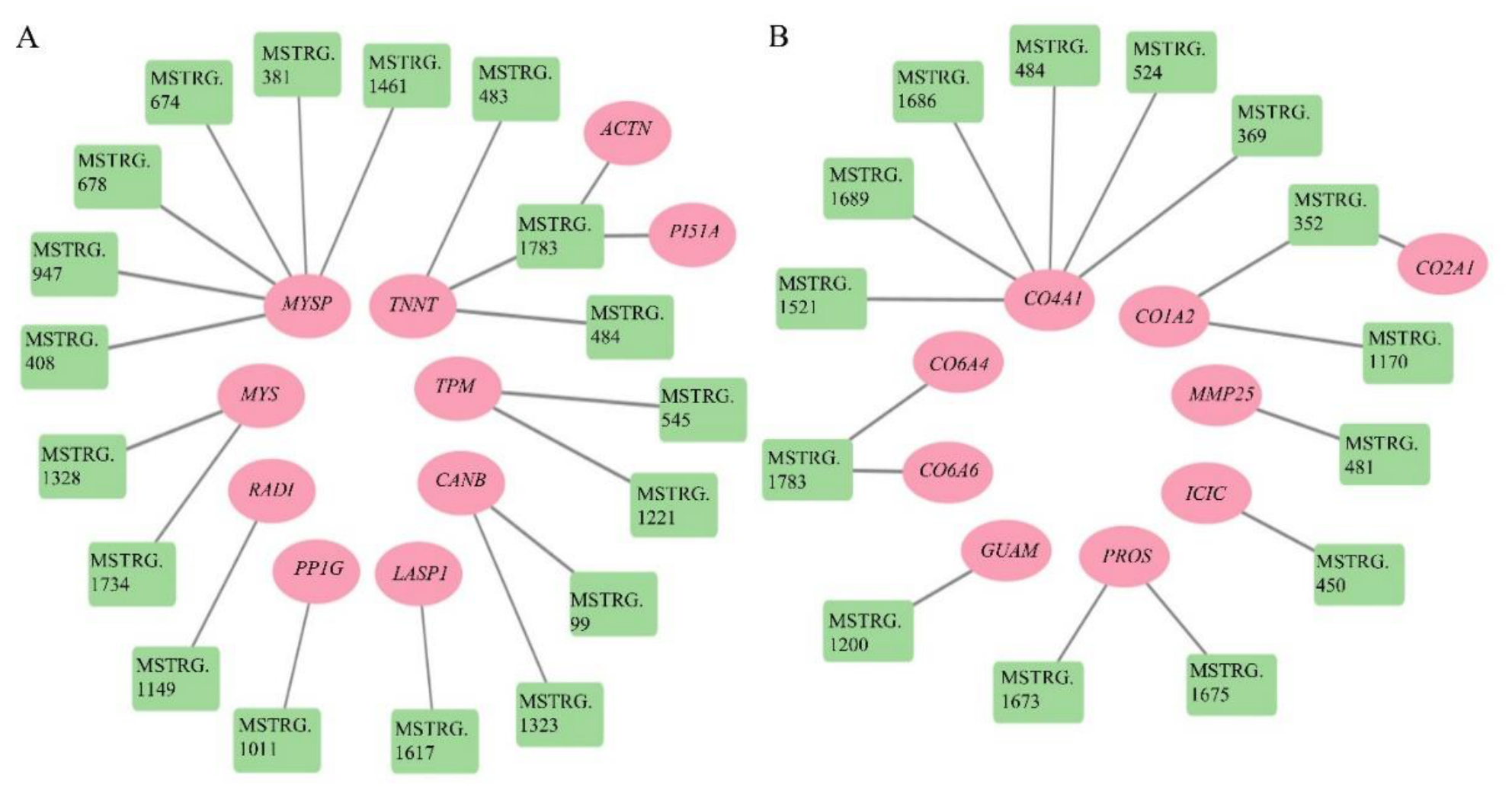
The cis-target genes of DElncRNAs are predominantly enriched in pathways associated with leukocyte function, platelet activation, and actin dynamics. As presented in Figure 7A, numerous DElncRNAs and their corresponding target genes within these pathways play key roles in muscle development. For example, MSTRG.1617 targets LASP1, while a group of DElncRNAs (MSTRG.1461, MSTRG.381, MSTRG.674, MSTRG.408, MSTRG.947, and MSTRG.678) share a common target gene MYSP. Likewise, MSTRG.483, MSTRG.1783, and MSTRG.484 converge on TNNT, and MSTRG.545 and MSTRG.1221 both target TPM, highlighting coordinated regulatory networks involved in muscle function. In addition to muscle-related pathways, as shown in Figure 7B, DElncRNAs and their cis-target genes are involved in anticoagulation, anti-inflammatory responses, and analgesia. For instance, MSTRG.1673 and MSTRG.1675 share the common gene target PROS, while MSTRG.450 targets ICIC, and MSTRG.481 regulates MMP25. Moreover, a group of six DElncRNAs (MSTRG.369, MSTRG.524, MSTRG.484, MSTRG.1686, MSTRG.1689, and MSTRG.1521) shared a common target gene, CO4A1. These instances suggested that DElncRNAs orchestrate complex regulatory networks that influence both muscle physiology and key biological processes, such as coagulation, inflammation, and pain modulation.
4. Discussion
To elucidate species-related variations in gene expression, long non-coding RNA (lncRNA), and underlying molecular pathways essential to biological and pharmacological diversity, this study offers a preliminary systematic comparative transcriptomic analysis of three medicinally valuable leech species, including H. manillensis, H. nipponia, and W. pigra. Pairwise transcriptomic comparisons revealed significant differences in gene expression patterns across HM vs HN, HM vs WP, and HN vs WP, with 1,681, 2,156, and 468 DEGs in each group, respectively. Notably, 81 DEGs were commonly shared across all groups. Functional enrichment analysis demonstrated that these DEGs are primarily enriched in processes such as cytoskeletal architecture, muscle cell differentiation, protein transport, metabolic control, etc. Moreover, TPM, TNNT, and TNNI are the muscle-related genes exhibiting species-specific expression highest in H. nipponia, followed by H. manillensis, and lowest in W. pigra, signifying evolutionary variability in muscle contraction and locomotion mechanisms. Likewise, the anticoagulant (HIRM2, ANTA, FLNA, and PROS), anti-inflammatory (MMP17, MMP25, TLR4, CYTB), and analgesia-related genes (AGRIN, NEP, MMEL1) presented the highest expression in H. manillensis, underscoring its medicinal potential. In contrast, W. pigra showed relatively low expression levels of the pharmacologically active genes. Furthermore, a total of 183 lncRNAs were predicted, of which 115 were differentially expressed. Functional enrichment analysis of DElncRNA targets revealed their roles in platelet activation, regulation of the actin cytoskeleton, and cell differentiation. Moreover, co-expression analysis identified networks of lncRNA–mRNA that regulate crucial muscle genes such as TPM, TNNT, LASP1, and key bioactive molecules like PROS, MMP25, and COL4A1. These findings highlight complex regulatory interactions between coding and non-coding transcripts. Overall, transcriptomic and lncRNA analyses collectively reveal species-specific differences in muscle structure, anticoagulation, and immune pathways among the three medicinal leech species.
4.1. Comparative Transcriptomic Insights among Medicinal Leeches
Prior transcriptomic studies in medicinal leeches mainly focused on developmental or tissue-specific expression rather than comparing across species [3,4]. Ma et al. analyzed the transcriptomes of H. nipponia at various growth stages and identified 1,348 DEGs and 223 DElncRNAs, which were mainly associated with developmental changes, metabolic regulation, and cytoskeletal assembly. Additionally, Shan et al. studied H. manillensis throughout larval, juvenile, and adult stages, identifying 3,356 DEGs and 107 DElncRNAs mainly linked with lipid metabolism, muscle development, and the disulfide-oxidoreductase pathway. However, these studies mainly focused on a single species and did not include a comparative evolutionary framework, restricting insights into lineage-specific molecular divergence. The current inter-species transcriptome study of H. manillensis, H. nipponia, and W. pigra has addressed such a crucial gap. In this study, a total of 18,107 mRNAs and 183 DElncRNAs were identified. H. manillensis showed the utmost transcriptional divergence, with approximately two-fold the number of DEGs compared to the differences between H. nipponia and W. pigra. This significant difference indicates species-specific changes in regulation, possibly due to adaptations to different ecological roles, feeding habits, and medical specializations. These findings align with comparative genomic studies of Hirudo medicinalis and H. verbana, which illustrate rapid evolution in genes related to muscle contraction, the cytoskeleton, and secretion [31,32]. This divergence indicates that Hirudinidae evolution has been shaped by selective pressures linked to muscular performance and bioactive compound production [33]. Consequently, they have been utilized in traditional medicine and clinical settings and have adapted to various ecological niches and prey adaptations.
4.2. Muscle-Related Gene Divergence and Structural Adaptation
Furthermore, the DEGs were significantly enriched in pathways related to cytoskeletal organization, striated muscle development, and the formation of contractile fibers. In H. nipponia, the higher expression of TPM, TNNT, and TNNI genes emphasizes its precise control over muscle contraction and flexibility, supporting efficient movement and prey capture. The calcium-dependent actomyosin interactions that accelerate leech movement and sucking maneuvers are modulated at the molecular level by the TPM–TNNT–TNNI complex [34]. In contrast, W. pigra displayed lower levels of these structural proteins, indicating decreased muscular specialization aligned with its wider, less motile body shape. H. nipponia has comparatively significant quantities of TPM and TNNT, which might be attributed to its rapid contractile reflex and effective regenerative wound healing [35]. H. manillensis, on the other hand, showed moderate gene expression for contractile genes despite exhibiting clear transcriptional divergence. This could be complemented by increased expression of cytoskeletal stabilizing proteins such as filamin-A (FLNA), a crucial actin-binding molecule responsible for cross-linking actin filaments and preserving the integrity of cell structure [36]. Such molecular distinctions indicate muscle fiber networks are adaptively reconfigured across species in response to lifestyles and ecological pressures.
4.3. Anticoagulation, Anti-Inflammation, and Analgesic Mechanisms
In addition to structural changes, leech transcriptomes showed unique patterns of bioactive gene expression associated with their medicinal roles. H. manillensis exhibited a higher expression level of hirudin (HIRM2), the robust natural thrombin inhibitor identified to date, which irreversibly binds to the active site of thrombin, thereby inhibiting fibrin clot formation [37,38]. This significant upregulation corresponds with the well-established role of H. manillensis in anticoagulation therapy. The simultaneous overexpression of ANTA and PROS further indicates a broader range of serine protease inhibitors, pointing to the existence of synergistic anticoagulant pathways that exceed the effectiveness of the hirudin mechanism. Meanwhile, NEP and GUAM enzymes with traditional fibrinolytic and anti-edematous properties were also highly expressed, thereby further supporting the species’ clinical potential in thrombosis treatment. In contrast, H. nipponia displayed a moderate anticoagulant profile but demonstrated relatively elevated expression levels of NEP and leukocyte elastase inhibitors (ILEU, ILEUC), which actively regulate inflammatory processes. These proteins efficiently broke down inflammatory mediators and prevented tissue damage triggered by leukocyte elastase, aligning with H. nipponia’s attributed wound-healing features [39,40,41]. However, W. pigra demonstrated reduced expression of these bioactive genes, consistent with its comparatively weakened anticoagulant efficacy. Genes associated with analgesia, including AGRIN, MMEL1, and CYTB, were also found to be enriched in H. manillensis and H. nipponia, indicating potential functions in neuropeptide signaling, synaptic modulation, and the suppression of pain. Agrin promotes synaptogenesis by clustering acetylcholine receptors, whereas MMEL1 codes for a metalloproteinase involved in neuropeptide processing. Both are essential for the sensory and pain modulation functions in leeches [37].
4.4. Regulatory Roles of Long Non-Coding RNAs (lncRNAs)
The identification of 183 DElncRNAs across different species underscores the importance of post-transcriptional and epigenetic regulation in leech systematics. The lncRNAs expression patterns could significantly contribute during the differentiation of smooth and skeletal muscles [42]. The lncRNAs have the capacity to affect adjacent genes on the same allele from which it is transcribed. Hence, this kind of lncRNA regularly generates a feedback loop for regulating itself and neighboring genes [43]. Co-expression analysis revealed that lncRNAs such as MSTRG.1617, MSTRG.484, and MSTRG.545 are closely linked to muscle-associated genes like LASP1, TNNT, and TPM, respectively. This indicates that these lncRNAs likely serve as cis-regulatory modulators that influence muscle differentiation and cytoskeletal stability. Similarly, MSTRG.1673 and MSTRG.1675, targeting PROS, as well as MSTRG.481, which regulates MMP25, demonstrated potential associations with anticoagulant and anti-inflammatory processes. These findings are in line with previously reported studies in other invertebrates, where lncRNAs influence developmental signaling and immune responses [44,45]. The participation of lncRNAs in pathways like platelet activation and actin cytoskeleton regulation suggests that non-coding RNAs might refine both structural and functional traits, acting as evolutionary regulators of leech medicine traits.
5. Conclusions
This study employed a comparative transcriptomics approach and provided a comprehensive catalogue of genes and lncRNA expression differences among three important medicinal leech species (H. manillensis, H. nipponia, and W. pigra). Among 18,107 mRNAs and 183 lncRNAs, different transcriptional signatures reveal species-specific diversity that influences both muscular performance and bioactive potential. H. Manillensis presented the highest transcriptional variation, characterized by increased expression of anticoagulant, anti-inflammatory, and analgesic genes, illustrating its heightened therapeutic efficacy. In contrast, H. nipponia exhibited increased expression of muscle contractile genes (TPM, TNNT, TNNI), which correlates with its agility and regenerative capacity, whereas W. pigra displayed a more basic physiological profile. Functional enrichment analyses identified key pathways, including cytoskeletal organization, platelet activation, and actin regulation, that drive phenotypic diversity. Co-expression networks connected lncRNAs like MSTRG.1617 and MSTRG.1673 to genes having their functional involvement in muscle structure and hemostasis, highlighting post-transcriptional complexity. Together, these findings emphasize how the interaction between coding and non-coding genes contributes to ecological adaptation and the pharmacological traits of medicinal leeches. This transcriptomic resource provides a molecular basis for future proteomic validation, drug discovery, and selective breeding efforts to improve leech-derived bioactive compounds for biomedical uses.
Supplementary Materials
The following supporting information can be downloaded at the website of this paper posted on Preprints.org.
Author Contributions
Conceptualization, Q.L. and S.u.R.; methodology, J.L., W.Z. and S.W.; software, J.L. and W.Z.; validation, H.L., J.H. and X.L.; formal analysis, J.L., S.W. and W.Z.; investigation, W.Z., X.L., W.Zhou and H.P.; resources, W.Zhou and H.P.; data curation, J.L., S.W. and H.L.; writing—original draft preparation, J.L., W.Z. and S.W.; writing—review and editing, Q.L. and S.u.R.; visualization, J.L., W.Z. and J.H.; supervision, Q.L. and S.u.R.; project administration, Q.L.; funding acquisition, Q.L. All authors have read and agreed to the published version of the manuscript.
Funding
This work was supported by the Start-up Research Fund for High-Level Talents of South China Agricultural University (Grant No. 2026006).
Conflicts of Interest
Author Weiguan Zhou was employed by the company Thailand Natural Hirudin Co., Ltd. The remaining authors declare that the research was conducted in the absence of any commercial or financial relationships that could be construed as a potential conflict of intere.
References
- Phillips, A. J.; Govedich, F. R.; Moser, W. E. Leeches in the extreme: Morphological, physiological, and behavioral adaptations to inhospitable habitats. Int. J. Parasitol. Parasites Wildl. 2020, 12, 318–325. [Google Scholar] [CrossRef] [PubMed]
- Yu, M.; Zhou, M.; Cao, M.; Feng, X. L.; Zeng, D. J.; Wu, J. Y. Review on the Development of the Medicinal Leech. J. Aquac. 2021, 42, 06–39. [Google Scholar]
- Ma, X.; Yan, X.; Ke, R.; Shan, H.; Rehman, S. U.; Feng, T.; Zheng, J. Comparative Transcriptome Sequencing Analysis of Hirudo nipponia in Different Growth Periods. Front. Physiol. 2022, 13, 873831. [Google Scholar] [CrossRef] [PubMed]
- Shan, H.; Ren, K.; Liu, J.; Rehman, S. U.; Yan, X.; Ma, X.; Liu, Q. Comprehensive Transcriptome Sequencing Analysis of Hirudinaria manillensis in Different Growth Periods. Front. Physiol. 2022, 13, 897458. [Google Scholar] [CrossRef] [PubMed]
- Su, B. X.; Wang, J. F.; Yang, T. B.; Hide, G.; Lai, D. H.; Lun, Z. R. A new species of mammalian trypanosome, Trypanosoma (Megatrypanum) bubalisi sp. nov., found in the freshwater leech Hirudinaria manillensis. Int. J. Parasitol. 2022, 52((4)), 253–264. [Google Scholar] [CrossRef] [PubMed]
- Wang, X.; Sun, Y.; Lin, R.; Feng, Y.; Zhang, W.; Xie, H.; Yuan, R. Comparison of the effects on angiogenesis activity between whitmania pigra whitman and hirudinaria manillensis lesson based on a zebrafish model. China Pharm. 2017, 2099–2103. [Google Scholar]
- Xingchang, O.; Qiuhai, Z.; Jiaxin, D.; Zhenli, L.; Ling, Z.; Tong, Y. Studies of the anticoagulant activity of 4 kinds of leeches. Nat. Product. Res. Dev. 1996, 8((2)), 54–56. [Google Scholar]
- Zhou, C. H.; Chen, W. P.; Zhang, Z. Y. Comparison of antithrombotic effect between colon delayed-release pellets and regular pellets of Whitmania pigra Whitman extract. Tradit. Chin. Drug Res. Clin. Pharm. 2017, 5, 568–572. [Google Scholar]
- Ding, Z.; Chen, K. L.; She, Y. Y. Research advances of medicinal leeches and leech polypeptide. Mod. Chin. Med. 2022, 248, 1588–1594. [Google Scholar]
- Liu, T.; Zhu, H. T.; Dai, L. M. Effect of hirudin on survival, angiogenesis and expression of inflammatory factors in replanted flaps of rats with finger replantation. Drug Eval. Res. 2018, 41((1)), 73–77. [Google Scholar]
- Fields, W. S. The history of leeching and hirudin. Haemostasis 1991, 21 (Suppl 1), 3–10. [Google Scholar] [CrossRef] [PubMed]
- Liu, S. J.; Cao, Y. L.; Zhang, C. Hirudin in the treatment of chronic kidney disease. Molecules 2024, 29((5)), 1029. [Google Scholar] [CrossRef] [PubMed]
- Koster, A.; Fischer, K. G.; Harder, S.; Mertzlufft, F. The direct thrombin inhibitor argatroban: a review of its use in patients with and without HIT. Biologics 2007, 1((2)), 105–112. [Google Scholar] [PubMed]
- Lee, C. J.; Ansell, J. E. Direct thrombin inhibitors. Br. J. Clin. Pharmacol. 2011, 72((4)), 581–592. [Google Scholar] [CrossRef] [PubMed]
- Liang, S. P. Purification and identification of anticoagulant hirudin. J. Nat. Sci. Hunan Norm. Univ. 1998, 21((1)), 57–60. [Google Scholar]
- Liu, Z.; Zhao, F.; Huang, Z.; Hu, Q.; Meng, R.; Lin, Y.; Qi, J.; Lin, G. Revisiting the Asian Buffalo Leech (Hirudinaria manillensis) Genome: Focus on Antithrombotic Genes and Their Corresponding Proteins. Genes 2023, 14((11)), 2068. [Google Scholar] [CrossRef] [PubMed]
- Jiang, Q.; Wang, L.; Liu, Q.; Hu, J.; Li, J.; Zhang, Y. Purification and characterization of a novel fibrinolytic enzyme from Whitmania pigra Whitman. Protein Expr. Purif. 2020, 174, 105680. [Google Scholar] [CrossRef] [PubMed]
- Zhao, F.; Huang, Z.; Tang, L.; Zhang, W.; Liu, Z.; Lin, G. Comparative genomics of three non-hematophagous leeches (Whitmania spp.) with emphasis on antithrombotic biomolecules. Front. Genet. 2025, 16, 1548006. [Google Scholar] [CrossRef] [PubMed]
- Hosseini, M.; Jadidi, A.; Derakhshan Barjoei, M. M.; Salehi, M. Applications of leech therapy in medicine: a systematic review. Front. Med. 2024, 11, 1417041. [Google Scholar] [CrossRef] [PubMed]
- Jha, K.; Garg, A.; Narang, R.; Das, S. Hirudotherapy in Medicine and Dentistry. J. Clin. Diagn. Res. 2015, 9((12)), ZE05–ZE07. [Google Scholar] [CrossRef] [PubMed]
- Koeppen, D.; Aurich, M.; Pasalar, M.; Rampp, T. Medicinal leech therapy in venous congestion and various ulcer forms: Perspectives of Western, Persian and Indian medicine. J. Tradit. Complement. Med. 2019, 10((2)), 104–109. [Google Scholar] [CrossRef] [PubMed]
- Chen, S.; Zhou, Y.; Chen, Y. fastp: an ultra-fast all-in-one FASTQ preprocessor. Bioinformatics 2018, 34((17)), i884–i890. [Google Scholar] [CrossRef] [PubMed]
- Kim, D.; Langmead, B.; Salzberg, S. L. HISAT: a fast spliced aligner with low memory requirements. Nat. Methods 2015, 12((4)), 357–360. [Google Scholar] [CrossRef] [PubMed]
- Li, H.; Handsaker, B.; Wysoker, A. The Sequence Alignment/Map format and SAMtools. Bioinformatics 2009, 25((16)), 2078–2079. [Google Scholar] [CrossRef] [PubMed]
- Pertea, M.; Pertea, G. M.; Antonescu, C. M. StringTie enables improved reconstruction of a transcriptome from RNA-seq reads. Nat. Biotechnol. 2015, 33((3)), 290–295. [Google Scholar] [CrossRef] [PubMed]
- Pertea, G.; Pertea, M. GFF Utilities: GffRead and GffCompare. F1000Research 2020, 9, 304. [Google Scholar] [CrossRef]
- Liao, Y.; Smyth, G. K.; Shi, W. featureCounts: an efficient general purpose program for assigning sequence reads to genomic features. Bioinformatics 2014, 30((7)), 923–930. [Google Scholar] [CrossRef] [PubMed]
- Love, M. I.; Huber, W.; Anders, S. Moderated estimation of fold change and dispersion for RNA-seq data with DESeq2. Genome Biol. 2014, 15((12)), 550. [Google Scholar]
- Yu, G.; Wang, L. G.; Han, Y. clusterProfiler: an R Package for Comparing Biological Themes Among Gene Clusters. OMICS A J. Integr. Biol. 2012, 16((5)), 284–287. [Google Scholar] [CrossRef] [PubMed]
- Azlan, A.; Obeidat, S. M.; Yunus, M. A.; Azzam, G. Systematic Identification and Characterization of aedes Aegypti Long Noncoding Rnas (Lncrnas). Sci. Rep. 2019, 9((1)), 12147. [Google Scholar] [CrossRef] [PubMed]
- Kvist, S.; Siddall, M. E.; Erséus, C. Comparative transcriptomics and adaptive evolution of the Hirudinea. Mol. Biol. Evol. 2014, 31((12)), 3351–3361. [Google Scholar]
- Min, G. S.; Sarkar, I. N.; Siddall, M. E. Phylogenetic relationships of leeches inferred from nuclear 18S rDNA sequences and morphology. Mol. Phylogenetics Evol. 2010, 57((3)), 1174–1182. [Google Scholar]
- Tong, L.; Dai, S. X.; Kong, D. J.; Yang, P. P.; Tong, X.; Tong, X. R.; Bi, X. X.; Su, Y.; Zhao, Y. Q.; Liu, Z. C. The genome of medicinal leech (Whitmania pigra) and comparative genomic study for exploration of bioactive ingredients. BMC Genom. 2022, 23((1)), 76. [Google Scholar] [CrossRef] [PubMed]
- Li, W. Evolutionary diversification of muscle gene expression in annelids. Zool. Res. 2020, 41((5)), 523–534. [Google Scholar]
- Wei, B.; Jin, J. P. Troponin T isoforms and posttranscriptional modifications: Evolution, regulation and function. Arch. Biochem. Biophys. 2011, 505((2)), 144–154. [Google Scholar] [CrossRef] [PubMed]
- Sawyer, R. T. Leech Biology and Behaviour; Oxford University Press, 1986. [Google Scholar]
- Baskova, I. P.; Zavalova, L. L. Protein and peptide composition of the saliva of medicinal leeches. Biochem. Soc. Trans. 2001, 29((4)), 431–436. [Google Scholar]
- Yin, J.; Liu, Z.; Yu, Y.; Wang, A.; Huang, Z.; Tang, L.; Zhao, F.; Lin, G. Comparative Study of Hirudins and Encoding Genes in Hirudo nipponia and Hirudo tianjinensis. Biology 2025, 14((9)), 1250. [Google Scholar] [CrossRef] [PubMed]
- Chen, X. Comparative biochemical characterization of anticoagulant factors from Whitmania pigra and Hirudo nipponia. J. Ethnopharmacol. 2022, 282, 114650. [Google Scholar]
- Jung, H. I.; Kim, S. I.; Ha, K. S.; Joe, C. O.; Kang, K. W. Isolation and characterization of guamerin, a new human leukocyte elastase inhibitor from Hirudo nipponia. J. Biol. Chem. 1995, 270((23)), 13879–13884. [Google Scholar] [CrossRef] [PubMed]
- Lu, Z.; Shi, P.; You, H.; Liu, Y.; Chen, S. Transcriptomic analysis of the salivary gland of medicinal leech Hirudo nipponia. PLoS ONE 2018, 13((10)), e0205875. [Google Scholar] [CrossRef] [PubMed]
- Lim, Y. H.; Kwon, D. H.; Kim, J.; Park, W. J.; Kook, H.; Kim, Y. K. Identification of long noncoding RNAs involved in muscle differentiation. PLoS ONE 2018, 13((3)), e0193898. [Google Scholar] [CrossRef] [PubMed]
- Nie, M.; Deng, Z. L.; Liu, J.; Wang, D. Z. Noncoding RNAs, Emerging Regulators of Skeletal Muscle Development and Diseases. BioMed Res. Int. 2015, 2015, 676575. [Google Scholar] [CrossRef] [PubMed]
- Chen, W. Genome-wide identification and functional characterization of long non-coding RNAs involved in muscle development. BMC Genom. 2020, 21, 851. [Google Scholar]
- Dong, Z. Long noncoding RNA regulation of muscle differentiation and regeneration: New perspectives. Front. Cell Dev. Biol. 2021, 9, 698889. [Google Scholar] [PubMed]
Figure 1.
Phenotypic characteristics of three medicinal leech species (A) Comparative body morphology of H. nipponia, H. manillensis, and W. pigra, (B) Body weight comparison among the three species.
Figure 1.
Phenotypic characteristics of three medicinal leech species (A) Comparative body morphology of H. nipponia, H. manillensis, and W. pigra, (B) Body weight comparison among the three species.
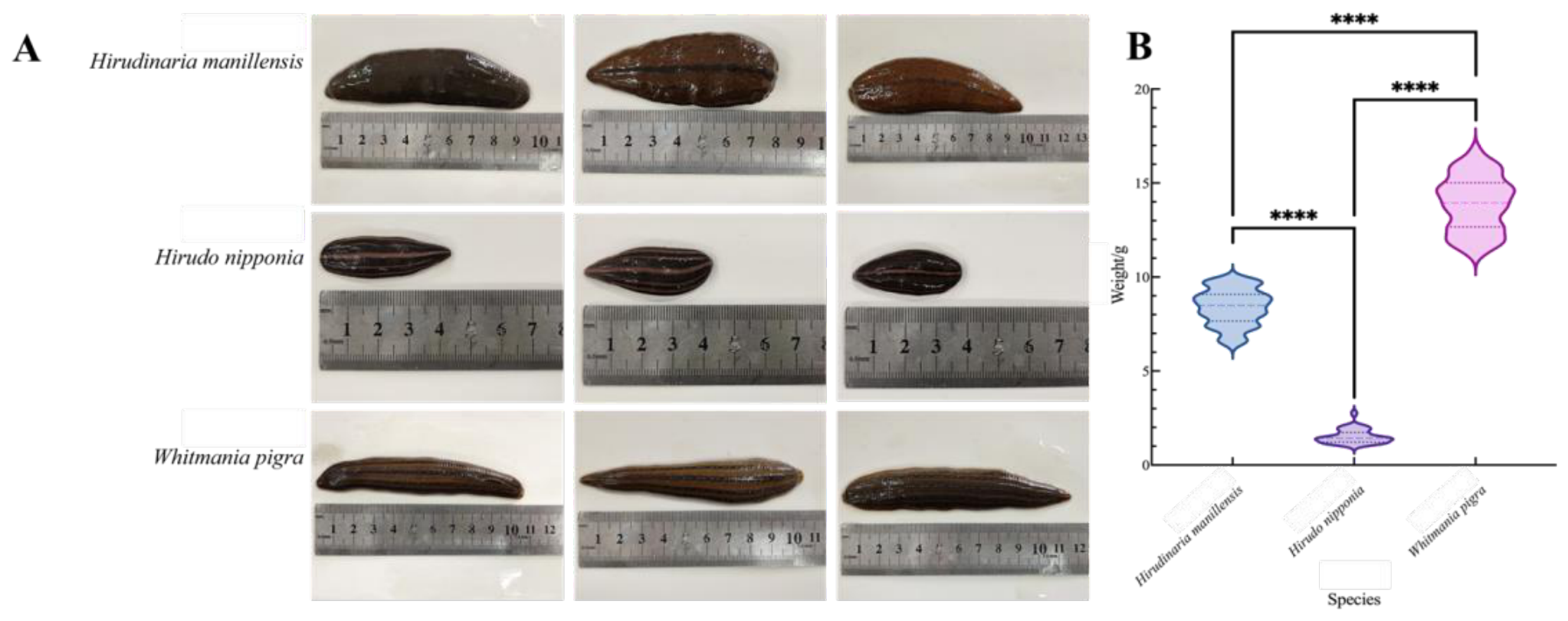
Figure 2.
Differential expression analysis of mRNAs among three medicinal leech species (A) Volcano plots showing differentially expressed genes (DEGs) among H. nipponia, H. manillensis, and W. pigra, (B) Summary statistics of DEGs identified in each pairwise comparison. (C) Venn diagram illustrating shared and unique DEGs among the three species. (D) Hierarchical clustering heatmap displaying expression patterns of DEGs across species.
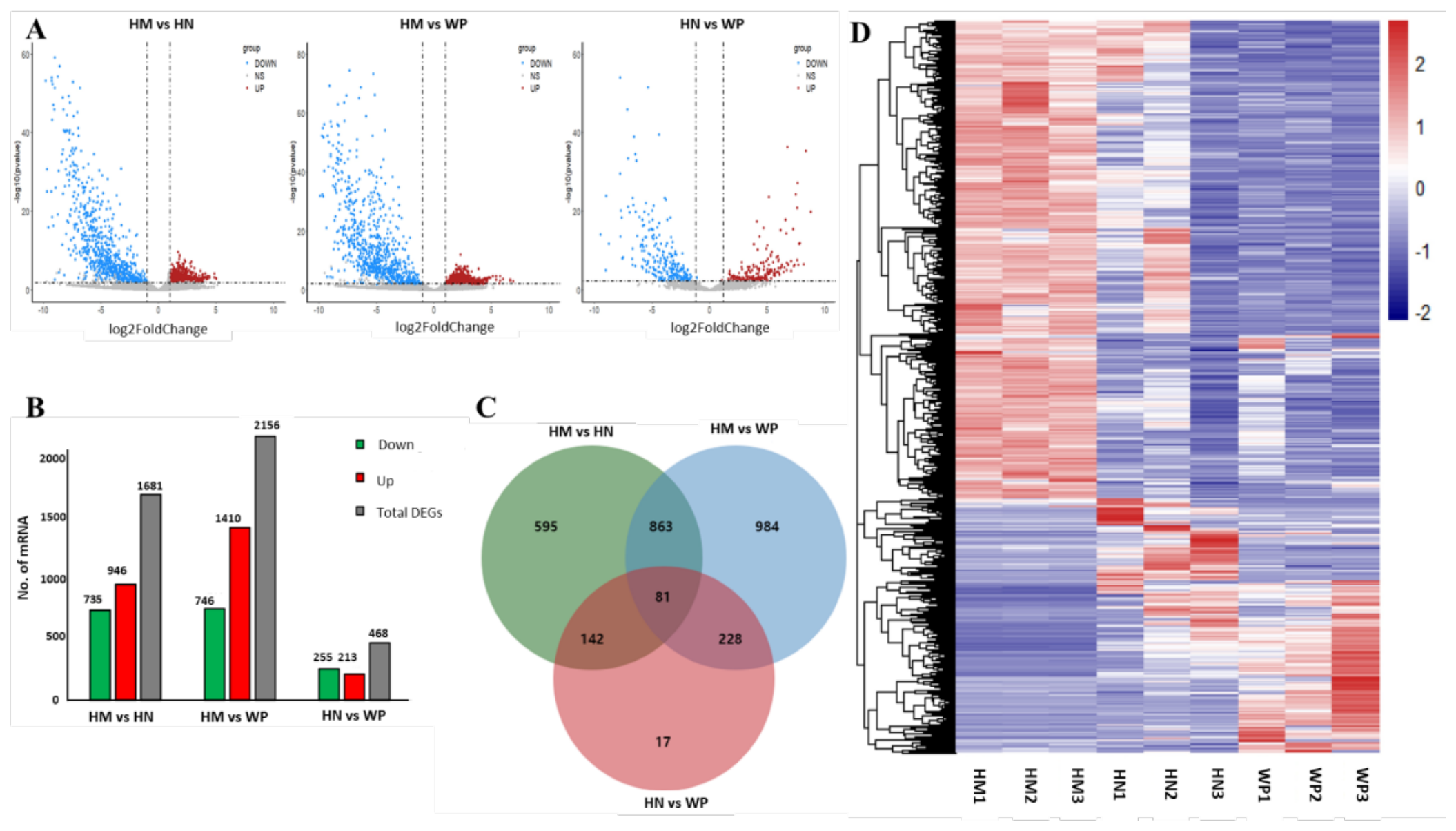
Figure 3.
Functional enrichment analysis of differentially expressed genes (DEGs) among medicinal leech species (A) GO analysis of DEGs between H. manillensis and H. nipponia, (B) KEGG pathway analysis of DEGs between H. manillensis and H. nipponia. (C) GO analysis of DEGs between H. manillensis and W. pigra, (D) KEGG pathway analysis of DEGs between H. manillensis and W. pigra, (E) GO analysis of DEGs between H. nipponia and W. pigra. (F) KEGG pathway analysis of DEGs between H. nipponia and W. pigra.
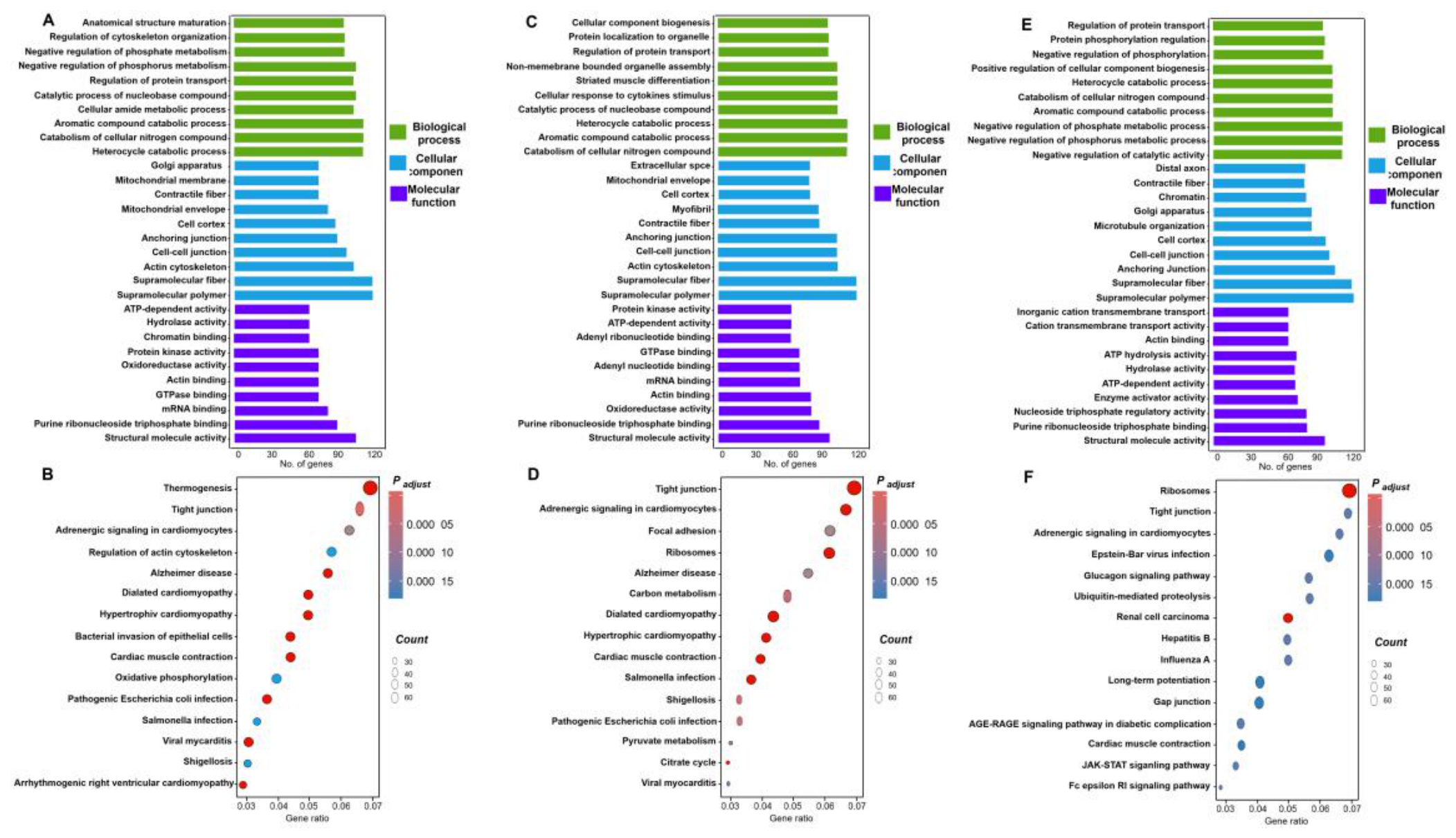
Figure 4.
Expression patterns of muscle-related genes among three medicinal leech species (A) Differential expression of key genes associated with muscle cellular components in H. manillensis, H. nipponia, and W. pigra, (B) TPM-normalized expression levels of the TPM gene across the three species, (C) Comparative expression of TNNI and TNNT genes among the three leech species.
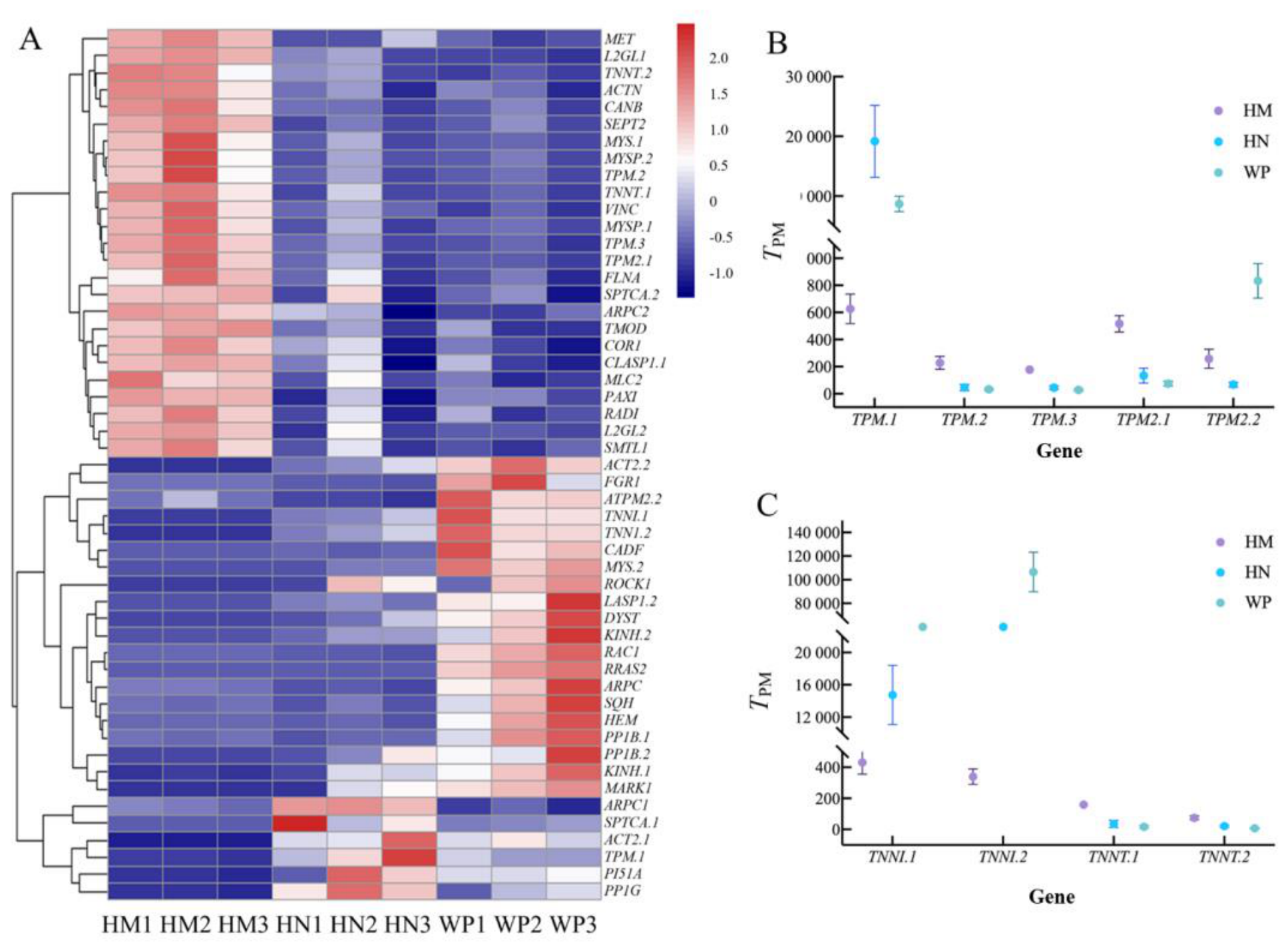
Figure 5.
Expression profiles of anticoagulant, anti-inflammatory, and analgesia-related genes among three medicinal leech species (A) Overview of key genes associated with anticoagulant activity, (B) Expression levels of major anticoagulant-related genes in H. manillensis, H. nipponia, and W. pigra, (C) Overview of principal genes involved in anti-inflammatory functions, (D) Expression patterns of anti-inflammatory-related genes across the three leech species, (E) Overview of critical genes associated with analgesic mechanisms, (F) Comparative expression of analgesia-related genes among the three species.
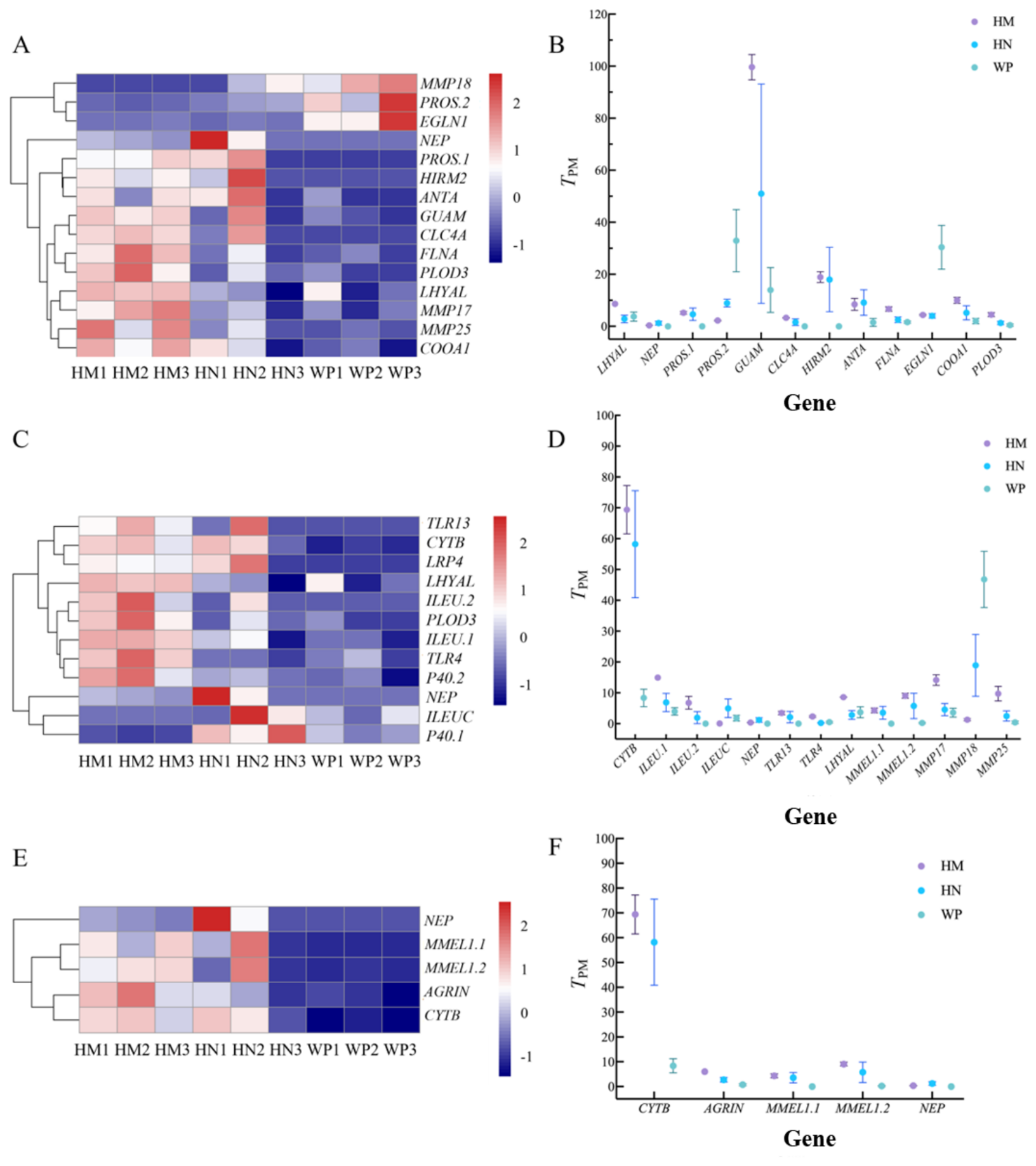
Figure 6.
Identification and enrichment analysis of DElncRNAs among three medicinal leech species, (A) Venn diagram showing statistics of total identified lncRNAs, (B) Venn diagram illustrating the distribution of DElncRNAs across H. manillensis, H. nipponia, and W. pigra, (C) Hierarchical clustering heatmap of DElncRNA expression profiles among the three species, (D) GO enrichment analysis of predicted DElncRNA target genes, (E) KEGG pathway analysis revealing the biological roles of DElncRNA target genes.
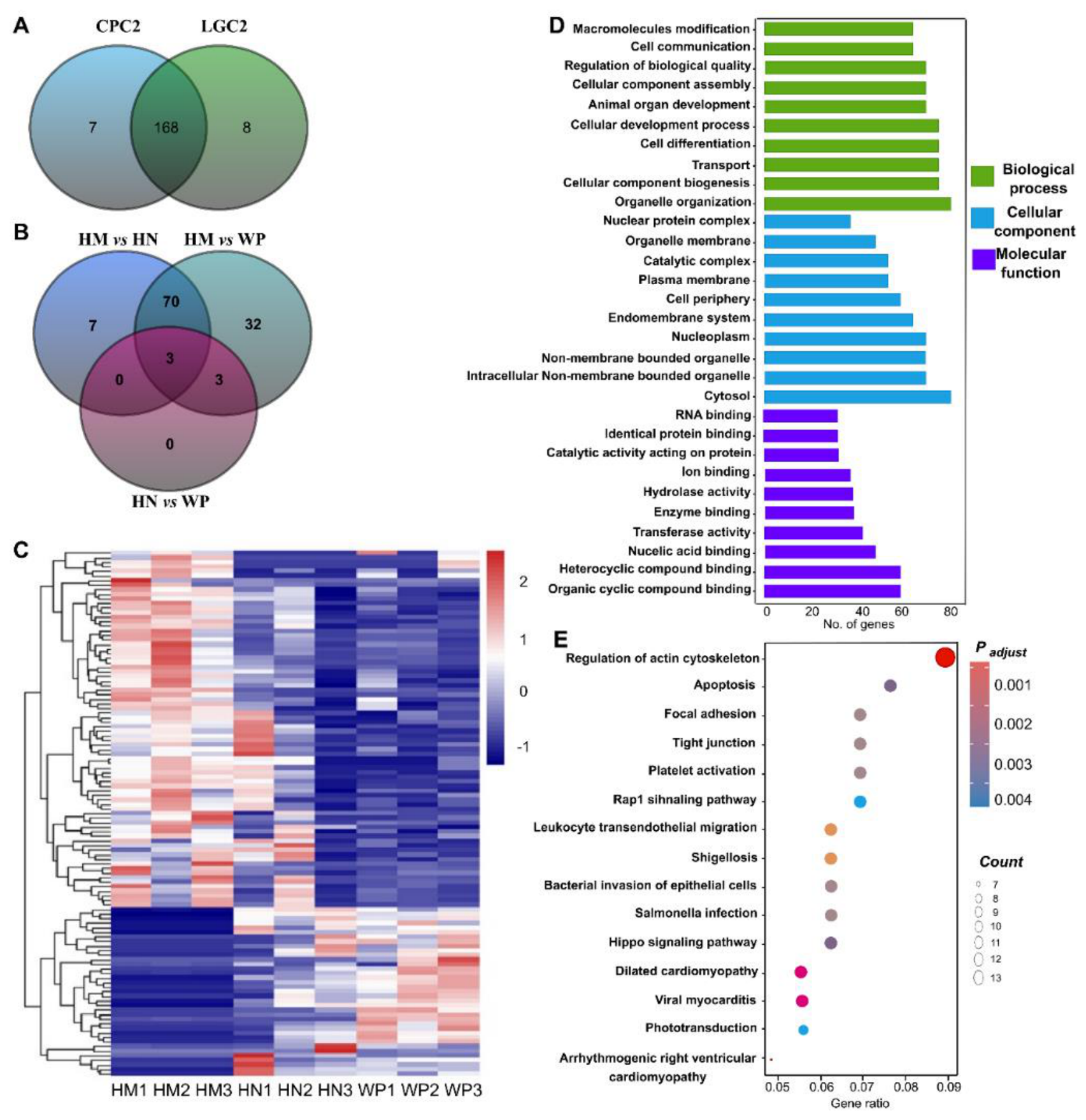
Figure 7.
Co-expression networks of DElncRNAs and their cis-target genes among three medicinal leech species, (A) Representative DElncRNAs and their cis-target gene interactions associated with muscle development and structural regulation, (B) Representative DElncRNAs and their cis-target gene interactions associated with anticoagulation, anti-inflammatory, and analgesic pathways.
Disclaimer/Publisher’s Note: The statements, opinions and data contained in all publications are solely those of the individual author(s) and contributor(s) and not of MDPI and/or the editor(s). MDPI and/or the editor(s) disclaim responsibility for any injury to people or property resulting from any ideas, methods, instructions or products referred to in the content. |
© 2026 by the authors. Licensee MDPI, Basel, Switzerland. This article is an open access article distributed under the terms and conditions of the Creative Commons Attribution (CC BY) license (http://creativecommons.org/licenses/by/4.0/).
Copyright: This open access article is published under a Creative Commons CC BY 4.0 license, which permit the free download, distribution, and reuse, provided that the author and preprint are cited in any reuse.