

Submitted:
01 October 2026
Posted:
05 October 2026
You are already at the latest version
Abstract
The independent origins of plant parasitism in nematodes offer a classic model for studying the evolution of parasitic adaptations. Using comparative genomics, we analyzed representative nematodes from the superfamilies Aphelenchoidea and Tylenchoidea within the suborder Tylenchina, uncovering the genetic basis of cross-superfamily molecular convergence and lineage-specific divergence. Overall, sequence-level molecular convergence was relatively weak, reflecting dilution of evolutionary contrast by closely related ancestral genetic backgrounds and the diverse genetic mechanisms by which different lineages attain the plant-parasitic phenotype. Nevertheless, these two independently evolved parasitic lineages exhibited a predictable, general-purpose molecular arsenal for breaching host physical and immune barriers. At the metabolic level, the unsaturated fatty acid biosynthesis pathway (ko01040) underwent concordant and significant contraction across plant-parasitic lineages throughout the suborder, suggesting a possible shift toward greater reliance on host-derived lipids, although this remains to be functionally tested. At the sequence level, the two superfamilies displayed strong site-level convergence in core genes including host recognition (GRK, Tr-type G), effector protein folding (PDI), plant nitrogen assimilation (asparagine synthetase), and interfacial stress perception (DOMON, alkaline ceramidase), which may contribute to the molecular framework for breaching parasitic barriers and warrant further experimental validation. Building on this foundation, life-history and niche differentiation drove a dual-track paradigm. The Tylenchoidea lineage, represented by sedentary endoparasites, followed a path of large-scale genome-wide streamlining, with extensive outsourcing and degeneration of autonomous metabolic pathways, highly adapted to the stable internal environment of specialized root feeding sites. In contrast, the migratory parasitic Aphelenchoidea displayed a dual paradigm of conserved genome-wide metabolic versatility coupled with precise micro-level remodeling of stress-resistance networks, which we propose, as candidate hypotheses, may facilitate adaptation to the high-stress aerial environment and multiple hosts through micro-scale remodeling of mitochondrial stress responses, host-lipid utilization, and medium-sensing proteins. This contrast between macro-scale degeneration and micro-scale specialization provides a genomic perspective that may help inform future work on the origin and evolutionary radiation of parasitism in invertebrates.
Keywords:
1. Introduction
2. Materials and Methods
2.1. Species Selection, Genome Data Acquisition, and Quality Control
2.2. Orthologous Gene Clustering and Phylogenetic Tree Construction
2.3. Assessment of Conservation Between plant-Parasitic and Non-Plant-Parasitic Nematodes
2.4. Screening of Amino Acid Convergent Sites
2.5. Screening of Convergent Sites in Amino Acid Physicochemical Properties
2.6. Screening of Genes Under Shared Positive Selection in Plant-Parasitic Nematodes
2.7. Progressive Convergence Dynamics Analysis of Gene Family and KEGG Pathway Member Counts
3. Results
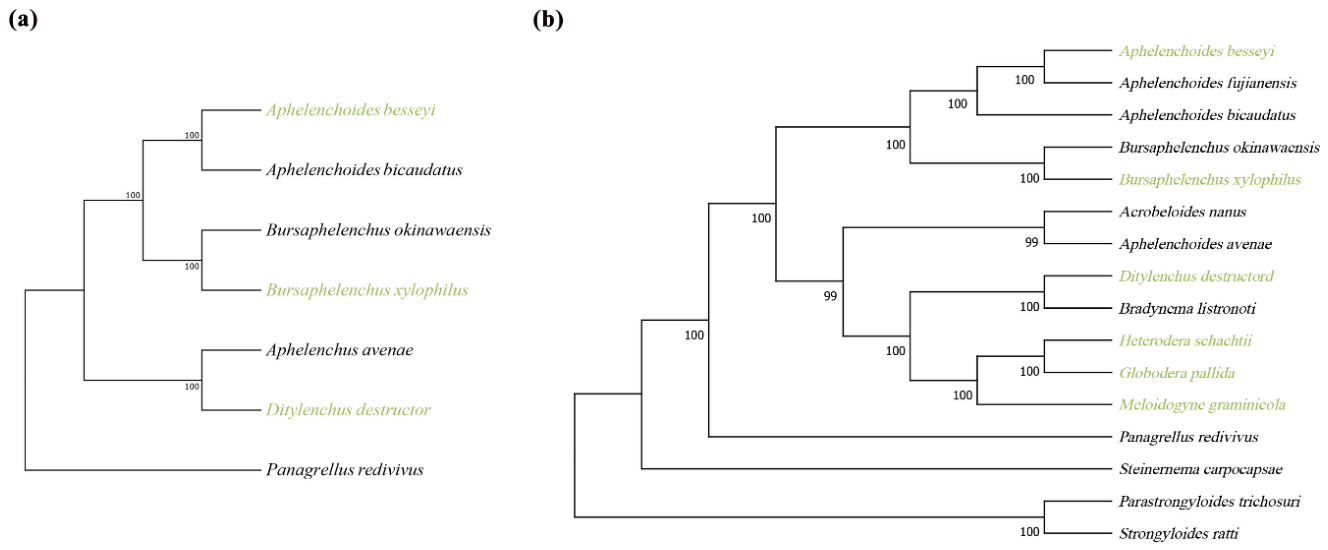
3.1. Phylogenetic Analysis and Independent Origins of the Parasitic Habit
3.2. Characteristics of Orthologous Gene Clustering
3.3. Global Divergence of Selection Pressure Between Plant-Parasitic and Non-Parasitic Lineages
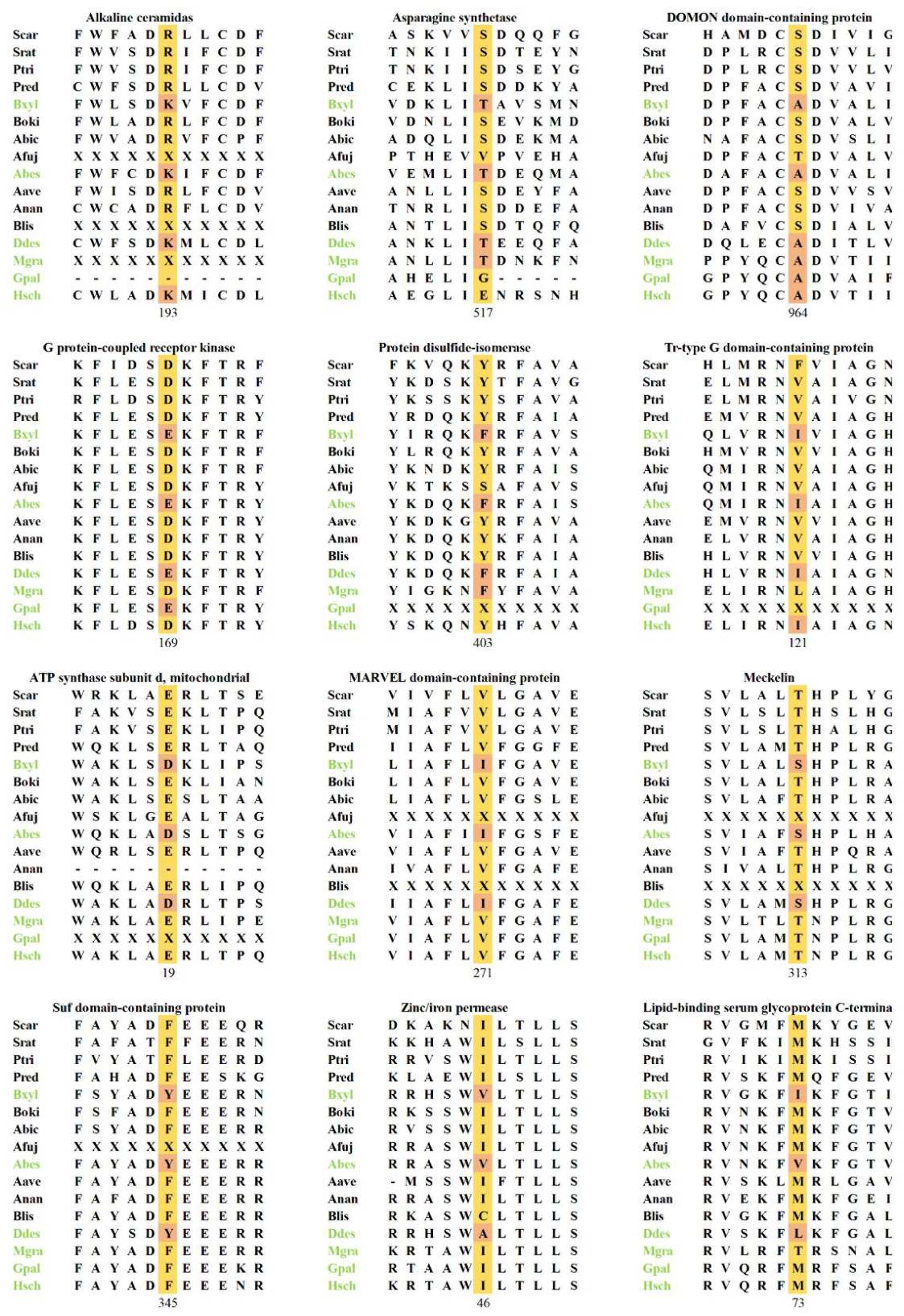
3.4. Convergent Evolution at Amino Acid Sites and in Physicochemical Properties
3.5. Convergent Evolution and Paradigm Divergence of KEGG Metabolic Pathways
4. Discussion
4.1. Biological Causes and Evolutionary Logic Underlying the Weak Molecular Convergence Signal in Plant-Parasitic Nematodes
4.2. A “General-Purpose Parasitic Molecular Arsenal” for Breaching Plant Defense Barriers and the Limits of Convergent Evolution
4.3. The “Dual-Track” Evolutionary Paradigm of Sedentary Endoparasitic and Migratory Parasitic Nematodes
4.4. Limitations and Future Perspectives
5. Conclusions
Supplementary Materials
Author Contributions
Funding
Data Availability Statement
Conflicts of Interest
Abbreviations
| ATP | Adenosine triphosphate |
| BIC | Bayesian information criterion |
| CAFE | Computational analysis of gene family evolution |
| CDS | Coding sequence |
| CRISPR | Clustered regularly interspaced short palindromic repeats |
| CSS | Convergence at similar sites |
| CWDE | Cell wall-degrading enzyme |
| DOMON | Dopamine β-monooxygenase N-terminal domain |
| GLM | Generalized linear model |
| GRK | G protein-coupled receptor kinase |
| GS | Grouping scheme (GS1–GS4) |
| IQR | Interquartile range |
| JA | Jasmonic acid |
| Ka | Number of non-synonymous substitutions per non-synonymous site |
| Ks | Number of synonymous substitutions per synonymous site |
| KEGG | Kyoto Encyclopedia of Genes and Genomes |
| LRT | Likelihood ratio test |
| MARVEL | MAL and related proteins for vesicle trafficking and membrane link |
| ML | Maximum likelihood |
| NADPH | Reduced nicotinamide adenine dinucleotide phosphate |
| PAML | Phylogenetic analysis by maximum likelihood |
| PDI | Protein disulfide-isomerase |
| PPN | Plant-parasitic nematode |
| ROS | Reactive oxygen species |
| RNAi | RNA interference |
| SD | Standard deviation |
| snRNA-seq | Single-nucleus RNA sequencing |
| Suf | Sulfur mobilization (Suf domain-containing protein) |
| WGD | Whole-genome duplication |
| ZIP | Zrt- and Irt-like protein (zinc/iron permease) |
References
- Kantor, C.; Eisenback, J.D.; Kantor, M. Biosecurity risks to human food supply associated with plant-parasitic nematodes. Front. Plant Sci. 2024, 15. [Google Scholar] [CrossRef] [PubMed]
- Parrado, L.M.; Quintanilla, M. Plant-parasitic nematode disease complexes as overlooked challenges to crop production. Front. Plant Sci. 2024, 15. [Google Scholar] [CrossRef] [PubMed]
- Li, Y.-L.; Fan, C.-J.; Jiang, X.-H.; Tian, X.-Y.; Han, Z.-M. Bursaphelenchus xylophilus: An important pathogenic factor of pine wilt disease and its relationship with Bursaphelenchus mucronatus. Plant Dis. 2021, 105, 3055–3062. [Google Scholar] [CrossRef] [PubMed]
- Zhang, Y.; Zhao, R.; Jing, T.; Lin, S.; Ding, X. Identification and transcriptome analysis of Bursaphelenchus xylophilus with excellent low temperature resistance. Int. J. Mol. Sci. 2024, 25, 13732. [Google Scholar] [CrossRef] [PubMed]
- Ji, H.; Xie, J.; Han, Z.; Yang, F.; Yu, W.; Peng, Y.; Qing, X. Complete genome sequencing of nematode aphelenchoides besseyi, an economically important pest causing rice white-tip disease. Phytopathol. Res. 2023, 5, 5. [Google Scholar] [CrossRef]
- Chen, Y.; Zhang, S.; Wang, X.; Hu, B.; Bo, D.; Liao, Y.; Zhang, Y.; Ashry, N.M.; Zhou, Y.; Peng, D.; et al. Developmental dynamic transcriptomics reveals multiple effectors and transcription factors critical for Ditylenchus destructor parasitism. BMC Biol. 2025, 24, 21. [Google Scholar] [CrossRef] [PubMed]
- Kikuchi, T.; Eves-van den Akker, S.; Jones, J.T. Genome evolution of plant-parasitic nematodes. Annu. Rev. Phytopathol. 2017, 55, 333–354. [Google Scholar] [CrossRef] [PubMed]
- Quist, C.W.; Smant, G.; Helder, J. Evolution of plant parasitism in the phylum nematoda. Annu. Rev. Phytopathol. 2015, 53, 289–310. [Google Scholar] [CrossRef] [PubMed]
- Jaouannet, M.; Magliano, M.; Arguel, M.J.; Gourgues, M.; Evangelisti, E.; Abad, P.; Rosso, M.N. The root-knot nematode calreticulin mi-crt is a key effector in plant defense suppression. Mol. Plant-Microbe Interact.> 2013, 26, 97–105. [Google Scholar] [CrossRef] [PubMed]
- Perally, S.; LaCourse, E.J.; Campbell, A.M.; Brophy, P.M. Heme transport and detoxification in nematodes: Subproteomics evidence of differential role of glutathione transferases. J. Proteome Res. 2008, 7, 4557–4565. [Google Scholar] [CrossRef] [PubMed]
- Baldwin, J.G.; Nadler, S.A.; Adams, B.J. Evolution of plant parasitism among nematodes. Annu. Rev. Phytopathol. 2004, 42, 83–105. [Google Scholar] [CrossRef] [PubMed]
- Jones, J.T.; Moens, M.; Mota, M.; Li, H.; Kikuchi, T. Bursaphelenchus xylophilus: Opportunities in comparative genomics and molecular host–parasite interactions. Mol. Plant Pathol. 2008, 9, 357–368. [Google Scholar] [CrossRef] [PubMed]
- Zou, Z.T.; Zhang, J.Z. Are convergent and parallel amino acid substitutions in protein evolution more prevalent than neutral expectations? Mol. Biol. Evol. 2015, 32, 2085–2096. [Google Scholar] [CrossRef] [PubMed]
- Howe, K.L.; Bolt, B.J.; Shafie, M.; Kersey, P.; Berriman, M. Wormbase parasite − a comprehensive resource for helminth genomics. Mol. Biochem. Parasitol. 2017, 215, 2–10. [Google Scholar] [CrossRef] [PubMed]
- Emms, D.; Kelly, S. Orthofinder: Solving fundamental biases in whole genome comparisons dramatically improves orthogroup inference accuracy. Genome Biol. 2016, 16, 1–14. [Google Scholar] [CrossRef] [PubMed]
- Katoh, K.; Standley, D.M. Mafft multiple sequence alignment software version 7: Improvements in performance and usability. Mol. Biol. Evol. 2013, 30, 772–780. [Google Scholar] [CrossRef] [PubMed]
- Capella-Gutiérrez, S.; Silla-Martínez, J.M.; Gabaldón, T. Trimal: A tool for automated alignment trimming in large-scale phylogenetic analyses. Bioinformatics 2009, 25, 1972–1973. [Google Scholar] [CrossRef] [PubMed]
- Kalyaanamoorthy, S.; Minh, B.Q.; Wong, T.K.F.; von Haeseler, A.; Jermiin, L.S. Modelfinder: Fast model selection for accurate phylogenetic estimates. Nat. Methods 2017, 14, 587–589. [Google Scholar] [CrossRef] [PubMed]
- Kozlov, A.M.; Darriba, D.; Flouri, T.; Morel, B.; Stamatakis, A. Raxml-ng: A fast, scalable and user-friendly tool for maximum likelihood phylogenetic inference. Bioinformatics 2019, 35, 4453–4455. [Google Scholar] [CrossRef] [PubMed]
- Zhang, Z.; Li, J.; Zhao, X.-Q.; Wang, J.; Wong, G.K.-S.; Yu, J. Kaks_calculator: Calculating ka and ks through model selection and model averaging. Genom. Proteom. Bioinform. 2006, 4, 259–263. [Google Scholar] [CrossRef] [PubMed]
- Xu, S.H.; He, Z.W.; Guo, Z.X.; Zhang, Z.; Wyckoff, G.J.; Anthony, G.; Chung-I., W.; Shi, S.H. Genome-wide convergence during evolution of mangroves from woody plants. Mol. Biol. Evol. 2017, 34, 1008–1015. [Google Scholar] [CrossRef] [PubMed]
- Chen, S.; Zou, Z. Detecting convergence of amino acid physicochemical properties underlying the organismal adaptive convergent evolution. Mol. Ecol. Resour. 2025, 25, e70052. [Google Scholar] [CrossRef] [PubMed]
- Zhang, J.; Nielsen, R.; Yang, Z. Evaluation of an improved branch-site likelihood method for detecting positive selection at the molecular level. Mol. Biol. Evol. 2005, 22, 2472–2479. [Google Scholar] [CrossRef] [PubMed]
- Yang, Z. PAML 4: Phylogenetic analysis by maximum likelihood. Mol. Biol. Evol. 2007, 24, 1586–1591. [Google Scholar] [CrossRef] [PubMed]
- Espada, M.; Vicente, C.S.L.; Vieira, P. Molecular insights into migratory plant-parasitic nematodes. Annu. Rev. Phytopathol. 2025, 63, 403–430. [Google Scholar] [CrossRef] [PubMed]
- Thomas, G.W.C.; Hahn, M.W. Determining the null model for detecting adaptive convergence from genomic data: A case study using echolocating mammals. Mol. Biol. Evol. 2015, 32, 1232–1236. [Google Scholar] [CrossRef] [PubMed]
- Dadong, D.; Zhang, Y.; Latina, R.; Yang, X.; Williamson, V.; Groen, S.; Shamsullah, S.; Leslie, C.; Castro, B.; Siddique, S. Genomic and transcriptomic insights into the evolution and parasitic strategy of the woody-plant nematode Pratylenchus vulnus. Mol. Plant. Microbe Interact. 2026, 39, 265–277. [Google Scholar] [CrossRef] [PubMed]
- Alvarado, S.G.; Chang, A.; Tajerian, M. Convergent evolution and the epigenome. Epigenomes 2025, 9, 45. [Google Scholar] [CrossRef] [PubMed]
- Yuan, D.; Li, H.; Wan, M.; Xiao, L.; Feng, Y. From biosynthesis to scavenging: Evolutionary rewiring of pufa and oxylipin biosynthesis in parasitic nematodes. Trends Parasitol. 2026, 42, 603–616. [Google Scholar] [CrossRef] [PubMed]
- Fukuto, H.S.; Ferkey, D.M.; Apicella, A.J.; Lans, H.; Sharmeen, T.; Chen, W.; Lefkowitz, R.J.; Jansen, G.; Schafer, W.R.; Hart, A.C. G protein-coupled receptor kinase function is essential for chemosensation in C. elegans. Neuron 2004, 42, 581–593. [Google Scholar] [CrossRef] [PubMed]
- Gross, R.; Zhang, S.; Wei, L.; Caplan, A.; Kuhl, J.; Dandurand, L.-M.; Wang, X.; Xiao, F. The globodera pallida effector gppdi1 is a functional thioredoxin and triggers defense-related cell death independent of its enzymatic activity. Phytopathology 2020, 110. [Google Scholar] [CrossRef] [PubMed]
- Habash, S.S.; Sobczak, M.; Siddique, S.; Voigt, B.; Elashry, A.; Grundler, F.M.W. Identification and characterization of a putative protein disulfide isomerase (hspdi) as an alleged effector of heterodera schachtii. Sci. Rep. 2017, 7, 13536. [Google Scholar] [CrossRef] [PubMed]
- Pang, S.; Ren, X.; Wu, P.; Lv, X.; Lin, X.; Wang, D. Coordinated regulation of amino acid metabolism and transport in cereal nitrogen remobilization for grain filling. Front. Plant Sci. 2026, 17, 2026. [Google Scholar] [CrossRef] [PubMed]
- Huang, L.-Q.; Li, P.-P.; Yin, J.; Li, Y.-K.; Chen, D.-K.; Bao, H.-N.; Fan, R.-Y.; Liu, H.-Z.; Yao, N. Arabidopsis alkaline ceramidase acer functions in defense against insect herbivory. J. Exp. Bot. 2022, 73, 4954–4967. [Google Scholar] [CrossRef] [PubMed]
- Hewezi, T.; Baum, T.J. Chapter Twelve—Communication of Sedentary Plant-Parasitic Nematodes with Their Host Plants. In Advances in Botanical Research; Bécard, G., Ed.; Academic Press: Cambridge, MA, USA, 2017; Volume 82, pp. 305–324. [Google Scholar]
- Smant, G.; Helder, J.; Goverse, A. Parallel adaptations and common host cell responses enabling feeding of obligate and facultative plant parasitic nematodes. Plant J. 2018, 93, 686–702. [Google Scholar] [CrossRef] [PubMed]
- Eide, D.J. Zinc transporters and the cellular trafficking of zinc. Biochim. Biophys. Acta 2006, 1763, 711–722. [Google Scholar] [CrossRef] [PubMed]
- Braymer, J.J.; Freibert, S.A.; Rakwalska-Bange, M.; Lill, R. Mechanistic concepts of iron-sulfur protein biogenesis in biology. Biochim. Biophys. Acta 2021, 1868, 118863. [Google Scholar] [CrossRef] [PubMed]
- Campanella, M.; Casswell, E.; Chong, S.; Farah, Z.; Wieckowski, M.R.; Abramov, A.Y.; Tinker, A.; Duchen, M.R. Regulation of mitochondrial structure and function by the f1fo-atpase inhibitor protein, if1. Cell Metab. 2008, 8, 13–25. [Google Scholar] [CrossRef] [PubMed]
- Li, Y.; Hu, L.-J.; Wu, X.-Q.; Ye, J.-R. A Bursaphelenchus xylophilus effector, bx-far-1, suppresses plant defense and affects nematode infection of pine trees. Eur. J. Plant Pathol. 2020, 157, 637–650. [Google Scholar] [CrossRef]
- Sánchez-Pulido, L.; Martı́n-Belmonte, F.; Valencia, A.; Alonso, M.A. Marvel: A conserved domain involved in membrane apposition events. Trends Biochem. Sci. 2002, 27, 599–601. [Google Scholar] [CrossRef] [PubMed]
- Lambacher, N.J.; Bruel, A.-L.; van Dam, T.J.P.; Szymańska, K.; Slaats, G.G.; Kuhns, S.; McManus, G.J.; Kennedy, J.E.; Gaff, K.; Wu, K.M.; et al. Tmem107 recruits ciliopathy proteins to subdomains of the ciliary transition zone and causes joubert syndrome. Nat. Cell Biol. 2016, 18, 122–131. [Google Scholar] [CrossRef] [PubMed]
- Zadegan, S.B.; Li, P.; Sultana, M.S.; Abbas, H.M.K.; Coffey, N.; Öztürk, C.; Elwasif, M.; Rice, J.H.; Krishnan, H.B.; Hewezi, T. Single-nucleus rna-sequencing reveals the cellular programs driving nematode-induced giant cell formation in tomato. Hortic. Res. 2025, 12, uhaf223. [Google Scholar] [CrossRef] [PubMed]

| Species | Total genes | Clustered genes (%) | Unassigned genes (%) | Species-specific genes (%) |
| A. besseyi | 11,794 | 91.1 | 8.9 | 8.4 |
| A. bicaudatus | 10,675 | 92.9 | 7.1 | 4.1 |
| A. avenae | 43,185 | 91.0 | 9.0 | 47.1 |
| B. okinawaensis | 14,544 | 91.6 | 8.4 | 5.2 |
| B. xylophilus | 15,860 | 92.1 | 7.9 | 8.9 |
| D. destructor | 13,931 | 83.4 | 16.6 | 12.2 |
| P. redivivus | 24,249 | 78.9 | 21.1 | 31.1 |
| Analysis metric |
Bxyl vs Boki (B. xylophilus vs B. okinawaensis) |
Abes vs Abic (A. besseyi vs A. bicaudatus) |
| Number of 1:1 orthologous gene pairs | 13,651 | 9,584 |
| Ka/Ks mean ± SD | 0.122 ± 0.145 | 0.180 ± 0.109 |
| Ka/Ks median (IQR) | 0.082 (0.041–0.148) | 0.156 (0.098–0.231) |
| No. of genes with Ka/Ks < 0.1 (%) | 2,690 (57.5%) | 884 (25.8%) |
| No. of genes with 0.1 ≤ Ka/Ks < 0.5 (%) | 1,956 (41.8%) | 2,498 (73.0%) |
| No. of genes with 0.5 ≤ Ka/Ks < 1.0 (%) | 32 (0.7%) | 42 (1.2%) |
| No. of genes with Ka/Ks ≥ 1.0 (%) | 3 (0.06%) | 0 (0%) |
| No. of genes with undefined Ka/Ks (NaN, Ks = 0) | 8,970 (65.7%) | 6,160 (64.3%) |
| Evolutionary paradigm | Criterion | No. (n) | Proportion (%) | Representative pathway examples |
| Suborder-wide shared contraction | Concordant significant contraction in both Core and Tylenchida (|log2FC| ≥ 1, P < 0.05) | 1 | 0.18% | ko01040 (unsaturated fatty acid biosynthesis) |
| Core-unique contraction | Significant contraction only in Core (|log2FC| ≥ 1, P < 0.05) | 2 | 0.35% | ko02020 (two-component system), ko99987 |
| Tylenchida-unique contraction | Significant contraction only in Tylenchida (|log2FC| ≥ 1, P < 0.05) | 204 | 35.92% | ko00534, ko03029, ko03050 (proteasome) |
| Tylenchida-unique expansion | Significant expansion only in Tylenchida (|log2FC| ≥ 1, P < 0.05) | 1 | 0.18% | ko00524 (neomycin, kanamycin and gentamicin biosynthesis) |
| Not significant (unassigned) | Does not meet the significance criteria | 360 | 63.38% | — |
| Total | — | 568 | 100% | — |
Disclaimer/Publisher’s Note: The statements, opinions and data contained in all publications are solely those of the individual author(s) and contributor(s) and not of MDPI and/or the editor(s). MDPI and/or the editor(s) disclaim responsibility for any injury to people or property resulting from any ideas, methods, instructions or products referred to in the content. |
© 2026 by the authors. Licensee MDPI, Basel, Switzerland. This article is an open access article distributed under the terms and conditions of the Creative Commons Attribution (CC BY) license (http://creativecommons.org/licenses/by/4.0/).