

Submitted:
28 September 2026
Posted:
29 September 2026
You are already at the latest version
Abstract
The bottle bioassay is a method for detecting insecticide resistance in mosquito populations. Naled (dimethyl 1,2-dibromo-2,2-dichloroethylphosphate) is the active ingredient in many products used in mosquito control operations. Naled is photolabile, its half-life and rate of decay depend on temperature and humidity. Amber glass is used to protect the contents of the glassware container from photodegradation. This study was initiated to determine whether amber bottles rather than flint glass bottles could be used in bottle bioassays to protect the concentration of naled within the bottles from degradation due to light exposure, and to evaluate the effects of different light sources and the effects of leaving bottle caps on or off. Time to mortality data were collected. Effects of pesticide chemistry, pesticide formulation, bottle chemistry, light source, and sex of mosquitoes are discussed. Generally, mosquitoes died more quickly in the amber bottles, mosquitoes died more quickly in capped bottles than those left uncapped, and males died more quickly than females.
Keywords:
Aedes aegypti
; insecticide resistance
; photodegradation
; organophosphate
1. Introduction
The CDC bottle bioassay is a useful method for detecting insecticide resistance in mosquito populations. It can be used by operational personnel with limited resources and facilities and as few as five mosquitoes can be tested in each bottle. The bottle bioassay provides a quick result for determining whether mosquitoes are susceptible to a given dose of pesticide (Brogdon and McAllister 1998). Petersen (2004) modified the CDC bottle bioassay to permit evaluation of products as they are sold for vector control, rather than using technical grade active ingredients.
Naled (dimethyl 1,2-dibromo-2,2-dichloroethylphosphate), an organophosphate compound, is the active ingredient in Dibrom® Concentrate (AMVAC, Newport Beach, CA) and Trumpet® EC (AMVAC, Newport Beach, CA). Products containing naled are widely used in mosquito control operations (Trumbetta et al. 2020). One difficulty of working with naled is its photolability. Naled has a short half-life and its rate of decay depends on temperature and humidity; the half-life of naled in direct sunlight can be as short as twenty minutes to 1.37 hours (Teitze et al. 1996, Bamiduro et al. 2021).
Colored glass allows less UV radiation to pass than does clear glass (Lapoza et al. 2023). Amber glass is widely used to protect the contents of the glassware from photodegradation (Bacon and Billian 1954). This study was initiated to determine whether amber bottles could be used in bottle bioassays to protect the concentration of naled within the bottles from degradation due to light exposure and to determine whether leaving caps on or off affected degradation of naled.
2. Materials and Methods
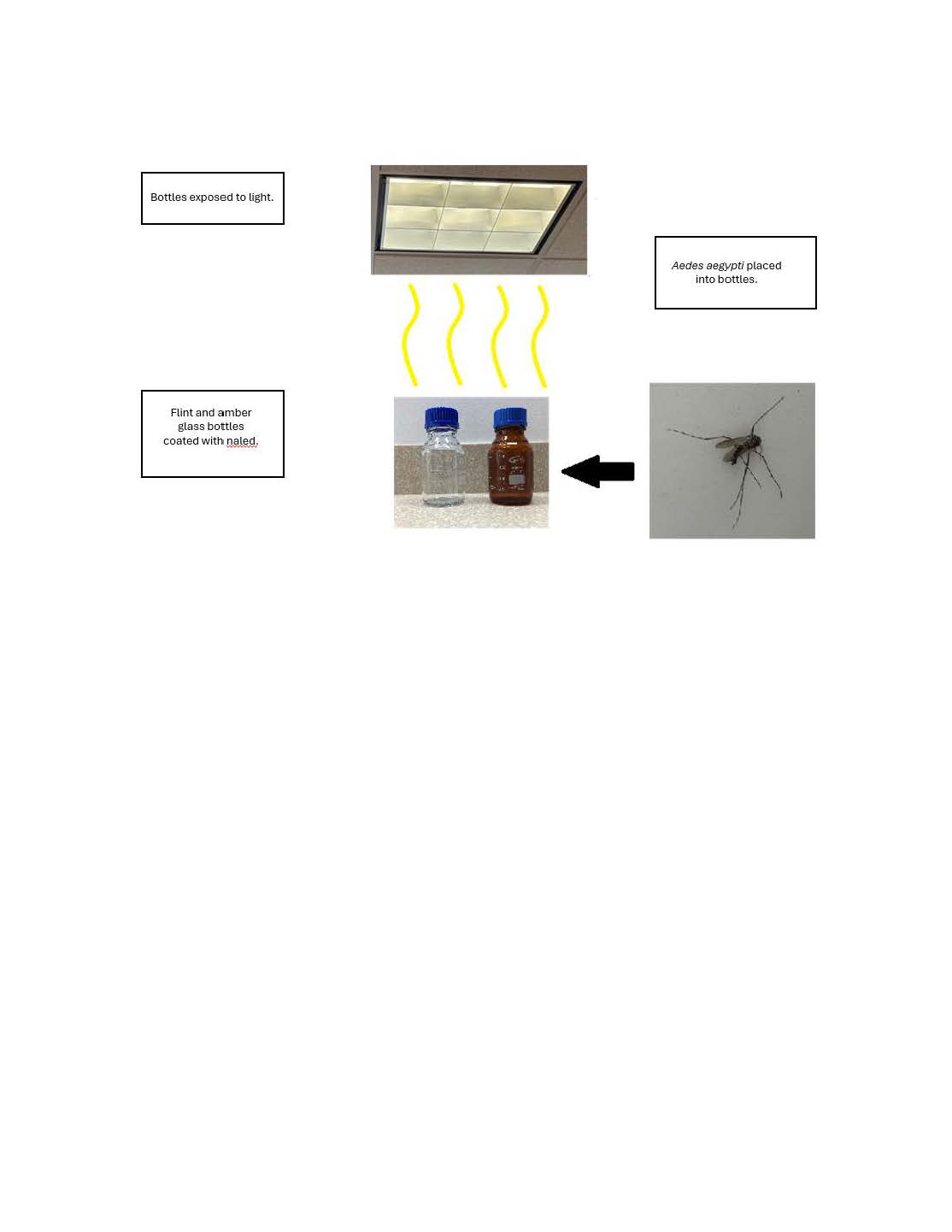
Three trials were attempted, two exposing the bottles to fluorescent light and one exposing the bottles to sunlight. Methods differed slightly among the trials, so they are all described separately below. All adult mosquitoes were provided with 10% sucrose solution ad libitum because starvation impacts results of the bottle bioassay (Norris and Bloomquist 2022).
2.1. Rearing Mosquitoes
Trial 1. The Aedes aegypti (L.) mosquitoes were F1 progeny of a wild-type Florida Keys strain, collected on Vaca Key in the City of Marathon. Field-collected larvae were allowed to develop to the imaginal stage in the laboratory. Larvae were provided with a daily ration of a 1:1:1:1 mixture of liver powder, lactalbumin, brewer’s yeast (Thermo Fisher Scientific, Waltham, Massachusetts, USA), and pulverized Wardley® goldfish flakes (Hartz Mountain Industries, Secaucus, New Jersey, USA). Adults were provided with 10% sucrose solution ad libitum. Adult females were allowed to feed weekly on defibrinated beef blood (Hemostat Laboratories, Dixon, California, USA). Eggs were collected, vacuum hatched, and larvae were maintained in a plastic tray (inside dimensions 31.5 × 22.9 × 5 cm) in a rearing room at ambient temperatures (24–30 °C) with a 12:12 LD light regimen. Larvae were fed the same mixture as the P generation.
Trial 2. The Aedes aegypti mosquitoes were reared from eggs purchased from Benzon Research (Carlisle, Pennsylvania, USA), or from eggs donated by Rad Source (Buford, Georgia, USA). In either case, the eggs were derived from the USDA “Gainesville” strain. Eggs were vacuum hatched, and larvae were maintained in a plastic tray (inside dimensions 31.5 × 22.9 × 5 cm) in a rearing room at ambient temperatures (24–30 °C) with a 12:12 LD light regimen. Larvae were provided with a daily ration of pulverized TetraMin® tropical fish flakes (Spectrum Brands Pet, Blacksburg, Virginia, USA).
Trial 3. The Aedes aegypti mosquitoes were adult mosquitoes purchased from Benzon Research (Carlisle, Pennsylvania, USA). Male and female mosquitoes were purchased to investigate differential effects on sex.
2.2. Preparation of Bottles
New flint glass (clear) and borosilicate glass (amber) media storage bottles (250 ml) were purchased from Thermo Fisher Scientific (Waltham, Massachusetts, USA). Bottles were as close to the same size and shape as possible because vessels that contain the same volume may not have the same surface area (Alyassin et al. 1994). Attempts were made to obtain measurements of the interior surface area of the bottles but emails to the glass manufacturers were not answered. Prior to use and between uses, bottles were cleaned by first rinsing the interior with acetone, then washing the interior with Alconox® detergent (Alconox, White Plains, New York, USA), then rinsing with water followed by triple-rinsing the bottles with acetone. Thorough washing and rinsing are necessary because simply washing the bottles with soap and water is not sufficient to remove all traces of pesticide (Peard et al. 2024).
Approximately 10 ml of Dibrom® Concentrate (AMVAC Chemical Corporation, Los Angeles, California, USA) was removed from a barrel in the Florida Keys Mosquito Control District pesticide storage facility in Marathon, Florida, USA. The pesticide was placed into a vial that had been covered with dark red adhesive tape and then stored in a dark cupboard. Stock and test solutions were prepared by dilution with acetone according to the protocol of Petersen (2004). The resulting test solution contained 25μg active ingredient / ml. Red volumetric flasks were used to reduce the amount of light impacting the diluted naled. Each test bottle received 1 ml of the test solution. In the first and second trials, two control bottles, one of each kind of glass, received 1 ml of acetone and were used as controls. In the third trial, due to the separation of males and females, four bottles, two of each kind of glass, were used as controls. All bottles were placed onto an electric hot dog roller (RollerDog®, FunTime Popcorn, Ontario, California, USA), in order to coat the inside of the bottle as consistently as possible (Althoff and Huijben 2002). After preparation, bottles were placed uncapped into a dark cabinet for two hours to allow acetone to dissipate. Bottles were transported from the preparation room to the laboratory in a cardboard box in order to exclude light as much as possible.
2.3. Bottle Bioassays
Up to 50 mosquitoes were placed into each bottle. In trials 1 and 2, mixed groups of males and females were used. In trial 3, females and males were tested separately. Mortality was recorded immediately after introduction of mosquitoes (zero hours). After this initial mortality was recorded, bottles were exposed to light for three hours. In the first and third trials, bottles were exposed to fluorescent light. In the second trial, bottles were exposed to sunlight. During the time between introductions of mosquitoes, some bottles of each glass type were capped and some were uncapped. After three hours had elapsed, new mosquitoes were placed into each bottle and mortality versus time in minutes was recorded. In the first and third trials new mosquitoes were placed into the bottles after another three hours of exposure to fluorescent light had elapsed (six hours total), with caps on and off of bottles as before. Again, mortality versus time in minutes was recorded. The bottles, capped and uncapped, were kept in a room with the fluorescent lights on for the entire night and trials were repeated at 24 hours after preparation.
In the second trial, in which the bottles were exposed to sunlight, after the three-hour exposure the bottles were held overnight in a room with fluorescent lighting. The following morning the bottle were removed to the outside of the building for exposure to sunlight until it was time for a 24-hour bioassay.
Because the number of mosquitoes per bottle was not consistent within and among trials, percent mortality over time was plotted and linear regression was used to visualize differential mortality rates. Graphs were generated for glass type, capping status, and glass type versus capping status.
3. Results
Trial 1. Three replicates were run. In the first replicate, all mosquitoes died in 15 minutes at 3 hr & 6 hr except in amber bottles with caps on: at three hours all mosquitoes were dead at 45 minute and at 6 hours all mosquitoes were dead at 75 minutes. In the second replicate, all mosquitoes were dead at 15 minutes in the three-hour assay. At six hours, time to 100% mortality in amber bottles without caps was delayed relative to other glass-cap combinations (Figure 1A). At 24 hours, time to 100% mortality was shorter in the flint glass bottles than in the amber glass bottles, regardless of capping status (Figure 1B). In the third replicate, all glass-cap combinations had 100% mortality within 45 minutes at 3 hours (Figure 1C). At 6 and 24 hours, there was higher mortality in the amber bottles than in the flint glass bottles regardless of capping (Figure 1D,E). There was no mortality in either of the control bottles.
Trial 2. Two replicates were run. At three hours there was a definite difference between bottles that were capped and those that were uncapped, regardless of glass type (Figure 1F,G). At 24 hours, mortality was seen only in the flint glass bottles with caps on (Figure 1H). There was no mortality in the control bottles.
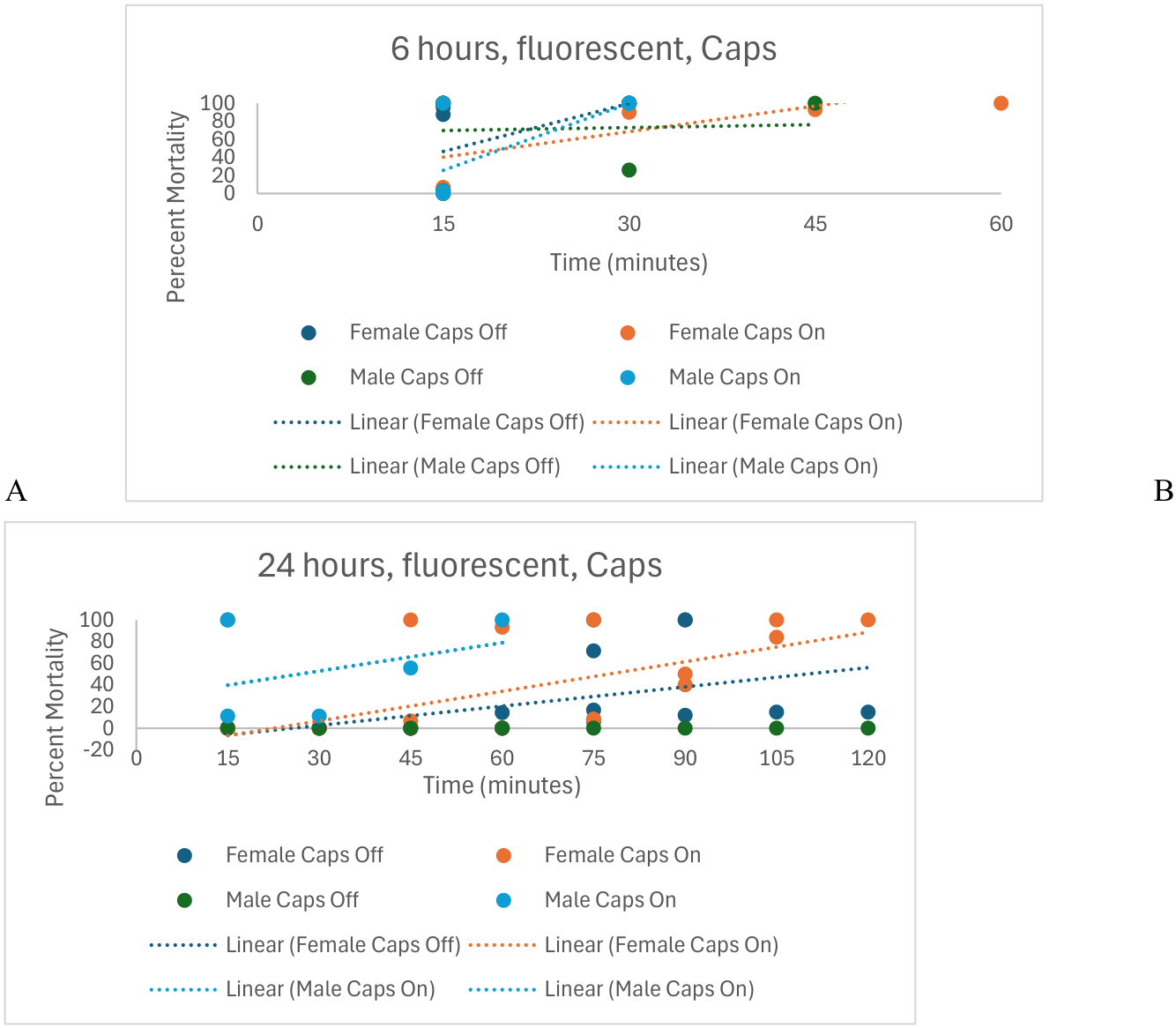
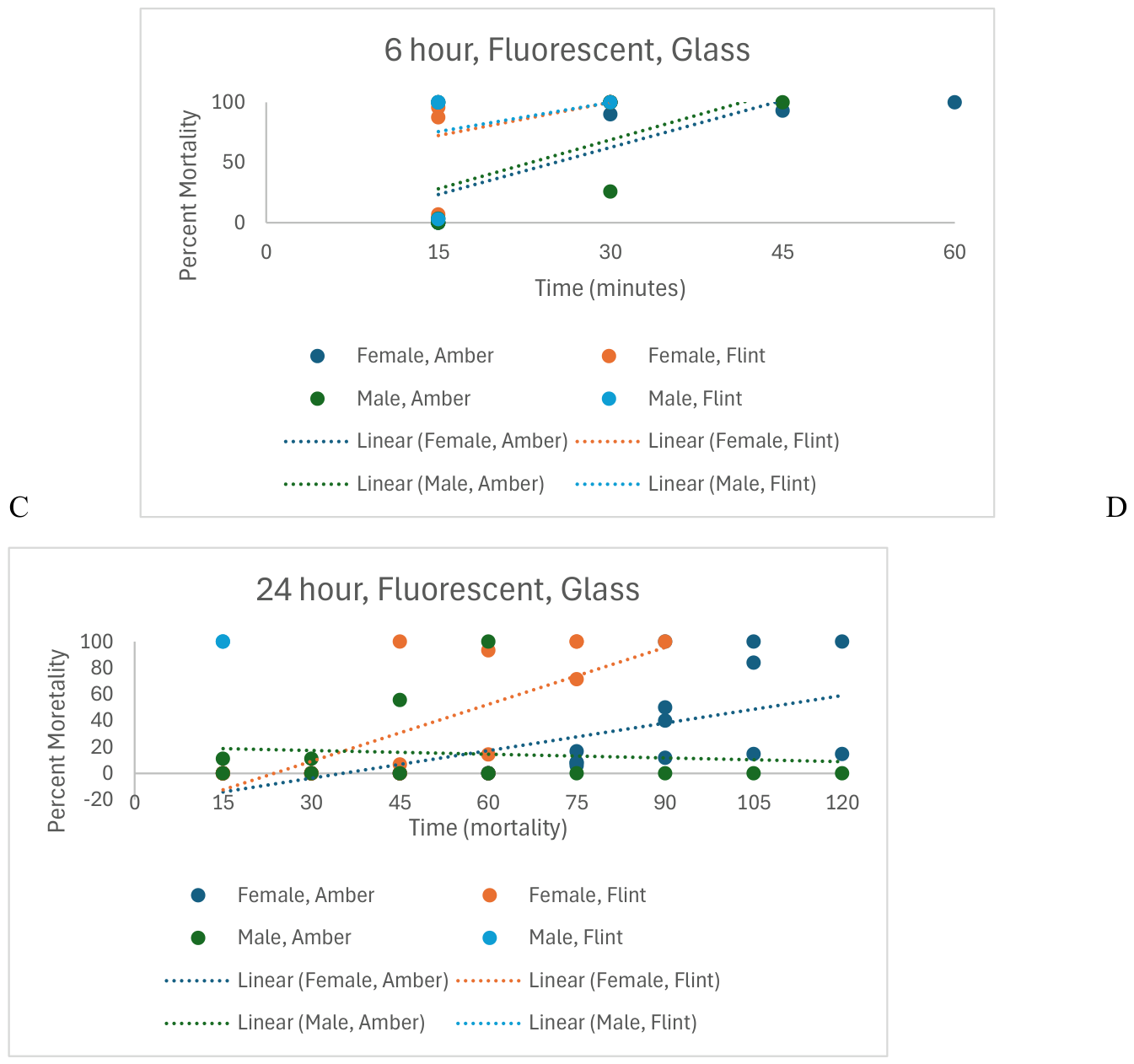
Trial 3. One replicate was run. At three hours, most mosquitoes were dead within 15 minutes although a small number survived until 30 minutes. At six hours, males died more quickly than females, regardless of capping (Figure 2A). The difference between male and female mortality was more pronounced at twenty-four hours (Figure 2B). When type of glass was taken into account, after six hours, the mosquitoes in flint glass died more quickly than did those in amber glass regardless of sex (Figure 2C), whereas at twenty-four hours males in flint glass bottles died at 15 minutes and males in amber bottles were still alive at two hours; females in flint glass bottles died more quickly than did those in amber bottles (Figure 2D). There was no mortality in the control bottles.
4. Discussion
There are many factors that may have affected the results of this study. The first is the pesticide naled. Naled (i.e., brominated dichlorvos) is stable under anhydrous conditions but hydrolyzes in water and is decomposed by iron and sunlight (Carlstrom 1975, Utreja et al. 2018). Naled decays into dichlorvos, which is also insecticidal (Gan et al. 2006). Dichlorvos is used in malaria control efforts (e.g., Idowu et al. 2016). However, dichlorvos is a relatively volatile compound (Aschmann et al. 2011, Okoroiwu and Iwara 2018). It is likely that in the uncapped bottles the volatile breakdown product, dichlorvos, sublimated under the photodegradation process.
A second factor, related to the first, is the formulation of the product, Dibrom Concentrate. Formulated organophosphate pesticides may be more toxic than the technical preparation; this may be because the solvent of the formulated preparation might facilitate uptake of pesticide by the target organism’s body (El-Sebae 1980). This is an important point. The CDC bottle bioassay evaluates insect response to the active ingredient of a pesticide, whereas the Petersen technique assays the response of an insect to the formulated product. The formulated product may contain other ingredients, often called “inert”, that may themselves be insecticidal (Mesnage and Antoniou 2018). The two methods are similar, but are testing two different things. This distinction must be kept in mind when evaluating results of a bottle bioassay.
A third factor that may have impacted the results of the study is the bottles themselves. The media storage bottles purchased for this study were manufactured by different companies, although they were sold by the same supplier. This was an unfortunate reality, because not all glass is the same, and different manufacturers may use different ingredients and that might be a source of error in this study (Copley 2001). Another potential problem is that the color of amber glass comes from the addition of iron to the glass mixture (Ross and Myers 2006, Morsi et al. 2015). Iron promotes the decomposition of organophosphate chemicals (Melnikov 1971, Fjordbøge 2013).
A fourth factor is light. The differences between exposure to fluorescent light and sunlight are not unexpected. Fluorescent light and sunlight have different spectra (Sharma et al. 1997). In other words, “light” isn’t always the same, depending on the source. Different spectra impinging on glass of different colors would be expected to produce different results.
A fifth factor is sex. The differing results for female and male mosquitoes are interesting. Sex is a significant although often overlooked factor in insecticide resistance (Navarro-Roldán et al. 2017). Different, sex-related responses to the same insecticide dose is an important consideration when a pesticide is used (Atkinson et al. 1995). For example, different responses to insecticides have been reported for tortricid moths (Navarro-Roldán et al. 2017) and Drosophila melanogaster Meigen (Martelli et al. 2025). Aedes aegypti females are larger than males (Roth 1948) and could be expected to differ in their response to the same dose of insecticide. The greater susceptibility to insecticides of male mosquitoes might be useful in vector control. Although control of adult mosquitoes is nearly always directed toward targeting females, but insecticide application that targets males can be an effective control measure, at least in malaria control when the males form mating swarms (Sawadogo et al. 2017).
It would appear that amber bottles are not advantageous over flint glass bottles when conducting bioassays with naled. The more important considerations are to keep bottle capped, to keep bottles in the dark as much as possible, and to conduct the bioassays as soon as possible after preparing the bottles.
Acknowledgments
Florida Keys Mosquito Control District staff members Steve Degnan collected the mosquito larvae, Heidi Murray and Catherine Pruszynski assisted with rearing the mosquitoes, and Carrie Cerminara helped with obtaining literature. Jack Petersen reviewed two earlier versions of this manuscript.
References
- Althoff RA, Huijben S. 2022. Comparison of the variability in mortality data generated by CDC bottle bioassay, WHO tube test, and topical application bioassay using Aedes aegypti mosquitoes. Parasites Vectors. 15:476. [CrossRef]
- Alyassin AM, Lancaster JL, Downs JH Ill, Fox PT. 1994. Evaluation of new algorithms for the interactive measurement of surface area and volume. Med. Phys. 21:741–752. [CrossRef]
- Aschmann SM, Tuazon EC, Long WD, Atkinson R. 2011. Atmospheric chemistry of dichlorvos. J Phys Chem A. 115:2756–2764.
- Atkinson AC, Demetrio CGB, Zocchi SS. 1995. Optimum dose levels when males and females differ in response. J R Stat Soc C (Appl Stat). 44:213–226. [CrossRef]
- Bacon FR, Billian CJ. 1954. Color and spectral transmittance of amber bottle glass. J Amer Ceram Soc. 37(2):60–66.
- Bamiduro GJ, Kumar N, Solo-Gabriele HM, Zahran EM. 2021. Persistence of aerially-sprayed naled in coastal sediments. Sci Total Environ. 794:148701. [CrossRef]
- Brogdon WG, McAllister JC. 1998. Simplification of adult mosquito bioassays through use of time-mortality determinations in glass bottles. J Amer Mosq Control Assoc. 12:159–164.
- Carlstrom AA. 1975. Gas-liquid chromatographic determination of naled in pesticide formulations. J Assoc Official Analyt Chem. 58:1162–1168. [CrossRef]
- Copley GJ. 2001. The composition and manufacture of glass and its domestic and industrial applications. Pp. 39–58. In: B. Caddy, ed. Forensic Examination of Glass and Paint. CRC Press. London.
- El-Sebae AH. 1980. Biochemical challenges in future toxicological research. J Environ Sci Health B. 15:689–721. [CrossRef]
- Fjordbøge AS, Baun A, Vastrup T, Kjeldsen P. 2013. Zero valent iron reduces toxicity and concentrations of organophosphate pesticides in contaminated groundwater. Chemosphere. 90(2): 627–633. [CrossRef]
- Gan Q, Singh RM, Jans U. 2006. Degradation of naled and dichlorvos promoted by reduced sulfur species in well-defined anoxic aqueous solutions. Environ Sci Technol. 40:778–783. [CrossRef]
- Idowu ET, Omotayo AI, Otubanjo OA. 2016. Evaluation of the toxicity of a mixture of dichlorvos and formaldehyde used for mosquito control in Nigeria. Nigerian J Parasitol. 37:16–22. [CrossRef]
- Laposa Z, Vesztergom S, Kocsis M, Keszei E. 2023. In situ measurement of light transmission into wine bottles and calculation of shelf life. OENO One. 57:265–277. [CrossRef]
- Martelli F, Alves AN, Yang YT, Batterham P, Wedell, N. 2025. Genotype and sex affect the combined impact of temperature and low-dose insecticide exposure on insect survival. Insect Sci. 32:2079–2091. [CrossRef]
- Melnikov NN. 1971. Organophosphorus compounds. Pp. 303–386 In: Gunther, F.A., Gunther, J.D. (eds) Chemistry of Pesticides. Springer, New York, NY.
- Mesnage R, Antoniou MN. 2018. Ignoring adjuvant toxicity falsifies the safety profile of commercial pesticides. Frontiers Publ Health. 5:361. [CrossRef]
- Morsi, M.M., El-Sherbiny, S.I., Mohamed, K.M. 2015. Spectroscopic investigation of amber color silicate glasses and factors affecting the amber related absorption bands. Spectrochim Acta A. 145:376–383. [CrossRef]
- Navarro-Roldán MA, Avilla J, Bosch D, Valls J, Gemeno C, 2017. Comparative effect of three neurotoxic insecticides with different modes of action on adult males and females of three tortricid moth pests. J Econ Entomol. 110:1740–1749. [CrossRef]
- Norris, E.J., Bloomquist, J.R., 2022. Nutritional status significantly affects toxicological endpoints in the CDC bottle bioassay. Pest Manage Sci. 78:743–748. [CrossRef]
- Okoroiwu HU, Iwara IA. 2018. Dichlorvos toxicity: A public health perspective. Interdiscip Toxicol. 11:129–137. [CrossRef]
- Peard EH, Luu C, Hageman KJ, Sepesy R, Bernhardt SA. 2024. Exploring sources of inaccuracy and irreproducibility in the CDC bottle bioassay through direct insecticide quantification. Parasites Vectors. 17:310. [CrossRef]
- Petersen J. 2004. Measuring insecticide resistance by the bottle bioassay. Pp. MIR-1 – MIR-10. In: H.T. Evans’ Florida Mosquito Control Handbook. C.R. Rutledge, ed. Florida Mosquito Control Association, Gainesville, Florida, USA. Available online at: https://drive.google.com/file/d/1za7tHmKoA9N1g2QOjesVAgT6ROpIZN0s/view.
- Ross CP, Myers DD. 2006. Amber Glass—40 years of lessons learned. Pp. 129–137. In: Kriven W.M., editor. 66th Conference on Glass Problems—Ceramic Engineering and Science Proceedings. John Wiley & Sons, Inc.; Hoboken, NJ, USA.
- Roth LM. 1948. A study of mosquito behavior. An experimental laboratory study of the sexual behavior of Aedes aegypti (sic) (Linnaeus). Amer Midl Nat. 40:265–352. [CrossRef]
- Sawadogo SP, Niang A, Bilgo E, Millogo A, Maïga H, Dabire RK, Tripet F, Diabaté A. 2017. Targeting male mosquito swarms to control malaria vector density. PLoS ONE 12(3): e0173273.
- Sharma VK, Chandrashekaran MK, Nongkynrih P. 1997. Daylight and artificial light phase response curves for the circadian rhythm in locomotor activity of the Field Mouse Mus booduga. Biol Rhythm Res. 28 (Supplement):39–49. [CrossRef]
- Teitze NS, Shaffer KR, Hester PG. 1996. Half-life of naled under three test scenarios. J Amer Mosq Control Assoc. 12:251–254. [CrossRef]
- Trumbetta JM, Placentia V, Connelly PH. 2020. Meeting Increased demand for mosquito adulticides containing the active ingredient naled following hurricanes and tropical storms. J Amer Mosq Control Assoc. 36(2s):98–102. [CrossRef]
- Utreja D, Sharma P, Singh S, Kaur M. 2018. Organophosphorus compounds as pesticides and their detection using nanomaterials. Pp. 63–98. In: B. Singh, ed. NanoAgroceuticals & NanoPhytoChemicals. CRC Press. Boca Raton, FL.
Figure 1.
A, Six-hour mortality, fluorescent light, first replicate; B, Twenty-four-hour mortality, fluorescent light, first replicate; C, Three-hour mortality, fluorescent light, second replicate; D, Six-hour mortality, fluorescent light, second replicate; E, Twenty-four-hour mortality, fluorescent light, second replicate; F, Three-hour mortality, sunlight, first replicate; G, Three-hour mortality, sunlight, second replicate; H, Twenty-four hour mortality, sunlight.
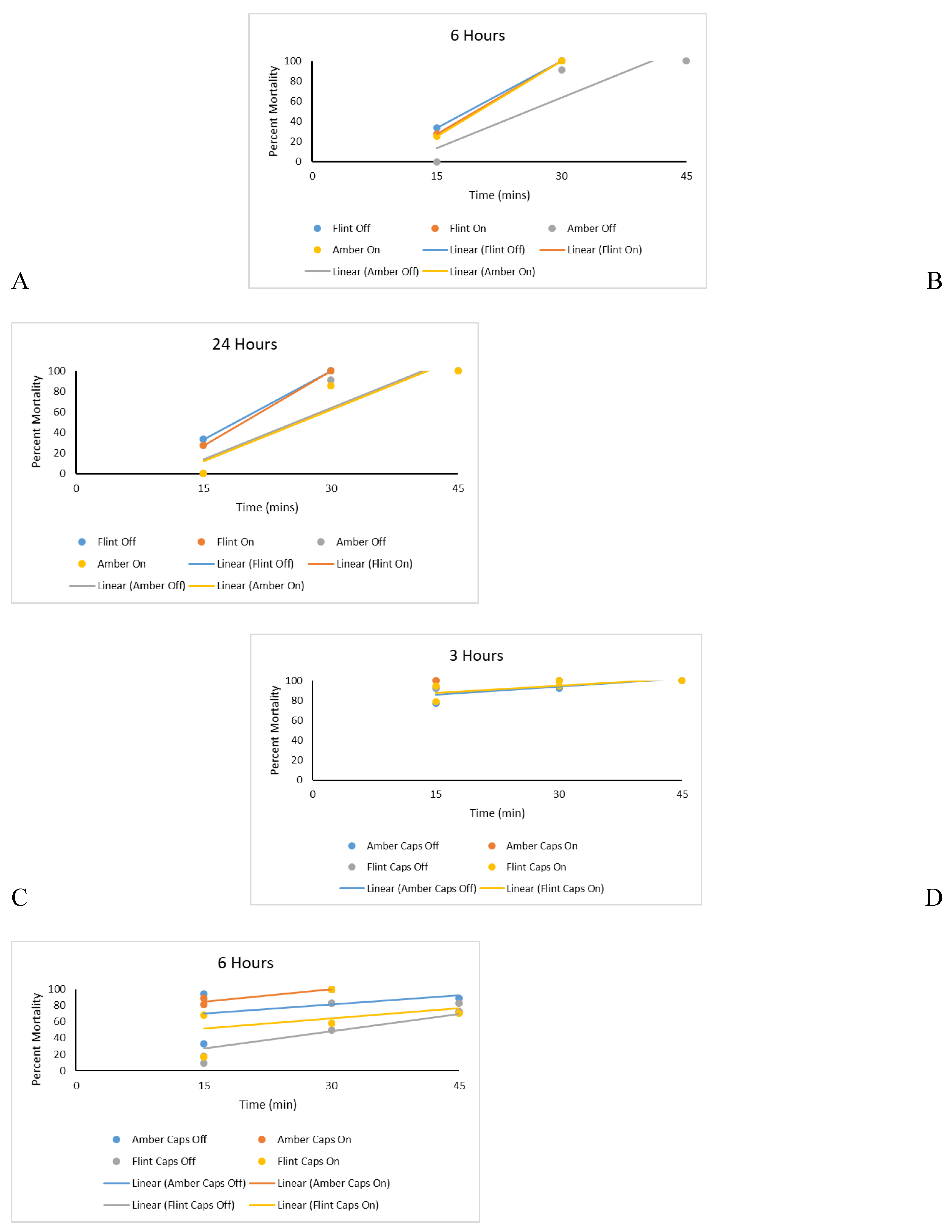
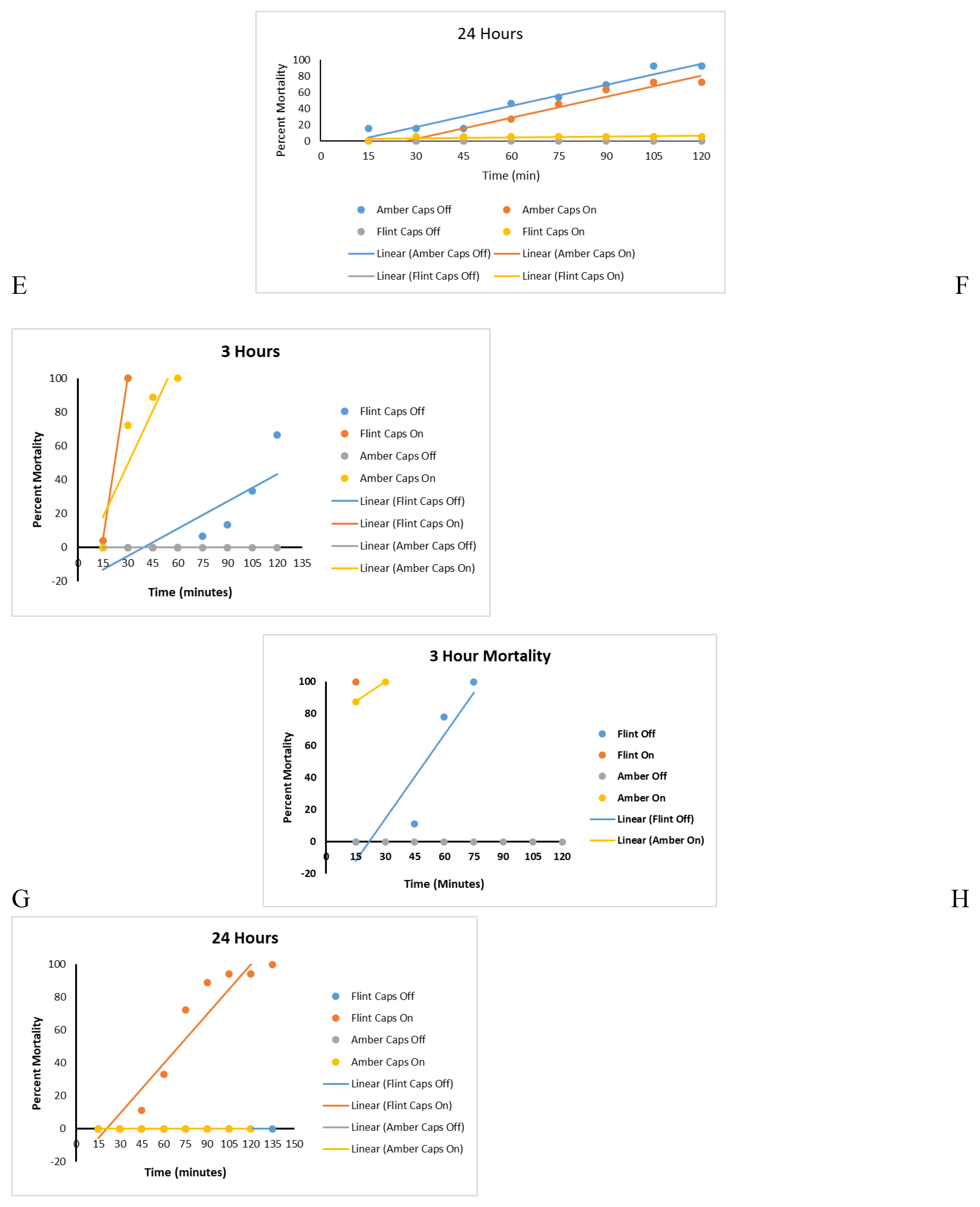
Figure 2.
A, Six-hour mortality, female versus male, capping status; B, Twenty-four-hour mortality, female versus male, capping status; C, Six-hour mortality, female versus male, glass; D, Twenty-four-hour mortality, female versus male, glass.
Figure 2.
A, Six-hour mortality, female versus male, capping status; B, Twenty-four-hour mortality, female versus male, capping status; C, Six-hour mortality, female versus male, glass; D, Twenty-four-hour mortality, female versus male, glass.
Disclaimer/Publisher’s Note: The statements, opinions and data contained in all publications are solely those of the individual author(s) and contributor(s) and not of MDPI and/or the editor(s). MDPI and/or the editor(s) disclaim responsibility for any injury to people or property resulting from any ideas, methods, instructions or products referred to in the content. |
© 2026 by the authors. Licensee MDPI, Basel, Switzerland. This article is an open access article distributed under the terms and conditions of the Creative Commons Attribution (CC BY) license (http://creativecommons.org/licenses/by/4.0/).
Copyright: This open access article is published under a Creative Commons CC BY 4.0 license, which permit the free download, distribution, and reuse, provided that the author and preprint are cited in any reuse.