

Submitted:
21 September 2026
Posted:
24 September 2026
You are already at the latest version
Abstract
The efficient recovery of methanol is essential for improving the overall performance and economic viability of integrated carbon dioxide utilization processes. This study presents the process simulation, separation performance and techno-economic assessment of a methanol recovery section within an integrated CO2/CH4 co-valorization process for dimethyl ether production using ChemCAD. A rigorous equilibrium-based distillation model was developed following preliminary shortcut column design to evaluate the recovery of methanol from the methanol-rich stream obtained after dimethyl ether separation. The separation train consisted of flash separation followed by rigorous staged distillation, with operating conditions selected to maximize methanol recovery while maintaining stable column operation. The developed model achieved a methanol recovery of 98.39%, producing 420.73 kg h⁻¹ of methanol in the distillate while effectively rejecting water to the bottoms stream. The selected operating conditions required a reboiler duty of 900.86 MJ h⁻¹ and a condenser duty of 1050.86 MJ h⁻¹, corresponding to a specific energy consumption of 4.64 MJ kg⁻¹ of recovered methanol. Techno-economic analysis estimated a total installed cost of US$312,818, with the distillation column accounting for the largest share of the capital investment. The annual utility cost was estimated at US$118,164, with steam representing more than 90% of the operating expenditure, identifying thermal energy consumption as the principal target for future process optimization. The results demonstrate that the proposed methanol recovery section provides an efficient and economically attractive purification strategy for integrated CO₂ utilization processes while providing a practical basis for future process intensification and industrial scale-up.
Keywords:
methanol recovery
; distillation simulation
; CO2 utilization
; ChemCAD
; NRTL
; separation
; wastewater
; dimethyl ether
; co-valorization
1. Introduction
Methanol is one of the most important platform chemicals in the global chemical industry and continues to play an increasingly significant role in the transition towards sustainable energy systems. It serves as a key feedstock for the production of formaldehyde, acetic acid, methyl tert-butyl ether and numerous oxygenated chemicals, while its application as a hydrogen carrier, synthetic fuel and intermediate for dimethyl ether (DME) production has expanded considerably in recent years. Global methanol production exceeded 100 $31.6 billion as of in 2023, with the overwhelming majority still being manufactured from syngas produced through the reforming of natural gas or coal [1]. Although these production routes have reached a high level of industrial maturity, they remain associated with substantial greenhouse gas emissions, prompting increasing interest in alternative production pathways capable of utilising carbon dioxide as a carbon source [2,3]. Among the emerging carbon utilization technologies, the integrated conversion of carbon dioxide and methane has attracted considerable attention because it simultaneously addresses two major greenhouse gases while generating valuable chemical products. Dry reforming of methane provides an attractive route for converting carbon dioxide and methane into synthesis gas with a favorable carbon monoxide to hydrogen ratio suitable for downstream synthesis processes. The generated synthesis gas can subsequently be converted into methanol over Cu/ZnO/Al2O3 catalysts before undergoing catalytic dehydration to produce dimethyl ether over acidic catalysts such as γ-Al2O3 [4,5]. This integrated reaction pathway offers an attractive approach for carbon utilization because it combines greenhouse gas mitigation with the production of cleaner transportation fuels and valuable chemical intermediates.
Despite significant advances in catalyst development and reactor optimization, downstream separation continues to represent one of the principal contributors to the capital and operating costs of integrated methanol and DME production facilities. The product streams exiting the synthesis reactors are typically complex mixtures of methanol, water, dimethyl ether and unreacted gasses and require multiple separation stages to recover valuable products and maintain process efficiency. Thus the performance of the separation train directly affects the product recovery, energy consumption and the economic viability of the overall process. While considerable research has focused on improving catalyst performance and reactor conversion, comparatively fewer studies have investigated the design and optimization of downstream separation systems as an integral component of CO2 utilization processes [4,5].
Methanol recovery is particularly important because methanol functions both as a valuable chemical product and as a key intermediate in integrated DME production processes. Efficient recovery of unconverted methanol reduces raw material consumption, improves carbon utilization and provides opportunities for recycle or co-product recovery depending on the selected process configuration. Although the methanol and water system does not form an azeotrope and is therefore regarded as a relatively straightforward binary separation, industrial methanol recovery remains energy intensive because large liquid flow rates, significant latent heat requirements and stringent product specifications impose considerable demands on the distillation system [6,7]. The selection of operating pressure, reflux ratio, feed stage location and the number of theoretical stages therefore have a pronounced effect on separation efficiency, utility consumption and process economics. Rigorous distillation modelling has become an indispensable tool for evaluating such separation systems. Commercial process simulators enable stage-by-stage solution of multicomponent distillation columns using rigorous vapor–liquid equilibrium calculations, providing reliable predictions of component distribution, thermal duties and column performance before industrial implementation. Previous investigations have demonstrated the successful application of rigorous distillation models for methanol purification in integrated fuel synthesis processes. Shen et al. [8] reviewed contemporary methanol distillation configurations and optimisation strategies, highlighting the importance of separation configuration and energy demand, while Yousaf et al. [9] demonstrated that flowsheet modification and process integration can improve the economics of CO₂-to-methanol systems. Similarly, Sollai et al. [10] incorporated methanol distillation into a simulated CO₂/H₂ production system and evaluated its techno-economic performance. However, these studies consider methanol separation within broader methanol production systems rather than as a dedicated recovery subsystem in an integrated CO₂/CH₄ co-valorisation pathway.
The present study forms the second part of a two-paper investigation into the integrated production of dimethyl ether from carbon dioxide and methane. The companion paper established the reaction pathway and evaluated the production and purification of dimethyl ether using a sequence of kinetic reactors, flash separation, compression, refrigeration and rigorous distillation. This work is centered on the MeOH recovery section solely based on the process configuration. The process performance will be evaluated using rigorous process simulation in ChemCAD. Special attention is paid to the design and operation of the methanol recovery column, the distribution of methanol and water in the separation train, the effect of the chosen operating conditions on product recovery and the relevant engineering implications for process integration. In this paper, the recovery process is covered in detail owing to its role in the overall performance of integrated CO2 and CH4 utilization technologies.
2. Methodology
2.1. Overall Process Context
The methanol recovery process (Figure 1) studied in this work is a component of an integrated carbon utilization pathway toward the production of dimethyl ether (DME) from carbon dioxide and methane. The whole process has been developed in ChemCAD Version 8 and is composed of three sequential catalytic reactors and a downstream purification section consisting of flash separation, gas compression, refrigeration and rigorous distillation. The overall process configuration was determined in the companion paper that dealt with DME production and purification, while the performance of the methanol recovery section is studied in detail in the current study. The process is dry methane reforming (DRM) in which CO2 and CH4 are converted to syngas, usually by catalytic reforming over a Ni/Al2O3 catalyst. The resulting gas is mainly H2 and CO2, which is compressed to the desired operating pressure and sent to the methanol synthesis reactor. A kinetic model developed by Vanden Bussche and Froment is used for methanol (MeOH or CH3OH) production based on the simultaneous occurrence of the hydrogenation of CO2, the reverse water gas shift (RWGS) and the hydrogenation of CO reactions. The untreated methanol stream is passed through the third catalytic reactor containing γ-Al2O3 catalyst. In this reactor methanol is dehydrated to dimethyl ether and water according to kinetic model of Bercic and Levec.
After the reactions are completed the product output is DME, MeOH, H2O and unreacted gaseous components like residual H2, CO, CO2 and CH4. A downstream separation step was used to purify the product and recover valuable DME and MeOH as well as removing non-condensable gases. The reactor discharge was first cooled and then passed through two flash separation stages. The main flash separator (Flash 1 V-101) removed a significant amount of the gaseous elements from the process stream, and the secondary flash (Flash 2 V-102) separator concentrated the condensable oxygenated compounds yielding a liquid stream rich in DME and MeOH for the downstream distillation. This staged flash separation decreased the vapor loading entering the distillation section and improved the efficiency of the purification units. The liquid from the second flash separator was introduced into the first distillation column. The overhead product was DME and CH3OH and water were concentrated in the column bottoms. This column gave a methanol rich bottoms stream which was used as feed to the methanol recovery column studied in this work. The distillate product from the second distillation column was methanol, while water was withdrawn from the bottom of the column, thus completing the purification sequence. This configuration allows the generation of two useful products from a single reaction pathway and provides an efficient separation method for the oxygenated product mixture generated from the co-valorization of CO2 and CH4.
2.2. Thermodynamic Model and Software
The operation was operated under steady-state conditions integrating the Non-Random Two-Liquid (NRTL) activity coefficient model with the Latent Heat Enthalpy method to illuminate phase equilibrium and thermodynamic attributes throughout the simulation. The NRTL model was adopted given its ability to satisfactorily predict the non-ideal vapor-liquid equilibrium behavior of highly polar systems with methanol (MeOH), water (H2O) and dimethyl ether (DME). It also characterises with certainty the hydrocarbon and permanent gas components related to the reaction and separation units. The thermodynamic system has been widely used in the simulation of production processes of oxygenated fuels and shown a good agreement with empirical vapor-liquid equilibrium data of MeOH/H2O and DME containing mixtures [11,12]. To guarantee thermodynamic consistency and reliable prediction of component distributions, phase behavior and energy requirements during the integrated process, the chosen property package was uniformly applied to all unit operation stages.
2.3. Reactor Configuration
In the integrated system, the reaction section formed of three sequential catalytic plug flow reactors (PFRs), each of which represented a distinct stage in the conversion of CO2 and CH4 to DME. All reactors were simulated by the kinetic reactor (KREA) module. A kinetic PFR was chosen over an equilibrium reactor because the dry reforming (DRM), CH3OH synthesis and dehydration reactions are driven by intrinsic catalyst kinetics, residence time and operating conditions, not just thermodynamic equilibrium. Accordingly, the kinetic approach presents a more accurate representation of industrial fixed-bed cata-lytic reactors and permits direct implementation of experimentally substantiated kinetic models. The initial reactor (R-101-DRM) modeled the dry reforming of CH4, which uses a Ni/Al2O₃ catalyst, and described through an Arrhenius-derived kinetic model to produce syngas. The syngas obtained was then transformed into methanol (R-102-MeOH) using the Vanden Bussche and Froment (VBF) kinetic model which con-siders hydrogenation RWGS reactions [13]. Table 1 shows the integrated stream data during the separation process. Afterwards, MeOH dehydration to DME in reactor R-103-DME was modeled over a γ- Al2O3 catalyst by means of the Bercic and Levec Langmuir-Hinshelwood kinetic expression [14,15]. The kinetic equations and the related reaction parameters are reported in Equations 1–4.
where is the intrinsic reaction rate, denotes the Arrhenius rate constant, represents component fugacity, is the approach-to-equilibrium factor, and Den is the adsorption denominator accounting for competitive adsorption of reactants and products on the catalyst surface.
The feed composition of 70.26 wt.% MeOH (57.06 mol%) and 29.73 wt.% H2O was significantly higher than the equimolar mixture. This feed chemistry is proportional to the bubble point of the methanol-water binary of about 72°C at 1 atm [6]. The feed comes in at 145.9°C, implying the feed is quite superheated relative to its bubble point at 1 atm after the pressure drops from 10 atm to 1 atm, and thus suggests a significantly vapor feed quality (q < 0 in McCabe Thiele notation).
2.4. Distillation Model Development
The downstream purification phase was formulated to retrieve high-purity DME and CH3OH from the reactor effluent through detailed stage-by-stage distillation, as described in Table 2. The initial design of both distillation columns was carried out by the shortcut distillation module in which the Fenske-Underwood-Gilliland (FUG) method is employed to calculate the minimum number of theoretical stages, minimum reflux ratio, practical operating reflux ratio and the corresponding duties for the condenser and reboiler before a more rigorous simulation. The design parameters were later incorporated into the simultaneous correction distillation system (SCDS) model, where meticulous tray-by-tray computations were executed by concurrently resolving the interconnected MESH equations, encompassing component mass balances, vapor-liquid equilibrium relationships, summation equations, and energy balances for each theoretical stage [16]. The feed stage location, operating pressure and reflux ratio were further refined through iterative simulation until stable convergence and the desired product specifications were achieved. This shortcut-rigorous distillation combination is widely used in industrial process design as it provides reliable initial estimates and improves convergence and computational efficiency for rigorous column simulation [17].
3. Results and Discussion
3.1. Methanol Recovery
The performance of the methanol recovery column (T102) was evaluated using the converged ChemCAD simulation results presented in Table 3. The column received the methanol-water stream from the first DME distillation column (T101) and operated at atmospheric pressure to recover methanol in the overhead while concentrating water in the bottoms. The simulation converged to stable operating conditions, producing an overhead stream of 422.40 kg h-1 at 64.53 °C and a bottoms stream of 186.20 kg h-1 at 96.50 °C. These temperatures agree with the relative volatility of the MeOH-H2O system at atmospheric pressure, where MeOH vaporises preferentially, while H2O remains in the liquid phase [18]. The overhead product contained 420.73 kg h-1 of MeOH and only 1.64 kg h-1 of H2O, which indicates that the column was successful in enriching the more volatile component. Conversley, the bottoms stream was primarily composed of water, with only a small amount of methanol remaining. This distribution indicates that the selected operating pressure and reflux conditions gave adequate driving force for phase separation without evidence of flooding or poor fractionation. In this binary methanol-water system, unlike azeotropic systems, the vapor-liquid equilibrium behavior is such that separation can be achieved by conventional distillation. The observed distribution of the component is consistent with the expected increase in MeOH concentration in the vapor phase as equilibrium is attained across the theoretical stages. Low methanol concentration in the bottoms indicates that most of the recoverable alcohol was transferred successfully to the distillate, while water accumulated in the reboiler as desired.
Table 4 summarizes the distribution of the major components across the methanol recovery column. The feed consisted primarily of methanol and water, with only trace quantities of dimethyl ether remaining after the upstream separation units. This simplified binary mixture allowed the distillation column to operate under favorable vapor-liquid equilibrium conditions, thereby promoting efficient separation of methanol from water. The results demonstrate that the proposed recovery column achieved a methanol recovery of 98.39%, with 420.73 kg h-1 of 427.62 kg h-1 entering the column recovered in the distillate (Figure 2). Only 6.90 kg h-1 of methanol remained in the bottoms stream, corresponding to a loss of 1.61%. This high recovery confirms that the selected column configuration and operating conditions were sufficient to minimize product losses while maintaining effective separation. In contrast, water exhibited the opposite behavior, with 99.09% reporting to the bottoms stream and only 1.64 kg h-1 appearing in the distillate. The low level of water carryover demonstrates good separation efficiency and indicates that the distillate consisted predominantly of methanol with only minor water contamination.
The complete recovery of the residual dimethyl ether in the overhead stream further confirms that the upstream separation sequence effectively removed light components before methanol purification (Figure 3). Consequently, the separation duty of MeOH distillation was governed almost entirely by the methanol-water system, reducing process complexity and improving column stability. A recent process simulation of CO₂-to-DME production similarly employed sequential distillation, with DME recovered in the first-column distillate and methanol and water directed to a subsequent methanol-recovery column [19]. The observed component distribution is consistent with the higher volatility of methanol relative to water at atmospheric pressure, which promotes preferential enrichment of methanol in the overhead product while concentrating water in the bottoms stream [20].
3.2. Techno-Economic Assessment
3.2.1. Capital Investment Analysis
Table 4 presents the purchase and installed costs of the major equipment comprising the methanol recovery section. The total purchase and installed costs were estimated as US$114,086 and US$312,818, respectively. The installed cost contributions of the distillation column, condenser and reboiler were determined using Equations 5 to 7. The distillation column accounted for 82.35% of the total installed cost, while the condenser and reboiler contributed 10.30% and 7.35%, respectively. The difference between the purchase and installed costs reflects the inclusion of installation, piping, instrumentation and structural requirements considered during the preliminary design stage [8]. The results in Table 4 indicate that the distillation column is the dominant capital investment within the methanol recovery train owing to its large shell dimensions, tray internals and fabrication requirements. Similar trends have been reported for conventional methanol purification and distillation systems, where the column represents the largest share of the separation cost because of its size and construction complexity. In contrast, the condenser and reboiler contribute a relatively small fraction of the total installed cost despite their essential role in maintaining vapour-liquid equilibrium. This cost distribution suggests that opportunities for improving the economics of the recovery section are more likely to arise from reducing utility consumption than from further reductions in equipment capital cost, which is examined in the following section.
Where is the installed cost contribution of equipment i (%), is the installed cost of equipment i in US dollars ($), is the total installed cost of the methanol recovery train (US$).
3.2.2. Energy Consumption and Operating Economics
Table 5 summarizes the energy requirements and operating economics of the methanol recovery section. The specific energy consumption, steam requirement, cooling water demand and annual utility cost were determined using Equations 8 to 11. The distillation column required a reboiler duty of 900.864 MJ h-1 and a condenser duty of 1050.860 MJ h⁻1, resulting in a total thermal energy requirement of approximately 1951.7 MJ h-1. The specific energy consumption was calculated as 4.64 MJ kg-1 of methanol based on the recovered methanol production rate of 420.728 kg h-1. The estimated steam consumption was 429 kg h-1, which is equivalent to an annual demand of approximately 3432 t/year. The condenser needed 25.14 m3 h-1 of cooling water, equivalent to 201,120 m3/year. These values indicate that the thermal utilities for the reboiler and condenser are the most important operating requirements of the methanol recovery process as expected for conventional binary methanol-water distillation systems. The total annual utility cost was estimated at US$118,164 year-1, with annual steam and cooling water costs of US$108,108 year-1 and US$10,056 year-1, respectively (Table 5). The steam accounts for 91.5% of the total utility cost and the cooling water is only 8.5%, which shows that the heating demand is the major operating cost of the recovery train. This distribution is consistent with published techno-economic studies on methanol purification. The reboiler energy is typically the largest component of the operating costs, as continuous vaporization of the liquid mixture is needed to maintain the vapor-liquid equilibrium throughout the column. For this reason, the economic benefit of reducing the demand for cooling water alone would be significantly lower than that of reducing the demand for steam through heat integration, waste heat recovery or improved column design [21]. The calculated utility cost corresponds to approximately US$0.035 kg⁻1 of methanol recovered, indicating that the separation stage imposes a relatively modest operating cost compared with the market value of methanol. Furthermore, the selected reflux ratio of 1.25 provides a favorable compromise between energy consumption and separation performance.
where is reboiler duty (MJ h-1), is condenser duty (MJ h-1), is the latent heat of steam (kg h-1), is the annual steam cost, is the annual cooling water cost, and is methanol recovered (kg h-1).
Figure 4 illustrates the effect of reflux ratio on methanol recovery. The reflux ratio increase from 1.00 to 1.25 significantly improved methanol recovery from 9.997 to 13.131 kmol/h. Additional increases to 1.50, 1.75 and 2.00 resulted in only minor improvements, the recovered methanol reaching a plateau at about 13.34 kmol/h. This behavior illustrates the diminishing returns of running at high reflux ratios, where the increased internal circulation of liquid increases utility demand with little gain in product recovery. Therefore, the selected operating reflux ratio of 1.25 is a practical compromise between the separation performance and operating cost, establishing, an economically favorable operating condition for the methanol recovery train.
3.2.3. Economic Performance and Process Optimization
The techno-economic evaluation shows that the proposed methanol recovery section offers an efficient compromise between separation performance, capital investment and operating expenditure. As shown in the previous sections, the distillation column recovered 98.39% of the methanol in the feed with a relatively low utility cost of US$0.035 kg-1 of recovered methanol. These results demonstrate that the selected operating conditions are a technically robust and economically feasible solution for the methanol purification in the integrated process of co-valorisation of CO2 and CH4. The process operates in an economic window with a good balance between separation efficiency and operating costs, avoiding the need for high capital investment or high utility consumption for high product recovery.
The evaluation shows that the long-term performance of the recovery section is mainly governed by thermal energy needs instead of equipment investment. The installed cost is the first cost involved in the building of the separation unit, while the operating costs last for the lifetime of the plant and have an increasing effect on the overall economics of the process. As shown in Figure 5, the steam generation accounts for about 91.5% of the annual utility cost while cooling water only contributes 8.5%. This cost distribution clearly shows the reboiler as the main economic driver of the recovery section. The effect of any reduction in reboiler duty on lifecycle operating costs would be much larger than equivalent reductions in cooling utility consumption. The analysis also confirms the economic justification of the selected operating conditions. As shown in Figure 4 above, increasing the reflux ratio above 1.25 only marginally improved methanol recovery, while increasing the internal liquid circulation and the associated thermal energy requirements. This is consistent with the classical diminishing-return relationship in distillation systems where increasing reflux induces higher reboiler and condenser duties without proportional improvements in separation. Thus, a reflux ratio of 1.25 avoids unnecessary utility expenditure while ensuring excellent methanol recovery, being the most economically attractive operating point among the conditions investigated.
These findings also amplify the need for optimization focusing on reductions in steam consumption rather than modifications in equipment sizing. As much of the annual operating expenditure is related to the reboiler, process heat integration and optimization of operating pressure have the highest potential to improve the overall economic performance. These methods are well known in industrial distillation systems, as they directly address the largest recurring cost of operation, while maintaining separation efficiency and product quality. Conversely, focusing solely on re-reduction of cooling water demand would have a relatively modest economic benefit, as it is a small contribution to the overall utility cost.
Overall, the evaluation confirms that the proposed methanol recovery section is a technically sound and economically attractive design for industrial application. The selected distillation configuration provides a good compromise between economic feasibility and process performance, as evidenced by its relatively low utility cost, moderate installed cost and high methanol recovery. The analysis indicates that the use of thermal energy is the main opportunity for further improvement and gives a clear direction for future research on process intensification to improve the market competitiveness of integrated CO2 utilization technologies.
3.3. Process Optimization Perspectives
The separation sequence developed in this study demonstrated that high methanol recovery can be achieved using a relatively simple two-stage purification strategy consisting of flash separation followed by rigorous distillation. Although the current process configuration produced excellent separation performance, the simulation also identified several opportunities for further finetuning that could enhance overall process efficiency without fundamentally altering the process configuration. These opportunities are directed towards improving resource utilization, increasing operational flexibility and reducing the overall energy intensity of the recovery section. One area requiring further investigation is the optimization of column operating pressure and feed conditions. In the present work, the operating conditions were selected to achieve stable convergence and high methanol recovery. However, pressure has a direct influence on vapor-liquid equilibrium and relative volatility, both of which determine the energy required for separation. A systematic evaluation of pressure together with feed temperature could identify operating conditions that reduce both condenser and reboiler duties while maintaining product purity. Such optimization has been shown to improve distillation performance by reducing thermal requirements without compromising separation efficiency.
The composition of the feed entering the recovery column also presents an opportunity for further process improvement. The second flash separator successfully concentrated methanol while removing a significant proportion of the lighter components before distillation, thereby reducing the separation burden imposed on the column. Nevertheless, optimization of the flash operating temperature and pressure may further improve the distribution of methanol between the vapor and liquid phases, reducing the quantity of impurities entering the distillation section. These enhancements have the potential to reduce the thermal load necessary for downstream purification and improve separation efficiency. The bottoms product is another opportunity for improving process sustainability. This stream was predominantly water but contained a relatively small amount of dissolved methanol. Product losses can be reduced even further by the recovery of the residual methanol by a secondary separation or integration with an existing solvent recovery unit. This also produces a water stream which can be reused in the process. Reuse of treated process water for cooling or other utility services would reduce freshwater demand and contribute to improved resource efficiency, particularly in large-scale facilities for which water management has an important influence on operating costs.
Advanced methods for the simultaneous evaluation of process performance and economic objectives should also be considered for future development of the process. Optimization incorporating methanol recovery, energy consumption and annual operating cost in a multi-objective framework would provide a more rigorous basis for identifying optimum operating conditions than optimization based on a single performance indicator. The ChemCAD model together with mathematical algorithms or machine learning surrogate models would significantly reduce computation effort while enabling rapid evaluation of a wider operating envelope. This approach would provide valuable guidance for future scale-up studies and support the commercial deployment of integrated CO2 utilization technologies by identifying operating conditions that maximize process performance while minimizing long-term operating costs. [22,23].
4. Conclusions
In the present study, the process simulation, separation performance and techno-economic assessment of the MeOH recovery section of an integrated CO2/CH4 co-valorisation process using ChemCAD were presented. A rigorous staged distillation model was developed to recover MeOH from the methanol-rich stream generated after DME separation, to assess the technical and economic feasibility of the recovery train. The simulation showed that the proposed separation method was able to recover methanol from the binary methanol-water mixture, with a recovery of 98.39% and a distillate containing 420.73 kg h-1 of methanol and only 1.64 kg h-1 of H2O. The bottoms stream was essentially water, confirming good separation and small losses of methanol. The initial column design was based on the use of shortcut distillation, which was then refined with rigorous SCDS simulation providing stable convergence and a practical basis for the evaluation of process performance and equipment requirements. The techno-economic assessment also showed that the proposed recovery section can achieve high separation efficiency with a moderate capital investment of 312,818 US$ and a utility cost of about 0.035 kg−1 of recovered methanol. The results of the analysis showed that thermal energy is the major operating cost, where the steam provided to the reboiler represents above 90% of the annual utility cost. The analysis of the reflux ratio also showed that increasing the reflux ratio past the selected operating condition gave only a small increase in the methanol recovery, which further demonstrated the significance of balancing the separation performance with the long-term operating costs. The findings indicate that the suggested methanol recovery segment offers a viable and cost-effective purification approach for integrated CO2 utilisation systems. The convergence of high methanol recovery, moderate energy consumption and favorable economic performance provides a sound basis for industrial implementation while identifying thermal energy integration as the principal opportunity for future process intensification and improved commercial competitiveness.
Author Contributions
Conceptualization, M.M., T.S., I.K., and R.M.; methodology, M.M., T.S., I.K., and R.M.; software, M.M., T.S., I.K., and R.M.; formal analysis, M.M., T.S., I.K., and R.M investigation, M.M., T.S., I.K., and R.M.; data curation, M.M., T.S., I.K., and R.M.; writing—original draft preparation, M.M., I.K., and R.M.; writing—review and editing, M.M., T.S., I.K., and R.M.; supervision, T.S.; project administration, T.S. All authors have read and agreed to the published version of the manuscript.
Funding
This study did not receive any funding.
Data Availability Statement
The data presented in this study are available from the corresponding author upon reasonable request.
Acknowledgments
During the preparation of this manuscript, the author(s) used ChatGPT 3, OpenAI for the purposes of language editing and structural organisation of paragraphs. The authors have reviewed and edited the output and take full responsibility for the content of this publication.
Conflicts of Interest
The authors declare no conflict of interest.
References
- Hosseinpour, A.; Shayesteh, K.; Es’, H.P. A Review of the Importance, Production, Economics, and Future of Methanol in Iran and the World. Chem. Res. Technol. 2025, 2, 1–11. [Google Scholar] [CrossRef]
- Pak, K.S.; Hong, Y.S. Potential Environmental Impact Evaluation of the Methanol Synthesis Process by Gas-to-Methanol Technology. ACS Omega 2025, 10, 13228–13235. [Google Scholar] [CrossRef]
- Yadav, P.; Athanassiadis, D.; Yacout, D.M.M.; Tysklind, M.; Upadhyayula, V.K.K. Environmental Impact and Environmental Cost Assessment of Methanol Production from Wood Biomass. Environ. Pollut. 2020, 265, 114990. [Google Scholar] [CrossRef]
- Tang, X.; Wu, Y.; Fang, Z.; Dong, X.; Du, Z.; Deng, B.; Sun, C.; Zhou, F.; Qiao, X.; Li, X. Syntheses, Catalytic Performances and DFT Investigations: A Recent Review of Copper-Based Catalysts of Methanol Steam Reforming for Hydrogen Production. Energy 2024, 295, 131091. [Google Scholar] [CrossRef]
- Beck, A.; Newton, M.A.; van de Water, L.G.A.; van Bokhoven, J.A. The Enigma of Methanol Synthesis by Cu/ZnO/Al2O3-Based Catalysts. Chem. Rev. 2024, 124, 4543–4678. [Google Scholar] [CrossRef]
- Kolmeijer, H.; Nabera, A.; Martín, A.J.; Guillén-Gosálbez, G.; Pérez-Ramírez, J. A Feasible Methanol Economy for a Green Future. Green Chem. 2026, 28, 174–185. [Google Scholar] [CrossRef]
- Yang, N.; Kang, F.; Zhang, K.; Zhou, Y.; Lin, W.-F. A Strategy for CO2 Capture and Utilization towards Methanol Production at Industrial Scale: An Integrated Highly Efficient Process Based on Multi-Criteria Assessment. Energy Convers. Manag. 2023, 293, 117516. [Google Scholar] [CrossRef]
- Shen, Z.; Qu, Q.; Chen, M.; Lyu, H.; Sun, J. Advancements in Methanol Distillation System: A Comprehensive Overview. Chem. Eng. Res. Des. 2023, 199, 130–151. [Google Scholar] [CrossRef]
- Yousaf, M.; Mahmood, A.; Elkamel, A.; Rizwan, M.; Zaman, M. Techno-Economic Analysis of Integrated Hydrogen and Methanol Production Process by CO2 Hydrogenation. Int. J. Greenh. Gas. Control 2022, 115, 103615. [Google Scholar] [CrossRef]
- Sollai, S.; Porcu, A.; Tola, V.; Ferrara, F.; Pettinau, A. Renewable Methanol Production from Green Hydrogen and Captured CO2: A Techno-Economic Assessment. J. CO2 Util. 2023, 68, 102345. [Google Scholar] [CrossRef]
- Song, M.; Liu, Q.; Zhao, F.; Liu, S.; Lei, Z. Experimental and Simulation Studies on the Simultaneous Removal of Methanol and Water from Dimethyl Ether Crude Gas by Choline-Based Deep Eutectic Solvents. Fuel 2024, 371, 131882. [Google Scholar] [CrossRef]
- Putri, Z.P.; Lusiani, C.E.; Zhishan, Z. STUDY ON DOUBLE-EFFECT DISTILLATION PROCESS FOR SEPARATING METHANOL-WATER USING ASPEN PLUS V10. DISTILAT J. Teknol. Separasi 2022, 8, 418–430. [Google Scholar] [CrossRef]
- Zaki, F.F.; Alifio, A.; Irfan, M.N.; Boas, J.; Amrullah, M.N.; Ardan, H.F. Enhancing Green Methanol Production via CO2 Hydrogenation: Process Intensification Using Plug Flow Reactor and Vanden Bussche-Froment. J. Chem. Eng. Res. Prog. 2026, 3, 66–71. [Google Scholar] [CrossRef]
- Al-Rabiah, A.A.; Alshehri, A.S.; Ibn Idriss, A.; Abdelaziz, O.Y. Comparative Kinetic Analysis and Process Optimization for the Production of Dimethyl Ether via Methanol Dehydration over a γ-Alumina Catalyst. Chem. Eng. Technol. 2022, 45, 319–328. [Google Scholar] [CrossRef]
- Zhokh, A.; Trypolskyi, A.; Gritsenko, V.; Serebrii, T.; Zhang, L.; Tang, J.; Strizhak, P. Intrinsic Kinetics of the Methanol Dehydration to Dimethyl Ether over Laboratory and Commercial γ-Alumina: A Comparative Study. Asia-Pac. J. Chem. Eng. 2022, 17, e2722. [Google Scholar] [CrossRef]
- Li, Q.; Finn, A.J.; Doyle, S.J.; Smith, R.; Kiss, A.A. Synthesis and Optimization of Energy Integrated Advanced Distillation Sequences. Sep. Purif. Technol. 2023, 315, 123717. [Google Scholar] [CrossRef]
- Li, N.; Zhao, L.; Li, D.; Sun, H.; Zhang, D.; Liu, G. A Simultaneous Design and Optimization Framework for the Reaction and Distillation Sections of Methanol to Olefins Process. Processes 2023, 11, 58. [Google Scholar] [CrossRef]
- Cui, C.; Zhang, X.; Qi, M.; Lyu, H.; Sun, J.; Kiss, A.A. Fully Electrified Heat Pump Assisted Distillation Process by Flash Vapour Circulation. Chem. Eng. Res. Des. 2024, 206, 280–284. [Google Scholar] [CrossRef]
- Essam, M.; Gad, F.; Abouseada, N.; Soliman, M.A.; Aboelela, D. Process Simulation for Converting CO2 Emissions from the Cement Industry to Dimethyl Ether. Arab J. Sci. Eng. 2025, 50, 4065–4076. [Google Scholar] [CrossRef]
- Li, Q.; Somoza-Tornos, A.; Kiss, A.A. A Systematic Selection and Decision Matrix for Energy-Efficient Intensified Distillation Technologies. Chem. Product. Process Model. 2025, 20, 293–307. [Google Scholar] [CrossRef]
- Agyekum, E.B.; Okonkwo, P.C.; Rashid, F.L. Research on Biomass Energy and CO2 Conversion to Methanol: A Combination of Conventional and Bibliometric Review Analysis. Carbon Res. 2025, 4, 4. [Google Scholar] [CrossRef]
- Navarro-Jaén, S.; Virginie, M.; Bonin, J.; Robert, M.; Wojcieszak, R.; Khodakov, A.Y. Highlights and Challenges in the Selective Reduction of Carbon Dioxide to Methanol. Nat. Rev. Chem. 2021, 5, 564–579. [Google Scholar] [CrossRef]
- Tang, Z.; Zhang, L.; Wang, L.; Gao, R.; Jun, K.-W.; Kim, S.K.; Zhang, C.; Yang, Y.; Wan, H.; Guan, G. Carbon Negative Methanol Production for CO2 Utilization: Process Design and 4E Analysis. Energy 2024, 313, 134064. [Google Scholar] [CrossRef]
Figure 1.
Flow diagram of methanol recovery.
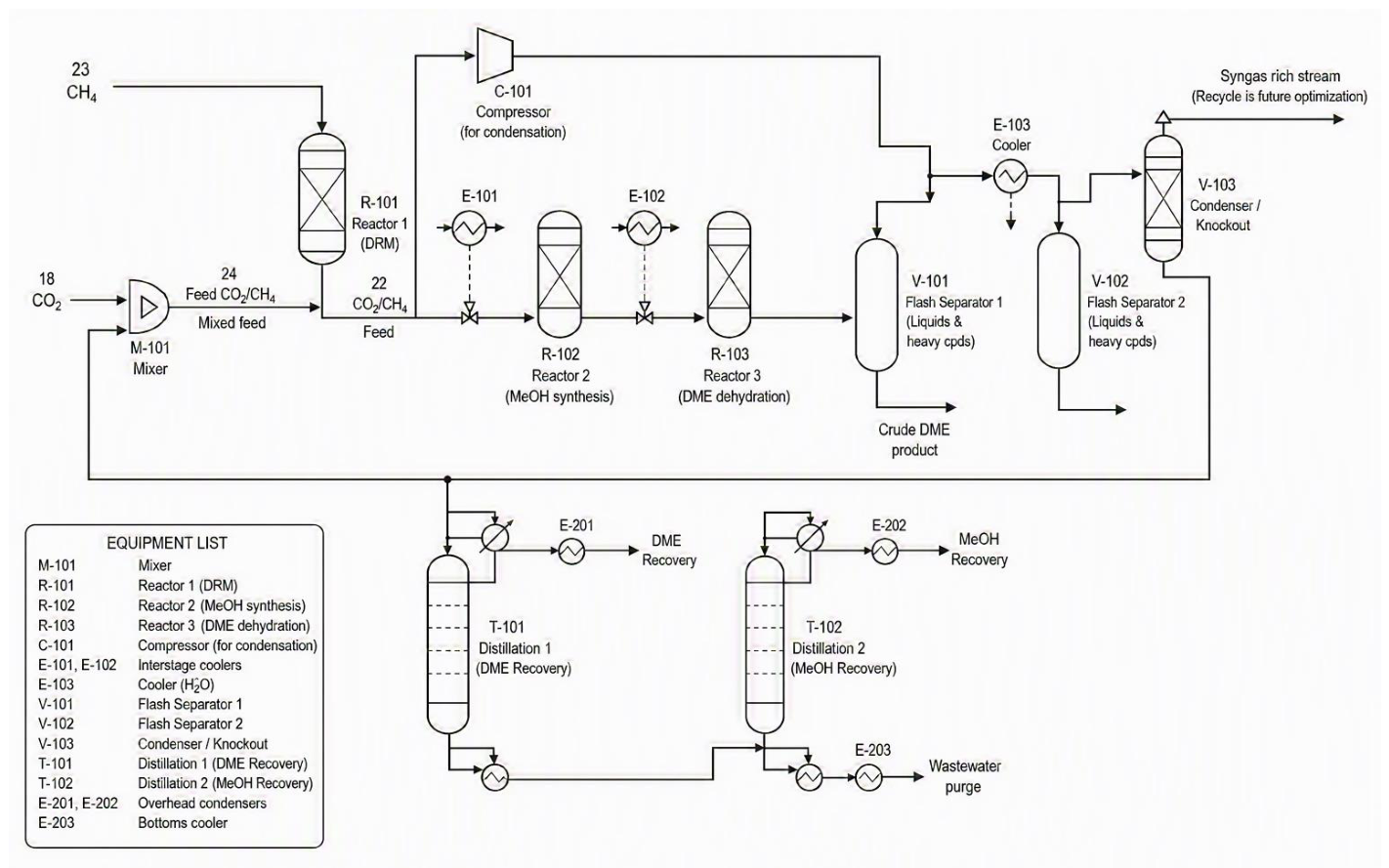
Figure 2.
Mass fraction distribution across feed (Stream 2), overhead methanol product (Stream 7), and wastewater bottoms (Stream 8).
Figure 2.
Mass fraction distribution across feed (Stream 2), overhead methanol product (Stream 7), and wastewater bottoms (Stream 8).
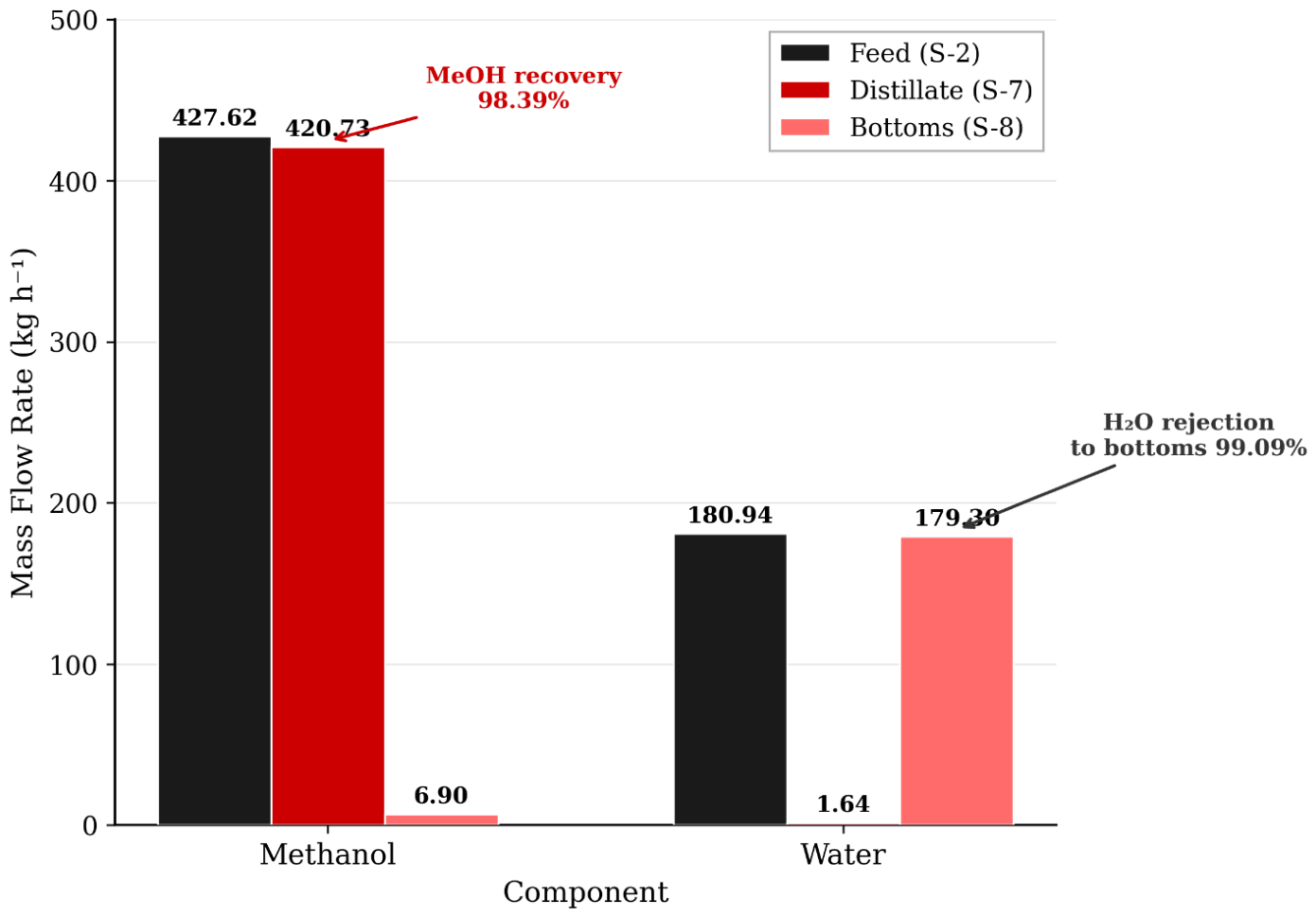
Figure 3.
Estimated operating profiles for methanol recovery column: (a) temperature profile from condenser (Stage 1, 65.3°C) to reboiler (Stage 16, 88.0°C), showing the narrow temperature range typical of the methanol-water system at 1 atm; (b) estimated liquid phase composition profile along the column, with methanol enriching from 57.1 mol% at the feed to 98.39 mol% at the condenser. Profile is estimated from ChemCAD boundary conditions and NRTL VLE data; stage-by-stage outputs not available from the current simulation setup.
Figure 3.
Estimated operating profiles for methanol recovery column: (a) temperature profile from condenser (Stage 1, 65.3°C) to reboiler (Stage 16, 88.0°C), showing the narrow temperature range typical of the methanol-water system at 1 atm; (b) estimated liquid phase composition profile along the column, with methanol enriching from 57.1 mol% at the feed to 98.39 mol% at the condenser. Profile is estimated from ChemCAD boundary conditions and NRTL VLE data; stage-by-stage outputs not available from the current simulation setup.
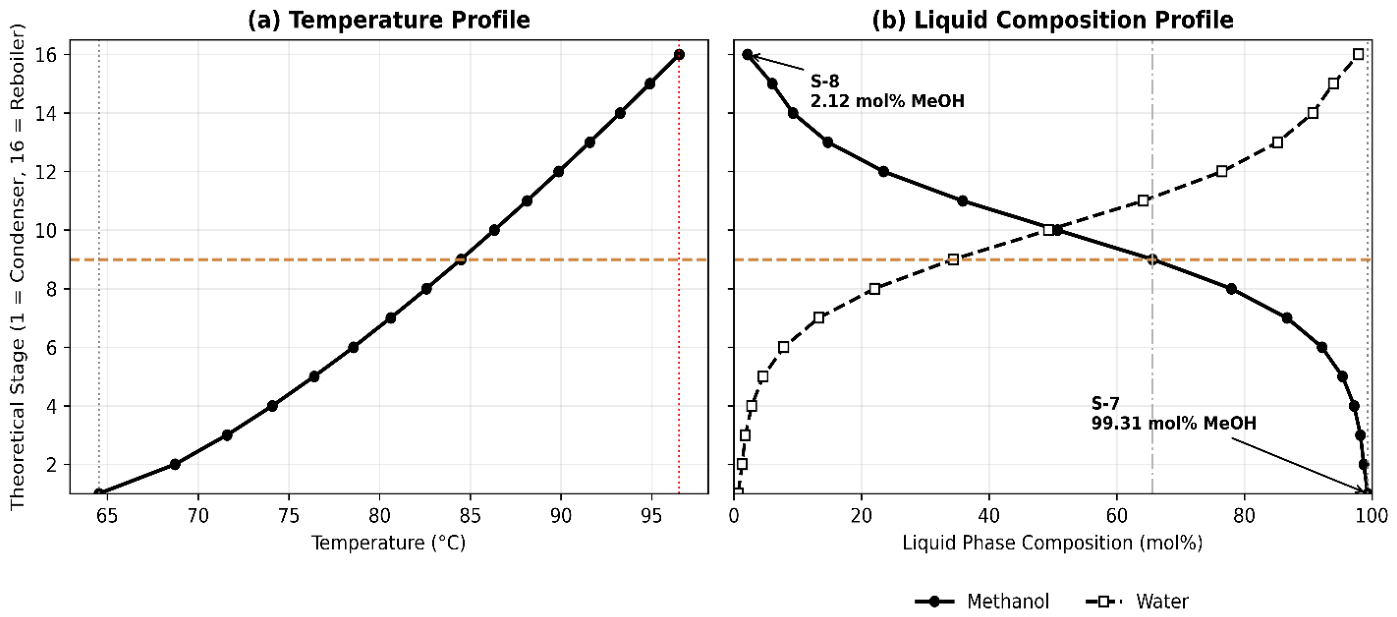
Figure 4.
Effect of reflux ratio on MeOH recovery.
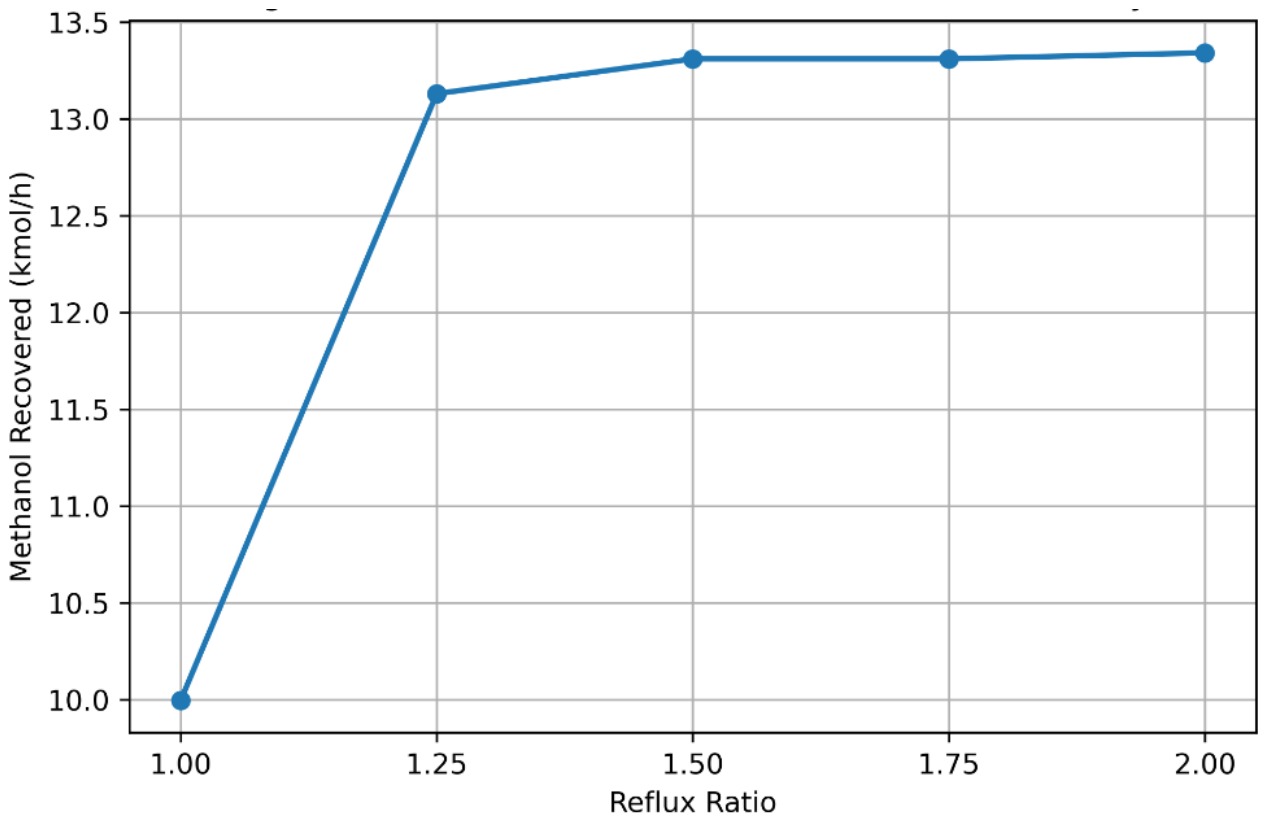
Figure 5.
Annual utility cost distribution (Steam vs Cooling Water).
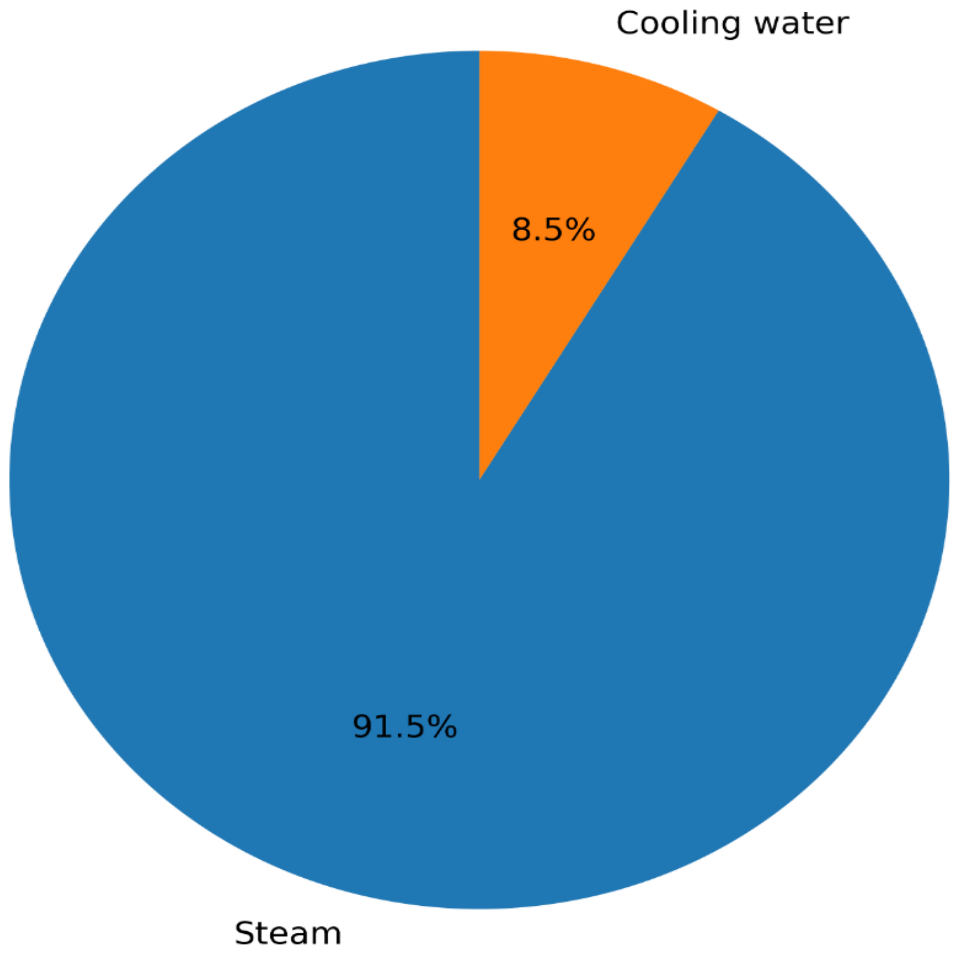

Table 1.
ChemCAD stream data for distillation feed entering distillation column at T = 145.9°C, P = 10 atm, VF = 0 (fully condensed liquid), total enthalpy = −5,808.9 MJ h-1. All component flows in kg h⁻1; mole fractions calculated from ChemCAD mass flows.
Table 1.
ChemCAD stream data for distillation feed entering distillation column at T = 145.9°C, P = 10 atm, VF = 0 (fully condensed liquid), total enthalpy = −5,808.9 MJ h-1. All component flows in kg h⁻1; mole fractions calculated from ChemCAD mass flows.
| Component | Mass flow (kg h⁻1) | kmol h⁻1 |
|---|---|---|
| Methanol | 427.62 | 13.347 |
| Water | 180.94 | 10.044 |
| DME | 0.031 | 0.001 |
| CH₄, CO2, CO, H2 | 0 | 0 |
| TOTAL | 608.60 | 23.392 |
Table 2.
Design specifications and operating conditions of the rigorous SCDS distillation column used for methanol recovery. The column configuration was obtained from shortcut distillation design and subsequently refined using the ChemCAD Simultaneous Correction Distillation System (SCDS) model.
Table 2.
Design specifications and operating conditions of the rigorous SCDS distillation column used for methanol recovery. The column configuration was obtained from shortcut distillation design and subsequently refined using the ChemCAD Simultaneous Correction Distillation System (SCDS) model.
| Parameter | Value | Unit |
|---|---|---|
| Column model | SCDS (Rigorous Equilibrium) | – |
| Simulation method | Equilibrium stage model | – |
| Condenser type | Total condenser | – |
| Number of theoretical stages | 16 | – |
| Feed stage location | 12 | – |
| Operating pressure (column top) | 1.0 | atm |
| Reflux specification | 1.25 | Reflux ratio (R/D) |
| Reboiler specification | 900.864 | MJ/h |
| Distillate flow rate | 12.4233 | kmol/h |
| Reflux flow rate | 15.529 | kmol/h |
| Reflux mass flow rate | 527.996 | Kg/h |
| Top stage temperature | 64.433 | °C |
| Condenser outlet temperature | 64.482 | °C |
| Bottom stage temperature | 89.093 | °C |
| Condenser duty | –1050.86 | MJ/h |
| Reboiler duty (calculated) | 900.864 | MJ/h |
Table 3.
Distillation column mass balance: component split between overhead (Stream 7) and bottoms (Stream 8) products. Percentage split calculated from ChemCAD-reported mass flows. Feed = Stream 2 (Dist 2 Feed, 608.60 kg h-1).
Table 3.
Distillation column mass balance: component split between overhead (Stream 7) and bottoms (Stream 8) products. Percentage split calculated from ChemCAD-reported mass flows. Feed = Stream 2 (Dist 2 Feed, 608.60 kg h-1).
| Component | Feed (kg h⁻1) | Overhead S-7(kg h⁻1) | Bottoms S-8(kg h⁻1) | % Distillate | % Bottoms |
|---|---|---|---|---|---|
| Methanol | 427.62 | 420.73 | 6.90 | 98.39 | 1.61 |
| Water | 180.94 | 1.64 | 179.30 | 0.91 | 99.09 |
| DME | 0.031 | 0.031 | 0.00 | 100.0 | 0.00 |
| TOTAL | 608.60 | 422.4 | 186.20 | 67.39 | 30.60 |
Table 4.
Capital cost summary of the methanol recovery distillation train.
| Equipment | Purchase Cost (US$) | Installed Cost (US$) | Contribution to Installed Cost (%) |
|---|---|---|---|
| Distillation column | 92,006.8 | 257,619.0 | 82.35 |
| Condenser | 12,894.3 | 32,235.8 | 10.30 |
| Reboiler | 9,185.2 | 22,963.1 | 7.35 |
| Total | 114,086.3 | 312,817.9 | 100.00 |
Table 5.
Energy performance and operating economics of the methanol recovery section.
| Parameter | Value |
|---|---|
| Reboiler duty (MJ/h) | 900.864 |
| Condenser duty (MJ/h) | 1050.860 |
| Specific energy consumption (MJ/kg MeOH) | 4.64 |
| Steam consumption (kg/h) | 429 |
| Annual steam consumption (t/year) | 3432 |
| Cooling water demand (m³/h) | 25.14 |
| Annual cooling water demand (m³/year) | 201120 |
| Annual utility cost (US$/year) | 118164 |
| Annual methanol production (t/year) | 3365.8 |
| Utility cost of methanol recovery (US$/kg) | 0.035 |
Disclaimer/Publisher’s Note: The statements, opinions and data contained in all publications are solely those of the individual author(s) and contributor(s) and not of MDPI and/or the editor(s). MDPI and/or the editor(s) disclaim responsibility for any injury to people or property resulting from any ideas, methods, instructions or products referred to in the content. |
© 2026 by the authors. Licensee MDPI, Basel, Switzerland. This article is an open access article distributed under the terms and conditions of the Creative Commons Attribution (CC BY) license (http://creativecommons.org/licenses/by/4.0/).
Copyright: This open access article is published under a Creative Commons CC BY 4.0 license, which permit the free download, distribution, and reuse, provided that the author and preprint are cited in any reuse.