

Submitted:
21 September 2026
Posted:
22 September 2026
You are already at the latest version
Abstract
This study assessed honeybee forage plant diversity, seasonal phenology, and beekeepers’ knowledge of forage resources and flowering calendars in selected zones of Tigray, Ethiopia. A cross-sectional survey using multistage sampling included 378 households from the Southern, Southeastern, and Eastern Zones. Data were collected through questionnaires, key informant interviews, and focus group discussions. Respondents identified 82 honeybee forage species belonging to 22 families, including 37 herbaceous species, 27 trees, and 18 shrubs, with Fabaceae, Asteraceae, and Lamiaceae among the dominant families. Forage resources showed pronounced seasonal variation in flowering richness, growth form complementarity, and nectar and pollen availability. Flowering richness ranged from 10 species in February to 38 in September. The forage gap index was highest in February (0.737), January (0.632), and March (0.553), identifying January–March as the critical forage dearth period, whereas September–November was resource rich. Nectar and pollen richness peaked in September. Age, education, and family size significantly influenced beekeepers’ forage knowledge, while education predicted flowering-calendar knowledge. Deforestation, agricultural expansion, and fuelwood production were major threats. Conserving diverse native forage plants and strengthening seasonal management are essential for sustaining floral resources and honeybee productivity in seasonally variable agroecosystems.
Keywords:
bee forage plants
; floral phenology
; herbaceous plants
; honeybee
1. Introduction
Honeybee forage resources consist of nectar and pollen producing plants that provide essential nutrients required for colony growth, brood development, reproduction, and honey production [1,2]. The diversity, abundance, and seasonal distribution of bee forage plants strongly influence honeybee colony strength, nutritional status, foraging activity, and pollination efficiency by determining the availability of nectar and pollen resources throughout the year [2,3,4]. However, climate change, habitat degradation, pesticide use, land-use change, and biodiversity loss are increasingly threatening pollinator populations and floral resources globally, creating concerns for sustainable agricultural production and ecosystem resilience [5].
Honeybees (Apis mellifera) are among the most important pollinating insects supporting biodiversity conservation, ecosystem functioning, and agricultural productivity worldwide [6]. The effectiveness of honeybee pollination is closely linked to the availability of floral resources [7]. Africa possesses rich floral biodiversity and diverse agroecological zones that support extensive beekeeping activities and pollination services [8]. Pollinator-dependent crops have been shown to contribute significantly to dietary diversity and household nutrition throughout Sub-Saharan Africa, particularly among smallholder farming communities [9,10].
Ethiopia is one of the leading honey-producing countries in Africa and possesses exceptional potential for beekeeping due to its diverse agroecological conditions, varied climate, and rich floral biodiversity [3,11]. It supports one of the largest honeybee populations on the continent and provides favorable conditions for honey production and pollination services [3,11]. Recent reviews have reported that Ethiopia contains more than 800 identified honeybee forage species distributed across forests, shrublands, woodlands, cultivated fields, and grazing lands [3,12]. These floral resources serve as major sources of nectar and pollen that sustain honeybee colonies and support agricultural pollination [3,13,14].
The flowering periods of bee forage plants vary among ecological zones, resulting in distinct honey-flow and dearth seasons. Consequently, floral phenology, which describes the timing and duration of flowering events, is a key determinant of colony productivity and honey yield [3,8,15]. Therefore, the development of floral calendars has become an important management tool for colony multiplication, supplementary feeding, and honey harvesting. Moreover, climate variability and land-use change are increasingly altering flowering synchrony, emphasizing the need for continuous monitoring of phenological patterns to sustain pollination services and apicultural productivity [4,16].
Although a substantial number of honeybee forage plants have been documented at the national level, information on their local distribution, seasonal flowering patterns, and nectar and pollen availability remains inadequate in Tigray. Existing studies in Ethiopia have largely focused on the identification and general characterization of bee forage plants, with relatively limited information on the seasonal dynamics of forage resources and the timing of forage dearth periods across different agro-ecological settings. In particular, there is limited empirical information integrating forage species diversity, flowering phenology, growth-form composition, and nectar–pollen availability in the major beekeeping areas of Tigray. This information gap constrains the development of location-specific floral calendars and evidence-based management strategies, including colony multiplication, supplementary feeding, apiary placement, and honey harvesting. Therefore, systematic assessment of honeybee forage resources and their seasonal phenology across representative zones of Tigray is needed to identify resource-rich and forage-dearth periods and support sustainable beekeeping and pollination management. Therefore, this study aimed to assess honeybee forage resources, their seasonal phenology, and beekeepers’ knowledge of forage plants and flowering calendar in selected zones of Tigray, Ethiopia.
2. Materials and Methods
2.1. Research Design
A cross-sectional study design was employed to assess beekeepers’ perceptions and knowledge of honeybee forage resources and the flowering phenology of major bee forage plant species across four selected study areas.in Tigray, including Mekelle City, south, Southeastern and Eastern Zones (Bahta et al.,2026). The climate of Tigray is characterized by a unimodal rainfall pattern, with the main rainy season extending from June to September. The average annual temperature of the region ranges between 12 °C and 37 °C, and the annual rainfall ranges between 500 and 1,000 mm [17]. Agriculture is the dominant economic activity and employs most of the population. Mixed crop-livestock farming systems predominate, and major crops include teff, wheat, barley, maize, sorghum, sesame, faba bean, chickpea, vegetables, and fruit crops. The region is also known for its substantial beekeeping potential due to the presence of diverse natural vegetation, agroforestry systems, cultivated crops, shrubs, herbs, and indigenous tree species that provide nectar and pollen resources for honeybees.
2.2. Sampling Techniques and Sample Size Determination
2.2.1. Sample Size Determination
A multistage sampling technique was employed. Zones, districts and kebeles were purposively selected based on beekeeping potential, floral diversity and agricultural importance, while respondents were selected using simple random sampling from official beekeeper registration lists based on ownership of honeybee colonies, having at least two years of beekeeping experience and willingness to participate.
The sample size was determined using Yamane’s formula [18]:
where: n is the number of individuals in the community enrolled in the study (study population), which was 378,
n= N
1+N*e2
1+N*e2
N is the total population number (source of population), which was 18,310 households, and
e represented the level of precision, which was 5%, and 1 was a constant number.
2.2.2. Data Collection Methods
Both quantitative and qualitative data were collected from primary data sources using field observation, semi structured interviews with individual beekeepers, key informant interviews (KIIs), and focus group discussions (FGDs).
A semi-structured questionnaire was prepared initially in English, translated into Tigrigna and pretested in 30 households across three selected districts. We modified some questions based on the pretest as needed. Based on the pretest some unclear questions were modified before the final survey. The finalized questionnaire was then administered through face to face interviews to collect information on beekeepers’ sociodemographic characteristics, knowledge and perception of honeybee forage resources, flowering periods of major forage plants and their challenges affecting the availability of bee forage. In addition, key informant interviews were conducted with 18 experienced beekeepers, development agents, agricultural experts and apiculture specialists to collect data on floral resource trends, phenology and related challenges. The study also conducted focus group discussions with beekeepers, community elders, and agricultural officers to validate survey data and collect information such as indigenous knowledge of bee flora, seasonal forage availability, and the importance of honeybees.
2.3. Data Analysis
Quantitative data collected through interviews were entered into Microsoft Excel and analyzed using Excel and STATA version 17 software. Descriptive and inferential statistics were used to determine the beekeepers’ perceptions of honeybee forage resources and flowering calendars. An index formula was used to provide an overall ranking of major challenges of honeybee forage resources and flowering calendars.
where, Rn=the last rank (if the last rank is 6, then Rn= 6, Rn-1=5, R1=1)
Index= Rn*C1+Rn-1*C2…+R1*Cn/∑ (Rn*C1+Rn-1*C2…+R1*Cn)
Cn=percent of respondents in the last rank; C1=percent of respondents ranked first
Qualitative data obtained from key informants’ interviews and focus group discussions were analyzed thematically, related to indigenous knowledge of bee flora, seasonal forage availability and their challenges. The narratives were read several times to understand the whole sense of the text. Tape recorders were used, and the recorded audio was listened to many times to understand the whole sense of the theme and was written as text.
3. Results
3.1. Diversity and Composition of Honeybee Forage Resources
The present study revealed that the study area possesses a large diversity of honeybee forage resources comprising herbaceous plants, trees, and shrubs (Supplementary Table S1). Respondents identified a total of 82 honeybee forage plant species belonging to 22 families, through field observations, household interviews (n = 378), key informant interviews and focus group discussions. These plant species provide nectar, pollen, or both for honeybee colonies (Figure 1). Among these, herbaceous plants were the dominant bee forage category followed by trees and shrubs, 37 species (45%), 27 species (33%), and 18 species (22%) respectively (Figure 1). Among the recorded families, Fabaceae (19 species), Asteraceae and Lamiaceae (5 species), Combretaceae and Sapindaceae (3 species) were dominant. Species such as Hypoestes forskaolii, Leucas abyssinica, Becium grandiflorum, Acacia Senegal, Eucalyptus camaldulensis, Vachellia abyssinica, Acacia seyal, Cordia africana, Eucalyptus globulus, Faidherbia albida, Ziziphus spina-christ, Becium grandiflorum (Lam.) Pic.Serm, Ziziphus mucronate, Dodonaea angustifolia and Bridelia micrantha, were the principal honeybee forage plants of the total forage species (Supplementary Table S1). Out of 82 forage species, 53 (64.6%) provided both nectar and pollen, 12 (14.6%) mainly pollen, while 17(20.8%) were primarily nectar sources (Figure 1).
3.2. Floral Phenology and Seasonal Availability of Forage Resources
As indicated in Supplementary Figure S1, the seasonal flowering pattern demonstrates that honeybee forage resources are available throughout the year, but are unevenly distributed across months. The concentration of flowering species during September–November identifies this period as the principal forage and honey-flow season, while the secondary flowering period from April to June provides an additional resource window for colony maintenance and productivity. In contrast, the reduced flowering activity from January to March indicates a pronounced seasonal forage gap that may limit nectar and pollen availability and consequently constrain colony development, brood rearing, and honey production (Figure 2). The corresponding seasonal patterns of nectar and pollen availability further indicate that flowering intensity is an important determinant of resource availability, with nectar resources reaching their highest richness in October and pollen resources peaking during September–October (Figure 2). These findings have important implications for sustainable beekeeping because they demonstrate the need to manage forage resources according to seasonal availability. In particular, conservation and establishment of bee forage species flowering during January–March could help bridge the critical forage gap, while maintaining plant species with complementary flowering periods could improve the continuity of nectar and pollen resources throughout the year.
3.3. Association of Sociodemographic Characteristics of Households with Honeybee Forage Resources and Flowering Calendar
A multivariable logistic regression analysis was conducted to identify factors associated with beekeepers’ knowledge of honeybee forage resources and flowering calendar (Table 1). In honeybee forage resources, the results indicated that age, educational level, and family size were significantly associated with beekeepers’ knowledge after adjustment for the other explanatory variables. Increasing age was associated with lower odds of knowledge (AOR = 0.483; 95% CI: 0.292–0.799; P = 0.005), whereas higher educational level (AOR = 2.19; 95% CI: 1.36–3.51; P = 0.001) and larger family size (AOR = 2.01; 95% CI: 1.28–3.14; P = 0.002) were associated with increased odds of knowledge. After adjustment for other variables, educational level was the only significant predictor of knowledge of flowering calendars (AOR = 1.66, 95% CI: 1.08–2.55, P = 0.021), indicating that respondents with higher educational attainment had significantly higher odds of possessing knowledge of flowering calendars. Age, occupation, family size and farming experience were not significantly associated with knowledge of flowering calendars (Table 1).
3.4. Seasonal Forage Richness, Forage Gaps, and Resource Complementarity
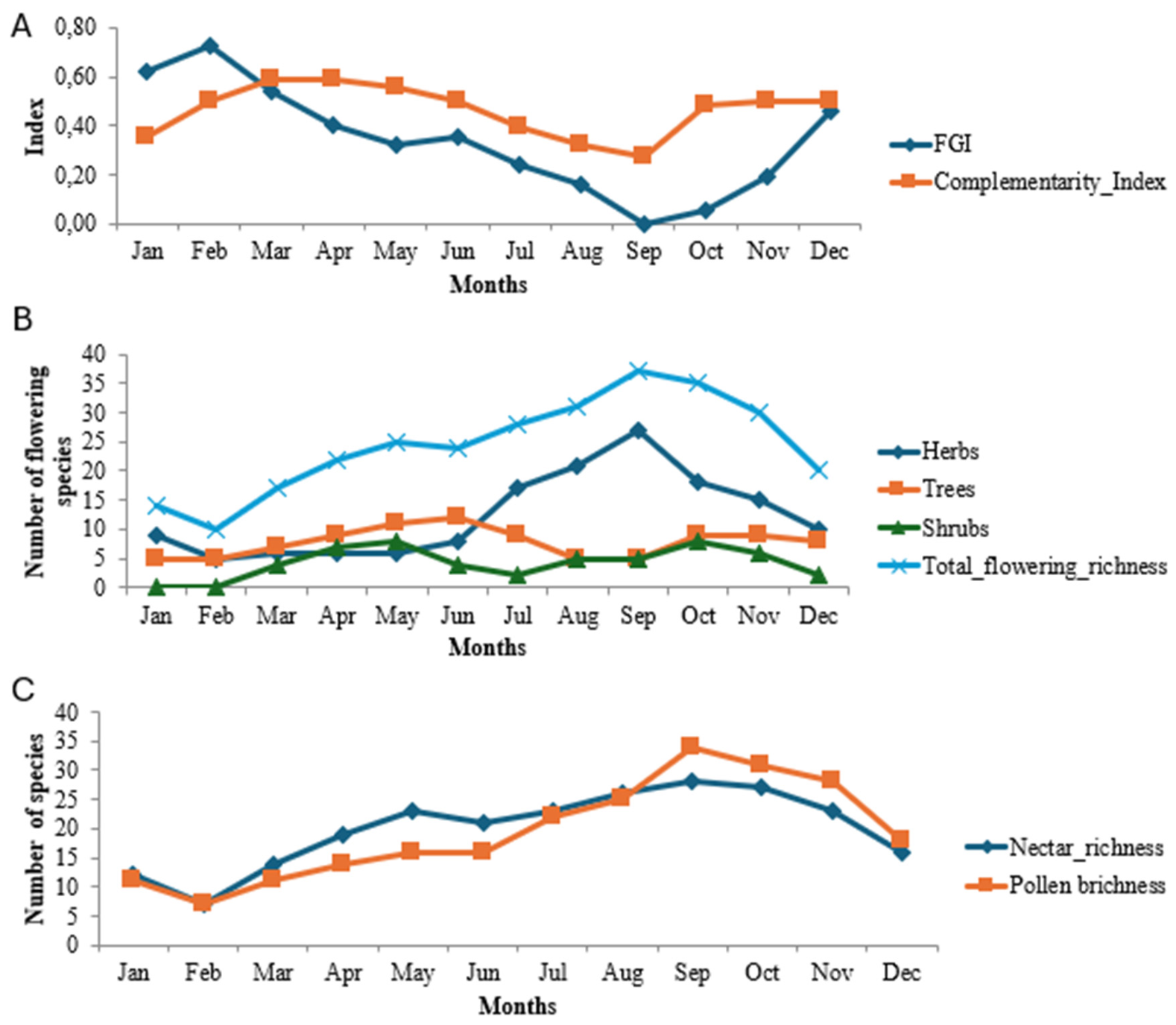
The findings, demonstrate pronounced temporal variation in honeybee forage richness and in the relative contribution of herbaceous plants, trees, and shrubs. Total flowering forage richness varied more than fourfold, from only 10 species in February to 38 species in September. Correspondingly, the relative forage-gap index (FGI), calculated against the maximum richness of 38 species, was highest in February (0.737), followed by January (0.632) and March (0.553), identifying January–March as the principal seasonal forage bottleneck. FGI subsequently declined toward August and reached zero in September, indicating maximum floral richness, while October remained favorable (FGI=0.079) before forage availability declined again in November (0.211) and December (0.474). Growth-form complementarity showed a different pattern. The highest complementarity occurred in April (0.591), followed by March (0.588), May (0.560), and November (0.500), suggesting greater balance among herbs, trees, and shrubs. Conversely, complementarity was lowest in September (0.289) and August (0.323), despite high overall richness. In September, herbs comprised 27 of 38 flowering species, whereas trees and shrubs contributed only 5 and 6 species, respectively. Thus, species richness alone did not indicate balanced resource availability. Nectar and pollen forage richness exhibited marked seasonal variation across the study period, with September emerging as the period of greatest floral-resource diversity. Nectar-producing forage species reached a maximum of 28 species in September, while pollen-producing species peaked at 34 species during the same month. October also maintained relatively high nectar and pollen richness, indicating continued availability of diverse floral resources following the September peak. In contrast, February recorded the lowest richness of both nectar- and pollen-producing species, indicating a pronounced reduction in the diversity of available floral resources during this period. Overall, seasonal forage continuity depended on both the quantity of flowering species and temporal complementarity among growth forms, highlighting January–March as a critical forage-deficit period and September–October as the principal resource-rich period.
Figure 3.
Seasonal patterns in honeybee forage resources and their availability throughout the year. (A) Relative seasonal forage-gap index (FGI) and growth-form complementarity index (CI), showing periods of greater forage shortage and the extent to which herbaceous plants, trees, and shrubs complement one another across seasons. (B) Monthly flowering-species richness and the contribution of herbaceous plants, trees, and shrubs, illustrating clear seasonal changes in the availability of flowering forage. (C) Monthly richness of forage species providing nectar (N), pollen (P), or both nectar and pollen (N+P), highlighting seasonal changes in the floral resources available to honeybee colonies.
3.5. Challenges Affecting Honeybee Forage Resources and Floral Phenology
Among the 378 interviewed households, respondents identified several factors limiting honeybee forage availability. Deforestation was ranked first, with an index value of (0.22), agricultural expansion ranked second, with an index number of (0.19), firewood and charcoal production showed third rank and its index number was (0.18), climate variability ranked as fourth (0.16), overgrazing ranked fifth with index value of (0.14). The shortage of deliberately planted bee forage species was ranked sixth, with an index value of 0.12 (Figure 4). Overall, the findings indicate that habitat degradation and land-use-related pressures were perceived as the major threats to the availability of honeybee forage resources in the study area.
4. Discussions
4.1. Diversity and Composition of Honeybee Forage Resources
The present study demonstrated that Tigray possesses a large diversity of honeybee forage plants, with herbaceous vegetation dominating nearly half of all identified species: herbaceous (45%), trees (33%), and shrubs (22%). This indicates that herbaceous plants play a central ecological role in sustaining honeybee colonies, especially during the rainy season when they experience mass flowering. This study aligns with a previous report in Ethiopia, as highlighted in a national review by Bareke, Addi [19],who reported that herbaceous plants account for approximately 41.6% of Ethiopia’s documented honeybee forage flora, surpassing the proportions of shrubs (28.7%), trees (21.7%), and climbers (8%). Additionally, research conducted in the Oromia region of concluded that herbaceous vegetation contributes around 35–40% of bee forage resources, serving as a vital source of nectar and pollen during the main flowering seasons; however, the relative abundance of these resources varies among agroecological zones [15]. Similar results have been reported in southern Ethiopia where herbaceous species are the dominant component of bee forage flora due to their fast growth cycle, high reproductive output and synchronous flowering after rainfall events [8]. Additionally, reports from southwestern Ethiopia were analogous to the current findings, and showed that 36.6% of the Southwest Shoa Zone’s 122 honeybee forage species were herbs, followed by shrubs, trees, and climbers [15]. Although shrubs were the dominant growth form in that study, the authors emphasized that herbaceous plants played a substantial role in providing seasonal forage, particularly during the rainy season. The observed differences between Tigray and Southwest Shoa may be attributed to variations in factors such as rainfall distribution, vegetation composition, altitude, land-use practices, and agroecological conditions. Tigray’s semi-arid environment supports extensive seasonal herbaceous vegetation that flourishes immediately after rainfall, whereas the relatively wetter southwestern highlands favor the persistence of woody vegetation. Comparable patterns have also been observed in other East African ecosystems, where herbaceous vegetation constitutes the primary nectar and pollen source during peak flowering seasons [20].
The dominance of herbaceous bee forage species in the present study is ecologically may significant because these plants often provide abundant, easily accessible nectar and pollen resources within a short flowering period. Other studies from highlands and lowlands of southwestern Ethiopia confirm that herbaceous plants are particularly important in bridging seasonal forage gaps and supporting colony buildup during rainy seasons when floral diversity peaks [21]. Herbaceous-dominated bee forage systems are recognized as key contributors to pollinator nutrition, especially in temperate and tropical agroecosystems zones of Africa, where seasonal rainfall governs vegetation dynamics [22]. The present study further revealed that plant families such as Asteraceae and Fabaceae dominate honeybee forage species composition in Tigray. This finding is consistent with previous reports [3,7]; these families are the most important sources of nectar and pollen for honeybees. Asteraceae species are widely distributed and produce abundant inflorescences with accessible nectar, while Fabaceae species are highly valued for their dual provision of nectar and protein-rich pollen [8]. Similar dominance of these families has been documented in agroecological studies across sub-Saharan Africa, where they are considered key functional groups supporting pollinator communities [20].
The wide ecological distribution and prolonged flowering periods of Asteraceae and Fabaceae in the present study, make them particularly valuable for maintaining continuous forage availability. In south Ethiopia, research findings indicate that Asteraceae species such as Bidens, Guizotia, and Helichrysum contribute significantly to honey production during post-rainy seasons, while Fabaceae species such as Vicia, Medicago, and Acacia provide both nectar and pollen across different seasons [8].
The present study also found that a high proportion of honeybee forage plants provide both nectar and pollen, indicating the availability of nutritionally balanced floral resources in the study area. Similar findings have been reported in southwestern Ethiopia, where mixed nectar–pollen plants were shown to significantly enhance colony strength and honey yield [21]. In East African agroecosystems, the presence of dual-purpose bee forage plants is considered a key determinant of sustainable beekeeping productivity [22].The predominance of dual-function bee forage plants in the present study suggests that Tigray’s floral resources are relatively well-suited to support both colony maintenance and honey production cycles. Previous studies from the southwestern Shoa zone of Ethiopia have shown that colonies located in areas with high proportions of nectar-and-pollen plants exhibit stronger brood development, higher honey yields, and improved resilience to seasonal forage stress [15].
The composition of bee forage flora observed in the present study also aligns with findings from Kenya, Tanzania, and Uganda, where herbaceous-dominated systems with significant representation of Asteraceae and Fabaceae families are commonly reported in savanna and highland ecosystems [20,22]. These plant groups are consistently identified as key contributors to honey production and colony sustainability due to their widespread distribution and high attractiveness to honeybees [20]. Similarly, this suggests that Tigray shares ecological characteristics with other East African dryland and highland beekeeping systems. In Mediterranean and semi-arid ecosystems, Fabaceae and Asteraceae families are also dominant bee forage groups due to their adaptability to climate variability and ability to produce abundant floral rewards under harsh environmental conditions [22]. This global consistency highlights the ecological importance of these plant groups in supporting honeybee populations under diverse environmental conditions.
4.2. Floral Phenology and Seasonal Availability of Forage Resources
Honeybee forage availability showed pronounced seasonal variation in flowering richness, forage-gap intensity, growth-form complementarity, and nectar–pollen resources. Total flowering richness varied from 10 species in February to 38 species in September, while the relative forage-gap index (FGI) identified January–March as the principal forage dearth period (FGI = 0.632–0.737) and September–November as the most resource-rich period. This seasonal pattern is consistent with Ethiopian studies reporting important flowering and honey-flow periods during September–November and seasonal forage shortages during drier months [8,15,21]. The minor flowering period plays an important role in sustaining colonies when major forage resources are limited, especially in areas with bimodal or transitional rainfall patterns from April to June. Similarly, studies from East Africa indicated that irrigated crops and perennial vegetation contribute to off-season nectar availability, thereby supporting colony survival and reducing the risk of absconding [22,23]. Growth-form complementarity showed a contrasting pattern, reaching its highest value in April (0.591) but declining to 0.289 in September. Although September had the greatest overall richness, 27 of its 38 flowering species were herbaceous plants, compared with only five trees and six shrubs, indicating that high species richness did not necessarily represent balanced forage resources. Similar seasonal shifts in the contribution of herbs, trees, and shrubs have been reported in Ethiopian agroecosystems [19,21,31]. Nectar and pollen richness also peaked in September and October, with 28,27 and 34,31 species, respectively, whereas February had the lowest richness. These findings agree with evidence from Kenya and Tanzania, where prolonged dry seasons severely limit forage availability and negatively affect honeybee productivity [21,22,24,25]. Overall, the results demonstrate that forage continuity is governed by both resource richness and temporal complementarity among plant growth forms, emphasizing January–March forage-gap mitigation and September–November as the principal resource-rich period. The alignment of peak flowering and resource availability during September–November provides optimal conditions for honey production and colony strengthening.
Formal education plays a central role in improving ecological knowledge, increasing age was associated with lower odds of possessing adequate knowledge of honeybee forage resources, suggesting that younger beekeepers may have greater access to formal education, agricultural extension services, digital information, and modern beekeeping training. This opportunity may enable them to acquire updated knowledge on forage plant identification and management, whereas older beekeepers often rely more heavily on traditional knowledge, which may not fully address the challenges posed by climate change, habitat degradation, and changing flowering patterns. Similar findings have been reported in recent studies from Oromia region Horo Guduru Wollega zone and western Showa zone of Holeta, showing that younger farmers are generally more receptive to innovations and environmental information, highlighting the importance of continuous learning for sustainable beekeeping [26,27,28].
Educational level emerged as the strongest determinant of knowledge for both honeybee forage resources and flowering calendars. Beekeepers with higher educational attainment were substantially more likely to identify forage plants accurately and understand seasonal flowering patterns than those with lower educational levels. Education enhances literacy, improves access to extension materials, increases participation in training programs, and strengthens decision-making related to colony management, forage conservation, and floral phenology. It also facilitates the integration of indigenous knowledge with scientific recommendations, enabling beekeepers to respond more effectively to environmental changes. Comparable findings from Southwestern Ethiopia and Amhara region of Ethiopia, consistently demonstrate that education promotes the adoption of improved beekeeping practices, climate-smart agriculture, and sustainable forage management [29,30].
Family size was another significant factor associated with knowledge of honeybee forage resources. Larger households were more likely to possess adequate forage knowledge, probably because they have greater labor availability for colony inspection, forage monitoring, and participation in community-based knowledge exchange. Similar relationships have been reported from Southwestern Shewa, East Shewa and West Arsi zones of Oromia and Guangua Woreda, Awi Zone Amhara region of Ethiopia, in studies of agricultural technology adoption and knowledge sharing, although some researchers note that household composition may be more influential than family size alone [29,31,32].
Unlike forage resource knowledge, educational level was the only significant predictor of flowering calendar knowledge. This finding suggests that understanding seasonal flowering dynamics relies more on ecological awareness, access to information, and training than age, and occupation. Knowledge of flowering calendars requires the ability to relate flowering phenology to colony nutritional needs and anticipate seasonal forage shortages, skills that are strengthened through formal education and extension services. Recent studies from Horo Guduru Wollega zone Oromia region, Ethiopia and Italy beekeeping farm, similarly emphasize that education improves farmers’ understanding of climate variability and seasonal ecosystem dynamics, thereby enhancing adaptive capacity in climate-sensitive agricultural systems [26,28,33].
4.3. Challenges of Honeybee Forage Resources and Floral Phenology
The dominance of deforestation, agricultural expansion and firewood and charcoal production among the major challenges highlights the increasing pressure of land-use change and intensive agricultural practices on bee forage resources. The results reveal a common problem in Tigray, where the loss of natural vegetation and the low occurrence of bee-friendly plant species have significantly reduced the availability of nectar and pollen sources needed for the health and productivity of honeybee colonies. Similar results have been reported in the southwestern, southern and Waghimra Zone of Ethiopia and the main causes of reduced honeybee forage resources and subsequent decline in colony productivity were habitat destruction, indiscriminate application of pesticides, climate variability, overgrazing and decline of natural vegetation. [3,7,8,15,21]. However, the present finding was not consistent with the studies conducted in semi-arid regions of East African countries, Kenya and Tanzania where the major constraints to honeybee forage availability were ranked differently. The main limiting factors in those studies were agricultural expansion, climate variability, deforestation, pesticide use, overgrazing and shortage of deliberately planted bee forage species, but the relative importance of these factors differed from that observed in the present study. [20,22,23,24,34]. These differences might be due to differences in agroecological conditions, land-use practices, farming systems, vegetation composition and the intensity of anthropogenic activities in the study areas.
5. Conclusions and Recommendations
The study area possesses diverse and valuable honeybee forage resources; However, the availability of these floral resources varies seasonally. Flowering period, nectar and pollen richness was synchronized. The sustainability of these forage resources is increasingly threatened by deforestation, agricultural expansion, overgrazing, and climate variability, which may adversely affect honeybee nutrition and colony productivity. Therefore, conservation and restoration of natural vegetation should be prioritized, particularly in areas experiencing habitat degradation. Selected indigenous bee forage plants should be integrated into farming systems, homesteads, field boundaries, and degraded lands to ensure a continuous supply of nectar and pollen throughout the year. Particular attention should be given to establishing forage plants that flower during the major dearth period. Community-based conservation, awareness creation, and appropriate land-use practices should also be promoted to reduce pressure on natural vegetation and enhance the sustainability and productivity of beekeeping in the study area.
Supplementary Materials
The following supporting information can be downloaded at: Preprints.org.
Funding
Our research work is financially supported by grants from Mekelle University(MU/RCS/2024/6223).
Data availability
The data presented in this study are openly available in [https://doi.org/10.6084/m9.figshare.33943252] [33943252].
References
- Barraud A, Barascou L, Lefebvre V, Sene D, Le Conte Y, Alaux C, et al. Variations in nutritional requirements across bee species. Frontiers in Sustainable Food Systems. 2022;6:824750. [CrossRef]
- Parreño MA, Alaux C, Brunet J-L, Buydens L, Filipiak M, Henry M, et al. Critical links between biodiversity and health in wild bee conservation. Trends in Ecology & Evolution. 2022;37(4):309-21. [CrossRef]
- Gratzer K, Wakjira K, Fiedler S, Brodschneider R. Challenges and perspectives for beekeeping in Ethiopia. A review: Challenges and perspectives for beekeeping in Ethiopia. A review. Agronomy for Sustainable Development. 2021;41(4):46. [CrossRef]
- Requier F, Pérez-Méndez N, Andersson GK, Blareau E, Merle I, Garibaldi LA. Bee and non-bee pollinator importance for local food security. Trends in ecology & evolution. 2023;38(2):196-205. [CrossRef]
- Gazzea E, Batary P, Marini L. Global meta-analysis shows reduced quality of food crops under inadequate animal pollination. Nature Communications. 2023;14(1):4463. [CrossRef]
- Patel V, Pauli N, Biggs E, Barbour L, Boruff B. Why bees are critical for achieving sustainable development. Ambio. 2021;50:49-59. [CrossRef]
- Tirfie AM, Getachew A. Role of Honeybees to Crop Pollination in Ethiopia: A ReviewAgricultural Reviews. 2024;45(1):142-5. [CrossRef]
- Delena MF, Asfaw AD. Improved beekeeping practices, honey bee flora potential and flowering calendar in South Ethiopia. Plos one. 2024;19(5):e0304259. [CrossRef]
- Castillo DSC, Higa M. Strengthening ecologically based rodent management in the Philippines using maximum entropy (MaxEnt) predictions. Journal of Tropical Ecology. 2024;40:e19. [CrossRef]
- Kondo E, Asem FE, Osei-Asare Y, Mensah-Bonsu A, Onumah EE, Ofori S, et al. Economic and behavioural effects of farmers’ adoption of integrated pest management practices in low-and middle-income countries: A systematic review and meta-analysis. NJAS: Impact in Agricultural and Life Sciences. 2025;97(1):2534478. [CrossRef]
- Mohammed SS, Hassen A. The current constraints and opportunity of beekeeping in Ethiopia: a review. Advance in Biological Research. 2021;2(1). [CrossRef]
- Desale E, Tsegaye A, Lemma M, Grmay A, Ibrahim Y, Tsegaye A, et al. Demonstration of Local Honeybee Flora “Mentesie”(Becium grandflorum) Propagation Techniques in Wag-Himra Zone, Ethiopia. AMERICAN JOURNAL OF BIOSCIENCE. 2024;12(6):162-8. [CrossRef]
- Pudasaini R, Dhital B, Chaudhary S. Nutritional requirement and its role on honeybee: a review. Journal of Agriculture and Natural Resources. 2020;3(2):321-34. [CrossRef]
- Rodney S, Kramer VJ. Probabilistic assessment of nectar requirements for nectar-foraging honey bees. Apidologie. 2020;51(2):180-200. [CrossRef]
- Bareke T, Roba K, Addi A. Diversity of bee floral resources and honey production calendar in Ethiopia’s southwest shoa zone. Advances in Agriculture. 2024;2024(1):5428576. [CrossRef]
- Peterson GD, Harmáčková ZV, Meacham M, Queiroz C, Jiménez-Aceituno A, Kuiper JJ, et al. Welcoming different perspectives in IPBES. Ecology and Society. 2018;23(1). [CrossRef]
- Abrha H, Hagos H. Characterization of changing trends of baseline and future predicted precipitation and temperature of Tigray, Ethiopia. Journal of Agrometeorology. 2022;24(3):235-40. [CrossRef]
- Yamane T. Elementary sampling theory. 1967.
- Bareke T, Addi A, Wakjira K, Kumsa T. Dynamics of nectar secretion, honey production potential and colony carrying capacity of Coffea arabica L., Rubiaceae. Journal of Agriculture and Environment for International Development (JAEID). 2021;115(1):125-38. [CrossRef]
- Farinati S, Betto A, Palumbo F, Scariolo F, Vannozzi A, Barcaccia G. The new green challenge in urban planning: The right genetics in the right place. Horticulturae. 2022;8(9):761. [CrossRef]
- Tulu D, Aleme M, Mengistu G, Bogale A, Bezabeh A, Mendesil E. Melissopalynological analysis and floral spectra of Apis mellifera scutellata Lepeletier bees in different agroecologies of southwest Ethiopia. Heliyon. 2023;9(5). [CrossRef]
- Pan K. Plant occurrence in space and time: the importance of land use, habitat structure, and pollination mode: Leiden University; 2023.
- Pan C, Chen Z, Zhang M, Chen X, Smagghe G, Fan M, et al. Effects of flowering period on floral traits, pollinator behavior and seed production of David’s mountain laurel (Sophora davidii). Plant Signaling & Behavior. 2024;19(1):2383823. [CrossRef]
- Chen L, Cai Y, Quan Q, Li Y. Interplay of Temporal Variation in Nectar Parameters and Pollinator-Mediated Adaptations in Epimedium wushanense. Phyton (0031-9457). 2025;94(5). [CrossRef]
- Deng D, Chen J, He L, Li D, Chen D, Yan W, et al. Plant reproductive strategies and pollinator attributes differ in small-scale habitat heterogeneity. aob Plants. 2025;17(5):plaf052. [CrossRef]
- Brodschneider R, Gratzer K. The FAO guideline on good beekeeping practices for sustainable apiculture. Taylor & Francis; 2021. [CrossRef]
- Kuma T, Abebe G, Kitila C. Assessments on honey bee (Apis mellifera) production and its major constraints of Holota Beekeeping Association producers, Ethiopia. GeoJournal. 2023;88(3):2983-92. [CrossRef]
- Tesema T, Adugna M, Hassen S. Rural revitalization through improvements of technical efficiency in honey production: Evidence from Horo Guduru Wollega Zone, Oromia, Ethiopia. Cogent Food & Agriculture. 2023;9(1):2179804. [CrossRef]
- Shegaw T, Arke A, Belay N, Habte Giorgis D. Diagnostic survey on varroa mite (Varroa distractor) prevalence in South-Western Ethiopia. Cogent Food & Agriculture. 2022;8(1):2143610. [CrossRef]
- Tassew A, Gebey T, Ejigu K, Ayalew W, Jenberie A, Genet M, et al. Indiscriminate use and inappropriate application of agrochemicals by smallholder farmers in Amhara Region, ethiopia: implications for sustainable beekeeping, crop and livestock production. J Agric Environ. 2023;8(2):17-36. [CrossRef]
- Abebe T. Characterization of Beekeeping Systems, Flora Calendar and Honey Quality Determination around Ellala Forest in Guangua Woreda, Awi Zone, Amhara Regional State, Ethiopia 2022.
- Beyene T, Woldetsadik M, Eshetu S. Study on Major Diseases, Pests, and Predators of Honeybees (Apis mellifera L.) in East Shewa and West Arsi Zones of Oromia, Ethiopia. Veterinary Medicine International. 2026;2026:6662250-. [CrossRef]
- Pignagnoli A, Pignedoli S, Carpana E, Costa C, Dal Prà A. Greenhouse gas (GHG) emissions from honey production: Two-year survey in italian beekeeping farms. Animals. 2023;13(4):766. [CrossRef]
- Legg S. IPCC, 2021: Climate change-the physical science basis. Interaction. 2021;49(4):44-5.
Figure 1.
(A) Distribution of honeybee forage plants by growth form. (B) Proportion of forage plants providing nectar, pollen, or both. The figure demonstrates that the available forage resources consisted of herbaceous plants, trees, and shrubs, with considerable variation in their contribution to honeybee nutrition.
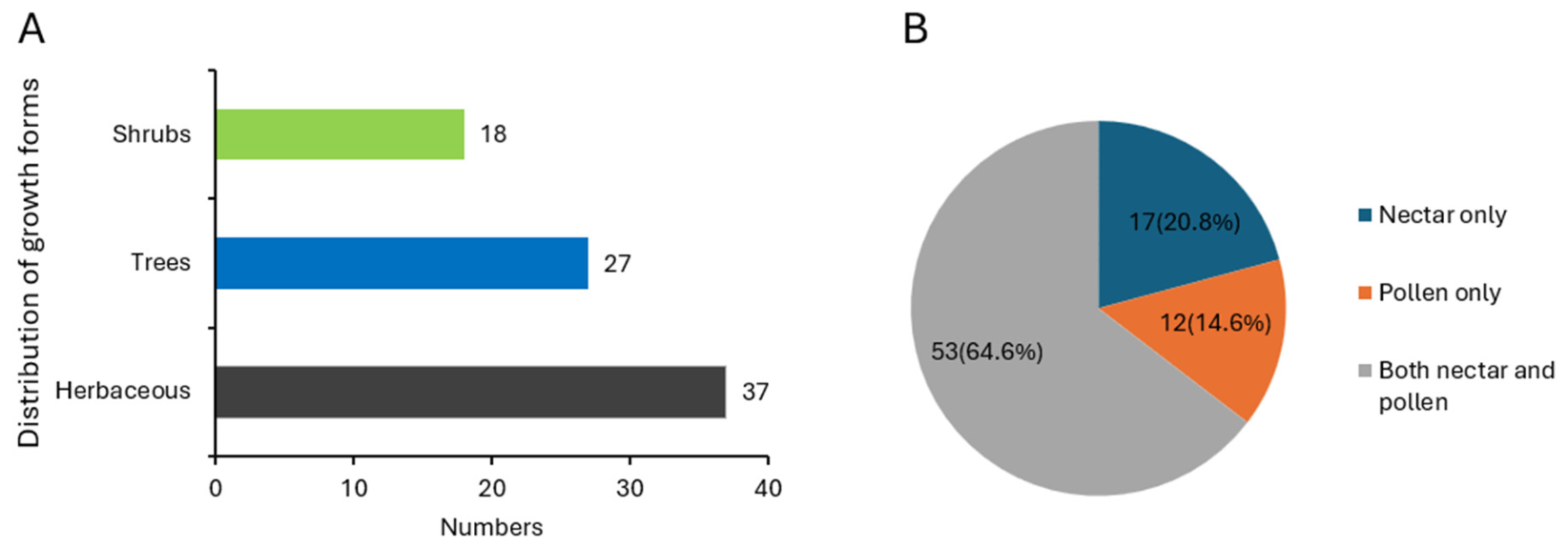
Figure 2.
Seasonal dynamics of honeybee forage resources showed marked temporal variation in flowering richness and nectar-pollen availability. (A) Flowering richness peaked during September–November, coinciding with the principal honey-flow period. (B) Forage species providing both nectar and pollen predominated, reaching maximum abundance in September, whereas nectar- and pollen-only resources varied seasonally.
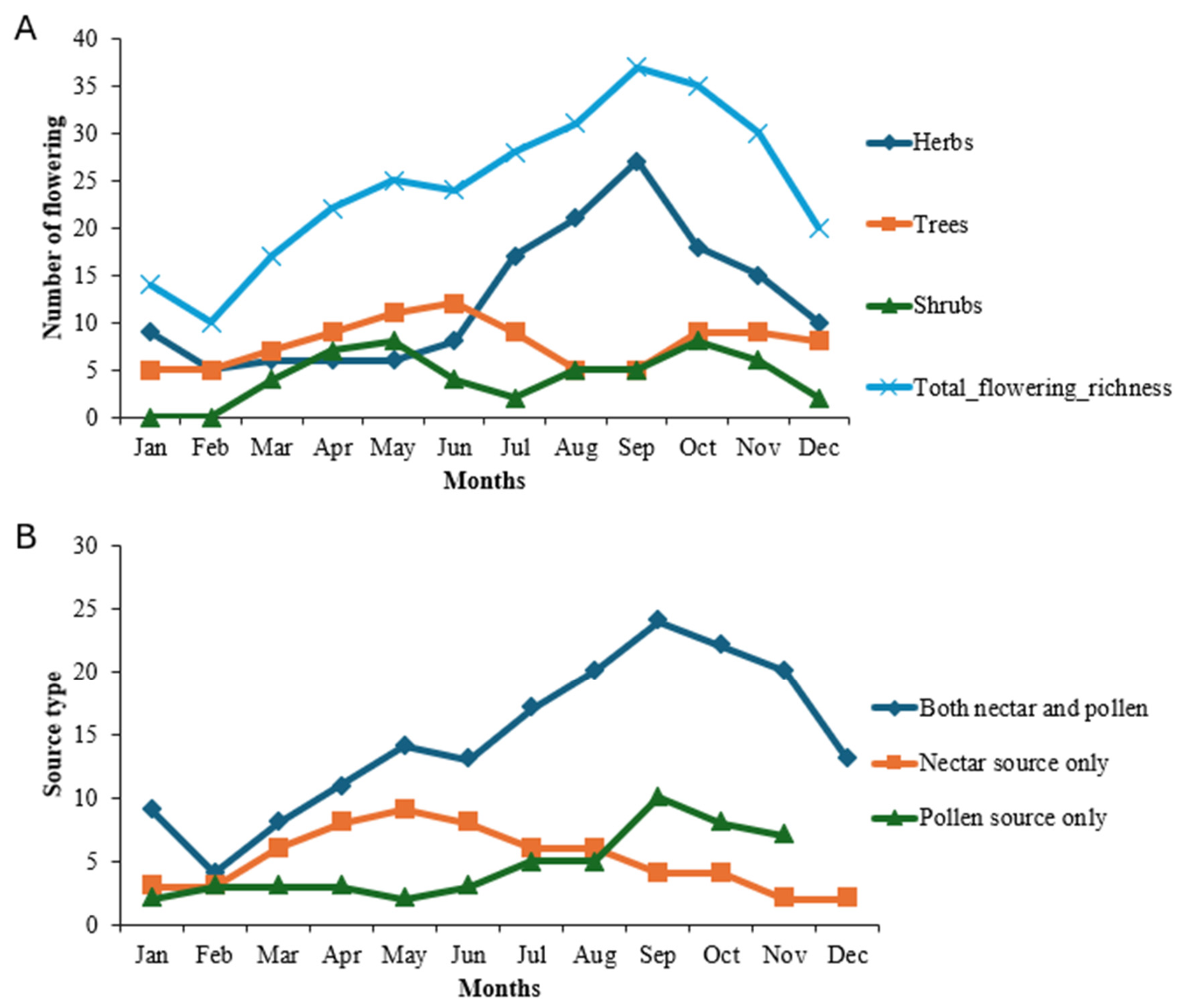
Figure 4.
Ranked (1-6) environmental challenges of honeybee forage and production based on index. Deforestation poses the greatest challenge, followed by agricultural expansion and firewood and charcoal production.
Figure 4.
Ranked (1-6) environmental challenges of honeybee forage and production based on index. Deforestation poses the greatest challenge, followed by agricultural expansion and firewood and charcoal production.
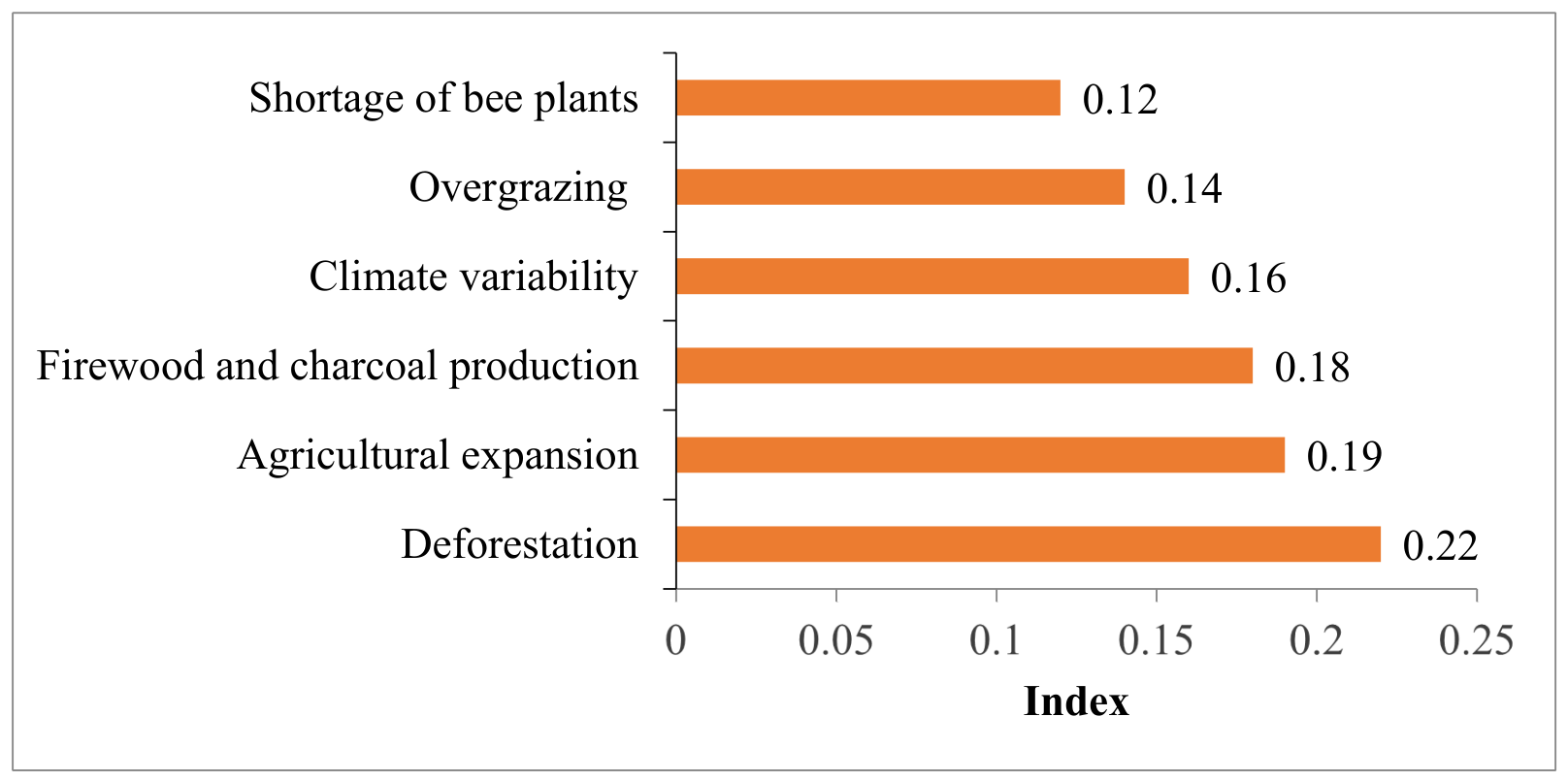

Table 1.
Multivariable logistic regression of honeybee forage resources and flowering calendar with sociodemographic characteristics in the study area.
Table 1.
Multivariable logistic regression of honeybee forage resources and flowering calendar with sociodemographic characteristics in the study area.
| Variables | Categories | Frequ ncy |
Perce tage |
Univariable COR (95% CI) p-value |
Multivariable AOR (95% CI) p-value | |
|---|---|---|---|---|---|---|
| Knowledge of beekeepers on honeybee forage resources | Age | 18-35 years | 71 | 18.78 | .4832913: 0.005 | 0.483: (0.292–0.799), 0.005 |
| 36-55 years | 121 | 32.01 | ||||
| >55 years | 186 | 49.21 | ||||
| Educational level | Illiterate | 108 | 28.57 | 2.189773: 0.001 | 2.19 (1.36–3.51), 0.001 | |
| 1-6 grade | 196 | 51.85 | ||||
| 7-12 grade | 56 | 14.81 | ||||
| Diploma | 17 | 4.50 | ||||
| Degree and above | 1 | 0.26 | ||||
| Occupation | Farmer | 348 | 92.06 | 4046.717: 0.001 | 4046.7: 0.001 | |
| Bee technician | 9 | 2.38 | ||||
| Bee expert | 21 | 5.56 | ||||
| Family size | 1-4 HH | 151 | 39.95 | 2.006098: 0.002 | 2.01: (1.28–3.14), 0.002 | |
| 5-7 HH | 152 | 40.21 | ||||
| 8-10 HH | 63 | 16.67 | ||||
| Above 10 HH | 12 | 3.17 | ||||
| Beekeepers’ knowledge of flowering calendars | Age | 18-35 years | 71 | 18.78 | 1.190157: 0.443 | 1.001: 0.998 |
| 36-55 years | 121 | 32.01 | ||||
| >55 years | 186 | 49.21 | ||||
| Educational level | Illiterate | 108 | 28.57 | 1.698795: 0.017 | 1.66, 95% CI: 1.08–2.55, P = 0.021 | |
| 1-6 grade | 196 | 51.85 | ||||
| 7-12 grade | 56 | 14.81 | ||||
| Diploma | 17 | 4.50 | ||||
| Degree and above | 1 | 0.26 | ||||
| Occupation | Farmer | 348 | 92.06 | .458502: 0.143 | 0.481: 0.160 | |
| Bee technician | 9 | 2.38 | ||||
| Bee expert | 21 | 5.56 | ||||
| Family size | 1-4 HH | 151 | 39.95 | .8797125: 0.547 | 0.883: 0.548 | |
| 5-7 HH | 152 | 40.21 | ||||
| 8-10 HH | 63 | 16.67 | ||||
| Above 10 HH | 12 | 3.17 | ||||
HH=households, COR= crude odds ratio, AOR= adjusted odds ratio, CI=confidence interval .
Disclaimer/Publisher’s Note: The statements, opinions and data contained in all publications are solely those of the individual author(s) and contributor(s) and not of MDPI and/or the editor(s). MDPI and/or the editor(s) disclaim responsibility for any injury to people or property resulting from any ideas, methods, instructions or products referred to in the content. |
© 2026 by the authors. Licensee MDPI, Basel, Switzerland. This article is an open access article distributed under the terms and conditions of the Creative Commons Attribution (CC BY) license (http://creativecommons.org/licenses/by/4.0/).
Copyright: This open access article is published under a Creative Commons CC BY 4.0 license, which permit the free download, distribution, and reuse, provided that the author and preprint are cited in any reuse.