Preprint
Review

This version is not peer-reviewed.

Fungal Cell Factories: Yeasts and Filamentous Fungi in Industrial Production of Ethanol, Biofuels, Citric Acid, and β-Lactam Antibiotics

Submitted:

17 September 2026

Posted:

18 September 2026

You are already at the latest version

Abstract

Fungal cell factories have played a central role in industrial biotechnology, with Saccharomyces cerevisiae and filamentous fungi such as Aspergillus niger, Penicillium chrysogenum and Acremonium chrysogenum serving as established platforms for the production of fuels, organic acids and pharmaceuticals. This review examines the development of these fungal production systems from conventional fermentation and empirical strain improvement towards metabolic engineering, genome-scale analysis and targeted genome modification. Particular emphasis is placed on ethanol and advanced biofuel production by S. cerevisiae, citric acid production by A. niger, and β-lactam antibiotic production by P. chrysogenum and A. chrysogenum. Recent advances in pathway engineering, transporter manipulation, stress tolerance, comparative genomics and genome editing have substantially expanded the capacity to optimise fungal cell factories. However, limitations including substrate utilisation, product toxicity, metabolic burden, genetic stability and strain-specific regulatory requirements continue to constrain industrial implementation. The review also considers the regulatory implications of using genetically modified fungal organisms, with particular attention to the European Food Safety Authority (EFSA) framework for the safety assessment of microorganisms used in the food chain. Overall, the transition from classical strain improvement to genome-informed engineering is transforming fungal cell factories from empirically optimised production strains into increasingly rationally designed microbial platforms.

Keywords: 
;  ;  ;  ;  ;  ;  ;  ;  ;  ;  

1. Introduction

Fungi form one of the oldest and most diverse eukaryotic kingdoms. They comprise a diverse eukaryotic kingdom encompassing multiple major phyla, including Ascomycota and Basidiomycota, which contain many of the species of industrial importance (Moore et al., 2011). Their mode of nutrition sets them apart from both plants and animals. Plants fix carbon through photosynthesis. Animals ingest food and digest it internally. Fungi instead secrete digestive enzymes onto external substrates, then absorb the resulting breakdown products (Deacon, 2006). Most fungal species grow as branching, apically extending filaments called hyphae (Moore et al., 2011). Some, including the yeasts central to this review, grow instead as single cells that reproduce by budding or fission (Moore et al., 2011) Figure 1. Saccharomyces cerevisiae reproduces by budding and can be either haploid or diploid, unlike most filamentous fungi, which are typically haploid throughout their vegetative life cycle (Deacon, 2006). Fungal cell walls are built mainly from chitin and glucans, with only small amounts of cellulose, unlike the cellulose-rich walls of plants (Deacon, 2006). Sexual and asexual reproduction, including spore formation, are both widespread across the kingdom (Deacon, 2006).
Fungi play a crucial role in both agriculture and medicine, though not always for beneficial reasons. As plant pathogens, they cause substantial crop losses (Moore et al., 2011). Some also form mycorrhizal symbioses with plant roots, in which the fungus supplies nitrogen and micronutrients in exchange for plant-derived carbon; this relationship benefits both partners (Moore et al., 2011). In medicine, fungal infections are a serious concern for immunocompromised patients. Pathogenic fungi are grouped into opportunistic pathogens, such as Candida albicans, and obligate pathogens, such as Histoplasma capsulatum (Oliver and Schweizer, 1999). Ecologically, many fungi are saprotrophs: they decompose dead organic material, including the cellulose, hemicellulose and lignin in woody plant debris, and in doing so play an essential role in nutrient cycling (Deacon, 2006).
S. cerevisiae is both the pre-eminent eukaryotic model organism and a major industrial workhorse. Several features explain its popularity as a model: a rapid cell cycle, cheap and simple culture media that do not require strict sterile technique, and the ability to grow either as colonies on solid media or as dispersed cells in liquid culture (Zakrajšek et al., 2011). Its genome was among the first eukaryotic genomes fully sequenced. It comprises 16 chromosomes and more than 6,200 genes, of which roughly 30% have recognisable homologues in the human genome (Oliver and Schweizer, 1999). Traditionally, S. cerevisiae raises bread dough: the CO2 released during sugar fermentation causes the dough to rise, while the accompanying ethanol evaporates during baking. In the beverage industry, the same fermentation converts sugars to ethanol to produce wine and beer. More recently, advances in biotechnology have turned S. cerevisiae into a cell factory for pharmaceuticals such as insulin (Pizarro et al., 2007), and, increasingly, for advanced liquid biofuels (Buijs et al., 2013).
Other fungal species are equally important industrially. Penicillium chrysogenum is the principal producer of the β-lactam antibiotic penicillin (Brakhage et al., 2005). Acremonium chrysogenum produces the related β-lactam cephalosporin (Poggeler et al., 2008). Aspergillus niger is the main industrial producer of citric acid, a compound used across the food and beverage, pharmaceutical and chemical industries (Max et al., 2010). This review revisits the biochemical pathways and the genes that control flux through each of these processes: ethanol fermentation, second-generation biofuel production, citric acid manufacture, and β-lactam antibiotic biosynthesis. Because these areas are individually vast, the aim is a concise but technically grounded overview of each, updated with the metabolic-engineering and genomics literature published since the mid-2010s.

2. Ethanol Production by Yeast Cells

Wine fermentation is one of the oldest applications of microbial biotechnology, with a production history of roughly 8,000 years (Pizarro et al., 2007). In modern winemaking, yeast converts grape sugars into ethanol and other metabolites that contribute to the composition and sensory properties of wine. Although diverse non-Saccharomyces yeasts may be present during early fermentation, Saccharomyces cerevisiae typically becomes dominant as fermentation progresses because of its strong fermentative capacity and tolerance to ethanol and other stresses (Fleet, 2008). These characteristics, together with its well-characterised genetics and established industrial use, have made S. cerevisiae a major platform for metabolic engineering beyond traditional ethanol production.
Wine fermentations involve diverse yeasts originating from grapes and the winery environment, although commercial fermentations may also use selected starter cultures. The dominant genera are Hanseniaspora, Candida, Kluyveromyces, Pichia, Metschnikowia and Saccharomyces, though genera such as Schizosaccharomyces, Zygosaccharomyces, Torulaspora, Saccharomycodes and Dekkera can also be present (Fleet, 2008). As fermentation proceeds, Saccharomyces cerevisiae typically becomes dominant. These yeasts ferment both glucose and fructose, two hexose monosaccharides with the same molecular formula (C6H12O6) but different structures and physicochemical properties (Fleet, 2008). Grape must typically contains 160–300 g/L of total sugar, split roughly evenly between glucose and fructose (Tronchoni et al., 2009). Yeast species show a slight kinetic preference for glucose. This can leave a disproportionate share of unfermented fructose at the end of fermentation, and, because fructose tastes roughly twice as sweet as glucose, can leave undesirable residual sweetness in dry wines (Tronchoni et al., 2009).
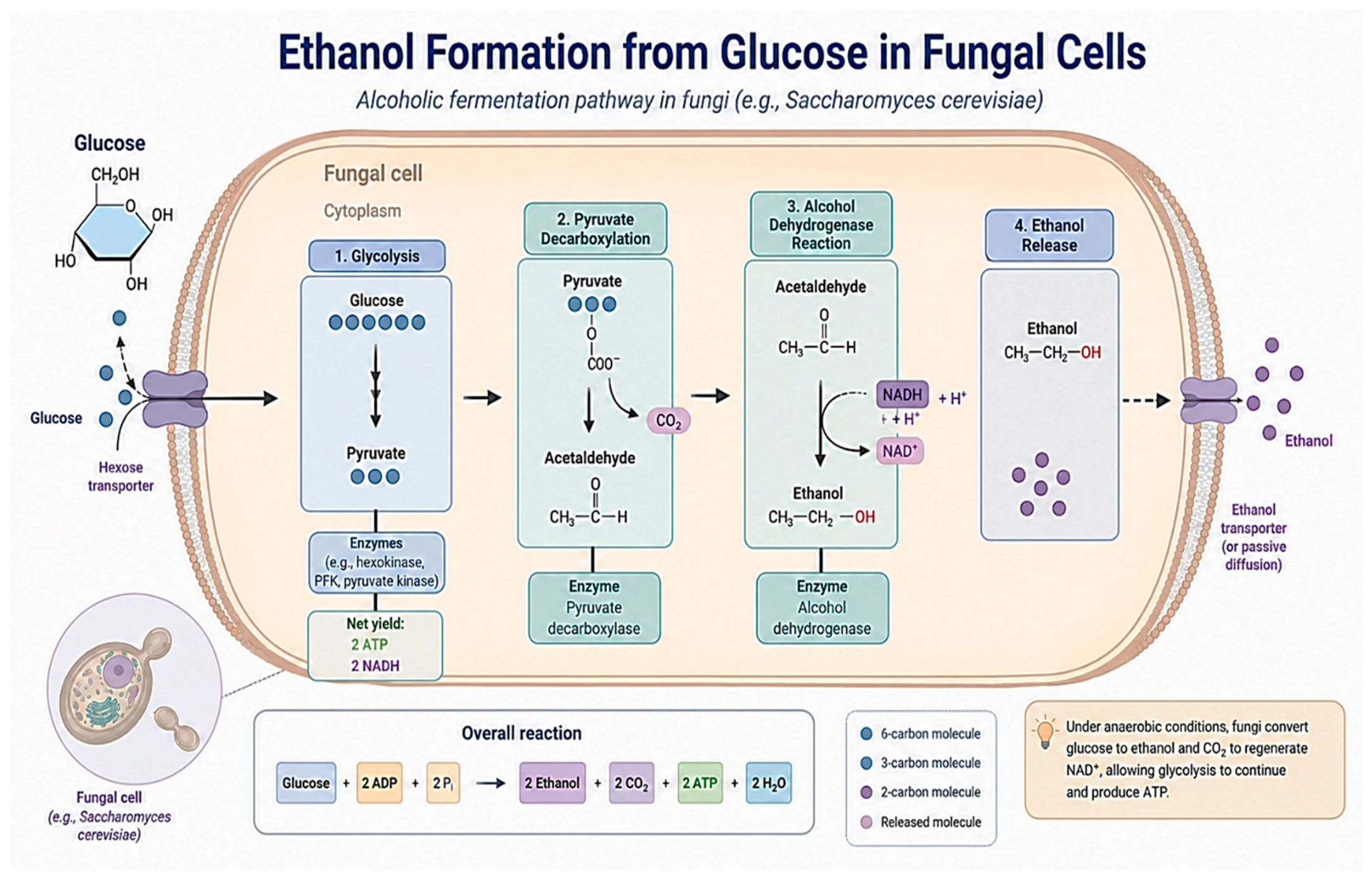
Biochemically, ethanol is the anaerobic fate of pyruvate once glycolysis is complete Figure 2. Two enzymes carry out the conversion: pyruvate decarboxylase and alcohol dehydrogenase (Voet, Voet and Pratt, 2008). Pyruvate decarboxylase converts pyruvate to acetaldehyde, releasing CO2, using a thiamine pyrophosphate (TPP) cofactor that stabilises a negative charge on the carbonyl carbon. The reaction proceeds in four steps: TPP attacks the carbonyl carbon of pyruvate nucleophilically; CO2 is released, generating a stable carbanion stabilised by TPP; the carbanion is protonated; and acetaldehyde is released once the TPP dipolar carbanion is eliminated (Voet, Voet and Pratt, 2008). Alcohol dehydrogenase then reduces acetaldehyde to ethanol. It is a tetrameric enzyme, and each subunit binds one Zn2+ ion, which polarises the carbonyl group of acetaldehyde and stabilises the transition state. Hydrogen for this final reduction comes from NADH generated earlier in glycolysis (Voet, Voet and Pratt, 2008).
Fermentation takes place over three phases: lag, exponential and stationary. During lag phase, yeast cells adapt their metabolism to the high, roughly equal starting concentrations of glucose and fructose (Pizarro et al., 2007). Yeast biomass increases sharply during the exponential phase, during which roughly one-third of the final ethanol and glycerol yield is produced (Pizarro et al., 2007). The remaining two-thirds of ethanol, along with most aromatic compounds, form only during the later stationary phase (Pizarro et al., 2007). Fermentation is considered complete, and the wine described as dry, once residual sugar falls below 2–4 g/L (Pizarro et al., 2007). Winemakers usually remove almost all remaining sugar at this point, to prevent lactic and acetic acid bacteria from forming spoilage biofilms (Pizarro et al., 2007).
Several gene families regulate this process. Pau genes are induced during the exponential phase and support cell wall biogenesis (Tronchoni et al., 2009). Other genes induced at this stage support a nitrogen-catabolite-depressed state, reflecting the nitrogen shortage typically seen during exponential growth. The Hxt gene family encodes the transporters responsible for glucose and fructose uptake across the plasma membrane, while the sugar kinases Hxk1, Hxk2 and Glk1 carry out the first phosphorylation step (Tronchoni et al., 2009). Glucose sensing itself is carried out by the plasma-membrane proteins Rgt2, Snf3 and Dpr1. Snf3 detects low glucose concentrations and induces Hxt gene expression; Rgt2 detects high glucose concentrations and induces Hxt1 specifically (Chu and Lee, 2007). The individual Hxt transporters differ in glucose affinity: Hxt1, Hxt3 and Hxt4 have low affinity, whereas Hxt2, Hxt6 and Hxt7 have high affinity (Chu and Lee, 2007).
Ethanol itself becomes a major stress factor as fermentation proceeds, with high concentrations impairing membrane integrity and cellular metabolism (Henderson et al., 2013). Strains with increased membrane lipid content and elevated ergosterol levels tend to tolerate ethanol better (Henderson et al., 2013). One common engineering strategy diverts carbon away from ethanol and toward glycerol, using the enzyme glycerol-3-phosphate dehydrogenase (GPD); this typically comes at the cost of increased acetic acid, produced when aldehyde dehydrogenase oxidises the resulting excess acetaldehyde (Pretorius et al., 2012). More recent CRISPR-Cas9 work has taken a more targeted approach: a 2022 study used deletion of GPD2, FPS1 and ADH2 to reduce both glycerol loss and re-oxidation of ethanol, raising net ethanol titers in engineered industrial strains (Yang et al., 2022). Finally, yeast cell walls, roughly 90% polysaccharide by composition (mannoproteins, glucose polymers and chitin), release mannoproteins into the wine during autolysis (Loira et al., 2013). These mannoproteins can bind short-chain fatty acids that would otherwise taste unpleasant, and contribute to aromatic persistence (Loira et al., 2013).

3. Yeast-Based Production of Biofuels: Bioethanol and Biobutanol

3.1. Xylose Fermentation for Lignocellulosic Bioethanol

Beyond alcoholic beverages, a major modern application of yeast fermentation is biofuel production. Biofuels can substitute for petroleum-derived fuels such as gasoline and diesel in internal combustion engines, and, in more advanced forms, for kerosene-range jet fuel in gas turbines (Buijs et al., 2013). Ethanol remains the most widely used biofuel, followed by biodiesel (REN21, 2024). Rising petroleum costs and climate concerns have driven interest in bioethanol produced from plant biomass rather than food crops. Xylose is one of the most abundant pentose sugars in nature, a major component of plant hemicellulose and is fermentable by certain yeast and bacterial species (Jeffries, 2006) Figure 3. Yeasts are attractive production hosts because of their established industrial fermentation history, robustness under acidic conditions, relatively simple nutritional requirements and tolerance to several fermentation stresses.
Lignocellulosic biomass is composed of cellulose, hemicellulose and lignin, and is notoriously difficult to digest (Kim et al., 2010). The standard industrial strategy hydrolyses cellulose and hemicellulose into simple sugars, either before fermentation or concurrently with it. Hemicellulose is a heteropolymer of the pentoses xylose and arabinose and the hexose glucose; lignin is a heterogeneous polymer of phenylpropanoid units that gives plant material structural strength; cellulose is a β-1,4-linked homopolymer of glucose (Kim et al., 2010). Hydrolysis releases both hexoses (glucose, galactose, mannose) and pentoses (xylose, arabinose) for fermentation (Kim et al., 2010).
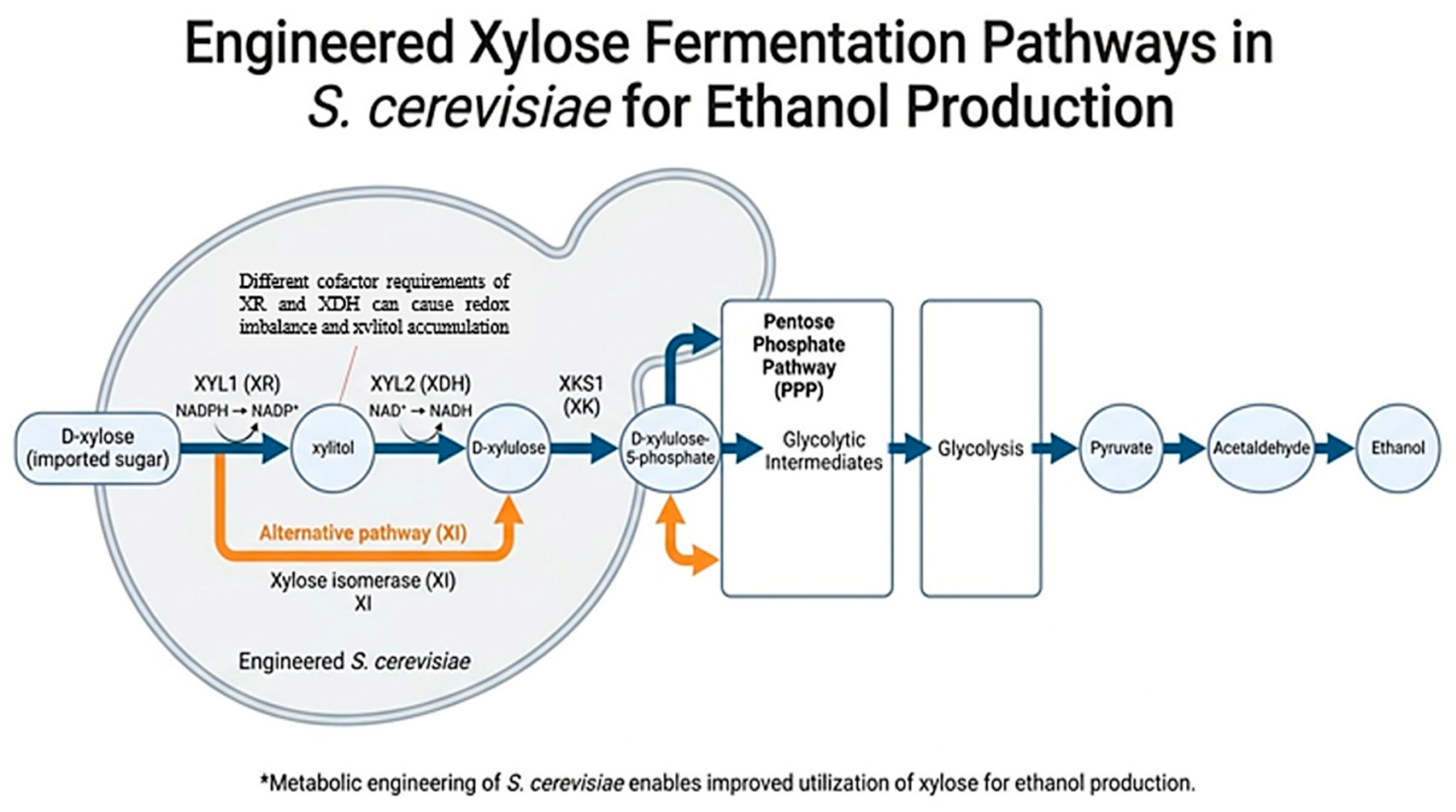
Wild-type S. cerevisiae has very limited capacity to utilise xylose and does not naturally ferment it efficiently to ethanol (Chu and Lee, 2007). Two import systems have been described in natural xylose-fermenting yeasts such as Pichia stipitis, Candida shehatae and Pichia heedii: a high-affinity xylose-proton symport system, and a high-capacity, low-affinity facilitated diffusion system shared with glucose (Chu and Lee, 2007). S. cerevisiae itself takes up xylose only via the shared facilitated-diffusion route (Chu and Lee, 2007). Once inside the cell, xylose enters the pentose phosphate pathway (PPP), which has both a non-oxidative phase, generating intermediates such as D-ribose 5-phosphate, D-xylulose 5-phosphate and D-erythrose 4-phosphate, and an oxidative phase, which converts D-glucose 6-phosphate to D-ribulose 5-phosphate with release of CO2 and NADPH (Jeffries, 2006). Conversion of xylose to xylulose itself is a two-step reduction and oxidation: xylose reductase (encoded by XYL1) reduces xylose to xylitol using NADH or NADPH, and xylitol dehydrogenase (encoded by XYL2) then oxidises xylitol to xylulose using NAD+ (Jeffries, 2006). Xylulokinase then phosphorylates xylulose at the C5-OH position to yield xylulose-5-phosphate, which feeds into the PPP (Jeffries, 2006; Chu and Lee, 2007).
Glucose repression compounds the problem, since S. cerevisiae preferentially exhausts glucose before touching xylose. Keeping extracellular glucose concentration low can raise xylose uptake rates by roughly 85% (Kim et al., 2010). Engineered strains typically import three genes from Pichia stipitis: XYL1 and XYL2, for xylose reductase and xylitol dehydrogenase, and the endogenous XKS1 gene, encoding xylulokinase, is typically overexpressed alongside them. XYL2 in particular needs to be overexpressed for efficient fermentation (Kim et al., 2012). The endogenous Hxt transporter family also contributes to xylose uptake by facilitated diffusion, with Hxt5 and Hxt7 among the native transporters reported to contribute to xylose utilisation (Gancedo, 2008). A single-step alternative exists in bacterial xylose isomerase (XylA), which converts xylose to xylulose directly. Early attempts to introduce the E. coli version into S. cerevisiae were largely unsuccessful: the expressed enzyme showed roughly 1,000-fold reduced activity, due to misfolding, aberrant post-translational modification and incorrect disulphide bridge formation (Chu and Lee, 2007).
This picture has moved on substantially since the first recombinant strains of the 2000s. Global-regulator and evolutionary-engineering approaches have since been used to relieve glucose repression of xylose genes and to improve redox balance across the reductase/dehydrogenase steps (Qiu et al., 2023). A 2023 review by Wagner and Gasch made an important point: inserting the xylose pathway alone is rarely sufficient. Upstream growth- and stress-signalling networks, including protein kinase A signalling and the environmental stress response, also need to be rewired, because diverting carbon toward xylose fermentation tends to blunt the stress tolerance industrial fermentation requires (Wagner and Gasch, 2023). Multi-round evolutionary engineering has since produced industrial strains that co-ferment glucose and xylose in concentrated, undetoxified lignocellulosic hydrolysates, reaching ethanol yields around 90% of the theoretical maximum, with productivities above 1 g/L/h, a substantial improvement on the first-generation recombinants described above (Demeke et al., 2024).

3.2. Butanol and Isobutanol

Beyond ethanol, S. cerevisiae can also produce butanol, which has a longer carbon chain and is less hygroscopic than ethanol. Clostridium species were traditionally preferred for butanol fermentation, but their limited genetic tractability, low butanol tolerance (around 2%) and slow growth have made S. cerevisiae and E. coli increasingly attractive alternatives (Si et al., 2014; Steen et al., 2008). Butanol also blends with gasoline at up to 85%, compared with roughly 10% for ethanol, and carries a higher energy density, making it an attractive next-generation biofuel (Kondo et al., 2012). Of butanol's four possible isomers, yeast can produce isobutanol and 1-butanol (Kondo et al., 2012). Isobutanol itself can be dehydrated to isobutylene and further processed into paraffinic kerosene (Kondo et al., 2012).
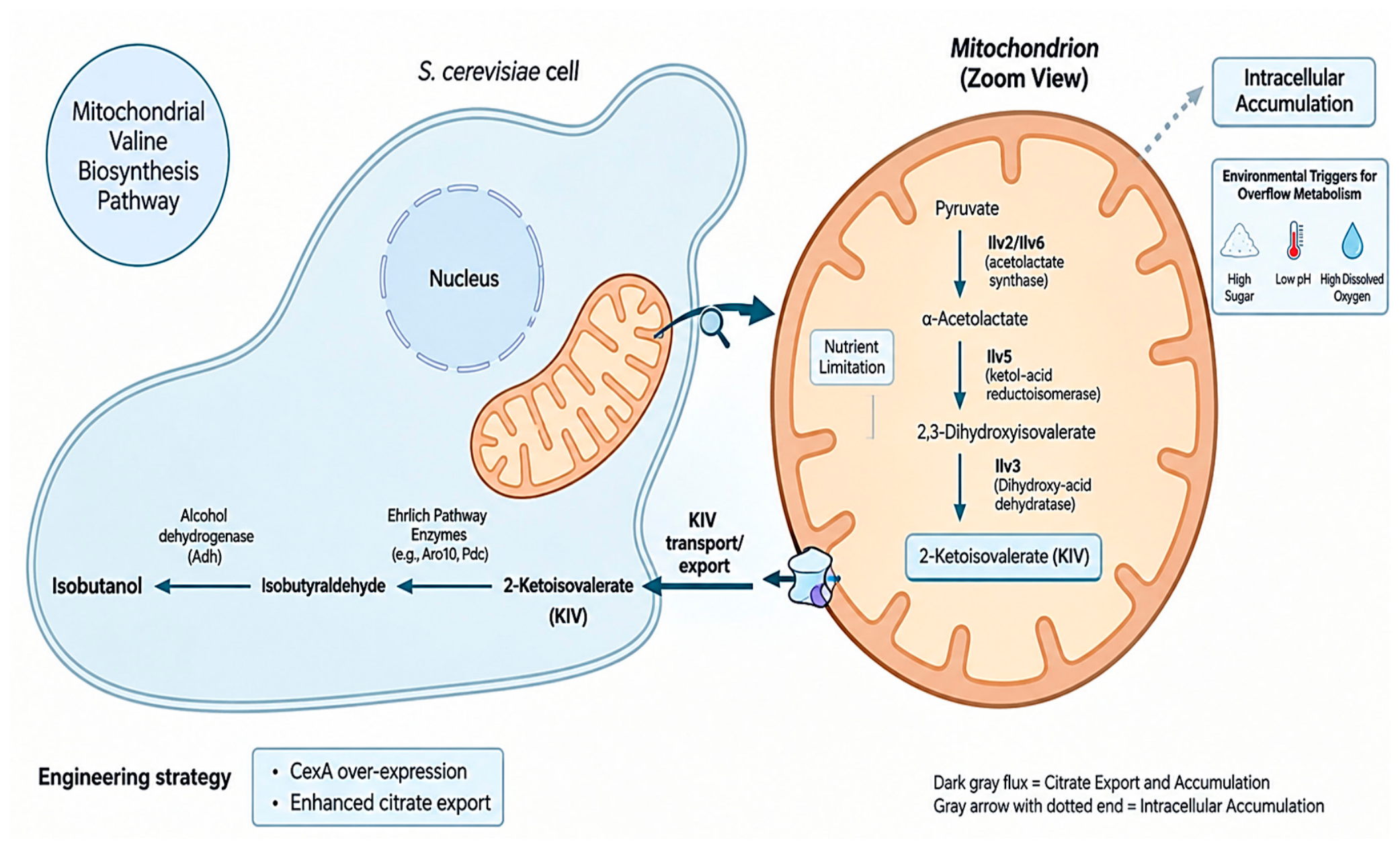
S. cerevisiae produces isobutanol via the mitochondrial valine biosynthesis pathway, followed by cytosolic catabolism to isobutanol (Chen et al., 2011) Figure 4. Pyruvate is first converted to 2-acetolactate by acetolactate synthase (Ilv2 and Ilv6) (Chen et al., 2011). Ilv5 then reduces 2-acetolactate to 2,3-dihydroxy-isovalerate, which Ilv3 converts to 2-ketoisovalerate (Chen et al., 2011). From here, Bat1 and Bat2 catalyse the bidirectional reaction between 2-ketoisovalerate and valine, while the alternative, catabolic route runs through the Ehrlich pathway: 2-keto-acid decarboxylase (Pdc6) converts 2-ketoisovalerate to isobutanal, and alcohol dehydrogenase then reduces isobutanal to isobutanol (Chen et al., 2011; Buijs et al., 2013). The genes responsible for this pathway, ILV2, ILV3 and ILV5, belong to the mitochondrial valine biosynthesis pathway (Buijs et al., 2013). Engineered strains that overexpress the 2-keto acid decarboxylase and alcohol dehydrogenase enzymes of the Ehrlich pathway produce higher isobutanol yields (Kondo et al., 2012), and a single-gene deletion (adh1Δ) has been shown to raise butanol accumulation above 120 μg/L in glucose-rich medium (Si et al., 2014). Isobutanol has a lower hygroscopicity and a higher energy density than ethanol, and its octane value is also higher than straight-chain alcohols of equivalent carbon number, giving it a higher combustion energy yield (Kondo et al., 2012).
Valine synthesis and its catabolism to isobutanol occur in different cellular compartments, and relocating the whole pathway to the cytosol has proved an effective engineering strategy. Overexpressing cytosolic copies of Ilv2, Ilv5 and Ilv3, while blocking competing routes to ethanol, glycerol, 2,3-butanediol and branched-chain amino acids, raised isobutanol titers roughly 200-fold over wild type, to about 2.1 g/L (Wess, Brinek and Boles, 2019). More recent work has extended this approach to xylose-based fermentation: overexpressing the transcription factor Znf1 alongside the exogenous pathway genes improved isobutanol yield during xylose utilisation (Songdech et al., 2024). Industrially isolated, osmotolerant strains engineered by CRISPR-Cas9 have reached comparable titers, around 2.0 g/L, without the extensive laboratory-strain background required by earlier studies (Thammapanyaphong et al., 2026) — a step toward isobutanol's proposed role as a precursor for sustainable aviation fuel via the alcohol-to-jet process. The main challenge is therefore no longer simply introducing heterologous pathways, but coordinating substrate uptake, redox balance, stress tolerance and competing carbon flux under industrial fermentation conditions.

4. Citric Acid Production by Aspergillus niger

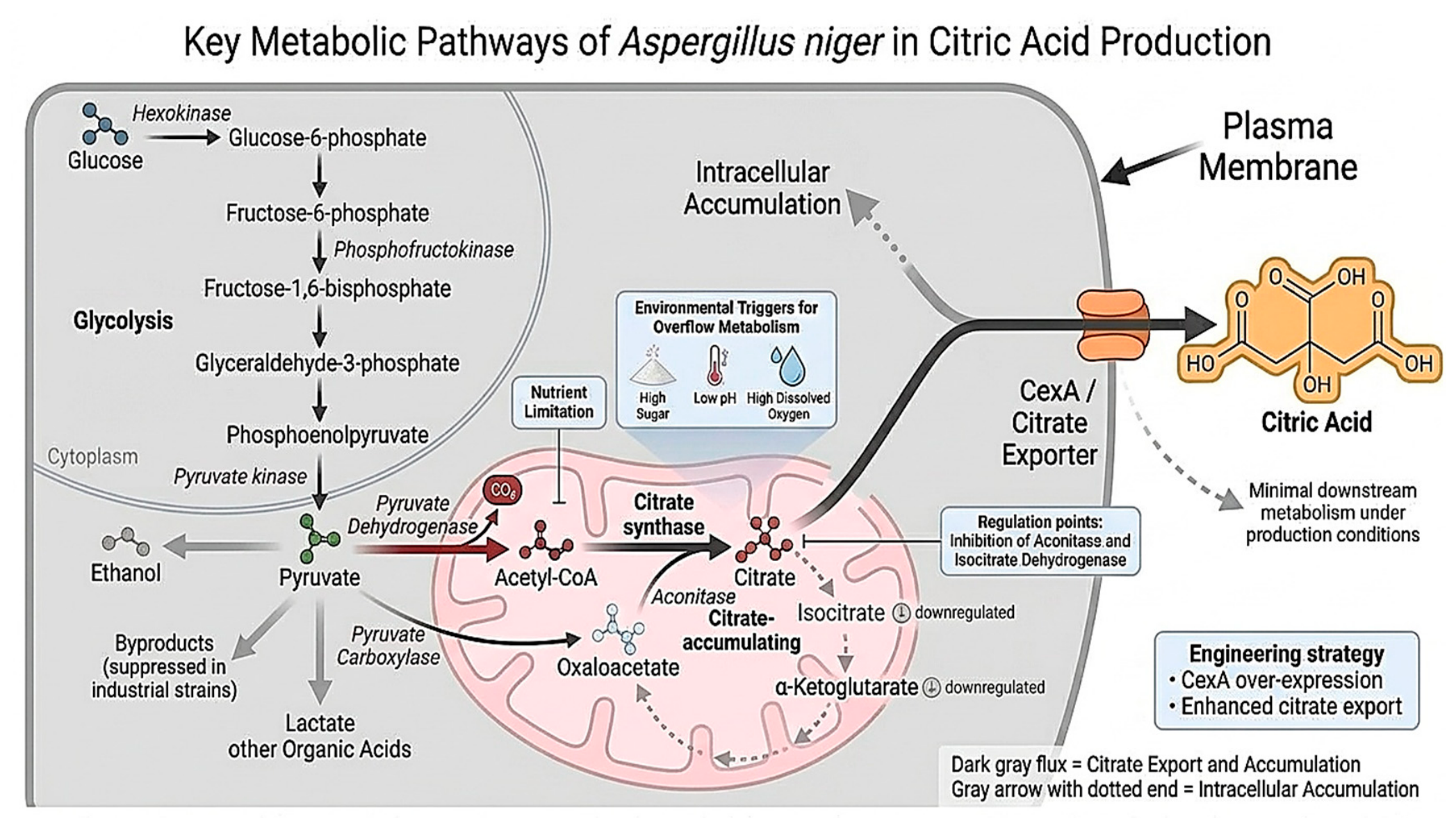
Citric acid is a tricarboxylic acid and one of the most common metabolites found in animal and plant cells, occurring in large quantities in citrus and pineapple juice. It has a molecular weight of 210.14 Da, is readily soluble in water, and is colourless (Angumeenal and Venkappayya, 2013). Commercial citric acid production began in England in 1826, using imported Italian lemons and lemon juice as a source. Glycerol and dichloroacetone were later tried as alternative starting materials, but proved neither efficient nor economical compared with fermentation (Papagianni, 2007). In 1893, Wehmer observed that Penicillium strains grown on simple inorganic-salt-and-sugar media accumulated citric acid (Papagianni, 2007). In 1917, Currie made the key discovery that certain Aspergillus niger strains produced far larger quantities under similar conditions, at pH 2.5–3.5 (Papagianni, 2007). This led directly to the establishment of industrial citric acid fermentation by Pfizer in the United States in 1923 (Papagianni, 2007). Although several yeasts, including Saccharomyces, Candida, Zygosaccharomyces and Torula, can also produce citric acid, A. niger remains the dominant industrial producer, and accounts for the vast majority of commercial citric acid production (Latif et al., 2025) Figure 5. The theoretical yield is 112 g of citric acid per 100 g of sucrose, though the practical yield typically falls short of 70% of this figure (Max et al., 2010). Despite decades of industrial production, no single, universally accepted explanation of the underlying biochemical trigger for citric acid accumulation has yet been established (Max et al., 2010).
Several factors influence citric acid fermentation: the carbon source and its concentration, pH, phosphate and nitrogen availability, aeration, the morphology of the fungal mycelium, and trace-element concentration (Max et al., 2010). Citric acid accumulation is generally favoured when some nutrients, such as phosphate, nitrogen and trace elements, are present at suboptimal levels, while others, such as sugar concentration, acidity and dissolved oxygen, are present at high levels (Max et al., 2010). Sucrose is the preferred carbon source in laboratory studies, although industrial fermentations mostly use molasses (Papagianni, 2007). The pH of the fermentation broth must also be carefully controlled: spore germination requires a pH above 5, but once germination is complete the pH must drop sharply, to below 2, to suppress contamination by other microorganisms (Papagianni, 2007). Aeration is similarly critical, since reduced dissolved oxygen can cause irreversible loss of citric acid production capacity (Papagianni, 2007).
The vast majority of commercial citric acid is produced by microbial fermentation, predominantly using A. niger (Max et al., 2010). The food and beverage industry consumes around 70% of total output, mainly as an antioxidant and acidifier in products such as ice cream and fruit juice (Max et al., 2010). Pharmaceutical uses, chiefly as a pH corrector and preservative, account for roughly 20%, and the remaining 10% goes to the chemical industry as a foaming agent (Max et al., 2010).
The post-genomic era has reframed citric acid research, moving it from empirical fermentation optimisation toward rational strain design. Since the A. niger genome sequence became available, CRISPR/Cas9 has enabled genome-scale perturbation of this industrially important but historically difficult-to-engineer fungus (Tong et al., 2019). One striking example came from disruption of the pyrG orotidine-5′-decarboxylase gene. It was originally introduced simply as a selection marker during genome editing, but unexpectedly increased citric acid titers, showing how routine editing tools can double as discovery platforms (Zhang et al., 2020). Separately, engineering of the fungus's own citrate exporter protein has been shown to raise extracellular citrate accumulation directly, offering a route to overproduction that does not require altering central carbon metabolism at all. Recent reviews describe a broader shift toward multi-omic, systems-level redesign of A. niger as a general-purpose industrial cell factory (Latif et al., 2025). These findings indicate that citric acid overproduction cannot be explained solely by increased precursor supply, but involves coordinated regulation of transport, mitochondrial metabolism and cellular responses to fermentation conditions.

5. Antibiotics: β-Lactam Products of Fungal Secondary Metabolism

Antibiotics are products of fungal secondary metabolism. Primary metabolites, such as nucleic acids, proteins, lipids and carbohydrates, are essential for growth (Bartoszewska et al., 2011). Secondary metabolites are not, but they can help fungal cells defend themselves, survive nutrient deprivation, and diversify genetically over evolutionary time (Kavanagh, 2005; Bartoszewska et al., 2011; Roze et al., 2011). Peroxisomes play a central role in both primary and secondary metabolism, and possess enzymes that carry out key steps in the biosynthesis of β-lactam antibiotics such as penicillin and cephalosporin (Bartoszewska et al., 2011). Both biosynthetic pathways are compartmentalised between the peroxisome and the cytosol, and the favourable peroxisomal environment facilitates the enzymes involved (Bartoszewska et al., 2011). The transcriptional regulator VeA governs secondary metabolism specifically in filamentous fungi, and is absent from both yeasts and plants (Roze et al., 2011).
Antibiotic therapy was discovered by accident in 1929, when Alexander Fleming observed that the fungus Penicillium notatum inhibited growth of Staphylococcus aureus on a contaminated agar plate. Later research showed that several other fungi, including Acremonium chrysogenum, Emericella nidulans and Penicillium chrysogenum, and even some bacteria, such as Streptomyces clavuligerus and Lysobacter lactamgenus, also produce antibiotics (Brakhage et al., 2005). Penicillins and cephalosporins together make up the β-lactam class, considered one of the most important milestones in medical history, valued both for their high efficacy and their low toxicity (Barreiro et al., 2011). Structurally, β-lactam antibiotics consist of a β-lactam nucleus attached to a variable side chain. Penicillin G, for example, couples the nucleus 6-amino penicillanic acid to a phenylacetic acid side chain via an amide bond (Barends et al., 2004). Different nucleus-side-chain combinations create antibiotics with different properties (Barends et al., 2004). The side chain itself depends on the precursors available in the fermentation medium: under natural conditions, penicillin F and penicillin K predominate, but supplementing the medium with phenylacetic or phenoxyacetic acid promotes penicillin G and penicillin V synthesis, respectively (Barreiro et al., 2011). Beyond penicillins and cephalosporins, the same four-membered β-lactam ring, fused to different secondary ring structures, also defines carbapenems, clavams and monobactams (Liras and Martin, 2006). Most β-lactams inhibit bacterial cell wall synthesis, though some act instead as antifungal agents or β-lactamase inhibitors (Liras and Martin, 2006).
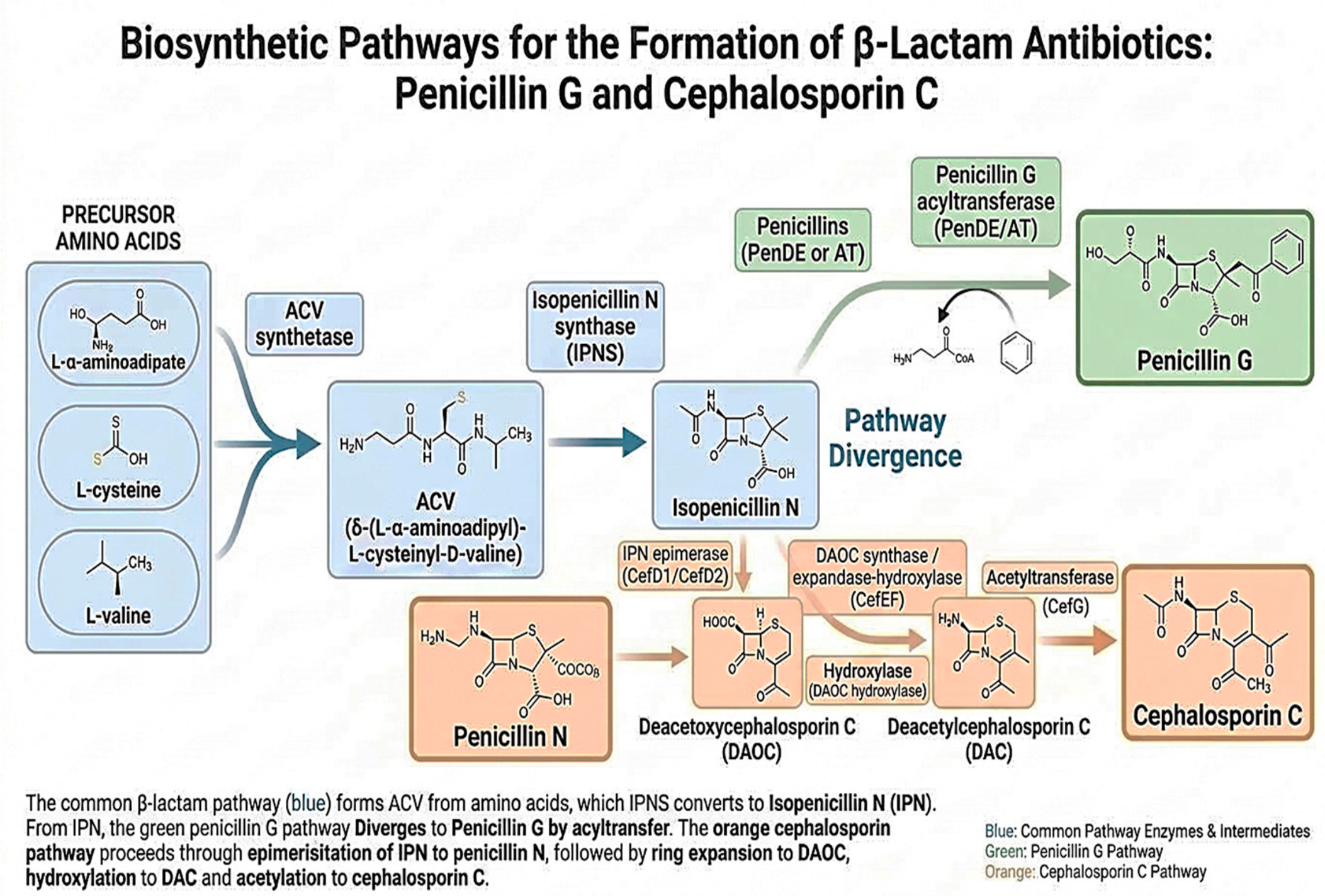
Penicillins and cephalosporins are biosynthesised from three precursor amino acids: L-cysteine, L-valine and L-α-aminoadipic acid (Liras and Martin, 2006) Figure 6. L-valine and L-cysteine are synthesised through ordinary fungal and bacterial pathways. L-α-aminoadipic acid, by contrast, is an intermediate of the lysine biosynthesis pathway, and in P. chrysogenum is instead produced by catabolising lysine, via an ω-aminotransferase encoded by oat1, combined with a reversal of the lysine biosynthetic pathway carried out by saccharopine dehydrogenase and saccharopine reductase (Liras and Martin, 2006). Cysteine synthesis in filamentous fungi and yeasts follows one of two routes: the reverse trans-sulfuration pathway, in which S-adenosylmethionine transfers a sulphur atom from methionine to cysteine, or the autotrophic pathway, in which serine O-acetylserine sulfhydrylase and O-acetyltransferase convert inorganic sulphur directly to cysteine (Martin and Demain, 2002).

5.1. Penicillin Production by Penicillium chrysogenum (Penicillium rubens)

Penicillin biosynthesis proceeds through three enzymatic steps, shared in part with cephalosporin biosynthesis. First, ACV synthetase (encoded by pcbAB) condenses the three precursor amino acids into the linear tripeptide δ-(L-α-aminoadipyl)-L-cysteinyl-D-valine, or ACV (Liras and Martin, 2006). Second, isopenicillin N synthase (pcbC) carries out an oxidative ring closure, fusing the four-membered β-lactam ring into the five-membered thiazolidine ring found in all penicillins (Liras and Martin, 2006). This produces isopenicillin N (IPN), the shared branch-point intermediate for both penicillin and cephalosporin (Liras and Martin, 2006). Third, an acyltransferase (penDE) exchanges the hydrophilic L-α-AAA side chain for a hydrophobic acyl group, yielding penicillin G or V depending on which precursor is supplied in the medium (Barreiro et al., 2011; Liras and Martin, 2006).
The three biosynthetic genes, pcbAB, pcbC and penDE, sit together in a single cluster, present as a single copy in wild-type and early industrial (Wisconsin-lineage) strains (Liras and Martin, 2006). In high-titer industrial strains, this cluster is amplified into multiple tandem copies, alongside additional open reading frames that may themselves contribute to biosynthesis, regulation or secretion (Barreiro et al., 2011). Other genes also matter for penicillin yield: phl encodes phenylacetyl-CoA ligase, which activates the side chain of penicillin G, while ppt encodes phosphopantetheinyl transferase, which activates ACV synthetase after translation (Barreiro et al., 2011). Decades of classical strain improvement (CSI), meaning iterative rounds of mutagenesis and screening rather than rational design, raised penicillin titers roughly a thousandfold or more from Fleming's original isolate, largely through this cluster amplification (Barreiro et al., 2011). Whole-genome sequencing of high-titer industrial strains such as NCPC10086 later confirmed large-scale duplications and structural rearrangements around the cluster, alongside mutations in nitrogen- and energy-metabolism genes (Wang et al., 2014). More recent molecular genetics has complicated the simple "more copies, more penicillin" narrative, however. Ziemons et al. (2017) showed that in the industrial strain P2niaD18, penicillin titer did not scale with cluster copy number, implicating additional regulatory layers. Unexpectedly, this included the mating-type locus transcription factor MAT1-1-1, which influences penicillin gene expression despite P. chrysogenum reproducing asexually under industrial conditions (Ziemons et al., 2017). The relationship between gene-cluster amplification and productivity therefore illustrates the limitations of using copy number alone as a predictor of industrial phenotype. Recent phylogenetic analysis of P. chrysogenum isolates revealed the presence of two clades that represent two species, P. chrysogenum and P. rubens. Despite their phenotype similarity, P. chrysogenum produces secalonic acid D and F and/or a metabolite related to lumpidin but P. rubens does not produce these metabolites (Houbraken et al., 2011). Therefore, the industrial P. chrysogenum penicillin-producing strains are now generally classified as P. rubens.

5.2. Cephalosporin Production by Acremonium chrysogenum (Hapsidospora chrysogena)

Cephalosporins are not the only β-lactam derivatives of penicillin; semi-synthetic penicillin variants such as ampicillin, piperacillin, amoxicillin and cloxacillin also exist, alongside semi-synthetic cephalosporins (cephaloridine, cephalothin, cefaclor, cephalexin) and cephamycins such as cefoxitin (Ozcengiz and Demain, 2013). The main producer of natural cephalosporin, cephalosporin C, is Acremonium chrysogenum. Giuseppe Brotzu isolated this fungus from seawater at Cagliari, Italy, in 1945, and found that it produced a β-lactam antibiotic structurally related to penicillin (Poggeler et al., 2008). Cephalosporin C was later chemically modified into successive generations of semi-synthetic cephalosporins, developed to broaden and strengthen antibacterial activity; the first generation includes cephalothin, cephalexin and cephaloglycine, the second cefoxitin, cefaclor and cefamandole, and the third cefoperazone, ceftriaxone and cefotaxime (Ozcengiz and Demain, 2013). Cephalosporin C itself shows a minimal inhibitory concentration of 25–100 μg/mL against Gram-positive bacteria and 12–25 μg/mL against Gram-negative bacteria (Ozcengiz and Demain, 2013). It is worth noting that the producing organism has since been taxonomically reclassified, from Acremonium chrysogenum to Hapsidospora chrysogena (Zhgun, 2025), though the older name remains standard in most of the applied literature.
Cephalosporin biosynthesis shares its first two steps with penicillin: formation of the ACV tripeptide, then its cyclisation to isopenicillin N. From there the pathways diverge. First, an epimerase system converts the L-α-AAA side chain of IPN into penicillin N, the shared precursor for both cephalosporin and the related cephamycins (Ozcengiz and Demain, 2013). Deacetoxycephalosporin C (DAOC) synthetase then oxidatively expands the five-membered thiazolidine ring to the six-membered dihydrothiazine ring characteristic of all cephalosporins (Ozcengiz and Demain, 2013). A further hydroxylation step, again carried out by DAOC synthetase, oxidises the methyl group at carbon 3 to produce deacetylcephalosporin C (Ozcengiz and Demain, 2013). Finally, DAC acetyltransferase transfers an acetyl group from acetyl-CoA to the hydroxyl group of DAC, yielding cephalosporin C (Ozcengiz and Demain, 2013). pcbAB and pcbC sit together on chromosome VII (4.6 Mb), forming the so-called early cephalosporin gene cluster (Ozcengiz and Demain, 2013). The later steps are carried out by cefEF and cefG, encoding the bifunctional expandase-hydroxylase and DAC acetyltransferase respectively, which cluster together on chromosome I (2.2 Mb) as the late cephalosporin cluster (Ozcengiz and Demain, 2013).
Intracellular methionine availability strongly influences cephalosporin yield, and D-methionine specifically (Martin and Demain, 2002). Supplementing wild-type and improved industrial strains alike with methionine has been shown to raise cephalosporin production two- to threefold, and an equivalent rise in the intracellular methionine pool precedes cephalosporin C formation, suggesting titer is roughly proportional to intracellular methionine concentration (Martin and Demain, 2002). Methionine supplementation also raises expression of ACV synthetase, isopenicillin N synthase and deacetylcephalosporin-C synthase themselves (Martin and Demain, 2002). Extrusion of the finished antibiotic across the plasma membrane, meanwhile, depends on multidrug efflux transporters: primary active ABC-class transporters powered by ATP hydrolysis, and secondary transporters (MFS, SMR and RND classes) powered by transmembrane sodium or proton gradients. In A. chrysogenum, the gene responsible for cephalosporin extrusion specifically is cefT, which encodes an MFS-class drug/H+ antiporter (Martin et al., 2005).
As with penicillin, cephalosporin titers were raised primarily through classical strain improvement, rather than rational engineering, for most of the twentieth century. A comparative genomics study by Zhgun sequenced a high-yield strain producing 200- to 300-fold more cephalosporin C than its ATCC 11550 ancestor, and catalogued the genomic changes accumulated across decades of mutagenesis programmes. This is the first systematic molecular account of how CSI achieves such large gains, and it offers a roadmap for more targeted engineering going forward (Zhgun, 2025). Together, these observations illustrate how classical strain improvement can generate complex genomic phenotypes that are only now becoming accessible to rational engineering through comparative genomics.

6. Regulatory Considerations for Fungal Cell Factories

The increasing use of engineered microorganisms in food and feed production creates an important interface between metabolic engineering and regulatory safety assessment. In the European Union, the European Food Safety Authority (EFSA) evaluates microorganisms and microbial-derived products according to their intended use and potential risks to consumers, animals and the environment. The Qualified Presumption of Safety (QPS) approach provides a simplified safety framework for microorganisms that meet established taxonomic and safety criteria. However, filamentous fungi are excluded from the QPS assessment and therefore require case-specific evaluation when intentionally used in the food or feed chain (EFSA BIOHAZ Panel, 2025).
For microorganisms used in the production of food enzymes, EFSA considers characteristics including the identity and taxonomic status of the production organism, the genetic modifications introduced, the potential production of harmful metabolites and, where relevant to the regulatory context, the absence of viable production organisms or recombinant DNA in the final product (EFSA CEP Panel, 2019). Whole-genome sequence (WGS) analysis has become an important component of this assessment because it enables more comprehensive characterisation of production strains, including the identification of acquired antimicrobial-resistance determinants, genes associated with toxin production and other genetic features relevant to safety (EFSA, 2024).
These considerations are particularly relevant to industrial filamentous fungi such as A. niger, P. chrysogenum and A. chrysogenum, for which extensive classical strain improvement and, increasingly, targeted genome engineering have generated highly productive industrial strains. Comparative genomics and WGS can help distinguish intended production-related modifications from genetic features that may require further safety assessment. Consequently, the development of fungal cell factories for food and feed applications increasingly requires integration of strain engineering with robust molecular characterisation and regulatory assessment.
From an industrial perspective, regulatory requirements therefore represent an additional design consideration rather than a separate step after strain development. A production strain must combine high productivity and genetic stability with an adequately characterised safety profile. The increasing availability of genome-scale analytical tools provides an opportunity to incorporate these considerations earlier in fungal strain development, potentially facilitating the translation of engineered strains from laboratory research to regulated industrial applications.

7. Conclusion

This review has focused on four fungal metabolic products: two drawn from primary metabolism, ethanol and citric acid, and two from secondary metabolism, penicillin and cephalosporin, alongside their biofuel derivatives, bioethanol and isobutanol. All are of major importance to industry. Alcoholic beverages such as wine and beer rely on yeast fermentation; biofuels, developed as renewable alternatives to fossil-derived fuels, can now be produced by engineered yeast species at meaningfully improved yields; citric acid, produced mainly by Aspergillus niger, underpins large parts of the food, pharmaceutical and chemical industries; and penicillin and cephalosporin, between them, have enabled the treatment of a vast range of microbial infections. What has changed most in the decade since this review was first drafted is not the identity of the producing organisms, but the tools available to understand and improve them. CRISPR/Cas9 genome editing, evolutionary engineering under industrially realistic conditions, and comparative and systems-level genomics have begun to replace decades-long classical strain-improvement programmes with more rational, mechanistically grounded strategies. Several of the advances reviewed here — regulatory control of penicillin titer independent of gene copy number, the role of upstream stress signalling in xylose-fermenting yeast, and citrate exporter engineering in A. niger — show that the biochemical basis of these century-old fermentations is still being actively worked out. Continued investment in fungal genome engineering is likely to keep yielding both fundamental biological insight and practical gains in yield, robustness and sustainability, across all four bioprocesses discussed here.

Funding

This research received no external funding.

Acknowledgments

During the preparation of this manuscript, AI-assisted tools were used for limited editorial, research-support and visual-design purposes. ChatGPT (OpenAI) and Claude (Anthropic) were used to assist with language editing, including improvements to grammar, sentence structure, clarity and readability, and to provide limited assistance with organisation and review of the manuscript. SciFig and Figure Labs were used to assist in the generation and visual design of selected explanatory figures. All AI-assisted content was critically reviewed, edited and scientifically verified by the author. AI tools were not used to generate experimental data, results or scientific conclusions. Scientific claims and references suggested or identified through AI-assisted tools were independently checked against the original scientific literature. The author takes full responsibility for the accuracy, originality, integrity and final content of the manuscript.

Conflicts of Interest

The author declares no conflicts of interest.

References

  1. Angumeenal, A.R.; Venkappayya, D. An overview of citric acid production. LWT – Food Science and Technology 2013, 50, 367–370. [Google Scholar] [CrossRef]
  2. Barends, T.R.M.; Yoshida, H.; Dijkstra, B.W. Three-dimensional structures of enzymes useful for β-lactam antibiotic production. Current Opinion in Biotechnology 2004, 15, 356–363. [Google Scholar] [CrossRef] [PubMed]
  3. Barreiro, C.; Martín, J.F.; García-Estrada, C. Proteomics shows new faces for the old penicillin producer Penicillium chrysogenum. BioMed Research International 2011, 105109. [Google Scholar] [CrossRef] [PubMed]
  4. Bartoszewska, M.; Opaliński, Ł.; Veenhuis, M.; van der Klei, I.J. The significance of peroxisomes in secondary metabolite biosynthesis in filamentous fungi. Biotechnology Letters 2011, 33, 1921–1931. [Google Scholar] [CrossRef] [PubMed]
  5. Brakhage, A.A.; Al-Abdallah, Q.; Tüncher, A.; Spröte, P. Evolution of β-lactam biosynthesis genes and recruitment of trans-acting factors. Phytochemistry 2005, 66, 1200–1210. [Google Scholar] [CrossRef] [PubMed]
  6. Buijs, N.A.; Siewers, V.; Nielsen, J. Advanced biofuel production by the yeast Saccharomyces cerevisiae. Current Opinion in Chemical Biology 2013, 17, 480–488. [Google Scholar] [CrossRef] [PubMed]
  7. Chen, X.; Nielsen, K.F.; Borodina, I.; Kielland-Brandt, M.C.; Karhumaa, K. Increased isobutanol production in Saccharomyces cerevisiae by overexpression of genes in valine metabolism. Biotechnology for Biofuels and Bioproducts 2011, 4, 21. [Google Scholar] [CrossRef] [PubMed]
  8. Chu, B.C.H.; Lee, H. Genetic improvement of Saccharomyces cerevisiae for xylose fermentation. Biotechnology Advances 2007, 25, 425–441. [Google Scholar] [CrossRef] [PubMed]
  9. Deacon, J. Fungal Biology, 4th ed.; Blackwell Publishing, 2006. [Google Scholar]
  10. Demeke, M.M.; Echemendia, D.; Belo, E.; Foulquié-Moreno, M.R.; Thevelein, J.M. Enhancing xylose-fermentation capacity of engineered Saccharomyces cerevisiae by multistep evolutionary engineering in inhibitor-rich lignocellulose hydrolysate. FEMS Yeast Research 2024, 24, foae013. [Google Scholar] [CrossRef] [PubMed]
  11. EFSA BIOHAZ Panel (Panel on Biological Hazards). Update of the list of qualified presumption of safety (QPS) recommended microbiological agents intentionally added to food or feed as notified to EFSA 21: Suitability of taxonomic units notified to EFSA until September 2024. EFSA Journal 2025, 23(1), e9169. [Google Scholar] [CrossRef] [PubMed]
  12. EFSA CEP Panel. Characterisation of microorganisms used for the production of food enzymes. EFSA Journal 2019, 17(6), e05741. [Google Scholar] [CrossRef] [PubMed]
  13. European Food Safety Authority (EFSA). ‘EFSA statement on the requirements for whole genome sequence analysis of microorganisms intentionally used in the food chain’. EFSA Journal 2024, 22(8), e8912. [Google Scholar] [CrossRef] [PubMed]
  14. Fleet, G.H. Wine yeasts for the future. FEMS Yeast Research 2008, 8, 979–995. [Google Scholar] [CrossRef] [PubMed]
  15. Gancedo, J.M. The early steps of glucose signalling in yeast. FEMS Microbiology Reviews 2008, 32, 673–704. [Google Scholar] [CrossRef] [PubMed]
  16. Henderson, C.M.; Lozada-Contreras, M.; Jiranek, V.; Longo, M.L.; Block, D.E. Ethanol production and maximum cell growth are highly correlated with membrane lipid composition during fermentation as determined by lipidomic analysis of 22 Saccharomyces cerevisiae strains. Applied and Environmental Microbiology 2013, 79, 91–104. [Google Scholar] [CrossRef] [PubMed]
  17. Houbraken, J.; Frisvad, J. C.; Samson, R. A. Fleming's penicillin producing strain is not Penicillium chrysogenum but P. rubens. IMA fungus 2011, 2(1), 87–95. [Google Scholar] [CrossRef] [PubMed]
  18. Jang, S.Y.; Malaviya, A.; Cho, C.; Lee, J.; Lee, S.Y. Butanol production from renewable biomass by clostridia. Bioresource Technology 2012, 123, 653–663. [Google Scholar] [CrossRef] [PubMed]
  19. Jeffries, T.W. Engineering yeasts for xylose metabolism. Current Opinion in Biotechnology 2006, 17, 320–326. [Google Scholar] [CrossRef] [PubMed]
  20. Kavanagh, K. Fungi: Biology and Applications; John Wiley & Sons, 2005. [Google Scholar]
  21. Kim, J.H.; Block, D.E.; Mills, D.A. Simultaneous consumption of pentose and hexose sugars: an optimal microbial phenotype for efficient fermentation of lignocellulosic biomass. Applied Microbiology and Biotechnology 2010, 88, 1077–1085. [Google Scholar] [CrossRef] [PubMed]
  22. Kim, S.R.; Ha, S.J.; Kong, I.I.; Jin, Y.-S. High expression of XYL2 coding for xylitol dehydrogenase is necessary for efficient xylose fermentation by engineered Saccharomyces cerevisiae. Metabolic Engineering 2012, 14, 336–343. [Google Scholar] [CrossRef] [PubMed]
  23. Kondo, T.; Tezuka, H.; Ishii, J.; Matsuda, F.; Ogino, C.; Kondo, A. Genetic engineering to enhance the Ehrlich pathway and alter carbon flux for increased isobutanol production from glucose by Saccharomyces cerevisiae. Journal of Biotechnology 2012, 159, 32–37. [Google Scholar] [CrossRef] [PubMed]
  24. Latif, A.; Hassan, N.; Ali, H.; Niazi, M.B.K.; Jahan, Z.; Ghuman, I.L.; Hassan, F.; Saqib, A. An overview of key industrial product citric acid production by Aspergillus niger and its application. Journal of Industrial Microbiology and Biotechnology 2025, 52, kuaf007. [Google Scholar] [CrossRef] [PubMed]
  25. Liras, P.; Martín, J.F. Gene clusters for β-lactam antibiotics and control of their expression: why have clusters evolved, and from where did they originate? International Microbiology 2006, 9, 9–19. [Google Scholar] [PubMed]
  26. Loira, I.; Vejarano, R.; Morata, A.; Ricardo-da-Silva, J.M.; Laureano, O.; González, M.C.; Suárez-Lepe, J.A. Effect of Saccharomyces strains on the quality of red wines aged on lees’. Food Chemistry 2013, 139(1–4), 1044–1051. [Google Scholar] [CrossRef] [PubMed]
  27. Martín, J.F.; Demain, A.L. Unraveling the methionine–cephalosporin puzzle in Acremonium chrysogenum. Trends in Biotechnology 2002, 20, 502–507. [Google Scholar] [CrossRef] [PubMed]
  28. Martín, J.F.; Casqueiro, J.; Liras, P. Secretion systems for secondary metabolites: how producer cells send out messages of intercellular communication. Current Opinion in Microbiology 2005, 8, 282–293. [Google Scholar] [CrossRef] [PubMed]
  29. Max, B.; Salgado, J.M.; Rodríguez, N.; Cortés, S.; Converti, A.; Domínguez, J.M. Biotechnological production of citric acid. Brazilian Journal of Microbiology 2010, 41, 862–875. [Google Scholar] [CrossRef] [PubMed]
  30. Moore, D.; Robson, G.D.; Trinci, A.P.J. 21st Century Guidebook to Fungi; Cambridge University Press, 2011. [Google Scholar]
  31. Oliver, S.G.; Schweizer, M. Molecular Fungal Biology; Cambridge University Press, 1999. [Google Scholar]
  32. Ozcengiz, G.; Demain, A.L. Recent advances in the biosynthesis of penicillins, cephalosporins and clavams and its regulation. Biotechnology Advances 2013, 31, 287–311. [Google Scholar] [CrossRef] [PubMed]
  33. Papagianni, M. Advances in citric acid fermentation by Aspergillus niger: biochemical aspects, membrane transport and modelling. Biotechnology Advances 2007, 25, 244–263. [Google Scholar] [CrossRef] [PubMed]
  34. Pizarro, F.; Vargas, F.A.; Agosin, E. A systems biology perspective of wine fermentations. Yeast 2007, 24, 977–991. [Google Scholar] [CrossRef] [PubMed]
  35. Poggeler, S.; Hoff, B.; Kück, U. Asexual cephalosporin C producer Acremonium chrysogenum carries a functional mating-type locus. Applied and Environmental Microbiology 2008, 74, 6006–6016. [Google Scholar] [CrossRef] [PubMed]
  36. Pretorius, I.S.; Curtin, D.C.; Chambers, P.J. The winemaker's bug: from ancient wisdom to opening new vistas with frontier yeast science. Bioengineered Bugs 2012, 3, 147–156. [Google Scholar] [CrossRef] [PubMed]
  37. Qiu, Y.; Wu, M.; Bao, H.; Liu, W.; Shen, Y. Engineering of Saccharomyces cerevisiae for co-fermentation of glucose and xylose: current state and perspectives. Engineering Microbiology 2023, 3, 100084. [Google Scholar] [CrossRef] [PubMed]
  38. REN21. Renewables 2024 Global Status Report — Bioenergy module. REN21 Secretariat; Paris, 2024. Available online: https://www.ren21.net/gsr-2024/modules/global_overview (accessed on 11/08/2026).
  39. Roze, L.V.; Chanda, A.; Linz, J.E. Compartmentalization and molecular traffic in secondary metabolism: a new understanding of established cellular processes. Fungal Genetics and Biology 2011, 48, 35–48. [Google Scholar] [CrossRef] [PubMed]
  40. Si, T.; Luo, Y.; Xiao, H.; Zhao, H. Utilizing an endogenous pathway for 1-butanol production in Saccharomyces cerevisiae. Metabolic Engineering 2014, 22, 60–68. [Google Scholar] [CrossRef] [PubMed]
  41. Songdech, P.; Butkinaree, C.; Yingchutrakul, Y.; Promdonkoy, P.; Runguphan, W.; Soontorngun, N. Increased production of isobutanol from xylose through metabolic engineering of Saccharomyces cerevisiae overexpressing transcription factor Znf1 and exogenous genes. FEMS Yeast Research 2024, 24, foae006. [Google Scholar] [CrossRef] [PubMed]
  42. Steen, E.J.; Chan, R.; Prasad, N.; Myers, S.; Petzold, C.J.; et al. Metabolic engineering of Saccharomyces cerevisiae for the production of n-butanol. Microbial Cell Factories 2008, 7, 36. [Google Scholar] [CrossRef] [PubMed]
  43. Thammapanyaphong, N.; Boonyanuwat, M.; Luengnaruemitchai, A.; Koonthongkaew, J. Development of Saccharomyces cerevisiae isobutanol production strain from osmotolerant and ethanol-producing industrial isolated yeast. Biotechnology Reports 2026, 50, e00959. [Google Scholar] [CrossRef] [PubMed]
  44. Tong, Z.; Zheng, X.; Tong, Y.; Shi, Y.-C.; Sun, J. Systems metabolic engineering for citric acid production by Aspergillus niger in the post-genomic era’. Microbial Cell Factories 2019, 18, 28. [Google Scholar] [CrossRef] [PubMed]
  45. Tronchoni, J.; Gamero, A.; Arroyo-López, F.N.; Barrio, E.; Querol, A. Differences in the glucose and fructose consumption profiles in diverse Saccharomyces wine species and their hybrids during grape juice fermentation. International Journal of Food Microbiology 2009, 134, 237–243. [Google Scholar] [CrossRef] [PubMed]
  46. Voet, D.; Voet, J.G.; Pratt, C.W. Principles of Biochemistry, 3rd ed.; John Wiley & Sons, 2008. [Google Scholar]
  47. Wagner, E.R.; Gasch, A.P. Advances in S. cerevisiae engineering for xylose fermentation and biofuel production: balancing growth, metabolism, and defense. Journal of Fungi 2023, 9, 786. [Google Scholar] [CrossRef] [PubMed]
  48. Wang, F. Q.; Zhong, J.; Zhao, Y.; Xiao, J.; Liu, J.; Dai, M.; Zheng, G.; Zhang, L.; Yu, J.; Wu, J.; Duan, B. Genome sequencing of high-penicillin producing industrial strain of Penicillium chrysogenum. BMC genomics 2014, 15 Suppl 1(Suppl 1), S11. [Google Scholar] [CrossRef] [PubMed]
  49. Wess, J.; Brinek, M.; Boles, E. Improving isobutanol production with the yeast Saccharomyces cerevisiae by successively blocking competing metabolic pathways as well as ethanol and glycerol formation. Biotechnology for Biofuels 2019, 12, 173. [Google Scholar] [CrossRef] [PubMed]
  50. Yang, P.; Jiang, S.; Jiang, S.; Lu, S.; Zheng, Z.; Chen, J.; Wu, W.; Jiang, S. CRISPR-Cas9 Approach Constructed Engineered Saccharomyces cerevisiae with the Deletion of GPD2, FPS1, and ADH2 to Enhance the Production of Ethanol. Journal of Fungi 2022, 8(7), 703. [Google Scholar] [CrossRef] [PubMed]
  51. Zakrajšek, T.; Raspor, P.; Jamnik, P. Saccharomyces cerevisiae in the stationary phase as a model organism — characterization at cellular and proteome level. Journal of Proteomics 2011, 74, 2837–2854. [Google Scholar] [CrossRef] [PubMed]
  52. Zhang, L.; Zheng, X.; Cairns, T.C.; et al. Disruption or reduced expression of the orotidine-5′-decarboxylase gene pyrG increases citric acid production: a new discovery during recyclable genome editing in Aspergillus niger. Microbial Cell Factories 2020, 19, 76. [Google Scholar] [CrossRef] [PubMed]
  53. Zhgun, A.A. Comparative genomic analysis reveals key changes in the genome of Acremonium chrysogenum that occurred during classical strain improvement for production of antibiotic cephalosporin C. International Journal of Molecular Sciences 2025, 26, 181. [Google Scholar] [CrossRef] [PubMed]
  54. Ziemons, S.; Koutsantas, K.; Becker, K.; Dahlmann, T.A.; Kück, U. Penicillin production in industrial strain Penicillium chrysogenum P2niaD18 is not dependent on the copy number of biosynthesis genes. BMC Biotechnology 2017, 17, 16. [Google Scholar] [CrossRef] [PubMed]
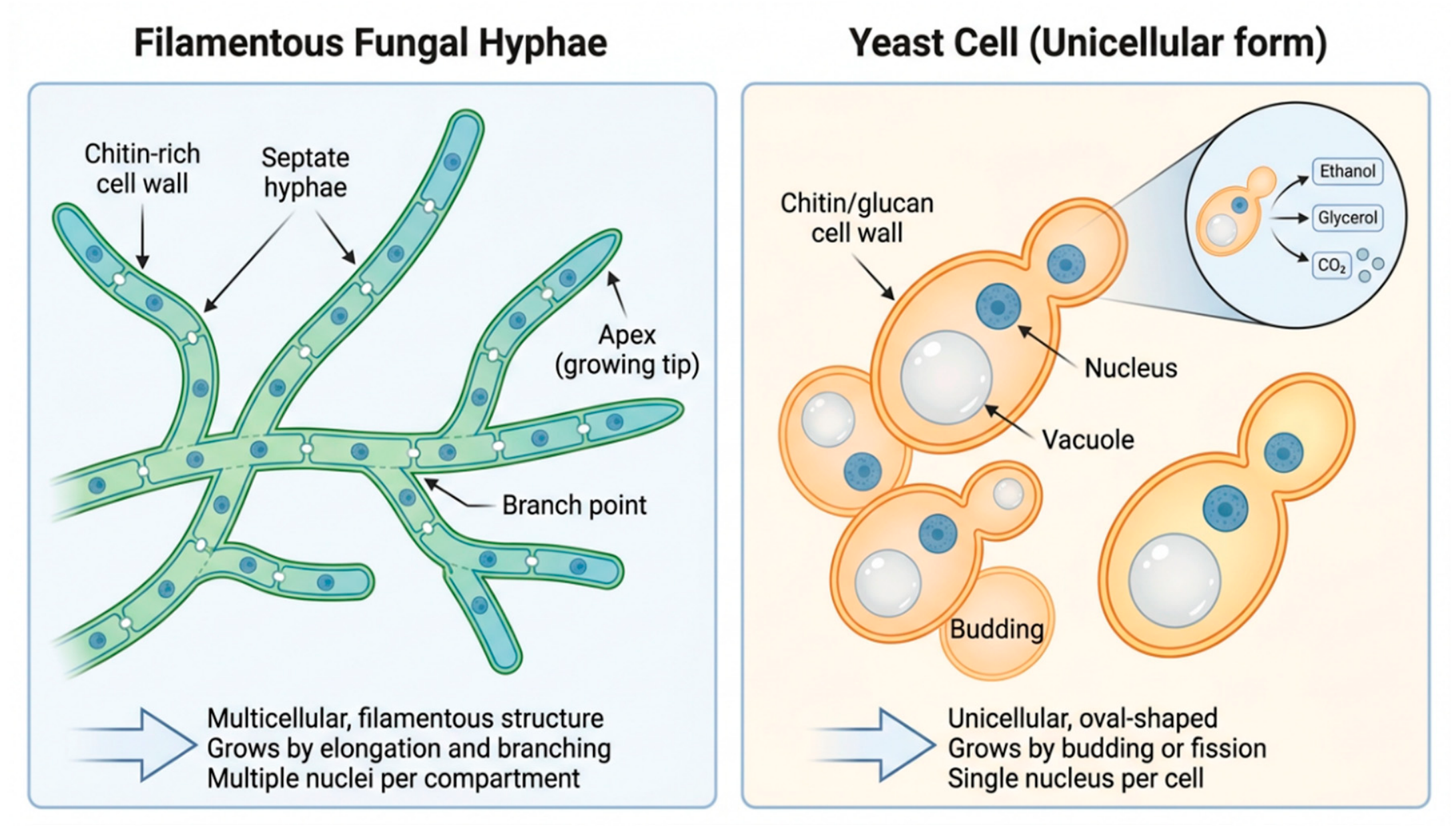
Figure 1. Morphological comparison of filamentous fungi and unicellular yeast. Filamentous Fungal Hyphae (Left): Multicellular, branched septate hyphae enclosed by a chitin-rich cell wall. Annotations indicate apical growing tips, septal divisions, branch points, and multinucleated compartments driving network elongation. Yeast Cell (Right): Unicellular, oval-shaped cells with chitin/glucan cell walls, central vacuoles, and single nuclei reproducing via budding. Inset highlights metabolic production of ethanol, glycerol, and CO2. Figure created with assistance from Figure Labs and subsequently reviewed, scientifically verified and edited by the author.
Preprints 233904 g001
Figure 2. Ethanol formation in fungal cells. Extracellular glucose enters the cytoplasm via hexose transporters and undergoes glycolysis to yield 2 pyruvate, net 2 ATP, and 2 NADH. Pyruvate is decarboxylated by pyruvate decarboxylase to form acetaldehyde and CO2. Alcohol dehydrogenase then reduces acetaldehyde to ethanol, oxidizing NADH back to NAD+ to sustain glycolysis. Synthesized ethanol exits the cell via passive diffusion. Figure created with assistance from SciFig and subsequently reviewed, scientifically verified and edited by the author.
Preprints 233904 g002
Figure 3. Engineered xylose fermentation pathways in Saccharomyces cerevisiae for ethanol production. The oxidoreductive pathway converts D-xylose to xylitol through xylose reductase (XR; XYL1), followed by conversion to D-xylulose by xylitol dehydrogenase (XDH; XYL2). The alternative xylose isomerase (XI) pathway converts D-xylose directly to D-xylulose. D-xylulose is subsequently phosphorylated by xylulokinase (XK; XKS1) to D-xylulose-5-phosphate, which enters the pentose phosphate pathway and connects with central carbon metabolism leading to ethanol production. Differences in cofactor requirements between XR and XDH can contribute to redox imbalance and xylitol accumulation. Figure created with assistance from SciFig and subsequently reviewed, scientifically verified and edited by the author.
Preprints 233904 g003
Figure 4. Isobutanol biosynthesis via the valine biosynthesis and Ehrlich pathways in Saccharomyces cerevisiae. Pyruvate is converted to 2-ketoisovalerate through the mitochondrial valine biosynthesis pathway involving Ilv2, Ilv5 and Ilv3. 2-Ketoisovalerate is then supplied to the cytosolic Ehrlich pathway, where ketoacid decarboxylases and alcohol dehydrogenases convert it to isobutanol. The spatial separation of anabolic and catabolic steps represents an important engineering challenge for efficient isobutanol production. Figure created with assistance from SciFig and subsequently reviewed, scientifically verified and edited by the author.
Preprints 233904 g004
Figure 5. Overview of principal metabolic pathways involved in citric acid production by Aspergillus niger. Glycolysis converts glucose to pyruvate, which supplies acetyl-CoA and oxaloacetate for citrate synthesis. Citrate accumulation is influenced by carbon flux, mitochondrial metabolism, restricted downstream TCA-cycle flux and efficient citrate export. The citrate exporter CexA represents an important engineering target for increasing extracellular citric acid production. Figure created with assistance from SciFig and subsequently reviewed, scientifically verified and edited by the author. .
Preprints 233904 g005
Figure 6. Biosynthetic pathways for the formation of penicillin G and cephalosporin C. Three precursor amino acids, L-α-aminoadipate, L-cysteine and L-valine, are condensed by ACV synthetase to form ACV, which is cyclised by isopenicillin N synthase (IPNS) to form isopenicillin N (IPN). The penicillin G branch uses an acyltransferase to replace the α-aminoadipyl side chain with a phenylacetyl group. In the cephalosporin branch, IPN is first epimerised to penicillin N, followed by ring expansion to deacetoxycephalosporin C (DAOC), hydroxylation to deacetylcephalosporin C (DAC), and acetylation to cephalosporin C. Figure created with assistance from Figure Labs and subsequently reviewed, scientifically verified and edited by the author.
Preprints 233904 g006
Disclaimer/Publisher’s Note: The statements, opinions and data contained in all publications are solely those of the individual author(s) and contributor(s) and not of MDPI and/or the editor(s). MDPI and/or the editor(s) disclaim responsibility for any injury to people or property resulting from any ideas, methods, instructions or products referred to in the content.
Copyright: This open access article is published under a Creative Commons CC BY 4.0 license, which permit the free download, distribution, and reuse, provided that the author and preprint are cited in any reuse.