
Submitted:
15 September 2026
Posted:
16 September 2026
You are already at the latest version
Abstract
In previous research, scholars aimed to develop an algorithm that maximizes power output considering these nonlinear characteristics of solar energy, where delays in the circuit reduce accuracy in signal regulation. Therefore, a fuzzy rule-based control algorithm is implemented using the same previous algorithm concept. The previous concept was based on feedforward incremental conductance (FFINC). It has many limitations, thus, the same concept is used here in the fuzzy logic to overcome the previous limitations. And hence proposed algorithm is a novel adaptive control algorithm. Additionally, the proposed algorithm effectively manages the overshoot and undershoot of solar power under varying sunlight conditions. A set of solar air water generator (SAWG) exhibits nonlinear characteristics, including a 12 V, 3 A DC furnace mounted on a sink for even heat distribution. A brushless high speed low power fan is placed next to furnace to capture moisture-laden air and separate it into pure water. These whole parameters integrated and given its name solar air water generator. It is applicable in various area like army, medical and for hydrogen fuel cells in electric vehicles (EVs). Moreover, the study includes a comparative between feedforward-based MPPT and Fuzzy rule based MPPT.
Keywords:
accuracy
; battery
; delay
; control algorithm
; fuzzy system
; solar energy
1. Introduction
The air water generator (AWG) extract water from humid using a DC fan and DC heater [1]. To design an AWG, a well-skilled researcher is required; otherwise reliability of the AWG becomes weak. The heat sink and heater distance is a key concept of the proposed model, whereas the heat sink is mounted with a well-controlled brushless DC motor. A proposed model gets energy from a solar panel. As it is well acquainted that solar panels give a nonlinear characteristic of generated power. In previous work, maximum power is controlled by feedforward incremental conductance [2], where overshoot in current control and delay in feed power are more pronounced, which can damage the proposed manuscript model. Thus, the author limits these issues and fills the gap of overshoot and undershoot current using another adaptive Fuzzy rule-based artificial intelligence maximum power control of solar panels. In many articles, fuzzy systems highlight the transition from simple models to advanced intelligent model systems that are capable of managing overshoot and undershoot under steady state conditions and in transient conditions. In [3], enhancing power output in wireless sensor networks (WSNs) using a fuzzy rule-based integrated Algorithm is adopted. Whereas, in [4] the maximum power optimising technique using a fuzzy system is reviewed. The graphical user interfaced (GUI) is used [5] to design a control algorithm to optimise MPPT using Fuzzy system. It explain how fast fuzzy rule-based techniques is implemented in the research field. Furthermore, fuzzy logic is being utilized more frequently as a decision-support tool for Maximum Power Point Tracking (MPPT) and high-level grid planning, [6,7] demonstrating its superiority over previous approaches in managing the non-linear dynamics of photovoltaic (PV) systems under abrupt environmental changes. In [8,9,10], combine the simplicity of Perturb and Observe (P&O) with fuzzy logic to eliminate steady-state oscillations. One “Indirect Adaptive Fuzzy Controller” achieves convergence in less than 0.025 seconds, a 50% improvement over standard P&O. Fuzzy systems are increasingly paired with Genetic Algorithms (GA) or Particle Swarm Optimisation (PSO) [11,12] to optimise the membership functions and rule sets automatically. In [13], the T2 FLC-GA model demonstrated a 98.5% accuracy rate in tracking. In addition, adaptive neuro-fuzzy inference systems are used to “learn” the optimal duty cycles for DC-DC converters, providing high-precision tracking under partial shading conditions [14,15]. Whereas, in the previous feedforward incremental conductance controller, to get maximum electrical energy from solar panels under partial shading conditions as it navigates the multiple peaks. Thus, again Fuzzy logic controller (FLC) is good. option to achieve 98% efficiency of power under shading conditions. In addition, the fuzzy controller limits the surge current under transient conditions, as it can damage the air-water generator heater. It optimises the size of the DC-to-DC converter inductors and capacitors, whereas the duty cycle of the zeta converter is optimal due to the adaptive delay control nature of the fuzzy system. Thus, an adaptive delay control of Maximum Power Point Tracking (MPPT) of Solar Air Water Generator (SAWG) using a fuzzy rule-based algorithm is an excellent choice for fast recovery of the output voltage level under partial conditions. It looked into new concepts to create a stand-alone system for a portable SAWG. In general, an experimental lab model and a Simulink model of solar-powered SAWG are innovative in the following ways: An adaptive delay control for maximum power point tracking of solar air water generators using a fuzzy rule-based algorithm.
- A delay controller is developed to control the output voltage of a solar air water generator (SAWG).
- A fuzzy rule-based controller is developed and compared with a feedforward incremental conductance (FFINC) concept-based algorithm
- A comparative rule is developed using FFINC concept
Moreover, a detailed explanation is given in the model part.
2. Model Description and Control Methods
Figure 1 illustrates the development of an intelligent fuzzy rule-based maximum power point tracking system using the feedforward incremental conductance (FFINC) concept. Where a fuzzy logic controller (FLC) extracts maximum power and pulses to the zeta converter that gives a DC output to control the input of SAWG. However, two environmental factors, such as temperature and solar irradiation, affect the efficiency of solar panels. As nonlinear current–voltage (I–V) and power–voltage (P–V) characteristics, solar panels work at a maximum power point. Where optimum electrical power and voltage are obtained. The following terms of the proposed model are given as,
2.1. Maximum Power Point of Solar Panels
The proposed model solar air water generator (SAWG) needs 50 W DC power to operate its heater, whereas, solar panel intermittently operates with environmental conditions. Maximum Power Point Tracking (MPPT) techniques are essential for optimal power system performance [16]. Conventional MPPT methods such as Perturb and Observe (P&O) and Incremental Conductance (IC) are widely used due to their simplicity, but they suffer from drawbacks including steady-state. oscillations, slow tracking under rapidly changing conditions, and reduced efficiency. To overcome these limitations, fuzzy logic–based MPPT systems have gained significant attention. This document discusses a novel rule based fuzzy logic–based MPPT system, highlighting its working principle, advantages, and performance improvements over conventional methods. Need for a Novel MPPT Technique whereas, traditional MPPT algorithms rely on mathematical models or fixed step-size perturbations. While effective under steady conditions, their performance degrades when: Solar irradiance changes rapidly Partial shading occurs temperature varies significantly noise affects voltage and current measurements. A novel MPPT approach should therefore be adaptive, robust, fast, and accurate. Fuzzy Logic Control (FLC) satisfies these requirements as it does not depend on an exact mathematical model and can handle system uncertainties effectively. Overview of Fuzzy Logic Control Fuzzy logic is a form of artificial intelligence that mimics human reasoning by using linguistic variables instead of precise numerical values. Unlike classical logic, which uses binary values (0 or 1), fuzzy logic allows partial truth values between 0 and 1. A fuzzy logic controller consists of three main components: Fuzzification, Inference Engine with Rule Base Defuzzification In an MPPT application, fuzzy logic uses system behavior (changes in voltage, current, or power) to determine how to adjust the duty cycle of a DC–DC converter to reach the MPP. Structure of the Novel Fuzzy MPPT System The novel fuzzy-based MPPT system typically integrates a PV array, a DC–DC converter (such as a boost converter), and a fuzzy logic controller. Input Variables, the most commonly used input variables in a novel fuzzy MPPT system are: Error (E), Change in Error (ΔE) Output Variable. Moreover, the controller continuously adjusts the converter’s duty cycle (D) to ensure operation at the MPP. In equation 1, the ratio of output voltage Vpvo to total input Vdcin and output voltage is used to control the D.
2.2. Solar Air Water Generator
The solar air water generator (SAWG) are device that use solar energy to extract water from air. This process is similar to the thermodynamic processes used in air conditioning, which separate the water content of humid air by condensation. However, a substantial quantity of electrical power is needed for this procedure. In contrast, the suggested method separates water from humid air by applying an electric potential per unit length (E) between two plates. It is separated by a distance (d). This approach uses a mass transfer technique can remove the water content from the air mixture by using a brushless DC fan to deliver a force (F) to a heat sink, as shown in Figure 1. The following expression can be used to evaluate this process.
where Wc is the condensed water / (m³), B is the Boltzmann constant, and T is the temperature in degrees Celsius.
In contrast to a fan, a non-uniform electric potential per unit length (E) is produced to discharge high degree of heat between 30 and 40 °C. The arrangement of a thermal DC heater resembles a sandwich. At sea level, hydrogen peroxide H2O drift towards one end due to this non-uniform E. Water molecules are currently separated by an average of less than one micrometer. Thus, as equation (2) shows, a smaller E is needed to separate water molecules in air.
Two thin, parallel foil plates with small pores make up the design of the heat DC heater. Air encounters an electric field when it tries to enter these pores. Water molecules are propelled under these circumstances without colliding, which permits them to enter the heat sink and eventually a tank. This gathered water is either distilled or pure. By using renewable energy and lowering dependency on power, this device can produce water in isolated locations where water is scarce. On the desert area and mountain area, solar air water generators (SAWG) can also supply potable water.
2.3. Fuzzy Rule-Based Control Algorithm
In previous work, a feed-forward incremental conduction (FFINC) was proposed for a pulse DC-to-DC converter during maximum power point tracking of a solar panel. It evaluates the signals and controls the duty cycle under all solar insolation conditions. Whereas it has some drawbacks, the author has proposed a novel fuzzy rule-based control algorithm that is developed using an FFINC-based concept. The novelty of the proposed fuzzy MPPT system is given as follows,
- Adaptive membership functions that adjust dynamically based on operating conditions.
- Optimised fuzzy rule base designed using simulation, and expert knowledge
- Variable step size control, allowing fast convergence and reduced oscillations
- Improved robustness under partial shading and rapidly changing irradiance
2.3.1. Maximum Power Point Tracking Control Algorithm
The efficiency of a PV system is strongly influenced by environmental factors, including temperature and sun radiation. PV panels function at a special location called the Maximum Power location (MPP), when maximum electrical power is taken, because of its nonlinear current–voltage (I–V) and power–voltage (P–V) properties. Maximum Power Point Tracking (MPPT) methods are crucial for the best possible PV system performance because this point is always changing due to shifting environmental circumstances. Thus, previous work has some drawbacks, including steady-state oscillations, slow tracking under rapidly changing conditions, and reduced efficiency. To overcome these limitations, fuzzy logic–based MPPT systems have gained significant attention. This document discusses a novel fuzzy logic–based MPPT system, highlighting its working principle, advantages, and performance improvements over FFINC methods. Need for a Novel MPPT Technique FFINC MPPT algorithms rely on mathematical models or fixed step-size perturbations. While effective under steady conditions, their performance degrades when: Solar irradiance changes rapidly, partial shading occurs, temperature varies significantly voltage and current measurements. Thus, a novel MPPT approach should therefore be adaptive, robust, fast, and accurate. Fuzzy Logic Control (FLC) satisfies these requirements as it does independent on an exact mathematical model and can handle system uncertainties effectively.
2.3.2. A Fuzzy Rule-Based MPPT
In Figure 2, a control of duty cycle using the proposed fuzzy system is transferred to the zeta converter. And get desire output that supplies DC electrical power to the SAWG. Moreover, input of the fuzzy from solar panel voltage (v) and current (i). Additionally, it sensed memories of two input signals to evaluate di/dv and i/v. These two values give the error (e) signals to design the Fuzzifier of fuzzy, whereas Fuzzification is the input-output membership functions (MF). In the second stage, Interface engine with rule based is designed.
The fuzzy rule base is the core of the controller and is composed of IF–THEN rules are given as follows,
IF Error (e) is zero, it means di/dv is equal to i/v so change in error (ΔD) is zero. Thus, output value is the actual duty cycle (D). A final duty cycle is evaluated as,
D= Pulse at MPPT
IF Error (e) is Positive, it means di/dv is greater than i/v so change in error (ΔD) subtract from the actual duty cycle (D) till to reach MPPT. It is given as follows,
D-ΔD= Pulse at MPPT
IF Error (e) is negative, it means di/dv is lesser than i/v so change in error (ΔD) add to the actual duty cycle (D) till to reach MPPT. It is given as follows,
D+ΔD= Pulse at MPPT
In Figure 3(a), a rule viewer to understand the input and output relation of the membership function. Whereas, a surface viewer is shown in Figure 3(b) to understand the fuzzy rule design of the control algorithm. An adaptive output is crisp value, which is the defuzzification process of the fuzzy control system.
These rules emulate the decision-making process of an experienced human operator who understands the PV system behavior
3. Results and Discussion
An experiment model of solar air water generator is shown in the Figure 4. Where, air water generator takes electrical energy from solar panel and the performances are evaluated using Desktop, electrical sensor based panel and power analyzer. In addition to, the fuzzy rule-based maximum power point tracking system’s performance is observed and contrasted with that of the FFINC controller. Whereas, the performance of the prototype of the solar air water generator (SAWG) is presented to determine its value. A prototype design inside the lab with a 3 A, 12 V DC hearter and 10 W DC fan to induced moist air to the DC heater. The prototype is set of solar panel, MPPT, DC to DC zeta converter to charge the battery and set of solar and battery supplies electrical power to SAWG. In Figure 5, using MATLAB/Simulink model runs, a comparative analysis is provided to comprehend the usefulness of the suggested control strategy. On the other hand, Figure 6 shows how well the suggested control algorithm performs in different solar insolation scenarios. Moreover, the hardware results are presented in Figure 7, Figure 8, Figure 9 and Figure 10 using a power analyzer.
3.1. Control Algorithm’s Performance Using the MATLAB SIMULINK Model
In order to compare the algorithms’ performance, Figure 5 shows how well the fuzzy system and FFINC algorithm perform in figuring out the solar panel’s maximum power output. The proposed fuzzy rule based algorithms’ results are represented by orange colors whereas FFINC algorithm results are shown in blue colours for the insolation of 1000 W/m². The solar voltage (Vpv) and solar current (Ipv) levels are 19.6 V and 40 A respectively under 0.8 duty cycle (D). In the proposed algorithm, the delay and overshoot and undershot are controlled as compared to the FFINC based algorithm. It is shown in the Figure 5 whereas output of load voltage (VL) and load current (IL) are controlled by the proposed control algorithm. It is seen the comparative performance of the proposed algorithm is satisfactory, and a more comparative study is given in Table 1. Moreover, in Figure 6, under 600 W/m² in orange, and 200 W/m² in red are shown to recognise the performance of novel algorithm. At these levels, the input Vpv and Ipv are recorded as 19.2 V and 24 A for the uppermost insolation and 17.4 V and 8 A for the lowest range of insolation. Notably, the D are 0.78 and 0.61 to produce constant VL and IL output on its general behaviour, is greatly influenced by insolation. In the meantime, there are only minor variations in the normal voltage level. The duty cycle (D) is the primary focus of the results. The duty cycle values are 0.61, 0.60, and 0.58 based on the computations. Nevertheless, under 1000 W/m2, 600 W/m2, and 200 W/m2, the observed results are 0.8, 0.78, and 0.61, respectively. The innovative controller is the cause of this disparity. It tracks the maximum power in solar panels by adding a specific value to D. The Simulink results show that the suggested control algorithm works well.
1.2. Hardware Performance
An experimental required parameter is given in Table 2. The open-circuit voltage under different insolation levels is evaluated using the same parameters in the hardware model of solar panels: 1000 W/m², 600 W/m², and 200 W/m². The open-circuit voltages (Vpv) in Figure 7 are 20.5 V,19.3 V, and 16.8 V, respectively. These results show how Vpv varies over a broad range of solar insolation. Throughout the whole testing process, the DC to DC zeta converter voltage (VL) stays constant at 12.5 V. The solar current (Ipv), which has a discernible effect The PV panels work satisfactorily overall. In Figure 8, the PV solar panel’s input voltage under dynamic , and 16.8 V, respectively. These results show how Vpv varies over a broad range of solar insolation. The PV panels work satisfactorily overall. In Figure 9, the PV solar panel’s input voltage under dynamic current (IL) remain constant throughout different solar insolation levels, while in Figure 10, at a minimum solar insolation of 200 W/m2, the experimental PV panel generates 14.8 V, with VL changing very minimally to 11.7 V. Wheras a digital multimeter records, both solar current (Ipv) and load current (IL) are 4 A and 3.5 A respectively whereas for Vpv and VL are 16.3 V and 11.8 V respectively under full insolation. Thus, the experimental work of solar air water generator to extract water is cheap and portable whereas it performance is satisfactory. Overall, under all tested solar insolation circumstances, the SAWG performs satisfactorily when utilizing a solar panel.
4. Conclusions
The performance of a novel design of a fuzzy rule-based control algorithm is evaluated using MATLAB/SIMULINK and compared with feedforward incremental conductance. A proposed algorithm controls the delay to optimize maximum power from the solar PV system and, in addition, controls the overshoot and undershoot of the voltage and current under dynamic load conditions. Under various conditions of solar insolation, the proposed controller is able to control the delay of firing and optimize the output power of solar panels. Moreover, comparative results indicate the delay in circulation of current in the main circuit is controlled using novel algorithm whereas, the FFINC-based algorithm has more delay from 0-5 seconds to get maximum power from the solar panels. And under dynamic conditions, the change over time is more, while novel algorithms that overcome these limitations can control the power of a hardware model of SAWG. Thus, performance of novel power control algorithm is good.
Acknowledgments
The authors extend their appreciation to the Deanship of Graduate Studies and Scientific Research at Jazan University for funding this research work through the project number “JU-RSP2026”.
References
- Hasan M., Bashiri A. H., Alqudaihi A. A., (2025): An adaptive control portable air water generator powered by solar photovoltaic, Environmental Technology & Innovation, 40. [CrossRef]
- Hasan M., (2026): Employing an innovative design for DC air conditioners and optimizing various energy resources, Sci. Tech. Energ. Transition, 81, 5. [CrossRef]
- W. Xiong, F. Liu, J. Jiang, X. Yao and C. L. P. Chen, “FBLSC: Fuzzy BLS-Based Competitive Clustering Optimization Algorithm for Energy Efficient in Wireless Sensor Networks,” in IEEE Sensors Journal, vol. 26, no. 6, pp. 9300-9316, 15 March15, 2026. [CrossRef]
- T. M. de Lima and J. A. C. B. Oliveira, “FPGA-Based Fuzzy Logic Controllers Applied to the MPPT of PV Panels—A Systematic Review,” in IEEE Transactions on Fuzzy Systems, vol. 32, no. 8, pp. 4260-4269, Aug. 2024. [CrossRef]
- K. Kayisli, R. Z. Caglayan and I. Colak, “PV-MPPT Lab: A GUI-Based Education Tool for MPPT Techniques,” in IEEE Transactions on Education, vol. 67, no. 3, pp. 453-461, June 2024. [CrossRef]
- Saket S., and Ramesh K., (2024): Optimizing PV integration: Addressing energy fluctuations through BIPV and rooftop PV synergy, Sci. Tech. Energ. Transition, 79, 6. [CrossRef]
- S. Tabassum, A. R. V. Babu, and D. K. Dheer, (2024): Real-time power quality enhancement in smart grids through IoT and adaptive neuro-fuzzy systems, Science and Technology for Energy Transition, 79, 89, . [CrossRef]
- Melhaoui, M., Rhiat, M., Oukili, M. et al. (2025) Hybrid fuzzy logic approach for enhanced MPPT control in PV systems, Sci Rep, 15, 19235. [CrossRef]
- Oumaima M., Khalid K., and Mohamed E., (2025): A new hybrid MPPT algorithm combining P&O and fuzzy logic techniques, International Journal of Power Electronics and Drive Systems (IJPEDS), 16(1), 497 http://doi.org/10.11591/ijpeds.v16.i1.pp497-508.
- Hazzab A., Gouabi H., Habbab M., Rezkallah M., Chandra A., and Ibrahim H., (2024): Fuzzy Logic Scheduling of the Duty Cycle Perturbation for Optimized MPPT Controller of PV/Wind Hybrid System, IEEE Transactions on Industry Applications, 61 (1), 642-652. [CrossRef]
- Bo S., Peixi P., Guang T., Mingjun P., Luntong Li, Yonghong T., (224): A fuzzy logic constrained particle swarm optimization algorithm for industrial design problems, Applied Soft Computing,167, Part C,112456. [CrossRef]
- Shaikh, M.S., Lin, H., Xie, S. et al. (2025): An intelligent hybrid grey wolf-particle swarm optimizer for optimization in complex engineering design problem. Sci Rep, 15, 18313. [CrossRef]
- Rinesh S., Arun M., Kumar S N., Prajitha C., and Kumar A. P. S.,(2025): Evaluating the type 2 fuzzy logic controller with multilayer perceptrons for optimal tracking of solar photovoltaic systems, International Journal of Low-Carbon Technologies, 20, 394–403,. [CrossRef]
- Bakare, M.S., Abdulkarim, A., Shuaibu, A.N. et al.,: (2025), Enhancing solar power efficiency with hybrid GEP ANFIS MPPT under dynamic weather conditions. Sci Rep, 15, 5890. [CrossRef]
- K. -Y. Chou, Y. -W. Yeh, Y. -T. Chen, Y. -M. Cheng and Y. -P. Chen, “Adaptive Neuro Fuzzy Inference System Based MPPT Algorithm applied to Photovoltaic Systems Under Partial Shading Conditions,” 2020 International Automatic Control Conference (CACS), Hsinchu, Taiwan, 2020, pp. 1-6. [CrossRef]
- Lyu G., Arsalan M. S., Syed H. H. S.,, Shoaib S., and Piotr M., (2025): Maximum power point tracking strategies for solar PV systems: A review of current methods and future innovations, Results in Engineering, 28,107227. [CrossRef]
Figure 1.
A proposed model of solar air water generator.
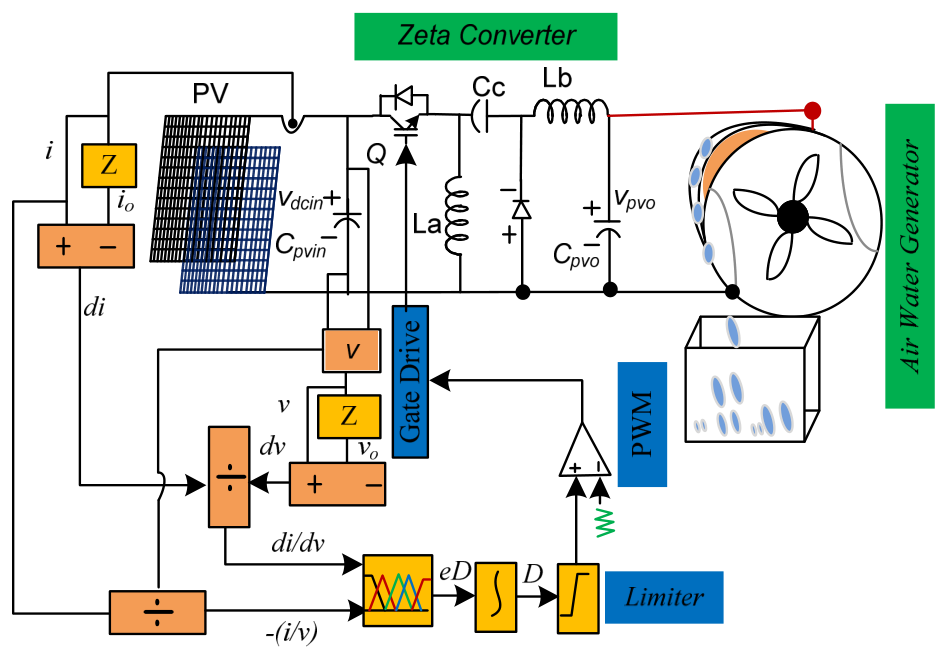
Figure 2.
Control of duty cycle using fuzzy rule based inference system.
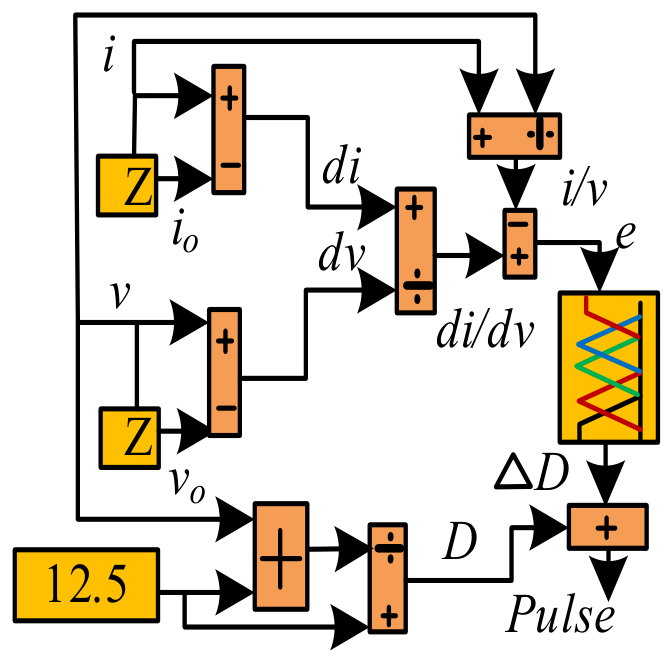
Figure 3.
(a). Rule Viewer of Fuzzy logic control algorithm. (b). Surface Viewer of Fuzzy logic control algorithm.
Figure 3.
(a). Rule Viewer of Fuzzy logic control algorithm. (b). Surface Viewer of Fuzzy logic control algorithm.
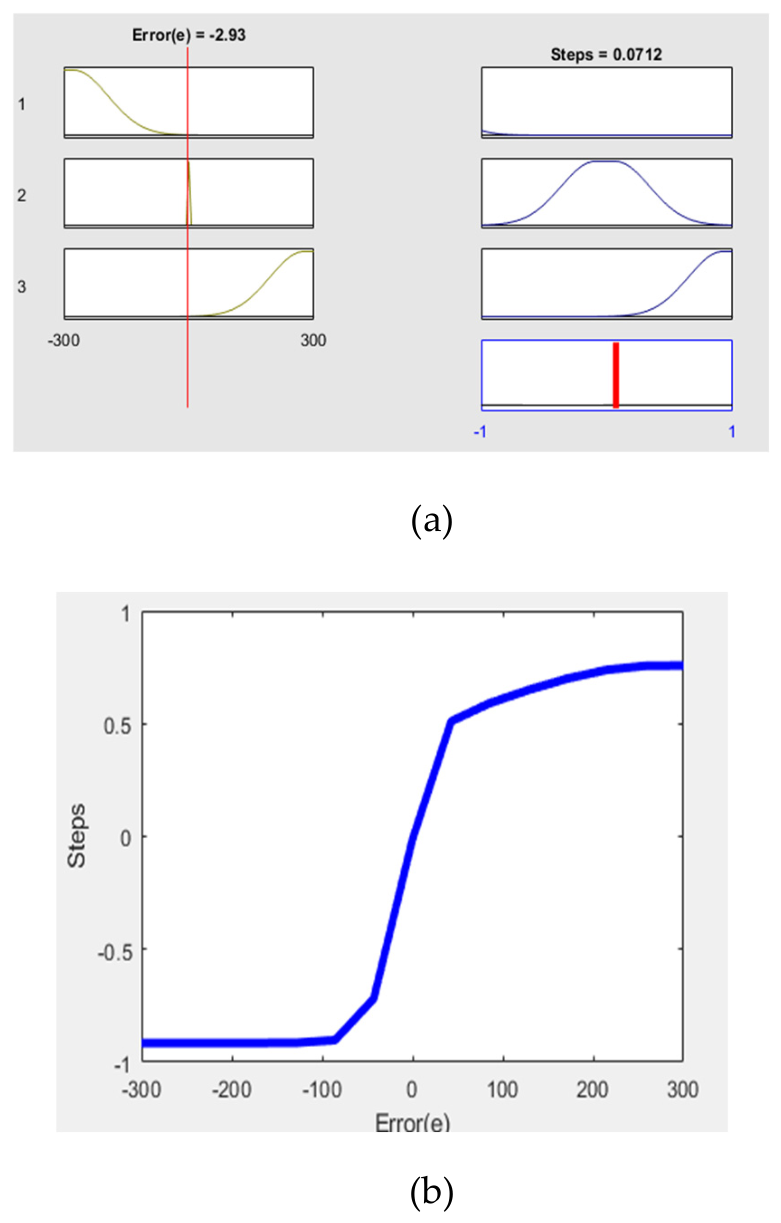
Figure 4.
Experimental model for the solar air water generator.
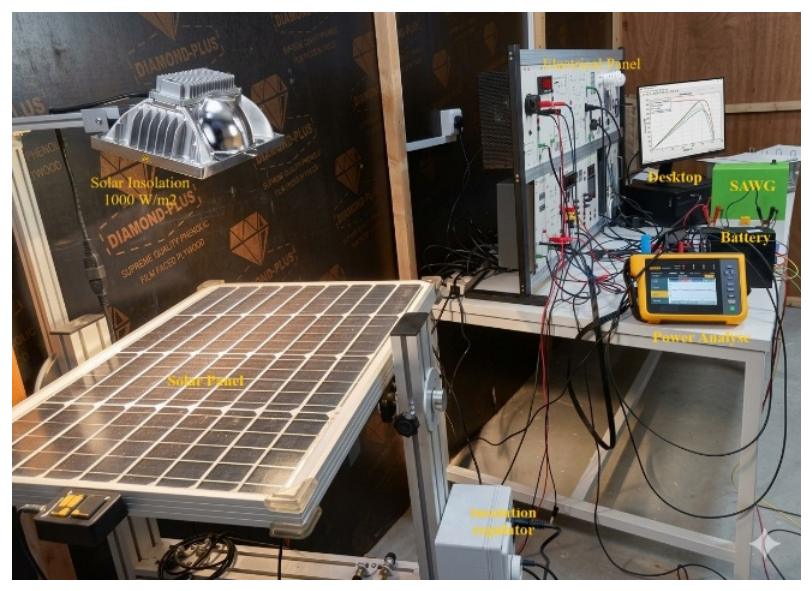
Figure 5.
A comparative performance of FFINC algorithm and Proposed Fuzzy rule based control algorithm.
Figure 5.
A comparative performance of FFINC algorithm and Proposed Fuzzy rule based control algorithm.
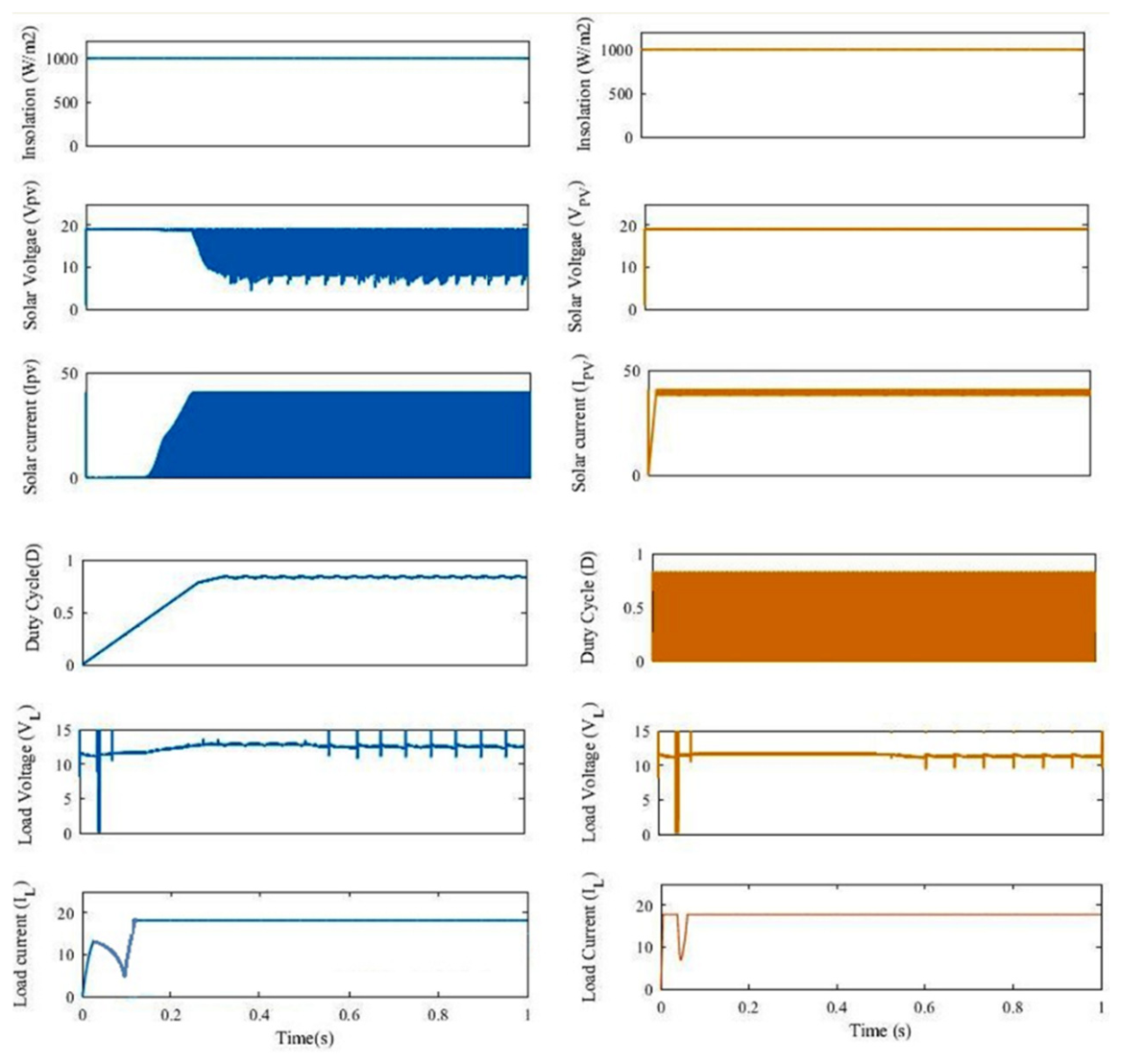
Figure 6.
A fuzzy rules algorithm performance under 600 and 200 W/m2 solar insolations.
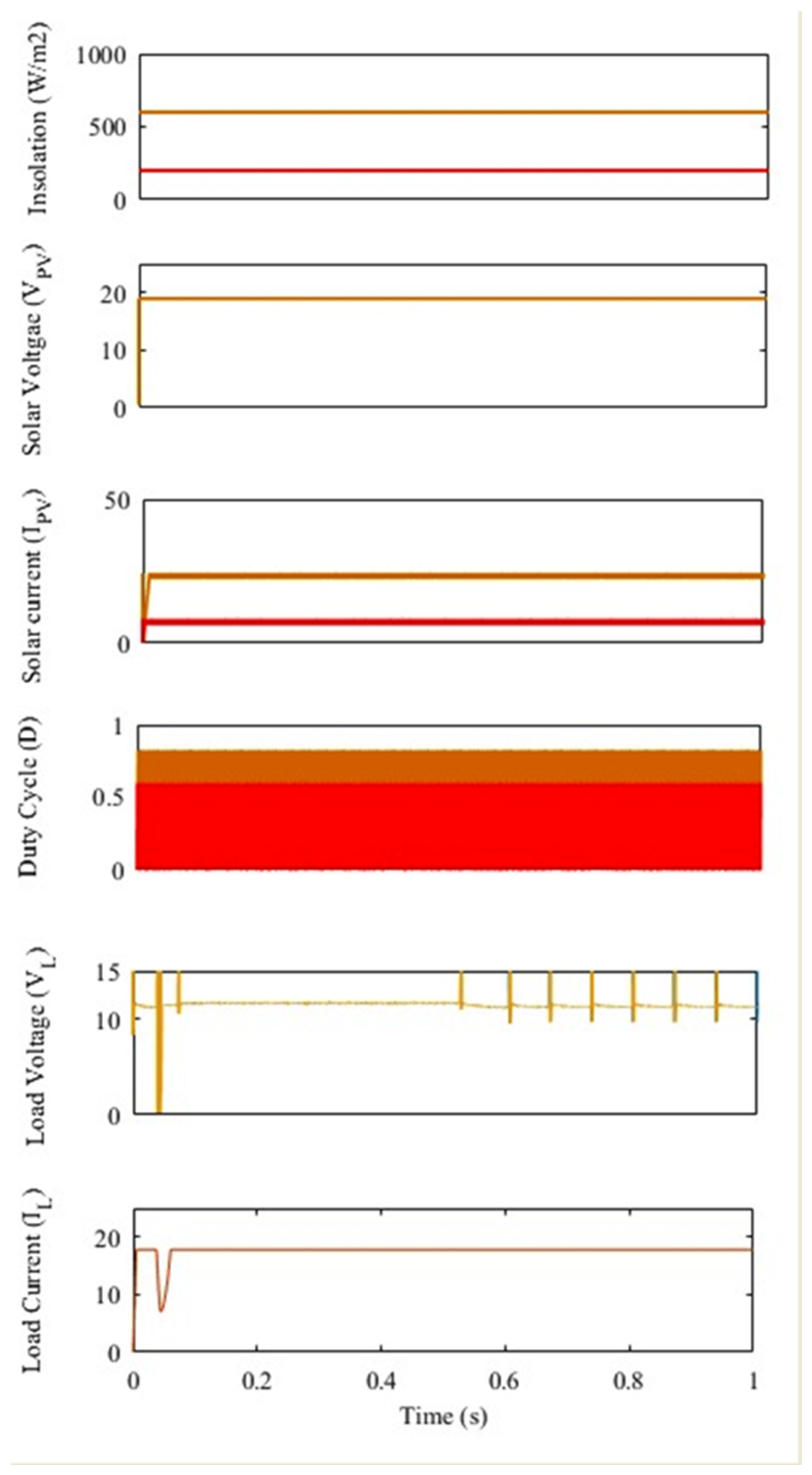
Figure 7.
Hardware model of solar PV performance under various conditions of solar insolation.
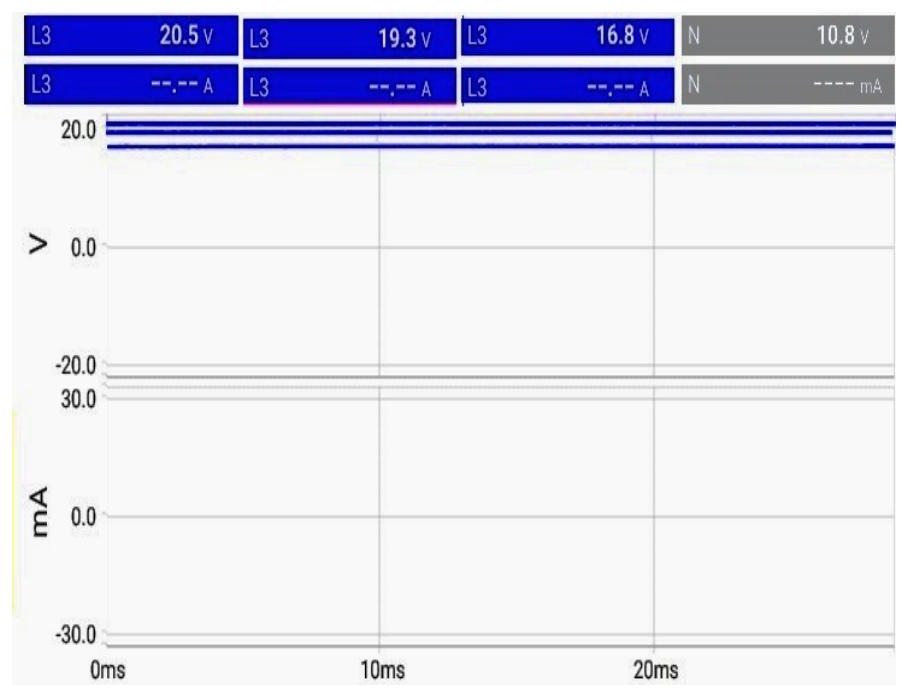
Figure 8.
Performance of solar PV voltage and dynamic load voltage under 1000 W/m2 insolations.
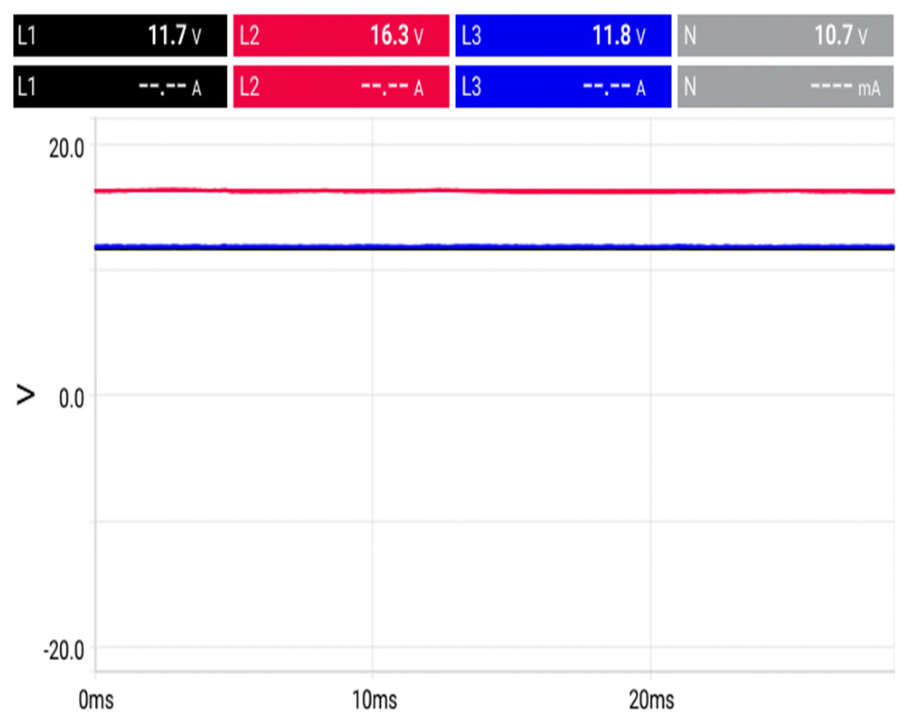
Figure 9.
Performance of solar PV voltage and dynamic load voltage under 600 W/m2 insolations.
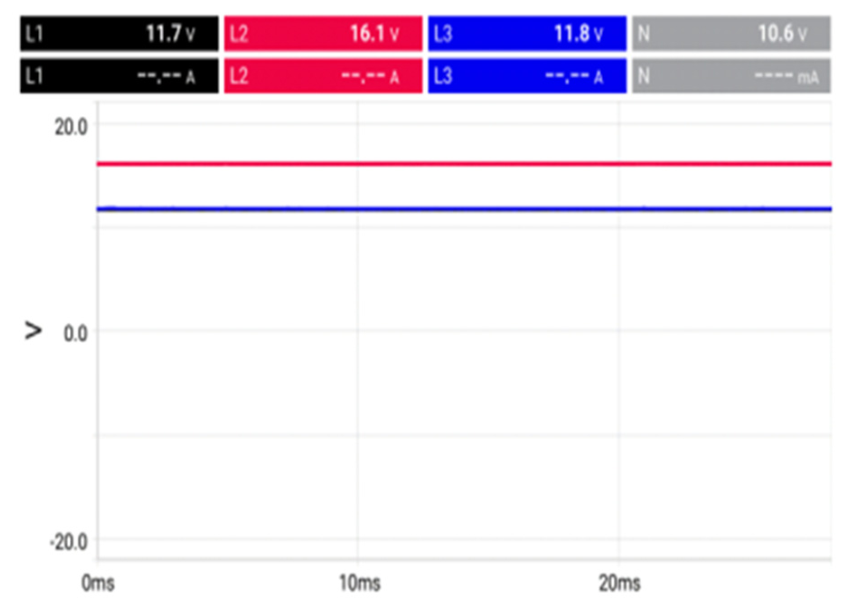
Figure 10.
Performance of solar PV voltage and dynamic load voltage under 200 W/m2 insolation.
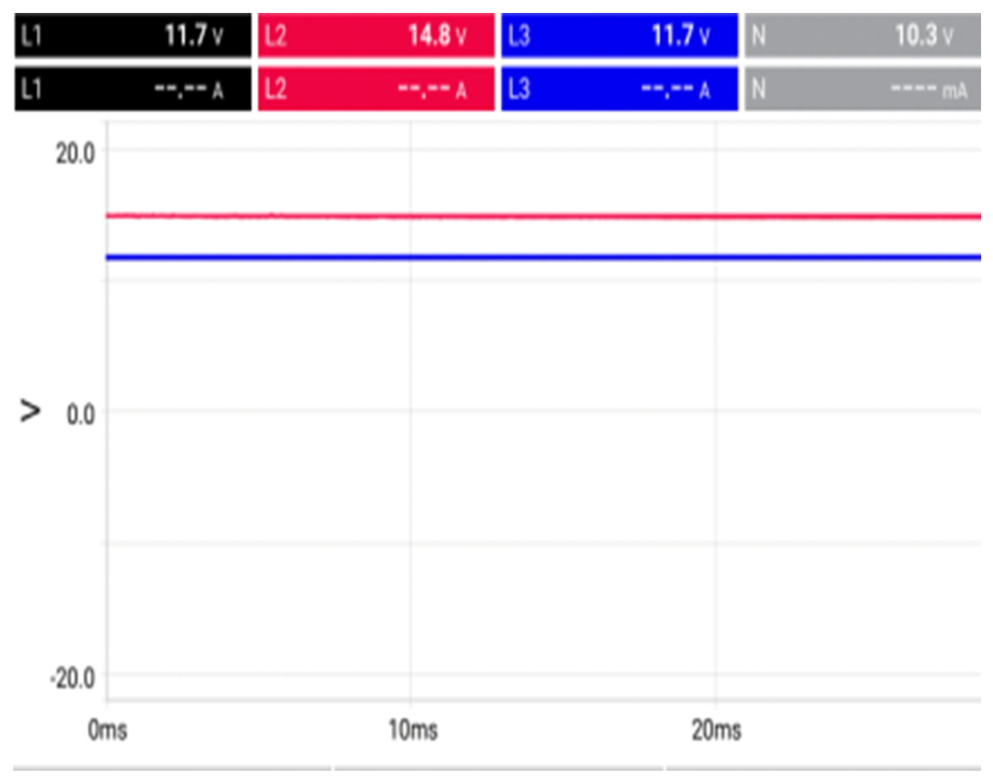

Table 1.
A comparative results of Fuzzy and FFINC control algorithm performance.
| Control Algorithm | Delay | Overshoot/Undershoot |
|---|---|---|
| Fuzzy System | zero | Comparatively low |
| FFINC | 0.5 second | Comparatively high |
Table 2.
Experiment parameters.
| Name of the parameters | Specification |
| PV panel | 50 W |
| Power analyzer | 14, 00 x 13, 00 x 6, 00 |
| Matlab | 2019b |
| Solar Insolations | 1000 W/m2 |
| Temperature Sensor | 0-200 0C |
| Battery | 12 V, 34 Ah |
| Converter | Zeta converter |
| Brushless DC fan | 12 V, 10 W |
| Heater | 4 A, 12 V |
| Heat Sink | High quality |
| Water Tank | 2 Litre Capacity removable |
Disclaimer/Publisher’s Note: The statements, opinions and data contained in all publications are solely those of the individual author(s) and contributor(s) and not of MDPI and/or the editor(s). MDPI and/or the editor(s) disclaim responsibility for any injury to people or property resulting from any ideas, methods, instructions or products referred to in the content. |
© 2026 by the authors. Licensee MDPI, Basel, Switzerland. This article is an open access article distributed under the terms and conditions of the Creative Commons Attribution (CC BY) license (http://creativecommons.org/licenses/by/4.0/).
Copyright: This open access article is published under a Creative Commons CC BY 4.0 license, which permit the free download, distribution, and reuse, provided that the author and preprint are cited in any reuse.