

Submitted:
14 September 2026
Posted:
15 September 2026
You are already at the latest version
Abstract
Building fires and industrial thermal disasters rank among the most devastating hazards confronting modern societies, causing thousands of fatalities, billions of dollars in economic losses, and lasting environmental damage each year. The increasing complexity of built environments — including high-rise structures, underground facilities, and chemical processing plants — demands a commensurate advancement in emergency rescue technologies. This review provides a comprehensive examination of state-of-the-art technologies employed in the detection, suppression, and rescue operations associated with building fires and industrial thermal disasters. Key domains covered include: early fire detection systems integrating the Internet of Things (IoT), artificial intelligence (AI), and machine learning; advanced fire suppression technologies such as water mist, gaseous agents, and high-expansion foam; autonomous and semi-autonomous rescue robotics; unmanned aerial vehicles (UAVs) equipped with thermal imaging; Building Information Modeling (BIM) and digital twins for emergency planning and evacuation simulation; personal protective equipment (PPE) advancements including biometric wearables; and communication and situational-awareness systems. Special attention is given to industrial thermal hazards including petrochemical fires, hazardous material incidents, BLEVE events, and dust explosions. The paper concludes with a critical synthesis of current research gaps and recommendations for future work, emphasizing integrated, data-driven, and human-centered approaches to emergency rescue.
Keywords:
building fire
; industrial thermal disaster
; emergency rescue technology
; IoT fire detection
; firefighting robots
; UAV thermal imaging
; BIM evacuation
; personal protective equipment
; hazmat response
; digital twin
; risk assessment
1. Introduction
Fire remains one of humanity’s oldest and most persistent adversaries, yet its destructive potential has grown dramatically in the context of modern industrial civilization. The convergence of densely populated urban environments, complex multi-story structures, and energy-intensive industrial processes has created landscapes of thermal risk that pose profound challenges to emergency responders worldwide. According to the U.S. Fire Administration,
fire departments in the United States respond to approximately 1.3 million fire incidents annually, resulting in over 2,500 civilian fatalities, 12,000 injuries, and property losses exceeding $14 billion per year [1]. Globally, the World Health Organization estimates that fire-related injuries and deaths disproportionately affect low- and middle-income countries where fire safety infrastructure remains underdeveloped [28].
Building fires in high-rise residential towers, commercial complexes, hospitals, and underground transit systems present unique challenges: limited egress routes, rapid smoke accumulation at ceiling level, difficulty of external rescue access, and the presence of vulnerable occupant populations including the elderly, children, and mobility-limited individuals. Meanwhile, industrial thermal disasters at oil refineries, chemical plants, natural gas facilities, and manufacturing sites carry additional dimensions of hazard, including toxic gas releases, boilover events, BLEVE (Boiling Liquid Expanding Vapor Explosion), and secondary explosions that can overwhelm conventional firefighting resources and threaten surrounding communities.
The discipline of emergency rescue technology has evolved dramatically over the past two decades, driven by advances in sensor miniaturization, wireless communications, robotics, materials science, and artificial intelligence. Figure 1 presents global fire statistics illustrating the scale and distribution of the problem across building types, motivating the need for technological advances across the full spectrum of incident response.
This review article systematically surveys the current landscape of emergency rescue technology applicable to building fires and industrial thermal disasters. The scope encompasses the full emergency response cycle — from pre-event risk assessment and early detection through active suppression and victim rescue to post-incident investigation. The paper is
organized to progress from foundational concepts through specialized technological domains, culminating in a synthesis of future research priorities and policy recommendations.
2. Nature and Typology of Fire and Thermal Disasters
2.1. Classification of Building Fires
Building fires are classified based on occupancy type, fuel load, structural characteristics, and the presence of specialized hazards. Structural fires in residential occupancies are the most frequent category, yet generally involve lower peak heat release rates than commercial or industrial settings. High-rise building fires present distinctive challenges: the stack effect in tall structures drives smoke upward through elevator shafts and stairwells; temperatures in corridors can reach 1,000°C within minutes of ignition; and the evacuation of thousands of occupants must be managed simultaneously. Underground fires — in subway stations, basement commercial complexes, or road tunnels — generate particularly hazardous smoke accumulation conditions and severely impede firefighter access.
The fire tetrahedron — fuel, oxidizer, heat, and uninhibited chain reaction — governs ignition and propagation. In modern buildings, synthetic polymer-based furnishings and construction materials release high heat fluxes and toxic combustion products, including hydrogen cyanide (HCN), carbon monoxide (CO), and particulate-bound polycyclic aromatic hydrocarbons (PAHs). Research by Babrauskas and Peacock established that CO toxicity accounts for the majority of fire fatalities, frequently preceding thermal injury as the lethal mechanism [27].
2.2. Industrial Thermal Disasters
Industrial thermal disasters encompass a broad spectrum of scenarios united by large energy releases in environments with elevated fuel inventories. Understanding their distinct characteristics is fundamental to designing appropriate rescue technologies and response protocols:
- Pool fires: burning of spilled liquid fuels on a surface, common in refinery tank farms and fuel storage facilities. These can generate radiant heat fluxes exceeding 150 kW/m², challenging thermal limits of firefighter PPE at distances of tens of meters.
- Jet fires: high-velocity release and ignition of pressurized gas or liquid, producing elongated flame envelopes with intense local thermal impact. Jet fires impinging on pressure vessels can cause rapid structural failure and BLEVE escalation.
- BLEVE (Boiling Liquid Expanding Vapor Explosion): catastrophic vessel failure when a vessel containing superheated liquid loses structural integrity, propelling burning fragments and generating a fireball. The 1984 PEMEX LPG disaster in Mexico City killed over 500 people.
- Flash fires: near-instantaneous combustion of vapor clouds formed from evaporating flammable liquids or gas releases. Flash fires are especially hazardous to personnel caught in the open and do not sustain combustion long enough for suppression.
- Dust explosions: combustion of suspended combustible dust particles — grain, coal, metal — in air. Primary explosions are often followed by devastating secondary events as pressure waves disturb accumulated dust deposits.
- Hazardous material fires: combustion involving toxic, corrosive, or reactive chemicals, requiring specialized suppression agents and imposing elevated PPE requirements on all responders.

Table 1.
Classification of major fire and thermal disaster types with associated hazards, rescue challenges, and primary suppression agents.
Table 1.
Classification of major fire and thermal disaster types with associated hazards, rescue challenges, and primary suppression agents.
| Disaster Type | Key Thermal Hazard | Primary Rescue Challenge | Suppression Agent |
| High-rise Building Fire | Smoke, radiant heat >80 kW/m² |
Victim evacuation, stairwell access | Water spray, sprinklers |
| Pool Fire (Refinery) | Radiant heat >150 kW/m², boilover | Crew exposure, foam application | AFFF/F3 foam, dry chemical |
| BLEVE (LPG Vessel) | Fireball 1,200°C, fragment projection | Exclusion zone, standoff suppression | Water cooling, standoff monitor |
| Flash Fire | Thermal flash burn <30 s duration | Speed exceeds response; prevention | Gas dispersion; no suppression |
| Dust Explosion | Overpressure wave, secondary blasts | Structural collapse, secondary event | Inerting (N₂), pre-ignition suppression |
| Hazmat Chemical Fire | Toxic gas, reactive products | Contamination, limited PPE entry | Specialist agents, foam blanket |
3. Early Fire Detection Technologies
3.1. Conventional Detection Systems
Conventional fire detection relies on ionization smoke detectors (sensitive to flaming fires), photoelectric detectors (better suited to smoldering), heat detectors (fixed temperature and rate-of-rise types), and flame detectors (UV, IR, combined UV/IR). These systems form the backbone of fire alarm infrastructure governed by NFPA 72 and EN 54. While reliable and cost-effective, conventional point detectors are limited by their inability to provide spatial information about fire progression and their vulnerability to false alarms from cooking, steam, and industrial process heat.
3.2. IoT-Enabled Smart Fire Detection
The integration of IoT into fire detection represents a transformative advance. IoT-based systems deploy networks of interconnected sensors — temperature, smoke, CO, CO₂, and VOC sensors — that communicate wirelessly to cloud platforms for real-time monitoring. A 2025 study described an IoT-based smart building fire cloud monitoring system integrating low-cost sensors with real-time video surveillance; the system’s artificial neural network model achieved greater than 95% detection accuracy while dynamically planning evacuation routes based on live fire location data [IoT Journal, 2025]. Al-Chalabi et al. (2024) demonstrated an ESP32-based smart pre-alert detection system integrating cloud analytics via Firebase, showcasing the potential for remote monitoring of at-risk industrial sites from any global location [6].
3.3. AI and Machine Learning in Fire Detection
Convolutional neural networks (CNNs) trained on thermal and infrared imaging datasets identify flame signatures with substantially higher accuracy than conventional UV/IR detectors. Research reviewed by Medewar et al. (2024) demonstrated that advanced machine learning algorithms have significantly improved early warning capabilities, reducing false alarms while enhancing detection speed — AI-enhanced systems have been demonstrated to achieve detection speeds three times faster than conventional devices, a critical advantage given that the first few minutes are decisive for suppression and evacuation outcomes [5]. The YOLO-SF architecture, published in IEEE Access (2023), demonstrated real-time flame boundary delineation with high precision, enabling accurate assessment of fire extent and rate of spread [21].
Figure 2 presents a comparative performance analysis of fire detection technologies, quantifying the marked improvements in accuracy, false alarm rate, and response time achieved through IoT multi-sensor fusion and AI-based approaches.
3.4. Thermal Imaging in Detection and Rescue
Thermal imaging cameras (TICs) operating in the 8–14 μm long-wave infrared band generate heat maps revealing fire seats obscured by smoke and body heat signatures of trapped victims. Modern handheld TICs weigh under 500 g and provide real-time imagery with temperature resolution below 0.1°C. Fixed-mount industrial versions continuously monitor process equipment for anomalous heat signatures indicative of imminent failure — a key preventive technology for petrochemical facilities where early identification of overheating equipment can prevent ignition.
4. Fire Suppression Technologies
4.1. Water-Based Suppression Systems
Water remains the dominant suppression agent due to its exceptional specific heat capacity (4.18 kJ/kg·K) and heat of vaporization (2,260 kJ/kg), enabling absorption of enormous heat energy per unit mass. Automatic sprinkler systems control or extinguish fires in approximately 95% of activations before fire department arrival. High-pressure water mist systems — generating droplets smaller than 1 mm diameter — extend water’s applicability to machinery spaces, data centers, and heritage buildings where conventional sprinkler discharge volumes would cause unacceptable secondary damage. By vaporizing rapidly upon contact with hot gas layers, water mist simultaneously absorbs heat and displaces oxygen through two complementary suppression mechanisms.
4.2. Chemical Suppression Agents and Market Trends
Aqueous Film Forming Foam (AFFF) has been the gold standard for hydrocarbon fire suppression since the 1960s, creating a thin aqueous film that seals fuel vapor from air. However, per- and polyfluoroalkyl substance (PFAS) content in legacy AFFF formulations — highly persistent "forever chemicals" — has driven intensive development of fluorine-free foam (F3) alternatives. Clean agent systems including HFC-227ea (FM-200), IG-541, and fluoroketone-based agents such as 3M Novec 1230 provide total flooding suppression for enclosed spaces without damaging residue.
Figure 6 presents the effectiveness matrix of major suppression agents across fire classes, alongside the rapidly growing global fire suppression technology market, projected to reach $69.8 billion by 2025.
4.3. Advanced Suppression for Industrial Settings
Industrial fire suppression must contend with scenarios overwhelming conventional systems. Large hydrocarbon storage tank fires require fixed foam chambers, subsurface injection systems, and monitor nozzles delivering thousands of liters per minute. Water spray curtains around LPG vessels during a threatened BLEVE absorb radiant heat and maintain vessel structural integrity. The U.S. Chemical Safety and Hazard Investigation Board (CSB) has documented multiple incidents where inability to remotely isolate process equipment dramatically escalated fire consequences, driving recommendations for remotely operated isolation valves actuatable from outside the exclusion zone [12].
5. Robotic Technologies for Firefighting and Rescue
5.1. Ground-Based Firefighting Robots
Firefighting robots can enter environments lethal to human responders, performing reconnaissance, applying suppression agents, and locating victims. The imperative is clear from casualty data: firefighters in the United States die in the line of duty at an average rate of one every 60 hours, with thermal and structural hazards accounting for a substantial fraction of fatalities. Figure 3 provides a detailed analysis of firefighter line-of-duty deaths, identifying cardiac events, structural trauma, and thermal injuries as the dominant causes that robotic technology can help address.
Zhang et al. (2022) described an intelligent firefighting robot employing multi-sensor fusion — combining thermal cameras, smoke sensors, and LiDAR — for fire scene patrol and hazard mapping, demonstrating effective navigation in smoke-filled corridors with redundancy against individual sensor failure [2]. Baird and Nokleby (2024) developed an autonomous quadruped firefighting robot equipped with a novel vision-based fire segmentation system, enabling stable operation on the irregular terrain typical of industrial disaster scenes [4]. Large-scale systems including the Thermite RS3 (Howe and Howe Technologies) can deliver high-volume water or foam streams from standoff distances that protect crews from lethal radiant heat.
5.2. UAV-Based Rescue and Suppression
UAVs equipped with thermal imaging cameras can survey a fire scene in minutes, identifying victim locations, structural hot spots, and fire perimeters with spatial coverage impossible for ground teams. Jahan et al. (2024) described the development of an IoT-based firefighting drone capable of autonomous fire detection, data collection, and on-board suppression agent delivery, demonstrating the potential for drone swarm approaches where multiple UAVs coordinate distributed suppression [3]. Figure 5 presents a comprehensive performance comparison of robotic rescue platforms.
5.3. Integrated AI Autonomy in Rescue Systems
Deep learning approaches — particularly CNNs for visual flame detection and SLAM (Simultaneous Localization and Mapping) algorithms for real-time environment mapping — enable robots to navigate, identify hazards, and locate victims with increasing independence in GPS-denied, smoke-filled interiors. A 2024 arXiv study reviewed air-ground collaborative architectures where UAVs provide real-time 3D maps consumed by ground robots for path planning and victim approach [26]. The consensus in the research community is that semi-autonomous systems with human-in-the-loop override will characterize near-term deployment, with full autonomy reserved for clearly defined sub-tasks such as environment mapping and victim detection.
6. Integrated Emergency Rescue Technology Framework
Modern emergency rescue requires the integration of diverse technological systems into a coherent operational architecture. Figure 4 presents the comprehensive technology framework developed in this review, encompassing all major functional layers from detection through recovery, organized around a central incident command and digital twin hub.
This integration framework reflects a fundamental shift in emergency response philosophy — from isolated technologies operated by individual agencies toward interoperable, data-sharing ecosystems. Each layer feeds real-time information to the central command node, which integrates inputs into a continuously updated digital twin that supports evidence-based tactical decision-making. The framework aligns with principles of the U.S. National Incident Management System (NIMS) and the Incident Command System (ICS) while extending them to encompass digital and robotic capabilities.
7. Communication and Situational Awareness Technologies
7.1. Incident Command Communication Infrastructure
Effective emergency rescue depends as critically on information management as on physical intervention. The Incident Command System (ICS) provides a scalable organizational
framework for coordinating multi-agency rescue operations. FirstNet in the United States provides a dedicated broadband network for emergency responders, enabling high-bandwidth data transmission including video streams from interior cameras and drones. TETRA digital radio systems, widely deployed in Europe and Asia, provide encrypted, resilient voice communication with group calling and direct mode operation independent of repeater infrastructure.
7.2. Indoor Positioning and Personnel Tracking
Personal Alert Safety System (PASS) devices — required equipment for firefighters entering structure fires — emit alarms if the wearer becomes motionless for more than 30 seconds, with modern versions transmitting location data to incident command. Ultra-wideband (UWB) radio provides centimeter-level positioning accuracy in high-rise building scenarios. Integration with BIM models displays firefighter positions on floor plans accessible to incident commanders, enabling rapid localization of downed firefighters and improving crew accountability.
7.3. Augmented Reality for Firefighter Navigation
Heads-up display (HUD) systems integrated into SCBA facepieces show real-time TIC imagery, air supply status, and navigation guidance. Research at Georgia Tech explored augmenting firefighter SCBA masks with navigation interfaces, demonstrating improved wayfinding in simulated smoke-filled environments [17]. Commercial systems including the Scott ProVision HUD (Honeywell) are now field-deployed by multiple fire departments, providing TIC display within the SCBA facepiece without requiring a separate carried camera.
8. Building Information Modeling, Digital Twins, and Evacuation Technology
8.1. BIM for Fire Emergency Management
Building Information Modeling (BIM) has emerged as a foundational enabling technology for fire safety management. Ding et al. (2023) described an intelligent emergency digital twin system for monitoring building fire evacuation that integrated BIM data with real-time sensor inputs to dynamically update evacuation guidance as fire conditions evolved [1]. Kong et al. (2022) demonstrated embedding firefighting plans directly within BIM models — encoding locations of hydrants, suppression components, and access routes in a format queryable by incident commanders [8].
8.2. Fire Dynamics Simulation and Evacuation Modeling
Fire Dynamics Simulator (FDS), developed by NIST, is the dominant CFD tool for fire simulation, modeling turbulent fluid mechanics of fire-driven flow, heat transfer, species transport, and pyrolysis. Research by Liu et al. (2025) demonstrated that BIM-based fire propagation simulations reached maximum spread speeds of 3.5 m/min across complex building geometries [9]. Yan et al. (2024) used FDS coupled with Pathfinder evacuation simulation to optimize high-rise commercial building evacuation strategies, specifically investigating refuge floors and elevator-assisted evacuation for mobility-limited populations
8.3. Digital Twins for Real-Time Emergency Response
Digital twins integrate real-time sensor data streams with physical building models and fire simulation engines to provide incident commanders with a live representation of evolving fire conditions and occupant status. Almatared (2024) developed an integrated digital twin framework for smart building fire safety management combining BIM, IoT, AI, and AR technologies, enabling real-time monitoring of suppression equipment, predictive maintenance of detection systems, and dynamic evacuation guidance [10].
Table 2.
Comparative summary of key emergency rescue technologies — application, demonstrated capability, and current operational limitation.
Table 2.
Comparative summary of key emergency rescue technologies — application, demonstrated capability, and current operational limitation.
| Technology | Primary Application | Key Capability | Current Limitation |
| IoT Sensor Network | Early detection | >95% prediction accuracy | Infrastructure cost; cybersecurity |
| AI/CNN Vision | Flame/smoke recognition | 3× faster than conventional | Training data dependency |
| BIM Integration | Evacuation planning | Building-specific simulation | Model accuracy; maintenance |
| Digital Twin | Real-time monitoring | Live fire condition tracking | Data latency; interoperability |
| FDS/CFD Simulation | Fire spread prediction | Physically accurate scenarios | Computational time requirements |
| UAV/Drone | Aerial reconnaissance | Thermal victim detection at scale | 15–20 min battery life |
| Technology | Primary Application | Key Capability | Current Limitation |
| Firefighting Robots | Hazardous environment entry | Suppression without crew risk | Terrain/confined space limits |
| SCBA HUD Display | Firefighter navigation | In-facepiece TIC + air status | Heat fog of facepiece lens |
9. Personal Protective Equipment: Advances and Challenges
9.1. Structural Firefighter Turnout Gear and NFPA 1970
Personal protective equipment is the last line of defense between a firefighter and the lethal hazards of the fire environment. The landmark NFPA 1970 standard, expected to be promulgated in 2024, consolidates the previously separate NFPA 1971 (protective clothing), NFPA 1981 (SCBA), and NFPA 1982 (PASS) standards into a single integrated ensemble standard. This consolidation reflects the recognition that performance depends on component interactions — a higher-performing jacket that enables work in hotter conditions may push beyond the thermal tolerance of the SCBA facepiece, the recognized weakest link. Para-aramid fibers (Nomex, Kevlar) remain dominant outer shell materials, with polybenzimidazole (PBI) and poly(p-phenylene benzobisoxazole) (PBO) offering higher limiting oxygen index values. Phase change materials (PCMs) incorporated into thermal liners buffer temperature rise during short-duration peak thermal exposures.
Figure 8 presents the historical evolution of firefighter PPE and rescue technology from 1970 to the present, tracing the progression from basic SCBA mandates through integrated biometric systems and the 2022 IARC carcinogen classification that has reshaped protective standards worldwide.
9.2. SCBA Evolution and Biometric Monitoring
Research by the Fire Safety Research Institute (2024) demonstrated that modern SCBA facepieces meeting NFPA 1981 are significantly more resistant to thermal degradation than earlier models [11]. Next-generation SCBA systems are evolving into multi-functional safety platforms: the MSA G1 SCBA XR Edition, showcased at FDIC 2026, integrates HUD displays, biometric monitoring, accountability transmitters, and cloud-connected incident command API interfaces [20].
Wearable biometric sensors monitoring heart rate, core body temperature, hydration status, and exertion transmit data to command centers that can alert supervisors to impending heat stress or cardiac events — addressing the leading cause of firefighter line-of-duty deaths. In 2022, the International Agency for Research on Cancer (IARC) officially classified occupational exposure as a firefighter as carcinogenic (Class 1), accelerating development of particulate-blocking hoods and post-incident decontamination protocols incorporated into NFPA 1970 [30].
10. Specialized Technologies for Industrial Thermal Disaster Rescue
10.1. Hazmat Incident Response Technology
Industrial thermal disasters frequently involve hazardous materials, requiring specialized detection beyond structural firefighting capability. Hazmat response teams deploy multigas detectors identifying specific toxic gases (HCN, CO, H₂S, NH₃, Cl₂) at low parts-per-million concentrations, photoionization detectors (PIDs) for volatile organic compounds, and portable Fourier transform infrared (FTIR) spectrometers capable of identifying unknown chemical releases in the field within minutes. The CSB’s 2024 Safety Study on Remote Isolation of Process Equipment documented multiple incidents where inability to remotely isolate process streams escalated fire consequences, recommending widespread installation of remotely operated isolation valves actuatable from outside the exclusion zone [12].
10.2. Lithium-Ion Battery and High-Tech Facility Fires
Lithium-ion battery fires have emerged as a challenging industrial and building fire scenario driven by rapid expansion of electric vehicles, grid energy storage, and electronics manufacturing. Thermal runaway in lithium-ion cells produces intense heat approaching 700°C at the cell surface, toxic and flammable gases including HF, and conditions that can persist for hours and reinitiate days after apparent extinguishment. A 2024 case study in the Journal of Loss Prevention in the Process Industries analyzed a major fire at a high-tech plant in Taiwan, revealing that the combination of sophisticated equipment, complex pipeline designs, and air tunnel ventilation connecting floors created conditions where fire spread rapidly beyond initial response capability [22].
10.3. Risk Matrix for Industrial Thermal Scenarios
Quantitative risk assessment provides the analytical foundation for industrial emergency planning. Figure 9 presents a risk matrix plotting the likelihood and consequence severity of major industrial thermal disaster types, alongside economic loss data from historical incidents.
The matrix enables rational prioritization of rescue resource allocation and emergency response planning for different hazard scenarios.
11. Evacuation Technologies and Emergency Egress
11.1. Intelligent Dynamic Evacuation Systems
Dynamic evacuation guidance systems — linking real-time fire detection data to addressable emergency lighting and intelligent way-finding — can reroute occupants away from smoke-compromised corridors in real time. Research published in 2024 demonstrated predictive building emergency guidance systems employing AI to integrate occupant location (from smartphone or beacon data), fire/smoke sensor inputs, and structural integrity monitoring to generate continuously updated optimal evacuation guidance delivered via mobile applications, PA systems, and intelligent floor guidance strips. As demonstrated in Figure 7, AI-driven real-time digital twin guidance reduces evacuation times from 12.4 minutes (no system) to 3.9 minutes and projected casualty rates from 8.2% to 0.8% in modeled 500-occupant scenarios.
11.2. Evacuation of Mobility-Limited Populations
BIM-based evacuation simulation studies targeting functionally limited groups have found that the time required for assisted evacuation of a single floor with multiple mobility-limited occupants can exceed the available safe egress time in moderate fire scenarios — highlighting the critical importance of pre-event planning and positioning of mobility-limited occupants on lower floors or in pre-identified refuge areas. Powered evacuation chairs enable stair descent with trained helper assistance. Research is advancing on evacuation robots capable of autonomously transporting mobility-limited individuals down evacuation staircases, though safety certification for such systems presents formidable regulatory challenges.
12. Risk Assessment Methods in Fire and Thermal Disaster Emergency Planning
12.1. Quantitative Risk Assessment Frameworks
Quantitative risk assessment (QRA) systematically identifies hazard scenarios, estimates their probability using historical incident databases and fault/event tree analysis, and evaluates consequences through fire, explosion, and toxic dispersion modeling. The output — individual risk (probability of fatality to a specific individual) and societal risk (F-N curves) — enables rational comparison of risk reduction options and emergency response resource allocation. For industrial facilities, QRA is a regulatory requirement under the EU Seveso Directive and the
U.S. EPA Risk Management Program, directly informing emergency response plans, exclusion zones, and community notification systems.
12.2. Machine Learning in Building Fire Risk Assessment
Machine learning approaches are increasingly applied to building fire risk assessment, mining historical incident databases to identify significant predictors of fire occurrence, rapid growth, and fatality. Factors including building age, occupancy type, sprinkler and detector presence, and operational factors have been analyzed to develop probabilistic risk profiles enabling prioritized inspection and intervention by fire authorities. Dynamic QRA — integrating real-time process sensor data with consequence models — enables continuous risk monitoring that can trigger pre-emptive emergency responses as process conditions approach high-risk states.
13. Emerging and Future Technologies
13.1. AI, 5G, and Predictive Analytics
Predictive AI systems capable of forecasting fire spread trajectories, structural failure probabilities, and victim location likelihood based on building characteristics and fire behavior data promise to fundamentally change the decision calculus available to incident commanders. The deployment of 5G networks — providing ultra-low latency below 1 ms for ultra-reliable low-latency communications (URLLC) — enables high-definition video streaming from multiple robots simultaneously and more sophisticated human-robot teaming architectures. Edge computing distributes computational resources near data sources, enabling real-time AI inference even when backhaul connectivity is degraded.
13.2. Advanced Materials and Ethical Dimensions
Carbon fiber composite structural components for rescue tools, aerogel-insulated PPE liners with exceptional thermal resistance, and self-healing polymer coatings for drone airframes represent near-term advances. The deployment of increasingly autonomous systems in life-or-death rescue scenarios raises important ethical questions: when an autonomous rescue robot must prioritize between multiple victims given limited capacity, what ethical framework governs its decision? Establishing regulatory frameworks for certification of autonomous rescue systems — drawing on aviation and nuclear regulatory models — is an essential prerequisite for wider adoption.
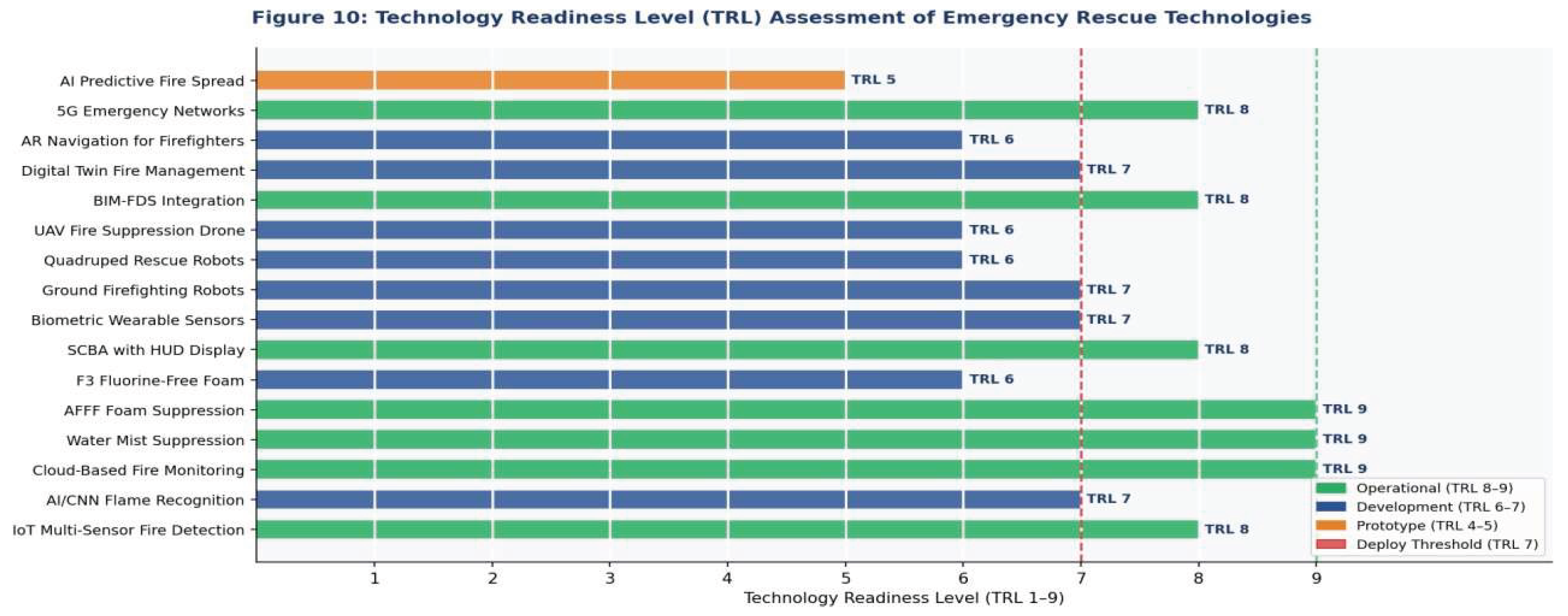
Figure 10 presents a Technology Readiness Level (TRL) assessment of the major emergency rescue technologies reviewed, providing a snapshot of the current maturity landscape and identifying the technologies closest to and furthest from operational deployment.
14. Notable Case Studies
14.1. Grenfell Tower Fire, London (2017)
The Grenfell Tower fire claimed 72 lives in a 24-story residential tower in West London — the deadliest structural fire in the United Kingdom since World War II. Fire originated in a fourth-floor flat and spread with unprecedented speed up the exterior cladding — aluminum composite panels with polyethylene core subsequently found to fail catastrophically in fire tests. The disaster exposed multiple systemic failures: inadequate material flammability standards, lack of sprinkler protection, failures in resident communication and evacuation guidance, and limited provision for mobility-limited occupants. Grenfell drove major regulatory reforms worldwide, including mandatory sprinkler retrofitting in high-rise residential buildings and new standards for external cladding materials. From a rescue technology perspective, the disaster demonstrated the critical limitations of static "stay-put" evacuation policies in buildings with compromised external fire resistance.
14.2. Beirut Port Explosion (2020)
The explosion of approximately 2,750 tonnes of ammonium nitrate at the Port of Beirut on August 4, 2020 killed over 200 people, injured more than 6,500, and caused an estimated $15 billion in property damage. The explosion was preceded by a fire in an adjacent warehouse —
a classic industrial thermal disaster cascade. First responders who arrived to fight the initial fire were among the casualties of the subsequent detonation, powerfully illustrating the risks of failure to identify high-hazard material inventories prior to response. The disaster highlighted the critical importance of pre-incident hazmat inventory systems accessible to emergency responders, and the need for standoff firefighting tactics when chemical inventories are uncertain.
14.3. Fukushima Daiichi — Robotics in Extreme Thermal Environments (2011)
The Fukushima Daiichi nuclear disaster demonstrated both the potential and limitations of robotic technology in extreme thermal and radiological environments. Remotely operated robots performed damage surveys, radiation measurements, and fuel debris characterization — tasks delivering lethal doses to human workers. The experience accelerated robotics research worldwide, driving development of radiation-hardened electronics, improved locomotion for rubble navigation, and remote manipulation capabilities — advances directly applicable to conventional industrial fire rescue scenarios.
15. Current Challenges and Research Gaps
- Sensor reliability in extreme environments: fire imposes severe combined stresses of high temperature, humidity, smoke particulates, and mechanical shock. Individual sensor failures in multi-sensor fusion systems require validated algorithms for handling conflicting or degraded inputs.
- GPS-denied interior navigation: robust, infrastructure-free positioning for both victims and responders inside burning structures remains unsolved. Current UWB systems require pre-installed infrastructure; IMU-based dead reckoning accumulates positioning errors over time in extended deployments.
- Battery life limitations: typical firefighting drones have only 15–20 minutes of operational time at full power — insufficient for extended rescue operations. Energy density improvements in lithium technology are needed but face fundamental electrochemical limits.
- System interoperability: proliferation of proprietary platforms, communication protocols, and data formats among rescue technology vendors impedes integrated system creation. Open standards frameworks analogous to IFC in BIM are urgently needed.
- Human-robot trust and teaming: firefighters must develop calibrated trust in autonomous systems, requiring both technical work on system explainability and behavioral research on human-automation teaming in high-stakes environments.
- Regulatory framework gaps: deployment of autonomous rescue robots in life-safety operations remains ahead of regulatory frameworks in most jurisdictions, creating uncertainty that delays adoption by risk-averse public safety agencies.
- PFAS-free foam equivalency: developing fluorine-free foam formulations matching AFFF performance for three-dimensional Class B fires remains a significant materials chemistry challenge with major environmental dimensions.
16. Recommendations for Future Research
- Develop standardized, interoperable data frameworks for emergency rescue technology systems, enabling integration of detection, suppression, robotics, and communication platforms from different vendors into coherent operational systems.
- Invest in GPS-independent indoor positioning technology with sufficient accuracy for real-time personnel tracking in fire environments, deployable without pre-installed infrastructure.
- Expand research on human-robot interaction and trust calibration in high-stakes rescue environments, using immersive VR simulation to develop evidence-based training protocols for rescue teams operating with autonomous systems.
- Develop and validate AI-based fire behavior prediction systems providing actionable probabilistic forecasts of fire spread, structural failure, and victim viability in real time to incident commanders.
- Conduct systematic investigation of lithium-ion battery fire behavior and develop specialized detection, suppression, and containment systems calibrated to large-format energy storage installations.
- Establish international regulatory frameworks for certification of autonomous rescue systems in life-safety applications, drawing on aviation and nuclear regulatory agency experience.
- Conduct longitudinal epidemiological studies of firefighter health outcomes related to chemical exposure to characterize the risk reduction achieved by improved decontamination protocols and enhanced PPE, informing evidence-based standards revisions.
17. Conclusion
The field of emergency rescue technology for building fires and industrial thermal disasters has undergone transformative development over the past two decades. IoT-networked smart detection systems achieve greater than 95% prediction accuracy; AI-powered computer vision identifies flames at three times the speed of conventional sensors; autonomous firefighting robots navigate irregular disaster terrain; and Building Information Modeling coupled with digital twin platforms have moved emergency planning from static documentation to dynamic, data-driven operational environments. Personal protective equipment has evolved from passive thermal barriers into integrated safety platforms providing biometric monitoring, heads-up navigation displays, and cloud-connected crew accountability.
The risk assessment framework presented in this review — encompassing quantitative analysis of scenario likelihood and consequence, fire dynamics simulation, and evacuation modeling — provides the scientific foundation for rational deployment of these technologies. The risk matrix (Figure 9) illustrates the clustering of industrial thermal disasters in high-consequence zones, while the TRL assessment (Figure 10) maps the pathway from current prototype technologies to operational deployment.
The integration of diverse technologies into coherent, interoperable emergency rescue systems
— where detection triggers suppression, suppression status informs evacuation routing,
evacuation routing guides robot deployment, and all information flows to a commander with a real-time digital twin — represents the ultimate vision for the field. Realizing this vision requires sustained collaboration between fire safety engineers, computer scientists, roboticists, materials scientists, behavioral researchers, and the emergency response communities who will ultimately depend on these systems when lives are at risk.
As climate change increases extreme weather events stressing built infrastructure, and as industrial processes grow ever more complex and energetic, the importance of effective emergency rescue technology will only grow. Investment in research, development, and deployment of these technologies is not merely a technical enterprise — it is a fundamental commitment to the safety and resilience of the communities that fire and emergency services exist to protect.
References
- Ding, Y.; Zhang, Y.; Huang, X. Intelligent emergency digital twin system for monitoring building fire evacuation. J. Build. Eng. 2023, 77, 107416. [Google Scholar] [CrossRef]
- Zhang, S.; Yao, J.; Wang, R.; Liu, Z.; Ma, C.; Wang, Y.; Zhao, Y. Design of intelligent fire-fighting robot based on multi-sensor fusion and experimental study on fire scene patrol. Robot. Auton. Syst. 2022, 154, 104122. [Google Scholar] [CrossRef]
- Jahan, N.; Niloy, T. B. M.; Silvi, J. F.; Hasan, M.; Nashia, I. J.; Khan, R. Development of an IoT-based firefighting drone for enhanced safety and efficiency in fire suppression. Meas. Control 2024, 57(3). [Google Scholar] [CrossRef]
- Baird, C.; Nokleby, S. Autonomous firefighting using a quadruped robot. Trans. Can. Soc. Mech. Eng. 2024, 48(4), 605–616. [Google Scholar] [CrossRef]
- Medewar, A.; Sawarkar, A.; Kshirsagar, P.; Kshirsagar, V. A review on fire and smoke detection with intelligent control for enhanced safety using machine learning and IoT. Cureus J. Comput. Sci. 2024, 1, es44389-024-00359-4. [Google Scholar] [CrossRef]
- Al-Chalabi, S. M.; Al-Chalabi, A. M.; Al-Khafaji, R. A. Innovative pre-fire alert smart detection system-based embedded system. AIP Adv. 2024, 14(5), 055211. [Google Scholar] [CrossRef]
- Yan, Z.; Wang, Y.; Chao, L.; Guo, J. Study on evacuation strategy of commercial high-rise building under fire based on FDS and Pathfinder. Comput. Model. Eng. Sci. 2024, 138(2), 1077–1102. [Google Scholar] [CrossRef]
- Kong, L.; Zheng, S.; Huang, Z.; Li, M.; Li, C.; Tang, H. Embedding knowledge into BIM: A case study of extending BIM with firefighting plans. J. Build. Eng. 2022, 49, 103999. [Google Scholar] [CrossRef]
- Liu, Y.; Liu, X.; Kang, J. Simulation of high-rise building fire prevention based on BIM technology. In Smart Infrastructures in the IoT Era; Springer, 2025; pp. 51–60. [Google Scholar]
- Almatared, M. An integrated digital twin framework and evacuation simulation system for enhanced safety in smart buildings. Doctoral Dissertation, Western Michigan University, 2024. [Google Scholar]
- Fire Safety Research Institute. Two journal articles improve understanding of SCBA facepiece thermal degradation. FSRI Research Report. https://fsri.org. 2024.
- U.S. Chemical Safety and Hazard Investigation Board. CSB Safety Study No. 2024-01-H: Remote isolation of process equipment; CSB: Washington, DC, 2024. [Google Scholar]
- National Fire Protection Association. NFPA 1970: Standard on Protective Ensembles for Structural Firefighting and Proximity Firefighting; NFPA: Quincy, MA, 2024. [Google Scholar]
- Wang, M.; Chen, X.; Huang, X. Robotic firefighting: A review and future perspective. In International Building Fire Safety Smart Firefighting; 2024; pp. 475–499. [Google Scholar]
- Ding, Z.; Fang, J.; Yang, Q.; Zhang, X. A BIM-based fire emergency evacuation simulation system for large infrastructures. Reliab. Eng. Syst. Saf. 2024, 244, 109917. [Google Scholar] [CrossRef]
- Sun, Q.; Turkan, Y.; Fischer, E. C. A BIM-FDS integrated framework for passive fire protection simulation in CLT compartments. Fire Mater. 2023, 47(4), 525–541. [Google Scholar] [CrossRef]
- Aneja, K.; Ramkumar Babu, T.; Chan, R. Augmenting a firefighter’s PPE — gas mask SCBA. arXiv 2023, arXiv:2308.13021. [Google Scholar]
- Bogue, R. The role of robots in firefighting. Ind. Robot An. Int. J. 2021, 48(2), 174–178. [Google Scholar] [CrossRef]
- Ribeiro, R. G.; Cota, L. P.; Euzébio, T. A.; Ramírez, J. A.; Guimarães, F. G. UAV routing problem with mobile charging stations for post-disaster search and rescue. IEEE Trans. Syst. Man. Cybern. Syst. 2022, 52(11), 6682–6696. [Google Scholar] [CrossRef]
- Safety, M.S.A. MSA Safety advances firefighter protection for a more complex fireground; Press Release; FDIC International, 2026. [Google Scholar]
- Cao, X.; Su, Y.; Geng, X. YOLO-SF: YOLO for fire segmentation detection. IEEE Access, 2023. [Google Scholar]
- Analysis of a high-tech plant fire in Taiwan: A case study. J. Loss Prev. Process Ind. 2024. [CrossRef]
- Kavitha, C.; et al. Forest fire monitoring using IoT and thermal imaging drones with AI algorithms. Int. J. Glob. Warm. 2023, 27(3). [Google Scholar]
- Air-ground collaborative robots for fire and rescue missions: Towards mapping and navigation perspective. arXiv 2024, arXiv:2412.20699.
- Phan, H. T.; Yap, W. L.; Garg, S.; Han, Z. Advanced fire detection using computer vision and machine learning. Proceedings of IEEE Conference on Computer Vision Applications, 2023. [Google Scholar]
- Luo, Y.; Chen, Z.; Zhang, W. Air-ground collaborative robotic systems for fire and rescue: A survey. arXiv 2024, arXiv:2412.20699. [Google Scholar]
- Babrauskas, V.; Peacock, R. D. Heat release rate: The single most important variable in fire hazard. Fire Saf. J. 1992, 18(3), 255–272. [Google Scholar] [CrossRef]
- World Health Organization. Burns and fires: WHO global health topic summary; WHO: Geneva, 2018. [Google Scholar]
- U.S. Fire Administration. Fire in the United States, 20th ed.; Federal Emergency Management Agency: Emmitsburg, MD; USFA, 2024. [Google Scholar]
- International Agency for Research on Cancer. IARC Monographs. In Occupational exposure as a firefighter; IARC Press: Lyon, 2022; Vol. 132. [Google Scholar]
- SFPE. SFPE Handbook of Fire Protection Engineering, 6th ed.; Springer: New York, 2021. [Google Scholar]
- Ribeiro, A.; Poças, A.; Soares, N. BIM-based simulation and evacuation assessment to improve fire safety management. J. Build. Pathol. Rehabil. 2024. [Google Scholar] [CrossRef]
- National Institute of Standards and Technology. NIST Special Publication 1018-1Fire Dynamics Simulator (FDS) Technical Reference Guide, 6th ed.; 2023; Vol. 1. [Google Scholar]
- Grand View Research. Fire protection system market size, share & trends analysis report; Grand View Research: San Francisco, 2024. [Google Scholar]
- Torero, J. L. Flaming ignition of solid fuels. In SFPE Handbook of Fire Protection Engineering, 6th ed.; Springer, 2019; pp. 633–661. [Google Scholar]
Figure 1.
Global Building Fire Statistics and Trends (2015–2023). Left: Annual U.S. fire incidents and civilian fatalities showing the persistent scale of the problem. Right: Distribution of fire incidents by building type, highlighting the dominant role of residential and industrial occupancies. (Sources: U.S. Fire Administration, 2024; NFPA Annual Reports).
Figure 1.
Global Building Fire Statistics and Trends (2015–2023). Left: Annual U.S. fire incidents and civilian fatalities showing the persistent scale of the problem. Right: Distribution of fire incidents by building type, highlighting the dominant role of residential and industrial occupancies. (Sources: U.S. Fire Administration, 2024; NFPA Annual Reports).
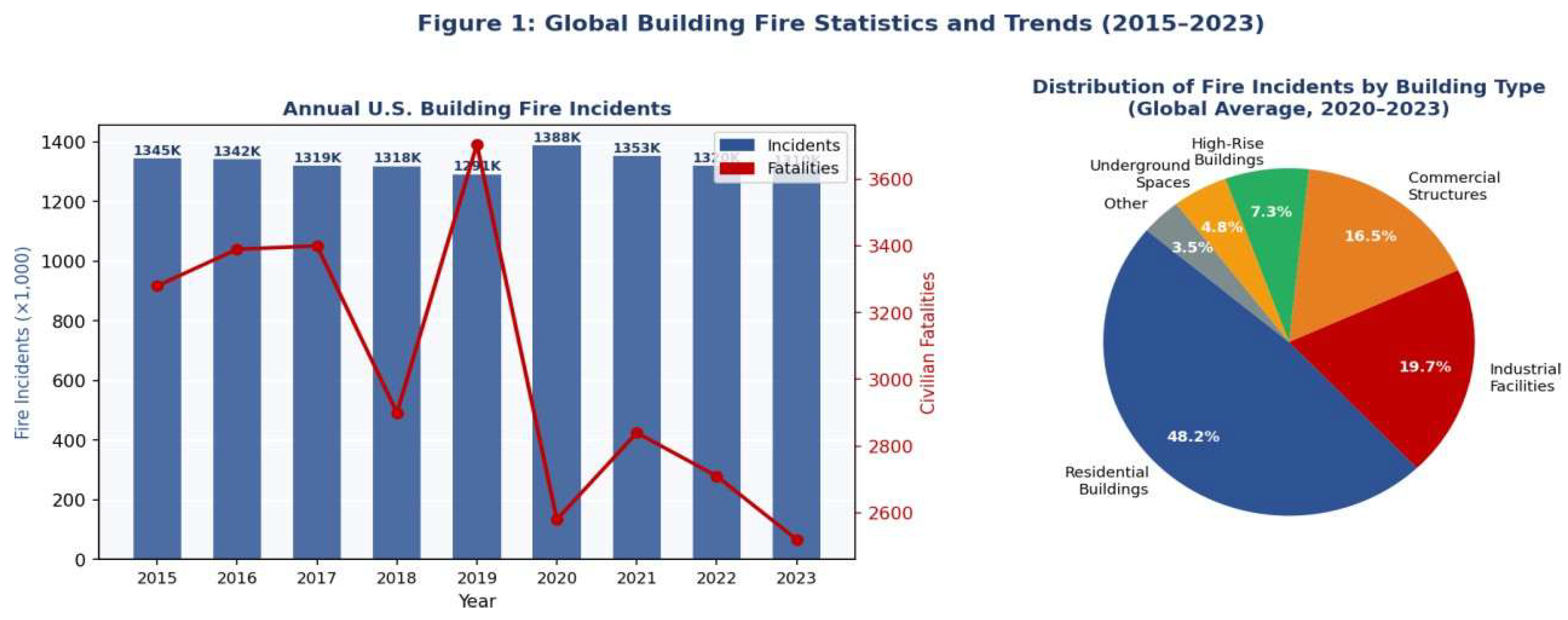
Figure 2.
Comparative performance of fire detection technologies across three key metrics. Left: Detection accuracy (%) — AI/CNN vision achieves 97.6% vs. 72% for conventional ionization. Center: False alarm rate — IoT network reduces false alarms to 6.2% vs. 34% conventional. Right: Average detection response time — AI reduces to 5.2 seconds vs. 45 seconds conventional. (Compiled from: Medewar et al., 2024; FSRI Reports; EN54 Test Data).
Figure 2.
Comparative performance of fire detection technologies across three key metrics. Left: Detection accuracy (%) — AI/CNN vision achieves 97.6% vs. 72% for conventional ionization. Center: False alarm rate — IoT network reduces false alarms to 6.2% vs. 34% conventional. Right: Average detection response time — AI reduces to 5.2 seconds vs. 45 seconds conventional. (Compiled from: Medewar et al., 2024; FSRI Reports; EN54 Test Data).
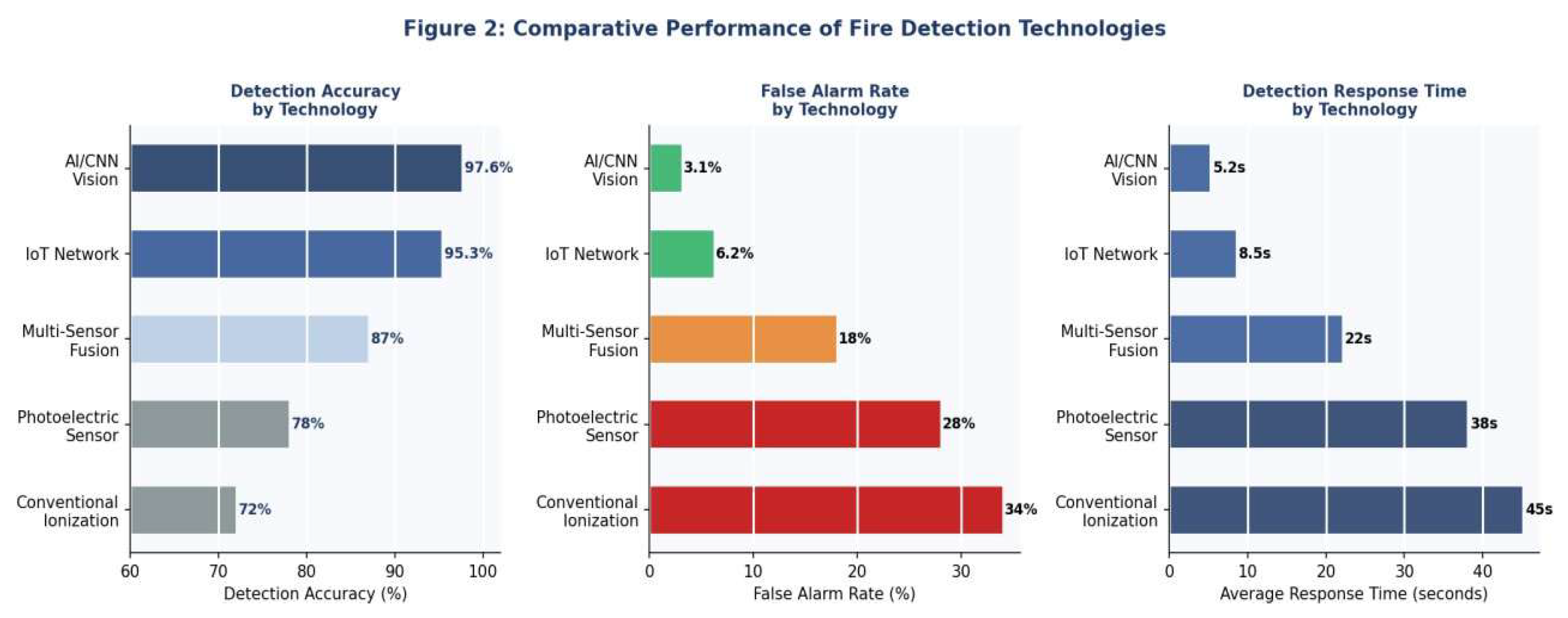
Figure 3.
Firefighter Line-of-Duty Death (LODD) analysis, USA 2018–2023. Left: Cause distribution — cardiac events (42.1%) and structural/trauma injuries (21.3%) dominate fatalities. Right: Annual trends by cause category, showing the persistent role of cardiac and thermal hazards that robotic substitution could reduce. (Sources: NFPA LODD Report, 2024; USFA Annual Reports).
Figure 3.
Firefighter Line-of-Duty Death (LODD) analysis, USA 2018–2023. Left: Cause distribution — cardiac events (42.1%) and structural/trauma injuries (21.3%) dominate fatalities. Right: Annual trends by cause category, showing the persistent role of cardiac and thermal hazards that robotic substitution could reduce. (Sources: NFPA LODD Report, 2024; USFA Annual Reports).
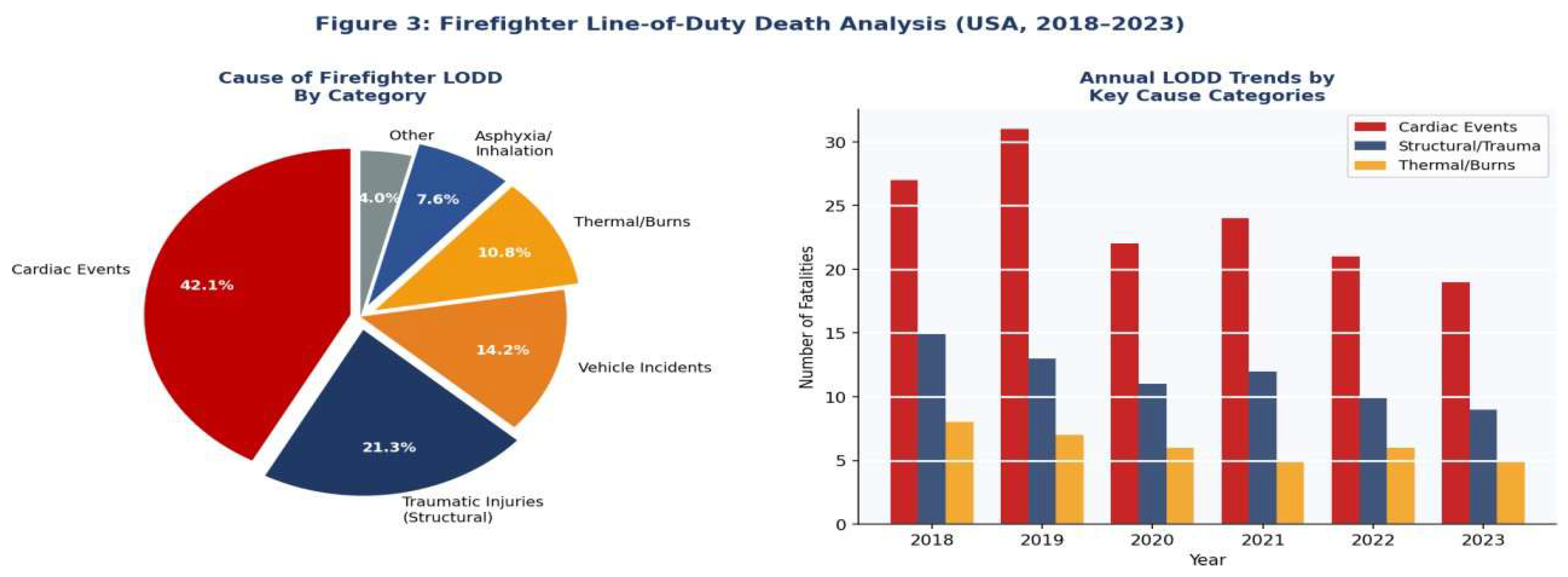
Figure 4.
Integrated Emergency Rescue Technology Framework. The architecture organizes five functional layers: Detection & Monitoring (IoT sensors, AI/CNN, BIM digital twin, UAV reconnaissance); Responder Support (advanced PPE, indoor positioning); Active Intervention (firefighting robots, suppression systems); Rescue & Recovery (search and rescue, hazmat, victim extraction, communication); and Command & Control (digital twin integration, situational awareness). Bidirectional data flows connect all layers to the central Incident Command Center.
Figure 4.
Integrated Emergency Rescue Technology Framework. The architecture organizes five functional layers: Detection & Monitoring (IoT sensors, AI/CNN, BIM digital twin, UAV reconnaissance); Responder Support (advanced PPE, indoor positioning); Active Intervention (firefighting robots, suppression systems); Rescue & Recovery (search and rescue, hazmat, victim extraction, communication); and Command & Control (digital twin integration, situational awareness). Bidirectional data flows connect all layers to the central Incident Command Center.
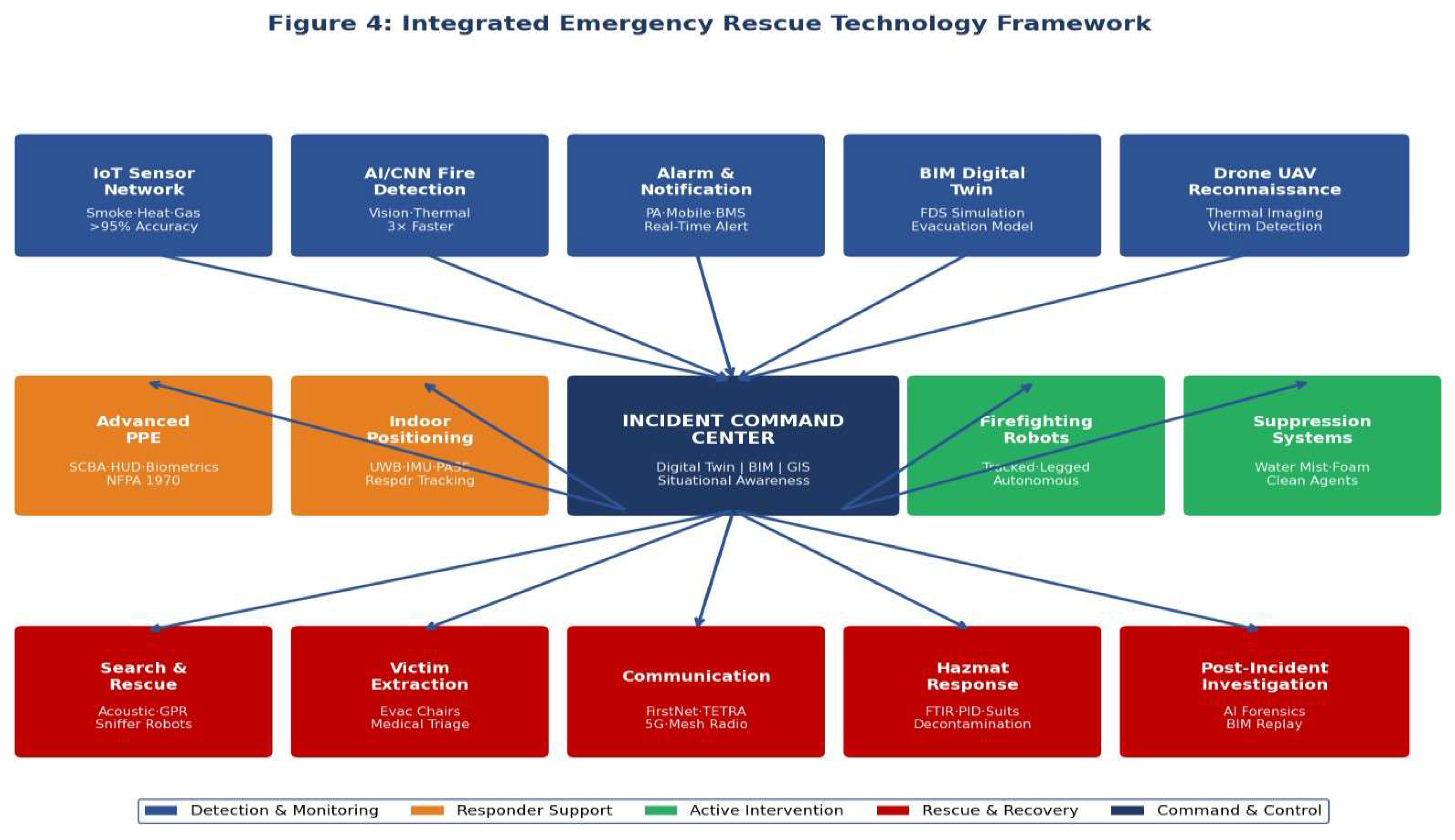
Figure 5.
Firefighting robot system performance characteristics. Left: Radar chart comparing normalized performance profiles of four robotic platform types — tracked heavy robots excel in suppression capacity while quadruped robots lead in terrain adaptability and UAVs dominate in autonomy and sensor integration. Right: Operational metrics comparing UAV-assisted vs. ground-only response, showing 88.5% vs. 52% thermal victim detection rate and 12 ha vs. 2.5 ha per-flight area coverage. (Sources: Zhang et al., 2022; Baird & Nokleby, 2024; Jahan et al., 2024).
Figure 5.
Firefighting robot system performance characteristics. Left: Radar chart comparing normalized performance profiles of four robotic platform types — tracked heavy robots excel in suppression capacity while quadruped robots lead in terrain adaptability and UAVs dominate in autonomy and sensor integration. Right: Operational metrics comparing UAV-assisted vs. ground-only response, showing 88.5% vs. 52% thermal victim detection rate and 12 ha vs. 2.5 ha per-flight area coverage. (Sources: Zhang et al., 2022; Baird & Nokleby, 2024; Jahan et al., 2024).
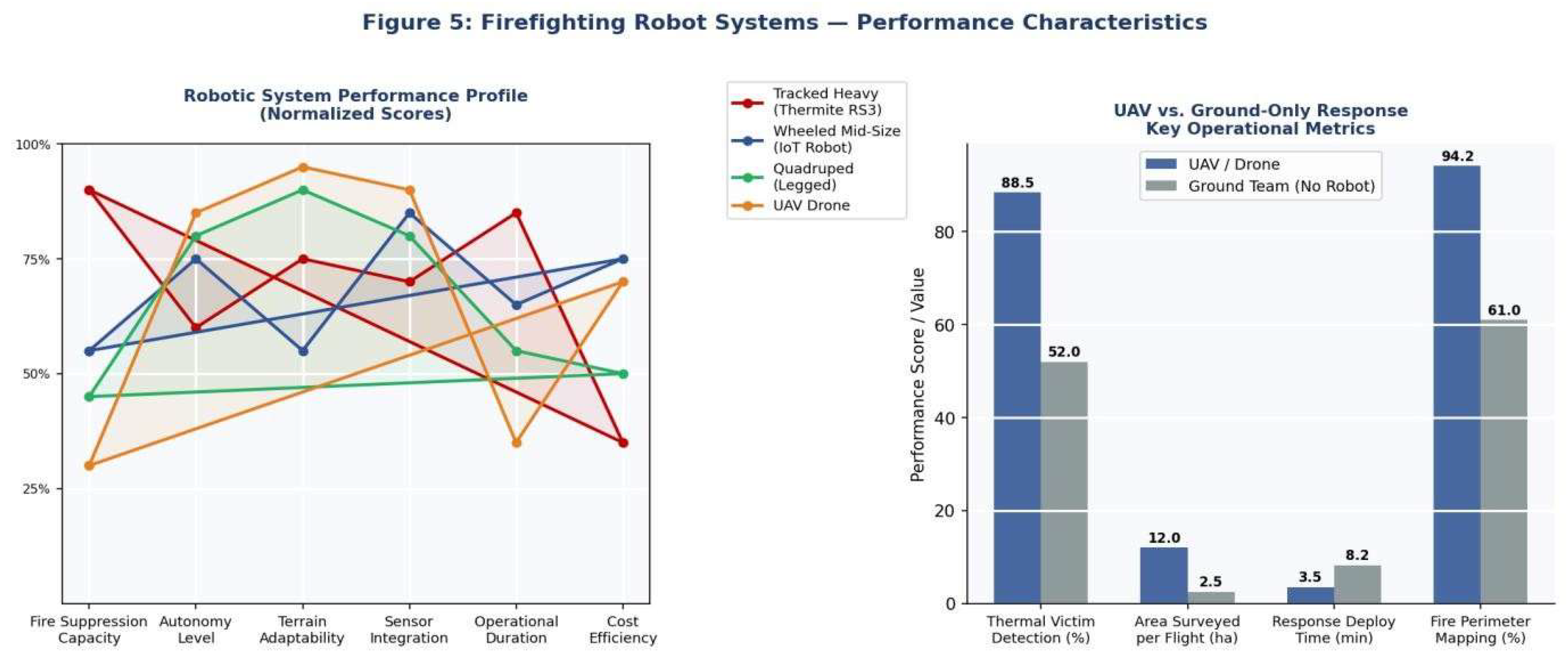
Figure 6.
Fire suppression agent performance matrix and market analysis. Left: Heatmap of suppression agent effectiveness (None→Excellent) by fire class, demonstrating the critical role of agent selection. Right: Global fire suppression technology market growth 2020–2025, reflecting increasing investment driven by urbanization and industrial risk. (Sources: NFPA Handbook; Grand View Research, 2024).
Figure 6.
Fire suppression agent performance matrix and market analysis. Left: Heatmap of suppression agent effectiveness (None→Excellent) by fire class, demonstrating the critical role of agent selection. Right: Global fire suppression technology market growth 2020–2025, reflecting increasing investment driven by urbanization and industrial risk. (Sources: NFPA Handbook; Grand View Research, 2024).
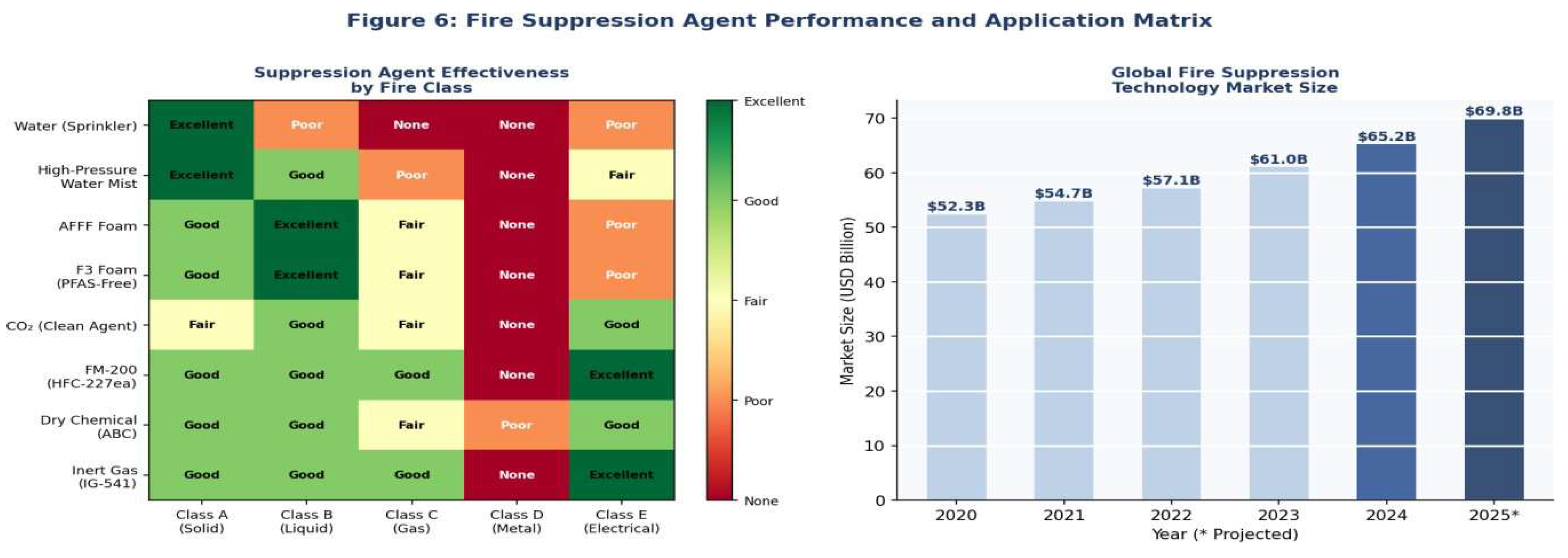
Figure 7.
BIM-based fire simulation and evacuation performance analysis. Left: Comparison of fire emergency planning methods — BIM+AI Digital Twin reduces situation awareness time from 95 min (manual) to 22 min while improving scenario prediction accuracy from 35% to 95%. Right: Building evacuation system performance for 500 occupants — digital twin real-time guidance reduces evacuation time from 12.4 min (no system) to 3.9 min and projected casualty rate from 8.2% to 0.8%. (Sources: Ding et al., 2023; Yan et al., 2024; Almatared, 2024).
Figure 7.
BIM-based fire simulation and evacuation performance analysis. Left: Comparison of fire emergency planning methods — BIM+AI Digital Twin reduces situation awareness time from 95 min (manual) to 22 min while improving scenario prediction accuracy from 35% to 95%. Right: Building evacuation system performance for 500 occupants — digital twin real-time guidance reduces evacuation time from 12.4 min (no system) to 3.9 min and projected casualty rate from 8.2% to 0.8%. (Sources: Ding et al., 2023; Yan et al., 2024; Almatared, 2024).
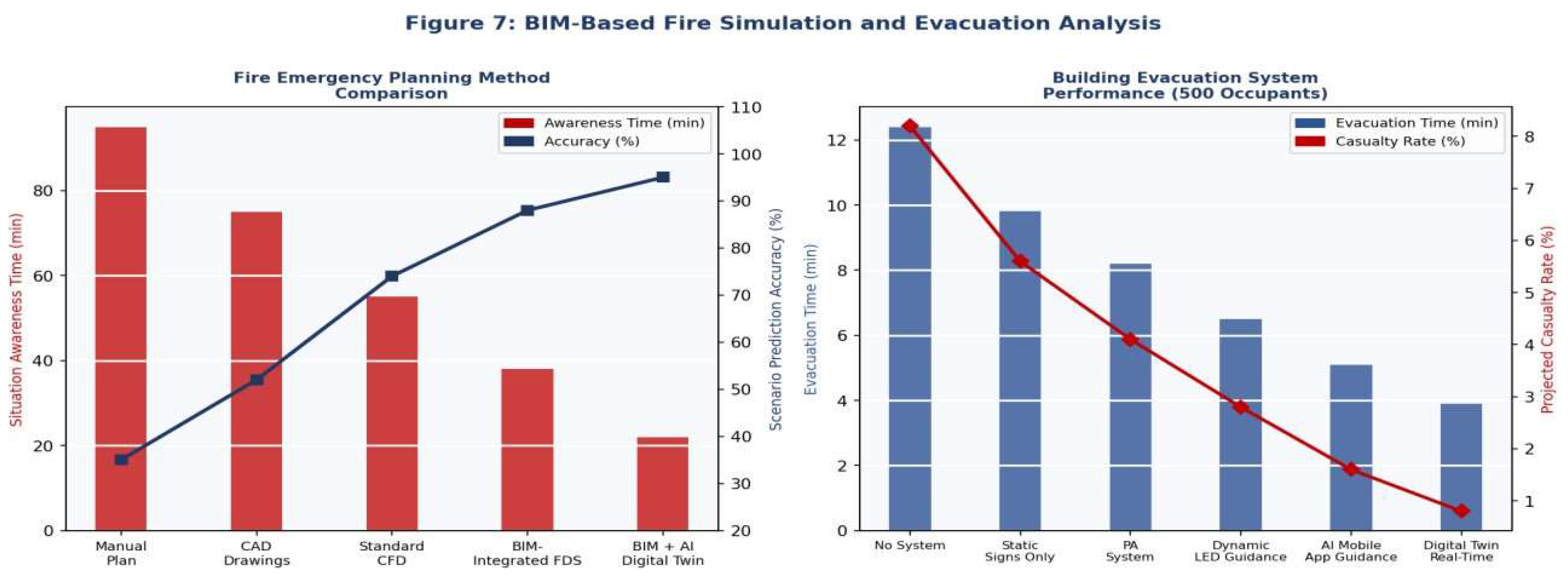
Figure 8.
Evolution timeline of firefighter PPE and rescue technology (1975–2024). Key milestones include: NIOSH SCBA mandates (1975), NFPA 1971 first edition (1983), Nomex standardization (1993), Post-9/11 chemical PPE standards (2001), Grenfell Tower cladding reforms (2017), biometric wearable sensors (2020), IARC Class 1 carcinogen classification (2022), and NFPA 1970 unified standard (2024).
Figure 8.
Evolution timeline of firefighter PPE and rescue technology (1975–2024). Key milestones include: NIOSH SCBA mandates (1975), NFPA 1971 first edition (1983), Nomex standardization (1993), Post-9/11 chemical PPE standards (2001), Grenfell Tower cladding reforms (2017), biometric wearable sensors (2020), IARC Class 1 carcinogen classification (2022), and NFPA 1970 unified standard (2024).
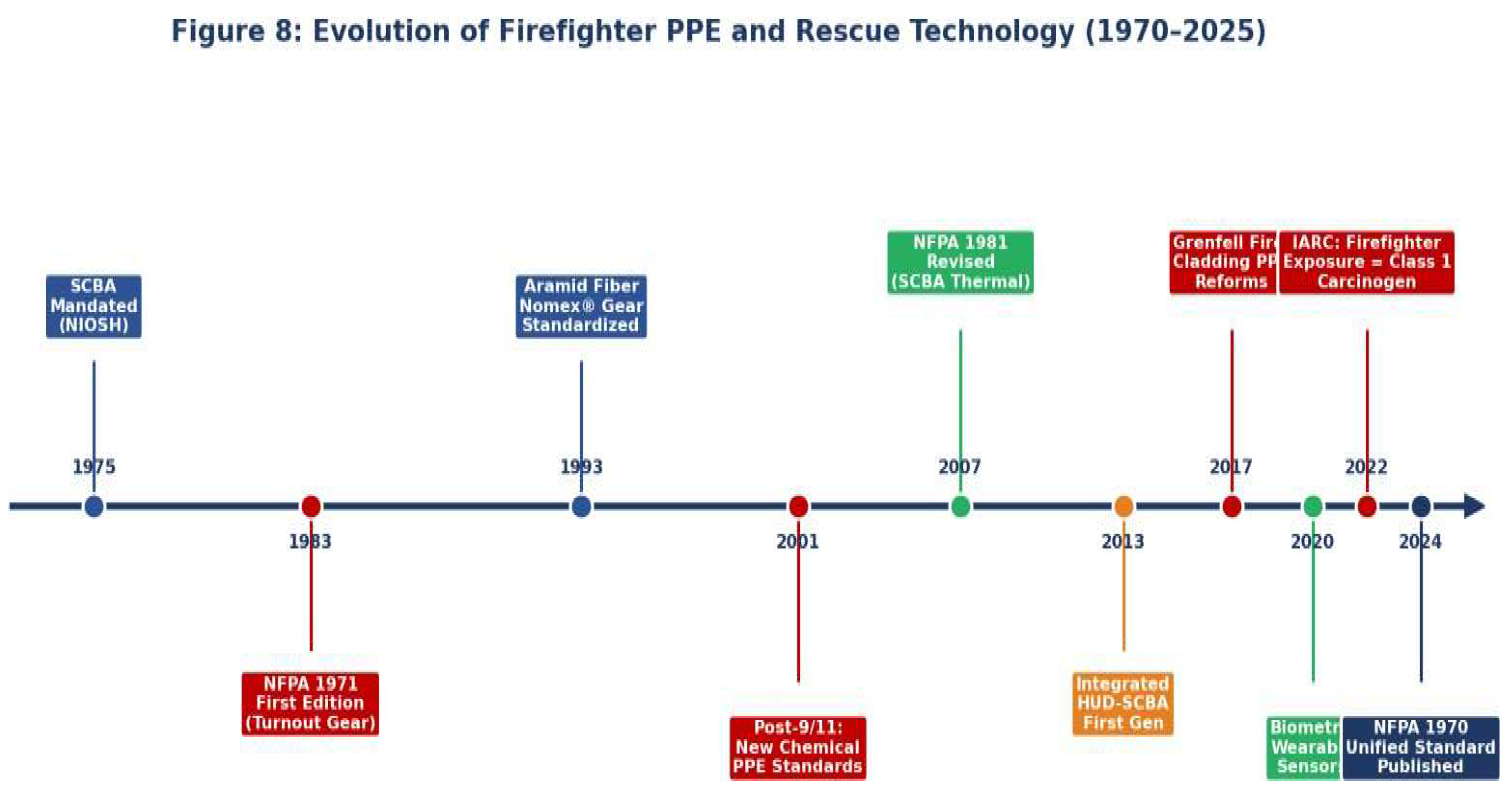
Figure 9.
Industrial thermal disaster risk profile and economic consequence analysis. Left: Risk matrix (likelihood vs. consequence severity) plotting eight major industrial disaster scenario types — BLEVE and chemical plant fires occupy the highest-consequence zones. Right: Average and maximum economic losses per incident type, showing BLEVE events with maximum recorded losses exceeding $4.5 billion (Beirut Port, 2020). (Sources: CSB Reports, 2024; PEMEX Case Study; Global Insurance Industry Loss Data).
Figure 9.
Industrial thermal disaster risk profile and economic consequence analysis. Left: Risk matrix (likelihood vs. consequence severity) plotting eight major industrial disaster scenario types — BLEVE and chemical plant fires occupy the highest-consequence zones. Right: Average and maximum economic losses per incident type, showing BLEVE events with maximum recorded losses exceeding $4.5 billion (Beirut Port, 2020). (Sources: CSB Reports, 2024; PEMEX Case Study; Global Insurance Industry Loss Data).
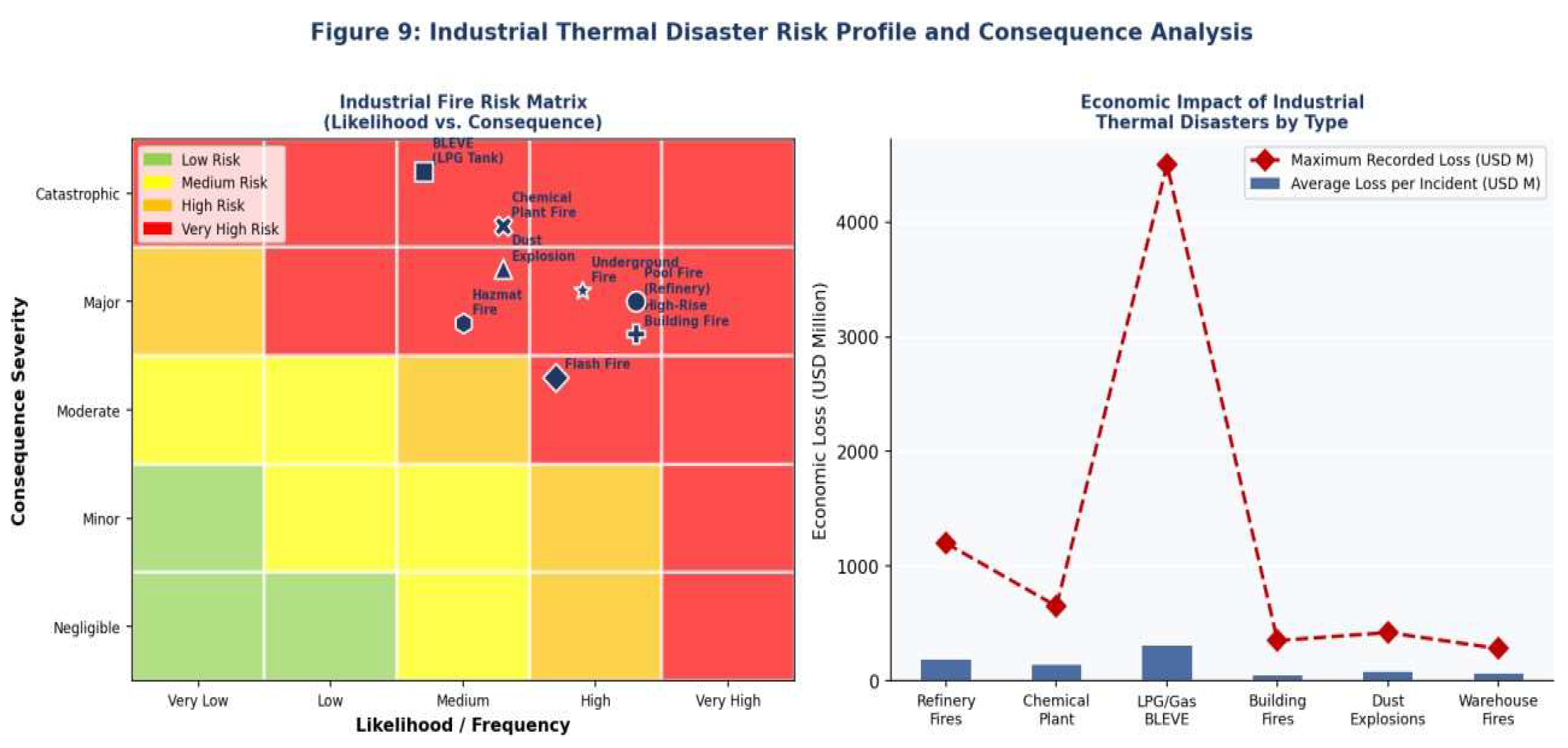
Figure 10.
Technology Readiness Level (TRL 1–9) assessment of major emergency rescue technologies. Green bars (TRL 8–9) indicate operational technologies ready for deployment. Blue bars (TRL 6–7) indicate technologies in advanced development nearing deployment threshold. Orange bars (TRL 4–5) indicate prototype-stage technologies requiring further development. The dashed red line marks the deployment threshold (TRL 7). (Compiled from: FSRI, 2024; NIST Reports; Academic Literature Review).
Figure 10.
Technology Readiness Level (TRL 1–9) assessment of major emergency rescue technologies. Green bars (TRL 8–9) indicate operational technologies ready for deployment. Blue bars (TRL 6–7) indicate technologies in advanced development nearing deployment threshold. Orange bars (TRL 4–5) indicate prototype-stage technologies requiring further development. The dashed red line marks the deployment threshold (TRL 7). (Compiled from: FSRI, 2024; NIST Reports; Academic Literature Review).
Disclaimer/Publisher’s Note: The statements, opinions and data contained in all publications are solely those of the individual author(s) and contributor(s) and not of MDPI and/or the editor(s). MDPI and/or the editor(s) disclaim responsibility for any injury to people or property resulting from any ideas, methods, instructions or products referred to in the content. |
© 2026 by the author. Licensee MDPI, Basel, Switzerland. This article is an open access article distributed under the terms and conditions of the Creative Commons Attribution (CC BY) license (http://creativecommons.org/licenses/by/4.0/).
Copyright: This open access article is published under a Creative Commons CC BY 4.0 license, which permit the free download, distribution, and reuse, provided that the author and preprint are cited in any reuse.