

Submitted:
11 September 2026
Posted:
14 September 2026
You are already at the latest version
Abstract
Nanomaterials such as fumed silica nanoparticles and nanocrystalline cellulose are emerging materials with many practical applications. One important application of these emerging materials is in the thickening and modification of the rheology of liquids. In this work, the rheological behavior of hybrid suspensions composed of fumed silica nanoparticles (T30) and nanocrystalline cellulose (NCC) was investigated to understand the combined effects of particle concentration and nanoparticle interactions on steady shear and viscoelastic properties. Steady shear measurements were conducted over a broad range of T30 concentrations, while oscillatory rheology was performed on selected high-silica formulations (7.06 and 8.1 wt% T30). All suspensions exhibited shear-thinning behavior, indicating progressive microstructural breakdown under increasing shear rate. The addition of NCC significantly increased the suspension consistency, suggesting enhanced particle–particle interactions and structural connectivity. Oscillatory measurements revealed elastic-dominated behavior (G'≫G'') across the entirely investigated frequency range for the selected formulations. The incorporation of NCC led to a substantial increase in both storage and loss moduli, with a more pronounced enhancement in the elastic response. In particular, the storage modulus increased by more than one order of magnitude (from ~210 Pa to ~8000 Pa at 1 rad/s), indicating the formation of a strongly interconnected viscoelastic network. The enhanced rheological behavior in hybrid suspensions is attributed to synergistic interactions between fumed silica aggregates and rod-like NCC particles, which promote network formation and mechanical reinforcement. Gap-dependent measurements showed negligible variation in the measured moduli, confirming the reliability of the rheological data. These findings demonstrate that small additions of NCC can transform fumed silica suspensions into strongly interconnected gel-like viscoelastic networks, which can be leveraged to enhance bulk rheological structuring and thickening of liquid systems.
Keywords:
nanocrystalline cellulose
; cellulose nanocrystals
; fumed silica
; rheology
; viscoelasticity
; non-Newtonian
; viscosity
; consistency
1. Introduction
The rheological properties of particulate suspensions are governed by the microstructure formed through particle-particle interactions [1,2]. Changes in particle concentration, particle morphology, and interparticle forces can significantly alter the flow and deformation behavior of these systems [2,3,4]. As a result, controlling suspension microstructure has become a central objective in the design of advanced particulate materials for a wide range of industrial formulations [1,2,3]. Understanding the relationships among particle interactions, network formation, and rheological response is therefore essential for the rational development of structured fluid systems such as suspensions [2,4,5].
Various approaches have been developed to manipulate suspension microstructure and thereby tailor rheological behavior [1,2]. Among these approaches, the incorporation of rheology modifiers has proven particularly effective in controlling particle interactions and network formation within particulate systems [6]. Conventional rheology modifiers include polymers, surfactants, clays, and mineral-based additives, each of which modifies rheological properties through different mechanisms [7].
Another approach to manipulate suspension microstructure is the incorporation of multiple particle species within a single suspension to create microstructures that are not attainable using individual particulate components alone [4,8]. In such hybrid systems, particles with different sizes, shapes, and surface chemistries may interact to generate complex network architectures and unique rheological responses [5,9]. Combining different particulate materials can substantially alter viscosity, viscoelasticity, structural stability, and mechanical performance through changes in particle interactions and network organization [10]. These effects arise from modifications in particle packing, interparticle interactions, and network connectivity, all of which influence the development and strength of suspension microstructure [2]. Consequently, hybrid suspensions have emerged as an attractive strategy for tailoring rheological behavior through the deliberate combination of complementary particulate building blocks [11].
In this work, we explore the combination of network-forming fumed silica aggregates and rod-like nanocrystalline cellulose (same as cellulose nanocrystals). This hybrid system represents a particularly interesting system for investigating the relationship between particle interactions, microstructural development, and rheological response [12].
Fumed silica is one of the most widely used particulate rheology modifiers owing to its unique aggregate structure and strong network-forming capability [13,14]. It consists of nanometer-sized primary particles that are permanently fused into highly branched aggregates during flame hydrolysis synthesis [14,15]. When dispersed in polar media, these aggregates interact through hydrogen bonding and other attractive forces to form three-dimensional particulate networks that span the suspension volume [16]. The formation of such networks can substantially increase viscosity, induce yield stress, and generate pronounced viscoelastic behavior even at relatively low particle concentrations [17]. The rheological response of fumed silica suspensions is strongly influenced by particle concentration, aggregate morphology, specific surface area, and the strength of interparticle interactions [18,19]. Consequently, fumed silica has found widespread application in coatings, adhesives, cosmetics, and personal care formulations where precise control of rheological properties is required [20]. The sensitivity of fumed silica networks to changes in particle characteristics has also motivated extensive efforts to modify and tailor their rheological behavior through the incorporation of secondary particulate components [21]. Raghavan and Khan investigated the rheology of fumed silica suspensions and demonstrated that attractive particle interactions can generate space-spanning networks with pronounced viscoelastic characteristics [13]. Subsequent work by Raghavan et al. further highlighted the importance of hydrogen-bond-mediated interactions in determining the strength and rheological behavior of silica particle networks [16]. More recently, Kawaguchi reviewed the rheological behavior of silica suspensions and emphasized the roles of particle concentration, surface characteristics, and interparticle interactions in controlling suspension microstructure and flow properties [22]. Alaee et al. reported that concentrated fumed silica suspensions exhibit complex rheological responses associated with microstructural evolution and network rearrangement under shear [18].
Nanocrystalline cellulose (NCC) has emerged as a promising bio-based nanomaterial for the development of sustainable rheological and structural modifiers [23,24]. NCCs are rod-shaped nanomaterials obtained from the crystalline domains of cellulose fibers and are characterized by high aspect ratio, low density, large specific surface area, and excellent mechanical properties [25,26]. Owing to their anisotropic morphology and surface charge, NCC suspensions exhibit complex concentration-dependent rheological behavior arising from particle-particle interactions and microstructural organization [27,28]. As particle concentration increases, NCCs may form interconnected structures that contribute significantly to suspension viscosity, elasticity, and gel-like behavior [29,30]. These characteristics have stimulated considerable interest in the use of NCCs as rheology modifiers, stabilizing agents, and functional additives in a variety of food, pharmaceutical, cosmetic, and advanced material applications [28,31]. Shafiei-Sabet and co-workers demonstrated that aqueous NCC suspensions exhibit strong concentration-dependent changes in viscosity and viscoelastic properties arising from particle network formation [32,33]. More recently, Xu et al. showed that particle morphology significantly influences the rheological response, yield stress, and structural development of nanocellulose suspensions [34].
Beyond their individual rheological contributions, the unique morphology and surface properties of NCCs also make them attractive candidates for modifying and reinforcing particulate networks formed by other nanoparticle systems [35,36,37]. Given the strong influence of NCC morphology on suspension structure, increasing attention has been directed toward incorporating NCCs into hybrid particulate systems.
The objective of the present study is to investigate the steady-shear and viscoelastic rheological behavior of hybrid suspensions containing fumed silica nanoparticles and nanocrystalline cellulose. Emphasis is placed on understanding the influence of NCC concentration on viscosity, storage modulus, loss modulus, and network development in hybrid suspensions through steady-shear, amplitude sweep, and frequency sweep measurements. The results provide new insights into the possible synergistic interactions between these two nanoparticle systems and contribute to the development of advanced particulate nanomaterials with multiple applications including rheology modifiers. The studies on such hybrid suspensions are lacking in literature. To our knowledge, this is the first systematic study of steady and dynamic shear rheology of hybrid suspensions containing T30 fumed silica and nanocrystalline cellulose.
2. Materials and Methods
2.1. Materials
The fumed silica HDK® T30, white colloidal powder of high purity, was supplied by Wacker Chemie AG (Munich, Germany). The material is a synthetic, hydrophilic, amorphous pyrogenic silica produced via flame hydrolysis. According to the manufacturer, HDK® T30 contains more than 99.8 wt% SiO₂ and possesses a specific surface area of 270–330 m2/g, density of 2.2 g/cc at 20 °C, silanol group density of 2 SiOH/nm2, refractive index of 1.46, and primary particle diameter in the nanometer range. The high density of surface silanol groups enables the formation of hydrogen-bonded particle networks, which are responsible for the strong thickening and rheological modification characteristics of T30 in aqueous systems. Figure 1 shows the TEM micrograph of T30 fumed silica aggregates [38]. The diameter of the primary nanoparticles of T30 aggregates is 9 nm [38].
Figure 2 shows the size distribution of fumed silica T30 obtained using dynamic light scattering (DLS) at a dispersed phase concentration of 0.05 wt%. The DLS measurements were carried out using a Zetasizer Nano ZS90 manufactured by Malvern Instruments Ltd. The average diameter of T30 aggregates is 327 nm. The zeta potential of T30 was -24.2 mV.
Nanocrystalline cellulose (NCC) was obtained from CelluForce Inc. (Windsor, ON, Canada). The commercial product used in this study was NCC NCV100-NASD90, which is manufactured through sulfuric acid hydrolysis of wood pulp. According to the supplier, the material consists of hydrophilic, sodium-neutralized sulfated cellulose nanocrystals supplied in spray-dried powder form. The nanocrystals possess a rod-like morphology with an average length of 76 nm and an average width of 3.4 nm. The reported specific surface area and crystallinity are approximately 500 m²/g and 88%, respectively. Representative TEM image provided by the manufacturer is shown in Figure 3, confirming the elongated needle-like morphology characteristic of cellulose nanocrystals.
2.2. Preparation of Suspensions of Fumed Silica (T30)
Fumed silica suspensions were prepared in approximately 1 kg batches at room temperature (23 ± 1 °C). A predetermined amount of HDK® T30 fumed silica powder was gradually added to deionized water under continuous mixing. The resulting mixture was dispersed using a variable-speed homogenizer (Gifford-Wood, Model 1 L) operated at a constant rotational speed. Homogenization was continued for approximately 60 min to ensure complete dispersion of the silica aggregates and the formation of a homogeneous suspension. Six suspensions with different silica concentrations were prepared, corresponding to 2.02, 3.95, 5.84, 7.69, 9.50, and 11.29 wt% T30.
2.3. Preparation of Suspensions of Nanocrystalline Cellulose (NCC)
NCC suspensions were prepared using the same procedure as described for fumed silica suspensions. Seven suspensions with different NCC concentrations were prepared, corresponding to 0.99, 1.97, 2.95, 3.91, 4.86, 5.80, 6.73 wt% NCC.
2.4. Preparation of Mixed T30–NCC Suspensions
Hybrid suspensions containing both fumed silica (T30) and nanocrystalline cellulose (NCC) were prepared using the preformed T30 suspensions described above. A predetermined amount of NCC powder was gradually added to a T30 suspension while continuous mixing was maintained using the homogenizer. Following the addition of NCC, the suspension was homogenized at a constant speed for approximately 60 min to ensure complete dispersion of the nanocrystals and the formation of a homogeneous mixture. Suspensions with higher NCC concentrations were prepared by incrementally adding additional NCC to an existing T30–NCC suspension while maintaining the T30 concentration constant. The compositions of all T30–NCC suspensions investigated in this study are summarized in Table 1.
3. Rheological Characterization
3.1. Measurement of Viscous Rheological Behavior of Suspensions
The viscous rheological properties of the suspensions were determined experimentally using Fann- and Haake-type viscometers equipped with concentric-cylinder geometries. The dimensions of the measuring cylinders and the corresponding gap widths are summarized in Table 2. In the Fann viscometer, the outer cylinder rotates while the inner cylinder remains stationary, whereas in the Haake viscometer, the inner cylinder rotates and the outer cylinder is fixed. The Fann instrument provides 12 rotational speeds ranging from 0.9 to 600 rpm, while the Haake viscometer offers 30 rotational speeds covering the range of 0.01 to 512 rpm. Prior to testing, both instruments were calibrated using standard fluids with known viscosities. All rheological measurements were conducted at room temperature.
3.2. Measurement of Viscoelastic Behavior of Suspensions
The viscoelastic properties of the suspensions were characterized using a Discovery HR-20 rheometer (TA Instruments, New Castle, DE, USA) equipped with a 20 mm parallel-plate geometry. Preliminary experiments were performed using gap settings of 500, 750, and 1000 to evaluate the influence of measurement gap on the rheological response of the suspensions and to identify an appropriate testing condition. Based on these results, a gap of 500 was selected for subsequent rheological measurements. Oscillatory strain sweep tests were conducted over the strain range of 0.01–1000% at a constant angular frequency of 1 Hz to determine the linear viscoelastic region (LVR). Frequency sweep measurements were subsequently carried out within the LVR over the angular frequency range of 0.1–100 rad/s to characterize the viscoelastic behavior of the suspensions through the storage modulus (G′) and loss modulus (G″). All measurements were conducted at room temperature.
4. Results and Discussion
4.1. Rheology of Fumed Silica (T30) and Nanocrystalline (NCC) Suspensions
The rheological behavior of fumed silica T30 suspensions is shown in Figure 4 over a broad concentration range of 2.02 to 11.29 wt% fumed silica. At low concentrations of fumed silica (), the suspensions are Newtonian with constant viscosity independent of shear rate. At higher fumed silica concentrations, the suspensions become non-Newtonian shear thinning. As shown in Figure 4a, the viscosity versus shear rate plots are linear, indicating the power-law behavior of concentrated fumed silica suspensions. The power-law model is given as:
where is shear stress, is shear rate, is viscosity, K is consistency index, and n is flow behavior index. Equation (2) indicates that the plot of viscosity versus shear rate is linear on a log-log scale with a slope of . For shear-thinning fluids, the slope is negative as shown in Figure 4a. A negative slope also implies . Figure 4b shows the plots of power-law parameters K and n. The consistency index rises substantially with the increase in fumed silica concentration indicating that the suspensions become more viscous with the increase in silica concentration. The flow behavior index n decreases with the increase in silica concentration indicating the enhancement of shear thinning of suspension with the increase in silica concentration.
The rheological behavior of nanocrystalline cellulose (NCC) over a broad concentration range of 0.99 to 6.73 wt% NCC was reported in our previous publication [37]. The NCC suspensions were shear-thinning exhibiting power-law behavior. Like fumed silica suspensions, NCC suspensions became more viscous with the increase in NCC concentration as reflected in a substantial increase in the consistency index K with NCC concentration. The flow behavior index n decreased substantially with the increase in NCC concentration reflecting an enhancement of shear thinning with the increase in NCC concentration.
The power-law parameters, K and n, of fumed silica T30 and NCC suspensions are compared in Figure 5. The consistency of NCC suspensions is many-fold higher than that of fumed silica suspensions when compared at the same particle concentration (see Figure 5a). Furthermore, NCC suspensions are much more shear-thinning than fumed silica suspensions at the same particle concentration (see Figure 5b).
Shear-thinning observed in fumed silica T30 suspensions is likely due to the formation of a 3D network structure of fumed silica nanoparticles by hydrogen bonding, schematically shown in Figure 6. With the increase in shear rate, breakup of large agglomerates or network structure of fumed silica takes place. When agglomerates of fumed silica undergo breakup, they release the entrapped continuous phase liquid resulting in lubrication of flow and decrease in viscosity. Shear-thinning in NCC suspensions is also likely due to network structure formation (see Figure 7) of cellulose nanocrystals by hydrogen bonding that undergoes breakup under the application of shear. Furthermoe, the rod-shaped nanocrystals undergo alignment and orientation with the flow. Thus, the non-spherical shape of NCC and aggregation of NCC are responsible for the high consistency of NCC suspensions as compared with the fumed silica suspensions.
4.2. Influence of Added Nanocrystalline Cellulose (NCC) on Steady Shear Rheology of Fumed Silica (T30) Suspensions
Figure 8 shows the influence of NCC addition to 2 wt% fumed silica T30 suspension. Upon the addition of NCC, the flow curve (viscosity versus shear rate plot) shifts upward, indicating an increase in viscosity. Furthermore, the magnitude of the slope of the flow curve increases, that is, the flow curve becomes steeper, with the addition of NCC to fumed silica suspension (see Figure 8a). The flow curves of mixed NCC and T30 suspensions follow the power-law behavior like pure T30 and pure NCC suspensions. The variations of the power-law parameters K and n with the addition of NCC to fumed silica suspension are shown in Figure 8b. The consistency of hybrid suspension increases steadily with the increase in NCC concentration of suspension. The degree of shear-thinning also increases, that is, n decreases, with the increase in NCC concentration of suspension.
Figure 9 and Figure 10 show the influence of NCC addition to 4.02 and 6.18 wt% fumed silica T30 suspensions, respectively. The rheological behavior of these hybrid suspensions is like that of hybrid suspensions with 2 wt% fumed silica. In all cases, the hybrid suspensions follow the power-law behavior, the consistency index rises sharply, and the flow behavior index drops off sharply with the increase in NCC concentration of the hybrid suspension.
Figure 11 compares the power law parameters K and n for pure suspensions (T30 or NCC) and different hybrid suspensions (T30+NCC). For hybrid suspensions, the x-axis represents NCC concentration in wt%. For pure NCC suspensions, the x-axis represents wt% NCC and for pure T30 suspensions, the x-axis represents wt% T30. For hybrid suspensions, the consistency index increases and the flow behavior index decreases with the increase in NCC concentration. Interestingly, the consistency index values of hybrid suspensions generally fall above that of pure NCC and pure T30 suspensions. Likewise, the flow behavior index values of hybrid suspensions generally fall below that of pure NCC and pure T30 suspensions. Thus, the mixed T30+NCC suspensions show synergistic behavior in that the rheological properties of mixtures fall outside the pure suspension values; consistency index falls above the pure suspension values and flow behavior index falls below the pure suspension values.
4.3. Correlation of Power-Law Parameters of Pure and Hybrid Suspensions
As seen in Figure 11, the power law parameters K and n of pure (T30 and NCC) and hybrid (blends of T30 and NCC) suspensions depend on the concentrations of T30 and NCC. The rheological properties of suspensions are known to depend on the concentration of particulate phase [39]. However, the concentration of particulate phase relevant in the correlation of rheological properties is volume fraction () not weight fraction (or weight percent). For example, the relative viscosity of a dilute suspension of spherical rigid particles is given by the celebrated Einstein equation [40] given as:
where is the relative viscosity defined as the ratio of suspension viscosity to matrix fluid viscosity and is the volume fraction of particles. Thus, it is expected that the relative consistency index defined as the ratio of suspension consistency index K to matrix fluid viscosity is a function of the volume fraction of total particulate phase () where includes all the particles (T30 and NCC) present in the suspension. Given the mass fractions of the particles, the volume fraction of total particulate phase of the hybrid suspension can be calculated as follows:
where is mass fraction of NCC in hybrid suspension, is mass fraction of fumed silica T30 in silica-water suspension, is NCC density (1.5 ), is density of T30 fumed silica (2.2 ), and is density of water (). As an example, consider a hybrid suspension with 2 wt% T30 and 5.8 wt% NCC, the mass fractions are: , , and the volume fraction of total particulate phase (NCC+T30), that is, , calculated from Equation (4) is 0.04867.
Figure 12a shows the plot of data as versus . Interestingly, all the data of Figure 12a collapses on to a single curve represented by the following Mooney-type model [41]:
This equation can be used to predict the consistency index of pure and hybrid suspensions of NCC and fumed silica T30 from the knowledge of mass fractions of NCC and T30. The equation can be used for .
The flow behavior index n of pure and hybrid suspensions of NCC and fumed silica T30 can be described reasonably well using the following empirical equation (see Figure 12b):
Equation (6) is valid for .
4.4. Influence of Added Nanocrystalline Cellulose (NCC) on Dynamic Rheology of Fumed Silica (T30) Suspensions
The dynamic rheology of 7.06 wt% T30 and 8.1 wt% T30 suspensions without and with added NCC was investigated. Figure 13 shows the strain amplitude sweep performed at 1 Hz for 7.06 wt% T30 suspension. At low strain amplitudes, the storage modulus () remains nearly constant, with an initial plateau modulus of approximately Pa, indicating the presence of a well-defined linear viscoelastic region (LVR) associated with an interconnected network of fumed silica nanoparticles. The LVR extends up to approximately ~10% strain. Beyond this region, a progressive decrease in is observed, marking the onset of structural breakdown. The crossover between and occurs at approximately 30% strain, indicating the transition from solid-like to liquid-like behavior as the silica network collapses under large deformation. This behavior is characteristic of aggregated particulate gels where interparticle interactions, such as van der Waals attractions and hydrogen bonding between surface silanol groups, govern the mechanical integrity (see Figure 6). Overall, the amplitude sweep confirms that 7.06 wt% T30 forms a strain-sensitive, gel-like microstructure with a well-defined LVR region. A similar behavior is observed for hybrid suspensions of 7.06 wt% T30 and NCC.
Figure 14 shows the frequency sweep data for pure and hybrid suspensions with 7.06 wt% T30 obtained in the linear viscoelastic region. The pure and hybrid suspensions behave like elastic solids. The storage modulus is constant, independent of the frequency. Furthermore, the storage modulus is much larger than the loss modulus . With the addition of NCC to the fumed silica suspension, the storage modulus rises sharply whereas the loss modulus increases only marginally. This can be seen more clearly in Figure 15 where the rise in with the addition of NCC is shown at a frequency of 10 rad/s. These results indicate that the addition of NCC promotes substantial reinforcement of microstructure, likely through enhanced interparticle connectivity and secondary network formation. It is also possible that rod-shaped NCC form bridges between the fumed silica aggregates (see Figure 16).
Figure 17 shows the plots of complex viscosity versus frequency for pure and hybrid suspensions with 7.06 wt% T30. The complex viscosity decreases with increasing angular frequency, demonstrating dynamic shear-thinning behavior. The complex viscosity data further suggests that at higher oscillation rates, the particle network undergoes progressive rearrangement and partial disruption, thereby reducing resistance to deformation. However, with the addition of NCC, the complex viscosity increases due to reinforcement of microstructure.
The pure 8.1 wt% T30 suspension and its hybrid suspensions with NCC exhibited dynamic rheology like those of 7.06 wt% T30 pure and its hybrid suspensions. For example, Figure 18 shows the frequency sweep data for pure and hybrid suspensions with 8.1 wt% T30 obtained in the linear viscoelastic region. The pure and hybrid suspensions behave like elastic solids with constant storage modulus and . The storage modulus rises sharply with the addition of NCC to 8.1 wt% fumed silica T30 suspension (see Figure 19).
Figure 20 compares the storage and loss moduli of hybrid suspensions consisting of 7.06 wt% T30 and 8.1 wt% T30 suspensions. As expected, the modulus (storage or loss) of hybrid suspensions with higher T30 concentration of 8.1 wt% is much larger in comparison with hybrid suspensions consisting of 7.06 wt% T30.
Note that no gap dependence was observed in the measurements of G′ and G″. As an example, Figure 21 shows G′ and G″ measurements of hybrid suspensions using three gap widths of between parallel plates. The data obtained using different gap widths overlap indicating the absence of any wall effects [42].
4.5. Visual Inspection of Samples of Hybrid Suspensions Nanocrystalline Cellulose (NCC) and Fumed Silica (T30)
Figure 22 shows samples of hybrid suspensions of NCC and fumed silica T30 at a fixed T30 concentration of 6.2 wt%. The NCC concentration is increased from 2.9 to 3.9 wt%. Upon increase of NCC concentration of hybrid suspension, the consistency of the fluid-like suspension changes to gel-like material.
5. Conclusions
The steady shear and dynamic rheology of pure and hybrid suspensions of fumed silica (T30) and nanocrystalline cellulose (NCC) were investigated experimentally. Based on experimental work and data analysis, the following conclusions can be drawn:
- Pure suspensions of fumed silica T30 and nanocrystalline cellulose (NCC) behave as shear-thinning (pseudoplastic) fluids. The steady shear rheological behavior of pure suspensions can be described adequately using the power-law model.
- The consistency index of pure T30 and NCC suspensions increases substantially and the flow behavior index decreases sharply with the increase in particle concentration.
- When compared at the same particle concentration (wt%), pure NCC suspensions are much more viscous, and shear-thinning as compared with the pure T30 suspensions. This is due to aggregation and non-spherical shape (rod-like) of NCC particles.
- Hybrid NCC-T30 suspensions behave as shear-thinning pseudoplastic fluids which follow the power-law. The consistency index increases and the flow behavior index decreases with the addition of NCC to fumed silica suspension. Thus, hybrid NCC-T30 suspensions are more viscous, and shear-thinning compared with pure T30 suspensions.
- The consistency index values of hybrid suspensions generally fall above that of pure NCC and pure T30 suspensions. Likewise, the flow behavior index values of hybrid suspensions generally fall below that of pure NCC and pure T30 suspensions. Thus, the hybrid T30+NCC suspensions show synergistic behavior in that the rheological properties of mixtures fall outside the range of the pure suspension values.
- Empirical correlations are developed for the relative consistency index and flow behavior index for hybrid suspensions of NCC and T30. Given the volume fraction of total particulate phase (NCC+T30), predict and can be predicted.
- Pure and hybrid suspensions of NCC and T30 are viscoelastic in nature. At high concentrations of T30 , the pure T30 and hybrid NCC+T30 suspensions are more like elastic solids. The storage modulus () is independent of frequency and it is much larger than the loss modulus (), that is, .
- The addition of NCC to T30 suspension increases the storage modulus sharply indicating that the addition of NCC promotes substantial reinforcement of microstructure, likely through enhanced interparticle connectivity and secondary network formation. It is also possible that rod-shaped NCC form bridges between the fumed silica aggregates.
- The complex viscosity of suspension decreases with increasing angular frequency, demonstrating dynamic shear-thinning behavior. With the increase in oscillation rate, the particle network undergoes progressive rearrangement and partial disruption, thereby reducing resistance to deformation. However, with the addition of NCC to T30 suspension, the complex viscosity increases due to reinforcement of microstructure.
Author Contributions
Conceptualization, R.P.; methodology, R.P. and H.A.; validation, H.A. and R.P.; formal analysis, R.P.; investigation, H.A. and R.P.; resources, R.P.; data curation, H.A. and R.P.; writing—original draft preparation, R.P.; writing—review and editing, R.P.; visualization, R.P.; supervision, R.P.; project administration, R.P.; funding acquisition, R.P. All authors have read and agreed to the published version of the manuscript.
Funding
This research was funded by the Discovery Grant awarded to R.P. by the Natural Sciences and Engineering Research Council of Canada.
Data Availability Statement
The raw data supporting the conclusions of this article will be made available by the authors on request.
Conflicts of Interest
The authors declare no conflicts of interest.
References
- Tadros, T.F. Rheology of dispersions: principles and applications; John Wiley & Sons: New York, 2011. [Google Scholar]
- Mewis, J.; Wagner, N.J. Colloidal suspension rheology; Cambridge university press: Cambridge, 2012. [Google Scholar]
- Barnes, H.A. A handbook of elementary rheology; University of Wales, Institute of Non-Newtonian Fluid Mechanics: Aberystwyth, 2000. [Google Scholar]
- Genovese, D.B. Shear rheology of hard-sphere, dispersed, and aggregated suspensions, and filler-matrix composites. Adv. Colloid Interface Sci. 2012, 171, 1–16. [Google Scholar] [CrossRef] [PubMed]
- Larson, R.G. The structure and rheology of complex fluids; Oxford University Press: New York, 1999. [Google Scholar]
- Barnes, H.A.; Hutton, J.F.; Walters, K. An introduction to rheology; Elsevier: Amsterdam, 1989. [Google Scholar]
- Tadros, T.F. Applied surfactants: principles and applications; John Wiley & Sons: New York, 2006. [Google Scholar]
- Rueda, M.M.; Auscher, M.C.; Fulchiron, R.; Périé, T.; Martin, G.; Sonntag, P.; Cassagnau, P. Rheology and applications of highly filled polymers: A review of current understanding. Prog. Polym. Sci. 2017, 66, 22–53. [Google Scholar] [CrossRef]
- Hsissou, R.; Bekhta, A.; Dagdag, O.; El-Bachiri, A.; Rafik, M.; Elharfi, A. Rheological properties of composite polymers and hybrid nanocomposites. Heliyon 2020, 6, e04187. [Google Scholar] [CrossRef] [PubMed]
- Ilyin, S.O. Structural rheology in the development and study of complex polymer materials. Polymers 2024, 16, 2458. [Google Scholar] [CrossRef] [PubMed]
- Yang, L.; Ge, J.; Wu, H.; Guo, H.; Shan, J.; Zhang, G. Phase behavior of colloidal nanoparticles and their enhancement effect on the rheological properties of polymer solutions and gels. RSC Adv. 2024, 14, 8513–8525. [Google Scholar] [CrossRef] [PubMed]
- Long, Q.; Huang, L.; Luo, J.; Li, Y.; Zhao, K.; Zhu, C.; Sun, Y.; Liu, Y. Comparative study of filler network formation and recovery kinetics in PVMQ reinforced with fumed and precipitated silica: Insights from strain-dependent rheology. J. Appl. Polym. Sci. 2025, 142, e57682. [Google Scholar] [CrossRef]
- Raghavan, S.R.; Khan, S.A. Shear-induced microstructural changes in flocculated suspensions of fumed silica. J. Rheol. 1995, 39, 1311–1325. [Google Scholar] [CrossRef]
- Satish, K. Pigment Handbook: Properties and Economics; Lewis, P.A., Ed.; John Wiley & Sons: New York, 1987. [Google Scholar]
- Iler, R.K. The Chemistry of Silica; Wiley-Interscience: New York, 1979. [Google Scholar]
- Raghavan, S.R.; Walls, H. J.; Khan, S. A. Rheology of silica dispersions in organic liquids: new evidence for solvation forces dictated by hydrogen bonding. Langmuir 2000, 16, 7920–7930. [Google Scholar] [CrossRef]
- Mitchell, K.; Hua, W.; Bandala, E.; Gaharwar, A. K.; Jin, Y. Particle–polymer interactions for 3D printing material design. Chem. Phys. Rev. 2024, 5, 011304. [Google Scholar] [CrossRef]
- Alaee, P.; Kamkar, M.; Arjmand, M. Fumed silica-based suspensions for shear thickening applications: a full-scale rheological study. Langmuir 2022, 38, 5006–5019. [Google Scholar] [CrossRef] [PubMed]
- Dinkgreve, M.; Paredes, J.; Denn, M. M.; Bonn, D. On different ways of measuring “the” yield stress. J. Non-Newton. Fluid Mech. 2016, 238, 233–241. [Google Scholar] [CrossRef]
- Barthel, H.; Rösch, L.; Weis, J. Fumed silica-Production, properties, and applications. Organosilicon Chem. 2005, 11, 761–778. [Google Scholar] [CrossRef]
- Cassagnau, P. Melt rheology of organoclay and fumed silica nanocomposites. Polymer 2008, 49, 2183–2196. [Google Scholar] [CrossRef]
- Kawaguchi, M. Dispersion stability and rheological properties of silica suspensions in aqueous solutions. Adv. Colloid Interface Sci. 2020, 284, 102248. [Google Scholar] [CrossRef] [PubMed]
- Rana, A.K.; Thakur, V.K. Impact of physico-chemical properties of nanocellulose on rheology of aqueous suspensions and its utility in multiple fields: A review. J. Vinyl Addit. Technol. 2023, 29, 617–648. [Google Scholar] [CrossRef]
- Habibi, Y.; Lucia, L.A.; Rojas, O.J. Cellulose nanocrystals: chemistry, self-assembly, and applications. Chem. Rev. 2010, 110, 3479–3500. [Google Scholar] [CrossRef] [PubMed]
- Klemm, D.; Kramer, F.; Moritz, S.; Lindström, T.; Ankerfors, M.; Gray, D.; Dorris, A. Nanocelluloses: a new family of nature-based materials. Angew. Chem. Int. Ed. 2011, 50, 5438–5466. [Google Scholar] [CrossRef] [PubMed]
- Raghuwanshi, V.S.; Garnier, G. Nanoparticle decorated cellulose nanocrystals (CNC) composites for energy, catalysis, and biomedical applications. Adv. Funct. Mater. 2025, 35, 2412869. [Google Scholar] [CrossRef]
- Eyley, S.; Thielemans, W. Surface modification of cellulose nanocrystals. Nanoscale 2014, 6, 7764–7779. [Google Scholar] [CrossRef] [PubMed]
- Li, M. C.; Wu, Q.; Moon, R.J.; Hubbe, M.A.; Bortner, M. J. Rheological aspects of cellulose nanomaterials: Governing factors and emerging applications. Adv. Mater. 2021, 33, 2006052. [Google Scholar] [CrossRef] [PubMed]
- Boluk, Y.; Lahiji, R.; Zhao, L.; McDermott, M.T. Suspension viscosities and shape parameter of cellulose nanocrystals (CNC). Colloids Surf. A Physicochem. Eng. Asp. 2011, 377, 297–303. [Google Scholar] [CrossRef]
- Veloso, S.R.; Azevedo, A.G.; Teixeira, P. F.; Fernandes, C.B. Cellulose nanocrystal (CNC) gels: a review. Gels 2023, 9, 574. [Google Scholar] [CrossRef] [PubMed]
- Teo, S.H.; Chee, C.Y.; Fahmi, M.Z.; Wibawa-Sakti, S.C.; Lee, H.V. Review of functional aspects of nanocellulose-based pickering emulsifier for non-toxic application and its colloid stabilization mechanism. Molecules 2022, 27, 7170. [Google Scholar] [CrossRef] [PubMed]
- Shafiei-Sabet, S.; Hamad, W. Y.; Hatzikiriakos, S.G. Rheology of nanocrystalline cellulose aqueous suspensions. Langmuir 2012, 28, 17124–17133. [Google Scholar] [CrossRef] [PubMed]
- Shafeiei-Sabet, S.; Hamad, W.Y.; Hatzikiriakos, S.G. Influence of degree of sulfation on the rheology of cellulose nanocrystal suspensions. Rheol. Acta 2013, 52, 741–751. [Google Scholar] [CrossRef]
- Xu, J.; Wang, P.; Yuan, B.; Zhang, H. Rheology of cellulose nanocrystal and nanofibril suspensions. Carbohydr. Polym. 2024, 324, 121527. [Google Scholar] [CrossRef] [PubMed]
- Reid, M.S.; Villalobos, M.; Cranston, E.D. Benchmarking cellulose nanocrystals: from the laboratory to industrial production. Langmuir 2017, 33, 1583–1598. [Google Scholar] [CrossRef] [PubMed]
- Antony Jose, S.; Cowan, N.; Davidson, M.; Godina, G.; Smith, I.; Xin, J.; Menezes, P. L. A comprehensive review on cellulose nanofibers, nanomaterials, and composites: manufacturing, properties, and applications. Nanomaterials 2025, 15, 356. [Google Scholar] [CrossRef] [PubMed]
- Pal, R.; Alizadeh, H. Viscous Rheological Behavior of Nanosuspensions of Fumed Silica Nanoparticles and Cellulose Nanocrystals. Nanomaterials 2025, 15, 1468. [Google Scholar] [CrossRef] [PubMed]
- Lallich, S.; Enguehard, F.; Baillis, D. Experimental determination of modeling of the radioactive prperties of silica nanoporous matrices. J. Heat Transf. 2009, 131, 082701. [Google Scholar] [CrossRef]
- Pal, R. Recent progress in the viscosity modeling of concentrated suspensions of unimodal hard spheres. ChemEngineering 2023, 7, 70. [Google Scholar] [CrossRef]
- Einstein, A. Eine neue Bestimmung der Molekuldimension. Ann. Phys. 1906, 19, 289–306. [Google Scholar] [CrossRef]
- Mooney, M. The viscosity of a concentrated suspension of spherical particles. J. Colloid Sci. 1951, 6, 162–170. [Google Scholar] [CrossRef]
- Pal, R. Slippage during the flow of emulsions in rheometers. Colloids Surf. A Physicochem. Eng. Asp. 2000, 162, 55–66. [Google Scholar] [CrossRef]
Figure 1.
TEM micrograph of T30 fumed silica.
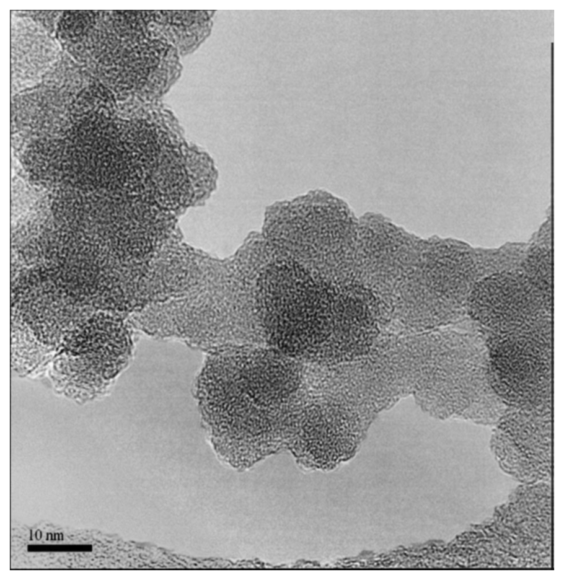
Figure 2.
Particle size distribution of T30 fumed silica.
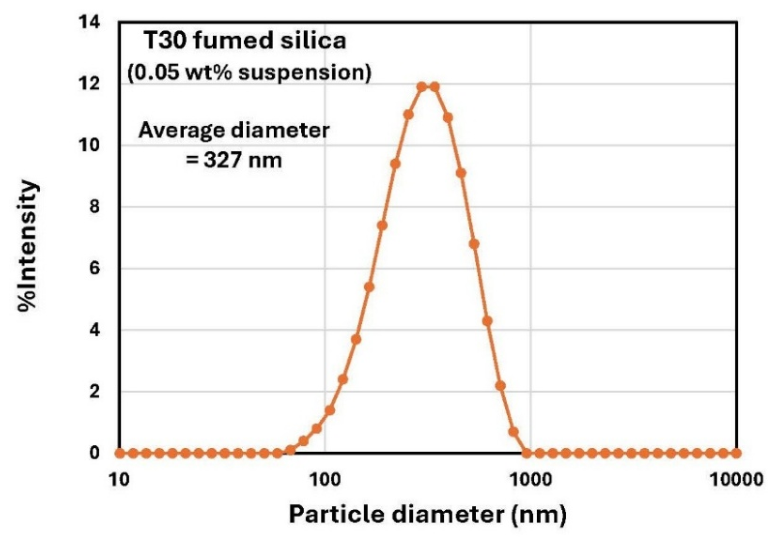
Figure 3.
TEM image of cellulose nanocrystals.
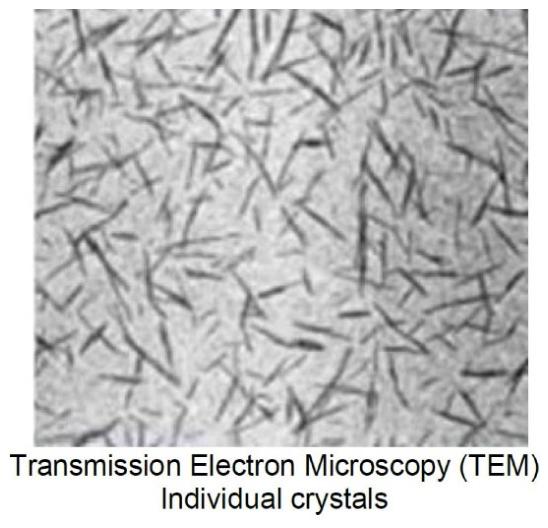
Figure 4.
Steady shear rheological behavior of pure fumed silica T30 suspensions. (a) viscosity versus shear rate. (b) power law parameters.
Figure 4.
Steady shear rheological behavior of pure fumed silica T30 suspensions. (a) viscosity versus shear rate. (b) power law parameters.
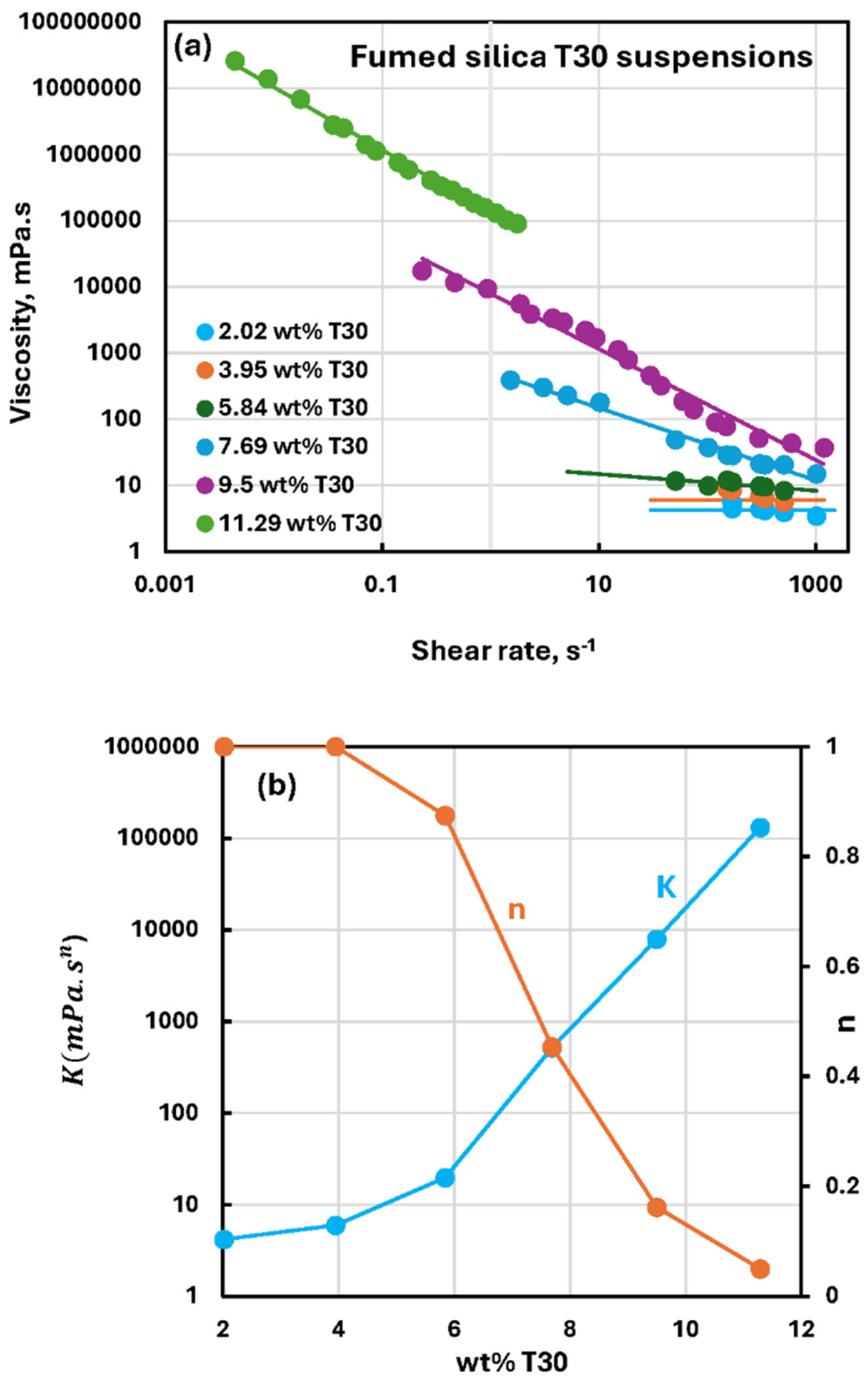
Figure 5.
Comparison of power-law parameters of pure fumed silica T30 and pure nanocrystalline cellulose suspensions. (a) consistency index (b) flow behavior index.
Figure 5.
Comparison of power-law parameters of pure fumed silica T30 and pure nanocrystalline cellulose suspensions. (a) consistency index (b) flow behavior index.
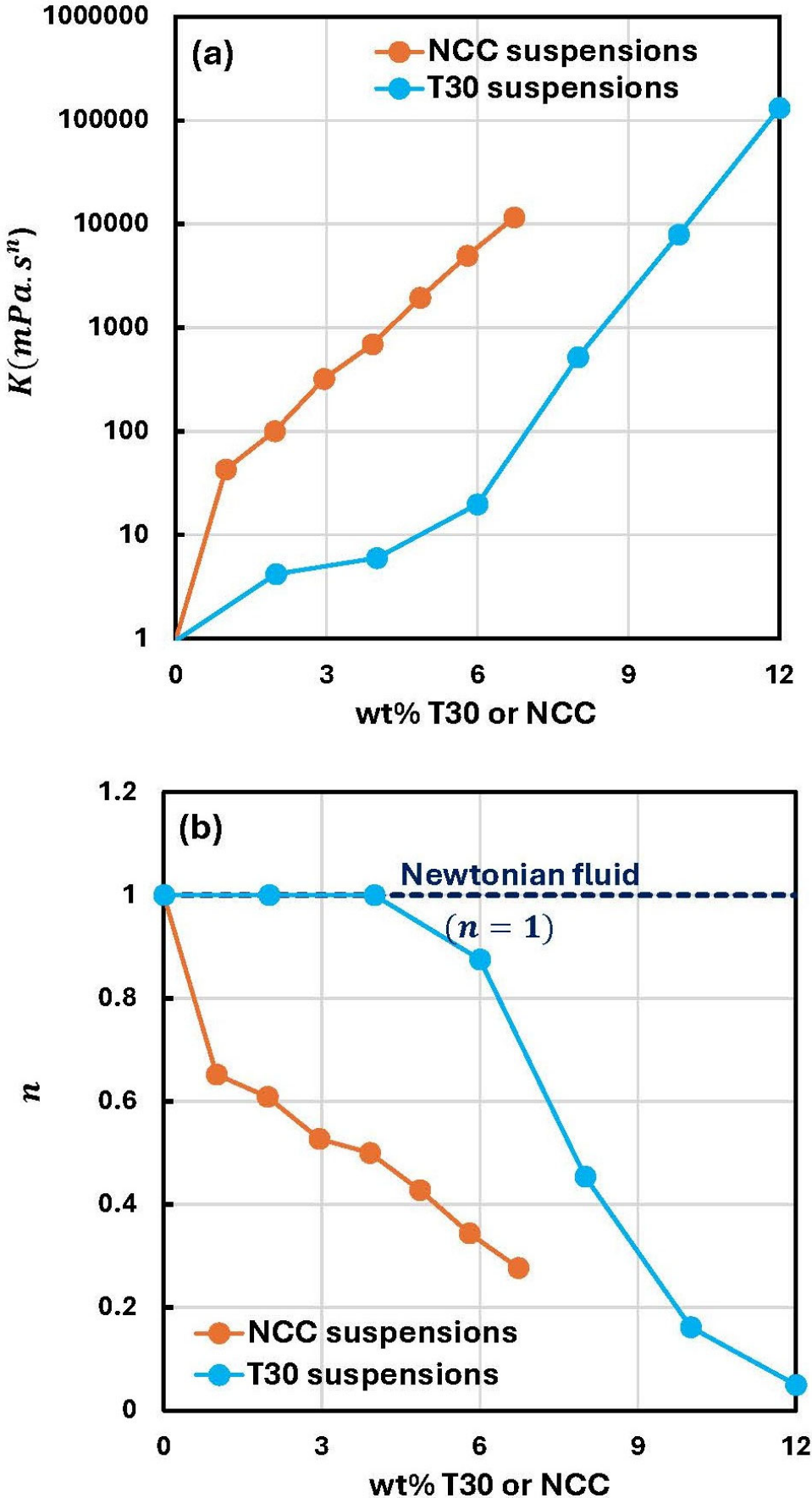
Figure 6.
Interactions between neighboring fumed silica nanoparticles and network structure formation due to hydrogen bonding.
Figure 6.
Interactions between neighboring fumed silica nanoparticles and network structure formation due to hydrogen bonding.
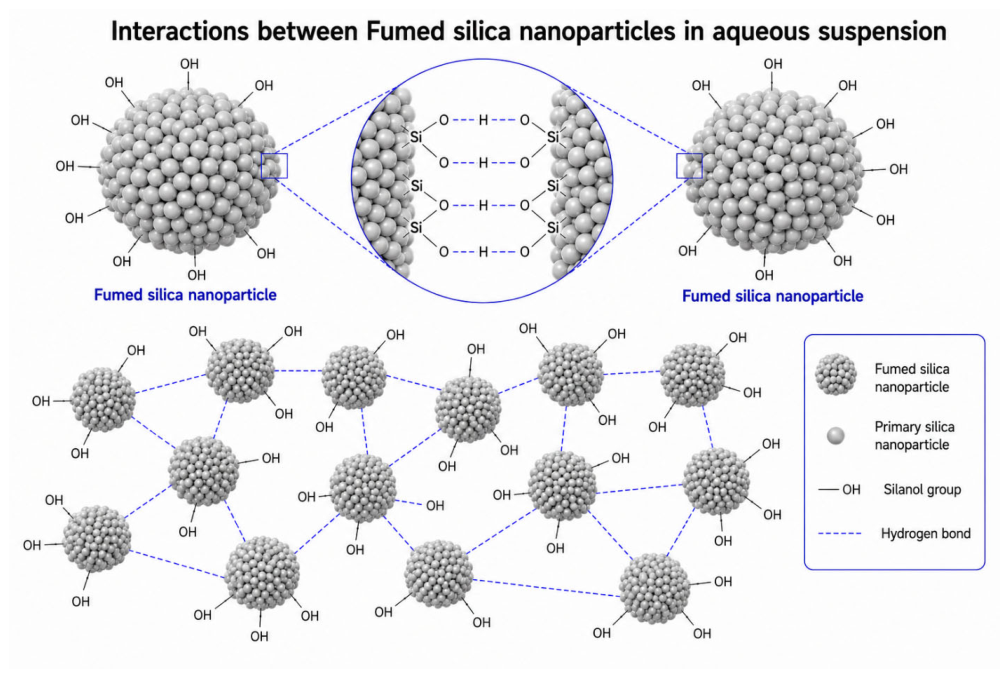
Figure 7.
Interactions between neighboring NCC nanoparticles and network structure formation due to hydrogen bonding.
Figure 7.
Interactions between neighboring NCC nanoparticles and network structure formation due to hydrogen bonding.
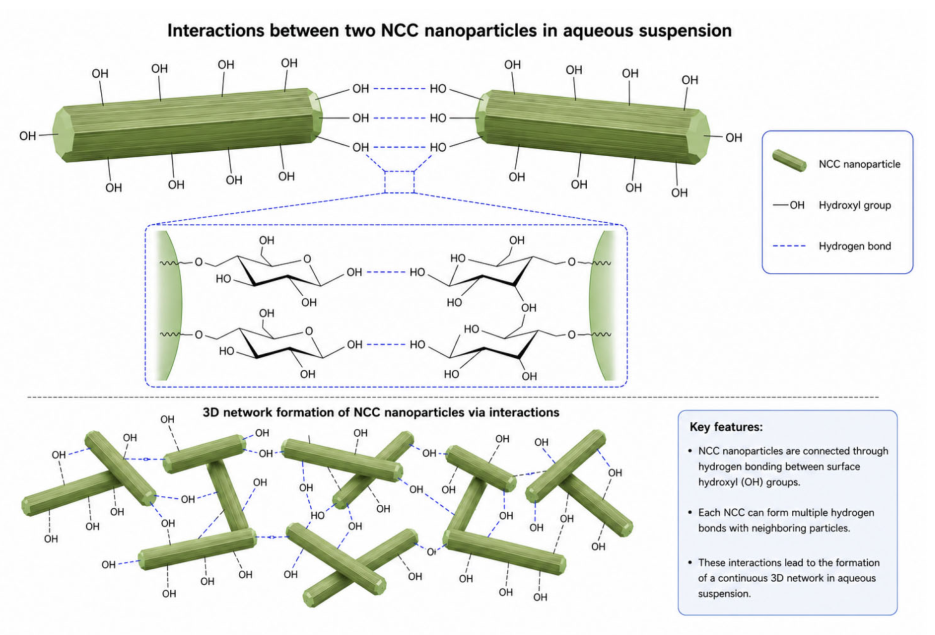
Figure 8.
Steady shear rheological behavior of hybrid suspensions of NCC and fumed silica T30 at a fixed T30 concentration of 2 wt%. (a) viscosity versus shear rate. (b) power law parameters.
Figure 8.
Steady shear rheological behavior of hybrid suspensions of NCC and fumed silica T30 at a fixed T30 concentration of 2 wt%. (a) viscosity versus shear rate. (b) power law parameters.
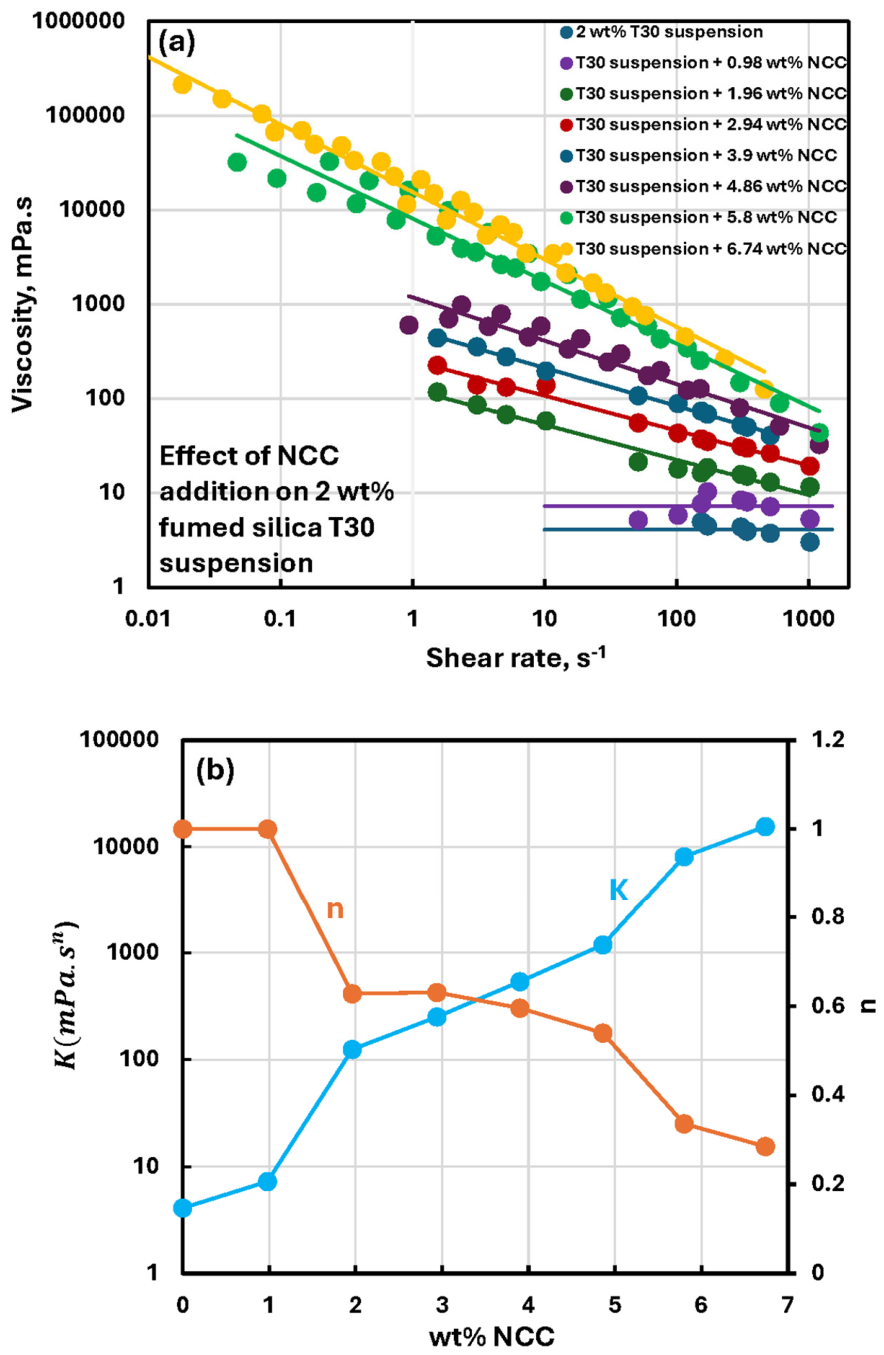
Figure 9.
Steady shear rheological behavior of hybrid suspensions of NCC and fumed silica T30 at a fixed T30 concentration of 4.02 wt%. (a) viscosity versus shear rate. (b) power law parameters.
Figure 9.
Steady shear rheological behavior of hybrid suspensions of NCC and fumed silica T30 at a fixed T30 concentration of 4.02 wt%. (a) viscosity versus shear rate. (b) power law parameters.
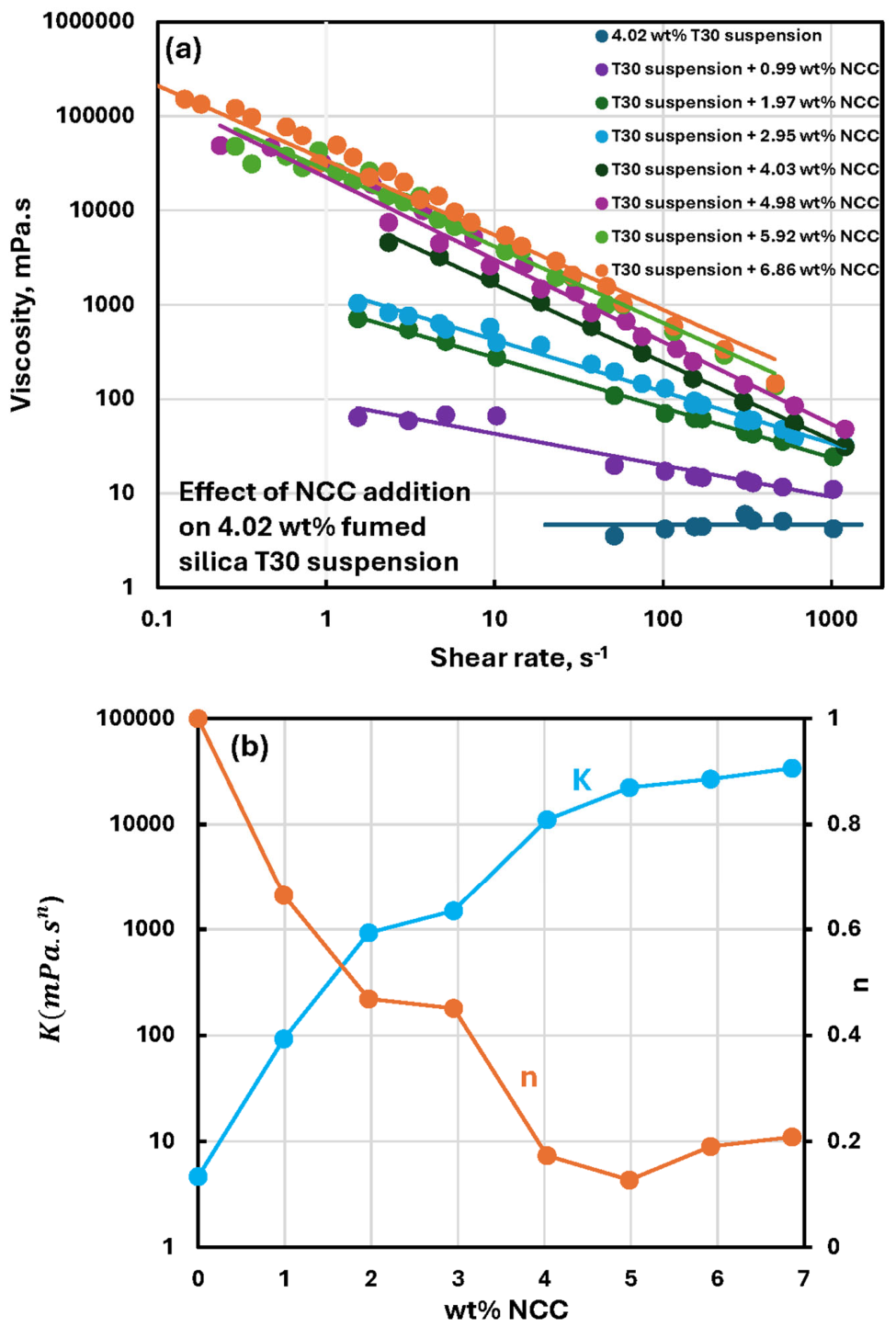
Figure 10.
Steady shear rheological behavior of hybrid suspensions of NCC and fumed silica T30 at a fixed T30 concentration of 6.18 wt%.(a) viscosity versus shear rate. (b) power law parameters.
Figure 10.
Steady shear rheological behavior of hybrid suspensions of NCC and fumed silica T30 at a fixed T30 concentration of 6.18 wt%.(a) viscosity versus shear rate. (b) power law parameters.
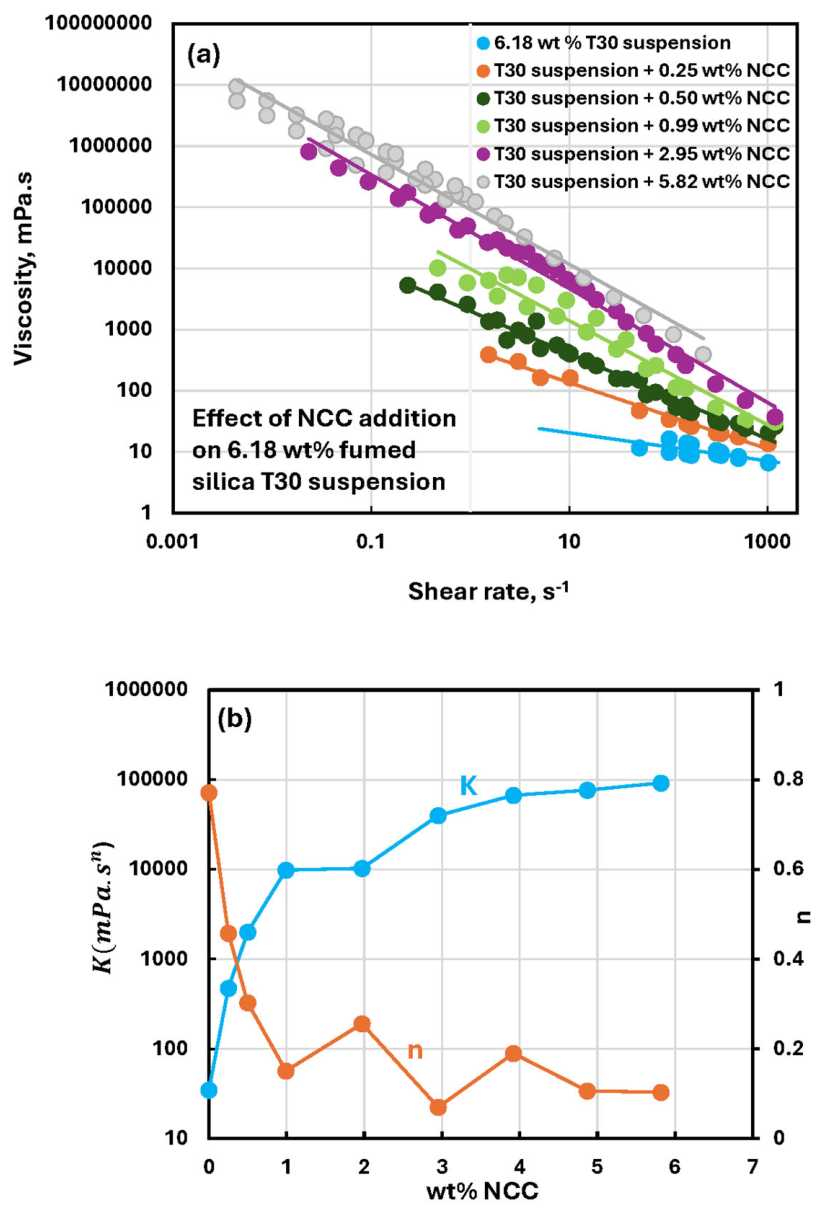
Figure 11.
Comparison of the power law parameters K and n for pure suspensions (T30 or NCC) and different hybrid suspensions (T30+NCC). (a) consistency index (b) flow behavior index.
Figure 11.
Comparison of the power law parameters K and n for pure suspensions (T30 or NCC) and different hybrid suspensions (T30+NCC). (a) consistency index (b) flow behavior index.
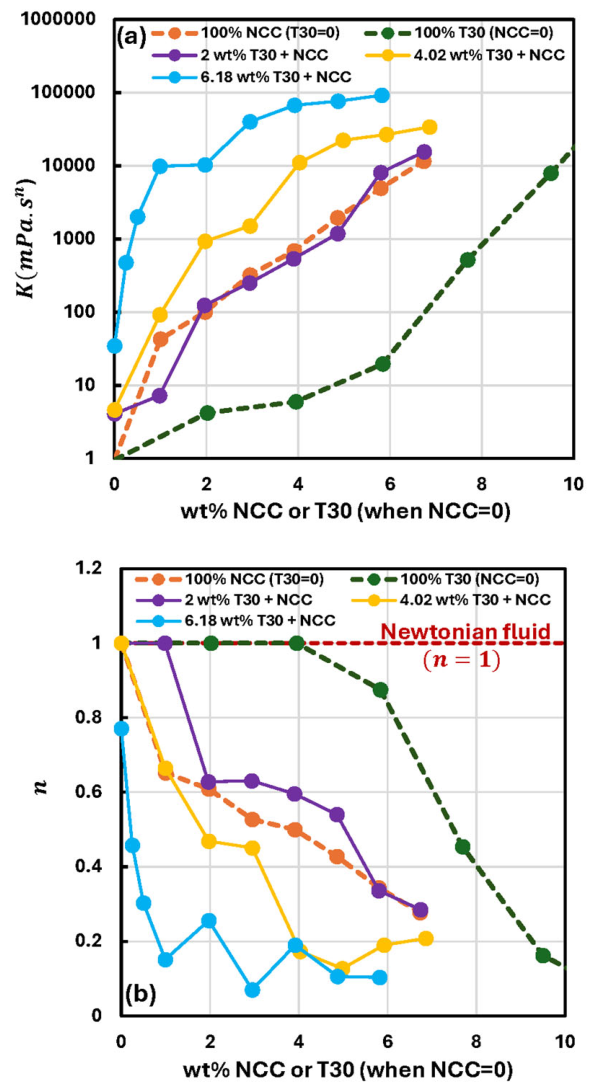
Figure 12.
Correlations of relative consistency and flow behavior index with the volume fraction of total particulate phase. (a) relative consistency index (b) flow behavior index.
Figure 12.
Correlations of relative consistency and flow behavior index with the volume fraction of total particulate phase. (a) relative consistency index (b) flow behavior index.
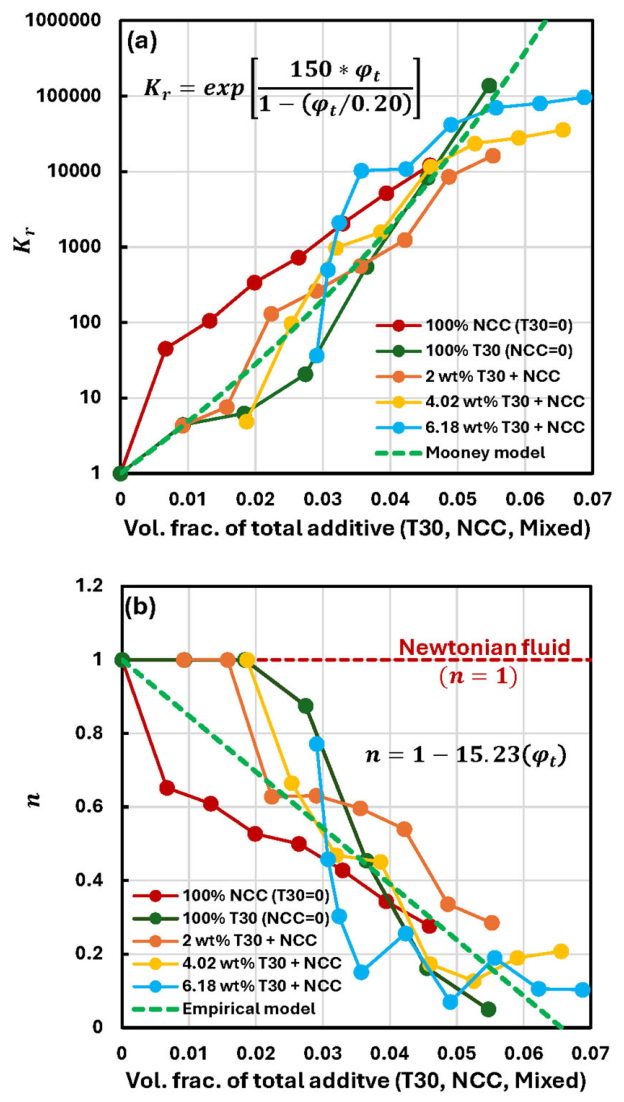
Figure 13.
Strain sweep of 7.06 wt% fumed silica T30 suspension at 1 Hz.
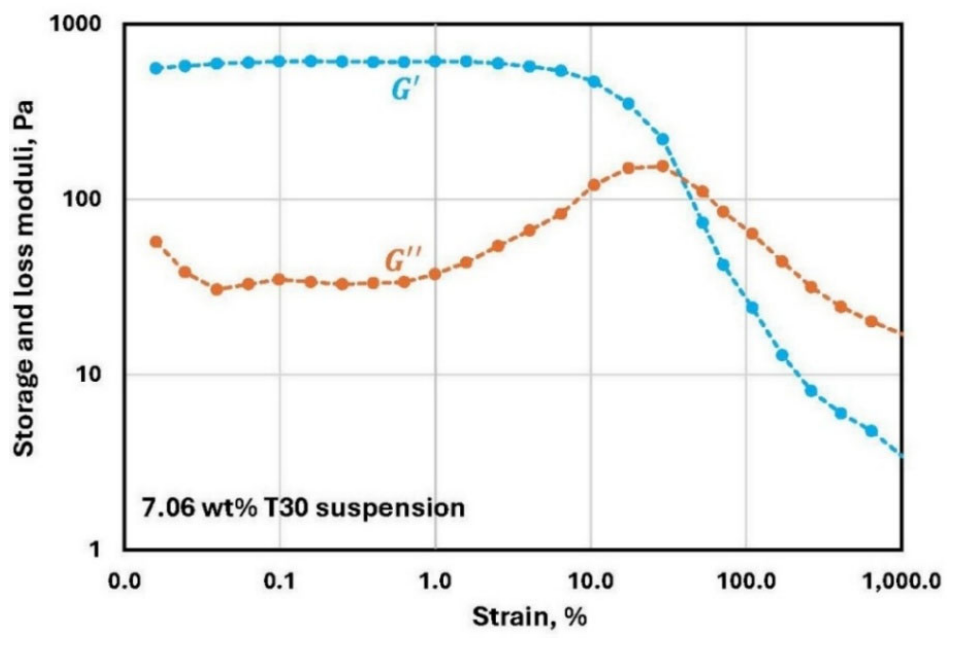
Figure 14.
Storage and loss moduli (G′ and G″) of pure fumed silica (7.06 wt% T30) and hybrid suspensions of fumed silica T30 and NCC.
Figure 14.
Storage and loss moduli (G′ and G″) of pure fumed silica (7.06 wt% T30) and hybrid suspensions of fumed silica T30 and NCC.
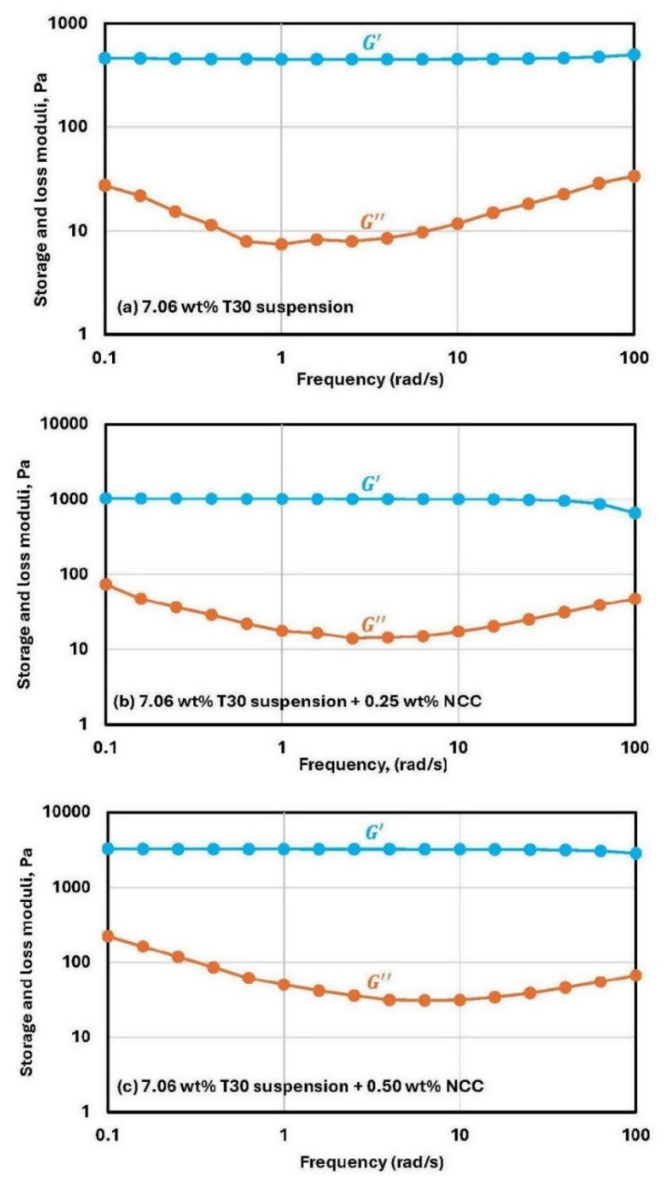
Figure 15.
Influence of NCC addition to 7.06 wt% T30 suspension.
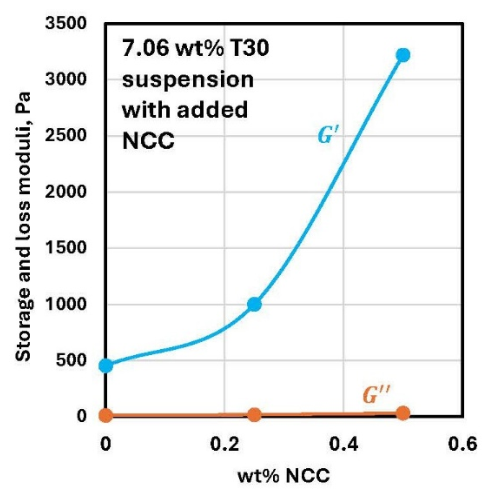
Figure 16.
Network structure formation between fumed silica nanoparticles and NCC nanoparticles.
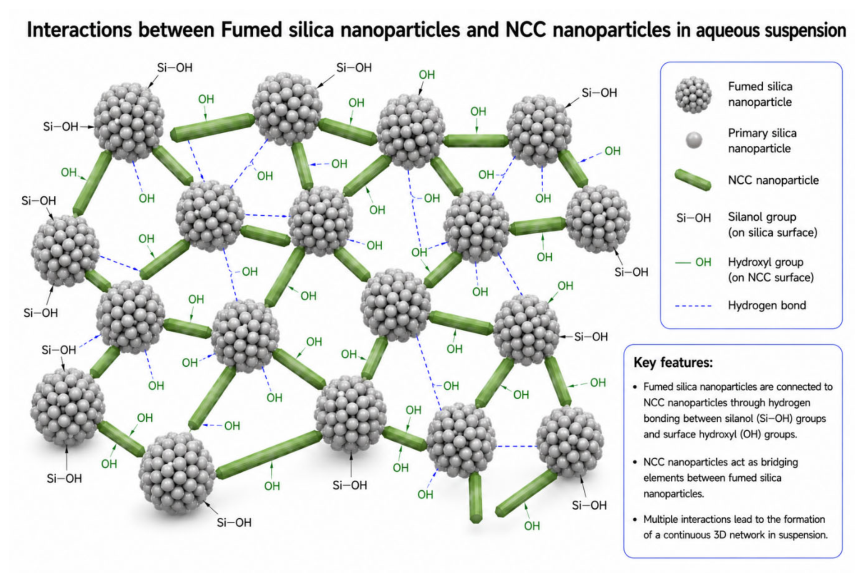
Figure 17.
Complex viscosity versus frequency for pure fumed silica (7.06 wt% T30) and hybrid suspensions of fumed silica T30 and NCC.
Figure 17.
Complex viscosity versus frequency for pure fumed silica (7.06 wt% T30) and hybrid suspensions of fumed silica T30 and NCC.
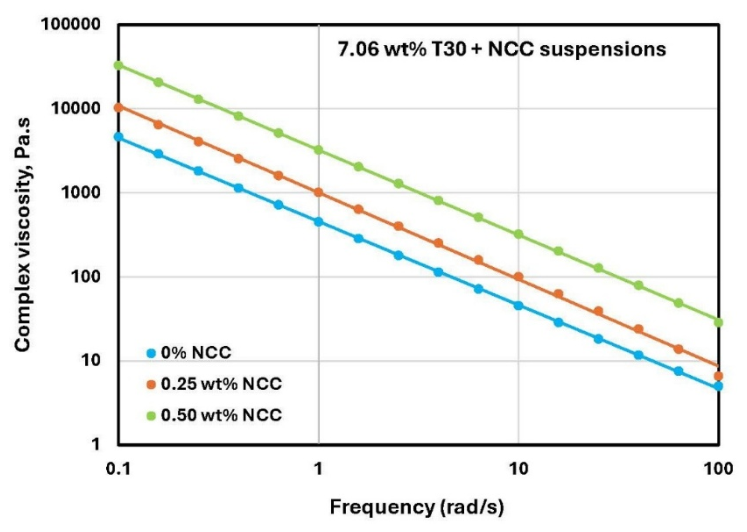
Figure 18.
Storage and loss moduli (G′ and G″) of pure fumed silica (8.1 wt% T30) and hybrid suspensions of fumed silica T30 and NCC.
Figure 18.
Storage and loss moduli (G′ and G″) of pure fumed silica (8.1 wt% T30) and hybrid suspensions of fumed silica T30 and NCC.
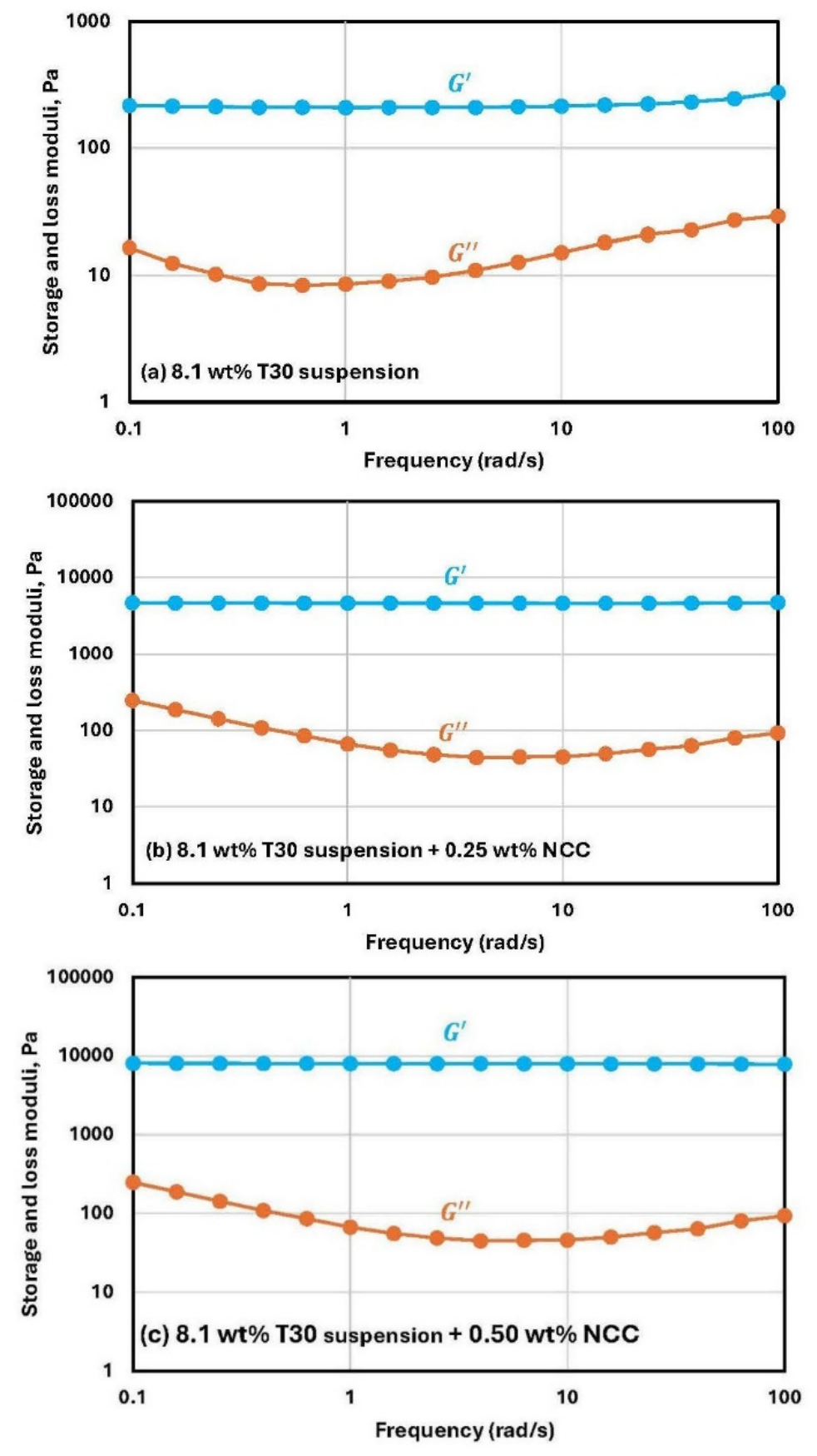
Figure 19.
Influence of NCC addition to 8.1 wt% T30 suspension.
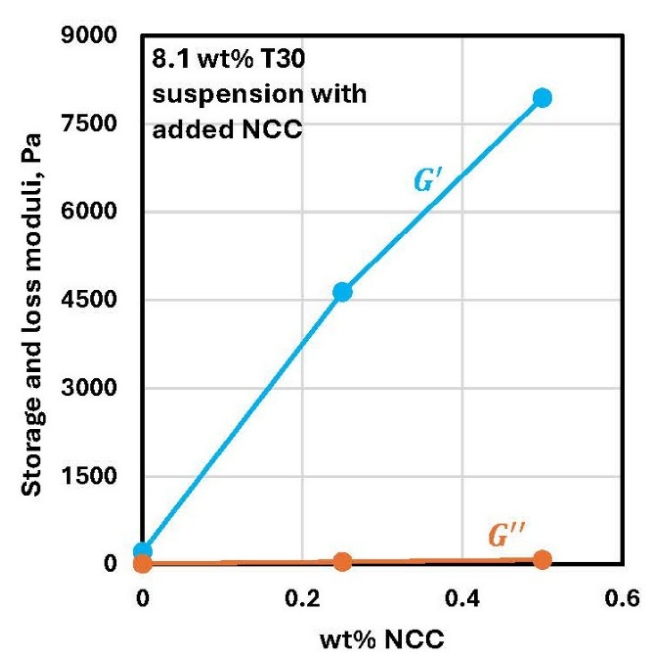
Figure 20.
Comparison of storage and loss moduli of hybrid suspensions consisting of 7.06 wt% T30 and 8.1 wt% T30 suspensions.
Figure 20.
Comparison of storage and loss moduli of hybrid suspensions consisting of 7.06 wt% T30 and 8.1 wt% T30 suspensions.
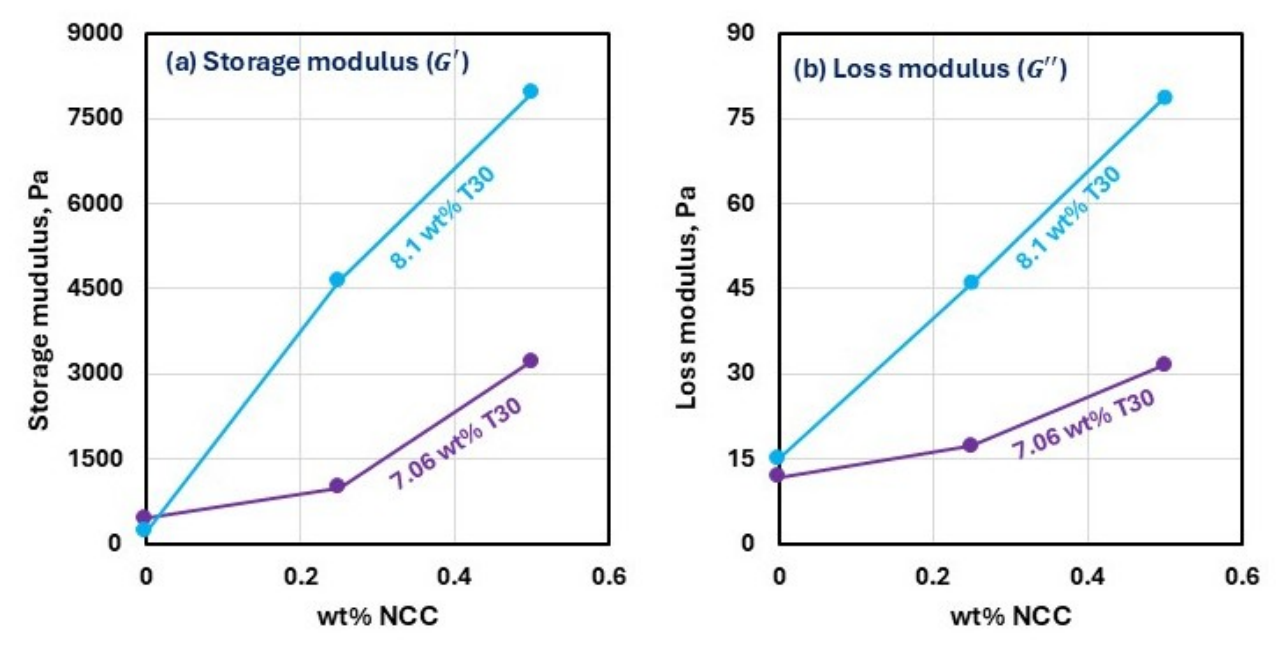
Figure 21.
Comparison of storage and loss moduli of hybrid suspensions obtained using different gap widths of 500, 750, and 1000 μm between parallel plates of the measuring geometry.
Figure 21.
Comparison of storage and loss moduli of hybrid suspensions obtained using different gap widths of 500, 750, and 1000 μm between parallel plates of the measuring geometry.
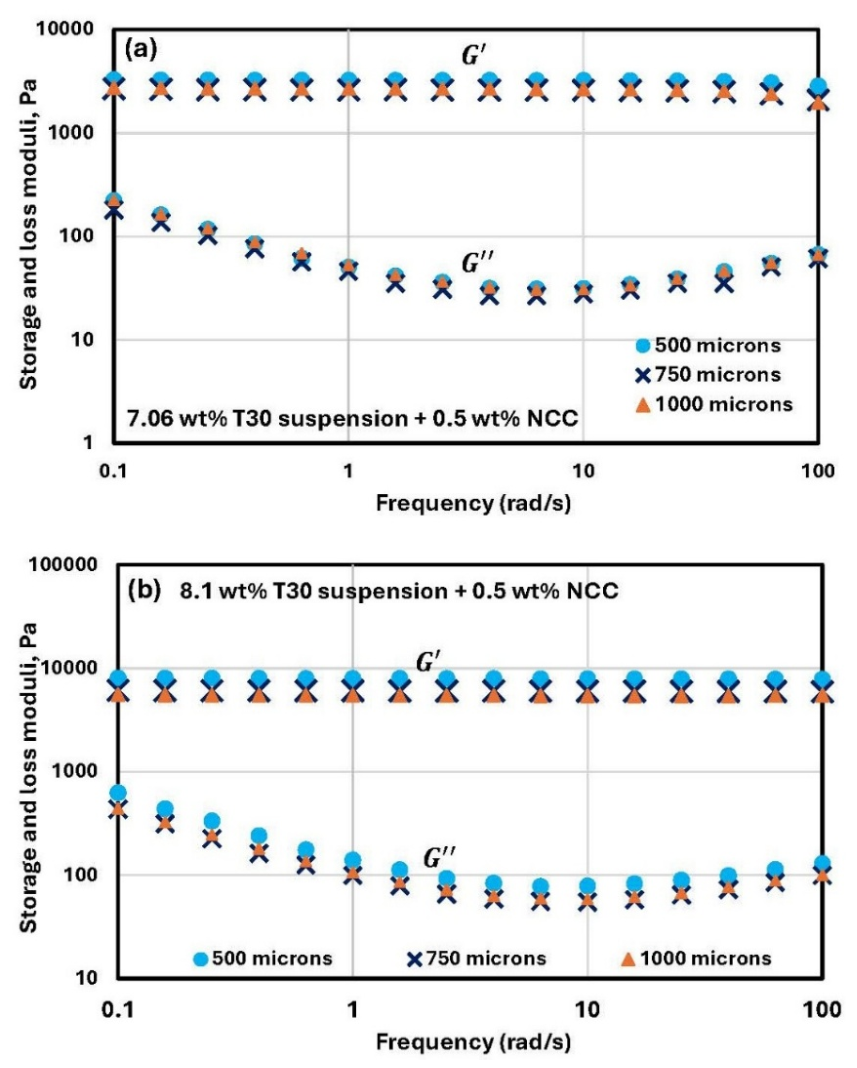
Figure 22.
Hybrid suspensions of NCC and fumed silica T30 at a fixed T30 concentration of 6.2 wt%. The NCC concentration is increased from 2.9 to 3.9 wt%.
Figure 22.
Hybrid suspensions of NCC and fumed silica T30 at a fixed T30 concentration of 6.2 wt%. The NCC concentration is increased from 2.9 to 3.9 wt%.
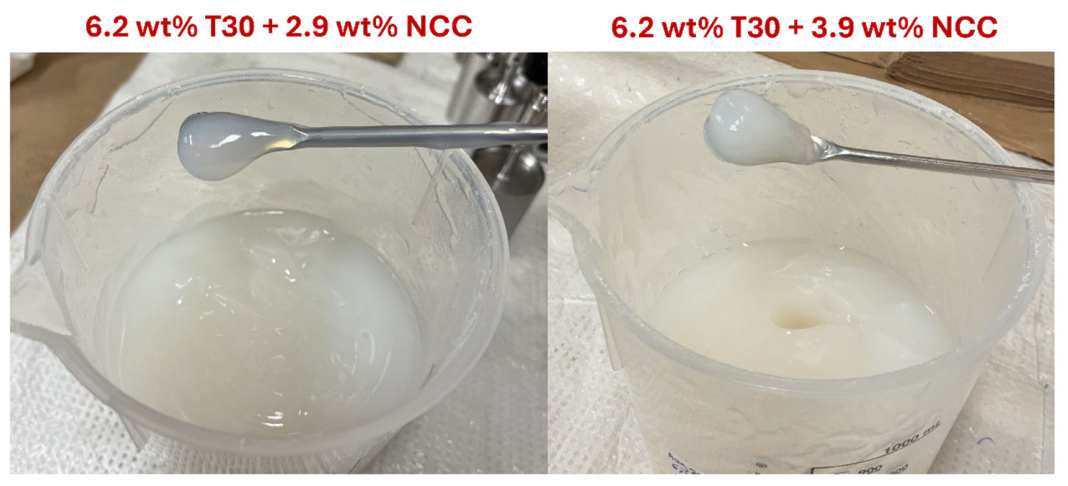

Table 1.
Concentrations of suspensions of T30 and NCC mixtures were investigated.
| Fumed Silica (T30) Concentration in T30–Water Suspension (wt%) |
Concentration of Cellulose Nanocrystals (NCC) in Mixed T30–NCC–Water Suspension (wt%) |
|---|---|
| 2 | 0.98, 1.96, 2.94, 3.9, 4.86, 5.8, 6.74, |
| 4.02 | 0.99, 1.97, 2.95, 4.03, 4.98, 5.92, 6.86 |
| 6.18 | 0.25, 0.50, 0.99, 1.97, 2.95, 3.92, 4.87, 5.82 |
| 7.06 | 0.25, 0.5 |
| 8.1 | 0.25, 0.5 |
Table 2.
Radii and gap-widths of co-axial cylinders of viscometers.
| Viscometer | Radius of InnerCylinder, (cm) | Radius of OuterCylinder, (cm) | Length of Inner Cylinder (cm) |
Gap-Width Between Cylinders (cm) |
|---|---|---|---|---|
| Fann viscometer | 1.72 | 1.84 | 3.8 | 0.12 |
| Haake viscometer with MV I bob |
2.00 | 2.1 | 6.0 | 0.10 |
| Haake viscometer with MV II bob |
1.84 | 2.1 | 6.0 | 0.26 |
| Haake viscometer with MV III bob |
1.52 | 2.1 | 6.0 | 0.58 |
Disclaimer/Publisher’s Note: The statements, opinions and data contained in all publications are solely those of the individual author(s) and contributor(s) and not of MDPI and/or the editor(s). MDPI and/or the editor(s) disclaim responsibility for any injury to people or property resulting from any ideas, methods, instructions or products referred to in the content. |
© 2026 by the authors. Licensee MDPI, Basel, Switzerland. This article is an open access article distributed under the terms and conditions of the Creative Commons Attribution (CC BY) license (http://creativecommons.org/licenses/by/4.0/).
Copyright: This open access article is published under a Creative Commons CC BY 4.0 license, which permit the free download, distribution, and reuse, provided that the author and preprint are cited in any reuse.