
Submitted:
08 September 2026
Posted:
09 September 2026
You are already at the latest version
Abstract
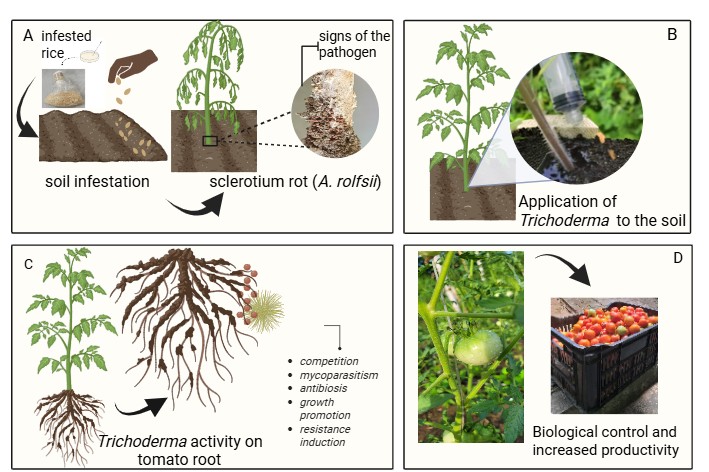
Sclerotium rot, caused by Agroathelia rolfsii, is one of the main soilborne diseases that limit plant growth and tomato yield. This study evaluated the efficacy of Amazonian Trichoderma species to control sclerotium rot, and promote plant growth under field conditions, in Manaus, Brazil. We used six species (isolates) of Trichoderma based on their previously assessed performance in field trials. The incidence of sclerotium rot, tomato fruit yield and the production of indoleacetic acid (IAA) and siderophores were evaluated. The isolates reduced the incidence of sclerotium rot by up to 75% and also increased fruit yield. T. rugulosum had the best performance, as it greatly reduced sclerotium rot incidence and improved fruit yield. Although no differences were found in biomass allocation to plant organs, T. endophyticum, T. agriamazonicum, and T. asperelloides showed high production of IAA. The results highlight the potential of Amazonian Trichoderma isolates as bio fungicides to be used in sustainable cultivation of tomato. Furthermore, we show the potential of Amazonian species of Trichoderma to both reduce the incidence of sclerotium rot, and to increase the production of bioactive compounds that stimulate plant growth. By reducing the use of synthetic agrochemicals, the use of Trichoderma promotes healthier and more sustainable agricultural practices.
Keywords:
sustainable agriculture
; plant growth promotion
; microbial bioinputs
Copyright: This open access article is published under a Creative Commons CC BY 4.0 license, which permit the free download, distribution, and reuse, provided that the author and preprint are cited in any reuse.