
Submitted:
02 September 2026
Posted:
03 September 2026
You are already at the latest version
Abstract
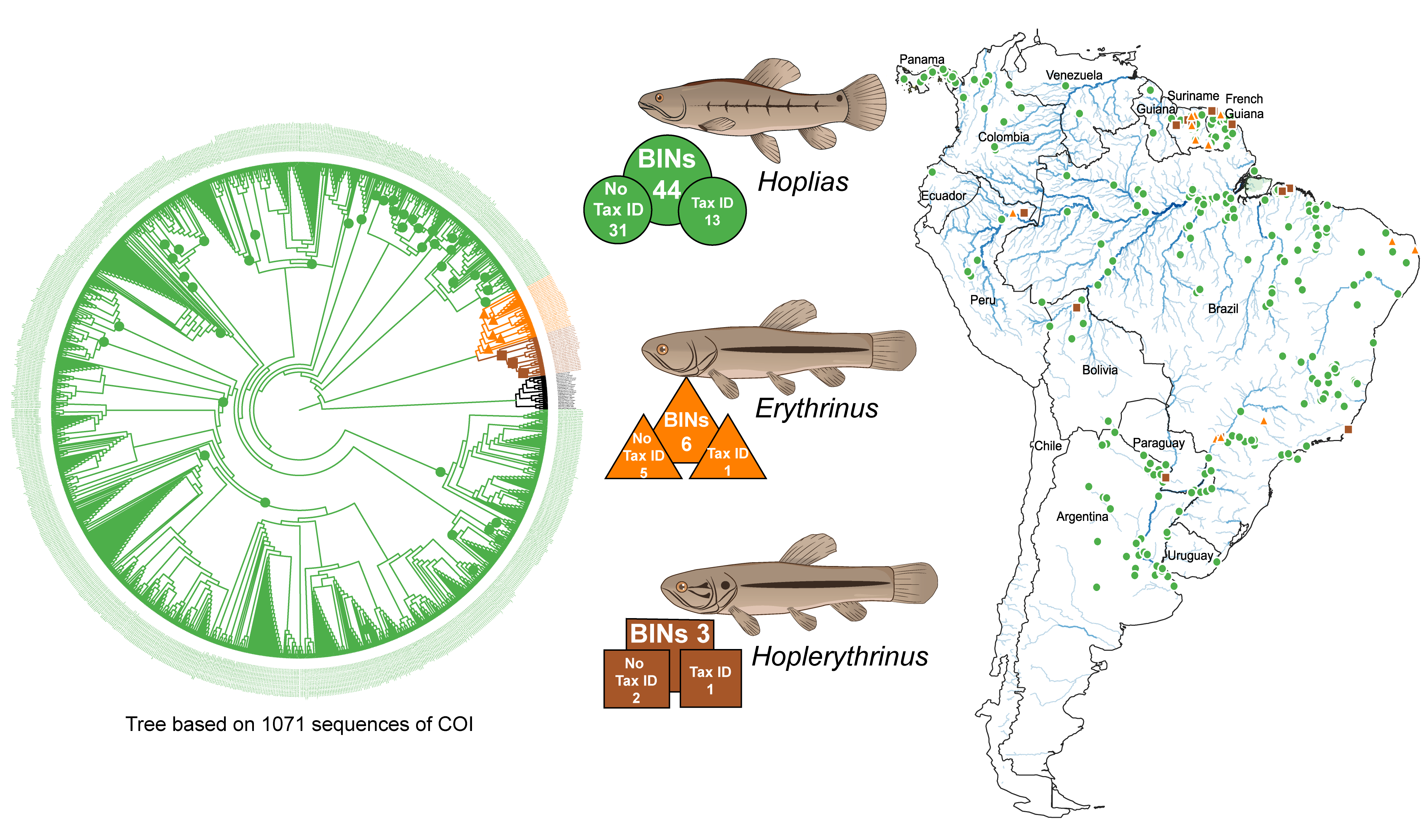
The Neotropical fish family Erythrinidae includes widespread predatory species whose diversity and evolutionary relationships remain incompletely understood, and previous molecular studies suggest that its currently recognized diversity of 20 species is underestimated. Here, we assessed molecular diversity and phylogenetic relationships across Erythrinidae using the COI gene and analyzed 1,071 sequences from 410 localities in 11 countries, encompassing the major Neotropical hydrographic basins. Barcode Index Number (BIN) assignments and maximum likelihood phylogenetic analyses recovered 53 molecular lineages, comprising 52 public and one private BIN. Fifteen BINs were associated with valid species, either unambiguously or through assignments based on type localities, whereas 23 represented putative new species and 14 could not be assigned taxonomic identities because of limited lineage representation, non-monophyly, or the absence of reference material. Most molecular diversity was concentrated in Hoplias, with 44 lineages. Phylogenetic analyses supported the monophyly of Erythrinidae and its three genera and identified three major species groups within Hoplias: H. malabaricus, H. lacerdae, and H. “Panama”. Lineage richness was unevenly distributed among biogeographic units, with the Amazon Basin harboring the highest diversity. These results provide a continental molecular framework and baseline for future integrative taxonomic revisions within Erythrinidae.
Keywords:
biogeographic units
; cryptic species
; Hoplias
; neotropical
; Trahira
Copyright: This open access article is published under a Creative Commons CC BY 4.0 license, which permit the free download, distribution, and reuse, provided that the author and preprint are cited in any reuse.