

Submitted:
01 September 2026
Posted:
01 September 2026
You are already at the latest version
Abstract
Difficulties in emotion regulation have been associated with greater somatic symptom severity. However, the role of interoceptive awareness in this relationship remains unclear. This study examined whether overall interoceptive awareness and its specific dimensions moderate the association between difficulties in emotion regulation and somatic symptoms. The sample comprised 394 adults recruited from the general population through online participant recruitment platforms. Participants completed the Difficulties in Emotion Regulation Scale-16, Somatic Symptom Scale-8, and Multidimensional Assessment of Interoceptive Awareness. Moderation analyses were conducted using PROCESS Model 1, controlling for age, gender, and chronic physical illness. According to the findings, difficulties in emotion regulation were positively associated with somatic symptoms (r = .53, p < .001). Overall interoceptive awareness significantly moderated this association (B = .069, SE = .020, p < .001, ΔR² = .020), such that the association became stronger at higher levels of interoceptive awareness. Following Bonferroni correction, significant moderating effects were also observed for Noticing, Emotional Awareness, Self-Regulation, and Body Listening, whereas Not-Distracting, Not-Worrying, Attention Regulation, and Trusting were not significant. Overall, the findings suggest that greater interoceptive awareness may be associated with a stronger relationship between emotion-regulation difficulties and somatic symptoms.
Keywords:
emotion regulation difficulties
; somatic symptoms
; interoceptive awareness
1. Introduction
Emotion regulation involves processes by which affective experiences are modulated using cognitive, behavioural, interpersonal and intrapersonal strategies (Gross, 2002). According to the comprehensive conceptualisation of Gratz and Roemer (2004), emotion regulation includes several facets of: (a) emotional awareness; (b) acceptance of emotions; (c) ability to proceed with goal-directed behaviour when experiencing negative emotions; and (d) ability to flexibly apply emotion regulation strategies in order to meet individual goals and situational demands.
Derived from the multi-faceted model of emotion regulation, difficulties in emotion regulation are conceptualised as six dimensions, namely (a) lack of awareness of emotional responses, (b) lack of clarity about emotional responses, (c) non-acceptance of emotional responses, (d) limited access to emotion-regulation strategies perceived as effective, (e) difficulty controlling impulses when experiencing negative emotions, and (f) difficulty engaging in goal-directed behaviours when experiencing negative emotions (Gratz & Roemer, 2004). Cole et al. (2019) define difficulties in emotion regulation as the “inability to modulate emotional responses according to situational demands” and note that they involve maladaptive strategies such as worry and rumination, which hinder emotion regulation (Mansueto et al., 2022).
Emotion regulation difficulties are associated with several psychopathologies and mental health conditions, including depression (Gross & Munoz, 1995), anxiety disorders (Campbell-Sills et al., 2006), post-traumatic stress disorder (McDermott et al., 2009), social dysfunction (Gross & Munoz, 1995), lower positive affect (Quoidbach et al., 2010), and somatic symptoms (Erbildim & Nweke, 2025).
Fonagy & Allison (2012) explain that a lack of emotion regulation skills may lead to the repression and avoidance of emotional experiences. These maladaptive approaches are associated with the somatisation of affective experiences rather than verbal communication and expression. Ogrodnuczuk et al. (2014) found that alexithymia, which refers to difficulty identifying and describing emotions, may mediate the relationship between childhood maltreatment and somatisation.
Somatic symptoms are physical symptoms that may or may not have an organic basis (Fink & Rosendal, 2008). The absence of an organic basis does not imply that these symptoms are not real or do not exist. For example, headaches and dizziness are common, especially during stressful periods. However, these symptoms are not always attributable to medical conditions such as a brain tumour or migraine and are considered temporary. Creed and Barsky (2004) note that somatic symptoms are linked to psychological distress, and individuals seeking mental health care often report physical symptoms. Somatic symptoms may reduce quality of life (Creed et al., 2012), cause disability (van der Leeuw et al., 2015) and impair the outcome of psychological treatment (Huijbregts et al., 2013). Creed et al. (2011) report that one-third of primary care complaints consist of medically unexplained symptoms that are persistent and impair daily functioning.
The perseverative cognition hypothesis suggests that bodily symptoms are more common during stressful periods. According to the hypothesis, the duration and intensity of associations are attributed to a lack of emotional regulation strategies for coping with psychological distress, rather than a direct effect of stress on somatic symptoms (Brosschot et al., 2006). Selvi & Bozo (2023) also indicate that difficulties in emotion regulation moderate the relationship between perceived stress and somatic symptoms. In the same study, somatic symptom severity was positively correlated with total difficulties-in-emotion-regulation scores and their subscales. Similarly, Schnabel et al. (2022) reported that patients with somatic symptom disorder obtained higher scores on difficulties in emotion regulation and were less likely to use adaptive emotion regulation strategies.
Difficulties in emotion regulation have consistently been identified as a factor associated with somatic symptoms. Individuals who lack adaptive emotion regulation strategies may be less able to process emotional experiences effectively, increasing the likelihood that they are expressed as somatic symptoms. However, individuals with similar levels of emotion dysregulation do not necessarily report the same degree of somatic complaints. This variability suggests that additional mechanisms may influence the relationship between emotion regulation difficulties and somatic symptoms. One promising candidate is interoceptive awareness. While interoception is defined as “the process by which the nervous system senses, interprets, and integrates signals originating from within the body, providing a moment-by-moment mapping of the body's internal landscape across conscious and unconscious levels” (Khalsa et al., 2018), interoceptive awareness refers to the conscious level of interoception with multiple dimensions available to self-report (Mehling et al., 2018). The multidimensional conceptual framework for interoceptive awareness proposed by Mehling et al. (2012) comprises five dimensions: awareness of body sensations; emotional reaction and attentional response to sensations; capacity to regulate attention; trusting body sensations; and mind-body integration.
Interoceptive awareness is linked to better emotion-regulation capacity, as emotion processing requires identifying and being aware of emotions (Kever et al., 2015). Damasio (1994) proposes the somatic marker hypothesis, which holds that bodily signals are essential for understanding feelings and making decisions. The hypothesis emphasises that recognising the physiological changes associated with emotions is crucial for regulating them through physiological responses.
The literature on the relationship between interoceptive awareness and somatic symptoms is mixed. Some studies of body-awareness interventions report that enhanced awareness is linked to fewer physical symptoms, whereas others report a negative association. For instance, Price et al. (2025) observed that improving interoceptive sensibility through Mindful Awareness in Body-Oriented Therapy (MABT) was associated with reduced pain interference. Similarly, Arey et al. (2024) found that improved interoceptive awareness through a brief mindfulness self-compassion intervention was associated with reduced pain among patients with fibromyalgia.
In contrast, other studies have reported that higher interoceptive awareness is linked to perceiving physical symptoms more severely. Bogaerts et al. (2022) found that patients with fibromyalgia and chronic fatigue syndrome scored higher on sensitivity to bodily sensations and attention to negative sensations. Likewise, Todd et al. (2024) concluded that self-reported interoceptive awareness was positively correlated with fibromyalgia symptom severity.
The association between difficulties in emotion regulation and somatic symptoms is consistently examined. However, limited research has examined whether interoceptive awareness moderates the association between emotion regulation difficulties and somatic symptoms. Given that interoceptive awareness influences the perception and interpretation of internal bodily signals accompanying emotional arousal, it may alter the extent to which difficulties in emotion regulation are translated into somatic symptom experiences. Interoceptive awareness may act as a buffering mechanism, contributing to emotion regulation by providing bodily awareness; thus, fewer somatic symptoms are expected in relation to emotion regulation difficulties. Alternatively, higher interoceptive awareness may intensify the association between emotion regulation difficulties and somatic symptoms, as individuals may become more focused and aware of bodily symptoms associated with difficulties in emotion regulation.
The present study aimed to examine the relationship between difficulties in emotion regulation and somatic symptoms, and to assess the moderating role of interoceptive awareness and its dimensions in this relationship. The hypotheses of the study are:
(H1) Difficulties in emotion regulation would be positively associated with somatic symptoms
(H2) Interoceptive awareness would moderate the relationship between difficulties in emotion regulation and somatic symptoms.
2. Materials and Methods
2.1. Participants
A total of 394 participants were recruited via participant recruitment platforms using a convenience sampling method. Participants who completed the survey were compensated through the platform. Inclusion criteria were being over the age of 18, and the general population was targeted as the study sample. An a priori power analysis was conducted using GPower 3.1 for hierarchical multiple regression. Assuming a medium effect size (f^2=.15 (Cohen, 1988), an alpha level of .05, and a statistical power of .80, the final sample size exceeded the minimum required. Participation was voluntary, and participants could withdraw from the study at any time. The informed consent form was presented before the research questions were answered.
The sample consisted of 394 participants, with a mean age of 34.85 years (SD = 12.31; range = 19–78 years). Of the participants, 39.3% were female ((n = 155)) and 60.7% were male ((n = 239)). Regarding educational attainment, 20.6% had completed high school, 54.3% held a bachelor's degree, 22.6% had a master's degree, and 2.5% held a doctoral degree. Regarding perceived income, 26.9% of participants reported a low income, 67.3% reported an average income, and 5.8% reported a high income. Marital status was distributed as follows: 58.6% were single, 36.0% were married, 5.1% were divorced, and 0.3% were widowed. Finally, 20.1% of participants reported having a chronic physical illness, whereas 79.9% reported no history of chronic physical illness.
3.1. Research Tools
3.1.1. Sociodemographic Information Form.
The sociodemographic information form was developed by the researcher and used to collect data on participants' demographic characteristics. The form included questions regarding age, gender, educational attainment, marital status, income level, and the presence of chronic illness. These variables were used to describe the sample, and selected demographic characteristics were included as covariates in the analyses.
3.1.2. Difficulties in Emotion Regulation Scale–16 (DERS-16)
The Difficulties in Emotion Regulation Scale-16 (DERS-16) was used to assess difficulties in emotion regulation. The scale has 16 items rated on a 5-point Likert scale with responses ranging from 1 (almost never) to 5 (almost always). Higher total scores indicate greater difficulties in emotion regulation. The DERS-16 has excellent internal consistency with Cronbach's alpha coefficients ranging from .92 to .95 (Bjureberg et al., 2016). In the present study, the scale demonstrated excellent internal consistency (Cronbach's α = .95).
3.1.3. Somatic Symptom Scale–8 (SSS-8)
Somatic symptom severity was assessed using the Somatic Symptom Scale-8 (SSS-8). The SSS-8 consists of eight items to report somatic symptoms experienced during the past seven days. Each item is rated on a 5-point Likert scale ranging from 0 (not at all) to 4 (very much). Total scores range from 0 to 32, with higher scores indicating greater somatic symptom severity. The SSS-8 has demonstrated good internal consistency, with a Cronbach's alpha coefficient of .81 in the original validation study (Gierk et al., 2014). In the present study, the scale demonstrated good internal consistency (Cronbach's α = .81).
3.1.4. Multidimensional Assessment of Interoceptive Awareness (MAIA)
The Multidimensional Assessment of Interoceptive Awareness (MAIA) 2012) is a 32-item self-report measure assessing eight dimensions of interoceptive awareness: Noticing, Not-Distracting, Not-Worrying, Attention Regulation, Emotional Awareness, Self-Regulation, Body Listening and Trusting. Responses are rated on a 6-point Likert scale ranging from 0 (Never) to 5 (Always), with higher scores indicating greater interoceptive awareness. Items in the Not-Distracting and Not-Worrying subscales are reverse scored prior to calculating subscale scores. In the original validation study, Cronbach's alpha coefficients ranged from .66 to .87 across the eight subscales (Mehling et al., 2012). In the present study, the Cronbach's alpha coefficient was .92 for the total MAIA score. The Cronbach's alpha coefficients for the subscales were .79 (Noticing), .63 (Not-Distracting), .51 (Not-Worrying), .91 (Attention Regulation), .88 (Emotional Awareness), .88 (Self-Regulation), .86 (Body Listening), and .91 (Trusting).
3.2. Procedure
Following ethical approval from the Cyprus Aydin University Ethics Committee (2026/07.006), data were collected through participant recruitment platforms. Each participant was compensated upon completing the survey questions. Informed consent was obtained prior to the study, including the study's aim, a statement of the right to withdraw, the estimated survey duration (6-8 minutes), and the voluntary nature of participation. No identifiable data were collected.
3.3. Statistical Analysis
Statistical analyses were conducted using IBM SPSS Statistics version 29 and the PROCESS Macro version 4.2 (Hayes, 2022). Prior to the main analyses, the normality assumption was evaluated by examining the skewness and kurtosis of all study variables. Values within ±2 for skewness and ±7 for kurtosis were considered indicative of acceptable normality (West et al., 1995). Pearson correlation analyses were performed to examine the associations among the study variables.
To examine whether interoceptive awareness moderates the relationship between difficulties in emotion regulation and somatic symptoms, moderation analyses were conducted using PROCESS Macro Model 1. In the first analysis, the total MAIA score was examined as the moderator. Subsequently, separate moderation analyses were conducted to examine the moderating role of each MAIA subscale (i.e., Noticing, Not-Distracting, Not-Worrying, Attention Regulation, Emotional Awareness, Self-Regulation, Body Listening, and Trusting). Age, gender, and the presence of a chronic physical condition were entered as covariates in all moderation models to control for their potential confounding effects. The significance of the interaction effects was evaluated using a bootstrapping procedure with 5,000 resamples to generate bias-corrected 95% confidence intervals (CIs) (Hayes, 2022).
Because eight separate moderation analyses were conducted for the MAIA subscales, a Bonferroni correction was applied to control for Type I error, resulting in an adjusted significance threshold of p < .00625 (.05/8). Accordingly, both the main and interaction effects were considered statistically significant only when their p-values were below .00625 in the subscale analyses. The moderation analysis using the total MAIA score was treated as the primary analysis. It was therefore evaluated using the conventional significance level of p < .05. For each significant interaction effect, simple slope analyses were examined to evaluate the association between difficulties in emotion regulation and somatic symptoms at low (16th percentile), moderate (50th percentile), and high (84th percentile) levels of the moderator, as provided by the PROCESS macro.
3. Results
3.1. Descriptive Statistics
Descriptive statistics for the study variables are presented in Table 1. Difficulties in emotion regulation had a mean score of 40.90 (SD = 14.95), somatic symptoms had a mean score of 9.11 (SD = 6.11), and overall interoceptive awareness had a mean score of 2.84 (SD = 0.77). The mean values of the MAIA subscales ranged from 2.46 (SD = 1.30) for Body Listening to 3.31 (SD = 1.33) for Trusting. Across all variables, skewness values ranged from −0.53 to 0.80, and kurtosis values ranged from −0.87 to 0.18, indicating that the assumption of normality was met (West et al., 1995).
3.2. Correlation Analysis of Variables
Pearson correlation coefficients among the study variables are presented in Table 2. Difficulties in emotion regulation were positively associated with somatic symptoms (r = .53, p < .001) and negatively associated with overall interoceptive awareness (r = −.26, p < .001). Overall interoceptive awareness was not significantly associated with somatic symptoms (r = −.01, p = .791). Among the MAIA subscales, Noticing (r = .24, p < .001) and Emotional Awareness (r = .16, p = .001) were positively associated with somatic symptoms, whereas Not-Distracting (r = −.37, p < .001), Not-Worrying (r = −.30, p < .001), and Trusting (r = −.16, p = .001) were negatively associated with somatic symptoms. Attention Regulation, Self-Regulation, and Body Listening were not significantly correlated with somatic symptoms (ps > .05). Overall interoceptive awareness was positively associated with all MAIA subscales except Not-Distracting and Not-Worrying.
3.3. Multicollinearity Diagnostics
Prior to the moderation analyses, multicollinearity was assessed using tolerance and variance inflation factor (VIF) statistics. Across all regression models, tolerance values ranged from .810 to .996, whereas VIF values ranged from 1.004 to 1.234. All VIF values were well below the recommended cutoff values, and all tolerance values were above acceptable thresholds (Field, 2018), indicating that multicollinearity was not present in the data.
3.4. Moderation Analysis
A moderation analysis was conducted using PROCESS Model 1 (Hayes, 2022) to examine whether overall interoceptive awareness moderated the association between difficulties in emotion regulation and somatic symptoms while controlling for age, gender, and presence of chronic physical illness. As shown in Table 3, the overall model was significant, F(6, 384) = 40.67, p < .001, explaining 38.9% of the variance in somatic symptoms (R² = .389).
The interaction between difficulties in emotion regulation and interoceptive awareness was significant (B = 0.069, SE = 0.020, t = 3.51, p < .001, ΔR² = .020), indicating that interoceptive awareness moderated the association between difficulties in emotion regulation and somatic symptoms.
Simple slope analyses presented in Figure 1 indicated that the positive association between difficulties in emotion regulation and somatic symptoms was significant at low (B = 0.150, SE = 0.023, p < .001), average (B = 0.204, SE = 0.018, p < .001), and high (B = 0.256, SE = 0.023, p < .001) levels of interoceptive awareness. The association became progressively stronger as interoceptive awareness increased, indicating that greater interoceptive awareness amplified the positive relationship between emotion regulation difficulties and somatic symptoms.
3.4.1. Moderation Analysis Examining the Moderator Role of the MAIA Subscales in the Association Between Emotion Regulation Difficulties and Somatic Symptoms
Table 4 presents results for eight separate moderation analyses examining whether the MAIA subscales moderated the association between emotion regulation difficulties and somatic symptoms, while controlling for gender, age, and chronic physical illness. After applying a Bonferroni correction for multiple comparisons (α = .00625), significant interaction effects were observed for Noticing (B = 0.039, SE = 0.013, t = 3.02, p = .003, ΔR² = .014), Emotional Awareness (B = 0.039, SE = 0.014, t = 2.88, p = .004, ΔR² = .013), Self-Regulation (B = 0.043, SE = 0.012, t = 3.65, p < .001, ΔR² = .021), and Body Listening (B = 0.038, SE = 0.012, t = 3.23, p = .001, ΔR² = .017). The interaction effects for Not-Distracting (p = .496), Not-Worrying (p = .754), Attention Regulation (p = .011), and Trusting (p = .087) were not statistically significant after Bonferroni correction.
Figure 2 presents the simple slopes analysis of the interaction between emotion regulation difficulties and the Noticing dimension in predicting somatic symptoms. Accordingly, the positive association between emotion regulation difficulties and somatic symptoms was significant at low (16th percentile; B = 0.138, SE = 0.024, t = 5.78, p < .001, 95% CI [0.091, 0.185]), medium (50th percentile; B = 0.187, SE = 0.017, t = 11.15, p < .001, 95% CI [0.154, 0.220]), and high (84th percentile; B = 0.226, SE = 0.021, t = 10.92, p < .001, 95% CI [0.185, 0.267]) levels of Noticing. The strength of the association increased with higher Noticing scores, indicating that higher Noticing amplified the positive relationship between emotion regulation difficulties and somatic symptoms.
Figure 3 illustrates the simple slopes analysis of the interaction between emotion regulation difficulties and Emotional Awareness in predicting somatic symptoms. The positive association between emotion regulation difficulties and somatic symptoms was significant at low (16th percentile; B = 0.133, SE = 0.026, t = 5.06, p < .001, 95% CI [0.081, 0.184]), medium (50th percentile; B = 0.188, SE = 0.017, t = 11.04, p < .001, 95% CI [0.154, 0.221]), and high (84th percentile; B = 0.227, SE = 0.021, t = 10.72, p < .001, 95% CI [0.185, 0.269]) levels of Emotional Awareness. Furthermore, the magnitude of the association increased with higher levels of Emotional Awareness, indicating that higher Emotional Awareness strengthened the positive association between emotion regulation difficulties and somatic symptoms.
Figure 4 presents a simple slopes analysis of the interaction between emotion regulation difficulties and the Self-Regulation dimension of interoceptive awareness in predicting somatic symptoms. Accordingly, the positive association between emotion regulation difficulties and somatic symptoms was significant at low (16th percentile; B = 0.151, SE = 0.022, t = 6.83, p < .001, 95% CI [0.108, 0.195]), medium (50th percentile; B = 0.205, SE = 0.018, t = 11.61, p < .001, 95% CI [0.170, 0.239]), and high (84th percentile; B = 0.258, SE = 0.024, t = 10.92, p < .001, 95% CI [0.211, 0.304]) levels of Self-Regulation. Furthermore, the magnitude of the association increased with higher Self-Regulation, indicating that higher Self-Regulation strengthened the positive association between emotion regulation difficulties and somatic symptoms.
Figure 5 shows the simple slopes analysis of the interaction between emotion regulation difficulties and the Body-listening dimension of interoceptive awareness in predicting somatic symptoms, The analysis revealed that the positive association between emotion regulation difficulties and somatic symptoms was significant at low (16th percentile; B = 0.142, SE = 0.025, t = 5.76, p < .001, 95% CI [0.093, 0.190]), medium (50th percentile; B = 0.205, SE = 0.017, t = 11.77, p < .001, 95% CI [0.170, 0.239]), and high (84th percentile; B = 0.255, SE = 0.025, t = 10.34, p < .001, 95% CI [0.206, 0.303]) levels of Body Listening. The magnitude of the association increased with Body Listening levels, indicating that higher Body Listening strengthened the positive association between emotion regulation difficulties and somatic symptoms.
4. Discussion
According to the research findings, greater difficulties in emotion regulation were associated with higher levels of somatic symptoms and the relationship was moderated by interoceptive awareness. Among the interoceptive awareness subscales, noticing, emotional awareness, self-regulation, and body listening significantly moderated the association, whereas not-distracting, not-worrying, attention regulation, and trusting did not. These findings suggest that the link between emotion-regulation difficulties and somatic symptoms is stronger among individuals with higher interoceptive awareness.
The correlation analysis revealed a significant positive relationship between emotion-regulation difficulties and somatic symptoms. Participants with greater difficulties in emotion regulation also reported more physical symptoms. This finding is consistent with previous research (Selvi & Bozo, 2023; Schnabel et al., 2022). Disturbing emotions may manifest as physical symptoms when left unprocessed due to a lack of emotion-regulation skills or through maladaptive behaviours such as rumination or excessive worrying. Emotions require a series of processes, including monitoring, acceptance, expression, and modulation, to be processed effectively. When these skills are absent, emotional arousal may contribute to somatic symptoms such as tension-type headaches, dizziness, or nausea.
A significant negative relationship was observed between difficulties in emotion regulation and interoceptive awareness. In the literature, interoceptive awareness is associated with effective emotion regulation (Tan et al., 2022; Wadhawan et al., 2025; Füstös et al., 2013). Being aware of internal bodily signals associated with emotional experiences may provide insight into the intensity and nature of those experiences. For example, sudden heart palpitations and dizziness may signal increased anxiety. By monitoring and understanding these physical changes, one may be more likely to adopt an adaptive emotion-regulation strategy. Furthermore, easing these physical symptoms may help regulate underlying emotional experiences. Slowing the heart rate through breathing techniques or rest may reduce overall anxiety symptoms. In contrast, the absence of interoceptive awareness may be linked to difficulties in emotion regulation, as understanding and interpreting bodily symptoms are crucial to emotional processing.
Overall interoceptive awareness was not significantly correlated with somatic symptoms. It did, however, moderate the relationship between emotion-regulation difficulties and somatic symptoms. Simple-slope analyses showed that the positive association between emotion-regulation difficulties and somatic symptoms was significant at low, average, and high levels of interoceptive awareness and became progressively stronger as interoceptive awareness increased. Participants with greater interoceptive awareness reported more intense physical symptoms associated with difficulties in emotion regulation. One explanation is that a greater focus on bodily sensations may make the physical correlates of emotion-regulation difficulties more salient. Although interoceptive awareness is linked to greater emotion regulation, it may not buffer somatic symptoms when adaptive emotion-regulation strategies are lacking. Reducing these symptoms may require additional emotional, behavioural or cognitive strategies.
The present findings indicate that four specific facets of interoceptive awareness—noticing, emotional awareness, self-regulation, and body listening—moderated the association between difficulties in emotion regulation and somatic symptoms, such that higher scores on these subscales strengthened the positive relationship. The noticing subscale reflects awareness of bodily sensations, such as muscle tension and heartbeat. Greater awareness of these sensations during emotion dysregulation, when physical complaints often increase, may make somatic symptoms more noticeable. The emotional awareness subscale concerns awareness of the connection between bodily sensations and emotional states. When adaptive emotion-regulation skills are lacking, awareness of how bodily sensations relate to emotional states may make these sensations more salient again and a focus of attention, potentially contributing to greater reported somatic symptoms. Similarly, body listening, which involves actively listening to the body for insight and guidance, may be related to increased reports of somatic symptoms among individuals with emotion-regulation difficulties. Finally, self-regulation, which refers to the ability to regulate distress by directing attention toward bodily sensations, also strengthened the association between difficulties in emotion regulation and somatic symptoms. The finding suggests that self-regulation through attentiveness to bodily symptoms may not be sufficient to cope with somatic symptoms when other adaptive emotion-regulation strategies are lacking.
On the other hand, moderation analysis indicated no significant moderating role for the subscales: not-distracting, not-worrying, attention regulation, and trusting. Not-distracting refers to the tendency not to ignore distressing bodily sensations; not-worrying refers to the tendency not to worry when feeling discomfort; attention regulation involves the ability to sustain focus on bodily sensations; and the trusting subscale aims to measure the extent to which one evaluates one's own body as safe and trustworthy. These subscales reflect how bodily sensations are appraised or regulated once noticed, whereas the other four facets, which showed a moderating role, evaluate the degree and quality of awareness and attentional engagement with bodily sensations. Direct awareness and attention may be more influential in reporting somatic symptoms associated with emotion-regulation difficulties.
Several limitations should be considered when interpreting the findings of the present study. Firstly, given the cross-sectional design, a causal interpretation is not possible among the variables. Alternative directionalities such as somatic symptoms contributing to emotion regulation difficulties or bidirectional effects cannot be ruled out. Future longitudinal or experimental designs may clarify temporal precedence and potential causal mechanisms. Secondly, the data are collected using self-report measures, which may be subject to common method bias, social desirability effects and inaccuracies in retrospective reporting. In particular, self-reported interoception does not necessarily correspond to objective interoceptive accuracy. Future research may include behavioural tasks such as heartbeat detection alongside self-report instruments. Thirdly, the sample includes participants accessed via convenience sampling, which limits generalizability of the findings. Future studies can be conducted using samples from various subgroups, such as patients with somatic symptom disorder or individuals from different sociocultural backgrounds. Additionally, the moderation analysis is conducted while controlling for age, gender, and the reported presence of a chronic physical illness. Other potential confounding variables, such as personality traits or psychiatric diagnosis, are not included. Finally, somatic symptoms were assessed via self-report measures without medical evaluation to distinguish medically explained from medically unexplained symptoms, which may be attributed to emotional distress.
5. Conclusions
The study indicated that difficulties in emotion regulation are associated with somatic symptoms, and the relationship is moderated by interoceptive awareness. Further analysis showed that four dimensions of interoceptive awareness- noticing, emotional Awareness, self-regulation, and body listening strengthened the same relationship, whereas not-distracting, not-worrying, attention regulation, and trusting did not have a moderating role.
Theoretically, the findings highlighted that the association between difficulties in emotion regulation and somatic symptoms might be strengthened through increased interoceptive awareness and its specific dimensions. In existing literature, interoceptive awareness is associated with better emotion regulation and fewer physical complaints. Studies of body-focused interventions support the finding that increasing physical awareness may help regulate emotions and cope with severe somatic symptoms. The current study indicates that interoceptive awareness may amplify somatic symptoms in relation to emotion-regulation difficulties. In the absence of adaptive emotion-regulation skills, interoceptive awareness may be linked to heightened attention to and reporting of physical symptoms.
Clinically, the findings suggest that interventions aimed at improving bodily awareness (e.g., mindfulness or body-scan practices) may heighten attention to physical symptoms, making them more salient when adaptive emotion-regulation skills are absent. Interoceptive awareness plays a crucial role in monitoring emotions; however, to modulate and intervene in emotional distress, additional approaches may be required. Before engaging in body-related interventions, clinicians may consider assessing emotion-regulation difficulties and specific interoceptive dimensions to identify individuals who may be more susceptible to heightened attention to somatic symptoms. Those with high scores on emotion-regulation difficulties may be provided psychoeducation on emotional, behavioural and cognitive approaches to cope with emotional distress in addition to body-focused interventions. Additionally, patients with higher scores on interoceptive awareness and on the dimensions of noticing, emotional awareness, self-regulation, and body listening may be trained to engage in non-judgmental, compassionate noticing without further amplifying distress.
Author Contributions
Conceptualization, E.E.; methodology, E.E.; formal analysis, E.E.; investigation, E.E.; data curation, E.E.; writing—original draft preparation, E.E.; writing—review and editing, E.E. and G.E.N.; visualization, E.E.; project administration, E.E.
Funding
This research received no external funding.
Institutional Review Board Statement
This study was conducted in accordance with the Declaration of Helsinki and approved by the Cyprus Aydin University Ethics Committee (2026/07.006).
Informed Consent Statement
Written informed consent has been obtained from the patient(s) to publish this paper.
Data Availability Statement
The data presented in this study are available from the corresponding author upon reasonable request.
Conflicts of Interest
No conflicts of interest.
References
- Arey, D. L.; Gerbi, A.; Sagi, A. A randomised controlled trial on single-session mindfulness self-compassion interventions for Fibromyalgia Syndrome: Evaluating interoceptive awareness, anxiety, and pain. Current Psychology 2024, 43, 36234–36245. [Google Scholar] [CrossRef]
- Bjureberg, J.; Ljótsson, B.; Tull, M. T.; Hedman, E.; Sahlin, H.; Lundh, L.-G.; Bjärehed, J.; DiLillo, D.; Messman-Moore, T.; Gumpert, C. H.; Gratz, K. L. Development and validation of a brief version of the Difficulties in Emotion Regulation Scale: The DERS-16. *Journal of Psychopathology and Behavioral Assessment 2016, 38*(2), 284–296. [Google Scholar] [CrossRef] [PubMed]
- Bogaerts, K.; Walentynowicz, M.; Van Den Houte, M.; Constantinou, E.; Van den Bergh, O. The Interoceptive Sensitivity and Attention Questionnaire: Evaluating Aspects of Self-Reported Interoception in Patients With Persistent Somatic Symptoms, Stress-Related Syndromes, and Healthy Controls. Psychosomatic Medicine 2022, 84(2), 251–260. [Google Scholar] [CrossRef] [PubMed]
- Brosschot, J. F.; Gerin, W.; Thayer, J. F. The perseverative cognition hypothesis: a review of worry, prolonged stress-related physiological activation, and health. Journal of psychosomatic research 2006, 60(2), 113–124. [Google Scholar] [CrossRef] [PubMed]
- Cohen, J. Statistical power analysis for the behavioral sciences, 2nd ed.; Lawrence Erlbaum Associates, 1988. [Google Scholar]
- Cole, P. M.; Ashana Ramsook, K.; Ram, N. Emotion dysregulation as a dynamic process. Development and Psychopathology 2019, 31(3), 1191–1201. [Google Scholar] [CrossRef] [PubMed]
- Creed, F.; Barsky, A. A systematic review of the epidemiology of somatisation disorder and hypochondriasis. Journal of Psychosomatic Research 2004, 56(4), 391–408. [Google Scholar] [CrossRef] [PubMed]
- Creed, F. The relationship between somatic symptoms, health anxiety, and outcome in medical out-patients. Psychiatric Clinics of North America 2011, 34(3), 545–564. [Google Scholar] [CrossRef] [PubMed]
- Creed, F. H.; Davies, I.; Jackson, J.; Littlewood, A.; Chew-Graham, C.; Tomenson, B.; Macfarlane, G.; Barsky, A.; Katon, W.; McBeth, J. The epidemiology of multiple somatic symptoms. Journal of Psychosomatic Research 2012, 72(4), 311–317. [Google Scholar] [CrossRef] [PubMed]
- Damasio, A. R. Descartes’ error: Emotion, reason, and the human brain; G.P. Putnam’s Sons, 1994. [Google Scholar]
- Erbildim, E.; Nweke, G. E. The mediator role of difficulties in emotion regulation in the relationship between guilt and shame-proneness and somatic symptoms. BMC Psychology 2025, 13, 729. [Google Scholar] [CrossRef] [PubMed]
- Fink, P.; Rosendal, M. Recent developments in the understanding and management of functional somatic symptoms in primary care. Current Opinion in Psychiatry 2008, 21(2), 182–188. [Google Scholar] [CrossRef]
- Fonagy, P.; Allison, E. What is mentalization? The concept and its foundations in developmental research. In Minding the child: Mentalization-based interventions with children, young people and their families; Midgley, N., Vrouva, I., Eds.; Routledge, 2012; pp. 11–34. [Google Scholar]
- Füstös; Füstös, J.; Gramann, K.; Herbert, B. M.; Pollatos, O.; et al. On the embodiment of emotion regulation: Interoceptive awareness facilitates reappraisal. Social Cognitive and Affective Neuroscience 2013, 8(8), 911–917. [Google Scholar] [CrossRef] [PubMed]
- Gierk, B.; Kohlmann, S.; Kroenke, K.; Spangenberg, L.; Zenger, M.; Brähler, E.; Löwe, B. The somatic symptom scale-8 (SSS-8): a brief measure of somatic symptom burden. JAMA internal medicine 2014, 174(3), 399–407. [Google Scholar] [CrossRef] [PubMed]
- Gratz, K. L.; Roemer, L. Multidimensional assessment of emotion regulation and dysregulation: Development, factor structure, and initial validation of the Difficulties in Emotion Regulation Scale. Journal of Psychopathology and Behavioral Assessment 2004, 26(1), 41–54. [Google Scholar] [CrossRef]
- Gross, J. J. Emotion regulation: Affective, cognitive, and social consequences. Psychophysiology 2002, 39(3), 281–291. [Google Scholar] [CrossRef] [PubMed]
- Gross, J. J.; Muñoz, R. F. Emotion regulation and mental health. Clinical Psychology: Science and Practice 1995, 2(2), 151–164. [Google Scholar] [CrossRef]
- Huijbregts, K. M. L.; van Marwijk, H. W. J.; de Jong, F. J.; Schreuders, B.; Beekman, A. T. F.; van der Feltz-Cornelis, C. M. Adverse childhood experiences and the onset of chronic medically unexplained symptoms: A systematic review. Journal of Psychosomatic Research 2013, 75(5), 391–398. [Google Scholar] [CrossRef]
- Kent, A.; Waller, G. The impact of childhood emotional abuse: An extension of the Child Abuse and Trauma Scale. Child Abuse & Neglect 1998, 22(5), 393–399. [Google Scholar] [CrossRef] [PubMed]
- Kever, A.; Pollatos, O.; Vermeulen, N.; Grynberg, D. Interoceptive sensitivity facilitates both antecedent- and response-focused emotion regulation strategies. Personality and Individual Differences 2015, 87, 20–23. [Google Scholar] [CrossRef]
- Khalsa, S. S.; Adolphs, R.; Cameron, O. G.; Critchley, H. D.; Davenport, P. W.; Feinstein, J. S.; Feusner, J. D.; Garfinkel, S. N.; Lane, R. D.; Mehling, W. E.; Meuret, A. E.; Nemeroff, C. B.; Oppenheimer, S.; Petzschner, F. H.; Pollatos, O.; Rhudy, J. L.; Schramm, L. P.; Simmons, W. K.; Stein, M. B.; Stephan, K. E.; Van den Bergh, O.; Van Diest, I.; von Leupoldt, A.; Paulus; M. P. (and the Interoception Summit 2016 participants). Interoception and mental health: A roadmap. *Biological Psychiatry: Cognitive Neuroscience and Neuroimaging 2018, 3*(6), 501–513. [Google Scholar] [CrossRef] [PubMed]
- Mansueto, G.; Marino, C.; Palmieri, S.; Cavallo, F.; Ruggiero, G. M.; Caselli, G. Difficulties in emotion regulation: The role of repetitive negative thinking and metacognitive beliefs. Journal of Affective Disorders 2022, 308, 473–483. [Google Scholar] [CrossRef] [PubMed]
- Mehling, W. E.; Price, C.; Daubenmier, J. J.; Acree, M.; Bartmess, E.; Stewart, A. The Multidimensional Assessment of Interoceptive Awareness (MAIA). PLoS ONE 2012, 7(11), e48230. [Google Scholar] [CrossRef] [PubMed]
- Mehling, W. E.; Acree, M.; Stewart, A.; Silas, J.; Jones, A. The Multidimensional Assessment of Interoceptive Awareness, Version 2 (MAIA-2). PLoS ONE 2018, 13(12), e0208034. [Google Scholar] [CrossRef] [PubMed]
- McDermott, J. M.; Perez-Edgar, K.; Henderson, H. A.; Chronis-Tuscano, A.; Pine, D. S.; Fox, N. A. A history of childhood behavioral inhibition and enhanced response monitoring in adolescence are linked to clinical anxiety. Biological Psychiatry 2009, 65(5), 445–448. [Google Scholar] [CrossRef] [PubMed]
- Ogrodniczuk, J. S.; Kealy, D.; Van Bleek, W.; Joyce, A. S. Childhood emotional abuse and neglect as predictors of symptom severity and treatment response in major depressive disorder. Journal of Aggression, Maltreatment & Trauma 2014, 23(6), 638–653. [Google Scholar] [CrossRef]
- Quoidbach, J.; Berry, E. V.; Hansenne, M.; Mikolajczak, M. Positive emotion regulation and well-being: Comparing the impact of eight savoring and dampening strategies. Personality and Individual Differences 2010, 49(5), 368–373. [Google Scholar] [CrossRef]
- Price, C. J.; Colgan, D. D.; Blakeney, E. A.; Pennings, J. S.; Davidson, C.; Hansen, K. A. Patient outcomes improve in a pragmatic implementation pilot study of Mindful Awareness in Body-Oriented Therapy (MABT) for chronic pain. Global Advances in Integrative Medicine and Health 2025, 14, 27536130251331029. [Google Scholar] [CrossRef] [PubMed]
- Schnabel, K.; Schulz, S. M.; Witthöft, M. Emotional Reactivity, Emotion Regulation, and Regulatory Choice in Somatic Symptom Disorder. Psychosomatic medicine 2022, 84(9), 1077–1086. [Google Scholar] [CrossRef] [PubMed]
- Selvi, K.; Bozo, Ö. Emotion regulation difficulties as moderators in the relation between perceived stress and the severity of somatic symptoms. Journal of Rational-Emotive & Cognitive-Behavior Therapy 2023, 41(4), 967–985. [Google Scholar] [CrossRef]
- Tan, Y.; Wang, X.; Blain, S. D.; Jia, L.; Qiu, J. Interoceptive attention facilitates emotion regulation strategy use. International Journal of Clinical and Health Psychology 2022, 23(1), 100336. [Google Scholar] [CrossRef] [PubMed]
- Todd, J.; Plans, D.; Lee, M. C.; Bird, J. M.; Morelli, D.; Cunningham, A.; Ponzo, S.; Murphy, J.; Bird, G.; Aspell, J. E. Heightened interoception in adults with fibromyalgia. Biological Psychology 2024, 186, 108761. [Google Scholar] [CrossRef] [PubMed]
- van der Leeuw, G.; Gerrits, M. M. J. G.; Terluin, B.; Numans, M. E.; van der Feltz-Cornelis, C. M.; van der Horst, H. E.; van Marwijk, H. W. J. The association between somatization and disability in primary care patients. Journal of Psychosomatic Research 2015, 79(2), 117–122. [Google Scholar] [CrossRef] [PubMed]
- Wadhawan, A.; Das, S.; Pandey, R. Interoceptive awareness and emotion regulation among individuals diagnosed with somatoform disorder: The mediating role of psychological flexibility. Indian Journal of Social Psychiatry 2025, 41(3), 269–275. [Google Scholar] [CrossRef] [PubMed]
- West, S. G.; Finch, J. F.; Curran, P. J. Structural equation models with nonnormal variables: Problems and remedies. In *Structural equation modeling: Concepts, issues, and applications*; Hoyle, R. H., Ed.; Sage Publications, 1995; pp. 56–75. [Google Scholar]
Figure 1.
Simple slopes analysis of the interaction between difficulties in emotion regulation and total Interoception predicting somatic symptoms.
Figure 1.
Simple slopes analysis of the interaction between difficulties in emotion regulation and total Interoception predicting somatic symptoms.
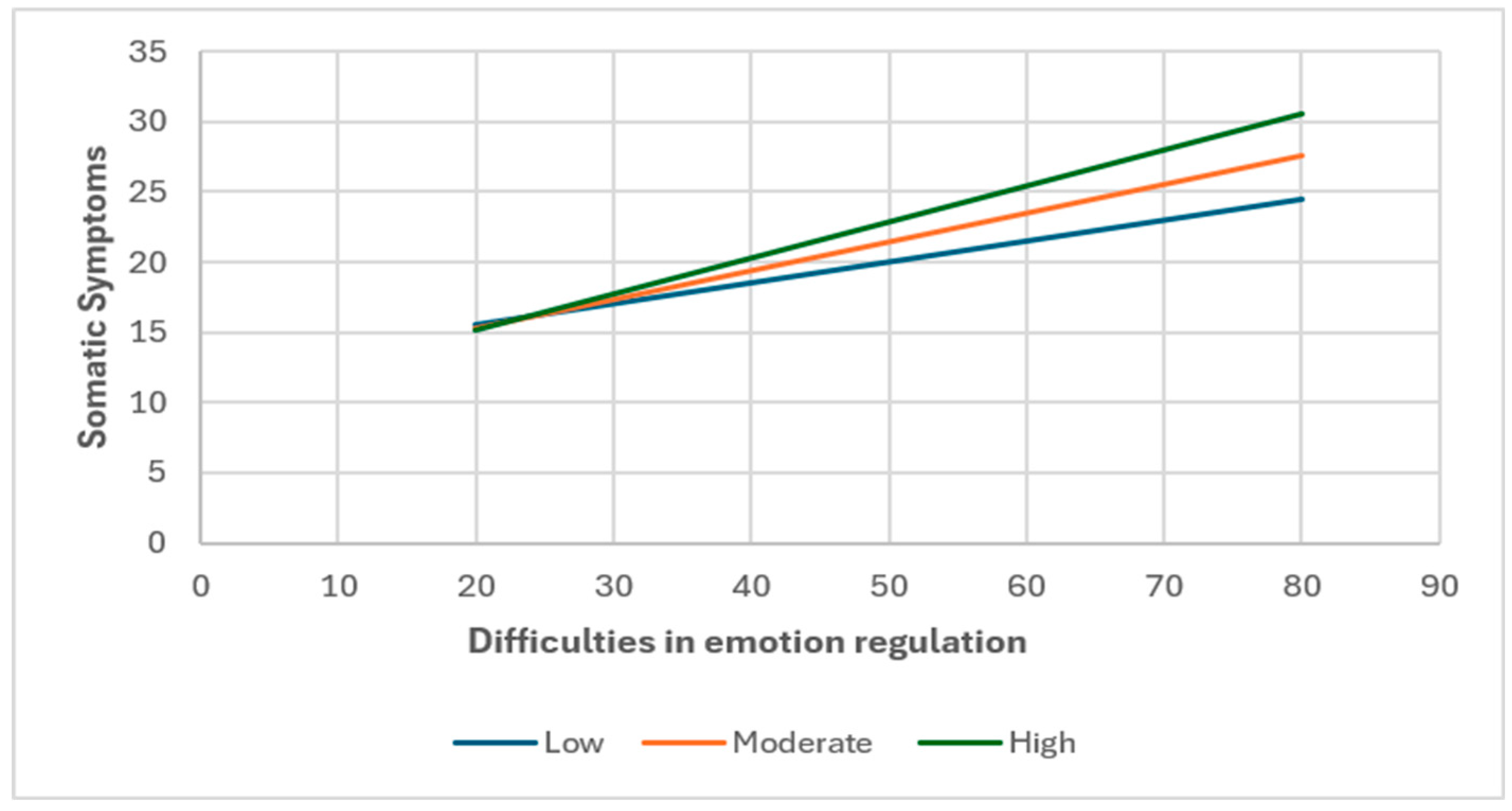
Figure 2.
Simple slopes analysis of the interaction between emotion regulation difficulties and Noticing dimension in predicting somatic symptoms.
Figure 2.
Simple slopes analysis of the interaction between emotion regulation difficulties and Noticing dimension in predicting somatic symptoms.
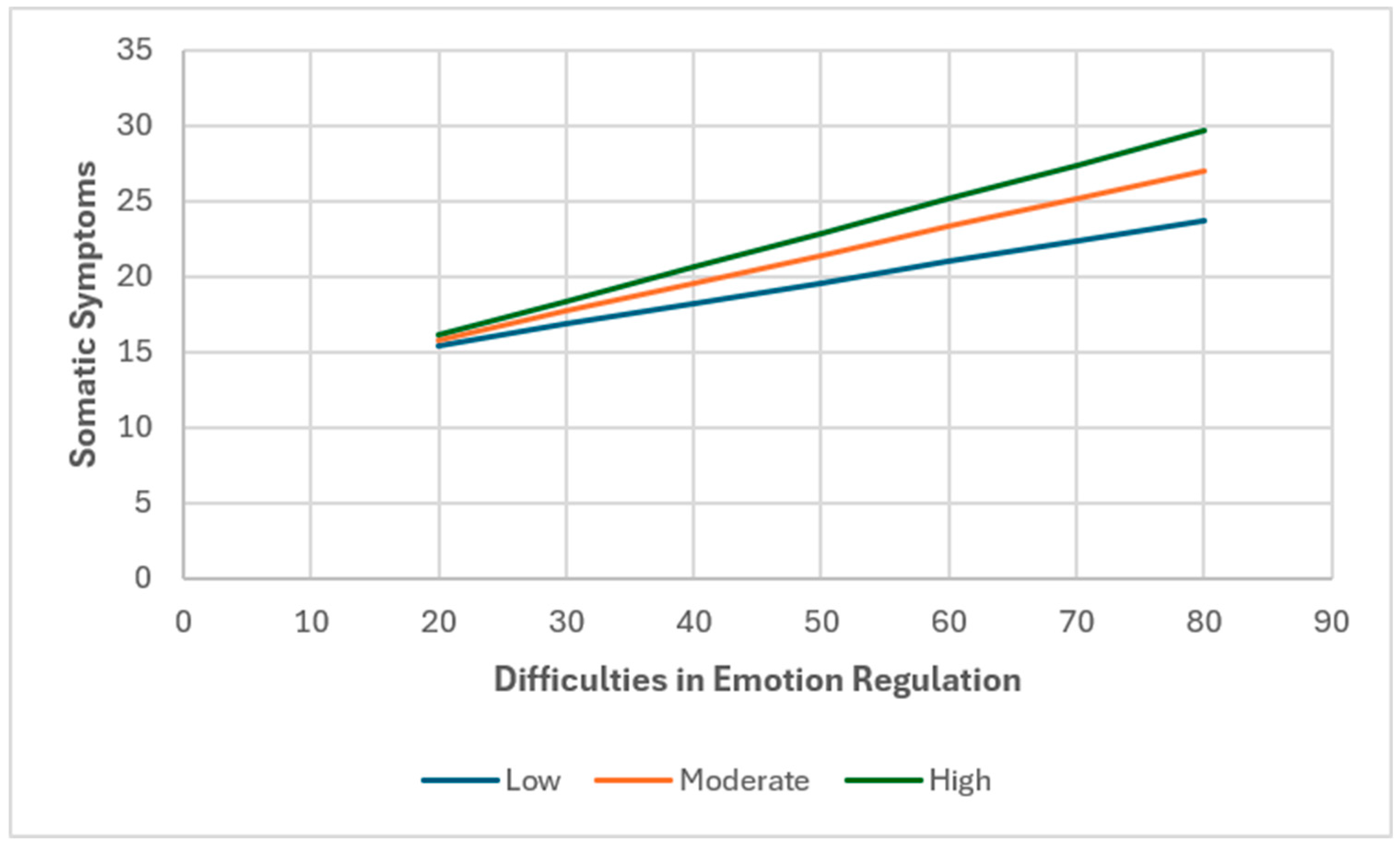
Figure 3.
Simple slopes analysis of the interaction between emotion regulation difficulties and Emotional Awareness in predicting somatic symptoms.
Figure 3.
Simple slopes analysis of the interaction between emotion regulation difficulties and Emotional Awareness in predicting somatic symptoms.
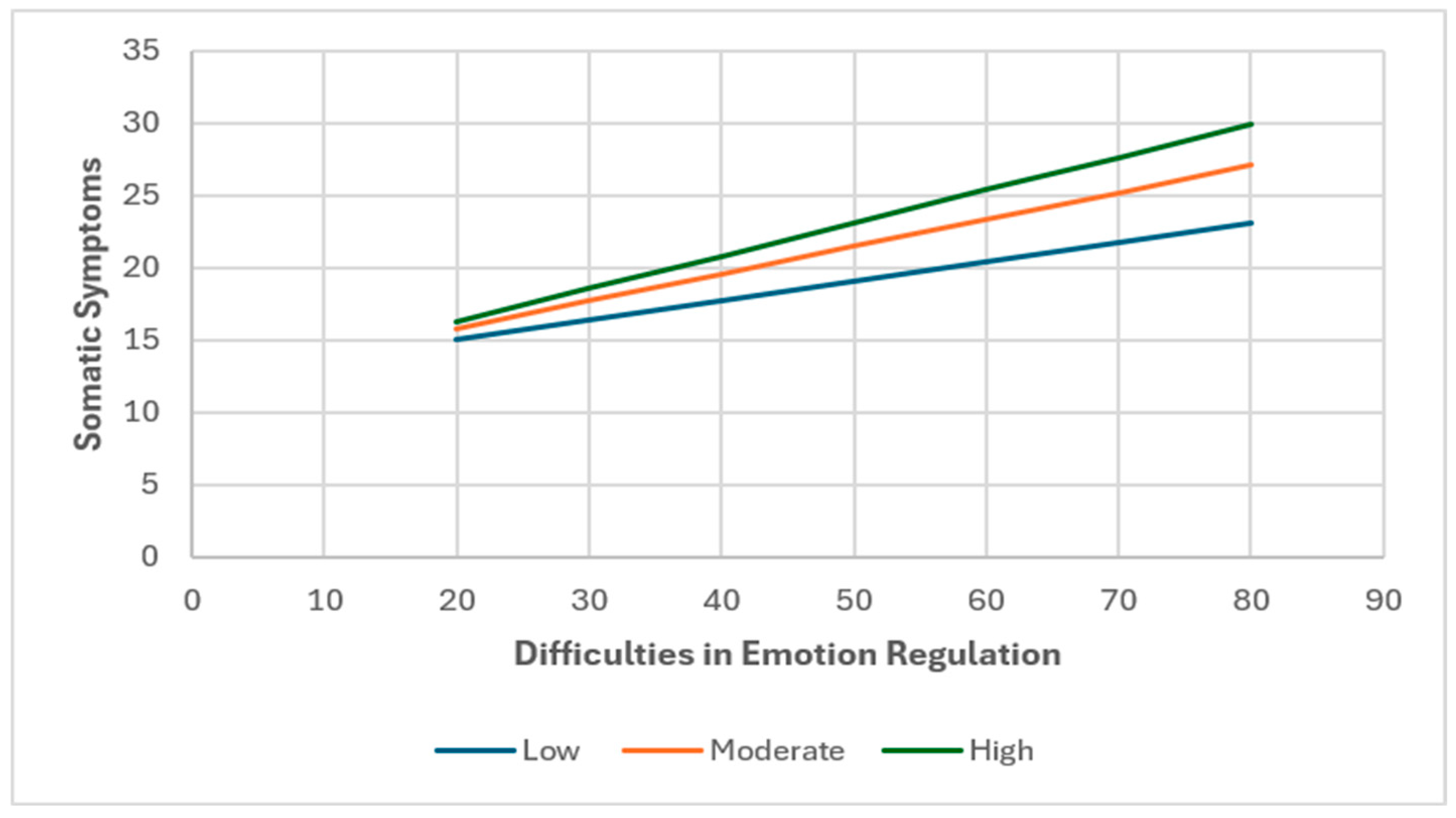
Figure 4.
Simple slopes analysis of the interaction between emotion regulation difficulties and the Self-Regulation dimension of interoceptive awareness in predicting somatic symptoms.
Figure 4.
Simple slopes analysis of the interaction between emotion regulation difficulties and the Self-Regulation dimension of interoceptive awareness in predicting somatic symptoms.
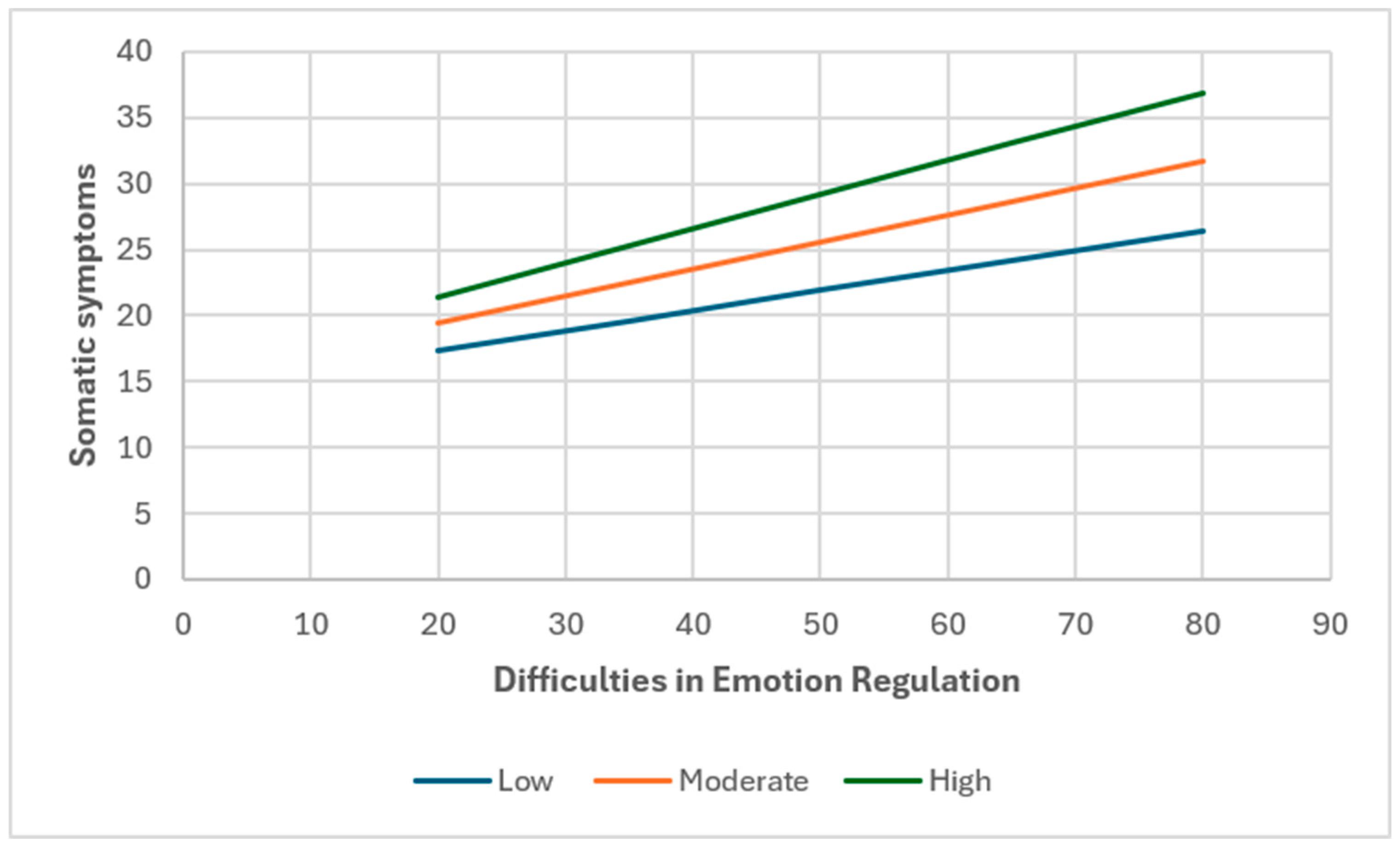
Figure 5.
Simple slopes analysis of the interaction between emotion regulation difficulties and the Body-listening dimension of interoceptive awareness in predicting somatic symptoms.
Figure 5.
Simple slopes analysis of the interaction between emotion regulation difficulties and the Body-listening dimension of interoceptive awareness in predicting somatic symptoms.
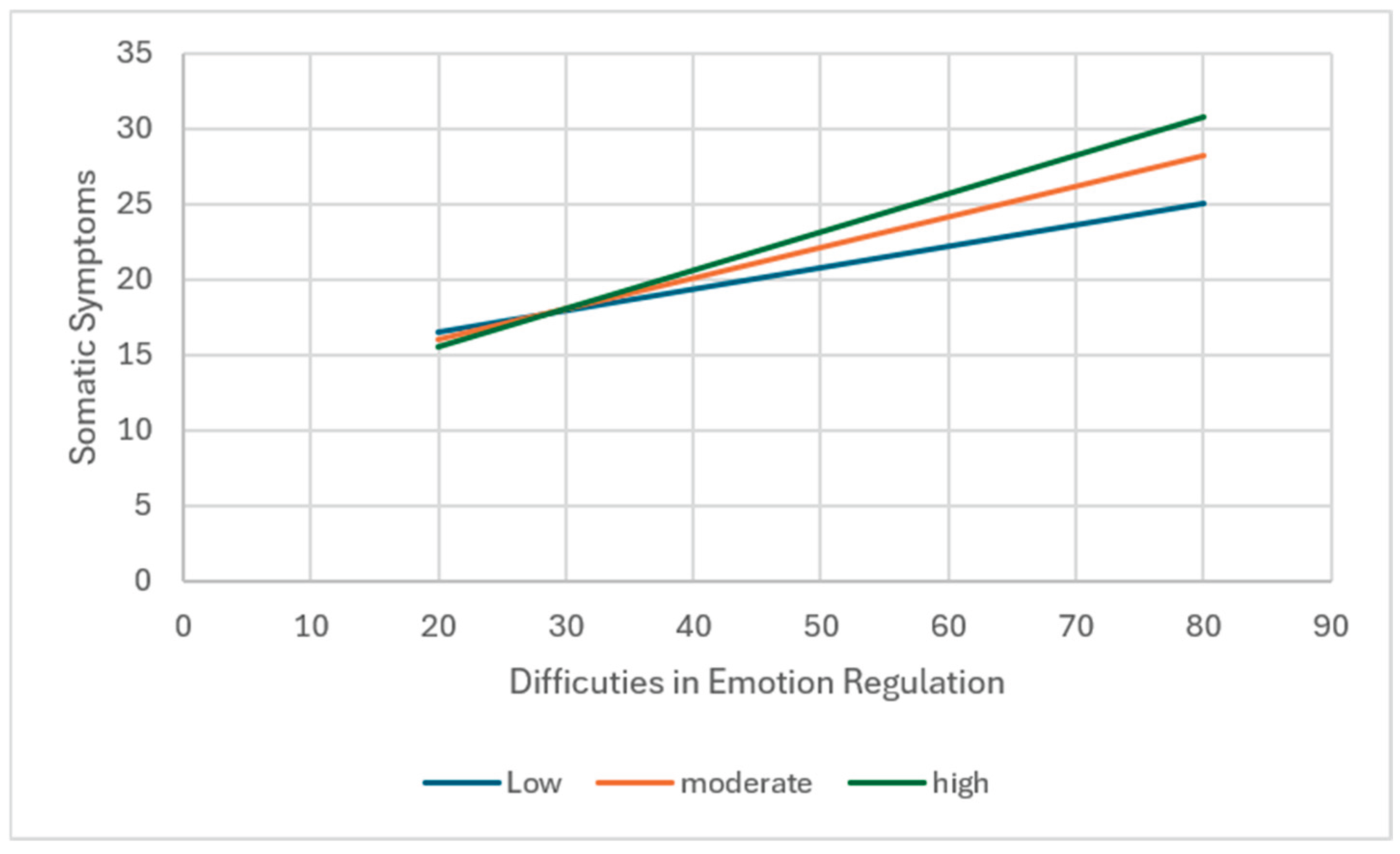

Table 1.
Descriptive Statistics.
| Minimum | Maximum | Mean | Std. Deviation | Skewness | Kurtosis | |
|---|---|---|---|---|---|---|
| Difficulties in Emotion Regulation | 16 | 78 | 40.90 | 14.95 | 0.20 | -0.75 |
| Somatic Symptoms | 0 | 29 | 9.11 | 6.11 | 0.80 | 0.18 |
| Interoceptive Awareness | 0.72 | 4.84 | 2.84 | 0.77 | -0.14 | -0.17 |
| Noticing | 0 | 5 | 2.93 | 1.16 | -0.32 | -0.45 |
| Not-Distracting | 0 | 5 | 2.80 | 1.04 | -0.12 | -0.41 |
| Not-Worrying | 0 | 5 | 2.55 | 1.05 | -0.13 | -0.37 |
| Attention Regulation | 0 | 5 | 2.76 | 1.08 | -0.16 | -0.40 |
| Emotional Awareness | 0 | 5 | 3.12 | 1.18 | -0.42 | -0.38 |
| Self-Regulation | 0 | 5 | 2.72 | 1.25 | -0.18 | -0.71 |
| Body Listening | 0 | 5 | 2.46 | 1.30 | -0.07 | -0.87 |
| Trusting | 0 | 5 | 3.31 | 1.33 | -0.53 | -0.67 |
Table 2.
Pearson Correlations Among the Study Variables.
| Variable | 1 | 2 | 3 | 4 | 5 | 6 | 7 | 8 | 9 | 10 | 11 |
|---|---|---|---|---|---|---|---|---|---|---|---|
| 1. Difficulties in Emotion Regulation | — | ||||||||||
| 2. Total Interoceptive Awareness | −.26*** | — | |||||||||
| 3. Somatic Symptoms | .53*** | −.01 | — | ||||||||
| 4. Noticing | 0.06 | .71*** | .24*** | — | |||||||
| 5. Not-Distracting | −.38*** | −.01 | −.37*** | −.17*** | — | ||||||
| 6. Not-Worrying | −.37*** | 0.03 | −.30*** | −.20*** | .11* | — | |||||
| 7. Attention Regulation | −.19*** | .87*** | 0.03 | .60*** | −.16** | −.00 | — | ||||
| 8. Emotional Awareness | 0.05 | .80*** | .16** | .64*** | −.18*** | −.22*** | .63*** | — | |||
| 9. Self-Regulation | −.24*** | .83*** | −.02 | .46*** | −.13* | −.04 | .67*** | .63*** | — | ||
| 10. Body Listening | −.16** | .81*** | 0.04 | .53*** | −.05 | −.13** | .62*** | .62*** | .70*** | — | |
| 11. Trusting | −.34*** | .72*** | −.16** | .37*** | 0.04 | 0.04 | .52*** | .44*** | .59*** | .63*** | — |
***p<.001 **<.05.
Table 3.
Moderation analysis examining the moderating role of overall interoceptive awareness in the association between difficulties in emotion regulation and somatic symptoms.
Table 3.
Moderation analysis examining the moderating role of overall interoceptive awareness in the association between difficulties in emotion regulation and somatic symptoms.
| Predictor | B | SE | t | p | 95% CI |
|---|---|---|---|---|---|
| Difficulties in Emotion Regulation | 0.008 | 0.058 | 0.14 | 0.892 | [−0.107, 0.122] |
| Interoceptive Awareness | −1.888 | 0.837 | −2.26 | 0.025 | [−3.533, −0.243] |
| DERS × Interoceptive Awareness | 0.069 | 0.02 | 3.51 | < .001 | [0.030, 0.108] |
| Gender | −1.197 | 0.512 | −2.34 | 0.02 | [−2.204, −0.190] |
| Age | −0.066 | 0.021 | −3.08 | 0.002 | [−0.107, −0.024] |
| Chronic illness | −3.778 | 0.636 | −5.94 | < .001 | [−5.028, −2.528] |
Note. B = unstandardized regression coefficient; SE = standard error; CI = confidence interval. The interaction accounted for a significant increment in variance, ΔR² = .020, p < .001.
Table 4.
Moderating analysis examining the moderating roles of MAIA subscales on the association between emotion regulation difficulties and somatic symptoms.
Table 4.
Moderating analysis examining the moderating roles of MAIA subscales on the association between emotion regulation difficulties and somatic symptoms.
| MAIA Subscale | Interaction (B) | SE | t | p | ΔR² | Bonferroni-adjusted significance |
|---|---|---|---|---|---|---|
| Noticing | 0.039 | 0.013 | 3.02 | 0.003 | 0.014 | Yes |
| Not-Distracting | -0.01 | 0.015 | -0.68 | 0.496 | 0.001 | No |
| Not-Worrying | -0.005 | 0.015 | -0.31 | 0.754 | < .001 | No |
| Attention Regulation | 0.035 | 0.014 | 2.56 | 0.011 | 0.011 | No |
| Emotional Awareness | 0.039 | 0.014 | 2.88 | 0.004 | 0.013 | Yes |
| Self-Regulation | 0.043 | 0.012 | 3.65 | < .001 | 0.021 | Yes |
| Body Listening | 0.038 | 0.012 | 3.23 | 0.001 | 0.017 | Yes |
| Trusting | 0.021 | 0.012 | 1.72 | 0.087 | 0.005 | No |
Note. B = unstandardized regression coefficient for the interaction term; SE = standard error; ΔR² = change in R² attributable to the interaction. Bonferroni correction was applied for multiple comparisons (adjusted α = .00625).
Disclaimer/Publisher’s Note: The statements, opinions and data contained in all publications are solely those of the individual author(s) and contributor(s) and not of MDPI and/or the editor(s). MDPI and/or the editor(s) disclaim responsibility for any injury to people or property resulting from any ideas, methods, instructions or products referred to in the content. |
© 2026 by the authors. Licensee MDPI, Basel, Switzerland. This article is an open access article distributed under the terms and conditions of the Creative Commons Attribution (CC BY) license (http://creativecommons.org/licenses/by/4.0/).
Copyright: This open access article is published under a Creative Commons CC BY 4.0 license, which permit the free download, distribution, and reuse, provided that the author and preprint are cited in any reuse.