

Submitted:
14 July 2026
Posted:
31 August 2026
You are already at the latest version
Abstract
The rapid growth of social media has transformed how individuals’ access, consume, and share information. While these platforms have improved the speed and accessibility of communication, they have also encouraged reading behaviours characterised by rapid scanning, superficial engagement, and immediate reactions. As a result, users frequently overlook information that is clearly presented, ask questions that have already been answered, and form opinions without fully engaging with the original content. Existing research has largely explained these behaviours through concepts such as information overload, cognitive load, misinformation, and digital literacy. However, these concepts do not adequately explain why individuals consistently fail to engage with information that is readily available despite having the opportunity and ability to do so, nor do they sufficiently consider how behavioural influence within digital environments reinforces this tendency. This paper addresses this gap by further developing and formalising Information Ignorance as a multidimensional theoretical construct within information-behaviour scholarship. Drawing on Information Overload Theory, Cognitive Load Theory, Dual Process Theory, Information Foraging Theory, the Attention Economy, and Social Engineering Theory, the paper develops an integrated conceptual framework explaining how information overload, cognitive fatigue, heuristic processing, and social engineering interact to influence social media reading behaviour and subsequent behavioural outcomes. The study contributes to information behaviour literature by positioning Information Ignorance as a distinct construct that complements, rather than replaces, existing theories. It further extends the application of social engineering beyond its traditional cybersecurity context by demonstrating its role in shaping everyday information engagement on social media.
Keywords:
information ignorance
; information overload
; social engineering
; social media
; attention economy
; cognitive load
; reading behaviour
1. Introduction
The volume of digital information available today has grown at a pace that few could have anticipated. News, advertisements, educational resources, entertainment, public announcements, and personal opinions are produced and shared continuously across digital platforms [1,2,3]. Unlike traditional media, where information followed a structured publishing process and reached audiences at scheduled intervals, social media has created an environment in which content is generated, distributed, and consumed almost instantly [3]. Every minute, millions of posts, comments, images, videos, and messages compete for users' attention, making social media one of the primary sources of information for individuals, businesses, governments, and institutions [2].
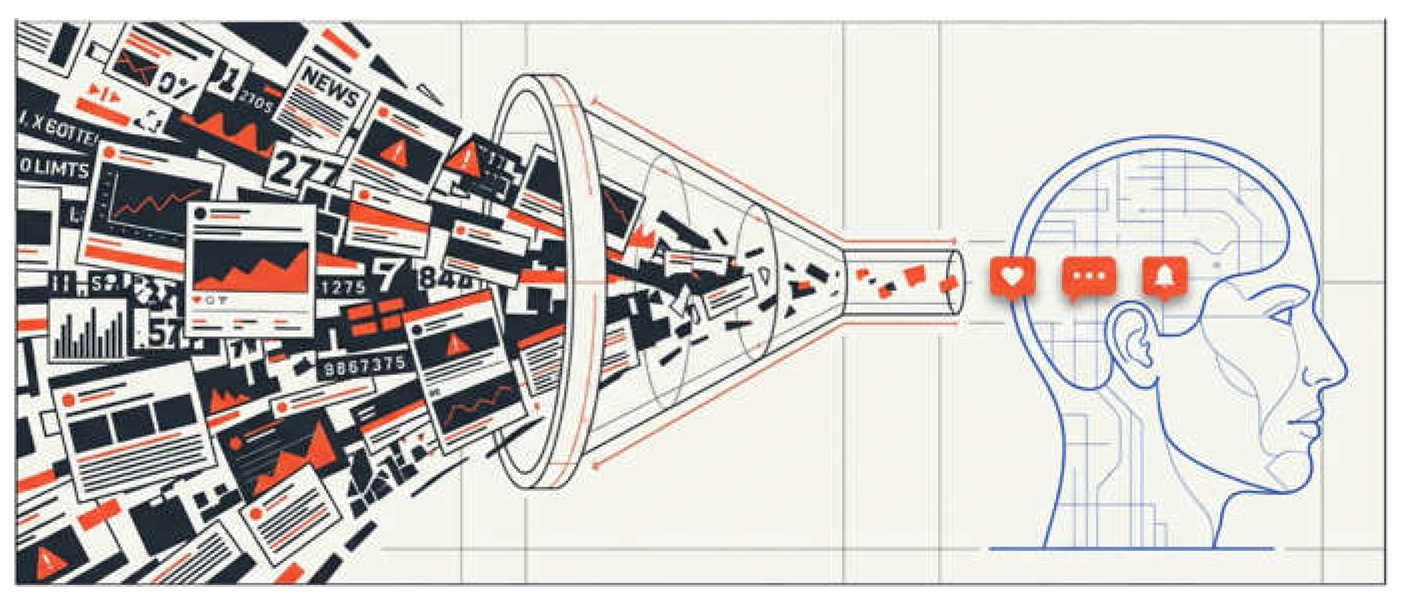
The rapid growth of social media has fundamentally changed how people access and interact with information. Platforms such as Facebook, X, Instagram, TikTok, LinkedIn, Reddit, and YouTube have become central to everyday communication, allowing users to obtain information, express opinions, conduct business, learn new skills, and participate in public discussions [4]. Their convenience and accessibility have significantly increased the speed at which information spreads, enabling individuals to reach large audiences within a short period. This transformation has created opportunities for education, marketing, collaboration, emergency communication, and civic engagement that were difficult to achieve through traditional communication channels [2].
However, the same characteristics that make social media effective for rapid communication have also influenced how information is processed. The continuous flow of new content encourages users to move quickly from one post to another, often spending only a short time on each piece of information before shifting their attention elsewhere [1]. As digital content becomes increasingly abundant, many users no longer engage with information in the deliberate manner that was common when reading books, newspapers, or long-form articles. Instead, reading behaviour has gradually shifted towards scanning headlines, viewing images, watching short videos, and extracting only fragments of information before moving on to the next item [7].
1.2. The Problem Statement
One of the most noticeable consequences of this changing reading behaviour is the growing tendency for users to overlook information that is already clearly presented.
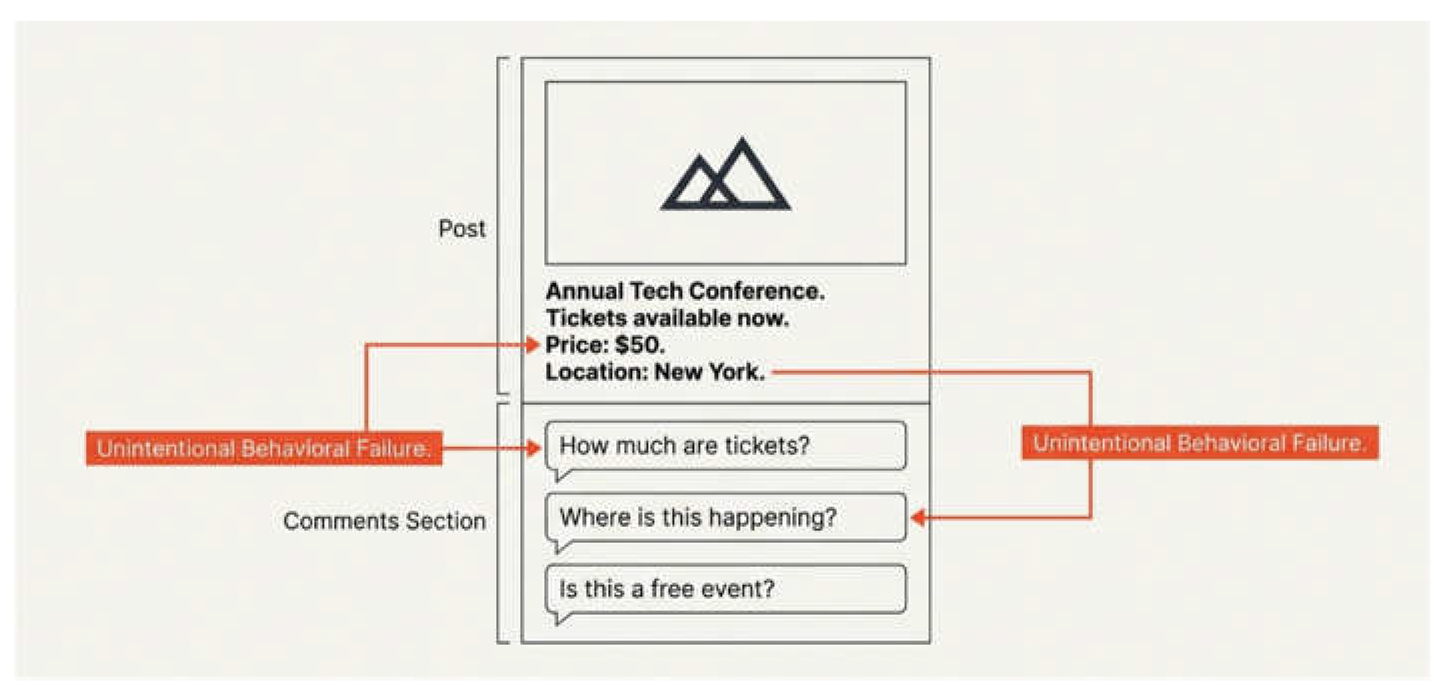
Table pattern extends beyond commercial communication. Public organisations often publish detailed announcements explaining application procedures, event schedules, or eligibility requirements, yet many responses ask questions that have already been answered in the original post. News articles are frequently criticised by individuals who have only read the headline, while discussions on social media are increasingly shaped by comments from users who have not fully engaged with the original content. In many cases, people form opinions based on reactions from other users rather than on the information that was initially presented.
For public institutions, misunderstanding official information can lead to confusion, missed opportunities, and reduced public trust. Within online communities, incomplete reading often contributes to unnecessary disagreements, misinformation, and the rapid spread of incorrect interpretations [3]. Although these behaviours may appear minor when viewed individually, their cumulative effect influences the overall quality of communication across digital platforms [5].
The persistence of these behaviours raises an important question.
Is the problem simply the result of excessive information competing for users' attention, or does it represent a broader behavioural tendency in which available information is consistently overlooked despite being easily accessible?
Answering this question requires moving beyond the traditional explanation that users are merely overwhelmed by the volume of digital content.
1.3. Research Gap
Existing research has provided substantial evidence that digital environments expose users to unprecedented amounts of information [2,3,4,5,6]. Studies on information overload have shown that excessive information can reduce concentration, increase cognitive fatigue, and make decision-making more difficult [5,6,7,8]. Other studies have examined digital fatigue, declining attention spans, misinformation, disinformation, algorithmic content delivery, and the influence of platform design on user engagement. Together, these studies have significantly improved understanding of the challenges associated with modern digital communication [7].
Despite these advances, an important aspect of online behaviour remains insufficiently explained. Many users fail to engage with information that is not hidden, incomplete, or difficult to understand. Instead, they ignore information that is directly available within the content they are viewing.
At the same time, limited attention has been given to the role of social engineering in reinforcing this behaviour. Social engineering is commonly discussed within cybersecurity, where attackers manipulate human behaviour to gain access to sensitive information or influence decision-making [9].
1.4. Purpose of the Paper
This paper addresses this gap by further developing and formalising Information Ignorance as a distinct, multidimensional theoretical construct that describes the tendency to overlook or inadequately process information that is readily available despite having the opportunity to access it. Rather than treating this behaviour as a simple consequence of information overload, the paper argues that it emerges through the interaction of individual reading behaviour, characteristics of digital platforms, and behavioural influences commonly associated with social engineering.
To support this argument, the paper integrates insights from established theories relating to information processing, digital communication, and behavioural influence to develop a conceptual framework that explains how information overload, cognitive limitations, platform design, and social engineering collectively contribute to information ignorance in social media environments. The framework is intended to provide a more comprehensive explanation of a behaviour that is widely observed but not fully captured by existing information-behaviour concepts.
2. Theoretical Foundations
Understanding why social media users frequently overlook information that is clearly presented requires drawing from several established theories rather than relying on a single explanation.
2.1. Information Overload Theory
Information Overload Theory explains the difficulties individuals experience when the amount of available information exceeds their capacity to process it effectively [10]. As digital technologies have increased both the quantity and accessibility of information, individuals are now expected to make decisions while continuously exposed to competing messages, notifications, advertisements, recommendations, and user-generated content [9]. When the volume of information becomes excessive, users may experience reduced concentration, slower decision-making, confusion, and declining comprehension [1,2,3,4,5,6,7,8].
The theory remains highly relevant in explaining contemporary social media behaviour because users rarely encounter information in isolation [10]. A single browsing session may involve reading news updates, responding to messages, watching videos, viewing advertisements, and engaging with comments simultaneously. Under these conditions, individuals often allocate less time to each piece of content, increasing the likelihood of overlooking important details [5].
However, information overload does not fully explain the behaviour examined in this paper [9]. Information overload assumes that users fail to process information because there is simply too much information competing for attention. Yet many social media interactions involve relatively simple posts containing only a few sentences, clear instructions, or a single product description [2]. Despite the limited amount of information presented, users frequently ask questions that have already been answered or react to content without reading it carefully. These situations suggest that the presence of excessive information alone cannot account for the observed behaviour [9,10,11]. Additional cognitive and behavioural mechanisms must also be considered.
2.2. Cognitive Load Theory
Cognitive Load Theory provides another useful perspective by focusing on the limitations of human cognitive capacity during information processing [12]. Rather than emphasizing the quantity of available information, the theory explains that effective learning and comprehension depend on the limited capacity of working memory [1,2,3,4,5,6,7,8]. Individuals can process only a restricted amount of information at any given time before their cognitive resources become overloaded [8].
Within social media environments, users are continuously required to divide their attention between multiple competing stimuli. Text, images, videos, hyperlinks, advertisements, notifications, and comments all demand cognitive processing [12,13,14,15,16,17,18]. As attention shifts rapidly between these elements, the mental effort available for careful reading becomes increasingly limited [9]. Instead of processing complete messages, users may extract only selected pieces of information before moving to the next item.
Limited cognitive resources also affect how information is encoded into memory [9]. When working memory is already occupied by competing tasks or distractions, users may read a sentence without fully processing its meaning [2]. Consequently, information that is physically visible may never be adequately encoded for later recall or decision-making. This may explain why some users ask questions about information they have technically seen but never fully processed [8,9,10,11,12,13].
Although Cognitive Load Theory provides a convincing explanation for limitations in information processing, it does not explain why individuals often choose not to invest additional cognitive effort even when doing so would require only a few extra seconds [3,4,5,6,7,8,9,10,11,12]. The theory describes cognitive constraints but provides less insight into the behavioural choices that influence how available cognitive resources are allocated during digital interactions [9].
2.3. Dual Process Theory
Dual Process Theory helps explain differences in the way individuals process information by distinguishing between rapid, intuitive thinking and slower, deliberate reasoning [14]. In social media environments, these two modes of processing can be observed in everyday user behaviour [2,3,4,5,6,7,8,9,10,11,12,13,14].
The first mode of processing is characterised by speed and efficiency. Users scroll rapidly through content, read headlines instead of complete posts, rely on visual cues, and often respond immediately [14,15,16,17,18]. This form of processing allows individuals to consume large amounts of information within a short period but increases the likelihood that important details will be overlooked [7]. Immediate commenting, reacting to headlines without reading accompanying text, and forming opinions based solely on brief impressions are common examples of this rapid processing style.
The second mode involves more deliberate engagement [14,15,16,17,18]. Users spend additional time reading complete posts, considering context, evaluating information, and reflecting before responding [1,2,3,4,5,6,7,8,9,10,11,12,13,14]. This slower approach generally supports better comprehension and more informed decision-making but requires greater cognitive effort and sustained attention [5].
The distinction between these two processing styles provides valuable insight into social media reading behaviour [14]. Nevertheless, Dual Process Theory primarily explains how information is processed rather than why users repeatedly fail to engage with information that is already available [8]. It does not sufficiently account for the environmental and behavioural factors that consistently encourage users to rely on rapid processing even when careful reading would be relatively easy [9].
2.4. Attention Economy
The concept of the attention economy recognises that human attention has become a scarce resource within digital environments [16]. Because users have limited time and cognitive capacity, digital platforms compete to attract and retain attention for as long as possible [4,5,6,7,8,9,10,11,12,13,14,15]. Platform success is often measured through indicators such as user engagement, viewing time, click-through rates, and interaction frequency [8,9,10,11,12,13,14,15,16]. Consequently, platform design increasingly prioritises features that encourage continuous engagement [3].
Many interface elements support this objective [2,3]. Endless scrolling reduces natural stopping points during browsing. Notifications repeatedly interrupt ongoing activities to draw users back to the platform. Recommendation systems continuously introduce new content based on previous behaviour, while algorithms prioritise posts that are likely to generate rapid interaction [16]. Collectively, these design features encourage users to consume more content within shorter periods rather than engage deeply with individual pieces of information.
The attention economy therefore provides an important explanation for why careful reading has become less common on social media [16]. Users operate within environments intentionally designed to maximise engagement rather than comprehension [8]. However, although this perspective explains the external conditions influencing user behaviour, it does not explain why some individuals continue to process information carefully while others consistently overlook clearly presented details under similar conditions [11]. Platform design creates opportunities for reduced attention, but it does not fully explain individual differences in reading behaviour [4,5,6,7,8,9,10,11,12,13,14,15,16].
2.5. Information Foraging Theory
Information Foraging Theory proposes that individuals seek information in ways that maximise benefit while minimising effort [17]. Similar to how animals search for food efficiently, people often select information sources and search strategies that provide the greatest expected value for the least cognitive investment [13,14,15,16,17].
This perspective offers a useful explanation for many common behaviours observed on social media [9,10,11]. Rather than reading an entire post, some users may judge that asking a direct question requires less effort than searching for the answer themselves. Typing "How much?" beneath a product advertisement may appear cognitively easier than reading several sentences containing pricing information. Likewise, relying on comments from other users may require less effort than evaluating the original post independently [8].
Information Foraging Theory therefore highlights that overlooking information is not always the result of inability or cognitive overload [8,9,10,11,12,13,14,15,16,17]. In some situations, it may represent an efficiency strategy in which users perceive that obtaining information from others requires less mental effort than reading the available content [9]. Nevertheless, the theory focuses primarily on information-seeking efficiency and does not fully explain how psychological influences shape these decisions within highly interactive digital environments [17].
2.6. Social Engineering Theory
Social Engineering Theory offers an additional perspective by focusing on how human behaviour can be influenced through psychological rather than technical means [18]. Traditionally associated with interpersonal manipulation, the theory demonstrates that individuals' decisions can be shaped by exploiting predictable behavioural tendencies rather than by forcing or coercing behaviour [8,9,10,11,12,13,14,15,16,17,18].
Within digital environments, these influences extend beyond cybersecurity and become embedded in everyday online interactions. Attention can be directed through emotionally engaging content, urgency cues, visual prominence, authority signals, and indicators of social approval such as likes, shares, and comments [1,2,3,4,5]. These behavioural triggers encourage users to react quickly, often before fully evaluating the information presented [6].
Habit also plays an important role. Frequent exposure to environments that reward rapid interaction may gradually reinforce behaviours such as immediate commenting, superficial reading, and reliance on other users' interpretations [8,9,10,11,12,13,14,15,16]. Similarly, social proof can influence individuals to follow existing comments instead of independently evaluating the original content. In these situations, behaviour is shaped not by the information itself but by the psychological context surrounding it [9,10].
Although Social Engineering Theory explains how behaviour can be influenced, it has rarely been applied to explain everyday reading behaviour on social media [17]. Existing applications primarily focus on fraud, deception, or cybersecurity attacks, leaving limited conceptual attention to the subtle behavioural influences that affect routine information processing during ordinary social media use [18].

Table 1.
Summary of Major Theories Supporting the Conceptual Framework.
| Theory | Central Idea | Contribution to the Present Study | Limitation |
| Information Overload Theory | Excessive information reduces individuals' ability to process information effectively. | Explains the information-rich environment that initiates cognitive pressure. | Does not explain why users overlook information when information volume is relatively low. |
| Cognitive Load Theory | Working memory has limited processing capacity. | Explains how limited cognitive resources reduce information comprehension. | Focuses on cognitive capacity rather than behavioural engagement. |
| Dual Process Theory | Human decision-making involves fast (heuristic) and slow (deliberate) processing. | Explains why rapid reading often replaces reflective reading on social media. | Does not explain why users consistently remain in heuristic processing. |
| Attention Economy | Digital platforms compete for users' attention using engagement-driven designs. | Explains how platform design encourages rapid information consumption. | Explains environmental influence rather than behavioural outcomes. |
| Information Foraging Theory | Individuals seek information using the least cognitive effort. | Explains why users often choose asking questions over reading available information. | Does not consider behavioural manipulation by platform features. |
| Social Engineering Theory | Human behaviour can be influenced through psychological principles. | Explains how behavioural influence exploits Information Ignorance during digital interactions. | Traditionally focuses on cybersecurity rather than routine social media behaviour. |
Table 1: Theories Supporting the Conceptual Frame Source: Developed by the author.
3. Information Ignorance: Developing a Multidimensional Theoretical Construct
Research on digital information behaviour has expanded considerably over the past two decades [2]. Scholars have examined information overload, information avoidance, digital literacy, misinformation, disinformation, cognitive fatigue, and related concepts to explain how individuals interact with information in increasingly complex digital environments [3,4,5,6,7,8,5]. Collectively, these concepts have improved understanding of why people struggle to process large volumes of information and how poor information practices influence individual and societal outcomes [7]. This suggests the need for further conceptual development to explain the behavioural gap between the availability of information and meaningful engagement with that information [7]. This paper introduces Information Ignorance as that construct.
3.1. Defining Information Ignorance
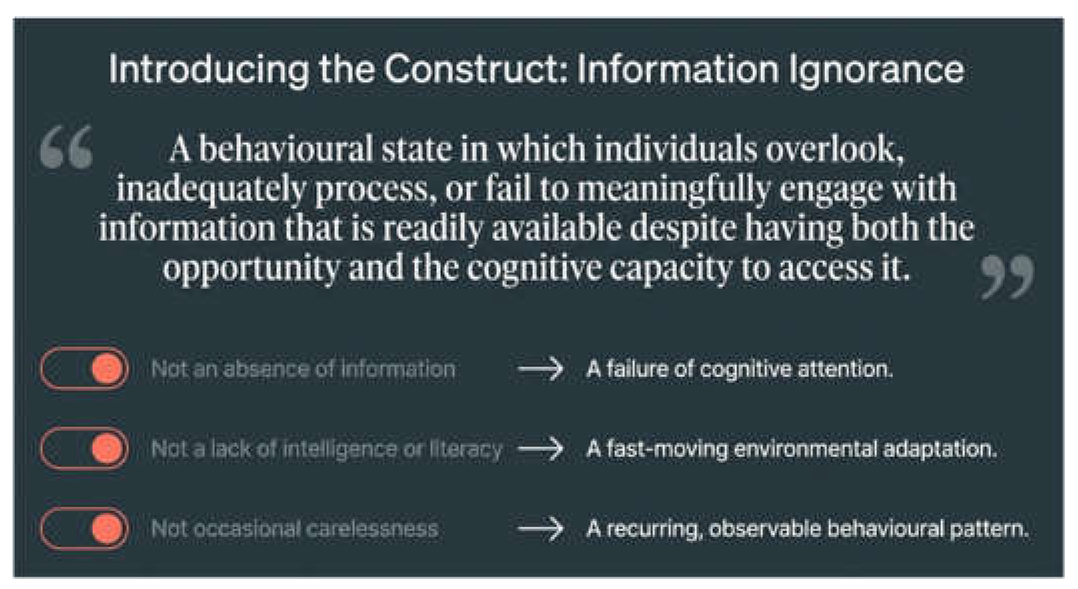
Information Ignorance is defined as “a behavioural state in which individuals overlook, inadequately process, or fail to meaningfully engage with information that is readily available despite having both the opportunity and the cognitive capacity to access it [1].”
Individuals experiencing Information Ignorance may possess excellent reading skills, substantial subject knowledge, and considerable digital experience [1,2,3,4,5,6,7,8]. The problem lies not in their ability to understand information but in the way they engage with it within fast-moving digital environments [1,2,3,4,5].
The concept also differs from simple carelessness or occasional oversight [1,2,3,4,5,6,7,8]. Everyone overlooks information at times. Information Ignorance refers instead to a recurring behavioural tendency that becomes observable across repeated interactions with digital content [8]. It reflects a consistent pattern in which available information is bypassed, only partially processed, or replaced by assumptions, comments from other users, or immediate reactions [1]. In this sense, Information Ignorance represents a behavioural construct situated at the intersection of cognition, technology, communication, and social influence [1,2,3,4,5,6,7,8,9,10,11,12].
Conceptualising Information Ignorance in this way shifts attention from the quantity of information available to the quality of human engagement with that information [9]. It recognises that effective communication depends not only on making information accessible but also on ensuring that individuals devote sufficient attention to understanding what is already before them [8].
3.2. Positioning Information Ignorance Within Existing Information Behaviour Literature
To establish Information Ignorance as a distinct academic construct, it is necessary to clarify how it differs from existing concepts within information behaviour research [8]. Although several established concepts share certain characteristics with Information Ignorance, each addresses a different aspect of information interaction [1,2,3,4,5,6,7,8,9,10,11,12,13,14,15,16,17].
Table 2.
Definitions and Distinctions Among Information Behaviour Concepts.
| Concept | Definition | Primary Focus | Nature of Behaviour |
| Information Overload | A condition in which the volume of available information exceeds an individual's capacity to process it effectively. | Quantity of information | Cognitive response to excessive information |
| Information Ignorance | The behavioural tendency to overlook, inadequately process, or fail to meaningfully engage with information that is readily available despite having both the opportunity and cognitive capacity to access it. | Information engagement | Unintentional behavioural failure |
| Information Avoidance | The deliberate decision to avoid receiving or engaging with particular information. | Intentional avoidance | Conscious behaviour |
| Information Illiteracy | Limited ability to locate, evaluate, interpret, and use information effectively. | Information competence | Skills deficiency |
| Misinformation | False or inaccurate information shared without intent to deceive. | Information quality | Information characteristic |
| Disinformation | False information deliberately created or disseminated to mislead others. | Intentional deception | Information characteristic |
| Digital Illiteracy | Insufficient knowledge or skills to use digital technologies effectively. | Digital competence | Skills deficiency |
Table 2: Information Behaviour Concepts Source: Developed by the author.
The comparison in tab 2, demonstrates that Information Ignorance occupies a unique position within the broader field of information behaviour. Existing concepts explain information quality, information quantity, user capability, or intentional behaviour. Information Ignorance instead explains a recurring behavioural failure in which accessible information does not translate into effective understanding or informed action.
3.3. Core Characteristics of Information Ignorance
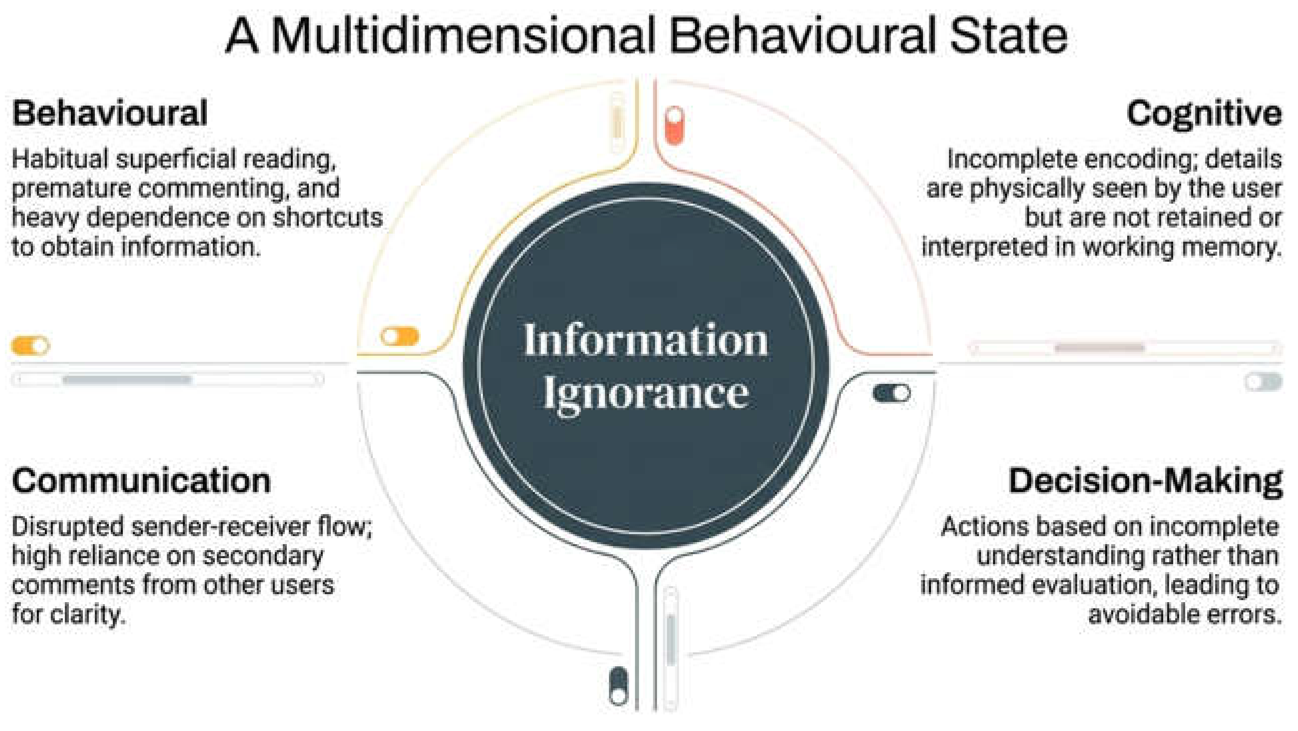
Information Ignorance is characterised by a combination of behavioural, cognitive, communication, and decision-making attributes that distinguish it from related concepts [18].
- Behavioural: Information Ignorance is reflected in habitual superficial reading, repetitive questioning, premature commenting, and dependence on shortcuts for obtaining information [12]. Individuals often interact with content before fully examining it, relying on immediate impressions rather than complete messages [1,2,3,4,5,6,7,8].
- b. Cognitive: Information Ignorance involves incomplete information processing [1]. Attention is directed towards selected elements of a message while other equally important details receive little or no cognitive consideration. Information may be seen but not adequately encoded, interpreted, or retained [1,2,3,4,5,6,7,8,9].
- c. Communication: Information Ignorance disrupts the intended flow of information between sender and receiver [1,2,3,4,5,6,7,8]. Messages that are clear to the sender become misunderstood because the receiver engages only partially with the available content [1]. Consequently, communication increasingly depends on clarification through comments, repeated explanations, or responses from other users [9].
- d. Decision-making: Information Ignorance results in actions based on incomplete understanding rather than informed evaluation [1]. Decisions are made before sufficient information has been processed, increasing the likelihood of misunderstanding, inappropriate responses, and avoidable errors [1,2,3,4,5,6,7,8,9,10,11].
These characteristics suggest that Information Ignorance should be understood as a multidimensional behavioural construct rather than a single cognitive deficiency.
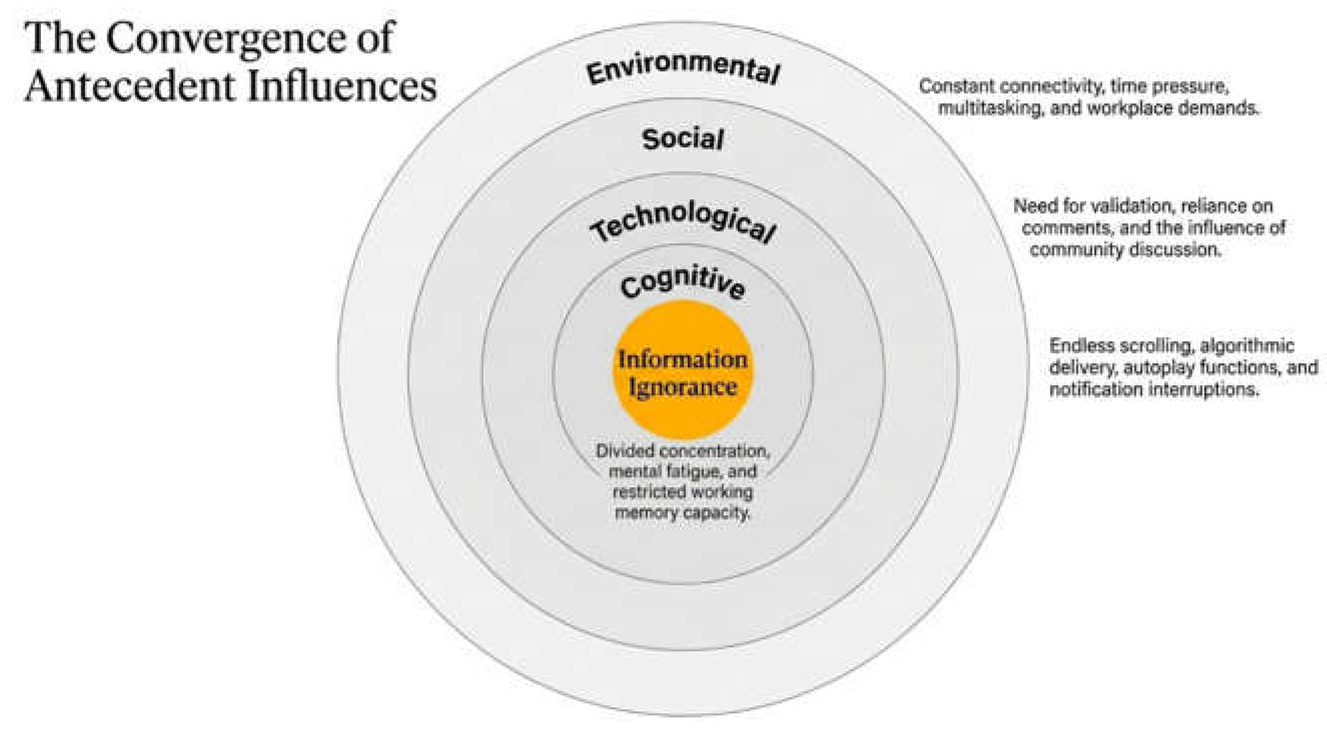
3.4. Antecedents of Information Ignorance
Information Ignorance develops through the interaction of multiple antecedents rather than from any single cause.
At the foundation are cognitive antecedents, including limited attention, mental fatigue, divided concentration, and restricted working memory capacity [19]. These factors reduce the amount of information that receives meaningful cognitive processing.
These cognitive limitations shape behavioural antecedents. Individuals increasingly rely on habitual scrolling, rapid browsing, selective reading, and immediate reactions because these behaviours require less mental effort than careful analysis [12,13,14,15,16,17,18]. Over time, repeated exposure to fast-paced digital environments reinforces these habits until they become routine.
Behavioural patterns are further influenced by technological antecedents. Platform features such as endless scrolling, algorithmic recommendations, autoplay functions, notifications, and visually competitive interfaces encourage continuous movement between content rather than sustained engagement with individual messages [7,8,9,10,11,12,13,14,15,16,17]. Technology therefore reinforces behaviours that prioritise speed over comprehension.
Technological influences operate alongside social antecedents. Comments, reactions, popularity indicators, influencer opinions, and community discussions frequently shape users' interpretation of information before they have independently examined the original content [9,10,11,12]. Social validation gradually becomes a substitute for personal evaluation.
Finally, these influences are intensified by environmental antecedents, including time pressure, multitasking, workplace demands, academic responsibilities, and constant digital connectivity [5]. These conditions reduce opportunities for reflective reading and increase reliance on rapid information processing.
Rather than operating independently, these antecedents interact dynamically [3]. Cognitive limitations encourage behavioural shortcuts; technological environments reinforce those shortcuts; social influences normalise them; and environmental pressures sustain them over time [12]. Information Ignorance therefore emerges as the cumulative outcome of interacting cognitive, behavioural, technological, social, and environmental influences [1].
3.5. Consequences of Information Ignorance
The consequences of Information Ignorance extend beyond individual users and influence organisations and society more broadly.
- A.
- Information Ignorance contributes to misunderstanding, poor judgement, avoidable mistakes, and inefficient decision-making [1,2,3,4,5,6,7,8,9]. Individuals may overlook important instructions, misinterpret announcements, or make choices based on incomplete information despite having access to accurate explanations [7].
- A.
- B. Information Ignorance increases communication costs and reduces operational efficiency [1,2,3,4,5,6,7,8]. Businesses devote considerable time to responding to repetitive enquiries that have already been addressed. Public institutions repeatedly clarify published information, while educational organisations spend additional effort correcting misunderstandings that originate from incomplete engagement with available materials [8]. Marketing effectiveness may also decline when intended messages are only partially understood by target audiences.
- A.
- C. Information Ignorance contributes to wider communication challenges. Superficial engagement with information increases the likelihood that inaccurate interpretations will circulate more rapidly than original messages [1,2,3,4,5,6,7,8,9]. It also creates favourable conditions for behavioural manipulation because individuals who do not critically engage with available information become more susceptible to persuasive cues, emotionally charged content, and socially reinforced narratives [9]. Over time, repeated failures in information engagement may reduce trust in digital communication and weaken the quality of public discourse.
4. Social Engineering in Social Media Reading Behaviour
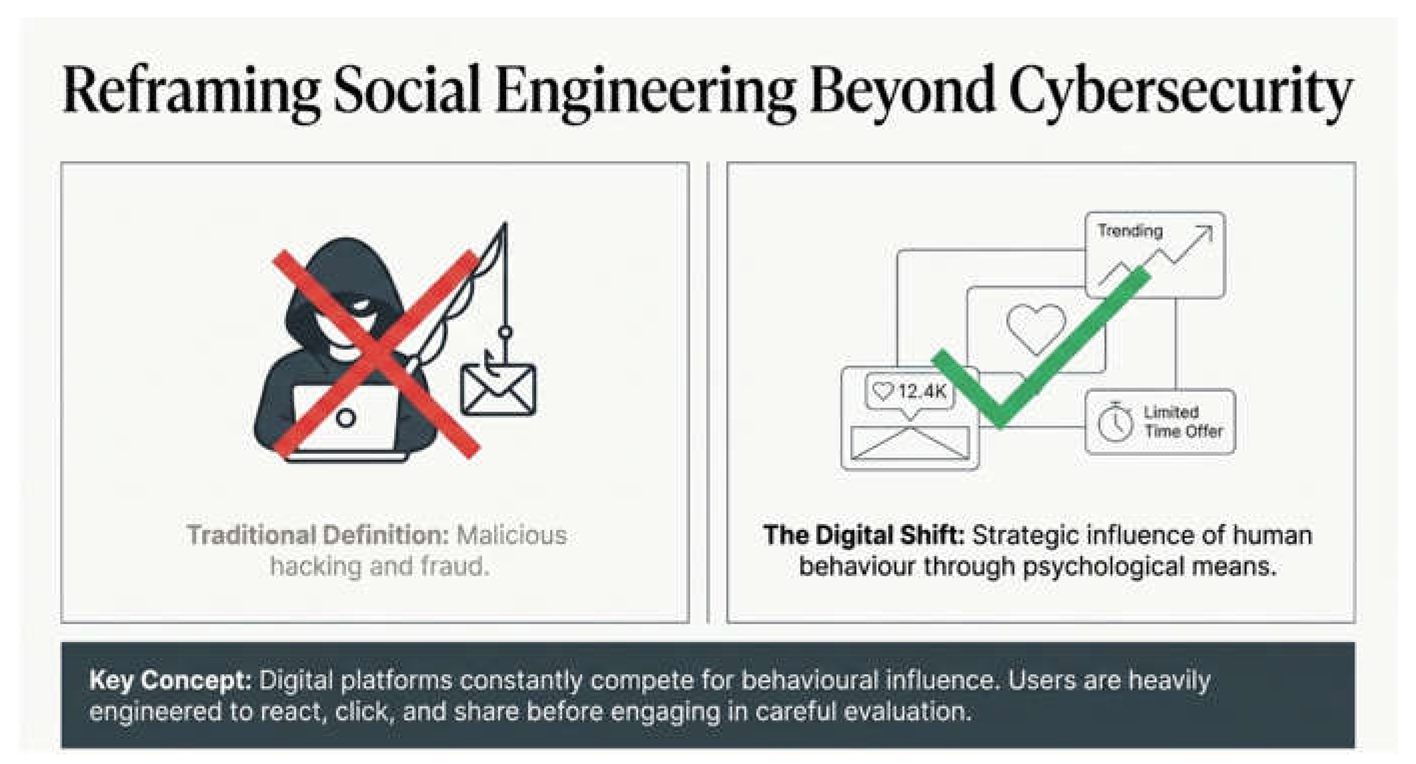
Social engineering has traditionally been examined within cybersecurity, where attackers manipulate individuals into revealing confidential information or performing actions that compromise security [5,6,7,8,9]. However, the underlying principles of social engineering extend well beyond fraud or cybercrime. At its core, social engineering is the strategic influence of human behaviour through psychological rather than technical means [4]. It relies on understanding how people make decisions, where their attention is directed, what motivates their actions, and which cognitive shortcuts they are likely to use [9].
Viewed from this broader perspective, social engineering provides an important lens for understanding why Information Ignorance persists in contemporary digital environments [4]. Many features of social media encourage rapid reactions, emotional engagement, and reliance on mental shortcuts [9]. These conditions do not simply increase exposure to information; they shape the manner in which information is processed and interpreted [1,2,3,4,5,6,7,8,9].
For example, content creators deliberately design headlines to attract attention, advertisers carefully choose wording that encourages immediate responses, and platform interfaces are developed to maximise user engagement. Although these practices are not necessarily deceptive, they demonstrate how digital environments increasingly compete for behavioural influence. Users are constantly encouraged to react, click, comment, or share before engaging in careful evaluation.
Understanding social engineering from this behavioural perspective broadens its relevance.
4.1. Psychological Principles Used in Social Engineering
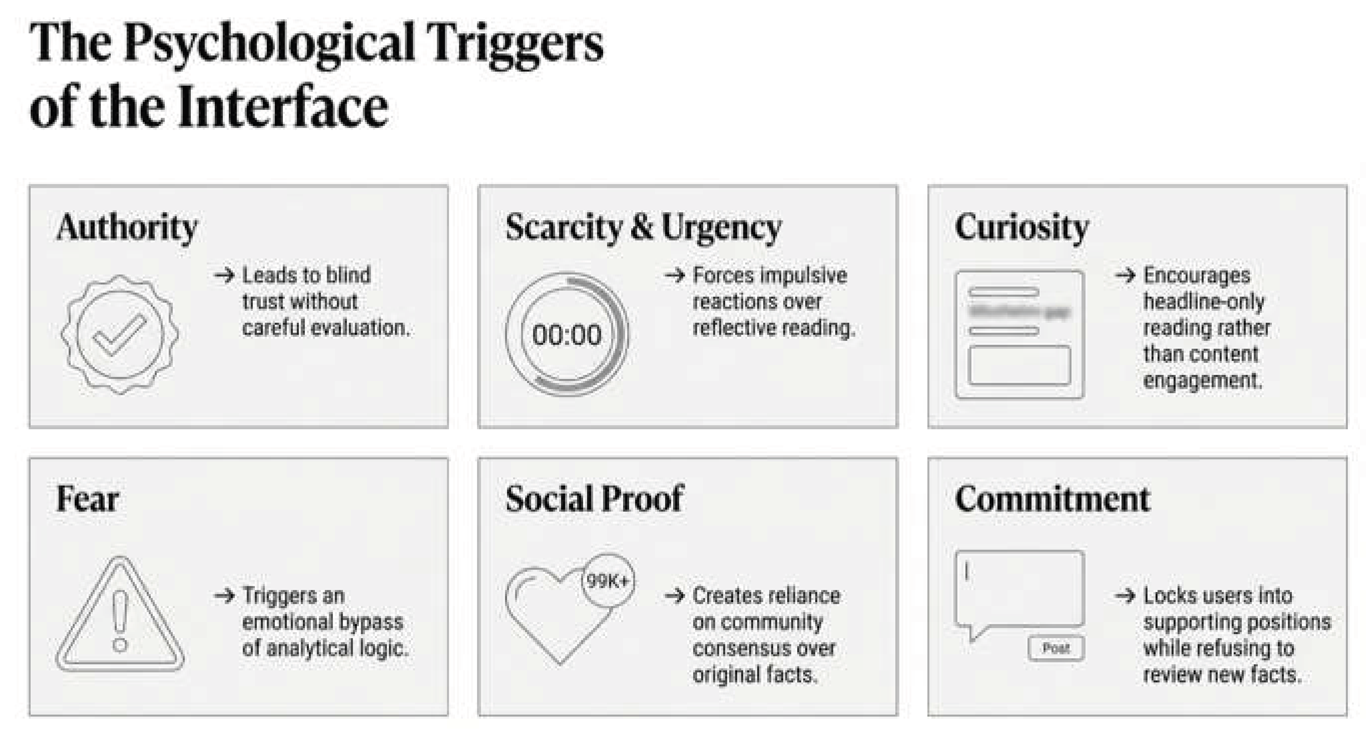
Social engineering succeeds because it aligns with predictable patterns of human decision-making.
- Authority; encourages individuals to trust information because it appears to originate from recognised experts, public figures, institutions, or verified accounts [1,2,3,4,5,6,7,8,9,10,11,12,13,14,15,16,17,18,19,20]. In many cases, users accept information based on its source without carefully examining the accompanying details.
- b. Scarcity; increases the perceived value of information by suggesting that opportunities are limited. Statements such as "limited offer" or "only a few spaces remaining" encourage rapid decisions that often reduce careful reading.
- c. Urgency; creates pressure to act immediately. Messages emphasising deadlines, countdowns, or immediate action reduce the likelihood that users will pause to evaluate available information before responding [7].
- d. Curiosity; is another powerful influence. Headlines that intentionally withhold key information or promise surprising revelations encourage users to seek immediate gratification rather than thoughtful engagement [7,8,9,10,11,12,13,14,15,16,17,18,19,20]. This approach is widely used in digital media to attract clicks and increase interaction.
- e. Fear; influences behaviour by highlighting potential losses or negative consequences [20]. Content emphasising danger, financial loss, social exclusion, or personal risk often generates stronger emotional reactions than neutral information, encouraging faster responses and reducing analytical thinking.
- f. Reciprocity; operates through the natural tendency to return perceived favours. Free resources, exclusive content, or personalised assistance may encourage users to respond positively before critically evaluating accompanying information [20].
- g. Commitment & consistency; also shape behaviour [1,2,3,4,5,6,7,8,9,10,11,12,13,14,15,16,17,18,19,20]. Once individuals publicly express an opinion, share content, or support a particular viewpoint, they are often inclined to remain consistent with those earlier actions, even when presented with additional information.
- h. Social proof; influences individuals to follow the behaviour of others. Large numbers of likes, comments, shares, or positive reactions frequently become signals of credibility [20]. Instead of independently evaluating original information, users may rely on community responses to determine what they should believe or how they should react.
Individually, these principles appear relatively simple. Collectively, they create digital environments in which behavioural influence often takes precedence over careful information processing.
Table 3.
Social Engineering Techniques, Psychological Principles, and Their Effects on Reading Behaviour.
Table 3.
Social Engineering Techniques, Psychological Principles, and Their Effects on Reading Behaviour.
| Social Engineering Technique | Psychological Principle | Typical Social Media Example | Expected Effect on Reading Behaviour |
| Authority cues | Trust in experts and recognised figures | Verified accounts, institutional logos, celebrity endorsements | Users accept information without careful evaluation. |
| Scarcity | Perceived limited availability | "Only 10 spots left", "Offer ends today" | Encourages rapid decisions before complete reading. |
| Urgency | Time pressure | Countdown timers, "Act now" messages | Reduces reflective reading and increases impulsive responses. |
| Curiosity | Information gap | Clickbait headlines, teaser content | Encourages headline reading rather than complete content engagement. |
| Fear appeals | Loss aversion | Security alerts, health scares, financial warnings | Emotional responses replace analytical evaluation. |
| Reciprocity | Obligation to return favours | Free downloads, exclusive resources, giveaways | Users respond positively before examining conditions. |
| Commitment and consistency | Desire to remain consistent with previous actions | Public likes, comments, endorsements | Users continue supporting positions without reviewing new information. |
| Social proof | Reliance on others' behaviour | High likes, shares, trending posts, popular comments | Users depend on community reactions rather than original content. |
Tab 3: Social Engineering Theory and behavioural. Source: Developed by the author from Psychological Principles.
4.2. Platform Design as Behavioural Engineering
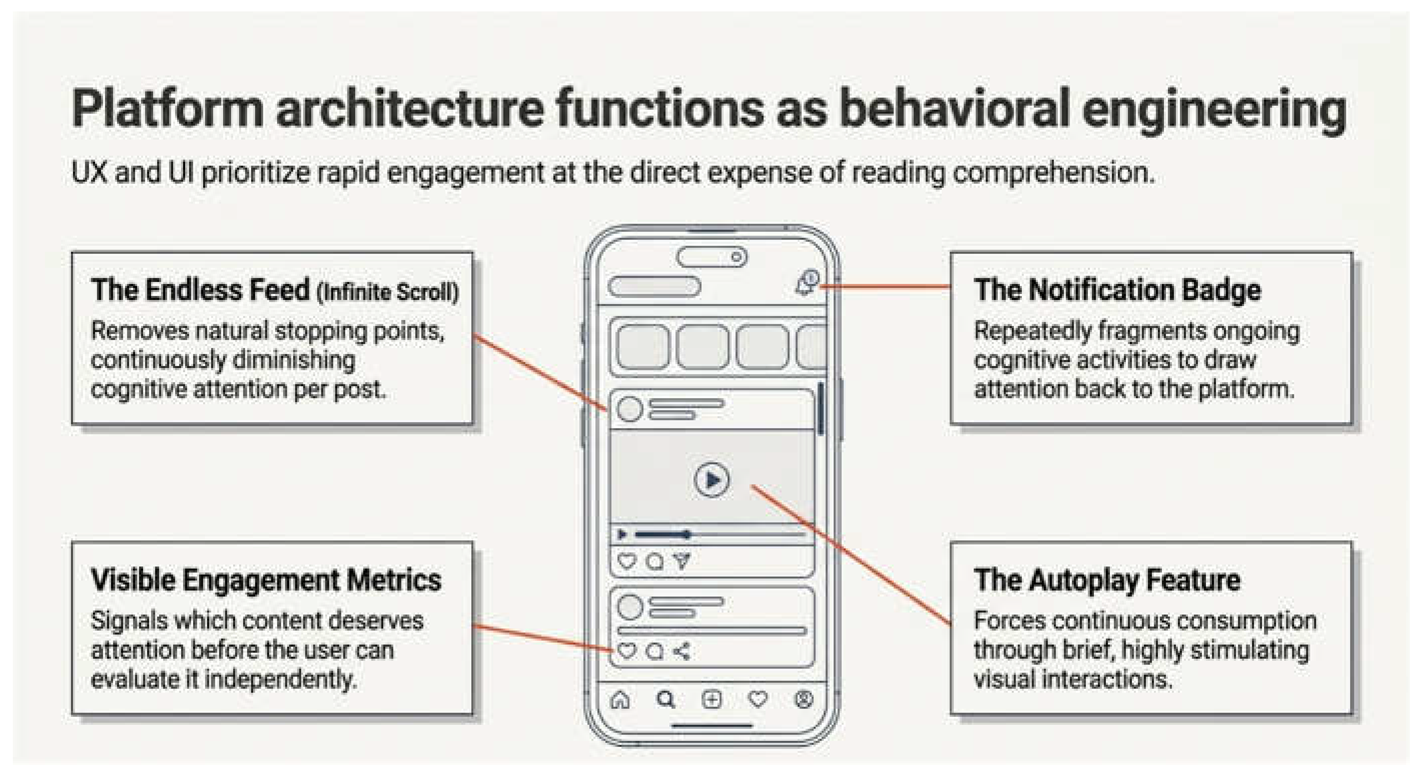
The influence of social engineering extends beyond message content to the design of digital platforms themselves [21]. Modern social media platforms are carefully structured to maximise user engagement by encouraging continuous interaction with content [10].
Recommendation algorithms personalise information based on previous behaviour, increasing the likelihood that users remain engaged for longer periods [1,2,3,4,5,6,7,8]. While these systems improve content relevance, they also create continuous streams of information that encourage rapid browsing rather than sustained attention.
Notifications repeatedly interrupt users throughout the day, drawing attention back to the platform and fragmenting ongoing cognitive activities. Each interruption creates another opportunity for rapid engagement, often reducing the likelihood that users will carefully process the information before them [9].
Infinite scrolling removes natural stopping points from the browsing experience. [8] Without clear boundaries between one piece of content and the next, users consume information continuously, allocating progressively less attention to individual posts as browsing sessions continue.
Visible engagement indicators, including likes, comments, and shares, further shape behaviour by signalling which content deserves attention. These indicators often influence reading priorities before users have evaluated the content independently [12].
Similarly, autoplay functions and the growing dominance of short-form content encourage continuous consumption through brief, highly stimulating interactions. While these features increase accessibility and entertainment value, they also reinforce expectations that information should be consumed quickly and effortlessly.
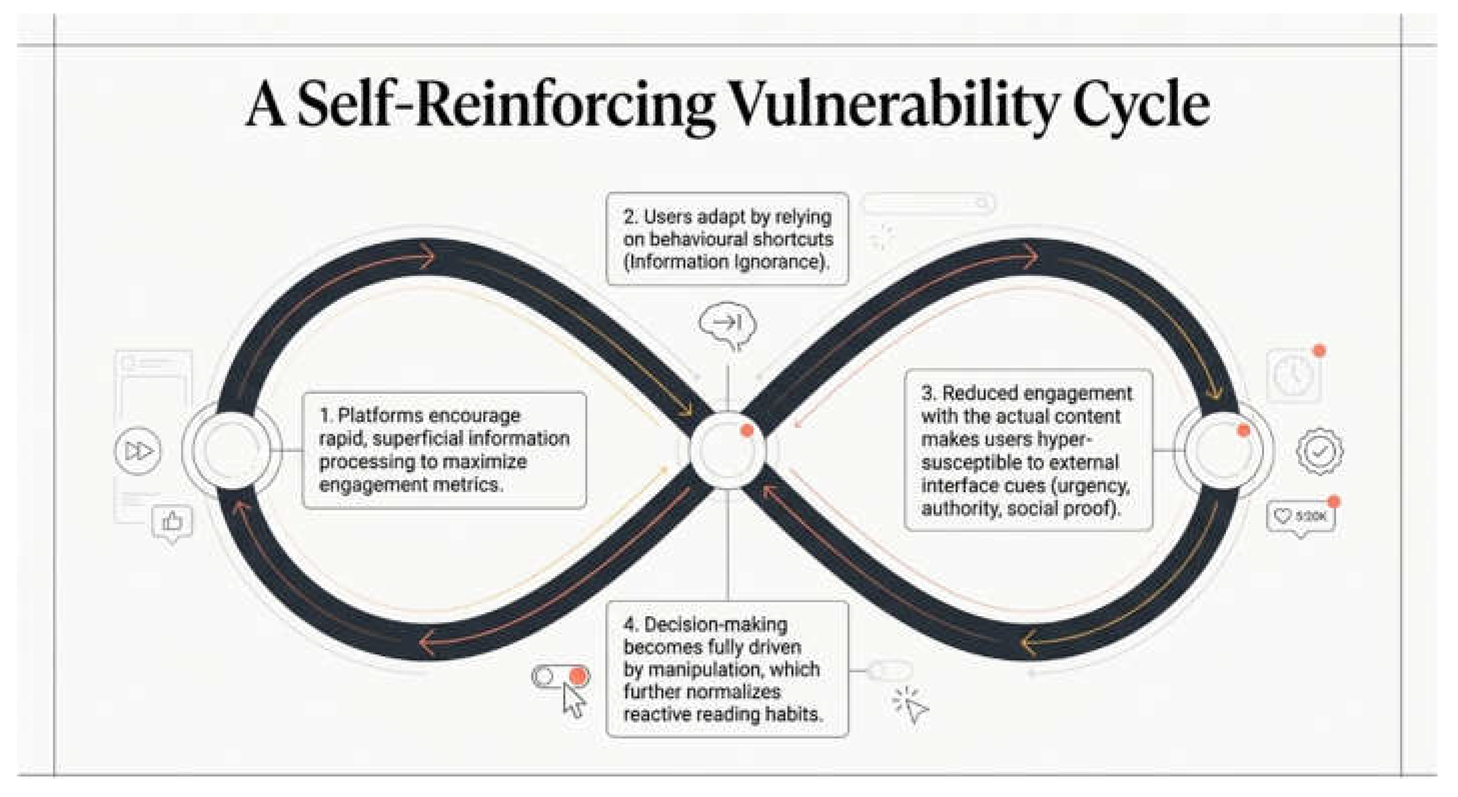
Table design characteristics function as forms of behavioural engineering. They do not prevent users from reading carefully, but they consistently reward speed, frequency, and engagement over reflection, comprehension, and critical evaluation.
4.3. Information Ignorance as a Social Engineering Vulnerability
One of the most important implications of Information Ignorance is that it increases vulnerability to behavioural manipulation [1,2,3,4,5,6,7,8,9,10,11,12,13,14,15,16,17,18,19,20,21]. Individuals who routinely overlook available information are more likely to make decisions based on incomplete understanding, emotional reactions, or external cues rather than careful evaluation [1,2].
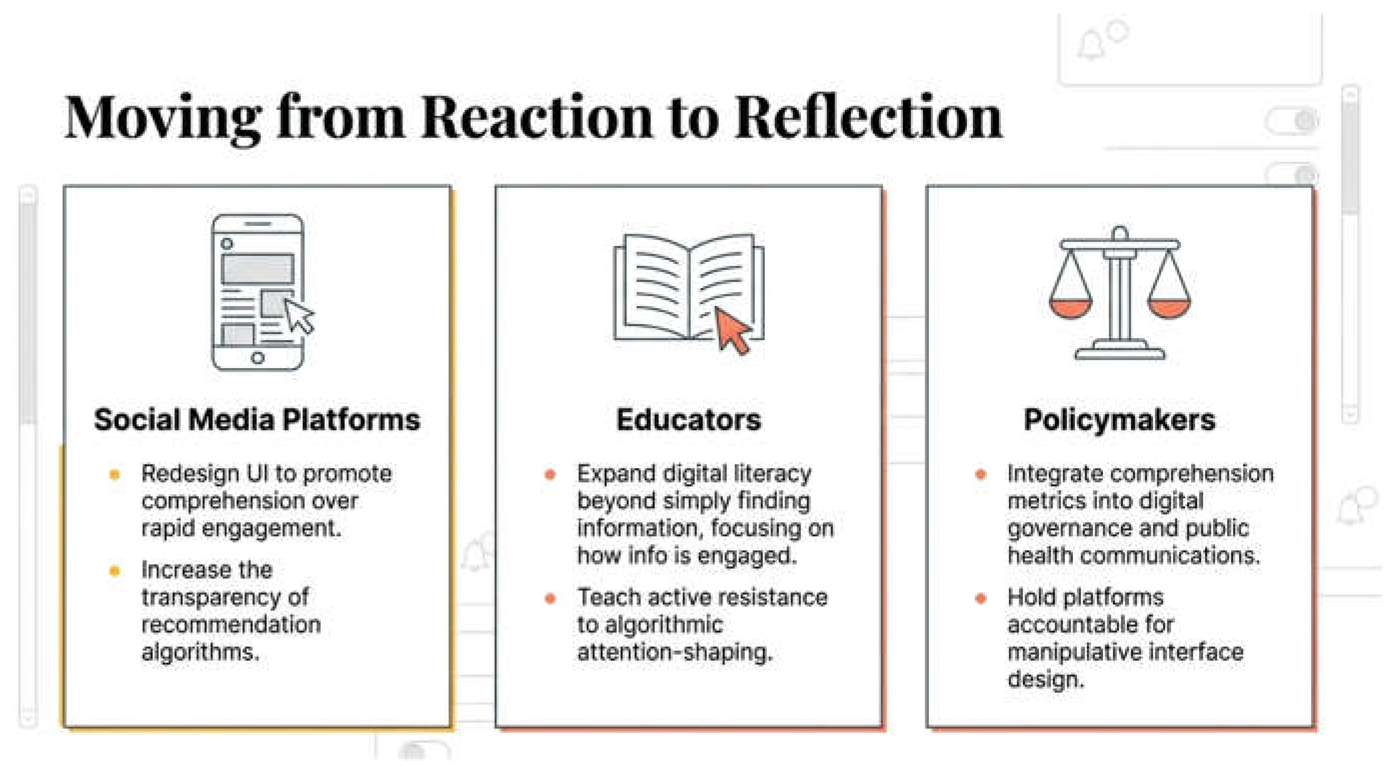
This vulnerability is evident across many forms of online communication. Fake giveaways often encourage users to share personal information before reading terms and conditions [12]. Fraudulent investment schemes rely on promises of unusually high returns while discouraging careful scrutiny [1,2,3,4,5,6,7]. Clickbait headlines attract attention by encouraging users to react before verifying information contained within the full article.
The same vulnerability contributes to the rapid spread of fake news, where emotionally engaging headlines are shared widely without readers examining the accompanying content [21]. Advances in artificial intelligence have further increased these risks through highly convincing deepfake videos and synthetic media that exploit users' tendency to rely on immediate impressions rather than detailed verification [12].
Traditional phishing attacks also illustrate this relationship. Although phishing is commonly viewed as a cybersecurity problem, its success depends largely on behavioural responses rather than technical vulnerabilities [18]. Individuals who overlook warning signs, fail to examine details carefully, or respond immediately to emotionally persuasive messages are more likely to become victims. Similar principles apply to online shopping scams, impersonation fraud, fake customer support messages, and other forms of digital deception [18].
Recognising Information Ignorance as a social engineering vulnerability expands the discussion beyond communication efficiency [8,9,10,11,12,13,14,15,16,17,18]. It suggests that improving reading behaviour is not simply an educational objective but also an important component of digital resilience [1,2,3,4,5,6,7,8,9]. Users who consistently engage critically with available information are less likely to be influenced by behavioural manipulation, regardless of whether that manipulation originates from commercial marketing, platform design, misinformation campaigns, or cybercriminal activity [12].
5. Conceptual Framework
Figure 1.
Conceptual Framework Explaining Information Ignorance in Social Media Reading Behaviour.
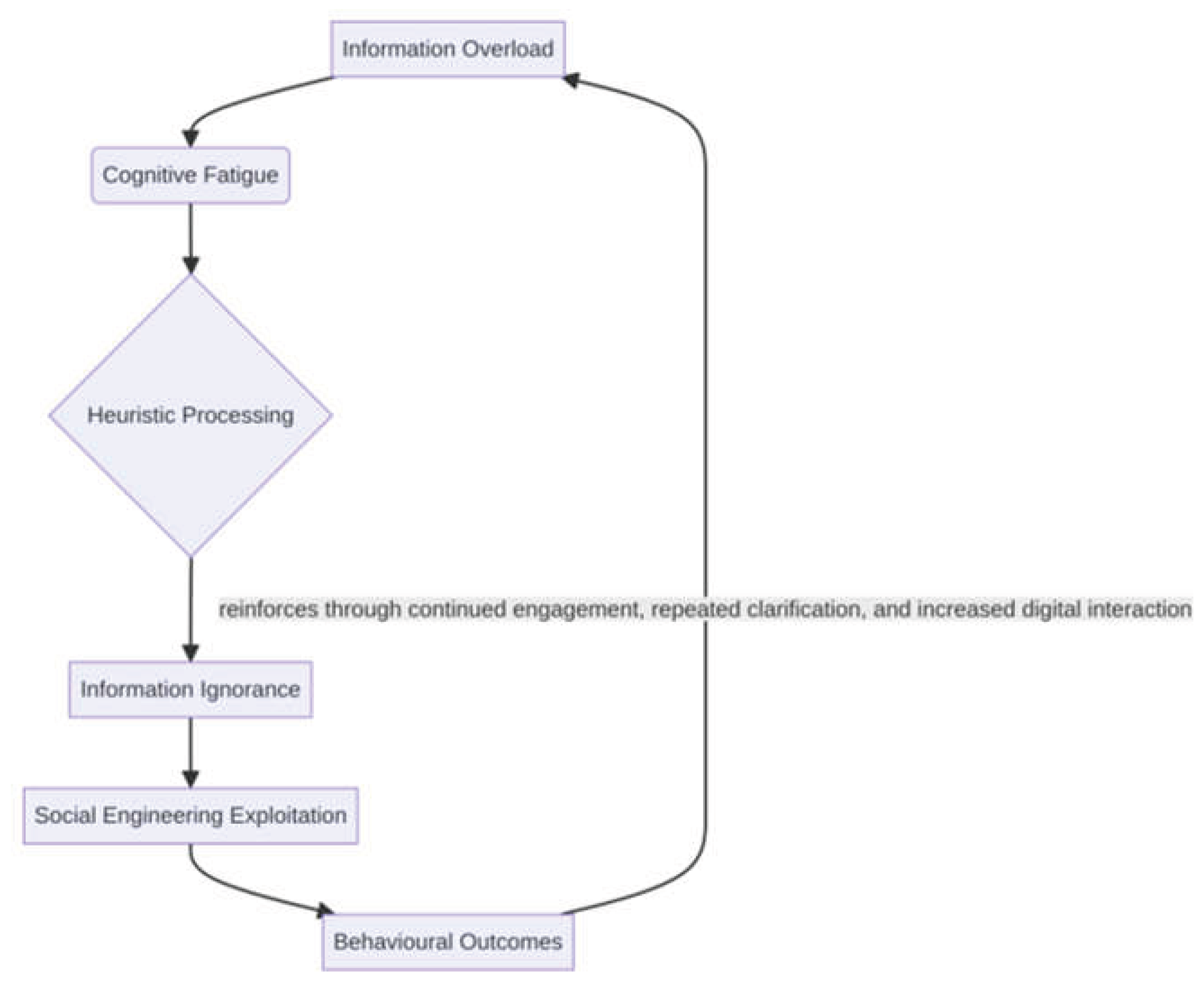
The framework as shown in fig 1, consists of six interconnected constructs that collectively explain the progression from digital information exposure to behavioural outcomes.
The framework begins with Information Overload, representing the digital environment in which users are continuously exposed to competing messages, notifications, advertisements, recommendations, videos, and social interactions. Although information overload does not inevitably lead to poor information processing, it creates conditions that increase cognitive demands.
Sustained exposure to large volumes of information contributes to Cognitive Fatigue. As individuals continuously allocate attention across multiple sources of information, available cognitive resources gradually become depleted. Reduced attention, mental exhaustion, and declining working memory capacity limit the amount of information that can be processed effectively.
Under conditions of cognitive fatigue, individuals increasingly rely on Heuristic Processing. Rather than carefully evaluating available information, they depend on mental shortcuts such as headlines, images, popularity indicators, emotional cues, previous experience, or comments from other users. Heuristic processing enables efficient decision-making but often reduces the depth of information processing.
Frequent reliance on heuristic processing contributes directly to Information Ignorance. At this stage, users overlook, inadequately process, or fail to meaningfully engage with information that is already available. The information is accessible and understandable, yet it receives insufficient cognitive attention to influence behaviour effectively.
Information Ignorance subsequently increases opportunities for Social Engineering Exploitation. Individuals who fail to critically evaluate available information become more responsive to behavioural cues such as urgency, authority, scarcity, fear, curiosity, and social proof. Their decisions increasingly depend on psychological influence rather than independent evaluation of available evidence.
The final construct, Behavioural Outcomes, represents the observable consequences of this process. These outcomes may include misunderstanding, repetitive questioning, premature commenting, poor decision-making, increased vulnerability to online manipulation, reduced communication effectiveness, and the spread of inaccurate interpretations despite the availability of accurate information.
Importantly, the framework should not be interpreted as a rigid linear sequence. The relationships are dynamic and mutually reinforcing. Behavioural outcomes may further contribute to information overload through repeated clarification requests, increased digital engagement, and continuous interaction with online content, creating a cycle that perpetuates Information Ignorance over time.
5.1. Research Propositions
The conceptual framework shown in fig 1, generates several propositions that can guide future empirical research.
P1: Higher levels of perceived information overload are positively associated with cognitive fatigue during social media use.
P2: Cognitive fatigue increases reliance on heuristic processing when users engage with social media content.
P3: Greater reliance on heuristic processing is positively associated with Information Ignorance.
P4: Information Ignorance increases individuals' susceptibility to social engineering influences during social media interactions.
P5: Social engineering exploitation mediates the relationship between Information Ignorance and adverse behavioural outcomes, including misunderstanding, communication failure, susceptibility to manipulation, and poor decision-making.
These propositions can provide a foundation for future quantitative, qualitative, and experimental studies designed to validate, refine, or extend the framework across different digital platforms and user populations.
Table 4.
Summary of Research Propositions and Expected Relationships.
| Proposition | Expected Relationship | Theoretical Basis |
| P1 | Information Overload positively influences Cognitive Fatigue. | Information Overload Theory; Cognitive Load Theory |
| P2 | Cognitive Fatigue positively influences Heuristic Processing during social media use. | Cognitive Load Theory; Dual Process Theory |
| P3 | Heuristic Processing positively influences Information Ignorance. | Dual Process Theory; Information Foraging Theory |
| P4 | Information Ignorance positively influences susceptibility to Social Engineering Exploitation. | Social Engineering Theory |
| P5 | Social Engineering Exploitation positively influences adverse Behavioural Outcomes, including misunderstanding, communication failure, misinformation amplification, and vulnerability to digital manipulation. | Social Engineering Theory; Proposed Conceptual Framework |
Tab 4: Summary of Research Propositions and Relationships. Source: Proposed by the author.
6. Practical and Research Implications
The proposed Information Ignorance framework has implications that extend beyond theoretical development. By explaining how cognitive limitations, platform design, heuristic processing, and social engineering interact to influence reading behaviour, the framework provides practical guidance for stakeholders responsible for designing, regulating, and using digital communication systems. Addressing Information Ignorance requires more than increasing access to information; it requires improving the conditions under which information is processed and understood [1,2,3,4,5,6,7].

6.1. Implications for Social Media Platforms
Social media platforms play a central role in shaping users' reading behaviour because the design of their interfaces influences how information is presented, consumed, and acted upon [4]. The proposed framework suggests that platforms should consider not only user engagement but also information comprehension when designing digital experiences.
- (a)
- Interface design: Features that encourage continuous and rapid browsing may unintentionally promote superficial reading. Platforms could incorporate design elements that encourage users to spend more time engaging with important information before responding [18]. For example, important announcements, public health information, or emergency communications could be displayed using layouts that prioritise readability over rapid interaction.
- (b)
- Algorithm transparency: Recommendation systems influence the sequence and visibility of information presented to users, yet the criteria governing these recommendations are often poorly understood. Improving transparency may help users better understand why particular content appears in their feeds and encourage more deliberate engagement with information rather than passive consumption.
6.2. Implications for Educators
Educational institutions have an important role in preparing individuals to navigate increasingly complex digital information environments [22]. The proposed framework suggests that effective digital education should extend beyond teaching students how to find information and place greater emphasis on how they engage with information once it has been located.
- (a)
- Digital literacy programmes: Traditional digital literacy education often focuses on searching for information, evaluating source credibility, and using digital technologies [22]. While these skills remain essential, educational programmes should also address behaviours associated with Information Ignorance, including superficial reading, premature judgement, and dependence on secondary interpretations.
- (b)
- Similarly, media literacy education should incorporate discussions of behavioural influence on digital platforms [22]. Helping learners recognise how attention is shaped by algorithms, interface design, emotional appeals, and social validation may strengthen critical thinking and encourage more deliberate engagement with online information.
6.3. Implications for Policymakers
The findings of this paper also have implications for policymakers responsible for digital governance, consumer protection, and public communication.
- (a)
- Digital governance: As digital platforms increasingly influence how citizens receive public information, policymakers should consider how platform design affects information comprehension in addition to content moderation [12]. Policies that encourage responsible information presentation may contribute to more effective public communication, particularly during emergencies or public health campaigns.
- (b)
- Platform accountability: While platforms cannot be expected to control every aspect of user behaviour, greater accountability regarding interface design, recommendation systems, and behavioural influence may help reduce unintended communication failures [7,8,9,10,11,12,13]. Encouraging greater transparency in algorithmic decision-making and promoting responsible design practices could improve the quality of digital information environments.
7. Conclusion
The widespread adoption of social media has transformed the way people access, consume, and share information. While these platforms have improved the speed and accessibility of communication, they have also changed reading behaviour in ways that are not fully explained by existing theories. Across digital platforms, users frequently overlook information that is clearly presented, respond without reading complete messages, rely on comments instead of original content, and make decisions based on partial understanding. These behaviours affect individuals, organisations, and society, yet they remain insufficiently addressed within current information behaviour research.
This paper addresses gaps in existing information behaviour literature and further develops Information Ignorance as a multidimensional theoretical construct describing the behavioural tendency to overlook, inadequately process, or fail to meaningfully engage with information that is readily available despite having both the opportunity and the cognitive ability to access it. By positioning Information Ignorance within the broader information behaviour literature, the paper demonstrates how it differs from related concepts while complementing existing theories rather than replacing them.
Building on this, the paper proposed an integrated conceptual framework that connects information overload, cognitive fatigue, heuristic processing, Information Ignorance, social engineering, and behavioural outcomes into a single explanatory model. The framework shows that Information Ignorance is neither an isolated cognitive failure nor simply a product of excessive information. Instead, it emerges through the interaction of individual cognitive limitations, habitual reading behaviours, digital platform design, and psychological influences that shape how information is processed in social media environments. By integrating these perspectives, the framework provides a more comprehensive explanation of contemporary digital reading behaviour than any individual theory offers independently.
Ultimately, this paper argues that one of the most pressing challenges in today's digital information environment is not simply that people are exposed to too much information, but that they increasingly fail to engage meaningfully with information that is already before them. By further developing Information Ignorance as a multidimensional theoretical construct and integrating it with theories of information processing and social engineering, this study offers a new perspective for understanding social media reading behaviour and provides a foundation for future research aimed at improving digital communication, strengthening information resilience, and promoting more informed decision-making in an increasingly connected world.
Funding
This research received no external funding.
Conflicts of Interest
There is no conflict of interest.
References
- Foust, J. L.; Taber, J. M. Information avoidance: Past perspectives and future directions. Perspect. Psychol. Sci. 2025, 20(2), 241–263. [Google Scholar] [CrossRef]
- Aichner, T.; Grünfelder, M.; Maurer, O.; Jegeni, D. Twenty-five years of social media: a review of social media applications and definitions from 1994 to 2019. Cyberpsychology Behav. Soc. Netw. 2021, 24(4), 215–222. [Google Scholar] [CrossRef]
- Weinstein, N.; Itzchakov, G.; Legate, N. The motivational value of listening during intimate and difficult conversations. Soc. Personal. Psychol. Compass 2022, 16(2), e12651. [Google Scholar] [CrossRef]
- Siddiqi, M. A.; Pak, W.; Siddiqi, M. A. A study on the psychology of social engineering-based cyberattacks and existing countermeasures. Appl. Sci. 2022, 12(12), 6042. [Google Scholar] [CrossRef]
- Drummond, C.; McGrath, H.; O'Toole, T. Beyond the platform: Social media as a multi-faceted resource in value creation for entrepreneurial firms in a collaborative network. J. Bus. Res. 2023, 158, 113669. [Google Scholar] [CrossRef]
- Zhu, X.; Guo, C.; Feng, H.; Huang, Y.; Feng, Y.; Wang, X.; Wang, R. A review of key technologies for emotion analysis using multimodal information. Cogn. Comput. 2024, 16(4), 1504–1530. [Google Scholar] [CrossRef]
- Azri, M. D. N.; Malek, S. N. N. A.; Besar, T. B. H. T. An Overview of Information Overload, System Feature Overload, Social Overload and Communication Overload. Environ.-Behav. Proc. J. 2024, 9(SI19), 179–186. [Google Scholar] [CrossRef]
- Fabuluje, J. Information overload or information ignorance? Addressing the social media reading crisis. Preprints 2025. [Google Scholar] [CrossRef]
- Alshammari, S. S.; Soh, B.; Li, A. Understanding Social Engineering Victimisation on Social Networking Sites: A Comprehensive Review of Factors Influencing User Susceptibility to Cyber-Attacks. Information 2025, 16(2), 153. [Google Scholar] [CrossRef]
- Arnold, M.; Goldschmitt, M.; Rigotti, T. Dealing with information overload: a comprehensive review. Front. Psychol. 2023, 14, 1122200. [Google Scholar] [CrossRef]
- Boulos, L. J. The Brain Digitalization: it's all happening so fast! Front. Hum. Dyn. 2024, 6, 1475438. [Google Scholar] [CrossRef]
- Skulmowski, A.; Xu, K. M. Understanding cognitive load in digital and online learning: A new perspective on extraneous cognitive load. Educ. Psychol. Rev. 2022, 34(1), 171–196. [Google Scholar] [CrossRef]
- Boler, M.; Gharib, H.; Trigiani, A.; Kweon, Y. J.; Perry, B. Promoting Disinformation Literacy Among Adults: A Scoping Review of Interventions and Recommendations; 2024. [Google Scholar]
- Hochman, G. Beyond the surface: a new perspective on dual-system theories in decision-making. Behav. Sci. 2024, 14(11), 1028. [Google Scholar] [CrossRef]
- Pillai, R. M.; Fazio, L. K. The effects of repeating false and misleading information on belief; Wiley Interdisciplinary Reviews: Cognitive Science, 2021; Volume 12, 6, p. e1573. [Google Scholar]
- Loewenstein, G.; Wojtowicz, Z. The economics of attention. J. Econ. Lit. 2025, 63(3), 1038–1089. [Google Scholar] [CrossRef]
- Nwagwu, W. Thirty-two years of research on information foraging theory: Evolution, key contributions and emerging directions. Malays. J. Libr. Inf. Sci. 2024, 29(3), 117–143. [Google Scholar] [CrossRef]
- Al-Kfairy, M.; Alomari, A.; Al-Bashayreh, M.; Alfandi, O.; Tubishat, M. Unveiling the Metaverse: A survey of user perceptions and the impact of usability, social influence and interoperability. Heliyon 2024, 10(10). [Google Scholar] [CrossRef]
- Pessiglione, M.; Blain, B.; Wiehler, A.; Naik, S. Origins and consequences of cognitive fatigue. Trends Cogn. Sci. 2025. [Google Scholar] [CrossRef]
- Khadka, K.; Ullah, A. B.; Ma, W.; Marroquin, E. M.; Alem, Y. A survey on the principles of persuasion as a social engineering strategy in phishing. In 2023 IEEE 22nd International Conference on Trust, Security and Privacy in Computing and Communications (TrustCom); IEEE, November 2023; pp. 1631–1638. [Google Scholar] [CrossRef]
- Naeem, N. I. K.; Mushibwe, C. P. Navigating digital worlds: A scoping review of skills and strategies for enhancing digital resilience among higher education students on social media platforms. Discov. Educ. 2025, 4(1), 39. [Google Scholar] [CrossRef]
- Rahimi, R. A.; Oh, G. S. Rethinking the role of educators in the 21st century: navigating globalization, technology, and pandemics. J. Mark. Anal. 2024, 12(2), 182–197. [Google Scholar] [CrossRef]
Disclaimer/Publisher’s Note: The statements, opinions and data contained in all publications are solely those of the individual author(s) and contributor(s) and not of MDPI and/or the editor(s). MDPI and/or the editor(s) disclaim responsibility for any injury to people or property resulting from any ideas, methods, instructions or products referred to in the content. |
© 2026 by the authors. Licensee MDPI, Basel, Switzerland. This article is an open access article distributed under the terms and conditions of the Creative Commons Attribution (CC BY) license (http://creativecommons.org/licenses/by/4.0/).
Copyright: This open access article is published under a Creative Commons CC BY 4.0 license, which permit the free download, distribution, and reuse, provided that the author and preprint are cited in any reuse.