
Submitted:
27 August 2026
Posted:
28 August 2026
You are already at the latest version
Abstract
Sus scrofa (wild boar), a native species in Catalonia, has been considered a pest for several decades due to its economic and social impacts, including road traffic accidents and agricultural damage. As a result, it is subject to control strategies that combine increased hunting pressure with measures aimed at reducing its reproductive capacity. In the context of exacerbated human-wild boar conflicts, including the 2025-2026 African swine fever outbreak, this article analyses the current Wild Boar Monitoring Programme in Catalonia and current population management strategies to assess their implications for human-wild boar coexistence. Based on data obtained through transparency requests to the Government of Catalonia covering the period of available official records, including programme reports, breeding facility records, and accident statistics, the article examines potential contradictions and broader socio-political processes in which the category of pest emerges from human management practices rather than purely ecological conditions.
Keywords:
wild boar
; pestification
; human–wild boar coexistence
; wildlife governance
; Catalonia
1. Introduction
Sus scrofa (wild boar) is recognized as a native species in Catalonia as it is across the entire Iberian Peninsula, but although it is “in the right place”, it is considered to be present “in the wrong numbers”. For decades, the management of wild boar populations has been a major concern for public authorities, which regularly characterize the species as overpopulated. Listed among the “World's Worst Invaders” by the IUCN's Invasive Species Specialist Group [1] and considered a pest in the Spanish autonomous community of Catalonia, wild boars are subject to control strategies that combine increased killing with the reduction of reproductive capacity. These measures, usually associated with the management of so-called invasive species, are justified by the human-wild boar conflicts that arise in both urban and rural settings across the region.
The problems associated with the wild boar in Catalonia, exacerbated by an increase in its population density over the last few decades, include road traffic accidents, crop damage, perceived impacts on biodiversity, inconveniences in urban areas and several health risks [2]. To address these issues, the Departament d’Acció Climàtica, Alimentació i Agenda Rural (Department of Climate Action, Food and Rural Agenda) of the Catalan government launched in 2022 the Pla Estratègic pel Control de Danys del Senglar a Catalunya (Strategic Plan for the Control of Wild Boar Damage in Catalonia) to control wild boar-related damage. The goal of the strategic plan is to regulate wild boar populations through a broad set of measures ranging from drafting new laws and decrees to increasing hunting activities, promoting the commercialization of wild boar meat, and implementing public awareness campaigns [2].
The strategic plan draws from data of the Wild Boar Monitoring Programme implemented since 1998 [3]. This programme continues to operate today producing annual reports that include data on the observed wild boar population density per area, the number and characteristics of the hunting drives executed, and the number of wild boars killed. The reports consistently conclude that hunting is essential to contain the increase in wild boar density, as this species lacks natural predators in the region and has high reproductive rates. Additionally, there is a strict prohibition to give food to wild boars to help reduce their birth rate [3] alongside other measures addressed to the public and collected in various dissemination materials produced by the Catalan government. However, little is known about the detailed characteristics of the existing monitoring programme or the outcomes of nearly three decades of the control and management strategy implemented by public authorities. Analysing all the data collected since the start of the programme can provide a valuable perspective on its effectiveness and overall suitability for addressing human-wild boar conflicts in the territory of Catalonia. Furthermore, a systematic review of these data is necessary for ensuring evidence-based policymaking and public accountability, allowing political claims and management justifications regarding wild boars to be evaluated against the available empirical evidence.
Moreover, events such as the swine fever outbreak near the city of Barcelona in December 2025 have set off the alarm and mobilised a wide range of containment measures, sparking controversy over the eradication strategies adopted by local authorities. In this context, it is worth examining the characteristics of these control measures aimed at containing the current outbreak in Catalonia to assess their implications, evaluate their empirical basis, and better understand the challenges of balancing conflict and coexistence between humans and wild boars.
To this end, this article first traces the history of wild boar populations in Catalonia and the changing status attributed to the species over time. It then examines the current monitoring programme in Catalonia, analysing the methods used to control wild boar populations. Finally, it provides a critical assessment of the 28 years of wild boar monitoring in Catalonia and discusses the practical, social, and ethical implications of the current management approach. It will conclude by arguing that the expansion of wild boar populations cannot be understood solely as an ecological phenomenon but must also be analysed in relation to human interventions, including hunting policies, landscape transformation, breeding practices, and wildlife governance. Rather than simply attributing to wild boar the inherent condition of “pest”, it is worth examining how concrete human policies and management frameworks actively shape human-wild boar relations, as well as the behavioural dynamics of the species itself. This perspective highlights the need to reassess current management approaches and explore alternative strategies for long-term human-wild boar coexistence. Such reassessment is particularly important because management interventions do not emerge in a political vacuum, but are shaped by institutional priorities, economic interests, and broader policy agendas alongside ecological considerations.
2. Materials and Methods
2.1. Approach
To analyse wild boar (Sus scrofa) management in Catalonia, the study focuses on three categories: (i) monitoring practices and population dynamics, (ii) management interventions such as hunting, and (iii) anthropogenic infrastructures that contribute to population regulation, including breeding and release systems. Together, these dimensions provide a comprehensive overview of how wild boar populations are monitored and regulated within public administration frameworks.
2.2. Data Collection
This article draws on data from the Wild Boar Monitoring Programme, records of breeding farms and traffic accidents statistics in Catalonia. These data were obtained through the transparency portal of the Government of Catalonia. This service allows any citizen to request information on activities carried out by the public administration. The request was submitted on 23 December 2025, and the response was received on 5 February 2026.
The information requested included:
1) all reports from the Wild Boar Monitoring Programme since 1998;
2) a historical record of wild boar populations in Catalonia, specifically total estimated populations rather than densities based on observations;
3) information on wild boar breeding farms or enclosures, including: year of establishment; the purpose of creation; historical record of their number per year, closures of non-active facilities, and their location –including active facilities–; number of animals bred in these facilities, including a breakdown by year, type of holding, and location; historical record of pig farms involving hybridisation or related breeding practices since data became available; and the purpose or use of such practices;
4) information on research on wild boars funded by or conducted in collaboration with the Government of Catalonia, with or without funding;
5) information on accidents involving wild boars, including traffic accidents and other, including fatal cases;
6) current methods used for managing wild boar populations, including: mechanical methods such as capture and removal, baits or other physical control methods; biological methods such as control through natural processes, sterilization, predators or non-lethal biological interventions; chemical methods such as poisons, contraceptives, drugs or other chemical agents; and biotechnological methods such as genetic techniques, reproductive modification, sterilization based on biotechnology, or other tools.
The information received included all the reports from the Wild Boar Monitoring Programme since 1999, as the 1998 report was not available (request 1). Total estimated population figures were not provided, as this information appears not to exist in the records (request 2).
Information regarding wild boar breeding farms and their purposes (request 3) was provided based on the Registre d’explotacions ramaderes GTR-RER (Livestock Holdings Register). However, it was stated that no records exist prior to 1991, meaning that the year of establishment could not be obtained. Regarding annual historical records, the administration indicated that annual data are not available, as the register only reflects the current state of the records and does not retain a historical evolution of the data over time.
The historical record of the number of pig farms involving hybridisation or related breeding practices was not provided (request 3). The administration stated that porcine hybridisation is extremely common in contemporary commercial pig production, to the extent that it is currently based on the systematic use of hybrids to maximise meat production by taking advantage of the genetic benefits associated with planned crossbreeding. Therefore, they assume that most farms have been using planned crossbreeding for many years.
Regarding research (request 4), the Government of Catalonia reported that it is not currently funding any wild boar-related research. Information on accidents involving wild boars (request 5) was provided only for traffic accidents. With respect to population management methods (request 6), the administration stated that only mechanical ones are promoted, such as hunting drives, daytime and night-time ambush hunting, cage traps, night patrols, netting, and teleanaesthesia.
3. Results
3.1. A Longstanding Concern: From Scarcity to “Pest”
In the mid-19th century, wild boars were said to be scarce in the Iberian Peninsula, as “only some mountain areas of the Pyrenees and the Iberian mountains had still boars” [4]. Not only wild boars, but also deer, lynxes, wolves, and bears had disappeared from the natural area at different points in time [5]. At the beginning of the 20th century, the wild boar was close to extinction in Catalonia, being present only in some forests in the areas of Alt Empordà and la Selva [6].
During the Franco dictatorship (1939–1975), efforts were made in some regions of Spain to restore native so-called “game species” –species used for hunting purposes– and introduce foreign ones, following policies for game restocking in the 1950s. Specifically, the plans approved by the Dirección General de Patrimonio Forestal del Estado (Directorate General for the State’s Forest Heritage) included the reintroduction of native species that had disappeared or were at risk of extinction, including roe deer (Capreolus capreolus), red deer (Cervus elaphus), and wild boar (Sus scrofa) [5]. One of the strategies used to support the reintroduction and restocking of game species involved the establishment or use of breeding farms. A report based on 550 peer-reviewed scientific papers on population trends of wild boar in Europe explains that in countries where wild boars had been hunted to near extinction, wild boar farms were subsequently established [7]. In Spain, and in Catalonia, such farms still exist today.
According to the Government of Catalonia, the Registre d’explotacions ramaderes (Livestock Holdings Register) has historically recorded a total of 65 wild boar breeding farms in Catalonia. In 2026, the register lists 23 active wild boar holdings in the autonomous community. Although these facilities are registered as “farms”, they do not necessarily correspond to “farms” in the conventional sense; rather, they encompass a variety of breeding, confinement, holding, transit, or display facilities. They are classified as follows:
- 12 “production and breeding” facilities, where animals are raised for meat production or for restocking and release for hunting purposes,
- 3 “inspection centres”, where animals are checked for disease control and/or compliance with transport or slaughter regulations,
- 6 “zoological nuclei”, a broad category used in Spain for collections of wild fauna for scientific, cultural, recreational, breeding, rehabilitation, adaptation, and/or conservation purposes,
- 1 “commercial operator”, an entity involved in the commercial movement, trade, or handling of animals,
- 1 “recreational”, usually referring to hunting estates or private land where wild boars are kept for leisure or hunting activities [8,9].
Besides these facilities in Catalonia, other parts of Spain also raise and breed wild boars described as “genetically pure and certified as disease-free, for supplying hunting estates, other wild boar farms, or for sale to different sectors of the market”, guaranteeing their “ferocity” [10] (own translation). There have also been documented imports of live wild boars from other European countries, such as Hungary, for hunting purposes [11]. In addition, illegal farms exist, and in 2016, four illegal wild boar and mouflon farms were dismantled in Cuenca, Spain, that raised more than 350 animals for hunting purposes [12].
The historical promotion of captive breeding and reintroduction may appear difficult to reconcile with the current management context, as wild boar populations have become particularly prolific since the mid-twentieth century and the species, now widespread across much of Catalonia, is currently considered a pest. As such, it is closely monitored, and control strategies are intensively implemented, mainly involving hunting. For instance, Resolution ACC/923/2024 of 21 March of the Catalan Government, which is still in place, extended the hunting season to seven months –from 1 September to 30 March each year– across the territory, as public authorities consistently argue that hunters are key actors in population control [3]. Following the 2025-2026 swine fever outbreak affecting wild boars in Catalonia, additional measures have been introduced –as detailed in section 3.3–, such as advancing the hunting season to June and directing public funds towards intensifying hunting practices, rewarding hunting societies for each wild boar killed.
Over the last decades, human-wild boar conflicts have intensified due to the economic and social impacts the species causes, including crop and infrastructure damage, the transmission of diseases to other animals and humans, and traffic accidents [3]. According to the 2022 Strategic Plan for the Control of Wild Boar Damage in Catalonia, in 2021 more than 1,800 cases of agricultural damage were documented. Health risks include the spread of tuberculosis, trichinosis and African swine fever [2]. Regarding traffic accidents, data collection began in 2021. In 2025, 5,449 incidents were reported, most of which resulted in no injuries, while 209 caused minor injuries, 13 resulted in serious injuries and 3 were fatal. These incidents and conflicts with humans determine the species’ characterization as a pest, as this condition ultimately depends on whether the relationships it establishes and their effects are perceived as problematic [13].
It was in this context that the Catalan government established the Wild Boar Monitoring Programme in 1998. The current aim of the programme is to achieve a “stable number of wild boars, compatible with the conservation of other species in our ecosystem and with human activities” [6] (own translation). The information obtained through the Wild Boar Monitoring Programme and related research is intended to inform the design of appropriate management measures [3] and to ensure “the sustainable coexistence of wild boars and human populations” [14]. As current management strategies in Catalonia are based on the results of this monitoring programme, it is therefore important to understand its methodology in detail.
3.2. Catalonia’s Monitoring Programme and the Role of Hunters
The Wild Boar Monitoring Programme in the autonomous region of Catalonia was established in 1998, following a methodology that had been applied since 1990 in the Natural Park of la Garrotxa, and remains in operation as of 2026. Promoted by the Generalitat de Catalunya (Government of Catalonia) and Diputació de Barcelona (Barcelona Provincial Council), the reason for the implementation of the programme was the expansion of wild boar population and the conflicts that these ungulates generate in agricultural fields, roads, and urbanized areas [3]. The annual reports have been so far commissioned to Minuartia, a Catalan environmental consultancy specialized in the management, conservation and restoration of biodiversity. The general objective of the programme is to gain a better understanding of the demographic evolution of wild boar populations in different regions of Catalonia, by analysing a) the evolution of the so-called captures, that is, the killings by hunters, b) captures in relation to hunting pressure, which is the number of hunting drives in a determined area, and c) population trends of wild boars, in order to define the best management measures for each situation [3].
Besides this general objective, the programme also aims to motivate the implication of local hunting groups [3] and to promote cooperation between program coordinators and technicians, park rangers or park guards [these roles include: (1) coordinators for each hunting area or observatory, in charge of the distribution and collection of data cards, dissemination of the annual report for each area, and communication with local wild boar hunting groups; (2) a person in charge of the general coordination of the program from the Departament d'Agricultura, Ramaderia, Pesca i Alimentació (Department of Agriculture, Livestock, Fisheries and Food); (3) technical staff in charge of updating the database, analysing data, preparing individual reports for each hunting area, and supporting site coordination and general report writing; and (4) officers of the Rural Agents Corps, and wardens of the National Hunting Reserves and the network of natural areas managed by the Diputació de Barcelona (Barcelona Provincial Council)], and hunters, the latter being key actors in the management of the species. This is because the programme is based on data obtained during batudes (hunting drives), in which each local hunting group completes a carnet de colla senglanaire (wild boar hunting group card). This information is used to calculate a relative density index and an estimate of absolute population density, among other indicators.
The group card includes date, location and surface area hunted; number of hunters and dogs involved in the hunting drive; number of observed wild boars; number of wild boars killed; and the weight and sex of the wild boars killed. From this data, the “characterization of the hunting activity” –hunting distribution across the season and the number of hunters and dogs involved– and the “hunting effort” –number of hunting drives per area– are calculated, as well as the number of animals killed in relation to the hunting effort (see figure 1). Based on this, absolute population density is estimated, calculating the proportion of wild boars killed relative to those observed within a given area. This value is then divided by the total hunting area.
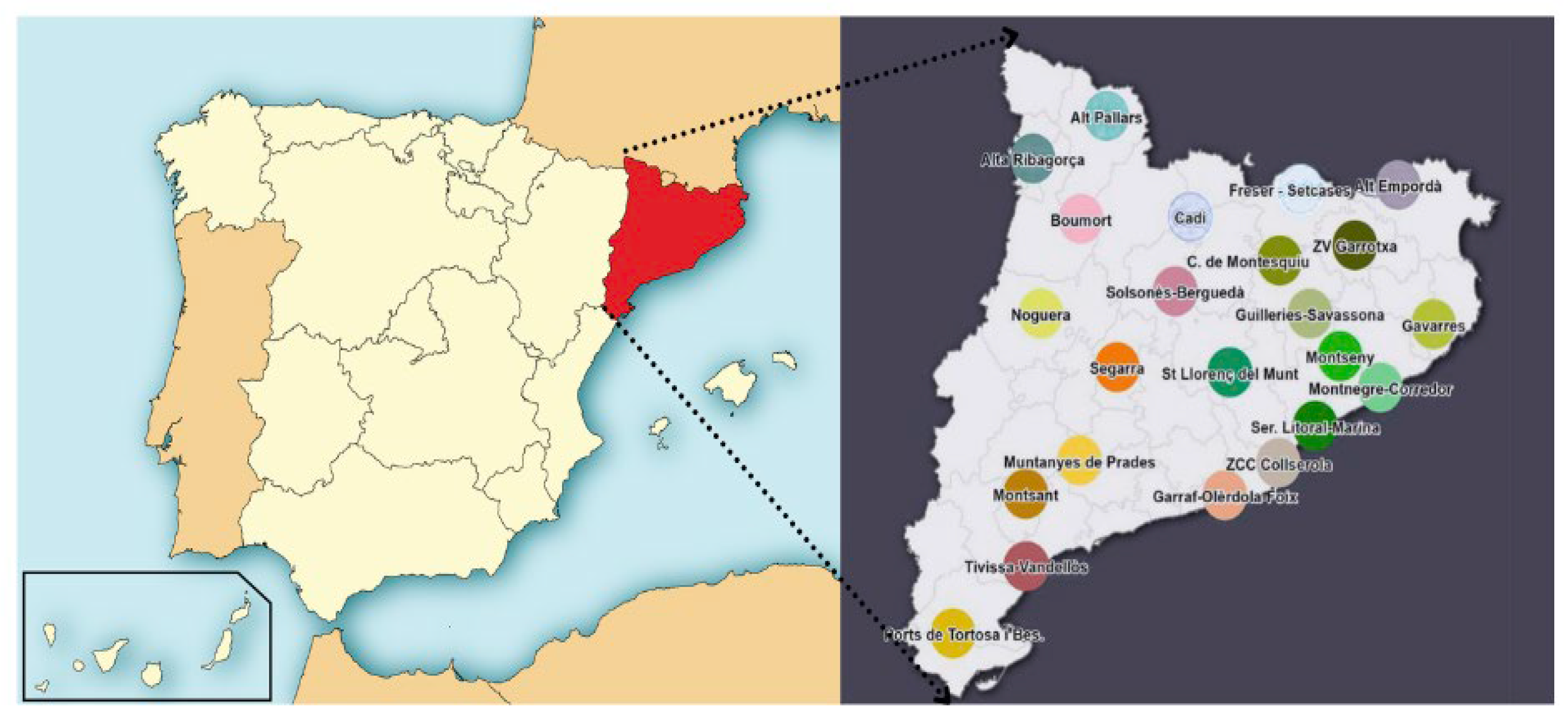
The number of hunting areas that participate in the programme, referred to as observatories, have increased substantially over time. In 1998-1999 there were 9 observatories, while in 2024 the number reached 23 (see figure 2). These spaces include private hunting areas, areas of controlled hunting, and national hunting reserves. In all observatories hunting is intensified during the wild boar mating and birthing period, from September to January.
During hunting drives, local groups are organized according to their specific role. The gossers (dog handlers), bring and release dogs to chase wild boars, while the caçadors apostats (standers or posted hunters) occupy fixed positions and wait to shoot the animals when they arrive running away from the dogs. Due to their positions, dog handlers are primarily who observe and report the number of wild boars detected during each hunting drive, which is subsequently recorded in the data collection card.
Absolute density is estimated using the equation N=C/p, where N is the estimated total number of wild boars in the area, C represents the number of wild boars killed, and p the proportion of killed animals in relation to those observed. N is then divided by the total hunting area. This estimate is used to compare population trends across years and across different areas of Catalonia.
In addition to absolute density estimates, the report provides a relative density index per observatory, calculate as ID = C/S·E, where ID is the density index, C the number of wild boars killed, S the total hunting area and E the hunting effort. This index is used to analyse temporal changes in density within a given area, but does not allow comparisons between different areas, since variations in surface size affects the indicator. Likewise, comparisons over time within the same observatory are considered invalid if the area changes by more than 10% between years.
The program is coordinated by an appointed person of the Servei de Protecció i Gestió de la Fauna (Fauna Protection and Management Service) and, for each observatory, park rangers are responsible for being in contact with hunters, coordinating data collection, and distributing reports. Besides the general annual reports, monographic reports are elaborated for each observatory, containing specific relevant results for each of them. The latter are destined to hunting groups to continue motivating their implication [3].
It is worth noting that the reports themselves recognize that the number of wild boars killed in each hunting drive is not an appropriate measure of population density. They suggest that the annual number of animals killed relative to the surface area provides a more suitable indicator, although this metric does not account for hunting effort. This acknowledgment raises concerns about the validity of the formula employed. In the following section we will discuss the results, including the limitations of this data collection system and its implications.
4. Discussion
4.1. The Result of 28 Years of Management and Its Implications
The method used to monitor wild boar populations in Catalonia has several limitations, as acknowledged by the authors of the reports themselves [3]. First, data collection depends on hunters’ observations during hunting drives, and the information gathered is often incomplete –e.g. missing dates– or inaccurate. For example, in the 2023-2024 season, the calculated indicators for five observatories were “based on data from a surface area that was clearly smaller than the recommended one (20,000 ha); therefore, the results should be interpreted with caution” [3] (p. 12, own translation). In addition, not all hunting drives are registered, and, in some cases, the information arrives too late to be considered for the analysis. That is, the reports acknowledge that data based on hunters’ observations is imprecise, meaning that estimates of absolute wild boar density should be considered as inaccurate approximations. The relative density index is more reliable for assessing changes in wild boar density within a specific area, but it does not allow for comparisons between areas with different surface sizes or hunting pressure. However, as Cahill [15] notes, independent field data is seldom available to test the reliability of these indices. Moreover, Ebert et al. [16] argue that absolute population numbers, rather than density-based estimates, are preferable for population management and epidemiological purposes.
Second, hunting groups are the main responsible for completing the data collection cards, although in some cases park rangers –officers of the Rural Agents Corps or wardens of the National Hunting Reserves and the network of natural areas– fill them in instead. In other cases, the information is recorded using different types of forms, such as Fitxes de jornada de batuda de senglar (wild boar drive hunt record forms), Informes diaris o Fulls de resultats de batudes de senglar (daily reports or wild boar drive hunt result forms), logbooks elaborated by the specific hunting area, or monthly reports elaborated by the Rural Agents or reserve wardens. As a result, the authors of the Monitoring Programme reports recognise the need to standardise the data collection system. Third, there are overestimations regarding certain characteristics of the wild boars killed, such as their weight, while many captures of young individuals are not recorded.
Finally, additional factors may further affect the reliability of the data obtained. Before hunting drives take place, hunters search for tracks to determine the location of the wild boars. Once an area is identified, hunting posts are set up around it. Consequently, “the sectors where hunting drives are conducted are also the areas where there is a higher probability of finding wild boars” [3] (p. 10, own translation).
Another aspect that raises questions about the monitoring system is that hunting-drive success does not appear to decrease as the hunting season progresses. This may seem contradictory, since hunting is intended to regulate populations and, as more individuals are killed throughout the season, fewer wild boars should remain, which would be expected to reduce hunting success over time. Some hypotheses suggest that this could be explained by the fact that hunters already know where wild boars are likely to be located –as they actively search for tracks before the drives [3]. This, in turn, raises further questions about the accuracy of population density estimates, which are based on the number of wild boars observed during hunting activities.
Besides the aforementioned factors that question the validity of the data obtained, and therefore the estimations of wild boar densities, it is also worth considering whether hunting, aside from its ethical implications, is an effective method for managing wild boar populations. According to the annual reports of the Monitoring Programme, hunting does not significantly reduce wild boar populations but rather prevents them from growing more [3]. Other authors have suggested that hunting, per se, is not a key factor influencing wild boar population levels [17], and that the number of wild boars killed in a given year, whether from authorised driving hunts or from the total officially reported killings from all sources combined, does not appear to be a good predictor of population levels in the following year [15]. Similarly, Ebert et al. [16] (142) note that “it is a known problem in many regions that hunting is not efficient in regulating wild boar populations”. Moreover, long-term modelling of populations in Mediterranean areas showed that population levels can fluctuate between abundance and scarcity, even in the absence of hunting [18], and that the demographic characteristics of this population are determined mainly by ecological conditions, rather than by human activities such as hunting [19].
Furthermore, evidence suggests that compensatory population responses can occur when the hunting pressure is high [7]. This ecological mechanism helps ensure the survival of a species when it faces major disturbances. In the case of wild boar, studies indicate a demographic response to hunting pressure, including earlier reproduction among females, a higher proportion of them giving birth, and larger litters [20,21]. Research has shown that “high food availability alone cannot induce early reproduction in wild boar” [20] (p.837), and that, in contrast, populations subject to higher hunting pressure may exhibit stronger population growth and early sexual maturity [20,19]. Servanty et al. [20] compared two wild boar populations monitored over several years, one heavily hunted and the other lightly hunted. They concluded that “the differences in demographic patterns observed [...] can reliably be attributed to differences in hunting pressure”, and that “the intense hunting pressure experienced [...] probably explained the observed low threshold body mass for earliest reproduction” [20] (p. 837).
In fact, the reports of the Monitoring Programme attribute the greatest importance in regulating wild boar populations to weather conditions, “as has been demonstrated through modelling based on data from the wild boar monitoring program in Catalonia over the last 23 years” [3] (p. 51, own translation). This suggests that hunting itself is not effective in regulating wild boar populations, and that broader anthropogenic factors, such as climate change, may have a greater impact. Indeed, climate change has been identified as one of the largest drivers of population expansion, as evidenced by several studies conducted across Europe [7,22]. The reasons for this include increased spring and winter temperatures, which favour reproduction, larger litter sizes, and the survival of piglets, as well as increased food availability, such as acorns and beechnuts [22].
Human agricultural practices are another factor influencing the growth of wild boar populations, as increasingly large areas are cultivated year-round with crops such as maize and sunflower [23,24] and therefore wild boars have easy access to food across the year. Moreover, the establishment of wild boar farms for meat production or for their release for hunting purposes has also contributed to the expansion of wild boar populations, as noted by Tack [7].
In sum, although different actors hold diverging views regarding both the causes of wild boar population growth and the most appropriate management strategies, the aforementioned factors suggest that anthropogenic activities and pressures on ecosystems are major drivers of their expansion.
However, it remains unclear in the literature when wild boar populations become “excessive”; in other words, where the line should be drawn between enough and too many within this management paradigm. The reports of the Monitoring Programme do not provide clear guidelines on this issue, simply concluding that there is an excess and that “in the areas where there is an excess it is necessary to continue applying strategies that allow for the reduction of wild boar density” [3] (p. 53, own translation, emphasis added). Therefore, as discussed by Moreno [13], the label of pest is attributed in relation to the damages that animals cause to humans and their economic activities, a condition that is context-dependent and may vary across places and over time. Since landscapes are being transformed by human activities, these changes directly influence wild boar population growth. Consequently, Moreno argues that we should understand the “circumstantial nature of the [pest] concept” [13] (p. 196). Following this line of thought, it is necessary to consider whether the impacts wild boars have on human activities are significant enough to justify their “pest status” across the territory and implementing the lethal and costly measures currently carried out by the Government of Catalonia.
On the one hand, the measures currently implemented impose substantial welfare costs on wild boars, as they are based primarily on lethal control methods. The ethical implications extend beyond the immediate death of the animals that are shot. The killing of adult females can leave dependent piglets orphaned and unable to survive on their own, while non-lethal injuries may result in prolonged suffering before death. Moreover, hunting can disrupt social structures and generate stress responses in surviving individuals. As a result, the welfare impacts of these measures affect not only the animals directly killed but also many others indirectly harmed by the loss of their group members and the disturbance of their social and ecological environment.
On the other hand, the strategic plan to control wild boar populations, launched by the Department of Climate Action, Food and Rural Agenda of the Catalan Government, entails substantial economic costs, with a budget of 10,7 million euros for the period 2022-2025 alone. In addition, the government has spent a further 24 million euros of public funds in just five months following the African swine fever outbreak that affected Collserola park (Parc Natural de la Serra de Collserola), a protected natural area on the outskirts of Barcelona, starting at the end of November 2025 [25]. Most of these resources have been directed toward eradicating the wild boar population in the affected region on the one hand and promoting the commercialization of wild boar meat from hunted animals in non-affected regions, on the other.
Since the detection of the first positive cases of African swine fever in Collserola park on 28 November 2025, and up to June 2026, 336 positive cases have been detected, while a total of 6.526 wild boars have been killed only within the main affected area of Collserola. A further 26.587 individuals have been killed across the rest of Catalonia since January 1st, 2026, outside the high and low-risk areas [25]. Despite these intensive measures, the Catalan government has authorised additional hunting drives and implemented new capture measures, requesting the deployment of the Military Emergency Unit (UME) in Collserola park [26], with the goal of eliminating 100% of the wild boars living in the “high-risk area” –where at least one positive case has been detected– and reducing populations to fewer than 1 individual per km2 in the surrounding “low risk areas”, which include many regions of Catalonia [27]. The extremely high number of deaths over the short period between December 2025 and June 2026 –of which only 6% involved infected animals–, together with the scale of the public resources mobilised, underscores the magnitude of the intervention and calls for a critical assessment of its social and ethical implications, as well as a consideration of alternative management methods that could be implemented instead, at a much lower ethical and economic cost.
In this respect, it is worth considering that African swine fever (ASF) is a viral disease that affects wild boars and farmed pigs but cannot be transmitted to humans. It is perceived as a major threat to the pig industry in the European Union [28], which explains the extensive efforts made by public authorities to eradicate the disease. The meat sector is the largest agri-food industry in Catalonia, with pig production being the leading one. Catalonia is the second largest producer of pig meat in Europe [29], and in 2025 approximately 23 million pigs were slaughtered. The pig industry generated an economic value of €2.4 billion in the same year [30]. Following the outbreak of African swine fever at the end of November of 2025, there have been significant economic losses resulting from the sharp decline in market prices. It is estimated by the industry that losses amounted to €63 million in Catalonia alone, amounting to €154 million counting the whole of Spain, only from the declaration of the outbreak until the end of the year [30]. In addition, Catalonia is the leading exporting region in Spain, accounting for 53% of the country's pig exports in 2024 [31]. The outbreak had serious consequences for these exports, as countries that did not recognise the principle of regionalisation –allowing imports from certain non-affected areas of a country– imposed bans on the import of pig-derived products from Catalonia [30]. The economic magnitude of the pig industry in Catalonia helps explain the radical eradication measures adopted by the government, although alternative management approaches could achieve similar, or even better, objectives without large-scale culling.
The method employed by the Catalan Government to detect the presence of African swine fever in wild boar is direct killing. However, methods such as passive vigilance –locating and removing dead bodies– have been shown to be most effective means of detecting the virus at virtually no cost [32], and in contrast, “hunters who kill an infected animal pose a bigger risk, as blood is highly infectious” [7] (p. 30). In the context of the African swine fever outbreak in a relatively limited area such as Collserola park, passive vigilance could be implemented at a significantly lower cost, making the eradication of the entire wild boar population arguably unnecessary. Moreover, such a measure clearly contradicts the stated objectives of the current management programme in Catalonia, as discussed previously: maintaining a stable number of wild boars and ensuring the sustainable coexistence of wild boars and humans.
It is worth noting that, although the origin of the outbreak remains uncertain, all hypotheses proposed to explain the introduction of the virus point to an anthropogenic source. On the one hand, the so-called “sandwich theory” suggested that a contaminated cold-meat sandwich brought from an infected country was discarded near the area of the outbreak, where wild boars would eat it [33]. On the other hand, suspicions were raised that the virus accidentally escaped from the IRTA-CReSA laboratory in Collserola, where a similar virus strain is used for research [34]. Other hypotheses pointed to human-mediated introduction through the movement of contaminated materials. Taken together, these explanations highlight the extent to which human activities impact ecosystem processes and invite a critical reassessment of narratives that portray wild boars as the primary source of the problem.
Regarding population control in non-infected areas, non-lethal and non-harmful methods could also be considered to advance the objective of sustainable coexistence, including contraception, which has already been explored. Although not free from controversy, this approach could avoid unnecessary and costly killings while maintaining population levels stable. Studies by Massei et al. [35] and Quy et al. [36] showed that a single dose of the gonadotrophin-releasing hormone (GnRH) injection, known as GonaCon, suppresses reproduction in wild boar without affecting behaviour, physiology, or group social stability. In contrast, hunting “can disrupt social and spatial behaviour of wild boar” [35]-(p.545) potentially leading to negative consequences, especially when attempting to contain disease outbreaks. This is because hunting-induced disturbance can increase movements and contact rate between individuals, which can also lead to increased vehicle collisions [37]. In sum, since lethal population control methods can be “ineffective, environmentally harmful and often publicly opposed” [37] (p. 1), contraception has the potential to be an effective and more humane alternative. Moreover, oral contraceptives could be developed, allowing application on a larger scale. Although such methods may appear to be costly, their social, economic and environmental benefits would outweigh the costs associated with wildlife conflicts [37].
5. Conclusions
Wild boar management strategies currently implemented in the autonomous community of Catalonia are largely based on hunting-centred population control and are informed by the results of a monitoring system established in 1998 that depends extensively on hunting practices and hunting-derived indicators. While this monitoring programme has generated a large amount of data over almost three decades and is supported by several authors [3], it also has several methodological limitations that raise questions regarding the accuracy and neutrality of the data produced. Moreover, it has social and ethical implications that are worth considering.
First, population estimates are derived from observations made during hunting drives that are incomplete or inaccurate and are collected in areas where wild boars have already been located, which may contribute to reinforce the perception of overpopulation. Second, it is necessary to critically assess if hunting is an efficient method for regulating wild boar populations and whether it produces the expected results. The monitoring programme itself acknowledges that hunting does not significantly reduce populations but rather prevents them from growing further. Other sources suggest that compensatory population responses occur under conditions of high hunting pressure.
Third, the reliance on hunting as the primary management tool has broader institutional implications that also deserve consideration. Historically, hunting has been an established cultural practice and, by placing hunters at the centre of both population monitoring and population control, the current approach reinforces the role and legitimacy of hunting within wildlife governance. This may contribute to the consolidation of a stakeholder group whose social and political relevance becomes closely linked to the continuation of hunting-based management. In turn, public institutions become dependent on hunters to implement management objectives, creating a mutually reinforcing relationship that may reduce incentives to explore alternative approaches. Therefore, particular forms of wildlife governance end up consolidating specific actors as indispensable partners of the state. Such dependence is particularly relevant given that hunting remains a socially contested activity and does not enjoy broad public support. However, within this framework, hunters, as partners in a government-endorsed and government-funded management programme, are represented symbolically and discursively as individuals who provide public service by helping nature and society by controlling the growth of the wild boar pest, preventing traffic accidents, and reducing economic losses from agricultural damage. Consequently, the figure of the hunter is further promoted and reinforced institutionally at a time when hunting is losing popularity in Catalonia.
Fourth, it is relevant considering if the economic resources mobilized are justifiable, particularly when alternative and less costly methods exist. Finally, large-scale culling of sentient animals raises ethical questions that should also be considered. The striking large number of animals killed following a management approach that has doubtful outcomes mobilize substantial investments and enjoy strong institutional support, while at the same time research of alternative methods continue to face funding difficulties.
The case of wild boar management in Catalonia illustrates how wildlife population control cannot be understood solely as a technical or ecological issue, but must also be analysed as a social, political, and economic process. Although wild boars are recognised as a native species, their increasing presence in human-dominated landscapes has transformed them into a pest, an environmental and social problem. However, as shown, complex factors influence wild boar populations, mainly of anthropogenic origin: climate change and landscape transformation, agricultural intensification, hunting policies, legal and illegal breeding practices and reintroductions, and wildlife governance. Following the anthropologist Anna Tsing, pests can be understood as organisms that thrive in human-disturbed environments and proliferate in ruined landscapes [38]. In this context, the category of pest is not fixed or inherent to the species itself but rather emerges from the relationships established between wild boars, human interests, and the management frameworks designed to regulate them. While the problem comes to be located in the wild boar, which is discursively constructed as an invader, the ecological conditions that have enabled its expansion are largely the result of human activities.
Current management practices also shape public perceptions, leading wild boars to be widely regarded as a pest, as a problem whose control appears self-evidently necessary. This process potentially obscures public understanding of ecological processes, reduces the space for critical reflection on existing management practices, reinforces the dominance of conventional wildlife governance discourses, and tends to obscure both ethical concerns regarding the treatment of animals and human responsibility for creating the ecological conditions that facilitate the species’ expansion. In this regard, there is a need for a critical reassessment of the relationship between government, wildlife governance discourses, and hunting.
Furthermore, the simultaneous promotion of captive breeding practices and large-scale hunting operations while advocating for coexistence with this native species, reveals important contradictions within current governance strategies. Findings suggest that current management approaches tend to prioritise lethal control while devoting comparatively less attention to alternative strategies aimed at reducing conflict without large-scale killing, or even without killing animals at all. Although non-lethal methods such as contraception or passive vigilance are not free from practical or ethical challenges, they point towards the possibility of management frameworks less dependent on permanent culling and intensive hunting pressure.
Moreover, other measures to mitigate human-wild boar conflicts could be promoted. In fact, the Government of Catalonia has identified a series of them, although their implementation remains limited. Given that the current management strategy in Catalonia aims to reduce the conflicts generated by wild boars, mainly road traffic accidents and agricultural damage, these measures could prove effective. They include perimeter fencing and reinforcements of existing fences, electric fencing, scent-based deterrent devices, acoustic deterrents, adaptation of urban furniture, and adaptation of cat feeding stations, among others [39]. These measures could be further explored and implemented as alternatives to costly culling operations, while also addressing the ethical concerns associated with the large-scale killing of, in this case, a native species.
Throughout history, human decisions and practices have played a central role in shaping wild boar behaviour, distribution, and adaptation. Consequently, the expansion of this species should not be interpreted exclusively as an ecological imbalance caused by the species itself. This perspective shifts part of the responsibility traditionally attributed to wild boars towards the anthropogenic conditions that have shaped their expansion, placing human actions and systems of governance back at the centre of the analysis. Critically examining current management strategies and their underlying assumptions is necessary not only to improve their effectiveness, but also to reconsider their ethical and political implications. Such an examination can help assess whether the scale and severity of current management interventions are proportionate to the evidence on which they are based, while illustrating that debates surrounding wild boar population management concern not only ecological processes, but also the ways in which particular problems are constructed, narrated, and socially legitimized. In this regard, it is worth reflecting not only on the effectiveness of the methods employed, but also on the assumptions underlying the very idea of control and the expectation that natural populations can be continuously adjusted to human standards of order, stability, and predictability. Ultimately, this critical perspective can contribute to advancing human-wild boar coexistence in contemporary human-altered landscapes. Coexistence, in this sense, emerges not merely as a technical alternative to killing, but as a broader ethical, political, and social shift in how relationships between humans, animals, and environments are understood.
Author Contributions
Conceptualization, E.N.; investigation, E.N.; formal analysis, E.N.; writing—original draft preparation, E.N.; writing—review and editing, E.N. and L.H.S.S.; resources, L.H.S.S. All authors have read and agreed to the published version of the manuscript.
Funding
This publication is part of the project PESTS funded by PID2024-156807OB-I00/MICIU/AEI/10.13039/50110 0011033 and by ERDF “A way of making Europe”.
Institutional Review Board Statement
Ethical review and approval were not required for this study because the analysis was based exclusively on publicly available documents officially issued and published by governmental bodies. No human participants or live animals were involved, and no personal, confidential, restricted-access, or otherwise non-public data were collected or analysed.
Informed Consent Statement
Not applicable.
Data Availability Statement
The original contributions presented in this study are included in the article. Further inquiries can be directed to the corresponding author.
Conflicts of Interest
The authors declare no conflicts of interest. The funders had no role in the design of the study; in the collection, analyses, or interpretation of data; in the writing of the manuscript; or in the decision to publish the results.
References
- Lowe, S.; Browne, M.; Boudjelas, S.; De Poorter, M. 100 of the World’s Worst Invasive Alien Species A selection from the Global Invasive Species Database. Published by The Invasive Species Specialist Group (ISSG) a specialist group of the Species Survival Commission (SSC) of the World Conservation Union (IUCN), 12pp. First published as special lift-out in Aliens 12, December 2000 (Updated and reprinted version: November 2004).
- Generalitat de Catalunya. Pla estratègic pel control de danys del senglar a Catalunya 2025; Departament d’Acció Climàtica, Alimentació i Agenda Rural, 2022. [Google Scholar]
- Colomer, J.; Rosell, C.; Navàs, F.; Colomer, A.; Ferrer, M. Programa de seguiment de les poblacions de senglar a Catalunya. Temporada 2023–2024. Minuartia & Departament d'Agricultura, Ramaderia, Pesca i Alimentació, Generalitat de Catalunya. 2024a; Available online: https://senglar.cat/wp-content/uploads/2025/09/seguiment_senglar_cat_2024.pdf.
- Gortázar, C.; Herrero, J.; Villafuerte, R.; Marco, J. Historical examination of the status of large mammals in Aragon, Spain; 1998. [Google Scholar] [CrossRef]
- Crespo Guerrero, J. M. Repercusiones sociales de los daños producidos por la repoblación cinegética de los años cincuenta en las Sierras de Cazorla y Segura (Jaén). Cuad. Soc. Española Cienc. For. 2003, 16, 303–308. [Google Scholar]
- 6. El Senglar a Catalunya. (n.d.). El senglar. Generalitat de Catalunya i Diputació de Barcelona. Available online: https://senglar.cat/el-senglar/.
- Tack, J. Wild Boar (Sus scrofa) populations in Europe: a scientific review of population trends and implications for management; European Landowners’ Organization: Brussels, 2018; Volume 56, pp. 29–30. [Google Scholar]
- Generalitat de Catalunya. Ordre de 28 de novembre de 1988, de creació del Registre de nuclis zoològics de Catalunya. 1988. Available online: https://portaljuridic.gencat.cat/eli/es-ct/o/1988/11/28/(4).
- Generalitat de Catalunya. Decret 40/2014, de 25 de març, d'ordenació de les explotacions ramaderes. 2014. Available online: https://portaljuridic.gencat.cat/eli/es-ct/d/2014/03/25/40.
- Centro Andaluz de la Fauna Salvaje. (n.d.). Granja cinegética. Available online: https://centroandaluzfaunasalvaje.com/granja-cinegetica/.
- Unión de Uniones de Agricultores y Ganaderos. Unión de Uniones considera un gran riesgo traer jabalíes de áreas próximas a países con PPA. 2018. Available online: https://unionclm.org/2018/03/26/union-de-uniones-considera-un-gran-riesgo-traer-jabalies-de-areas-proximas-a-paises-con-ppa/.
- Cadena, S.E.R. Desmanteladas cuatro granjas ilegales de jabalíes y muflones en Cuenca, 2016 (July 14). Available online: https://cadenaser.com/emisora/2016/07/14/ser_cuenca/1468514651_892638.html.
- Moreno, S. ¿ Cuándo es plaga? Consideraciones de la condición de plaga de los jabalíes en Cataluña. (Con)textos Rev. D'antropologia Investig. Soc. 2024, 13, 195–218. [Google Scholar]
- Colomer, J.; Massei, G.; Roos, D.; Rosell, C.; Rodríguez-Teijeiro, J. What drives wild boar density and population growth in Mediterranean environments? Sci. Total Environ. 2024b, 931, 172739. [Google Scholar] [CrossRef] [PubMed]
- Cahill, S.; Llimona, F. Demographics of a wild boar Sus scrofa (Linnaeus, 1758) population in a metropolitan park in Barcelona. Galemys 2004, 16, 37–52. [Google Scholar] [CrossRef]
- Ebert, C.; Knauer, F.; Spielberger, B.; Thiele, B.; Hohmann, U. Estimating wild boar Sus scrofa population size using faecal DNA and capture-recapture modelling. Wildl. Biol. 2012, 18, 142–152. [Google Scholar] [CrossRef]
- Boitani, L.; Trapanese, P.; Mattei, L.; Nonis, D. Demography of a wild boar (Sus scrofa L.) population in Tuscany, Italy [life tables]. Gibier Faune Sauvag. 1995, 12. [Google Scholar]
- Focardi, S.; Toso, S.; Pecchioli, E. The population modelling of fallow deer and wild boar in a Mediterranean ecosystem. For. Ecol. Manag. 1996, 88, 7–14. [Google Scholar] [CrossRef]
- Focardi, S.; Gaillard, J.-M.; Ronchi, F.; Rossi, S. Survival of Wild Boars in a Variable Environment: Unexpected Life-history Variation in an Unusual Ungulate. J. Mammal. 2008, 89, 1113–1123. [Google Scholar] [CrossRef]
- Servanty, S.; Gaillard, J. M.; Ronchi, F.; Focardi, S.; Baubet, E.; Gimenez, O. Influence of harvesting pressure on demographic tactics: implications for wildlife management. J. Appl. Ecol. 2011, 48, 835–843. [Google Scholar] [CrossRef]
- Moral Moral, S.; Carrasco, R.; López-Montoya, A. J.; Azorit Casas, C. E. Índices de caza a partir de registros oficiales como herramienta para evaluar la evolución de las poblaciones de jabalí en España; 2016. [Google Scholar] [CrossRef] [PubMed]
- Vetter, S. G.; Ruf, T.; Bieber, C.; Arnold, W. What is a mild winter? Regional differences in within-species responses to climate change. PLoS ONE 2015, 10, e0132178. [Google Scholar] [CrossRef] [PubMed]
- Rosell, C.; Navas, F.; Romero, S. Reproduction of wild boar in a cropland and coastal wetland area: implications for management. Anim. Biodivers. Conserv. 2012, 35, 209–217. [Google Scholar] [CrossRef]
- Servanty, S.; Gaillard, J.-M.; Togo, C.; Brandt, S.; Baubet, E. Pulsed resources and climate-induced variation in the reproductive traits of wild boar under high hunting pressure. J. Anim. Ecol. 2009, 78, 1278–1290. [Google Scholar] [CrossRef] [PubMed]
- Generalitat de Catalunya. Actualització setmanal de la situació de la pesta porcina africana. Sala de premsa del Govern de Catalunya. 2026a. Available online: https://govern.cat/salapremsa/notes-premsa/831796/actualitzacio-setmanal-situacio-pesta-porcina-africana.
- Porcat. (n.d.). Pesta porcina africana – Notícies del sector porcí. Available online: https://www.porcat.org/ca/noticies/pesta-porcina-africana_3622/.
- Generalitat de Catalunya. Departament d’Agricultura confirma 5 nous casos positius de pesta porcina africana, tots detectats zona d’alt risc; Govern de Catalunya, 2026b. Available online: https://govern.cat/salapremsa/notes-premsa/803568/departament-dagricultura-confirma-5-nous-casos-positius-pesta-porcina-africana-tots-detectats-zona-dalt-risc.
- Guinat, C.; Gogin, A.; Blome, S.; Keil, G.; Pollin, R.; Pfeiffer, D. U.; Dixon, L. Transmission routes of African swine fever virus to domestic pigs: current knowledge and future research directions. Vet. Rec. 2016, 178, 262–267. [Google Scholar] [CrossRef] [PubMed]
- Prodeca. (n.d.). El sector de la carn i embotits. Government of Catalonia. Available online: https://www.prodeca.cat/ca/sectors/el-sector-de-la-carn-i-embotits.
- Unió de Pagesos. Informe del sector porcí: valoració 2025, 2026. Available online: https://uniopagesos.cat/wp-content/uploads/2026/01/20260113-DossierRPporci_2025_UNIOPAGESOS.pdf.
- Departament d’Agricultura; Ramaderia; Pesca i Alimentació. Observatori del porcí 2024; Generalitat de Catalunya, 2024. Available online: https://agricultura.gencat.cat/web/.content/de_departament/de02_estadistiques_observatoris/08_observatoris_sectorials/04_observatori_porci/informes_anuals/fitxers_estatics/Observatori-del-Porci-Anual-2024.pdf.
- Guinat, C.; Vergne, T.; Jurado-Diaz, C.; Sánchez-Vizcaíno, J. M.; Dixon, L.; Pfeiffer, D. U. Effectiveness and practicality of control strategies for African swine fever: what do we really know? Vet. Rec. 2017, 180, 97–97. [Google Scholar] [CrossRef] [PubMed]
- Arqué Nueno, V. La hipòtesi de l'entrepà, principal teoria sobre l'origen del brot de pesta porcina africana. 3CatInfo. 2025. Available online: https://www.3cat.cat/3catinfo/la-hipotesi-de-lentrepa-principal-teoria-sobre-lorigen-del-brot-de-pesta-porcina-africana/noticia/3383020/.
- Congostrina, A. L.; Mouzo, J. La Generalitat encarga una auditoría ante las sospechas de que el virus de peste porcina escapara de un laboratorio público. El País. 2025. Available online: https://elpais.com/espana/catalunya/2025-12-06/la-generalitat-encarga-una-auditoria-ante-las-sospechas-de-que-el-virus-de-peste-porcina-escapara-de-un-laboratorio-publico.html.
- Massei, G.; Cowan, D. P.; Coats, J.; Gladwell, F.; Lane, J. E.; Miller, L. A. Effect of the GnRH vaccine GonaCon on the fertility, physiology and behaviour of wild boar. Wildl. Res. 2008, 35, 540–547. [Google Scholar] [CrossRef]
- Quy, R.J.; Massei, G.; Lambert, M.S.; Coats, J.; Miller, L.A.; Cowan, D.P. Effects of a GnRH vaccine on the movement and activity of free-living wild boar (Sus scrofa). Wildl. Res. 2014, 41, 185–193. [Google Scholar] [CrossRef]
- Massei, G. Fertility Control for Wildlife: A European Perspective. Animals 2023, 13, 428. [Google Scholar] [CrossRef] [PubMed]
- Tsing, A. L. The mushroom at the end of the world: On the possibility of life in capitalist ruins; Princeton University Press, 2015. [Google Scholar]
- Rosell, C.; Pericas, B.; Colomer, J.; Navàs, F. Guia de mesures per reduir els danys causats per la fauna salvatge en zones rurals, urbanes i infraestructures; Minuartia & Diputació de Barcelona, 2019. [Google Scholar]
Figure 1.
Data recorded on hunting group cards and main results obtained for each area or observatory of the Catalan Wild Boar Monitoring Programme. Adapted and translated from the 2023-2024 report of the Catalan Wild Boar Monitoring Programme [3].
Figure 1.
Data recorded on hunting group cards and main results obtained for each area or observatory of the Catalan Wild Boar Monitoring Programme. Adapted and translated from the 2023-2024 report of the Catalan Wild Boar Monitoring Programme [3].
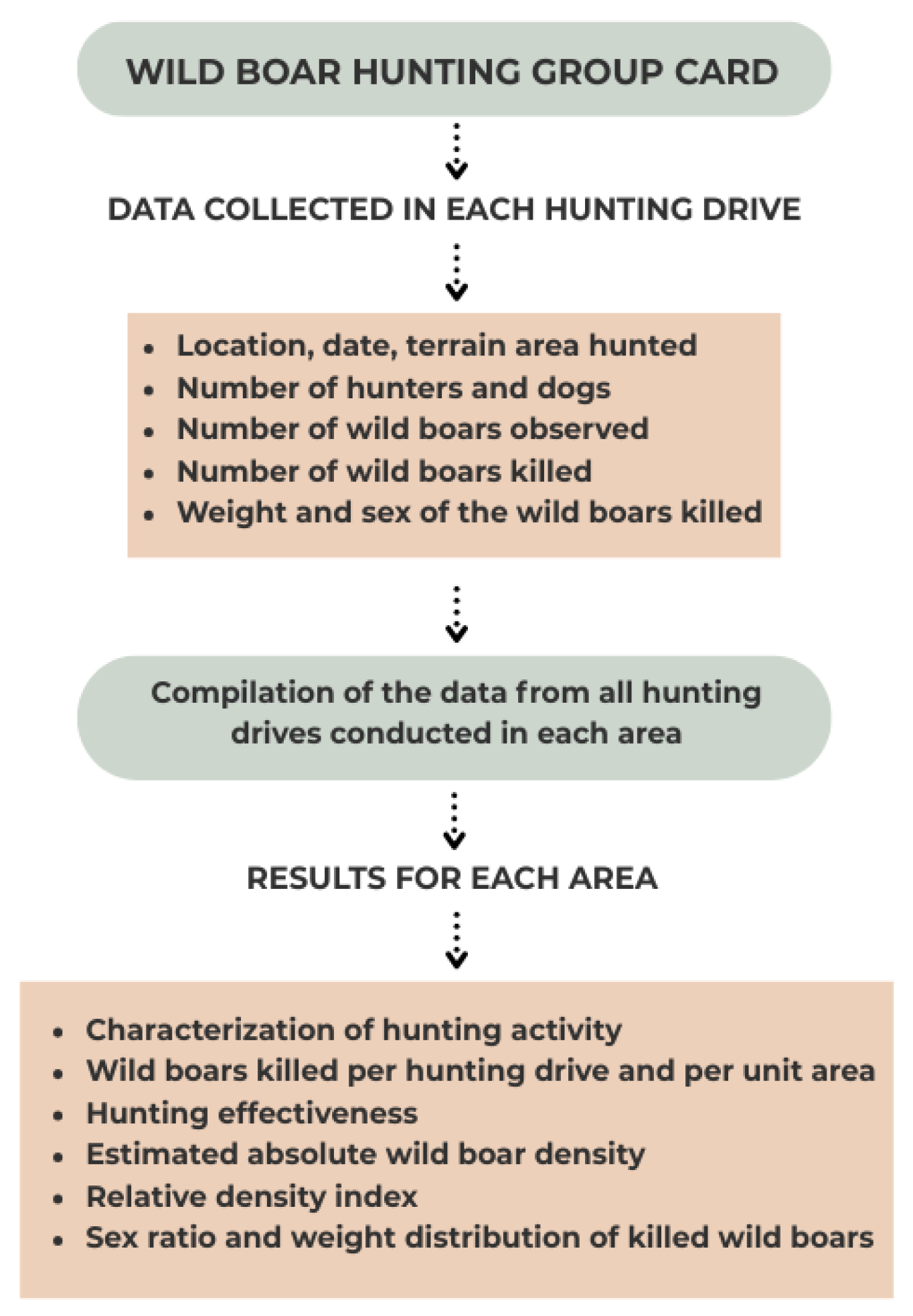
Figure 2.
Left: map of Spain showing the Autonomous Community of Catalonia in red (Wikimedia Commons). Right: location of the 23 monitoring areas or observatories included in the Wild Boar Monitoring Programme, adapted from the programme's 2023–2024 report [3].
Figure 2.
Left: map of Spain showing the Autonomous Community of Catalonia in red (Wikimedia Commons). Right: location of the 23 monitoring areas or observatories included in the Wild Boar Monitoring Programme, adapted from the programme's 2023–2024 report [3].
Disclaimer/Publisher’s Note: The statements, opinions and data contained in all publications are solely those of the individual author(s) and contributor(s) and not of MDPI and/or the editor(s). MDPI and/or the editor(s) disclaim responsibility for any injury to people or property resulting from any ideas, methods, instructions or products referred to in the content. |
© 2026 by the authors. Licensee MDPI, Basel, Switzerland. This article is an open access article distributed under the terms and conditions of the Creative Commons Attribution (CC BY) license (http://creativecommons.org/licenses/by/4.0/).
Copyright: This open access article is published under a Creative Commons CC BY 4.0 license, which permit the free download, distribution, and reuse, provided that the author and preprint are cited in any reuse.