

Submitted:
27 August 2026
Posted:
27 August 2026
You are already at the latest version
Abstract
Background/Objectives: Social media is an important source of nutrition and wellbeing information for young women, but can amplify misinformation, appearance ideals, and difficult-to-apply health advice. The Daily Health Coach (DHC) is a 12-week Instagram-based programme, originally co-designed and tested in New Zealand, delivering evidence-based, weight-neutral content on nutrition, movement, body image, and wellbeing. This study examined the acceptability of DHC New Zealand content for young Australian women and identified refinements to improve relevance, engagement, and safety. Methods: Using the CODES framework, we conducted three adaptation phases: user acceptance testing, co-design workshops, and early beta testing. An online survey was completed by 409 young women aged 18–24 years, with 338 completing all 12 weeks of review. Participants rated 84 Instagram-style posts for understanding, usefulness, and age appropriateness and provided open-ended feedback. Twelve young women participated in co-design workshops, and seven adapted artefacts were beta-tested with eight target users using cognitive walkthrough and think-aloud methods. Results: Combined understanding and usefulness scores ranged from 7.64 to 8.10/10, with all posts meeting the prespecified acceptability threshold of ≥7.5. Understanding scores exceeded usefulness scores, indicating content was clear but not always personally relevant or actionable. Feedback identified six refinement areas: content features, engagement strategies, content clarity, educational accuracy, relevance, and miscellaneous concerns. Co-design and beta testing generated four adaptation priorities: tone, design, engagement, and understanding. Conclusions: The DHC was acceptable for young Australian women, but required targeted refinement to optimise relevance, engagement, and safety. These guidelines will inform final content adaptation and future effectiveness evaluation.
Keywords:
young women
; social media
; digital health
; nutrition
; co-design
; user acceptance testing
; usability testing
; body image
; health promotion
; cultural adaptation
1. Introduction
Young adulthood is a transitional period in which education, work, living arrangements, relationships, finances, and food environments can change rapidly, shaping health behaviours and wellbeing trajectories across the life course [1]. For young women, these transitions occur within a digital environment where social media platforms are now routine sources of nutrition, fitness, body image, and wellbeing information. This creates both risk and opportunity: social media can rapidly disseminate misinformation, unrealistic ideals, and commercialised wellness messages, but it can also be used to deliver accessible, evidence-based health promotion in formats that young people already use [2,3,4].
Young women are a priority audience for digital health promotion because appearance-focused and influencer-led content has been associated with body image concerns, self-objectification, and disordered eating risk [2,5]. In an international web-based survey, women aged 16-25 years reported high levels of body image distress [4], and Australian youth survey data suggest that body image concerns remain prominent among young women [6]. Prior Daily Health Coach (DHC) work in New Zealand also found that time spent on social media was positively associated with body image disturbance among young women [3]. These findings underscore the need for health promotion content that is not only accurate, but also framed in ways that avoid reinforcing shame, comparison, or diet-culture messaging.
Digital platforms can support health promotion because they allow repeated exposure to concise, visual, and interactive messages at scale [7,8,9,10]. Social media interventions have shown promise for influencing physical activity, diet-related behaviours, and mental wellbeing, particularly when content is designed around audience needs and platform conventions [8,9]. However, translating evidence into social media content is not a simple formatting task. For young audiences, engagement depends on whether a message feels relevant, visually clear, credible, actionable, and emotionally safe. These considerations are especially important for nutrition content, where messages can easily become prescriptive, moralising, or inadvertently triggering.
The DHC is a co-designed Instagram-based health promotion programme for young women. It delivers daily posts, reels, stories, and direct messages through a weight- and diet-neutral lens, with content addressing nutrition, physical activity, mental wellbeing, social wellbeing, body image, and digital health literacy. The New Zealand DHC programme was developed with young women and demonstrated feasibility, high acceptability, strong satisfaction, and preliminary improvements in body image disturbance and digital health literacy [13,14]. Building on this evidence, the present study adapted the DHC for young Australian women.
Cultural adaptation is necessary when digital health interventions are translated across settings because language, health systems, food availability, social norms, platform use, and cultural references can alter how content is interpreted and used [15]. Participatory and co-design approaches are widely recommended to ensure that interventions are relevant, acceptable, and contextually safe for target users [16,17]. This paper reports the first three phases of a CODES-guided adaptation process: user acceptance testing (UAT) of DHC New Zealand posts, co-design workshops to interpret feedback and refine content priorities, and early beta testing/adaptation to examine how message framing, tone, and design influence understanding and engagement with nutrition content.
Aims
This study aimed to describe the first three phases of DHC adaptation for young women in Australia and to identify practical guidance for more effective digital nutrition and health messaging. The research questions were:
- How acceptable are the current DHC New Zealand posts to young Australian women?
- What adaptations are required to ensure that DHC content is relevant, engaging, understandable, and culturally appropriate for young Australian women?
- How do message framing, tone, and design influence early perceptions of adapted DHC content, and what practical guidelines can inform final content development?
2. Materials and Methods
2.1. Design
This study used an iterative, mixed-methods, multi-phase design following the CODES framework (Co-designing for Optimal Digital Engagement and Scalability). CODES is a stepwise adaptation approach that combines quantitative user acceptance testing, qualitative sense-making, co-design, beta testing, and later real-world evaluation (currently under review). The current paper reports Phases 1-3: (1) UAT via online survey; (2) online co-design workshops with target users; and (3) early beta testing and adaptation using cognitive walkthrough and think-aloud methods (Figure 1).
2.2. Ethics
Ethics approval was granted by The University of Sydney Human Research Ethics Committee on 5 August 2025 for a three-year period (Reference number: 2025/HE00139). Participants provided informed consent before taking part in the online survey, workshops, or interviews. Participants reporting a current active diagnosis of anorexia nervosa or bulimia were excluded to reduce potential risk from exposure to nutrition and body-image-related content.
2.3. Phase 1: User Acceptance Testing of DHC New Zealand Posts
The purpose of Phase 1 was to assess the acceptability, clarity, usefulness, age appropriateness, and cultural relevance of DHC New Zealand content for young women in Australia. The source content comprised DHC posts from the 12-week New Zealand programme. For survey administration, one post from each day of each intervention week was selected, resulting in 84 Instagram-style static posts covering seven recurring weekly themes: Myth Busting, Simple Swaps, Things You Should Know, The Other Important Stuff, Real Talk, Healthy Navigation, and Recipe Sharing.
Young women aged 18-24 years residing in Australia and with sufficient English proficiency to complete an online survey were recruited via targeted Instagram advertisements and digital flyers. The survey was hosted in REDCap and was available from 6 to 8 August 2025. Participants were excluded if they identified as male, were outside the target age range, or reported a current active diagnosis of anorexia nervosa or bulimia. Female, non-binary, and genderqueer participants were eligible.
The UAT survey was organised into 12 sections corresponding to the 12-week programme. For each post, participants completed four items: two five-point Likert-scale questions assessing understanding and usefulness, one tick-all-that-apply item assessing age appropriateness, and one open-ended question inviting feedback or suggestions for improvement. Demographic data included age, gender, education level, Aboriginal and Torres Strait Islander status, and postcode, which was used to derive socioeconomic status using SEIFA. Completion time was estimated at approximately 30 minutes after preliminary REDCap testing. The adapted survey drew on principles of usability assessment, including the System Usability Scale, while being modified for social media content review [18,19].
2.4. Phase 2: Co-Design Workshops with Target Users
Phase 2 used UAT findings as a sense-making input for co-design workshops with young Australian women. Workshop materials, moderation guides, and activities were adapted from the original DHC co-design scaffold and revised using early survey findings. Participants were recruited at the end of the UAT survey and through targeted Instagram recruitment. Interested participants were provided with participant information and consent forms and completed a short Zoom screening interview to confirm eligibility, identify access barriers, and reduce the likelihood of automated or bot participation.
Four online workshops were conducted over four weeks, with each workshop offered twice at times convenient for participants. Workshops were delivered via Zoom to support participation across Australia. Each session lasted up to 90 minutes and was capped at fewer than eight participants to support equitable contribution. Facilitators used structured prompts and group activities but limited their intervention during discussion to allow participants to guide interpretation and prioritisation of content refinements, referred to as study-specific touchpoints. Workshop objectives are summarised in Table 1.
2.5. Phase 3: Early Beta Testing and Adaptation Process
Phase 3 translated Phase 2 touchpoints into a small sample of adapted DHC artefacts and examined initial user perceptions of those artefacts. Seven adapted posts were developed for testing: three static posts and four reels. Adaptations focused on message framing, tone, caption structure, visual layout, cultural relevance, and the degree to which nutrition content was actionable without becoming prescriptive or appearance focused.
Participants who had engaged in co-design workshops were invited to beta testing, and additional participants were recruited through unpaid posts on the study Instagram page and a study website pop-up. One-on-one interviews were conducted via Zoom using a study-specific protocol informed by cognitive walkthrough and think-aloud methods. Participants completed a series of content review tasks and were asked to verbalise their thoughts as they viewed adapted posts. Interviews lasted up to 90 minutes, with an option for follow-up if needed. This phase was formative and was designed to refine content rather than evaluate intervention effectiveness.
2.6. Data Cleaning and Analysis
For Phase 1, survey data were independently cleaned before analysis. Incomplete entries, duplicate submissions, invalid or bounced email addresses, suspected bot-generated responses, and implausibly fast completions (<15 minutes for 100% completion) were removed. Quantitative survey data were analysed using descriptive statistics, including means, standard deviations, and frequencies. A combined post score was calculated by summing mean understanding and usefulness ratings, producing a score out of 10. Scores >=7.5/10 were considered acceptable and scores >=8.0/10 were considered high performing. Independent t-tests compared ratings by Aboriginal and Torres Strait Islander status, and one-way ANOVA examined differences across education level and weekly content themes.
Open-ended UAT responses were analysed thematically using an inductive approach informed by Braun and Clarke [20]. Responses were coded to identify recurring patterns in perceptions of clarity, usefulness, engagement, relevance, and suggested refinements. For Phases 2 and 3, transcripts were cleaned against audio recordings, deidentified, and analysed using an adapted thematic approach informed by Braun and Clarke and focus group analysis guidance [20–22]. Codes were first organised inductively, then reviewed deductively in relation to the research questions. Themes were consolidated into adaptation touchpoints and practical recommendations for final DHC Australia content development.
3. Results
3.1. Participants and Study Flow
Of 613 survey entries, 204 were removed because of incomplete responses, invalid or bounced email addresses, duplicate entries, suspected robotic responses, or implausible completion times. The final Phase 1 analytical sample comprised 409 participants, of whom 338 (83%) completed all 12 weeks of post review. Demographic completeness ranged from 92% to 100%. Participants were predominantly female (n=405, 99.1%), with a mean age of 21.28 years (SD 1.74). Socioeconomic status was skewed toward high SEIFA deciles, with 80% of valid postcodes falling in deciles 8-10. Over half of participants self-identified as Aboriginal and/or Torres Strait Islander (58%); this figure is interpreted cautiously in the Discussion because it is substantially higher than population estimates and may indicate data quality or recruitment artefacts rather than the underlying population distribution Participant flow across phases is shown in Figure 2 and demographic characteristics are summarised in Table 2.
For Phase 2, 27 participants initially expressed interest in co-design. Twenty-one completed a short screening interview, and nine were excluded because they did not meet inclusion criteria, did not respond after screening, or were believed to be automated/bot responses. Twelve young women participated in the co-design workshops (Workshop 1: n=12; Workshop 2: n=12; Workshop 3: n=10; Workshop 4: n=8). For Phase 3, eight young women participated in or were scheduled for one-on-one beta-testing interviews; six were recruited from co-design workshops and two via social media. Four young women completed all three phases.
3.2. Phase 1: Quantitative User Acceptance Testing
Across 84 posts, mean understanding scores ranged from 3.84 to 4.12 out of 5, while usefulness scores ranged from 3.77 to 4.05 out of 5. Combined post scores across the DHC programme ranged from 7.64 to 8.10 out of 10, with a median combined score of 7.9 (IQR 7.8-8.0). All 84 posts (100%) met the prespecified acceptability threshold of >=7.5/10, and 8 posts (9.5%) met the high-performance threshold of >=8.0/10. Posts were consistently rated higher for understanding than usefulness: 40/84 posts (47.6%) scored >=4/5 for understanding, compared with 4/84 posts (4.8%) for usefulness. This pattern suggests that participants could generally understand the content, but that usefulness depended more strongly on relevance, actionability, and life-stage fit.
At the theme level, scores were tightly clustered (Table 3). One-way ANOVA of participant-level combined scores showed no significant differences across themes (F (6, 77) = 0.67, p = 0.67, η² = 0.05). However, a significant difference was observed across education levels (F (5, 66) = 54.20, p < 0.001, η² = 0.80), suggesting that educational background may have influenced ratings. Across all posts, approximately 34% of age-appropriateness selections identified 18-21 years as the appropriate audience, 36% selected 22-25 years, 22% selected 26-30 years, and 9% selected 31-35 years.
3.3. Phase 1: Qualitative Feedback from User Acceptance Testing
Open-ended feedback provided a more specific direction for adaptation. From 39 respondents, 422 open-ended responses were coded. Six categories were identified: content features, engagement strategies, miscellaneous concerns, content clarity, educational accuracy, and relevance. Content features were the most common category (n=129, 30.5%), followed by engagement strategies (n=116, 27.5%), miscellaneous concerns (n=77, 18.3%), content clarity (n=44, 10.4%), educational accuracy (n=34, 8.1%), and relevance (n=22, 5.2%). The quote used in the title—“too wordy, too long, and too cluttered”—captures the dominant usability challenge: the DHC content was acceptable, but needed to be more concise, visual, and tailored to the Australian audience.

Table 4.
Thematic summary of open-ended user acceptance testing feedback.
| Theme | What participants noticed | Representative feedback | Implication for adaptation |
|---|---|---|---|
| Content features | Participants wanted more visual, multimedia, and practical features. | “Some photos/illustration of steps would be helpful”; “you could add a short reel to make it easier”. | Increase use of reels, recipe visuals, animation, and clear step-by-step imagery. |
| Engagement strategies | Participants wanted stronger hooks, shorter titles, clearer calls to action, and more personality. | “Try using shorter, punchier titles to grab attention”; “use emojis to make the post more visually engaging”. | Use sharper openings, action prompts, and platform-native engagement cues without becoming gimmicky. |
| Content clarity | Posts and captions were sometimes too dense, hard to read, or visually crowded. | “Too much information on the posts and difficult to read”; “if posts are too long or too wordy people are likely to scroll past”. | Reduce on-image text, improve hierarchy, use white space, and move detailed context to optional captions or links. |
| Educational accuracy | Participants wanted the rationale behind claims and clearer explanations for potentially contested topics. | “What is the research behind the fasting fad?”; “link to studies and evidence”. | Include credible evidence cues, links, and plain-language explanation of why the message matters. |
| Relevance | Some content felt too young, too generic, or insufficiently localised for Australia. | “This is targeted at under 15”; “consider adding... g’day... for young Australian women”. | Localise language, examples, food contexts, and life-stage scenarios; avoid one-size-fits-all messaging. |
| Miscellaneous concerns | Some participants raised safety concerns about calorie counting, allergies, and the visibility of following a health account. | “May introduce the idea of calorie counting”; “people may be hesitant to follow a page which may expose their eating habits”. | Strengthen safety review, avoid triggering practices, include allergy substitutions, and consider privacy and stigma implications. |
3.4. Phase 2: Co-Design Findings
Co-design workshops enabled participants to interpret UAT findings, expand on why posts were useful or not useful, and prioritise adaptations. Analysis identified four overarching themes: tone, design, engagement, and understanding. Design was the most frequently coded theme (n=365 coded segments, 51.0%), followed by engagement (n=225, 31.4%), understanding (n=86, 12.0%), and tone (n=40, 5.6%). Although tone was the least frequently coded theme, it was conceptually important because participants repeatedly emphasised that the emotional quality of the message shaped whether they trusted, ignored, or resisted the content.
Participants described effective tone as personable, supportive, and non-judgemental. They wanted content that sounded like it came from a credible but relatable account, rather than a school lesson, influencer advertisement, or clinical warning. One participant noted, “If you actually want to educate or engage with younger people, you need to use personality.” Participants also emphasised sensitivity around body image, weight, and food choice. Messages were viewed more positively when they promoted agency and wellbeing without implying that health is only for thin bodies or that food choices are moral failures.
Design findings extended the UAT feedback about clutter. Participants wanted clear visual hierarchy, consistent graphics, fewer competing colours, captions that did not simply repeat the post, and format decisions that matched the content purpose. They viewed reels as particularly useful where demonstration, voice, or movement could simplify information. As one participant explained, “I just think it’s easier to listen to people than read a long post.” Engagement findings focused on actionability and interaction: participants were more likely to stay with content that offered concrete examples, low-cost swaps, local food contexts, resource links, and prompts that invited reflection rather than compliance. Understanding depended on plain language, explanation of unfamiliar terms, and the ability to tell quickly why the post mattered.
3.5. Phase 3: Early Beta Testing and Adaptation Guidelines
Phase 3 translated UAT and co-design findings into adapted static posts and reels. The beta-testing process demonstrated that message framing, tone, and design functioned together rather than independently. A concise caption could still feel unhelpful if the visual hierarchy was confusing; a visually appealing post could still be rejected if the tone felt judgemental; and evidence-based nutrition information could still be misunderstood if the key action was not made explicit. The most successfully adapted artefacts therefore combined a simple primary message, a supportive frame, a clear visual pathway, and a practical next step.
The adaptation process generated six practical guidelines for DHC Australia content development (Table 5). These guidelines are intended to support the final co-creation and refinement phase before formal trial evaluation. They prioritise clarity, safety, relevance, and platform-native engagement while preserving the evidence-based and weight-neutral intent of the original DHC programme.
4. Discussion
4.1. Principal Findings
This study combined broad UAT, co-design workshops, and early beta testing to adapt the DHC for young Australian women. The findings show that DHC New Zealand content was broadly acceptable in Australia: all 84 posts met the prespecified acceptability threshold, and participants generally rated posts as understandable and age appropriate. However, the consistent gap between understanding and usefulness is important. It indicates that content can be clear at the level of comprehension while still needing refinement to become personally relevant, engaging, and actionable. For social media health promotion, acceptability is therefore necessary but insufficient; messages must also be framed and designed in ways that fit the target audience’s contexts, platform habits, and emotional safety needs.
Qualitative data explained this gap. Participants did not reject the health messages themselves; instead, they asked for better delivery. They wanted posts that were shorter, visually cleaner, more practical, more local, more personable, and more sensitive to the risks of body-image and diet-culture messaging. This aligns with prior DHC research showing the value of co-design with young women and the importance of digital health literacy, body image safety, and experience-informed content development [3,13,14]. It also aligns with broader evidence that digital health engagement depends on more than exposure: users must perceive content as relevant, trustworthy, usable, and worth interacting with [8–10,23].
4.2. Implications for Social Media-Based Nutrition Messaging
The results highlight three implications for nutrition communication on social media. First, clarity should be treated as a design outcome, not simply a writing outcome. Participants responded negatively to clutter, small or low-contrast text, repeated caption content, and too much information in a single post. This suggests that evidence-based nutrition content requires visual hierarchy and format discipline if it is to be processed quickly in a scroll-based environment.
Second, usefulness is strongly shaped by life-stage relevance. Young women aged 18-24 years are not a homogeneous audience. Some are studying, working, living with family, living independently, managing budgets, navigating relationships, or experiencing different levels of food autonomy. This diversity helps explain why theme-level scores were similar while individual usefulness ratings varied. Future DHC content should therefore use flexible scenarios and examples rather than assuming a single lifestyle or food environment.
Third, tone is central to safety. Participants wanted the account to have personality, but not to sound performative, patronising, authoritarian, or like it was trying too hard to be relatable. They also wanted nutrition content to avoid triggering pathways associated with calorie counting, thinness, food rules, and body comparison. For young women, evidence-based nutrition messaging must be paired with careful framing so that health promotion does not inadvertently reproduce the harms it seeks to counter.
4.3. Implications for Adaptation and Co-Design Methodology
This study demonstrates the value of sequencing methods. The UAT survey provided breadth, allowing many participants to assess all 12 weeks of posts. Co-design workshops then provided depth and sense-making, helping explain why some posts felt useful, unclear, or culturally misaligned. Beta testing translated those insights into artefact-level decisions and generated practical content rules. This staged process is consistent with recommendations for participatory design and cultural adaptation of digital health interventions [15–17,24]. It also shows why adaptation should be documented transparently: without a clear record of how feedback becomes design change, co-design risks becoming consultative rather than transformative.
4.4. Strengths and Limitations
A key strength of this study was the multi-phase design, which integrated quantitative ratings, qualitative open-ended feedback, workshop discussion, and early user testing. The sample size for UAT was large for a formative digital health adaptation study, and the online approach enabled participation from young women across Australia. The use of both broad survey data and smaller co-design/beta-testing phases strengthened interpretation by allowing the research team to validate and contextualise quantitative patterns with target users.
Several limitations should be acknowledged. First, the UAT phase was cross-sectional and based on static review of content, so it cannot determine how engagement, behaviour, or health outcomes might change over time. Second, eligibility was operationalised by year of birth, which may have allowed some participants near the margins of the intended 18-24-year age range to enter the survey. Third, the sample was socioeconomically skewed, with 80% of valid postcodes in SEIFA deciles 8-10. This is important because people in lower socioeconomic and remote contexts can face greater barriers to digital health access, including device access, data costs, and digital literacy [25,26].
Finally, digital recruitment and online incentives created challenges in identifying automated or AI-generated responses. This limitation is increasingly relevant to digital health research, where AI-generated survey entries can compromise data integrity and raise ethical, privacy, and governance concerns [28]. To mitigate this, we used several data-quality safeguards, including pre-screening procedures and systematic data cleaning to remove duplicate entries, invalid email addresses, implausibly fast completions, and suspected bot-generated responses before analysis. Future studies should consider stronger safeguards such as staged verification, attention checks designed for human comprehension, screening interviews for qualitative phases, incentive controls, and transparent reporting of data cleaning decisions.
4.5. Future Research
The next phase of DHC Australia adaptation should apply the practical guidelines generated in this study to co-create a complete, updated content library with young Australian women. Subsequent work should evaluate whether adapted content improves engagement, digital health literacy, body image outcomes, and diet-related behaviours in a formal trial. Future research should also examine whether tailored or adaptive content pathways improve perceived usefulness across different life circumstances, including study/work status, living arrangement, cultural background, food autonomy, and socioeconomic context. Finally, there is a need for clearer standardised reporting of UAT and co-design methods for digital health interventions to improve comparability across studies.
5. Conclusions
The DHC was acceptable and understandable to young Australian women, but adaptation was required to improve usefulness, engagement, cultural relevance, and safety. UAT showed that all 84 posts met the acceptability threshold, while qualitative feedback clarified that young women wanted content that was less wordy, less cluttered, more visual, more practical, locally relevant, and delivered in a supportive, non-judgemental tone. Co-design and early beta testing translated these insights into practical guidelines for digital nutrition and health messaging. The findings support the use of staged, participatory adaptation when translating social media-based health promotion interventions across cultural contexts and provide a foundation for final DHC Australia co-creation and trial evaluation.
Author Contributions
Conceptualization, R.R. and J.A.M.; methodology, R.R., J.A.M., I.H., D.K., M.I. and J.A.; formal analysis, I.H., D.K., M.I. and J.A.; investigation, I.H., D.K., M.I., J.A., J.A.M. and R.R.; writing—original draft preparation, I.H., D.K., M.I., J.A.M. and R.R.; writing—review and editing, all authors; supervision, J.A.M. and R.R.; project administration, J.A.M. and R.R.; funding acquisition, R.R. All authors should review and approve the final manuscript before submission.
Funding
This research was funded by the University of Sydney Charles Perkins Centre Catchlove-Sylvan MCR Fellowship.
Institutional Review Board Statement
The study was conducted in accordance with the Declaration of Helsinki and approved by The University of Sydney Human Research Ethics Committee (Reference number: 2025/HE00139; approval date: 5 August 2025).
Informed Consent Statement
Written informed consent was obtained from all participants involved in the study.
Data Availability Statement
The datasets generated and analysed during the current study are not publicly available because they contain participant responses from formative qualitative and survey research, but de-identified data may be made available from the corresponding author upon reasonable request and subject to ethics approval.
Acknowledgments
The authors thank the young women who contributed their time, perspectives, and feedback during user acceptance testing, co-design workshops, and beta testing. The authors also acknowledge the original Daily Health Coach New Zealand co-design contributors and research team whose work informed this adaptation.
Conflicts of Interest
The authors declare no conflict of interest.
References
- Rod, N.H.; Davies, M.; de Vries, T.; Kreshpaj, B.; Drews, H.; Nguyen, T.-L.; et al. Young adulthood: a transitional period with lifelong implications for health and wellbeing. BMC Glob. Public Health 2025, 3, 25. [Google Scholar] [CrossRef] [PubMed]
- Engel, E.; Gell, S.; Heiss, R.; Karsay, K. Social media influencers and adolescents’ health: a scoping review of the research field. Soc. Sci. Med. 2024, 340, 116387. [Google Scholar] [CrossRef] [PubMed]
- Malloy, J.A.; Kazenbroot-Phillips, H.; Roy, R. Associations between body image, eating behaviors, and diet quality among young women in New Zealand: the role of social media. Nutrients 2024, 16, 3517. [Google Scholar] [CrossRef] [PubMed]
- Milton, A.; Hambleton, A.; Roberts, A.; Davenport, T.; Flego, A.; Burns, J.; et al. Body image distress and its associations from an international sample of men and women across the adult life span: web-based survey study. JMIR Form. Res. 2021, 5, e25329. [Google Scholar] [CrossRef] [PubMed]
- Fardouly, J.; Willburger, B.K.; Vartanian, L.R. Instagram use and young women’s body image concerns and self-objectification: testing mediational pathways. New Media Soc. 2018, 20, 1380–1395. [Google Scholar] [CrossRef]
- Butterfly Foundation. BodyKind Youth Survey: Your body image, your voice 2024 report; Butterfly Foundation: Sydney, 2024. [Google Scholar]
- Garcia del Castillo, J.A.; Garcia del Castillo-Lopez, A.; Dias, P.C.; Garcia-Castillo, F. Social networks as tools for the prevention and promotion of health among youth. Psicol. Reflex Crit. 2020, 33, 13. [Google Scholar] [CrossRef] [PubMed]
- Ghahramani, A.; de Courten, M.; Prokofieva, M. The potential of social media in health promotion beyond creating awareness: an integrative review. BMC Public Health 2022, 22, 2402. [Google Scholar] [CrossRef] [PubMed]
- Goodyear, V.A.; Wood, G.; Skinner, B.; Thompson, J.L. The effect of social media interventions on physical activity and dietary behaviours in young people and adults: a systematic review. Int. J. Behav. Nutr. Phys. Act. 2021, 18, 72. [Google Scholar] [CrossRef] [PubMed]
- Mair, J.L.; Salamanca-Sanabria, A.; Augsburger, M.; Frese, B.F.; Abend, S.; Jakob, R.; et al. Effective behavior change techniques in digital health interventions for the prevention or management of noncommunicable diseases: an umbrella review. Ann. Behav. Med. 2023, 57, 817–835. [Google Scholar] [CrossRef] [PubMed]
- Wansink, B. Position of the American Dietetic Association: food and nutrition misinformation. J. Am. Diet. Assoc. 2006, 106, 601–607. [Google Scholar] [CrossRef] [PubMed]
- Koen, N. Social media and nutrition (mis)information: navigating the maze. J. Nutr. Educ. Behav. 2023, 55, i–ii. [Google Scholar]
- Malloy, J.A.; Kemper, J.A.; Partridge, S.R.; Roy, R. Empowering young women: a qualitative co-design study of a social media health promotion programme. Nutrients 2024, 16, 780. [Google Scholar] [CrossRef] [PubMed]
- Malloy, J.A.; Partridge, S.R.; Kemper, J.A.; Braakhuis, A.; Roy, R. Feasibility and preliminary efficacy of co-designed and co-created healthy lifestyle social media intervention programme the Daily Health Coach for young women: a pilot randomised controlled trial. Nutrients 2024, 16, 4364. [Google Scholar] [CrossRef] [PubMed]
- Naderbagi, A.; Loblay, V.; Zahed, I.U.M.; Cheng, V.W.S.; Kalantari, N.; Neale, J.; et al. Cultural and contextual adaptation of digital health interventions: narrative review. J. Med. Internet Res. 2024, 26, e55130. [Google Scholar] [CrossRef] [PubMed]
- Hagen, P.; Collin, P.; Metcalf, A.; Nicholas, M.; Rahilly, K.; Swainston, N. Participatory design of evidence-based online youth mental health promotion, intervention and treatment. In Melbourne: Young and Well Cooperative Research Centre; 2012. [Google Scholar]
- de Boer, J.; Longworth, G.R.; Delfmann, L.R.; van der Kleij, R.M.J.J.; Smit, E.S. Exploring co-adaptation for public health interventions: insights from a rapid review and interviews. BMC Public Health 2025, 25, 614. [Google Scholar] [CrossRef] [PubMed]
- Bangor, A.; Kortum, P.T.; Miller, J.T. An empirical evaluation of the System Usability Scale. Int. J. Hum. Comput Interact. 2008, 24, 574–594. [Google Scholar] [CrossRef]
- Brooke, J. SUS: a quick and dirty usability scale. In Usability evaluation in industry; Jordan, P.W., Thomas, B., Weerdmeester, B.A., McClelland, I.L., Eds.; Taylor & Francis: London, 1996; pp. 189–194. [Google Scholar]
- Braun, V.; Clarke, V. Using thematic analysis in psychology. Qual. Res. Psychol. 2006, 3, 77–101. [Google Scholar] [CrossRef]
- Terry, G.; Hayfield, N.; Clarke, V.; Braun, V. Thematic analysis. In The SAGE handbook of qualitative research in psychology, 2nd ed.; Willig, C., Stainton Rogers, W., Eds.; SAGE: London, 2017; pp. 17–37. [Google Scholar]
- Krueger, R.A.; Casey, M.A. Designing and conducting focus group interviews; University of Minnesota: St Paul, 2002. [Google Scholar]
- O’Brien, H.L.; Chen, A.T.; Kaneshiro, J.; et al. User engagement in an online digital health intervention to promote problem solving. Interact. Comput. 2024, 36, 355–369. [Google Scholar] [CrossRef] [PubMed]
- Ross, C.E.; Wu, C.-L. The links between education and health. Am. Sociol. Rev. 1995, 60, 719–745. [Google Scholar] [CrossRef]
- Foley, K.; Freeman, T.; Ward, P.; Lawler, A.; Osborne, R.; Fisher, M. Exploring access to, use of and benefits from population-oriented digital health services in Australia. Health Promot Int. 2021, 36, 1105–1115. [Google Scholar] [CrossRef] [PubMed]
- Afshar Ali, M.; Alam, K.; Taylor, B. Do social exclusion and remoteness explain the digital divide in Australia? Evidence from a panel data estimation approach. Econ. Innov. New Technol. 2020, 29, 643–659. [Google Scholar] [CrossRef]
- Bouhouita-Guermech, S.; Gogognon, P.; Belisle-Pipon, J.C. Specific challenges posed by artificial intelligence in research ethics. Front Artif. Intell. 2023, 6, 1149082. [Google Scholar] [CrossRef] [PubMed]
Figure 1.
CODES framework for cultural adaptation of the Daily Health Coach. This paper reports the first three phases: user acceptance testing, co-design to refine output, and beta testing/adaptation of artefact samples.
Figure 1.
CODES framework for cultural adaptation of the Daily Health Coach. This paper reports the first three phases: user acceptance testing, co-design to refine output, and beta testing/adaptation of artefact samples.
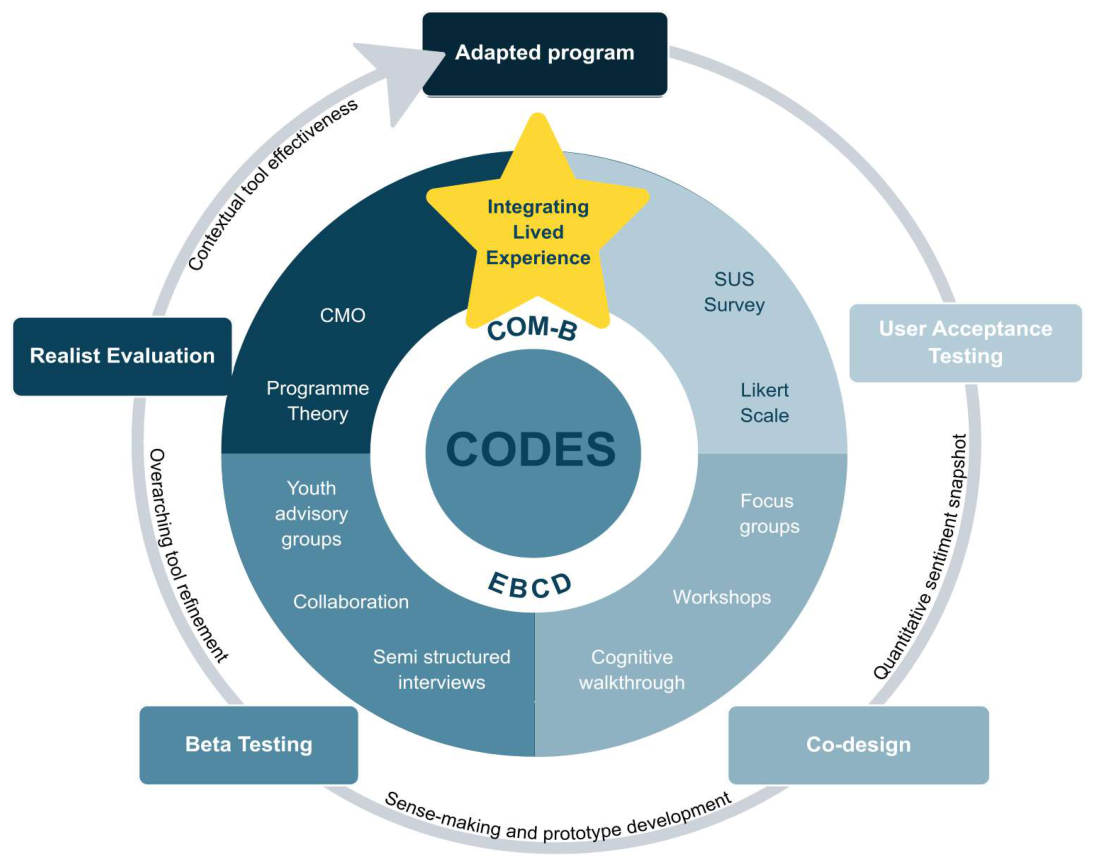
Figure 2.
Participant flow across user acceptance testing, co-design workshops, and early beta/usability testing.
Figure 2.
Participant flow across user acceptance testing, co-design workshops, and early beta/usability testing.
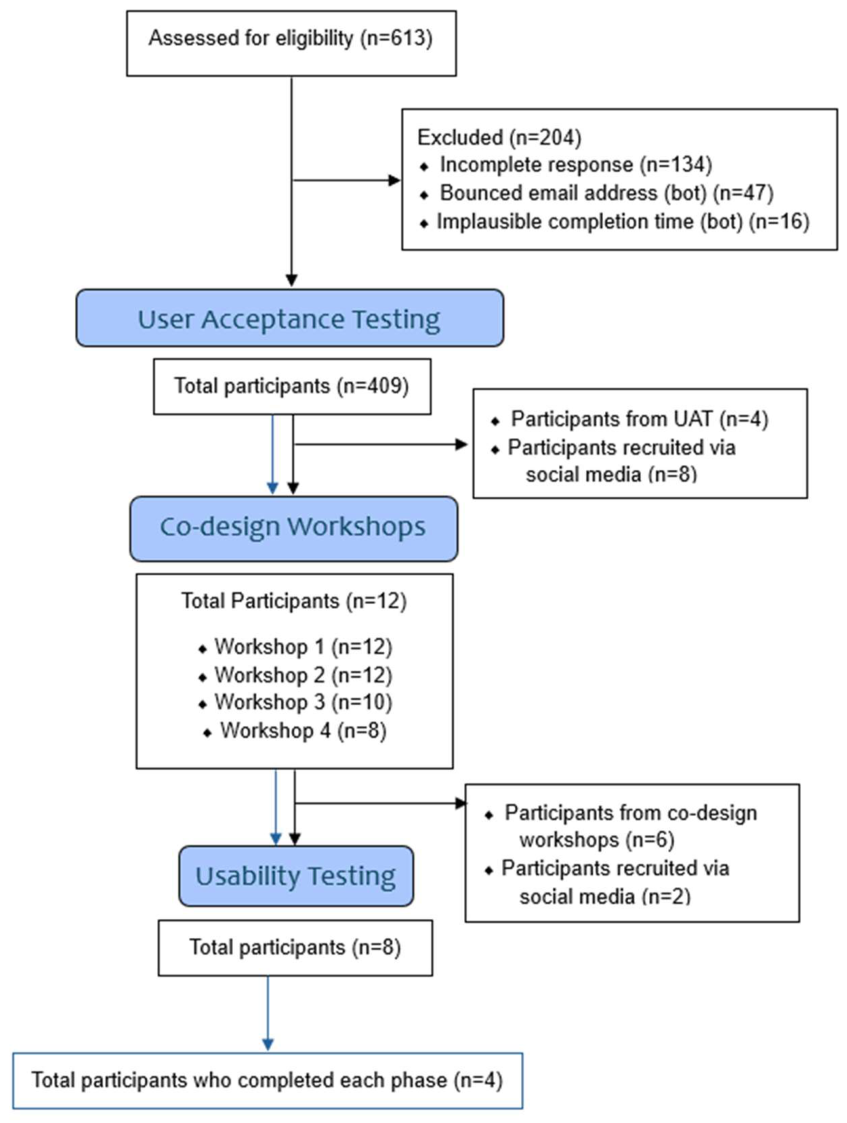
Table 1.
Co-design workshop objectives, activities, and adaptation outputs.
| Workshop | Objective | Core activities | Actioned Adaptation |
|---|---|---|---|
| 1. Health and wellbeing meanings | Understand how young women define health, wellbeing, healthy/unhealthy behaviours, confidence, barriers, and priorities. | Mentimeter prompts and facilitated discussion about health, wellbeing, barriers, and content needs. | Clarified the values and concerns that should underpin tone and framing. |
| 2. Social media behaviours | Understand platform use, preferred content formats, exposure to health content, and engagement behaviours. | Discussion of most-used apps, time spent online, limits, preferred formats, and types of health content participants interact with. | Identified platform conventions and format preferences for DHC Australia. |
| 3. Content reactions | Explore how health and wellbeing content, features, and design make young women feel. | Participants reviewed TikTok and Instagram examples, including reels and static posts, and discussed whether they would stay or swipe. | Identified design, visual, and emotional response cues that shape engagement. |
| 4. DHC content sense-making | Understand how participants related to DHC New Zealand themes, posts, captions, and UAT findings. | Participants reviewed DHC New Zealand content, discussed likes/dislikes, Australian relevance, and agreement with UAT results. | Generated priorities for localisation, content simplification, and adapted artefact development. |
Table 2.
Phase 1 participant demographic summary.
| Variable | Category | % or mean (SD) |
|---|---|---|
| Gender | Female | 99.1% |
| Genderqueer | 0.7% | |
| Non-binary | 0.2% | |
| Age | Mean years (SD) | 21.28 (1.74) |
| Education level | Year 10 | 1.7% |
| Year 12 | 7.3% | |
| Technical/TAFE | 2.9% | |
| Undergraduate | 67.5% | |
| Postgraduate | 18.8% | |
| Not stated/other | 1.7% | |
| Socioeconomic status (SEIFA decile) | 1-3 | 5% |
| 4-7 | 15% | |
| 8-10 | 80% |
Table 3.
Mean ratings of understanding, usefulness, and combined score across Daily Health Coach content themes.
Table 3.
Mean ratings of understanding, usefulness, and combined score across Daily Health Coach content themes.
| Theme | Example content | n posts | Understanding mean (SD) | Usefulness mean (SD) | Combined mean /10 |
|---|---|---|---|---|---|
| Myth Busting (Monday) | Debunking nutrition myths | 12 | 3.99 (1.03) | 3.89 (1.05) | 7.89 (1.04) |
| Simple Swaps (Tuesday) | Healthier food alternatives | 12 | 4.01 (1.02) | 3.87 (1.06) | 7.87 (1.04) |
| Things You Should Know (Wednesday) | Nutrition/health facts | 12 | 4.00 (1.04) | 3.90 (1.04) | 7.90 (1.04) |
| The Other Important Stuff (Thursday) | Mental wellbeing, sleep, stress | 12 | 4.00 (1.05) | 3.89 (1.05) | 7.88 (1.05) |
| Real Talk (Friday) | Body image and social media | 12 | 3.97 (1.03) | 3.88 (1.04) | 7.85 (1.03) |
| Healthy Navigation (Saturday) | Grocery shopping and budgeting tips | 12 | 3.97 (1.04) | 3.87 (1.05) | 7.83 (1.04) |
| Recipe Sharing (Sunday) | Meal ideas and cooking tips | 12 | 3.97 (1.04) | 3.89 (1.05) | 7.86 (1.04) |
| Overall | - | 84 | 3.99 (1.03) | 3.89 (1.05) | 7.88 (0.08) |
Table 5.
Practical adaptation guidelines for effective DHC Australia digital nutrition and health messaging. Example quotes were taken from phase two and three.
Table 5.
Practical adaptation guidelines for effective DHC Australia digital nutrition and health messaging. Example quotes were taken from phase two and three.
| Guideline | Rationale from Phases 1-3 | Practical application for DHC Australia | Examples |
|---|---|---|---|
| 1. Lead with one clear takeaway | Posts were understandable but not always useful; dense posts were described as too long, wordy, or cluttered. | Use one headline message per slide/post; place supporting detail in captions, carousels, or optional links. | “There’s text on the side, in the middle, below, what do I focus on” “I’m used to fast paced content; our attention spans are conditioned for that” |
| 2. Make nutrition advice actionable and contextual | Usefulness depended on whether participants could see how the advice applies to work, study, living at home, budgeting, or time pressure. | Use realistic Australian examples, low-cost options, pantry/freezer substitutions, and flexible prompts rather than idealised routines. | “Not in such a way that it is so professional and looks like you can’t cook it at home” “Different people have different needs” “I like this post because it feels realistic” |
| 3. Use a supportive, non-judgemental, weight-neutral tone | Participants were sensitive to messages that could imply shame, calorie fixation, body comparison, or thinness as the goal. | Avoid moralising food language; frame content around energy, enjoyment, confidence, access, wellbeing, and self-compassion. | “made me feel a bit inadequate” “it almost made me feel guilty for not being like that” |
| 4. Design for fast scanning before deeper learning | Design was the dominant co-design theme; users decide quickly whether to stay or swipe. | Use consistent templates, high-contrast text, fewer colours, clear hierarchy, white space, and platform-native visual cues. | “Aesthetics do matter, they have to be clear and clean” “The colours are really nice, they draw my eyes in” “I like how the background is plain” |
| 5. Match format to content purpose | Participants wanted more reels and visuals, especially where processes or recipes were explained. | Use reels for demonstrations, recipes, and complex explanations; use static posts for simple reminders, myth-busting, and resource signposting. | “More information on the actual post rather than the caption” “its (preference for reel or static post) generally based on the content” |
| 6. Signal credibility without overwhelming users | Participants asked for evidence, resources, and explanations, but also disliked overly long captions. | Include plain-language “why it matters” statements, trusted links, and references in captions or bio, while keeping the main post concise. | “It feels more credible if it comes from a specific source” “Showing credentials would help” “It tries to make science approachable but maybe goes a bit too far” |
Disclaimer/Publisher’s Note: The statements, opinions and data contained in all publications are solely those of the individual author(s) and contributor(s) and not of MDPI and/or the editor(s). MDPI and/or the editor(s) disclaim responsibility for any injury to people or property resulting from any ideas, methods, instructions or products referred to in the content. |
© 2026 by the authors. Licensee MDPI, Basel, Switzerland. This article is an open access article distributed under the terms and conditions of the Creative Commons Attribution (CC BY) license (http://creativecommons.org/licenses/by/4.0/).
Copyright: This open access article is published under a Creative Commons CC BY 4.0 license, which permit the free download, distribution, and reuse, provided that the author and preprint are cited in any reuse.