

Submitted:
24 August 2026
Posted:
26 August 2026
You are already at the latest version
Abstract
As in many areas of science, microbiome research is rarely purely curiosity-driven as funding structures, historical inequities, and global scientific trends often shape which questions are tested and which go unexamined. In African contexts, this can result in misalignment between local health challenges and global directions of microbiome research, contributing to the persistence of helicopter science. Through a structured review of African-relevant literature, we examined the distribution of mycobiome and virome research across host environments and regions, and what it reveals about research priorities.Strong domain-host specialisation was observed: mycobiome studies were concentrated in plants and environmental systems, while virome studies were concentrated in humans, animals, and insect-vectors. The most common combinations were human-associated virome studies and plant-associated mycobiome studies. While bacteriome–mycobiome studies were prevalent, integrated virome studies and investigations linking environmental microbiomes to clinical outcomes were comparatively rarer. While biologically intuitive, this highlights critical gaps for African health needs. Climate change and urbanization are expected to increase the risk of opportunistic thermotolerant fungal pathogens, suggesting an urgent need for One-Health-based mycobiome surveillance that bridges plant, soil, animal, and human interfaces, rather than treating them as separate domains. Similarly, the post-COVID-19 pandemic landscape underscores the value of virome monitoring as an early-warning system across multiple reservoirs.Author affiliation patterns indicate that only half of the studies were African-led, with an uneven distribution across the continent and gaps in data from West African and Southern African countries (except for South Africa). Most literature remains focused on descriptive taxonomic or genomic characterisation rather than functional or translational outcomes. Aligning microbiome research with local priorities means moving beyond simply cataloguing biodiversity. It requires long-term, community-based surveillance, along with continued investment in regional capacity, data sovereignty, and training. Re-orienting microbiome research around locally led One Health agendas could help transform neglected microbiota into evidence that informs public-health priorities.
Keywords:
African microbiome
; mycobiome
; virome
; microbiome research equity
; One Health
Introduction
Microbiome research has transformed understanding of the relationships between microorganisms, hosts, environments and health. However, the field has developed unevenly across geographic regions, host systems and microbial domains. African microbial diversity remains underrepresented in global microbiome research, despite the continent’s extensive ecological, cultural, dietary, agricultural and disease-burden diversity. Poor geographic coverage, local capacity, intra-African collaboration and equitable international partnerships have contributed to the knowledge gap [1]. More recent work has further shown that African gut microbial diversity remains poorly represented in public reference collections, limiting taxonomic resolution and interpretation when African samples are analysed against globally incomplete databases [2].
Mycobiome and virome communities remain comparatively underrepresented in microbiome research. This is particularly clear for the mycobiome, which has repeatedly been described as an understudied component of host-associated microbiomes [3,4]. While viruses are intensively studied in pathogen discovery, outbreak response and zoonotic surveillance, the virome as a component of microbiomes remains less well characterised than the bacteriome [5,6]. Incomplete reference databases, uneven sequencing capacity and under-sampled host-environment systems may further limit detection and classification in African contexts. This relates to the broader risk of helicopter research and unequal global collaborations, where samples contribute to internationally visible science without equivalent investment in local leadership, infrastructure or benefits [7].
Climate change, urbanisation, land-use change, food insecurity, antimicrobial resistance, vector-borne disease and emerging infections all occur at interfaces between humans, animals, plants and environments. These overlapping pressures highlight the need for an integrative framework, in which microbiomes can act as biological connectors across domains [8] and be harnessed for translation [9,10].
African microbiome researchers increasingly emphasise the need to advance the field through stronger local capacity, translational relevance, equitable collaboration and context-specific research agendas [11,12,13]. In this context, this review examines African mycobiome and virome research across human, animal, plant, food and environmental systems. Rather than focusing only on the taxa detected, we ask 1) how studies are distributed across countries, hosts, environments and research priorities; 2) whether mycobiome and virome studies cluster in different domains; 3) how often studies integrate bacterial, fungal and viral perspectives; and 4) what the literature reveals about leadership, technological dependency and local relevance. Collectively, the review aims to clarify whether African mycobiome and virome studies are simply geographically located on the continent, or whether they are also designed around African health, agricultural, ecological and community priorities.
Methods
Study Selection
This narrative review used a structured search informed by scoping review principles to improve transparency and coverage, though it was not conducted as a formal systematic or scoping review. The aim was to identify a sufficiently broad evidence base to examine patterns in research focus, geographic representation, methodological capacity, leadership and local relevance. We searched for publications up to May 2026, identifying studies reporting microbiome, microbiota, metagenome, or metabolome research done in African settings (Supplementary material). Because the search was intentionally broad, records were screened using a combination of manual review in Rayyan [14], and subsequent model-assisted prioritisation in ASReview [15] to identify most relevant evidence based on our research focus.
Data Extraction
The selected subset of full-texts were extracted by a researcher using Rayyan and also uploaded to Elicit [16] for automated data extraction in parallel; thereafter outputs were compared and verified against full texts. Data were extracted to capture study characteristics relevant to African fungal and viral microbiome research, focusing on three themes: population descriptors and lifestyle factors, technological dependency and research leadership, and the relationship between local health or ecological priorities and global microbiome science. Detailed descriptions of the data extraction may be found in the Supplementary material.
Results and Discussion
This review identified 217 studies describing fungal and viral microbiomes in African human, animal, plant, food and environmental contexts. Our search revealed a broad range of host types, environmental contexts, and geographic settings across Africa spanning publication from 2001 to 2026. The Supplementary Table S1 and Table S2 summarise the citations and key characteristics of the included subset.
Geographic Distribution
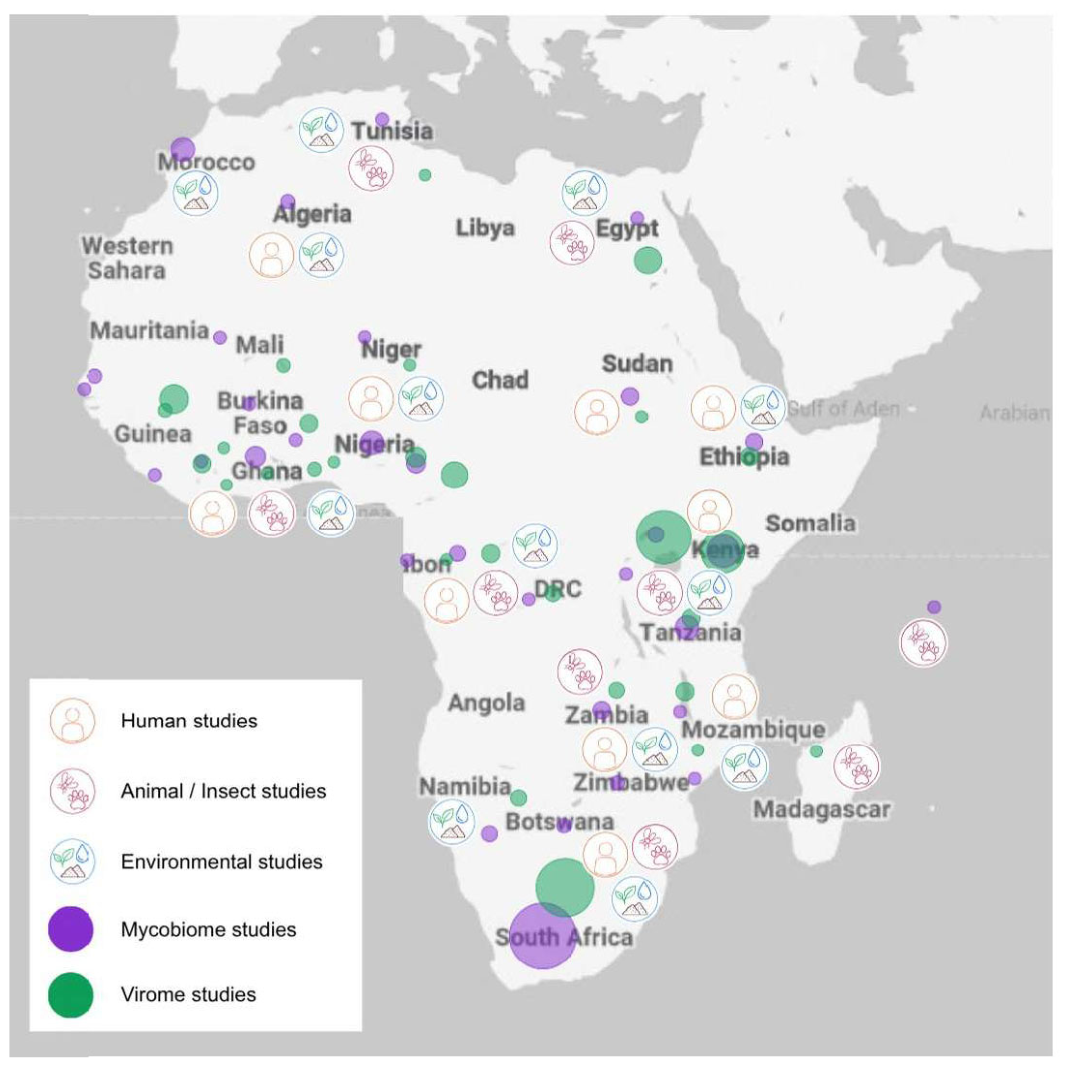
Geographic coverage of sample sets included 36/54 African countries (67%). Research activity was highly uneven, with South Africa contributing the greatest number of both mycobiome and virome studies. Kenya and Uganda were also prominent contributors, although Kenya was represented by both domains whereas Ugandan studies were predominantly virome-focused. Many other countries contributed only one or a few studies, and 18 African countries were not represented in the included literature, highlighting persistent geographic gaps across the continent (Figure 1).
Most studies were conducted within a single country, and many were further restricted to one province, city, village, agricultural site or protected area. A smaller number included multiple regions within a country or samples from more than one African country.
Few studies explicitly assessed whether their samples were geographically representative of the broader country or region. Instead, many presented their findings as first reports or initial characterisations of a particular host, environment or microbial group. These studies provide valuable baseline information, particularly in poorly sampled settings, but should not be interpreted as nationally or regionally representative.
The observed geographic distribution is also unlikely to reflect microbial diversity alone. Countries with stronger research institutions, established sampling networks, sequencing access or long-standing international collaborations were more visible in the literature. Current knowledge of African mycobiomes and viromes therefore reflects patterns of research access and infrastructure, as well as underlying biological diversity.
Host and Environmental Coverage
The host and environmental contexts investigated were diverse with uneven coverage in mycobiome versus virome domains, most focused on a single host or environment. The included studies were dominated by environmental, plant and soil systems overall, while human studies formed the largest single host-associated category.
Virome studies were most often associated with humans [17], animals and insect vectors [18,19], whereas mycobiome studies were more frequently linked to environmental samples such as plants, soils, rhizospheres or food/agricultural systems [20,21]. The most common sample types reflected these patterns: stool samples, respiratory swabs, plasma/serum, blood and vector-based samples were prominent among virome studies, while soil, rhizosphere, root, leaf, fruit, seed, food and aquatic samples were common among mycobiome studies .
Despite this broad coverage, several host systems were poorly represented. Large livestock species, including cattle, goats and sheep, were usually included incidentally or in isolated studies. Few studies focused on fish, birds, camels, dromedaries or companion animals as primary mycobiome or virome hosts. These gaps are important in a One Health context, particularly where animal and aquatic systems contribute to food security, livelihoods, pathogen transmission or environmental exposure.
Microbiome Focus and Domain Distribution
Of the 36 countries represented, 25 (69%) included both mycobiome and virome studies, while 4 (11%) included only virome studies and 7 (19%) included only mycobiome studies (Figure 1).
Regional patterns differed between microbial domains. Virome research was particularly prominent in East Africa and centred on vectors, wildlife reservoirs, zoonotic surveillance and human infectious diseases. Mycobiome research was more strongly represented in North Africa and was largely focused on plant, soil, agricultural and food systems. West and Central Africa showed a more balanced mix of mycobiome and virome studies, while Southern Africa had the broadest research portfolio, encompassing diverse human, animal and environmental applications.
Bacteriome–mycobiome studies were relatively common, but few studies integrated virome and mycobiome data, and very few considered all three domains together. This is understandable because both laboratory and bioinformatic requirements differ between microbial domains. However, this severely limits the study of interkingdom relationships. Fungi, bacteriophages, eukaryotic viruses and bacteria interact within the same ecological systems, and analysing them independently may overlook associations relevant to colonisation, community stability, host health and environmental function.
Among human studies, the gut was the most sampled site and examined virome, mycobiome, or interkingdom interactions in relation to nutrition, infection, vaccine response, environmental exposures, or early-life development [22,23,24,25,26]. Bacteriophage-focused studies involved vaginal, gut and environmental compartments, but were less common than broader virome discovery studies [27,28].
Animal studies were dominated by wildlife and vector-associated viromes, framed around virus discovery, zoonotic risk or surveillance [18,19,29,30]. Livestock and domestic animal mycobiome or virome .were comparatively less common than wildlife and vector studies.
Plant and environmental mycobiome studies formed a substantial part of the fungal literature. These included studies of arbuscular mycorrhizal fungi (AMF), crop-associated fungi, soil fungal communities and fungal communities in forestry or agricultural systems [20,31,32]. Environmental virome studies, included a broad range of environments, such as freshwater, lagoon, wastewater, desert and hypersaline environments. This category also included several multi-country investigations, such as surveys of wastewater and sub-Saharan soils [33,34].
Together, these studies show that African mycobiome and virome research extends well beyond the clinical setting and spans agricultural and ecological systems. However, these domains were often investigated separately rather than through integrated One Health or interkingdom approaches.
Study Design and Methodological Diversity
Sampling approaches varied substantially, with most studies being cross-sectional, particularly those describing community composition, mycobiome diversity or virome diversity in a defined host or environment. Longitudinal designs were used in some studies of infant gut viromes, vaginal bacteriophages, wildlife populations, intervention studies and seasonal or agricultural systems. The predominance of cross-sectional studies limits interpretation of temporal stability and causal direction. This is particularly relevant for mycobiome communities, which may contain a substantial transient component, particularly in human systems, and for viromes, where detection can vary with infection dynamics, host development, viral replication and environmental exposure.
Sample size varied widely, from small exploratory studies to large surveillance studies involving thousands of arthropods or hundreds of environmental or host-associated samples. However, several of the larger studies investigated pooled samples, particularly for mosquito virome surveillance and some environmental analyses. This facilitated broad screening but limited the ability to make granular ecological inferences.
Sample collection and storage methods were often insufficiently described. Where reported, approaches were appropriate to the sample type (e.g., stool, swabs, blood, plant and animal tissues, roots, soil, sediment, water, insects). Some studies described field constraints, such as sampling in remote or rural settings, but few studies evaluated how field conditions, sample preservation or transport influenced microbiome or virome profiles. This is crucial in African settings, where samples may travel long distances before freezing or processing. Without standardised procedures, apparent geographic or host differences may partly reflect variation in sample handling rather than true biological variation.
Characterisation approaches included marker gene amplicon sequencing, shotgun metagenomics, metatranscriptomics, viral particle enrichment and targeted capture approaches, with whole-genome sequencing used primarily for characterising individual viral genomes. Illumina platforms predominated, while Oxford Nanopore sequencing appeared in a smaller number of more recent studies. Mycobiome studies primarily relied on ITS amplicon sequencing, with other markers used less frequently. In contrast, virome studies employed a broader range of sequencing strategies, including shotgun metagenomics, metatranscriptomics, viral enrichment and genome-resolved analyses. Studies examining multiple microbial domains most commonly combined bacterial and fungal amplicon sequencing (16S rRNA gene and ITS) or used shotgun metagenomic approaches when viruses were included.
Bioinformatics workflows were highly heterogeneous and often not described in a reproducible manner. Bacterial and fungal studies frequently used established amplicon pipelines such as QIIME2, mothur, DADA2 and U/VSEARCH together with SILVA and UNITE reference databases. In contrast, virome studies relied on a wide variety of customised workflows incorporating tools such as Kraken2, MetaPhlAn, VirSorter, or BLAST-based approaches.
This methodological variation limits direct comparison between studies because marker choice, quality filtering, sequencing depth, pipeline, taxonomic thresholds and reference database can all result in specific bias toward the organisms detected and their reported abundance. Importantly, this issue is not specific to African settings but is a well-known limitation for microbiome research in general. The additional consequences of incomplete reference databases and the underrepresentation of African microbial diversity are discussed in more detail below.
Patterns in African Virome Research
Virome studies demonstrated extensive diversity across African host and environmental systems. Vector-associated studies, particularly those involving mosquitoes, formed a major cluster and frequently reported previously uncharacterised insect-specific viruses, arboviruses and other viral taxa [35,36]. Several studies found that geography, mosquito genus or host species contributed to virome composition, although the relative importance of these factors varied between studies.
Bat, rodent and wildlife virome studies identified high viral richness and frequent detection of novel or divergent viruses [37,38]. These studies were commonly framed around zoonotic potential, viral evolution and surveillance. Several reported viruses with geographic specificity, evidence of recombination, or uncertain host associations.
Human virome studies showed that viral communities are shaped by age, geography, health status and environmental exposures. Studies in children report early-life detection of viruses and bacteriophages [24], while adult studies linked virome or microbiome signatures to environmental exposures such as household air pollution [39]. Female genital tract virome studies suggested that bacteriophages may be common and persistent, and may affect bacterial microbiota stability [28]. These studies represent a shift away from viewing viruses only as pathogens and towards considering them as ecological components of human-associated microbiomes.
Plant virome studies identified known and novel viruses in crops of agricultural importance [40,41,42]. While studies were frequently relevant to food security, crop health and viral surveillance, many reports were limited to genome detection and phylogenetic description, with less information on prevalence, pathogenicity, or transmission. Further work is therefore needed before newly detected viruses can be incorporated into crop-management strategies.
Environmental virome studies were fewer but demonstrated that viral communities can reflect wastewater contamination, nutrient enrichment and habitat type. These findings support the potential use of viromes as indicators of ecosystem disturbance and microbial function, although this area remains at an early stage in African systems.
Patterns in African Mycobiome Research
African mycobiome studies identified diverse fungal communities across human, plant, soil, food and environmental systems. Ascomycota and Basidiomycota were frequently detected across systems, although their relative representation varied by host, environment, marker choice and analytical method.
In human gut mycobiome studies, Candida and Saccharomyces were commonly detected, with Malassezia, Pichia and other genera appearing in several populations. Similar dominant genera have been reported outside Africa, but individual-level variation was often substantial. The repeated detection of food- and environment-associated fungi complicates interpretation because some taxa may represent dietary or environmental passage rather than stable gut colonisation. This distinction was not always addressed in the reviewed studies. Geography, lifestyle and urbanisation were recurrent explanatory factors [22,43,44]. Diet, sanitation, housing, environmental exposure, medication use and socioeconomic conditions were not always measured in sufficient detail to establish which factors drove the observed differences.
Plant and soil mycobiome studies more frequently identified direct ecological and soil-related correlates. Soil phosphorus, rainfall, grazing, crop system, host identity, mining contamination and climatic gradients were associated with fungal diversity or community composition. Mycobiomes differed between agricultural systems and natural baselines in robusta coffee systems, while other studies identified associations with grazing, plantation type, biological invasion and environmental stress [20,45,46,47]. These variables provide more mechanistic explanations than geography and illustrate the value of detailed data collection alongside microbiome sampling.
Several studies reported novel or poorly characterised fungal taxa, including those associated with grape must, desert environments, wetlands and contaminated soils [48,49,50]. The repeated identification of undescribed diversity indicates that African fungal ecosystems remain substantially under-sampled. However, as with novel viruses, taxonomic novelty does not itself establish ecological, agricultural or clinical importance. Functional characterisation, cultivation and longitudinal or experimental work are needed to determine the roles of these organisms.
Population Descriptors and Lifestyle
Most studies used geography, host identity, environment, health status or lifestyle as explanatory descriptors, but the meaning and resolution of these descriptors varied substantially. Human populations were commonly described by residence status, age, health status, subsistence strategy or exposure context. In animal, plant and environmental studies, descriptors often referred to host species, habitat, land use, agroecological zone or sampling site.
Geography and host identity were frequently identified as important correlates of microbiome structure. However, the level at which geography operated was often unclear. In some studies, geography reflected country-level differences; in others, it captured local habitat, climate, diet, urbanisation, agricultural practice, sanitation, healthcare access, or other unmeasured social and environmental factors [39,43,51]. This makes it difficult to determine whether reported microbiome differences were attributable to the population or geographic labels themselves, or to the ecological, behavioural, dietary, infrastructural or environmental factors for which these labels acted as proxies.
The literature therefore illustrates both the usefulness and the limitations of population- and setting-based descriptors in African microbiome research. Descriptors such as rural, urban, hunter-gatherer, traditional, Westernised, healthy, diseased or exposed can be useful for organising comparisons, but may obscure more direct causal factors if they are not accompanied by sufficient contextual detail.
Several studies showed that more specific ecological or exposure variables, including soil phosphorus, rainfall, grazing, crop system, wastewater exposure, household air pollution, host developmental stage and anatomical site, provided more mechanistically informative explanations for microbiome variation than broad population labels alone [20,45].
This is particularly important for microbiome research involving African populations and environments, as broad descriptors may inadvertently reproduce assumptions about differences without identifying the causal pathways shaping microbial communities. More detailed reporting enables researchers to distinguish between social, ecological, environmental and biological factors, reducing the risk of treating proxy labels as explanatory variables.
Research Leadership and Technological Dependency
Who leads African microbiome research is central to understanding the field’s structural landscape. Less than half of studies showed clear African research leadership, with first, senior or corresponding authors based at African institutions (in South Africa, Morocco, Sudan, Kenya, Congo, Ivory Coast). Half of all studies were externally led (senior or corresponding authors based at European or North American institutions) and comprised African samples or field sites that were central to the research. This pattern was particularly evident in virome surveillance and discovery studies [52,53,54]. Worryingly, a handful of studies, while having African co-investigators and local permission for field support and sample collection, did not have African co-authors. Although representing a minor proportion of studies, these inequalities have broader implications for study conceptualisation, sample and data ownership, data analysis and scientific recognition.
Sequencing and analytical capacity were not always reported, and analysis was often conducted outside Africa, often at European or North American facilities. In contrast, some South African and regional studies demonstrated domestic sequencing, analysis or laboratory capacity. Mycobiome and virome studies appear to have unique technical requirements. Mycobiome studies were more commonly based on amplicon metabarcoding, particularly ITS or LSU sequencing, and often showed stronger African institutional involvement, especially in countries with established mycology, plant pathology, agricultural or environmental microbiology programmes. Virome studies often required deeper sequencing, more complex sample processing and demanding bioinformatics, and were therefore more frequently linked to international surveillance or discovery platforms.
Where reported, funding sources were frequently international, including European, United States and other global funding schemes. However, funding statements did not always distinguish between support for the broader parent study and support for the microbiome-specific component. In studies drawing on existing cohorts, clinical trials, surveillance systems or field-sampling platforms, microbiome analyses may have been conducted as sub-studies, requiring separate support for sample storage, sequencing, and bioinformatics. Domestic funding contributions may therefore be under-recognised.
External leadership, infrastructure, or funding does not necessarily indicate an inequitable collaboration, as large international studies may depend on specialised expertise distributed across multiple institutions. However, repeated asymmetry in senior authorship, sequencing location and data analysis suggests that African microbiome knowledge remains partly shaped by unequal access to infrastructure, funding and scientific networks.
Local Relevance and Research Priorities
The alignment between study objectives and local priorities was variable. Some studies were clearly motivated by local problems while others were framed around trending scientific questions, including viral discovery, zoonotic risk, microbial biogeography, evolutionary history or comparative microbiome diversity. These patterns may reflect international funding priorities and not necessarily local needs, and is not restricted to microbiome science.
Discovery research can generate knowledge that is valuable for African public health, agriculture, biodiversity conservation, and environmental monitoring, especially given the underrepresentation of African populations, ecosystems, and microbial diversity in the global landscape. While discovery is a necessary precursor to translation, such studies should still be designed around equitable collaboration, local leadership, data sharing, capacity strengthening, and explicit pathways to local benefit. It is therefore useful to distinguish between studies conducted in Africa and studies explicitly grounded in African priorities as part of their scientific design.
Reference Databases and Unclassified Diversity
Across both mycobiome and virome studies, the frequent detection of novel taxa, divergent sequences and poorly classified organisms indicates that African microbial diversity remains substantially underrepresented in global reference databases.
This gap has consequences for both knowledge generation and practical application. When African microbial diversity is poorly represented in reference resources, studies conducted in African settings are more likely to return unclassified or poorly resolved results. This limits taxonomic resolution, constrains ecological interpretation and may reinforce dependence on external expertise and infrastructure. It also affects the local usefulness of microbiome research because poorly classified organisms are more difficult to link to clinical, agricultural or environmental decision-making.
The database gap intersects with all three themes considered in this review. It complicates interpretation of population and environmental differences because poorly classified taxa make it harder to identify the organisms driving observed variation. It contributes to technological dependency because genome recovery, annotation and interpretation often require specialist computational expertise. It also limits local relevance because findings that cannot be resolved taxonomically or functionally are less easily translated into health, agricultural or environmental practice.
Evidence Gaps and Future Directions
Many authors acknowledged limitations in geographic coverage, sample size, methodology, analytical capacity, and database representation. Several patterns emerged; first of which is that the geographic coverage remains uneven, with many African countries represented by few or no studies. Many studies were first reports in a country, region or host system, indicating both the value of the work and the early stage of the field. It is encouraging that more than half of the included studies were published in the last five years (since 2022), reflecting the broader trend in global microbiome research, albeit with a notable lag. Future research should also move beyond description where possible. Discovery research remains necessary in under-sampled regions and host systems, but longitudinal, multi-site and mechanistic studies are needed to clarify temporal dynamics, causality and function. Research agendas should be developed with stronger attention to African health, agricultural, environmental and community priorities, including clearer pathways for local benefit, capacity strengthening and data access.
Second, host and environmental coverage was incomplete. Human gut and vector-associated virome studies were relatively common, whereas livestock, freshwater fish, birds, and many domesticated or wild animal hosts were poorly represented. Longitudinal human mycobiome studies were particularly limited.
Third, methodological heterogeneity was substantial. Studies on the same sample types differed in sampling strategy, preservation, nucleic acid extraction, sequencing platform, marker choice, depth of sequencing, bioinformatics pipelines and databases. These differences contributed to inconsistencies between studies and limited comparisons. Stronger reporting on microbiome workflows (i.e., samples storage, sequencing, bioinformatics analysis, local funding support) is essential. This would make African scientific contributions more visible.
Fourth, analytical constraints were common. Reference databases were often insufficient for African fungal and viral diversity, resulting in high proportions of unclassified or poorly characterised sequences. Virome studies in particular frequently reported novel contigs or divergent genomes whose ecological or clinical significance could not be determined without validation.
Fifth, scientific leadership and capacity were uneven. Although several studies showed strong African leadership and institutional participation, many relied on external sequencing, analysis, funding or senior authorship. This pattern reflects broader structural inequalities in accessing these resources. Future studies should prioritize broader African geographic representation, local sequencing and analytical capacity, longitudinal designs, integrated bacterial-fungal-viral analyses, and research questions aligned with African health, agricultural, environmental and community priorities. This highlights that investment in African sequencing, bioinformatics and reference database capacity is crucial. This includes support for regional sequencing hubs, training in fungal and viral bioinformatics, local data analysis infrastructure, African microbial genome recovery, isolate collections and curated reference datasets representing African hosts, environments and microbial lineages. Such investment would reduce dependency on external platforms and improve the resolution of African microbiome studies.
Finally, future African mycobiome and virome studies should avoid broad population labels (i.e., race, “Westernised”, “traditional” or “Indigenous”) as biological classifications or explanations for microbiome variation. Descriptors such as rural, urban or hunter-gatherer should only be used when they are clearly defined and directly relevant to the study design, rather than treated as causal variables in themselves. Wherever possible, studies should measure and report specific social, environmental and behavioural factors likely to influence microbial profiles e.g., livelihood, sanitation, and diet. This would reduce the risk of misinterpreting historically and socially contingent categories as biological differences.
Strengths and Limitations of the Review
This review synthesises African mycobiome and virome studies across human, animal, plant, food and environmental systems. This enabled comparison across domains that are often reviewed separately and helped identify patterns in population description, research leadership, technological dependency, local relevance and database representation.
However, our review also has limitations. First, it was not intended as an exhaustive literature review. It relied on a broad search of two databases, assisted by active-learning prioritisation, meaning relevant records may have remained unscreened after the predefined stopping threshold was reached. Study selection, evidence mapping and interpretation also involved subjective judgement. Second, included studies were highly heterogeneous in design, sample type, sequencing strategy, bioinformatics pipeline, taxonomic resolution and reporting detail, which limited cross-study comparability. Third, the review relied solely on information reported in published articles; details on where sequencing and data analysis took place, and how funding was allocated were often unclear spot conclusions about technological dependency, funding flows and scientific leadership should not be taken as definitive assessments of all work performed.
Conclusions
African mycobiome and virome research is rapidly expanding and has already revealed substantial microbial diversity across human, animal, plant, food and environmental systems. The available knowledge base remains strongly influenced by where research infrastructure, sequencing access and collaborative networks are concentrated. Addressing these gaps will require more precise contextual reporting, broader geographic and host representation, stronger African sequencing and analytical capacity, improved representation of African microbial diversity in reference databases, and research designs that are more explicitly aligned with local health, agricultural, ecological and environmental priorities. This would support the shift from descriptive documentation of African mycobiome and virome toward more equitable, mechanistic and locally relevant microbiome research.
Data Availability
On request from author(s)
Funding
CCM acknowledges funding from the National Institutes of Health under award number K43TW012302. The content is solely the responsibility of the authors and does not necessarily represent the official views of the National Institutes of Health nor of funders.
SDGs
SDG3: Good Health and Well-being; SDG10: Reduced Inequalities; SDG17: Partnerships for the Goals
ACKNOWLEDGEMENTS
None
Authors’ Contributions
KNVZ: Conceptualization, data curation, formal analysis, writing – original draft. MES: Conceptualization, validation, writing – review & editing. CCM: Conceptualization, validation, writing – review & editing. All authors read and approved the final manuscript.
Potential Conflicts of Interest
None
References
- Allali I, Abotsi RE, Tow LA, Thabane L, Zar HJ, Mulder NM, et al. Human microbiota research in Africa: a systematic review reveals gaps and priorities for future research. Microbiome. 2021;9(1):241. [CrossRef]
- Maghini DG, Oduaran OH, Olubayo LAI, Cook JA, Smyth N, Mathema T, et al. Expanding the human gut microbiome atlas of Africa. Nature. 2025;638(8051):718-28. [CrossRef]
- Huseyin CE, O'Toole PW, Cotter PD, Scanlan PD. Forgotten fungi-the gut mycobiome in human health and disease. FEMS Microbiol Rev. 2017;41(4):479-511. [CrossRef]
- Mohammadi R, Morovati H, Safari F. The human mycobiome: a critical yet understudied component of health and disease. Microbiology (Reading). 2025;171(12). [CrossRef]
- Esposito AM, Esposito MM, Ptashnik A. Phylogenetic Diversity of Animal Oral and Gastrointestinal Viromes Useful in Surveillance of Zoonoses. Microorganisms. 2022;10(9). [CrossRef]
- Pratama AA, van Elsas JD. The 'Neglected' Soil Virome - Potential Role and Impact. Trends Microbiol. 2018;26(8):649-62. [CrossRef]
- Else H. African researchers lead campaign for equity in global collaborations. 2022. [CrossRef]
- Muhummed AM, Lanker KC, Yersin S, Zinsstag J, Vonaesch P. One Health, One Microbiome. Microbiome. 2025;13(1):216.
- Frac M, Hannula ES, Belka M, Salles JF, Jedryczka M. Soil mycobiome in sustainable agriculture. Front Microbiol. 2022;13:1033824. [CrossRef]
- Vompe AD, Hamidizade M, Lopez MM, O'Connor E, Kaur L, Hockett KL, et al. Translational microbiomes in agriculture: microbial communities as tools to effect host and system health for improved crop production. Appl Environ Microbiol. 2026;92(2):e0170425. [CrossRef]
- Ayeni KI, Berry D, Ezekiel CN, Warth B. Enhancing microbiome research in sub-Saharan Africa. Trends Microbiol. 2024;32(2):111-5. [CrossRef]
- Marsh CC, Nel Van Zyl K, Babalola OO, Bohmer R, Cowan DA, Moganedi KLM, et al. From description to implementation: key takeaways from the 3rd African Microbiome Symposium. mSphere. 2025;10(12):e0068325. [CrossRef]
- Oduaran OH, Folayan MO, Kamng'ona AW, Nakimuli A, Mwapagha LM, Setati ME, et al. Microbiome research in Africa must be based on equitable partnerships. Nat Med. 2024;30(10):2715-7. [CrossRef]
- Ouzzani M, Hammady H, Fedorowicz Z, Elmagarmid A. Rayyan-a web and mobile app for systematic reviews. Syst Rev. 2016;5(1):210. [CrossRef]
- van de Schoot R, de Bruin J, Schram R, Zahedi P, de Boer J, Weijdema F, et al. An open source machine learning framework for efficient and transparent systematic reviews. Nature Machine Intelligence. 2021;3(2):125-33. [CrossRef]
- Elicit. Elicit: The AI Research Assistant. 2023.
- Yinda CK, Vanhulle E, Conceicao-Neto N, Beller L, Deboutte W, Shi C, et al. Gut Virome Analysis of Cameroonians Reveals High Diversity of Enteric Viruses, Including Potential Interspecies Transmitted Viruses. mSphere. 2019;4(1). [CrossRef]
- Zhang N, Atoni E, Nyaruaba R, Kibaba P, Shadrack K, Wang F, et al. Host and geography shape microbial communities in Kenyan mosquitoes: insights from metatranscriptomics. mSystems. 2026;11(2):e0142725. [CrossRef]
- Wang D, Yang X, Ren Z, Hu B, Zhao H, Yang K, et al. Substantial viral diversity in bats and rodents from East Africa: insights into evolution, recombination, and cocirculation. Microbiome. 2024;12(1):72. [CrossRef]
- Ohigashi T, Madegwa YM, Karuku GN, Njira K, Uchida Y. Agricultural land use induces broader homogenization of soil microbial functional composition than taxonomic composition in sub-Saharan Africa. Soil Biology & Biochemistry. 2025;209:109895. [CrossRef]
- De Beenhouwer M, Muleta D, Peeters B, Van Geel M, Lievens B, Honnay O. DNA pyrosequencing evidence for large diversity differences between natural and managed coffee mycorrhizal fungal communities. Agronomy for Sustainable Development. 2015;35(1):241-9. [CrossRef]
- Nel Van Zyl K, Whitelaw AC, Hesseling AC, Seddon JA, Demers AM, Newton-Foot M. Fungal diversity in the gut microbiome of young South African children. BMC Microbiol. 2022;22(1):201. [CrossRef]
- Desai C, Handley SA, Rodgers R, Rodriguez C, Ordiz MI, Manary MJ, et al. Growth velocity in children with Environmental Enteric Dysfunction is associated with specific bacterial and viral taxa of the gastrointestinal tract in Malawian children. PLoS Negl Trop Dis. 2020;14(6):e0008387. [CrossRef]
- Reyes A, Blanton LV, Cao S, Zhao G, Manary M, Trehan I, et al. Gut DNA viromes of Malawian twins discordant for severe acute malnutrition. Proc Natl Acad Sci U S A. 2015;112(38):11941-6. [CrossRef]
- Mogotsi MT, Ogunbayo AE, Bester PA, O'Neill HG, Nyaga MM. Longitudinal analysis of the enteric virome in paediatric subjects from the Free State Province, South Africa, reveals early gut colonisation and temporal dynamics. Virus Res. 2024;346:199403. [CrossRef]
- Abdillah A, Kodio A, Ranque S. Malian Children's Core Gut Mycobiome. Microorganisms. 2024;12(5). [CrossRef]
- Happel AU, Balle C, Maust BS, Konstantinus IN, Gill K, Bekker LG, et al. Presence and Persistence of Putative Lytic and Temperate Bacteriophages in Vaginal Metagenomes from South African Adolescents. Viruses. 2021;13(12). [CrossRef]
- Madere FS, Sohn M, Winbush AK, Barr B, Grier A, Palumbo C, et al. Transkingdom Analysis of the Female Reproductive Tract Reveals Bacteriophages form Communities. Viruses. 2022;14(2). [CrossRef]
- Mbigha Donfack KC, De Coninck L, Ghogomu SM, Matthijnssens J. Aedes Mosquito Virome in Southwestern Cameroon: Lack of Core Virome, But a Very Rich and Diverse Virome in Ae. africanus Compared to Other Aedes Species. Viruses. 2024;16(7). [CrossRef]
- Happi A, Sijuwola A, Omah IF, Ogunsanya O, Saibu F, Ayinla A, et al. Metagenomics reveals cryptic circulation of zoonotic viruses in Nigeria. Res Sq. 2025.
- Wemheuer F, Berkelmann D, Wemheuer B, Daniel R, Vidal S, Bisseleua Daghela HB. Agroforestry Management Systems Drive the Composition, Diversity, and Function of Fungal and Bacterial Endophyte Communities in Theobroma Cacao Leaves. Microorganisms. 2020;8(3):405. [CrossRef]
- Camenzind T, Hammer EC, Lehmann J, Solomon D, Horn S, Rillig MC, et al. Arbuscular mycorrhizal fungal and soil microbial communities in African Dark Earths. FEMS Microbiol Ecol. 2018;94(4):fiy033. [CrossRef]
- Cowan DA, Lebre PH, Amon C, Becker RW, Boga HI, Boulange A, et al. Biogeographical survey of soil microbiomes across sub-Saharan Africa: structure, drivers, and predicted climate-driven changes. Microbiome. 2022;10(1):131. [CrossRef]
- Ogola HJO. Wastewater-driven nutrient enrichment restructures viral community assembly, host interactions, and ecological function along the Nakivubo-Lake Victoria interface in Uganda. Sci Total Environ. 2025;993:180002. [CrossRef]
- Diallo D, Sene O, Ngom D, Khoule A, Faye ET, Dieng I, et al. Detection and genetic characterization of arboviruses and other viruses from mosquitoes collected in southeastern and central Senegal, October 2022. Med Vet Entomol. 2025;39(4):863-74. [CrossRef]
- Schneider-Crease IA, Moya IL, Chiou KL, Baniel A, Haile AA, Kebede F, et al. Intestivirid Acquisition Increases Across Infancy in a Wild Primate Population. Mol Ecol. 2025;34(12):e17801. [CrossRef]
- Baker KS, Leggett RM, Bexfield NH, Alston M, Daly G, Todd S, et al. Metagenomic study of the viruses of African straw-coloured fruit bats: detection of a chiropteran poxvirus and isolation of a novel adenovirus. Virology. 2013;441(2):95-106. [CrossRef]
- Geldenhuys M, Mortlock M, Weyer J, Bezuidt O, Seamark ECJ, Kearney T, et al. A metagenomic viral discovery approach identifies potential zoonotic and novel mammalian viruses in Neoromicia bats within South Africa. PLoS One. 2018;13(3):e0194527. [CrossRef]
- Huang C-Y, Nuwagira E, Tisza M, Kim M, Tayebwa M, Vieira J, et al. Effect of household air pollution on the gut microbiome and virome of adult women living in Uganda. Environmental Health Perspectives. 2025.
- Mahlanza T, Pierneef RE, Makwarela L, Roberts R, van der Merwe M. Metagenomic analysis for detection and discovery of plant viruses in wild spp. in South Africa. Plant Pathology. 2022;71(7):1633-44. [CrossRef]
- Osogo AK, Muyekho F, Were H, Okoth P. Unveiling Common Bean (Phaseolus vulgaris L) RNA- and DNA-Based Virome in Western Kenya: Insights From Metatranscriptomic and Metagenomic Signatures. Adv Virol. 2025;2025:6690945. [CrossRef]
- Nhlapo TF, Rees DJG, Odeny DA, Mulabisana JM, Rey MEC. Viral metagenomics reveals sweet potato virus diversity in the Eastern and Western Cape provinces of South Africa. South African Journal of Botany. 2018;117:256-67. [CrossRef]
- Renzi S, Meriggi N, Paola MD, Bacci G, Cerasuolo B, Gori A, et al. Exploring the influence of urbanization on gut mycobiota through dietary habits in Burkina Faso. BMC Microbiol. 2025;25(1):517. [CrossRef]
- Kabwe MH, Vikram S, Mulaudzi K, Jansson JK, Makhalanyane TP. The gut mycobiota of rural and urban individuals is shaped by geography. BMC Microbiol. 2020;20(1):257. [CrossRef]
- Stevens BM, Propster JR, Opik M, Wilson GWT, Alloway SL, Mayemba E, et al. Arbuscular mycorrhizal fungi in roots and soil respond differently to biotic and abiotic factors in the Serengeti. Mycorrhiza. 2020;30(1):79-95.
- Toure GT, Kone AW, Nandjui J, Ebou AET, Otinga AN, Maiga AA, et al. Changes in arbuscular mycorrhizal fungal communities, mycorrhizal soil infectivity, and phosphorus availability under Chromolaena odorata (Asteraceae) invasions in a West-African forest-savanna ecotone. Mycorrhiza. 2023;33(4):257-75. [CrossRef]
- Broeckhoven I, Devriese A, Honnay O, Merckx R, Bruno V. Impact of agricultural systems on arbuscular mycorrhizal fungi community composition in robusta coffee roots in the Democratic Republic of congo. Mycorrhiza. 2025;35(2):30. [CrossRef]
- Hlangwani E, Abrahams A, Masenya K, Adebo OA. Analysis of the bacterial and fungal populations in South African sorghum beer (umqombothi) using full-length 16S rRNA amplicon sequencing. World J Microbiol Biotechnol. 2023;39(12):350. [CrossRef]
- Ogola HJO, Ijoma GN, Edokpayi JN. Hydrological regime and niche partitioning drive fungal community structure and function in arid wetlands sediments of South Africa. Environ Sci Pollut Res Int. 2025;32(25):15217-31. [CrossRef]
- Santona A, Mhmoud NA, Siddig EE, Deligios M, Fiamma M, Bakhiet SM, et al. Metagenomics of black grains: new highlights in the understanding of eumycetoma. Trans R Soc Trop Med Hyg. 2021;115(4):307-14. [CrossRef]
- Rampelli S, Turroni S, Schnorr SL, Soverini M, Quercia S, Barone M, et al. Characterization of the human DNA gut virome across populations with different subsistence strategies and geographical origin. Environ Microbiol. 2017;19(11):4728-35. [CrossRef]
- Kandathil AJ, Blair PW, Lu J, Anantharam R, Kobba K, Robinson ML, et al. Metagenomic next generation sequencing of plasma RNA for diagnosis of unexplained, acute febrile illness in Uganda. PLoS Negl Trop Dis. 2024;18(9):e0012451. [CrossRef]
- Lett JM, Scussel S, Chehida SB, Hoareau M, Filloux D, Fernandez E, et al. Metagenomic screening of the virome of symptomatic tomato plants from La Reunion Island uncovers a complex of viruses including a newly identified whitefly-transmitted polerovirus. Arch Virol. 2026;171(2):62. [CrossRef]
- Chen S, Li Y, Xue J, Hao Y, Shaalan MGA, Ghallab EHS, et al. Metagenomic sequencing reveals viral diversity of mosquitoes from Egypt: co-circulation of multiple insect-specific viruses. Microbiol Spectr. 2026;14(4):e0213525. [CrossRef]
Figure 1.
Geochart depicting the origin of samples from the studies included in the review. Bubble sizes indicate the number of studies per country, with mycobiome studies in purple and virome studies in green. The maximum number of sample sets per country was 36 mycobiome and 23 virome, both for South Africa. The dominant host/environment type in different regions is also indicated.
Figure 1.
Geochart depicting the origin of samples from the studies included in the review. Bubble sizes indicate the number of studies per country, with mycobiome studies in purple and virome studies in green. The maximum number of sample sets per country was 36 mycobiome and 23 virome, both for South Africa. The dominant host/environment type in different regions is also indicated.
Disclaimer/Publisher’s Note: The statements, opinions and data contained in all publications are solely those of the individual author(s) and contributor(s) and not of MDPI and/or the editor(s). MDPI and/or the editor(s) disclaim responsibility for any injury to people or property resulting from any ideas, methods, instructions or products referred to in the content. |
© 2026 by the authors. Licensee MDPI, Basel, Switzerland. This article is an open access article distributed under the terms and conditions of the Creative Commons Attribution (CC BY) license (http://creativecommons.org/licenses/by/4.0/).
Copyright: This open access article is published under a Creative Commons CC BY 4.0 license, which permit the free download, distribution, and reuse, provided that the author and preprint are cited in any reuse.