
Submitted:
22 August 2026
Posted:
25 August 2026
You are already at the latest version
Abstract
Background and purposeThe development of drug resistance in Plasmodium falciparum has emerged as a major obstacle for malaria elimination programs in endemic regions, leading to their prevention failure. This poses a significant challenge for the affected population. There is a need to investigate chemotherapeutic agents with low cost and minimal toxicity to overcome drug resistance of malaria. Combination therapy is a more emerging trend guided by World Health Organization to control drug-resistant malaria. Plant-based products are readily accessible and can serve as potential complementary treatments to recommended antimalarial drugs. This review highlight importance of plant based adjuvant with their present and future clinical manifestation toward malaria control.MethodThe inclusion of a wide range of sources such as research articles, reviews, and book chapters on plant-derived combinations from the years 2010 to 2022 have been thoroughly studied and retrieved from databases such as PubMed, Google Scholar, and others.Result/ConclusionPlant-derived products have demonstrated significant success in the discovery of antimalarial drugs. By using plant extracts or phytomolecules in combination with traditional antimalarials, effective potential against malaria has been observed in vitro parasite culture with minimal safety risk and good efficacy in mice models. Several combinational antimalarial therapies have already been made available clinically, while a few others are still in clinical trial stages. Therefore, this review express recent literature on antimalarial combination therapies, highlighting their potential and providing guidance for future research in this field.
Keywords:
malaria
; combination therapy
; drug resistance
; antimalarial
; Plasmodium
Introduction
Malaria is a critical global health concern, affecting 40% of the world's population annually. It has emerged as a significant infectious disease that poses health challenges in many developing countries, impacting their socioeconomic growth. The disease affects approximately 229 million individuals worldwide, leading to around 409,000 deaths annually [1], predominantly in children under the age of five. Among the Plasmodium species that cause malaria in humans, P. falciparum is the most lethal. Therefore, a concerted global effort is required for its prevention and control [2]. Increasing burden of malaria and longtime ineffectiveness of current drugs, poses challenges in malaria elimination programs [3]. Plants have been inexhaustible source of food, flavoring agent, coloring agent, gum, additive and products with drug values [4]. Plant derived products itself or synthesized and semi-synthesized by structural modification of natural compounds estimates one third of drugs in clinical use [5]. Some well-known examples of drugs include colchicine, morphine, semi-synthetic aspirin, taxol, and penicillin. Additionally, antibacterial antibiotics such as cephalosporins or tetracyclines are also commonly used [6]. Having a potential to wide area of diseases, plants has been reported to have good malaria drug candidates. The first antimalarial drug quinine, isolated from Cinchona bark in 1820. Quinine derivative chloroquine (CQ) widely used for long time upto 1950s until parasite acquired resistance toward it due to overdoses [7]. The extract of the bark and leaves of Azadirachta indica has also been used in Thailand. A more recent example of drug development is the conversion of artemisinin into artesunate for providing better biological activity. Currently, artemisinin resistance is mainly prevalent in Cambodia, Thailand, Lao People's Democratic Republic, Viet Nam, Myanmar, and the Myanmar-China-India border area [8]. In 2006, the efficacy of ASMQ (artesunate/mefloquine) began to decline, with suspected clinical failures reported on the Cambodia-Thailand border [9], followed by the Thailand-Myanmar border, which were correlated with delayed parasite clearance time [10]. Plant derived products have antimalarial properties itself and also operates adjuvant potential with other antimalarial, also possess no intrinsic antimalarial activity but are able to sensitize the pathogen to a previously ineffective antimalarials. In synergy two drugs positively interact creating a combined inhibitory effect which is greater than of their individual effect (Figure 1). In additive drug interaction two component sums is equal to one, neither have they showed no adverse interaction or synergy. Combining two drugs together expand antimalarial spectrum which could prevent emergence of resistant mutant with minimal toxicity. Hence combination is an alternative to monotherapy to patient with malaria infection. This review would highlight synergistic combination of plant products, having promise to develop new effective treatment modalities for combatting pathogen resistance to conventional antimalarials.
Empiric Combination Therapy Studies
Combinatorial treatment provides the opportunity to lower the dosage of the individual agent in synergistic drug action. In synergy, partner drugs may exert their effect through (i) enhancing the effect of second drug e.g. in proguanil-atovaquone combination, proguanil itself had no effect on mitochondrial electron transport or mitochondrial membrane potential, but when used along with atovaquone, it enhances the ability of atovaquone for membrane depolarization by lowering the effective concentration at which Atovaquone kills malaria parasites [11] (ii) Both drugs may inhibit different targets in the same pathway. For instance, pyrimethamine inhibits dihydrofolate reductase (DHFR), while sulfadoxine inhibits dihydropteroate synthase (DHPS). The inhibition of both enzymes prevents the synthesis of folic acid in malaria parasite [12] (iii) Another mechanism is the binding of a drug to a transporter, which can cause increased uptake of a partner drug into the cell or subcellular compartments where it actually acts, for instance, verapamil can increase the intake of CQ in chloroquine-resistant P. falciparum [13]. Moreover, a synergistic response could occur by complementary drug action at multiple target sites on the same protein or pathway [14].
Artemisinin-based combination therapies (ACTs) have been proven to be highly effective in killing the malaria parasite and have replaced antifolate therapy and quinoline drugs as the first-line treatment for P. falciparum. Clinical failure to well established combination of dihydroartemisinin-piperaquine therapy was reported [15]. Researchers are working to identify new chemical compounds having antimalarial properties and combination potential or able to behave synergistically while not having antimalarial property itself. The use of herbs in combination with drugs in the treatment of malaria is increasing. Different in vitro/ in vivo methods for assessing antimalarial activity of plant extracts include P. berghei, P. anka, P. yoelli, strain in animal model and P. falciparum or P. vivax in vitro with a variable dose of extract/phytomolecules (0.01 to 1 g/kg) and drugs (0.75 mg/kg to 100 mg/kg). A list of plants with their combination potential against malaria is summarized in Table 1. Leaves of Azadirachta indiaca at 1000 mg/kg along with artesunic acid at 15 mg/kg suppressed 96.87 % parasitemia in P. berghei infected mice [16]. The combination had an ED50 of 0.58 mg/kg while artesunic acid itself had ED50 8.814 mg/kg. Combination dose have a longer life span of animal while artesunic acid did not produce a cure in 30 days. An interaction study between artemisinin and Vernonia amygdalina (VA) methanol leaf extract performed [17] where, results demonstrated a low dose of ACTs should encourage with herbal products, because at higher dose a dose dependent antagonistic interaction has been observed. Concomitant administration of 125 mg/kg of VA and 35.14 and 2.86 mg/kg of ART resulted in parasitemia clearance of 80.49% and 97.05%, respectively. In a four-day suppression test study against P. berghei, Gynostemma pentaphyllum and Moringa oleifera extracts showed dose-dependent suppression of parasitemia, with greater antimalarial activity observed at 500, 1000, and 2000 mg/kg doses for G. pentaphyllum leaf extract and 73, 82, and 91% of Moringa oleifera leaf extract when combined with ART (6 mg/kg).
The authors recommended that these combinations with ART showed strong prospects for development as antimalarial combination therapy. However, in a study using Cryptolepis sanguinolenta aqueous root extract at a dose of 36 mg/kg and ART 2.5 mg/kg against P. berghei infected male Sprague-Dawley rats, the extract was found to reduce ART effectiveness when administered concurrently [18]. Therefore, the study advised caution for patients taking C. sanguinolenta and artesunate concurrently. Another study investigated the co-administration of hydroalcoholic fruit extract of Balanites aegyptiaca and leaf latex of Aloe camperi with CQ [19] in P. berghei. Results showed both plants have the ability to suppress parasitemia at higher extent but B. aegyptiaca have more active profile with coadministration with CQ. Morinda morindiodes (Mm) root and Morinda lucida (ML) leaf and Vernonia amygdalina (VA) leaf efficacy tested on artemisinin derivatives [20]. Artesunate cleared the parasite burden completely. Even though the administration of Mm and ML extracts alone showed significant antiplasmodial effects (86.83% and 84.20% respectively), combining them with a 10 mg/kg dose of artesunate did not result in complete clearance of the parasites (89.93% and 89.43% respectively). Additionally, when the leaf extract of Carcia papaya was given at a dosage of 50 mg/kg, it exhibited an antagonistic interaction both on its own and when combined with artesunic acid [21]. Ageratum conyzoides aqueous leaf extract in combination with CQ and ART produced higher curative effects than single drug treatment extract was tested at 100 mg/kg while CQ and artesunate at 5 mg/kg against P. berghei infected mice [22].
CQ-Chloroquine,ART-artemisininA semisynthetic analog of thymol isolated from Thymus vulgaris, 4-chlorothymol exhibits activity against drug resistant P. falciparum at concentration 2.40 ± 0.42 μg/ml. In vivo studies showed ED50 against P. yoelii nigeriensis at 5 mg/kg, which is comparable to CQ ED50 3.75 mg/kg. In combination at ED50 dose 90% suppression of parasite observed 8th day post infection [23]. Taraxasterol, a pentacyclic triterpene isolated from the aerial part of Pluchea lanceolata showed significant growth suppression in combination as compare with CQ at dose of 10 mg/kg [24]. In a study tri combination of curcumin+piperine+CQ at (50 mg + 20 mg + 2.5 mg) showed reduced parasitemia to 37% seven days after treatment [25] . CQ seems to be a potential candidate for combination study, very few drugs showed an adverse effect in combination with it. CQ has good solubility and availability hence could be a future target drug, a repurposing option as antimalarial drug candidate. Artemisinin based drug combinations are currently prescribed drugs for antimalarial medication, as an increasing incidence against artemisinin derivative researchers also performed some interactive studies with artesunate and artemether. Eugenol natural and semisynthetic analogue showed synergistic interaction with artesunate [26] along with a reduction in IC50 10 times. 4-chloro eugenol, which is analogue of eugenol at 88mg/kg dose and 9.5 mg/kg artesunate in mice infected with P. yoelli showed higher parasite growth Inhibition with increased mean survival time.
Curcumin isolated from Curcuma longa used by native populations in India as folklore medicine as an antiseptic and wound healing property. Root extract constituents major compounds a-turmerone (20.50 %), β-sesquiphellandrene (5.20 %) and curcumenol (5.11 %) three consecutive oral doses of curcumin following α/β-arteether single injection in mice infected with P. berghei- was able to prevent recrudescence due to α/β-arteether monotherapy with 100% survival of the experimental animals . Ellagic acid has been reported to exhibit synergistic interaction with artemisinin [27], Piperine [28], curcumin [29], azithromycin [30]. Andographolides interacts synergistically with curcumin and artesunate additively [31]. In the mice model, andrographolide-curcumin not only exhibited potential antimalarial activity, with reducing parasitemia (29%), compared to the control (81%), and extended the life span by 2-3 folds. This combination did not show any adverse effect on the in vivo system. Kaempferol at ED50 20 mg/kg combined with 10 mg/kg CQ dose showed reasonable antimalarial activity with enhanced survival time of P. berghei strain infected mice. The Study showed that suppression at the combined doses (20 and 10 mg/kg) ranged from 70 to 95.98% in suppressive, which is due to the CQ not significantly with kaempferol [32].

Table 2.
Summary of studies on phytomolecule-antimalarial drugs interactions using an animal model.
| Phytomolecule | Plant | Interactive standard drug | Interaction | In vivospecies | Remark |
| 4-chloro thymol 2.5,5 mg/kg |
Trachyspermum ammi | CQ 3.75 mg/kg) | Synergy | P. yoelli | Higher parasite growth Inhibition, Mean survival time increase |
| 4-chloro eugenol 88 mg/kg, Eugenyl propionate Eugenol Isoeugenol Methyl eugenol Methyl isoeugenol |
Syzygium aromaticum | Artesunate (9.5 mg/kg) | Synergy | P. yoelli | Higher parasite growth Inhibition, Mean survival increment |
| Curcumin+piperine+ 50 mg + 20 mg |
Curcuma longa, Piper nigrum | CQ, 2.5mg/kg ART |
Synergy | P. chabaudi | reduced parasitemia to 37% seven days after treatment |
| Taraxasterol 10mg/kg |
Pluchea lanceolata | CQ 2.5 mg/kg | Additive | P. berghei | Suppress significant growth in combination as compare to alone |
| Curcumin 5mg/kg |
Curcuma longa | α/β artemether (0.75 & 1.5 mg/kg) |
Additive | 100% animal survival | |
| Bakuchiol | Psoralea corylifolia | CQ | Synergy | - | |
| Ellagic acid | various plant products | Artesunate | Synergy | - | |
| Malagashanine | Madagascan Strychnos | CQ | Synergistic | - | |
| Andographolide | Andrographis paniculata | artesunate | Additive | - | |
| Kaempferol 20 mg/kg |
CQ, 10 mg/kg | P. berghei ANKA | ↓ in parasitemia |
CQ- Chloroquine, ART-artemisinin.
The antimalarial properties of Cryptolepis sanguinolenta, a plant commonly found in West Africa, and its major alkaloid, cryptolepine, were investigated for their effectiveness against the transmissible stages of the human malaria parasite [33]. The results showed that C. sanguinolenta had a promising activity against the late-stage gametocytes of P. falciparum (NF54) with an IC50 of 49.65 nM, while cryptolepine had an IC50 of 1965 nM [34]. Additionally, an interaction study was conducted for the asexual stage, which revealed that cryptolepine exhibited an additive interaction with lumefantrine (with FICI s of 1.017) and CQ (with FICI of 1.465). Cryptolepine combination with amodiaquine showed synergistic effect (mean FICI = 0.287 ± 0.10) at therapeutically relevant concentration [35]. Interestingly, in rats that were not pre-treated with the extract before inoculation but treated with artesunate (positive control), parasitemia progressively decreased from 13.3 ± 0.8% on the day of treatment initiation to 6.9 ± 0.4% six days later, while parasitemia significantly increased in all other groups. In the no drug group, parasitemia increased from 12.4 ± 0.5% to 39.0 ± 1.3%, in the C. sanguinolenta only group, parasitemia increased from 6.4 ± 0.4% to 29.0 ± 0.7%, and in the C. sanguinolenta/artesunate group, parasitemia increased from 5.4 ± 0.2% to 24.5 ± 0.5%. Furthermore, the combination of 50 mg/kg of Carcia papaya leaves crude extract and 15 mg/kg of artesunic acid resulted in a significant reduction of parasitemia (81.25%) compared to 50 mg/kg alone (37.7%). The mean survival time of the combinations of PCE and 15 mg/kg of artesunic acid, and PCE alone followed a dose-dependent manner[36] . The ED50 of PCE demonstrating very good activity. A recent study found that liquiritigenin (LTG) exhibited synergy with CQ at a FICI of 0.455. LTG reduced the IC50 of CQ by 2.60 times (from 0.240 µM to 0.092 µM) in vitro against a drug-resistant P. falciparum strain. In a mouse model, LTG suppressed parasite growth at doses of 15, 30 mg/kg body weight, with suppression rates of 69.23± 9.04%, 92.50± 4.60%, and 97.23± 2.20%, respectively. When administered together at 1.6 mg/kg (CQ) and 2.5 mg/kg body weight (LTG), a chemo-suppression rate of 90.0 ± 3.50% was observed in mice, along with an enhanced mean survival time compared to the use of either drug alone. Plausible mode of CQ dose reduction is through the enhancement of CQ accumulation into the digestive vacuole of the parasite.
Extract of C. papaya leaves in combined therapy with ART showed the highest chemo-suppression (54.07%) when compared with the individual test extract. A. indica leaves also produced a significant reduction of parasitemia (96.87%) in CQ combination. The compounds taraxasterol, curcumin, and andrographolide exhibited only additive interactions, whereas curcumin, piperine, bakuchiol, ellagic acid, LTG, and malagashanine demonstrated promising potential (i.e., synergism) as antimalarial agents when combined with CQ or ART. Therefore, these compounds represent potential leads from previous literature with low toxicity that could be further investigated as plant-based adjuvants in subsequent studies on antimalarial treatment.
Quantitative Analyses of Antimalarial Drug Interactions
Study of drug interactions can be studied in vitro (in cultured parasite) as well as in vivo (mice or humans) using a mixture of clinically used drugs and tested compounds. Most of the interaction studies were first performed in vitro, where asexual blood-stages has been used to define the interaction between two drugs or compounds. Animal models for studying P. falciparum malaria are limited to certain simian species, therefore rodent malarial parasites like P. berghei and P. yoelii are commonly used in the initial stages of drug evaluation [37]. Drug interaction studies use P. falciparum culture, mainly asexual intra-erythrocytic culture. There is a methodology description given how interaction studies were performed and the probable interaction between two drugs evaluated.
Preparation of Test Samples for Activity and Combination Studies
A stock solution of test compound with standard test drug prepares at 10 mg/ml in DMSO and dilutions were prepared with the incomplete medium. Dose dependent inhibition assay was first performed to obtain the 50% inhibitory concentration (IC50) of each test sample. Afterward, a concentration 8 times higher than the IC50 of each test sample should be prepared and combined in ratios of 4:1, 3:2, 1:1, 2:3, and 1:4, which were then serially diluted (as shown in Figure 2). These combination ratios were subjected to IC50 calculation in P. falciparum culture through the schizont maturation assay [38]. In other checkerboard method each dilution of drug is mixed with another compounds in desired concentration [39].
Combination Assay Plate Preparation
The effect of each compound and drug combination on parasite growth and multiplication was assessed in duplicate using a flat-bottom 96-well plate. Each well contained a total volume of 200µl medium with or without the test sample at 1.2% parasitemia and 2% hematocrit. After seeding the wells with the parasite culture, the plate was incubated at 37ºC in 5.5% CO2 for 48 hours. After incubation, a thin blood smear was prepared, fixed with methanol, stained with freshly prepared Giemsa solution, and examined under a microscope to calculate the percentage of parasite inhibition compared to the control.
Isobologram Preparation
For each ratio, IC50 of samples alone and in combination will be determined. FIC was selected for both test sample equation:
Isobologram was plotted with mean FIC to determine the interactions between drugs A and B
Determination of Interaction
The sum of the FIC value for combination will be determined by the following formula to classify the drug-drug interaction [40].
FICI <1 Represent synergism
FICI ≥ 1 and < 2 Represent additive effect
FICI ≥ 2 and < 4 Represent slight antagonism
FICI ≥ 4 Represent marked antagonism
Conclusions and Perspective
Combination therapy has become the standard care for malaria in order to eliminate drug resistant strains. Plant-based combination therapy is particularly promising as it reduces the likelihood of resistance emergence and increases the therapeutic value of both drugs. Additionally, plant extracts have been shown to enhance the effectiveness of antimalarials and can combat sub-clonal populations that are resistant to primary therapy. Developing effective and promising combination therapies would provide a cost-effective approach to controlling malaria resistance. Understanding the molecular basis of drug interactions and the synergistic mechanisms underlying pharmacological agent development using medicinal plants is essential. It is also important to create an accessible, worldwide, free database of herb-drug interactions for clinicians to aid in malaria treatment.
Conflicts of interest
None.
Abbreviations
ACT-Artemisinin-based combination treatments (ACTs), CQ-Chloroquine, HIV-Human immunodeficiency Virus, FICI- Fractional inhibitory concentration index, MMV- Medicine for malaria venture. ART- Artemisinin
References
- WHO Report, 2021: Addressing new and emerging products: World Health Organization; 2021.
- Mueller I, Galinski MR, Baird JK, Carlton JM, Kochar DK, Alonso PL, et al. Key gaps in the knowledge of Plasmodium vivax, a neglected human malaria parasite. The Lancet Infectious Diseases. 2009;9(9):555-66. [CrossRef]
- Breman JG, Alilio MS, Mills A. Conquering the intolerable burden of malaria: what's new, what's needed: a summary. The American journal of tropical medicine and hygiene. 2004;71(2 Supp):1-15. [CrossRef]
- Aiyegoro O, Okoh A. Use of bioactive plant products in combination with standard antibiotics: implications in antimicrobial chemotherapy. Journal of Medicinal Plants Research. 2009;3(13):1147-52.
- Bohlin L, Göransson U, Alsmark C, Wedén C, Backlund A. Natural products in modern life science. Phytochemistry Reviews. 2010;9(2):279-301. [CrossRef]
- Ulrich-Merzenich GS. Combination screening of synthetic drugs and plant derived natural products—Potential and challenges for drug development. Synergy. 2014;1(1):59-69. [CrossRef]
- Pussard E, Verdier F. Antimalarial 4-aminoquinolines: mode of action and pharmacokinetics. Fundamental & clinical pharmacology. 1994;8(1):1-17. [CrossRef]
- Ashley EA, Dhorda M, Fairhurst RM, Amaratunga C, Lim P, Suon S, et al. Spread of artemisinin resistance in Plasmodium falciparum malaria. New England Journal of Medicine. 2014;371(5):411-23. [CrossRef]
- Wongsrichanalai C, Meshnick SR. Declining artesunate-mefloquine efficacy against falciparum malaria on the Cambodia–Thailand border. Emerging infectious diseases. 2008;14(5):716. [CrossRef]
- Na-Bangchang K, Muhamad P, Ruaengweerayut R, Chaijaroenkul W, Karbwang J. Identification of resistance of Plasmodium falciparum to artesunate-mefloquine combination in an area along the Thai-Myanmar border: integration of clinico-parasitological response, systemic drug exposure, and in vitro parasite sensitivity. Malaria Journal. 2013;12(1):1-14. [CrossRef]
- Shapiro TA, Ranasinha CD, Kumar N, Barditch-Crovo P. Prophylactic activity of atovaquone against Plasmodium falciparum in humans. The American journal of tropical medicine and hygiene. 1999;60(5):831-6. [CrossRef]
- Warhurst D. Antimalarial drugs: mode of action and resistance. Journal of Antimicrobial Chemotherapy. 1986;18(Supplement_B):51-9. [CrossRef]
- Martiney JA, Cerami A, Slater AF. Verapamil reversal of chloroquine resistance in the malaria parasite Plasmodium falciparum is specific for resistant parasites and independent of the weak base effect. Journal of Biological Chemistry. 1995;270(38):22393-8. [CrossRef]
- Pemovska T, Bigenzahn JW, Superti-Furga G. Recent advances in combinatorial drug screening and synergy scoring. Current opinion in pharmacology. 2018;42:102-10. [CrossRef]
- Spring MD, Lin JT, Manning JE, Vanachayangkul P, Somethy S, Bun R, et al. Dihydroartemisinin-piperaquine failure associated with a triple mutant including kelch13 C580Y in Cambodia: an observational cohort study. The Lancet Infectious Diseases. 2015;15(6):683-91. [CrossRef]
- Anagu OL, Attama AA, Okore VC, Gugu HT, Ngene AA, Esimone CO. Azadirachta indica extract–artesunic acid combination produces an increased cure rate of Plasmodium berghei-infected mice. Pharmaceutical biology. 2014;52(7):883-9. [CrossRef]
- Ihekwereme CP, Agafuchukwu P, Erhirhie EO. Artesunate (ART) antagonizes antiplasmodial activity of Vernonia amygdalina methanol leaf extract in murine model of malaria. AMERICAN JOURNAL OF PHYSIOLOGY. 2020;10(1):1-6. [CrossRef]
- Ocloo A, Okpattah WE, Quasie O, Sakyiamah MM, Okine LK. Concurrent administration of aqueous extract of Cryptolepis sanguinolenta reduces the effectiveness of Artesunate against Plasmodium berghei in Rats. Journal of Applied Pharmaceutical Science. 2014;4(3):024-8. [CrossRef]
- Sibhat GG, Hiben MG. Consequence of concurrent use of chloroquine and hydroalcoholic extract of Balanites aegyptiaca and leaf leatx of Aloe camperi. The Journal of Phytopharmacology. 2016;5(1):35-7. [CrossRef]
- Oladeji OS, Oluyori AP, Dada AO. Antiplasmodial activity of Morinda lucida Benth. Leaf and bark extracts against Plasmodium berghei infected mice. Saudi Journal of Biological Sciences. 2022;29(4):2475-82.
- Onaku L, Attama AA, Okore V, Tijani A, Ngene A, Esimone C. Antagonistic antimalarial properties of pawpaw leaf aqueous extract in combination with artesunic acid in Plasmodium berghei-infected mice. Journal of Vector Borne Diseases. 2011;48(2):96.
- Obinna E. Antimalarial activity of Ageratum conyzoides in combination with chloroquine and artesunate. Asian Pacific Journal of Tropical Medicine. 2010;3(12):943-7.
- Kumar S, Mina PR, Kumar R, Pal A, Ahmad A, Tandon S, et al. 4-Chlorothymol Exerts Antiplasmodial Activity Impeding Redox Defense System in Plasmodium falciparum. Frontiers in pharmacology. 2021;12:628970. [CrossRef]
- Mohanty S, Srivastava P, Maurya AK, Cheema HS, Shanker K, Dhawan S, et al. Antimalarial and safety evaluation of Pluchea lanceolata (DC.) Oliv. & Hiern: in-vitro and in-vivo study. Journal of ethnopharmacology. 2013;149(3):797-802. [CrossRef]
- Neto Z, Machado M, Lindeza A, do Rosário V, Gazarini ML, Lopes D. Treatment of Plasmodium chabaudi parasites with curcumin in combination with antimalarial drugs: drug interactions and implications on the ubiquitin/proteasome system. Journal of parasitology research. 2013;2013. [CrossRef]
- Mina PR, Kumar S, Agarwal K, Kumar R, Pal A, Tandon S, et al. 4-chloro eugenol interacts synergistically with artesunate against drug resistant P. falciparum inducing oxidative stress. Biomedicine & Pharmacotherapy. 2021;137:111311. [CrossRef]
- Soh PN, Witkowski B, Olagnier D, Nicolau M-L, Garcia-Alvarez M-C, Berry A, et al. In vitro and in vivo properties of ellagic acid in malaria treatment. Antimicrobial agents and chemotherapy. 2009;53(3):1100-6. [CrossRef]
- Thiengsusuk A, Muhamad P, Chaijaroenkul W, Na-Bangchang K. Antimalarial activity of piperine. Journal of Tropical Medicine. 2018;2018.
- Nandakumar DN, Nagaraj VA, Vathsala PG, Rangarajan P, Padmanaban G. Curcumin-artemisinin combination therapy for malaria. Antimicrobial agents and chemotherapy. 2006;50(5):1859-60.
- van Eijk AM, Terlouw DJ. Azithromycin for treating uncomplicated malaria. Cochrane Database of Systematic Reviews. 2011(2).
- Mishra K, Dash AP, Dey N. Andrographolide: a novel antimalarial diterpene lactone compound from Andrographis paniculata and its interaction with curcumin and artesunate. Journal of Tropical Medicine. 2011;2011. [CrossRef]
- Somsak V, Damkaew A, Onrak P. Antimalarial activity of kaempferol and its combination with chloroquine in Plasmodium berghei infection in mice. Journal of pathogens. 2018;2018. [CrossRef]
- Cimanga K, De Bruyne T, Pieters L, Vlietinck AJ, Turger CA. In vitro and in vivo antiplasmodial activity of cryptolepine and related alkaloids from Cryptolepis sanguinolenta. Journal of natural products. 1997;60(7):688-91. [CrossRef]
- Grellier P, Ramiaramanana L, Millerioux V, Deharo E, Schrével J, Frappier F, et al. Antimalarial activity of cryptolepine and isocryptolepine, alkaloids isolated from Cryptolepis sanguinolenta. Phytotherapy Research. 1996;10(4):317-21.
- Forkuo AD, Ansah C, Gyan B, Mancama D, Theron A. In vitro antimalarial interaction and transmission-blocking activity of cryptolepine. Planta Medica. 2016;82(S 01):P169. [CrossRef]
- Oraebosi MI, Good GM. Carica papaya augments anti-malarial efficacy of artesunate in Plasmodium berghei parasitized mice. Annals of Parasitology. 2021;67(2):295-303. [CrossRef]
- Kalra BS, Chawla S, Gupta P, Valecha N. Screening of antimalarial drugs: An overview. Indian journal of pharmacology. 2006;38(1):5. [CrossRef]
- Fivelman QL, Adagu IS, Warhurst DC. Modified fixed-ratio isobologram method for studying in vitro interactions between atovaquone and proguanil or dihydroartemisinin against drug-resistant strains of Plasmodium falciparum. Antimicrobial agents and chemotherapy. 2004;48(11):4097-102. [CrossRef]
- Noedl H, Krudsood S, Leowattana W, Tangpukdee N, Thanachartwet W, Looareesuwan S, et al. In vitro antimalarial activity of azithromycin, artesunate, and quinine in combination and correlation with clinical outcome. Antimicrobial agents and chemotherapy. 2007;51(2):651-6. [CrossRef]
- Meletiadis J, Verweij PE, Te Dorsthorst DT, Meis JF, Mouton JW. Assessing in vitro combinations of antifungal drugs against yeasts and filamentous fungi: comparison of different drug interaction models. Medical mycology. 2005;43(2):133-52.
- Feeney ER, Chung RT. Antiviral treatment of hepatitis C. Bmj. 2014;349.
- Yeung S, Pongtavornpinyo W, Hastings IM, Mills AJ, White NJ. Antimalarial drug resistance, artemisinin-based combination therapy, and the contribution of modeling to elucidating policy choices. The American journal of tropical medicine and hygiene. 2004;71(2_suppl):179-86. [CrossRef]
- White N. Antimalarial drug resistance and combination chemotherapy. Philosophical Transactions of the Royal Society of London Series B: Biological Sciences. 1999;354(1384):739-49. [CrossRef]
Figure 1.
Antimalarial treatment strategies disadvantages and advantages of using combinatorial treatments.
Figure 1.
Antimalarial treatment strategies disadvantages and advantages of using combinatorial treatments.
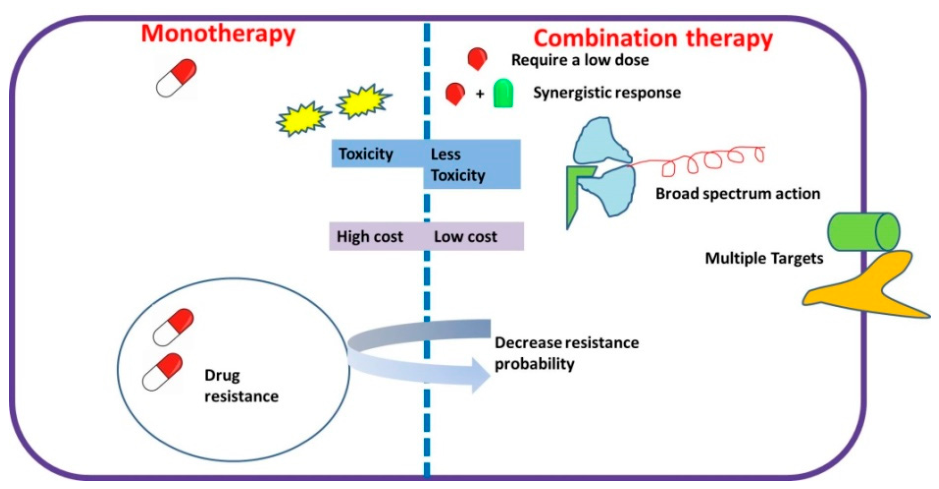
Figure 2.
Combination studies using A) Fix ratio method B) chequerboard assay C) Isobologram preparation.
Figure 2.
Combination studies using A) Fix ratio method B) chequerboard assay C) Isobologram preparation.
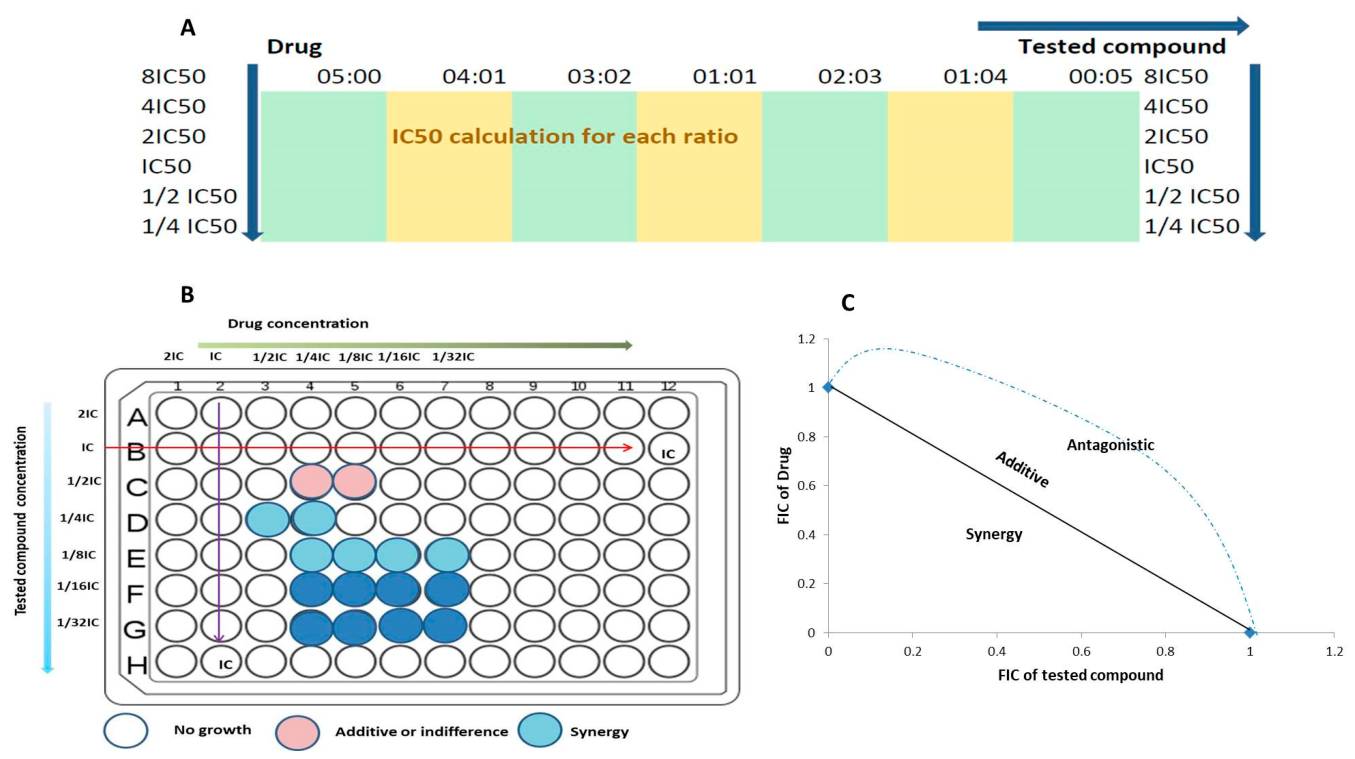
Table 1.
Summary of studies on herbal-antimalarial drugs interactions using an animal model.
| Medicinal plant | Extract | Part | Interactive standard drug | In vivospecies | Interaction effect |
| Vernonia amygdalina | Methanolic 125 mg/kg |
Leaves | ART, 2.86 and 35.14mg/kg | P. berghei | A high dose of ART antagonized VA |
|
Gynostemma pentaphyllum and Moringa oleifera |
Aqueous 500, 1000, and 2000 mg/kg |
Leaves | ART, 6 mg/kg | P.berghei ANKA | The greater antimalarial activity was recorded. |
| Cryptolepis sanguinolenta | Aqueous 36 mg/kg |
Root | ART, 2.5 mg/kg | P. berghei | Extract ↓effectiveness of ART. |
| Balanites aegyptiaca | Hydro alcoholic 500mg/kg |
Fruit | CQ, 12.5 mg/kg | P. berghei | ↑ in parasitemia suppression ability of CQ |
| Aloe camperi | Leaves | ||||
| 15 Kenya medicinal plants, from 11 families | Methanol | Complete | CQ | Improved suppressions of parasitemia | |
| Extract of 18 Kenya medicinal plants | Hot water | Complete | CQ | Improved suppressions of parasitemia | |
|
Morinda morindiodes Morinda lucida |
Aqueous | Root, Leaves | ART 10 mg/kg | Mm and Ml extract ↓effectiveness of ART, but ART ↑effectiveness of VA | |
| Ageratum. Conyzoides | Aqueous | Leaves | Chloroquine, artesunate 25,50,100mg/kg |
Potentiate activity of CQ and artesunate | |
| Azadirachta Indica 1000 mg/kg | Aqueous | Leaves | CQ | P. berghei | produced a significant reduction of parasitemia (96.87) |
| Carica papaya (50 mg/kg) | Aqueous | Leaves | ART (15 mg/kg) | P. berghei | Combined therapy showed the highest chemo-suppression (54.07%) when compared with the individual test extract |
Disclaimer/Publisher’s Note: The statements, opinions and data contained in all publications are solely those of the individual author(s) and contributor(s) and not of MDPI and/or the editor(s). MDPI and/or the editor(s) disclaim responsibility for any injury to people or property resulting from any ideas, methods, instructions or products referred to in the content. |
© 2026 by the authors. Licensee MDPI, Basel, Switzerland. This article is an open access article distributed under the terms and conditions of the Creative Commons Attribution (CC BY) license (http://creativecommons.org/licenses/by/4.0/).
Copyright: This open access article is published under a Creative Commons CC BY 4.0 license, which permit the free download, distribution, and reuse, provided that the author and preprint are cited in any reuse.