

Submitted:
23 August 2026
Posted:
25 August 2026
You are already at the latest version
Abstract
Background: Aggressive behavior among university students is an emerging concern, and social media use has been suggested as a contributing factor. However, evidence on different dimensions of aggression remains limited. This study aimed to assess the association between social media use and multiple dimensions of aggressive behavior (physical aggression, verbal aggression, anger, and hostility) among university students in Nepal.Methods: A cross-sectional study was conducted among 230 students. A structured questionnaire and the Buss–Perry Aggression Questionnaire were used to collect data. Descriptive statistics, Pearson Chi-Square tests, and multiple linear regression analysis were conducted to examine associations and identify predictors of aggression. Statistical significance was set at p < 0.05 with a 95% confidence interval. Results: Higher social media use was significantly associated with increased levels of physical aggression (χ² = 14.597, p < .001) and verbal aggression (χ² = 6.187, p = .013). Multiple regression analysis revealed a significant model (F = 4.929, p < .001) explaining 10.4% of the variance in social media use (R² = 0.104). Male participants reported significantly lower social media use than females (β = -0.157, p = .011). Higher levels of physical aggression (β = 0.222, p < .001) and hostility (β = 0.024, p = .002) were associated with increased social media use. Conclusion: Increased social media use is associated with higher levels of physical and verbal aggression among university students. Students with higher levels of physical aggression and hostility tend to use social media more, while male students report lower social media use than female students. These findings highlight the role of behavioral traits and gender in social media use; however, causality cannot be inferred because of the cross-sectional design, and longitudinal studies are needed.
Keywords:
Aggressive behavior
; social media use
; physical aggression
; university students
; emotional regulation
1. Introduction
The increasing prevalence of aggressive behaviors among students has raised significant concern for educators, parents, and policymakers. This aggression, manifesting as physical, verbal, anger, and hostility, not only affects the students who display it but also disrupts the learning environments for their peers and challenges teachers (Avula, 2014; Duggins et al., 2016) in managing their classrooms effectively (Luo et al., 2014; Words, 2019). Research studies have established that aggression is powerfully related to several adverse outcomes such as lower academic performance, emotional and mental health problems, stressed personal relationships, and heightened levels of stress among students (Jiang & Gao, 2022; Tamayo-Martinez et al., 2021). Moreover, the significance of aggression extends beyond school years, as childhood and adolescent aggression have been associated with disruptive predispositions and criminal activities in adulthood (Huesmann, Dubow, & Boxer, 2009). Recognizing and addressing aggressive behaviors is vital to promoting a progressive, recovery-oriented path for affected scholars (Shen, Jiang, & Tan, 2024). Varies by social position, age, and gender (Chen et al., 2024). Research studies show that excessive SMU may lead to addictive behaviors that affect academic performance, well-being, and interpersonal relationships (Huang, 2022). Mindful use of SMU platforms is considered beneficial, yet misuse or abuse can contribute to increased frustration, comparison-driven envy, and, consequently, aggression (Odgers & Jensen, 2020). This study, consequently, seeks to examine the prevalence of aggression in students and the specific role that SMU may play in inducing these behaviors. Despite growing global evidence, there is limited empirical research examining the relationship between social media use and different dimensions of aggression among university students in Nepal. This study aims to fill this gap.
Statement of the problem
The main problem addressed by this investigation is the increasing prevalence of AB among students and the likely role of SMU as a significant factor. SMU has become one of the leading approaches to communication for young scholars, often determining their insights and responses to social circumstances. However, extreme and abusive SMU can lead to heightened impulsivity, declined empathy, and increased aggression. This study aims to answer the following research question: To what extent does social media use contribute to aggressive behavior among students?
2. Justification of the Study
This research study arises from the pressing need to understand the factors causing AB among students, particularly the role of SMU. With SMU deeply embedded in students’ lives, it is crucial to discover its impact on mental health, AB, and school climate. Research by Ibrahim et al. (2024) links aggression to features such as unhappiness, life satisfaction, and spiritual WB, indicating that unhappiness is strongly associated with aggression, whereas life satisfaction and spiritual WB are inversely associated. Likewise, studies by Raimundo et al. (2024) highlight that fostering an optimistic school environment can effectively reduce aggression. However, research on the specific impact of SMU in school settings remains inadequate (Yue et al., 2023). This study aims to understand this gap by providing insights for targeted interventions that help optimistic behaviors and enhance the school environment.
3. Literature Review
Several research studies have acknowledged a robust relationship between high SM use and increased aggression among scholars. For instance, Lin et al. (2025) revealed that SMU aggression among youths varies by social position, age, and gender, with cyber-bullying (CB) prevalence more common and older scholars showing increased aggression. Likewise, a study by Wiedeman et al. (2015) found that both short- and long-term exposure to aggressive media influences children and youth, with effects shaped by screen time, media content, age, gender, and social factors. Furthermore, research by Tandon & Matti (2021) examined SM-induced jealousy (SoMJ) through 45 studies, revealing socio-demographic issues, grounds, and influences. It emphasized the need for cross-cultural investigation to address SoMJ’s adverse possessions, with cyberstalking and close partner violence. In addition, a study by Villanueva-Moya & Herrera (2022) revealed that youths with increased Screen Time (ST) on Instagram, social judgment, and jealousy are more likely to engage in CB. Increased practice encourages social judgment, leading to envy and CB activities (Huang, 2022). Moreover, another study by Hameed & Irfan (2020) observed that SM self-control failure (SMSCF) leads to violence among individuals, which is carried over to their social networks, highlighting the influence of SMSCF on societal anger. Rösner & Krämer (2016) revealed that SM users display more violence in observations when exposed to violence norms, with anonymity growing conformity to these norms in spite of having no direct effect on violence. Moreover, Huesmann, L. R. (2007) suggests that exposure to violence in digital media, with TV, video games, and SM, increases the danger of violent activities, with both short- and long-term harmful effects. Additional support for this: a research study by Abaido (2020) revealed that 91% of UAE university scholars reported experiencing CB on SM, primarily on Instagram and Facebook. The research study also emphasized hostile behaviors related to CB, social barriers to commentary, and highlighted the need for proactive actions (Rahman et al., 2022). This evidence cooperatively proposes that more ST can contribute to a substantial role in normalizing and cultivating violent behaviors among scholars, highlighting the need for schools and parents to foster awareness and deliver guidelines on accountable digital interactions (Chowdhury et al., 2023; Khan et al., 2023; Tandon & Mäntymäki, 2021; Ahmed et al., 2022).
4. Theories and Associations With Ab and Sm
The prevalence of AB among students can be explained through two key models: Social Learning Theory (SLT) and the General Aggression Model (GAM). According to Bandura’s (1977) SLT, people, particularly young students, acquire behaviors through observing and modeling others, a process that frequently occurs in digital spaces where content depicting aggression is prevalent. This model proposes that scholars exposed to AB on social SMU may be more likely to assume similar activities, as they perceive these activities as normative or rewarding (Bandura, 1977). The General Aggression Model (GAM) (Anderson & Bushman, 2016) provides an outline for how continuous exposure to violent stimuli online can affect thoughts, emotions, and behavioral responses (Anderson et al., 2003). GAM postulates that recurrent exposure to violence or aggression on SMU can emphasize aggressive writings, increasing the probability of aggressive answers in real-life circumstances (Anderson & Bushman, 2016). Although previous studies suggest a relationship between social media use and aggression, findings remain inconsistent, particularly regarding different dimensions of aggression such as anger and hostility.
Conceptual Framework
Using the theoretical framework that connects interpersonal violence with social media use can help us develop a new framework to identify behaviors associated with social media use, types of aggression (physical and verbal), anger, and hostility, as well as individual moderators (such as impulsivity and self-regulatory skills). This new framework will allow us to clarify the pathways through which social media use influences aggression and to identify critical variables, such as high versus low levels of social media use (Figure 1).
To summarize, the hypothesis can be stated as:
Hypothesis 1: As students’ level of social media usage increases, their levels of aggression (both physical aggression, verbal aggression, anger, and hostility) will also increase. Exposure to platforms and the amount of content viewed on them increases aggressive behavior. Through investigations into these relationships, the results of this research may inform interventions designed to promote self-regulation skills and reduce time spent on social media platforms, both of which help decrease the likelihood of aggressive behaviors.
5. Methods
5.1. Research Design and Setting
The research employed an analytical cross-sectional study design to examine the relationship between social media use and aggressive behavior among postsecondary students. This population was chosen for their high dependence on technology and digital devices, which may contribute to aggressive behavior. Data were collected from 230 participants enrolled in bachelor’s and master’s degree programs in the Faculty of Education at Butwal Multiple Campus, located in the Rupandehi district of Butwal Sub-Metropolitan City. The Faculty of Education, Butwal Multiple Campus, which has a total student population of about 9000, comprises approximately 40% of the total student population (the majority of them are female) and is therefore the fifth-largest campus within Tribhuvan University. Those participants were from a variety of Hill and Tarai regions of Nepal, including Gulmi, Palpa, Pyuthan, Arghakhachi, Baglung, Syangja, Rupandehi, Nawalparasi, and Kapilvastu, and as such, the sample was representative of the diverse nature of the population of Nepal in terms of caste, religion, and geographical origin. However, because participants were drawn from a single campus, the sample should not be considered representative of Nepal’s broader university student population.
5.2. Sampling and Sample Size
Researchers used a convenience sample. Participants had voluntarily chosen to complete an online survey because of their availability and interest. This non-random sampling technique enabled data collection from 230 students who met the study’s criteria. Cochran’s (1977) formula for determining sample size was used to determine a required number of 230 participants as: n = Z2 PQ/L2; Where: n = sample size; P = prevalence of social media use (25%); Q = 100 – P; and L = allowable error (5%)
5.3. Data Collection Procedure and Study Variables
In advance, scholars were provided with clear directions to ensure they understood the study’s purposes and how to complete the survey. The survey was separated into two sectors: Section A collected sociodemographic data on age, gender, education level, social media use frequency, preferred platforms, time spent, and related habits; for the device- and platform-use items, participants could select multiple options, so totals for these items exceed the total sample size (N = 230). SM use was classified into High Social Media Use (HSMU) and Low Social Media Use (LSMU) based on the respondents’ stated daily usage hours. Social media use was categorized as low (≤5 hours/day) or high (≥6 hours/day) using a median split of the data. No established clinical or empirical cutoff exists for classifying ‘high’ social media use in this population, so a data-driven median split (≤5 hrs/day = low, ≥6 hrs/day = high) was used. Sector B included the Aggression Questionnaire (AQ; Buss & Perry, 1992), a 26-item instrument measured on a 5-point Likert scale to assess physical aggression, verbal aggression, anger, and hostility. A total of 230 respondents completed the online questionnaire. The AQ established strong internal consistency with a Cronbach’s Alpha of 0.87, approving its reliability for the study. Participants were considered the independent variable based on their time spent on social media, and the dependent variables included all styles of aggression, which included physical aggression, verbal aggression, anger, and hostility. Data were collected online from bachelor’s and master’s students in the Faculty of Education, including those in ICT, at Butwal Multiple Campus. Before completing the survey, students received clear instructions on how to fill out the form to ensure they understood the study’s purpose and scope. Informed consent was obtained after permission was obtained from the campus chief and the head of the Department of Education. Participants were assured of confidentiality, the voluntary nature of their participation, and their right to withdraw at any time, safeguarding privacy and maintaining the ethical standards of the research.
5.4. Data Management and Statistical Analysis
For data analysis, the Statistical Package for the Social Sciences, version 25, has been used to enter and analyze data using descriptive statistics, including frequencies, proportions, means, and standard deviations. To examine the association between two variables, a Chi-Square test and multiple regression were used. The Kolmogorov-Smirnov test was used to assess the normality of the data with a significance level of 0.152. Six outliers were removed to maintain the integrity of the data; collinearity between predictors was evaluated using the Variance Inflation Factor (VIF), which indicated that the range of 1.00 to 1.01 for all predictors was low for multicollinearity. Data suitability for regression was confirmed using the Kaiser-Meyer-Olkin measure (0.846). Multiple regression models were fitted to examine socio-demographic and aggression predictors of social media use. Statistical significance was set at p < 0.05 with a 95% confidence interval.
6. Results
This research was conducted with a total of 230 participants aged 17 to 59 (M = 24.88, SE = 0.396). Approximately three-quarters (75.7%) of the participants were female, with the majority having completed at least a higher secondary (41.7%) or bachelor’s degree (47.8%), with master’s degrees making up 10.4%. Of these participants, 54.8% classified their social media usage as low (5 hours/day or less), while the remaining 45.2% classified it as high (6 hours/day or more). Participants reported that 17.1% had no effect from social media, 44.4% had little effect, 24.5% had a moderate effect, 10.6% had a large (significant) effect, and 2.3% had an extreme (significantly large) effect from using social media. See Table 2 for more information.
The primary purposes of social media use include academic or professional networking (133), socializing with friends and family (127), and news updates (102), while entertainment (76) and shopping (18) are less emphasized (Figure 2).
The most preferred social media platform is Facebook (197), followed by Instagram (45), TikTok (35), Other (39), Twitter (13), and LinkedIn (10) (Figure 3).
Most users access social media via smartphones (253), followed by laptops/computers (43) and multiple devices (12). Tablets and smartwatches were not mentioned (Figure 4).
Social media usage peaks during leisure time (148) and before bedtime (82), followed by work hours (55), meals (27), and commuting (24) (Figure 5).
Outcomes exhibit a recurring pattern of individuals reporting disfavor toward the use of physical or violent aggression. For example, almost 40.9% expressed disagreement with the thought of acting violently if provoked; 33.5% disagreed with seeking revenge after experiencing physical assault. Additionally, 46.5% strongly disagreed about the frequency of their participation in fights compared to other individuals. In contrast, a minority reported having impulsive tendencies; 19.1% agreed they become so agitated that they feel “ready to explode”, whereas 25.7% stated that they lose control of their temper without provocation. Also, 55.5% were unable to regulate their temper, indicating a concern about frustration/anger management (Table 2).
The findings suggest that 57% of respondents exhibited low levels of physical aggression, while 43% displayed high levels. In contrast, 54.8% were considered low verbal aggressors and 45.2% were high verbal aggressors (i.e., aggressive talkers). Fifty-three percent (53.1% of participants) showed low anger, and 46.9% exhibited high levels of anger. For instance, 90.4% of participants exhibited high hostility, compared with 9.6% who were categorized as having low hostility (Table 3).
There was a significant correlation between PA and SMU (χ2 = 14.597, p < .0001), with students using SMU for 6 or more hours/day showing higher levels of PA. VA was also significantly correlated with SMU (2² = 6.187, p = .013), indicating that heavier SMU users reported higher levels of VA. No significant correlations were found for anger 2χ² = 1.720, p = 0.190), hostility2(χ² = 0.141, p = 0.707), and educatio2 (χ² = 2.770, p = 0.250) in relation to SMU use (Table 4).
Multiple regression analysis was used to examine sociodemographic and aggression-related predictors of social media use. Male participants reported significantly lower social media use than female participants (β = −0.157, p = .011), while participants with higher physical aggression (β = 0.222, p < .001) and higher hostility (β = 0.024, p = .002) reported higher levels of social media use (Table 5). The overall model was statistically significant but modest in explanatory power (F = 4.929, p < .001), accounting for 10.4% of the variance in social media use (R2 = 0.104). The majority of the variance in social media use remains unexplained, suggesting that other unmeasured factors, such as personality traits, peer influence, or smartphone dependency, likely also contribute.
| Collinearity Statistics | |
7. Discussion
This study examined the association between social media use and different dimensions of aggression among university students. In the bivariate analysis, SMU is associated with physical aggression and hostility. However, multivariate regression analysis found that physical aggression, hostility, and gender were the only significant predictors of SMU.
The findings from this study demonstrate that social media use is associated with increased physical aggression. In relation to this finding, Lin et al. (2025) found that people who engage in problematic social media use longitudinally increased their engagement in overtly (physically) and relationally aggressive behaviors, particularly among adolescents and young adults, thus providing support for the idea that higher levels of digital engagement can be indicative of or reinforce aggressive tendencies (Lin et al., 2025). Therefore, they reason that aggressive dispositions may influence online socialization patterns rather than be coincidental with social media exposure.
Higher social media use is associated with increased, indicating that students with more antagonistic attitudes tend to spend more time on social media. Although it appears that students with higher levels of antagonism spend more time engaged on social media, the exact mechanisms underlying this remain unclear. Consistent with this finding, Huang and colleagues (2025) found that social media use and the incidence of hostile online behavior (i.e., trolling) increased participation among college students. Furthermore, the meanings associated with both behaviors help to establish continued use of social media when violence occurs (Huang et al., 2025). These results also support social-cognitive behavior models that indicate how people choose to behave based on their own internal thoughts and feelings (e.g., cognitive and emotional) directly influence their behaviour in social media and from location to location as an extension of themselves (Bandura, 1977; Favini et al., 2024; Yu et al., 2021).
Gender was a significant predictor of social media use. Based on their findings, Lin et al. (2025) report differences in the relationship between social media use and aggressive behavior across genders. This research shows that men may use social media differently from women (Naz et al., 2025) and that men may express aggression on social media differently from women (Lin et al., 2025).
Findings also indicated that individuals who exhibit high levels of physical aggressiveness tend to engage more frequently with social media; this supports social cognitive theory’s notion that behavior develops from a mix of personal traits and the external environment (Bandura, 1977; Favini et al., 2024). Social media use reportedly does not necessarily produce aggressive behaviors, but does express and reinforce pre-existing characteristics that indicate aggression (Keer et al., 2025; Lin et al., 2025; Yu et al., 2021). Similarly, individuals exhibiting higher levels of physical aggression are likely to be confrontational or provocative in online environments (Villanueva-Moya & Herrera, 2022).
A positive correlation was found between hostility and frequent use of social media i.e., people who hold negative attitudes may frequently engage in online activities. Aligning with this finding, social-cognitive theories suggest that an individual’s cognitive style can also impact their social behavior, regardless of where they are engaging in social behavior (whether it is face-to-face or digitally) (Bandura, 1977; Favini et al., 2024). Previous research has shown that people who are hostile online are more likely to engage on social media (Bullock & Luttrell, 2024; Villanueva-Moya & Herrera, 2022).
In contrast to the other three dimensions, anger was not significantly associated with social media use in either the bivariate analysis (χ2 = 1.720, p = .190) or the regression model (β = 0.015, p = .822). This null result may reflect the more transient, state-like nature of anger compared with the more stable, trait-like qualities captured by hostility and physical aggression; a cross-sectional self-report measure may be less able to detect associations with an emotional state that fluctuates day-to-day. It is also possible that the relationship between anger and social media use is non-linear: moderate anger may be associated with using social media for distraction or emotional venting, while very high anger appears to discourage social engagement altogether. Future research using repeated or momentary assessment of anger could help clarify this relationship.
7.1. Recommendations
The study’s results indicate a need for a multi-faceted approach to ameliorate aggressive behavior of university students with particular focus on physical aggression, hostility, and gender differences in social media usage. Educational institutions should provide students with programs that promote skills to help them develop better emotional regulation, self-control, and conflict resolution, especially for students exhibiting higher levels of aggressive behavior. In addition, providing opportunities for students to develop digital literacy and responsible use of social media can assist them in having positive interactions while using social media. Also, developing gender appropriate intervention strategies accounting for the gender differences in the usage of social media by male and female students would be an additional way to assist students with their aggressive behaviors. The interventions should not focus solely on restricting social media use but instead work with students to help them learn to use it in a balanced and mindful way. Collaboration between educational institutions and governmental policymakers will be important to create an environment that supports a decrease in aggressive behaviors through improving students’ well-being.
7.2. Limitations and Future Research Directions
This study has several limitations that should be considered when interpreting the findings. First, the cross-sectional design limits the ability to establish causal relationships between social media use and aggressive behavior. Second, the use of convenience sampling from a single institution may reduce the generalizability of the results to the wider population of university students in Nepal. Third, reliance on self-reported data may introduce response bias, as participants may overestimate or underestimate their behaviors.
Future research should employ longitudinal designs to better understand causal relationships and changes over time. Additionally, including multiple institutions and larger, more diverse samples would improve generalizability. The use of advanced statistical techniques, such as regression analysis, is also recommended to control for potential confounding variables. Further studies should explore the role of psychological factors, such as impulsivity, personality traits, and emotion regulation, in shaping aggressive behavior.
8. Conclusion
This study revealed that social media use is significantly associated with certain dimensions of aggression among university students. Especially, it concludes that higher social media use is significantly associated with increased levels of physical aggression and, to some extent, hostility among university students. Gender differences are also present in both levels of social media activity and aggression, as male students were less likely to engage in higher levels of social media use compared to female students. However, given the cross-sectional design, causal relationships cannot be established. Further longitudinal research is recommended to better understand these associations.
Author Contributions
PPT and PS contributed to conceptualization, data curation, formal analysis, and drafting the manuscript. PPT supervised the study, while PS handled project administration. Both authors reviewed and approved the final manuscript.
Funding
This research has not received funding support.
Acknowledgments
We express our acknowledgement to the respondents for their time and participation in this survey. We are also grateful to the reviewers and everyone who provided direct and indirect support during this research.
AI Statement: The authors confirm that no generative AI or AI-assisted technologies were used in the preparation of this manuscript.
Conflicts of Interest
The authors declare no conflicts of interest.
References
- Abaido, G. M. Cyberbullying on social media platforms among university students in the United Arab Emirates. Int. J. Adolesc. Youth 2020, 25(1), 407–420. [Google Scholar] [CrossRef]
- Anderson, C. A.; Berkowitz, L.; Donnerstein, E.; Huesmann, L. R.; Johnson, J. D.; Linz, D.; Wartella, E. The influence of media violence on youth. Psychol. Sci. Public Interest 2003, 4(3), 81–110. [Google Scholar] [CrossRef]
- Avula, R. School climate and student aggression. J. Educ. Psychol. 2014, 106(3), 702–716. [Google Scholar] [CrossRef]
- Bandura, A. Social learning theory; Prentice Hall, 1977. [Google Scholar]
- Buss, A. H.; Perry, M. The aggression questionnaire. J. Personal. Soc. Psychol. 1992, 63(3), 452–459. [Google Scholar] [CrossRef]
- Chowdhury, S.; Rahman, M.; Doddanavar, I. A.; Zayed, N. M.; Nitsenko, V.; Melnykovych, O.; Holik, O. Impact of social media on knowledge of the COVID-19 pandemic on Bangladeshi university students. Computation 2023, 11(2), 1–13. [Google Scholar] [CrossRef]
- Chen, B.; Zhang, C.; Feng, F.; Xian, H.; Zhao, Y. The association between social class and aggression: A meta-analytic review. Soc. Sci. Med. 2024, 340, 116432. [Google Scholar] [CrossRef]
- Duggins, S. D.; Kuperminc, G. P.; Henrich, C. C.; Smalls-Glover, C.; Perilla, J. L. Aggression among adolescent victims of school bullying: Protective roles of family and school connectedness. Psychol. Violence 2016, 6(2), 205–212. [Google Scholar] [CrossRef]
- Favini, A.; Rossi, F.; Martinelli, L. Personality traits and online aggression: Moderating effects of self-regulation. Comput. Hum. Behav. 2024, 157, 107606. [Google Scholar] [CrossRef]
- Hameed, I.; Irfan, B. Z. Social media self-control failure leading to antisocial aggressive behavior. Hum. Behav. Emerg. Technol. 2020, 2, 1–8. [Google Scholar] [CrossRef]
- Kerr, B.; Garimella, A.; Pillarisetti, L.; Charlly, N.; Sullivan, K.; Moreno, M. A. Associations between social media use and anxiety among adolescents: A systematic review study. J. Adolesc. Health 2025, 76(1), 18–28. [Google Scholar] [CrossRef]
- Huesmann, L. R. The impact of electronic media violence: Scientific theory and research. J. Adolesc. Health 2007, 41(6), S6–S13. [Google Scholar] [CrossRef]
- Huang, H.; Zhao, Q.; Chen, J. Social media fatigue, trolling behavior, and psychological outcomes among college students. Front. Psychol. 2025, 15, 1495235. [Google Scholar] [CrossRef]
- Khanam, H.; Riaz, H.; Arshad, F.; Asif, A. Relationship and difference of levels between schadenfreude, social media addiction, and social comparison among adults and adolescents. Eur. J. Theor. Appl. Sci. 2023, 1(2), 149–160. [Google Scholar] [CrossRef]
- Lin, S.; Fabris, M. A.; Longobardi, C.; Mastrokoukou, S. The Association Between Social Media Addiction and Aggressive Behaviors: A Longitudinal and Gender-Specific Analysis. J. Adolesc. 2025, 97, 798–807. [Google Scholar] [CrossRef]
- Meier, A.; Johnson, B. K. Social comparison and envy on social media: A critical review. Curr. Opin. Psychol. 45 2022, 101302. [Google Scholar] [CrossRef]
- Naz, M.; Hassan, S.; Mumtaz, F.; Farah, N.; Saddique, M. A.; Abdul Ghafoor, A.; Khaliq, N. Gender differences in social media engagement and psychological outcomes. Res. J. Psychol. 2025, 3(3), 187–196. [Google Scholar] [CrossRef]
- Odgers, C.L.; Jensen, M.R. Adolescent mental health in the digital age: Facts, fears, and future directions. J. Child Psychol. Psychiatry 2020, 61, 336–348. [Google Scholar] [CrossRef]
- Raimundo, R.; Oliveira, S.; Roberto, M. S.; Marques-Pinto, A. Effects of a social–emotional learning intervention on social–emotional competencies and behavioral problems in elementary students amid COVID-19. Int. J. Environ. Res. Public Health 2024, 21(9), 1223. [Google Scholar] [CrossRef]
- Rösner, L.; Krämer, N. C. The social in social media: How norms shape online interactions. Hum. Commun. Res. 2016, 42(4), 499–522. [Google Scholar] [CrossRef]
- Tandon, A.; Dhir, A.; Mäntymäki, M. Jealousy due to social media? A systematic literature review and framework of social media-induced jealousy. Internet Res. 2021, 31(5), 1541–1582. [Google Scholar] [CrossRef]
- Huang, C. A meta-analysis of problematic social media use and mental health. Int. J. Soc. Psychiatry 2022, 68(1), 12–33. [Google Scholar] [CrossRef]
- Villanueva-Moya, L.; Herrera, J. Online conflicts and aggression in youth social networks. Comput. Hum. Behav. 2022, 136, 107408. [Google Scholar] [CrossRef]
- Words, K. E. Y. Aggression and its predictors among elementary students. J. Inj. Violence Res. 2019, 11(2), 159–170. [Google Scholar] [CrossRef]
- Yue, H.; Yue, X.; Zhang, X.; Liu, B.; Bao, H. Exploring the relationship between social exclusion and social media addiction: The mediating roles of anger and impulsivity. Acta Psychol. 2023, 238, 103980. [Google Scholar] [CrossRef]
- Yu, C.; Zhang, J.; Zuo, X.; Lian, Q.; Tu, X.; Lou, C. Correlations of impulsivity and aggressive behaviours among adolescents in Shanghai, China using bioecological model: Cross-sectional data from global early adolescent study. BMJ Open 2021, 11, e043785. [Google Scholar] [CrossRef]
Figure 1.
Conceptual Framework Examining the Association between Social Media Use (Low & High) andl Aggressive Behaviors (Physical Aggression, Verbal Aggression, Anger, and Hostility)
Figure 1.
Conceptual Framework Examining the Association between Social Media Use (Low & High) andl Aggressive Behaviors (Physical Aggression, Verbal Aggression, Anger, and Hostility)
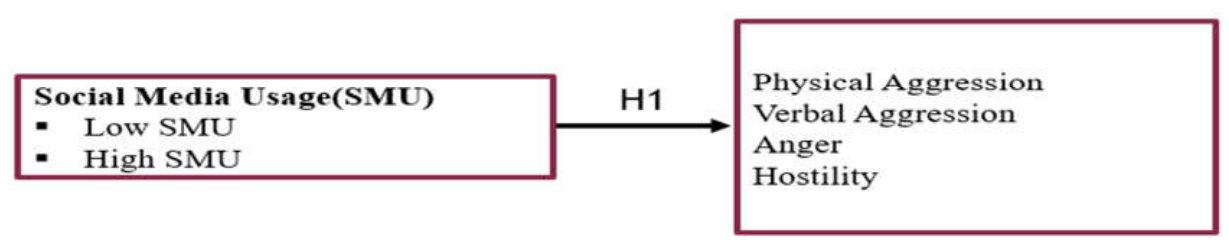
Figure 2.
Illustration of the Frequency of Primary Purposes of Social Media Use (Source: Authors’ self-elaboration, using SPSS).
Figure 2.
Illustration of the Frequency of Primary Purposes of Social Media Use (Source: Authors’ self-elaboration, using SPSS).
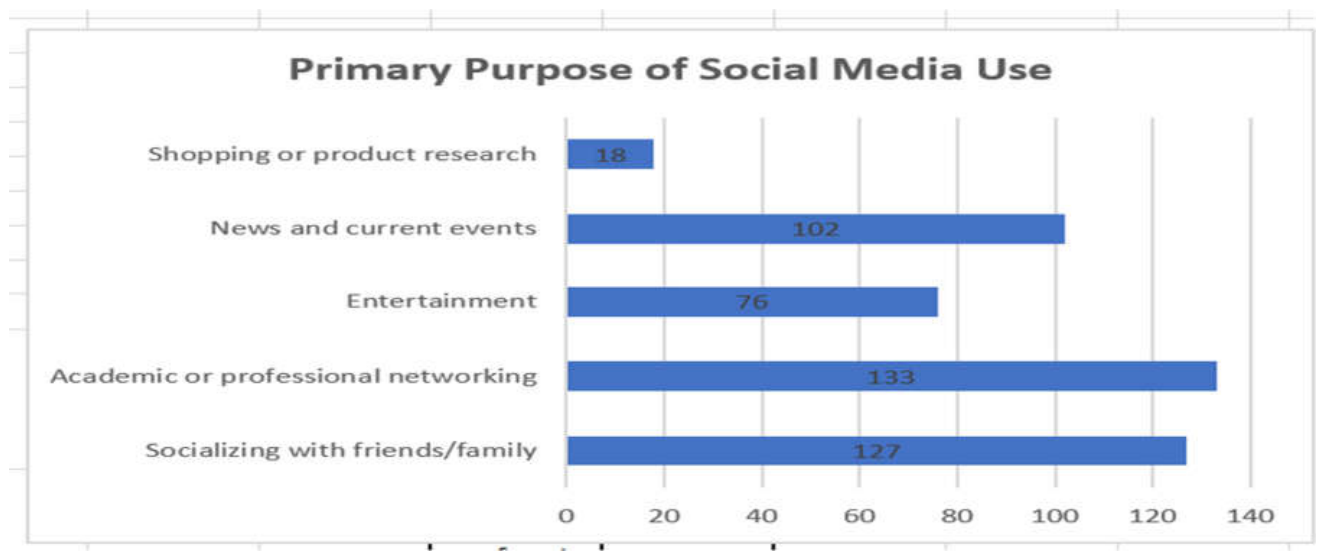
Figure 3.
Illustration of the Frequency of Preferred Social Media Platforms (Source: Authors’ self-elaboration, using SPSS).
Figure 3.
Illustration of the Frequency of Preferred Social Media Platforms (Source: Authors’ self-elaboration, using SPSS).
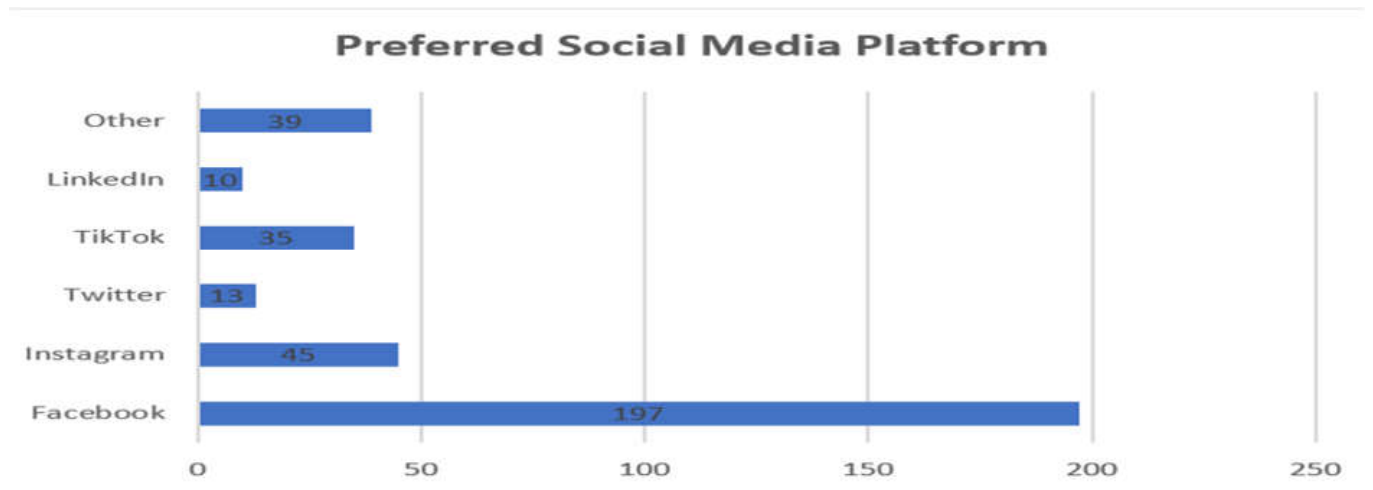
Figure 4.
Illustration of the Frequency of Devices Used for Accessing Social Media (Source: Authors’ self-elaboration, using SPSS).
Figure 4.
Illustration of the Frequency of Devices Used for Accessing Social Media (Source: Authors’ self-elaboration, using SPSS).
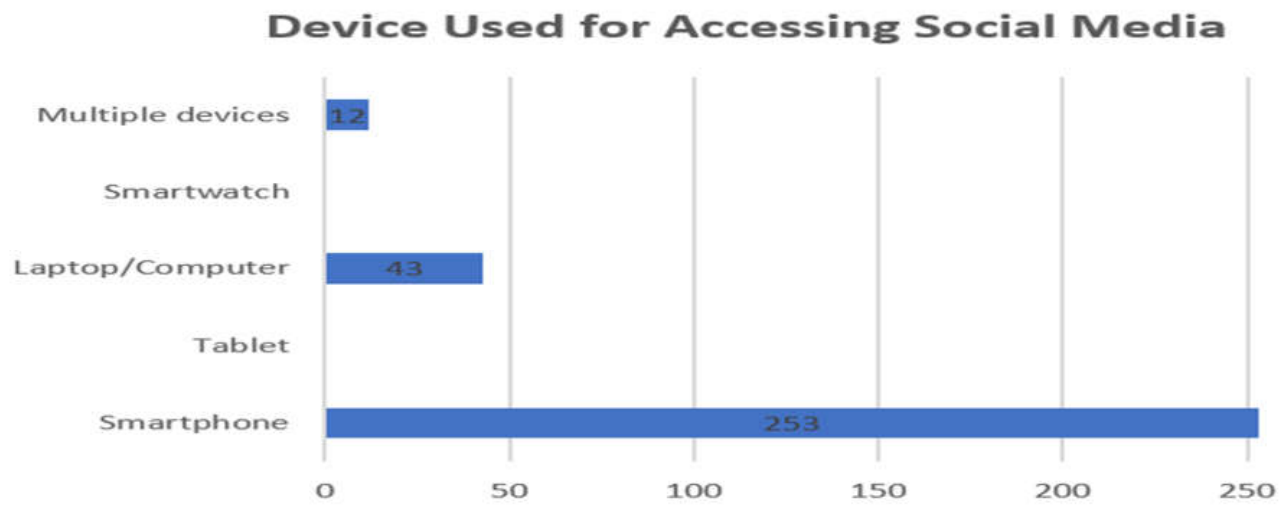
Figure 5.
Illustration of the Frequency of Social Media Use during Specific Activities (Source: Authors’ self-elaboration, using SPSS).
Figure 5.
Illustration of the Frequency of Social Media Use during Specific Activities (Source: Authors’ self-elaboration, using SPSS).
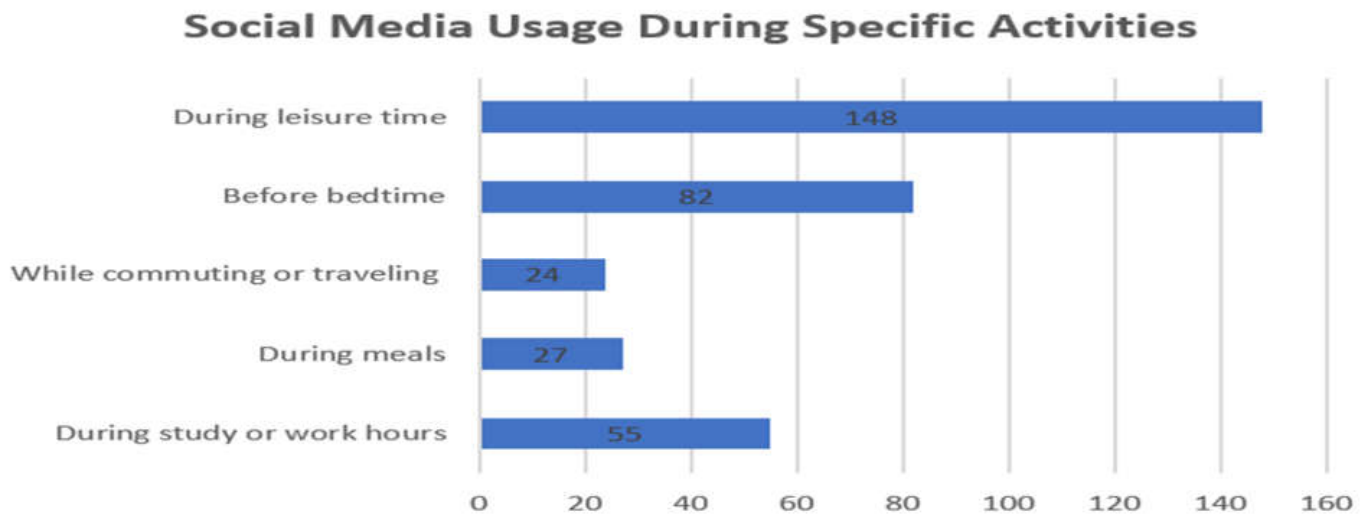

Table 1.
Socio-demographic Variables and Participants.
| Variables | Frequency | Percent |
| Age Group | ||
| 17-31 yrs | 90 | 39.3 |
| 32- 45 yrs | 62 | 27.1 |
| 46- 59 yrs | 77 | 33.6 |
| Minimum=17.00; Maximum=59.00; Mean=24.88; Std. Error=.396 | ||
| Gender | ||
| Male | 56 | 24.3 |
| Female | 174 | 75.7 |
| Educational Level | ||
| Higher secondary level | 96 | 41.7 |
| Bachelor level | 110 | 47.8 |
| Master level | 24 | 10.4 |
| Social Media Use (SMU) Per day | ||
| Low SMU ≤5 hrs. (<Median) |
126 | 54.8 |
| High SMU ≥6 hrs. (>Median) |
104 | 45.2 |
| Impact of social media on Daily Life | ||
| No impact | 37 | 17.1 |
| Minimal impact | 96 | 44.4 |
| Moderate impact | 53 | 24.5 |
| Significant impact | 23 | 10.6 |
| Extremely significant impact | 5 | 2.3 |
| Time of Day Most Often Used digital devices (Smartphones, Laptop etc) | ||
| Early morning (5 AM - 9 AM) | 28 | 9.36 |
| Late morning (10 AM - 12 PM) | 47 | 15.72 |
| Afternoon (1 PM - 5 PM) | 73 | 24.42 |
| Evening (6 PM - 9 PM) | 126 | 42.09 |
| Late night (10 PM - 2 AM) | 25 | 8.36 |
Table 2.
Illustration of the Distribution of Aggressive Behavior among Participants.
| Strongly Disagree | Disagree | Neutral | Agree | Strongly Agree | |
| Q1. Sometimes I can’t control the impulse to hit another person | 77(33.5) | 91(39.6) | 32(13.9) | 23(10.0) | 7(3.0) |
| Q2. If I am provoked enough, I may hit another person | 75(32.6) | 94(40.9) | 30(13.0) | 25(10.9) | 6(2.6) |
| Q3. If someone hits me, I hit him back | 51(22.2) | 77(33.5) | 44(19.1) | 47(20.4) | 11(4.8) |
| Q4. I get into fights more often than people normally do | 107(46.5) | 101(43.9) | 15(6.5) | 6(2.6) | 1(.4) |
| Q5. If I have to resort to violence to defend my rights, I do it | 78(34.1) | 90(39.3) | 28(12.2) | 27(11.8) | 6(2.6) |
| Q6. There are people who provoke me to the point of fighting with them | 83(36.1) | 122(53.0) | 17(7.4) | 8(3.5) | .0(.0) |
| Q7. I’ve threatened people I don’t know | 136(59.1) | 82(35.7) | 9(3.9) | 3(1.3) | .0(.0) |
| Q8. I’ve sometimes got so angry that I’ve broken things | 92(40.2) | 78(34.1) | 16(7.0) | 36(15.7) | 7(3.1) |
| Q9. When I don’t agree with my friends, I argue openly with them | 16(7.0) | 38(16.5) | 30(13.0) | 115(50.0) | 31(13.5) |
| Q10. I often disagree with people | 41(17.8) | 96(41.7) | 56(24.3) | 34(14.8) | 3(1.3) |
| Q11. When people irritate me, I argue with them | 55(24.0) | 99(43.2) | 36(15.7) | 36(15.7) | 3(1.3) |
| Q12. When people disagree with me, I can’t avoid arguing with them | 35(15.3) | 77(33.6) | 36(15.7) | 75(32.8) | 6(2.6) |
| Q13. My friends say that I argue a lot | 64(27.8) | 112(48.7) | 19(8.3) | 34(14.8) | 1(.4) |
| Q14. I get annoyed quickly, but it doesn’t last long | 12(5.2) | 25(10.9) | 20(8.7) | 135(58.7) | 38(16.5) |
| Q15. When I’m frustrated, I show my annoyance | 38(16.5) | 104(45.2) | 28(12.2) | 55(23.9) | 5(2.2) |
| Q16. Sometimes I get so annoyed that I feel I’m going to burst | 44(19.1) | 104(45.2) | 20(8.7) | 53(23.0) | 9(3.9) |
| Q17. Some of my friends think I’m an impulsive person | 53(23.1) | 111(48.5) | 25(10.9) | 38(16.6) | 2(.9) |
| Q18. Sometimes I lose my temper for no reason | 42(18.3) | 91(39.6) | 15(6.5) | 59(25.7) | 23(10.0) |
| Q19. I have difficulty controlling my temper | 45(19.7) | 127(55.5) | 17(7.4) | 30(13.1) | 10(4.4) |
| Q20. Sometimes I feel that life has treated me unfairly | 27(11.7) | 73(31.7) | 37(16.1) | 84(36.5) | 9(3.9) |
| Q21.It always seems to be others who get chances in life | 26(11.4) | 102(44.5) | 23(10.0) | 69(30.1) | 9(3.9) |
| Q22. I wonder why sometimes I feel so bitter about certain things | 10(4.3) | 37(16.1) | 31(13.5) | 140(60.9) | 12(5.2) |
| Q23. I know that my “friends” criticize me behind my back | 10(4.3) | 60(26.1) | 56(24.3) | 91(39.6) | 13(5.7) |
| Q24. I’m suspicious of strangers who are too friendly | 9(3.9) | 70(30.4) | 36(15.7) | 100(43.5) | 15(6.5) |
| Q25. Sometimes I feel that people are laughing at me behind my back | 12(5.2) | 66(28.8) | 54(23.6) | 80(34.9) | 17(7.4) |
| Q26. When people come over as especially friendly, I ask myself what they want from me | 11(4.8) | 37(16.3) | 44(19.4) | 112(49.3) | 23(10.1) |
Table 3.
Levels of Aggression (physical, verbal), Anger, and Hostility.
| Variables | Frequency | Percent |
| Physical Aggression | ||
| Low Level of Physical Aggression | 130 | 57.0 |
| High Level of Physical Aggression | 98 | 43.0 |
| Verbal Aggression | ||
| Low Level of Verbal Aggression | 125 | 54.8 |
| High Level of Verbal Aggression | 103 | 45.2 |
| Anger | ||
| Low Level Anger | 121 | 53.1 |
| High Level Anger | 107 | 46.9 |
| Hostility | ||
| Low Level hostility | 19 | 9.6 |
| High Level hostility | 178 | 90.4 |
Table 4.
Association between social media use and aggressive behaviors among participants.
| Social Media Use Per day | ||||
| Level Physical Aggression | Low Level | High Level | Pearson Chi-Square | Significance |
| Equal or below 5 hours | 82 | 44 | 14.597 | 0.0001** |
| 6 hours and more hours | 50 | 54 | ||
| Level of Verbal Aggression | ||||
| Equal or below 5 hours | 76 | 50 | 6.187 | 0.013* |
| 6 hours and more hours | 50 | 54 | ||
| Level of Anger | ||||
| Equal or below 5 hours | 68 | 58 | 1.720 | 0.190 |
| 6 hours and more hours | 54 | 50 | ||
| Level of Hostility | ||||
| Equal or below 5 hours | 21 | 105 | 1.76 | 0.184 |
| 6 hours and more hours | 11 | 93 | ||
| Level of Education | ||||
| Higher secondary level | 49 | 47 | 1.93 | 0.381 |
| Bachelor | 61 | 49 | ||
| Master | 16 | 8 | ||
| Gender | ||||
| Male | 25 | 31 | 4.945 | 0.026* |
| Female | 77 | 97 | ||
Note: Significance: ** at 1%, *at 5%.
Table 5.
Multiple regression analysis predicting aggression from social media use and socio-demographic variables.
Table 5.
Multiple regression analysis predicting aggression from social media use and socio-demographic variables.
|
Constant |
Unstandardized Coefficients | Sig. | 95% CI | Collinearity Statistics | Collinearity Statistics | ||||||
| Collinearity Statistics | |||||||||||
| Beta | Std. Error | P-value | Upper | Lower | Tolerance | VIF | |||||
| 1.207 | 0.196 | 0.0001 | 0.821 | 1.593 | |||||||
| Age | -0.069 | 0.043 | 0.109 | -0.153 | 0.015 | 0.501 | 1.997 | ||||
| Education | -0.028 | 0.053 | 0.591 | -0.133 | 0.076 | 0.519 | 1.926 | ||||
| Physical aggression | 0.222 | 0.059 | 0.0001** | 0.105 | 0.338 | 0.786 | 1.272 | ||||
| Verbal aggression | 0.093 | 0.06 | 0.117 | -0.024 | 0.21 | 0.745 | 1.342 | ||||
| Level of anger | 0.015 | 0.067 | 0.822 | -0.117 | 0.147 | 0.61 | 1.639 | ||||
| Gender of participants | -0.157 | 0.061 | 0.011* | -0.278 | -0.037 | 0.922 | 1.085 | ||||
| Level of hostility | 0.024 | 0.008 | 0.002** | 0.009 | 0.039 | 0.614 | 1.63 | ||||
| R Square | 10.4% | ||||||||||
| Std. Error | .47880 | ||||||||||
| F (P-value) | 4.929 (P<0.001) | ||||||||||
| Dependent Variable: Social Media Use; Significance: ** at 1%, *at 5% | |||||||||||
Disclaimer/Publisher’s Note: The statements, opinions and data contained in all publications are solely those of the individual author(s) and contributor(s) and not of MDPI and/or the editor(s). MDPI and/or the editor(s) disclaim responsibility for any injury to people or property resulting from any ideas, methods, instructions or products referred to in the content. |
© 2026 by the authors. Licensee MDPI, Basel, Switzerland. This article is an open access article distributed under the terms and conditions of the Creative Commons Attribution (CC BY) license.
Copyright: This open access article is published under a Creative Commons CC BY 4.0 license, which permit the free download, distribution, and reuse, provided that the author and preprint are cited in any reuse.