

Submitted:
21 August 2026
Posted:
25 August 2026
You are already at the latest version
Abstract
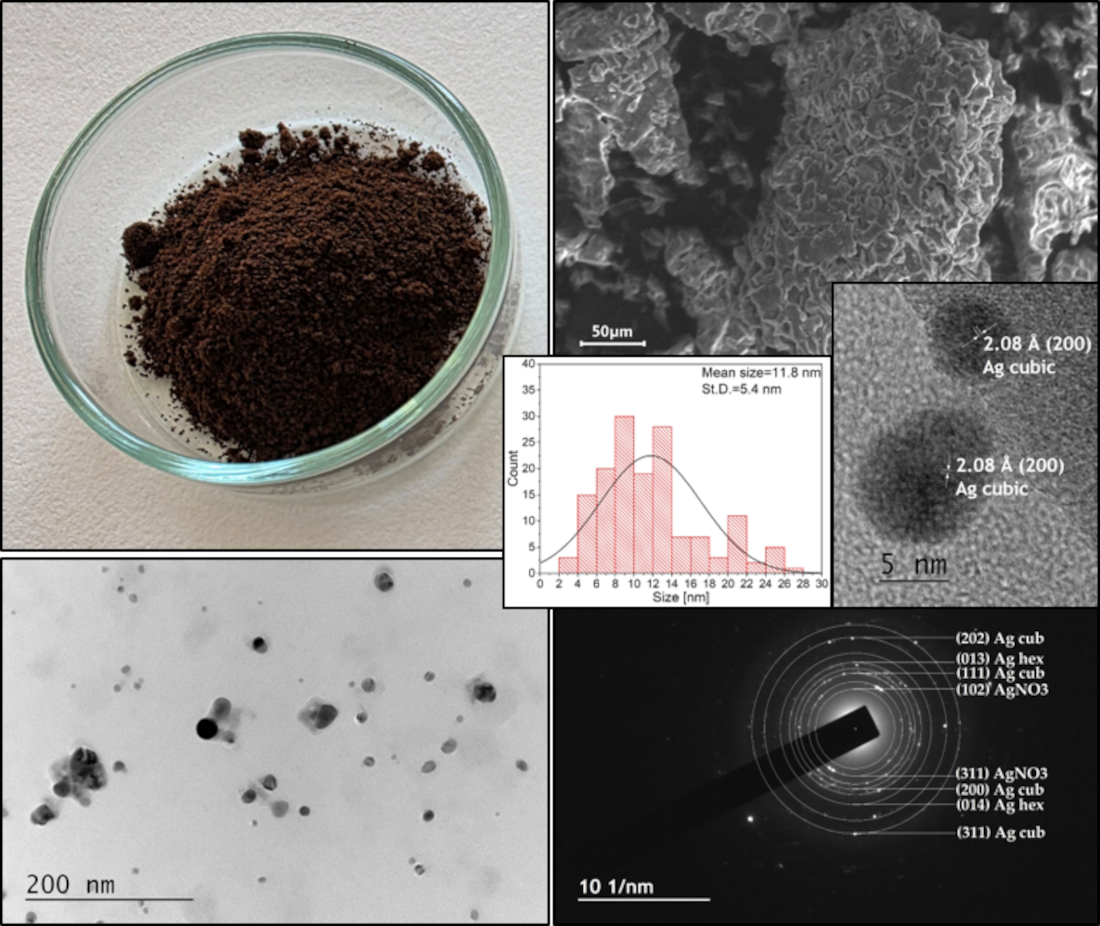
On a global scale, coffee happens to be the second most traded stock after the petroleum as billions of cups from the refreshing drink are consumed worldwide on a daily basis. As a consequence, billions of tons of waste in a form of wet spent coffee grounds are regularly produced. Since they constitute notable ecological problem, developing approaches for their valorization is seen by the global scientific community as an up to date problem. The article proposes an approach for valorization of the mentioned food waste by subjecting it to non-thermal, chemical treatment, which mimics naturally occurring processes in the environment, which produce petrified, mineralized fossils from prehistoric organic remnants. The spent coffee grounds are first treated with ethanol and then delignified with NaOH, Na2SO3 and H2O2. Powdered, bleached cellulose is obtained, which is then subjected to artificial silicification (petrification) with simultaneous synthesis of silver nanoparticles. Tetraethyl orthosilicate and AgNO3 are used for the purpose. The obtained mineralized powder is then used to produce ceramic-based, nanocomposite materials, with additional nanoparticles synthesized in the process. Even more silver nanoparticles are synthesized from the initially obtained ethanol extract. TEM, SAED, SEM, EDS and DTA/TG are used to analyze the synthesized nanoparticles.
Keywords:
spent coffee grounds
; food waste valorization
; conversion into material
; synthesis of silver nanoparticles
; artificial petrification by silicification
; nanocomposites
1. Introduction
Undeniably, coffee is considered as one of the best recognizable items of the global stock exchange, as it constitutes one of the most valuable commodities of the international agricultural production. Moreover, it is also the second most traded stock worldwide after oil [1]. According to the regular statistical reports from the International Coffee Organization (ICO), as of late 2025, the global consumption of coffee has been determined to reach up to nearly 10.812 million tons, with approximately 69% share for Arabica and about 31% for Robusta. This makes up the remarkable number of 2.3 billion cups, which are being drunk every single day on the worldwide scale. ICO statistics also shows that Brazil continues to be the largest producer and supplier of coffee, contributing to the global market with 4.194 million tons, which makes roughly 39%. It is followed by Vietnam with nearly 19% share and Colombia holding up to about 7% of the international trade.
The overall process of transforming the fruits from the coffee plants into a final consumable product includes several steps such as: harvesting, treatment, roasting and brewing. Throughout the realization of this process, sizeable amount of organic waste is produced. It includes husks, coffee pulp and spent coffee grounds [2,3], with the latter being the most significant part of the discarded residual mass. Roughly, from a single metric ton of green coffee beans, nearly 650 kg is disposed in the form of wet spent coffee grounds [2]. This organic waste constitutes solid, nonedible ecological pollutant. Along with many other similar remaining agricultural by-products, the spent coffee grounds pose a considerable harm for the environment. It is rarely utilized and subjected to some form of further processing for the purpose of being upcycled [4]. Spent coffee grounds also undergo biological decomposition, which results in the release of harmful greenhouse gases, such as CH4 and CO2, and thus it contributes to the negative climate change [5]. In addition to the mentioned compounds, the natural decay of the spent coffee grounds also produces other gaseous chemicals, such as N2O and NH3, which add to the environmental pollution as well, posing indirect threat to the health of the human population and the wildlife [6]. Moreover, a significant quantity of this organic waste ends up as a landfill, serving as a suitable ground for the breeding of different disease spreading insects as well as other vermin [7,8,9]. In addition, duo to its content of residual caffeine, if accidentally consumed, spent coffee grounds lead to food poisoning of household animals and the wildlife [10]. As a discarded biomass, if the proper conditions are met, spontaneous ignition is also plausible [11,12], thus it could also be seen as potential fire hazard.
Considering the rising awareness of the negative ecological impact, which comes from the global agricultural waste, throughout the recent years, there has been a noteworthy scientific interest towards the development of new methods, aimed at utilizing the vast diversity of the residual organic products, which the food industry disposes. The general goal is to preferably carry out the utilization in such a way, that these residual products are converted into different useable raw materials, which shall be suitable for the production of other goods. These new methods could be implemented into the process of subsequent fabrication of great diversity of new end products.
Numerous recent studies show that the spent coffee grounds could indeed be successfully exploited as one such useable source. Its structure and chemical composition have been well investigated. It is known to consist of polysaccharides, such as cellulose and hemicelluloses, suspended within polyphenolic lignin matrix. In addition, it also contains several types of sugars, such as mannose, galactose, glucose and arabinose [2,13]. Researches have also established the content of lipids, along with studies, which have determined its fatty acid profile. The latter has been found to be comprised mainly of palmitic acid, stearic acid, oleic acid, linoleic acid, arachidic acid and behenic acid [14]. However, several studies have shown that the particular composition varies for the different types of coffee (Arabica or Robusta). It is also dependent on the environmental conditions such as the climate in the geographical region of growth, state of the soil, the age of the coffee plant itself, as well as other specific factors of the area [14,15,16,17,18].
An interesting new strand of researches, which has been conceived rather recently, and has progressed throughout the last few years, is the addition of spent coffee, as well as other disposed organics, into the composition of different materials, which constitute solid aggregates – non-homogenous solid bodies comprised of multiple, small-sized solid bodies, which may differ in composition, atomic structure and properties. The types of materials, which predominantly fall in this category, are ceramic materials. They consist of small grains, which could be either microscopic or macroscopic, most commonly embedded into crystalline or amorphous binding matrix. Gaseous phase is also present in the structure of the ceramic materials in form of small air pockets, thus they are always porous to some extent.
Currently, the developed approaches for addition of spent coffee grounds into such materials involve subjecting them to thermal carbonization by the means of pyrolysis. Powdered, highly porous carbon mass is obtained, which in turn is introduced into the composition of the materials [6,19,20,21,22]. Studies have been carried out to add the organic waste in question in its original non-carbonized state, but they all conclude that the resulting materials demonstrates low and insufficient mechanical strength [23,24]. Obtainment of SiC from spent coffee grounds has been achieved by mixing the biomass with powdered glass and heating the mixture to 1550 °C in inert atmosphere to initiate thermal reduction of the SiO2 in the glass and thus forming SiC [25]. Silicon carbide is indeed widely used raw material for the production of great diversity of technical ceramics – mostly abrasive tools for machining of metallic surfaces.
There are however, some natural, non-thermal processes, which occur in the environment and which transform organic remnants into raw materials, suitable for addition into the discussed types of solid aggregates. Silicification is one such process, which chemically mineralizes remains of prehistoric plants by insertion of Si atoms in their lignin-cellulose based structure, thus causing petrification and subsequent fossilization [26,27,28,29,30]. Moreover, mineralized fossils do end up in the structure of naturally occurring solid aggregates such as clastic sedimentary rocks [31,32,33]. Furthermore, there are described practices and even researches involving the deliberate addition of grains of fossilized remnants of prehistoric plants into concrete mixtures [34].
Considering the fact that the structure of the spent coffee grounds is indeed based on lignin and cellulose, it would be reasonable to conclude that non-thermal conversion of the mentioned biowaste into useable raw material, by the means of silicification would be feasible. The process of silicification is well-studied [26,27,28,29,30] and it has been successfully carried out artificially in laboratory conditions [35]. In nature, water dissolves SiO2 present in rocks, forming monosilicic acid – Si(OH)4. However, the species of the monosilicic acid are highly unstable, as they tend to quickly polymerize and form polysilicic acid. This polymerization process produces complex, branched configurations, which aggregate and form spheroidal structures. When the size of these structures exceeds 5 nm, they precipitate as distinct particles, thus forming colloidal silica. In acidic conditions, these structures tend to link each other and eventually form complex, three-dimensional networks, transforming the colloid into gel – silica gel. In nature, the water containing dissolved Si, permeates into the porous cellular structure of the wood, as well as in other plants. Once inside, it slowly transforms into colloidal silica, and then into silica gel. Upon receding of the water, the resulting dehydrations converts the silica gel into amorphous structure of SiO2, which contains some remaining water – as OH groups bonded to Si atoms, and also as free OH– ions. This structure is known as opal-A – SiO2.nH2O [36,37,38]. In addition, the silanol groups of the species of the polysilicic acid bond to the hydroxyl groups of the lignin and the cellulose. Initially this occurs via hydrogen bonds, but in time they undergo transformation into covalent bonds (–Si–O–Si–), releasing H2O in the process. As a result, the exposed cellulose fibers and the structures of the lignin are slowly covered and eventually encased by opal-based shell. For the recreation of this process in laboratory conditions, tetraethyl orthosilicate is used as highly efficient precursor for Si [35]. In water it hydrolyses into monosilicic acid, releasing ethanol:
Si(OC2H5)4 + 4H2O → Si(OH)4 + 4C2H5(OH)
Considering the above stated, using silicified spent coffee grounds for the obtainment of solid aggregates would certainly be feasible. However, aggregates containing grains of opalized fossils are reported to exhibit lower mechanical properties [34]. This is due to the presence of chemically bound water in the structure of the opal – compared to pure amorphous SiO2, opal-A has lower hardness, lower stiffness and it is also more brittle. One way to counter this effect and enhance the mechanical properties of such aggregates (containing silicified spent coffee grounds), so they could be better and more reliable materials, would be to introduce metallic nanoparticles in their composition. Moreover, silver nanoparticles in particular provide some additional and quite distinct properties – antibacterial characteristics, which make the materials containing them, suitable for applications in food industry, pharmaceutical industry, agriculture, dental medicine, decontamination and purification of water, etc. Additionally, their presence in the structure of the materials contributes to a noticeable decrease of the surface porosity as well [39,40,41,42,43,44,45].
Furthermore, the spent coffee itself could be used directly for synthesis of silver nanoparticles. The extraction, which is carried out at the stage of brewing, is normally incomplete, thus many low molecular weight compounds remain in the residual biomass [46,47]. Their organic molecules contain functional groups, which can easily reduce Ag+ ions into Ag0 species, which then aggregate to form metallic nanoparticles.
Presently, the available literature is quite abundant in regards to articles describing different approaches for the synthesis of silver nanoparticles by using the reduction action of the active functional groups of various organic molecules, which are naturally present in plants. There seem to be no accounts however, on using spent coffee grounds for this purpose. Moreover, valorizing the mentioned discarded biomass, or any other food waste in general, by the means of artificial silicification (artificial fossilization by petrification) has not been discussed either. As stated above, the purpose of the artificial silicification shall be the non-thermal, chemical conversion of the spent coffee grounds into useable raw material, which shall serve as suitable alternative to quartz sand in the process of obtainment of solid aggregates. In terms of structure and composition, such solid aggregates shall be reminiscent to ceramic materials. Furthermore, bearing in mind the enhancement, which silver nanoparticles would provide to these materials, additionally widening their potential applications, the silicification process could be combined with the synthesis of silver nanoparticles, rendering composite ceramic material impregnated with silver nanoparticles. Therefore, the goals of the current article are: to present an experimental evaluation of the possibility of using spent coffee grounds for the synthesis of silver nanoparticles; to assess the feasibility of synthesizing silver nanoparticles along with simultaneous valorization of spent coffee grounds by artificial silicification and to use the silicified coffee for the obtainment of solid aggregates, which shall also contain silver nanoparticles, and therefore constitute composite ceramic material.
2. Materials and Methods
2.1. Pretreatment of the Spent Coffee Grounds and Initial Synthesis of Silver Nanoparticles
The spent coffee grounds (SCGs) are first dried at 75 °C until constant mass is reached. Then they are treated with ethanol for 1 hour at 30 °C in order to extract the remaining low molecular weight compounds. Filtration is carried out to separate the liquid extract from the solid phase. Mesh made of AISI 316 stainless steel (180 μm gap size) is used for the initial separation, while the collected liquid extract has been subjected to a secondary, finer filtration with filtration paper. After that, 10 mL from the extract was mixed with equal volume of 0.1 M AgNO3 (FILLAB Ltd., Plovdiv, Bulgaria) and left at room temperature. The Ag nanoparticles formation was followed by UV-Vis spectroscopy using LLG-uniSPEC 2 (LLG Labware, Meckenheim, Germany).
The residual solid phase, which is comprised of SCGs, is rinsed with deionized water (dH2O) and then treated at 80 °C with solution containing 5% NaOH and 1% Na2SO3 (referred to as “white liquor”). The duration of this treatment is 4 hours and the amount of the used white liquor is 300 mL per 100 g of wet SCGs. The solid biomass is then separated from the solution by filtration with the same mesh of AISI 316. It is rinsed with dH2O until neutral pH and it is then treated with 30% H2O2 for 1 hour at 60 °C – 300 mL of H2O2 solution is applied per 100 g of wet solid mass. After the treatment is done, the SCGs are collected, rinsed with dH2O until neutral pH and then dried at 75 °C until constant mass. At the end white cellulose powder is obtained.
The treatment of the SCGs with the white liquor, and then with H2O2 is done to delignify the biomass and thus expose more OH groups. Considering the fact that silicification relies primarily on silanol groups attaching to hydroxyl groups via hydrogen bonds, it would be reasonable to assume that by digesting the lignin and exposing the cellulose, more hydroxyl groups would be available for the silanol groups to bond with, therefore the silicification process shall be more efficient.
2.2. Synthesis of Silver Nanoparticles with Simultaneous Silicification of Spent Coffee Grounds
The bleached cellulose (see section 2.1) is added to 20% solution of ethanol in dH2O and stirred at 800 rpm for 30 minutes – 5 g of cellulose are added to 250 mL of solution. In the meantime, 0.3 g of AgNO3 are added to 10 mL of dH2O and stirred. The prepared solution is mixed with 7.5 mL NH4OH and the mixture is added to the suspension of cellulose in ethanol, while stirring at 800 rpm is maintained. The heater is turned on and the temperature is set to 80 °C. Once after this temperature is reached, the suspension is stirred for 45 more minutes. Then 7.5 mL of tetraethyl orthosilicate (TEOS; Sigma Aldrich Chemie, Schnelldorf, Germany) is introduced slowly – adding one drop at 5 – 10 seconds interval). After the entire amount of TEOS is added to the suspension, stirring continues for additional 2.5 hours at 800 rpm, while the temperature is maintained at 80 °C. Once this time has passed, the stirring is turned off and the suspension is let to cool down to room temperature. The solid phase is separated, spread evenly at thin layer at the bottom of a Petri dish and set to dry for 96 hours in a sealed desiccator, loaded with fresh silica-gel pallets. The desiccator itself is placed in a light-sealed, dark environment.
The usage of NH4OH has several purposes. It raises the pH, creating alkaline conditions and activates the hydroxyl groups of the cellulose. With the Ag+ ions, it forms [Ag(NH3)2]+ species, preventing the formation of macroscopic Ag2O. The activated hydroxyl groups of the cellulose reduce the [Ag(NH3)2]+ species to Ag0, as the reduction occurs directly on the surface of the cellulose [50,51]. On the other hand, NH4OH serves as a catalyst, accelerating the hydrolysis of TEOS. The alkaline conditions prevent the formation of complex, three-dimensional, cross-linked polymer structures of polysilicic acid. Instead, due to fast aggregation, spherical Si-based nanoparticles are formed [29,52,53].
2.3. Silicification of Spent Coffee Grounds Without Simultaneous Synthesis of Silver Nanoparticles
Part of the pretreated SCGs are silicified without the synthesis of Ag NPs, with the purpose being to conduct a subsequent comparative analysis. In this case, the methodology used is derived from the procedure for artificial silicification of wood, as proposed by Möckel and Klinger [35]. For 5 g of cellulose, obtained from the SCGs (see section 2.1), a solution is prepared by adding: 0.2 mL acetic acid and 1.8 mL isopropyl alcohol in 8.3 mL dH2O. This solution is transferred into a beaker and stirring at 800 rpm is initiated. Then 4.7 mL of TEOS is added, and the mixture is stirred for 30 more minutes. The powdered, bleached cellulose, obtained from SCGs (see section 2.1), is then introduced and the heater is turned on as the temperature is set to 80 °C. Once this temperature is reached, the stirring continues until the content in the beaker turns into thick gel-like substance. The mixture is allowed to cool down to room temperature and then it is left to rest for 24 hours. After the remaining liquid is removed, the solid mass is spread in a Petri dish and dried at 60 °C. The obtained substance is then collected, powdered and dipped in the ethanol extract from the SCGs (its preparation is described in section 2.1). The silicified SCGs are kept in the extract for 72 hours. Afterwards they are separated and dried.
2.4. Fabrication of Composite Solid Aggregates
Two separate batches (B-01 and B-02) of solid aggregates were fabricated for the goals of the experimentation. Initially, 0.3% solution of AgNO3 in dH2O is prepared, which is used for the creation of the samples of all two batches.
For the first batch (B-01), 5 g from the SCGs, which were silicified with simultaneous synthesis of AgNPs (see section 2.2), are mixed with 8.5 g of dry, powdered kaolin. The obtained dry mass is moisturized with the aqueous solution of AgNO3 until it turns into a plastic, formable clay-like substance, which is then pressed into premade molds. Once the mixture dehydrates to an extent that it hardens enough, the obtained specimens are extracted from the molds and allowed to dry for 72 hours in a completely dark environment, inside a sealed desiccator, which is packed with fresh silica-gel pallets. After the 72 hours have passed, the specimens are kept in drier for additional 3 hours at 90 °C. Immediately after that, the samples are fired in a kiln at 860 °C. The temperature increase is set to 10 °C per minute. The samples are kept at 860 °C for 1 hour. The kiln is then turned off and allowed to slowly cool down to room temperature with the samples inside, which takes about 36 hours.
Apart from the AgNPs, which are initially present in the structure of the aggregate, as they are introduced with the silicified SCGs, additional particles are also expected to form in the clay matrix during the process of firing. As the kaolin was moisturized with aqueous solution of AgNO3, instead of pure dH2O, it contains Ag+ ions. Under these circumstances, thermal reduction is expected to occur, forming additional AgNPs in the binding kaolin matrix itself, while releasing NO2 and O2 in the process.
The same procedure is followed for the fabrication of the second batch of solid aggregates (B-02), but the SCGs, which are silicified without simultaneous synthesis of AgNPs are the ones mixed with the powdered, dry kaolin. It shall also be noted that these SCGs were only silicified – they were not dipped and kept submerged in the ethanol extract mixed with AgNO3, thus AgNPs are not introduced with the silicified SCGs, but they are expected to form in the structure of the aggregate entirely via thermal reduction at the process of firing. The purpose of this batch is to provide data regarding the additional synthesis of AgNPs within the binding matrix itself.
2.5. Analysis
The silicified SCGs, with simultaneously synthesized AgNPs, and those, which were dipped in the ethanol extract with AgNO3 (see section 2.1 and section 2.3), as well as the solid aggregates are analyzed by Transmission Electron Microscopy (TEM JEOL JEM 2100, 200 kV, JEOL Ltd., Tokyo, Japan) along with Selected Area Electron Diffraction (SAED) in order to establish the morphology, microstructure, and phase composition of the nanoparticles synthesized. The samples for visualization in the TEM were prepared by dropping a small quantity of the respective suspensions onto a copper grid, preliminary covered with amorphous carbon nanolayer and dried at environmental conditions. Phase identification using the interplanar distances obtained from the SAED patterns and High resolution TEM micrographs was performed by comparison with the Match! software reference database (version 4.1, Crystal Impact, Bonn, Germany, Crystallographic Open Database (COD)). Histograms showing the nanoparticle size distribution were obtained by measuring each particle using ImageJ software (v.1.53t), followed by data processing with Origin computer program (OriginPro 2016 b9.3.226). Scanning Electron Microscopy (SEM, Carl Zeiss Microscopy GmbH, Germany) along with Energy Dispersive Spectroscopy (EDS) were implemented to study the SCGs before and after silicification (without simultaneously synthesized AgNPs). Additionally, Differential Thermal Analysis (DTA) along with Thermogravimetric Analysis (TGA) (LabsysEvo 1600 Setaram (KEP Technologies SA, France) were used to study the behavior of the dried, but non-fired specimen form the second batch (B-02) of the solid aggregates. The DTA/TGA analysis was conducted in air, with 10 °C per minute climb rate for the temperature. The range was from room temperature to 610 °C. The reference sample used was of Al2O3.
3. Results
3.1. Pretreated Spent Coffee Grounds
Figure 1 shows the initial dried coffee mass beside the obtained bleached cellulose after the treatment with white liquor (5% NaOH and 1% Na2SO3) and then with H2O2. The surface morphology of samples of both materials is shown in the SEM micrographs, (c) and (d), respectively. The highly developed surface of the untreated coffee waste is visible, which becomes even rougher after treatment with chemicals.
Figure 2 presents the TEM micrograph of Ag NPs synthesized from ethanol extract of spent coffee grounds and AgNO3 (Figure 2a), corresponding SAED pattern (Figure 2b), as well as HRTEM micrograph of the individual silver nanoparticles (Figure 2c,d). As seen in the Figure 2a the NPs are spherical-like, with different size from 2 up to 28 nm, with predominant dimension around 8÷12 nm. Indexing of the electron diffraction pattern confirms the successful synthesis of silver nanoparticles in two phases: face-centered cubic and hexagonal. The diffraction rings corresponding to the interplanar d-spacings show (hkl) orientations for both the cubic (111), (200), (311) and (202) and hexagonal phases (013) and (014) (COD #96-901-3053, S.G. Fm-3m, cell parameter a=4.16600 Å, Ag cubic and COD #96-150-9195, S.G. P63/mmc, cell parameters a=2.88620 Å, c=10.00000 Å, Ag hexagonal). Interplanar spacings (102) and (311) of silver nitrate are observed in the SAED pattern as well (COD #96-210-5349, S.G. P212121, cell parameters a=10.12500 Å, b=7.33500 Å and c=6=99200 Å, AgNO3 orthorhombic). High resolution TEM micrographs also demonstrate the synthesis of silver nanoparticles (Figure 2c,d). The measured interplanar spacings of 2.08 Å and 1.76 Å correspond to the cubic and hexagonal phases of metallic silver, respectively.
3.2. Silicified Spent Coffee Grounds
3.2.1. Silicified Spent Coffee Grounds, Without Simultaneous Synthesis of Silver Nanoparticles
Figure 3 features TEM micrograph of a single grain from the silicified SCGs (without simultaneous synthesis of AgNPs), which were dipped in the ethanol extract, mixed with AgNO3 (see section 2.1), while figures 3c and 3d show High Resolution TEM of individual AgNPs. The nanoparticles shown in Figure 3a exhibit a predominantly spherical morphology. Their size distribution, presenting in Figure 3a-inset is from 2 nm up to 30 nm, with predominant size around 8 nm up to 10 nm. The corresponding SAED pattern indicates the presence of two Ag phases – cubic face centered (COD #96-901-3053, S.G. Fm-3m, cell parameter a=4.16600 Å) and hexagonal (COD #96-150-9195, S.G. P63/mmc, cell parameters a=2.88620 Å, c=10.00000 Å). The both Ag phases are also confirmed by measuring the interplanar distances from HRTEM micrographs, shown in Figure 3c and Figure 3d. As the formation of the AgNPs was followed with UV-Vis spectroscopy, the change in the absorbance of the ethanol extract is given in Supplementary Material S1.
3.2.2. Silicified Spent Coffee Grounds, with Simultaneous Synthesis of Silver Nanoparticles
Figure 4a shows TEM micrographs of the SCGs, which were silicified with simultaneous synthesis of AgNPs, while Figure 4b is focused on the observed nanoparticles. Statistical analysis of the size variation of the obtained nanoparticles was run and the results are displayed in Figure 4c. As presented in the figure, the NPs are with spherical shape, they are with diameters from 1 to 7 nm (Figure 4c). High Resolution TEM illustrated in Figure 4b confirms the synthesis of Ag cubic face-centered phase. Due to the extremely small size of the nanoparticles, electron diffraction cannot be performed.
SEM micrograph of the silicified SCGs, without simultaneous synthesis of AgNPs is shown on Figure 5. Compared to the presented morphology of the starting material (Figure 1c), a smoothing of the surface roughness and a certain densification of the structure are observed here, as a result of silicification. The results for the elemental composition, provided by EDS analysis of the site depicted in the figure are presented in Table 1.
3.3. Fabricated Solid Aggregates
The SEM micrographs, which are shown on Figure 6, are obtained with the Back-Scattered Electron Detector. They are from two sites of a solid aggregate, which is fabricated with silicified SCGs, with no added AgNPs – either by simultaneous synthesis along with silicification or by being dipped in the ethanol extract. Results from the EDS scan at site 1 are given in Table 2.
Figure 7a,b show TEM micrographs from the AgNPs found in this aggregate. These particles are synthesized by the means of thermal reduction. The HRTEM micrograph shown in Figure 7c confirms the synthesis of Ag cubic face centered phase. Since the quantity of nanoparticles is limited, direct image-based particle size measurement was performed, revealing diameters ranging from 6.5 nm to 13.9 nm and a predominant spherical morphology (Figure 7d).
The results from the DTA/TGA analysis are shown in Figure 8.
4. Discussion
The AgNPs found in the ethanol extract, obtained from untreated SCGs, (Figure 2) confirm that the food waste in question contains sufficient amount of residual low molecular weight compounds, which feature enough active functional groups, capable to effectively reduce Ag+ ions into electrically neutral Ag0, which then aggregate to form AgNPs. The results from the conducted experimental evaluation, point to a future direction for development – an approach, which could be undertaken, to utilize the discussed biomass for green and ecologically clean approach for synthesis of AgNPs.
The achieved results regarding the outcome from the adopted methodology for artificial silicification (artificial fossilization by petrification) of the SCGs confirm its effectiveness. By the means of the undertaken chemical treatment, the mentioned food waste could be subjected to non-thermal conversion into useable raw material, suitable for fabrication of composite materials, which in accordance with their structure constitute solid aggregates. The affirmative outcome from the implemented process of silicification can be seen by comparing the SEM micrographs of the SCGs – before the silicification (Figure 1d) and after silicification (Figure 5). The multiple open and exposed cavities of the initial porous, cellulose structure (Figure 1d) are completely filled by the obtained fluid, rich of species of monosilicic and polysilicic acid, formed by the hydrolysis of TEOS. Upon the subsequent dehydration, the remaining Si-based structures bond and eventually form the amorphous atomic configuration of opal-A (SiO2.nH2O), enclosing the cellulose completely. This can be additionally seen from the TEM micrographs – the internal structure of a grain of silicified coffee is displayed in Figure 4a,b. Moreover, the results affirm the initial concept, preceding the experiment, that the process could be carried out with simultaneous synthesis of AgNPs. The latter are clearly seen on the TEM micrographs given in Figure 4a,b. In this case the synthesis relies on the exposed OH groups of the cellulose, obtained after the initial chemical treatment of the SCGs with NaOH, Na2SO3 and H2O2.
The dimensional analysis of the AgNPs synthesized in the ethanol extract from the SCGs and the one synthesized simultaneously along with the silicification of the coffee, show notable difference. The nanoparticles, which were formed in the ethanol extract have average dimension of 11.8 nm with standard deviation of 5.4 nm (Figure 2 (a-inset)), while those formed through the exposed OH groups of the cellulose have average dimension of 3.8 nm with far more narrow standard deviation of 0.9 nm (Figure 4c). The smaller size of the AgNPs, which were synthesized with the simultaneous silicification of the SCGs suggests higher rate of nucleation, which is consistent with the alkaline conditions created by catalyzing the mixture with NH4OH. Higher pH values deprotonate active functional groups more effectively. The higher number of oxidized groups creates conditions for intense and rapid supply of electrons to the Ag+ ions, quickly reducing them to Ag0. As the number or Ag0 rises speedily, this creates conditions for a flash nucleation and the formation of great number of seeds from which many particles then grow. The lower value for the standard deviation (0.9 nm) also suggests that the nucleation occurs rather uniformly throughout the solution, as each seed stands at relatively equal distances to its neighbors, pulling fairly equal amount of Ag0 particles for its growth. The constant stirring at 800 rpm is probably another contributing factor as well.
The higher value for the size of the AgNPs synthesized with the ethanol extract points to slower rate of nucleation. Although the ethanol based solution was not catalyzed in any way, coffee extracts are known to be slightly acidic [54,55,56,57]. Lower levels of pH suppress the deprotonation of the active functional groups. Because of the resulting deficit of electrons, the Ag+ ions are reduced at slower rate. Therefore, it takes more time for the solution to reach a point of saturation in regards to Ag0, delaying the formation of stable seeds. Because of the fewer seeds, which are formed, the present Ag0 are attracted to them, resulting in more sizeable AgNPs with wider range of variation in regards to their size. The nucleation also produces non-uniformly distributed seeds, which is another contributing factor.
Nevertheless, both approaches, which are undertaken, successfully produce silicified, powdered raw material containing AgNPs. The SCGs, being ecologically harmful food waste is double-utilized. The first utilization is for initial synthesis of AgNPs, by using its ethanol extract, which is a byproduct from its initial chemical preparation for silicification. The secondary utilization is the silicification itself – a chemical, non-thermal transformation of the discussed biomass into useable raw material, by mimicking processes, which naturally occur in the environment, and are known to produce raw materials, which could then be used for the fabrication of construction materials [34]. The latter do meet the accepted definition of solid aggregates, since they are non-homogenous solid bodies, comprised of multiple different, small-sized solid bodies. The silicification of the SCGs is successfully carried out in alkaline conditions with simultaneous synthesis of AgNPs. Alternative method for silicification with acidic catalyst, derived from Möckel et. al. [35], was also undertaken. It was carried out without simultaneous synthesis of AgNPs, but nevertheless, AgNPs were successfully attached to the silicified grains afterwards by dipping the grains in the ethanol extract with dissolved AgNO3 in it.
Since one of the most probable uses of the raw material, obtained by silicifying the SCGs, would be its inclusion in the structure of solid aggregates that would presumably be used as materials, the conducted experimental work involved the fabrication of such aggregates. Grains of silicified SCGs were mixed with kaolin, as the latter’s purpose is to form binding matrix and provide stability for the aggregates. Despite that the grains of silicified SCGs already contain AgNPs, successful experimentation was carried out to additionally synthesize more AgNPs during the fabrication of the solid aggregates. For that purpose, aqueous solution of AgNO3, instead of pure H2O, was used to moisturize the mixture, so it becomes viable to hydroplastic shaping. The formation of the AgNPs in this case relies on the thermal reduction, which shall occur during firing of the raw aggregate, as described in section 2.4. This reduction is an endothermic process, as heat energy is required to transform the anions to highly unstable anions, which then transfer electrons to the Ag+ ions and reduce them to Ag0.
The results from the DTA/TGA (Figure 8) do not show noticeable endothermic process, but what should be borne in mind is the low concentration of AgNO3 (0,3%) in the aqueous solution used to moisturize the clay mixture. The thermal decomposition of the anions begins at 250 °C and peaks in the range between 360 °C and 450 °C. However, two exothermic processes are observed in this range – one having a peak at 324 °C and the other one at 427 °C. These are associated with the thermal degradation and oxidation of the organic molecule of the cellulose, encased into the amorphous SiO2.nH2O structure formed during silicification. This structure shall deprive the cellulose from access to oxygen, needed for oxidation and combustion. The drop of the mass observed infigure8 however, suggests that some of the cellulose does undergo oxidation and escapes the volume of the aggregate. The oxygen atoms present in the molecular structure of the cellulose likely do have their contribution as well. The oxidation is exothermic process and it likely surpasses the endothermic effect from the thermal decomposition of the anions.
The EDS analysis of the aggregate (Table 2) confirms the presence of scattered carbon, which is a remnant from the organic inner core of the SiO2.nH2O grains formed at the process of silicification of the SCGs. It should be noted that at the temperature of firing, which is undertaken (860 °C), the opal-A encasing shall completely lose its chemically bound water, which shall cause an increase of its hardness and lower its brittleness. Crystallization in solid state is also plausible, rendering structures like cristobalite and/or tridymite, which could be a direction for future researches. The EDS analysis of the aggregate (Table 2) also indicates presence of iron with 2.31% concentration. It is most likely introduced in its composition through the kaolin. TEM micrographs of structures found in the solid aggregates (Figure 7a,b and 9a,b) do confirm the presence of remaining carbon within the grains. These same TEM micrographs affirm the successful synthesis of AgNPs within the binding matrix, formed from the transformation of the kaolin (Al2Si2O5(OH)4 or Al2O3.2SiO2.2H2O) into metakaolin (Al2Si2O5 or Al2O3.2SiO2). This transformation occurs as the kaolin completely loses its chemically bound water, originally present in its structure. It is an endothermic process, which begins at 450 °C and is clearly visible on the data from the DTA/TGA analysis (Figure 8), having its inversed peak at 541 °C.
The final result from the undertaken approach is porous, solid aggregates, which in terms of structure and composition is highly analogous to widely common ceramic materials. Because of the content of carbon particles, they should be classified as composite ceramics. Moreover, due to the presence of AgNPs, the obtained material shall be viewed as nanocomposite as well – ceramic-based nanocomposite.
5. Conclusions
Experimental work has been carried out with the goal to evaluate a proposed methodology for synthesis of silver nanoparticles, while simultaneously valorizing spent coffee grounds by the means of artificial petrification (artificial fossilization). As result, the mentioned food waste has been transformed into useable, powdered raw material, with amorphous Si-based outer structure, which can be used as an ingredient for the fabrication of ceramic-based nanocomposites. The primary objectives of the conducted experiments involved the synthesis of silver nanoparticles along with valorization of spent coffee grounds. They did not involve studying of the properties of the produced nanocomposite material. This however, shall be seen as viable foundation for future research activities.
The proposed process of transforming the spent coffee grounds into raw material is indeed non-thermal, in contrast to other methods presented in the available literature. Producing the nanocomposites did involve thermal treatment. However, materials with similar ceramic-based structure can be produced via non-thermal methods, like cementation, which opens a path for future researches.
Supplementary Materials
The following supporting information can be downloaded at the website of this paper posted on Preprints.org.
Author Contributions
Conceptualization, D.G. and A.S.; methodology, D.G. and A.S.; software, D.G., A.S., M.G., M-P.S., B.G. and D.K.; validation, D.G., A.S., M.G., B.G. and D.K.; formal analysis, D.G., A.S., M.G., M-P.S., B.G. and D.K.; investigation, D.G., A.S., E.B., I.I., M.G., B.G. and D.K.; resources, D.G., A.S., E.B., I.I., M.G., B.G. and D.K.; data curation, D.G., A.S., E.B., I.I., M.G., M-P.S., B.G. and D.K.; writing—original draft preparation, D.G., A.S., B.G. and D.K.; writing—review and editing, D.G., A.S., B.G. and D.K.; visualization, D.G., A.S., M.G., M-P.S., B.G., and D.K.; supervision, D.G., A.S., B.G. and D.K.; project administration, D.G., A.S., B.G. and D.K.; funding acquisition, D.G., A.S., B.G. and D.K.; All authors have read and agreed to the published version of the manuscript.
Funding
This research was funded by project BG16RFPR002-1.014-0012-C01 “Establishment and sustainable development of a Center of competence „Agrifood systems and bioeconomy”, financed by the European Regional Development Fund through the Bulgarian Operational Programme “Program for Research, Innovation and Digitalisation for Smart Transformation” (PRIDST).
Data Availability Statement
The authors declare that all the data supporting the findings of this study are available within the paper. Should any raw data be needed in another format, they are available from the corresponding author upon reasonable request.
Acknowledgments
We acknowledge the financial support from the Bulgarian National Science Fund of Bulgaria, Ministry of Education and Science in Bulgaria; project КП-06-H87/13 from 06.12.2024 “Complex valorization of by-products and waste from the tobacco industry”, Research equipment of Distributed Research Infrastructure INFRAMAT, part of Bulgarian National Roadmap for Research Infrastructures, supported by Bulgarian Ministry of Education and Science was used in this investigation.
Conflicts of Interest
The authors declare no conflicts of interest.
Abbreviations
The following abbreviations are used in this manuscript:
| SCGs | Spent Coffee Grounds |
| AgNPs | Silver Nano Particles |
| TEOS | Tetraethyl Orthosilicate |
| dH2O | Deionized Water |
| SEM | Scanning Electron Microscopy |
| EDS | Energy Dispersive Spectroscopy |
| TEM | Transmission Electron Microscopy |
| SAED | Selected Area Electron Diffraction |
| DTA | Differential Thermal Analysis |
| TGA | Thermogravimetric Analysis |
Appendix A
The experimentation was carried out with spent coffee grounds obtained after brewing of commercially available blend, comprised of comprised of 30% Arabica and 70% Robusta.
References
- Murthy, P.S.; Madhava Naidu, M. Sustainable management of coffee industry by-products and value addition – A review. Resour. Conserv. Recycl. 2012, 66, 45–58. [Google Scholar] [CrossRef]
- Karmee, S.M. A spent coffee grounds based biorefinery for the production of biofuels, biopolymers, antioxidants and biocomposites. Waste Manag. 2018, 72, 240–254. [Google Scholar] [CrossRef]
- Mussatto, S.I.; Machado, E.M.S.; Martins, S.; Teixeira, J.A. Production, composition, and application of coffee and its industrial residues. Food Bioprocess Technol. 2011, 4, 661–672. [Google Scholar] [CrossRef]
- Yoobsan, E.A.; Hundessa, D.D.; Muluken, E.T. Extraction and characterization of cellulose from coffee husk and brewery’s spent grain fibers using alkali-hydrogen peroxide treatment method. Adv. Mater. Sci. Eng. 2024, 5101871. [Google Scholar] [CrossRef]
- Mofijur, M.; Kusumo, F.; Fattah, I.R.; Mahmudul, H.; Rasul, M.; Shamsuddin, A.; Mahlia, T. Resource recovery from waste coffee grounds using ultrasonic assisted technology for bioenergy production. Energies 2020, 13(7), 1770. [Google Scholar] [CrossRef]
- Rajeev, R.; Shannon, K.; Mohammad, S.; Jie, L.; Guomin, Z.; Chun, Q.L. Transforming spent coffee grounds into a valuable resource for the enhancement of concrete strength. J. Clean. Prod. 2023, 138205. [Google Scholar] [CrossRef]
- Brekalo, M.; Rajs, B.B.; Aladic, K.; Jakobek, L.; Seres, Z.; Krstovic, S.; Jokic, S.; Budzaki, S.; Strelec, I. Multistep extraction transformation of spent coffee grounds to the cellulose-based enzyme immobilization carrier. Sustainability 2023, 15(17), 13142. [Google Scholar] [CrossRef]
- Samsalee, N.; Rungsinee, S. Different novel extraction techniques on chemical and functional properties of sugar extracts from spent coffee grounds. AIMS Agric. Food 2022 7, 4, 897–915. [Google Scholar] [CrossRef]
- Yasemin, S. Isolation and characterization of cellulose from spent ground coffee (Coffea Arabica L.): A comparative study. Waste Manag 2025, 193, 54–61. [Google Scholar] [CrossRef]
- Achari, A.; Devi, A.; Gaundan, S.S.; et al. Growth performance, gut health, and toxicity effects of feeding broiler chickens diets with graded levels of coffee by-products. Trop. Anim. Health Prod. 2025, 57, 492. [Google Scholar] [CrossRef]
- Chungen, Y.; Yonghao, W.; Qingyan, F.; Xinke, C.; Hongchi, Y.; Lun, M. Self-heating and spontaneous ignition of biomass storage piles: Towards a reliable prediction tool. Renew. Energy 2024, 120683. [Google Scholar] [CrossRef]
- Liyang, G.; Bo, T.; Long, F.; Haiyan, W.; Xiaomeng, L.; Wei, L.; Yuangang, J. Comparison and analysis of spontaneous combustion control between coal storage silos and biomass silos. Energy 2024, 129623. [Google Scholar] [CrossRef]
- Ballesteros, L.F.; Teixeira, J.A.; Mussatto, S.I. Chemical, functional, and structural properties of spent coffee grounds and coffee silverskin. Food Bioprocess Tech 2014, 7(12), 3493–3503. [Google Scholar] [CrossRef]
- Vardon, D.R.; Moser, B.R.; Zheng, W.; Witkin, K.; Evangelista, R.L.; Strathmann, T.J.; Rajagopalan, K.; Sharma, B.K. Complete utilization of spent coffee grounds to produce biodiesel, bio-oil, and biochar. ACS Sustain. Chem. Eng. 2013, 1, 1286–1294. [Google Scholar] [CrossRef]
- Jenkins, R.W.; Stageman, N.E.; Fortune, C.M.; Chuck, C.J. Effect of the type of bean, processing, and geographical location on the biodiesel produced from waste coffee grounds. Energy Fuels 2014, 28(2), 1166–1174. [Google Scholar] [CrossRef]
- Murthy, P.S.; Naidu, M.M. Sustainable management of coffee industry by-products and value addition-a review. Resour. Conserv. Recyl. 2012, 66, 45–58. [Google Scholar] [CrossRef]
- Pujol, D.; Liu, C.; Gominho, J.; Olivella, M.; Fiol, N.; Villaescusa, I.; Pereira, H. The chemical composition of exhausted coffee waste. Ind. Crops Prod. 2013, 50, 423–429. [Google Scholar] [CrossRef]
- Gui, M.M.; Lee, K.T.; Bhatia, S. Feasibility of edible oil vs nonedible oil vs waste edible oil as biodiesel feedstock. Energy 2008, 33(11), 1646–1153. [Google Scholar] [CrossRef]
- Arulrajah, A.; Kua, T.A.; Phetchuay, C.; Horpibulsuk, S.; Mahghoolpilehrood, F.; Disfani, M.M. Spent coffee grounds–fly ash geopolymer used as an embankment structural fill material. J. Mater. Civ. Eng. 2016, 28(5), 04015197. [Google Scholar] [CrossRef]
- Arulrajah, A.; Kua, T.A.; Suksiripattanapong, C.; Horpibulsuk, S.; Shen, J.S. Compressive strength and microstructural properties of spent coffee grounds-bagasse ash based geopolymers with slag supplements. J. Clean. Prod. 2017, 162, 1491–1501. [Google Scholar] [CrossRef]
- Muñoz Velasco, P.; Mendívil, M.; Morales, M.; Muñoz, L. Eco-fired clay bricks made by adding spent coffee grounds: a sustainable way to improve buildings insulation. Mater. Struct. 2016, 49(1), 641–650. [Google Scholar] [CrossRef]
- Na, S.; Lee, S.; Youn, S. Experiment on activated carbon manufactured from waste coffee grounds on the compressive strength of cement mortars. Symmetry 2021, 13(4), 619. [Google Scholar] [CrossRef]
- Jalkh, R.; El-Rassy, H.; Chehab, G.R.; Abiad, M.G. Assessment of the physicochemical properties of waste cooking oil and spent coffee grounds oil for potential use as asphalt binder rejuvenators. Waste Biomass Valor 2018, 9(11), 2125–2132. [Google Scholar] [CrossRef]
- Mohamed, G.; Djamila, B. Properties of dune sand concrete containing coffee waste. MATEC Web Conf. 2018, 149, 01039. [Google Scholar] [CrossRef]
- Al Mahmood, A.; Hossain, R.; Islam, M.B.; et al. Waste-to-Silicon Carbide: Sustainable Synthesis of SiC-Bearing Materials from Spent Coffee Grounds and Glass Waste. In Waste Biomass Valor; 2026. [Google Scholar] [CrossRef]
- Buurman, P. Mineralization of fossil wood. Scr. Geol. 1972, 12, 1–43. [Google Scholar] [CrossRef]
- Leo, R.F.; Barghoorn, E.S. Silicification of wood. Bot. Mus. Leafl. Harv. Univ. 1976, 25, 1–47. [Google Scholar] [CrossRef]
- Mustoe, G.E. Late tertiary petrified wood from Nevada, USA: Evidence of multiple silicification pathways. Geosciences 2015, 5, 286–309. [Google Scholar] [CrossRef]
- Mustoe, G.E. Silicification of wood: An overview. Minerals 2023, 206. [Google Scholar] [CrossRef]
- Scurfield, G.; Segnit, E.R. Petrifaction of wood by silica minerals. Sed. Geol. 1984, 39(3-4), 149–187. [Google Scholar] [CrossRef]
- Daryono, L.R.; Titisari, A.D.; Warmada, I.W.; Kawasaki, S. Comparative characteristics of cement materials in natural and artificial beachrocks using a petrographic method. Bull. Eng. Geol. Environ. 2019, 78, 3943–3958. [Google Scholar] [CrossRef]
- Haldar, S.K.; Tišljar, J. Chapter 5 - Sedimentary Rocks. In Introduction to mineralogy and petrology; Haldar, S.K., Tišljar, J., Eds.; Elsevier: Amsterdam, 2014; pp. 121–212. [Google Scholar] [CrossRef]
- Nimnate, P.; Arjwech, R.; Nulay, P.; Hongsresawat, S. Lithostratigraphy of a high terrace with petrified wood fossils in Northeastern Thailand: implication for the depositional environment and geologic setting of the Khon Kaen subbasin. Geol. Ecol. Landsc. 2026, 2, 441–456. [Google Scholar] [CrossRef]
- Sri, H.D.; Dicky, P.; Harmiyati; Heri, A.; Roza, M.; Sy, S.A. Effect of Petrified Wood as a Coarse Aggregate Substitute on the Compressive Strength of Concrete. Ann. De Chim.-Sci. Des. Matériaux 2025, No. 3, 299–305. [Google Scholar] [CrossRef]
- Möckel, R.; Klinger, M. Silicification of wood in the laboratory. Ceram. − Silikáty 2008, 52(4), 268–277. Available online: https://www.ceramics-silikaty.cz/index.php?page=cs_detail_doi&id=485.
- Day, R.; Jones, B. Variations in water content in opal-A and opal-CT from geyser discharge aprons. J. Sediment. Res. 2008, 78, 301–315. [Google Scholar] [CrossRef]
- Götze, J. Editorial for special issue “Mineralogy of quartz and silica minerals”. Minerals 2018, 8(10), 467. [Google Scholar] [CrossRef]
- Iler, R.K. The Chemistry of Silica. In John Wiley & Sons, first ed; New York, 1978. [Google Scholar]
- Farnaz, F.; Fatemeh, A.; Sara, K.; Fariborz, V.; Abbas, F.; Maryam, F. Effect of Adding Silver Nanoparticles on the Flexural Strength of Feldspathic Porcelain. J. Contemp. Dent. Pract. 2022, Volume 23(Issue 8), 793–800. [Google Scholar] [CrossRef]
- Pallav, S.; Chitra, S.; Bharath, K.; Dhanraj, G. Copper and zinc impregnated porcelain materials for dental applications. AIP Conf. Proc. 2025, 040023. [Google Scholar] [CrossRef]
- Abdullah, J.M.; Alaa, E.D.; Mohammad, A.S. The Effect of Adding Nanoparticles to Dental Porcelain on the Fracture Resistance and Bond Strength to Zirconia Core. Indian J. Dent. Res. 2022, 33(2), 193–197. [Google Scholar] [CrossRef]
- Farnaz, F.; Jamal, E.; Saeed, N.; M, F.; Abbas, F. Effect of silver nanoparticles addition on the surface roughness of feldspathic porcelain. Dent. Cadmos 2024, Volume 92(Issue 3), 216–224. [Google Scholar] [CrossRef]
- Raiesa, H.; Shereen, K.S. Flexural Strength, Shear Bond Strength, and Color change of Veneering Dental Porcelain Modified by Silver Nanoparticles on zirconia and metal cores. Egypt. Dent. J. 2023, 69(4), 1189–1198. [Google Scholar] [CrossRef]
- Izabela, F.; Carla, L.V.; André, L.B.; Paulo, S.F.; Mariana, L.C.V.; Marco, A.S.; Oswaldo, L.A.; Andréa, C.R. Effect of nanomaterial incorporation on the mechanical and microbiological properties of dental porcelain. J. Prosthet. Dent. 2020, Volume 123(Issue 3), 529–529. [Google Scholar] [CrossRef]
- Lima, L.A.; Regis, W.F.M.; Lima, F.R.L.; et al. Evaluation of the effect on antimicrobial properties, color, roughness and curing time of glass ionomer cement incorporated with silver and copper nanoparticles. Discov. Mater. 2025. [Google Scholar] [CrossRef]
- Alexandre, V.; Micheline, D.; Christine, P.; Gregory, C. Study of Influential Parameters of the Caffeine Extraction from Spent Coffee Grounds: From Brewing Coffee Method to the Waste Treatment Conditions. Clean. Technol. 2021, 3(2), 335–350. [Google Scholar] [CrossRef]
- Gaja, A.W.; Magdalena, B. Life After Brewing—Finding New Purposes for Spent Coffee Grounds: A Review. Appl. Sci. 2026, 16(4), 1904. [Google Scholar] [CrossRef]
- Nicolas, D.; Robert, G.; Abdelmajid, M.; Naïma, S.; Carmen, K.K.; Philippe, B.; Pierre, K. Antimicrobial silver nanoparticles generated on cellulose nanocrystals. J. Nanoparticle Res. 2011, 13(4), 1557–1562. [Google Scholar] [CrossRef]
- Shiwen, W.; Jiashu, S.; Yuexiao, J.; Lu, Y.; Nuoxin, W.; Yunlei, X.; Wenwen, C.; Xiaohong, L.; Ruitao, C.; Xingyu, J. Nanocrystalline Cellulose-Assisted Generation of Silver Nanoparticles for Nonenzymatic Glucose Detection and Antibacterial Agent. Biomacromolecules 2016, 17(7), 2472–2478. [Google Scholar] [CrossRef]
- Yutong, S.; John, D.W.; Simon, R.H. Comparison of acid- and base-catalysed sol–gel synthesis for the in situ crystallisation of a perovskite. Soft Matter 2025, 21(38), 7476–7486. [Google Scholar] [CrossRef]
- Alexandra, R.; Bruno, S.F.; Ana, P.F.P.; Susana, P.; Fátima, M. Exploring alkaline routes for production of TEOS-based consolidants for carbonate stones using amine catalysts. New J. Chem. 2021, 45(8), 3833–3847. [Google Scholar] [CrossRef]
- Semmelroch, P.; Grosch, W. Studies on Character Impact Odorants of Coffee Brews. J. Agric. Food Chem. 1996, 44(2), 537–543. [Google Scholar] [CrossRef]
- Fisk, I.D.; Kettle, A.; Hofmeister, S.; et al. Discrimination of roast and ground coffee aroma. Flavour 2012, 1, 14. [Google Scholar] [CrossRef]
- Mayer, F.; Czerny, M.; Grosch, W. Sensory study of the character impact aroma compounds of a coffee beverage. Eur. Food Res. Technol. 2000, 211, 272–276. [Google Scholar] [CrossRef]
- Laura, M.; Cristina, S.; Susana, A.; De Peña, M. Paz; José, B.; Concepción, C. Characterization of Espresso Coffee Aroma by Static Headspace GC−MS and Sensory Flavor Profile. J. Agric. Food Chem. 2001, 49(11), 5437–5444. [Google Scholar] [CrossRef]
Figure 1.
Spent coffee grounds: (a) Dried biomass before treatment; (b) Obtained bleached cellulose; (c) SEM micrograph of the dried biomass before treatment; (d) SEM micrograph of the obtained bleached cellulose.
Figure 1.
Spent coffee grounds: (a) Dried biomass before treatment; (b) Obtained bleached cellulose; (c) SEM micrograph of the dried biomass before treatment; (d) SEM micrograph of the obtained bleached cellulose.
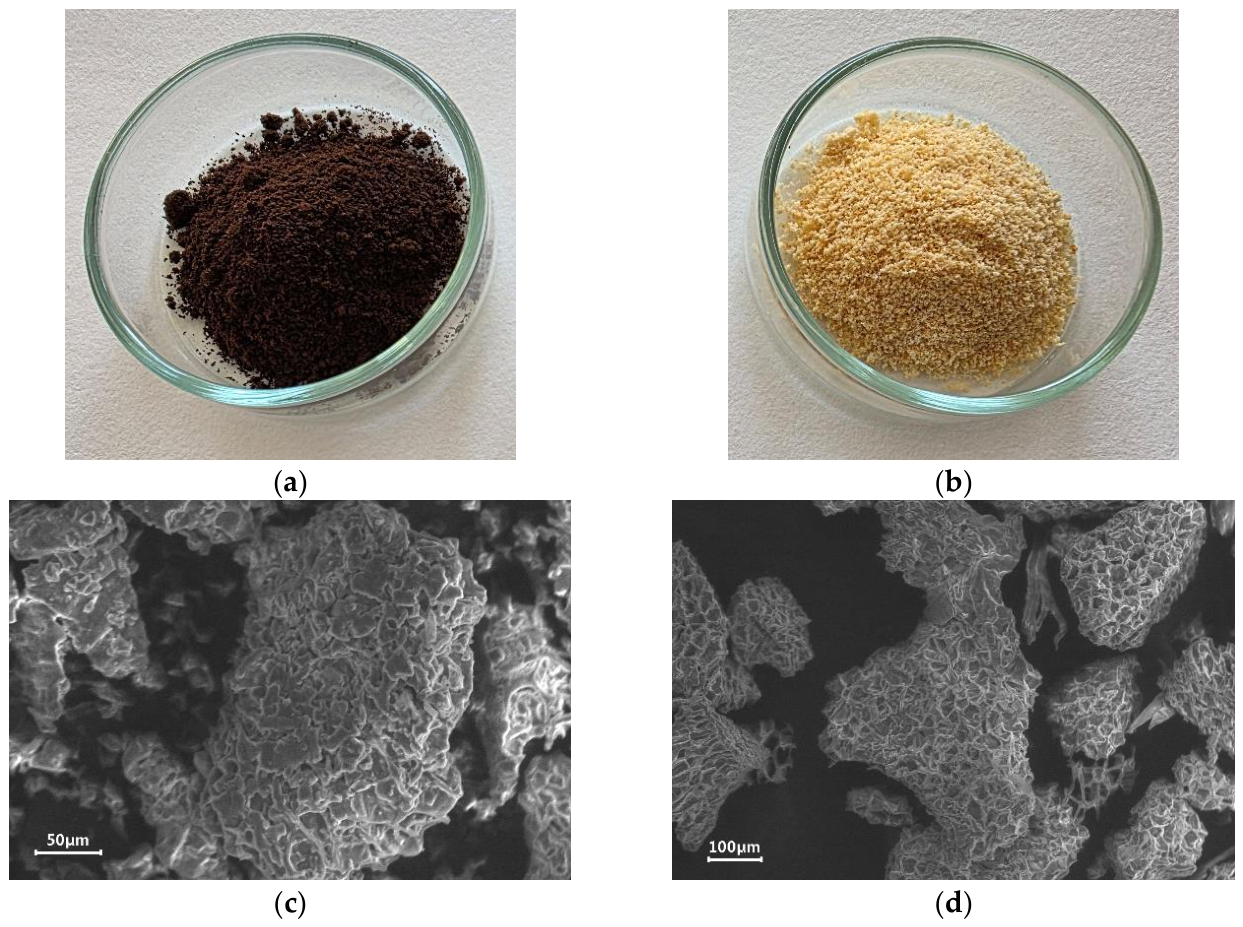
Figure 2.
TEM micrographs of Ag NPs from ethanol extract of spent coffee grounds (a), corresponding SAED pattern (b), HRTEM of Ag NPs cubic face centered phase (c), Ag NPs hexagonal phase (d) and size distribution of Ag NPs (a-inset).
Figure 2.
TEM micrographs of Ag NPs from ethanol extract of spent coffee grounds (a), corresponding SAED pattern (b), HRTEM of Ag NPs cubic face centered phase (c), Ag NPs hexagonal phase (d) and size distribution of Ag NPs (a-inset).
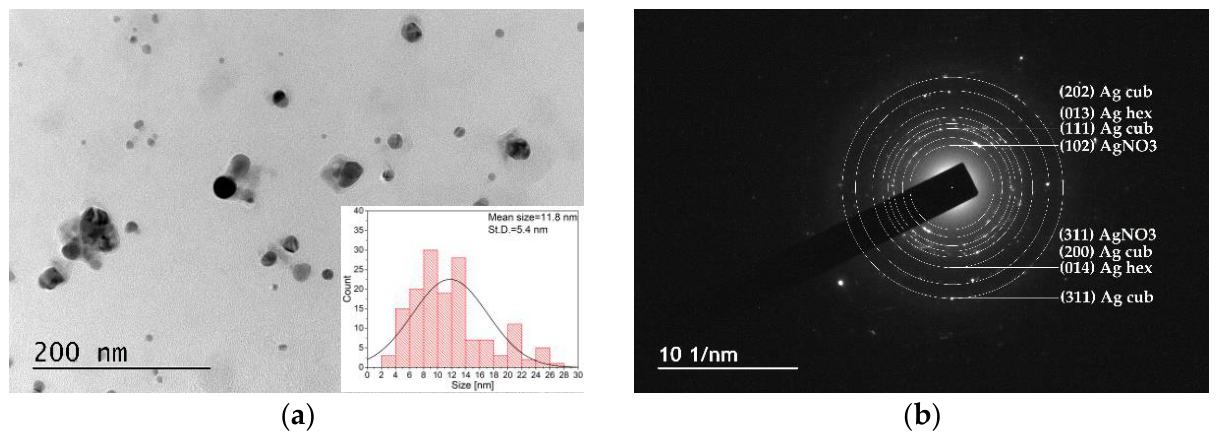
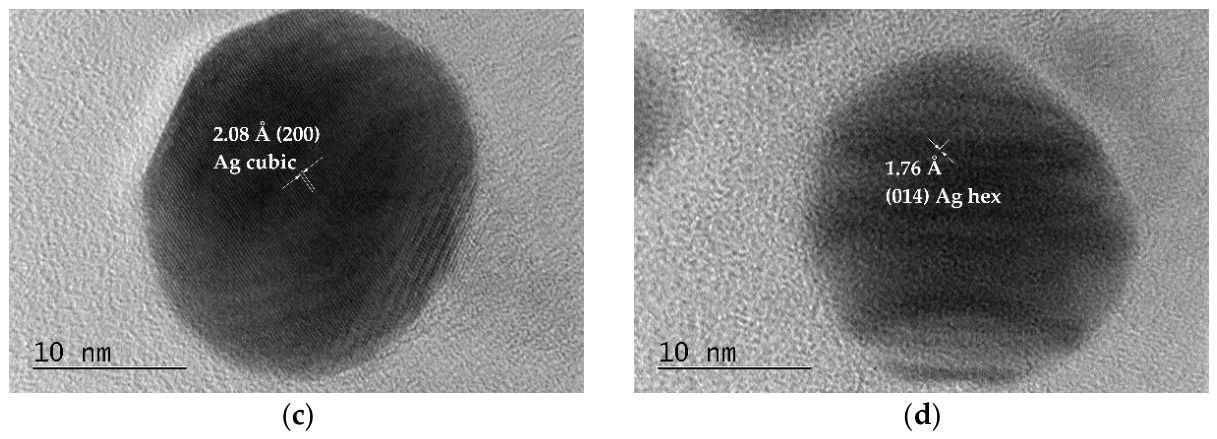
Figure 3.
TEM micrographs of Ag NPs from the spent coffee grounds, which were silicified without simultaneous synthesis of silver nanoparticles (a), corresponding SAED pattern (b), HRTEM of Ag NPs cubic face centered phase (c), HRTEM of Ag NPs hexagonal phase (d) and size distribution of Ag NPs (a-inset).
Figure 3.
TEM micrographs of Ag NPs from the spent coffee grounds, which were silicified without simultaneous synthesis of silver nanoparticles (a), corresponding SAED pattern (b), HRTEM of Ag NPs cubic face centered phase (c), HRTEM of Ag NPs hexagonal phase (d) and size distribution of Ag NPs (a-inset).
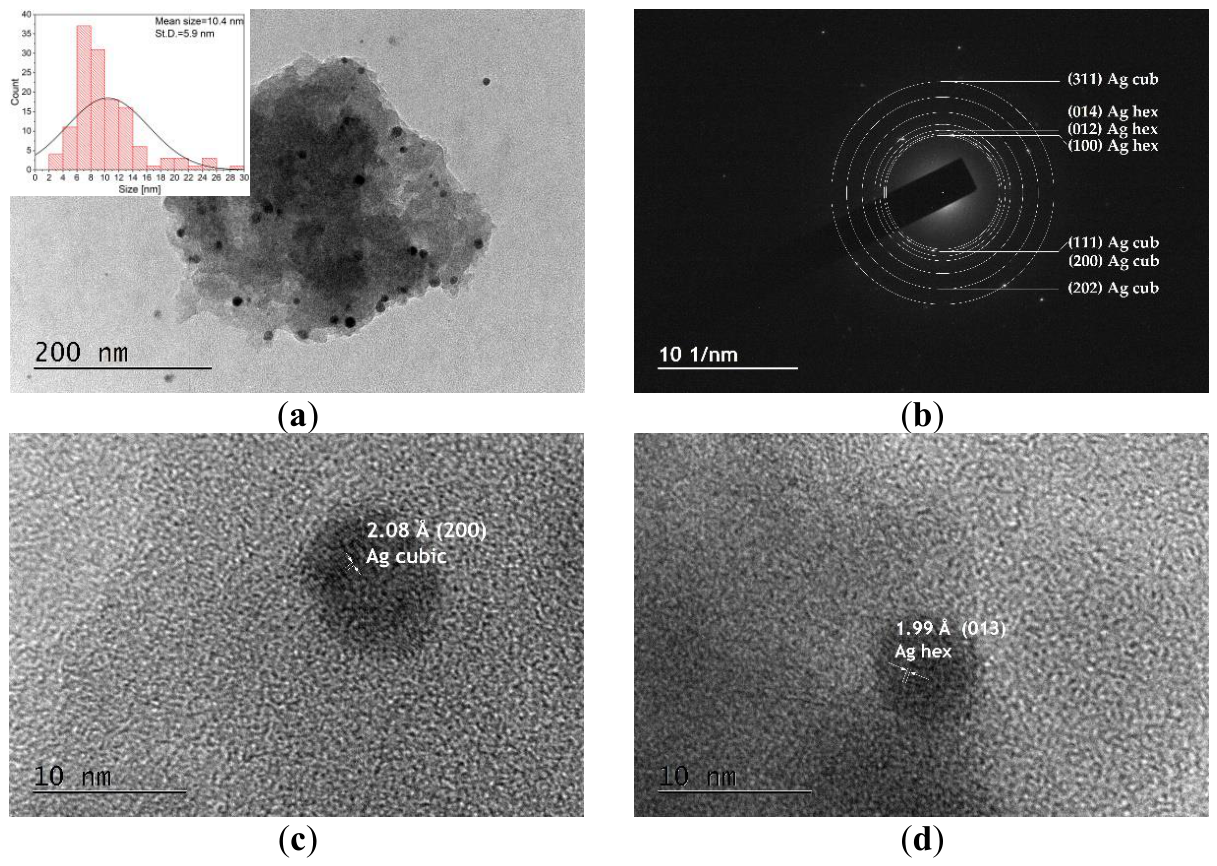
Figure 4.
TEM micrographs of the spent coffee grounds silicified with simultaneous synthesis of silver nanoparticles (a), HRTEM micrograph (b) and size distribution the silver nanoparticles (c).
Figure 4.
TEM micrographs of the spent coffee grounds silicified with simultaneous synthesis of silver nanoparticles (a), HRTEM micrograph (b) and size distribution the silver nanoparticles (c).
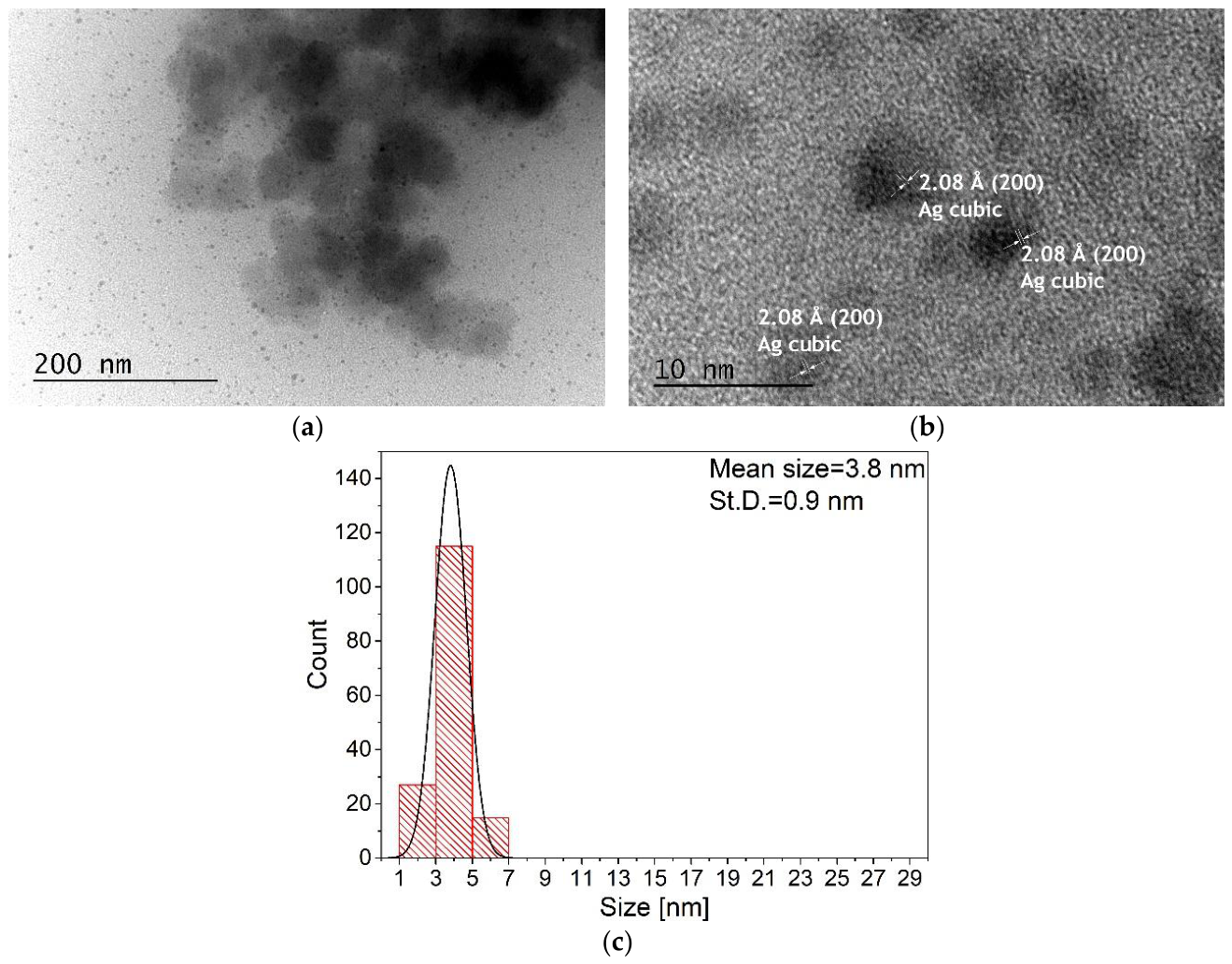
Figure 5.
SEM micrograph of the silicified spent coffee grounds – without synthesis of silver nanoparticles.
Figure 5.
SEM micrograph of the silicified spent coffee grounds – without synthesis of silver nanoparticles.
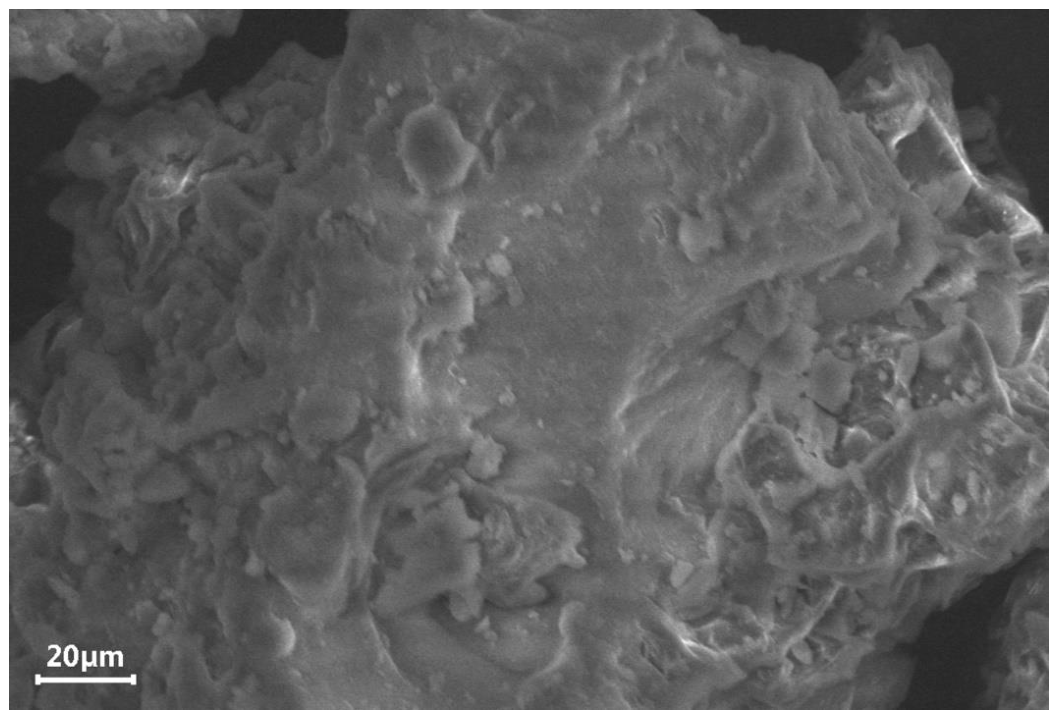
Figure 6.
SEM micrographs, obtained with Back-Scattered Electron Detector, at two sites from fabricated solid aggregate. Spent coffee grounds were used for its fabrication, which were silicified without simultaneous synthesis of silver nanoparticles: (a) Site 1; (b) Site 2.
Figure 6.
SEM micrographs, obtained with Back-Scattered Electron Detector, at two sites from fabricated solid aggregate. Spent coffee grounds were used for its fabrication, which were silicified without simultaneous synthesis of silver nanoparticles: (a) Site 1; (b) Site 2.
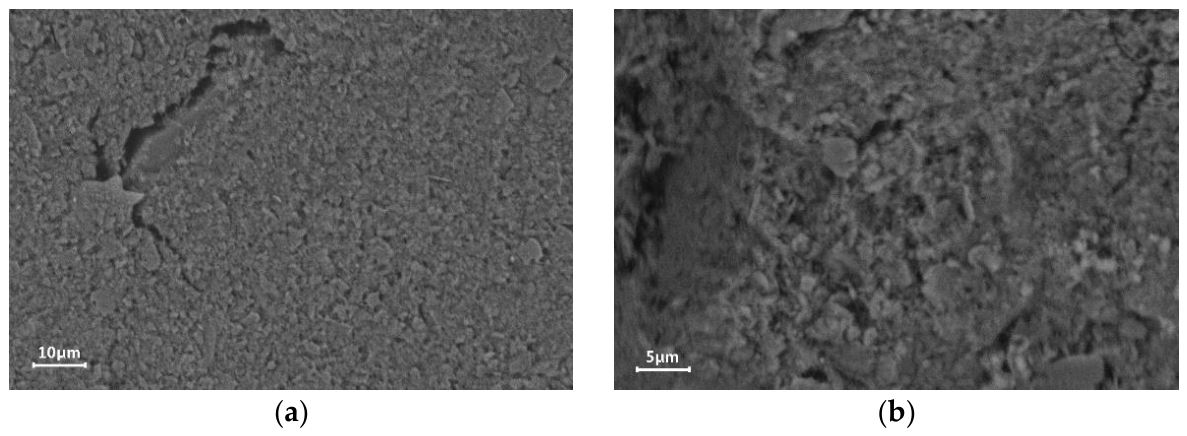
Figure 7.
TEM micrographs from the silver nanoparticles found in a solid aggregate: (a) Site 1; (b) Site 2; (c) HRTEM micrograph of an individual particle; (d) The cluster, presented in (b) with the noted silver nanoparticles diameters.
Figure 7.
TEM micrographs from the silver nanoparticles found in a solid aggregate: (a) Site 1; (b) Site 2; (c) HRTEM micrograph of an individual particle; (d) The cluster, presented in (b) with the noted silver nanoparticles diameters.
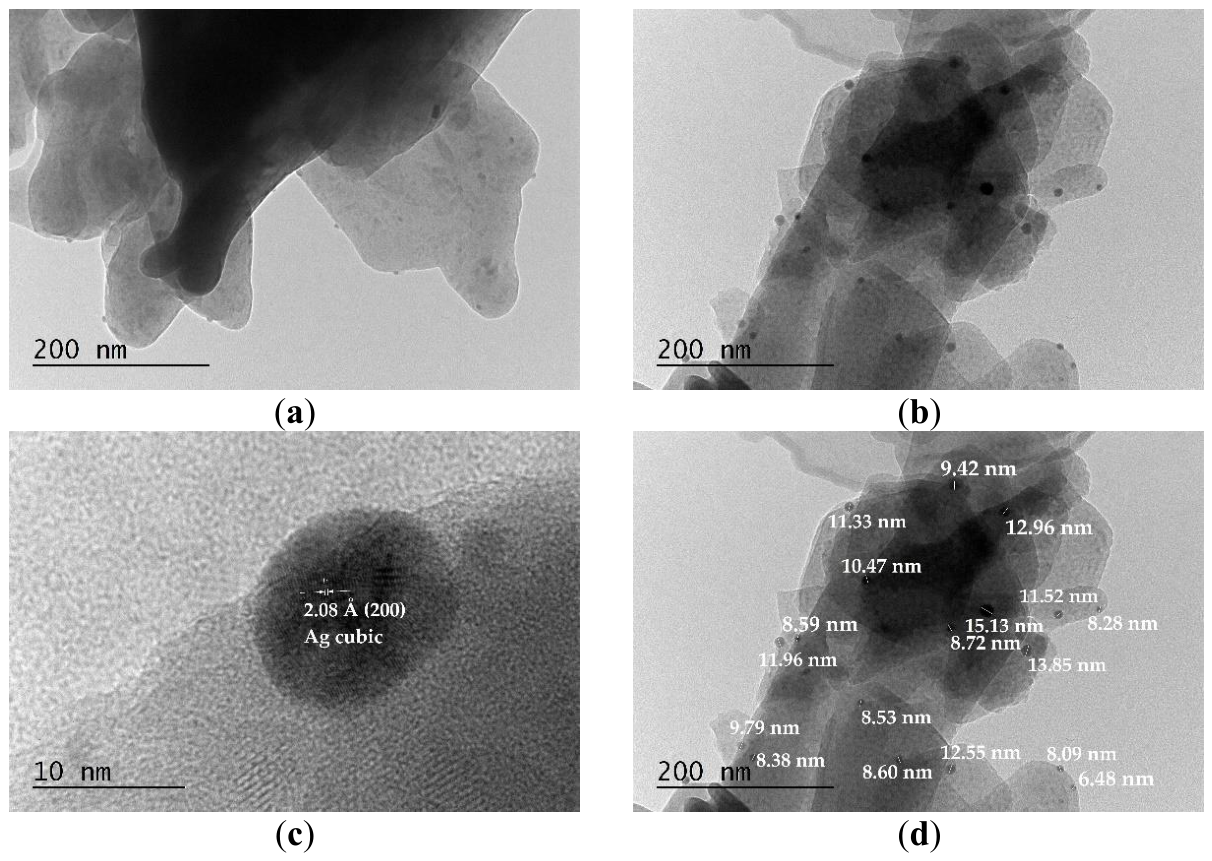
Figure 8.
Results from DTA/TGA analysis on solid aggregate, containing SCGs, which were silicified without simultaneous synthesis of silver nanoparticles.
Figure 8.
Results from DTA/TGA analysis on solid aggregate, containing SCGs, which were silicified without simultaneous synthesis of silver nanoparticles.
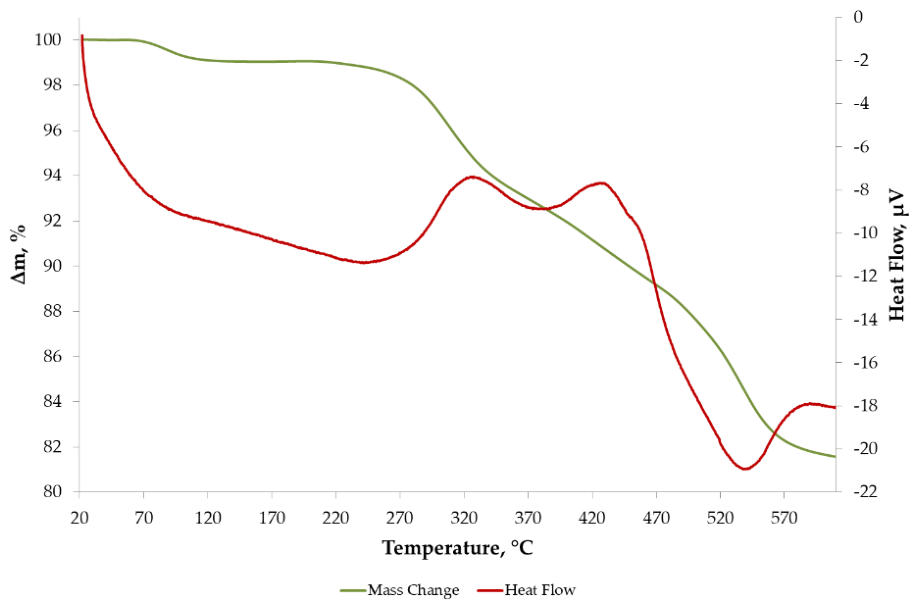
Figure 9.
TEM micrographs of structures in a solid aggregate fabricated with spent coffee grounds, silicified with simultaneous synthesis of silver nanoparticles: (a) Structure 1 at magnification 20 000×; (b) Structure 2 at magnification 40 000 ×; (c) Individual cubic silver nanoparticles; (d) Individual hexagonal silver nanoparticles .
Figure 9.
TEM micrographs of structures in a solid aggregate fabricated with spent coffee grounds, silicified with simultaneous synthesis of silver nanoparticles: (a) Structure 1 at magnification 20 000×; (b) Structure 2 at magnification 40 000 ×; (c) Individual cubic silver nanoparticles; (d) Individual hexagonal silver nanoparticles .
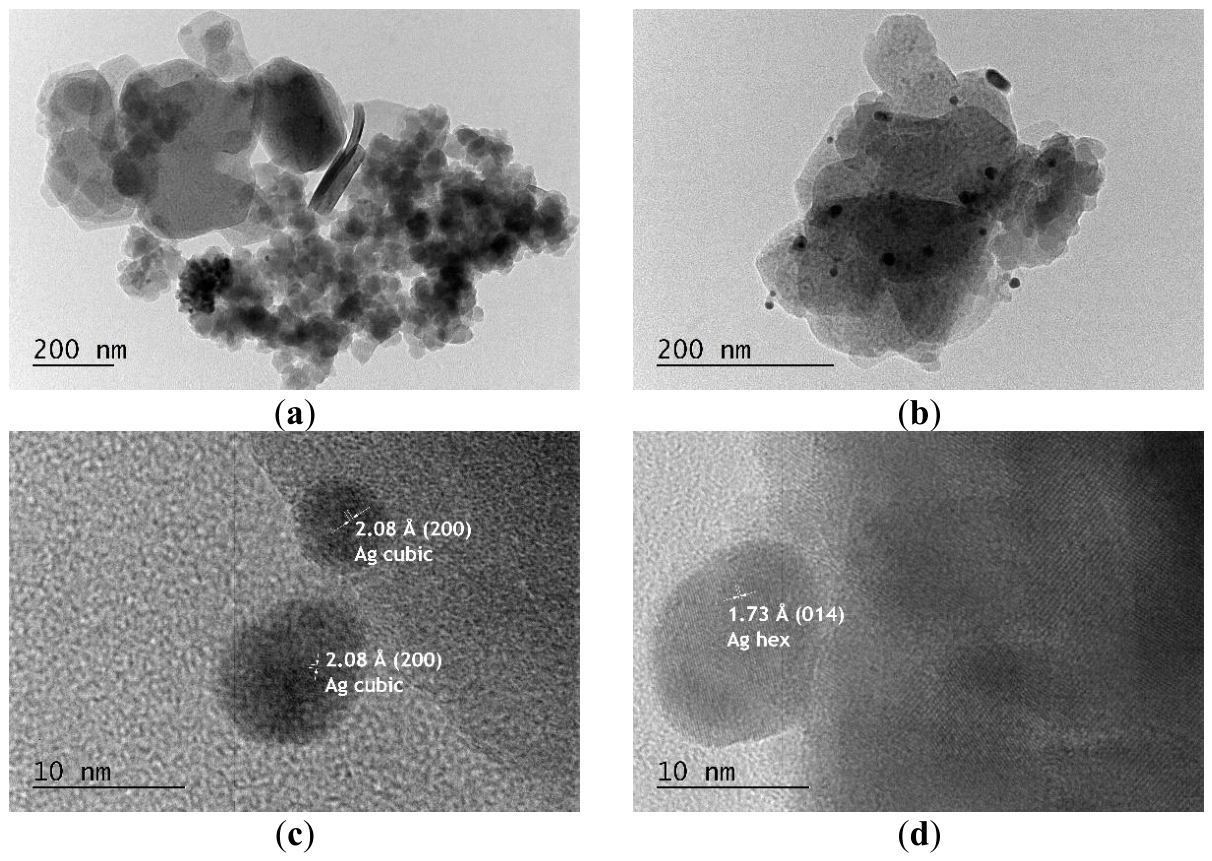

Table 1.
Results from EDS analysis on the silicified spent coffee grounds.
| Element | Concentration, % |
|---|---|
| C | 38.53 |
| O | 42.15 |
| Si | 18.64 |
Table 2.
Results from EDS scan at site 1 (Figure 6) from solid aggregate, fabricated with silicified spent coffee grounds, which do not contain silver nanoparticles.
Table 2.
Results from EDS scan at site 1 (Figure 6) from solid aggregate, fabricated with silicified spent coffee grounds, which do not contain silver nanoparticles.
| Element | Concentration, % |
|---|---|
| C | 3.49 |
| O | 47.16 |
| Si | 24.50 |
| Fe | 2.31 |
| Ag | 0.80 |
Disclaimer/Publisher’s Note: The statements, opinions and data contained in all publications are solely those of the individual author(s) and contributor(s) and not of MDPI and/or the editor(s). MDPI and/or the editor(s) disclaim responsibility for any injury to people or property resulting from any ideas, methods, instructions or products referred to in the content. |
© 2026 by the authors. Licensee MDPI, Basel, Switzerland. This article is an open access article distributed under the terms and conditions of the Creative Commons Attribution (CC BY) license.
Copyright: This open access article is published under a Creative Commons CC BY 4.0 license, which permit the free download, distribution, and reuse, provided that the author and preprint are cited in any reuse.