
Submitted:
11 August 2026
Posted:
21 August 2026
You are already at the latest version
Abstract
The objective of this study was to examine the effect of lack of visual input on the ontogeny of fear response. We used a genetically blind chicken model (rc chickens) and used Tonic Immobility (TI) for testing the fear response. There were four blind groups and four sighted groups of rc chickens in this study, and each group had 45 chickens. We perform the TI test at the age of Day 2 and at Days14, 28, and 70, respectively to study the ontogeny of fear response. Blind chickens were more difficult to induce a TI response and stayed in TI for a significantly shorter time compared to sighted controls. The results from the TI tests indicated that the blind males had a slower rate in developing a TI response (from Day 2 to Day 70) than blind females. The blindness of the rc chicken was caused by a deletion in the GC1 locus resulting in the disruption of cGMP metabolism. Besides causing the degeneration of rods and cones in the retina, cGMP deficiency may have direct effect on the brain cells to supress tonic immobility. cGMP also seems to affect male sexual maturity differently than female sexual maturity. Our results indicated that the ontogeny of fear response was dependent on the interaction of age, sex, experience and visual input, and the ontogeny of TI response in rc chickens may not be just reflecting the ontogeny of fear response but also physiological processes affected by the mutation.
Keywords:
lack of visual input
; fear response
; tonic immobility
; sex
; age
; experience
; circadian rhythm
; chicken
1. Introduction
Tonic immobility (TI) is an unlearned response in animals caused by intense, threatening, inescapable and frightening situations and results in temporary immobilization in animals [1,2,3,4]. In threatening situations of predator and prey encounters when preys cannot fight or flight, TI response (or feigned death) may increase the survival chance of preys because most predators cannot detect immobile objects [5,6].
Long duration of TI response is associated with high levels of fear in other potentially frightening situations. In the laboratory conditions, the duration of the TI response is defined as the latency of righting time, and it is considered as an indicator in the assessment of the fear response [7,8].
TI can be induced in the laboratory by physical restrains; for example by inverting the animal onto its back and restraining it [9]. During TI response, the animal is in a catatonic-like state with heightened tonicity of skeletal muscles, and reduced responsiveness to external stimulations [10].
TI response has been studied intensively. Several factors have been identified as the TI modifying factors which affect the duration of the TI response; Method of induction [11,12], visual stimuli [7,13,14,15,16], age [17,18,19], sex [17,20,21], previous experience [7,12], social experience [19,22,23], housing structure [4,23,24], genetic background [25,26], nutrition [27,28], and noise [7,29].
The objective of this study was to evaluate the effects of lack of vision, age, sex, experience and the time of testing on the development of fear response in domestic chickens using a well-defined genetically blind chicken [30] as a model. The TI response was measured in terms of the number of inductions required, latency of first head and first leg movements, and righting time of birds during the immobility test.
2. Materials and Methods
2.1. Experimental Birds
The line of blind chicken was originally established from an experimental line of Rhode Island Red chickens with a single locus autosomal recessive mutation [30]. The mutants have degenerated rods and cone in their retina and fail to respond to visual stimulation [31] at hatch and thereafter. The mutation was named rc (rods and cones) according to the poultry gene system [30]. Later molecular studies identified that the mutation was a null deletion in the photoreceptor guanylate cyclase (GC1) gene [32].
Blind birds used in this study were homozygous (rc/rc) [30,31]. Sighted heterozygous (Rc+/rc) birds were used as controls. Both types were from Rc+/rc matings so that the blind and sighted birds used in the experiment were very similar in genotypic background except for the mutation. All birds were exposed to a 14L:10D photoperiod.
2.2. Experimental Design
At hatch, blind chicks were individually marked, weighed and randomly assigned to one of the four groups (1B, 2B, 3B, and 4B). Each group consisted of 45 individuals. Sighted chicks were treated similarly and assigned to either group1S, 2S, 3S, or 4S. The 8 groups were randomly assigned to different sections of two battery brooders placed side by side in the same room. Blind chicks quickly learnt where the feed and water was by their explorative behaviour (circular walking). After the birds were 4 weeks old, they were moved to side-by-side 6 m × 6 m floor pens with each group occupying a pen.
To assess fear response, TI was evaluated for each individual on day 2, day 14, day 28 and day 70 after hatching, in groups 1B + 1S, 2B + 2S, 3B + 3S, and 4B + 4S, respectively. Individuals in groups 1B and 1S were also repeatedly tested at different ages. Thus with the exception of day 2, at each of the other three ages, a group of naive birds and a group of experienced (previously tested) birds for each type (blind vs. sighted) were compared. In addition to the post-hatch weights, individual body weights for all groups were also taken at days 28 and 70, after the test session. All experimental birds were kept until the end of the experiment when the sex of each individual was determined.
2.3. TI Test Protocol
2.3.1. Apparatus
The test apparatus for Day 2 chicks was a Styrofoam platform with a trough in the middle (Figure 1).
The test apparatus for older birds consisted of a 30 cm square plywood platform with 4 cm high wide adjustable V-shaped sides above the platform along one axis (Figure 2). The width of the depression could be adjusted as the birds grew older. The depression was covered by corduroy to cradle the inverted body of the bird. The apparatus was placed on a table at one end of a darkened and visually isolated 6 m × 6 m room adjacent to the rooms where the birds were reared. Auditory contacts were not blocked. A 40 watt shaded light was placed about 61 cm above the apparatus so that the apparatus would be lighted but the rest of the room would be dark during testing. A video camera was placed about 3 m (in the dark) from the apparatus. A digital stopwatch was taped beside the apparatus facing the camera so that time could be recorded. A card with a random number was placed next to the stopwatch and the number was later keyed to the group number of the bird on a record sheet. During the test session, the experimenter would be sitting still in the dark corner of the room furthest away from the test apparatus.
2.3.2. TI Test Procedure
The order of testing was randomized. A bird from a pre-determined group was taken from the brooder and hand-carried to the darkened test room. The bird was put on its back on the cradle of the test apparatus, firmly held for 15 s and then released. If the bird stayed on its back for at least another 15 s then the induction was deemed successful. A maximum of 600 s was allowed. If a bird was still under TI at the end of this period, the trial would be ended and the bird put back in its brooder. If the bird got up before the end of 15 s (after the release) the induction was considered unsuccessful. The bird would be caught and induced again following the same procedure. A maximum of 6 inductions were allowed. After 6 unsuccessful inductions, the bird would be taken back to its home pen and a score of 15 s would be given. All the testing was conducted by the same person. Each trial was recorded on video tape. In reviewing the tapes, the number of inductions required, the latency to first head and first leg movements, and the righting time (i.e., the time required for the bird to right itself with both feet on the platform/table) were recorded. The person reviewing the tapes was a different person than the one conducting the tests. She was totally unaware of which group the bird under observation was coming from.
2.4. Statistical Analyses
PASW Statistics software (PASW Statistics GradPack 17.0, release 17.0.2., IBM® SPSS®, Chicago, IL) was used to analyze the data. Significance level was set as p < 0.05.
Experiment results were organized in two data sets, and statistical analyses for each data set were determined based on our research questions, considering selected test assumptions. To be able to use parametric tests, three TI response variables (including latency for the first head and first leg movements, and righting time dependent variables) were transformed using natural logarithm transformation. Marginal means (in seconds) and SE reported in the Results Section are the results from the back-transformation from natural log scale. Transformation did not work on the ‘number of inductions required’ dependent variable, and as a result, non-parametric tests (Kruskal-Wallis, and Mann-Whitney tests) were used to analyze the results related to this variable.
2.4.1. Using the First Data Set to Assess the Effects of Age, Lack of Vision, Sex and Time of Testing on TI Responses and Body Weight of Birds
This data set includes TI responses of individual chicks in groups 1B + 1S, 2B + 2S, 3B + 3S, and 4B + 4S on days 2, 14, 28 and 70 after hatching, respectively (i.e., birds which were tested for the first time at the identified measurement day). Pearson or Spearman’s correlation coefficients were calculated to investigate the relationship between the dependent and independent variables in our study. To assess the effects of age (in 4 levels: 2, 14, 28 or 70 days), lack of vision (in 2 levels: blind or sighted) and sex (in 2 levels: male or female) on the natural logarithms of three dependent TI response variables (including the latency for the first head and first leg movements, and righting time), ANOVA tests were applied, and back-transformation of marginal means and SE are reported in the Results Section. Sidak correction post hoc tests were used to follow up any significant main effects or interactions effects with more than 2 levels.
To assess the differences in the body weight of the birds considering the effects of age, sex and lack of vision factor, a linear model (GLM procedure) was used to conduct a repeated measures ANOVA separating within bird effects (weight at 3 ages: 2, 28 and 70 days) from between birds effects (i.e., age, lack of vision and sex). Sidak correction tests were used as the post hoc test (if required).
To assess the effects of the time of testing (as an independent variable in 3 levels: morning, afternoon and evening), ANOVA tests were used on the natural logarithms of three dependent TI response variables (including latency for the first head and first leg movements, and righting time) and back-transformation of marginal means and SE are reported in the Results Section.
Kruskal-Wallis and Mann-Whitney tests were also utilized to assess the effects of age, lack of vision, sex and time of testing (separately) on the ‘number of inductions required’ variable.
2.4.2. Using the Second Data Set to Assess the Effects of Experience on TI Responses of Birds (Considering Lack of Vision and Sex Factors)
To investigate the effect of previous TI test experience on the TI response variables, the responses of birds were categorized based on their age (without including 2nd day data because there was not any experienced groups at day 2). Birds in 1B + 1S groups were included as the experienced birds at all three age categories while birds in 2B + 2S, 3B + 3S, and 4B + 4S groups were included as the novel birds at 14, 28 and 70 days, respectively. Experienced and novel groups at each age category were compared using ANOVA tests while considering lack of vision factor and sex of the birds in the analysis using natural logarithm transformation on three dependent variables (including the latency for the first head and first leg movements, and righting time). The back-transformation of marginal means and SE are reported in the Results Section. Mann-Whitney Tests were also utilized to assess the effect of previous TI test experience on the variable of the ‘number of inductions required’.
3. Results
3.1. Body Weight
There was no significant correlation between the body weight at any ages and the TI responses of birds. The lack of vision did not have a significant effect on the body weight of birds.
Results of a repeated measures ANOVA test indicated that body weight of birds increased significantly at each age compared to the previous age, F(2,592) = 6822.71, p < 0.001 (37.33 ± 0.21, 320.01 ± 2.34 and 1015.67 ± 10.98 g at the age of 1, 28 and 70 days, respectively). The main effect of sex was also significant (F(1, 296) = 91.02, p < 0.001), and male chicks (497.33 ± 6.03 g) were heavier than female chicks (418.01 ± 5.72 g). Moreover, the interaction effect of age and sex was significant (F(2,592) = 76.88, p < 0.001; see Table 1).
3.2. Number of Inductions Required to Induce TI Response
The number of inductions required to induce a TI was significantly different at different ages of the birds (χ2(3) = 23.39, p < 0.001). Mann-Whitney post-hoc tests showed that more inductions were required to induce TI at the age of Day 2 (1.78 ± 0.16), Day 14 (1.42 ± 0.11) and Day 70 (1.44 ± 0.08) compared to that of Day 28 birds (1.08 ± 0.04).
The number of inductions required for inducing TI in blind birds was greater than that of sighted birds (U = 11,792.5, p = 0.005; 1.58 ± 0.09 vs. 1.31 ± 0.07, respectively). While males (1.47 ± 0.08) and females (1.41 ± 0.08) did not differ in the number of inductions required at different ages (U = 11,761.5, p = 0.12).
3.3. Latency of First Head Movement
While the latency of first head movement increased as the birds age, there was a significant (F(3, 303) = 2.65, p < 0.05; Figure 3) three-way interaction between Age, Lack of vision and Sex. At Day 2, there was no significant difference among the 4 groups of birds. At Day14, blind males and blind females were not different in the latency of first head movement. Similarly, sighted males were not different than sighted females. However, blind males had significantly shorter latency than both sighted males and females. At Day 28, the difference in latency to first head movement between blind and sighted birds became clearer. At Day 70, Blind males had significantly shorter latency than the sighted birds. It is interesting to note that at this age, blind females had significantly long latency than the blind males and not different from the sighted birds.
3.4. Latency of First Leg Movement
While all birds had longer (F(3, 303) = 43.18, p < 0.001) latency of first leg movement as they age. There was a significant (F(3, 303) = 4.47, p = 0.004; Figure 4) 3-way interaction of Age, Lack of vision and Sex in the Latency of first leg movement. At Day 2, sighted females had significantly longer latency of first leg movement than the other 3 groups which were not significantly different among themselves. At Day 14, Blind birds had significantly shorter latency than sighted birds. Blind females were not different than blind males and sighted females were not different than sighted males. At Day 28, the difference in latency between the blind and the sighted became more pronounced. At Day 70, Blind males had significantly shorter latency than the sighted birds. Similar to the latency of first head movement, blind females had significantly long latency of latency of first leg movement than the blind males and were not different from the sighted birds.
3.5. Latency of Righting Time
All birds had significantly (F(3, 203) = 59.4, p < 0.001) longer latency of righting time as they age. There was a significant (F(3, 303) = 3.23, p = 0.02; Figure 5) 3-way interaction of Age, Lack of vision and Sex on Righting time. At Day 2, sighted female chicks already took significant longer latency time to right themselves. At Day 14, sighted birds had significant longer latency of righting time than blind birds. However, on Day 28 although the trend remained the same, there was no longer significant differences in latency of righting time among the 4 groups of bird. At Day 70, sighted males, sighted females, and blind females had significant longer latency of righting time than blind males. There was no significant difference among sighted males, sighted females and blind females.
3.6. Effect of Previous TI Test Experience on Repeat TI Test
3.6.1. Number of Inductions Required to Induce TI
At Day28, experience birds (1.22 ± 0.06) required significantly (U = 3315.50, p = 0.03; Mann-Whitney Test) more inductions than novel birds (1.08 ± 0.04). There was no significant difference between experienced and novel birds at Day 14 and Day70.
3.6.2. Latency of First Head Movement
There was a significant (F(1, 150) = 5.22, p = 0.02) 3-way interaction of Experience, Lack of vision and Sex on Latency for first head movement at Day 14 (Figure 6). There was no significant difference in Latency between sighted males and females, be they experienced or novel. There was also no clear separation among the blind birds. On the whole, Experienced birds (45.52 ± 1.11 s) had significantly (F(1, 150) = 28.46, p < 0.001) shorter latency than novel birds (102.57 ± 1.10 s).
3.6.3. Latency of Righting Time
There was a significant (F(1, 160) = 5.56, p = 0.01) interaction between Lack of vision and Experience on the Latency of righting time at Day 28. There was no significant difference Experienced and Novel sighted birds. Experience blind birds had shorter Latency of righting time than Novel blind birds (Figure 7). Over all sighted birds had longer latency than blind birds.
3.7. Effect of the Time of Testing (Morning, Afternoon or Evening) on TI Test
The number of inductions required was significantly (H(2) = 7.50, p = 0.02; Kruskal Wallis Test) higher in the morning tests (1.68 ± 0.12) compared to the afternoon (1.36 ± 0.08) and evening (1.39 ± 0.12) tests. Time of testing did not have a significant effect on Latency of first head movement, Latency of first leg movement, or Latency of righting time.
4. Discussions
The TI test is a well-validated fear test that can be used for both quail and chickens [3,10,33]. Our results indicated that TI duration of genetically blind Rhode Island Red chickens were significantly shorter than that of sighted birds of the same breed. Moreover, blind birds were less susceptible and needed more inductions to show TI response. This is an indication that blind birds may be less stressed and less frightened by handling compared to the sighted birds [34].
Visual sense plays a major role in gathering information for the birds and “birds are the most visually dependent vertebra” [35]. Our results corroborated with previous report that vision restricted hens showed less aggressive and agonistic behaviour than normal vision control laying hens [36]. When birds see a new object, they react, and novelty per se is a particularly potent fear stimulus or elicitor in birds [37]. Sighted chickens might have much more opportunity than blind birds for the contact with novel stimulus during their lifetime and during the TI test. Therefore, it is not surprising that the blind chickens show less fear than the sighted counterparts do.
It has been suggested that chickens often perceive contact with humans as an alarming predatory encounter [38,39]. Two of the commonest and potentially most frightening events encountered by domestic fowl are sudden changes of their environment and prompt exposure to unfamiliar human beings [37]. Visual contact with humans may be perceived as particularly threatening by birds [40]. The reduced fear response in the blind chicken is probably due to their inability to contact visually with the experimenter while the TI test was performed. Blind chickens did not need to be caught. Mature blind hens often perform the “crouching” display (mating posture) when touched by the human hand and could be picked up easily (Cheng, pers obs). When carried in the human hands, blind chickens remained calm and did not try to get away. Mature blind roosters were observed to start crowing while being carried. The possibility of sighted birds seeing and being caught by the experimenter may instantaneously contribute to the ease of induction and increased latencies of TI responses in the present study.
The blindness of the rc chicken was caused by a deletion in the GC1 locus resulting in the disruption of cGMP (cyclic guanosine monophosphate) metabolism [32,41]. With a drop in cGMP, the photoreceptors cannot maintain their resting potential, recover from light exposure, process visual signals and triggers photoreceptor apoptosis [42,43]. cGMP is also a crucial intracellular messenger in neuronal, muscle [44,45], and endocrine cells [46]. In brain cells, cGMP acts as a critical second messenger bridging extracellular signals to neuronal plasma membrane functions and gene expression. It regulates synaptic plasticity, memory formation, and ion channel activity [47]. When a chicken enters TI, central cholinergic pathways (using acetylcholine) are highly active, maintaining the motor inhibition and fear state [48]. cGMP acts as a critical intracellular secondary messenger in these cholinergic pathways. With a deficiency of cGMP, fear signal could not be translated into full physical manifestation of the immobility response [49]. It is therefore likely that besides being blind to minimize the perception of fear and the development of a fear response, the mutation in rc chickens also acted directly on the brain to minimise a TI response [50,51].
4.1. Ontogeny of Fear Response as Measured by TI
In our study, older birds showed significantly longer TI responses compared to younger birds, and latency for the first leg movement and righting time reached their maximum levels at the third TI measurement day (day 28). Moreover, there was not a significant difference in the latency for the first head movement of sighted and blind chicks at the first TI experiment day when the birds were only two-days old. Ratner & Thompson [18] and Salzen [19] reported that TI response was absent before 7 days of age. Salzen [19] explained that the TI response is physiologically immature at earlier ages. After the first week post hatching, birds establish a familiar social environment thus feel frightened with any threatening or novel factor which is not familiar to them.
Nakasai et al. [52] found that in native Japanese chickens, the TI duration in male was shorter than that in the female at 2-day old, but longer than that in the female at 15-day old. We found the same trend with our sighted birds. However, TI duration was not significantly different between our blind males and females at both ages. The onset of sexual maturity in chickens starts at around 4 weeks (28 days) of age and involves extensive physiological and metabolic changes [52,53].
Archer [55] studying 6 different genetic stocks of chickens found that all mature males had longer duration TI response than all mature females. Campo et al. [53] showed that mature females had shorter TI duration than mature males, but immature hens showed longer durations than immature males. Hens showing early sexual maturity had shorter TI reaction than hens with late sexual maturity. On the contrary, the TI duration was longer for the mature males compared with immature males.
In our study, for the sighted birds, there was no significant change in the three measurements (latency to first head movement, first leg movement, and righting time) of TI response over time (from Day 28 to Day 70) in either sex. For the blind birds, blind females had longer TI response at Day 70 compared with Day 14. At Day70, there were no significant difference between blind or sighted females in their TI response. Blind males had no significant change in their TI response from Day 14 to Day 70. As a result, Blind males had significantly shorter TI response than the other 3 groups at Day 70.
The day a hen lays her first egg—known as the Age at First Egg (AFE)—is the definitive physiological marker for sexual maturity. Rhode Island Red hens typically lay their first egg between 18 and 22 weeks of age. Ali and Cheng [34] compared egg production of 20 week old blind and sighted rc hens. AFE for blind hens was a few days before AFE of sighted hens. In the following 2 months, blind hens produced 12.7% more eggs (hen-day production) while requiring 44.1 g less feed per bird per day compared to sighted hens. In avian tissues, ductus arteriosus and hypothalamus, estrogen (such as 17β-estradiol) interacts with membrane-associated receptors to stimulate nitric oxide (NO) production, which in turn activates the enzyme soluble guanylyl cyclase (sGC) to rapidly synthesize intracellular cGMP [56]. Thus it seems that blind rc hens can by-pass cGMP deficiency that would affect their rate of sexual maturity and egg production.
Sexual maturity and testosterone synthesis in male chickens are principally driven by the hypothalamic-pituitary-gonadal (HPG) axis via luteinizing hormone (LH) stimulation of the Leydig cells [57,58]. A deficiency of cGMP can affect testosterone production and reproductive functions because cGMP signaling pathways play a regulatory in the steroidogenic activity of the Leydig cells and can delay male gonadal development and onset of sexual maturity [59].
Cerruti Sola, et. al. [60] reported that in 20 weeks old blind rc males testes, the germinal layer showed retarded maturation and poor differentiation of the germinal cells. There was a complete lack of spermatocytes, spermatids, and spermatozoa. Arshami and Cheng [61] compared testicular development and sperm production between 22 weeks old blind and sighted rc males. Blind males had significantly less volume of ejaculate, total sperm count per ejaculate, % sperm motility, % live sperm, and sperm metabolic activity after ejaculation than sighted males. Histological examination of the testes found that blind males had significantly reduced seminiferous tubule length and diameter, with significantly less % of seminiferous tubules filled with elongated sperm compared with sighted male testes. These results indicated delayed sexual maturation in the blind males. Campo et al. [53] found that the TI duration was longer for mature males compared with immature males.
Despite the lack of rods and cones photoreceptors, the blind rc chickens can still perceive light via the inner retina [41,62]. They still maintain a circadian system of pineal melatonin secretion [63]. Behavioral studies showed that the blind chicken has entrainment of feeding rhythms to the light-dark cycle [62]. Our study found the both the blind and the sighted chickens were taking significantly more inductions to induce a TI in the morning compared with both afternoon and evening.
In this study, novel birds showed longer latency for the first leg movement at the age of 14 days compared to the birds with previous TI measurement experience, and experienced birds required more inductions at day 28 of age (were less susceptible) compared to novel birds. Blind experienced birds also had a shorter righting time compared to other birds in our study at the age of 28 days. Similar to our results, Ratner & Thompson [18] reported that previous test and related handling experience reduced TI response duration and increased the number of required inductions, and Zulkifini et al. [16] indicated that visual contact with experimenter during the first 3 weeks after hatch decreased the TI response duration. Gilman [12] also reported that previous handling experience before TI test decreased the susceptibility in birds, and results of 40 repeated TI tests on 21 days indicated that experience decreased the susceptibility and the duration of TI response.
5. Conclusion
The objective of this study was to examine the effect of lack of visual input on the ontogeny of fear response. We used a genetically blind chicken model (rc chickens) and used TI for testing the fear response. Blind chickens were more difficult to induce TI and stayed in TI for a significantly shorter time compared to normal controls. We perform the TI test at the age of Day 2 and at Days14, 28, and 70, respectively to study the ontogeny of fear response. The results from the TI tests indicated that the blind males had a slower rate in developing TI response than blind females. The blindness of the rc chicken was caused by a deletion in the GC1 locus resulting in the disruption of cGMP metabolism. cGMP deficiency may have direct effect on the brain cells to supress TI and also seems to affect male sexual maturity differently than female sexual maturity. The ontogeny of TI in rc chickens may not be just reflecting the ontogeny of fear response.
Funding
The funding for this research was provided by the BC Ministry of Agriculture (funds administered by the UBC Specialty Birds Research Committee).
Institutional Review Board Statement
The study was conducted in accordance with the Declaration of Helsinki, and the protocol was approved by the Animal Care Committee of UBC (Approval certificate A02-0079) on 6 January 2002.
Data Availability Statement
Dataset available on request from the authors.
Acknowledgments
Cathleen R. Nichols and Yolanda M. Leung provided technical assistance; Dr. Masoumeh Bejaei provided assistance in statistical analysis and critically reviewed an earlier draft of the manuscript; Stewart Paulson (BC Ministry of Agriculture) provided valuable input during the study.
Conflicts of Interest
The author declares no conflict of interest.
Abbreviations
| TI | Tonic Immobility |
| cGMP | Cyclic guanosine monophosphate |
| GC1 | Photoreceptor guanylate cyclase |
| ANOVA | Analysis of variance |
| AFE | Age at first egg |
References
- Hoagland, H. Quantitative aspects of tonic immobility in vertebrates. Proc. Natl. Acad. Sci. USA 1927, 13, 838. [Google Scholar] [CrossRef] [PubMed]
- Hoagland, H. On the mechanism of tonic immobility in vertebrates. J. General. Physiol. 1928, 11, 715–741. [Google Scholar] [CrossRef] [PubMed]
- Gallup, G.G., Jr. Tonic immobility as a measure of fear in domestic fowl. Anim. Behav. 1979, 27, 316–317. [Google Scholar] [CrossRef]
- Jones, R.B. Fearfulness of caged laying hens: The effects of cage level and type of roofing. Appl. Anim. Behav. Sci. 1987, 17, 171–175. [Google Scholar] [CrossRef]
- Bracha, H.S.; Ralston, T.C.; Matsukawa, J.M.; Williams, A.E.; Bracha, A.S. Does “fight or flight” need updating? Psychosomatics 2004, 45, 448–449. [Google Scholar] [CrossRef] [PubMed]
- Miyatake, T.; Katayama, K.; Takeda, Y.; Nakashima, A.; Sugita, A.; Mizumoto, M. Is death–feigning adaptive? Heritable variation in fitness difference of death–feigning behaviour. Proc. R. Soc. London. Ser. B Biol. Sci. 2004, 271, 2293–2296. [Google Scholar] [CrossRef] [PubMed]
- Eyer, J.C.; Ratner, S.C. Effects of Bobwhite calls and repeated testing on tonic, defensive, immobility of Bobwhite quail. Behav. Biol. 1975, 15, 491–496. [Google Scholar] [CrossRef] [PubMed]
- Jones, R.B.; Faure, J.M. Sex and strain comparisons of tonic immobility (“righting time”) in the domestic fowl and the effects of various methods of induction. Behav. Process. 1986, 6, 47–55. [Google Scholar]
- Gilman, T.T.; Marcuse, F.L.; Moore, A.U. Animal hypnosis: A study of the induction of tonic immobility in chickens. J. Comp. Physiol. Psychol. 1960, 43, 99–111. [Google Scholar]
- Jones, R.B. Tonic immobility: The role of fear and predation. In Cognitive Aspects of Social Behaviour in the Domestic Fowl; Zayan, R., Duncan, I.J.H., Eds.; Elsevier: Amsterdam, The Netherlands, 1987; pp. 40–81. [Google Scholar]
- Craig, J.V.; Craig, T.P.; Dayton, A.D. Fearful behavior by caged hens of two genetic stocks. Appl. Anim. Ethol. 1983, 10, 263–273. [Google Scholar] [CrossRef]
- Gilman, T.T.; Marcuse, F.L.; Moore, A.U. Animal hypnosis: A study in the induction of tonic immobility in chickens. J. Comp. Physiol. Psychol. 1950, 43, 99. [Google Scholar] [CrossRef] [PubMed]
- Alves, R.C.S.; Portugal, L.C.L.; Fernandes, O., Jr.; Mocaiber, I.; Souza, G.G.L.; David, I.P.A.; Volchan, E.; de Oliveira, L.; Pereira, M.G. Exposure to trauma-relevant pictures is associated with tachycardia in victims who had experienced an intense peritraumatic defensive response: The tonic immobility. Front. Psychol. 2014, 5, 1514. [Google Scholar] [CrossRef] [PubMed]
- Doty, R.L. The effect of environmental movement upon the duration of tonic immobility in bobwhite quail. Psychon. Sci. 1969, 16, 48–49. [Google Scholar] [CrossRef]
- Jones, R.B. Experimenter visibility, spectacles and tonic immobility in the domestic fowl. Appl. Anim. Behav. Sci. 1989, 22, 371–375. [Google Scholar] [CrossRef]
- Zulkifini, I.; Gilbert, J.; Liew, P.K.; Ginsos, J. The effects of regular visual contact with human beings on fear, stress, antibody and growth responses in broiler chickens. Appl. Anim. Behav. Sci. 2002, 79, 103–112. [Google Scholar] [CrossRef]
- Benoff, F.H.; Siegel, P.B. Genetic analysis of tonic immobility in young Japanese quail (Coturnix cotunix japonica). Anim. Learn. Behav. 1976, 4, 160–162. [Google Scholar] [CrossRef] [PubMed]
- Ratner, S.C.; Thompson, R.W. Immobility reactions (fear) of domestic fowl as a function of age and prior experience. Anim. Behav. 1960, 8, 186–191. [Google Scholar] [CrossRef]
- Salzen, E.A. Imprinting and the immobility reactions of domestic fowl. Anim. Behav. 1963, 11, 66–71. [Google Scholar] [CrossRef]
- Odén, K.; Gunnarsson, S.; Berg, C.; Algers, B. Effects of sex composition on fear measured as tonic immobility and vigilance behaviour in large flocks of laying hens. Appl. Anim. Behav. Sci. 2005, 95, 89–102. [Google Scholar] [CrossRef]
- Jones, R.B. Responses of domestic chicks to novel food as a function of sex, strain and previous experience. Behav. Process. 1986, 12, 261–271. [Google Scholar] [CrossRef] [PubMed]
- Bilčík, B.; Keeling, L.J.; Newberry, R.C. Effect of group size on tonic immobility in laying hens. Behav. Process. 1998, 43, 53–59. [Google Scholar] [CrossRef] [PubMed]
- Campo, J.L.; Dávila, S.G.; Garcia Gil, M. Comparison of the tonic immobility duration, heterophil to lymphocyte ratio, and fluctuating asymmetry of chicks reared with or without a broody hen, and of broody and non-broody hens. Appl. Anim. Behav. Sci. 2014, 151, 61–66. [Google Scholar] [CrossRef]
- Jones, R.B.; Faure, J.M. Tonic immobility (“righting time”) in laying hens housed in cages and pens. Appl. Anim. Ethol. 1981, 7, 369–372. [Google Scholar] [CrossRef]
- Calandreau, L.; Favreau-Peigné, A.; Bertin, A.; Constantin, P.; Arnould, C.; Laurence, A.; Boissy, A.; Leterrier, C. Higher inherent fearfulness potentiates the effects of chronic stress in the Japanese quail. Behav. Brain Res. 2011, 225, 505–510. [Google Scholar] [CrossRef] [PubMed]
- Wang, S.; Ni, Y.; Guo, F.; Sun, Z.; Ahmed, A.; Zhao, R. Differential expression of hypothalamic fear-and stress-related genes in broiler chickens showing short or long tonic immobility. Domest. Anim. Endocrinol. 2014, 47, 65–72. [Google Scholar] [CrossRef] [PubMed]
- Gudev, D.; Moneva, P.; Sredkova, V. Tonic immobility and adrenal response in chickens fed supplemental tryptophan. Bulg. J. Agric. Sci. 2011, 17, 560–566. [Google Scholar]
- Satterlee, D.G.; Bryan Jones, R.; Ryder, F.H. Effects of Vitamin C supplementation on the adrenocortical and tonic immobility fear reactions of Japanese quail genetically selected for high corticosterone response to stress. Appl. Anim. Behav. Sci. 1993, 35, 347–357. [Google Scholar] [CrossRef]
- Campo, J.L.; Garcia Gil, M.; Davila, S.G. Effects of specific noise and music stimuli on stress and fear levels of laying hens of several breeds. Appl. Anim. Behav. Sci. 2005, 91, 75–84. [Google Scholar] [CrossRef]
- Cheng, K.M.; Shoffner, R.N.; Gelatt, K.N.; Gum, G.G.; Otis, J.S.; Bitgood, J.J. An autosomal recessive blind mutant in the chicken. Poult. Sci. 1980, 59, 2179–2182. [Google Scholar] [CrossRef] [PubMed]
- Ulshafer, R.J.; Allen, C.; Dawson, W.W.; Wolf, E.D. Hereditary retinal degeneration in the Rhode Island Red chicken. I. Histology and ERG. Exp. Eye Res. 1984, 39, 125–135. [Google Scholar] [CrossRef] [PubMed]
- Semple-Rowland, S.L.; Cheng, K.M. rd and rc chickens carry the same GC1 null allele (GUCY1*). Exp. Eye Res. 1999, 69, 579–581. [Google Scholar] [CrossRef] [PubMed]
- Forkman, B.; Boissy, A.; Menunier-Salaün, M.-C.; Canali, E.; Jpnes, R.B. A critical review of fear tests use on cattle, pigs, sheep, poultry and horses. Physiol. Behav. 2007, 92, 340–374. [Google Scholar] [CrossRef] [PubMed]
- Ali, A.; Cheng, K.M. Early egg production in genetically blind (rc/rc) chickens in comparison with sighted (Rc+/rc) controls. Poult. Sci. 1985, 64, 789–794. [Google Scholar] [CrossRef] [PubMed]
- Güntürkün, O. Sensory physiology: Vision. In Sturkie’s Avian Physiology; Whittow, G.C., Ed.; Academic Press: Amsterdam, The Netherlands, 1999; Volume Chapter 1, pp. 1–19. [Google Scholar]
- Arbi, A.; Cumming, R.B.; Wodzicka-Tomaszewska, M. Effects of vision-restricting “polypeepers” on the behaviour of laying hens during adaptation, feeding, on general activity, agonistic behaviour and pecking damage. Br. Poult. Sci. 1983, 24, 371–381. [Google Scholar] [CrossRef] [PubMed]
- Jones, R.B. Fear and adaptability in poultry: Insights, implications and imperatives. World’s Poult. Sci. J. 1996, 52, 131–174. [Google Scholar] [CrossRef]
- Richard, S.; Wacrenier-Ceré, N.; Hazard, D.; Saint-Dizier, H.; Arnould, C.; Faure, J.M. Behavioural and endocrine fear responses in Japanese quail upon presentation of a novel object in the home cage. Behav. Process. 2008, 77, 313–319. [Google Scholar] [CrossRef] [PubMed]
- Suarez, S.D.; Gallup, G.G. Predatory overtones of open-field testing in chickens. Anim. Learn. Behav. 1981, 9, 153–163. [Google Scholar] [CrossRef]
- Gallup, G.G., Jr.; Cummings, W.H.; Nash, R.F. The experimenter as an independent variable in studies of animal hypnosis in chickens (Gallus gallus). Anim. Behav. 1972, 20, 166–169. [Google Scholar] [CrossRef] [PubMed]
- Semple-Roald, S.L. Guanylyl Cyclase Gene is the disease locus in the rd chicken: A model for Leber Congenital Amaurosis, Type 1. In Retinal Degenerative Diseases and Experimental Therapy; Hollyfeld, J.G., Anderson, R.E., LaVail, M.M., Eds.; Plenum: New York, NY, USA, 1999; pp. 81–93. [Google Scholar]
- Boye, S.E. Leber congenital amaurosis caused by mutations in GUCY2D. Cold Spring Harb. Perspect. Med. 2014, 5, a017350. [Google Scholar] [CrossRef] [PubMed]
- Tolone, A.; Belhadj, S.; Rentsch, A.; Schwede, F.; Paquet-Durand, F. The cGMP Pathway and Inherited Photoreceptor Degeneration: Targets, Compounds, and Biomarkers. Genes 2019, 10, 453. [Google Scholar] [CrossRef] [PubMed]
- Rabkin, S.W.; Cheng, K.M. A genetic abnormality of cardiac myocytes from the blind mutant (RC) chick heart: Abnormalities of cardiac structure and choline transport. Basic Res. Cardiol. 1992, 87, 610–617. [Google Scholar] [CrossRef] [PubMed]
- Meyer, M.; Zhang, Q.; Khurana, K.; Scholz, P.M.; Weiss, H.R. Negative functional effects of natriuretic peptides are attenuated in hypertrophic cardiac myocytes by reduced particulate guanylyl cyclase activity. J. Cardiovasc. Pharmacol. 2007, 49, 100–105. [Google Scholar] [CrossRef] [PubMed]
- Trivedi, B.; Kramer, R.H. Real-Time Patch-Cram Detection of Intracellular cGMP Reveals Long-Term Suppression of Responses to NO and Muscarinic Agonists. Neuron 1998, 21, 895–906. [Google Scholar] [CrossRef] [PubMed]
- Kleppisch, T.; Feil, R. cGMP signalling in the mammalian brain: Role in synaptic plasticity and behaviour. Handb. Exp. Pharmacol. 2009, 191, 549–579. [Google Scholar] [CrossRef] [PubMed]
- Thompson, R.W.; Piroch, J.; Fallen, D.; Hatton, D. A central cholinergic inhibitory system as a basis for tonic immobility (animal hypnosis) in chickens. J. Comp. Physiol. Psychol. 1974, 87, 507–512. [Google Scholar] [CrossRef] [PubMed]
- Lee, T.; Kuo, J.F.; Greengard, P. Role of Muscarinic Cholinergic Receptors in Regulation of Guanosine 3′:5′-Cyclic Monophosphate Content in Mammalian Brain, Heart Muscle, and Intestinal Smooth Muscle. Proc. Natl. Acad. Sci. USA 1972, 69, 3287–3291. [Google Scholar] [CrossRef] [PubMed]
- Carli, G.; Farabollini, F. Neuromediators and defensive responses including tonic immobility (TI): Brain areas and circuits involved. Prog. Brain Res. 2022, 271, 167–189. [Google Scholar] [CrossRef] [PubMed]
- Domek-Łopacińska, K.; Strosznajder, J.B. Cyclic GMP metabolism and its role in brain physiology. J. Physiol. Pharmacol. 2005, 56, 15–34. [Google Scholar] [PubMed]
- Nakasai, E.; Tanizawa, H.; Takawaki, M.; Yanagita, K.; Kawakami, S.; Oka, T.; Bungo, T. Age-dependent change of tonic immobility response in chicks of a native Japanese chicken breed, Tosa-Jidori. J. Poult. Sci. 2013, 50, 321–325. [Google Scholar] [CrossRef]
- Campo, J.L.; Garcia, G.M.; Alonso, M.; Muñoz, I. Changes in fear- and stress-related traits accompanying sexual maturity of female and male chickens. Arch. Geflügelk. 1999, 63, 1–5. [Google Scholar] [CrossRef]
- Caliva, J.M.; Marozzi, A.; Nobili, M.C.; Guidobaldi, H.A.; Marin, R.H.; Kembro, J.M. Relationships between stress indicators and sexual development during onset of maturity in broiler breeder roosters. Poult. Sci. 2025, 105, 106278. [Google Scholar] [CrossRef] [PubMed]
- Archer, G.S. Sex, genetics and test type affect the responses of chickens to fear testing. Int. J. Poultry. Sci. 2018, 17, 320–326. [Google Scholar] [CrossRef]
- Sirotkin, A.V.; Nitray, J. Steroid hormones regulate cAMP and cGMP production by porcine granulosa cells in vitro. J. Steroid Biochem. Mol. Biol. 1993, 46, 573–577. [Google Scholar] [CrossRef] [PubMed]
- Clark, M.I. Management of Breeding in Small Poultry Production Units. Vet. Reprod. Obstet. 2019, 2019, 526–540. [Google Scholar] [CrossRef]
- Kostic, T.; Janjic, M.; Stojkov, N.; Stojilkovic, S.; Andric, S. cGMP-Protein kinase G signaling pathway is involved in stimulation of Leydig cell steroidogenesis. BMC Pharmacol. 2007, 7, 34. [Google Scholar] [CrossRef]
- Lengyel, K.; Rudra, M.; Berghof, T.V.L.; Leitão, A.; Frankl-Vilches, C.; Gahr, M. Unveiling the critical role of androgen receptor signaling in avian sexual development. Nat. Commun. 2024, 15, 8970. [Google Scholar] [CrossRef] [PubMed]
- Cerruti Sola, S.; Castagnaro, M.; Cheng, K.M. Histological changes caused by the rc mutation in chickens. J. Comp. Pathol. 1997, 116, 329–338. [Google Scholar] [CrossRef] [PubMed]
- Arshami, J.; Cheng, K. Effect of rc mutation on semen characteristics, spermatogenic tissues and testosterone profile in blind Rhode Island Red cockerels. Asian-Aust. J. Anim. Sci. 2007, 20, 701–705. [Google Scholar] [CrossRef]
- Valdez, D.J.; Nieto, P.S.; Garbarino-Pico, E.; Avalle, L.B.; Díaz-Fajreldines, H.; Schurrer, C.; Cheng, K.M.; Guido, M.E. A nonmammalian vertebrate model of blindness reveals functional photoreceptors in the inner retina. FASEB J. 2009, 23, 1186–1195. [Google Scholar] [CrossRef] [PubMed]
- Pang, S.F.; Cheng, K.M.; Allen, A.E.; Tsang, C.W.; Wong, C.O.; Nichols, C.R. Inherited changes in concentrations of retinal and serum melatonin in chicken. General. Comp. Endocrinol. 1989, 76, 427–436. [Google Scholar] [CrossRef] [PubMed]
Figure 1.
TI test apparatus for Day 2 chicks.
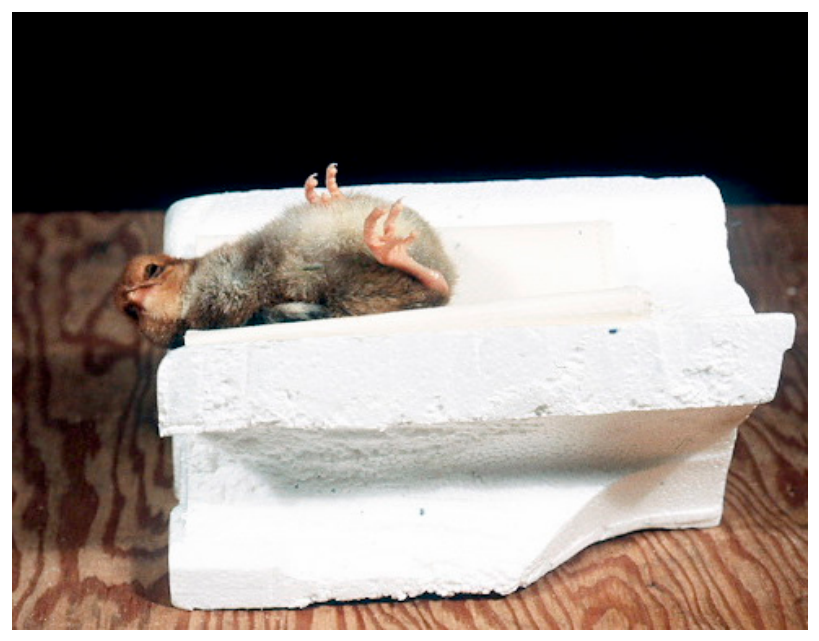
Figure 2.
TI test apparatus for Days 14, 28, and 70 chickens.
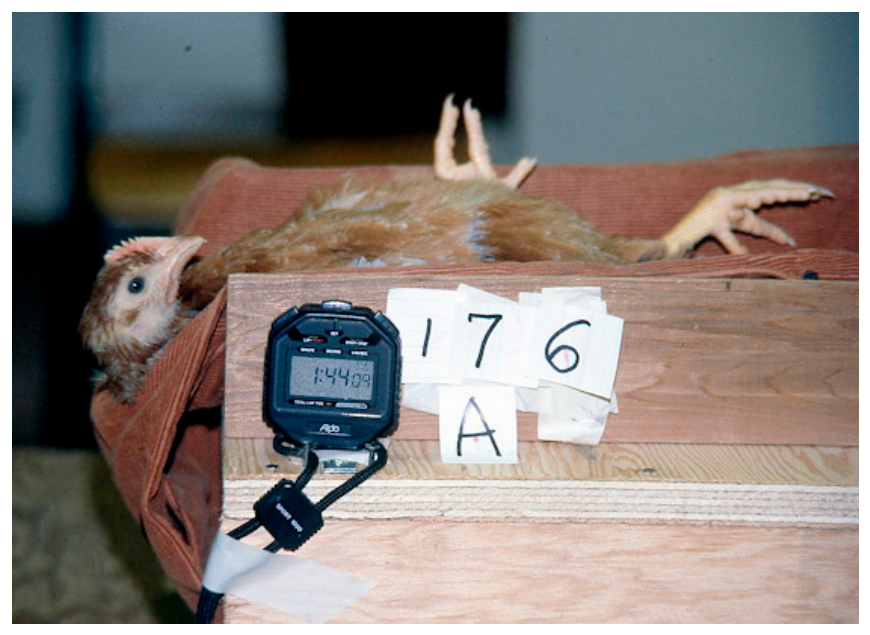
Figure 3.
Latency of the first head movement (in sec) of chicks considering their Age, Sex and Lack of vision (a-g Dots with different letters are significantly (p < 0.05) different by Sidak correction post hoc tests.).
Figure 3.
Latency of the first head movement (in sec) of chicks considering their Age, Sex and Lack of vision (a-g Dots with different letters are significantly (p < 0.05) different by Sidak correction post hoc tests.).
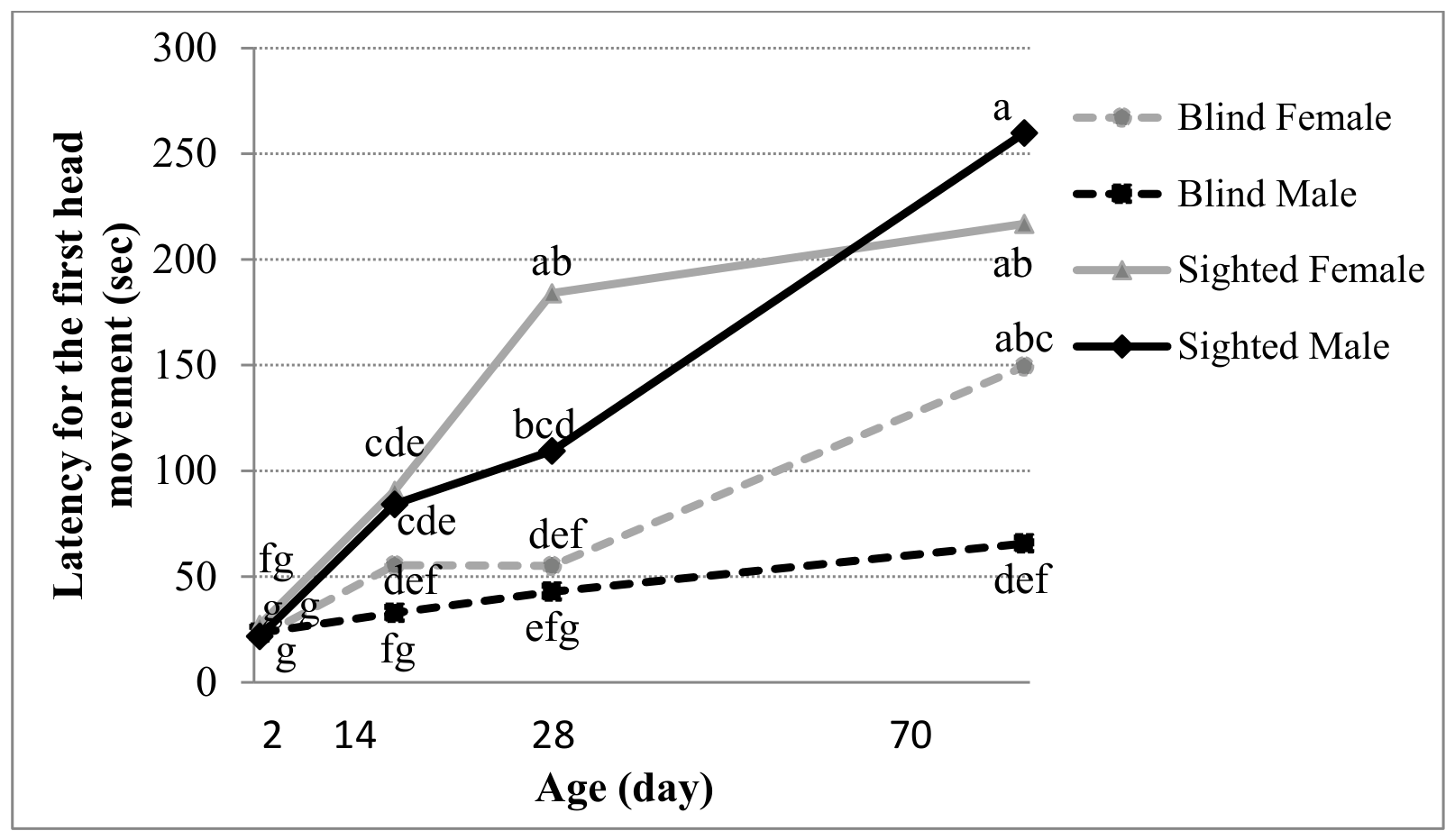
Figure 4.
Latency of the first leg movement (in sec) of birds considering their age, sex and lack of vision (a-h Dots with different letters are significantly (p < 0.05) different by Sidak correction post hoc tests.).
Figure 4.
Latency of the first leg movement (in sec) of birds considering their age, sex and lack of vision (a-h Dots with different letters are significantly (p < 0.05) different by Sidak correction post hoc tests.).
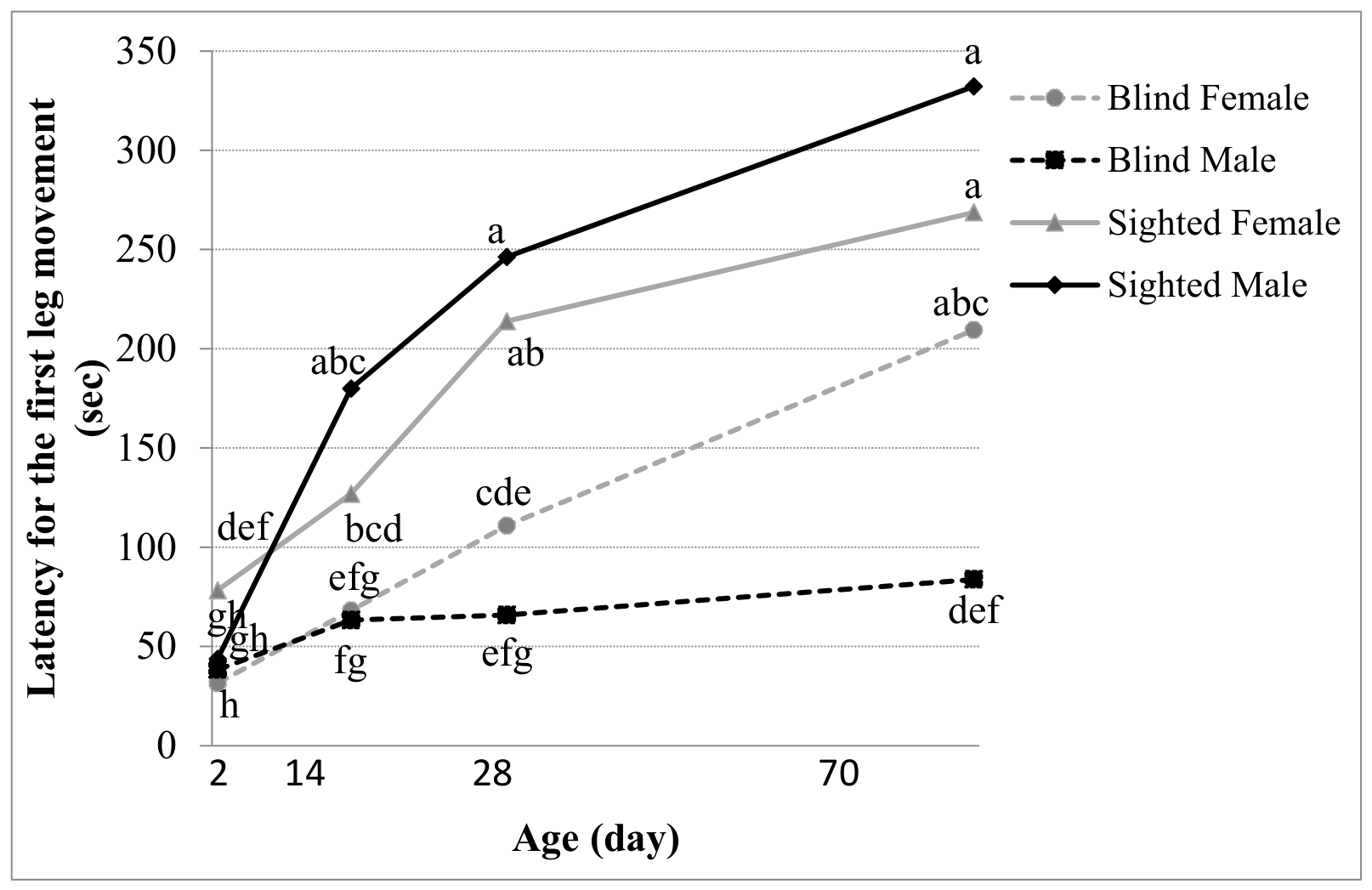
Figure 5.
Latency of Righting time (in sec) of birds considering their age, sex and lack of vision (a–f Dots with different letters are significantly (p < 0.05) different by Sidak correction post hoc tests.).
Figure 5.
Latency of Righting time (in sec) of birds considering their age, sex and lack of vision (a–f Dots with different letters are significantly (p < 0.05) different by Sidak correction post hoc tests.).
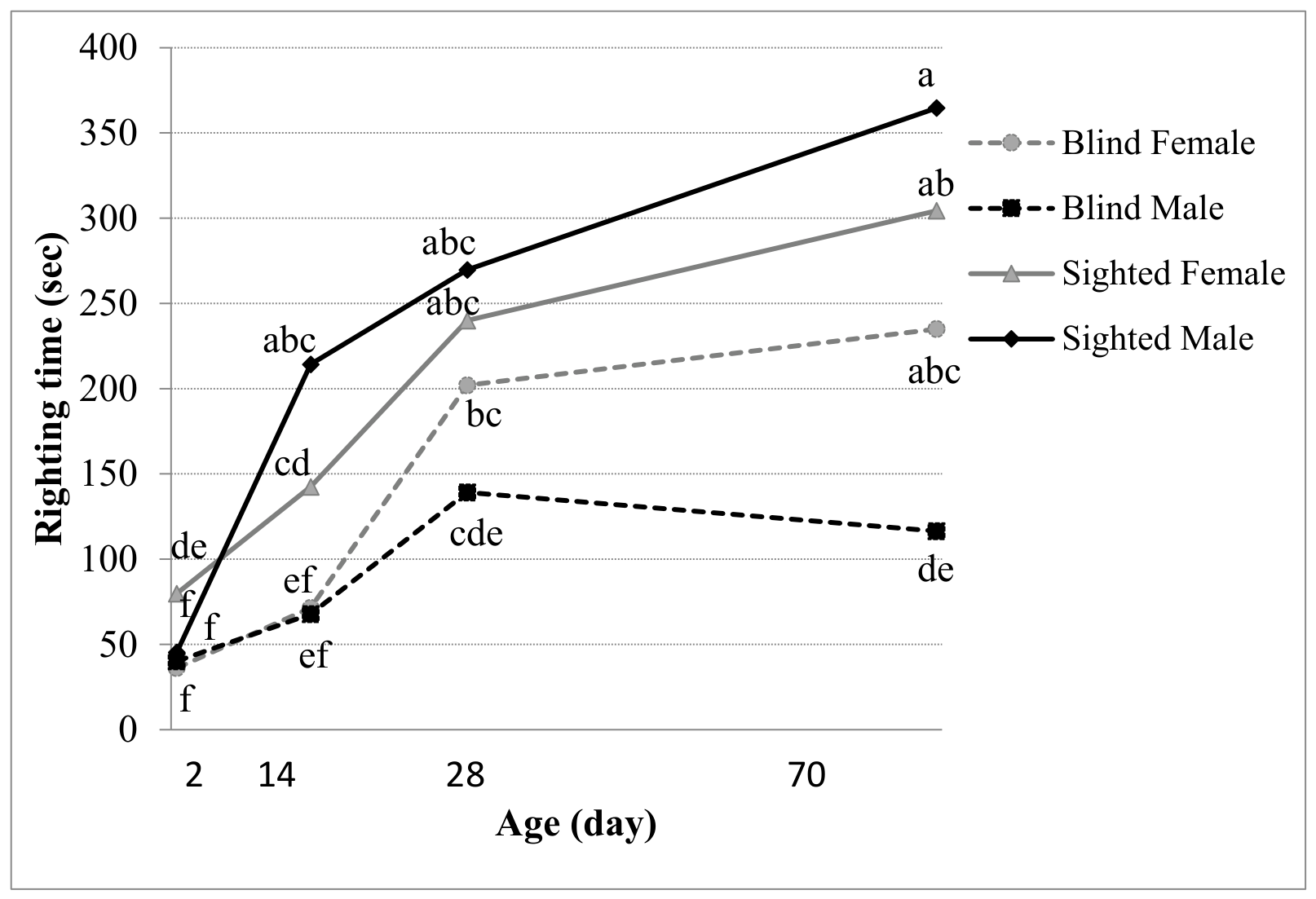
Figure 6.
Three-way interaction of Lack of vision, Sex and Experience on the latency of the first head movement (in sec) at 14 days (Bars with different letters are significantly (p < 0.05) different by Sidak correction post hoc tests.).
Figure 6.
Three-way interaction of Lack of vision, Sex and Experience on the latency of the first head movement (in sec) at 14 days (Bars with different letters are significantly (p < 0.05) different by Sidak correction post hoc tests.).
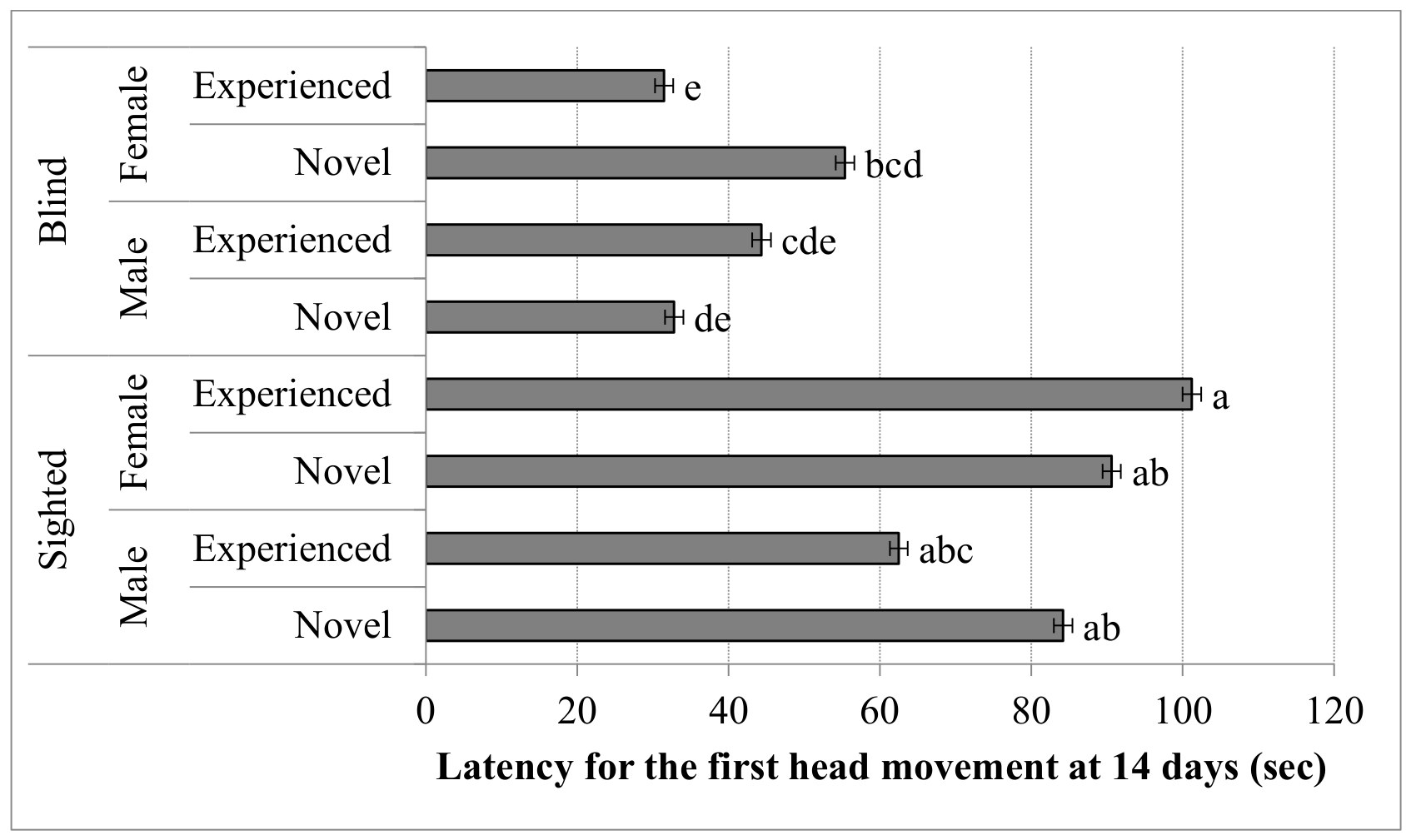
Figure 7.
The righting time duration (in sec) considering lack of vision and previous TI test experience at day 28th (a–c Bars with different letters are significantly (p < 0.05) different by Sidak correction post hoc tests.).
Figure 7.
The righting time duration (in sec) considering lack of vision and previous TI test experience at day 28th (a–c Bars with different letters are significantly (p < 0.05) different by Sidak correction post hoc tests.).
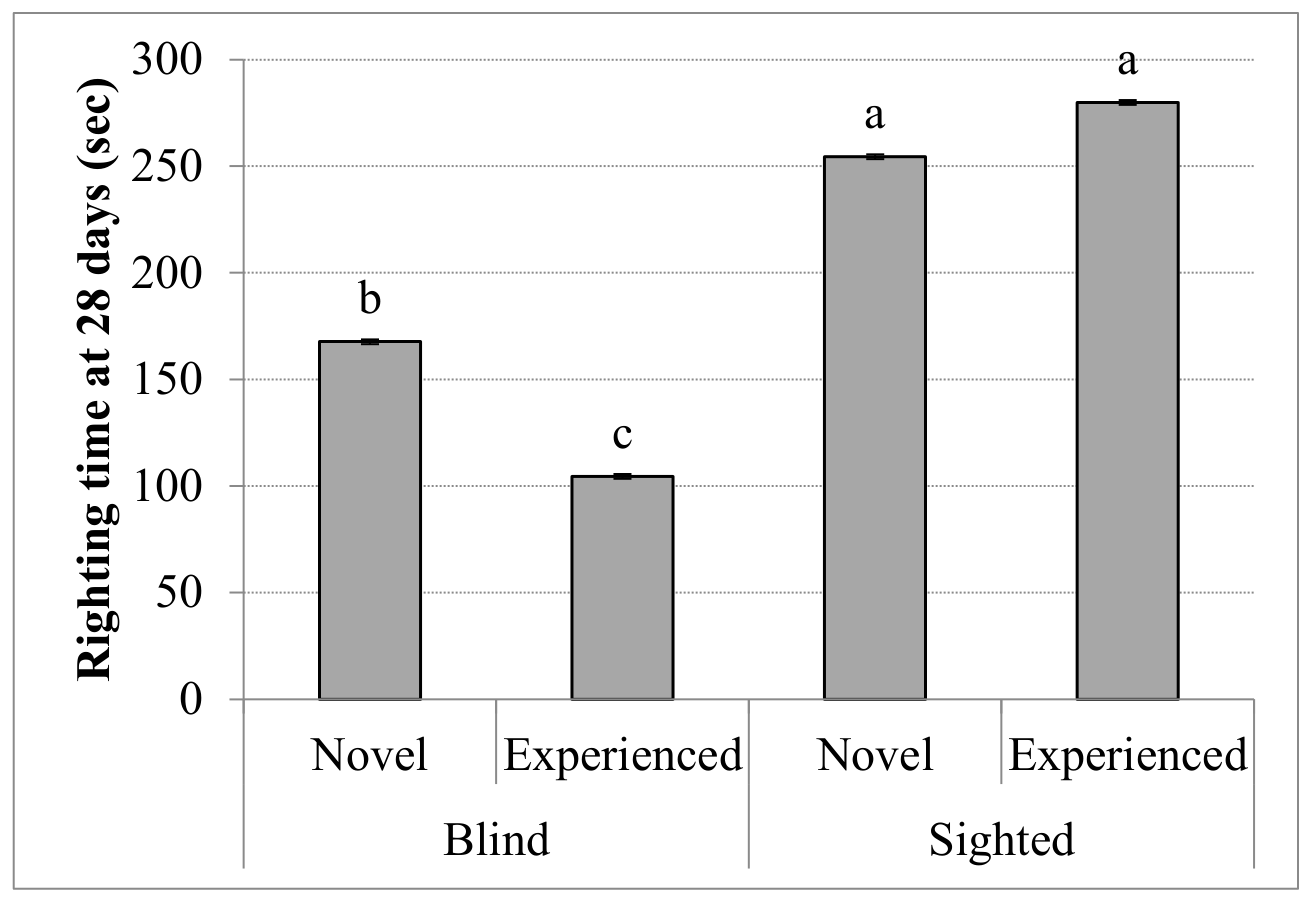

Table 1.
Body weight of male and female birds at different ages (in g).
| Age of Birds | Male (g) |
Female (g) |
|---|---|---|
| Day 2 | 37.60 ± 0.31 e | 37.07 ± 0.29 e |
| Day 28 | 338.24 ± 3.40 c | 301.79 ± 3.23 d |
| Day 70 | 1116.17 ± 15.93 a | 915.17 ± 15.13 b |
a–e Marginal means with different superscripts are significantly different (p < 0.05) by Sidak correction post hoc tests.
Disclaimer/Publisher’s Note: The statements, opinions and data contained in all publications are solely those of the individual author(s) and contributor(s) and not of MDPI and/or the editor(s). MDPI and/or the editor(s) disclaim responsibility for any injury to people or property resulting from any ideas, methods, instructions or products referred to in the content. |
© 2026 by the author. Licensee MDPI, Basel, Switzerland. This article is an open access article distributed under the terms and conditions of the Creative Commons Attribution (CC BY) license (http://creativecommons.org/licenses/by/4.0/).
Copyright: This open access article is published under a Creative Commons CC BY 4.0 license, which permit the free download, distribution, and reuse, provided that the author and preprint are cited in any reuse.