

Submitted:
17 August 2026
Posted:
19 August 2026
You are already at the latest version
Abstract
Antimicrobial resistance is a critical global health threat, as conventional antibiotics are increasingly ineffective against multidrug-resistant (MDR) pathogens, particularly ESKAPE organisms. In response, bacteriophages and their derived lytic proteins, including endolysins, holins, and spanins, have emerged as promising therapeutic alternatives. This review examines the current landscape and future prospects of phage-based therapeutics within a One Health framework spanning human, veterinary, and environmental applications. We explore phage biology, including both lytic and lysogenic cycles, as a mechanistic foundation for understanding their role in addressing the growing threat of antimicrobial resistance. Additionally, we detail bacterial defence mechanisms, such as restriction modification systems, CRISPR-Cas systems, and spontaneous mutations that confer phage resistance. Lytic proteins demonstrate efficacy in treating systemic infections, disrupting biofilm, and targeting resistant pathogens across humans, livestock, and aquaculture. Although phage therapy is a promising antibacterial alternative, it still faces several constraints, including a narrow host range, immune clearance, complex pharmacokinetics, and the inability of exogenous lytic proteins to cross the outer membranes of Gram-negative bacteria. This review highlights emerging solutions to these challenges, including the use of artificial intelligence (AI) for phage and lysin discovery, machine learning models for predicting effective phage combinations, and the engineering of phage lytic proteins to broaden antimicrobial spectra. It also discusses combination strategies that pair whole phages with their derived proteins to exploit synergistic killing and counter the emergence of resistance, as well as advanced delivery systems designed to protect phage integrity and enhance activity in hostile physiological environments.
Keywords:
phage lytic proteins
; antibiotic resistance
; phages
; One Health
1. Introduction
Antimicrobial resistance (AMR) represents one of the leading global health concerns (WHO). An estimate of 1.27 million deaths was attributed to AMR, clearly indicating severe mortality burden (Murray et al., 2022). Projections suggest that widespread AMR could result in a 3.8% reduction in global annual gross domestic product (GDP) by 2050, crippling the global economy (World Bank; Poudel et al., 2023). The crisis stems from the misuse and abuse of antibiotics, leading to the development of resistance in microorganisms (Klein et al., 2019). At the centre of this crisis are the multidrug-resistant (MDR) bacteria classified as ESKAPE pathogens: Enterococcus faecium Staphylococcus aureus, Klebsiella pneumoniae, Acinetobacter baumannii, Pseudomonas aeruginosa, and Enterobacter spp. (Denissen et al., 2022). The group is responsible for a disproportionate burden of infections globally. These microorganisms have acquired broad-spectrum antibiotic resistance mechanisms, which can be grouped into two categories. The first involves drug inactivation, which encompasses enzymatic degradation of antibiotics and the modification of targets. The second involves reducing drug accumulation by activating efflux pumps, blocking antibiotic entry, and promoting biofilm formation (Muteeb et al., 2025; Ahmed et al., 2024). As a result of increasing antibiotic resistance, alternative therapies have been extensively explored, with several currently undergoing clinical trials. Bacteriophage therapy has attracted attention as an effective strategy against the MDR pathogens (Wang & Yu, 2025). Alongside whole phages, phage-derived lytic proteins are being developed as enzyme-based antimicrobial agents with distinct mechanistic advantages (São-José, 2018). This review examines the current landscape and future prospects of phages and phage-derived proteins as antibacterial agents within a One-Health framework spanning human, veterinary, and environmental applications. We first explore phage biology and lytic protein mechanisms as a foundation, then detail the bacterial defenses that emerge to counteract phage predation. We assess the clinical, veterinary, and environmental evidence for both whole-phage and lytic-protein applications. Furthermore, we evaluate combination strategies that exploit synergistic killing and emerging technologies, including artificial intelligence-assisted phage and lysin discovery, protein engineering to broaden antimicrobial spectra, and advanced delivery systems designed to protect phage integrity in hostile environments. To fully understand how these tools can be harnessed therapeutically, it is essential to examine their biological characteristics, structural diversity and replication cycles.
2. Phage Biology
Bacteriophages (phages) are viruses that specifically infect bacterial cells and are the most abundant species in the environment. They exhibit extensive diversity in their physical structure, size, and genetic makeup (Rostøl & Marraffini, 2019). Structurally, most consist of a proteinaceous capsid housing the virus’s genetic material which may be double-stranded DNA (dsDNA), single-stranded DNA (ssDNA), or RNA depending on the phage family (Arivarasan & Consul, 2023). Tailed phages additionally possess structural components such as tail, tail fibres, baseplate, and tail spikes, which mediate critical functions in recognition and attachment to specific receptors on bacterial surfaces.
Figure 1.
Structural components of a T4 and M13 bacteriophage. Diagram A illustrates the major morphological features of a tailed bacteriophage. The capsid encases and protects the genome. The tail sheath connects to the head, which facilitates DNA injection. At the end of the sheath, there is the baseplate that recognizes the host. Extending from the baseplate are tail fibers, responsible for the initial reversible adsorption to host surface receptors, and tail spikes for irreversible attachment. Figure B shows the M13 non-tailed phage, which has a filamentous capsid protecting the single-stranded DNA genome. (Adapted from Petrov et al., 2022).
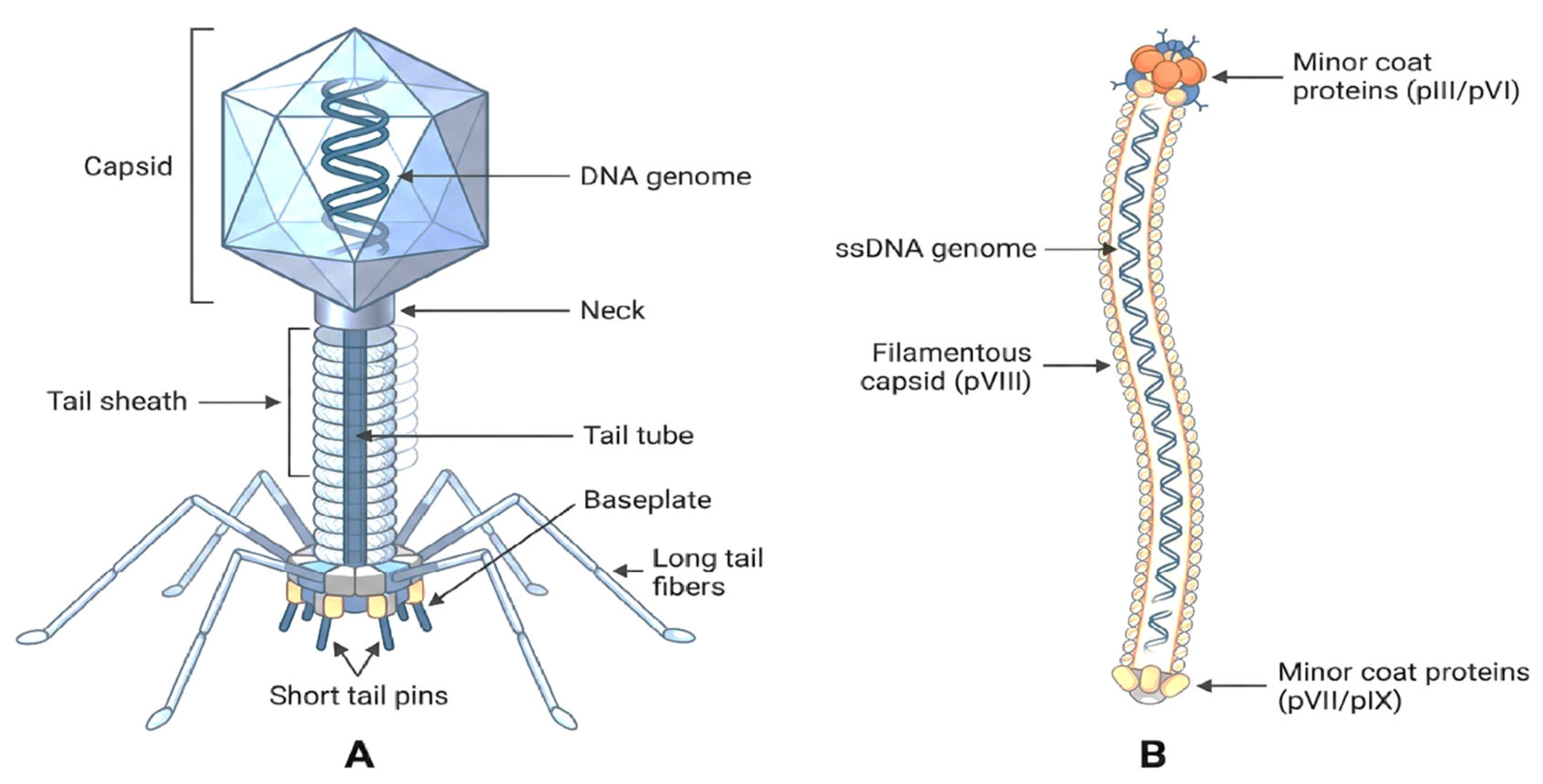
The majority of tailed-phages belong to the order Caudoviricetes. Within this group, traditionally three families have been classified: Myoviridae, characterized by long contractile tails; Siphoviridae, with long non-contractile tails and Podoviridae, with short tails. However, the International Committee on Taxonomy of Viruses (ICTV) have broadened the classification of phages beyond morphology-based classification moving towards genome-based taxonomy. Figure 2 illustrates this updated classification framework, which encompasses both tailed dsDNA phages and lipid containing and ssDNA or RNA phage groups.
Phages replicate through two cycles, either temperate or lytic cycle (Gummalla et al., 2023). They either destroy or integrate into bacterial systems and are therefore classified into two cycles and this distinction has direct implications for their therapeutic application (Jamal et al., 2019).
2.1. Lytic Cycle
During the lytic stage, a bacteriophage first binds to a specific receptor on the bacterial cell membrane, injects its genetic material into the host cell, replicates it, and synthesises viral proteins (Lin et al., 2017). These components are subsequently assembled into new phages, which lyse the bacterial cell and release new phages capable of infecting more bacteria, as illustrated in Figure 3 (Palma & Qi, 2024). This lytic process on bacterial cells is significant in phage therapy. The lytic cycle is central to the therapeutic value of phages, as it produces lytic enzymes that facilitate bacterial lysis. These proteins are discussed in detail in the following section.
2.2. Lysogenic Cycle
In contrast, during the lysogenic cycle, the phage infects the bacterial cell by injecting its DNA into the host. Instead of replicating immediately, as in the lytic cycle, the phage DNA integrates into the bacterial chromosome, forming a prophage (Little, 2014). The prophage is then replicated along with the bacterial chromosome during cell division, passing it to future generations without harming the bacteria (Marchi et al., 2023). Under certain conditions, such as UV light, the prophage can be excised from the bacterial chromosome and enter the lytic cycle, a process called induction.
3. Phage-Derived Lytic Proteins
Phage-derived lytic proteins are enzymes encoded in the phage genome that are expressed in the late stages of the lytic cycle to disrupt the bacterial cell, allowing phage escape. They have demonstrated significant therapeutic potential against bacterial infections. Three major classes have been characterised and studied as antimicrobial agents: endolysins, spanins, and holins (Hibstu et al., 2022; Abeysekera et al., 2022). These proteins work systematically and cooperatively to produce irreversible cell lysis, with each class structurally and mechanistically distinct.
3.1. Endolysins
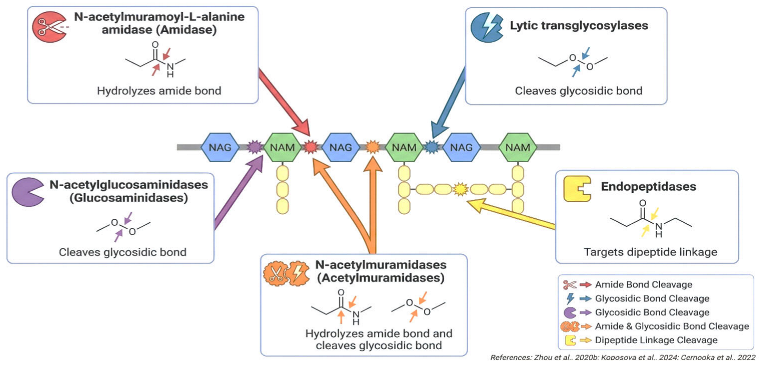
Endolysins are phage-encoded enzymes that degrade the peptidoglycan layer of bacterial cell walls during the final stage of the lytic cycle, facilitating the release of progeny phages (Gondil et al., 2020). Their domain structure differs depending on whether they target Gram-positive or Gram-negative. Endolysins from phages infecting Gram-positive bacteria differ in structure compare to those targeting Gram-negative bacteria. Those targeting Gram-positive microbes consist of two domains: the catalytic domain (CD) at the N-terminus and a cell wall binding domain (CWBD) at the C-terminus (Zhou et al., 2020a). In contrast, endolysins targeting Gram-negative bacteria typically possess a single enzymatic active domain. This is due to the presence of an outer membrane, which acts as a permeability barrier and reduces the necessity for a distinct cell wall-binding domain. However, this outer membrane also limits the effectiveness of externally applied endolysins against Gram-negative bacteria (Zheng & Zhang 2024, Schmelcher et al., 2012).
Based on the type of peptidoglycan bond they cleave, endolysins catalytic domains can be categorized into five groups:- N-acetylmuramoyl-L-alanine amidase, lytic transglycosylases, glucosaminidases, N-acetylmuramidases, and endopeptidases (Zhou et al., 2020b; Koposova et al., 2024). Among these, N-acetylmuramidases, lytic transglycosylases, and N-acetylglucosaminidases are involved in cleaving glycosidic bonds within the peptidoglycal backbone. In contrast, N-acetylmuramoyl-L-alanine amidase and N-acetylmuramidases hydrolyze amide bonds between the glycan chains and peptide moieties while endopeptidases target dipeptide linkages as illustrated in Figure 4 (Cernooka et al., 2022).
3.2. Holins
Holins are transmembrane proteins located in the phage cell wall and they are involved in formation of pores for endolysins to pass through, initiating peptidoglycan disruption (Saeed et al., 2025). This process enables systematic breakdown of bacterial walls. Holins can be classified based on the number of α-helical transmembrane domains [TMD] (Ahammad et al., 2020). Class I have three TMDs with the N- terminus localized in the periplasm and C- terminus located in the cytoplasm. Class II have two domains with both N- and C- terminus located in the cytoplasm or vice versa and class III has a single domain: N-terminus located in the cytoplasm and C-terminus in the periplasm or vice versa as illustrated in Figure 5 (Niaz et al., 2025; Abeysekera et et al., 2022).
3.3. Spanins
Spanins are phage proteins that disrupt the outer membrane, a process essential for bacterial cell lysis (Kongari et al., 2018). After holins perforating the inner membrane and endolysins degrading the peptidoglycan, the outer membrane remains intact which therefore delays cell rupture. Spanins resolves this by fusing the inner and outer membrane thereby enabling cell lysis. Two types of spanins have been characterizedd: one that is a two-component system consisting of an inner membrane (i-spanin) and outer membrane lipoprotein (o-spanin), and unimolecular spanins [u-spanin] (Mani et al., 2025). Both have similar functionality in linking the outer and inner membrane as endolysins degrade the peptidoglycan layer but have distinct structure (Kongari et al., 2018). Figure 6 illustrates the cooperative mechanism of the phage lytic proteins in bacterial cell lysis.
Together, endolysins, holins and spanins are a coordinated machinery that makes them attractive as individual antibacterial agents. However, while endolysins, holins, and spanins represent powerful tools against bacterial pathogens, their application is complicated by systems that bacterial develop to evade phage predation. Understanding these counter-defense strategies is important to optimize phage-based therapy.
3.4. Anti-Phage Defense Systems
Bacteria have evolved diverse defense mechanisms against phage predation (Srikant et al., 2022), while phages concurrently develop counter-strategies. These include spontaneous mutations, restriction-modification systems, CRISPR-Cas-mediated adaptive immunity (Oechslin, 2018), abortive infection (Lopatina et al., 2020), inhibition of phage tail assembly (Patel et al., 2024), CARD-mediated cell death, and NAD+-depletion (Woldetsadik et al., 2024).
4.1. Spontaneous Modifications
Bacteria may acquire spontaneous mutations that alter surface to prevent phages from attaching to the specific receptors on their surface, which enables phage intrusion by altering their structure (Oechslin & Oechslin, 2018). Additionally, these modifications can lead to no or reduced expression of these surface receptors (Egido et al., 2021). For instance, a study demonstrated phage resistance development in Erwinia amylovora when exposed to Y2 phage, where it was evident that there were changes in the structure of lipopolysaccharide [LPS] (Knecht et al., 2022). LPS has been identified to bind phage receptors (Ibrahim et al., 2025); therefore, changes in their structure would hinder phage invasion.
4.2. Restriction Modification Systems
Restriction modification (RM) systems rely on two key enzymes: methyl transferase (MTase) and restriction endonuclease [REase] (Sitaraman, 2016). RM systems allow bacteria to distinguish their own genetic material from invading DNA (Anastassopoulou et al., 2025). This discrimination is achieved through methylation, where MTase transfers methyl groups to adenine or cytosine residues on the bacteria’s DNA, marking it as ‘self’, while REase recognizes and cuts invading DNA at specific recognition sites that lack methylation patterns (Kang et al., 2025; Shabbir et al., 2016). Phages evolve alongside these bacterial mechanisms by inducing changes in restriction sites or by producing enzymes that inhibit restriction of their DNA, thereby evading these systems (Shabbir et al., 2016).
4.3. Adaptive Immunity
CRISPR-Cas is an adaptive immune response system which enables bacteria to recognize, acquire, and integrate fragments of invading phage DNA into CRISPR as a spacer (Khan et al., 2025; Selim et al., 2025). This mechanism allows bacteria to develop memory and respond to future infections (Joseph et al., 2025a). The system occurs in three distinct steps: adaptation, biogenesis, and interference (Yeh et al., 2022). During adaptation, the bacterial cell fragments the invading phage DNA and integrates it into the CRISPR array, mediated by Cas proteins (Hille & Charpentier, 2016). Furthermore, incorporated spacers are expressed as pre-crRNA and subsequently processed into crRNA during biogenesis (Watson et al., 2021; Le Rhun et al., 2019). In the interference phase, the crRNA acts as a guide to Cas endonucleases, surveilling for invading DNA and forming a complex (Barrangou, 2015). The complex interacts with the protospacer adjacent motif (PAM) that flanks the target sequence (Globyte et al., 2018). The complementary base pairing between the spacer sequence of the crRNA and the invading DNA sequence allows the endonuclease to excise the foreign DNA (Joseph et al., 2025b). Phages can synthesize anti-CRISPR proteins to evade the immune response system (Bondy-Denomy et al., 2012). For instance, in a study by Johnson et al. (2025), they reported a novel anti-CRISPR protein AcrIIIA2 expressed in Streptococcus thermophilus phages that inhibits phage RNA binding, interfering with cleavage. These findings demonstrates that phages can evolve mechanism to evade bacteria immune defenses.
4.4. Abortive Infection
Abortive infection is a phenomenon where a bacterial cell induces death or enters dormancy during phage infection, preventing the phage from replicating (Aframian & Eldar, 2023). This antiphage system protects the bacterial community from predation (Watson et al., 2019). An example of this is the prophage-encoded HepS system in Salmonella enterica (Sargen et al., 2026). They identified the system as capable of inhibiting phages from the Siphoviridae family. HepS targets the tail tip of phages during phage assembly, disrupting translation by cleaving specific tRNAs and initiating abortive infection.
4.5. Inhibit Phage Tail Assembly
The phage tail is an essential structure as it enables recognition of the host and facilitate, the introduction of phage DNA into the bacteria. Patel et al. (2024) reported a new anti-phage system termed Tab (Tail Assembly Blocker) encoded within Pseudomonas aeruginosa prophage. They demonstrated that this system inhibits phage tail assembly. Phage DNA replication and encapsulation of the viral DNA into capsids proceeded normally in Tab-expressing cells; however, no infectious progeny were produced. Transmission electron microscopy images showed headless tails and tailless heads in phage preparations derived from Tab-expressing cells. Despite the inhibition of tail assembly, the lysis genes were expressed, leading to the death of the infected cells while protecting the bacterial population by preventing the formation of new infectious phages particles.
4.6. NAD+-Depletion
In a recent study, Woldetsadik et al. (2024) described a novel system in which classical biotype Vibrio cholerae engages with phages to compete for the metabolic cofactor nicotinamide adenine dinucleotide (NAD+). The researchers found that the bacterium employs a system called Nezha, which indirectly attacks phages by depleting NA+⁺ upon infection. This prevents invading phages from using the cofactor during replication process. However, the researchers documented a countermeasure in a specific phage that evades the Nezha system by encoding enzymes that regenerate N+D⁺, thereby allowing the phage to survive.
4.7. CARD-Mediated Cell Death
Research by Wein et al. (2025) revealed that bacteria employ a molecular defense mechanism against phage infection that shows functional similarities to the human inflammation response. The study demonstrated that caspase recruitment domains (CARDs) known in humans are also present in an anti-phage defence system. The study focused on Lysobacter enzymogenes, which contains a gasdermin protein that forms membrane pores, inducing cell death (Liu et al., 2016). They elucidated that CARD domains trigger cleavage and activation of the bacterial gasdermin, resulting in the premature death of the infected cell and disrupting phage replication. Despite these defense systems, phages and derived lytic proteins have demonstrated considerable promise across multiple sectors. Their application in clinical medicine, veterinary practice and environmental health shows the growing recognition of the interconnected nature of human, animal and environmental health.
5. Application Of Phages In One Health Perspective
The irresponsible use of antibiotics contributes to the development of resistant bacteria strains, which can circulate through the interconnected systems of human, animal, and environmental health (Cella et al., 2023). Phages and phage-derived proteins provide a versatile, interdisciplinary solution to antimicrobial resistance, aligning with the interconnected goals of the One Health initiative (Bajpai et al., 2025; Alem et al., 2025). To transition from theory to practice, researchers are actively exploring phages and phage-derived proteins across all three domains.
5.1. Human Health
The clinical landscape of phage-based antibacterial agents in human medicine has been extensively studied. Whole-phage therapy has achieved notable clinical milestones, especially for enteric infections. A phase 1 clinical trial tested ShigActive, an oral cocktail of five lytic phages targeting Shigella spp., which cause diarrheal disease and mortality. The treatment showed no serious adverse effects on the gut microbiome or inflammatory markers (Chen et al., 2024). Orthopedic device-related infections, particularly prosthetic joint infections, represent an area in phage therapy are demonstrating promise. Melissa et al. (2025) reported the first case of phage therapy in Canada to treat a life-threatening prosthetic joint infection. They tailored a monophage preparation and achieved a durable clinical success in treating a MDR infection. The respiratory system is another frontier, particularly for individuals with cystic fibrosis. In a phase 1b/2 clinical trial, Pranita et al. (2022) developed a mixture of four anti-pseudomonal phages to evaluate their antimicrobial activity by measuring changes in P. aeruginosa colony counts in sputum from cystic fibrosis patients. This study helps address existing gaps in phage therapy research.
Building upon potential of phages, they have demonstrated promise in inflammatory bowel diseases such as Crohn’s disease (CD). Among the bacterial contributors to the pathogenesis of CD is adherent-invasive Escherichia coli (AIEC), which adheres to and invades intestinal epithelial cells, thereby triggering chronic inflammation (Abdelhalim et al., 2020). This has created an interest in phage therapy to eliminate pathogenic bacteria. A preclinical study by Titecat and colleagues (2022) evaluated EcoActive, a seven-phage cocktail. In AIEC-colonised colitis mice, long-term phage treatment reduced histological inflammation. To evaluate this approach, an active phase 1/2a clinical trial has been designed to assess the efficacy of oral EcoActive administration targeting AIEC in patients with Crohn’s disease (NCT03808103).
5.2. Veterinary Medicine
Veterinary medicine plays a vital role in the therapeutic use of phage therapy, addressing antimicrobial resistance (AMR) in livestock and companion animals. Although still developing, phage applications in veterinary medicine are gaining increasing research attention (Laura et al., 2023). Studies have shown the potential of bacteriophage cocktails as targeted treatments to fight antibiotic resistance in livestock.Seo et al. (2018) examined bacteriophage cocktails as a targeted therapy against Salmonella typhimurium in weaned pigs. Their results demonstrated the effectiveness of a bacteriophage cocktail, which lysed the bacteria, leading to a significant decrease in bacterial shedding in pigs without causing serious harm to the normal flora. Similarly, a study by Torkashvand et al. (2024) evaluated the effectiveness of a newly developed phage cocktail in broiler chickens. According to this study, when the phage cocktail was orally administered to infected birds, increases in weight gains and prevention of mortalities were observed, while no side effects were reported. This further supports the use of phage therapy as an effective measure in poultry production, aligned with the One Health concept, to enhance animal health.
5.3. Environmental Health
Phage therapy offers a way to decontaminate environmental reservoirs and serve as a biocontrol method against foodborne pathogens. Antibiotics in the environment promote bacterial resistance, leading to horizontal gene transfer and the emergence of drug-resistant bacteria. Phages can help decontaminate critical environmental reservoirs of these resistant pathogens. Shi et al. (2024) describes the real-world application of a bacteriophage cocktail in a hospital’s Respiratory Intensive Care Unit. Researchers developed a cocktail targeting two carbapenem-resistant Klebsiella pneumoniae strains found on surfaces. A significant reduction in Klebsiella pneumoniae was observed within the first 24 hours after phage treatment. Although pathogen levels increased slightly afterward, they remained lower than those caused by chemicals.
Beyond surface decontamination, phages have also been used in wastewater treatment. Resistant bacteria have been found in livestock wastewater, which can be transmitted to humans (Xu et al., 2022; Homeier-Bachmann et al., 2021). Research by Pallavali et al. (2023) examined the use of phage-based biocontrol to target antibiotic-resistant bacteria from livestock wastewater treatment plants. They tested the effectiveness of a lytic aerophage in a mixed-culture wastewater system. The phage significantly reduced the population of antibiotic-resistant Aeromonas spp. Furthermore, phages have enabled control of foodborne diseases that significantly affect humans. For instance, Artawinata et al. (2023) isolated four lytic bacteriophages from soil and applied them to food matrices, where the phages significantly reduced bacterial loads. Phages and their lytic proteins have also been used to decontaminate animal holding areas where bacterial loads pose a risk to human and animal health. Phage-mediated environmental application offers a strategy to break the transmission chain, thereby tackling issues in environmental and public health.

Table 1.
Whole-phage antimicrobial application across the One Health Framework (Human medicine, Veterinary medicine, and Environmental health).
Table 1.
Whole-phage antimicrobial application across the One Health Framework (Human medicine, Veterinary medicine, and Environmental health).
| Application area | Phage | Target pathogen | Field | Key Findings | Citation |
|---|---|---|---|---|---|
| Enteric infections | ShigActive (5-phage oral cocktail) | Shigella spp. | Human Health | Phase 1 trial; no serious adverse effects, no disruption to gut microbiome or inflammation | Chen et al., 2024 |
| Prosthetic joint infection | Monophage preparation | Staphylococcus epidermidis | Human Health | First Canadian case: clinical success treating life threatening MDR prosthetic joint infection | Melisa et al., 2025 |
| Cystic fibrosis | 4-phage antipseudomonal cocktail | Pseudomonas aeruginosa | Human Health | Phase 1b/2 trial: evaluated via P. aeruginosa colony counts in sputum | Pranita et al., 2022 |
| Crohn’s Disease (CD) | EcoActive (7-phage cocktail targeting AIEC) | Escherichia coli | Human Health | Preclinical: reduced histological inflammation in AIEC-colonized colitis mice; active Phase 1/2a trial ongoing | (Titecat et al., 2022) |
| Weaned pigs | Bacteriophage cocktail | Salmonella Typhimurium | Veterinary medicine | Oral administration; Significant reduction in bacterial shedding; no adverse effects on normal flora | Seo et al., 2018 |
| Broiler chickens | Phage cocktail | Salmonella spp | Veterinary medicine | Oral administration; Increased weight gain, reduced mortalities; no side effects | Torkashvand et al., 2024 |
| Food safety | 4 lytic bacteriophages (soil-isolated) | Foodborne pathogens | Environmental Health | Significant reduction of bacterial load in food matrices | Artawinata et al., 2023 |
| Hospital Respiratory ICU surface decontamination | Bacteriophage cocktail | Carbapenem-resistant Klebsiella pneumoniae | Environmental Health | Significant K. pneumoniae reduction within 24 h; lower pathogen levels than chemical disinfectants | Shi et al., 2024 |
| Livestock wastewater treatment | Lytic aerophage | Aeromonas spp. | Environmental Health | Significant reduction in antibiotic-resistant Aeromonas population | Pallavali et al., 2023 |
Building on the broad applications of whole-phage documented above, phage-derived lytic proteins have independently attracted significant research interest. These proteins can be engineered, produced recombinantly, and applied in diverse areas, as detailed in the following section.
6. Application of Phage Lytic Proteins
In response to the global crisis caused by ineffective antibiotics, phage lytic proteins have been studied for treating bacterial infections, with some even tested in clinical settings (São-José et al., 2022). These enzymes could provide solutions with the added benefit of being broad-spectrum therapies (Danis-Wlodarczyk et al., 2021).
6.1. Biomedical Application
Hong et al. (2025) reported the protective effects of intravenously administered LNT103 in mice infected with lethal levels of Acinetobacter baumannii. They demonstrated a synergistic combination therapy with the failing antibiotic, meropenem. The treatment was effective: LNT103 alone achieved a higher survival rate, while the combination therapy resulted in an even higher one. The preclinical evidence demonstrated that LNT103 is a promising novel agent against resistant strains.
Scientists developed an endolysin, HY-33, against Staphylococcus aureus. A preclinical study by Schleimer et al. (2019) showed that the recombinant lytic protein had rapid and potent activity against Staphylococcus aureus small-colony variants. Another lytic protein targeting S. aureus is the endolysin CF-301, which has been used to treat bloodstream infections. Indiani et al. (2019) evaluated this protein to assess its effect on blood samples versus laboratory media. They demonstrated synergistic interactions with human blood factors such as lysozyme and albumin. The clinical application of phage-derived proteins extends to chronic inflammatory conditions like atopic dermatitis (AD). Kui et al. (2025) developed endolysin-based Staphyrase® Gel, which targets S. aureus, reducing pathogen load while preserving skin flora in AD. Parallel research has explored the potential of another engineered lysin, CF-296, especially against Staphylococcus aureus infections. Karau et al. (2022) tested local delivery of antibacterial agents in a rabbit model of implant-associated osteomyelitis. Titanium screws colonized with S. aureus were inserted into the tibia, followed by local administration of either exebacase (CF-301) or CF-296, combined with daily injections of daptomycin. This resulted in a significant reduction in bacterial load in the surrounding bone tissue.
6.2. Medical Devices
Beyond treating systemic bacterial infections, a study by Fursov et al. (2020) provided compelling data on biofilm formation in medical implanted devices. The biofilm hinders antibiotic diffusion; therefore, they used phage-derived lytic proteins to address this issue. They employed diffusion chambers surgically implanted in the abdominal cavities of white rats, thereby preventing bacterial cells from diffusing out. Previously, the chambers were inoculated with a suspension of Klebsiella pneumonia. Treatment involved intraperitoneal administration of the endolysin lysECD7, which effectively inhibited biofilm formation and caused minimal to no inflammation. Overall, the study provided strong evidence that phage lytic enzymes are promising novel therapeutics for bacterial infections, especially in cases involving medical devices.
6.3. Dairy Industry
Vander Elst et al. (2024) reported a study supporting the use of phage enzymes. They demonstrated that the endolysin NC5 effectively overcomes the limitations of cloxacillin in treating mastitis caused by Streptococcus uberis. The study addressed a clinical problem: antibiotic ineffectiveness in the dairy industry. They used lactating mice, in which they intramammarily injected S. uberis, followed by treatment with cloxacillin and endolysin NC5. Results showed that NC5 enhances the early effectiveness of cloxacillin by helping reduce bacterial growth, decreasing neutrophil activation, and lowering the body’s inflammatory response.
6.4. Aquaculture
Interest in studies of phage holins has also grown (Zheng et al., 2025). A study by Feng et al. (2026) provided data on the application of phage lytic enzymes in the aquaculture industry. These proteins can be used to treat bacterial infections. In the study, the in vivo component assessed an engineered holin-endolysin fusion protein, Hol46_Lys17, to evaluate its therapeutic application against Aeromonas hydrophila infection in crucian carp. The model received a mild lethal dose of A. hydrophila and infected fish were treated with Lys17, Hol46, a cocktail of Lys17 and Hol46, or the fusion protein (Hol46_Lys17). Treatment with the fusion protein resulted in a higher survival rate, which was statistically significant compared to other treatments. Additionally, the treatment reduced the bacterial load in the intestine within 18 hours post-infection. These findings position lytic proteins as promising and effective alternatives to conventional antibiotics for managing bacterial infections in aquaculture.
6.5. Poultry Farming
Apart from aquaculture, holins have expanded their use in poultry farming. Reported by Zhao et al. (2026), holins have the potential to be developed as an alternative to antibiotics for treating bacterial infections caused by Salmonella pullorum in poultry. According to the World Organisation for Animal Health, S. pullorum infection can cause serious effects, including reproductive issues and increased mortality. The in vivo study evaluated the use of Holin-P, Holin-1, and the conjugate Holin-P-Holin-1, which were delivered orally via a probiotic system (Lactococcus lactis), to treat active S. pullorum infections in chicks. In the infection model, treatment with holin-expressing L. lactis reduced S. pullorum burden, inflammation, and preserved intestinal and liver structures.
Table 2.
Phage derived lytic protein applications including endolysins, holins and fusion.
| Application area | Lytic protein used | Target bacteria | Model | Key findings | Citation |
|---|---|---|---|---|---|
| Systemic infections | Engineered endolysin LNT103 | Acinetobacter baumanii | In vivo (Intraperitoneal infection model) | Higher survival rate with LNT103 alone; combination with meropenem showed higher survival rate | Hong et al., 2025 |
| Systemic infections | HY-33 (recombinant endolysin) |
Staphylococcus aureus |
In vitro | Rapid and potent lytic activity against S. aureus small-colony variants | Schleimer et al., 2019 |
| Bloodstream infection | CF-301 |
Staphylococcus aureus |
Blood samples vs lab media | Synergistic interactions with human blood factors (lysozyme and albumin) | Indiani et al., 2019 |
| Atopic dermatitis (skin) | Staphyrase® Gel (endolysin-based) |
Staphylococcus aureus |
Topical application on skin | Reduced S. aureus pathogen load while preserving skin flora | Kui et al., 2025 |
| Osteomyelitis | CF-296 |
Staphylococcus aureus |
Rabbit (titanium screw implant model) | Significant reduction in bacterial load in bone tissue surrounding S. aureus-colonized implants when combined with daptomycin | Karau et al., 2022 |
| Medical devices | Endolysin LysECD7 | Klebsiella pneumoniae | In vivo (diffusion chambers implanted in rats) | Inhibited biofilm formation by day 8; minimal to no inflammation in treatment group | Fursov et al., 2020 |
| Dairy industry | Endolysin NC5 | Streptococcus uberis | In vivo (Lactating mice, intramammary infection) | NC5 improved early efficacy of cloxacillin; reduced bacterial growth, neutrophil activation, and inflammation | Vander Elst et al., 2024 |
| Aquaculture | Holin-endolysin fusion protein Hol46_Lys17 | Aeromonas hydrophila | In vivo (crucian carp infection model) | Fusion protein showed highest survival rate; reduced intestinal bacterial load within 18 hours post-infection. | Feng et al., 2026 |
| Poultry farming | Holin-P, Holin-1 and conjugate Holin-P-Holin-1 | Salmonella pullorum | In vivo (chick infection model, oral delivery via Lactococcus lactis) | Decreased S. pullorum burden, reduced inflammation, preserved intestinal and liver structure | Zhao et al., 2026 |
The individual efficacy of whole phages and their lytic proteins described raises compelling argument where these two modalities can be deployed together to achieve outcomes neither can accomplish alone. Emerging evidence suggests that combining phages with their derived lytic proteins yields synergistic antibacterial activity, as explored in the following section.
7. Combination Of Phage and Phage Lytic Proteins
The synergistic activity of phage-lytic proteins and phages has been explored in various studies to combat biofilm formation. For example, Duarte et al. (2021) combined phiIPLA-RODI, a virulent phage, with a chimeric phage-derived lytic protein called CHAPSH3b to eradicate staphylococcal biofilms. The researchers evaluated the individual and combined effects of these antimicrobials against Staphylococca biofilms both in vitro and on ex vivo wounded pig skin. They found that CHAPSH3b was more effective as an antibacterial agent at higher concentrations. The combination of phiIPLA-RODI and CHAPSH3b produced greater antibiofilm and antibacterial effects than either agent alone. They attributed this synergy to CHAPSH3b, which weakened the biofilm enhancing phage access to S. aureus cells, eliminated phage-resistant bacterial cells within the biofilms, and lysed bacterial cells to increase the phage-to-bacteria ratio, resulting in faster biofilm removal. To apply this strategy in a food model, Youssef et al. (2023) conducted a study in which they combined the same phage (phiIPLA-RODI), an engineered phage-lytic protein LysRODIΔAmi, and nisin. They aimed to evaluate the performance of LysRODIΔAmi as a bio-preservative against S. aureus contamination in cheese. Combining the endolysin with the phage increased efficacy compared to adding both phage and nisin, and a higher concentration of calcium chloride significantly enhanced endolysin activity, providing an added advantage to the combination treatment.
Within the same food safety spectrum, Agún et al. (2025) aimed to evaluate the efficacy of the phage Kayvirus rodi (phiIPLA-RODI) and the endolysin LysRODIΔAmi for controlling S. aureus biofilms under conditions that simulate a real dairy environment. This study confirmed that the combination of the phage and lytic protein is an antimicrobial strategy against staphylococcal biofilms. However, this study revealed a major environmental constraint: the antibiofilm activity of the phage-endolysin combination was more effective against biofilms grown in laboratory media compared to milk, suggesting that milk provides a more favorable condition for S. aureus biofilms. Notably, the study also found that the phage alone was more effective at preventing biofilm formation in milk than in lab media. These combined strategies highlight the considerable potential of phage-based approaches but important to acknowledge that both individual and combination therapies face constraints that must be solved before clinical adoption.
8. Limitations of Phage and Phage Lytic-Proteins
While phages and phage-derived lytic proteins offer numerous functional advantages, including specificity and evolutionary adaptability, there are constraints that limit their performance. Phages face shortcomings including resistance (Li et al., 2023), narrow host range (Zhang et al., 2025), immune clearance (Le et al., 2025), and complex pharmacokinetics (Nang et al., 2023). A study by Tang et al. (2023) demonstrated that Klebsiella pneumoniae evolved to resist phage predation. They showed that the bacteria developed resistance to a lytic phage through mutations in rfaH and galU, which are key drivers of capsular polysaccharide synthesis. This capsule is essential for phage adsorption. In addition to bacterial resistance, phages exhibit narrow host range. A study by He et al. (2024) showed the narrow action of phages on several A. baumannii strains. To counter this limitation, they developed a strategy to increase host range through mutations in tail tubular proteins. A single mutation in a tail tubular protein enabled the phage to recognize and infect a previously resistant Acinetobacter baumannii strain. The change allowed the phage to bind the new bacterial host. Additionally, phages have been observed to be cleared from the body by the immune response (Berkson et al., 2024). In a study of phage therapy that was successful in a murine model, it was demonstrated that a phage cocktail could reduce the emergence of drug-resistant Enterococcus. However, the treatment increased antibody production against the phages, thereby confirming that the immune response can hinder phage therapy.
Phages pharmacokinetics and processing in the body remains a challenging and requires further investigation (Echterhof et al., 2025). Shamsuzzaman et al. (2025) evaluated whether conjugating polyethylene glycol to phages could improve their pharmacokinetics. This modification helped phages survive in blood, increased their circulation time in mice, and allowed them to clear infections more quickly, thereby enhancing their pharmacokinetics. Phage lytic proteins also face challenges such as short half-life, limited permeability (Zermeño-Cervantes et al., 2023), and enzyme stability. Studies show that lytic proteins can have a short half-life (Li et al., 2024). According to (Antonova et al., 2025), researchers engineered endolysin ML06 by genetically fusing it with albumin-binding peptides and a homodimerization domain to prevent clearance in mice. These modifications extended its half-life and increased serum concentration. The permeability of these lytic proteins across the Gram-negative outer membrane has also been shown to hinder their access (Zhang et al., 2026). To overcome these limitations, Chu et al. (2024) employed two strategies: combining the endolysin LysKP213 with polymyxin B and fusing the lysin with the antimicrobial peptide cecropin A (Hashemi et al., 2025). These modifications enhanced the antibacterial effectiveness of the lytic protein, indicating that the outer membrane permeabilizers were successful. A similar study by Son et al. (2023) demonstrated the improved efficacy of endolysins through fusion technology, where they combined endolysin LysSPN1S with KL-L9P, a sensitizer to antibiotics that allows permeability (Choi et al., 2022). Notably, the fusion endolysin Lys1S-L9P increased survival in the mouse model and enhanced antimicrobial activity in vitro. Individually, phages and their derived lytic proteins have functional limitation, however combination strategies show synergistic effects. These limitations define a clear research agenda and have driven a wave of innovative technological developments aimed at transforming phage.
9. Future Perspective of Antibacterial Therapeutic Potential of Phages And Phage Lytic Proteins
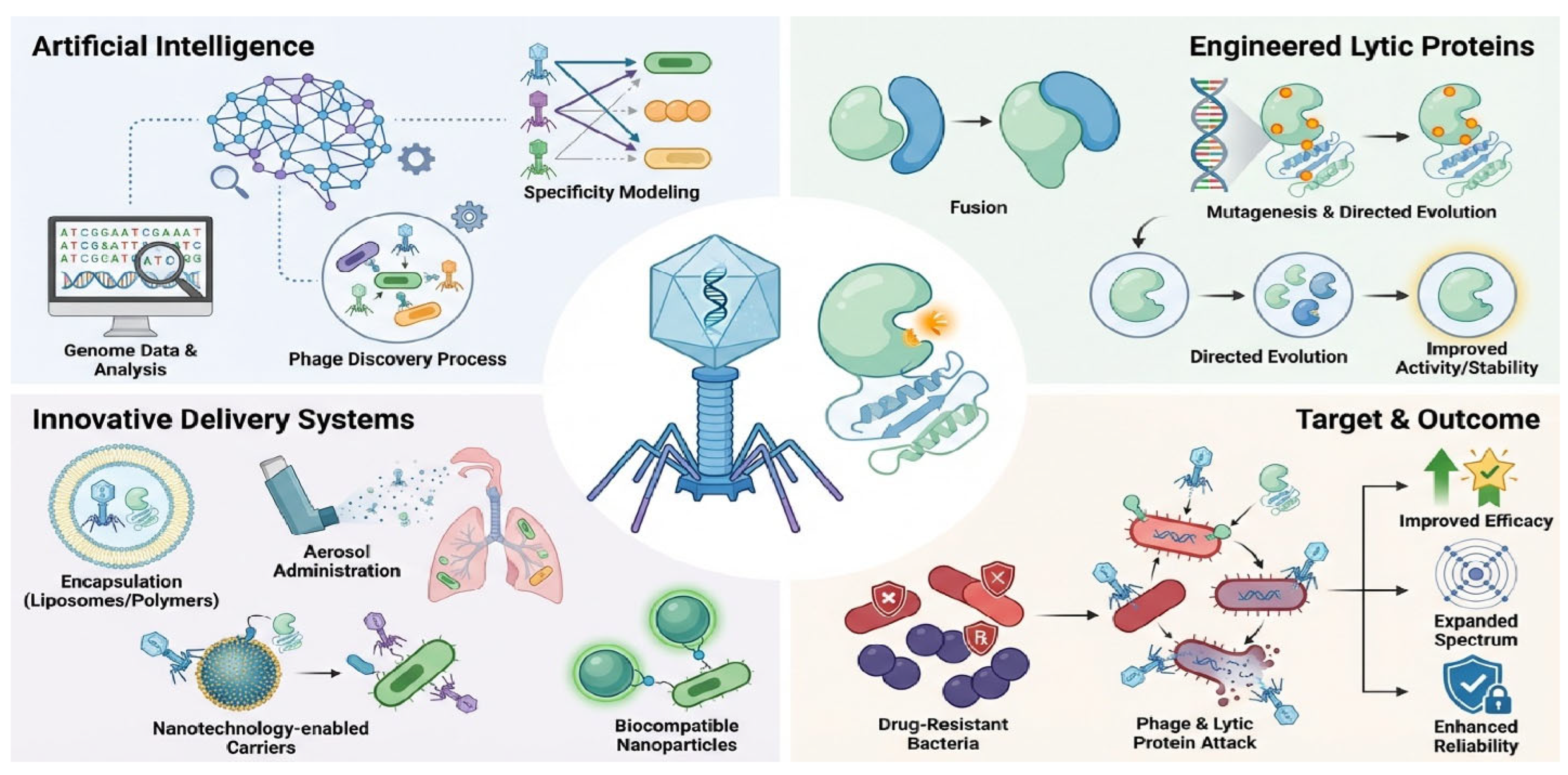
The future of phage therapy depends on researchers developing strategies to make phage and phage-derived lytic protein treatments more effective and dependable. Although they show promise, previous limitations still exist. To address these challenges, the field is turning to key technological advancements. Breakthroughs in artificial intelligence, bioengineering, and delivery systems are establishing a new paradigm for the design of antibacterial agents.
9.1. Artificial intelligence
AI-driven approach is heralding a new era in the development of antibacterial agents. For instance, Zhang et al. (2024) developed a computational tool to screen libraries of novel lytic enzymes for therapeutic use, thereby accelerating discovery. The tool screened lysins from Staphylococcus aureus phages genomes and selected 17 candidates; 7 of these showed potent antibacterial activity. The lysin LLysSA9 outperformed all and was confirmed in vivo for bloodstream and wound infections. A similar study developed a prediction tool to identify depolymerase genes in phage genomes (Magill & Skvortsov, 2023). Another study that applied AI addressed the issue of phage specificity across bacterial strains. Keith et al. (2024) developed machine learning models to predict effective phage combinations. They screened 300 E. coli strains with 31 phages, collecting experimental data to develop a machine-learning model for each phage. The models learned to associate the presence or absence of thousands of bacterial genes with the phage’s ability to kill the bacterium. Models’ predictions were most accurate for phages that naturally infected a broader range of bacterial strains. This approach enabled the design of phage combinations, demonstrating that tailored cocktails based on model predictions outperformed nonspecific mixtures. Furthermore, a study developed a tool to effectively annotate phage genomes. Thung et al. (2021) created STEP3 to analyze patterns in protein sequence evolution, aiding in the annotation of phage genomes and the identification of their structural components. STEP3 outperformed other tools. A similar study by Fang et al. (2022) also created a tool to annotate phage genomes, classifying predicted phage proteins into major structural categories.
9.2. Protein Engineering and Synthetic Biology
Beyond discovery and annotation, the field is increasingly focused on engineering phages and lysins to improve their therapeutic properties. Varotsou et al. (2023) modified an endolysin, PaAmi1, into two forms by fusing the lysin to an antimicrobial peptide to enhance its functionality. The two endolysins showed increased lytic activity against Propionibacterium acnes. Furthermore, the fusion proteins demonstrated improved thermostability, maintaining activity after incubation at 90 °C. Chen and coworkers (2024) demonstrated that endolysin, LysKp84B extracted from Klebsiella pneumoniae as a candidate for protein engineering to enhance its antibacterial activity against the multidrug-resistant ESKAPEE group (Chen et al., 2024). They fused the endolysin with antimicrobial peptides ApoE23 and COG133. Endolysin fused with ApoE23 demonstrated potent activity within one hour against A.baumannii, E.faecalis, and K. pneumoniae. The endolysin combined with COG133 showed significant efficacy against Staphylococcus aureus. Therefore, fusion successfully broadens their antimicrobial spectrum and enhances their activity against drug-resistant pathogens (Chen et al., 2024).
Other studies also highlight protein engineering as a key approach. Sui et al. (2023) created a DNA construct comprising a random sequence containing 20 consecutive NNK codons and the Bp7e gene encoding an endolysin. The synthesized endolysin proteins were screened, and one lead candidate was studied in detail, showing a broad range of activity against Salmonella Enteritidis, Pseudomonas aeruginosa, and Staphylococcus aureus. Following the same engineering concept, Love et al. (2021) introduced mutations at a specific amino acid residue within the hydrophobic core of an endolysin, replacing it with three different residues, resulting in three mutant proteins. This modification enhanced the enzyme’s heat resistance and activity.
9.3. Delivery Systems
While engineering has successfully enhanced the potency and stability of phages and phage-derived proteins, researchers have developed advanced delivery mechanisms. Zhou et al., (2022) developed a microencapsulation delivery system to address the degradation of phages in the harsh acidic environment of the stomach. They used alginate and kappa-carrageenan to encapsulate Salmonella phage and tested the formulations in simulated gastric acid, which protected the phages. Additionally, it allowed the release of phages. This system provides an approach for the oral delivery of phages. Furthermore, for respiratory infections affecting the lungs of cystic fibrosis patients, aerosol delivery is a major focus. Weiner et al. (2025) tested a three-phage cocktail delivered via nebuliser to treat chronic Pseudomonas aeruginosa lung infections. The research successfully demonstrated that phages could be delivered to the lower respiratory tract as there were reductions in P. aeruginosa bacterial load in the sputum of the treatment group compared to the placebo group.
Building upon these advanced delivery systems, phage therapy is expanding into nanotechnology, where the phage itself is conjugated into a hybrid material. For example, Peng et al. (2022) engineered Zn2+⁺-releasing phage-gold nanorod conjugates as a mechanistic approach to target ciprofloxacin-resistant Pseudomonas aeruginosa. Phanorod-Zn conjugates showed significant antibacterial efficacy in reducing bacterial load and biofilm penetration. The chimeric phage allowed attachment to the host. Irradiation triggered photothermal activation of the gold nanorods, resulting in the release of 2+n²⁺, thereby synergistically enhancing antibacterial activity. In a mouse model, they demonstrated that the strategy achieved a greater reduction in bacterial load and accelerated healing compared to antibiotics, with no toxicity. Other studies utilized a biocompatible element to enhance phage therapy through nanotechnology. For instance, a study by Temsaah et al. (2025) developed a chitosan nanoparticle enclosing a phage (HK6) representing a nanocarrier system designed to overcome the thermal and pH stability issues of phages. At higher temperatures (70 °C and 80 °C) and at high alkaline pH values of 11 and 12, the encapsulated phage remained active. Furthermore, the phage-chitosan nanoparticle composition was found to exhibit a synergistic antibacterial effect, dramatically lowering bacterial load compared with phage HK6 or chitosan nanoparticles alone.
Figure 7.
Future technological strategies for enhancing phage and their derived lytic protein therapy. The figure illustrates three key advancements areas. Artificial intelligence approaches including genome analysis and machine leaning models for phage discovery and specificity prediction. Protein strategies such as endolysin fusion, mutagenesis and directed evolution to improve lytic activity and stability. Innovative delivery systems including encapsulation, aerosol administration, and nanotechnology-enabled nanoparticle carriers. These strategies have enabled enhanced efficacy, expanded antimicrobial spectrum and reliability against antibiotic-resistant bacteria. (Adapted from Doud et al., 2025).
10. conclusion
Antimicrobial resistance is a crisis demanding solutions that align with the interconnected One Health framework. Phages and phage derived lytic proteins have emerged as a promising alternative, demonstrating efficacy in human medicine, veterinary applications, and environmental protection. The evidence reviewed, spanning clinical trials, preclinical studies and environmental interventions show that these agents can target MDR pathogens across the One Health spectrum.
The value of phages extends to their lytic proteins; holins that perforate the inner membrane, endolysins that degrade the peptidoglycan layer and spanins that disrupt the outer membrane. These proteins have shown effectiveness not only in biomedical applications but also as synergistic agents, as seen with endolysin KNT103 combined with meropenem against Acinetobacter baumanii and endolysin NC5 improving cloxacillin efficacy against Streptococcus uberis-associated mastitis. The combination of whole phages with their derived lytic proteins as demonstrated with phiPLA-RODI and CHAPSH3b against staphylococcal biofilms, further illustrate the potential of co-administration strategies that neither could achieve alone.
Nevertheless, considerable challenges remain before phage-based therapies can be routinely translated into clinical practice. Narrow host range, rapid bacterial resistance, immune-mediated phage clearance and unpredictable pharmacokinetics continue to limit reliable therapeutic outcomes. Phage lytic proteins specifically short half life and poor outer membrane permeability in gram negative pathogens remain ongoing hurdles. These challenges are addressable. Protein engineering including endolysin fusion with antimicrobial peptides, albumin binding domains for extended circulation and mutagenesis for thermostability is resolving the pharmacological weakness of lytic proteins. PEGylation of phages to extend systemic circulation and encapsulation technologies to protect against degradation or thermal inactivation are bringing delivery changes under control. AI driven discovery tools such as Deeplysin and machine learning models for phage host range prediction are reducing the time required to identify and optimize therapeutic candidates.In conclusion, phage and phage-derived lytic proteins represent a scientifically mature and therapeutically versatile class of antibacterial agents. As conventional antibiotics continue to fail against the expanding threat of MDR pathogens, phage-based therapies offer an alternative and fundamental paradigm for infection control.
Author Contributions
G.G. came up with the outline. M.M. wrote the paper together with the contributions from the following authors; F.M., P.A., O.P., J.N. and T.Z. in reviewing and editing. All authors approved the manuscript.
Funding
This research received no external funding.
Institutional Review Board Statement
Not applicable.
Informed Consent Statement
Not applicable.
Data Availability Statement
No new data were created or analyzed in this study. Data sharing is not applicable to this article.
Conflicts of Interest
The authors declare no conflicts of interest.
Declaration
During the preparation of this work, the author used FigureLabs in order to create explanatory images illustrating concepts and processes. After using this tool, the author reviewed and edited the content as needed and takes full responsibility for the content of the published article.
References
- Abeysekera, G. S.; Love, M. J.; Manners, S. H.; Billington, C.; Dobson, R. C. J. Bacteriophage-encoded lethal membrane disruptors: Advances in understanding and potential applications. Front. Microbiol. 2022, 13, 1044143. [Google Scholar] [CrossRef]
- Aframian, N.; Eldar, A. Abortive infection antiphage defense systems: separating mechanism and phenotype. Trends Microbiol. 2023, 31(10), 1003–1012. [Google Scholar] [CrossRef] [PubMed]
- Agún, S.; Fernández, L.; Rodríguez, A.; García, P. Milk promotes the development of complex, protein-rich biofilms in Staphylococcus aureus and limits the efficacy of phage-based eradication strategies. LWT 2025, 228, 118056. [Google Scholar] [CrossRef]
- Ahammad, T.; Drew, D. L.; Khan, R. H.; Sahu, I. D.; Faul, E.; Li, T.; Lorigan, G. A. Structural Dynamics and Topology of the Inactive Form of S21Holin in a Lipid Bilayer Using Continuous-Wave Electron Paramagnetic Resonance Spectroscopy. J. Phys. Chem. B 2020, 124(26), 5370–5379. [Google Scholar] [CrossRef] [PubMed]
- Ahmed, S. K.; Hussein, S.; Qurbani, K.; Ibrahim, R. H.; Fareeq, A.; Mahmood, K. A.; Mohamed, M. G. Antimicrobial resistance: Impacts, challenges, and future prospects. J. Med. Surg. Public Health 2024, 2, 100081. [Google Scholar] [CrossRef]
- Alem, K.; Dagnew, M.; Gizachew, M.; Gelaw, B.; Moges, F. Environmental Antimicrobial Resistance: Key Drivers, Hotspots, Innovative Strategies, and Challenges in the Fight Against Superbugs. In MicrobiologyOpen; ISSUE:ISSUE: DOI, 2025; Volume 14, 5, p. e70067. [Google Scholar] [CrossRef] [PubMed]
- Anastassopoulou, C.; Tsakri, D.; Panagiotopoulos, A. P.; Saldari, C.; Sagona, A. P.; Tsakris, A. Armed Phages: A New Weapon in the Battle Against Antimicrobial Resistance. Viruses 2025, Vol. 17(17(7)). [Google Scholar] [CrossRef] [PubMed]
- Antonova, N. P.; Abdullaeva, S. D.; Vasina, D. V.; Grigoriev, I. V.; Usachev, E. V.; Usacheva, O. V.; Gushchin, V. A. Modifying Pharmacokinetic Properties of the Gram-Negative Bacteria Targeting Endolysin ML06 Without Affecting Antibacterial Activity. Int. J. Mol. Sci. 2025, Vol. 26(26(9)). [Google Scholar] [CrossRef] [PubMed]
- Artawinata, P. C.; Lorraine, S.; Waturangi, D. E. Isolation and characterization of bacteriophages from soil against food spoilage and foodborne pathogenic bacteria. Sci. Rep. 2023, 13:1(13(1)), 9282. [Google Scholar] [CrossRef] [PubMed]
- Bajpai, U.; Pandey, R. P.; Bajpai, M.; Sharma, P. Bacteriophages, Antimicrobial Resistance and One Health: An Integrated Approach. In PHAGE: Therapy, Applications, and Research; WEBSITE:WEBSITE:SAGE;JOURNAL:JOURNAL:PTAA;WGROUP:STRING:PUBLICATION; 2025. [Google Scholar] [CrossRef]
- Barrangou, R. Diversity of CRISPR-Cas immune systems and molecular machines. Genome Biol. 2015, 16:1(16(1)), 247. [Google Scholar] [CrossRef] [PubMed]
- Berkson, J. D.; Wate, C. E.; Allen, G. B.; Schubert, A. M.; Dunbar, K. E.; Coryell, M. P.; Sava, R. L.; Gao, Y.; Hastie, J. L.; Smith, E. M.; Kenneally, C. R.; Zimmermann, S. K.; Carlson, P. E. Phage-specific immunity impairs efficacy of bacteriophage targeting Vancomycin Resistant Enterococcus in a murine model. Nat. Commun. 2024, 15:1(15(1)), 2993. [Google Scholar] [CrossRef] [PubMed]
- Bondy-Denomy, J.; Pawluk, A.; Maxwell, K. L.; Davidson, A. R. Bacteriophage genes that inactivate the CRISPR/Cas bacterial immune system. Nature 2012, 493(7432), 429. [Google Scholar] [CrossRef] [PubMed]
- Cella, E.; Giovanetti, M.; Benedetti, F.; Scarpa, F.; Johnston, C.; Borsetti, A.; Ceccarelli, G.; Azarian, T.; Zella, D.; Ciccozzi, M. Joining Forces against Antibiotic Resistance: The One Health Solution. Pathogens 2023, Vol. 12(12(9)). [Google Scholar] [CrossRef] [PubMed]
- Cernooka, E.; Rumnieks, J.; Zrelovs, N.; Tars, K.; Kazaks, A. Diversity of the lysozyme fold: structure of the catalytic domain from an unusual endolysin encoded by phage Enc34. Sci. Rep. 2022, 12:1(12(1)), 5005. [Google Scholar] [CrossRef] [PubMed]
- Chen, W. H.; Woolston, J.; Grant-Beurmann, S.; Robinson, C. K.; Bansal, G.; Nkeze, J.; Permala-Booth, J.; Fraser, C. M.; Tennant, S. M.; Shriver, M. C.; Pasetti, M. F.; Liang, Y.; Kotloff, K. L.; Sulakvelidze, A.; Schwartz, J. A. Safety and Tolerability of ShigActiveTM, a Shigella spp. Targeting Bacteriophage Preparation, in a Phase 1 Randomized, Double-Blind, Controlled Clinical Trial. Antibiotics 2024, 13(9). [Google Scholar] [CrossRef] [PubMed]
- Chen, W.; Han, L. M.; Chen, X. Z.; Yi, P. C.; Li, H.; Ren, Y. Y.; Gao, J. H.; Zhang, C. Y.; Huang, J.; Wang, W. X.; Hu, Z. L.; Hu, C. M. Engineered endolysin of Klebsiella pneumoniae phage is a potent and broad-spectrum bactericidal agent against “ESKAPEE” pathogens. Front. Microbiol. 2024, 15, 1397830. [Google Scholar] [CrossRef]
- Choi, Y.; Park, J. S.; Kim, J.; Min, K.; Mahasenan, K.; Kim, C.; Yoon, H. J.; Lim, S.; Cheon, D. H.; Lee, Y.; Ryu, S.; Mobashery, S.; Kim, B. M.; Lee, H. H. Structure-based inhibitor design for reshaping bacterial morphology. Commun. Biol. 2022, 1(5(1)), 395. [Google Scholar] [CrossRef] [PubMed]
- Chu, D.; Lan, J.; Liang, L.; Xia, K.; Li, L.; Yang, L.; Liu, H.; Zhang, T. The antibacterial activity of a novel highly thermostable endolysin, LysKP213, against Gram-negative pathogens is enhanced when combined with outer membrane permeabilizing agents. Front. Microbiol. 2024, 15, 1454618. [Google Scholar] [CrossRef]
- Danis-Wlodarczyk, K. M.; Wozniak, D. J.; Abedon, S. T. Treating Bacterial Infections with Bacteriophage-Based Enzybiotics: In Vitro, In Vivo and Clinical Application. Antibiotics 2021, 10(12), 1497–1497. [Google Scholar] [CrossRef] [PubMed]
- Denissen, J.; Reyneke, B.; Waso-Reyneke, M.; Havenga, B.; Barnard, T.; Khan, S.; Khan, W. Prevalence of ESKAPE pathogens in the environment: Antibiotic resistance status, community-acquired infection and risk to human health. Int. J. Hyg. Environ. Health 2022, 244, 114006. [Google Scholar] [CrossRef] [PubMed]
- Duarte, A. C.; Fernández, L.; De Maesschalck, V.; Gutiérrez, D.; Campelo, A. B.; Briers, Y.; Lavigne, R.; Rodríguez, A.; García, P. Synergistic action of phage phiIPLA-RODI and lytic protein CHAPSH3b: a combination strategy to target Staphylococcus aureus biofilms. npj Biofilms Microbiomes 2021, 7(1), 39. [Google Scholar] [CrossRef] [PubMed]
- Echterhof, A.; Dharmaraj, T.; Blankenberg, P.; Targ, B.; Nguyen, T. D.; Bollyky, P. L.; Smith, N. M.; Blankenberg, F. G. Whole-body distribution of three Pseudomonas phages characterized by a translational physiologically based pharmacokinetic model. Antimicrob. Agents Chemother. 2025, 70(1). [Google Scholar] [CrossRef] [PubMed]
- Egido, J. E.; Costa, A. R.; Aparicio-Maldonado, C.; Haas, P. J.; Brouns, S. J. J. Mechanisms and clinical importance of bacteriophage resistance. FEMS Microbiol. Rev. 2021, 46(1), fuab048. [Google Scholar] [CrossRef] [PubMed]
- Fang, Z.; Feng, T.; Zhou, H.; Chen, M. DeePVP: Identification and classification of phage virion proteins using deep learning. GigaScience 2022, 11. [Google Scholar] [CrossRef] [PubMed]
- Feng, C.; Cheng, Y.; Liang, S.; Liang, R.; Yu, J.; Wang, S.; Guo, H.; Shan, X.; Zhang, D.; Qian, A.; Sun, W.; Zhang, L. Identification and analysis of the crucial holin domain and sites and the bactericidal activity of a holin–endolysin lysis cassette from phage PZL-Ah152 against Aeromonas hydrophila. J. Virol. 2026, 100(1). [Google Scholar] [CrossRef] [PubMed]
- Fursov, M. V.; Abdrakhmanova, R. O.; Antonova, N. P.; Vasina, D. V.; Kolchanova, A. D.; Bashkina, O. A.; Rubalsky, O. V.; Samotrueva, M. A.; Potapov, V. D.; Makarov, V. V.; Yudin, S. M.; Gintsburg, A. L.; Tkachuk, A. P.; Gushchin, V. A.; Rubalskii, E. O. Antibiofilm Activity of a Broad-Range Recombinant Endolysin LysECD7: In Vitro and In Vivo Study. Viruses 2020, 12(5), 545. [Google Scholar] [CrossRef] [PubMed]
- Globyte, V.; Lee, S. H.; Bae, T.; Kim, J.; Joo, C. CRISPR/Cas9 searches for a protospacer adjacent motif by lateral diffusion. EMBO J. 2018, 2018 38:4(38(4)), EMBJ201899466-. [Google Scholar] [CrossRef] [PubMed]
- Hashemi, S.; Zarei, A.; Taghizadeh, M. S.; Iraji, C.; Nezafat, N.; Savardashtaki, A. Structure-guided design of a novel, stable, and soluble Cecropin A variant for antimicrobial therapeutic applications. Sci. Rep. 2025, 2025 15:1(15(1)), 32836. [Google Scholar] [CrossRef] [PubMed]
- He, P.; Cao, F.; Qu, Q.; Geng, H.; Yang, X.; Xu, T.; Wang, R.; Jia, X.; Lu, M.; Zeng, P.; Luan, G. Host range expansion of Acinetobacter phage vB_Ab4_Hep4 driven by a spontaneous tail tubular mutation. Front. Cell. Infect. Microbiol. 2024, 14, 1301089. [Google Scholar] [CrossRef]
- Hibstu, Z.; Belew, H.; Akelew, Y.; Mengist, H. M. Phage Therapy: A Different Approach to Fight Bacterial Infections. Biol. Targets Ther. 2022, 16, 173. [Google Scholar] [CrossRef] [PubMed]
- Hille, F.; Charpentier, E. CRISPR-cas: Biology, mechanisms and relevance. Philos. Trans. R. Soc. B Biol. Sci. 2016, 371, 1707. [Google Scholar] [CrossRef]
- Homeier-Bachmann, T.; Heiden, S. E.; Lübcke, P. K.; Bachmann, L.; Bohnert, J. A.; Zimmermann, D.; Schaufler, K. Antibiotic-Resistant Enterobacteriaceae in Wastewater of Abattoirs. Antibiotics 2021, Vol. 10(10(5)). [Google Scholar] [CrossRef] [PubMed]
- Hong, H. W.; Jang, J.; Kim, Y. D.; Jeong, T. H.; Lee, D.; Park, K.; Kim, M. S.; Yoon, I. S.; Song, M.; Seo, M. D.; Yoon, H.; Lim, D.; Myung, H. In vitro and in vivo efficacy studies of an engineered endolysin targeting Gram-negative pathogens. Int. J. Biol. Macromol. 2025, 302, 140463. [Google Scholar] [CrossRef] [PubMed]
- Ibrahim, N.; McAlister, J. A.; Geddes-McAlister, J.; Svircev, A. M.; Weadge, J. T.; Anany, H. Phage host interactions reveal LPS and OmpA as receptors for two Erwinia amylovora phages. Sci. Rep. 2025, 2025 15:1(15(1)), 36527. [Google Scholar] [CrossRef] [PubMed]
- Indiani, C.; Sauve, K.; Raz, A.; Abdelhady, W.; Xiong, Y. Q.; Cassino, C.; Bayer, A. S.; Schuch, R. The Antistaphylococcal Lysin, CF-301, Activates Key Host Factors in Human Blood To Potentiate Methicillin-Resistant Staphylococcus aureus Bacteriolysis. Antimicrob. Agents Chemother. 2019, 63(4), e02291-18. [Google Scholar] [CrossRef] [PubMed]
- Johnson, K. A.; Goswami, H. N.; Catchpole, R. J.; Ahmadizadeh, F.; Zhao, P.; Wells, L.; Li, H.; Terns, M. P. A phage-encoded anti-CRISPR protein cooperates with host enolase to prevent type III CRISPR immunity. Nat. Microbiol. 2025, 10(12), 3162. [Google Scholar] [CrossRef] [PubMed]
- Joseph, C. E.; Jain, A.; Yaqub, M. O.; Edison, L. K. CRISPR-Cas Systems: Bridging Bacterial Immunity and Host Interactions. Appl. Microbiol. 2025a, Vol. 5(5(4)). [Google Scholar] [CrossRef]
- Joseph, C. E.; Jain, A.; Yaqub, M. O.; Edison, L. K. CRISPR-Cas Systems: Bridging Bacterial Immunity and Host Interactions. Appl. Microbiol. 2025b, Vol. 5(5(4)). [Google Scholar] [CrossRef]
- Kang, H.; Gao, A.; Zhu, Y. Bacterial restriction-modification systems: mechanisms of defense against phage infection. Biophys. Rep. 2025, 11(5), 330. [Google Scholar] [CrossRef] [PubMed]
- Keith, M.; de la Torriente, A. P.; Chalka, A.; Vallejo-Trujillo, A.; McAteer, S. P.; Paterson, G. K.; Low, A. S.; Gally, D. L. Predictive phage therapy for Escherichia coli urinary tract infections: Cocktail selection for therapy based on machine learning models. Proc. Natl. Acad. Sci. USA 2024, 121(12). [Google Scholar] [CrossRef]
- Khan, M. F.; Javed, M.; Kaur, J.; Badwal, A. K.; Singh, S. CRISPR-Cas mediated targeting of resistance genes for combating ESKAPE pathogen infections: A Review. Int. J. Biol. Macromol. 2025, 334, 149180. [Google Scholar] [CrossRef] [PubMed]
- Klein, E. Y.; Tseng, K. K.; Pant, S.; Laxminarayan, R. Tracking global trends in the effectiveness of antibiotic therapy using the Drug Resistance Index. BMJ Glob. Health 2019, 4(2). [Google Scholar] [CrossRef] [PubMed]
- Knecht, L. E.; Born, Y.; Pelludat, C.; Pothier, J. F.; Smits, T. H. M.; Loessner, M. J.; Fieseler, L. Spontaneous Resistance of Erwinia amylovora Against Bacteriophage Y2 Affects Infectivity of Multiple Phages. Front. Microbiol. 2022, 13. [Google Scholar] [CrossRef] [PubMed]
- Kongari, R.; Snowden, J.; Berry, J. D.; Young, R. Localization and Regulation of the T1 Unimolecular Spanin. J. Virol. REQUESTEDJOURNAL:JOURNAL:JVI;JOURNAL:JOURNAL:JVI;PAGE:STRING:ARTICLE/CHAPTER. 2018, 92(22). [Google Scholar] [CrossRef] [PubMed]
- Koposova, O. N.; Kazantseva, O. A.; Shadrin, A. M. Diversity of Endolysin Domain Architectures in Bacteriophages Infecting Bacilli. Biomolecules 2024, Vol. 14(14(12)). [Google Scholar] [CrossRef] [PubMed]
- Kui, L.; Huang, J.; Wang, G.; Zhao, J.; Wang, S.; Qin, X.; Liu, L.; Hu, J.; Chen, L.; Wang, Xingchun; Li, Q.; Zhao, Y.; Tang, Y.; Xiong, K.; Zhan, S.; Ding, H.; Wang, J. L.; Cai, H.; Zhang, Q.; …; Hu, G. Endolysin significantly improves symptoms with atopic dermatitis: bridging the gap from research to clinical practice. Front. Immunol. 2025, 16, 1667195. [Google Scholar] [CrossRef] [PubMed]
- Le, H. T.; Ahlenstiel, G.; Venturini, C.; Read, S. A. mGem: Immune recognition and clearance of bacteriophages—implications for phage therapy. In MBio; PAGE:STRING:ARTICLE/CHAPTER, 2025; 12, p. 16. [Google Scholar] [CrossRef] [PubMed]
- Le Rhun, A.; Escalera-Maurer, A.; Bratovič, M.; Charpentier, E. CRISPR-Cas in Streptococcus pyogenes. In RNA Biology; ISSUE:ISSUE: DOI, 2019; Volume 16, 4, pp. 380–389. [Google Scholar] [CrossRef] [PubMed]
- Li, J.; Yan, B.; He, B.; Li, L.; Zhou, X.; Wu, N.; Wang, Q.; Guo, X.; Zhu, T.; Qin, J. Development of phage resistance in multidrug-resistant Klebsiella pneumoniae is associated with reduced virulence: a case report of a personalised phage therapy. Clin. Microbiol. Infect. 2023, 29(12), 1601.e1–1601.e7. [Google Scholar] [CrossRef] [PubMed]
- Li, X.; Shangguan, W.; Yang, X.; Hu, X.; Li, Y.; Zhao, W.; Feng, M.; Feng, J. Influence of Lipopolysaccharide-Interacting Peptides Fusion with Endolysin LysECD7 and Fatty Acid Derivatization on the Efficacy against Acinetobacter baumannii Infection In Vitro and In Vivo. Viruses 2024, Vol. 16(16(5)). [Google Scholar] [CrossRef] [PubMed]
- Liu, X.; Zhang, Z.; Ruan, J.; Pan, Y.; Magupalli, V. G.; Wu, H.; Lieberman, J. Inflammasome-activated gasdermin D causes pyroptosis by forming membrane pores. Nature 2016, 535(7610), 153–158. [Google Scholar] [CrossRef] [PubMed]
- Lopatina, A.; Tal, N.; Sorek, R. Abortive Infection: Bacterial Suicide as an Antiviral Immune Strategy. Annu. Rev. Virol. 2020, 7(1), 371–384. [Google Scholar] [CrossRef] [PubMed]
- Love, M. J.; Coombes, D.; Manners, S. H.; Abeysekera, G. S.; Billington, C.; Dobson, R. C. J. The Molecular Basis for Escherichia coli O157:H7 Phage FAHEc1 Endolysin Function and Protein Engineering to Increase Thermal Stability. Viruses 2021, Vol. 13(13(6)). [Google Scholar] [CrossRef] [PubMed]
- Magill, D. J.; Skvortsov, T. A. DePolymerase Predictor (DePP): a machine learning tool for the targeted identification of phage depolymerases. BMC Bioinform. 2023, 2023 24:1(24(1)), 208. [Google Scholar] [CrossRef] [PubMed]
- Mani, A.; Shanmugha Mary, A.; Kalangadan, N.; Sundaresan, S.; Ghosh, S.; Prakash, J.; Durairajan, S. S. K.; Rajaram, K. Augmenting phage therapy using green nanotechnology for promising infection control, wound healing and devoiding phage resistance in MDR Pseudomonas aeruginosa. Sci. Rep. 2025, 15(1). [Google Scholar] [CrossRef] [PubMed]
- Muteeb, G.; Kazi, R. N. A.; Aatif, M.; Azhar, A.; El Oirdi, M.; Farhan, M. Antimicrobial resistance: Linking molecular mechanisms to public health impact. SLAS Discov. 2025, 33, 100232. [Google Scholar] [CrossRef] [PubMed]
- Nang, S. C.; Lin, Y. W.; Petrovic Fabijan, A.; Chang, R. Y. K.; Rao, G. G.; Iredell, J.; Chan, H. K.; Li, J. Pharmacokinetics/pharmacodynamics of phage therapy: a major hurdle to clinical translation. Clin. Microbiol. Infect. 2023, 29(6), 702–709. [Google Scholar] [CrossRef] [PubMed]
- Niaz, H.; Skurnik, M.; Adnan, F. Molecular Cloning and Functional Analysis of Holin and Endolysin From Escherichia Phage UE-M6 as Potential Antibacterial Agents. MicrobiologyOpen 2025, 14(6), e70150. [Google Scholar] [CrossRef] [PubMed]
- Oechslin, F. Resistance Development to Bacteriophages Occurring during Bacteriophage Therapy. Viruses 2018, 10(7), 351. [Google Scholar] [CrossRef] [PubMed]
- Oechslin, F.; Oechslin, F. Resistance Development to Bacteriophages Occurring during Bacteriophage Therapy. Viruses 2018, Vol. 10(10(7)). [Google Scholar] [CrossRef] [PubMed]
- Pallavali, R.; Shin, D.; Choi, J. Phage-Based Biocontrol of Antibiotic-Resistant Bacterium Isolated from Livestock Wastewater Treatment Plant. Water 2023, Vol. 15(15(8)). [Google Scholar] [CrossRef]
- Patel, P. H.; Taylor, V. L.; Zhang, C.; Getz, L. J.; Fitzpatrick, A. D.; Davidson, A. R.; Maxwell, K. L. Anti-phage defence through inhibition of virion assembly. Nat. Commun. 2024, 15(1), 1644. [Google Scholar] [CrossRef] [PubMed]
- Peng, H.; Rossetto, D.; Mansy, S. S.; Jordan, M. C.; Roos, K. P.; Chen, I. A. Treatment of Wound Infections in a Mouse Model Using Zn2+-Releasing Phage Bound to Gold Nanorods. ACS Nano 2022, 16(3), 4756–4774. [Google Scholar] [CrossRef] [PubMed]
- Poudel, A. N.; Zhu, S.; Cooper, N.; Little, P.; Tarrant, C.; Hickman, M.; Yao, G. The economic burden of antibiotic resistance: A systematic review and meta-analysis. PLoS ONE 2023, 18(5), e0285170. [Google Scholar] [CrossRef] [PubMed]
- Saeed, H.; Padmesh, S.; Singh, A.; Singh, S. P.; Siddiqui, M. H.; Sen, M.; Hussain, I.; Beg, M. M. A. Characterization of holins, the membrane proteins of coliphage ASEC2201: a genomewide in silico approach. Front. Microbiol. 2025, 16, 1550594. [Google Scholar] [CrossRef]
- São-José, C. Engineering of Phage-Derived Lytic Enzymes: Improving Their Potential as Antimicrobials. Antibiotics 2018, 7(2), 29. [Google Scholar] [CrossRef] [PubMed]
- São-José, C.; Costa, A. R.; Melo, L. D. R. Editorial: Bacteriophages and Their Lytic Enzymes as Alternative Antibacterial Therapies in the Age of Antibiotic Resistance. Front. Microbiol. 2022, 13, 884176. [Google Scholar] [CrossRef]
- Schleimer, N.; Kaspar, U.; Knaack, D.; von Eiff, C.; Molinaro, S.; Grallert, H.; Idelevich, E. A.; Becker, K. In Vitro Activity of the Bacteriophage Endolysin HY-133 against Staphylococcus aureus Small-Colony Variants and Their Corresponding Wild Types. Int. J. Mol. Sci. 2019, Vol. 20(20(3)). [Google Scholar] [CrossRef] [PubMed]
- Selim, H. M. R. M.; Gomaa, F. A. M.; Alshahrani, M. Y.; Aboshanab, K. M. Role of CRISPR-Cas system as a new approach in fighting the antimicrobial resistance of bacterial and viral pathogens. Infect. Dis. Immun. 2025, 5(2), 127–137. [Google Scholar] [CrossRef] [PubMed]
- Seo, B. J.; Song, E. T.; Lee, K.; Kim, J. W.; Jeong, C. G.; Moon, S. H.; Son, J. S.; Kang, S. H.; Cho, H. S.; Jung, B. Y.; Kim, W. Il. Evaluation of the broad-spectrum lytic capability of bacteriophage cocktails against various Salmonella serovars and their effects on weaned pigs infected with Salmonella Typhimurium. J. Vet. Med. Sci. 2018, 80(6), 851. [Google Scholar] [CrossRef] [PubMed]
- Shabbir, M. A. B.; Hao, H.; Shabbir, M. Z.; Wu, Q.; Sattar, A.; Yuan, Z. Bacteria vs. bacteriophages: Parallel evolution of immune arsenals. Front. Microbiol. 2016, 7(AUG), 213809. [Google Scholar] [CrossRef]
- Shamsuzzaman, M.; Choi, Y. J.; Kim, S.; Jeong, J. Y.; Hong, C. A.; Kim, J. PEGylation Overcomes Pharmacological Barriers to Improve Systemic Pharmacokinetics and Therapeutic Efficacy of Phages against MDR Escherichia coli. J. Microbiol. Biotechnol. 2025, 35, e2509050. [Google Scholar] [CrossRef] [PubMed]
- Shi, Y.; Zhang, W.; Li, L.; Wu, W.; Li, M.; Xiao, K.; Wang, K.; Sheng, Z.; Xie, F.; Wang, X.; Shi, X.; Tong, Y.; Xie, L. Evaluation of phage-based decontamination in respiratory intensive care unit environments using ddPCR and 16S rRNA targeted sequencing techniques. Front. Cell. Infect. Microbiol. 2024, 14. [Google Scholar] [CrossRef] [PubMed]
- Sitaraman, R. The Role of DNA Restriction-Modification Systems in the Biology of Bacillus anthracis. Front. Microbiol. 2016, 7(JAN), 11. [Google Scholar] [CrossRef] [PubMed]
- Solanki, R.; Makwana, N.; Kumar, R.; Joshi, M.; Patel, A.; Bhatia, D.; Sahoo, D. K. Nanomedicines as a cutting-edge solution to combat antimicrobial resistance. RSC Adv. 2024, 14(45), 33568–33586. [Google Scholar] [CrossRef] [PubMed]
- Son, S. M.; Kim, J.; Ryu, S. Development of sensitizer peptide-fused endolysin Lys1S-L9P acting against multidrug-resistant gram-negative bacteria. Front. Microbiol. 2023, 14, 1296796. [Google Scholar] [CrossRef]
- Srikant, S.; Guegler, C. K.; Laub, M. T. The evolution of a counter-defense mechanism in a virus constrains its host range. ELife 2022, 11, e79549. [Google Scholar] [CrossRef] [PubMed]
- Sui, B.; Wang, X.; Zhao, T.; Zhen, J.; Ren, H.; Liu, W.; Zhang, X.; Zhang, C.; Buan, N. R. Design, Screening, and Characterization of Engineered Phage Endolysins with Extracellular Antibacterial Activity against Gram-Negative Bacteria ENZYMOLOGY AND PROTEIN ENGINEERING. 2023, 89(7). [Google Scholar] [CrossRef] [PubMed]
- Tang, M.; Huang, Z.; Zhang, X.; Kong, J.; Zhou, B.; Han, Y.; Zhang, Y.; Chen, L.; Zhou, T. Phage resistance formation and fitness costs of hypervirulent Klebsiella pneumoniae mediated by K2 capsule-specific phage and the corresponding mechanisms. Front. Microbiol. 2023, 14, 1156292. [Google Scholar] [CrossRef]
- Temsaah, H. R.; Abdelkader, K.; Ahmed, A. E.; Elgiddawy, N.; Eldin, Z. E.; Elshebrawy, H. A.; Kasem, N. G.; El-Gohary, F. A.; Azmy, A. F. Chitosan nano-formulation enhances stability and bactericidal activity of the lytic phage HK6. BMC Biotechnol. 2025, 25(1). [Google Scholar] [CrossRef] [PubMed]
- Thung, T. Y.; White, M. E.; Dai, W.; Wilksch, J. J.; Bamert, R. S.; Rocker, A.; Stubenrauch, C. J.; Williams, D.; Huang, C.; Schittelhelm, R.; Barr, J. J.; Jameson, E.; McGowan, S.; Zhang, Y.; Wang, J.; Dunstan, R. A.; Lithgow, T. Component Parts of Bacteriophage Virions Accurately Defined by a Machine-Learning Approach Built on Evolutionary Features. In MSystems; SUBPAGE:STRING:FULL, 2021; 3, p. 6. [Google Scholar] [CrossRef] [PubMed]
- Vander Elst, N.; Bellemans, J.; Lavigne, R.; Briers, Y.; Meyer, E. Endolysin NC5 improves early cloxacillin treatment in a mouse model of Streptococcus uberis mastitis. Appl. Microbiol. Biotechnol. 2024, 108(1), 1–12. [Google Scholar] [CrossRef] [PubMed]
- Varotsou, C.; Premetis, G. E.; Labrou, N. E. Characterization and Engineering Studies of a New Endolysin from the Propionibacterium acnes Bacteriophage PAC1 for the Development of a Broad-Spectrum Artilysin with Altered Specificity. Int. J. Mol. Sci. 2023, Vol. 24(24(10)). [Google Scholar] [CrossRef] [PubMed]
- Wang, Y.; Yu, Y. Phage therapy as a revitalized weapon for treating clinical diseases. Microbiome Res. Rep. 2025, 4(3), 35. [Google Scholar] [CrossRef] [PubMed]
- Watson, B. N. J.; Steens, J. A.; Staals, R. H. J.; Westra, E. R.; van Houte, S. Coevolution between bacterial CRISPR-Cas systems and their bacteriophages. Cell Host Microbe 2021, 29(5), 715–725. [Google Scholar] [CrossRef] [PubMed]
- Watson, B. N. J.; Vercoe, R. B.; Salmond, G. P. C.; Westra, E. R.; Staals, R. H. J.; Fineran, P. C. Type I-F CRISPR-Cas resistance against virulent phages results in abortive infection and provides population-level immunity. Nat. Commun. 2019, 10:1(10(1)), 5526. [Google Scholar] [CrossRef] [PubMed]
- Wein, T.; Millman, A.; Lange, K.; Yirmiya, E.; Hadary, R.; Garb, J.; Melamed, S.; Amitai, G.; Dym, O.; Steinruecke, F.; Hill, A. B.; Kranzusch, P. J.; Sorek, R. CARD domains mediate anti-phage defence in bacterial gasdermin systems. Nature 2025, 639(8055), 727–734. [Google Scholar] [CrossRef] [PubMed]
- Weiner, I.; Kahan-Hanum, M.; Buchstab, N.; Zelcbuch, L.; Navok, S.; Sherman, I.; Nicenboim, J.; Axelrod, T.; Berko-Ashur, D.; Olshina, M.; Mordoch, R.; Jablonska, J.; Gera-Inbar, T.; Vainberg-Slutskin, I.; Blumenfeld, B.; Sberro-Livnat, H.; Moses, A.; Nevenzel, H.; Levy-Saar, I.; …; Bassan, M. Phage therapy with nebulized cocktail BX004-A for chronic Pseudomonas aeruginosa infections in cystic fibrosis: a randomized first-in-human trial. Nat. Commun. 2025, 2025 16:1(16(1)), 5579. [Google Scholar] [CrossRef] [PubMed]
- Woldetsadik, Y. A.; Lazinski, D. W.; Camilli, A. A Vibrio cholerae anti-phage system depletes nicotinamide adenine dinucleotide to restrict virulent bacteriophages. MBio 2024, 15(11), e02457-24. [Google Scholar] [CrossRef] [PubMed]
- Xu, C.; Kong, L.; Gao, H.; Cheng, X.; Wang, X. A Review of Current Bacterial Resistance to Antibiotics in Food Animals. Front. Microbiol. 2022, 13, 822689. [Google Scholar] [CrossRef] [PubMed]
- Yeh, T. K.; Jean, S. S.; Lee, Y. L.; Lu, M. C.; Ko, W. C.; Lin, H. J.; Liu, P. Y.; Hsueh, P. R. Bacteriophages and phage-delivered CRISPR-Cas system as antibacterial therapy. Int. J. Antimicrob. Agents 2022, 59(1). [Google Scholar] [CrossRef] [PubMed]
- Youssef, O.; Agún, S.; Fernández, L.; Khalil, S. A.; Rodríguez, A.; García, P. Impact of the calcium concentration on the efficacy of phage phiIPLA-RODI, LysRODIΔAmi and nisin for the elimination of Staphylococcus aureus during lab-scale cheese production. Int. J. Food Microbiol. 2023, 399, 110227. [Google Scholar] [CrossRef]
- Zermeño-Cervantes, L. A.; Martínez-Díaz, S. F.; Venancio-Landeros, A. A.; Cardona-Félix, C. S. Evaluating the efficacy of endolysins and membrane permeabilizers against Vibrio parahaemolyticus in marine conditions. Res. Microbiol. 2023, 174(7), 104104. [Google Scholar] [CrossRef] [PubMed]
- Zhang, S.; Kim, J. C.; Ahn, J. Phage engineering strategies to expand host range for controlling antibiotic-resistant pathogens. Microbiol. Res. 2025, 300, 128278. [Google Scholar] [CrossRef] [PubMed]
- Zhang, Y.; Cui, X.; Chai, L.; Pan, Y.; Yang, Y.; Liu, H.; Mou, X.; Le, T. Designing the Next Generation of Endolysins: A Triple Strategy Integrating Bioinformatics Mining, Engineering Modification and Encapsulation Formulation. Probiotics Antimicrob. Proteins 2026, 2026, 1–36. [Google Scholar] [CrossRef] [PubMed]
- Zhang, Y.; Li, R.; Zou, G.; Guo, Y.; Wu, R.; Zhou, Y.; Chen, H.; Zhou, R.; Lavigne, R.; Bergen, P. J.; Li, Jian; Li, Jinquan. Discovery of Antimicrobial Lysins from the “Dark Matter” of Uncharacterized Phages Using Artificial Intelligence. Adv. Sci. 2024, 11(32). [Google Scholar] [CrossRef] [PubMed]
- Zhao, Huyang; Wu, W.; Zhao, Hongzhe; Zheng, C.; Teng, F.; Chen, M.; Li, J.; Jiang, Y.; Cui, W.; Ma, Y.; Qiao, X. Biological functional identification of holins from Salmonella pullorum phages and their therapeutic efficacy against pullorum disease in chickens. Poult. Sci. 2026, 105(2), 106273. [Google Scholar] [CrossRef] [PubMed]
- Zheng, C.; Di, Y.; Wang, Y.; Zhao, H.; Wang, R.; Li, G.; Wang, X.; San, Z.; Jiang, Y.; Cui, W.; Li, J.; Wang, L.; Qiao, X. Biological function identification of phage holin Hol-4086 and treatment of Staphylococcus aureus infection. Front. Microbiol. 2025, 16. [Google Scholar] [CrossRef]
- Zhou, B.; Zhen, X.; Zhou, H.; Zhao, F.; Fan, C.; Perčulija, V.; Tong, Y.; Mi, Z.; Ouyang, S. Structural and functional insights into a novel two-component endolysin encoded by a single gene in Enterococcus faecalis phage. PLoS Pathog. 2020a, 16(3), e1008394. [Google Scholar] [CrossRef] [PubMed]
- Zhou, Y.; Xu, D.; Yu, H.; Han, J.; Liu, W.; Qu, D. Encapsulation of Salmonella phage SL01 in alginate/carrageenan microcapsules as a delivery system and its application in vitro. Front. Microbiol. 2022, 13, 906103. [Google Scholar] [CrossRef]
Figure 2.
Classification of bacteriophages into three groups. The first group consists of tailed dsDNA phages with larger genomes (Myoviridae, Siphoviridae, Podoviridae), which have double-stranded DNA enclosed in icosahedral heads with tail structures for host attachment and DNA injection. The second group includes double-stranded, lipid-containing phages (Tectiviridae, Cystoviridae, Plasmaviridae, and Corticoviridae) that carry dsDNA or dsRNA genomes. The third group comprises phages (Inoviridae, Microviridae, and Leviviridae), characterised by ssDNA or RNA genomes (adapted from Zuppi et al., 2022).
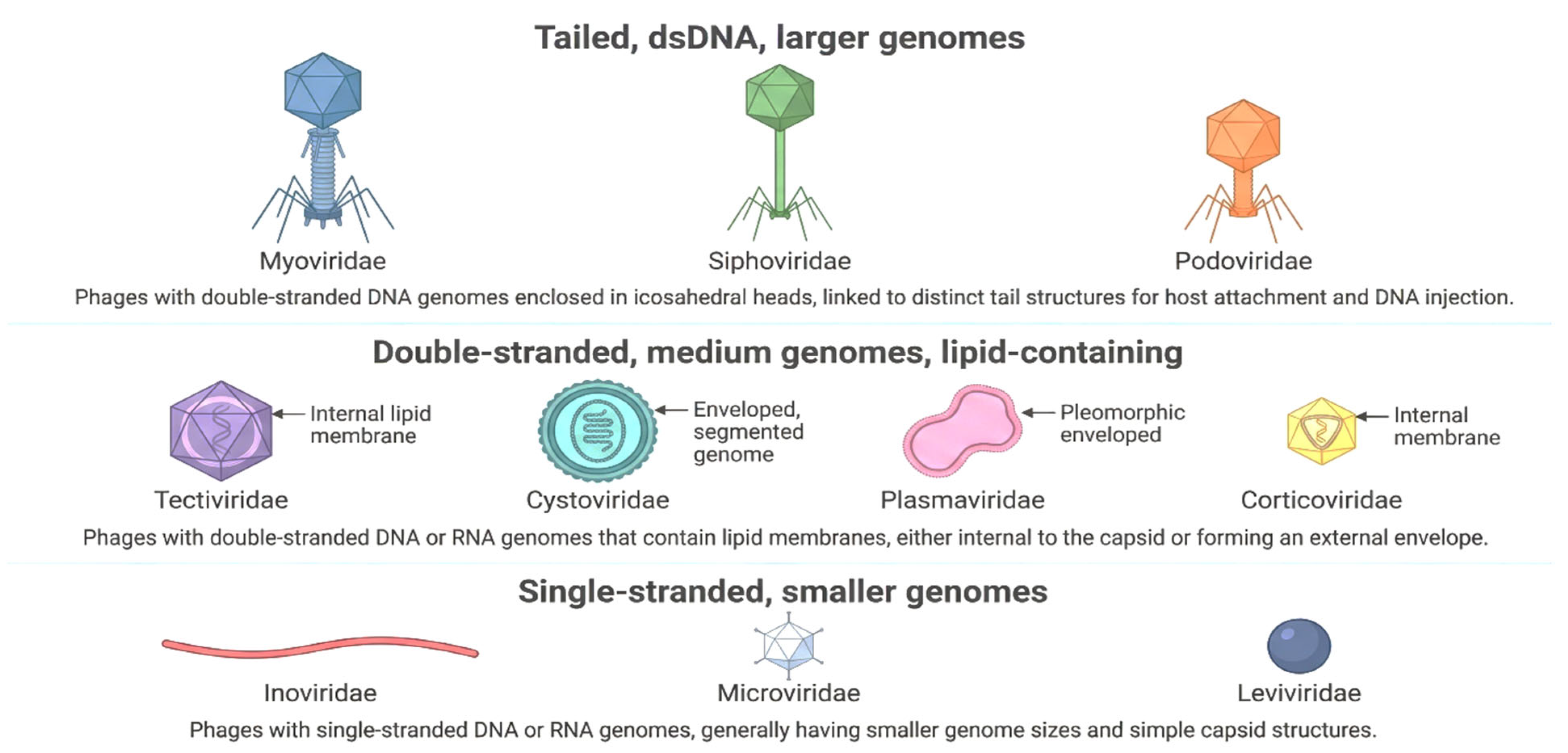
Figure 3.
Bacteriophage life cycles illustrating the lytic, lysogenic, and induction pathways. In the lytic cycle, the phage attaches and injects its DNA into the bacterium, hijacks the cellular machinery to replicate and synthesise, and assembles new phages, resulting in the release of progeny phages. In the lysogenic cycle, the phage integrates its DNA into the bacterial chromosome as a prophage, which is then passively replicated without killing the host. Exposure to environmental stressors, such as UV radiation, triggers induction. The prophage is excised and enters the lytic cycle. (Adapted from Makky et al., 2021).
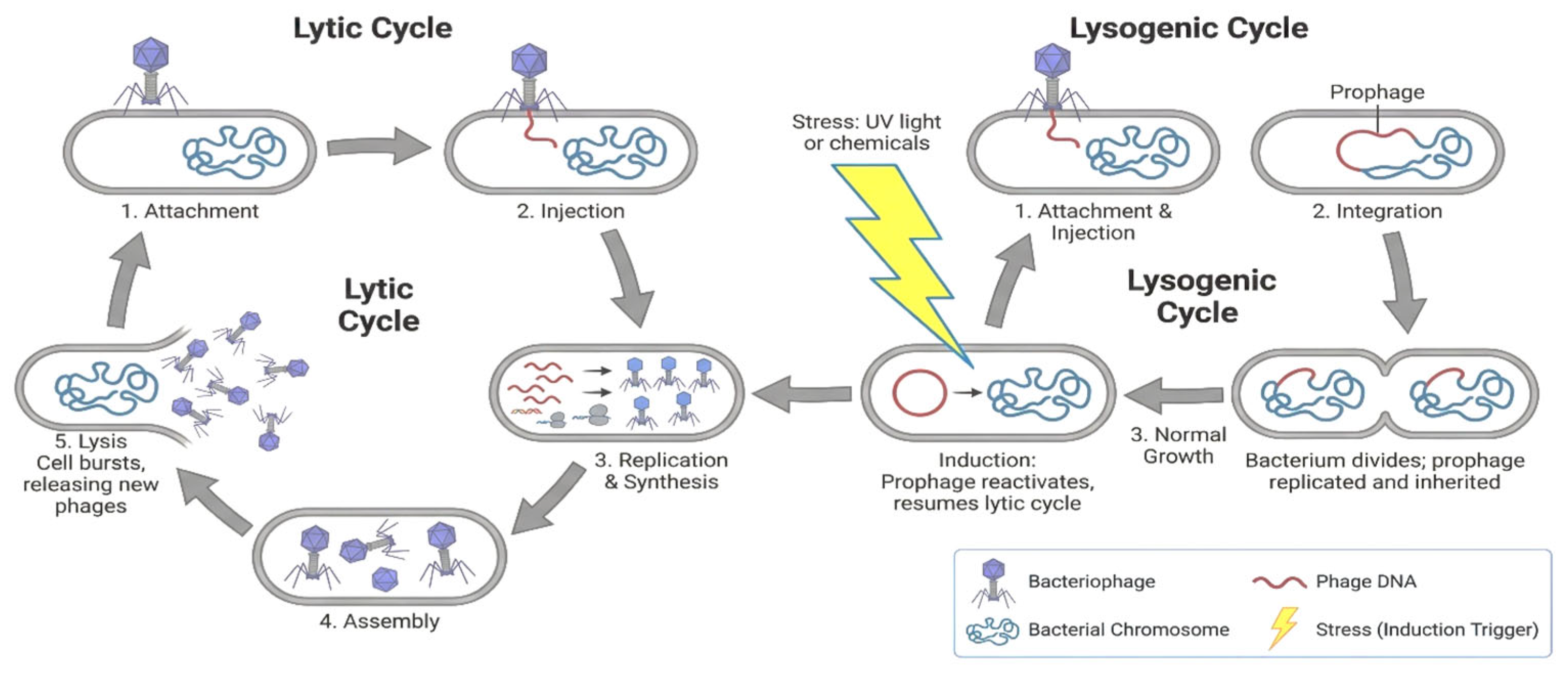
Figure 5.
The image shows the three classes of holins and their transmembrane domain (TMD) arrangements within the inner cytoplasmic membrane. Class I holins (A) are the most complex, with three TMDs that include an N-terminal signal anchor, a central hydrophobic helix, and a C-terminal segment. Class II holins (B) have a simpler structure with two TMDs, while Class III holins (C) are the simplest, with only one TMD. (Adapted from Grabowski et al., 2021).
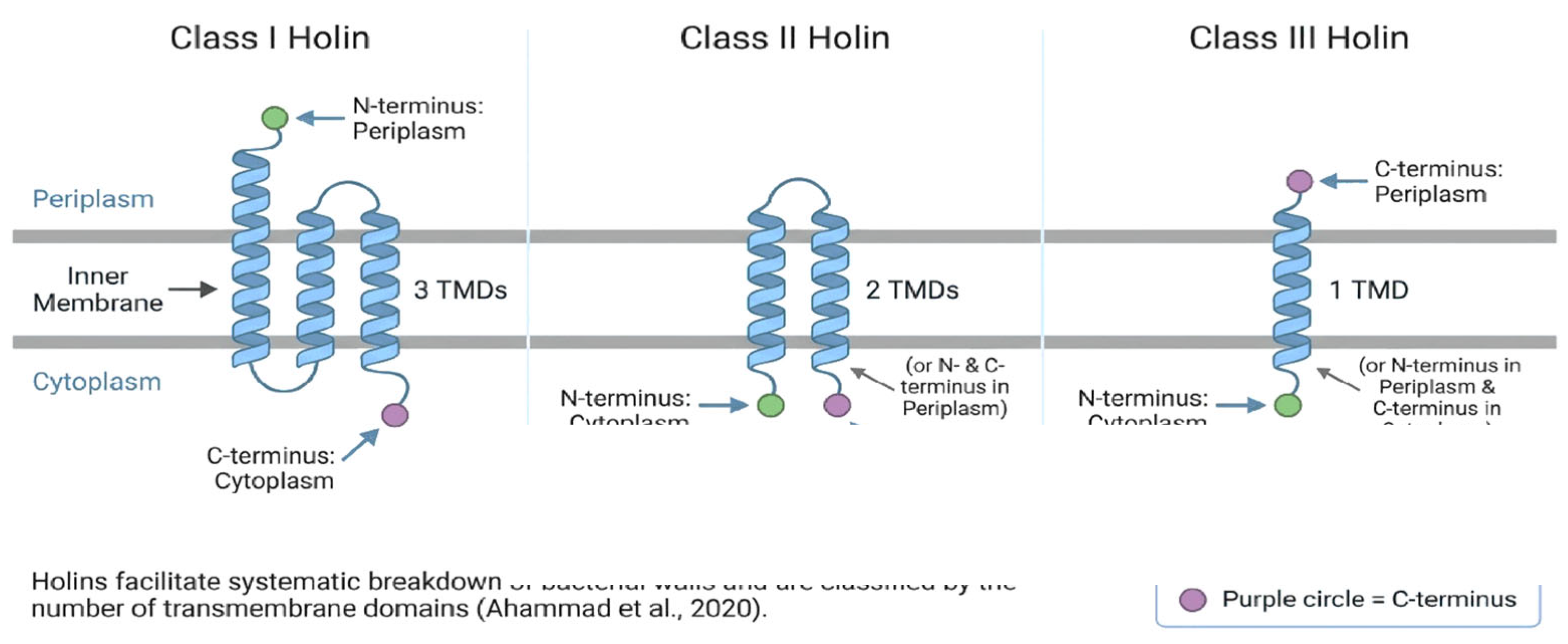
Figure 6.
The image shows the step-by-step process of bacteriophage-induced bacterial cell lysis across four panels. In the first panel, the intact bacterial cell contains mature phage particles inside its cytoplasm. In the second panel, holins (red) form pores in the inner membrane, allowing endolysins (blue) to reach the cell wall. In the third panel, endolysins degrade the peptidoglycan layer, weakening the cell wall. Finally, in the fourth panel, spanins (green) facilitate fusion of the inner and outer membranes, thereby completing cell lysis and releasing the bacteriophages (purple, T4-like) into the environment. (Adapted from Mondal et al., 2024).
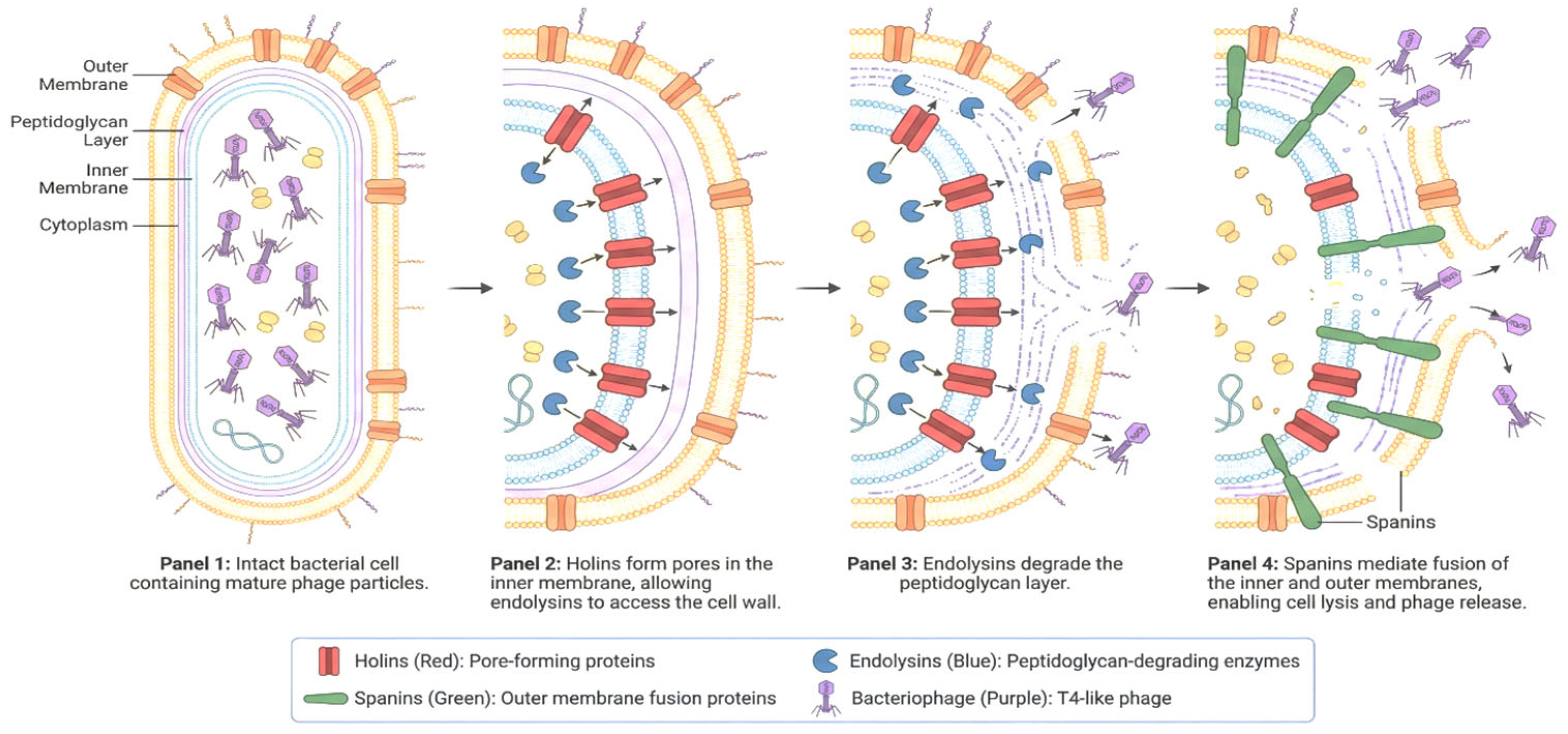
Disclaimer/Publisher’s Note: The statements, opinions and data contained in all publications are solely those of the individual author(s) and contributor(s) and not of MDPI and/or the editor(s). MDPI and/or the editor(s) disclaim responsibility for any injury to people or property resulting from any ideas, methods, instructions or products referred to in the content. |
© 2026 by the authors. Licensee MDPI, Basel, Switzerland. This article is an open access article distributed under the terms and conditions of the Creative Commons Attribution (CC BY) license (http://creativecommons.org/licenses/by/4.0/).
Copyright: This open access article is published under a Creative Commons CC BY 4.0 license, which permit the free download, distribution, and reuse, provided that the author and preprint are cited in any reuse.