
Submitted:
14 August 2026
Posted:
17 August 2026
You are already at the latest version
Abstract
This study aims to conduct a bibliometric analysis of the literature related to ecofeminism, one of the most significant topics of debate in the 21st century. A Web of Science (WoS) screening of the period 2000-2025 identified 971 articles. Ecofeminism was clearly centered on the social and humanities fields. The most frequently appearing categories were “women’s studies, literature, environmental studies, religion, humanities, interdisciplinary studies, and philosophy”. The United States holds a dominant position in the literature of ecofeminism. After 2023, it appeared that ecofeminism began to attract greater attention at the global level. Six thematic clusters were the “Feminist Environmental Theories and Environmental Ethics”, “Ecology and Ethics”, “Social Justice, Climate Justice, Gender Equality, and Activism”, “Cultural and Spiritual Approaches, Religious Ecology”, “Critiques of Modernization, Development, and Technology”, and finally “Regional and Global Focuses, Local Justice Themes”. The map showed that ecofeminism was situated within three main academic axes: Ethical-philosophical (Ethics and the Environment, Environmental Ethics, Feminist Theory, etc.), education and sustainability (Journal of Environmental Education, Sustainability), and cultural-theological (Feminist Theology, Environmental Communication, Humanities-Basel. In conclusion, the literature of ecofeminism has gone beyond being merely an environmental ethics approach and it has evolved into a multidimensional field of research encompassing sustainability, climate justice, and eco-political solidarity.
Keywords:
ecofeminism
; environmental studies
; feminist movements
; bibliometric analysis
1. Introduction
The organic harmony between social life and nature has been disrupted nowadays. Serious problems (such as lack of safe water, drought, food security, and loss of biodiversity) have emerged due to factors like the climate crisis, global warming, air pollution, and soil degradation. It is possible to observe the negative reflections of these problems in all areas of life, particularly in health and the economy. In this context, the current century is regarded as the century of environmental crises. Proposals for resolving these crises are addressed by different schools of thought within various paradigms. Accordingly, ecofeminism is regarded as a significant approach in the relevant literature. Ecofeminism analyzes environmental crises from the perspectives of gender, justice, and ecological ethics (Merchant, 2014). Ecofeminism, which emphasizes the interdependence and care relationships between nature and humans, is an approach that addresses environmental crises within the framework of gender, justice, and ecological ethics. In this approach, themes of gender justice and local ecology come to the fore as well as issues of sustainable agriculture and ecological ethics (Gaard, 2015).
The adverse effects of climate change are not experienced equally by poor and rich countries, or by women and men. Women, who represent the majority of the world’s poorer population, are more vulnerable to the adverse effects of climate change. It is well known that the mortality rate of women is higher than men in natural disasters such as droughts, floods, and earthquakes caused by climate-related issues. It is also known that women are particularly affected by the increased incidents of abuse and sexual violence that occur in the aftermath of disasters. Reports indicate that climate change affects women living in the southern hemisphere more severely (Parmesan et al., 2022; United Nations Women, 2018). Furthermore, as capitalist exploitation mechanisms destroy nature, women’s labor has been made even more invisible. The UN Human Development Report notes that the climate crisis has the potential risk to restrict human freedoms and the right to life, and there is a significant link between gender inequality and climate change (Dinç & Erdoğan, 2023). However, women are not being welcomed into platforms for voicing these disadvantages, and they are not fully allowed to hold positions as policymakers and decision-makers. Since women have lower levels of education and income, and more limited access to resources like property, financing, and technology compared to men, their capacity to cope with climate change issues is insufficient (Organisation for Economic Co-operation and Development [OECD], 2008). The ecofeminist approach argues that this gap is not “biological” or “natural,” but rather a disadvantage created by gender roles (Salleh, 1997).
Although it was stated that ecofeminism was developed by Ynestra King in 1976 at the Vermont Institute of Social Ecology, ecofeminism emerged spontaneously in various parts of the world in the mid-1970s according to Barbara Holland-Cunz and Ariel Salleh. Ecofeminism was first introduced into the literature in 1974 by the French feminist Françoise d’Eaubonne, who recognized the connection between the oppression of women and the oppression of nature and advocated for the need to unite the environmental and feminist movements. Ecofeminism emphasizes and embraces women’s connection to nature (Çetin, 2005). For example, in a study conducted in the United States in 1980, 14 percent of men identified themselves as “anti-nuclear,” while the rate was 25 percent among women. This ratio was similar in developed countries such as Sweden, France, and Germany, as well as the United States. Also, it was found that radiation affected women more severely and women were at greater risk than men, particularly for breast and thyroid cancer. It is also known that the fetus is highly sensitive to radiation during periods of fast cell division. Based on this finding, it can be said that future generations are also at risk (Köküöz, 1989).
Ecofeminism is distinguished from other concepts because it uses the female perspective to address environmental issues by linking them to women’s issues. While fighting against gender-biased perspectives, ecofeminists strive to merge feminism and environmentalism by working to resolve issues related to nature and the environment (Mellor, 1997; Parıltı, 2025). Furthermore, ecofeminism advocates for the importance of alternative knowledge systems (local, intuitive, community-based) in the policies adopted to save nature. Indeed, climate policies are generally shaped by a scientific-technocratic and therefore male-dominated perspective. In fact, the local ecological knowledge (such as seed saving and traditional farming methods) held by women since the hunter-gatherer era is of critical importance for sustainable solutions (Shiva, 1989). Ecofeminist studies argue that the neglect of this knowledge represents a significant deficit in the fight against climate change (Gaard & Gruen, 1993). Consequently, this study, which examines various theories regarding the human-nature relationship, aims to conduct a bibliometric analysis of the ecofeminist literature as it is one of the most significant topics of debate in the 21st century.
2. Method
The articles analyzed in this study were identified using the WoS database with the keyword “ecofeminism” between 2000 and 2025. Articles were organized in Excel and CSV formats, including information such as author(s), title, keywords, abstract, journal, country, language, year, and relevant WoS category. As part of the study, bibliometric analysis was performed on the dataset obtained from Web of Science (WoS) screening of ecofeminist literature using the VOSviewer software, and the findings were visualized in the form of network maps. The bibliometric analyses include keyword analysis, network analysis (collaboration maps between authors, countries, etc.), journal citation analysis (analysis of connections between the most-cited journals), and bibliographic link analysis (analysis of connections between articles that share similar references). As a result of these analyses, density maps (color-coded by frequency), clustering maps (color-coded by microclusters in the network structure), and evolutionary maps (showing changes over time) were generated using the VOSwiever program.
3. Results
A total of 971 articles were identified as a result of the Web of Science screening for 2000-2025 period.
3.1. Top Research Areas
Figure 1 shows the research areas emphasized in the articles.
As shown in Figure 1, ecofeminism was clearly dominated by the social and humanities disciplines. The most common categories were “women’s studies, literature, environmental studies, religion, the humanities, interdisciplinary studies, and philosophy”.
3.2. Top Authors
The authors who had the most publications in the field of ecofeminism were G. Bertella and G. Gaard, each with six publications. Next were A. Gough, C. Mallory, S. Walters, and H. Whitehouse, each with five publications.
3.3. Top Journals
Table 1 lists the journals with the highest publication rates.
When Table 1 was examined overall, there was a noticeable number of journals focusing on environmental, ethical, and feminist themes, as well as journals from various fields within the humanities.
3.4. Keyword-Based Thematic Analysis
Figure 2 shows a network map of keywords.
Between 2000 and 2025, a total of 88 keywords that were used together at least five times in publications in the field of ecofeminism were identified and analyzed. An examination of the map presented in Figure 2 revealed six thematic clusters centered on “ecofeminism”. These clusters, along with their associated keywords, were listed below:
Cluster 1 (Feminist Environmental Theories and Environmental Ethics): Ecofeminism, gender, women, feminism, patriarchy, sustainability, environment.
Cluster 2 (Ecology and Ethics): Ecocriticism, posthumanism, care ethics, environmental justice, ethics, ecology.
Cluster 3 (Social Justice, Climate Justice, Gender Equality, and Activism): Climate justice, activism, equality, social justice, power, politics.
Cluster 4 (Cultural and Spiritual Approaches, Religious Ecology): Spirituality, art, poetry, culture, religion, theology, ekofeminist theology.
Cluster 5 (Critiques of Modernization, Development, and Technology): Anthropocene, capitalism, neoliberalism, deep ecology, development, sustainability technology.
Cluster 6 (Regional and Global Focuses, Local Justice Themes): South Africa, India, Latin America, indigenous women, food sovereignty, agroecology.
When the studies were evaluated based on their publication dates, the 2018-2020 period focused on theoretical debates (feminism, ecology, spirituality), the 2021-2023 period emphasized environmental justice and social transformation (climate change, activism, justice), and the 2024-2025 period highlighted contemporary philosophical trends and interdisciplinary connections (care ethics, posthumanism, sustainability, new materialism).
3.5. Authors’ Collaboration Network
Figure 3 shows the authors’ collaboration network.
In the network map, each node represents an author, and the connections represent co-authorship relationships. Finally, the areas with the most productive and influential authors are highlighted in yellow.
The total number of authors in the ecofeminist literature for the 2000-2025 period was 1.276, and the number of authors with at least two co-authored publications was 99. According to the network map, the majority of authors worked independently, and collaboration occured only among a few small groups. The most prominent region was the central area occupied by the Whitehouse–Gough duo. This group represented a cluster of authors frequently mentioned and cited together in the ecofeminist studies. While authors such as Phillips and Bertella were located in the areas of moderate density, authors working on environmental and ethical themes (e.g., Gaard, Loro-Bidart) had broader but sparser connections.
3.6. International Cooperation Network
Figure 4 shows the international cooperation network.
As can be clearly seen on the map presented in Figure 4, the United States held a dominant position in the literature of ecofeminism. During the 2019-2021 period, countries such as the United States, Germany, and India emerged as early contributors. After 2022, countries such as Brazil and Taiwan increased their collaborative productivity. Starting in 2023, ecofeminism began to attract greater global attention.
3.7. Journal Citation Network
Figure 5 shows the journal citation network.
A total of 301 journals in the ecofeminist literature were analyzed, and a mapping was conducted for the 12 journals that received at least five citations. The map showed that ecofeminism was situated along three main academic axes:
- The Ethical-Philosophical Axis: Ethics and the Environment, Environmental Ethics, Feminist Theory vb.
- The Education and Sustainability Axis: Journal of Environmental Education, Sustainability
- The Cultural-Theological Axis: Feminist Theology, Environmental Communication, Humanities-Basel
3.8. Bibliographic Matching Analysis
Figure 6 shows the bibliographic match links of the works.
The network map was constructed based on the minimum citation count of 3 for the journals in which the 971 articles were published. The highest link density was observed in publications such as Wolch (2002), Gaard (2015), Bell (2020), Briscoe (2019), and Norgaard (2005). These articles constituted the main axis of the ecofeminist literature. Furthermore, the network map had clearly identified three main intellectual lines:
- Eco-philosophical Foundations: Gaard and Norgaard are among the leading figures in this group, which is based on the interconnections between topics such as the body, ethics, human and nature relationship.
- Feminist Environmental Sociology: Bell, Briscoe, and Kings are among the leading figures in this group, which focuses on the interconnections between social structure, climate justice, women’s labor, and environmental policies.
- Interdisciplinary Expansion: Wolch, Yudina, and Akbulut are among the leading figures in this group, which draws on the connections between environmental justice, the posthumanist perspective, and local ecology studies.
4. Discussion
This study, which examines various theories regarding the relationship between humans and nature, aims to conduct a bibliometric analysis of the literature related to ecofeminism, one of the most significant topics of debate in the 21st century. A Web of Science (WoS) screening of the period 2000-2025 identified 971 articles. Their academic fields provide important information about how these publications are situated within the scientific community. According to Figure 1, ecofeminism was clearly centered on the social and humanities fields. The most frequently appearing categories were “women’s studies, literature, environmental studies, religion, humanities, interdisciplinary studies, and philosophy”. This situation reflects the critiques of gender, ethics, culture, and social justice that underpin the ecofeminist approach. As for the most productive authors in the field of ecofeminism, G. Bertella and G. Gaard each had six publications. They were followed by A. Gough, C. Mallory, S. Walters, and H. Whitehouse, each with five publications. Journal publications provide important clues as to how topics are discussed within academic circles. To this end, the journals with the highest publication rates in the literature were analyzed. A general review of Table 1 revealed that the most prominent journals were related to the environment, ethics, and feminism, as well as other fields of the humanities.
Keyword-based thematic analysis reveals conceptual clusters of the most frequently used keywords in the ecofeminist literature. The analysis reveals the thematic development of the field and how concepts are used in connection with each other. Between 2000 and 2025, 88 keywords that were used together at least five times in publications related to ecofeminism were identified and analyzed. As a result of examining the map presented in Figure 2, six thematic clusters were identified based on “ecofeminism”, and these clusters were presented along with their associated keywords. The “Feminist Environmental Theories and Environmental Ethics” cluster includes the keywords ecofeminism, gender, women, feminism, patriarchy, sustainability, and environment. The “Ecology and Ethics” cluster includes the keywords ecocriticism, posthumanism, care ethics, environmental justice, ethics, and ecology. The “Social Justice, Climate Justice, Gender Equality, and Activism” cluster includes the keywords climate justice, activism, equality, social justice, power, and politics. The “Cultural and Spiritual Approaches, Religious Ecology” cluster includes the keywords spirituality, art, poetry, culture, religion, theology, and ecofeminist theology. The “Critiques of Modernization, Development, and Technology” cluster includes the keywords Anthropocene, capitalism, neoliberalism, deep ecology, development, and sustainability technology. Finally, the “Regional and Global Focuses, Local Justice Themes” cluster includes the keywords South Africa, India, Latin America, indigenous women, food sovereignty, and agroecology. When the studies were evaluated based on their publication dates, the 2018-2020 period focused on theoretical debates (feminism, ecology, spirituality), the 2021-2023 period emphasized environmental justice and social transformation (climate change, activism, justice), and the 2024-2025 period highlighted contemporary philosophical trends and interdisciplinary connections (care ethics, posthumanism, sustainability, new materialism). In addition, author collaboration network analysis was used to identify the intensity of academic collaboration in the field, the clusters formed by co-authors, and the structural integrity of the field. For the 2000-2025 period, the total number of authors in the ecofeminist literature was 1.276, and the number of authors with at least two collaborative publications was 99. According to the network map in Figure 3, the vast majority of authors worked independently, and collaboration occured only among a few small groups. The most prominent area was the center, located by the Whitehouse-Gough duo. This group constituted the cluster of authors frequently mentioned and cited in ecofeminist research. Phillips and Bertella, for example, were situated in areas of moderate density, while authors working on environmental and ethical themes (e.g., Gaard, Loro-Bidart) had broader but sparser connections. This structure demonstrates that the ecofeminist literature is organized thematically around a central core, as networks of authors. It shows that only a small number of authors have high productivity, while a large group of authors are in isolated or sparsely connected positions. In the literature of ecofeminism, it can be linked the lack of a strong network of collaboration among authors and the interdisciplinary nature of the field and the authors’ tendency to work on their own. By analyzing the network of international collaboration, this study examined the collaborative networks among countries in the ecofeminist literature. In this way, it becomes clear which countries have played a leading role in the relevant literature, how international partnerships have taken shape, or the geographical distribution of the studies. As clearly shown on the map presented in Figure 4, the United States held a dominant position in the literature of ecofeminism. During the 2019-2021 period, countries such as the United States, Germany, and India emerged as early contributors. After 2022, cooperative production increased in countries such as Brazil and Taiwan. After 2023, it appeared that ecofeminism began to attract greater attention at the global level. Overall, the analysis reveals that ecofeminist research has increasingly diversified at the global level, but that the level of international collaboration remains limited. Using journal citation network analysis, this study examined the journals most frequently cited in the ecofeminist literature between 2000 and 2025, as well as the citation links between these journals. Thus, it was determined which publication networks the literature is focused on, and which journals serve as the primary channels for the flow of information. A mapping was conducted for 12 journals with at least 5 citations each, selected from a total of 301 journals in the ecofeminist literature. The map showed that ecofeminism was situated within three main academic axes: Ethical-philosophical (Ethics and the Environment, Environmental Ethics, Feminist Theory, etc.), education and sustainability (Journal of Environmental Education, Sustainability), and cultural-theological (Feminist Theology, Environmental Communication, Humanities-Basel) (see Figure 5). This structure confirms the interdisciplinary nature of ecofeminism. Since 2016, the literature has shifted from classical theoretical frameworks toward practical and political acts. Journals in the fields of education, ethics, and communication, in particular, have gained a prominent position within the knowledge network. Finally, bibliometric analysis was used to examine the connections between articles citing similar references in the ecofeminist literature. This analysis reveals the thematic evolution of the relevant literature, current academic clusters, and the primary research networks within the literature. The network map was constructed for the journals publishing 971 articles, with a minimum citation count of 3 (see Figure 6). The highest connection density was observed in publications such as Wolch (2002), Gaard (2015), Bell (2020), Briscoe (2019), and Norgaard (2005). These articles constitute the main axis of the ecofeminist literature. At the same time, the network map has clearly identified three main intellectual lines: Eco-philosophical foundations, feminist environmental sociology, and interdisciplinary expansion. Gaard and Norgaard are among the leading figures in this group, which is based on the interconnections between topics such as the body, ethics, human and nature relationship. Bell, Briscoe, and Kings are among the leading figures in this group, which focuses on the interconnections between social structure, climate justice, women’s labor, and environmental policies. Wolch, Yudina, and Akbulut are among the leading figures in this group, which draws on the connections between environmental justice, the posthumanist perspective, and local ecology studies.
In conclusion, the literature of ecofeminism has gone beyond being merely an environmental ethics approach and it has evolved into a multidimensional field of research encompassing sustainability, climate justice, and eco-political solidarity. Qualitative research designs have generally been preferred in ecofeminist studies. Literary analysis, narrative analysis, ethnographic studies, and case studies were frequently used. Theoretical and conceptual discussions came to the fore. When the results of studies published in the relevant literature were examined, the key findings were as follows: Ecofeminism generally argues that patriarchal systems lead to the exploitation of both women and nature. It establishes a strong link between gender inequality and the ecological crisis. To address these issues, it proposes ethical and political social structures based on non-hierarchical, care-oriented, and collaborative approaches. This approach frequently draws on the knowledge of indigenous peoples. As of the first quarter of the 2000s, it is understood that ecofeminist literature has grown richer in terms of both the number of publications and academic collaborations. The bibliometric analyses conducted as part of this study clearly demonstrate that the ecofeminist literature encompasses various intellectual perspectives. Ecofeminism, rooted in social and human sciences, is a critical and social justice-oriented approach. This approach challenges patriarchy and gender inequality. In summary, this study, which visualizes the key themes and conceptual focuses in the ecofeminist literature through maps, has identified social networks and areas for interdisciplinary collaboration for researchers. Furthermore, the academic and/or practical contributions of this literature have been identified within the framework of environmental policies and ethical debates. Finally, this study presents findings that will serve as a guide for policymakers and researchers.
Acknowledgments
This study does not require ethical approval. All research steps were conducted by the author.
References
- Çetin, O. B. Ekofeminizm: Kadın-doğa ilişkisi ve ataerkillik [Ecofeminism: Women-nature connection and patriarchy]. Sosyoekonomi Dergisi 2005, 1, 61–76. Available online: https://dergipark.org.tr/en/download/article-file/197575.
- Dinç, S.; Erdoğan, E. İklim Kaygı Ölçeği’nin Türkçe’ye uyarlanması, geçerlik ve güvenirliği: Sağlık çalışanları örneklemi [Adaptation, validity and reliability of the Climate Anxiety Scale to Turkish: A sample of healthcare professionals]. Journal of Nursology 2023, 26(3), 206–211. [Google Scholar] [CrossRef]
- Gaard, G. Ecofeminism and climate change. Women’s Studies International Forum 2015, 49, 20–33. [Google Scholar] [CrossRef]
- Gaard, G.; Gruen, L. Ecofeminism: Toward global justice and planetary health. Society & Nature 1993, 2(1), 1–35. Available online: https://philpapers.org/rec/GAAETG.
- Köküöz, A. Çevrecilik, anti-nükleer hareket ve feminism [The environmentalism, anti-nuclear movement and feminism]. Kaktüs Dergisi 1989, 7, 13–18. [Google Scholar]
- Mellor, M. Feminism and ecology: An introduction; New York University Press, 1997. [Google Scholar]
- Merchant, C. Earthcare: Women and the environment; Routledge, 2014. [Google Scholar]
- Organisation for Economic Co-operation and Development; OECD. Gender equality and women’s empowerment in development cooperation. 2008. Available online: https://www.europarl.europa.eu/doceo/document/TA-6-2008-0103_EN.html.
- Parıltı, K. Türkiye’deki kadın ve çevre aktivistlerinin direnişi üzerinden inşa edilen ekofeminizmin özellikleri [The characteristics of ecofeminism constructed through the resistance of women and environmental activists in Turkey]. Unpublished master thesis, Bahçeşehir University, 2025. [Google Scholar]
- Parmesan, C.; Morecroft, M. D.; Trisurat, Y. Climate change 2022: Impacts, adaptation and vulnerability. In Intergovernmental Panel on Climate Change (IPCC); Cambridge University Press, 2022. [Google Scholar]
- Salleh, A. Ecofeminism as politics: Nature, Marx, and the postmodern; Zed Books, 1997. [Google Scholar]
- Shiva, V. Staying alive: Women, ecology, and development; North Atlantic Books, 1989. [Google Scholar]
- United Nations Women. Turning promises into action: Gender equality in the 2030 Agenda for Sustainable Development; United Nations, 2018. [Google Scholar]
Figure 1.
Top Research Areas.
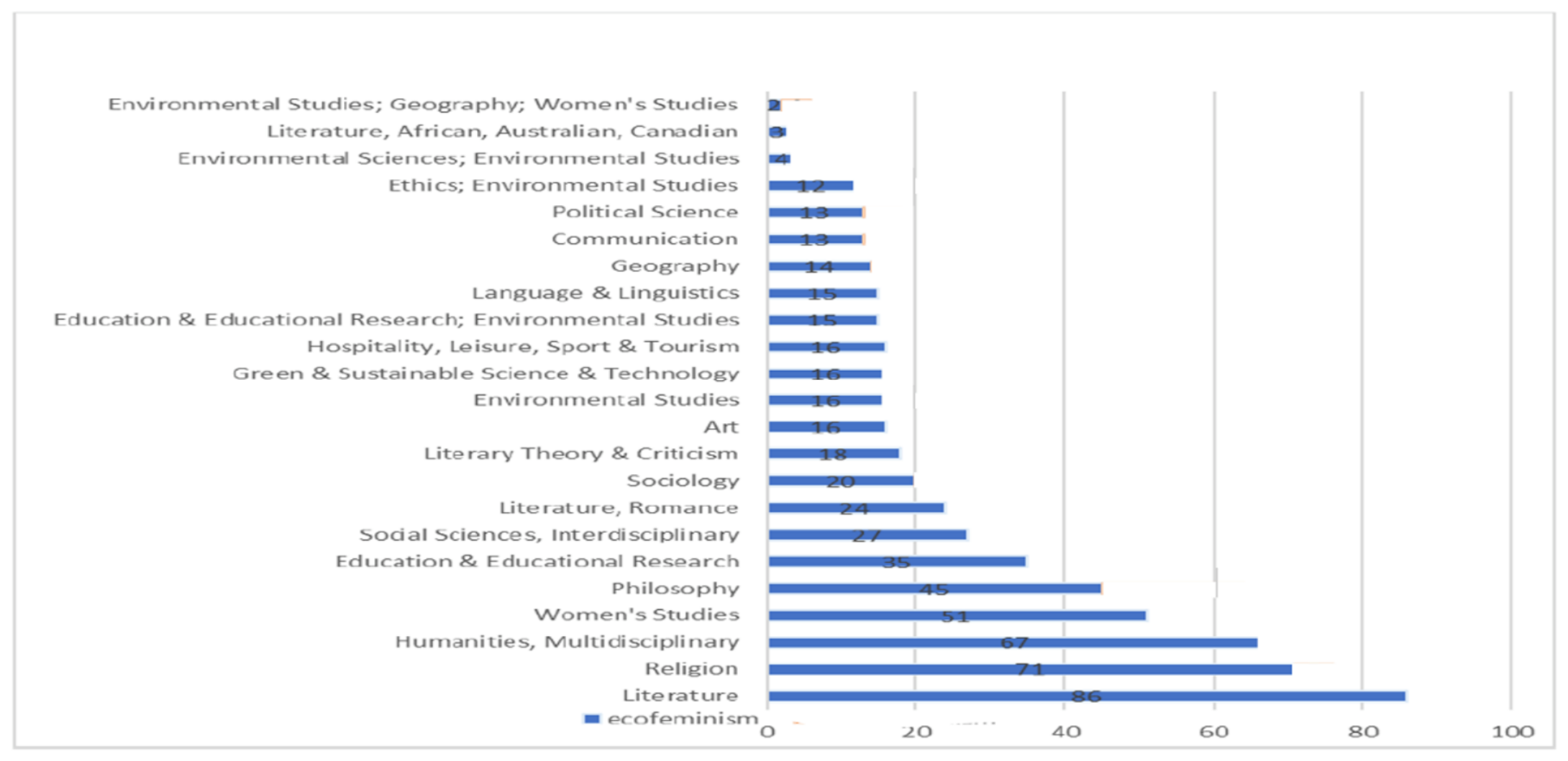
Figure 2.
Network Map of Keywords.
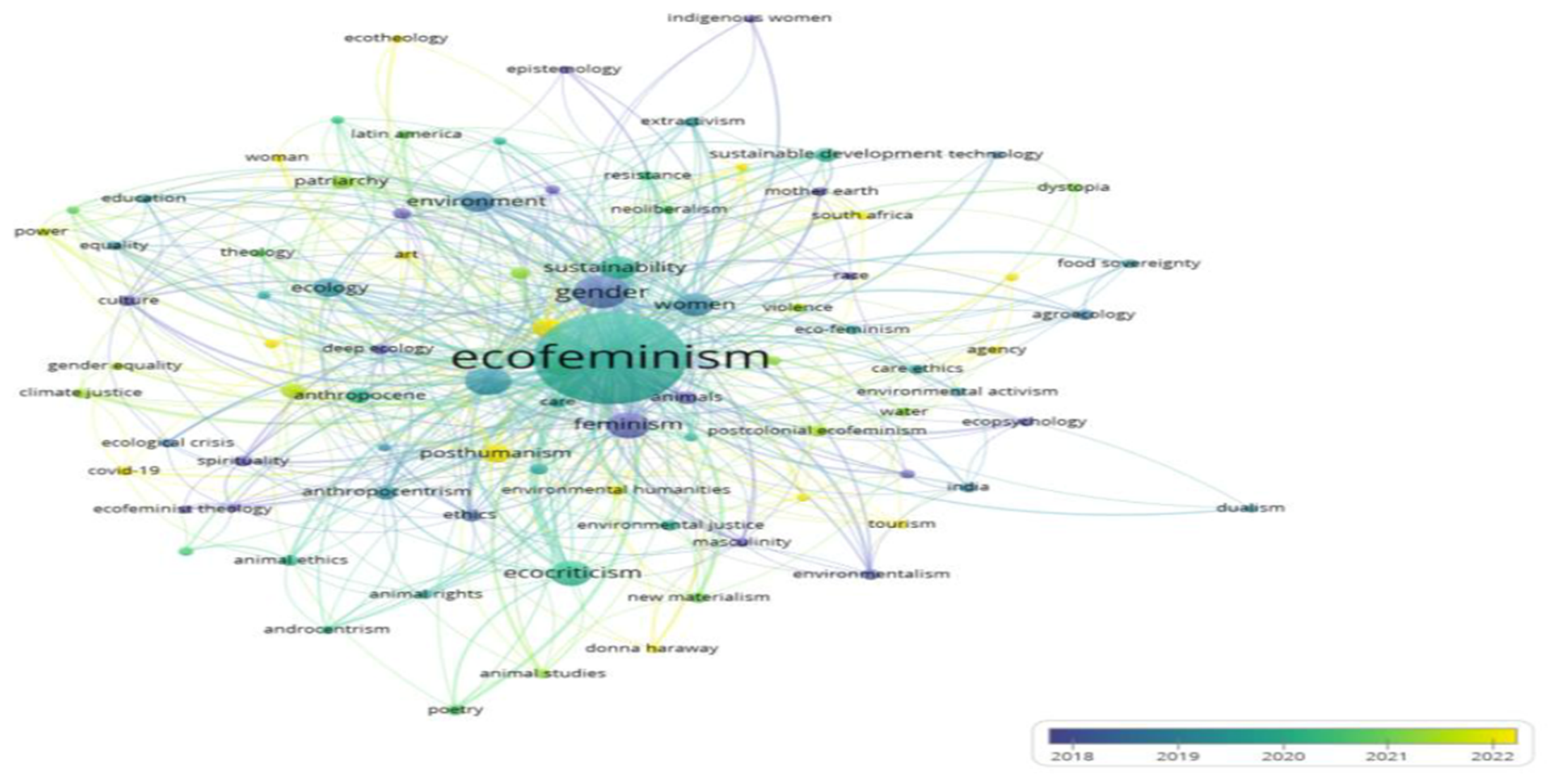
Figure 3.
Authors’ Collaboration Network.
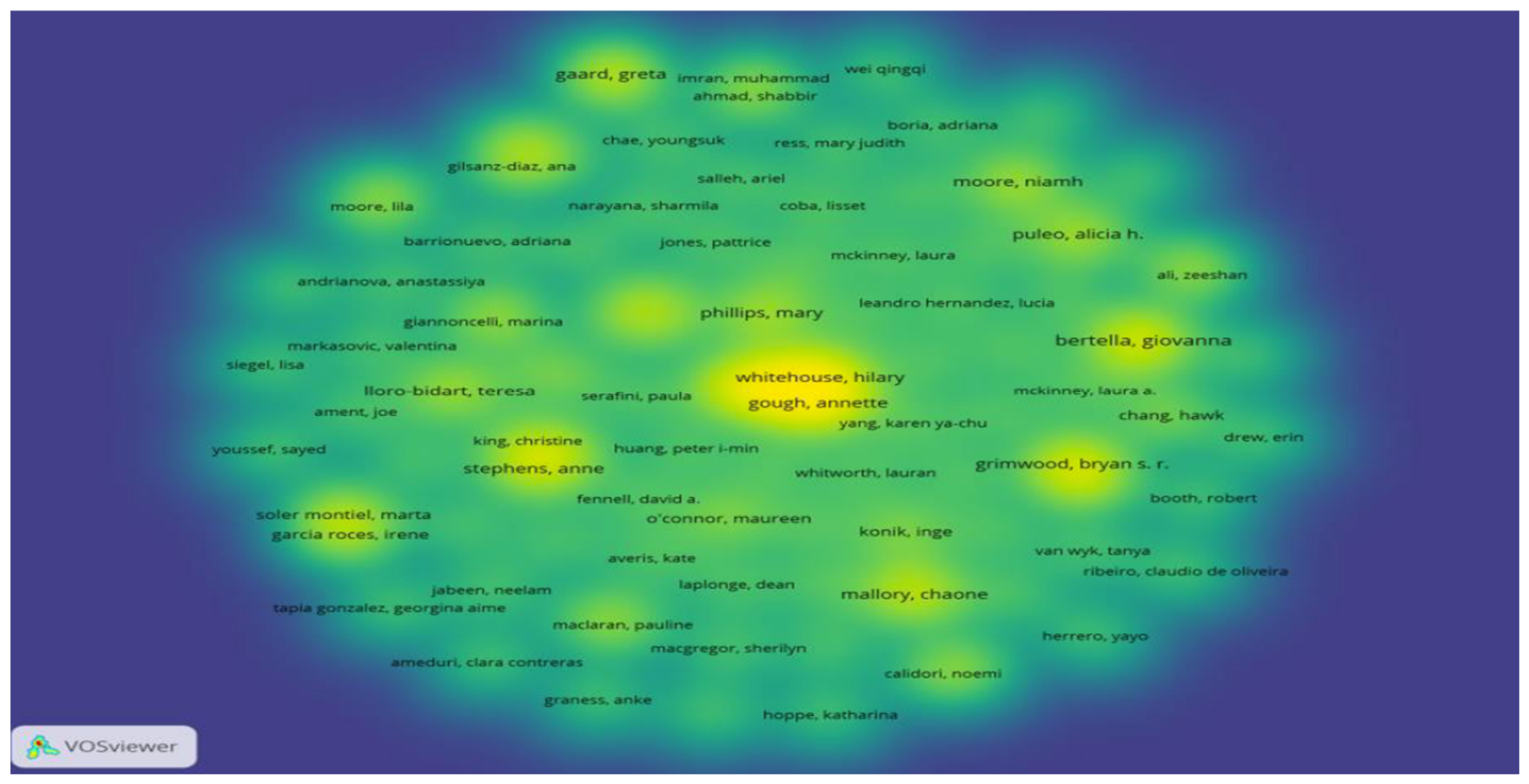
Figure 4.
International Cooperation Network.
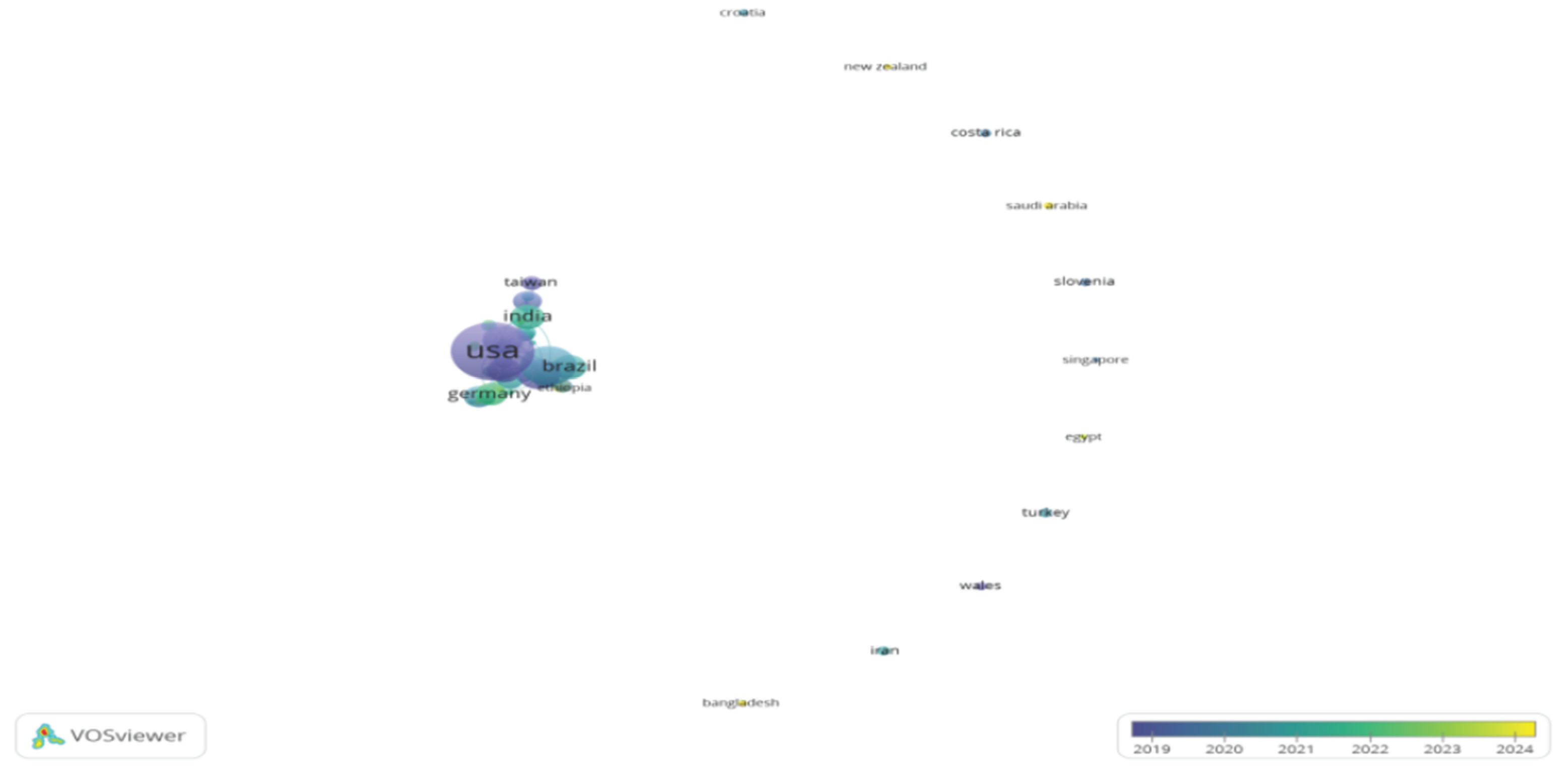
Figure 5.
Journal Citation Network.
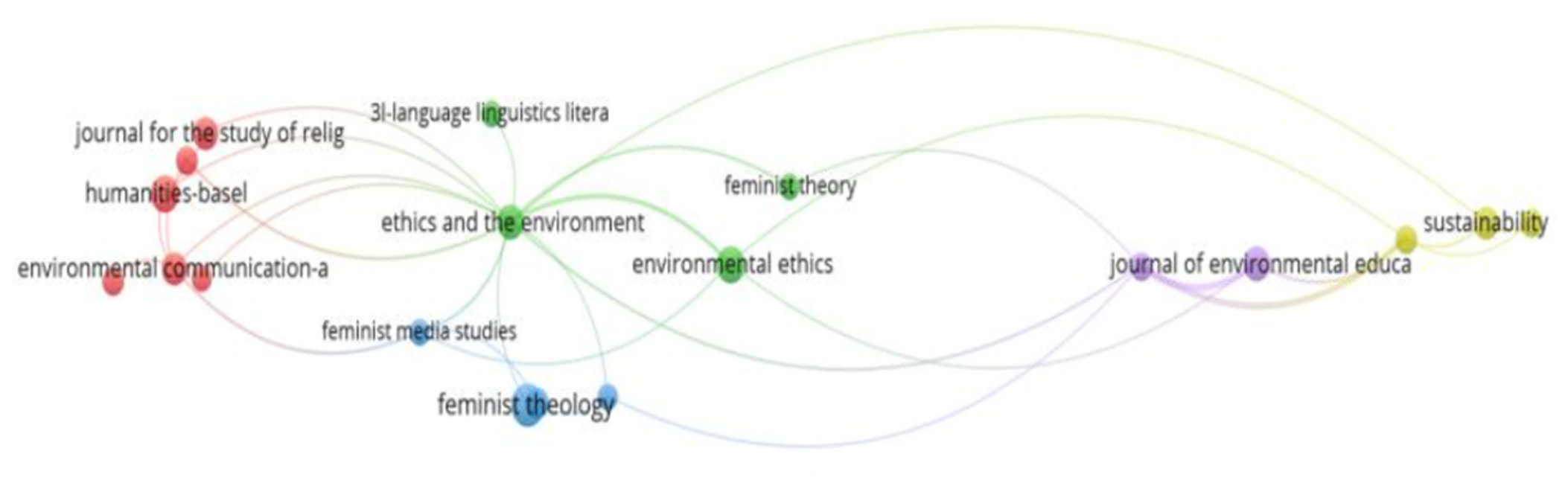
Figure 6.
Bibliographic Match Links of the Works.
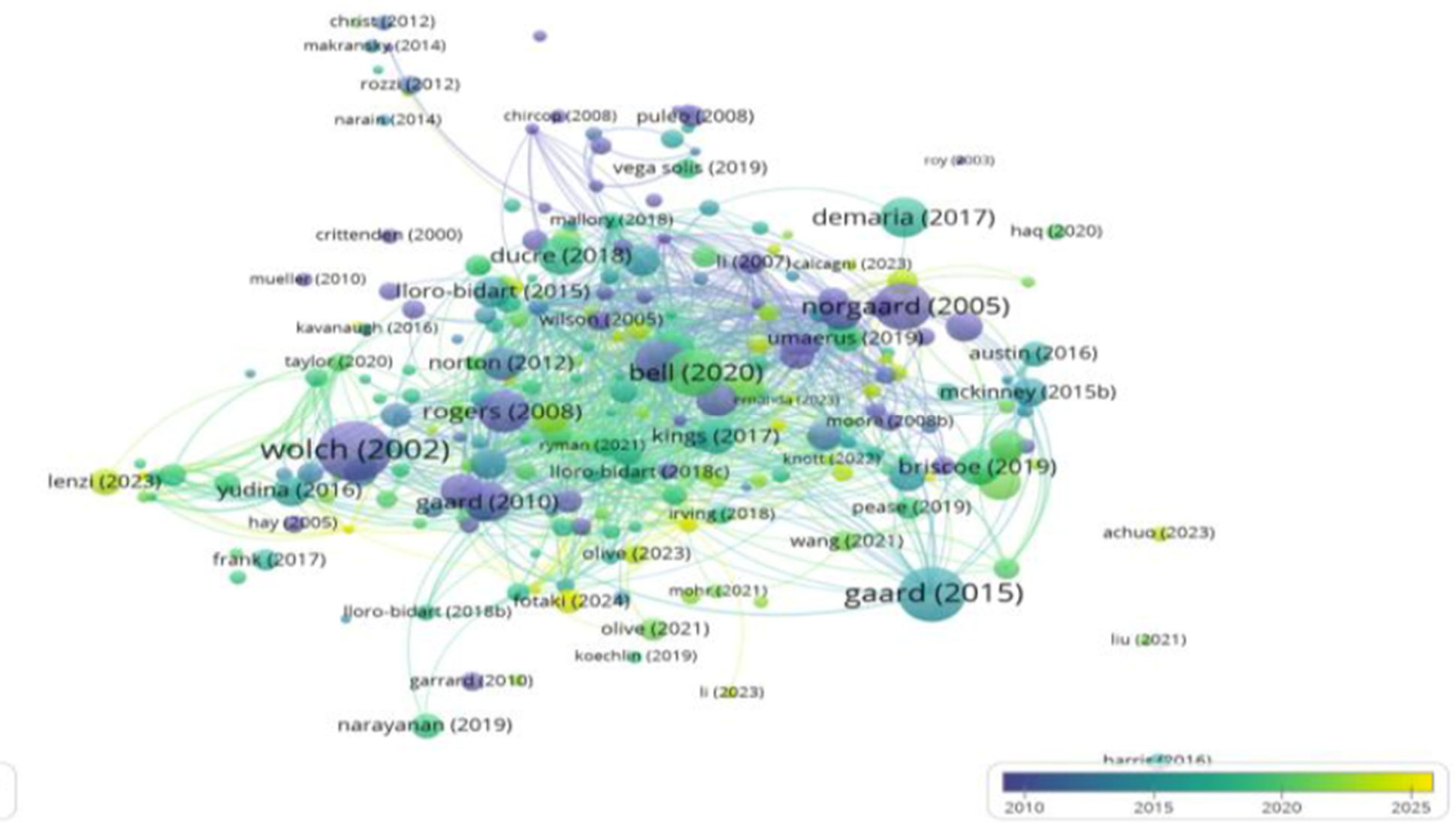

Table 1.
Number of Articles According to the Journals Published in.
| Journals | Number of Article |
|---|---|
| Feminist Theology | 13 |
| Environmental Ethics | 12 |
| Humanities-Basel | 11 |
| Ethics and the Environment | 9 |
| Investigaciones Feministas | 9 |
| Journal of Environmental Education | 8 |
| Environmental Communication-A Journal of Nature and Culture | 8 |
| Revista Artemis | 8 |
| Journal for the Study of Religion Nature and Culture | 8 |
| Sustainability | 7 |
| Religions | 7 |
Disclaimer/Publisher’s Note: The statements, opinions and data contained in all publications are solely those of the individual author(s) and contributor(s) and not of MDPI and/or the editor(s). MDPI and/or the editor(s) disclaim responsibility for any injury to people or property resulting from any ideas, methods, instructions or products referred to in the content. |
© 2026 by the authors. Licensee MDPI, Basel, Switzerland. This article is an open access article distributed under the terms and conditions of the Creative Commons Attribution (CC BY) license (http://creativecommons.org/licenses/by/4.0/).
Copyright: This open access article is published under a Creative Commons CC BY 4.0 license, which permit the free download, distribution, and reuse, provided that the author and preprint are cited in any reuse.