
Submitted:
12 August 2026
Posted:
13 August 2026
You are already at the latest version
Abstract
Due to the escalating impacts of climate change, a new physicochemical stressor, UV-B radiation, has emerged in the biosphere. Mankind and plants are facing the adverse impacts of harmful UV-B radiation. Although crop yields are affected by UV-B stress, the precise nature of these effects remains unclear, and predictions about how rice crops will respond to UV-B radiation stress are uncertain. Environmental stressors related to UV-B do not act in isolation but can interact in complex ways. The stressors could exhibit opposing, cumulative, or synergistic effects. The synergistic interactions can cause more damage than expected. Multiple studies have shown that UV-B exposure and reactive oxygen species production are closely linked. The increasing production of reactive oxygen species damages proteins, lipids, carbohydrates, and nucleic acids and impairs their structures and functions. The stress reduces biomass accumulation, plant height, photosynthetic efficiency, and leaf area expansion in sensitive species. UV-B resilience in plants occurs through a combination of physiological responses and signalling pathways. The acclimation process triggered by UV-B exposure involves the synthesis of specific metabolites, including proline, flavonoids, anthocyanins, unsaturated fatty acids, and several antioxidants. These metabolites are known to protect against UV-B radiation by directly screening excessive light energy and supporting repair mechanisms. Despite numerous studies, there is no consensus on how to produce a sustainable rice crop under climate change-induced conditions. Among rice genotypes, UV-B sensitivity is species-specific; some heirloom cultivars are more tolerant than high-yielding rice varieties. This trait is linked to the agricultural niche where the landraces are cultivated. It is noted that tolerance to UV-B stress in some heirloom cultivars from western Odisha is unique and has been inherited through generations of cultivation in the area. The tolerance arises from various defence mechanisms developed over time in their native environment, such as the accumulation of non-enzymatic antioxidant flavonoid compounds in plant organs. The review offers an in-depth discussion of this subject to ascertain the potential role of these rice cultivars in ensuring food security for consumers under climate change.
Keywords:
UV-B radiation
; climate change
; rice cultivars
; UV-B stress tolerance
; antioxidant defence
; traditional rice varieties
1. Introduction
Human civilisation began with a strong prior knowledge of agriculture, and there was a shift in lifestyle from hunting-gathering to agricultural settlement among early humans. These changes in human lifestyle led to the establishment of colonies, preferably on riverbanks, for easy access to water for irrigating crops, including rice [1]. (Mohapatra et al., 2025). The surrounding environment, including the upper atmosphere, was incidentally free from pollution at that time, and thus the climate was quite suitable for the cultivation of many crops, including rice. Because of a pollution-free environment on the Earth's surface, the upper atmosphere was covered with a thick layer of ozone, primarily responsible for filtering out dangerous UV-B radiation from reaching the Earth's surface, to the detriment of living organisms. Ever since, farmers have been growing traditional rice varieties on their farms in various regions of the world. The plants have never been stressed by UV-B radiation. However, over the last few decades, uncontrolled human activity, especially the accumulation of anthropogenic pollutants in the biosphere, has been largely responsible for the depletion of the stratospheric ozone layer, leading to increased UV radiation on the Earth's surface, creating a distressing situation for plants and animals [2]. (Jan et al., 2022). To enhance potential yields, plant breeders developed semi-dwarf, high-yielding rice varieties during the 1960s at the International Rice Research Institute (IRRI), Philippines. These plants, like others, were not exposed to UV-B radiation stress at that time, and the sensitivity remains as of today.
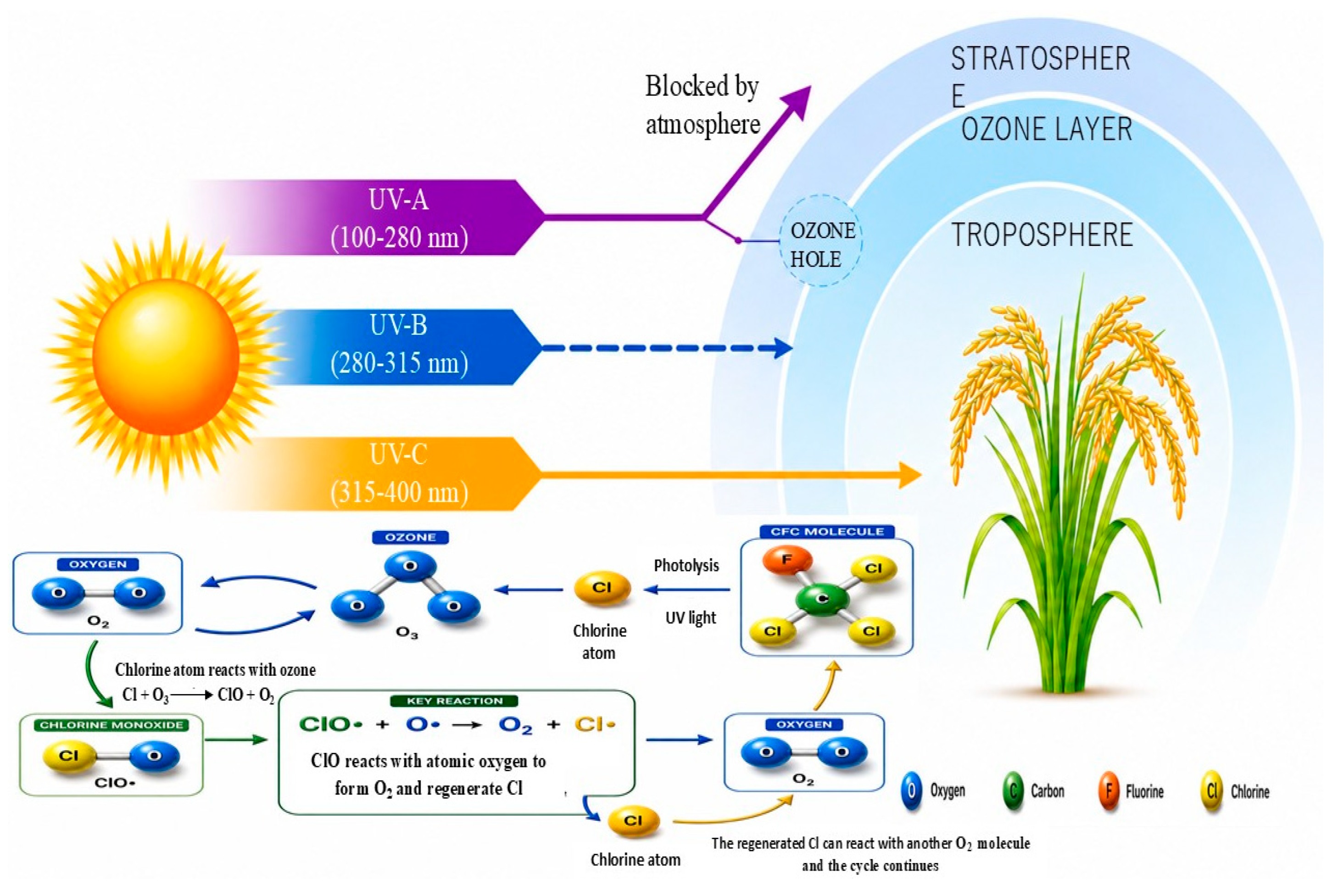
Of the total solar radiation, 7-9% is UV radiation, which includes the relatively less harmful UV-A (400-315nm), the highly damaging UV-B (315-280nm) largely filtered by the ozone layer, and the most hazardous UV-C (280-100 nm) mostly absorbed by the Earth’s upper atmosphere [3,4]. (Cejka et al. 2021; Mathur et al., 2024). Although some UV radiation, especially UV-A, reaches Earth's lower atmosphere, it is mainly used for regulating certain aspects of growth and development in living organisms, and it has never caused stress to plants or animals. However, due to modernisation, industrialisation, and environmental pollution, various gaseous pollutants such as CO2 from respiration, methane from wetland water bodies, CFC (chlorofluorocarbon) from refrigerators, and other harmful gases from industry and urbanisation have gradually accumulated in the atmosphere. This accumulation was blamed for the depletion of the ozone layer, which only allowed sufficient UV radiation to reach the Earth's surface two to three decades ago. CFCs are not active in the biosphere. The inert CFCs move undisturbed to the stratosphere, where intense ultraviolet light breaks the carbon-chlorine bonds in CFCs, releasing the free chlorine radicals (Cl-) (Figure 1). The chlorine radical reacts with one oxygen atom of ozone (O3), releasing O2 and chlorine monoxide. Chlorine monoxide consumes one oxygen atom in the stratosphere to form chlorine and oxygen (O2). Chlorine generated in the process stays in the stratosphere to combine with one more ozone molecule. The cycle goes unabated. Ultraviolet radiation, particularly UV-B, significantly harms living organisms, including rice plants, and has recently been recognised as a newly emerging abiotic stressor that adversely affects plant growth and development.
2. Harmful Effects of UV-B Radiation on Rice Plants
2.1. Morphological Injuries
Elevated UV-B radiation has a negative relationship with rice biomass production, physiology and grain yield (Mohammed & Tarpley, 2019) [5]. Kakani et al (2003) reported several structural changes in the form of reduced leaf area, thickened leaves, and shortened plant height as common responses to the stress. The stem height decreases by as much as 12%. The reduction in leaf area limits the photosynthetic surface area, thereby impairing overall biomass growth. Thickened leaves, though sometimes believed to be an adaptive response, can reduce light penetration and gas exchange, further affecting photosynthesis. Additionally, UV-B radiation reduces root length, lateral root development, tiller number and decreases the number of grains per panicle, resulting in lower grain yield (Kakani et al., 2003) [6]. Mathur et al. (2024) examined the effect of UV-B radiation on 64 rice genotypes comprising equal numbers of japonica and indica cultivars during the vegetative period of development and classified them into four groups based on their response to the stress. The groups were sensitive, moderately sensitive, moderately tolerant and tolerant. Out of the shoot traits, leaf area was found to be maximally sensitive in both indica and japonica rice genotypes. The root traits were not affected as much as the shoot traits; the indica genotypes were more resilient compared to japonica rice. It is opined that screening for UV-B resistance at the early vegetative stage can help rice breeders select a tolerant or sensitive line for better management of rice cultivation in stress-prone environments.
2.2. Physiological Injuries
UV-B stress negatively affects rice plants by inducing multiple physiological injuries. Physiological processes in the rice plant are more susceptible to UV-B stress compared to other growth metrics, making it useful for quick genotype evaluation. UV-B radiation significantly decreases physiological parameters such as net assimilation rate and relative growth rate in rice (Dai et al, 1992) [7]. The net photosynthetic rate, stomatal conductance and Fv/Fm are significantly lower in UV-B-treated plants. The negative impacts of stress are said to vary by latitude (Terramura et al., 1991) [8]. The sensitivity of Asian rice genotypes is significantly lower compared to japonica genotypes (Mathur et al., 2024) [4]. UV-B radiation is detrimental to all plant tissues and cells, but the chloroplast is the most susceptible. The effect of stress on photosynthetic structure can be seen at various levels, encompassing alterations in leaf anatomy, morphology, and degradation of photosynthetic pigments (Jenkins, 2009) [9].
There is no uniformity in the effects of different wavelengths of ultraviolet radiation on leaf photosynthesis. UV-A radiation increases stomatal conductance, benefiting photosynthesis, whereas UV-B radiation is inhibitory, leading to stomatal closure (Brestic et al., 2023) [10]. There is considerable variation in the effects of different ultraviolet wavelengths on leaf photosynthesis and stomatal behaviour. UV-A radiation generally stimulates stomatal opening and increases stomatal conductance, thereby facilitating CO₂ uptake and photosynthesis. In contrast, UV-B radiation inhibits photosynthesis by inducing stomatal closure through UVR8-mediated signalling pathways, which restricts CO₂ diffusion into the leaf and reduces carbon assimilation (Liaqat et al., 2023; Ač et al., 2024) [11,12]. UV-B-induced stomatal closure also restricts gas exchange and carbon assimilation, further inhibiting photosynthesis and water regulation (Rao et al., 1996; Piccini et al., 2020) [13,14] and limiting plant productivity. As discussed in Liaqat et al. (2025), UV-B radiation significantly lowers leaf photosynthesis through indirect effects on chlorophyll a and chlorophyll b pigments and direct deleterious effects on the PSI and PSII systems. PSII is more vulnerable than PSI. It has been reported that the PSII system is most sensitive to UV-B stress in plants (Kreslavski et al., 2020) [15]. Degradation of photosystem II (PSII) protein complexes, which play a central role in the light-dependent reactions, restricts photosynthesis. The D1 and D2 proteins of PSII are sensitive to UV-B, and their degradation reduces chlorophyll content, impairs electron transport, and lowers carbon dioxide fixation (Fiscus & Booker, 1995) [16]. Furthermore, photosynthetic efficiency decreases because UV-B radiation impairs cell division and elongation, restricting leaf size and stunting growth (Hidema and Kumagi, 2006) [17]. In addition to the deleterious effects of UV-B radiation on the light reactions of photosynthesis, the stress also reduces Rubisco activity, curtailing photosynthetic capacity in plants (Frohnmeyer and Staiger, 2003; Sztatelman et al., 2015) [18,19].
2.3. Biochemical Injuries
UV-B stress induces severe biochemical and oxidative stress in rice plants. It triggers the formation of cyclobutane pyrimidine dimers in DNA and harmful reactive oxygen species in the cytoplasm, which degrade membrane lipids. In plant cells, stress effects include cell death, morphologically characterized by leaf wilting and bleaching (Jenkins, 2009) [9]. The major consequence of UV-B exposure is the formation of reactive oxygen species (ROS), such as superoxide radicals (O2•−), hydrogen peroxide (H2O2), and hydroxyl radicals (Hideg et al., 2013) [20]. These ROS are highly reactive and attack cellular components, including lipids, proteins, and nucleic acids (Rao et al., 1996) [13]. Chen et al., (2022) have reported that high levels of UV-B radiation cause DNA damage, impair photosynthesis, and generate reactive oxygen species in the model plant Arabidopsis. DNA damage leads to the production of cyclobutane pyrimidine dimers (CPDs) and pyrimidine (6-4) pyrimidinone photoproducts (6-4 PPs) (Li et al., 2015) [21]. In the presence of oxygen, UV-B radiation damages membrane lipids by oxidation (Kramer et al., 1991) [22]. Lipid peroxidation disrupts membrane integrity, protein oxidation affects enzyme activities, and DNA damage can lead to mutations or cell death. The accumulation of ROS overwhelms the plant’s antioxidant defence systems, leading to oxidative stress. Oxidative damage and lipid peroxidation of membranes cause the accumulation of malondialdehyde. This chemical serves as a primary marker for membrane injury and cell death (Shahzaidi et al., 2025) [23].
2.4. Molecular Injuries
UV-B radiation induces molecular injuries in rice plants, primarily DNA damage, oxidative stress, and protein degradation. The stress also disrupts critical gene expression pathways involved in growth and stress response. The damage to DNA by ROS and direct absorption of high-energy UV-B photons by nucleotides leads to impaired replication (Rao et al., 1996) [13]. Photoproducts, such as CPDs and 6-4 PPs, block DNA replication and transcription. UV-B can affect signal transduction pathways, altering hormone balances and stress-responsive gene expression. It has been observed by Ling et al. (2022) that the flag leaf angle in traditional rice increased up to 50% by high-irradiance UB-B light due to concomitant rise in gibberellin and brassinolids and a decrease in auxin content. ROSs are generated because UV-B radiation disrupts the electron transport chain in photosynthesis, and these charged molecules cause membrane peroxidation and damage chloroplast structure (Mathur et al., 2024) [4]. Over time, such molecular injuries compromise the plant’s ability to recover from stress and reproduce effectively.
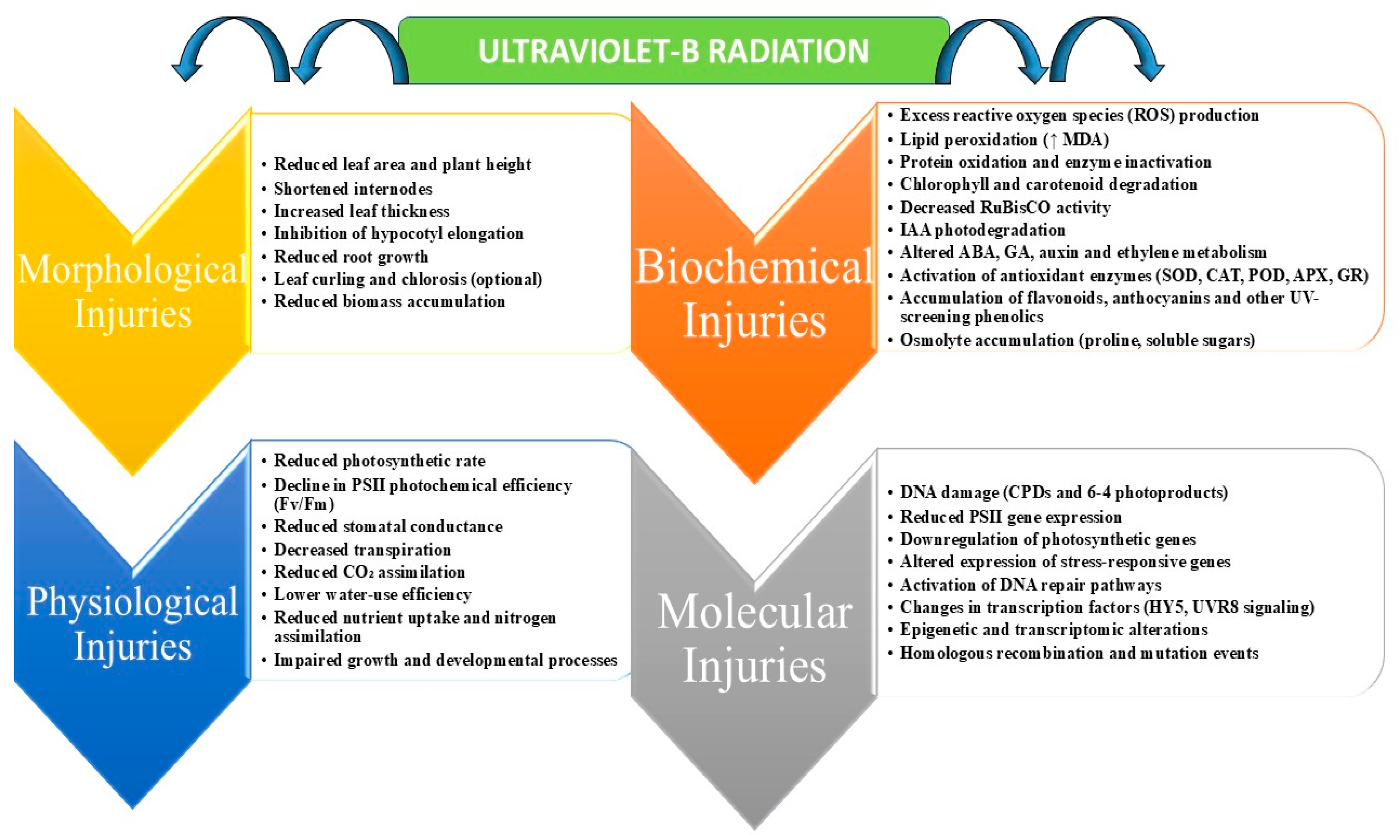
Figure 2.
Overview of the morphological, physiological, biochemical, and molecular injuries induced by enhanced UV-B radiation in plants.
Figure 2.
Overview of the morphological, physiological, biochemical, and molecular injuries induced by enhanced UV-B radiation in plants.
3. Tolerance Mechanism of UV-B Stress
3.1. Morphological Adaptations
Collectively, the stress injuries described hitherto result in reduced biomass accumulation, poor grain filling, and decreased overall productivity. As rice is a primary food source for over half the world’s population, such yield reductions pose serious threats to food security, especially in regions already vulnerable to climate change-induced stresses (Lesk et al., 2016) [24]. However, tolerance varies significantly across genotypes; grain yield losses are higher in tropical varieties than in those grown under temperate conditions (Senapati et al., 2024; Teramura et al., 1991) [8,25]. Varieties exhibit specific morphological attributes to minimize damage and ensure survival in stress-prone environments. The plant adapts to the stress through a complex network of photoreceptor sensing and signalling, pigment accumulation in the epidermis and antioxidant defence activation. The key morphological changes and tolerance traits are as follows.
Reduced plant height: Tolerant varieties reduce stem elongation to limit exposure and redirect energy to defence mechanisms (Mathur et al., 2024) [4]. Shorter seedling heights, less coleoptile elongation, and noticeably thicker stems are all caused by the UV-B signalling pathways. The overall surface area, which is susceptible to solar radiation burn, is reduced by the reduction in structure.
Changed leaf architecture: Tolerant cultivars reduce leaf expansion under UV-B stress (Mathur et al., 2024) [4]. Leaves instead become thicker, with epicuticular waxes that reflect radiation and thereby minimize damage to internal tissues.
Leaf angle modification: Some varieties modify leaf angle to reduce UV-B perception for survival. In rice, the curvature of the sleeper determines the leaf angle. When upright, the angle between leaves is small. In this position, leaves receive radiation from both sides and become sensitive. Therefore, a broader leaf angle reduces absorption and enables survival. According to Ling et al. (2015), exposure to intense UV-B radiation modifies cellulose levels in the leaf pulvinus, broadening the flag leaf angle to increase light-absorption capacity and reducing top-down radiation absorption. The leaf angle may rise by up to 50% for resilience.
Root system alterations: UV-B-tolerant rice maintains robust root length and biomass. This architecture permits adequate nutrient and water uptake, thereby preventing overall plant stunting under stress (Teramura et al., 1991) [8].
3.2. Physiological and Biochemical Adaptations
A sophisticated network of physiological and biochemical defence systems enables rice cultivars to adapt to UV-B stress. UV-B stress primarily induces the production of reactive oxygen species, which damage various organelles and membranes. Thus, controlling reactive oxygen species and neutralizing their detrimental effects is an integral part of the tolerance mechanism. Under stress, plants employ enzymatic and/or non-enzymatic antioxidant mechanisms to combat oxidative stress and reduce radiation damage. The main characteristics of these adaptations are outlined below.
Creation of UV-absorbing pigments: Tolerant rice plants generate secondary metabolites, namely flavonoids and anthocyanins, in the leaf epidermis to shield the delicate underlying tissues from UV-B stress. These substances function as sunscreens, capturing radiation prior to its arrival at sensitive chloroplasts and nucleic acids. Senapati et al. (2024) noted considerable variations in phenolic pigment levels, photosynthetic efficiency, and reactions to UV-B stress among traditional rice genotypes. These secondary metabolites do not directly contribute to plant growth and development, yet they can improve resistance to abiotic stresses. Plants contain six varieties of anthocyanins, which are soluble in water and contribute to the red, blue, and purple hues of various plant organs (Lu et al., 2024) [26]. Reactions of plants to UV-B stress are profoundly influenced by alterations in hormonal balance, leading to an increase in ABA, MT, JA, and SA, while ET, GA, BR, and IAA are decreased. This change in hormones initiates flavonoid production, essential for stress resilience (Lu et al., 2026) [26].
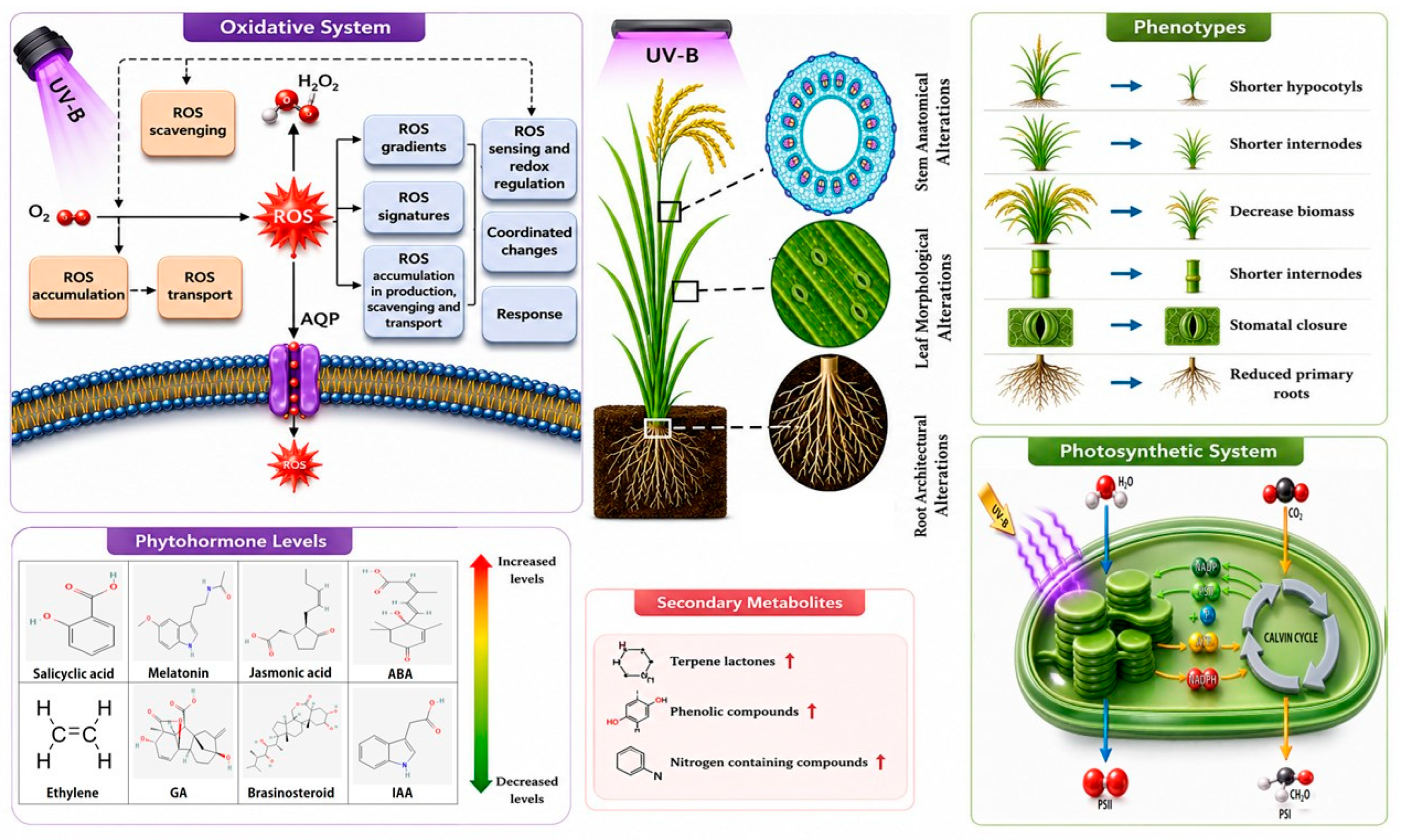
Figure 3.
Schematic overview of UV-B-induced oxidative stress, hormonal and metabolic reprogramming, photosynthetic impairment, and associated anatomical, morphological, and phenotypic alterations in plants.
Figure 3.
Schematic overview of UV-B-induced oxidative stress, hormonal and metabolic reprogramming, photosynthetic impairment, and associated anatomical, morphological, and phenotypic alterations in plants.
Plants utilise anthocyanins and flavonoids to shield themselves from UV-B radiation. These compounds inhibit UV-B radiation from penetrating leaf tissues and inflicting harm on proteins and DNA. They act as strong antioxidants that prevent cellular and DNA damage by neutralising reactive oxygen species generated by stress. From a chemical standpoint, anthocyanins are glycosidic derivatives of anthocyanidins with a C15 carbon structure (C6-C3-C6). Each C6 unit is linked to a phenol ring. There are a total of 650 different anthocyanins identified in nature. Despite their structural differences, all anthocyanins originate from a shared group of thirty different anthocyanidins. The most common anthocyanins found in nature include cyanidin (purple-red), pelargonidin (orange-red), peonidin (pink), delphinidin (blue-purple), as well as petunidin and malvidin (Wang et al., 2021) [27].
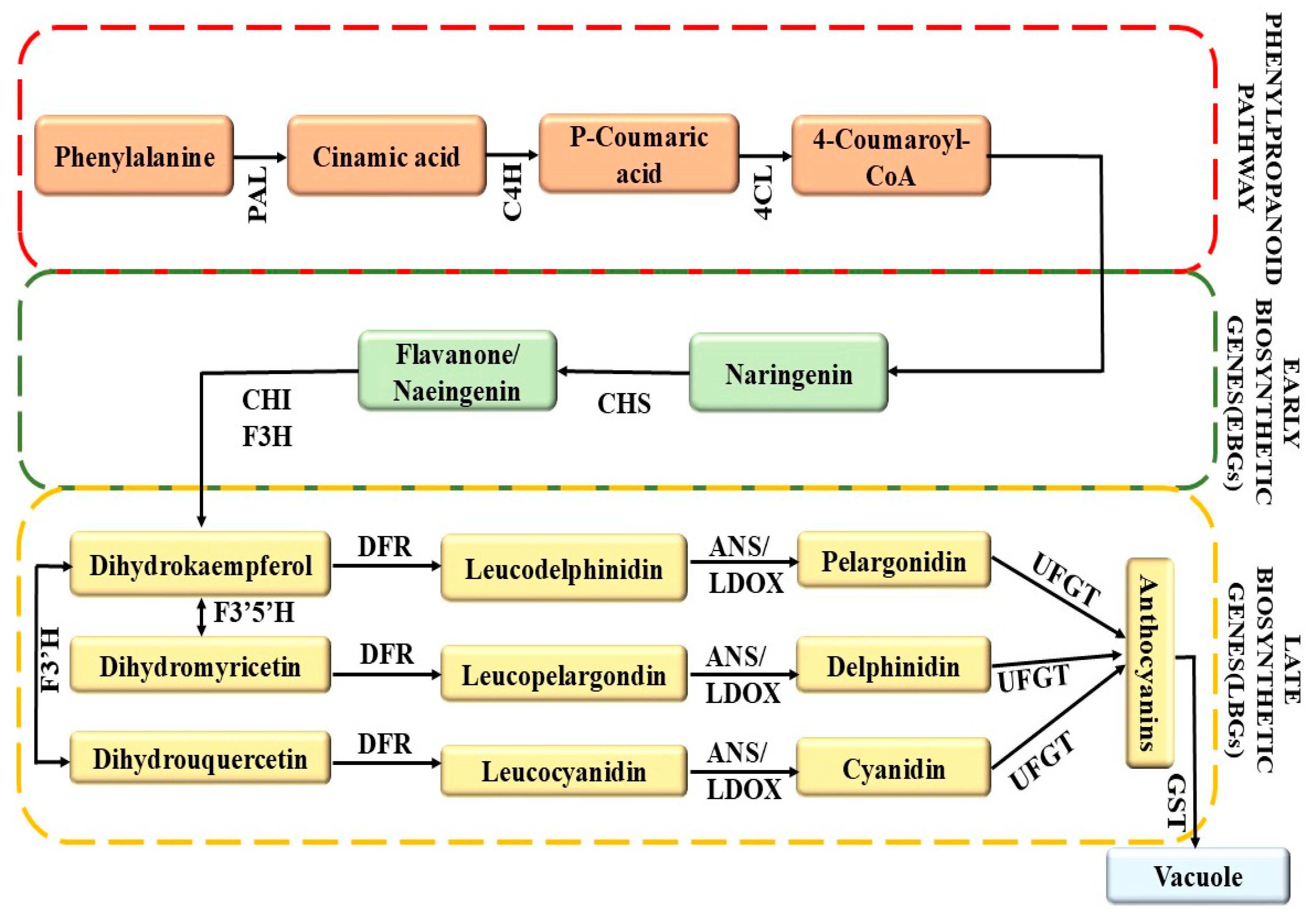
Anthocyanin is biosynthesised from phenylalanine in a complex biochemical process in the phenylpropanoid pathway. This pathway involves several enzymes and regulatory mechanisms. The steps of anthocyanin biosynthesis are described in Fig below.
Phenylalanine is deaminated by phenylalanine ammonia-lyase (PAL) to form cinnamic acid.
Cinnamic acid is hydroxylated by cinnamate 4-hydroxylase (C4H) to produce p-coumaric acid.
P-coumaric acid is conjugated with CoA to form 4-coumaroyl-CoA by the action of 4-coumarate-CoA ligase (4CL). 4-coumaroyl-CoA enters the flavonoid pathway.
After the initial transformation of precursor molecules, early biosynthesis genes (EBGs), such as chalcone synthase (CHS), chalcone isomerase (CHI) and flavonone 3-hydroxylase (F3H) and late biosynthesis genes (LBGs), such as dihydroflavonol 4-reductase (DFR), anthocyanidin synthase (ANS), UDP-glucose: flavonoid 3-O-glucosyltransferase (UFGT), and glutathione S-transferase (GST), catalyse the stepwise formation of anthocyanins. Anthocyanins are stored in vacuoles (Wang et al., 2025) [28].
Figure 4.
Schematic representation of the phenylpropanoid and flavonoid biosynthetic pathways leading to anthocyanin synthesis through the coordinated action of early and late biosynthetic genes (EBGs and LBGs).
Figure 4.
Schematic representation of the phenylpropanoid and flavonoid biosynthetic pathways leading to anthocyanin synthesis through the coordinated action of early and late biosynthetic genes (EBGs and LBGs).
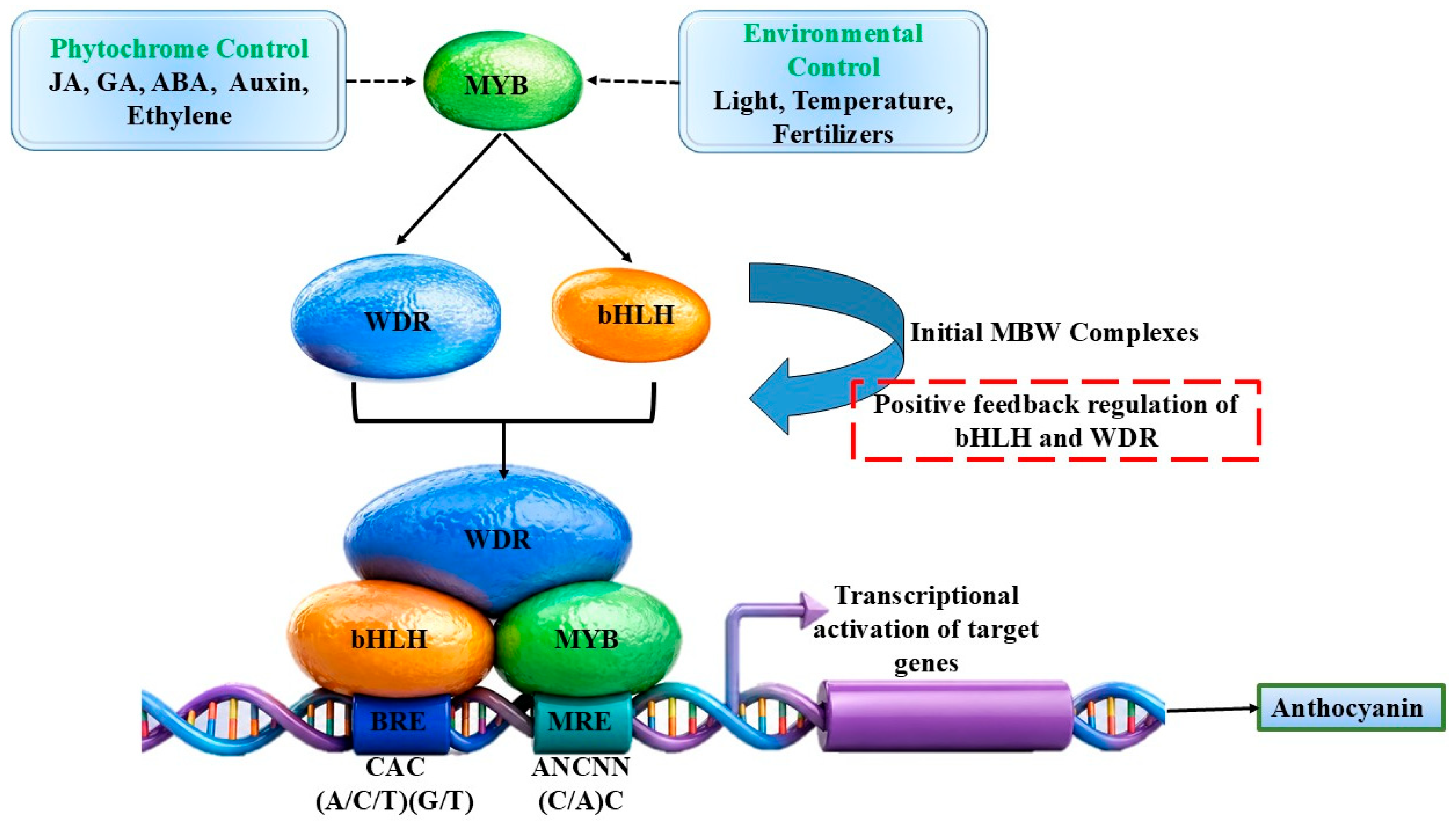
A well-preserved tripartite MWB complex governs the genetic framework for the synthesis of anthocyanins. The MWB complex consists of three transcription factors: MYB, bHLH (Basic-Helix-Loop-Helix), and WD40 Repeat Proteins (Shi et al., 2023) [29]. These proteins attach to the promoters of structural genes to regulate the production of flavonoids and anthocyanins. The MYB transcription factor binds to DNA to activate the CHS, ANS, and DFR genes. The bHLH protein interacts with MYB to stabilise the complex. WD Repeat Proteins assist the MYB complex without directly binding to DNA.
Plant hormones control anthocyanin biosynthesis, acting to either inhibit or stimulate pigment production based on developmental stages and environmental factors (Kuang et al., 2025; Li and Ahammed, 2023) [30,31]. Under stress conditions, ABA and jasmonic acid (JA) significantly enhance anthocyanin synthesis (Luo et al., 2021; Wang et al., 2025) [28,32]. Melatonin (MT) enhances the expression of MYB, bHLH, and WD40 transcription factors, which in turn boost the ability to scavenge reactive oxygen species and improve stress tolerance (Zhang et al., 2016) [33]. Ethylene serves as a dual regulator in the growth and development of plants (de Smet, 2025). It can either enhance or suppress anthocyanin production based on the type of tissue (Zhang et al., 2025) [33]. Gibberellins (GA) and Auxins control anthocyanin production based on the type of tissue. Typically, a significant concentration of auxin hinders anthocyanin production by repressing both regulatory and structural genes. Cytokinins enhance photomorphogenesis in Arabidopsis, whereas gibberellin signalling suppresses anthocyanin production through DELLA proteins. Della proteins undergo polyubiquitination through gibberellins and are subsequently degraded by 26S proteasomes. In comparison, significant phytohormones such as ABA, JA, MT (Melatonin), and GA have demonstrated the ability to promote anthocyanin accumulation (Li et al., 2019) [35].
Figure 5.
Regulatory model of the MYB–bHLH–WDR (MBW) transcriptional complex controlling anthocyanin biosynthesis through environmental and phytohormonal signaling.
Figure 5.
Regulatory model of the MYB–bHLH–WDR (MBW) transcriptional complex controlling anthocyanin biosynthesis through environmental and phytohormonal signaling.
3.3. Anthocyanins Help Dissipate Excess Light Energy
A diminished incidence of certain chronic illnesses in those who consume rice is thought to be connected to the presence of antioxidant compounds. The rice kernel holds numerous antioxidants, such as phenolic acids, flavonoids, anthocyanins, proanthocyanidins, tocopherols, tocotrienols, oryzanols, and phytic acids. When sorted by colour, black rice varieties exhibit the most potent antioxidant characteristics, with purple, red, and brown following sequentially (Guopho et al., 2014) [36]. The hue of rice grains and leaves mainly results from anthocyanins, which neutralise free radicals generated in plants during stress-prone conditions, thus averting stress-induced harm. Numerous plants in the wild have been observed to synthesise anthocyanins when exposed to UV-B radiation by enhancing the expression of genes involved in anthocyanin biosynthesis (Wang et al., 2025) [28]. Anthocyanins act as a protective barrier against incoming radiation, preserving the chloroplast structure and photosynthetic activity by dissipating excess light energy via increased non-photochemical fluorescence in tolerant rice (Senapati et al., 2024) [25] (Table 2). ELONGATED HYPOCOTYL5 (HY5 - a bZIP transcription factor) is believed to control the buildup of anthocyanins in the leaf epidermis (Wang et al., 2025). HY5 requires proteins with b-boxes (BBXs) to collaborate for anthocyanin buildup, influenced by the presence of light. Without light, CONSTITUTIVE PHOTOMORPHOGENIC1 (COP1) interacts with HY5, MYBs, and bHLH activators in the nucleus, facilitating their degradation through specific ubiquitin tagging. When exposed to light, COP1 moves to the cytoplasm, stopping the inactivation of HY5. It is inferred that COP1 functions as a repressor for anthocyanin accumulation in the lack of light.
4. Scavengers for Reactive Oxygen Species. Enzymatic Antioxidants and DNA Repair
UV-B-induced reactive oxygen species include superoxide anion (O2-), singlet oxygen (1O2) and hydroxyl radicals (*OH), which oxidise cellular components such as lipids, proteins and nucleic acids. UV-B radiation-tolerant rice plants avoid damage to cellular components by producing enzymatic and non-enzymatic antioxidants. The enzymatic antioxidants are superoxide dismutase (SOD), catalase (CAT), ascorbate peroxidase (APX), peroxidase (PRX), glutathione peroxidase and glutathione reductase (GR). These enzymes work in concert to scavenge reactive oxygen species (Mittler et al., 2022) [37]. SOD converts harmful superoxide radicals into hydrogen peroxide (H2O2). Catalase and peroxidase detoxify H2O2 into water and oxygen. Glutathione peroxidase catalyses the reduction of harmful H2O2 to water and lipid hydroperoxides to their corresponding alcohols (Wikipedia). In the process, 2 glutathione (GSH) molecules are oxidised to GSSG, which is subsequently converted back to GSH by glutathione reductase with the help of NADPH+H+. This recycling maintains glutathione (GSH) in its active form. To mitigate the deleterious effects of UV-B radiation on DNA, plants employ a gene regulatory system that increases the expression of DNA repair genes. The repair process uses the DNA photolyase (CPD photolyase) enzyme, which directly binds to cyclobutane pyrimidine dimers (CPDs) and pyrimidine-pyrimidine 6-4 photoproducts, neutralising their injurious effects, including distortion of the DNA helix, blocking transcription, and causing mutations. In sensitive rice cultivars, expression of the CDP photolyase gene is lower than in resistant cultivars when subjected to high UV-B stress (Senapati et al., 2024).
4.1. Non-Enzymatic Antioxidants
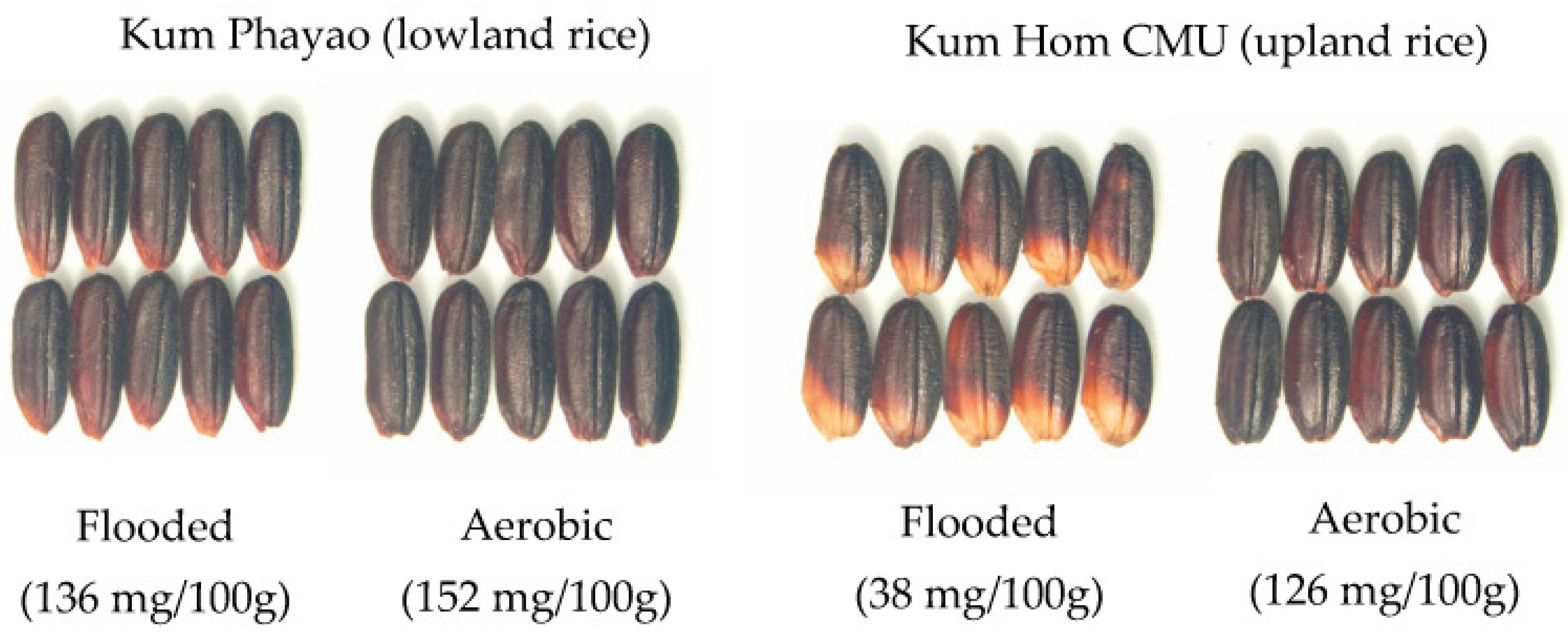
There are several non-enzymatic antioxidants in the resilient plants to encounter UV-B stress-generated reactive oxygen species and neutralize them. The list includes flavonoids, including anthocyanins, ascorbic acid, glutathione, proline, betalains and α-tocopherols (Goufo et al., 2014; Lu et al., 2026) [26,38]. These compounds are biosynthesized in plants exposed to the UV-B stress. Among traditional varieties, black, red and purple rice are rich in anthocyanins; the concentration is highest in the black rice. Grain anthocyanins are distributed in the bran fractions comprising the pericarp, seed coat, nucellus and aleurone layer (Juliano and Tuano, 2019) [39]. Some anthocyanins could be seen in the embryo, but not in the endosperm (Shao et al., 2014) [40]. The strong anti-inflammatory and antioxidant properties of anthocyanins have been exploited commercially for the production of non-food materials such as cosmetics and skin care products. The anthocyanin level changes significantly, resulting in a change in grain colour subjected to a change of environment (Yamuangmorn and Prom-U-Thai, 2021) [41]. Anthocyanins are produced in plants by ROS-generating stresses (Xu et al., 2017) [42], and UV-B stress is one of them. Therefore, anthocyanins are produced due to ROS stress, and they in turn protect plants from growth inhibition and cellular damage as scavengers in a feedback loop (Xu and Rothstein, 2018) [43].
Figure 6.
The responses of two purple rice varieties, cv. Kum Phayao (lowland rice) and Kum Hom CMU (upland rice), to flooded and aerobic soil conditions (the total anthocyanin concentrations are provided in the brackets. (Adapted from Yamuangmorn and Prom-U-Thai, 2021- open access).
Figure 6.
The responses of two purple rice varieties, cv. Kum Phayao (lowland rice) and Kum Hom CMU (upland rice), to flooded and aerobic soil conditions (the total anthocyanin concentrations are provided in the brackets. (Adapted from Yamuangmorn and Prom-U-Thai, 2021- open access).
Anthocyanins lower reactive oxygen species in two ways: directly and indirectly. In the direct mechanism, anthocyanins donate electrons to counteract free radicals such as hydroxyl and superoxide anions. After hydrogen donation, the residual anthocyanidin portion forms a highly stable, resonance-stabilised aryl radical, which halts the chain of oxidative stress events (Sadowska- Bartosz and Bartosz, 2024). In the indirect cellular defence activation pathway, anthocyanins stimulate the nuclear translocation of the Nrf2 protein (Nuclear factor erythroid 2-related factor 2). This transcription factor binds the Antioxidant Response Element (ARE) in the nucleus. According to Salehi et al., (2020), this complex promotes the synthesis of defence enzymes such as superoxide dismutase, catalase and glutathione peroxidase to counteract free radicals.
4.2. UVR8-Induced Stress Protection
UVR8 is a plant-specific photoreceptor responsible for sensing ultraviolet-B radiation in sunlight. This photoreceptor differs from other pigment-based chromophores in its unique properties. It detects light through its own amino acids, especially tryptophan. In the absence of light, UVR8 forms a homodimer, stabilised by salt bridges through electrostatic interactions between charged amino acids, such as Arg-286 with Asp106/Asp-96 and Arg-338 with Asp-44. Trp-285 and Trp-233, which are located at the interface of the two homodimers and serve as the UV-B chromophore (Chen et al., 2022) [45]. The homodimer remains inactive in the cytoplasm. When exposed to UV-B radiation, light absorption induces a photo-switch. This breaks the bonds between the dimers, resulting in dissociation into monomers (Jenkins, 2014) [46]. The monomers become active and enter the nucleus from the cytoplasm to bind key regulatory proteins, most notably COP1 (CONSTITUTIVELY PHOTOMORPHOGENIC1), leading to transcriptional responses. This interaction triggers signalling responses and large-scale changes in gene expression, leading plants to produce protective compounds like flavonoids to survive stress. To resume normal growth, the proteins RUP1 and RUP2 promote redimerisation and deactivation of UVR8 monomers (Liu and Jenkins, 2025) [47].
The molecular mechanism behind UVR8 signalling for plant development was initially clarified in the model organism Arabidopsis thaliana by Rizzini et al (2011). These researchers stated that dimers of the UVR8 protein detect UV-B radiation through a tryptophan-dependent mechanism by interacting with COP1, a light signalling regulator. Nonetheless, the way in which UV-B radiation and UVR8 influence rice growth is not the same (Hu et al., 2024) [48]. The rice genome contains two similar URV8 genes, OsUVR8a (Os02g0554100) and OsUVR8b (Os04g0435700). The expected protein outputs of the genes show 82% homology among themselves and more than 70% similarity to those of Arabidopsis (Hu et al., 2024) [48]. In contrast to Arabidopsis, OsUVR8a and OsUVR8b consistently localise to the nucleus via their own nuclear localisation signals, independent of OsCOP1 protein mediation. This study revealed that OsUVR8a and OsUVR8b operate in fundamentally different ways compared to their equivalents in the dicotyledonous plant Arabidopsis.
Figure 7.
Proposed model illustrating UVR8-mediated UV-B signalling and melatonin-regulated molecular mechanisms that enhance flavonoid biosynthesis, antioxidant defence, DNA repair, and photosystem II protection under UV-B stress in rice.
Figure 7.
Proposed model illustrating UVR8-mediated UV-B signalling and melatonin-regulated molecular mechanisms that enhance flavonoid biosynthesis, antioxidant defence, DNA repair, and photosystem II protection under UV-B stress in rice.
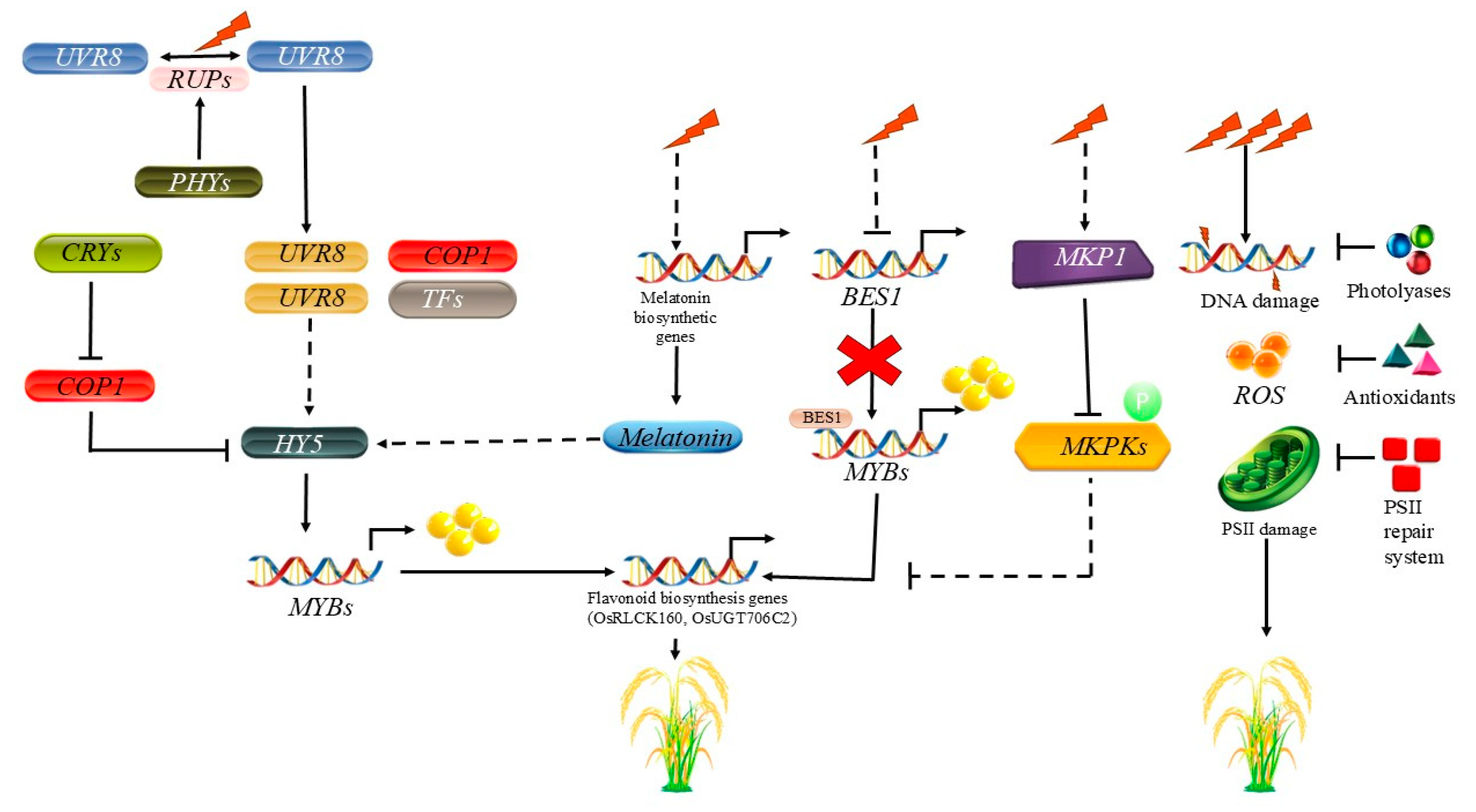
A streamlined operational model of UVR8-dependent and -independent control of UV-B stress resilience in Arabidopsis. The non-harmful UV-B radiation activates UVR8 through a structural change from a dimer to a monomer. Monomerized UVR8 engages with COP1, resulting in stabilisation and accumulation of HY5. HY5 interacts with the promoters of MYB genes that play a role in flavonoid synthesis for UV-B stress resilience. RUP1 and RUP2 inhibit the UV-B signalling pathway by directly interacting with UVR8 to facilitate UVR8 redimerisation. Phytochromes and cryptochromes indirectly facilitate UVR8 inactivation by enhancing RUP1 and RUP2 expression, while simultaneously inhibiting COP1 and stabilising HY5 to enhance gene expression that provides resilience to UV-B stress. UV-B radiation increases the expression of genes involved in melatonin production. Melatonin serves as an antioxidant to aid in UV-B stress resistance and also modulates UV-B signalling through an unidentified mechanism. In a UVR8-nonrelatable way, UV-B stress reduces BES1 expression, which in turn lifts its suppression of MYB expression, thereby enhancing flavonoid production and improving UV-B stress defence; UV-B-triggered DNA damage can stimulate MPK3 and MPK6 following their inhibitor MKP1 to adverselymanage UV-B stress resilience. UV-B-triggered DNA and PSII damage can be corrected by photolyases and the PSII repair mechanisms, respectively, alongside ROS. Antioxidants can eliminate damage. Alternatively, plant survival is eliminated under intense UV-B stress in the presence of both UVR8-dependent and -independent mechanisms. Adapted from Chen et al. 2022, open access.
4.3. UV-B Stress Interaction with Other Stresses in Rice
In rice plants, UV-B stress damage is frequently intensified by additional abiotic stresses. The interaction of UV-B with high temperature, salinity, and drought significantly restricts leaf photosynthesis, damages cell organelles, and enhances oxidative stress. Faseela and Puthur (2018) evaluated the capacity of a rice variety, Kanchana, to withstand UV-B and high light intensity stresses by examining their impacts on photosynthetic parameters and lipid peroxidation. The mechanism for coping with stress was not the same for both types of stress. The plant was highly responsive to light, while also being resistant to UV-B stress. Both UV-B and intense light are thought to negatively affect the photosynthetic machinery, especially the PSII system. Damage to this component only restricts photosynthesis when its repair ability is diminished by additional stresses such as drought, high temperatures, and salinity. In the plant system, a dynamic equilibrium exists between photodamage and restoration
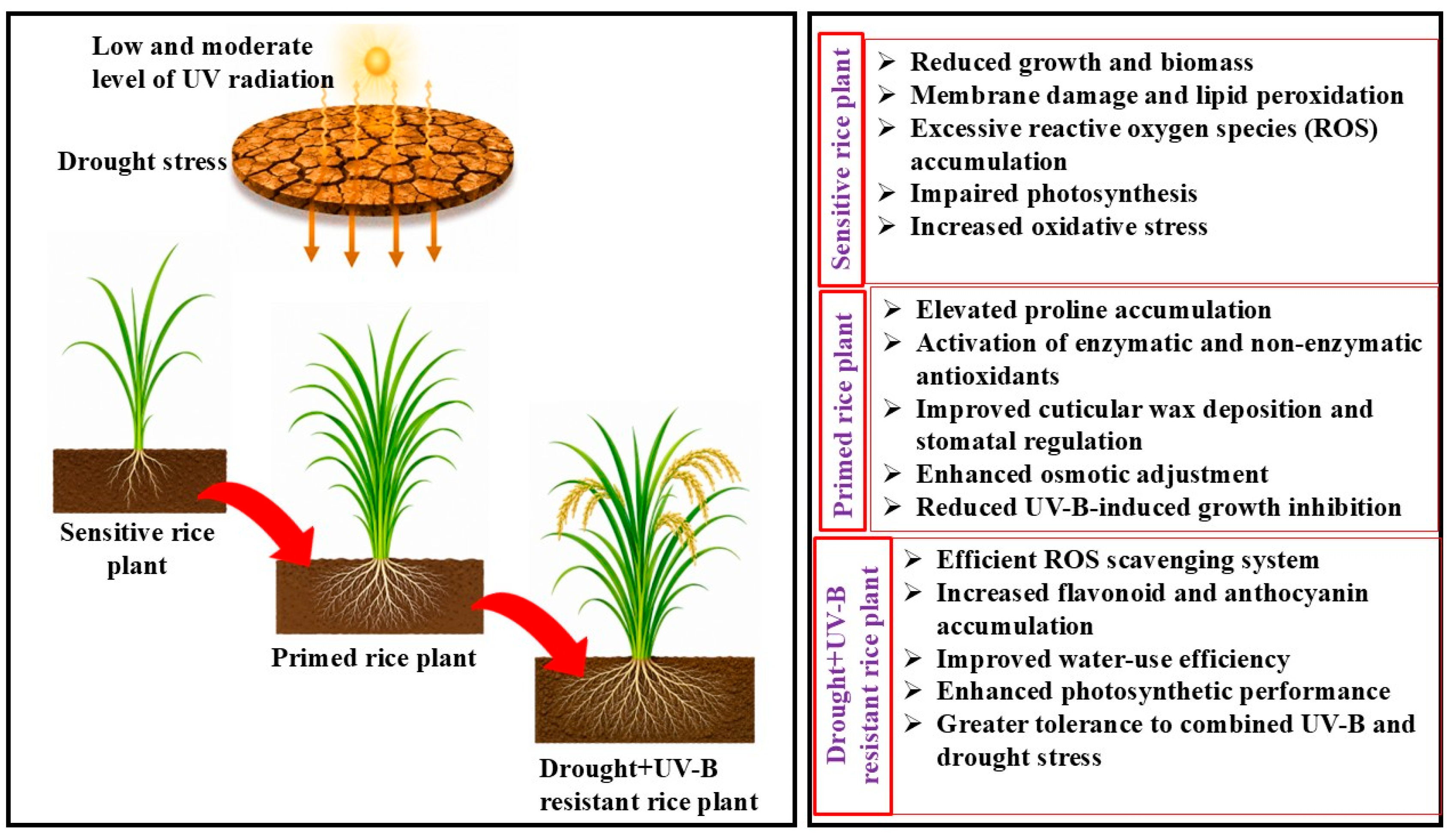
Although little research has examined the combined effects of UV-B stress and other abiotic stresses, some information is available on the concurrent influence of UV-B and drought. Drought stress harms rice plants by disturbing water equilibrium and impeding cellular metabolism and photosynthesis, whereas UV-B radiation produces reactive oxygen species that lead to oxidative stress and DNA damage (Bhandari et al., 2023; Douki et al., 2017) [49,50]. Each of these stresses significantly threatens rice production by greatly diminishing biomass growth, grain yield, and quality, thus jeopardising agricultural sustainability (Mmbando, 2025) [51]. The writer outlined the total effect of these pressures on the rice harvest. In rice, they combine to significantly diminish growth, biomass production, and grain yield. Together, these stresses synergistically lead to an excess of reactive oxygen species, resulting in membrane damage and interrupting photosynthesis due to a surge of oxidative radicals. The oxidative stress caused by concurrent exposure to both stresses is more damaging to cellular functions and reduces plant vitality. Mmbando (2025) identified several stress injuries caused by the combined impact of UV-B and drought stresses, along with potential targets for enhancing resilience in plants. Injuries arise from oxidative harm, reduced growth, decreased photosynthesis activity, lower chlorophyll synthesis, damage to membranes, and lipid peroxidation. The decline in shoot and root development happens due to modified growth-regulating elements and cell dehydration. Stunted plant growth results in diminished leaf area along with lesser stomatal activity and reduced cell division. Plants heal from these damages by enhancing the synthesis of flavonoids, anthocyanins, and osmolytes, while also triggering both enzymatic and non-enzymatic defense mechanisms. These compounds shield the plants from environmental stressors. The production and functions of these essential substances may be influenced by signaling compounds like jasmonic acid, abscisic acid, salicylic acid, ethylene, and hydrogen peroxide (Shoaib et al., 2024) [52]. A schematic illustrates the joint impacts of drought and UV-B stress on rice crops (Mmbando, 2025) [51].
Figure 8.
Conceptual model illustrating UV-B priming-induced enhancement of drought tolerance through improved antioxidant defence, osmotic adjustment, photosynthetic efficiency, and stress resilience in rice.
Figure 8.
Conceptual model illustrating UV-B priming-induced enhancement of drought tolerance through improved antioxidant defence, osmotic adjustment, photosynthetic efficiency, and stress resilience in rice.
4.4. Comparison of UV-B Stress Tolerance in Traditional and High-Yielding Rice
High-yield rice varieties, as a general rule, tend to be more vulnerable to UV-B stress (Faseela and Puthur, 2019) [53]. Conversely, traditional rice landraces show greater tolerance to UV-B stress compared to high-yielding varieties. These landraces mitigate the harmful effects of UV-B radiation by having a more advanced antioxidant defence system that includes the accumulation of flavonoids and an efficient mechanism for repairing UV-B-induced DNA damage. These characteristics are more effectively developed in landraces than in high-yield rice cultivars. Specific instances of differences between genotypes can be observed in the following parameters.
- A.
- Antioxidant production: Unlike modern popular rice, wide traditional varieties produce domestically higher levels of non-enzymatic antioxidants such as flavonoids, anthocyanins and phenolics. These compounds neutralise the reactive oxygen species generated by UV-B stress. Senapati et al. (2024) noted that expression levels were similar between sensitive and resilient cultivars under the control condition. But exposure to UV-B stress stimulated the production of the compounds only in resilient cultivars. Expression levels of gene families controlling flavonoid activation and UV-B signal transduction, such as OsWRKY, OsUGT, OsRLCK, OsBZIP, and OsGLP, were significantly higher in the resilient cultivar than in the sensitive one.
- B.
- DNA repair mechanisms: CPD photolyase can directly repair DNA damaged by UV-B stress. The expression of the CPD photolyase gene was reported to be higher in UV-B-resilient cultivars than in sensitive ones (Senapati et al., 2024) [25].
- C.
- Photosynthetic preservation: Exposure to UV-B stress induces lipid peroxidation and chlorophyll loss in high-yielding rice, leading to the impairment of photosynthetic activity. Photosynthetic activity in them declines significantly when exposed to UV-B stress. Unable to use light energy under stress, fluorescence intensity spectra of the flag leaf increase in sensitive rice. A resilient cultivar exhibits efficient light energy under stress, reduces fluorescence intensity and maintains its photosynthetic parameters (Senapati et al., 2024) [25].
4.5. Tolerance Mechanism of UV-B Stress in Traditional Rice
It was reported that UV-B-regulated rice genes are unique, with few homologues among UV-B-responsive Arabidopsis genes. The response to UV-B radiation also varies significantly between Oryza species, particularly the gap in response between indica and japonica rice (Idris et al., 2021) [54]. Traditional rice landraces exhibit substantial genetic variability in UV-B tolerance. Senapati et al. (2024) found that certain indigenous rice cultivars widely grown in western Odisha, India, are resilient to UV-B stress. They withstand UV-B radiation by increasing flavonoids, anthocyanins and UV-B signalling genes. These pigments are located in the leaf epidermal layers and act as a natural UV shield. In addition, UV-B tolerance in rice is governed by unique stress-responsive genes and transcription factors. UV-B exposure leads to overexpression of genes such as UVR8, which further induces expression of MYB44, HY5, PHT2 and WRKY89 (Ashok Kumar et al., 2025) [55]. These genes mediate cellular repair and provide antioxidant defence. The possession of these innate genetic defences in the production of anthocyanins, flavonoids and pubescent leaves (Senapati et al., 2024) [25] is, however, absent in the popular rice primarily bred for increased grain yield.
The UVR8 has been identified as the receptor mediating responses to ultraviolet radiation. In rice, there are two distinct UVR8 photoreceptor genes, UVR8a and UVR8b. The proteins encoded by these genes show high identity to AtUVR8. In both traditional and modern rice cultivars, UVR8b plays a dominant role in perceiving ultraviolet light and initiating cellular defence mechanisms (Chen et al., 2024) [56]. OsURV8a/b proteins are found both in the nucleus and cytoplasm, but their localisations are not identical. Both photoreceptors function in response to ultraviolet radiation, but UVR8 is more dominant.
GWAS on indigenous rice provides the precise locations of genes and single-nucleotide polymorphisms (SNPs) responsible for UV-B tolerance. Breeders use this information for marker-assisted selection to develop tolerant rice genotypes. Ashok Kumar et al. (2025) used a cumulative stress response index based on the imprint of UV-B stress on phenotypic traits, together with biochemical and gene expression studies, to differentiate tolerant and sensitive rice cultivars. The authors concluded that, in response to UV-B radiation, root length, root area, H2O2 content, and the expression of mRNAs encoding CA, WRKY89, PHT2, UVR8a, URP, and RLCK increased significantly in tolerant cultivars. The expression of UVR8a and RLCK genes, which contribute to UV-B tolerance, is genetically based in rice. Key mechanisms controlled by genetic loci in UV-B-tolerant rice include pubescent hair development, anthocyanin accumulation, expression of CPD photolyase (Senapati et al., 2024) [25], and UV-B photoreceptors (UVR8). Further studies showed that differentially evolved glucosyltransferases determine rice flavone accumulation and UV tolerance (Peng et al., 2017) [57]. Flavones are conjugated with sugar moieties by UDP-dependent glucosyltransferases, and natural variation in flavones among rice genotypes is determined by OsUGT. GWAS also reiterates that natural variation in OsUGT is responsible for structural variation in flavones in rice; alleles that promote greater flavone accumulation confer superior tolerance to UV-B stress.
In rice, MYB (Myeloblastosis) and MYB-related transcription factors are important regulators of responses to biotic and abiotic stresses. Masud et al. (2025) identified 183 putative OsMYB transcription factors randomly distributed across the rice genome and 12 uncloned key genes (OsMYB91, OsMYB103, OsMYB124, OsMYBR5, OsMYBR11, OsMYBR17, OsMYBR21, OsMYBR51, OsMYBR62, OsMYBR63, OsMYBR67, and OsMYBR72). The expression of these key genes is associated with abiotic stress. Zhang et al. (2024) conducted a metabolite-based genome-wide association study and identified MYB transcription factors such as OsMYB44 and OsMYB110 as key regulators that control flavonoid biosynthesis during UV-B stress. OsMYB44 regulates tryptamine accumulation, which contributes to UV-B tolerance, while OsMYB110 interacts with OsURV8 to promote flavonoid biosynthesis. Mmbando (2025) showed that crop sensitivity to UV-B radiation varies significantly due to variation in CPD photolyase activity. CPD photolyase interacts with the UVR8 gene to accelerate the repair of UV-induced DNA damage.
5. Conclusions
Over the last 60 years, substantial advancements in basic research and rice breeding have facilitated a fourfold boost in production. Notable milestones encompass the triumph of the Green Revolution, the cultivation of hybrid rice, and molecular design breeding (Yu et al., 2026) [58]. Nonetheless, these accomplishments have been undermined by swift population expansion and the rise in frequency and severity of abiotic stresses caused by climate change. The increase in UV-B stress in the biosphere has been recognized as a possible factor contributing to reduced grain yield, which urgently calls for rice researchers to safeguard food security for rice consumers. The goal is to be achieved despite ongoing challenges of population growth, limited biodiversity, and the trade-off between crop yield and stress resilience. In light of this regressive context, investigating UV-B stress-tolerant native rice varieties offers a beacon of optimism for safeguarding rice grain yield amid the deteriorating environmental conditions. Tolerance to UV-B stress in rice varies by cultivar. The newly created popular rice genotypes were cultivated for biomass production, resistance to lodging, sensitivity to photoperiod, responsiveness to fertilizer, and high grain yield, utilizing a restricted set of genes. Conversely, heirloom landraces, due to their extensive history in challenging environments, possess the genetic makeup essential for resilience and productivity. Scientists have examined various morpho-physiological and molecular characteristics for UV-B tolerance, with the investigation of the UVR8b photoreceptor showing great potential for utility.
Author Contributions
P.K.S, writing of the draft; K.S., model preparation; E.K., scrutiny of the manuscript; P.K.M., concept, design, critical review and final article preparation. All authors have read and agreed to the published version of the manuscript.
Funding
This research received no external funding.
Institutional Review Board Statement
Not applicable.
Informed Consent Statement
Not applicable.
Data Availability Statement
No new data were created or analyzed in this study.
Conflicts of Interest
The authors declare no conflicts of interest.
References
- Mohapatra, P. K.; Sarkar, R. K.; Panda, D.; Kariali, E. Origin and evolution of rice as domesticated staple food crop. In Tillering Behavior of Rice Plant; Springer, 2025; pp. 1–17. [Google Scholar] [CrossRef]
- Jan, R.; Kim, N.; Asaf, S.; Lubna; Asif, S.; Du, X.; Kim, E. G.; Jang, Y. H.; Kim, K. M. OsCM regulates rice defence system in response to UV light supplemented with drought stress. Plant Biol. 2023, 25(5), 902–914. [Google Scholar] [CrossRef] [PubMed]
- Cejka, K.; Vanhoutte, I.; Spunda, V. UV radiation and photosynthetic organisms. In Photobiological sciences online; This is the Cejka reference cited by the 2024 Frontiers paper, not a 2021 paper.; Photobiological Sciences Online, 2011. [Google Scholar]
- Mathur, S.; Bheemanahalli, R.; Jumaa, S. H.; Kakar, N.; Reddy, V. R.; Gao, W.; Reddy, K. R. Impact of ultraviolet-B radiation on early-season morpho-physiological traits of indica and japonica rice genotypes. Front. Plant Sci. 15 2024, 1369397. [Google Scholar] [CrossRef] [PubMed]
- Mohammed, A. R.; Tarpley, L. Rice responses and tolerance to ultraviolet-B (UV-B) radiation: Plant growth regulators provide a management option. In Advances in rice research for abiotic stress tolerance; Hasanuzzaman, M., Fujita, M., Nahar, K., Biswas, J. K., Eds.; Woodhead Publishing, 2019; pp. 709–724. [Google Scholar] [CrossRef]
- Kakani, V. G.; Reddy, K. R.; Zhao, D.; Sailaja, K. Field crop responses to ultraviolet-B radiation: A review. Agric. For. Meteorol. 2003, 120(1–4), 191–218. [Google Scholar] [CrossRef]
- Dai, Q.; Coronel, V. P.; Vergara, B. S.; Barnes, P. W.; Quintos, A. T. Ultraviolet-B radiation effects on growth and physiology of four rice cultivars. Crop Sci. 1992, 32(5), 1269–1274. [Google Scholar] [CrossRef]
- Teramura, A. H.; Ziska, L. H.; Sztein, A. E. Changes in growth and photosynthetic capacity of rice with increased UV-B radiation. Physiol. Plant. 1991, 83(3), 373–380. [Google Scholar] [CrossRef]
- Jenkins, G. I. Signal transduction in responses to UV-B radiation. Annu. Rev. Plant Biol. 60 2009, 407–431. [Google Scholar] [CrossRef] [PubMed]
- Allakhverdiev, S.; Ivanov, A. G.; Brestič, M. (Eds.) Photosynthesis under Biotic and Abiotic Environmental Stress; MDPI, 2023. [Google Scholar] [CrossRef]
- Liaqat, W.; Altaf, M. T.; Barutçular, C.; Nawaz, H.; Ullah, I.; Basit, A.; Mohamed, H. I. Ultraviolet-B radiation in relation to agriculture in the context of climate change: A review. Cereal Res. Commun. 2023, 52(2), 423–446. [Google Scholar] [CrossRef] [PubMed]
- Ač, A.; Jansen, M. A. K.; Grace, J.; Urban, O. Unravelling the neglected role of ultraviolet radiation on stomata: A meta-analysis with implications for modelling ecosystem–climate interactions. Plant Cell Environ. 2024, 47(6), 1769–1781. [Google Scholar] [CrossRef] [PubMed]
- Rao, M. V.; Paliyath, G.; Ormrod, D. P.; Murr, D. P.; Watkins, C. B. Influence of ultraviolet-B radiation on antioxidant enzymes and lipid peroxidation in Arabidopsis leaves. Plant Physiol. 1996, 110(1), 125–136. [Google Scholar] [PubMed]
- Piccini, C.; Cai, G.; Dias, M. C.; Romi, M.; Longo, R.; Cantini, C. UV-B radiation affects photosynthesis-related processes of two Italian Olea europaea L. varieties differently. Plants 2020, 9(12), 1712. [Google Scholar] [CrossRef] [PubMed]
- Kreslavski, V. D.; Huang, X.; Semenova, G.; Khudyakova, A.; Shirshikova, G.; Hummatov, N.; Zharmukhamedov, S. K.; Li, X.; Allakhverdiev, S. I.; Nie, C.; Shabala, S. Linking sensitivity of photosystem II to UV-B with chloroplast ultrastructure and UV-B absorbing pigments contents in Arabidopsis thaliana L. phyA phyB double mutants. Plant Growth Regul. 2020, 91(1), 13–21. [Google Scholar] [CrossRef]
- Fiscus, E. L.; Booker, F. L. Is increased UV-B a threat to crop photosynthesis and productivity? Photosynth. Res. 43 1995, 81–92. [Google Scholar] [CrossRef] [PubMed]
- Hidema, J.; Kumagai, T. Sensitivity of rice to ultraviolet-B radiation. In UV-B radiation and plant life: Molecular biology to ecology; CAB International, 2006; pp. 181–199. [Google Scholar]
- Frohnmeyer, H.; Staiger, D. Ultraviolet-B radiation-mediated responses in plants: Balancing damage and protection. Plant Physiol. 2003, 133(4), 1420–1428. [Google Scholar] [CrossRef] [PubMed]
- Sztatelman, O.; Grzyb, J.; Gabryś, H.; Banaś, A. K. The effect of UV-B on Arabidopsis leaves depends on light conditions after treatment. BMC Plant Biol. 15 2015, 281. [Google Scholar] [CrossRef] [PubMed]
- Hideg, É.; Jansen, M. A. K.; Strid, Å. UV-B exposure, ROS, and stress: Inseparable companions or loosely linked associates? Trends Plant Sci. 2013, 18(2), 107–115. [Google Scholar] [CrossRef] [PubMed]
- Li, N.; Teranishi, M.; Yamaguchi, H.; Matsushita, T.; Watahiki, M. K.; Tsuge, T.; Li, S. S.; Hidema, J. UV-B-induced CPD photolyase gene expression is regulated by UVR8-dependent and -independent pathways in Arabidopsis. Plant Cell Physiol. 2015, 56(10), 2014–2023. [Google Scholar] [CrossRef] [PubMed]
- Kramer, G. F.; Norman, H. A.; Krizek, D. T.; Mirecki, R. M. Influence of UV-B radiation on polyamines, lipid peroxidation, and membrane lipids in cucumber. Phytochemistry 1991, 30(7), 2101–2108. [Google Scholar] [CrossRef]
- Shahzaidi, Z. S.; Tackallou, S. H.; Amjad, L.; Zali, H.; Iranbakhsh, A. Analysis of UV radiation-induced changes: Effects on morpho-physiological and biochemical traits of Portulaca oleracea. BMC Plant Biol. 2025, 25, 1318. [Google Scholar] [CrossRef] [PubMed]
- Lesk, C.; Rowhani, P.; Ramankutty, N. Influence of extreme weather disasters on global crop production. Nature 2016, 529(7584), 84–87. [Google Scholar] [CrossRef] [PubMed]
- Senapati, P. K.; Kisan, K.; Kariali, E.; Mohapatra, P. K. Comprehensive studies reveal physiological and genetic diversity in traditional rice cultivars for UV-B sensitivity. Sci. Rep. 2024, 14, 13137. [Google Scholar] [CrossRef] [PubMed]
- Lu, X.; Zhang, Y.; Liu, C.; Wang, H. Plant responses to UV-B radiation: Physiology, transcription factors, and epigenetic regulation. Plant Physiol. Biochem. Plant Physiology and Biochemistry [1, 2, 3, 4, 5]. 2024, 198, 107–121. [Google Scholar]
- Wang, R.; Ren, C.; Dong, S.; Chen, C.; Xian, B.; Wu, Q.; Wang, J.; Pei, J.; Chen, J. Integrated metabolomics and transcriptome analysis of flavonoid biosynthesis in safflower (Carthamus tinctorius L.) with different colours. Front. Plant Sci. 12 2021, 712038. [Google Scholar] [CrossRef] [PubMed]
- Wang, J.; Chen, X.; Lu, X.; Yang, J.; Huang, H.; Zhou, X. R.; Ye, W. Anthocyanin synthesis genes and abiotic stress: A review in cotton. Ind. Crops Prod. 237 2025, 122165. [Google Scholar] [CrossRef]
- Shi, L.; Li, X.; Fu, Y.; Li, C. Environmental stimuli and phytohormones in anthocyanin biosynthesis: A comprehensive review. Int. J. Mol. Sci. 2023, 24(22), 16415. [Google Scholar] [CrossRef] [PubMed]
- Kuang, L.; Chen, J.; Bao, X.; Zhang, D.; Liu, J.; Wang, W.; Wei, Y.; Zong, C. Environmental and phytohormonal factors regulating anthocyanin biosynthesis in fruits. Horticulturae 2025, 11(6), 681. [Google Scholar] [CrossRef]
- Li, Z.; Ahammed, G. J. Hormonal regulation of anthocyanin biosynthesis for improved stress tolerance in plants. Plant Physiol. Biochem. 2023, 201, 107835. [Google Scholar] [CrossRef] [PubMed]
- Luo, Y.; Teng, S.; Yin, H.; Zhang, S.; Tuo, X.; Tran, L. P. Transcriptome analysis reveals roles of anthocyanin- and jasmonic acid-biosynthetic pathways in rapeseed in response to high light stress. Int. J. Mol. Sci. 2021, 22(23), 13027. [Google Scholar] [CrossRef] [PubMed]
- Zhang, N.; Sun, Q.; Li, H.; Li, X.; Cao, Y.; Zhang, H.; Li, S.; Zhang, L.; Qi, Y.; Ren, S.; Zhao, B.; Guo, Y. D. Melatonin improved anthocyanin accumulation by regulating gene expressions and resulted in high reactive oxygen species scavenging capacity in cabbage. Front. Plant Sci. 2016, 7, 197. [Google Scholar] [CrossRef] [PubMed]
- De Smet, I. Role of auxins, cytokinins, gibberellins, abscisic acid and ethylene. J. Plant Biochem. Physiol. 2025, 13, 361. [Google Scholar]
- Li, G.; Zhao, J.; Qin, B.; Yin, Y.; An, W.; Mu, Z.; Cao, Y. ABA mediates development-dependent anthocyanin biosynthesis and fruit colouration in Lycium plants. BMC Plant Biol. 2019, 19, 317. [Google Scholar] [CrossRef]
- Goufo, P.; Trindade, H. Rice antioxidants: Phenolic acids, flavonoids, anthocyanins, proanthocyanidins, tocopherols, tocotrienols, γ-oryzanol, and phytic acid. Food Sci. Nutr. 2014, 2(2), 75–104. [Google Scholar] [CrossRef] [PubMed]
- Mittler, R.; Zandalinas, S. I.; Fichman, Y.; Van Breusegem, F. Reactive oxygen species signalling in plant stress responses. Nat. Rev. Mol. Cell Biol. 2022, 23(10), 663–679. [Google Scholar] [CrossRef] [PubMed]
- Goufo, P.; Trindade, H. Rice antioxidants: Phenolic acids, flavonoids, anthocyanins, proanthocyanidins, tocopherols, tocotrienols, γ-oryzanol, and phytic acid. Food Sci. Nutr. 2014, 2(2), 75–104. [Google Scholar] [CrossRef] [PubMed]
- Juliano, B. O.; Tuaño, A. P. P. Gross structure and composition of the rice grain. In Rice chemistry and technology, 4th ed.; Bao, J., Ed.; AACC International Press, 2019; pp. 31–53. [Google Scholar]
- Shao, Y.; Xu, F.; Sun, X.; Bao, J.; Beta, T. Identification and quantification of phenolic acids and anthocyanins as antioxidants in bran, embryo and endosperm of white, red and black rice kernels (Oryza sativa L.). J. Cereal Sci. 2014, 59(2), 211–218. [Google Scholar] [CrossRef]
- Yamuangmorn, S.; Prom-u-Thai, C. The potential of high-anthocyanin purple rice as a functional ingredient in human health. Antioxidants 2021, 10(6), 833. [Google Scholar] [CrossRef] [PubMed]
- Xu, Z.; Mahmood, K.; Rothstein, S. J. ROS induces anthocyanin production via late biosynthetic genes and anthocyanin deficiency confers hypersensitivity to ROS-generating stresses in Arabidopsis. Plant Cell Physiol. 2017, 58(8), 1364–1377. [Google Scholar] [CrossRef] [PubMed]
- Xu, Z.; Rothstein, S. J. ROS-induced anthocyanin production provides feedback protection by scavenging ROS and maintaining photosynthetic capacity in Arabidopsis. Plant Signal. Behav. 2018, 13(3), e1451708. [Google Scholar] [CrossRef] [PubMed]
- Sadowska-Bartosz, I.; Bartosz, G. Antioxidant activity of anthocyanins and anthocyanidins: A critical review. Int. J. Mol. Sci. 2024, 25(22), 12001. [Google Scholar] [CrossRef] [PubMed]
- Chen, Z.; Dong, Y.; Huang, X. Plant responses to UV-B radiation: Signaling, acclimation and stress tolerance. Stress Biol. 2022, 2, 51. [Google Scholar] [CrossRef] [PubMed]
- Jenkins, G. I. Structure and function of the UV-B photoreceptor UVR8. Curr. Opin. Struct. Biol. 2014, 29, 52–57. [Google Scholar] [CrossRef] [PubMed]
- Liu, W.; Jenkins, G. I. Recent advances in UV-B signalling: Interaction of proteins with the UVR8 photoreceptor. J. Exp. Bot. 2025, 76(3), 873–881. [Google Scholar] [CrossRef] [PubMed]
- Hu, S.; Chen, Y.; Qian, C.; Ren, H.; Liang, X.; Tao, W.; Chen, Y.; Wang, J.; Dong, Y.; Han, J.; Ouyang, X.; Huang, X. Nuclear accumulation of rice UV-B photoreceptors is UV-B- and OsCOP1-independent for UV-B responses. Nat. Commun. 2024, 15, 6396. [Google Scholar] [CrossRef] [PubMed]
- Bhandari, U.; Gajurel, A.; Khadka, B.; Thapa, I.; Chand, I.; Bhatta, D.; Poudel, A.; Pandey, M.; Shrestha, S.; Shrestha, J. Morpho-physiological and biochemical response of rice (Oryza sativa L.) to drought stress: A review. Heliyon 2023, 9(3), e13744. [Google Scholar] [CrossRef] [PubMed]
- Douki, T.; von Koschembahr, A.; Cadet, J. Insight in DNA repair of UV-induced pyrimidine dimers by chromatographic methods. Photochem. Photobiol. 2017, 93(1), 207–215. [Google Scholar] [CrossRef] [PubMed]
- Mmbando, G. S. The current relationship between ultraviolet-B radiation stress and drought stress in rice: An avenue for developing multiple resistant crops. J. Crop Health 2025, 77, 25. [Google Scholar] [CrossRef]
- Shoaib, N.; Pan, K.; Mughal, N.; Raza, A.; Liu, L.; Zhang, J.; et al. Potential of UV-B radiation in drought stress resilience: A multidimensional approach to plant adaptation and future implications. Plant Cell Environ. 2024, 47(2), 387–407. [Google Scholar] [CrossRef] [PubMed]
- Faseela, P.; Puthur, J. T. Interactive effects of UV-B radiation and high light stress on photosynthetic performance of rice. The complete bibliographic details should be verified because the manuscript cites this paper without full reference information.. 2018. [Google Scholar] [PubMed]
- Idris, M.; Seo, N.; Jiang, L.; Kiyota, S.; Hidema, J.; Iino, M. UV-B signalling in rice: Response identification, gene expression profiling and mutant isolation. Plant Cell Environ. 2021, 44(5), 1468–1485. [Google Scholar] [CrossRef] [PubMed]
- Ashokkumar, V.; Thirugnanasambantham, K.; Palanisamy, S. Differential biochemical and gene expression responses to UV-B radiation in ten Southern Indian rice (Oryza sativa L. indica) varieties. Plant Physiol. Biochem. 2025, 225, 109870. [Google Scholar] [CrossRef] [PubMed]
- Chen, D.; Tian, L.; Xie, Y.; Han, Y. OsWRKY53 acts as a transcriptional repressor of OsSWEET1b and OsABA8ox1/2 to regulate leaf senescence and seed germination in rice. Plant Cell Environ. 2024, 47(8), 2841–2856. [Google Scholar]
- Peng, M.; Shahzad, R.; Gul, A.; Subthain, H.; Shen, S.; Lei, L.; Zheng, Z.; Zhou, J.; Lu, D.; Wang, S.; Nishawy, E.; Liu, X.; Tohge, T.; Fernie, A. R.; Luo, J. Differentially evolved glucosyltransferases determine natural variation of rice flavone accumulation and UV tolerance. Nat. Commun. 2017, 8, 1975. [Google Scholar] [CrossRef] [PubMed]
- Yu, H.; Xu, Y.; Gu, Z.; Wang, K.; Zhang, T.; Qian, Q.; Li, J. Rice2035: A decadal vision for rice research and breeding. Mol. Plant 2026, 19(3), 456–469. [Google Scholar] [CrossRef] [PubMed]
Figure 1.
Atmospheric filtration of solar UV radiation and catalytic ozone depletion by CFC-derived chlorine radicals, resulting in increased UV-B exposure to terrestrial plants.
Figure 1.
Atmospheric filtration of solar UV radiation and catalytic ozone depletion by CFC-derived chlorine radicals, resulting in increased UV-B exposure to terrestrial plants.
Disclaimer/Publisher’s Note: The statements, opinions and data contained in all publications are solely those of the individual author(s) and contributor(s) and not of MDPI and/or the editor(s). MDPI and/or the editor(s) disclaim responsibility for any injury to people or property resulting from any ideas, methods, instructions or products referred to in the content. |
© 2026 by the authors. Licensee MDPI, Basel, Switzerland. This article is an open access article distributed under the terms and conditions of the Creative Commons Attribution (CC BY) license (http://creativecommons.org/licenses/by/4.0/).
Copyright: This open access article is published under a Creative Commons CC BY 4.0 license, which permit the free download, distribution, and reuse, provided that the author and preprint are cited in any reuse.