

Submitted:
26 August 2026
Posted:
27 August 2026
You are already at the latest version
Abstract
This study investigates the effect of preliminary ultrasonic treatment on the flotation re-covery of copper from aged tailings of copper-porphyry ores. The initial sample was char-acterized by a low copper content of 0.17%, a high proportion of oxidized copper forms of 53.84%, and fine dissemination of copper-bearing minerals, which complicates their re-covery by conventional flotation. Ultrasonic treatment was applied after grinding as a physical method of surface activation. The pulp was treated at a power of 30 W and a fre-quency of 22 kHz, while the treatment duration varied from 0 to 25 min. The effects of ul-trasonic treatment on concentrate yield, copper grade, copper recovery, and enrichment efficiency were evaluated. One-way analysis of variance (ANOVA) was used to assess the statistical significance of the results, and SEM analysis was performed to examine changes in particle surface morphology. The best flotation performance was obtained after 15 min of preliminary ultrasonic treatment. Under these conditions, the copper grade in the con-centrate was 1.79 ± 0.06%, copper recovery was 44.37 ± 0.21%, and enrichment efficiency was 40.06 ± 0.38%. Longer treatment times did not improve the results. SEM observations indicated particle disaggregation and partial removal of slime coatings. The results con-firm that preliminary ultrasonic treatment can improve copper flotation from aged tailings.
Keywords:
aged tailings
; copper
; flotation
; ultrasonic treatment
; cavitation
; copper recovery
; ANOVA
; SEM
1. Introduction
As easily beneficiated ore reserves become depleted and mining-geological conditions grow increasingly complex, technogenic mineral formations are becoming an additional source of mineral raw materials, and their processing is considered one of the priority areas for improving resource efficiency in the mining and metallurgical industry [1,2,3,4].
The accumulation of aged flotation tailings is accompanied both by losses of valuable components and by an increase in technogenic environmental load. In this regard, the processing of technogenic mineral formations is of not only economic but also environmental importance and is consistent with the principles of rational subsoil use and the circular economy.
Long-term storage of tailings in open-air tailings facilities leads to physicochemical changes, including surface weathering, oxidation of minerals, formation of fine slimes, and secondary minerals. These changes hinder the recovery of valuable components by conventional beneficiation methods. In particular, copper oxide minerals are difficult to recover by conventional flotation because of their strong surface hydrophilicity, fine particle size, complex mineral composition, and slime-related problems [5,6]. Therefore, the mineral-processing industry requires effective treatment processes and advanced technical support to selectively separate valuable minerals from gangue and harmful impurities [2,5,23].
One promising approach is ultrasonic treatment. Ultrasonic treatment is considered an innovative physical-mechanical method for intensifying mineral-processing operations [7,8,9,10,11]. In beneficiation, ultrasound is applied to pulp, i.e., a suspension of mineral particles in a liquid medium, to modify particle properties and interfacial interactions. Ultrasonic waves with frequencies above 20 kHz generate cavitation effects in the liquid, including the formation and implosion of microbubbles, as well as intensive acoustic microstreaming [7,8,9,10]. These effects can mechanically clean particle surfaces, destroy weak aggregates, improve dispersion of the solid phase, and even induce certain chemical transformations on mineral surfaces. Therefore, ultrasonic treatment is regarded as a promising green method for intensifying flotation and leaching: it is relatively simple to operate, does not require the addition of extra chemical reagents, and does not generate new pollutants. It is assumed that ultrasound can improve the reprocessing efficiency of aged tailings by activating mineral particle surfaces, removing interfering films, and thereby improving the recovery of residual valuable components [7,8,9,10,11,12].
Laboratory studies using ultrasound have demonstrated a positive effect on flotation performance. Videla et al. reported that ultrasonic treatment of copper flotation tailings improved copper recovery, which was attributed to the removal of slimes and oxide films from particle surfaces under acoustic cavitation [12]. Aldrich and Feng showed that ultrasonic preconditioning of pulp can improve the flotation response of sulfide ores [13]. Similar positive effects were reported for potash ore flotation [14,15], technogenic fluorite tailings [16], chalcopyrite–pyrite separation [17], and galena flotation [18]. Studies on coal flotation also showed that ultrasound can affect cavitation, bubble-particle interactions, and flotation performance [19,20,21,22]. In addition, Filippov et al. showed that ultrasound can influence flotation kinetics in a reactor-separator, indicating that acoustic treatment may affect not only particle-surface cleaning but also the rate of mineral recovery during flotation [23].
An analysis of publications over the past two decades indicates sustained interest in the application of ultrasound in mineral processing. Based on review studies by Huan Zhang, Xiaoou Zhang, and co-authors, several important trends can be identified [7,8,9,10]:
- Low-frequency ultrasonic exposure associated with transient cavitation is predominantly used as the main mechanism for intensifying flotation. This regime promotes active collapse of bubbles and cavitation nuclei, producing mechanical effects that remove slimes, destroy oxide layers, and improve reagent dispersion.
- At the same time, high-frequency regimes (>50 kHz), under which stable cavitation forms and pronounced acoustic radiation are observed, remain insufficiently studied. However, such frequencies may significantly affect interactions between solid particles and air bubbles through acoustic aggregation and surface-property modification.
- From a practical standpoint, the most important and technologically feasible approaches are ultrasonic treatment of ore pulp, which removes surface contaminants and fine fractions, and preliminary sonochemical modification of flotation reagents, which changes their rheological and surface-active properties and ultimately improves the selective recovery of minerals.
- Preliminary ultrasonic activation, i.e., treatment of pulp or flotation reagents before the flotation process. This approach includes the study of improved dispersion and emulsification of reagents, removal of oxide films from mineral surfaces, and reduction of fine slime content under ultrasonic exposure.
- Integration of ultrasound directly into the flotation process. In this case, attention is focused on the effect of ultrasound on bubble size and distribution, improved separation of gangue, and foam characteristics.
Thus, the development and implementation of alternative approaches for the reprocessing of technogenic tailings is an important task. Ultrasonic activation is considered a promising physical-mechanical technology capable of improving flotation efficiency by modifying interfacial interactions, improving reagent adhesion, and removing coating films. Despite the increasing number of studies on ultrasonic activation in beneficiation, its application to secondary resources, especially aged tailings, remains insufficiently studied, which confirms the relevance of the present work.
The studied tailings contain a significant proportion of oxidized copper forms. The flotation of copper oxide minerals is commonly associated with direct flotation, sulfidization flotation, or activation flotation [5]. Sulfidization is widely used to improve the floatability of copper oxide minerals by forming active sulfide species or a sulfide film on the mineral surface, which promotes subsequent interaction with xanthate collectors [5,25]. However, the efficiency of sulfidization is strongly affected by pH, Eh, reagent dosage, mineral surface structure, and the presence of fine slimes [5].
In our previous study, the same type of aged copper-bearing tailings was investigated with a focus on grinding-induced surface renewal, ORP changes, and sulfidization. It was shown that regrinding can renew mineral surfaces and improve flotation recovery, while excessive ultrafine grinding may intensify slime formation and reduce process selectivity [25]. However, the potential of preliminary ultrasonic treatment as an additional physical method for surface activation of these aged tailings has not yet been evaluated. Therefore, the present study continues this research direction by assessing the effect of ultrasonic treatment duration on copper flotation performance, supported by statistical analysis and SEM observations.
The aim of this study was to evaluate the effect of ultrasonic treatment on the flotation activity of copper minerals contained in aged tailings and to determine optimal ultrasonic parameters for improving valuable-component recovery.
2. Materials and Methods
To address the stated objectives, a sequential methodology was implemented, including preparation of an experimental ultrasonic exposure scheme (power, frequency, and duration ranges), preliminary and in-process ultrasonic treatment of flotation pulp, and statistical processing of the data. This structure provides a transition from formulation of scientific problems and literature analysis to a reproducible laboratory procedure suitable for further scale-up and industrial implementation.
The study was focused on legacy flotation tailings from porphyry copper ores stored in tailings facilities in the Republic of Kazakhstan. Due to long-term storage under atmospheric conditions, the tailings underwent weathering and oxidation, resulting in the alteration of sulfide mineral surfaces and the formation of secondary oxidized copper phases. Such surface transformations are typical for aged tailings and lead to reduced flotation activity of copper-bearing minerals. Therefore, preliminary ultrasonic treatment was considered in this study as a physical method for surface activation and improvement of copper recovery. Their chemical and phase compositions were determined by conventional silicate analysis, while the contents of copper and other elements were determined by ICP-OES (Agilent ICP 725ES, Agilent Technologies, Santa Clara, CA, USA). Mineralogical analysis was carried out on polished sections in reflected light using an OLYMPUS BX 53 microscope (Olympus Corporation, Tokyo, Japan), integrated with a SIMAGIS XS-3CU imaging system and SIAMS Mineral C7 software (SIAMS Ltd., Yekaterinburg, Russia). Furthermore, the particle size distribution was mapped using a FRITSCH Analyzette 22 laser diffraction analyzer and a CYCLOSIZER LF-11 (CNSP, Shanghai, China). Phase identification was finalized using a Bruker D2 Phaser diffractometer (Bruker AXS GmbH, Karlsruhe, Germany).
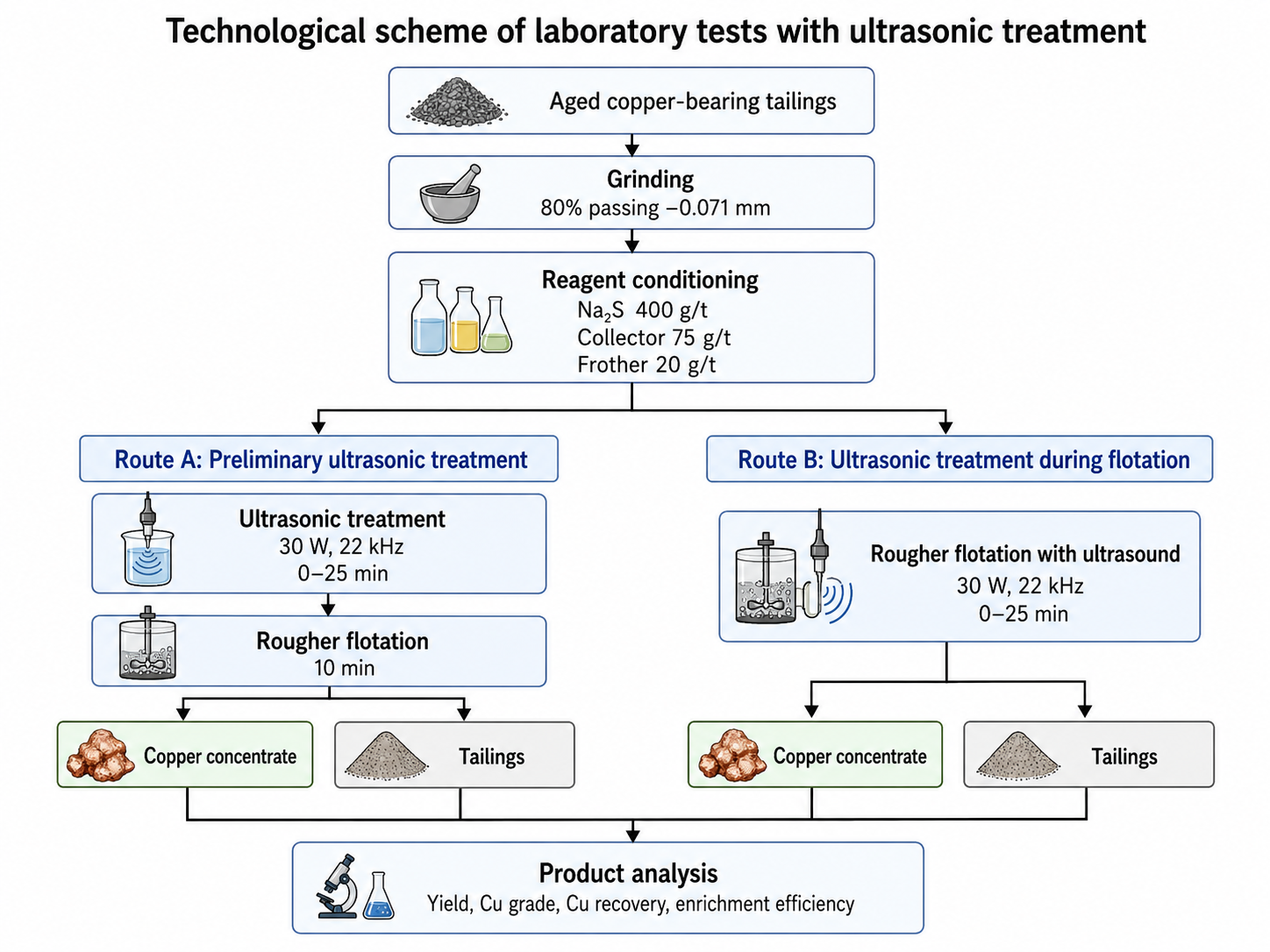
The beneficiation process included preliminary conditioning of the ground pulp to 80% of the −0.071 mm size class with the addition of reagents: sodium sulfide 400 g/t, collector 75 g/t, and frother 20 g/t. Sodium sulfide was used as a sulfidizing reagent because sulfidization is a common method for improving the flotation response of oxidized copper minerals by forming active sulfide species on the mineral surface [24]. This was followed by ultrasonic treatment under varied conditions. Flotation was then carried out for 10 min in a laboratory pneumatic-mechanical flotation machine. In the experimental series, the duration of ultrasonic exposure was varied from 0 to 25 min, both at the pulp-preparation stage and during flotation. Ultrasonic treatment was performed using an ultrasonic generator equipped with a probe immersed directly into the pulp. During preliminary ultrasonic treatment, the probe was inserted vertically from the top of the conditioning vessel. During ultrasonic treatment in the Vektis pneumatic-mechanical flotation machine, the ultrasonic probe was installed vertically from the top of the flotation cell, adjacent to the central aeration unit, without touching the aeration unit or the cell walls. The arrangement of the ultrasonic probe during both treatment modes is shown in Figure 1.
The technological scheme of the laboratory tests is shown in Figure 2.
The main experiment was conducted under the following conditions: pulp solids content 30%, copper mass fraction 0.17%, ultrasonic power 30 W, frequency 22 kHz, and treatment duration 15 min.
The flotation concentrate and tailings were analyzed for copper content, weighed separately, and copper recovery was calculated. The results were compared with control tests without ultrasonic exposure. The enrichment efficiency was calculated using the Hancock–Luyken formula:
where E is the beneficiation efficiency (%), ε is the copper recovery into the concentrate (%), γ is the concentrate yield (%), and α is the copper content in the feed sample (%).
E = (ε − γ)/(100 − α)
For statistical processing of the flotation-test results, one-way analysis of variance (ANOVA) was applied. The duration of ultrasonic treatment was considered as the independent factor, while concentrate yield, copper content, copper recovery, and enrichment efficiency were used as response variables. For the preliminary ultrasonic treatment after grinding, three replicate tests were performed for each selected regime, which made it possible to evaluate reproducibility and the statistical significance of the effect of exposure time.
The full range of exposure times (0–25 min) was first screened using single tests to identify the approximate region of optimal performance; based on these preliminary results, four representative durations — 0 (control), 15, 20, and 25 min — were selected for triplicate testing and subsequent statistical analysis, whereas the intermediate durations (2, 5, and 10 min) were evaluated only once and served solely for preliminary screening.
The significance of differences between regimes was assessed using Fisher’s F-test at a significance level of p < 0.05. The obtained results were used to identify the optimal duration of ultrasonic treatment that provided the maximum copper recovery and enrichment efficiency.
In addition, post-hoc pairwise comparisons were performed using Tukey’s Honestly Significant Difference (HSD) test (α = 0.05) to determine which specific duration groups differed significantly for each response variable.
A detailed description of the flotation-test results with the use of ultrasound is presented in the Results section.
3. Results
The results of this study include characterization of the initial mineral raw material, analysis of the chemical, phase, and particle-size composition of the aged tailings, and assessment of the effect of ultrasonic treatment on flotation performance. Special attention was given to comparing preliminary ultrasonic treatment after grinding with ultrasonic exposure directly during flotation. For the preliminary-treatment regimes performed in triplicate, mean values and standard deviations were calculated, and the statistical significance of the effect of ultrasonic treatment duration was evaluated using one-way ANOVA.
As a result of flotation beneficiation of aged copper-ore tailings using the developed ultrasonic activation scheme and optimized reagent regime, a copper concentrate was obtained with a yield of 4.56%, copper content of 1.74%, and copper recovery of 44.12%. The chemical composition of the initial sample is given in Table 1.
The chemical composition of the feed sample indicates that the material is a low-grade copper-bearing tailing, with a copper content of only 0.17 wt.%. The sample is dominated by gangue-forming oxides, mainly silicon dioxide (58.06 wt.%) and aluminum oxide (17.47 wt.%), which reflects the high proportion of silicate minerals in the tailings. Although Zn was present in the feed sample (0.28 wt.%), it was not a target element in this study, which focused specifically on the activation and recovery of copper-bearing minerals.
To evaluate the potential for copper recovery, phase analysis was performed to determine the distribution of copper across different chemical forms (Table 2).
The results of the optical mineralogy study of the legacy tailings are presented below. This examination established the mineral composition of both the ore and gangue fractions, grain morphology and size distribution, and the specific characteristics of mineral associations within the anthropogenic processing products. Chalcopyrite is the most abundant copper sulfide in the sample. Its grains are most commonly observed as intergrowths with gangue minerals or in a liberated state. In certain areas, it occurs in association with pyrite (see Figure 3a–c), magnetite (Figure 3a), sphalerite, and bornite. The predominant (average) grain size of chalcopyrite is characterized as ultra-fine (1–10 μm) and fine (10–30 μm), although relatively coarser grains (40–60–120 μm) are occasionally encountered.
Bornite, covellite, and chalcocite are observed only as accessory minerals and are extremely rare. The grain size for these minerals typically ranges from less than 1 μm up to 80 μm. Pyrite was also observed in the sample, mainly in association with chalcopyrite and gangue minerals. However, pyrite was not the target mineral in this study; therefore, the discussion was focused primarily on copper-bearing minerals and their flotation response after ultrasonic treatment.
Although pyrite was not quantified directly by optical point-counting in this study, its approximate abundance can be estimated from the bulk chemical data (Table 1 and Table 2). Sulfide sulfur associated with copper sulfide minerals accounts for only about 0.08% S, whereas the total sulfide sulfur content of the sample is 1.00%. The remaining sulfide sulfur (~0.92%) is attributed mainly to iron sulfides, corresponding to an estimated pyrite content of approximately 1.7 wt.%, consistent with the pyrite–chalcopyrite intergrowths observed in Figure 3b. Pyrite behavior during ultrasonic treatment and flotation (activation or depression) was not evaluated in this study and is noted as a limitation for future work.
The size-fraction distribution of the initial tailings sample, together with the Cu, Ag, and S grades and their distribution across individual size fractions, is presented in Table 3.
The initial analysis showed that the −0.045 + 0 mm fraction dominates the sample with a weight recovery of 51.66%, while the total content of the finished size class (−0.071 mm) reaches 73.42%. Interestingly, the copper distribution across all size fractions is directly proportional to their weight. This correlation indicates a fine-grained and relatively uniform mineralization, suggesting that the valuable components are not concentrated in specific size fractions but are distributed throughout the material.
To better understand the distribution of components within the finest particles, a more detailed size-fraction analysis of the −71 + 0 μm material, including micro-slimes, was performed using a Cyclosizer. The results, including the weight distribution, Cu grade, and Cu distribution in individual fine fractions, are summarized in Table 4.
The data in Table 4 highlight a significant challenge: the highest copper distribution (39.95%) is concentrated in the finest fraction (−8.4 + 0 μm). The presence of a substantial amount of these micro-slimes (26.85% of the total mass), coupled with their high metal content, confirms the extremely fine-grained nature of copper mineralization. From a metallurgical perspective, this often hinders flotation due to the detrimental effect of slime coating, where ultra-fine particles interfere with the recovery of valuable minerals.
The results of the laboratory experiment are presented in Table 5.
Ultrasonic treatment had a nonmonotonic effect on flotation performance. The most effective regime was 15 min of exposure, at which the maximum values of copper recovery and enrichment efficiency were achieved. This may be associated with optimal destruction of surface films and slime dispersion. Exposure longer than 15 min did not produce further improvement and may have caused excessive entrainment of gangue material.
To assess the effect of preliminary ultrasonic-treatment duration on flotation performance, one-way ANOVA was applied. The independent factor was ultrasonic exposure duration of 0, 15, 20, and 25 min. The experiments at 0, 15, 20, and 25 min were performed in triplicate. The response variables were concentrate yield, copper content in the concentrate, copper recovery, and enrichment efficiency. The results are presented as mean ± standard deviation.

Table 6.
Mean technological indicators for preliminary ultrasonic treatment.
|
Ultrasonic treatment duration, min |
Yield, % | Copper content, % |
Copper recovery, % |
Enrichment efficiency, % |
| 0 | 5.10 ± 0.11 | 1.37 ± 0.07 | 40.74 ± 0.63 | 35.65 ± 0.62 |
| 15 | 4.33 ± 0.22 | 1.79 ± 0.06 | 44.37 ± 0.21 | 40.06 ± 0.38 |
| 20 | 4.29 ± 0.21 | 1.63 ± 0.06 | 42.08 ± 0.49 | 37.81 ± 0.36 |
| 25 | 4.31 ± 0.15 | 1.50 ± 0.04 | 38.73 ± 0.36 | 34.44 ± 0.45 |
Analysis of the mean values shows that the maximum copper content, copper recovery, and enrichment efficiency were obtained at a preliminary ultrasonic-treatment duration of 15 min. Under this regime, copper content in the concentrate was 1.79%, copper recovery was 44.37%, and enrichment efficiency was 40.06%. Increasing the exposure time to 20 and 25 min led to a decrease in technological indicators, indicating the nonmonotonic nature of the ultrasound effect.
To better illustrate the nonmonotonic effect of ultrasonic treatment duration, the changes in copper recovery and enrichment efficiency are shown in Figure 4.
As shown in Figure 3, both copper recovery and enrichment efficiency reached their maximum values after 15 min of preliminary ultrasonic treatment and decreased at longer exposure times. This confirms the presence of an optimal ultrasonic-treatment duration.
Table 7.
Results of one-way analysis of variance (ANOVA).
| Indicator | F | p-value | Conclusion |
| Concentrate yield, % | 14.55 | 0.0013 | significant effect |
| Copper content, % | 29.02 | <0.001 | significant effect |
| Copper recovery, % | 83.00 | <0.001 | significant effect |
| Enrichment efficiency, % | 85.78 | <0.001 | significant effect |
The one-way ANOVA results showed that the duration of preliminary ultrasonic treatment had a statistically significant effect on all studied technological indicators, since p-values were lower than 0.05 for all parameters. The strongest effect was established for copper recovery and enrichment efficiency. These data confirm that the optimal duration of preliminary ultrasonic treatment is 15 min, which provides the maximum copper recovery and the highest enrichment efficiency.
Post-hoc Tukey HSD comparisons (Table 8) confirmed that all technological indicators at 15 min differed significantly from 0, 20, and 25 min (p < 0.05). Notably, copper recovery and enrichment efficiency at 25 min were significantly lower than in the untreated control (p = 0.003 and p = 0.050, respectively), whereas differences in copper content between 0 and 25 min were not statistically significant (p = 0.093), indicating that the beneficial effect of ultrasonic activation on copper grade is fully lost by 25 min of exposure.
Laboratory tests were also conducted using a conventional flotation scheme consisting of rougher flotation and three cleaner stages in an open circuit. A copper concentrate with a copper content of 11.06% and a recovery of 41.93% was obtained.
To confirm the effect of ultrasonic treatment on the morphology of mineral-particle surfaces, SEM analysis was performed for samples before and after ultrasonic exposure (see Figure 5). Comparison of the images shows that, in the initial sample without ultrasonic treatment, particle surfaces are partially covered by fine material and slime coatings. After 15 min of preliminary ultrasonic treatment, signs of disaggregation, partial removal of slime coatings, and exposure of particle surfaces are observed.
The SEM image of the initial sample without ultrasonic treatment shows aggregated particles and accumulations of fine material partially shielding grain surfaces. After 15 min of ultrasonic treatment, the particle surface becomes more exposed and heterogeneous, with areas showing signs of mechanical impact, microchipping, and removal of slime coatings. These changes may be associated with ultrasonic cavitation and may improve contact between mineral surfaces, flotation reagents, and air bubbles. This is consistent with the increased copper recovery and enrichment efficiency obtained at the 15 min regime.
4. Discussion
The obtained results show that ultrasonic treatment has a nonmonotonic effect on the flotation performance of aged copper-bearing tailings. Copper recovery increased from 36.37% in the control test to 44.12% after 15 min of preliminary ultrasonic treatment, corresponding to an absolute increase of 7.75 percentage points and a relative improvement of approximately 21.3%. Enrichment efficiency also increased from 31.17% to 39.63%. Although the final recovery remained moderate, this improvement is meaningful considering the low copper content of the tailings, the high proportion of oxidized copper forms, and the presence of fine slime particles. Therefore, ultrasonic treatment should be regarded as an additional physical surface-activation method rather than a stand-alone solution for complete recovery of copper from aged tailings. The most effective regime was preliminary ultrasonic treatment after grinding for 15 min, at which the highest values of copper content, copper recovery, and enrichment efficiency were achieved [7,8,9,11,12]. The improvement is probably related to cavitation effects, which promote partial cleaning of particle surfaces from slime coatings, destruction of loose aggregates, and improved inter-action between minerals and flotation reagents.
Further increasing the ultrasonic-treatment duration to 20 and 25 min did not improve the results. On the contrary, copper recovery and enrichment efficiency decreased, which may be associated with excessive dispersion of the material and formation of fine slimes that reduce flotation selectivity. This confirms the presence of an optimal ultrasonic-exposure time [2,26].
SEM analysis confirmed morphological changes on particle surfaces after ultrasonic treatment: signs of disaggregation, surface exposure, and partial removal of fine coatings were observed. These changes are consistent with the flotation results and the ANOVA results, which showed a significant effect of preliminary ultrasonic-treatment duration on the main technological indicators.
The Cyclosizer analysis showed that 39.95% of copper was distributed in the finest −8.4 + 0 μm fraction, while this fraction accounted for 26.85% of the sample mass. This confirms that a significant part of copper is associated with micro-slime particles. Such ultrafine particles can form slime coatings on mineral surfaces, hinder collector adsorption, and reduce bubble–particle attachment. SEM observations after 15 min of preliminary ultrasonic treatment showed particle disaggregation, partial removal of fine coatings, and exposure of mineral surfaces. Therefore, ultrasonic cavitation may have contributed to partial slime removal and improved the contact between mineral particles, flotation reagents, and air bubbles.
The removal of the finest slime fraction before flotation could potentially improve the flotation response. However, in the present study, the full-size tailings sample was used intentionally to evaluate ultrasonic treatment under conditions closer to real tailings reprocessing. Future studies should compare flotation performance with and without preliminary desliming in order to determine whether removal of the finest fraction can enhance the effect of ultrasonic activation.
Post-hoc Tukey HSD comparisons (Table 8) provide additional quantitative support for this conclusion. All technological indicators at 15 min differed significantly from those at 0, 20, and 25 min (p < 0.05). Relative to the untreated control, 15 min of preliminary ultrasonic treatment increased copper recovery from 40.74% to 44.37% (a relative gain of about 9%) and enrichment efficiency from 35.65% to 40.06% (a relative gain of about 12%). Notably, copper recovery and enrichment efficiency at 25 min were significantly lower than in the untreated control (p = 0.003 and p = 0.050, respectively), while the difference in copper content between 0 and 25 min was not statistically significant (p = 0.093). This indicates that prolonged ultrasonic exposure does not simply plateau but actively erodes the flotation response, most likely because excessive cavitation intensity promotes re-aggregation of disintegrated slime particles onto mineral surfaces or generates additional fines that increase pulp viscosity and reduce bubble–particle attachment efficiency.
The absolute values of copper recovery obtained in this study (38–44%) are lower than the improvements reported for some other mineral systems, such as the increase to 77.5% PbS recovery achieved by Gungoren et al. [17] or the relative gains of 4–16% reported for fluorite ore by Kienko et al. [16]. This difference should not be interpreted as a weaker ultrasonic effect but rather reflects the very low grade and highly weathered nature of the feed material used here: the copper content of the tailings was only 0.17%, more than half of which (53.84%) occurred as oxidized copper forms that are inherently difficult to float even under optimized reagent regimes [5]. Under such conditions, a relative recovery improvement of 8–9% achieved solely through a short, reagent-free physical pretreatment step is a meaningful result, particularly for a secondary, previously discarded resource.
A comparison between preliminary and continuous ultrasonic treatment modes (Table 5) further supports the choice of applying ultrasound before flotation rather than during it. At comparable exposure durations, preliminary treatment consistently outperformed continuous treatment. This suggests that surface activation is most effective when it precedes reagent conditioning and flotation, allowing cleaned mineral surfaces to interact with collector molecules before pulp aeration begins. When ultrasound is applied simultaneously with flotation, the same cavitation forces that clean particle surfaces may also disturb bubble–particle aggregates and destabilize the froth phase, off-setting part of the surface-activation benefit. However, since continuous treatment was tested only at a limited number of durations without replication, this comparison should be regarded as pre-liminary and warrants dedicated follow-up experiments.
5. Conclusions
The effect of ultrasonic treatment on the flotation of copper minerals from aged cop-per-porphyry tailings was investigated. The studied material was characterized by a low copper content of 0.17%, a significant proportion of oxidized copper forms (53.84%), and finely disseminated copper-bearing minerals, which complicates their reprocessing.
The optimal regime was preliminary ultrasonic treatment after grinding for 15 min at a power of 30 W and a frequency of 22 kHz. Under this regime, copper content in the concentrate was 1.79 ± 0.06%, copper recovery was 44.37 ± 0.21%, and enrichment efficiency was 40.06 ± 0.38%. Increasing the treatment duration to 20 and 25 min did not provide additional improvement and was accompanied by a decrease in performance.
One-way ANOVA confirmed the statistically significant effect of preliminary ultra-sonic-treatment duration on concentrate yield, copper content, copper recovery, and en-richment efficiency. SEM analysis showed that ultrasonic exposure promotes particle dis-aggregation and partial removal of slime coatings, which may explain the increase in flotation activity of copper minerals.
Thus, preliminary ultrasonic treatment can be considered a promising method for intensifying flotation copper recovery from aged tailings. Further work should investigate the influence of ultrasonic power and frequency and confirm the mechanism of surface activation using SEM-EDS, contact-angle measurements, or zeta-potential analysis.
Author Contributions
Conceptualization: T.T. and L.S.; methodology: G.M.; formal analysis: A.M. and S.Y.; investigation: L.S. and G.M.; data curation: A.M. and L.S.; writing—original draft preparation: T.T.; writing—review and editing: T.T., A.M.; project administration: L.S. All authors have read and agreed to the published version of the manuscript.
Funding
This research is funded by the Science Committee of the Ministry of Science and Higher Education of the Republic of Kazakhstan (Grant No. AP26198169).
Data Availability Statement
The original contributions presented in the study are included in the article. Further inquiries can be directed to the corresponding authors.
Acknowledgments
During the preparation of this manuscript, the authors used ChatGPT (GPT-5.5 Thinking, OpenAI, San Francisco, CA, USA) for language editing, improving text clarity, assisting in the structuring of parts of the Introduction and Discussion sections, and preparing responses to editorial comments. The authors carefully reviewed, verified, and edited all AI-assisted content. All experimental data, calculations, statistical analysis, scientific interpretations, figures, conclusions, and responsibility for the final manuscript belong entirely to the authors.
Conflicts of Interest
The authors state that the study was conducted in the absence of any commercial or financial relationships that could be interpreted as a potential conflict of interest.
References
- Abbadi, A.; Mucsi, G. A review on complex utilization of mine tailings: Recovery of rare earth elements and residue valorization. J. Environ. Chem. Eng. 2024, 12, 113118. [Google Scholar] [CrossRef]
- Dadzie, R.A.; Zanin, M.; Skinner, W.; Addai-Mensah, J.; Asamoah, R.; Abaka-Wood, G.B. Reprocessing of Sulphide Flotation Tailings for Copper Recovery: Characterisation. Minerals 2025, 15, 649. [Google Scholar] [CrossRef]
- Kursunoglu, S. A Review on the Recovery of Critical Metals from Mine and Mineral Processing Tailings: Recent Advances. J. Sustain. Metall. 2025, 11, 2023–2050. [Google Scholar] [CrossRef]
- Liang, H.; Zhang, P.; Jin, Z.; Medley, A.; DePaoli, D. Processing of a Phosphate Flotation Tails for Recovery of Rare Earths and Phosphate. Minerals 2025, 15, 900. [Google Scholar] [CrossRef]
- Feng, Q.; Yang, W.; Wen, S.; Wang, H.; Zhao, W.; Han, G. Flotation of Copper Oxide Minerals: A Review. Int. J. Min. Sci. Technol. 2022, 32, 1351–1364. [Google Scholar] [CrossRef]
- Yu, Y.; Ma, L.; Cao, M.; Liu, Q. Slime coatings in froth flotation: A review. Miner. Eng. 2017, 26–36. [Google Scholar] [CrossRef]
- Burov, V.E. Capabilities of sonochemistry in flotation of ore minerals. MIAB. Min. Inf. Anal. Bull. In Russian. 2024, 36–51. [Google Scholar] [CrossRef]
- Zhang, H.; Du, M.; Hu, H.; Zhang, H.; Song, N. A Review of Ultrasonic Treatment in Mineral Flotation: Mechanism and Recent Development. Molecules 2024, 29, 1984. [Google Scholar] [CrossRef] [PubMed]
- Zhang, X.; Cheng, H.; Xu, K.; Ding, D.; Wang, X.; Wang, B.; Ma, Z. Ultrasonic Enhancement for Mineral Flotation: Technology, Device, and Engineering Applications. Minerals 2024, 14, 986. [Google Scholar] [CrossRef]
- Chen, Y.; Peng, Y.; Bradshaw, D. A Review of Effects and Applications of Ultrasound in Mineral Flotation. Ultrason. Sonochemistry 2020, 60, 104739. [Google Scholar] [CrossRef] [PubMed]
- Fedotova, O.A.; Kuzminykh, K.G.; Shestakova, E.S.; Denisenko, A.O.; Mozzhegorova, L.А.; Poilov, V.Z. Application of ultrasonic treatment at different stages of flotation enrichment of mineral raw materials. Bull. PNRPU. Chem. Technol. Biotechnol. In Russian. 2025, 75–88. [Google Scholar] [CrossRef]
- Videla, A.R.; Morales, R.; Saint-Jean, T.; Gaete, L.; Vargas, Y.; Miller, J.D. Ultrasound Treatment on Tailings to Enhance Copper Flotation Recovery. Miner. Eng. 2016, 99, 89–95. [Google Scholar] [CrossRef]
- Aldrich, C.; Feng, D. Effect of Ultrasonic Preconditioning of Pulp on the Flotation of Sulphide Ores. Miner. Eng. 1999, 12, 701–707. [Google Scholar] [CrossRef]
- Filippov, L. O.; Filippova, I. V.; Barres, O.; Lyubimova, T. P.; Fattalov, O. O. Intensification of the flotation separation of potash ore using ultrasound treatment. Miner. Eng. 2021, 171, 107092. [Google Scholar] [CrossRef]
- Hassanzadeh, A.; Sajjady, S.A.; Gholami, H.; Amini, S.; Özkan, S.G. An Improvement on Selective Separation by Applying Ultrasound to Rougher and Re-Cleaner Stages of Copper Flotation. Minerals 2020, 10, 619. [Google Scholar] [CrossRef]
- Kienko, L.A.; Voronova, O.V.; Kondrat’ev, S.A. Study of the Effect of Ultrasonic Treatment on Flotation Selectivity during Beneficiation of Production Wastes from Yaroslavskaya Mining Company. Phys. Tech. Probl. Min. 2019, 4, 174–181. [Google Scholar] [CrossRef]
- Taheri, B.; Lotfalian, M. Effect of Ultrasonic Pre-Treatment and Aeration on Flotation Separation of Chalcopyrite from Pyrite. Iran. J. Chem. Chem. Eng.-Int. Engl. Ed. 2018. [Google Scholar] [CrossRef]
- Gungoren, C.; Baktarhan, Y.; Demir, I.; Ozkan, S.G. Enhancement of Galena–Potassium Ethyl Xanthate Flotation System by Low-Power Ultrasound. Trans. Nonferrous Met. Soc. China 2020, 30, 1102–1110. [Google Scholar] [CrossRef]
- Ozkan, S.G.; Kuyumcu, H.Z. Investigation of Mechanism of Ultrasound on Coal Flotation. Int. J. Mineral. Process. 2006, 81, 201–203. [Google Scholar] [CrossRef]
- Kuyumcu, H.Z.; Ozkan, S.G. Design of a Flotation Cell Equipped with Ultrasound Transducers to Enhance Coal Flotation. Ultrason. Sonochemistry 2007, 14, 639–645. [Google Scholar] [CrossRef] [PubMed]
- Ozkan, S.G. Further Investigations on Simultaneous Ultrasonic Coal Flotation. Minerals 2017, 7, 177. [Google Scholar] [CrossRef]
- Filippov, L.O.; Matinin, A.S.; Samiguin, V.D.; Filippova, I.V. Effect of Ultrasound on Flotation Kinetics in the Reactor-Separator. J. Phys. Conf. Ser. 2013, 416, 012016. [Google Scholar] [CrossRef]
- Mao, Y.; Xia, W.; Peng, Y.; Xie, G. Effects of 20 kHz Ultrasound on Coal Flotation: The Roles of Cavitation and Acoustic Radiation Force. Fuel 2020, 256, 115938. [Google Scholar] [CrossRef]
- Gurpinar, G.; Sonmez, E.; Bozkurt, V. Effect of Ultrasonic Treatment on Flotation of Calcite, Barite and Quartz. Mineral. Process. Extr. Metall. 2004, 113. [Google Scholar] [CrossRef]
- Wang, J.; Faraji, F.; Ghahreman, A. Effect of Ultrasound on the Oxidative Copper Leaching from Chalcopyrite in Acidic Ferric Sulfate Media. Minerals 2020, 10, 633. [Google Scholar] [CrossRef]
- Mambetaliyeva, A.; Tussupbekova, T.; Sabirova, L.; Makasheva, G.; Yeleussiz, S.; Barmenshinova, M.; Kaliaskar, S. Grinding-Induced Surface Renewal of Legacy Sulfide Minerals and Its Impact on Tailings Reprocessing. Minerals 2026, 16, 741. [Google Scholar] [CrossRef]
Figure 1.
Schematic arrangement of the ultrasonic probe during flotation tests: (a) preliminary ultrasonic treatment before flotation; (b) ultrasonic treatment during flotation in the Vektis pneumatic-mechanical flotation machine. During preliminary treatment, the probe was inserted from the top of the conditioning vessel. During flotation, the probe was installed vertically from the top of the flotation cell, adjacent to the central aeration unit, without touching the aeration unit or the cell walls.
Figure 1.
Schematic arrangement of the ultrasonic probe during flotation tests: (a) preliminary ultrasonic treatment before flotation; (b) ultrasonic treatment during flotation in the Vektis pneumatic-mechanical flotation machine. During preliminary treatment, the probe was inserted from the top of the conditioning vessel. During flotation, the probe was installed vertically from the top of the flotation cell, adjacent to the central aeration unit, without touching the aeration unit or the cell walls.
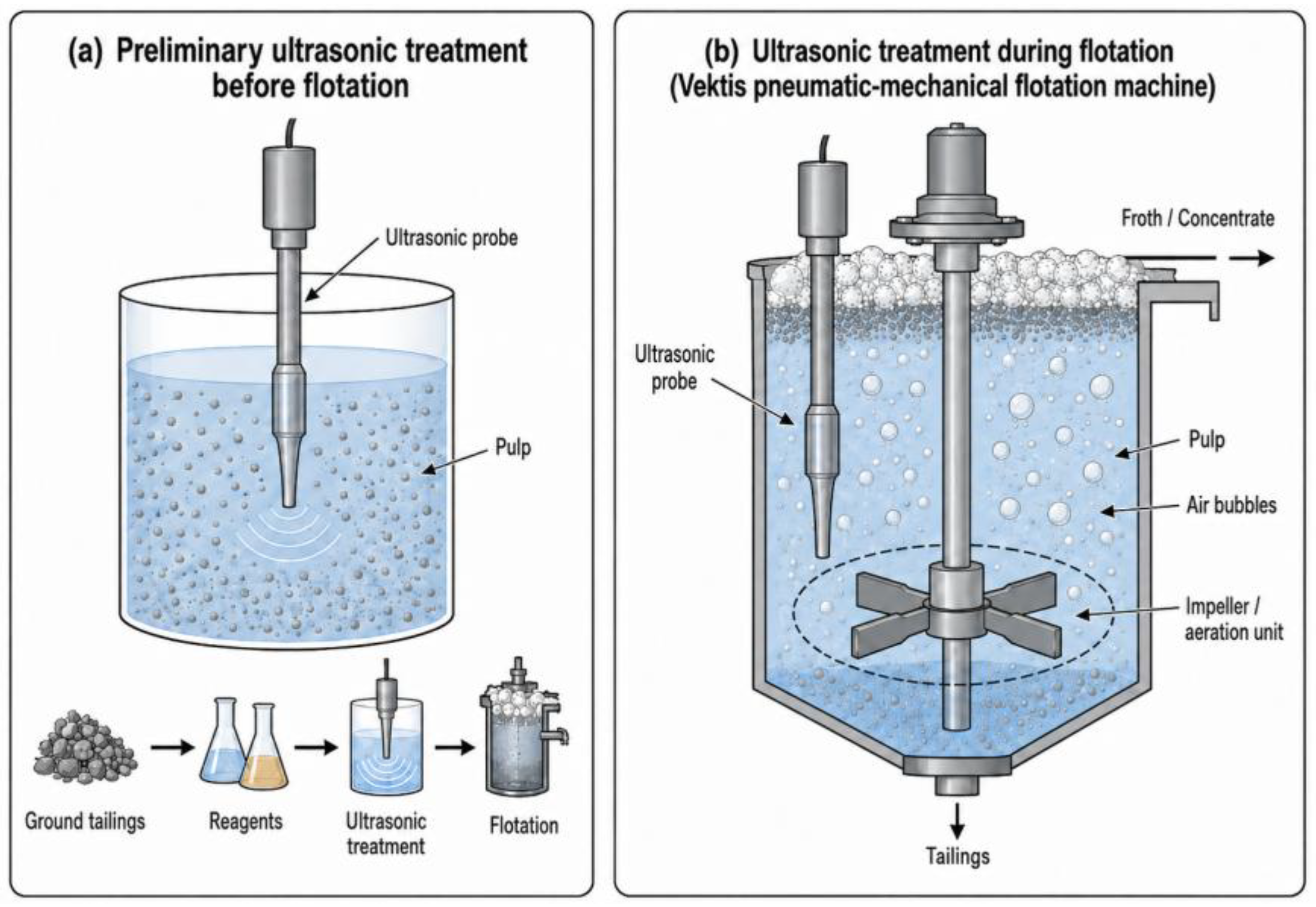
Figure 2.
Technological scheme of the laboratory tests.
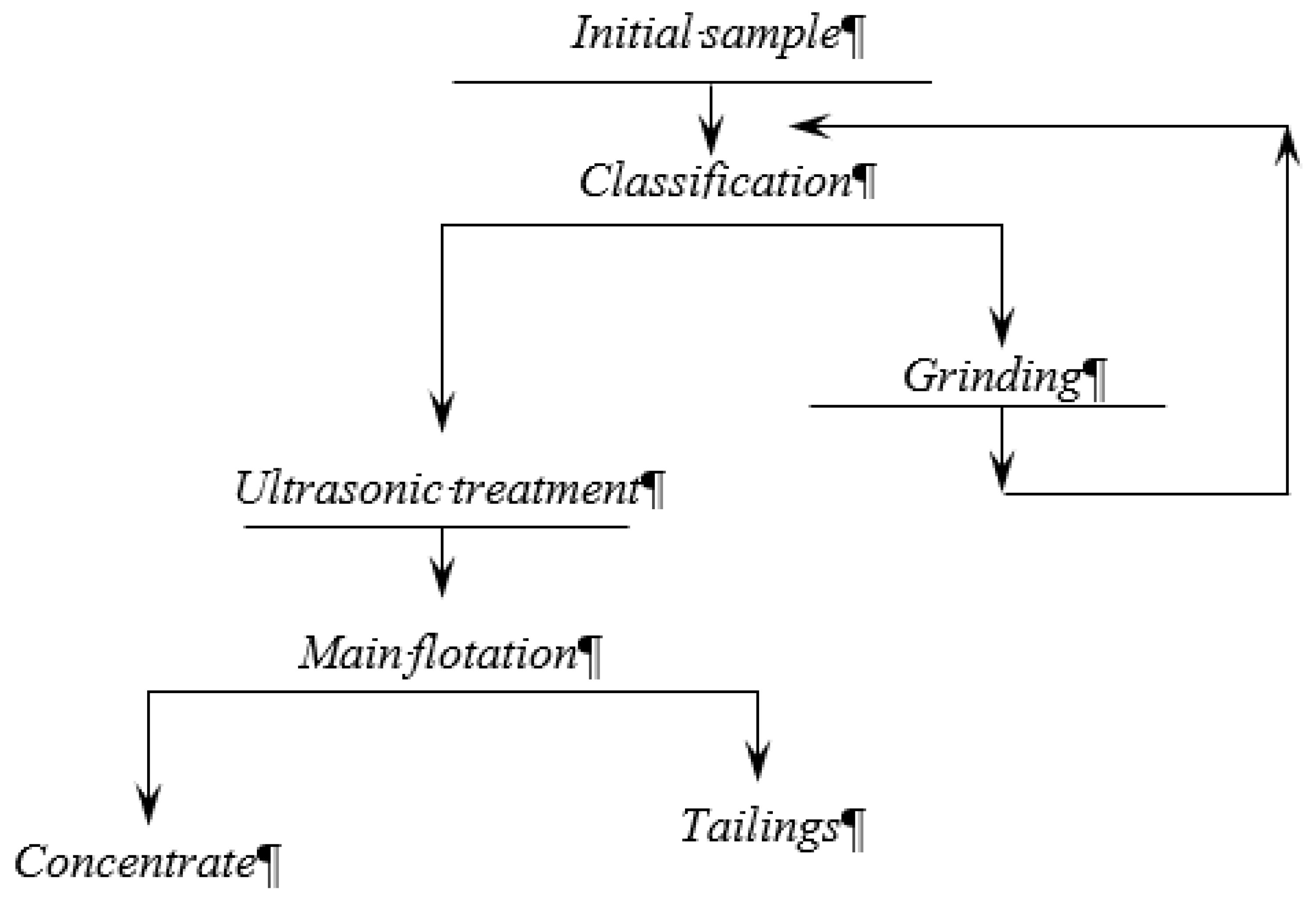
Figure 3.
Primary occurrences and mineral associations of chalcopyrite: (a) chalcopyrite intergrowth with magnetite and gangue minerals; (b) chalcopyrite and pyrite associated with gangue minerals; (c) liberated chalcopyrite grains in the tailings sample; (d) chalcopyrite associated with magnetite. Abbreviations: Ccp—chalcopyrite; Py—pyrite; Mt—magnetite. Magnification: 500×/1000×. Reflected light, plane-polarized light (PPL).
Figure 3.
Primary occurrences and mineral associations of chalcopyrite: (a) chalcopyrite intergrowth with magnetite and gangue minerals; (b) chalcopyrite and pyrite associated with gangue minerals; (c) liberated chalcopyrite grains in the tailings sample; (d) chalcopyrite associated with magnetite. Abbreviations: Ccp—chalcopyrite; Py—pyrite; Mt—magnetite. Magnification: 500×/1000×. Reflected light, plane-polarized light (PPL).
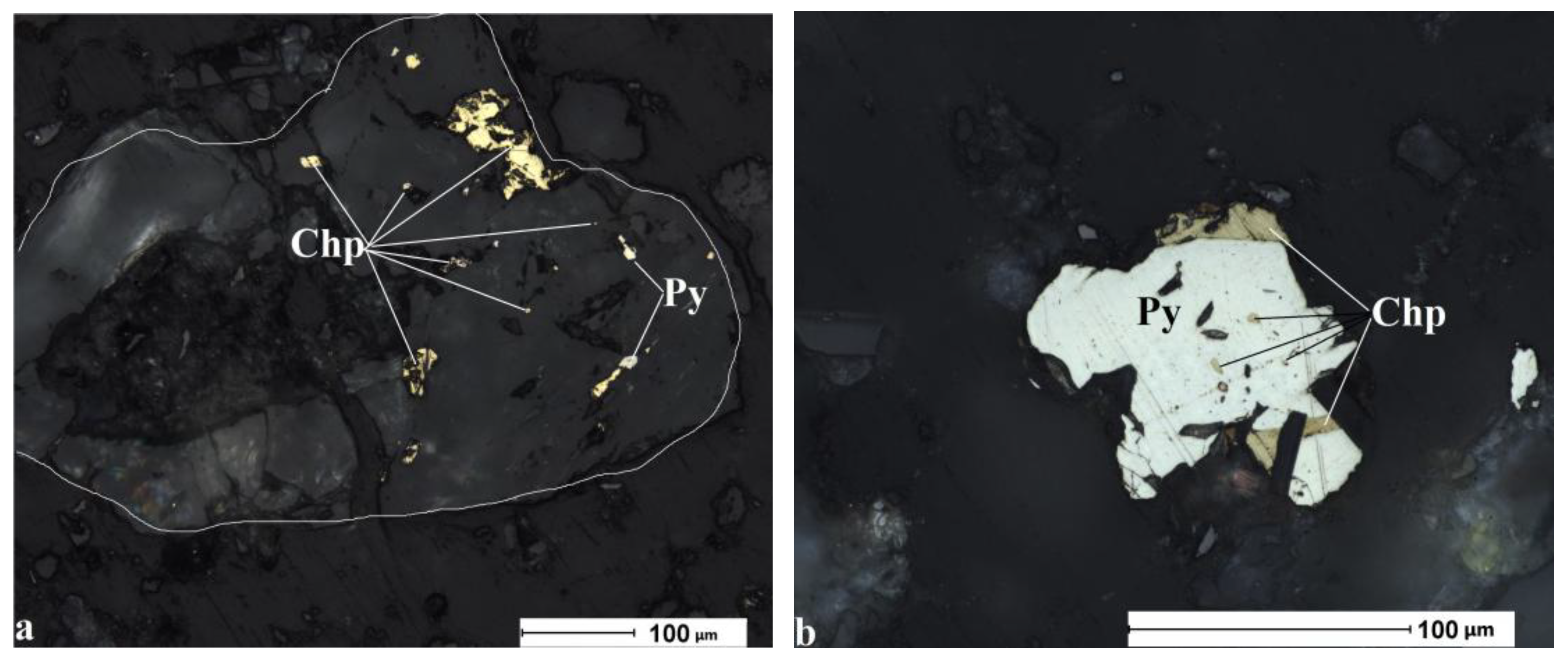
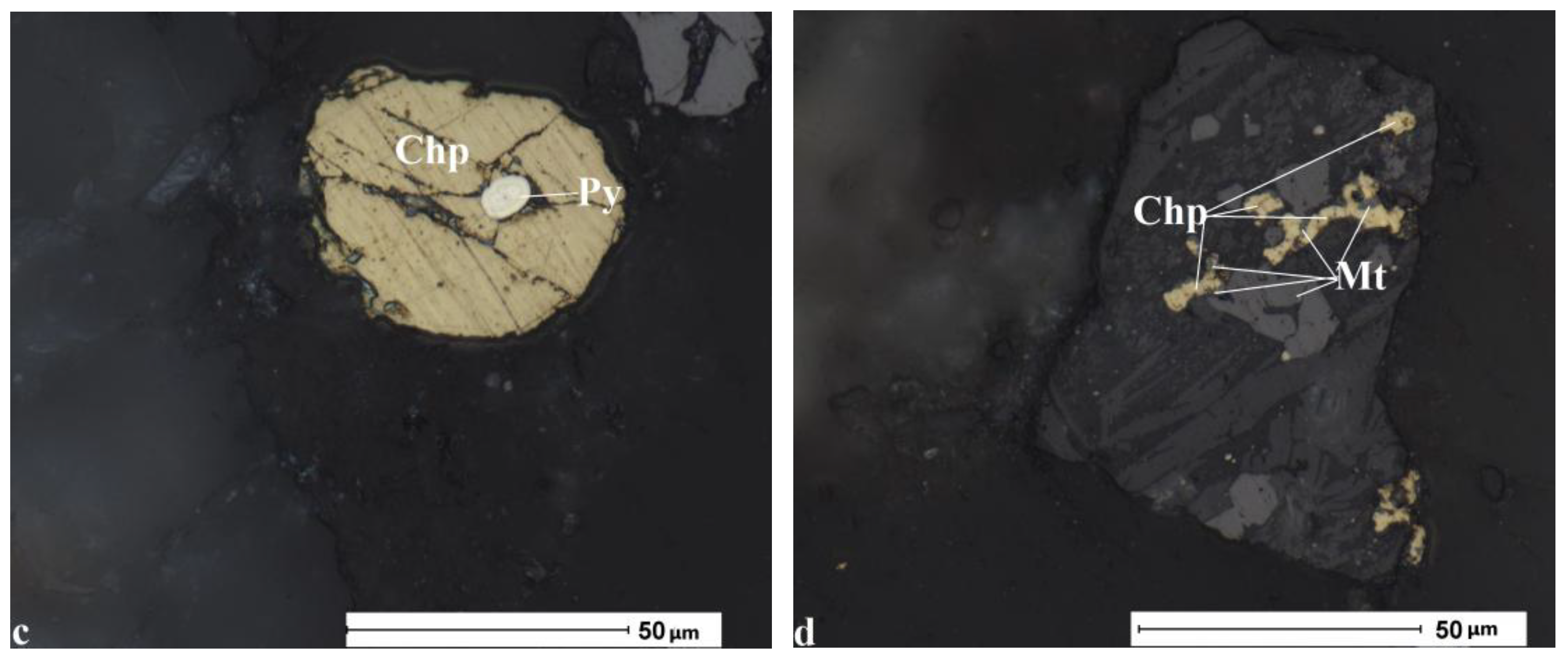
Figure 4.
Effect of preliminary ultrasonic treatment duration on copper recovery and enrichment efficiency. Error bars indicate standard deviation (n = 3).
Figure 4.
Effect of preliminary ultrasonic treatment duration on copper recovery and enrichment efficiency. Error bars indicate standard deviation (n = 3).
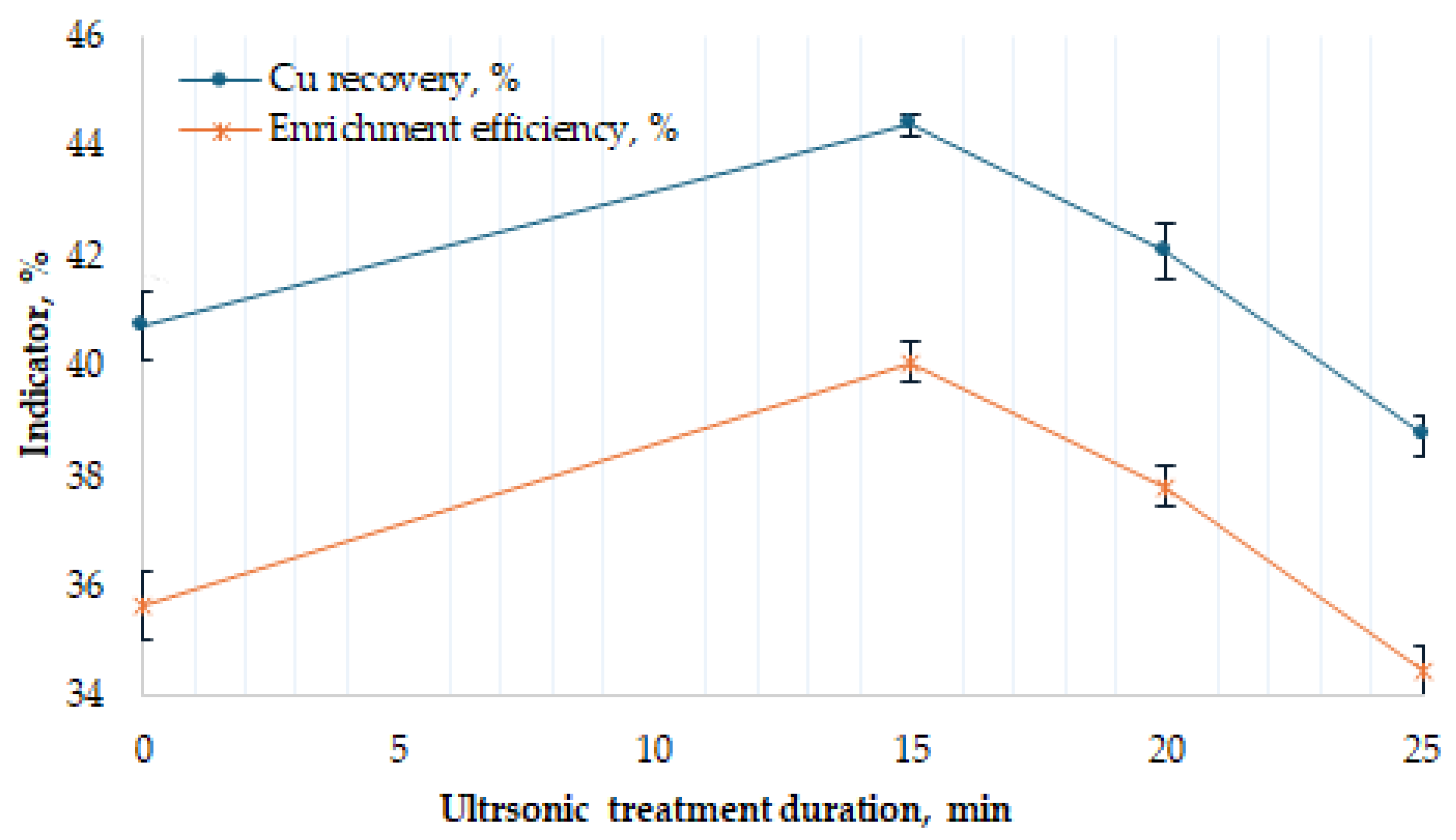
Figure 5.
Effect of preliminary ultrasonic treatment on the surface morphology of aged copper-bearing tailings: (a) without ultrasonic treatment; (b) after ultrasonic treatment for 15 min. Magnification ×1800; scale bar 10 μm.
Figure 5.
Effect of preliminary ultrasonic treatment on the surface morphology of aged copper-bearing tailings: (a) without ultrasonic treatment; (b) after ultrasonic treatment for 15 min. Magnification ×1800; scale bar 10 μm.
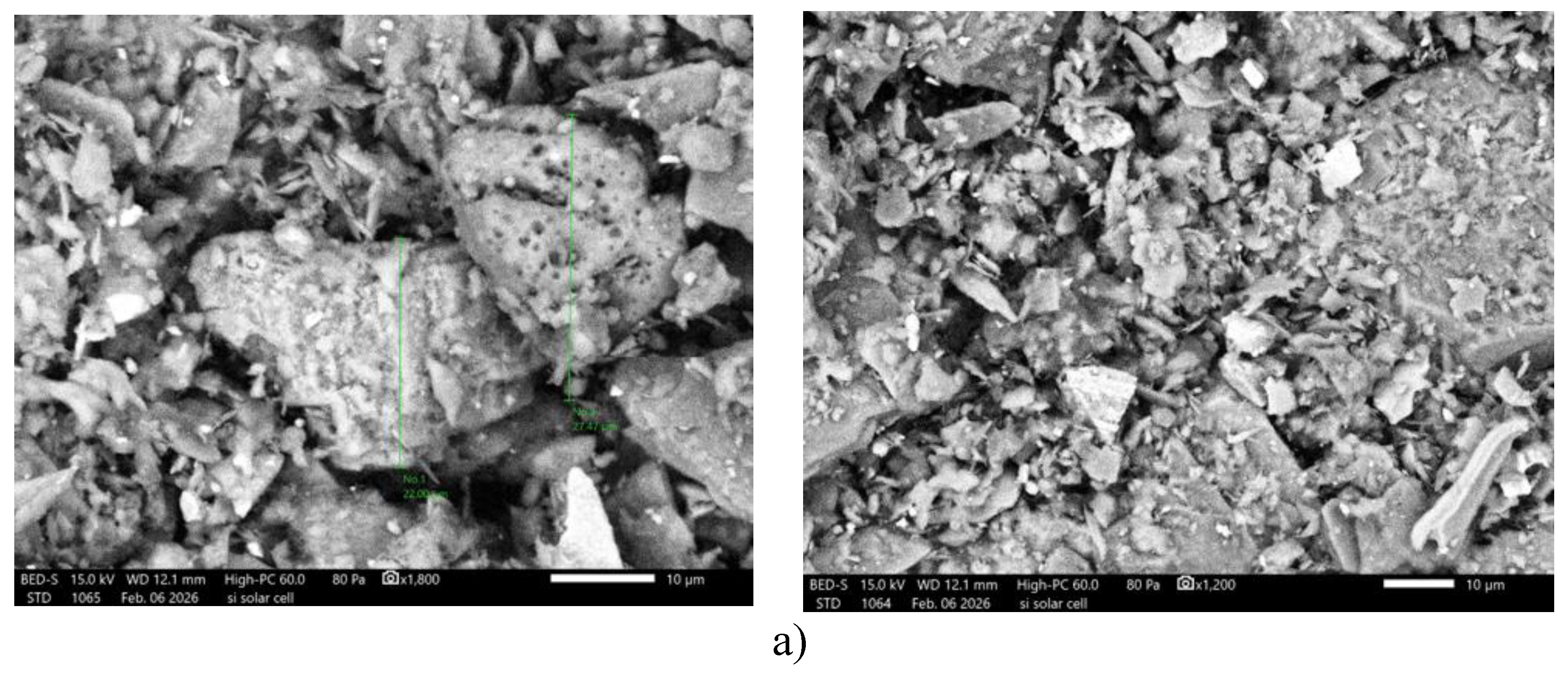
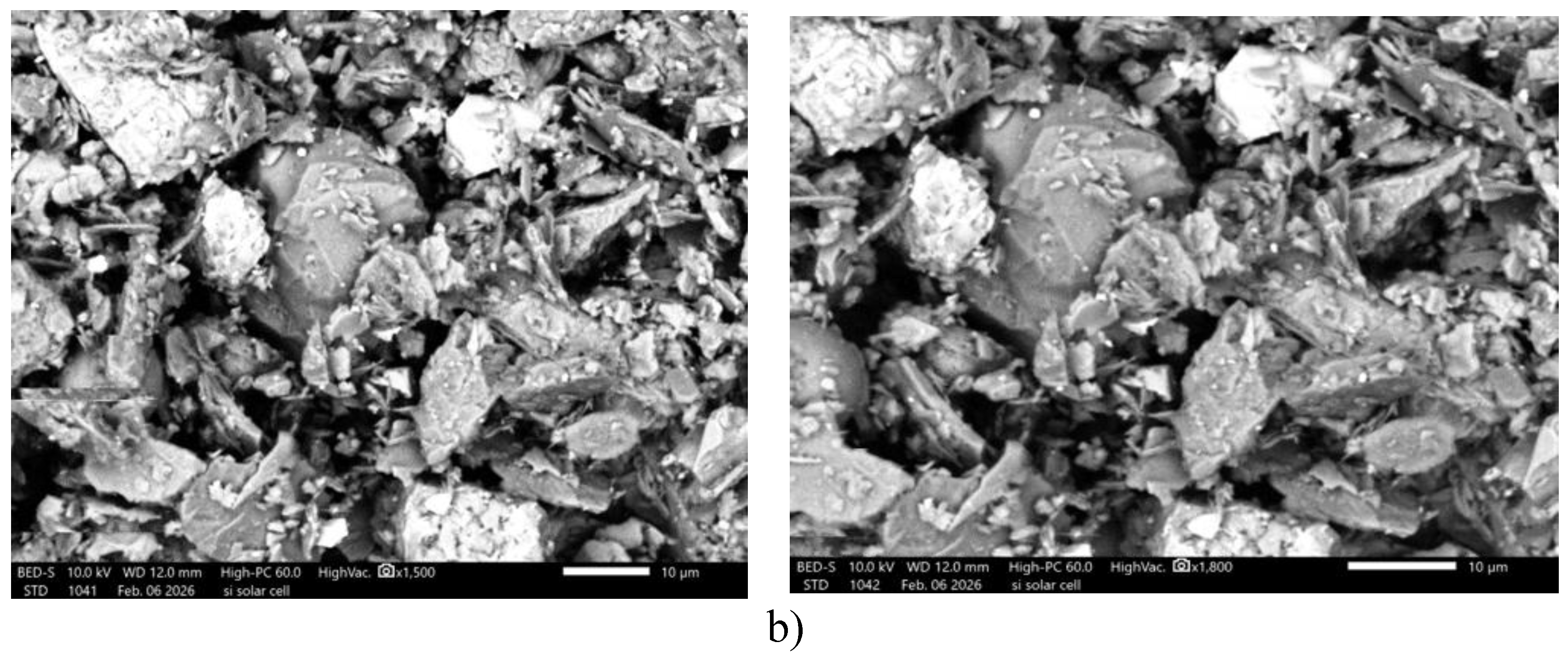
Table 1.
Chemical composition of the feed sample.
| Element | Content (wt. %) | Element | Content (wt. %) |
| Copper | 0.17 | Cadmium | 0.0001 |
| Silver (Ag), g/t | 1.19 | Molybdenum | 0.005 |
| Zinc | 0.28 | Tellurium | 0.0003 |
| Lead | 0.09 | Silicon dioxide | 58.06 |
| Iron | 5.37 | Aluminum oxide | 17.47 |
| Total sulfur | 1.03 | Calcium oxide | 4.82 |
| Sulfide sulfur | 1.00 | Magnesium oxide | 1.34 |
| Arsenic | 0.015 | Potassium oxide | 2.89 |
| Antimony | 0.003 |
Table 2.
Copper phase composition of the tailings.
| Copper Phase/Mineral Form |
Content, % (Absolute) |
Distribution, % (Relative) |
| Sulfide minerals, including: | 0.078 | 46.16 |
| Secondary sulfides | 0.026 | 15.39 |
| Primary sulfides | 0.052 | 30.77 |
| Oxidized minerals | 0.092 | 53.84 |
| including: chrysocolla | 0.029 | 17.08 |
| Total Copper | 0.170 | 100.0 |
Table 3.
Size-fraction distribution, metal grades, and component distribution in the initial tailings sample.
Table 3.
Size-fraction distribution, metal grades, and component distribution in the initial tailings sample.
| Size Fraction, μm | Weight, % | Grade, %, g/t * | Distribution, % | ||||
| Cu | Ag * | S | Cu | Ag | S | ||
| −500 + 200 | 8.15 | 0.196 | 1.472 | 1.11 | 9.27 | 10.08 | 8.80 |
| −200 + 100 | 13.24 | 0.176 | 1.106 | 1.02 | 13.53 | 12.31 | 13.14 |
| −100 + 71 | 5.19 | 0.201 | 1.882 | 1.15 | 6.06 | 8.21 | 5.81 |
| −71 + 45 | 21.76 | 0.162 | 1.196 | 0.92 | 20.46 | 21.87 | 19.48 |
| −45 + 0 | 51.66 | 0.169 | 1.095 | 1.05 | 50.68 | 47.54 | 52.77 |
| Feed | 100.0 | 0.17 | 1.19 | 1.03 | 100.0 | 100.0 | 100.0 |
* Ag content is expressed in g/t.
Table 4.
Size-fraction distribution, Cu grade, and Cu distribution in the −71 + 0 μm fraction according to Cyclosizer analysis.
Table 4.
Size-fraction distribution, Cu grade, and Cu distribution in the −71 + 0 μm fraction according to Cyclosizer analysis.
| Size Fraction, μm | Weight, % | Cu Grade, % | Distribution, % |
| +71 | 26.08 | 0.147 | 22.55 |
| −71 + 59.1 | 13.42 | 0.156 | 12.31 |
| −59.1 + 45.4 | 9.06 | 0.163 | 8.69 |
| −45.4 + 32.7 | 13.61 | 0.103 | 8.24 |
| −32.7 + 22.22 | 4.06 | 0.156 | 3.73 |
| −22.22 + 11.11 | 6.24 | 0.115 | 4.22 |
| −11.11 + 8.4 | 0.68 | 0.078 | 0.31 |
| −8.4 + 0 | 26.85 | 0.253 | 39.95 |
| Total/Feed | 100.0 | 0.17 | 100.0 |
Table 5.
Results of the laboratory experiment.
| Ultrasound, min | Yield, % |
Copper content, % |
Copper recovery, % |
Enrichment efficiency, % |
| Preliminary treatment (after grinding) | ||||
| 0 | 5.27 | 1.41 | 36.37 | 31.17 |
| 2 | 4.53 | 1.42 | 35.82 | 31.35 |
| 5 | 4.73 | 1.37 | 36.09 | 31.42 |
| 10 | 4.65 | 1.47 | 37.86 | 33.28 |
| 15 | 4.56 | 1.74 | 44.12 | 39.63 |
| 20 | 4.53 | 1.69 | 42.62 | 38.16 |
| 25 | 4.48 | 1.47 | 38.50 | 34.09 |
| Continuous treatment (during flotation) | ||||
| 0 | 5.39 | 1.38 | 40.21 | 34.89 |
| 15 | 3.70 | 1.86 | 38.25 | 34.61 |
| 20 | 3.74 | 1.79 | 37.80 | 34.11 |
Table 8.
Results of post-hoc Tukey HSD pairwise comparisons of ultrasonic treatment duration (α = 0.05).
Table 8.
Results of post-hoc Tukey HSD pairwise comparisons of ultrasonic treatment duration (α = 0.05).
| Comparison, min | Yield, % | Copper content, % | Copper recovery, % | Enrichment efficiency, % |
| 0 vs 15 | 0.003 | <0.001 | <0.001 | <0.001 |
| 0 vs 20 | 0.003 | 0.003 | 0.027 | 0.002 |
| 0 vs 25 | 0.003 | 0.093 | 0.003 | 0.050 |
| 15 vs 20 | 0.994 | 0.034 | 0.001 | 0.002 |
| 15 vs 25 | 0.999 | 0.001 | <0.001 | <0.001 |
| 20 vs 25 | 0.999 | 0.103 | <0.001 | <0.001 |
Bold values indicate a statistically significant difference between the compared durations (p < 0.05).
Disclaimer/Publisher’s Note: The statements, opinions and data contained in all publications are solely those of the individual author(s) and contributor(s) and not of MDPI and/or the editor(s). MDPI and/or the editor(s) disclaim responsibility for any injury to people or property resulting from any ideas, methods, instructions or products referred to in the content. |
© 2026 by the authors. Licensee MDPI, Basel, Switzerland. This article is an open access article distributed under the terms and conditions of the Creative Commons Attribution (CC BY) license (http://creativecommons.org/licenses/by/4.0/).
Copyright: This open access article is published under a Creative Commons CC BY 4.0 license, which permit the free download, distribution, and reuse, provided that the author and preprint are cited in any reuse.