
Submitted:
05 August 2026
Posted:
05 August 2026
You are already at the latest version
Abstract
The basic helix–loop–helix (bHLH) gene family is one of the largest transcription factor families in plants and plays essential roles in growth, development, and responses to environmental stresses. However, the members and functional characteristics of the bHLH gene family in Cucurbita pepo L. remain largely unclear. In this study, a total of 175 bHLH genes were identified in Cucurbita pepo L., exhibiting considerable variation in protein length and structural features. Phylogenetic analysis classified these genes into 24 subgroups (Subgroup 1–24), with conserved motif compositions within each subgroup but clear divergence among different subfamilies, indicating functional differentiation. Gene duplication analysis revealed that whole-genome duplication (WGD) was the primary driving force underlying the expansion of the bHLH gene family. Cis-regulatory element analysis showed that CpbHLH genes are mainly associated with light responsiveness, as well as plant growth and developmental processes. Furthermore, RNA-seq and quantitative real-time PCR (qRT-PCR) analyses demonstrated that CpbHLH genes exhibit tissue-specific expression patterns and dynamic responses to cold stress, suggesting their potential roles in flower development and stress adaptation. Overall, this study provides a comprehensive overview of the CpbHLH gene family and lays a solid foundation for future functional characterization.
Keywords:
Cucurbita pepo L.
; bHLH gene family
; phylogenetic analysis
; duplicated events
; RNA-seq
1. Introduction
The basic helix–loop–helix (bHLH) transcription factors represent a large and evolutionarily conserved protein family that is broadly distributed across eukaryotic organisms, particularly in plants [1]. Members of this family are defined by a characteristic bHLH domain of approximately 50–60 amino acids, which consists of a basic region involved in DNA binding and a helix–loop–helix motif that facilitates homo- or heterodimer formation [2]. This structural configuration enables bHLH proteins to recognize specific cis-regulatory elements, such as the E-box (CANNTG), thereby modulating downstream gene expression[3]. Based on phylogenetic relationships and domain conservation, plant bHLH proteins have been classified into multiple subgroups, reflecting substantial diversification during evolution [1,2,4,5].
With the increasing availability of high-quality plant genome sequences, genome-wide surveys of the bHLH gene family have been performed in a wide range of species, providing insights into their expansion patterns and evolutionary trajectories. In Arabidopsis thaliana, comprehensive analyses have identified over 160 bHLH members, which have been systematically categorized and functionally annotated [1,2,4]. Similar studies in monocot and dicot crops, including Oryza sativa [4], Zea mays [6], Solanum lycopersicum [7], and Cucumis sativus [8], have demonstrated that gene duplication events—particularly segmental and tandem duplications—have played a major role in the expansion of this family [6,7,9].
Comparative genomic analyses further suggest that while core bHLH subfamilies are conserved across plant lineages, species-specific expansions contribute to functional specialization and environmental adaptation [1,4,5]. bHLH transcription factors participate in a broad spectrum of biological processes throughout the plant life cycle. They are critically involved in regulating cell fate determination, organogenesis, and developmental patterning, as well as in controlling the biosynthesis of secondary metabolites such as anthocyanins and flavonoids [2]. In addition to developmental regulation, bHLH proteins play pivotal roles in plant responses to environmental cues, including light signaling, nutrient availability, and abiotic stresses such as drought, salinity, and temperature fluctuations [10,11]. Moreover, many bHLH transcription factors function as key nodes in hormone signaling pathways, including those mediated by abscisic acid (ABA), jasmonic acid (JA), and gibberellins, thereby integrating endogenous and environmental signals to fine-tune plant growth and stress responses [12,13]. These diverse functions highlight the central regulatory role of the bHLH family in plant gene regulatory networks.
Cucurbita pepo L. is an agriculturally important member of the Cucurbitaceae family, encompassing economically valuable crops such as zucchini, squash, and pumpkin [14]. It is widely cultivated for its nutritional fruits and seeds, which are rich in vitamins, minerals, and bioactive compounds. Beyond its economic importance, C. pepo has emerged as a valuable model for studying key biological processes in cucurbits, including sex determination, fruit morphogenesis, and stress adaptation [15]. The release of its high-quality reference genome has facilitated genome-wide investigations of gene families and regulatory networks [16]. Although transcription factor families have been extensively characterized in other plant species, systematic analyses of the bHLH gene family in Cucurbita pepo L. remain limited, leaving a gap in our understanding of their evolutionary dynamics and functional roles in this species.
In this study, we conducted a comprehensive genome-wide analysis of the bHLH transcription factor family in Cucurbita pepo L. All candidate bHLH genes were identified and subsequently characterized in terms of their physicochemical properties and conserved domain features. Phylogenetic relationships were inferred to classify family members and to explore their evolutionary conservation and divergence. In addition, gene structure organization, conserved motif composition, and chromosomal distribution were systematically examined. We further investigated gene duplication patterns and syntenic relationships to elucidate the evolutionary mechanisms underlying family expansion. Finally, expression profiling analyses were performed to provide insights into the potential functional roles of bHLH genes in different tissues and developmental contexts. Collectively, this work lays a foundation for future functional studies and provides valuable genetic resources for the improvement of Cucurbita pepo L.
2. Materials and Methods
2.1. Data Sources and Identification of bHLH Genes in Cucurbita pepo L.
The reference genome of Cucurbita pepo L. was download from the Cucurbit Genomics Database [17]. Genome sequence of Arabidopsis thaliana, Oryza sativa were download from TAIR [18] and Rice Genome Annotation Project [19]. The hidden Markov model (HMM) profile of bHLH (PF00010) domian was obtained from the InterPro database [20]. HMMER 3.0 was employed to identify candidate bHLH domain proteins (E-value <= 1e-10). To enhance search proteins, a novel HMM model was constructed using the hmmbuild program [21]. In parallel, BLASTP [22] was conducted using AtbHLH and OsbHLH protein sequences as references (E-value <= 1e-10). All candidate bHLH proteins were further validated for the presence of conserved domains ware using Pfam-scan software [23]. Finally, he longest transcript isoform for each gene was retained using the R package seqfinder (https://github.com/yueliu1115/seqfinder).
2.2. Phylogenetic Analysis of CpbHLH Genes
Multiple sequence alignment of bHLH proteins was performed using Muscle software [24]. A phylogenetic tree based on Cucurbita pepo L. alone was first constructed. Subsequently a combined phylogenetic analysis including Cucurbita pepo L., Arabidopsis thaliana, and Oryza saviva was conducted using IQ-TREE v2.0.3[25] under the maximum likelihood (ML) method with bootstrap values derived from 1000 replicates. The resulting phylogenetic trees were visualized using the R package ggtree [26].
2.3. Domain, Gene Structures, Conserved Motifs Analysis of CpbHLH Genes
Protein domain architecture and positional information were determined utilizing the Pfam-Scan software with Pfam dababase [23] and bedtools software [27], respectively. Conserved motifs were identified using MEME software [28] with the maximum number of motifs set to 10 and motif widths range from 10 to50 amino acids. The resulting motif data were subsequently extracted using custom Python scripts. The exon-intron structures of CpbHLH genes were obtained from GFF3 annotation files. Visualization of protein domains, conserved motifs and gene structures were performed using the R package ggtree and gggenes (https://github.com/wilkox/gggenes).
2.4. Chromosome Distribution, Gene Duplication, and Selection Pressure Analysis
The chromosomal distribution of CpbHLH genes was determined using the GFF3 annotation file. Gene duplication and collinearity analyses were conducted using MCScanX [29] which classifies duplication types, including tandem duplications (TP) and whole genome duplications (WGD). Protein sequences and corresponding coding sequences (CDS) of CpbHLH genes pairs were aligned using ClustalW [30].
2.5. Analysis of Cis-Elements in the Promoter of CpbHLH Genes
The 2 kb upstream promoter sequences of the CpbHLH genes were extracted using custom Python scripts and analyzed using the PlantCare database [31] to predict cis-regulatory elements. The identified cis-elements were subsequently visualized using the R packages ggtree and gggenes (https://github.com/wilkox/gggenes).
2.6. CpbHLH Protein Interaction Network Analysis
The protein-protein interaction (PPI) network of CpbHLH proteins was predicted using the AraNet2 database [32], with interactions filtered by a weight scores > 3. Functional annotation of all proteins within the PPI network was performed using the Eggnog-mapper database [33]. The resulting interaction network was visualized using the R package ggNetView (https://github.com/Jiawang1209/ ggNetView).
2.7. Tissue Expression Pattern Analysis of CpbHLH Genes Using RNA-seq
The expression patterns of the CpbHLH genes across different tissues and in response to cold stress were investigated in this study. Transcriptome datasets were obtained from the NCBI Squence Read Archive (SRA) under the accession number PRJNA838740 [34] and PRJNA663796 [35]. Raw FASTQ reads were aligned to the genome alignment software HISAT2 [36], Gene expression levels were subsequently quantified using featureCounts [37]. The resulting expression matrix was visualized as a heatmap using the R package Pheatmap [38].
2.8. Total RNA Extraction and qRT-PCR Analysis
Gene-specific primers for CpbHLH genes were designed using Primer 5.0 software (Supplemental Data 2). Tissues of Cucurbita pepo L., including root, stem, leaf, flower, and seed, were collected. For cold treatment, leaf samples were harvested at 0, 3, 6, 12, and 24 h under 4 °C. Total RNA was extracted using the FastPure Plant Total RNA Isolation Kit (Vazyme, RC401), and first-strand cDNA was synthesized using the HiScript II 1st Strand cDNA Synthesis Kit (Vazyme, R211-01). qRT-PCR was performed using ChamQ SYBR qPCR Green Master Mix (Vazyme) in a 10 µL reaction system. The amplification conditions were 95 °C for 5 min, followed by 50 cycles of 95 °C for 15 s and 60 °C for 1 min. Relative expression levels were calculated using the 2^−ΔΔCt method with Actin as the internal control. Data visualization was performed using the R package ggplot2.
3. Results
3.1. Genome-Wide Identification of the CpbHLH Genes
In this study, a total of 175 CpbHLH genes were identified from the Cucurbita pepo L. genome and subsequently subjected to comprehensive physicochemical characterization. Analysis of protein sequence features revealed substantial diversity among CpbHLH members (Figure 1, Supplemental Data 1). The predicted protein lengths ranged from 183 to 905 amino acids, with an average length of approximately 362 residues (Figure 1A). Most proteins were distributed within a moderate size range, indicating a relatively conserved structural framework of bHLH transcription factors. Consistent with protein length variation, the molecular weights (MW) of CpbHLH proteins varied from 20.37 to 99.77 kDa, with an average of approximately 39.82 kDa (Figure 1B). The majority of proteins fell within the typical size range of transcription factors, while a few larger proteins may contain additional functional domains. Hydropathicity analysis showed that GRAVY values ranged from −0.91 to 0.02, with an average of −0.55 (Figure 1C), indicating that most CpbHLH proteins are hydrophilic in nature. This feature is consistent with their roles as transcription factors, which require interactions with DNA and other regulatory proteins. Furthermore, the theoretical isoelectric point (pI) values ranged from 4.32 to 11.06, with an average of 6.85 (Figure 1D), suggesting the presence of both acidic and basic proteins within the CpbHLH family. Such variation may reflect functional diversification and adaptation to different cellular environments. Collectively, these results highlight the considerable structural and physicochemical diversity of CpbHLH proteins, providing a solid foundation for subsequent phylogenetic and functional analyses.
3.2. Phylogenetic Classification and Evolutionary Analysis of the bHLH Gene Family
To investigate the phylogenetic relationships of bHLH transcription factors, a maximum likelihood (ML) phylogenetic tree was constructed based on a total of 467 bHLH protein sequences, including 158 from Arabidopsis thaliana, 175 from Cucurbita pepo L., and 134 from Oryza sativa (Figure 2A). Based on the clustering results, all bHLH proteins were classified into 24 subfamilies. Most subfamilies contained members from all three species, indicating that the bHLH gene family was largely established prior to the divergence of monocots and dicots and has remained evolutionarily conserved.
Despite the overall conservation of the bHLH family, significant variation in gene number was observed among different subfamilies. In Subgroups 20 and 21, Cucurbita pepo L. exhibited a relatively higher number of members, suggesting lineage-specific gene expansion, possibly associated with whole-genome duplication or segmental duplication events. In contrast, no Cucurbita pepo L. members were detected in Subgroups 12, 13, 16, 17, and 18, implying potential gene loss or lack of expansion in these lineages. Nevertheless, Cucurbita pepo L. members were present in most subfamilies, indicating that no large-scale loss of bHLH subfamilies has occurred in this species.
To further validate the reliability of the classification, a phylogenetic tree was constructed using only Cucurbita pepo L. bHLH proteins (Figure 2B). The results showed that all CpbHLH genes could be stably classified into 19 subfamilies, and the overall topology was largely consistent with that of the multi-species phylogenetic tree, supporting the robustness of the classification. In addition, several subfamilies (e.g., Subgroups 8, 14, and 20) exhibited notable expansion of CpbHLH members, further indicating that the bHLH gene family in Cucurbita pepo L. has undergone lineage-specific expansion and functional diversification while maintaining overall evolutionary conservation.
3.3. Conserved Motifs, Conserved Domain and Gene Structure of the CpbHLH
To further investigate the structural conservation and diversity of the CpbHLH gene family, a comprehensive analysis of protein domain composition, conserved motifs, and gene structural features was conducted (Figure 3). Combined with the phylogenetic tree (Figure 3A), it was observed that genes within the same subfamily exhibited highly similar structural compositions, suggesting strong evolutionary conservation within each lineage.
Domain analysis revealed that all CpbHLH proteins contained the typical HLH domain, indicating that these genes possess the characteristic features of bHLH transcription factors. Notably, members of Subgroup 2 harbored the bHLH-MYC_N domain (Figure 3B), and some proteins also contained additional domains, such as Aldo_ket_red, implying that these genes may participate in more complex biological processes while maintaining their core functions. Overall, domain composition varied among different subfamilies but remained highly conserved within the same subfamily, further supporting the reliability of the phylogenetic classification. Motif analysis identified a total of 10 conserved motifs among CpbHLH proteins (Figure 3C).
Among these, several motifs (e.g., MEME-1 and MEME-2) were widely distributed across most members, suggesting their essential roles in maintaining the core functions of bHLH proteins. In addition, distinct differences in motif composition and arrangement were observed among different subfamilies, whereas members within the same subfamily exhibited highly similar motif patterns, indicating potential functional diversification and specificity. Gene structure analysis showed considerable variation in exon number and length among CpbHLH genes (Figure 3D). Some genes displayed relatively simple structures with fewer exons, whereas others exhibited more complex architectures with a greater number of unevenly distributed exons. However, genes within the same subfamily generally shared similar exon–intron organization patterns, suggesting that they may have been subjected to similar selective pressures during evolution.
Collectively, the CpbHLH gene family exhibits both structural conservation and diversity in terms of domain composition, motif distribution, and gene structure. This combination of conservation and variation provides an important structural basis for functional diversification and further supports the robustness of the phylogenetic classification.
3.4. Gene Location and Gene Duplication Events Analysis of CpBHLH Genes
To investigate the expansion mechanisms and evolutionary characteristics of the bHLH gene family, gene duplication and synteny analyses were performed in three representative plant species, Cucurbita pepo L., Arabidopsis thaliana, and Oryza sativa (Figure 4). The results revealed that gene duplication events were prevalent in all three species, although their duplication patterns differed substantially (Figure 4A–C). In Arabidopsis thaliana, a total of 64 genes were involved in duplication events, including 9 tandemly duplicated gene pairs and 26 WGD gene pairs. Similarly, in Oryza sativa, 63 duplicated genes were identified, comprising 6 tandem duplication pairs and 28 WGD pairs. In contrast, Cucurbita pepo L. exhibited a markedly higher number of duplicated genes, with 161 genes involved in duplication events, including only 3 tandem duplication pairs but as many as 135 WGD pairs.
Further analysis indicated that the contributions of different duplication types varied among species. In both Arabidopsis thaliana and Oryza sativa, tandem and segmental duplications jointly contributed to the expansion of the bHLH gene family. However, in Cucurbita pepo L., gene family expansion was predominantly driven by WGD, whereas tandem duplication played a relatively minor role. These findings suggest that large-scale genome duplication events have been the primary driving force underlying the remarkable expansion of the CpbHLH gene family.
To further explore the evolutionary relationships among these species, synteny analysis was conducted across the three genomes (Figure 4D). A total of 133 syntenic gene pairs were identified between Cucurbita pepo L. and Arabidopsis thaliana, which was substantially higher than those identified between Cucurbita pepo L, and Oryza sativa (19 pairs), as well as between Arabidopsis thaliana and Oryza sativa (5 pairs). These results indicate a higher degree of evolutionary conservation between Cucurbita pepo L. and Arabidopsis thaliana, both dicot species, whereas a lower level of synteny was observed with the monocot species Oryza sativa.
Overall, gene duplication analysis demonstrated that segmental duplication, particularly WGD, serves as the major driving force for the expansion of the CpbHLH gene family, while synteny analysis further revealed the evolutionary divergence among species. These findings provide important insights into the evolutionary history and functional diversification of bHLH genes.
3.5. Analysis of Promoter Elements
To investigate the potential regulatory mechanisms of CpbHLH genes, cis-regulatory elements within the 2-kb upstream promoter regions were systematically analyzed (Figure 5). The results showed that the promoters of CpbHLH genes contained a diverse array of cis-elements, mainly including light-responsive, hormone-responsive, and stress-related elements. Overall, considerable variation in both the type and number of cis-elements was observed among different genes, indicating a high level of regulatory complexity and diversity within the CpbHLH gene family.
Among all identified cis-elements, light-responsive elements were predominant. Elements such as G-box, Box 4, and GT1-motif were widely distributed across the majority of CpbHLH gene promoters, with some genes exhibiting a notable enrichment of multiple light-responsive elements. These findings suggest that CpbHLH genes may play important roles in light signal transduction and are likely involved in photomorphogenesis and related developmental processes. In addition, variations in the density of light-responsive elements were observed among different subfamilies, implying potential functional divergence in light-mediated regulation.
Hormone-responsive elements were also widely present in the promoter regions of CpbHLH genes. Among these, ABRE (abscisic acid-responsive element) and the TGACG-motif and CGTCA-motif (jasmonic acid-responsive elements) were the most prevalent. Additionally, elements associated with salicylic acid responsiveness, such as the TCA-element, were detected in some genes. These results indicate that CpbHLH genes may participate in multiple hormone signaling pathways, particularly in ABA- and JA-mediated stress responses and defense mechanisms. Moreover, distinct combinations of hormone-responsive elements were observed among different genes, suggesting functional specificity within hormone signaling networks.
Furthermore, several stress-related cis-elements were identified in the promoters of certain CpbHLH genes, including MBS (drought-responsive), LTR (low-temperature-responsive), and ARE (anaerobic-responsive) elements. Although these elements were relatively fewer in number overall, they tended to be enriched in specific genes, suggesting that certain CpbHLH members may play key regulatory roles under particular stress conditions. In addition, integration with phylogenetic analysis revealed that genes within the same subfamily generally shared similar cis-element composition patterns, whereas notable differences were observed among different subfamilies, further supporting functional diversification during evolution.
Overall, the abundance and diversity of cis-regulatory elements in the promoter regions of CpbHLH genes suggest that this gene family may be involved in multiple biological processes, including light signaling, hormone regulation, and stress responses, thereby providing important clues for future functional studies.
3.6. Interaction Network of BHLH Proteins
To systematically investigate the potential roles of CpbHLH proteins in molecular regulatory networks, a protein–protein interaction (PPI) network was constructed based on the AraNet2 database (Figure 6). The results showed that, among the 175 identified CpbHLH proteins, 106 proteins exhibited potential interactions with other proteins, further associating with 173 non-bHLH proteins (Figure 6A). This led to the construction of a complex interaction network comprising 279 nodes and 739 edges. In this network, nodes highlighted in red represent CpbHLH proteins, which were widely distributed and formed numerous connections with other proteins, indicating their high level of participation and potential hub roles in the overall regulatory network.
Further topological analysis revealed that the PPI network could be divided into 10 relatively independent modules with dense internal connections (Figure 6A). These modules displayed a certain degree of structural separation, while maintaining high connectivity within each module, suggesting that they may represent distinct functional units. Within several modules, CpbHLH proteins not only interacted with each other but also showed close associations with members of other transcription factor families, including WRKY, MYB, and GRAS. Given the well-established roles of these transcription factors in plant growth, development, and stress responses, it is likely that CpbHLH proteins participate in complex transcriptional regulatory networks through cooperative interactions with these key regulators, thereby influencing multiple biological processes.
From a network structural perspective, considerable variation in connectivity was observed among different CpbHLH proteins. Some genes were located in central regions of the network and exhibited high degrees of connectivity, suggesting that they may function as core regulators within the PPI network. In contrast, other genes were positioned at the network periphery with fewer connections, implying more specialized or localized regulatory roles. This central–peripheral distribution pattern further reflects the functional diversification and complexity of the CpbHLH gene family.
To further elucidate the functional characteristics of this interaction network, Gene Ontology (GO) enrichment analysis was performed on the 279 proteins (Figure 6B). The results showed that these proteins were significantly enriched in biological processes (BP) related to plant growth and development, including cell division, cell cycle regulation, meristem development, and organ formation. In terms of cellular components (CC), they were predominantly localized in the nucleus and related structures, indicating that these proteins mainly function within the nucleus. Regarding molecular functions (MF), the proteins were mainly enriched in DNA binding, transcription factor activity, and protein binding. Collectively, these findings suggest that CpbHLH proteins may play important roles in regulating plant growth and development through participation in protein interaction networks.
3.7. GO and KEGG Enrichment Analysis of the CpbHLH Genes
To further investigate the potential functions of the CpbHLH gene family, Gene Ontology (GO) and Kyoto Encyclopedia of Genes and Genomes (KEGG) enrichment analyses were performed on 175 CpbHLH genes (Figure 7). The results showed that these genes were significantly enriched in multiple biological processes, particularly those closely related to plant growth and development, suggesting that CpbHLH genes may play important roles in developmental regulation.
In the biological process (BP) category, CpbHLH genes were significantly enriched in transcriptional regulation-related processes, such as regulation of transcription by RNA polymerase II and its positive regulation. In addition, several development-related processes were significantly enriched, including plant epidermis development, flower development, root cell differentiation, and regulation of flowering, indicating that CpbHLH genes may play key regulatory roles in plant organ formation and development. Meanwhile, processes associated with light signaling, such as responses to red and blue light, were also significantly enriched, suggesting their involvement in light-mediated developmental regulation.
In the molecular function (MF) category, the enriched terms were mainly associated with DNA binding and transcriptional regulation, including sequence-specific DNA binding, regulatory region DNA binding, and RNA polymerase II-specific DNA binding, further supporting the central role of CpbHLH genes as transcription factors in gene expression regulation. Additionally, the enrichment of DNA-binding transcription activator activity indicates that this gene family may play important roles in regulating downstream target gene expression.
In the KEGG pathway analysis, significantly enriched pathways included the MAPK signaling pathway, circadian rhythm, and ascorbate and aldarate metabolism, all of which are closely associated with plant growth, development, and environmental adaptation. Among these, the MAPK signaling pathway plays a crucial role in regulating cell division and development, while the circadian rhythm pathway is closely linked to the regulation of developmental timing in plants. Overall, the GO and KEGG enrichment results suggest that the CpbHLH gene family may play important roles in plant growth and development, as well as in environmental responses, through participation in diverse transcriptional regulatory processes and signaling pathways.
3.8. Expression Pattern Analysis of CpbHLH Genes in Different Tissue and Stress Conditions
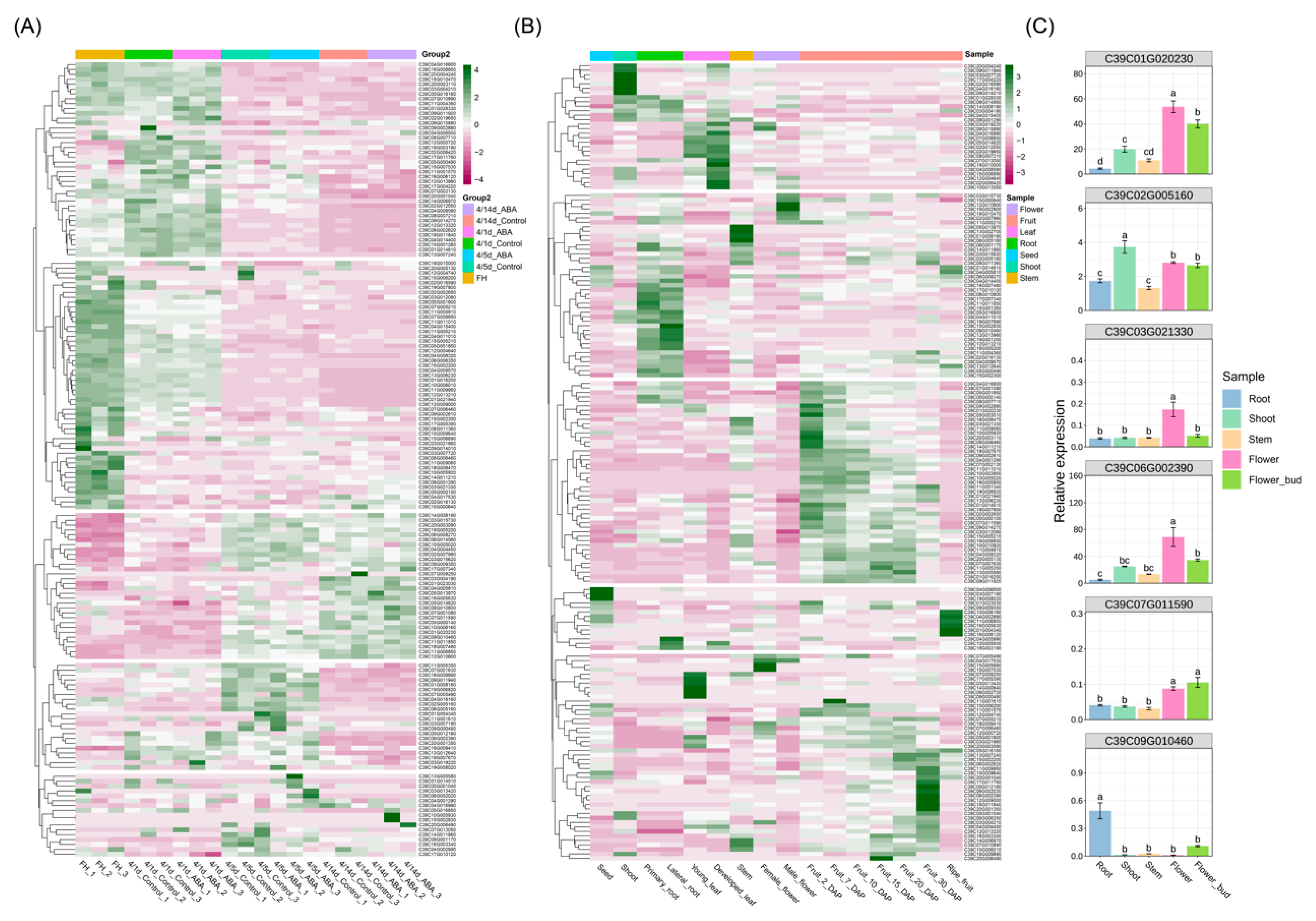
To systematically investigate the expression characteristics of CpbHLH genes under cold stress and during tissue development, RNA-seq data were used to analyze their expression patterns under low-temperature treatment and across different tissues (Figure X). Under cold treatment conditions (4 °C for 1 d, 5 d, and 14 d; Figure 8A), CpbHLH genes exhibited significant dynamic expression changes. Among them, 83 genes were consistently downregulated following cold treatment, and their expression levels further decreased with prolonged exposure (5 d and 14 d), suggesting that these genes may be subject to sustained repression during cold adaptation. In contrast, another subset of genes showed gradual upregulation or transient induction at the early stage (1 d) followed by a decline, indicating their potential involvement in early cold-response signaling. Overall, CpbHLH genes displayed diverse response patterns to low temperature, reflecting functional diversity and time-dependent regulation within this gene family under cold stress.
The expression profiles across different tissues (Figure 8B) revealed that CpbHLH genes exhibit pronounced tissue-specific expression patterns. Some genes showed relatively high expression levels in roots or stems but low expression in leaves or flowers, whereas approximately half of the genes displayed elevated expression in flowers or fruits. These differential expression patterns suggest that CpbHLH genes may play specific regulatory roles during the development of distinct organs and contribute to multiple aspects of plant growth and development. In addition, members within the same subfamily tended to exhibit similar expression patterns across tissues, further supporting their functional divergence during evolution.
To validate the reliability of the RNA-seq data, six representative CpbHLH genes were selected for qRT-PCR analysis (Figure 8C). The results showed that all examined genes exhibited clear tissue-specific expression patterns, with all genes being expressed in flowers. Specifically, C39C09G010460 showed relatively high expression in roots, while C39C02G005160 exhibited higher expression in shoots. Overall, the expression trends observed in qRT-PCR were largely consistent with the RNA-seq data, further confirming the accuracy of the transcriptome analysis. Moreover, the qRT-PCR results provided clearer evidence of significant gene enrichment in specific tissues, supporting their potential roles in tissue-specific developmental regulation.
Overall, the expression analysis indicates that CpbHLH genes not only exhibit dynamic responses under cold stress but also display pronounced tissue-specific expression patterns. Combined with RNA-seq and qRT-PCR results, these findings further support the important regulatory roles of CpbHLH genes in plant growth, development, and adaptation to low-temperature conditions.
4. Discussion
The bHLH transcription factor family is one of the most extensively studied gene families in plants, with well-documented roles in diverse biological processes, including development, metabolism, and stress responses [2,5]. In the present study, 175 CpbHLH genes were identified in Cucurbita pepo L., a number notably higher than that reported in several model species such as Arabidopsis thaliana and Oryza sativa. Phylogenetic analysis revealed that most subfamilies contained members from both monocot and dicot species, indicating that the bHLH gene family originated prior to their divergence and has remained highly conserved throughout evolution. This observation is consistent with previous studies showing that plant bHLH proteins share conserved domains and functions across species [1]. However, the expansion of specific subgroups in Cucurbita pepo L. suggests lineage-specific diversification, which may be associated with species-specific adaptations.
Gene duplication is widely recognized as a major mechanism driving gene family expansion and functional diversification in plants [39]. In this study, duplication analysis revealed that whole-genome duplication (WGD) events contributed predominantly to the expansion of the CpbHLH gene family, with a much higher number of duplicated gene pairs compared to tandem duplication. This pattern is consistent with findings in other plant species, where WGD has been shown to play a critical role in expanding transcription factor families and increasing regulatory complexity [40]. Furthermore, the observation that most duplicated gene pairs exhibited Ka/Ks ratios < 1 suggests that purifying selection has acted to maintain their functional stability, which aligns with previous reports indicating strong evolutionary constraints on transcription factors [41]. Together, these results indicate that the expansion of CpbHLH genes is primarily driven by genome duplication events, followed by functional conservation and gradual diversification.
The functional potential of CpbHLH genes was further supported by cis-regulatory element and protein interaction analyses. Promoter analysis revealed an abundance of light-responsive elements, consistent with the well-established role of bHLH transcription factors in light signaling and photomorphogenesis, particularly through interactions with phytochrome-interacting factors (PIFs) [10]. In addition, the presence of hormone-responsive elements such as ABRE and jasmonic acid-related motifs suggests involvement in hormone-mediated signaling pathways, which has been widely reported for bHLH proteins in regulating stress and developmental processes [42]. The PPI network further demonstrated that CpbHLH proteins interact with other key transcription factor families, including MYB, WRKY, and GRAS, indicating that they function as central components within complex transcriptional regulatory networks. Such cooperative interactions are critical for fine-tuning gene expression and coordinating plant growth and stress responses.
Expression analyses provided further insights into the biological roles of CpbHLH genes. The observed tissue-specific expression patterns suggest that these genes play specialized roles in organ development, particularly in reproductive tissues such as flowers, which is consistent with previous studies demonstrating the involvement of bHLH transcription factors in floral organ formation and development [43]. Moreover, the dynamic expression changes under cold stress indicate that a subset of CpbHLH genes may participate in stress signaling pathways, potentially contributing to plant adaptation to low-temperature environments. This is further supported by the presence of low-temperature-responsive cis-elements (LTR) in their promoters. Collectively, these findings suggest that CpbHLH genes integrate developmental and environmental signals, enabling plants to coordinate growth and stress responses.
5. Conclusions
In this study, a comprehensive genome-wide analysis of the bHLH gene family in Cucurbita pepo L. was conducted, leading to the identification and characterization of 175 CpbHLH genes. Phylogenetic and structural analyses revealed that the bHLH gene family is highly conserved, while also exhibiting clear subfamily-specific divergence, suggesting functional differentiation during evolution. Gene duplication and synteny analyses demonstrated that whole-genome duplication (WGD) has been the predominant driving force for the expansion of the CpbHLH gene family, contributing to its increased complexity in Cucurbita pepo L. Meanwhile, the conserved gene structures and motif compositions within subfamilies indicate that these genes have been subjected to strong evolutionary constraints. Functional analyses further indicated that CpbHLH genes are involved in multiple biological processes. Cis-element analysis suggested their potential roles in light signaling, hormone responses, and stress regulation, while protein–protein interaction and enrichment analyses highlighted their involvement in transcriptional regulatory networks associated with plant growth and development. Expression profiling revealed that CpbHLH genes exhibit pronounced tissue-specific expression patterns and dynamic responses to cold stress, supporting their roles in organ development and environmental adaptation. Overall, this study provides a systematic understanding of the evolutionary expansion, structural characteristics, and functional potential of the CpbHLH gene family. These findings lay a solid foundation for future functional validation and offer valuable insights into the molecular mechanisms underlying plant development and stress responses in Cucurbita pepo L.
Supplementary Materials
The following supporting information can be downloaded at the website of this paper posted on Preprints.org, Supplemental Data 1. Analysis of physicochemical properties of BHLH gene family in 3 species.;Supplemental Data 2. The primer sequences of CpBHLH genes used for qRT-PCR.
Author Contributions
QHL conceived and designed the study, curated the data, and drafted the manuscript. HWH, YJN, and XZ performed statistical analyses and contributed to manuscript revision. AWC, CCD, and GQZ conducted experimental investigations and provided resources. FGL and QHL acquired funding and supervised the project. All authors read and approved the final manuscript.
Funding
This project was supported by the Biological Breeding Engineering Project of Shanxi Agricultural University (Grant No. YZGC2026092), and the Key Core Technology Research Program of Shanxi Province (Grant No. NYGG20-1).
Data Availability Statement
The original contributions presented in the study are included in the article/Supplementary Material, further inquiries can be directed to the corresponding author.
Conflicts of Interest
The authors declare no conflicts of interest.
References
- Heim, M.A.; Jakoby, M.; Werber, M.; Martin, C.; Weisshaar, B.; Bailey, P.C. The basic helix–loop–helix transcription factor family in plants: a genome-wide study of protein structure and functional diversity. Mol. Biol. Evol. 2003, 20(5), 735–747. [Google Scholar] [CrossRef] [PubMed]
- Toledo-Ortiz, G.; Huq, E. Quail PH: The Arabidopsis basic/helix-loop-helix transcription factor family. Plant Cell 2003, 15(8), 1749–1770. [Google Scholar] [CrossRef] [PubMed]
- Kim, J.; Kim, H.-Y. Molecular characterization of a bHLH transcription factor involved in Arabidopsis abscisic acid-mediated response. Biochim. Et. Biophys. Acta (BBA) -Gene Struct. Expr. 2006, 1759(3-4), 191–194. [Google Scholar] [CrossRef] [PubMed]
- Carretero-Paulet, L.; Galstyan, A.; Roig-Villanova, I.; Martínez-García, J.F.; Bilbao-Castro, J.R.; Robertson, D.L. Genome-wide classification and evolutionary analysis of the bHLH family of transcription factors in Arabidopsis, poplar, rice, moss, and algae. Plant Physiol. 2010, 153(3), 1398–1412. [Google Scholar] [CrossRef] [PubMed]
- Pires, N.; Dolan, L. Origin and diversification of basic-helix-loop-helix proteins in plants. Mol. Biol. Evol. 2010, 27(4), 862–874. [Google Scholar] [PubMed]
- Zhang, T.; Lv, W.; Zhang, H.; Ma, L.; Li, P.; Ge, L.; Li, G. Genome-wide analysis of the basic Helix-Loop-Helix (bHLH) transcription factor family in maize. BMC Plant Biol. 2018, 18(1), 235. [Google Scholar] [CrossRef] [PubMed]
- Sun, H.; Fan, H.-J.; Ling, H.-Q. Genome-wide identification and characterization of the bHLH gene family in tomato. BMC Genom. 2015, 16(1), 9. [Google Scholar] [CrossRef] [PubMed]
- Li, J.; Wang, T.; Han, J.; Ren, Z. Genome-wide identification and characterization of cucumber bHLH family genes and the functional characterization of CsbHLH041 in NaCl and ABA tolerance in Arabidopsis and cucumber. BMC Plant Biol. 2020, 20(1), 272. [Google Scholar] [CrossRef] [PubMed]
- Li, X.; Duan, X.; Jiang, H.; Sun, Y.; Tang, Y.; Yuan, Z.; Guo, J.; Liang, W.; Chen, L.; Yin, J. Genome-wide analysis of basic/helix-loop-helix transcription factor family in rice and Arabidopsis. Plant Physiol. 2006, 141(4), 1167–1184. [Google Scholar] [CrossRef] [PubMed]
- Leivar, P.; Quail, P.H. PIFs: pivotal components in a cellular signaling hub. Trends Plant Sci. 2011, 16(1), 19–28. [Google Scholar] [CrossRef] [PubMed]
- Feller, A.; Machemer, K.; Braun, E.L.; Grotewold, E. Evolutionary and comparative analysis of MYB and bHLH plant transcription factors. Plant J. 2011, 66(1), 94–116. [Google Scholar] [CrossRef] [PubMed]
- Niu, Y.; Figueroa, P.; Browse, J. Characterization of JAZ-interacting bHLH transcription factors that regulate jasmonate responses in Arabidopsis. J. Exp. Bot. 2011, 62(6), 2143–2154. [Google Scholar] [CrossRef] [PubMed]
- Wasternack, C.; Strnad, M. Jasmonate signaling in plant stress responses and development–active and inactive compounds. New Biotechnol. 2016, 33(5), 604–613. [Google Scholar] [CrossRef] [PubMed]
- Paris, H.S. Origin and emergence of the sweet dessert watermelon, Citrullus lanatus. Ann. Bot. 2015, 116(2), 133–148. [Google Scholar] [CrossRef] [PubMed]
- Alverson, A.J.; Wei, X.; Rice, D.W.; Stern, D.B.; Barry, K.; Palmer, J.D. Insights into the evolution of mitochondrial genome size from complete sequences of Citrullus lanatus and Cucurbita pepo (Cucurbitaceae). Mol. Biol. Evol. 2010, 27(6), 1436–1448. [Google Scholar] [CrossRef] [PubMed]
- Montero-Pau, J.; Blanca, J.; Bombarely, A.; Ziarsolo, P.; Esteras, C.; Martí-Gómez, C.; Ferriol, M.; Gómez, P.; Jamilena, M.; Mueller, L. De novo assembly of the zucchini genome reveals a whole-genome duplication associated with the origin of the Cucurbita genus. Plant Biotechnol. J. 2018, 16(6), 1161–1171. [Google Scholar] [PubMed]
- Zheng, Y.; Wu, S.; Bai, Y.; Sun, H.; Jiao, C.; Guo, S.; Zhao, K.; Blanca, J.; Zhang, Z.; Huang, S. Cucurbit Genomics Database (CuGenDB): a central portal for comparative and functional genomics of cucurbit crops. Nucleic Acids Res. 2019, 47(D1), D1128–D1136. [Google Scholar] [PubMed]
- Reiser, L.; Bakker, E.; Subramaniam, S.; Chen, X.; Sawant, S.; Khosa, K.; Prithvi, T.; Berardini, T.Z. The Arabidopsis information resource in 2024. Genetics 2024, 227(1), iyae027. [Google Scholar] [CrossRef] [PubMed]
- Hamilton, J.P.; Li, C.; Buell, C.R. The rice genome annotation project: an updated database for mining the rice genome. Nucleic Acids Res. 2025, 53(D1), D1614–D1622. [Google Scholar] [PubMed]
- Paysan-Lafosse, T.; Blum, M.; Chuguransky, S.; Grego, T.; Pinto, B.L.; Salazar, G.A.; Bileschi, M.L.; Bork, P.; Bridge, A.; Colwell, L. InterPro in 2022. Nucleic Acids Res. 2023, 51(D1), D418–D427. [Google Scholar] [PubMed]
- Johnson, L.S.; Eddy, S.R.; Portugaly, E. Hidden Markov model speed heuristic and iterative HMM search procedure. BMC Bioinform. 2010, 11(1), 431. [Google Scholar] [CrossRef] [PubMed]
- Camacho, C.; Coulouris, G.; Avagyan, V.; Ma, N.; Papadopoulos, J.; Bealer, K.; Madden, T.L. BLAST+: architecture and applications. BMC Bioinform. 2009, 10(1), 421. [Google Scholar] [CrossRef] [PubMed]
- Finn, R.D.; Mistry, J.; Tate, J.; Coggill, P.; Heger, A.; Pollington, J.E.; Gavin, O.L.; Gunasekaran, P.; Ceric, G.; Forslund, K. The Pfam protein families database. Nucleic Acids Res. 2010, 38 (suppl_1), D211–D222. [Google Scholar] [CrossRef] [PubMed]
- Edgar, R.C. MUSCLE: multiple sequence alignment with high accuracy and high throughput. Nucleic Acids Res. 2004, 32(5), 1792–1797. [Google Scholar] [CrossRef] [PubMed]
- Nguyen, L.-T.; Schmidt, H.A.; Von Haeseler, A.; Minh, B.Q. IQ-TREE: a fast and effective stochastic algorithm for estimating maximum-likelihood phylogenies. Mol. Biol. Evol. 2015, 32(1), 268–274. [Google Scholar] [CrossRef] [PubMed]
- Yu, G.; Smith, D.K.; Zhu, H.; Guan, Y.; Lam, T.T.Y. ggtree: an R package for visualization and annotation of phylogenetic trees with their covariates and other associated data. Methods Ecol. Evol. 2017, 8(1), 28–36. [Google Scholar] [CrossRef]
- Quinlan, A.R.; Hall, I.M. BEDTools: a flexible suite of utilities for comparing genomic features. Bioinformatics 2010, 26(6), 841–842. [Google Scholar] [CrossRef] [PubMed]
- Bailey, T.L.; Boden, M.; Buske, F.A.; Frith, M.; Grant, C.E.; Clementi, L.; Ren, J.; Li, W.W.; Noble, W.S. MEME SUITE: tools for motif discovery and searching. Nucleic Acids Res. 2009, 37 (suppl_2), W202–W208. [Google Scholar] [CrossRef] [PubMed]
- Wang, Y.; Tang, H.; DeBarry, J.D.; Tan, X.; Li, J.; Wang, X.; Lee, T-h; Jin, H.; Marler, B.; Guo, H. MCScanX: a toolkit for detection and evolutionary analysis of gene synteny and collinearity. Nucleic Acids Res. 2012, 40(7), e49–e49. [Google Scholar] [CrossRef] [PubMed]
- Thompson, J.D.; Gibson, T.J.; Higgins, D.G. Multiple sequence alignment using ClustalW and ClustalX. Curr. Protoc. Bioinform. 2003, 1, 2.3. 1–2.3. 22. [Google Scholar] [CrossRef] [PubMed]
- Lescot, M.; Déhais, P.; Thijs, G.; Marchal, K.; Moreau, Y.; Van de Peer, Y.; Rouzé, P.; Rombauts, S. PlantCARE, a database of plant cis-acting regulatory elements and a portal to tools for in silico analysis of promoter sequences. Nucleic Acids Res. 2002, 30(1), 325–327. [Google Scholar] [CrossRef] [PubMed]
- Lee, T.; Yang, S.; Kim, E.; Ko, Y.; Hwang, S.; Shin, J.; Shim, J.E.; Shim, H.; Kim, H.; Kim, C. AraNet v2: an improved database of co-functional gene networks for the study of Arabidopsis thaliana and 27 other nonmodel plant species. Nucleic Acids Res. 2015, 43(D1), D996–D1002. [Google Scholar] [CrossRef] [PubMed]
- Cantalapiedra, C.P.; Hernández-Plaza, A.; Letunic, I.; Bork, P.; Huerta-Cepas, J. eggNOG-mapper v2: functional annotation, orthology assignments, and domain prediction at the metagenomic scale. Mol. Biol. Evol. 2021, 38(12), 5825–5829. [Google Scholar] [CrossRef] [PubMed]
- Benitez, A.; Iglesias-Moya, J.; Segura, M.; Carvajal, F.; Palma, F.; Garrido, D.; Martinez, C.; Jamilena, M. RNA-seq based analysis of transcriptomic changes associated with ABA-induced postharvest cold tolerance in zucchini fruit. Postharvest Biol. Technol. 2022, 192, 112023. [Google Scholar] [CrossRef]
- Xanthopoulou, A.; Montero-Pau, J.; Picó, B.; Boumpas, P.; Tsaliki, E.; Paris, H.S.; Tsaftaris, A.; Kalivas, A.; Mellidou, I.; Ganopoulos, I. A comprehensive RNA-Seq-based gene expression atlas of the summer squash (Cucurbita pepo) provides insights into fruit morphology and ripening mechanisms. BMC Genom. 2021, 22(1), 341. [Google Scholar] [CrossRef] [PubMed]
- Kim, D.; Langmead, B.; Salzberg, S.L. HISAT: a fast spliced aligner with low memory requirements. Nat. Methods 2015, 12(4), 357–360. [Google Scholar] [CrossRef] [PubMed]
- Liao, Y.; Smyth, G.K.; Shi, W. featureCounts: an efficient general purpose program for assigning sequence reads to genomic features. Bioinformatics 2014, 30(7), 923–930. [Google Scholar] [CrossRef] [PubMed]
- Kolde, R.; Kolde, M.R. Package ‘pheatmap’. R Package 2015, 1(7), 790. [Google Scholar]
- Vision, T.J.; Brown, D.G.; Tanksley, S.D. The origins of genomic duplications in Arabidopsis. Science 2000, 290(5499), 2114–2117. [Google Scholar] [CrossRef] [PubMed]
- Van de Peer, Y.; Maere, S.; Meyer, A. The evolutionary significance of ancient genome duplications. Nat. Rev. Genet. 2009, 10(10), 725–732. [Google Scholar] [CrossRef] [PubMed]
- Blanc, G.; Wolfe, K.H. Widespread paleopolyploidy in model plant species inferred from age distributions of duplicate genes. Plant Cell 2004, 16(7), 1667–1678. [Google Scholar] [CrossRef] [PubMed]
- Kazan, K.; Manners, J.M. MYC2: the master in action. Mol. Plant 2013, 6(3), 686–703. [Google Scholar] [CrossRef] [PubMed]
- Fernández-Calvo, P.; Chini, A.; Fernández-Barbero, G.; Chico, J.-M.; Gimenez-Ibanez, S.; Geerinck, J.; Eeckhout, D.; Schweizer, F.; Godoy, M.; Franco-Zorrilla, J.M. The Arabidopsis bHLH transcription factors MYC3 and MYC4 are targets of JAZ repressors and act additively with MYC2 in the activation of jasmonate responses. Plant Cell 2011, 23(2), 701–715. [Google Scholar] [CrossRef] [PubMed]
Figure 1.
Characteristics of bHLH family members in Cucurbita pepo L. investigated in this study, including protein length, molecular weight, isoelectric point and hydrophilicity.
Figure 1.
Characteristics of bHLH family members in Cucurbita pepo L. investigated in this study, including protein length, molecular weight, isoelectric point and hydrophilicity.
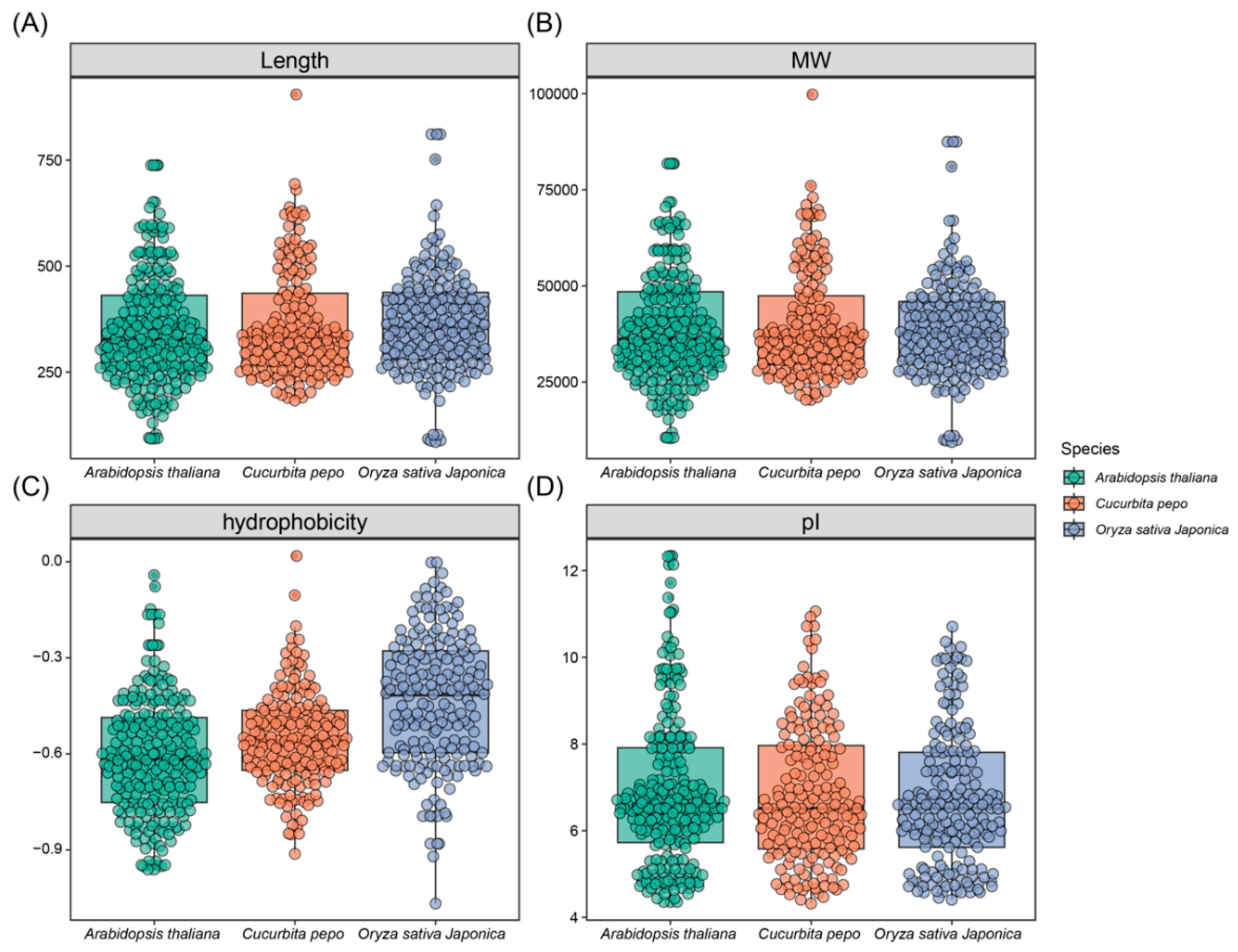
Figure 2.
Phylogenetic analysis of bHLH transcription factors in three plant species and in Cucurbita pepo L. (A) Maximum likelihood (ML) phylogenetic tree constructed using 467 bHLH protein sequences from Arabidopsis thaliana (158 members), Cucurbita pepo L. (175 members), and Oryza sativa (134 members). All bHLH proteins were classified into 24 subfamilies (Subgroup 1–24) based on their phylogenetic relationships. Different colors represent distinct subfamilies, and bootstrap values are indicated at the nodes. (B) ML phylogenetic tree constructed using bHLH proteins from Cucurbita pepo L. alone. All CpbHLH proteins were grouped into 19 subfamilies, consistent with the classification in the combined phylogenetic analysis.
Figure 2.
Phylogenetic analysis of bHLH transcription factors in three plant species and in Cucurbita pepo L. (A) Maximum likelihood (ML) phylogenetic tree constructed using 467 bHLH protein sequences from Arabidopsis thaliana (158 members), Cucurbita pepo L. (175 members), and Oryza sativa (134 members). All bHLH proteins were classified into 24 subfamilies (Subgroup 1–24) based on their phylogenetic relationships. Different colors represent distinct subfamilies, and bootstrap values are indicated at the nodes. (B) ML phylogenetic tree constructed using bHLH proteins from Cucurbita pepo L. alone. All CpbHLH proteins were grouped into 19 subfamilies, consistent with the classification in the combined phylogenetic analysis.
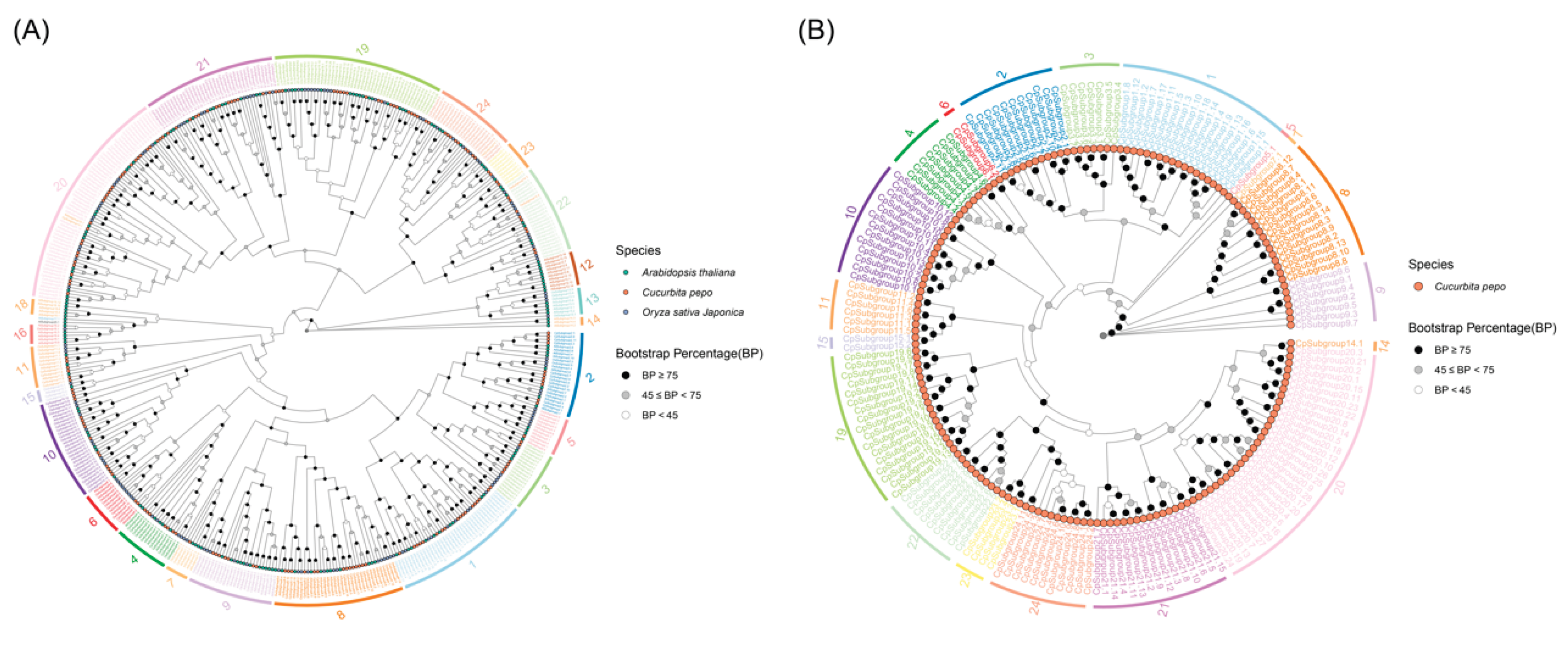
Figure 3.
Phylogenetic relationships, conserved domain composition, motif distribution, and gene structure analysis of CpbHLH genes. (A) Maximum likelihood phylogenetic tree of CpbHLH proteins. Different colors represent different subfamilies, and bootstrap values are indicated at the nodes. (B) Conserved domain analysis of CpbHLH proteins, showing the distribution of HLH, bHLH-MYC_N, and other domains (C) Conserved motif composition identified by MEME, where different colored boxes represent distinct motifs (MEME-1 to MEME-10). (D) Gene structure analysis of CpbHLH genes, showing the exon–intron organization. Boxes represent exons, and lines represent introns.
Figure 3.
Phylogenetic relationships, conserved domain composition, motif distribution, and gene structure analysis of CpbHLH genes. (A) Maximum likelihood phylogenetic tree of CpbHLH proteins. Different colors represent different subfamilies, and bootstrap values are indicated at the nodes. (B) Conserved domain analysis of CpbHLH proteins, showing the distribution of HLH, bHLH-MYC_N, and other domains (C) Conserved motif composition identified by MEME, where different colored boxes represent distinct motifs (MEME-1 to MEME-10). (D) Gene structure analysis of CpbHLH genes, showing the exon–intron organization. Boxes represent exons, and lines represent introns.
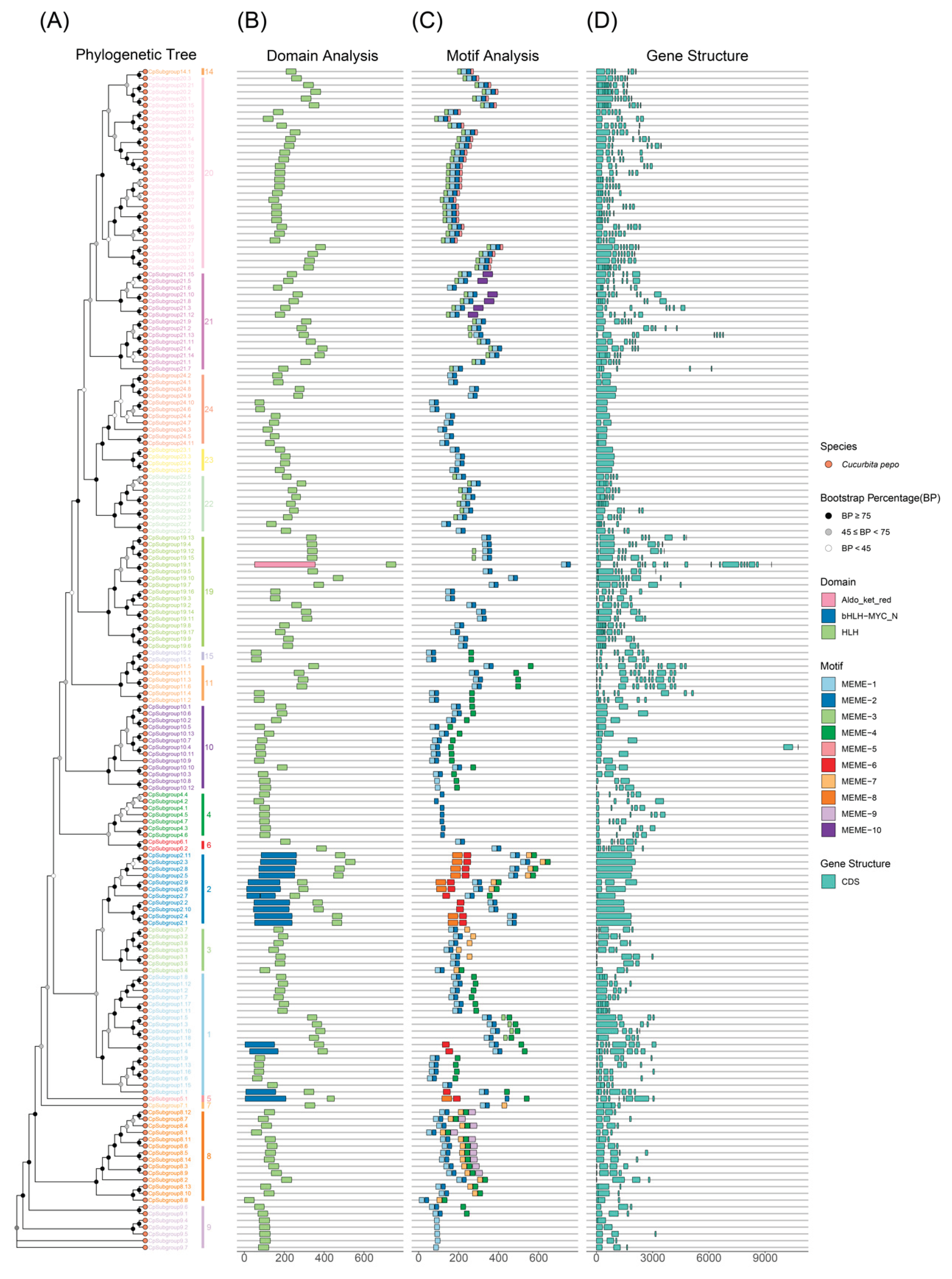
Figure 4.
Genome-wide gene duplication and synteny relationships of bHLH genes. (A–C) Circos plots showing the chromosomal distribution and duplication patterns of bHLH genes in Cucurbita pepo L., Arabidopsis thaliana, and Oryza sativa. Gene types are classified into singleton, dispersed, proximal, tandem, and WGD/segmental duplications. Links inside the circles indicate duplicated gene pairs. (D) Syntenic relationships of bHLH genes among the three species. The lines connecting different genomes represent conserved syntenic gene pairs, reflecting the evolutionary conservation and divergence of bHLH genes.
Figure 4.
Genome-wide gene duplication and synteny relationships of bHLH genes. (A–C) Circos plots showing the chromosomal distribution and duplication patterns of bHLH genes in Cucurbita pepo L., Arabidopsis thaliana, and Oryza sativa. Gene types are classified into singleton, dispersed, proximal, tandem, and WGD/segmental duplications. Links inside the circles indicate duplicated gene pairs. (D) Syntenic relationships of bHLH genes among the three species. The lines connecting different genomes represent conserved syntenic gene pairs, reflecting the evolutionary conservation and divergence of bHLH genes.
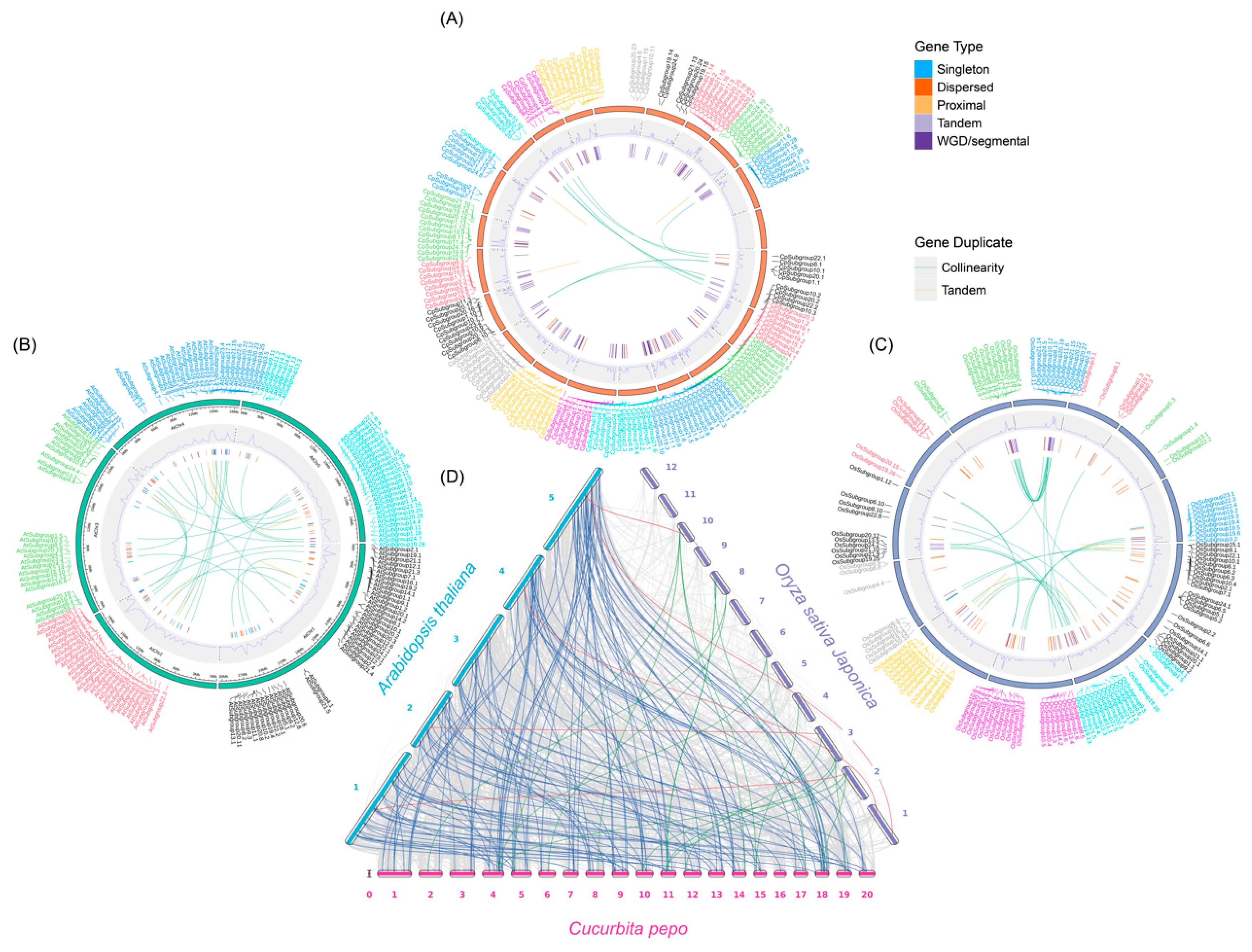
Figure 5.
Figure 5. Distribution of cis-regulatory elements in the promoter regions of CpbHLH genes. Cis-regulatory elements within the 2-kb upstream promoter regions of CpbHLH genes were identified and categorized into three major groups: light-responsive, hormone-responsive, and stress-related elements. The phylogenetic tree of CpbHLH proteins is shown on the left. The middle panel illustrates the relative proportions of each cis-element category, while the right panel presents the detailed distribution of individual cis-elements across different genes.
Figure 5.
Figure 5. Distribution of cis-regulatory elements in the promoter regions of CpbHLH genes. Cis-regulatory elements within the 2-kb upstream promoter regions of CpbHLH genes were identified and categorized into three major groups: light-responsive, hormone-responsive, and stress-related elements. The phylogenetic tree of CpbHLH proteins is shown on the left. The middle panel illustrates the relative proportions of each cis-element category, while the right panel presents the detailed distribution of individual cis-elements across different genes.
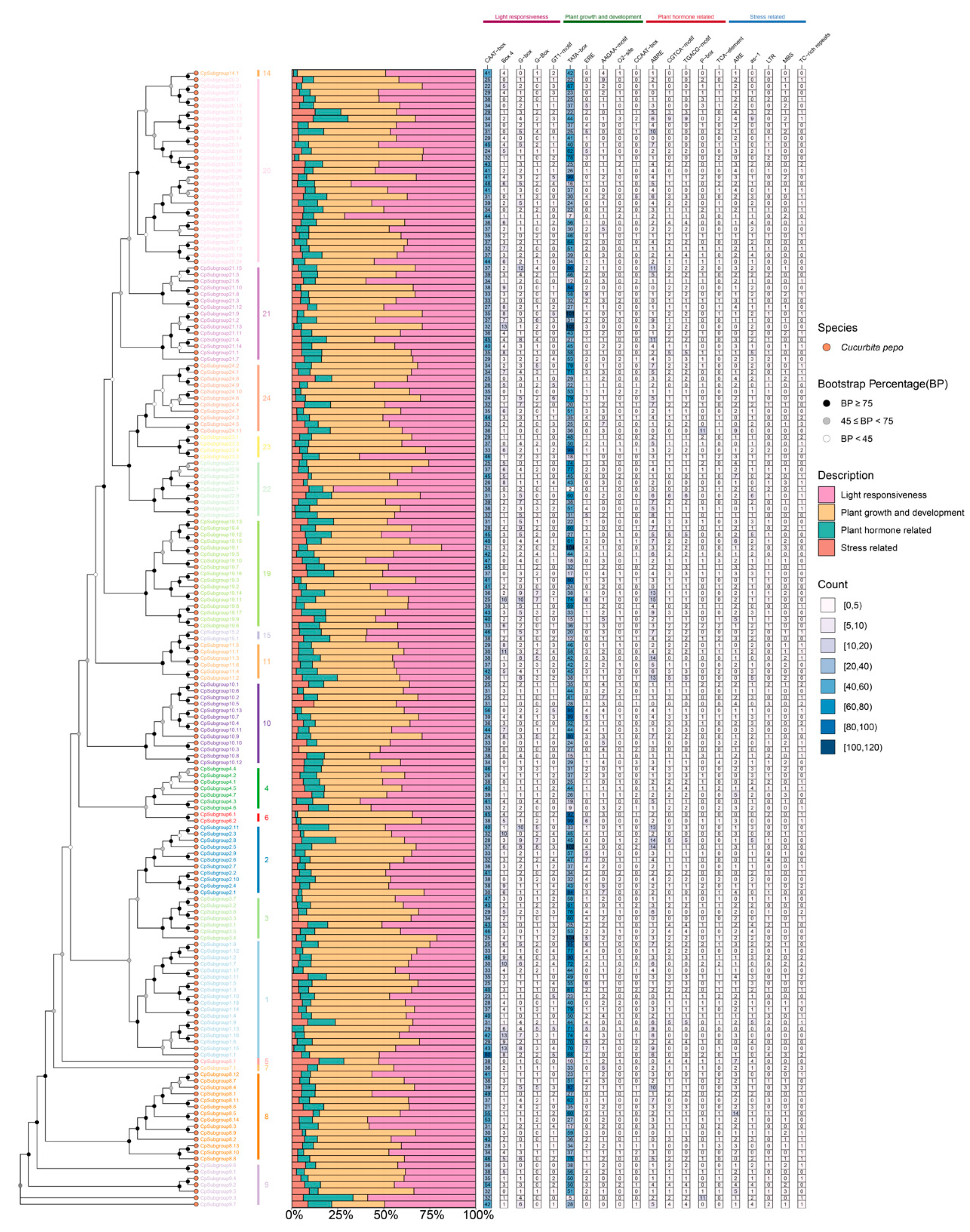
Figure 6.
Protein–protein interaction network and functional enrichment analysis of CpbHLH proteins. (A) Protein–protein interaction (PPI) network constructed based on the AraNet2 database. Red nodes represent CpbHLH proteins, while gray nodes indicate interacting non-bHLH proteins. The network consists of 279 nodes and is divided into 10 modules, representing densely connected functional clusters. (B) Gene Ontology (GO) enrichment analysis of proteins in the interaction network. The enriched GO terms are categorized into biological process (BP), cellular component (CC), and molecular function (MF). The x-axis represents the number of genes enriched in each term, and the color scale indicates the significance level of enrichment.
Figure 6.
Protein–protein interaction network and functional enrichment analysis of CpbHLH proteins. (A) Protein–protein interaction (PPI) network constructed based on the AraNet2 database. Red nodes represent CpbHLH proteins, while gray nodes indicate interacting non-bHLH proteins. The network consists of 279 nodes and is divided into 10 modules, representing densely connected functional clusters. (B) Gene Ontology (GO) enrichment analysis of proteins in the interaction network. The enriched GO terms are categorized into biological process (BP), cellular component (CC), and molecular function (MF). The x-axis represents the number of genes enriched in each term, and the color scale indicates the significance level of enrichment.
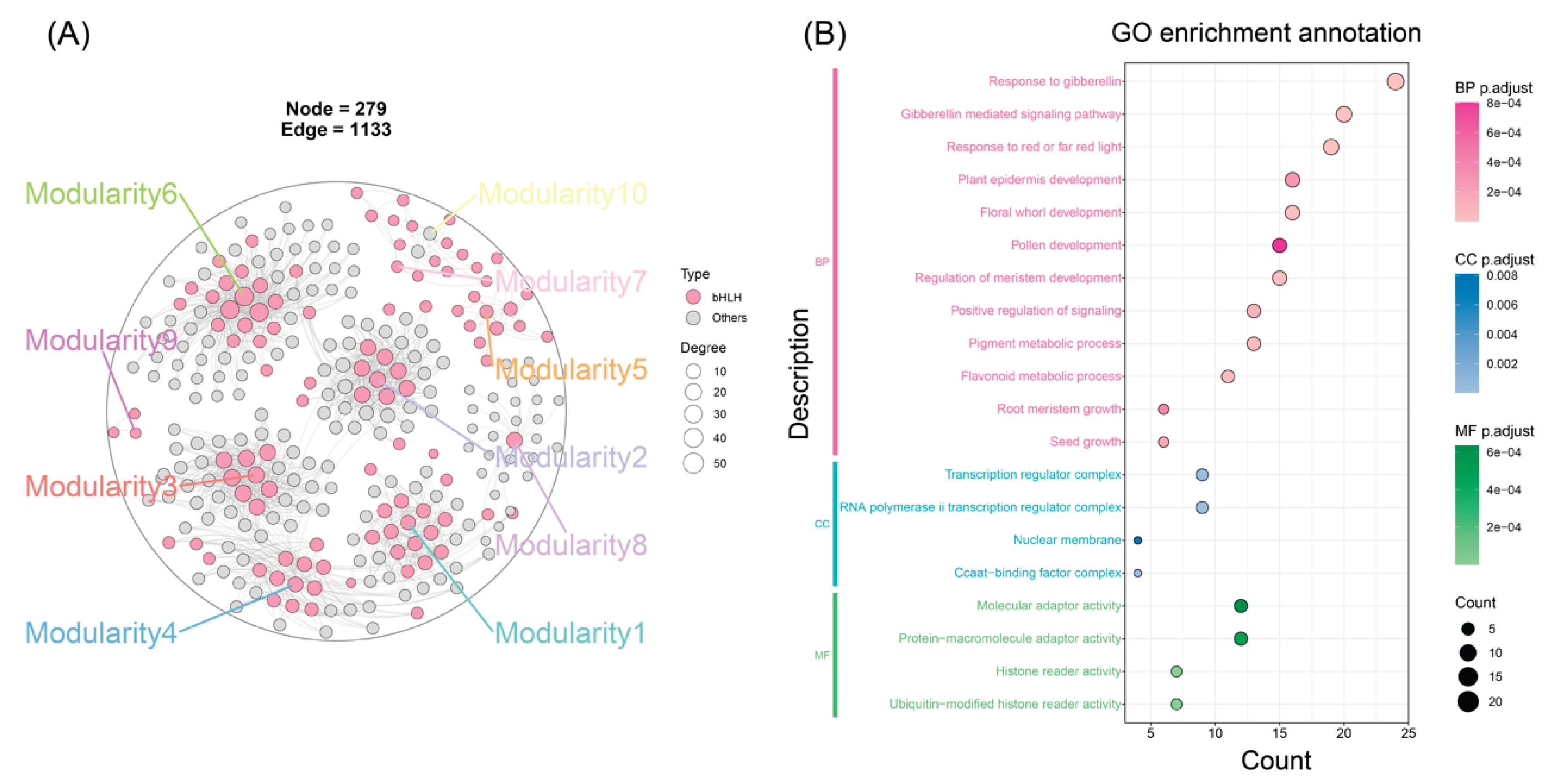
Figure 7.
Functional enrichment analysis of CpbHLH genes based on GO and KEGG. GO and KEGG enrichment analyses were conducted for the CpbHLH gene family. The enriched GO terms are grouped into BP and MF categories, while KEGG pathways are shown separately. The horizontal axis indicates the gene count for each term, the color scale represents the adjusted p-value, and the dot size reflects the number of genes involved in each functional category.
Figure 7.
Functional enrichment analysis of CpbHLH genes based on GO and KEGG. GO and KEGG enrichment analyses were conducted for the CpbHLH gene family. The enriched GO terms are grouped into BP and MF categories, while KEGG pathways are shown separately. The horizontal axis indicates the gene count for each term, the color scale represents the adjusted p-value, and the dot size reflects the number of genes involved in each functional category.
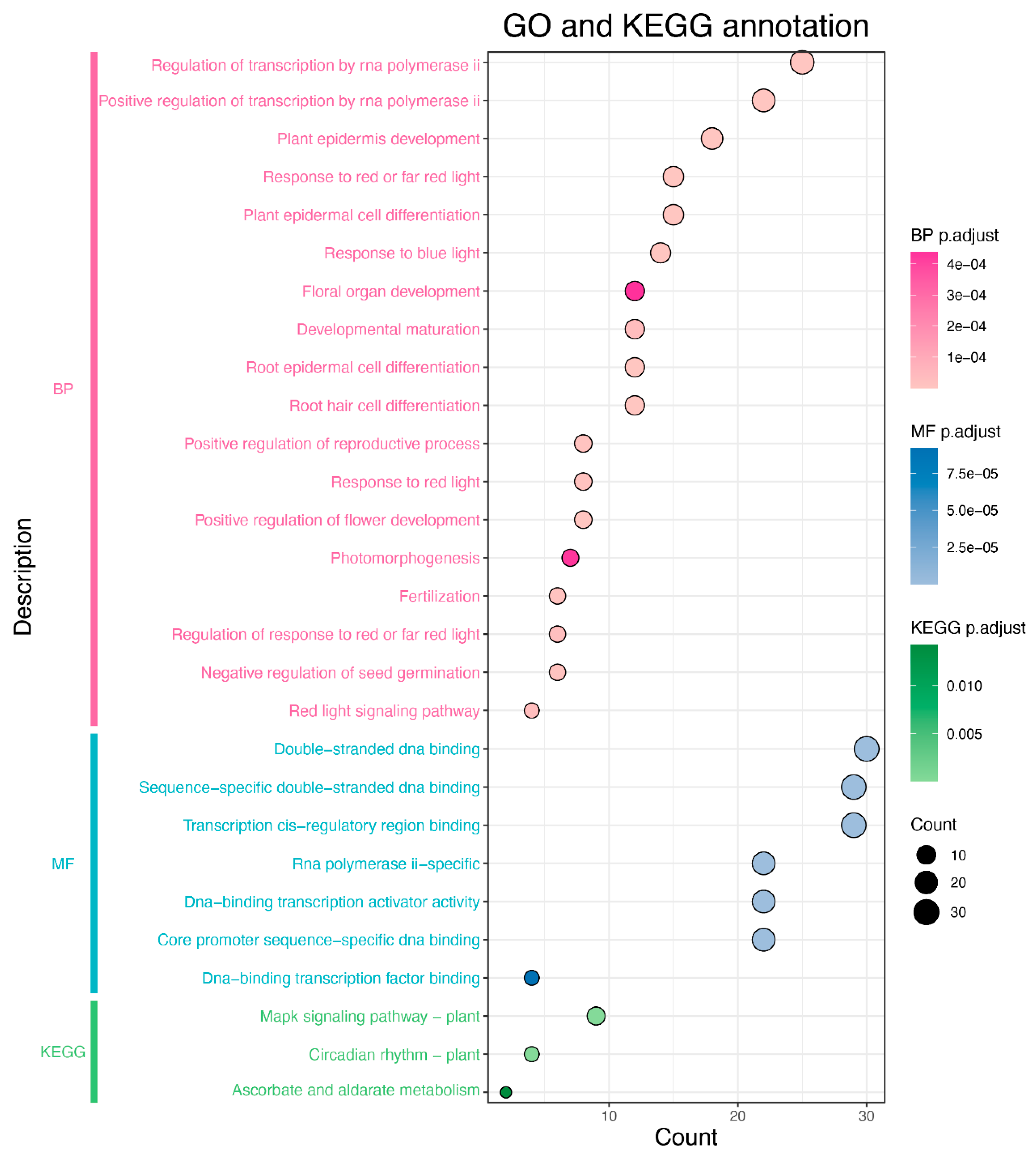
Figure 8.
Expression profiles of CpbHLH genes under cold stress and across different tissues. (A) Heatmap showing the expression patterns of CpbHLH genes under cold treatment at 4 °C for 1 d, 5 d, and 14 d. (B) Expression profiles of CpbHLH genes across different tissues, including root, stem, leaf, flower, and fruit. (C) qRT-PCR validation of selected CpbHLH genes in different tissues. The expression levels are presented as mean ± standard deviation (SD).
Figure 8.
Expression profiles of CpbHLH genes under cold stress and across different tissues. (A) Heatmap showing the expression patterns of CpbHLH genes under cold treatment at 4 °C for 1 d, 5 d, and 14 d. (B) Expression profiles of CpbHLH genes across different tissues, including root, stem, leaf, flower, and fruit. (C) qRT-PCR validation of selected CpbHLH genes in different tissues. The expression levels are presented as mean ± standard deviation (SD).
Disclaimer/Publisher’s Note: The statements, opinions and data contained in all publications are solely those of the individual author(s) and contributor(s) and not of MDPI and/or the editor(s). MDPI and/or the editor(s) disclaim responsibility for any injury to people or property resulting from any ideas, methods, instructions or products referred to in the content. |
© 2026 by the authors. Licensee MDPI, Basel, Switzerland. This article is an open access article distributed under the terms and conditions of the Creative Commons Attribution (CC BY) license (http://creativecommons.org/licenses/by/4.0/).
Copyright: This open access article is published under a Creative Commons CC BY 4.0 license, which permit the free download, distribution, and reuse, provided that the author and preprint are cited in any reuse.