

Submitted:
05 August 2026
Posted:
05 August 2026
You are already at the latest version
Abstract
In the process of sisal defibration, large amounts of residues are produced, classified as liquid (green juice) and solid (pulp/mucilage and broken fiber). Pulp/mucilage and broken fiber have been used for sisal fertilization by the farmers in Brazil, but no studies have demonstrated the optimal rate of solid residues to promote better sisal production. The study tested rates of sisal residues (pulp and broken fiber) on the development of sisal seedlings in the region of Conceição do Coité, Bahia, Brazil, based on the Agro-circular economy. The study was developed using two scientific methods: (i) modeling of sisal residue production (pulp and broken fiber) in Bahia/Brazil during recent years (2000 - 2024), and (ii) field test using rates of sisal residue (0, 2, 4, 6, 8, 10, and 12 L plant-1 of a mixture of pulp and broken fiber) on the development of sisal seedlings. Results showed that in the last decades, the annual residue production of pulp and broken fiber was 4.3 million tons year-1 with an accumulated production of 107.8 million tons between 2000 and 2024. The rates of sisal residues promoted the development of plants with an increase weight of plant (87.9 %; from 29.7 to 247.4 g/plant), shoot (80.8%; from 4.3 to 22.4 g/plant), and root (88.7%; from 25.4 to 225.0 g/plant). Sisal seedlings produced more roots than shoots. The sisal residues fitted a linear response, indicating that increasing rates promoted the sisal seedling testing rates from 0 to 12 L plant-1. Based on the results, conclude that the sisal sector produces a great volume of solid residues can be used in sisal planting at a rate of 12 L plant-1, promoting higher initial plant development and an agro-circular economy in Bahia, Brazil.
Keywords:
Agave sisalana
; sisal fiber
; sustainability
1. Introduction
Brazil is considered the main producer of food, energy, and fiber in the world, being the world’s fourth-largest grain producer and the second-largest grain exporter in the world [1]. In the production of natural fiber, Brazil produces natural fibers mainly derived from cotton (Gossypium hirsutum spp.), sisal (Agave sisalana spp.), jute (Corchorus olitorius spp.), banana (Musa spp.), and coconut (Cocos nucifera spp.). Sisal occupies the 6th place among fiber plants, representing 2% of the world’s production of plant fibers [2]. Demand for sisal fiber is projected to increase over the coming years due to its versatility and eco-friendly attributes [3].
In Brazil, sisal areas are concentrated in the Bahia state, specifically in the semiarid and arid regions. This region presents the Caatinga Biome, characterized as a contiguous area with annual precipitation less than 800 mm (concentrated within three months), marked by scarcity and irregularity, intense solar radiation, and high temperatures [4]. Climate change and the increase of arid and semiarid regions (as in the Caatinga Biome) have contributed to promoting studies with species (as agaves) that have the potential to produce food, fiber, and energy in water-stressed regions [4,5]. Therefore, studies that promote species with the potential to produce food, fiber, and energy in water-stressed regions with lower environmental impacts are important, necessary, and requested.
Sisal fibers are obtained from the leaves of the plant known for high durability and strength and have been used to produce carpets, clothing, sandals, and similar products. [6]. In the process of sisal defibration, large amounts of residues are produced, classified as liquid (green juice) and solid (pulp/mucilage and broken fiber). The sisal fiber industry currently uses only about 2-4% of the plant as fiber, and the rest is classified as residues [7]. In Tanzania, Terrapon-Pfaff et al. [8] demonstrated that sisal production also produces large volumes of residues, which are left in the field. The same reality was demonstrated in Brazil by Ferraz-Almeida et al. [9]. This high volume of residues can cause environmental impacts when left in the field without treatment [10]. Abdalla et al. and Kahigi et al. [6,7,8,9,10,11] showed that sisal residues have promoted gas emissions (methane and carbon dioxide emissions) and pollution of rivers and soils.
Some alternatives have been presented for the use of sisal residues, i.e., energy production [6,7], animal feed [12], fungicide, bioinsecticide, and Biosorption [13,14]. Lima et al. [15] tested the use of sisal fiber residues for cement-based composite applications, presenting good mechanical properties that are superior to the traditional composites reinforced with natural sisal fibers. In Brazilian rural farms, farmers have been using the pulp/mucilage and broken fiber for animal feed and sisal fertilization itself applied on the soil surface, close to the sisal plant [16]. In our previous study, Ferraz-Almeida et al. [9] showed that in sisal areas, the application of sisal pulp on the soil surface, close to sisal plants, increased 50% of residue stocks with sizes smaller than 10 cm. Despite the positive use of sisal on soil fertilization [17,18], there is still no recommendation for the optimal rate of sisal residue on plant development. Therefore, this study focuses on the optimal rate of use of sisal residues to increase the production of food, energy, and fiber, solve problems, and drive innovation.
In this scenario, the circular economy is presented as a strategy with the double purpose of improving economic performance and minimizing the impact of waste generation [6]. The circular economy is characterized as a production system based on take-produce-consume-recycle, an alternative to the linear economic system (take-produce-consume-discard) [7]. The circular economy can help guarantee the sustainability of agriculture by promoting and generating solutions in the field and industry.
Then, with this knowledge and possibilities of sisal uses, we explored the following questions: (i) What is the produced volume of sisal pulp and broken fiber residue in Bahia, Brazil? (ii) Are sisal pulp and broken fiber residues a good alternative to the development of sisal seedlings? (iii) If pulp and broken fiber residues are a good alternative to the development of sisal seedlings, what is the recommended rate? Based on these questions, this work aims to calculate the volume of sisal pulp and broken fiber residues in Bahia, Brazil, and test rates of sisal pulp and broken fiber residues on the development of sisal seedlings in the region of Conceição do Coité, Bahia, Brazil, based on the Agro-circular economy.
2. Materials and Methods
2.1. Study Characterization
The study was developed using two scientific methods: (i) modeling of sisal residue production (pulp and broken fiber) in Bahia/Brazil during recent years (2000 - 2024), and (ii) field test using rates of sisal residue (pulp and broken fiber) on the development of sisal seedlings. Both scientific methods are complementary and have the goal of developing technical information about the production and use of pulp and broken fiber in sisal areas of Bahia, Brazil.
2.2. Modeling of Sisal Residue Production (Pulp and Broken Fiber)
The volume of solid residues produced in the sisal sector was calculated for production areas of Bahia and Brazil from 2000 to 2024. We decided to model the production of soil residue focusing on pulp and broken fiber, because it has been added to soil in sisal areas by the local farmers without technical information.
For the modeling, data on sisal yield (sisal fiber) and sisal production area were collected in the dataset of the Brazilian Institute of Geography and Statistics, on the Sidra platform [19]. We obtained the data, which were separated into years (from 2000 to 2024), regions (North, Northeast, South, Southeast, and Center-West), and states of the Northeast (Alagoas, Bahia, Ceará, Maranhão, Paraíba, Pernambuco, Piauí, Rio Grande do Norte, and Sergipe). After the data mining process, we decided to focus on data from the Northeast region and Bahia state because they represent about 95% of sisal production in Brazil. These data are open access, available from the Brazilian government, considered trustworthy and reliable, and can be accessed on the Sidra platform [19]. These primary data are presented in the Supplementary Table S1.
The production of pulp and broken fiber residues was calculated considering the relation: for each 1 ton of processed fiber, there is the production of 24 tons of sisal pulp. This proportion was based on studies of Terrapon-Pfaff et al. [8], Tanzania Sisal Board - TSB [20], and Agro-industrial biogas in Kenya - GTZ [21]. In our study, the residue mixture had 5% broken fiber; therefore, we adapted the relation: for each 1 ton of processed fiber, there is the production of 26 tons of sisal pulp (Eq. 1).
where, sisal pulp and broken fiber are sisal residues; PF is the processed fiber in the sisal sector. The primary data on produced sisal pulp and broken fiber are presented in the Supplementary Table S2.
The ratio of residue production per area (ton/ha) was also calculated using the data of production area and volume of pulp and broken fiber (Eq. 2). In this study, the data on the volume of sisal liquid residue and bulb residues were not monitored.
where ratio: is the production of pulp and broken fiber (ton/ha); TPPB: is the total production of pulp and broken fiber (ton) in 2024; TSA: is the sisal production in Bahia (hectares), in 2024.
2.3. Field Test Using Rates of Sisal Residue
A field test using rates of sisal residue was developed in the experimental area located in the State University of Bahia (UNEB), in Conceição do Coité, Bahia, Brazil. This region, known as “sisal territory”, is characterized as the main area of sisal production in Brazil, located close to Salvador (capital of Bahia) (Figure 1). The region of Conceição do Coité is responsible for processing a large share of the fiber sisal destined for exportation.
The Conceição do Coité agriculture is characterized by small farmers with an agricultural sector driven by small-scale producers in neighboring communities. The region’s climate is classified as BSh, according to the Köppen-Geiger system, characterized as dry with poorly distributed, infrequent rainfall concentrated between November and April. Average annual precipitation is around 585 mm, accompanied by high evaporation rates and an elevation of 420 meters.
In 2024, Bahia produced 88,436 tons of sisal fiber in an area of 93,022 hectares, representing 95% of Brazilian production. The North-Central region, where the region of Conceição do Coité is in Bahia, produced 38,632 tons of sisal fiber in an area of 44,855 hectares (48% of Bahia production) [19]. This data demonstrates the importance of this region for sisal production (Figure 1).
The study was developed using an experimental design based on a randomized block with seven treatments and three replicates. The treatments were rates of sisal residues: 0, 2, 4, 6, 8, 10, and 12 liters of a mixture of pulp (95% of the mixture) and broken fiber (5% of the mixture). The control was based on no application of residues; seedlings were planted in just soil (Figure 2).
Sisal residues were collected from ten different properties in the Conceição do Coité region. In each property, a volume of 100 kg of residue (comprising pulp and broken fiber) was collected, resulting in a total of 1,000 kg of residue. In the laboratory, the residues were dried, weighted, and separated to form a mixture with 90% pulp and 5% broken fiber, at a density of 0.1 g cm-3 (100 g L-1) and humidity of 10% (after drying) (Figure 2).
The rates were calculated based on weight, considering that 1 L = 1000 cm3 and a density of 0.1 g cm-3. The equivalent rates of residues were 0, 200, 400, 600, 800, 1000, and 1200 g vase-1, respectively, for 0, 2, 4, 6, 8, 10, and 12 liters vase-1. In the study, we decide the use the unit of volume (liters) because it is much easier for the farmer in the fields managements.
Soil was also collected in the region and characterized, presenting a contents of pH = 7.5; phosphorus = 40 mg dm⁻³; potassium = 0.35 cmolc dm⁻³; calcium = 4.60 cmolc dm⁻³; magnesium = 0.95 cmolc dm⁻³; aluminum = 0 cmolc dm⁻³; sodium = 0.03 cmolc dm⁻³; hydrogen plus aluminum = 0.09 cmolc dm⁻³; sum of bases = 5.93 cmolc dm⁻³; cation exchange capacity = 6.02 cmolc dm⁻³, and soil organic matter content was 16.9 g kg⁻¹. Soil was dried and added to 5-liter pots. Sisal seedlings derived from bulbils were collected in the field, separated by size (used seedlings with 10 cm, without roots) and planted in vases (one seedling per vase).
After 120 days of planting, the size of the plant, shoot, and roots, as well as the number of leaves and leaf thickness, were monitored. The whole plants (leaves and roots) and isolated roots were weighed using a balance. Plants were separated into shoot and root, monitoring the weight for each part. The roots were separated from the soil and cleaned for monitoring. The roots were not broken during the cleaning, and the size of roots was monitored from the base to the end of the longest root in the root system.
2.4. Data Analysis
In both tests, after data collection, the data variability was evaluated using descriptive statistics, calculating the mean, standard deviation, and minimum and maximum values. The dataset was tested for normality (Shapiro–Wilk test; p < 0.05) and homogeneity of variance (Bartlett test; p < 0.05). All variables were classified as adequate and used in the study.
In the Modeling of sisal residue production (pulp and broken fiber), the data were used to calculate the annual and accumulated production of residue in Bahia. The annual production was fitted using regression analysis on linear and quadratic models to explain the variation during this period.
In the field test, the data on weight (plant, shoot, and roots), number of leaves, and size (plant, shoot, and roots) were analyzed using analysis of variance (F-test). When significant results were obtained, the means were compared using the LSD test at 5% probability. The average was also compared using regression analysis fitting on linear and quadratic models. Between the models, we used the model with the higher R2 to explain the optimal rate of sisal residue.
3. Results
3.1. Modeling of Sisal Residue Production (Pulp and Broken Fiber)
In recent decades, the annual residue production of pulp and broken fiber was 4.3 million tons year-1, with an accumulated production of 107.8 million tons between 2000 and 2024 (Figure 3). This volume can be considered a great volume of residues produced in the sisal sector.
The sisal areas presented a reduction, which reflected on the sisal and residue production in Bahia (Figure 3). Bahia represents more than 95% of Brazilian sisal production (Supplementary Table S1). The residue production can be explained by a linear model with an R2 of 46% and a quadratic model with an R2 of 57%. In the quadratic model, the residue production is explained by a plateau between 2006 and 2011, and another plateau between 2017 and 2024. In addition, there was a constant production after 2018 up to 2024 (Figure 3).
For production per area, there was an annual production of 28.7 ton/ha of pulp and broken fiber in Bahia, considered constant and ranging from 25.6 to 34.4 ton/ha. Over the last decade, the volume of production was 718 ton/ha, from 2000 to 2024 (Figure 4).
3.2. Field Test Using Rates of Sisal Residue
The size of plants presented a clear difference between the control and the treatments with sisal residues. The control presented a plant size of 33.3 cm, and the plants with residues, the size ranged from 55,2 to 68.2 cm, representing an increase ranging from 40% to 49% compared to the control (Table 1).
The size of shoot also was superior with the rates of sisal residues, with an increase of 49% compared to the control and the rate of 6 L vase-1. Except for the rate of 10 L vase-1, which presented a smaller size of the shoot between the rates of sisal residues (Table 3).
For the size of roots, there was no difference between the treatments, with the average ranging from 16.6 to 36.7 cm. The number of leaves was superior, with the highest rate of residues, with 17 leaves/plant at the rate of 12 L vase-1. Also at the same rate, there was the highest leaf thickness of 37.4 mm (Table 1).
The rates of sisal residues promoted the development of plants with an increased weight of plant of 87.9% (from 29.7 to 247.4 g/plant), shoot of 80.8% (from 4.3 to 22.4 g/plant), and root of 88.7% (from 25.4 to 225.0 g/plant), comparing the control with the highest rate (12 L vase-1) (Table 2; Figure 5).
The rates of sisal residues fitted a linear response, with R2 values of 48% (weight of plant), 44% (weight of shoot), and 47% (weight of roots), indicating that the highest rate of 12 L vase-1 was the optimal rate (Figure 2). This is an important result demonstrating that farmers can add sisal residues to the soil up to 12 L vase-1 without negative impact on plant development.
The roots represented the greater part of the plants, with percentages higher than 85.5%, ranging up to 96.2% at the rate of 6 L vase-1 of solid residues. This is an important result because in conditions of water deficiency, the higher root volume is important to resist and the development of plants (Table 3). The difference between the development of shoots and roots was also clearly noticed visually, with the root weight being higher than the shoot, mainly at higher rates of sisal residues (Figure 6).

Table 3.
Percentage of shoot and roots in plants with rates of solid sisal residue (pulp and broken fiber) rates (0, 2, 4, 6, 8, 10, and 12 L vase-1) in the region of Conceição do Coité, Bahia.
Table 3.
Percentage of shoot and roots in plants with rates of solid sisal residue (pulp and broken fiber) rates (0, 2, 4, 6, 8, 10, and 12 L vase-1) in the region of Conceição do Coité, Bahia.
| Sisal residue, L vase-1 | Weight of plant | ||
|---|---|---|---|
| Plant | Shoot | Roots | |
| 0 | 100% | 14.5% | 85.5% |
| 2 | 100% | 7.1% | 92.9% |
| 4 | 100% | 9.5% | 90.5% |
| 6 | 100% | 6.8% | 93.2% |
| 8 | 100% | 8.4% | 91.6% |
| 10 | 100% | 8.6% | 91.4% |
| 12 | 100% | 9.1% | 90.9% |
Sisal residues presented a density of 0.1 g cm-3 (100 g L-1) and humidity of 10% (after drying).
4. Discussion
The sisal sector produces a significant volume of solid residues with an annual production of 4.3 million tons, focusing on pulp and broken fiber. The production per area is also high, with an average of 28.7 tons/ha. This average residue is considered higher compared with sugarcane (filter cake), soybean (plant residues leaf on soil), corn, and forage residues (plant residues leaf on soil) [22,23,24]. Therefore, this clearly shows the potential for use in agro-circular systems.
The decomposition of crop residue after returning to the field plays an important role in improving soil fertility and promoting crop growth [25]. Previous studies have shown that returning straw to the field can improve soil fertility and crop yield, as well as promote water retention, biological and microbiological conditions [26,27,28]. For sisal, the solid residues tested here are characterized by mucilage and loofah formed by polysaccharides, cellulose, and hemicellulose, which are intimately associated with lignin in the plant cell wall [29]. The residue is considered poor in phosphorus, but rich in iron, calcium, zinc, copper, and manganese [12].
In Tanzania, Muthangya et al. [2] monitored the quality of sisal leaf decortication from a sisal-processing factory, observing values of total solids = 14.66% ± 0.14; volatile solids = 81.89% ± 2.67 of total solids; organic carbon = 48.19% ± 3.87 of dry weight; neutral detergent fibers = 44.5 ± 0.8% of dry weight; acid detergent fibers = 41.0 ± 0.7 of dry weight; lignin = 7.2. ± 1.6 of dry weight; cellulose = 64.1 ± 2.1 of dry weight; hemicellulose = 3.5 ± 0.3 of dry weight. In Brazil, Silva et al. [14], showed chemical characterization of soil pulp with values of carbon = 398.1 g kg-1, nitrogen = 15.3 g kg-1, sulfur = 18.1 g kg-1, phosphorus = 7.2 g kg-1, potassium = 15.5 g kg-1, calcium = 36.7 g kg-1, magnesium 11.4 g kg-1, cupper = 13.6 mg kg-1, manganese = 75.4 mg kg-1, zinc = 173.3 mg kg-1, and ration of carbon and nitrogen = 26.0 and carbon and phosphorus = 55.3. The high contents of organic carbon, nitrogen, potassium, sulfur, and calcium can explain the plant development in our study with an increase weight of plant of 87.9% (from 29.7 to 247.4 g/plant), shoot weight of 80.8% (from 4.3 to 22.4 g/plant), and root weight of 88.7% (from 25.4 to 225.0 g/plant) compared to the control. In South China, Jin et al. [30] demonstrated that sisal residue significantly increased the level of nitrogen and soluble phosphorus and potassium in the soil, as well as the activities of soil sucrase, catalase, and acid phosphatase, which suggests that the secretion of soil enzymes was more active. The findings of Yamoah et al. [17] and Yang et al. [18] also demonstrated the positive effect of residues on soil. These are important findings and corroborate the increase in plant development in our study.
Our study is the first report testing the optimal rate for an efficient application. We found a linear responder on sisal residue rates, indicating the rate of 12 L/plant (1200 g vase-1 or 1200 g plant-1) is the optimal rate. Based on chemical characterization of soil pulp [14], this rate of 12 L residue plant-1 added on soil per plant/vase, values of carbon = 477.7 g kg-1, nitrogen = 18.3 g kg-1, sulfur = 21.7 g kg-1, phosphorus = 8.4 g kg-1, potassium = 18.6 g kg-1, calcium = 44.0 g kg-1, magnesium 13.6 g kg-1, cupper = 16.3 mg kg-1, manganese = 90.4 mg kg-1, zinc = 207.9 mg kg-1. Probably, these rates influenced sisal nutrition. However, we do not have data, and there was no clear information on sisal fertilization in the literature to explore this idea.
Our results also demonstrated that the Agro-circular sustained strategies are great alternatives for the sisal sector (industries, Cooperatives, Associations, and/or similar), giving the farmers the opportunity to better utilize residues, promoting environmental, social, and economic benefits. In future studies, the data of sisal can include sisal fertilization, circularity index, carbon footprint, water footprint, and benefits.
5. Conclusions
In recent decades, there has been a great annual sisal residue production of pulp and broken fiber, which are left on the field and can be used as an Agro-circular sustained strategies for the sisal sector (industries, Cooperatives, Associations, and/or similar), allowing the farmers to better utilize residues, promoting environmental, social, and economic benefits. If the farmers decide to add the sisal residues to the soil, the rate of 12 L plant-1 sisal residues promoted the development of plants with an increased weight 80% higher than the control (seedlings planted just in soil). Sisal seedlings also produced more roots than shoots, indicating that plant with be more resistant to dry conditions (which is common in arid and semiarid regions). Concluding that the sisal sector produces a great volume of solid residues based on pulp and broken fiber. This residue can be used in sisal planting at a rate of 10 L/plant, promoting a higher initial plant development and an Agro-circular economy in Bahia, Brazil.
Supplementary Materials
The following supporting information can be downloaded at the website of this paper posted on Preprints.org, Table S1. Sisal areas and yield from 2000 to 2023 in Brazil, Northeast region and Bahia. Table S2. Brazilian production of sisal residues (pulp and broken fiber) in recent years.
Author Contributions
Conceptualization, R.F-A., M.A.S., J.L.O., and V.F.A.; methodology, R.F-A., M.A.S., J.L.O., and V.F.A.; data curation and writing—original draft preparation, R.F-A. All authors have read and agreed to the published version of the manuscript.
Funding
This research received no external funding
Acknowledgments
Thank the Universidade da Bahia for the support
Conflicts of Interest
The authors declare no conflicts of interest
References
- Aponte, G. Panorama internacional de la economía circular a través del análisis de la producción científica y tecnológica. Tekhné 2022, 25, 13–13. [Google Scholar] [CrossRef]
- Muthangya, M.; Mshandete, A.M.; Kivaisi, A.k. Two-Stage Fungal Pre-Treatment for Improved Biogas Production from Sisal Leaf Decortication Residues. Int. J. Mol. Sci. 2009, 10, 4805–4815. [Google Scholar] [CrossRef] [PubMed]
- Abhinav, K.S.; Manjinder, S.; Sachin, K.; Akshaykurmar, C.; Arjun, S.; Chaudhari, A.K.M.; Gaurav, M. Eco-friendly sisal, basalt, and recycled nylon fibers-reinforced polypropylene composites: A step towards sustainable developments. Next Mater. 2025, 5, 100906. [Google Scholar] [CrossRef]
- Teixeira, L.P.; Pires-Oliveira, J.C.; Portal-Gomes, P.W.; et al. Biodiversity at Risk: Climate Change Impacts on Brazil’s Semiarid Caatinga Flora. Earth Syst. Env. 2026, 10, 4603–4618. [Google Scholar] [CrossRef]
- Ferraz-Almeida, R.; Ribeiro Ferreira da Silva, O.R. Sisal Fiber (Agave sisalana) Production in the Brazilian Semiarid from 1988 to 2024. J. Nat. Fibers 2025, 22(1). [Google Scholar] [CrossRef]
- Kahigi, N.S.; Mkunda, J.J.; Mwema, M. F.; Machunda, R.A. A Comprehensive Life Cycle Assessment of SisalYarn Production: Unveiling Sustainability and Resource Optimization Hotspots. Environ. Chall. 2025, 18, 101085. [Google Scholar] [CrossRef]
- Muthangya, M.; Mshandete, A.M.; Kivaisi, A.k. Two-Stage Fungal Pre-Treatment for Improved Biogas Production from Sisal Leaf Decortication Residues. Int. J. Mol. Sci. 2009, 10, 4805–4815. [Google Scholar] [CrossRef] [PubMed]
- Terrapon-Pfaff, J.C.; Fischedick, M.; Monheim, H. Energy potentials and sustainability—the case of sisal residues in Tanzania. Energy Sustain. Dev. 2019, 16, 312–319. [Google Scholar] [CrossRef]
- Ferraz-Almeida, R.; Oliveira, A.R.; Pinheiro, C.J.; Oliveira, J.L.; Almeida, V.F.; Arruda, E.M. Potential of Sisal (Agave sisalana) Residues for Improving Sisal Plant Growth and Soil Residue Stocks in Bahia’s Circular Agriculture. Agronomy-Basel 2025, 15, 1426. [Google Scholar] [CrossRef]
- Colley, T.A.; Valerian, J.; Hauschild, M.Z.; Olsen, S.I.; Birkved, M. Addressing Nutrient Depletion inTanzanian Sisal Fiber Production Using Life Cycle Assessment and Circular Economy Principles, with BioenergyCo-Production. Sustainability 2021, 13, 8881. [Google Scholar] [CrossRef]
- Abdalla, J.A.; Hawileh, R.A.; Bahurudeen, A.; Jyothsna, G.; Sofi, A.; Vigneshwaran, S.; Thomas, B.S. Comprehensive Review on the Use of Natural Fibers in Cement/Geopolymer Concrete: A Step Towards Sustainability. Case Stud. Constr. Mater. 2023, 19, e02244. [Google Scholar] [CrossRef]
- Holanda, J.S.; Torres, J.F.; Santos, Z.L.; Lima, G.F.C.; Carvalho Filho, J.V. Processamento deresíduos de sisal e avaliação nutricional na alimentação de caprinos. Congresso Internacional de Fibras Naturais, Salvador, 2009. [Google Scholar]
- Cantalino, A.; Torres, E.A.; Silva, M.S. Sustainability of Sisal Cultivation in Brazil Using Co-Products and Wastes. J. Agric. Sci. 2015, 7. [Google Scholar] [CrossRef]
- Silva, M.G.; Garcia, K.G.V.; Mattos, A.L.A.; et al. Reduction of Cd2+ and Pb2+ Bioavailability in Contaminated Soil Treated with Sisal Residues (Agave sisalana). Water Air Soil Pollut. 2023, 234, 111. [Google Scholar] [CrossRef]
- Lima, P.R.L.; Santos, R.S.; Ferreira, S.R.; Toledo Filho, R.D. Characterization and treatment of sisal fiber residues for cement-based composite application. Eng. Agríc. J. 2014, 34, 812–825. [Google Scholar] [CrossRef]
- FAO - Food and Agriculture Organization of the United Nations. Sisal. 2023. Available online: https://www.fao.org/economic/futurefibres/fibres/sisal/en (accessed on 29 march 2026).
- Yamoah, C. F.; Bationo, A.; Shapiro, B. Trend and stability analyses of millet yields treated with fertilizer and crop residues in the Sahel. Field Crops Res. 2002, 75, 53–62. [Google Scholar] [CrossRef]
- Yang, Q.Q.; Tan, S.B.; Xi, J.M.; Xi, J.G.; Li, L.; Wang, H.; Zhang, J.; Yi, K.X. Effect of different levels of potassium on growth and chlorophyll fluorescence characteristics of sisal under the background of straw returning. Chin. J. Trop. Crops 2017, 38, 1005–1009. [Google Scholar]
- IBGE - Brazilian Institute of Geography and Statistics. SIDRA plataforma: Sisal. Available online: https://sidra.ibge.gov.br/tabela/5457 (accessed on 10 April 2024).
- TSB - Tanzania Sisal Board, Tanga. 2009. Available online: http://www.tsbtz.org/Statistics.html (accessed on 10 April 2024).
- GTZ - Agro-industrial biogas in Kenya Potentials, Estimates for Tariffs, Policy and Business Recommendations; German Technical Cooperation: Berlin, 2010.
- Almeida, R.F.; Silveira, C.H.; Mota, R.P.; Moitinho, M.; Arruda, E.M.; Mendonça, E.D.S.; La Scala, N.; Wendling, B. For how long does the quality and quantity of residues in the soil affect the carbon compartments and CO2-C emissions? J. Soils Sediments 2016, 16, 1–11. [Google Scholar] [CrossRef]
- Xie, N.; Sun, L.; Lu, T.; Zhang, X.; Duan, N.; Wang, W.; Liang, X.; Fan, Y.; Liu, H. Effects of Adding Different Corn Residue Components on Soil and Aggregate Organic Carbon. Agriculture 2025, 15, 1050. [Google Scholar] [CrossRef]
- Xiao, Y.; Zhou, M.; Li, Y.; Zhang, X.; Wang, G.; Jin, J.; Ding, G.; Zeng, X.; Liu, X. Crop Residue Return Rather Than Organic Manure Increases Soil Aggregate Stability under Corn–Soybean Rotation in Surface Mollisols. Agriculture 2022, 12, 265. [Google Scholar] [CrossRef]
- Duan, H.; Cheng, J.; Han, M.; Zhang, H. Effect of Tillage and Residue-Returning Mode on Soil Carbon Mineralizability and Accumulation in a Wheat–Maize System. Agronomy 2022, 12, 1442. [Google Scholar] [CrossRef]
- Chen, L.; Yang, S.; Gao, J.; Chen, L.; Ning, H.; Hu, Z.; Lu, J.; Tan, X.; Zeng, Y.; Pan, X.; Zeng, Y. Long-term straw return with reducing chemical fertilizers application improves soil nitrogen mineralization in a double rice-cropping system. Agronomy 2022, 12, 1767. [Google Scholar] [CrossRef]
- Baloch, S.B.; Ali, S.; Bernas, J.; et al. Crop Residue Management for Soil Health and Environmental Sustainability: A Comprehensive Review. J. Soil Sci. Plant Nutr. 2025, 25, 7808–7828. [Google Scholar] [CrossRef]
- Liu, J.; Fan, Y.F.; Sun, J.Y.; Gao, J.L.; Wang, Z.G.; Yu, X.F. Effects of straw return with potassium fertilizer on the stem lodging resistance, grain quality and yield of spring maize (Zea mays L.). Sci. Report. 2023, 13, 20307. [Google Scholar] [CrossRef] [PubMed]
- Ballerini, D.; Desmarquest, J.P.; Pourquie, J. Ethanol production from lignocellulosics: Large scale experimentation and economics. Bioresour. Technol. 1994, 5, 17–23. [Google Scholar] [CrossRef]
- Jin, G.; Huang, X.; Wu, M.; Huang, C.; Qin, X.; Jiang, Y.; Peng, X.; Zhong, J.; Chen, T.; Chen, L. Effects of long-term sisal residue returning on soil physiochemistry, microbial community, and sisal yield. Bragantia 2024, 83, e20240057. [Google Scholar] [CrossRef]
Figure 1.
Map of Conceição do Coité region, Bahia, Brazil.
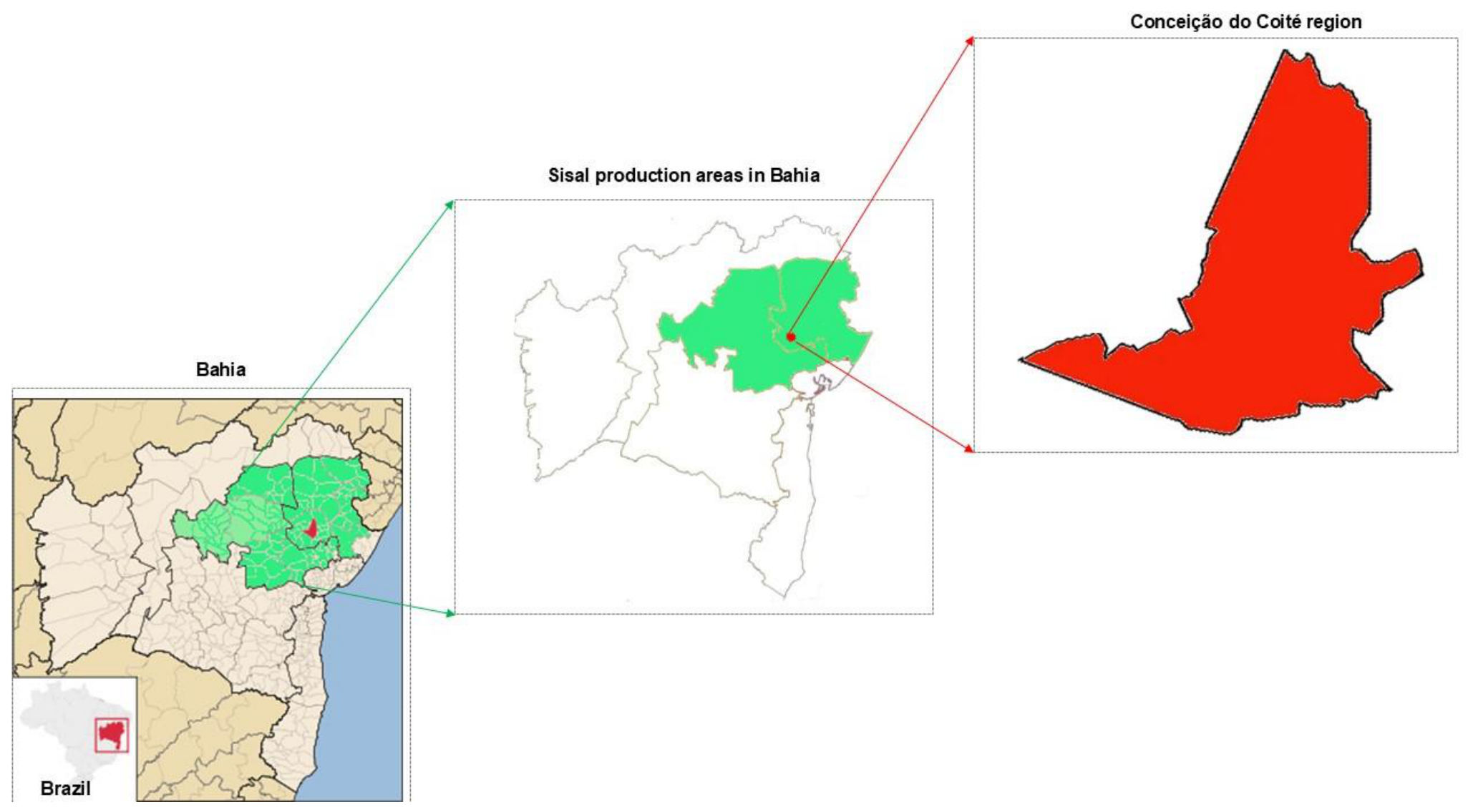
Figure 2.
Sisal residues in the field (A-B) and planting of seedlings in vases in the field experiment (C-D).
Figure 2.
Sisal residues in the field (A-B) and planting of seedlings in vases in the field experiment (C-D).
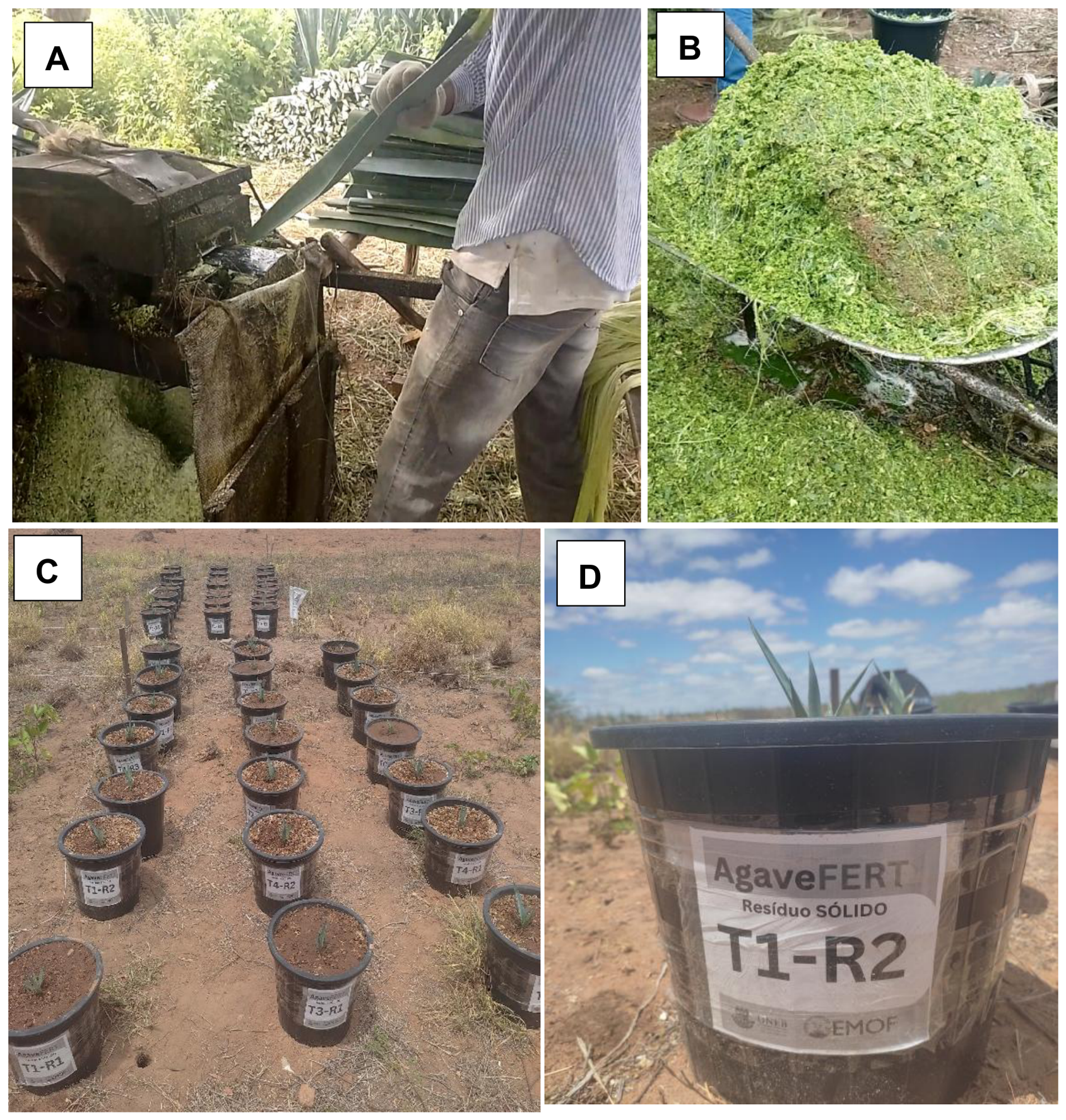
Figure 3.
Annual production of residues (pulp and broken fiber) in Bahia in recent years (2000 and 2024).
Figure 3.
Annual production of residues (pulp and broken fiber) in Bahia in recent years (2000 and 2024).
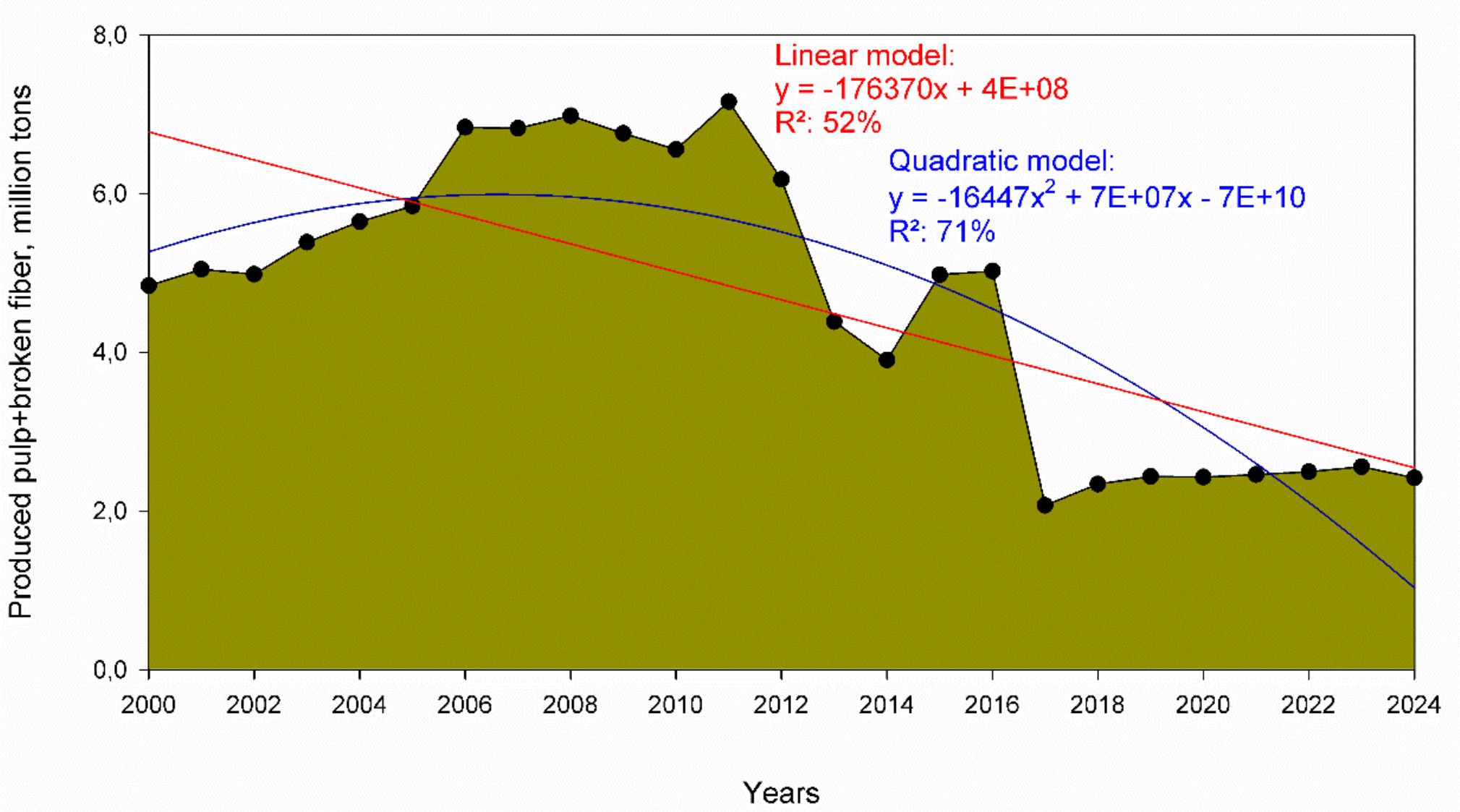
Figure 4.
Annual rate of residues (pulp and broken fiber) production (ton/ha) in Bahia in recent years (2000 and 2024).
Figure 4.
Annual rate of residues (pulp and broken fiber) production (ton/ha) in Bahia in recent years (2000 and 2024).
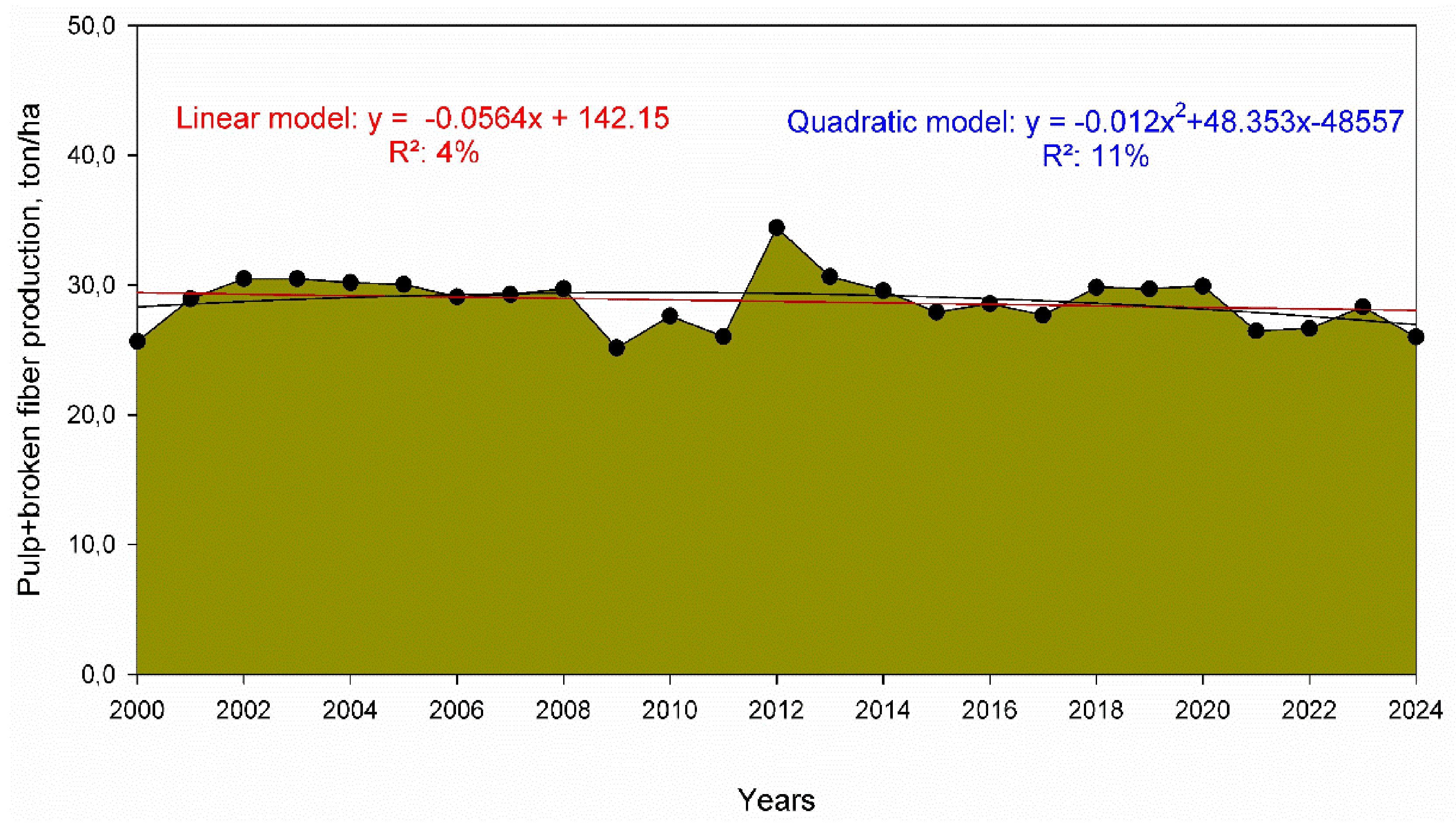
Figure 5.
Weight of plants (plant, shoot, and roots) with rates of solid sisal residue (pulp and broken fiber; 0, 2, 4, 6, 8, 10, and 12 L vase-1) in the region of Conceição do Coité, Bahia. Sisal residues presented a density of 0.1 g cm-3 (100 g L-1) and humidity of 10% (after drying). Averages were analyzed using analysis of variance (F-test), and rates were explained by the linear model.
Figure 5.
Weight of plants (plant, shoot, and roots) with rates of solid sisal residue (pulp and broken fiber; 0, 2, 4, 6, 8, 10, and 12 L vase-1) in the region of Conceição do Coité, Bahia. Sisal residues presented a density of 0.1 g cm-3 (100 g L-1) and humidity of 10% (after drying). Averages were analyzed using analysis of variance (F-test), and rates were explained by the linear model.
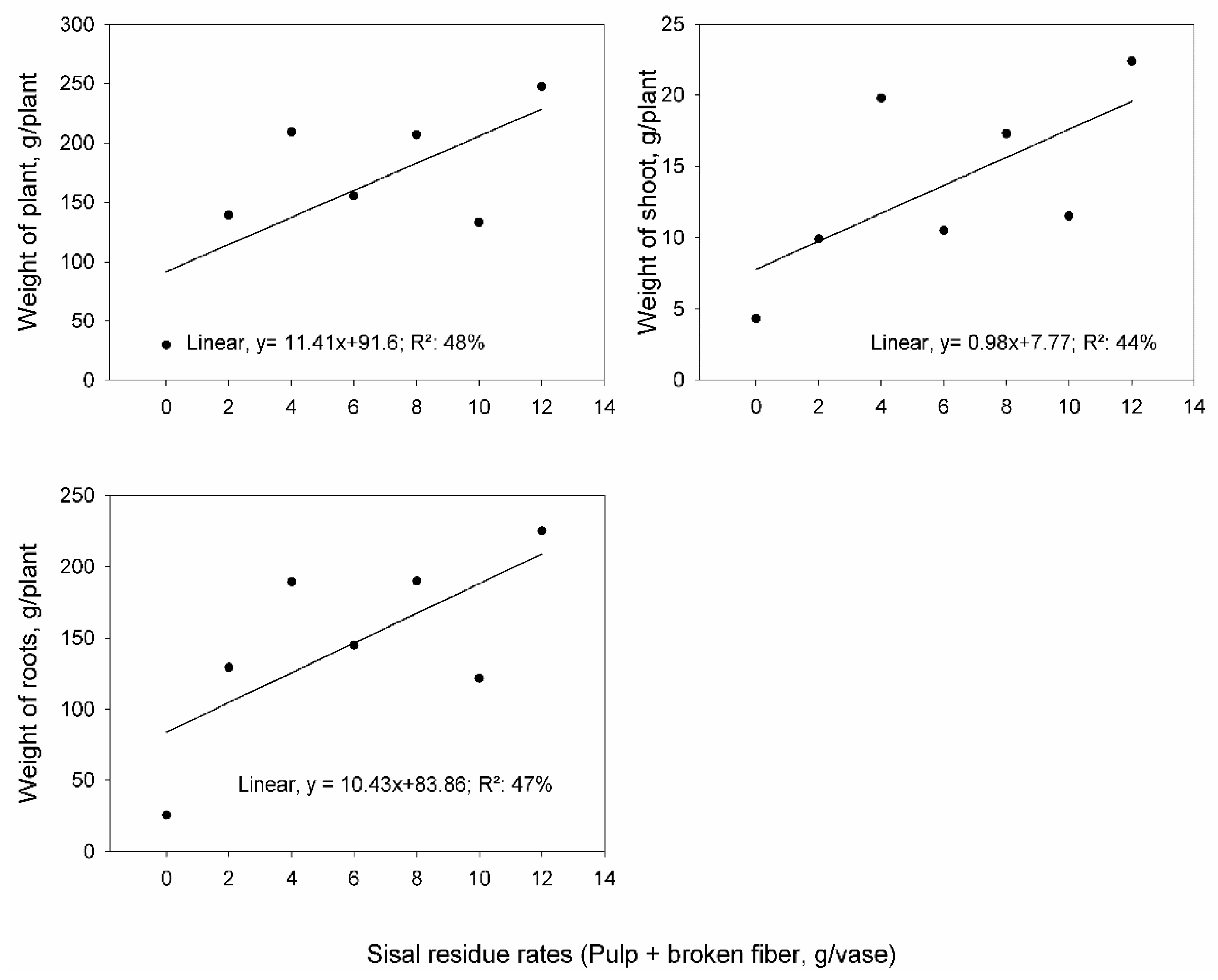
Figure 6.
Visual of shoots and roots in plants with application of solid sisal residue (pulp and broken fiber) rates (0, 2, 4, 6, 8, 10, and 12 L vase-1) in the region of Conceição do Coité, Bahia.
Figure 6.
Visual of shoots and roots in plants with application of solid sisal residue (pulp and broken fiber) rates (0, 2, 4, 6, 8, 10, and 12 L vase-1) in the region of Conceição do Coité, Bahia.
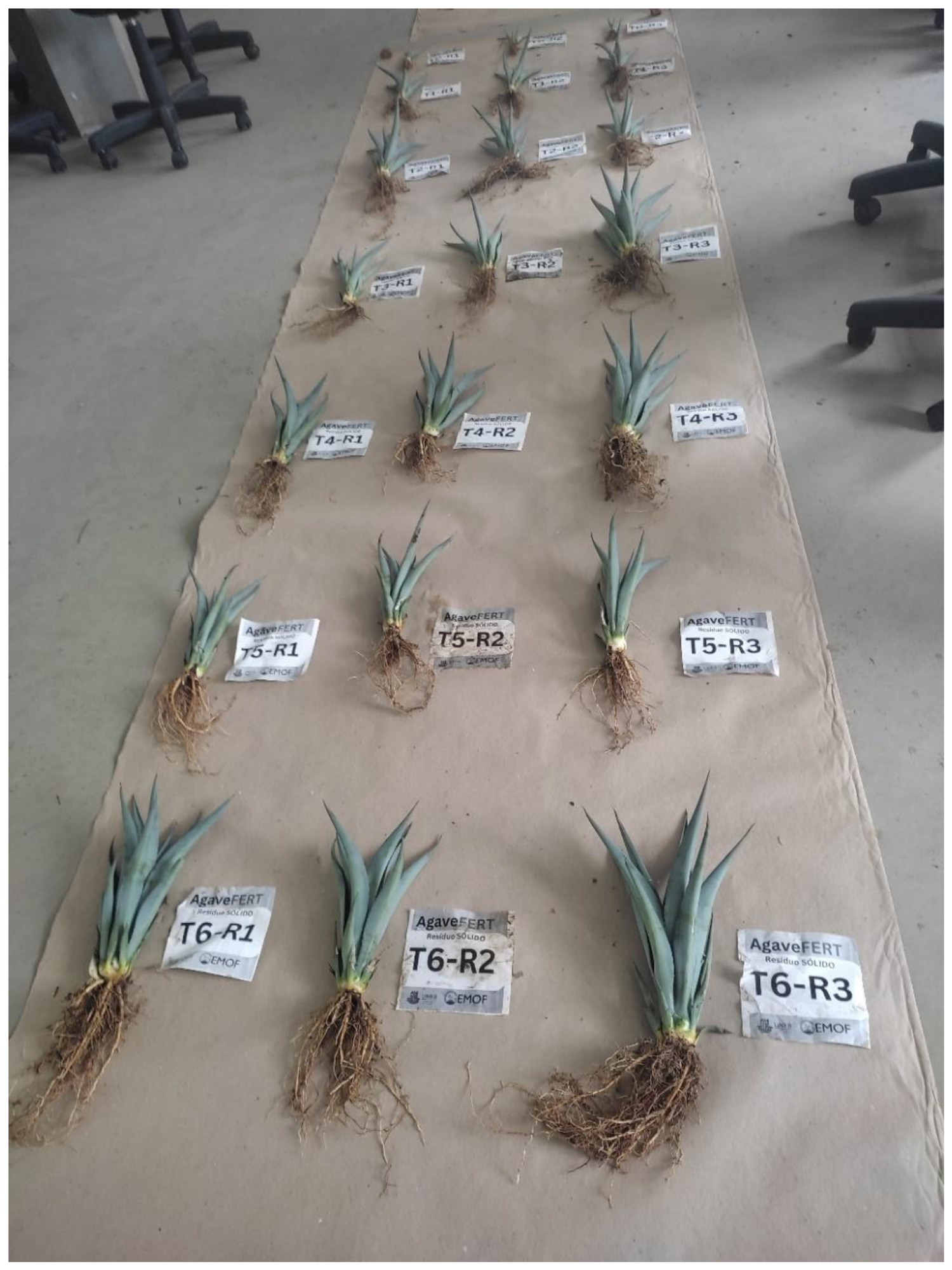
Table 1.
Size of plants (plant, shoot, and roots), number of leaves, and thickness of sisal leaves with rates of solid sisal residue (pulp and broken fiber; 0, 2, 4, 6, 8, 10, and 12 L vase-1) in the region of Conceição do Coité, Bahia.
Table 1.
Size of plants (plant, shoot, and roots), number of leaves, and thickness of sisal leaves with rates of solid sisal residue (pulp and broken fiber; 0, 2, 4, 6, 8, 10, and 12 L vase-1) in the region of Conceição do Coité, Bahia.
| Soil residue, L vase-1 | Size of plant, cm/plant | |||
|---|---|---|---|---|
| Plant | Shoot | Roots | ||
| 0 | 33.3 B | 16.6 C | 16.6 | |
| 2 | 63.3 A | 29.7 AB | 33.6 | |
| 4 | 67.2 A | 29.4 AB | 37.8 | |
| 6 | 64.9 A | 32.3 A | 32.7 | |
| 8 | 68.2 A | 31.6 A | 36.7 | |
| 10 | 55.2 A | 27.2 B | 28.0 | |
| 12 | 64.3 A | 31.1 AB | 33.2 | |
| ANOVA | ||||
| P value | <0.1 | <0.1 | 0,10Ns | |
| Coefficient of variation | 17.9 | 9.5 | 26,3 | |
| Soil residue, L vase-1 | Sisal leaves | |||
| Number/plant | Thickness, mm/leaf | |||
| 0 | 8.0 E | 19.9 E | ||
| 2 | 12.0 D | 30.4 CD | ||
| 4 | 15.0 AB | 33.1 BC | ||
| 6 | 14.0 BCD | 32.3 CD | ||
| 8 | 15.0 AB | 36.7 AB | ||
| 10 | 12.0 CD | 29.0 D | ||
| 12 | 17.0 A | 37.4 A | ||
| ANOVA | ||||
| P value | <0.1 | <0.1 | ||
| Coefficient of variation | 14.9 | 8.42 | ||
Sisal residues presented a density of 0.1 g cm-3 (100 g L-1) and humidity of 10% (after drying). Averages were analyzed using analysis of variance (F-test). Within the column, means followed by different letters differ according to the LSD test (5% probability). *Significant effect of sisal residue rates. Ns: no significant effect.
Table 2.
Weight of plants (plant, shoot, and roots) with rates of solid sisal residue (pulp and broken fiber; 0, 2, 4, 6, 8, 10, and 12 L vase-1) in the region of Conceição do Coité, Bahia.
Table 2.
Weight of plants (plant, shoot, and roots) with rates of solid sisal residue (pulp and broken fiber; 0, 2, 4, 6, 8, 10, and 12 L vase-1) in the region of Conceição do Coité, Bahia.
| Sisal residue, L vase-1 | Weight of plant, g/plant | ||
|---|---|---|---|
| Plant | Shoot | Roots | |
| 0 | 29.7 C | 4.3 D | 25.4 D |
| 2 | 139.1 B | 9.9 C | 129.2 C |
| 4 | 209.0 A | 19.8 AB | 189.3 AB |
| 6 | 155.3 B | 10.5 C | 144.9 BC |
| 8 | 206.9 A | 17.3 B | 189.7 AB |
| 10 | 133.2 B | 11.5 C | 121.7 C |
| 12 | 247.4 A | 22.4 A | 225.0 A |
| ANOVA | |||
| P value | <0.1* | <0.1* | <0.1* |
| Coefficient of variation | 21.2 | 23.8 | 21.9 |
Sisal residues presented a density of 0.1 g cm-3 (100 g L-1) and humidity of 10% (after drying). Averages were analyzed using analysis of variance (F-test). Within the column, means followed by different letters differ according to the LSD test (5% probability). * Significant effect of sisal residue rates.
Disclaimer/Publisher’s Note: The statements, opinions and data contained in all publications are solely those of the individual author(s) and contributor(s) and not of MDPI and/or the editor(s). MDPI and/or the editor(s) disclaim responsibility for any injury to people or property resulting from any ideas, methods, instructions or products referred to in the content. |
© 2026 by the authors. Licensee MDPI, Basel, Switzerland. This article is an open access article distributed under the terms and conditions of the Creative Commons Attribution (CC BY) license (http://creativecommons.org/licenses/by/4.0/).
Copyright: This open access article is published under a Creative Commons CC BY 4.0 license, which permit the free download, distribution, and reuse, provided that the author and preprint are cited in any reuse.