

Submitted:
05 August 2026
Posted:
05 August 2026
You are already at the latest version
Abstract
The physicochemical properties of buccal films are vital for improving drug delivery. It helps ensure that medications are safe, effective, with patient-friendly drug administration. By focusing on these properties, researchers can enhance the functionality of the films and provide a better overall experience for users. In this research study, biocomposite films composed of gellan gum (GG) and pineapple stem fiber (PSF), with glycerine as a plasticizer, were prepared using the solvent casting method to develop a formulation suitable for oral cavity applications. This study aimed to overcome the limitations of neat gellan gum and to produce buccal films with enhanced physicochemical properties. Fourier transform infrared (FTIR) spectroscopy, pH and thickness measurements, tensile test, folding endurance, swelling index, scanning electron microscope (SEM), mucoadhesion test and X-ray diffraction (XRD) analysis were conducted to determine the optimal PSF content in the GG-based biocomposite film formulation. The results indicated that the optimal formulation, GG/3PSF, was achieved with the incorporation of 3 wt. % PSF relative to the total biopolymer mass. This biocomposite film exhibited significant improvements in tensile strength, elongation at break, tensile toughness, folding endurance and mucoadhesion property while maintaining acceptable thickness, pH, and swelling index values. The developed buccal film is environmentally friendly due to the utilization of pineapple stem fiber, an agricultural by-product that can reduce material costs compared with synthetic fillers, and shows considerable potential for drug delivery applications.
Keywords:
polymer
; buccal films
; drug delivery
; gellan gum
; pineapple stem fiber
; biocomposite
1. Introduction
Buccal mucosa route of drug delivery is gaining increasing importance to treat human diseases due to its painless and comfortable drug administration and absorption through the blood vessels into the systemic circulation. Buccal films are easy to deliver, making them a good choice for people who have grief swallowing pills, like kids and older adults [1]. As the need for new ways to deliver drugs grows, it is significant to comprehend the properties of the buccal films. Scientists and researchers continue to explore new natural and synthetic mucoadhesive systems [2,3,4]. They have found that the intersection of material science and pharmacology offers new ways to improve medication administration through buccal channels. Continuous research is advancing the creation of novel materials and drug formulations, thereby facilitating the development of innovative therapeutic strategies. Innovative approaches, meticulous preparation, and an emphasis on patient needs are required due to the problems with the expenses and complexity of the formulation of buccal films [5,6]. Although these challenges are present, they simultaneously offer opportunities for progress in drug delivery systems. The focus of research has been shifted directed toward developing biocomposite buccal film by utilizing agricultural by-products such as pineapple stem fiber (PSF) which can reduce material costs compared to synthetic fillers, making the production process more economical. Buccal films are generally prepared using polymeric materials that provide the essential characteristics of mucoadhesion, controlled release, and mechanical stability [6,7]. Gellan gum (GG) serves as a suitable material for the production of buccal films [7]. As a natural polysaccharide with inherent gelling properties, it is effective for formulating films designed to dissolve within the oral cavity [7,8,9]. When used in drug delivery system, gellan gum offers favorable texture, ensures stability, and enables the controlled release of active pharmaceutical substances. Furthermore, its biocompatibility and excellent film-forming abilities are crucial attributes for buccal delivery systems [10]. Gellan gum produces a robust and flexible film that adheres well to the buccal mucosa, thereby improving drug absorption. This material is non-toxic and the body accepts it well, which makes it safe for use in oral mucosal applications. Gellan gum can be altered so that active pharmaceutical ingredients can be released in a controlled and long-lasting way [7]. It keeps moisture, which aids in increasing the comfort and duration of the film in the mouth [9]. In this research study, gellan gum was mixed with pineapple stem fiber (PSF) as filler in the formulation of biocomposite buccal films. This combination may improve the qualities of the final product in various ways. The inclusion of PSF can improve the mechanical strength and flexibility of the film, which reduces the chance of breakage and promotes better adherence to mucosal surfaces. This combination might affect the drug release profile, enabling a slower release if the appropriate ratio of gellan gum to pineapple fiber is used. The fiber could assist in the controlled release of active ingredients, enhancing their bioavailability and ensuring more effective absorption through the buccal mucosa. Furthermore, both gellan gum and pineapple fiber can decompose naturally, which makes them good for eco-friendly uses [11,12,13]. Pineapple fiber can also provide extra nutritional advantages or functional qualities, like being a source of dietary fiber. It helps to keep moisture, which supports the hydration of the buccal film and stops dryness that might cause discomfort [13,14,15]. Pineapple stems contain bromelain, which is an enzyme recognized for its anti-inflammatory and possible anticancer effects [15,16]. This can enhance the health benefits of products containing this fiber. The fiber may also possess antioxidant properties that help combat oxidative stress, which is associated with cancer development. When combined with other natural substances, pineapple stem fiber may further enhance the overall therapeutic potential of anticancer products [15,16,17]. The rising interest in natural and health-focused products makes pineapple stem fiber a desirable choice for consumers who care about their health. However, when combining these two elements, it is essential to optimize the formulation to reach the desired qualities according to the specific application and targeted release features. This research aimed on finding the optimal ratio of GG / PSF to innovate and optimize the mechanical properties of the resultant GG/PSF buccal films.
2. Materials and Methods
2.1. Materials
Pineapple stem waste was collected from GG Eco Farm (Perlis, Malaysia). Gellan Gum powder (GGP) was purchased from Nichz Ingredient (Selangor, Malaysia). Glycerine was kindly obtained from HmbG Chemicals (Hamburg, Germany). A phosphate buffer solution (PBS) (7.0 pH) was acquired from R&M Chemicals (Selangor, Malaysia). Distilled water was used throughout the process as needed.
2.2. Extraction Process of Pineapple Stem Fiber (PSF)
Pineapple plant stems were collected from a pineapple plantation of the MD2 type in Perlis, Malaysia (GG Eco Farm). Any dirt and debris were removed from the pineapple stems and the plant stems by washing them thoroughly. Then, the stems were chopped into small pieces to facilitate further processing and extraction of fibers. The chopped stems were soaked in distilled water (1:1) to separate the fibers from woody parts of the stem by natural retting. After retting, the softened stems were ground. This reduced the piece size into paste with crude fibrous material. The fibrous materials were filtered out with filter cloth and the extracted fibers were rinsed thoroughly to remove any remaining non fibrous parts and retting residues. The fibrous materials were centrifuged (4000 rpm for 10 min) to optimize the extraction and preparation of fibrous pineapple stem fiber, hence improving their quality, efficiency, and consistency for intended uses. The fibrous materials were then undergoing a drying process at 60 °C for 48 h. The dried pineapple stems fiber was ground and sieved by using 53-micron sieve and kept at room temperature for further use.
2.3. Preparation of GG Biocomposite Buccal Films
GG biocomposite buccal films were prepared by solvent casting method. In order to produce a piece of round-shape biocomposite buccal film with diameter of 8inch, accurately weighed quantities of GG (1g) was dispersed in 30 ml of distilled water. The mixtures were stirred on a magnetic stirrer at 50 rpm for 15 min. Next, PSF (1 wt%, 3 wt%, 5 wt%, and 7 wt% from the total weight of polymer) was added into the mixtures and stirred for 15 min. Then, glycerine (1g) with 20ml of distilled water was added (as plasticizer) and the stirring continued for 15 min until it reached 75 ˚C. A quantity of 30 ml of each colloidal dispersion was poured on the flat surface, and dried at room temperature for 48 h, hence, obtaining thin films after solvent evaporation. The GG biocomposite buccal films were removed from the mould, and the films were cut into the desired shape and dimension before proceeding with the several testing procedures. The composition of the prepared mucoadhesive film formulations is presented in Table 1.
3. Testing and Characterization
3.1. Attenuated Total Reflectance-Fourier Transform Infrared (ATR-FTIR) Spectroscopy
GGP, PSF, Neat GG and GG biocomposite oral buccal film samples were analyzed through Perkin Elmer Paragon FTIR spectrometer with Attenuated Total Reflectance (ATR) in the range of 4000-650cm-1 at 32cm-1 resolution and 32 scans.
3.2. pH Study and Film Thickness
The biocomposite buccal film samples, measuring 2 × 2 cm, were immersed in 10 ml of phosphate buffer solution at pH 7.0 for a duration of 3 hours. During this period, the samples underwent sonication for 10 minutes every hour. Subsequently, the solutions were filtered, and the pH levels were measured utilizing a digital pH meter (Hanna Instruments, HI 98103). The thickness of the films was measured at six different locations using a digital micrometer (Mitutoyo digital calipers). The average thickness was calculated.
3.3. Tensile Strength
The mechanical properties of the biocomposite buccal film samples were determined by standard tensile test. All measurements were carried out at room temperature (23 ± 0.5 ◦C) for specimens with a constant cross-section cutout from the prepared films. Ten replicate samples were prepared for each formulation according to the dimension stipulated in the ASTM 638 Type V. The Instron machine model-5569 was used to conduct the tensile test under a crosshead speed of 2 mm/min. The tensile test properties such as tensile strength, Young’s Modulus, elongation at break and tensile toughness were calculated, and the outcomes were reported as mean ± SD of the measurements.
3.4. Folding Endurance
A small strip measuring 4cm × 1cm was folded repeatedly at the same location in a 180° plane until it breaks, or a maximum of 300 times without breaking in accordance with ISO 5626 (modified) standards, to quantitatively measure the film’s folding endurance. Folding endurance was measured by counting the number of times a film can be folded without breaking.
3.5. Swelling Index
The swelling index was used to assess the swelling behavior of biocomposite buccal films in contact with saliva and determine their suitability for oral cavity use. The swelling index was calculated according to equation 1, by weighing 1 × 1 cm pieces of mucoadhesive buccal film, before (X1) and after immersion in a simulated fluid (X2).
% Swelling index = × 100 (1)
The film samples were placed in a test tube and left to swell in a phosphate buffer solution with a pH of 7.0 in a water bath at 37 ± 1 °C. At predetermined times (15, 30, 45, and 60 minutes), the swollen films were removed from the swelling medium and weighed again. To remove excess water from their surface, filter paper was used. The outcomes were evaluated in three replicates, yielding the calculated mean result.
3.6. Scanning Electron Microscope (SEM)
The fractured surface morphology of specific samples following tensile failure (Neat GG (control sample), GG/3PSF biocomposite (optimal sample), and GG/7PSF biocomposite (suboptimal sample)), was examined and analyzed via scanning electron microscopy (SEM) using a TESCAN VEGA model. Prior to imaging, all specimens were coated with platinum using a JFC-1600 Auto Fine Coater (JEOL Ltd., Japan).
3.7. Mucoadhesion Test
The oral mucosa of various animal species had been subjected to testing, however, pigs and goats oral tissues were predominantly utilized for ex-vivo mucoadhesion studies due to their structural and functional similarities to human oral mucosa. In the present investigation, buccal mucosa from a deceased goat was used to assess mucoadhesion of the buccal film samples. An ex-vivo mucoadhesion residence time test was performed according to the method reported by Pawar et al. [18]. Fresh goat buccal mucosa was sourced from a local slaughterhouse. The mucosal membrane was carefully separated by trimming away the underlying fat and any loose tissues. After that, the membrane was rinsed with distilled water. The buccal mucosa was submerged in a phosphate buffer solution (pH 7) at 37 ± 1 °C using a water bath. Then, the selected buccal film samples (Neat GG, GG/3PSF, and GG/7SF) (1cm×1cm) were applied to the buccal mucosa. The duration for which the film remained attached to the mucosa was recorded as the residence time. Mucoadhesion of the films was evaluated by the time required for the film to detach from the mucosal surface. Figure 1 illustrates the overall procedures performed for this ex-vivo mucoadhesion test.
3.8. X-Ray Diffraction (XRD)
To determine crystallinity, XRD analysis of the films and their components was organized. The samples of GGP, PSF, Neat GG (control sample), and GG/3PSF were analyzed by using a high-power benchtop X-ray diffraction (XRD) system manufactured in Karlsruhe, Germany (Bruker D6 Phaser). The testing was conducted at room temperature using a scanning angle range (2θ) between 5° to 80°.
4. Results and Discussion
4.1. Attenuated Total Reflectance-Fourier Transform Infrared (ATR-FTIR) Spectroscopy
FTIR spectra of GGP, PSF, Neat GG and GG biocomposite buccal films with different amount of PSF are shown in Figure 2. According to 2(a), a broad band at 3286 cm-1 indicates the presence of a hydroxyl (-OH) group [7,19]. The band around 2922 cm-1 corresponds to the C-H stretching vibration [19]. The peaks at 1587 cm-1 and 1412 cm-1 might indicate the vibration of C=O groups that exist in the gellan gum matrix, which has carboxylic acid groups. On the other hand, the presence of a peak at 1026 cm-1 was due to the C-O stretching vibration, which is characteristic of the glycosidic bonds and saccharide structure in gellan gum [12]. The PSF is similar to other lignocellulosic fibers, showing a broad peak in the O-H region (3286cm⁻¹) and a strong C-O stretching peak at around 1026 cm⁻¹, which is consistent with its cellulosic nature. The FTIR spectrum of the Neat GG film is similar to the GGP with the same main peaks. However, the peaks in the film form (particularly the O-H band and the C-O band at 1026cm-1) are sharper and well defined in comparison to the powder. This transition is often indicative of a re-organization of the molecular chains and formation of a more integrated network during the film-casting process. The incorporation of PSF caused alteration in the FTIR pattern, particularly at the peaks around 3286 cm-1, 2922 cm-1 and 1026 cm-1. The peak at approximately 3286 cm⁻¹ in an FTIR spectrum is often associated with O-H stretching vibrations, typically related to alcohols, phenols, or water. In the film samples, which comprise PSF (GG/1PSF, GG/3PSF, GG/5PSF, and GG/7PSF), the peak intensity increases. The results can be attributed to the rise in hydroxyl groups. PSF contains a high amount of cellulose and other polysaccharides, which have –OH functional groups [20]. Therefore, by adding PSF, the overall number of –OH groups in the film increases, leading to greater absorption at the ~3286 cm⁻¹ region (refer to 2(b)). Moreover, these results are also related to the hydrophilicity and water interaction. Gellan gum and glycerin both possess water-attracting properties [11]. Consequently, the addition of PSF may boost the moisture content of the film, leading to more O-H interactions, which can also contribute to the increased peak intensity. The absorption peak observed at approximately 2922 cm⁻¹ in an FTIR spectrum is typically linked to C-H stretching vibrations, specifically from methylene (–CH₂) and methyl (–CH₃) functionalities. This association arises from a higher aliphatic content present in the material. PSF, which is composed of natural cellulose and various polysaccharides, often features extensive carbon chains rich in –CH₂ and –CH₃ groups. The incorporation of this filler contributes to an increase in the quantity of these aliphatic groups within the film matrix, resulting in an enhanced absorption peak near 2922 cm⁻¹ as can be seen on the samples of GG/1PSF, GG/3PSF, GG/5PSF, and GG/7PSF (refer to Figure 2(b)). Furthermore, the incorporation of PSF also caused an alteration at the peak around 1026 cm⁻¹ (refer to 2(c)). The prominent peak observed near 1026 cm⁻¹ is generally associated with C-O stretching vibrations, a characteristic feature of carbohydrates and polysaccharides. The incorporation of PSF, which is abundant in cellulose and hemicellulose, has the potential to enhance the prevalence of these functional groups within the film matrix, resulting in increased absorbance at this specific wavenumber.
4.2. pH Study and Film Thickness
The GG biocomposite oral buccal films pH values and thickness are summarized in Table 1. The suitable pH for buccal films typically ranges from 5.5 to 7.5 [21,22]. This range ensures optimal drug solubility, stability, and absorption in the buccal mucosa, facilitating effective drug delivery. The pH measurement provided information on the tolerance of the films, because acidic or basic pH can be irritating to the mucosa. The studied film samples presented values between 6.9 and 7.1, as shown in Table 2. Thus, all the biocomposite buccal film samples were well tolerated. Film samples with a pH close to neutral (approximately pH 7) are less likely to cause discomfort or irritation when in contact with the buccal mucosa [21,23]. This is an important factor for the samples intended for prolonged contact with oral tissues. The thickness of oral buccal films ranges from 0.05 mm to 0.1 mm [24,25]. Based on Table 2, the film thickness of GG biocomposite oral buccal films was observed in the range 0.06 mm to 0.11 mm. Thinner films can improve patient compliance due to being less noticeable and provide a comforting feeling to them as they are less obstructive in the mouth. The thickness of film samples increases when increasing of PSF content due to the inclusion of more fiber content that can enhance the viscosity of the mixture, leading to thicker buccal films samples. In this research study, the sequence of thicknesses was GG/7PSF> GG/5PSF> GG/3PSF> GG/1PSF> Neat GG. This was related to the amount of PSF content in each sample.
4.3. Tensile Properties of Neat GG, GG/1PSF, GG/3PSF, GG/5PSF, and GG/7PSF Biocomposite Buccal Films
The tensile properties such as tensile strength, Young’s Modulus, elongation at break and tensile toughness are summarized in Table 3 and clarified in graph (see 3). As can be seen in Table 3, incorporating PSF filler into the GG matrix results in the improvement of the tensile strength, elongation at break and tensile toughness of the GG films.
Compared to neat GG, the GG/3PSF samples demonstrated a 50% higher tensile strength, alongside enhancements of 26% in elongation at break and 86% in tensile toughness. Several factors may account for the elevated tensile strength, elongation at break, and toughness, alongside a reduced Young’s modulus of the buccal film composed of gellan gum and PSF filler. Primarily, the inclusion of PSF, which is abundant in bromelain and contains fibrous components, contributes to these improvements. These fibers can improve the mechanical features of the film by acting as reinforcement, which allows the material to better endure stress, thus increasing tensile strength [20,26]. The inclusion of these PSF can enhance the interaction between gellan and the filler, resulting in a composite structure that distributes load more effectively. Tensile strength is defined as the material’s capability to avoid breaking when under tension. The mixture of gellan gum with fibers from the pineapple stem can produce a more robust network that resists deformation, thereby achieving higher tensile strength. Additionally, because the plasticizer boosts flexibility and the fibers offer structural support, the final film can stretch considerably without breaking, leading to a greater elongation at break. Toughness refers to the characteristic of a material that enables it to absorb energy and undergo deformation without breaking. The overall toughness is influenced by a combination of high tensile strength, the flexibility provided by plasticizers, and the reinforcing properties of the fibers. During the mixing phase, fibers may undergo viscous drag as they are distributed within the gellan gum solution. This phenomenon can assist in aligning the fibers with the polymer chains, thereby promoting effective dispersion throughout the matrix. Moreover, both GG and PSF possess hydroxyl groups (-OH) within their molecular structures as proved by FTIR test result (see Figure 2). These hydroxyl groups are capable of establishing hydrogen bonds with each other, which enhances the interaction between the fiber filler and the gellan gum matrix, ultimately resulting in improved adhesion. Depending on the conditions of processing, there are possibilities for cross-linking to take place between PSF and GG molecules. This can increase the strength of the bonds and enhance the mechanical properties. When GG changes from a solution into a gel, the PSF may become trapped within the gel matrix. This trapping helps to stabilize the composite structure and keeps the fibers in the correct position. It is very important that the filler and the matrix work well together. PSF needs to be treated or processed to make sure they spread out evenly in the GG, which can improve the quality of the bonding. The connection between the PSF filler and the GG matrix happens because of mechanical interlocking, hydrogen bonding, and physical trapping during the gel formation. This complex relationship results in better properties in the composite material, such as increased tensile strength, flexibility, and toughness. This type of bonding is important for applications like buccal films, where both performance and comfort are very important. High strength and superb flexibility are the two most crucial criteria possessed by the buccal film application. GG biocomposite buccal films show the great potential in this application and viable alternative to replace other buccal film based polymers.
4.4. Folding Endurance
The folding endurance of a buccal film refers to the film’s ability to withstand repeated bending and folding without breaking or losing its integrity. It is an essential parameter for evaluating the quality and stability of buccal films, which are designed to adhere to the mucosal tissue in the mouth for drug delivery. A higher folding endurance is crucial for patient compliance, ensuring the film remains intact during use, and delivering the intended drug dose. According to Table 4, film samples of Neat GG and GG/1PSF cannot withstand 300 times of folding. Gellan gum, while capable of forming gels, without filler (PSF) may not possess the mechanical strength required to endure extensive folding. Its inherent flexibility can lead to breakage under repetitive stress. PSF can reinforce the film matrix because it contains a high amount of cellulose, which possesses strong crystalline structures. These cellulose microfibrils act as reinforcing agents within the gellan gum matrix, improving the tensile strength and stiffness of the biofilm. When dispersed in the polymer network, the fibers help distribute stress more effectively, preventing film breakage. It can improve the tensile strength and stiffness, allowing the film to resist breaking during folding. GG is hydrophilic and can absorb moisture, leading to swelling. This can alter the mechanical properties, making the film more susceptible to breakage when flexed repeatedly. GG films can become brittle when dried, making them fragile under mechanical stress. The addition of fibrous fillers can reduce brittleness and enhance flexibility. Additionally, GG molecular structure and interactions may not provide sufficient cohesion under repetitive stress compared to a composite film with added fillers, which can enhance overall strength. Hence, by incorporating PSF or another filler, the composite film can achieve improved mechanical strength, flexibility, and durability, enabling it to withstand a higher number of folds.
4.5. Swelling Index
The swelling index of oral buccal film typically refers to a measure of how much a film can absorb water and swell when placed in contact with a liquid (buffer solution or simulated saliva) [27,28]. An optimal swelling index in buccal films is influenced by several factors, including the intended drug release profile, the polymer type, and the active pharmaceutical ingredient (API) incorporated [29,30,31,32]. However, a moderate swelling index (approximately 100–200%) is generally considered suitable for buccal film drug delivery systems because it allows adequate hydration, mucoadhesion, and controlled drug release without causing structural instability [6]. This value refers to the maximum swelling reached within the residence or evaluation time, which in many studies is about 2–8 hours, depending on the formulation and intended drug release duration.
The swelling profiles of GG biocomposite buccal films are shown in Figure 4. Biocomposite buccal films of GG/1PSF, GG/3PSF, GG/5PSF, and GG/7PSF that comprised PSF resulted in a higher swelling index after 15, 30, 45, and 60 minutes of immersing time compared to the Neat GG film sample. The swelling index of the prepared buccal films rates in the order: GG/7PSF> GG/5PSF> GG/3PSF> GG/1PSF> Neat GG. Hydrophilic nature of PSF was the reason the GG/PSF biocomposites to exhibit an overall higher swelling index [20]. A hydrophilic fiber (PSF) can absorb and retain moisture, making it suitable for buccal film application due to its potential to enhance drug release. As revealed previously, PSF is hydrophilic, hence, when mixed with GG, which also possesses water-absorbing properties, it can increase the overall water absorbing capacity of the composite. The FTIR test result appears to confirm this fact (refer to Figure 2). The PSF can generate a network structure within the GG matrix. This network can trap more water, leading to increased swelling. The compatibility of PSF with gellan gum can improve the interaction, allowing the GG to expand more when hydrated. Based on 4, an increase in the amount of PSF resulting higher in swelling index. The GG/7PSF achieved the highest swelling index among all biocomposite buccal films after 60 minutes (see Table 5). This phenomenon may be attributed to the higher percentage of PSF, which is 7 wt. %, in comparison to other biocomposite buccal film samples, thus indicating an enhanced affinity towards water molecules. Nevertheless, it is important to consider that in the context of oral buccal films, excessive swelling may compromise adhesion or the structural integrity of the film [33]. This assertion is corroborated by the findings from tensile tests (see Table 3), which demonstrate inferior mechanical properties, as evidenced by a notable decrease in tensile strength relative to other samples. As illustrated in 5, the film samples with PSF, higher in water permeation compared to Neat GG (without PSF). The higher content of PSF allows the permeation of more water molecules due to the polar characteristics of the PSF. The PSF might have hydrophilic (water-attracting) properties, which can enhance the interaction between water and GG structure, promoting absorption and permeability. Furthermore, glycerine also provides water-attracting (hygroscopic) properties; hereafter, while added to GG and PSF, it helps break down the gel structure and facilitates the movement of water within the matrix.

Table 5.
Swelling test results of biocomposite buccal films (Neat GG, GG/1PSF, GG/3PSF, GG/5PSF, and GG/7PSF.
Table 5.
Swelling test results of biocomposite buccal films (Neat GG, GG/1PSF, GG/3PSF, GG/5PSF, and GG/7PSF.
| Time (min) | Samples and Swelling Index (%) | ||||
| Neat GG` | GG/1PSF | GG/3PSF | GG/5PSF | GG/7PSF | |
| 15 | 17.67±2.5 | 22.10±2.7 | 28.33±2.1 | 45.67±2.6 | 49.63±4.5 |
| 30 | 24.33±5.1 | 32.77±1.5 | 62.65±4.1 | 74.53±4.3 | 71.25±3.2 |
| 45 | 33.00±3.0 | 45.00±3.6 | 85.00±5.0 | 101.02±3.8 | 109.00±3.6 |
| 60 | 35.56±4.0 | 51.55±2.5 | 115.31±2.3 | 140.00±2.7 | 161.81±4.7 |
Based on the results, the GG/3PSF film exhibited an optimal swelling index, reaching approximately 115% after 1 hour of immersion in simulated saliva fluid (phosphate buffer solution, pH 7.0) under water bath conditions. However, it should be noted that this swelling value may be slightly lower under actual oral conditions, as the volume of saliva in the human oral cavity is considerably smaller than the complete immersion environment used in this experimental setup.
4.6. Scanning Electron Microscope (SEM)
The SEM micrographs of the tensile fracture surface of the selected sample (Neat GG: Control sample, GG/3PSF: Optimized sample, and GG/7PSF: Unoptimized sample) are displayed in Figure 6. Several researchers examined fracture behavior after tensile tests using SEM imaging [34,35].
Based on Figure 6, it is clear that incorporating PSF into the GG matrix results in a more ductile fractured surface compared to pure GG. This enhancement can be attributed to the molecular interactions between GG and the PSF, which contribute to increased ductility. Such interactions appear to form a more cohesive network, allowing the composite to stretch further before breaking, leading to a more flexible film rather than one that snaps. This finding aligns with the tensile test results, which indicate that the elongation at break increases after adding the filler, while the young’s modulus decreases. The inclusion of PSF enhances the elongation at break, allowing the composite to stretch more before it fails. Its fibrous structure enables the material to flex and bend without quickly breaking. This PSF network increases ductility and flexibility [36,37]. Additionally, the addition of PSF might also boost the films water retention, which is supported by the swelling test results shown in Figure . Increasing the moisture content can help lessen brittleness, resulting in a more pliable film [38,39]. Essentially, incorporating PSF into a gellan gum matrix forms a composite that merges strength with flexibility, enabling the material to withstand stress while allowing for increased elongation before failure, all while reducing stiffness. This combination of attributes is particularly beneficial for applications such as buccal films, where both comfort (softness) and performance are crucial. In summary, adding PSF to the GG matrix enhances ductility, resulting in a more effective and versatile buccal film.
4.7. Mucoadhesion Test
The mucoadhesion test for buccal films is essential in evaluating their performance as drug delivery systems [40]. This test primarily measures how well the film adheres to mucosal surfaces, which is critical for retaining the drug and ensuring consistent therapeutic effects. A strong adhesion not only enhances drug absorption in the mouth but also minimizes the chances of first-pass metabolism, leading to greater bioavailability [41]. Additionally, films that stick well tend to improve patient compliance by being more comfortable and allowing for discreet administration of medication. Effective mucoadhesion also boosts the therapeutic effectiveness of buccal films by keeping the drug in contact with the mucosal tissue for longer, maximizing its benefits [42]. The mucoadhesion test is important for the formulation development process as well, guiding choices regarding materials and manufacturing techniques. In this research study, the ex-vivo mucoadhesion test results for selected samples (Neat GG, GG/3PSF, and GG/7PSF). It demonstrated how the films were applied to the mucosa surfaces and tested for adhesion strength under specific conditions. The detachment test for assessing bioadhesion from buccal mucosa was a straightforward method used to evaluate the adhesive strength of various formulations. Within the context of this research investigation, fresh goat buccal mucosa was employed because of its close resemblance to human tissue, making it an ideal model for investigating drug absorption and adhesion properties. The choice of goat tissue was also influenced by its availability, particularly in areas where goats are commonly raised for meat, as it tends to be more cost-effective than other animal options.
The results of the mucoadhesion time for the selected sample were tabulated in Table 6. The results revealed that the samples incorporating PSF with GG in the formulations (GG/3PSF and GG/7PSF) showed more than 6 hours of bioadhesion time compared to Neat GG. The residence time within 6 to 8 hours is considered optimum for controlled / sustained systemic drug delivery [43]. Figure shows that after 3 hours and 42 minutes, the buccal film of Neat GG detached from the mucous membrane. However, an extended mucoadhesion time observed when PSF is incorporated into the buccal film formulation (GG/3PSF and GG/7PSF). This can be clarified by several interconnected factors. Primarily, PSF may form a more intricate network with GG, which increases the surface area available for interaction with the mucosal tissue, resulting in a stronger adhesive bond. Its hydrophilic nature helps in retaining water and swelling when it comes into contact with saliva, thereby improving the contact with the mucosa and enhancing mucoadhesion [44]. Additionally, there may be a positive interaction between GG and PSF, leading to better adhesion to the mucus layer in the mouth. The inclusion of PSF may also change the formulations viscosity, which can improve its ability to adhere to mucosal surfaces. Moreover, the texture added by the PSF might create a rougher surface, providing better grip for the mucus as seen on Figure 7 (GG/3PSF and GG/7PSF). Lastly, bioactive components in the PSF may interact favorably with the mucosal tissues, further boosting adhesion. Collectively, these aspects contribute to a longer mucoadhesion time, which helps retain the buccal film in the mouth for a prolonged release of its active ingredients.
4.8. X-Ray Diffraction (XRD)
The aim of XRD analysis on Neat GG film and GG/3PSF biocomposite film was to explore their structural characteristics. This includes identifying crystalline and amorphous phases, evaluating crystallinity to see how the filler influences the GG polymer structure, and examining the interactions between the GG and PSF.
The X-ray diffraction spectra of the GGP, PSF, Neat GG film and GG/3PSF biocomposite film are shown in Figure 8. The GGP shows a semi-crystalline pattern with peaks at the approximately of 2θ=9.2° and 19.7°, while the PSF exhibits the typical peaks of cellulose at around 2θ=15.7° and 21.8°. The material forms a highly ordered semi-crystalline structure when analysed in a Neat GG film, which is confirmed by sharp diffraction peaks at 2θ=10.8°, 18.7°, and 21.4°. Nevertheless, when the PSF is incorporated in the GG matrix, a change to an amorphous state is observed, in which these sharp peaks are replaced by a broad diffuse halo in the range of 2θ=19.8° and 21.7°. This transition to the amorphous state can be primarily attributed to the presence of fiber filler (PSF). The strong intermolecular hydrogen bonding at the interface disrupts the regular molecular packing and crystallization of GG chains as shown in Figure 9 [45,46]. FTIR analysis proved the existence of this hydrogen bonding. As seen in the FTIR spectra (Figure 2), the observation of the enhanced absorption at ~3286 cm-1 FTIR region gives the chemical evidence that can explain the physical transformation observed in the XRD results. The additional -OH groups enable the formation of large intermolecular hydrogen bonds with the gellan gum and the fiber, which disrupts crystallinity. The high frequency of bonding acts as a “chemical anchor” stopping the gellan gum chains from self-organising into the highly ordered lattice found in the pure gellan gum film. Likewise, the reduction in crystallinity leads to a lower modulus due to less of the stiff, ordered regions, but at the same time allows for greater molecular mobility, which accounts for the increase in elongation at break which is in line with the tensile test results that can be observed in Figure 3 [47].
5. Conclusions
The optimal PSF content plays a crucial role in enhancing the physicochemical properties of the resulting biocomposite film. Based on several analyses performed, the buccal film formulated with GG and 3 wt. % PSF (GG/3PSF) proving significant enhancements in tensile strength, flexibility, tensile toughness, mucoadhesion, folding endurance, while possessing acceptable thickness, pH and swelling index values for buccal film application. These findings indicate that the developed PSF can be effectively utilized as a filler to improve the physicochemical properties of biopolymers, particularly gellan gum. This approach demonstrates significant potential for various applications, especially in drug delivery systems. Overall, pineapple stem fiber positively contributes to the performance of buccal films, potentially enhancing both functional properties and patient acceptability.
Author Contributions
Conceptualization, Azlin Fazlina Osman; Methodology, Tuty Fareyhynn Mohammed Fitri, Azlin Fazlina Osman and Sinar Arzuria Adnan; Software, Sinar Arzuria Adnan and Nur Hidayah Ahmad Zaidi; Validation, Eid Alosime and Sinar Arzuria Adnan; Formal analysis, Tuty Fareyhynn Mohammed Fitri and Nur Hidayah Ahmad Zaidi; Investigation, Tuty Fareyhynn Mohammed Fitri and Sinar Arzuria Adnan; Resources, Azlin Fazlina Osman and Eid Alosime; Data curation, Eid Alosime and Nur Hidayah Ahmad Zaidi; Writing – original draft, Tuty Fareyhynn Mohammed Fitri; Writing – review & editing, Azlin Fazlina Osman, Eid Alosime and Nur Hidayah Ahmad Zaidi; Supervision, Azlin Fazlina Osman; Project administration, Azlin Fazlina Osman; Funding acquisition, Azlin Fazlina Osman and Eid Alosime. All authors have read and agreed to the published version of the manuscript.
Funding
This work was financially supported by Universiti Malaysia Perlis (UniMAP) through UniMAP Postdoctoral Grant under a grant number of 9001-00787.
Institutional Review Board Statement
Not applicable.
Informed Consent Statement
Not applicable.
Data Availability Statement
The original contributions presented in this study are included in the article. Further inquiries can be directed to the corresponding author(s)..
Conflicts of Interest
The authors declare no conflict of interest.
References
- S. Khan, J. S. Boateng, J. Mitchell, and V. Trivedi, “Formulation , Characterisation and Stabilisation of Buccal Films for Paediatric Drug Delivery of Omeprazole,” AAPS PharmSciTech, vol. 16, no. 4, pp. 800–810, 2015. [CrossRef]
- L. L. Vajrala, M. S. Umashankar, and M. Alagusundaram, “Formulation, Optimization and In-Vivo Pharmacokinetic Evaluation of Carvedilol Mucoadhesive Buccal Films by Using Natural Polymers,” Trop. J. Nat. Prod. Res., vol. 7, no. 10, pp. 4927 – 4936, 2023. [CrossRef]
- S. Abdella, F. Afinjuomo, Y. Song, R. Upton, and S. Garg, “Mucoadhesive Buccal Film of Estradiol for Hormonal Replacement Therapy: Development and In-Vivo Performance Prediction,” Pharmaceutics, vol. 14, no. 3, 2022. [CrossRef]
- E. Dinte et al., “In Vitro and In Vivo Characterisation of a Mucoadhesive Buccal Film Loaded with Doxycycline Hyclate for Topical Application in Periodontitis,” Pharmaceutics, vol. 15, no. 2, p. 580, 2023. [CrossRef]
- Salawi et al., “Design and Evaluation of Instant Release Buccal Films of Empagliflozin: A Statistical Approach,” ACS OMEGA, vol. 10, pp. 23492–23503, 2025. [CrossRef]
- M. S. Khan et al., “Development and evaluation of mucoadhesive buccal films for the sustained release of diclofenac sodium: An innovative approach for pain management,” World J. Adv. Eng. Technol. Sci., vol. 13, no. 1, pp. 814–830, Oct. 2024. [CrossRef]
- F. P. Fernandes, A. C. Fortes, S. G. Da Cruz Fonseca, J. Breitkreutz, and H. G. Ferraz, “Manufacture and Characterization of Mucoadhesive Buccal Films Based on Pectin and Gellan Gum Containing Triamcinolone Acetonide,” Int. J. Polym. Sci., vol. 2018, pp. 1–8, 2018. [CrossRef]
- Li, I. N. Khan, I. U. Khan, A. M. Yousaf, and Y. Shahzad, “Gellan Gum-Based Bilayer Mucoadhesive Films Loaded with Moxifloxacin Hydrochloride and Clove Oil for Possible Treatment of Periodontitis,” Drug Des. Devel. Ther., vol. Volume 15, pp. 3937–3952, Sep. 2021. [CrossRef]
- M. Wojtyłko, A. Froelich, and B. Jadach, “Hypromellose-, Gelatin- and Gellan Gum-Based Gel Films with Chlorhexidine for Potential Application in Oral Inflammatory Diseases,” Gels, vol. 10, no. 4, p. 265, Apr. 2024. [CrossRef]
- T. Muthukumar, J. E. Song, and G. Khang, “Biological Role of Gellan Gum in Improving Scaffold Drug Delivery, Cell Adhesion Properties for Tissue Engineering Applications,” Molecules, vol. 24, no. 24, p. 4514, Dec. 2019. [CrossRef]
- R. Abdl Aali and S. Al-Sahlany, “Gellan Gum as a Unique Microbial Polysaccharide: Its Characteristics, Synthesis, and Current Application Trends,” Gels, vol. 10, no. 3, p. 183, Mar. 2024. [CrossRef]
- N. Agarwal, M. Thakur, B. B. Mishra, and S. P. Singh, “Preparation and characterization of biodegradable films based on levan polysaccharide blended with gellan gum,” Environ. Technol. Innov., vol. 31, p. 103231, 2023. [CrossRef]
- Y. Liu et al., “From agricultural waste to functional materials: A comparative study on pineapple fibers for antibacterial paper applications,” Ind. Crops Prod., vol. 236, no. May, p. 121884, Nov. 2025. [CrossRef]
- Y.-L. Huang, C.-J. Chow, and Y.-J. Fang, “Preparation and physicochemical properties of fiber-rich fraction from pineapple peels as a potential ingredient,” J. Food Drug Anal., vol. 19, no. 3, pp. 318–323, Jul. 2020. [CrossRef]
- D. I. Santos et al., “Pineapple (Ananas comosus L.) By-Products Valorization: Novel Bio Ingredients for Functional Foods,” Molecules, vol. 26, no. 11, p. 3216, May 2021. [CrossRef]
- Chakraborty et al., “Bromelain a Potential Bioactive Compound: A Comprehensive Overview from a Pharmacological Perspective,” Life, vol. 11, no. 4, p. 317, Apr. 2021. [CrossRef]
- R. Pezzani et al., “Anticancer properties of bromelain : State-of-the-art and recent trends,” Front. Oncol., no. January, pp. 1–18, 2023. [CrossRef]
- Pawar, R. Godge, G. Shinde, K. Barde, & A. Vikhe, “Design, development, and optimization of mucoadhesive buccal films of ganaxolone for enhanced bioavailability”, Journal of Applied Pharmaceutical Research, vol. 13, no. 2, p. 95, 2025, doi.org/10.69857/joapr.v13i2.943.
- V. Johny, A. Kuriakose Mani, S. Palanisamy, V. K. Rajan, M. Palaniappan, and C. Santulli, “Extraction and Physico-Chemical Characterization of Pineapple Crown Leaf Fibers (PCLF),” Fibers, vol. 11, no. 1, p. 5, Jan. 2023. [CrossRef]
- K. Singha, P. Pandit, and S. Shrivastava, Pineapple Leaf Fibers. in Green Energy and Technology. Singapore: Springer Singapore, 2020. [CrossRef]
- S. He, J. Jacobsen, C. Uhd, N. Genina, J. Østergaard, and H. Mu, “Exploration of in vitro drug release testing methods for saquinavir microenvironmental pH modifying buccal films,” Eur. J. Pharm. Sci., vol. 163, no. April, p. 105867, 2021. [CrossRef]
- N. Vasisht, L. N. Gever, I. Tagarro, and A. L. Finn, “Formulation Selection and Pharmacokinetic Comparison of Fentanyl Buccal Soluble Film with Oral Transmucosal Fentanyl Citrate,” Clin. Drug Investig., vol. 29, no. 10, pp. 647–654, Oct. 2009. [CrossRef]
- S. He and H. Mu, “Microenvironmental pH Modification in Buccal/Sublingual Dosage Forms for Systemic Drug Delivery,” Pharmaceutics, vol. 15, no. 2, p. 637, Feb. 2023. [CrossRef]
- G. Bondi et al., “Innovative bilayered buccal films: A paediatric-friendly dosage form for transmucosal azithromycin delivery,” Int. J. Pharm., vol. 684, no. July, p. 126164, Nov. 2025. [CrossRef]
- S. Karki et al., “A pullulan-based bilayer film for buccal delivery of a GLP-1 peptide analogue,” Carbohydr. Polym., vol. 380, no. January, p. 125064, May 2026. [CrossRef]
- H. Alias et al., “Hybridization of MMT/lignocellulosic fiber reinforced polymer nanocomposites for structural applications: A review,” Coatings, vol. 11, no. 11, p. 1355, 2021. [CrossRef]
- D. S. P. P. Venkata, S. Ruby, and M. Kumar, “Design, Optimization and Performance Assessment of Memantine Buccal Films for Targeted Drug Delivery,” Int. J. Drug Deliv. Technol., vol. 14, no. 3, pp. 1635 – 1640, 2024. [CrossRef]
- M. I. Mohamed, K. F. El-Shaboury, and M. A. Abdallah, “Formulation and evaluation of Lornoxicam mucoadhesive buccal films,” J. Res. Pharm., vol. 28, no. 4, pp. 1152 – 1165, 2024. [CrossRef]
- D. A. Gaber et al., “Development, in vitro Evaluation, and in vivo Study of Adhesive Buccal Films for the Treatment of Diabetic Pediatrics via Trans Mucosal Delivery of Gliclazide,” Drug Des. Devel. Ther., vol. 16, pp. 4235 – 4250, 2022. [CrossRef]
- P. Kraisit, S. Limmatvapirat, M. Luangtana-Anan, and P. Sriamornsak, “Buccal administration of mucoadhesive blend films saturated with propranolol loaded nanoparticles,” Asian J. Pharm. Sci., vol. 13, no. 1, pp. 34–43, 2018. [CrossRef]
- Mady, S. Hussien, D. H. Abdelkader, and E. El-Dahaby, “Metoclopramide loaded buccal films for potential treatment of migraine symptoms: in vitro and in vivo study,” Pharm. Dev. Technol., vol. 28, no. 7, pp. 650 – 659, 2023. [CrossRef]
- F. Laffleur, J. Krouská, J. Tkacz, M. Pekař, F. Aghai, and K. Netsomboon, “Buccal adhesive films with moisturizer- the next level for dry mouth syndrome?,” Int. J. Pharm., vol. 550, no. 1–2, pp. 309–315, 2018. [CrossRef]
- K. K. Peh and C. F. Wong, “Polymeric Films as Vehicle for Buccal Delivery : Swelling , Mechanical , and Bioadhesive Properties .,” J Pharm Pharm. Sci, vol. 2, no. 2, pp. 53–61, 1999.
- X. Zhu, Y. Ma, H. Wu, M. Li, and X. Lu, “Heliyon In-situ tensile testing of fracture and strain in a selective laser melted AlSi10Mg alloy,” Heliyon, vol. 10, no. 14, p. e34137, 2024. [CrossRef]
- Mehrabi, H. Sharifi, M. A. Asadabad, R. A. Najafabadi, and A. Rajaee, “Improvement of AISI 4340 steel properties by intermediate quenching – microstructure, mechanical properties, and fractography,” Int. J. Mater. Res. (formerly Zeitschrift fuer Met., vol. 111, pp. 1–9, 2020. [CrossRef]
- M. Iqmal, A. Majibul, and A. H. Ariffin, “The Development of Pineapple Leave Fibre Composite Material for Marine Application Using Hand Lay-Up Method,” Res. Prog. Mech. Manuf. Eng., vol. 5, no. 1, pp. 70–78, 2024.
- E. W. Gaba, B. O. Asimeng, E. E. Kaufmann, S. K. Katu, E. J. Foster, and E. K. Tiburu, “Mechanical and Structural Characterization of Pineapple Leaf Fiber,” fibers, vol. 9, p. 51, 2021. [CrossRef]
- Z. Eslami, S. Elkoun, M. Robert, and K. Adjall, “A Review of the Effect of Plasticizers on the Physical and Mechanical Properties of Alginate-Based Films,” molecules, vol. 28, p. 6637, 2023. [CrossRef]
- Y. Yang, J. Fu, Q. Duan, H. Xie, X. Dong, and L. Yu, “Strategies and Methodologies for Improving Toughness of Starch Films,” foods, vol. 13, p. 4036, 2024. Academic. [CrossRef]
- K. Kaushik, M. Bansal, and N. Kaur, “Development and Evaluation of Mucoadhesive Buccal film Containing Promethazine,” Int. J. Res. Publ. Rev., vol. 6, no. 7, pp. 6124–6133, 2025, [Online]. Available: https://ijrpr.com/uploads/V6ISSUE7/IJRPR50813.pdf.
- H. Cheng, Y. Wang, Y. Hong, F. Wu, L. Shen, and X. Lin, “Characteristics, preparation and applicability in oral delivery systems of cellulose ether--based buccal films,” Drug Deliv., vol. 32, no. 1, Jul. 2025. [CrossRef]
- T. F. Mohammed Fitri, A. F. Osman, S. A. Adnan, and S. Heru, “Polymer buccal films as innovative approach in drug delivery systems : a review Polymer buccal films as innovative approach in drug delivery systems : a review,” Mater. Res. Express, vol. 13, p. 042001, 2026. [CrossRef]
- S. Hu, X. Pei, L. Duan, et al., “A mussel-inspired film for adhesion to wet buccal tissue and efficient buccal drug delivery”, Nat Commun., vol. 12, p. 1689, 2021. doi.org/10.1038/s41467-021-21989-5.
- S. M. Paulsingarayar, S. Soundararajan, P. Satishkumar, J. Giri, S. T, and M. I. Ammarullah, “Investigation of the mechanical properties of pineapple leaf fibre- reinforced biocomposites,” Sci. Rep., vol. 15, p. 29635, 2025. [CrossRef]
- K. Saalwächter, T. Thurn-albrecht, and W. Paul, “Recent Progress in Understanding Polymer Crystallization,” Macromol. Chem. Phys., vol. 224, p. 2200424, 2023. [CrossRef]
- J. Puiggalí, “Aliphatic polyamides ( nylons ): Interplay between hydrogen bonds and crystalline structures , polymorphic transitions and crystallization,” Polym. Cryst., vol. 4, no. 4, p. e10199, 2021. [CrossRef]
- Q. Weng, M. Hu, J. Wang, and J.-J. Hu, “Enhancing the Flexibility and Hydrophilicity of PLA via Polymer Blends : Electrospinning vs . Solvent Casting,” Polymers (Basel)., vol. 17, p. 800, 2025. [CrossRef]
Figure 1.
The methodology employed to evaluate the mucoadhesion time of the buccal films.
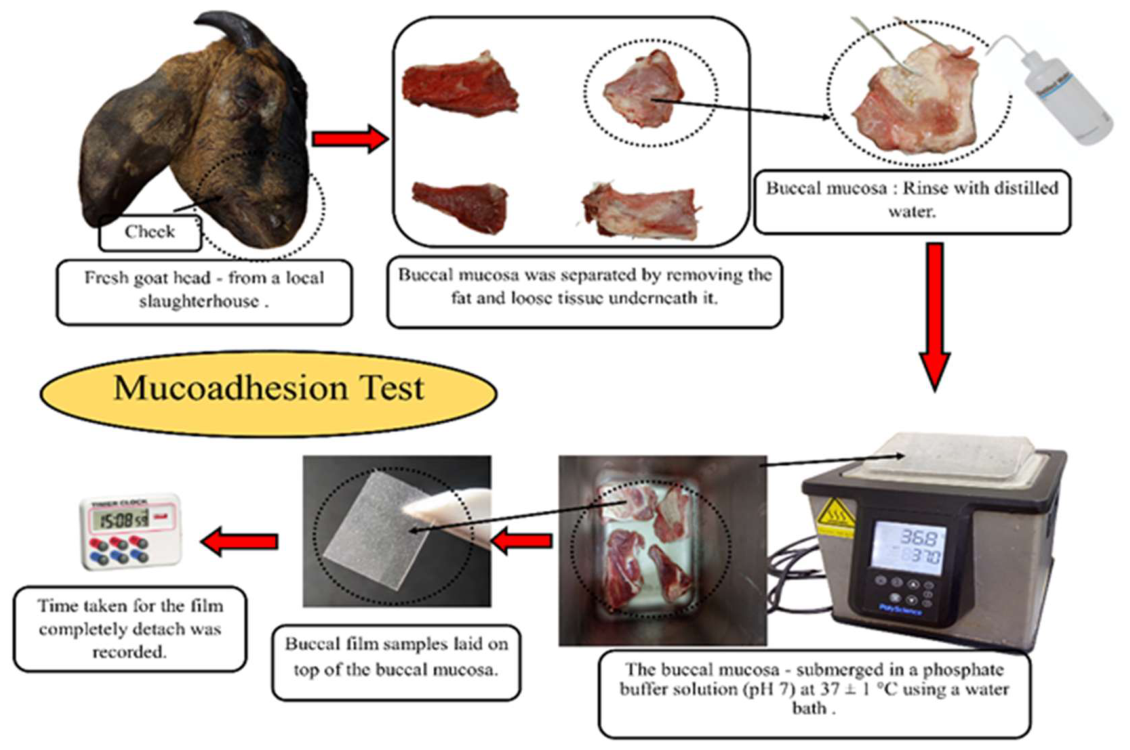
Figure 2.
FTIR spectra of GGP, PSF, Neat GG, GG/1PSF, GG/3PSF, GG/5PSF, and GG/7PSF biocomposite buccal films.
Figure 2.
FTIR spectra of GGP, PSF, Neat GG, GG/1PSF, GG/3PSF, GG/5PSF, and GG/7PSF biocomposite buccal films.
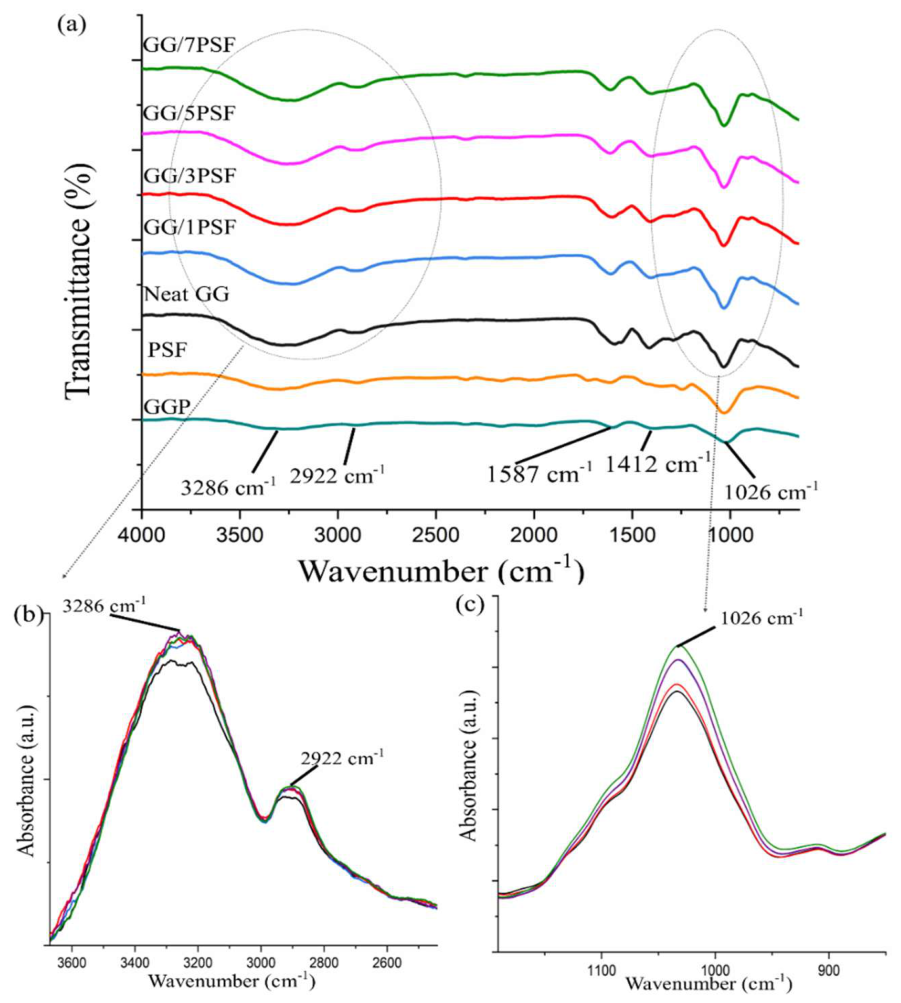
Figure 3.
Tensile properties of neat GG, GG/1PSF, GG/3PSF, GG/5PSF, and GG/7PSF of biocomposite films.
Figure 3.
Tensile properties of neat GG, GG/1PSF, GG/3PSF, GG/5PSF, and GG/7PSF of biocomposite films.
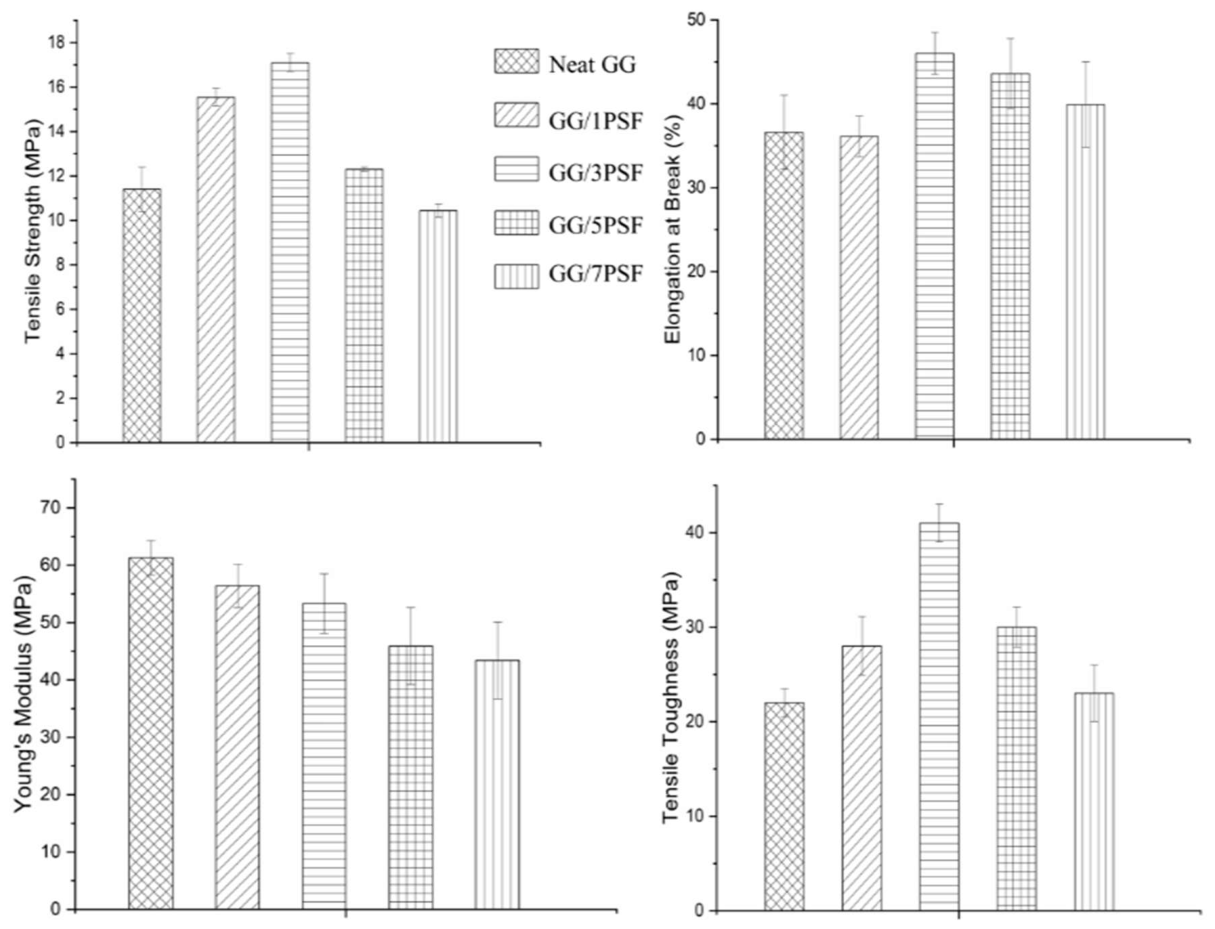
Figure 4.
Swelling profiles of Neat GG, GG/1PSF, GG/3PSF, GG/5PSF, and GG/7PSF biocomposite buccal films.
Figure 4.
Swelling profiles of Neat GG, GG/1PSF, GG/3PSF, GG/5PSF, and GG/7PSF biocomposite buccal films.
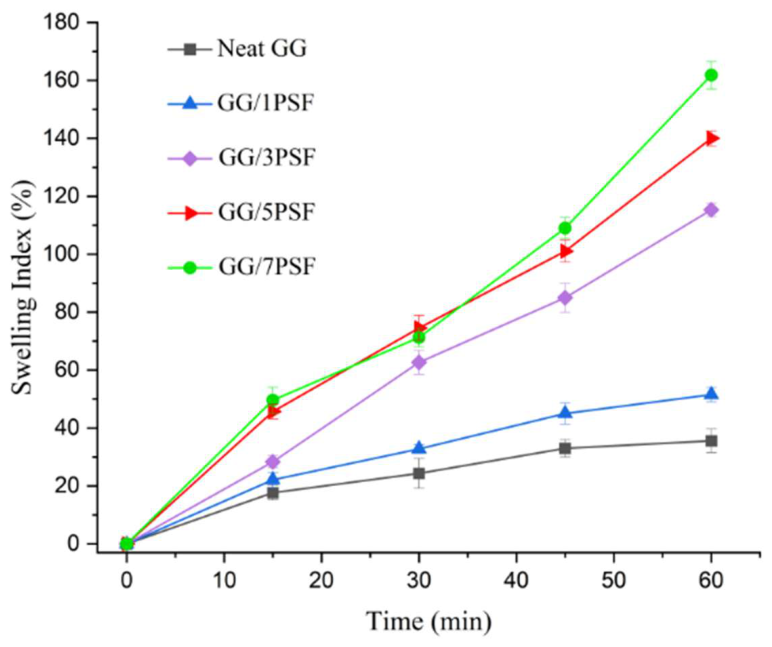
Figure 5.
The permeation of water molecules into the Neat GG, GG/1PSF, GG/3PSF, GG/5PSF and GG/7PSF biocomposites oral buccal films. The higher content of PSF allows the permeation of more water molecules.
Figure 5.
The permeation of water molecules into the Neat GG, GG/1PSF, GG/3PSF, GG/5PSF and GG/7PSF biocomposites oral buccal films. The higher content of PSF allows the permeation of more water molecules.
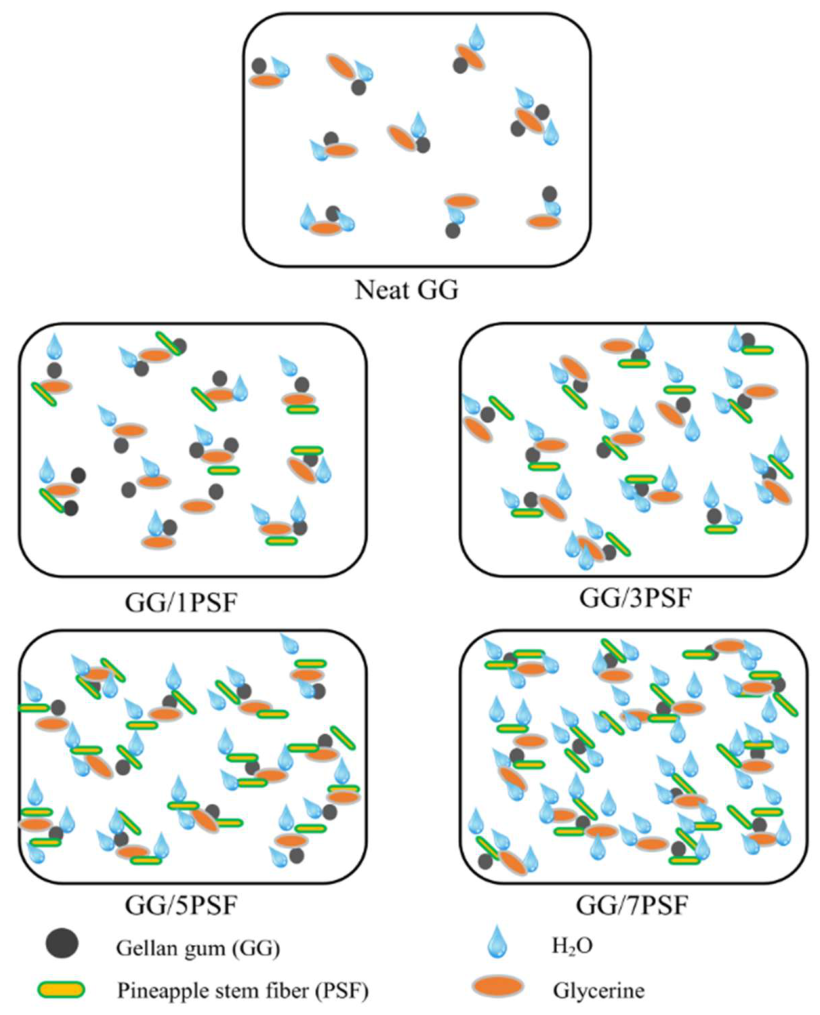
Figure 6.
SEM fractography and propagation of fracture across neat GG, GG/3PSF, and GG/7PSF biocomposite film samples.
Figure 6.
SEM fractography and propagation of fracture across neat GG, GG/3PSF, and GG/7PSF biocomposite film samples.
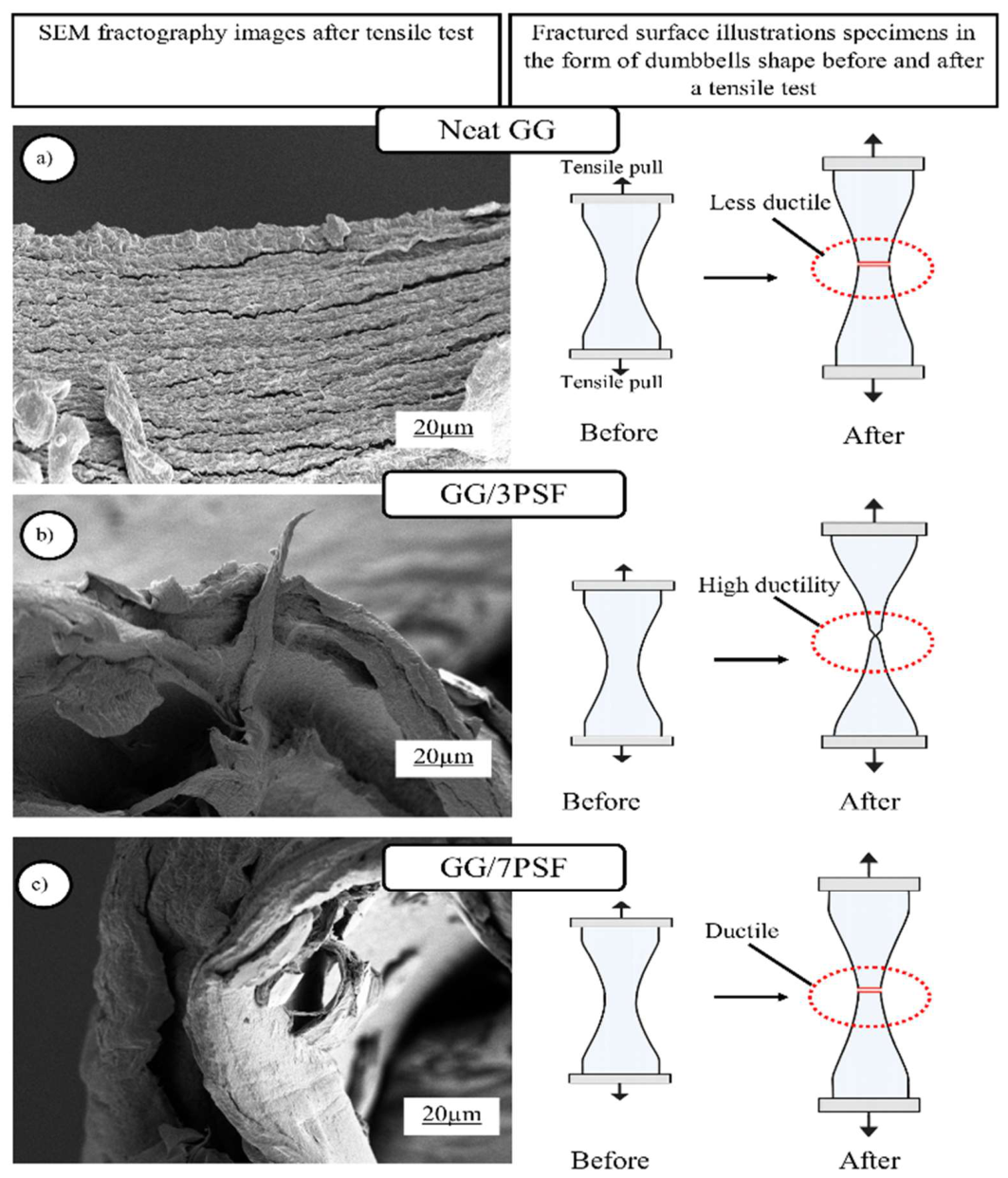
Figure 7.
Mechanism of mucoadhesion of Neat GG, GG/3PSF, and GG/7PSF biocomposites buccal films.
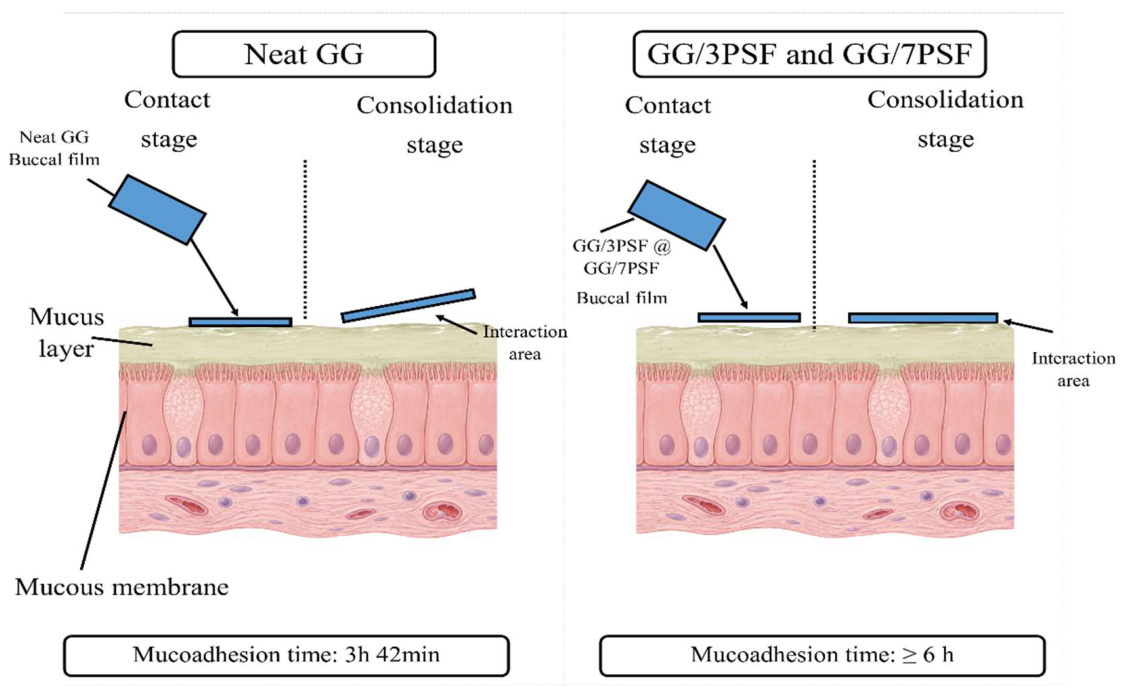
Figure 8.
XRD patterns of GGP, PSF, Neat GG film and GG/3PSF biocomposite film.
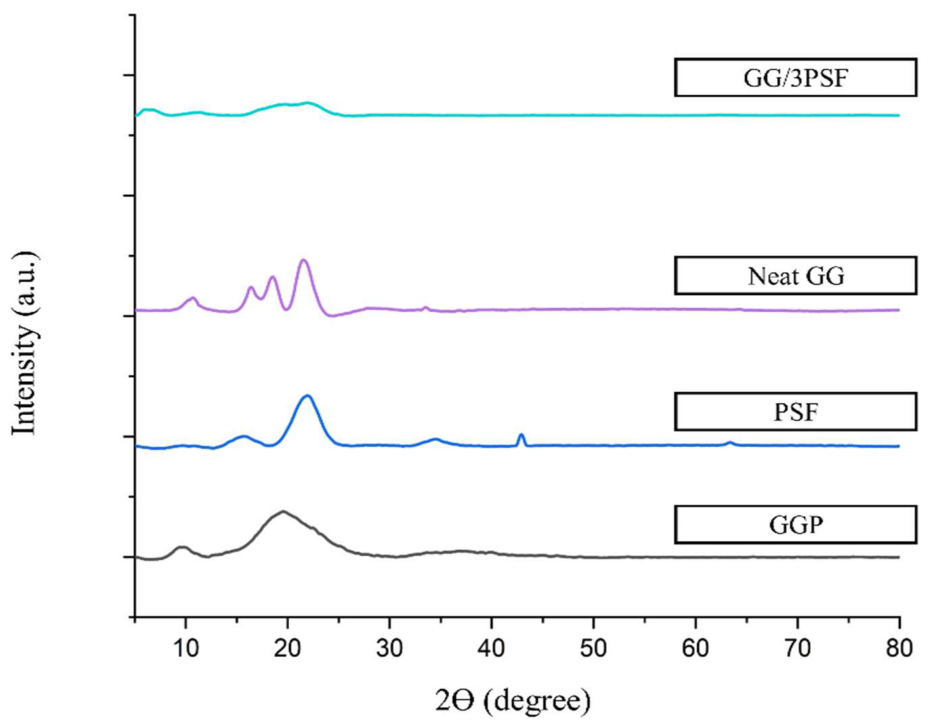
Figure 9.
Representation of semi-crystalline (Neat GG film) and amorphous regions (GG/3PSF biocomposite film).
Figure 9.
Representation of semi-crystalline (Neat GG film) and amorphous regions (GG/3PSF biocomposite film).
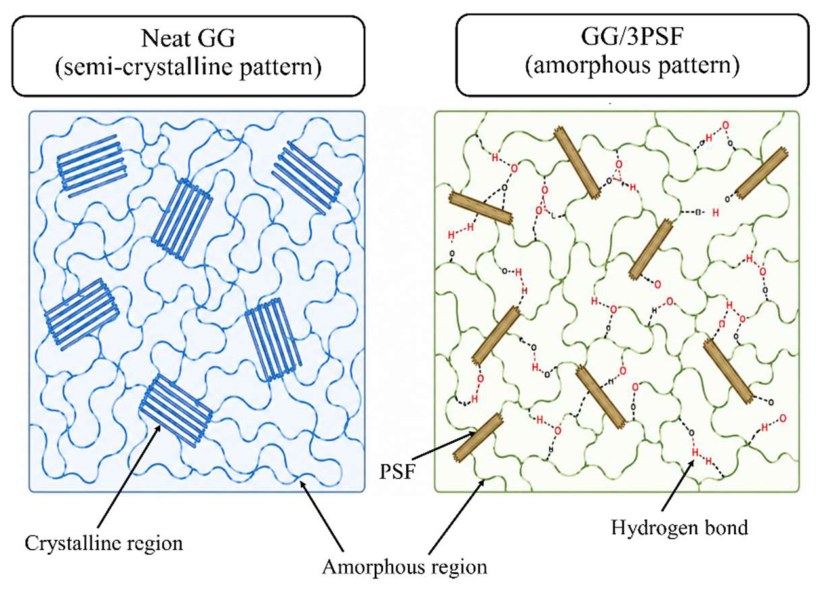
Table 1.
Formulation to produce a piece of rectangular-shaped biocomposite buccal film with a size of 14 cm×11 cm.
Table 1.
Formulation to produce a piece of rectangular-shaped biocomposite buccal film with a size of 14 cm×11 cm.
| Component | Formulation | ||||
| Neat GG | GG/1PSF | GG/3PSF | GG/5PSF | GG/7PSF | |
| GG (g) | 1 | 1 | 1 | 1 | 1 |
| PSF (g) | 0 | 0.01 | 0.03 | 0.05 | 0.07 |
| Glycerine (g) | 1 | 1 | 1 | 1 | 1 |
| Distilled water (ml) | 50 | 50 | 50 | 50 | 50 |
Table 2.
The range of pH and film thickness for the samples, neat GG, GG/1PSF, GG/3PSF, GG/5SF, and GG/7PSF.
Table 2.
The range of pH and film thickness for the samples, neat GG, GG/1PSF, GG/3PSF, GG/5SF, and GG/7PSF.
| Samples | pH value | Thickness (mm) |
| Neat GG | 6.9 ± 0.06 | 0.06 ± 0.006 |
| GG/1PSF | 7.0 ± 0.10 | 0.08 ± 0.006 |
| GG/3PSF | 7.0 ± 0.05 | 0.09 ± 0.005 |
| GG/5PSF | 7.1 ± 0.05 | 0.09 ± 0.006 |
| GG/7PSF | 7.0 ± 0.06 | 0.11 ± 0.006 |
Table 3.
Tensile strength, elongation at break, Young’s modulus, and tensile toughness of the neat GG, GG/1PSF, GG/3PSF, GG/5PSF and GG/7PSF biocomposite films.
Table 3.
Tensile strength, elongation at break, Young’s modulus, and tensile toughness of the neat GG, GG/1PSF, GG/3PSF, GG/5PSF and GG/7PSF biocomposite films.
| Type of samples | Tensile Strength (MPa) | Elongation at Break (%) | Young’s Modulus (MPa) | Tensile Toughness (MPa) |
| Neat GG | 11.40±1.0 | 36.6±4.4 | 61.3±3.0 | 22±1.5 |
| GG/1PSF | 15.54±0.4 | 36.1±2.4 | 56.4±3.8 | 28±3.1 |
| GG/3PSF | 17.10±0.4 | 46.0±2.5 | 53.3±5.2 | 41±2.0 |
| GG/5PSF | 12.30±0.1 | 43.6±4.2 | 45.9±6.7 | 30±2.1 |
| GG/7PSF | 10.44±0.3 | 39.9±5.1 | 43.4±6.7 | 23±3.0 |
Table 4.
Folding endurance results of Neat GG, GG/1PSF, GG/3PSF, GG/5PSF, and GG/7PSF.
| Samples | Folding Endurance |
| Neat GG | < 300 |
| GG/1PSF | < 300 |
| GG/3PSF | > 300 |
| GG/5PSF | > 300 |
| GG/7PSF | > 300 |
Table 6.
Mucoadhesive residence time of buccal films (Neat GG, GG/3PSF, and GG/7PSF).
| Samples | Mucoadhesion Time |
| Neat GG | 3 h 42 min |
| GG/3PSF | ≥ 6 h |
| GG/7PSF | ≥ 6 h |
Disclaimer/Publisher’s Note: The statements, opinions and data contained in all publications are solely those of the individual author(s) and contributor(s) and not of MDPI and/or the editor(s). MDPI and/or the editor(s) disclaim responsibility for any injury to people or property resulting from any ideas, methods, instructions or products referred to in the content. |
© 2026 by the authors. Licensee MDPI, Basel, Switzerland. This article is an open access article distributed under the terms and conditions of the Creative Commons Attribution (CC BY) license (http://creativecommons.org/licenses/by/4.0/).
Copyright: This open access article is published under a Creative Commons CC BY 4.0 license, which permit the free download, distribution, and reuse, provided that the author and preprint are cited in any reuse.