

Submitted:
03 August 2026
Posted:
05 August 2026
You are already at the latest version
Abstract
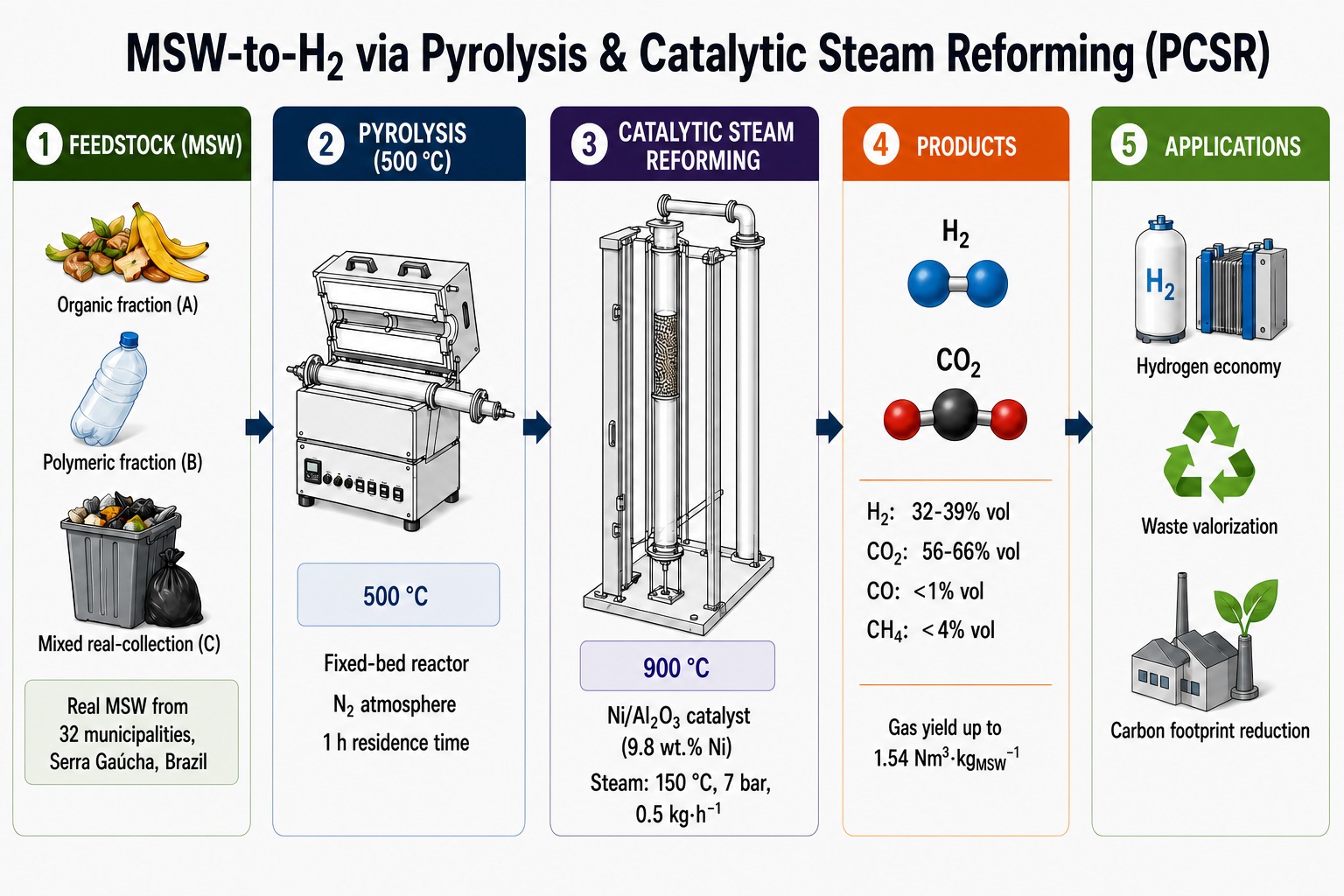
The transition to a hydrogen-based economy requires efficient and sustainable tech-nologies to convert waste into clean energy carriers. This study investigates the pro-duction of hydrogen-rich gas through the integrated pyrolysis steam reforming (PSR) and integrated pyrolysis (PYR) and catalytic steam reforming (PCSR) of real Municipal Solid Waste (MSW). PCSR experiments were conducted in a two-stage series reactor system: an initial pyrolysis stage at 500 °C followed by a catalytic steam reforming stage at 900 °C over a commercial Ni/Al₂O₃ catalyst (9.8 wt.% Ni). Three real MSW samples from the Serra Gaúcha region (Brazil) were evaluated: organic-rich (A), pol-ymeric-rich (B), and a mixed real-collection fraction (C). Gas yields from PYR to PCSR jumped from 0.44 to 1.18 Nm³·kgMSW⁻¹ and from 0.66 to 1.54 Nm³·kgMSW⁻¹ and from 0.35 to 1.50 Nm³·kgMSW⁻¹ for (A), (B) and (C) samples, respectively. Hydrogen con-centrations of PCSR were between 32-39%vol for all samples, with a marked reduction in CH₄ and CO levels due to the promotion of water-gas shift and methane reforming reactions over the nickel active sites. The PCSR process using a Ni/Al₂O₃ catalyst proves to be a highly effective route for maximizing hydrogen production from real MSW, offering a robust technological solution for energy valorization and carbon footprint reduction.
Keywords:
municipal solid waste
; pyrolysis
; steam catalytic reforming
; hydrogen
1. Introduction
The exponential growth of the global population, coupled with rapid urbanization and shifting consumption patterns, has led to an unprecedented increase in the generation of Municipal Solid Waste (MSW). Current estimates indicate that global waste production exceeds 2.01 billion tonnes annually, a figure projected to rise by 70% by 2050 if business-as-usual scenarios persist [1]. In the Brazilian context, the management of these residues remains a critical challenge despite the guidelines established by the National Solid Waste Policy (PNRS) [2]. The PNRS prioritizes the non-generation, reduction, reuse, and recycling of waste, yet a significant portion of MSW is still disposed of in landfills or controlled dumps, resulting in severe environmental liabilities, including greenhouse gas emissions and leachate contamination. Consequently, there is an urgent need for advanced thermochemical technologies capable of diverting waste from landfills while recovering its inherent energetic and chemical value.
Simultaneously, the global energy matrix is undergoing a profound transition toward decarbonization to mitigate the effects of climate change. Hydrogen (H2) has emerged as a pivotal clean energy vector due to its high energy density and carbon-free combustion, making it essential for the "hard-to-abate" industrial sectors and heavy-duty transportation [3,4]. In Brazil, the National Hydrogen Program (PNH2) aims to consolidate the country as a global leader in low-carbon hydrogen production, leveraging its diverse biomass and waste resources [5]. However, the sustainability of the hydrogen economy depends heavily on the development of "green" or "circular" production pathways that do not rely on fossil fuel steam methane reforming (SMR) [6]. In this regard, the thermochemical conversion of MSW via pyrolysis and subsequent catalytic steam reforming presents a promising route for decentralized hydrogen production [7,8,9,10,11,12].
Pyrolysis (PYR) is a thermochemical process in which organic matter is degraded under the total or near-total absence of oxygen, converting the complex polymeric structures of municipal solid waste (MSW) into biochar, condensable bio-oil, and non-condensable gases. [13,14,15].
Pyrolysis Steam Reforming (PSR) is a two-stage thermochemical process in which the volatile products generated during the pyrolysis of biomass or municipal solid waste (MSW) are directly fed into a steam reforming reactor operating at high temperatures in the presence of steam. Unlike catalytic configurations, PSR relies primarily on thermal steam reforming and cracking reactions to convert hydrocarbons, oxygenated compounds, and tar into a hydrogen-rich syngas. The process promotes higher hydrogen production and lower tar content than conventional PYR, although its efficiency is strongly dependent on reforming temperature, steam-to-carbon (S/C) ratio, residence time, and feedstock composition. Because no catalyst is employed, catalyst deactivation is avoided, but higher temperatures are generally required to achieve high conversion efficiencies.
While pyrolysis alone yields a gas fraction with moderate heating value, the integration of an in-line catalytic steam reforming stage—often referred to as the Pyrolysis and Catalytic Steam Reforming in Series (PCSR) process—significantly enhances hydrogen yields by cracking heavy hydrocarbons and tars. [7,8,9,10,11,12]. The PCSR process has been considered attractive for the production of hydrogen-rich gas (H2) [16,17]. For instance, the use of self-derived char-based catalysts has shown potential in reducing the costs associated with tar removal while promoting the water-gas shift reaction [18]. Furthermore, the optimization of operating parameters such as temperature and steam-to-carbon (S/C) ratios is crucial for maximizing H2 selectivity and preventing catalyst deactivation by coking [19].
Despite the technological advancements, a significant gap remains in the literature regarding the use of real, heterogeneous MSW. Most existing research utilizes synthetic mixtures or "model" compounds (such as pure cellulose or specific plastics) to ensure reproducibility [16,17,20,21,22]. However, real MSW is characterized by extreme physical and chemical heterogeneity, containing varying proportions of food waste, paper, plastics, textiles, and inert materials, which vary significantly by geographic location and socioeconomic factors [23]. The presence of contaminants such as chlorine, sulfur, and nitrogen in real waste can lead to complex reaction pathways and rapid catalyst poisoning, phenomena that are often underestimated in studies using simplified surrogates [24,25,26,27]. Therefore, validating the PCSR process with real-world feedstock is a prerequisite for industrial upscaling and the implementation of circular economy models [28].
This study addresses this gap by investigating the catalytic steam reforming of pyrolysis vapors derived from real MSW collected from 32 different municipalities. This extensive sampling provides a robust representation of the waste stream variability encountered in regional waste management systems. The novelty of this work lies in the scale and authenticity of the feedstock, providing critical insights for the future deployment of waste-to-hydrogen plants.
This work contributes to the advancement of MSW management and supports the strategic goals of the PNH2 by demonstrating a viable pathway for transforming environmental liabilities into high-value energy assets. In terms of originality, to the best of our knowledge, this study is the first record in the Brazilian literature of the application of PSR and PCSR processes using real MSW from a municipal collection system, representing a significant advance in the development of sustainable technological routes for waste management and renewable hydrogen production.
2. Results and Discussion
2.1. MSW Characterization
The gravimetric composition of the Municipal Solid Waste (MSW) used in this study revealed a predominant organic fraction, as can be observed in Figure 1. Organic fraction (sample A), the main constituent fraction of the sample, is composed of food waste, pruning residues, bathroom waste, and disposable diapers. Waste fraction (sample B), referred to as reject material, is composed primarily of paper and polymeric materials that were incorrectly sent for collection. This high organic content suggests a significant potential for volatile matter release during the initial thermal degradation stage.
The MSW proximate and ultimate analyses are presented in Table 1. The samples presented volatile matter contents above 75wt.%, favoring the use of thermochemical processes for their final disposal. The moisture contents obtained are close to literature data, being slightly higher than those from North American and European countries due to cultural factors and consumption patterns [29]. Waste with lower moisture contents promotes higher oil yields [30]. Moisture reduces oil viscosity, improving some characteristics; however, it decreases its calorific value [31]. The moisture content plays a fundamental role in the performance of the pyrolysis process, as it is a limiting factor due to the energy consumption required for its volatilization [32].
The carbon content of sample B is higher than that of sample A, due to the presence of polymeric material in its composition. Studies report a variation of 31.2–62.5wt.% in carbon concentration in MSW, and the results of this work fall within this range [33,34,35,36]. The calorific value found in the MSW samples lies within the range of 12–27.6 MJ·kgMSW⁻¹, as reported in the literature [17,35,37]. Low sulfur contents were observed in the samples (<0.16 wt%), while higher chlorine values were found (>1 wt.%). Studies report chlorine contents in MSW ranging from 0.05–2.83 wt.%, reaching higher levels in the presence of PVC [24,25,26,27]. Due to the heterogeneous nature of MSW, the variability of chlorine content is influenced by the type of waste components [38].
To determine the temperatures to be employed in the MSW pyrolysis experiments, thermogravimetric analysis of the samples was conducted. From the triplicate mean values, the curves presented in Figure 2 were obtained. The thermogravimetric curves indicate that the optimal temperature range lies below 500°C, as this region exhibits the highest mass loss across all samples. Above this temperature, mass loss becomes negligible, signaling the complete release of volatile matter from the samples. At 500°C, the mass losses for samples A, B, and C were 60.1%, 81.4%, and 69.9%, respectively. The lower mass loss observed for sample A is attributed to its higher ash content and lower volatile matter content.
[39] conducted the thermal analysis of MSW under an inert atmosphere (N₂) at a heating rate of 20 °C·min⁻¹, with the MSW consisting of organic and recyclable materials. The authors reported a mass loss of approximately 50% at 600 °C, whereas the results obtained for sample C in the present work were higher (approximately 76%). This discrepancy may be attributed to the high ash content reported by the authors (30.79%), combined with the distinct compositional profiles of MSW across different geographical regions.
2.2. Pyrolysis Yields
Pyrolysis experiments were conducted at a final temperature of 500 °C to evaluate the distribution of char and non-condensable gas products. The char yields obtained in this study (fraction A: 29.84% + 0.55; fraction B: 22.58% + 4.00; fraction C: 27.68% + 1.50) are consistent with values reported in the literature for the pyrolysis of municipal solid waste (MSW). [40] reported char yields ranging from 28.6 to 34.6 wt.% for MSW pyrolyzed at 400 °C. Similarly, [41] obtained a char yield of 31 wt.% from household MSW subjected to pyrolysis at 450 °C, while [42] reported a char yield of 34.83 wt.% for laboratory-prepared MSW, formulated to simulate the physical composition of domestic waste (food waste, paper, and plastic materials), pyrolyzed at 550 °C. At higher temperatures, [43] reported char yields between 32.4 and 38.7 wt.% for MSW pyrolyzed at 750 °C. In contrast, [44] obtained lower char yields, ranging from 11.7 to 18.0 wt.%, for MSW composed predominantly of post-consumer plastic and textile wastes pyrolyzed at 550 °C. This behavior is consistent with the low solid residue formation typically observed during the pyrolysis of polymeric materials, for which char yields below 10 wt.% have been reported at 500 °C [45].
The identification of the components present in the heavy phase of the condensable vapors is presented in Figure 3. The analysis identified the presence of long-chain compounds (C7–C44), including paraffins, olefins, naphthenes, aromatic compounds, among other groups. Such compounds were also identified by [17], who reported the presence of a wide range of components with C7–C34 chains in the heavy phase of the bio-oil produced from MSW pyrolysis at 500 °C. Studies report that the condensable vapors obtained from MSW pyrolysis contain polycyclic aromatic hydrocarbons (PAHs) and monoaromatic hydrocarbons (MAHs), alkanes and alkenes, as well as the presence of functional groups such as methyl, methoxyl, ethyl, and vinyl, produced during the fragmentation and formation of the benzene ring [41,46,47,48].
The components of the non-condensable gas produced in the MSW pyrolysis experiments were also evaluated, as presented in Figure 4. The non-condensable gas yield was determined on an N₂-free basis and expressed as Nm³·kg-1. Fraction B exhibited the highest gas yield, reaching 0.66 ± 0.23 Nm³·kg⁻¹, while producing the lowest char yield (22.58 ± 4.00 wt.%). In contrast, samples A and C generated lower gas yields of 0.44 ± 0.03 and 0.35 ± 0.16 Nm³·kg-1, respectively, accompanied by higher char yields of 29.84 ± 0.55 wt.% and 27.68 ± 1.50 wt.%, respectively. The superior gas production observed for sample B can be attributed to its higher volatile matter content and lower ash content, which favored the conversion of the organic fraction into gaseous products while reducing the amount of solid char.
The composition of the non-condensable gas produced during pyrolysis varied significantly among the fractions. Fraction B (polymeric) presented a higher content of light hydrocarbons, while Fraction A (organic) produced a greater content of CO and CO₂, reflecting the distinct elemental composition of each fraction. [17] studied the pyrolysis of MSW at 500 °C, collected from a landfill site, and reported yields of approximately 0.05 Nm³H₂·kgMSW⁻¹, 0.08 Nm³CO·kgMSW⁻¹, 0.02 Nm³CH₄·kgMSW⁻¹, and 0.06 Nm³CO₂·kgMSW⁻¹. The variation between the results reported by the authors and those obtained in the present work, depicted graphically in Figure 4, may be related to the MSW collection source. MSW retrieved from landfill cells has already undergone initial degradation, thus differing in composition. [47] reported that MSW pyrolysis at 500 °C yields a non-condensable gas in which CO₂ is the major component, followed by CO, CH₄, and H₂. [49] evaluated the pyrolysis of Healthcare Waste (HCW) at 800 °C. H₂ yields were reported to be in the range of 7.57–12.28 mmol H₂·g HCW⁻¹, corresponding to 0.17–0.27 Nm³ H₂·kg HCW⁻¹.
2.3. Pyrolysis and Steam Reforming (PSR)
Coupling steam reforming in series with pyrolysis (PSR) promoted a significant increase in gas yield. Figure 5 presents the non-condensable gas yields (Ygas) from the pyrolysis (PYR) processes and the gas yields from the pyrolysis and steam reforming (PSR) in series for the three samples investigated in this study.
Regarding the pyrolysis process, the yields obtained in this work are also higher than those reported by [42], who, when evaluating the MSW pyrolysis process at different temperatures, reported a gas yield of 0.125 Nm³·kgMSW⁻¹ at 500 °C. [17] studied the pyrolysis of MSW collected from a landfill at 500 °C and reported yields of approximately 0.05 Nm³H₂·kgMSW⁻¹, 0.08 Nm³CO·kgMSW⁻¹, 0.02 Nm³CH₄·kgMSW⁻¹, and 0.06 Nm³CO₂·kgMSW⁻¹. The variation between the results reported by the authors and those found in this work may be related to the MSW collection source. MSW collected from landfill cells has already begun the degradation process, thus differing in composition.
The results obtained in the PSR process indicated an increase in gas yield compared to the pyrolysis process, with this increment being more pronounced for sample B, which is rich in polymeric materials. The results obtained were higher than those reported by [17]. The authors reported a gas yield of 0.31 Nm³·kg⁻¹ from the PSR process (pyrolysis at 500 °C and steam reforming at 500 °C) of MSW. When the reforming temperature was increased to 550 °C and 600 °C, while maintaining the pyrolysis temperature at 500 °C, a gas yield of 0.40 Nm³·kg⁻¹ was reported for both temperatures. It is suggested that the increase in gas yield is associated with the rise in steam reforming temperature, as the cracking of condensable vapor molecules is favored at high temperatures [20,50].
Table 2 presents the volumetric samples of the gas components produced in the PSR process. The gas yield increased from 0.35 Nm³·kgMSW⁻¹ (pyrolysis) to 0.97 Nm³·kgMSW⁻¹ in the PSR process for Fraction C, representing an increase of approximately 177%. This increase is attributed to the conversion of condensable vapors and residual char into permanent gases via steam reforming reactions.
Fraction B (polymeric fraction) stood out with the highest volumetric H₂ content, reaching 59.31%, and the highest H₂ yield of up to 1.12 Nm³H₂·kgMSW⁻¹. This result is consistent with the higher elemental hydrogen content in polymers and the greater reactivity of long-chain hydrocarbons in steam reforming. Non-condensable gas yields are reported in Table 2. [47] reported that MSW pyrolysis at 500 °C produces a non-condensable gas with CO₂ as the major component, followed by CO, CH₄, and H₂. [49] evaluated the pyrolysis of Healthcare Waste (HCW) at 800 °C. H₂ yields were reported to be between 7.57–12.28 mmolH₂·gHCW⁻¹, i.e., 0.17–0.27 Nm³H₂·kgHCW⁻¹.
Figure 6 presents the non-condensable gas component yields from the (PYR) processes and the gas component yields from the PSR process for the three fractions investigated in this study. While in the PYR process the highest yield is observed for carbon dioxide across all investigated samples, in the PSR process the highest yield is hydrogen for all investigated samples. It is also noteworthy that carbon dioxide is the second component with the highest yield in the PSR process for all three fractions investigated in this study.
[41] studied the pyrolysis of MSW at 450 °C with thermal reforming (without catalyst) at 700 °C in series, reporting volumetric fractions of 36%, 12%, 14%, and 21% for H₂, CO, CH₄, and CO₂, respectively. [17] reported a hydrogen volumetric fraction below 30% downstream of MSW pyrolysis (500 °C) and reforming (500–600 °C). When the data reported by the authors are compared to the results of this study, it is verified that the use of steam reforming increased the H₂ yield, producing a hydrogen-rich gas.
Results obtained in this study suggest a volumetric fraction exceeding 50% of H₂ from MSW. [17] reported H₂ volumetric fractions between 32–42% from the MSW pyrolysis (500 °C) and reforming (500–600 °C) process, which are lower than those obtained in this study(52–59%). [51] studied the steam gasification at 800 °C, in the absence of a catalyst, of the polymeric fraction contained in recyclable material rejects, reporting a hydrogen volumetric fraction of approximately 73%. That study demonstrates that the presence of polymeric materials plays an important role in the production of a hydrogen-rich gas, which can also be observed in the present study, where sample B, containing predominantly polymeric material residues, presented the highest hydrogen yield.
2.4. Pyrolysis and Catalytic Steam Reforming (PCSR)
Figure 7 presents the non-condensable gas yields from the pyrolysis (PYR) processes and the gas yields from the pyrolysis and catalytic steam reforming (PCSR) processes for the three fractions investigated in this study. The introduction of the commercial Ni/Al₂O₃ catalyst in the reforming bed at 900°C (PCSR) promoted the highest gas yield among all processes studied. According to Table 2, gas yield reached 1.50 Nm³·kgMSW⁻¹ for fraction C, surpassing by 54% the value obtained in PSR (0.97 Nm³·kgMSW⁻¹) and by 329% the pyrolysis value (0.35 Nm³·kgMSW⁻¹). This increase demonstrates the efficiency of the Ni/Al₂O₃ catalyst in promoting additional conversion of residual hydrocarbons and char.
[17] reported hydrogen yields between 0.36–0.46 Nm³·kg⁻¹ for the pyrolysis process at 500 °C, followed by catalytic steam reforming in the temperature range of 500–600 °C, using char as a catalyst. [49] investigated H₂ production via CPSR at 800 °C from healthcare waste (HCW), using CaO as a catalyst. The hydrogen yield increased by approximately 52%, while the pyrolysis oil yield was reduced by approximately 30%. The authors reported a hydrogen yield of 12.28 mmol H₂·g HCW⁻¹, corresponding to 0.27 Nm³·kg HCW⁻¹.
Figure 8 presents the non-condensable gas component yields from the pyrolysis (PYR) processes and the gas component yields from the pyrolysis and catalytic steam reforming (PCSR) processes for the three samples investigated in this study. The gas generated in the PCSR process is composed primarily of H₂ and CO₂, with negligible yields of CO and CH₄.
The H₂ yield maximum in PYR was up to 0.60 Nm³H₂·kgMSW⁻¹, while in PCSR was 1.54 Nm³H₂·kgMSW⁻¹. The gas produced exhibits higher purity in terms of H₂ + CO₂, with very low levels of contaminants (CO and CH₄), which facilitates subsequent H₂ separation and purification steps. The high concentration of H₂ and CO₂ at the expense of CO concentration derives from the occurrence of the water-gas shift reaction (CO + H₂O ↔ H₂ + CO₂), a phenomenon that has been reported in the literature [47]. Furthermore, a significant reduction in CO and CH₄ concentrations is observed in the steam reforming stage, suggesting the favoring of methane steam reforming and water-gas shift reactions.
[52] reported hydrogen concentrations between 45–50% in the gas obtained from MSW pyrolysis at 850 °C, followed by steam reforming with nickel catalysts. [51] studied steam gasification at 800 °C, using CaO as a catalyst, of the polymeric fraction contained in the reject of recyclable materials, and also reported a hydrogen volume fraction of approximately 73%.
3. Materials and Methods
3.1. Municipal Solid Waste (MSW) Sampling and Preparation
The feedstock utilized in this study was sourced from the municipal solid waste (MSW) management systems of 32 municipalities located in the Serra Gaúcha region, Rio Grande do Sul, Brazil. Following the methodology described by Lazzarotto (2024), the raw waste underwent a rigorous segregation and homogenization process to ensure representativeness. The samples were categorized into three distinct experimental groups: Fraction A (predominantly organic fraction), Fraction B (polymeric fraction consisting of plastics and synthetic fibers), and Fraction C (a standardized blend of organic and polymeric samples). To ensure kinetic reproducibility and minimize heat transfer limitations during the thermochemical conversion, all materials were comminuted through the individual grinding process, using a knife mill, model DPM-2. The samples were stored at a temperature of -10 °C.
3.2. Feedstock Characterization
The physicochemical properties of the MSW fractions were determined through comprehensive analytical techniques. Proximate analysis (moisture, volatile matter, fixed carbon, and ash content) was performed according to ASTM 1762-84. Ultimate analysis (C, H, N, S) was conducted according to ASTM D5373-16 and ASTM D4239-18e1, while the oxygen content was calculated by difference. The Higher Heating Value (HHV) was measured using a bomb calorimeter, according ASTM 5865-13. Chlorine content was determined by combustion in a calorimeter followed by the titrimetric method.
3.3. Pyrolysis and Catalytic Steam Reforming Experimental Setup
3.3.1. Catalyst Characterization
A commercial Ni/Al₂O₃ catalyst was used in the PCSR experiments. Figure 9 illustrates the arrangement inside the catalytic reactor, highlighting the Ni catalyst (upper section) and the guard bed of alumina spheres (lower section). The Ni/Al₂O₃ catalyst used in the PCSR experiments is commercially sourced, with its characterization described by [53].
The catalyst employed in the PCSR process was characterized by N₂ adsorption isotherm, X-ray diffraction, and scanning electron microscopy. N₂ adsorption/desorption analysis was performed on a Quantachrome Instruments analyzer, model NOVA 1200e. Prior to analysis, the sample was degassed at 200 °C under vacuum. The specific surface area was determined by the BET method at 11 points, and the pore size distribution was obtained using the DFT method. The material exhibited a specific surface area of 10.3 m²·g⁻¹. The adsorption isotherm is classified as Type IV, characteristic of mesoporous materials, which often display hysteresis loops. The pore size distribution is concentrated in the mesoporous range (2–50 nm), with no evidence of micropores (<2 nm).
Scanning electron microscopy was performed on a Tescan microscope, model Mira 3. The structure consists of heterogeneously sized agglomerates with rounded contours, rich in micrometer-scale channels and covered by a rough, lighter layer, possibly associated with nickel deposition. Semi-quantitative elemental analysis of the catalyst was carried out by energy-dispersive X-ray spectroscopy, revealing O and Al as the major constituents, attributed to the catalyst support. The Ni content, corresponding to the active metal, was estimated at 9.8 wt.%. Significant concentrations of Ca and C were also observed, along with traces of Si. X-ray diffraction analysis was performed on a Shimadzu diffractometer, model XRD 6000. Two phases were identified in the catalyst support: alumina (Al₂O₃) and monocalcium dialuminate (CaAl₄O₇). Further catalyst characterization data are available in the supplementary material.
3.3.2. PCSR and PSR Experiments
The MSW pyrolysis experiments were conducted in a horizontal tubular fixed-bed reactor made of AISI 310 stainless steel, with a length of 980 mm and an inner diameter of 43 mm. The reactor was heated by two pairs of electrical resistances, each with a power output of 1900 W, both wrapped around the reaction tube. The temperature was set to 500 °C, and the reactor was held at this temperature for 1 hour under a N₂ flow of 100 mL·min⁻¹ to ensure an inert atmosphere. Prior to the experiments, the samples were dried in an oven at 60 °C for 24 hours to remove moisture. The condensable vapors and non-condensable gases were then directed to a second reactor (steam reforming reactor) connected in series.
The second reactor was a vertical tubular fixed-bed reactor, consisting of an AISI 310 stainless steel tube with an inner diameter of 25.4 mm and a length of 710 mm. The reactor was heated by a single electrical resistance with a power output of 4600 W, and the temperature was maintained at 900 °C. The steam reforming reactor was fed with steam at 150 °C at a mass flow rate of 0.5 kg·h⁻¹. During the heating phase, a nitrogen flow was maintained to guarantee an inert atmosphere inside the reactor. After the temperature in the second reactor stabilized, steam feeding was initiated, and the experiment began by activating the first reactor.
The effluent stream from the reforming reactor was directed to a series of 10 bubblers connected in series, of which 5 contained 100 mL of isopropyl alcohol each, while the remaining 5 were left empty. After the residual condensable vapors were removed in the bubblers, the gas was sent to a gas meter and subsequently to an appropriate collection bag for further chromatographic analysis. The PSR process is conducted in the same way as the PCSR process, except that in the PSR, no catalyst is placed in the second reactor. Figure 10 presents the schematic technical drawing process.
The condensable vapors generated from MSW pyrolysis were subjected to separation into two phases, namely a light phase and an heavy phase. The separation was carried out in a rotary evaporator manufactured by Quimis, model Q344B1, at a temperature of 60 °C and an absolute internal pressure of 160 mmHg, for removal of the light phase. The heavy phase was then diluted in acetone (1:10) and sent for analysis in a Gas Chromatograph coupled to a Mass Spectrometer (GC-MS) HP series 6890/MSD 59736, for semi-quantitative analysis of its composition.
The analysis of non-condensable gases (H₂, CO, CH₄, CO₂) was performed using a gas chromatograph (Dani brand, Master GC model) equipped with a thermal conductivity detector (TCD). Gas collection was initiated after the pyrolysis reactor reached the onset degradation temperature observed in the thermogravimetric analysis for each sample.
4. Conclusions
The comparative analysis of the three processes reveals a clear evolution toward gas yield. The PSR process showed average gas yields of 1.08, 1.89, and 0.97 Nm3.kgMSW-1 for fractions A, B, and C, respectively. The PCSR process showed average gas yields of 1.18, 1.54, and 1.5 Nm3.kgMSW-1 for fractions A, B, and C, respectively. Except for fraction B, the gas yield performance of PCSR was higher compared to PSR.
The comparative analysis of the three processes reveals a clear evolution toward hydrogen-rich gas production. The PSR process showed average hydrogen yields of 0.6, 1.1, and 0.85 Nm3.kgMSW-1 for fractions A, B, and C, respectively. The PCSR process showed average hydrogen yields of 1.1, 1.4, and 1.3 Nm3.kgMSW-1 for fractions A, B, and C, respectively. Thus, PCSR is more efficient for hydrogen production yield.
The gas produced from PCSR exhibits higher purity in terms of H₂ + CO₂, with very low levels of contaminants (CO and CH₄), which facilitates subsequent H₂ separation and purification steps
From a sustainability and industrial implementation perspective, the PCSR process offers a viable pathway for waste-to-hydrogen systems, aligning with circular economy principles.
Supplementary Materials
The following supporting information can be downloaded at the website of this paper posted on Preprints.org.
Author Contributions
Conceptualization, I.P.L. and M.G.; methodology, I.P.L, C.M., O.A.N. and L.B; software, I.P.L; validation, I.P.L; formal analysis, I.P.L, C.M., O.A.N. and L.B; investigation, I.P.L, O.A.N., L.B. and M.G.; resources, M.G; data curation, I.P.L; writing—original draft preparation, I.P.L; writing—review and editing, D.P. and M.G.; visualization, D.P. and M.G.; supervision, M.G; project administration, M.G; funding acquisition, M.G. All authors have read and agreed to the published version of the manuscript.
Funding
This research received no external funding.
Institutional Review Board Statement
Not applicable.
Informed Consent Statement
Not applicable.
Data Availability Statement
Data available upon reasonable request.
Acknowledgments
The authors gratefully acknowledge the University of Caxias do Sul (UCS), the Regional Development Council of Serra (COREDE Serra), the Intermunicipal Consortium for Sustainable Development of Serra Gaúcha (CISGA), and the Association of Municipalities of the Upper Northeastern Hillside Region (AMESNE) for their support of this research.
Conflicts of Interest
The authors declare no conflict of interest.
Appendix A
Supplementary Catalyst Characterization
This appendix provides complementary physicochemical characterization of the commercial Ni/Al₂O₃ catalyst employed in this study, including N₂ adsorption/desorption isotherms and pore size distribution, scanning electron microscopy (SEM) images, energy-dispersive X-ray spectroscopy (EDS) elemental analysis and mapping, and X-ray diffraction (XRD) analysis. These data support the interpretation of the catalyst properties and its performance during the integrated pyrolysis and catalytic steam reforming process.
References
- T.I.S.W.A. ISWA, O FUTURO DO SETOR DE GESTÃO DE RESÍDUOS. TENDÊNCIAS, OPORTUNIDADES E DESAFIOS PARA A DÉCADA, 2022.
- BRASIL, Diário Da República, 1a Série - No 116 Política Nacional de Resíduos Sólidos. Lei N° 12.305 (2010) 3901–3902.
- Hydrogen Council, Global Hydrogen Flows, 2022.
- IEA, (2022).
- M. de M. e E. BRASIL, Programa Nacional Do Hidrogênio, 2021.
- Balat, H.; Kırtay, E. Hydrogen from biomass – Present scenario and future prospects. International Journal of Hydrogen Energy 2010, 35, 7416–7426. [CrossRef]
- Al-Rahbi, A.S.; Williams, P.T. Waste ashes as catalysts for the pyrolysis–catalytic steam reforming of biomass for hydrogen-rich gas production. Journal of Material Cycles and Waste Management 2019, 21, 1224–1231. [CrossRef]
- Aminu, I.; Nahil, M.A.; Williams, P.T. Hydrogen from Waste Plastics by Two-Stage Pyrolysis/Low-Temperature Plasma Catalytic Processing. Energy & Fuels 2020, 34, 11679–11689. [CrossRef]
- Gilbert, P.; Ryu, C.; Sharifi, V.; Swithenbank, J. Tar reduction in pyrolysis vapours from biomass over a hot char bed. Bioresource Technology 2009, 100, 6045–6051. [CrossRef]
- Hu, X.; Gholizadeh, M. Progress of the applications of bio-oil. Renewable and Sustainable Energy Reviews 2020, 134, 110124. [CrossRef]
- Park, H.J.; Park, S.H.; Sohn, J.M.; Park, J.; Jeon, J.-K.; Kim, S.-S.; Park, Y.-K. Steam reforming of biomass gasification tar using benzene as a model compound over various Ni supported metal oxide catalysts. Bioresource Technology 2010, 101, S101–S103. [CrossRef]
- Singh, R.K.; Ruj, B. Time and temperature depended fuel gas generation from pyrolysis of real world municipal plastic waste. Fuel 2016, 174, 164–171. [CrossRef]
- Kalyani, K.A.; Pandey, K.K. Waste to energy status in India: A short review. Renewable and Sustainable Energy Reviews 2014, 31, 113–120. [CrossRef]
- Khan, A.H.; López-Maldonado, E.A.; Alam, S.S.; Khan, N.A.; López, J.R.L.; Herrera, P.F.M.; Abutaleb, A.; Ahmed, S.; Singh, L. Municipal solid waste generation and the current state of waste-to-energy potential: State of art review. Energy Conversion and Management 2022, 267, 115905. [CrossRef]
- Lombardi, L.; Carnevale, E.; Corti, A. A review of technologies and performances of thermal treatment systems for energy recovery from waste. Waste Management 2015, 37, 26–44. [CrossRef]
- Arregi, A.; Lopez, G.; Amutio, M.; Barbarias, I.; Bilbao, J.; Olazar, M. Hydrogen production from biomass by continuous fast pyrolysis and in-line steam reforming. RSC Advances 2016, 6, 25975–25985. [CrossRef]
- Wang, N.; Chen, D.; Arena, U.; He, P. Hot char-catalytic reforming of volatiles from MSW pyrolysis. Applied Energy 2017, 191, 111–124. [CrossRef]
- Qiu, M.; Xiang, C.; Wen, Y.; Hong, W.; Liu, R.; Chen, D.; Chen, D. H2 Production from Pyrolysis-Steam Reforming of Municipal Solid Waste and Biomass: A Comparative Study When Using the Self-Derived Char-Based Catalysts. Catalysts 2025, 15, 531. [CrossRef]
- Pafili, A.; Charisiou, N.; Douvartzides, S.; Siakavelas, G.; Wang, W.; Liu, G.; Papadakis, V.; Goula, M. Recent Progress in the Steam Reforming of Bio-Oil for Hydrogen Production: A Review of Operating Parameters, Catalytic Systems and Technological Innovations. Catalysts 2021, 11, 1526. [CrossRef]
- Barbarias, I.; Lopez, G.; Alvarez, J.; Artetxe, M.; Arregi, A.; Bilbao, J.; Olazar, M. A sequential process for hydrogen production based on continuous HDPE fast pyrolysis and in-line steam reforming. Chemical Engineering Journal 2016, 296, 191–198. [CrossRef]
- Akanyange, S.N.; Zhang, Y.; Zhao, X.; Adom-Asamoah, G.; Ature, A.-R.A.; Anning, C.; Tianpeng, C.; Zhao, H.; Lyu, X.; Crittenden, J.C. A holistic assessment of microplastic ubiquitousness: Pathway for source identification in the environment. Sustainable Production and Consumption 2022, 33, 113–145. [CrossRef]
- Saad, J.M.; Williams, P.T. Pyrolysis-Catalytic-Dry Reforming of Waste Plastics and Mixed Waste Plastics for Syngas Production. Energy & Fuels 2016, 30, 3198–3204. [CrossRef]
- I.P. Lazzarotto, UNIVERSIDADE DE CAXIAS DO SUL ÁREA DO CONHECIMENTO DE CIÊNCIAS EXATAS E ENGENHARIAS PROGRAMA DE PÓS-GRADUAÇÃO EM ENGENHARIA DE PROCESSOS E TECNOLOGIAS INVESTIGAÇÃO DO PROCESSO DE PYRÓLISE E REFORMA A VAPOR CATALÍTICA EM SÉRIE DE RESÍDUOS SÓLIDOS URBANOS (RSU) PARA A PRODUÇÃO DE UM GÁS RICO EM HIDROGÊNIO (H2), 2024.
- Kanters, M.J.; van Nispen, R.; Louw, R.; Mulder, P. Chlorine Input and Chlorophenol Emission in the Lab-Scale Combustion of Municipal Solid Waste. Environmental Science & Technology 1996, 30, 2121–2126. [CrossRef]
- W. MA, S. ROTTER, Overview on the Chlorine Origin of MSW Cl-Originated Corrosion during MSW & RDF Combustion Process, IEEE Xplore, 2008.
- Viczek, S.A.; Aldrian, A.; Pomberger, R.; Sarc, R. Origins and carriers of Sb, As, Cd, Cl, Cr, Co, Pb, Hg, and Ni in mixed solid waste – A literature-based evaluation. Waste Management 2020, 103, 87–112. [CrossRef]
- Watanabe, N.; Yamamoto, O.; Sakai, M.; Fukuyama, J. Combustible and incombustible speciation of Cl and S in various components of municipal solid waste. Waste Management 2004, 24, 623–632. [CrossRef]
- Medaiyese, F.J.; Nasriani, H.R.; Khan, K.; Khajenoori, L. Sustainable Hydrogen Production from Plastic Waste: Optimizing Pyrolysis for a Circular Economy. Hydrogen 2025, 6, 15. [CrossRef]
- Sipra, A.T.; Gao, N.; Sarwar, H. Municipal solid waste (MSW) pyrolysis for bio-fuel production: A review of effects of MSW components and catalysts. Fuel Processing Technology 2018, 175, 131–147. [CrossRef]
- Yang, Y.; Heaven, S.; Venetsaneas, N.; Banks, C.J.; Bridgwater, A.V. Slow pyrolysis of organic fraction of municipal solid waste (OFMSW): Characterisation of products and screening of the aqueous liquid product for anaerobic digestion. Applied Energy 2018, 213, 158–168. [CrossRef]
- Czajczyńska, D.; Anguilano, L.; Ghazal, H.; Krzyżyńska, R.; Reynolds, A.J.; Spencer, N.; Jouhara, H. Potential of pyrolysis processes in the waste management sector. Thermal Science and Engineering Progress 2017, 3, 171–197. [CrossRef]
- Hasan, M.M.; Rasul, M.G.; Khan, M.M.K.; Ashwath, N.; Jahirul, M.I. Energy recovery from municipal solid waste using pyrolysis technology: A review on current status and developments. Renewable and Sustainable Energy Reviews 2021, 145, 111073. [CrossRef]
- Abdul Samad, N.A.F.; Jamin, N.A.; Saleh, S. Torrefaction of Municipal Solid Waste in Malaysia. Energy Procedia 2017, 138, 313–318. [CrossRef]
- Azam, M.; Jahromy, S.S.; Raza, W.; Raza, N.; Lee, S.S.; Kim, K.-H.; Winter, F. Status, characterization, and potential utilization of municipal solid waste as renewable energy source: Lahore case study in Pakistan. Environment International 2020, 134, 105291. [CrossRef]
- Dashti, A.; Noushabadi, A.S.; Asadi, J.; Raji, M.; Chofreh, A.G.; Klemeš, J.J.; Mohammadi, A.H. Review of higher heating value of municipal solid waste based on analysis and smart modelling. Renewable and Sustainable Energy Reviews 2021, 151, 111591. [CrossRef]
- Zhou, H.; Long, Y.; Meng, A.; Li, Q.; Zhang, Y. Classification of municipal solid waste components for thermal conversion in waste-to-energy research. Fuel 2015, 145, 151–157. [CrossRef]
- Veses, A.; Sanahuja-Parejo, O.; Callén, M.S.; Murillo, R.; García, T. A combined two-stage process of pyrolysis and catalytic cracking of municipal solid waste for the production of syngas and solid refuse-derived fuels. Waste Management 2020, 101, 171–179. [CrossRef]
- Ma, W.; Wenga, T.; Frandsen, F.J.; Yan, B.; Chen, G. The fate of chlorine during MSW incineration: Vaporization, transformation, deposition, corrosion and remedies. Progress in Energy and Combustion Science 2020, 76, 100789. [CrossRef]
- Lai, Z.; Ma, X.; Tang, Y.; Lin, H. Thermogravimetric analysis of the thermal decomposition of MSW in N2, CO2 and CO2/N2 atmospheres. Fuel Processing Technology 2012, 102, 18–23. [CrossRef]
- Gandidi, I.M.; Susila, M.D.; Mustofa, A.; Pambudi, N.A. Thermal – Catalytic cracking of real MSW into Bio-Crude Oil. Journal of the Energy Institute 2018, 91, 304–310. [CrossRef]
- Ouadi, M.; Jaeger, N.; Greenhalf, C.; Santos, J.; Conti, R.; Hornung, A. Thermo-Catalytic Reforming of municipal solid waste. Waste Management 2017, 68, 198–206. [CrossRef]
- Yan, W.; Shuting, Z.; Yufeng, Z.; Hui, X.; Na, D.; Guanyi, C. Experimental studies on low-temperature pyrolysis of municipal household garbage—temperature influence on pyrolysis product distribution. Renewable Energy 2005, 30, 1133–1142. [CrossRef]
- Tursunov, O. A comparison of catalysts zeolite and calcined dolomite for gas production from pyrolysis of municipal solid waste (MSW). Ecological Engineering 2014, 69, 237–243. [CrossRef]
- Velghe, I.; Carleer, R.; Yperman, J.; Schreurs, S. Study of the pyrolysis of municipal solid waste for the production of valuable products. Journal of Analytical and Applied Pyrolysis 2011, 92, 366–375. [CrossRef]
- Singh, R.K.; Ruj, B.; Sadhukhan, A.K.; Gupta, P. Thermal degradation of waste plastics under non-sweeping atmosphere: Part 1: Effect of temperature, product optimization, and degradation mechanism. Journal of Environmental Management 2019, 239, 395–406. [CrossRef]
- Abbas-Abadi, M.S.; Haghighi, M.N.; Yeganeh, H.; McDonald, A.G. Evaluation of pyrolysis process parameters on polypropylene degradation products. Journal of Analytical and Applied Pyrolysis 2014, 109, 272–277. [CrossRef]
- Ateş, F.; Miskolczi, N.; Borsodi, N. Comparision of real waste (MSW and MPW) pyrolysis in batch reactor over different catalysts. Part I: Product yields, gas and pyrolysis oil properties. Bioresource Technology 2013, 133, 443–454. [CrossRef]
- Wang, C.-Q.; Wang, H.; Liu, Y.-N. Separation of polyethylene terephthalate from municipal waste plastics by froth flotation for recycling industry. Waste Management 2015, 35, 42–47. [CrossRef]
- Zhang, B.; Lu, Q.; Huang, W.; Chen, Y.; Yan, W.; Yu, B.; Yang, X.; Zhang, J. Hydrogen production via in-line pyrolysis-reforming of organic solid waste enhanced by steel slags. International Journal of Hydrogen Energy 2022, 47, 6605–6619. [CrossRef]
- Yuan, G.; Chen, D.; Yin, L.; Wang, Z.; Zhao, L.; Wang, J.Y. High efficiency chlorine removal from polyvinyl chloride (PVC) pyrolysis with a gas–liquid fluidized bed reactor. Waste Management 2014, 34, 1045–1050. [CrossRef]
- Lazzarotto, I.P.; Ferreira, S.D.; Junges, J.; Bassanesi, G.R.; Manera, C.; Perondi, D.; Godinho, M. The role of CaO in the steam gasification of plastic wastes recovered from the municipal solid waste in a fluidized bed reactor. Process Safety and Environmental Protection 2020, 140, 60–67. [CrossRef]
- Irfan, M.; Li, A.; Zhang, L.; Ji, G.; Gao, Y.; Khushk, S. Hydrogen-rich syngas from wet municipal solid waste gasification using Ni/Waste marble powder catalyst promoted by transition metals. Waste Management 2021, 132, 96–104. [CrossRef]
- Biondo, L.D.; Manera, C.; Aguzzoli, C.; Godinho, M. DoE-driven thermodynamic assessment of COX-free hydrogen production from methane decomposition. Catalysis Communications 2024, 187, 106874. [CrossRef]
Figure 1.
MSW Gravimetric Composition.
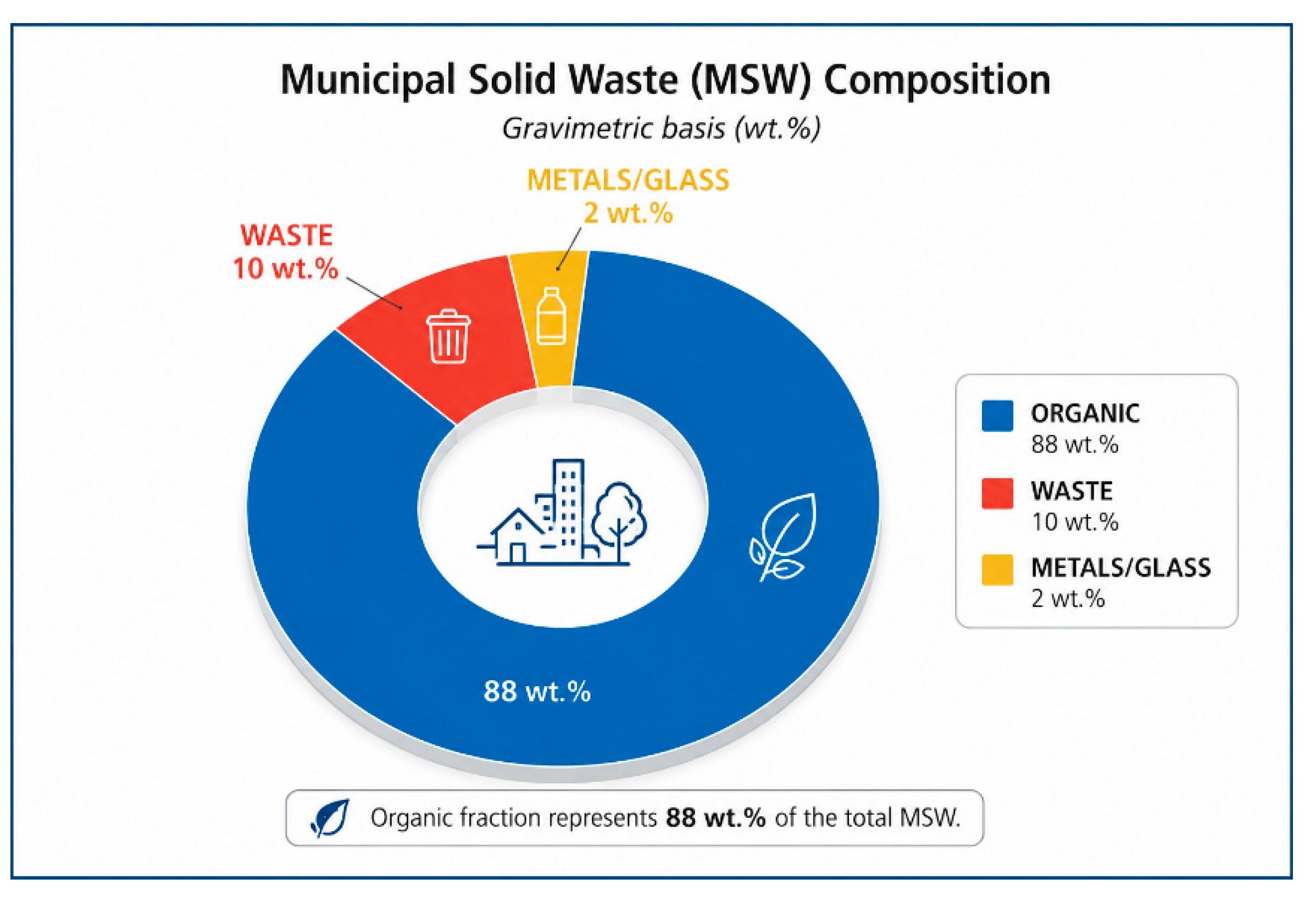
Figure 2.
MSW Thermogravimetric analysis (A) Fraction A (B) Fractiom B (C) Fraction C.
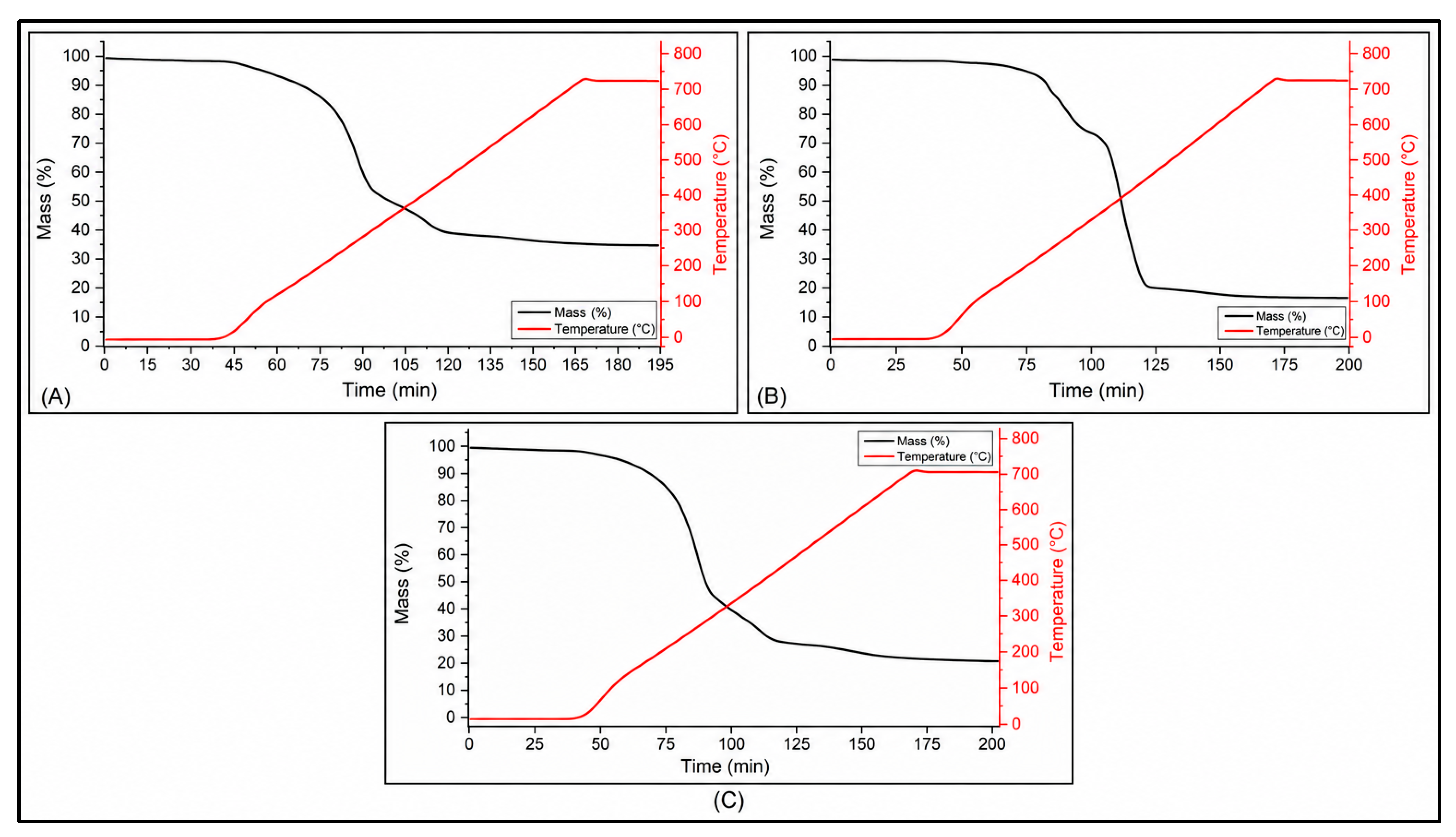
Figure 3.
Chemical class distribution of condensable vapors (heavy phase) from MSW pyrolysis obtained by GC–MS (a) fraction A (b) fraction B (c) fraction C.
Figure 3.
Chemical class distribution of condensable vapors (heavy phase) from MSW pyrolysis obtained by GC–MS (a) fraction A (b) fraction B (c) fraction C.
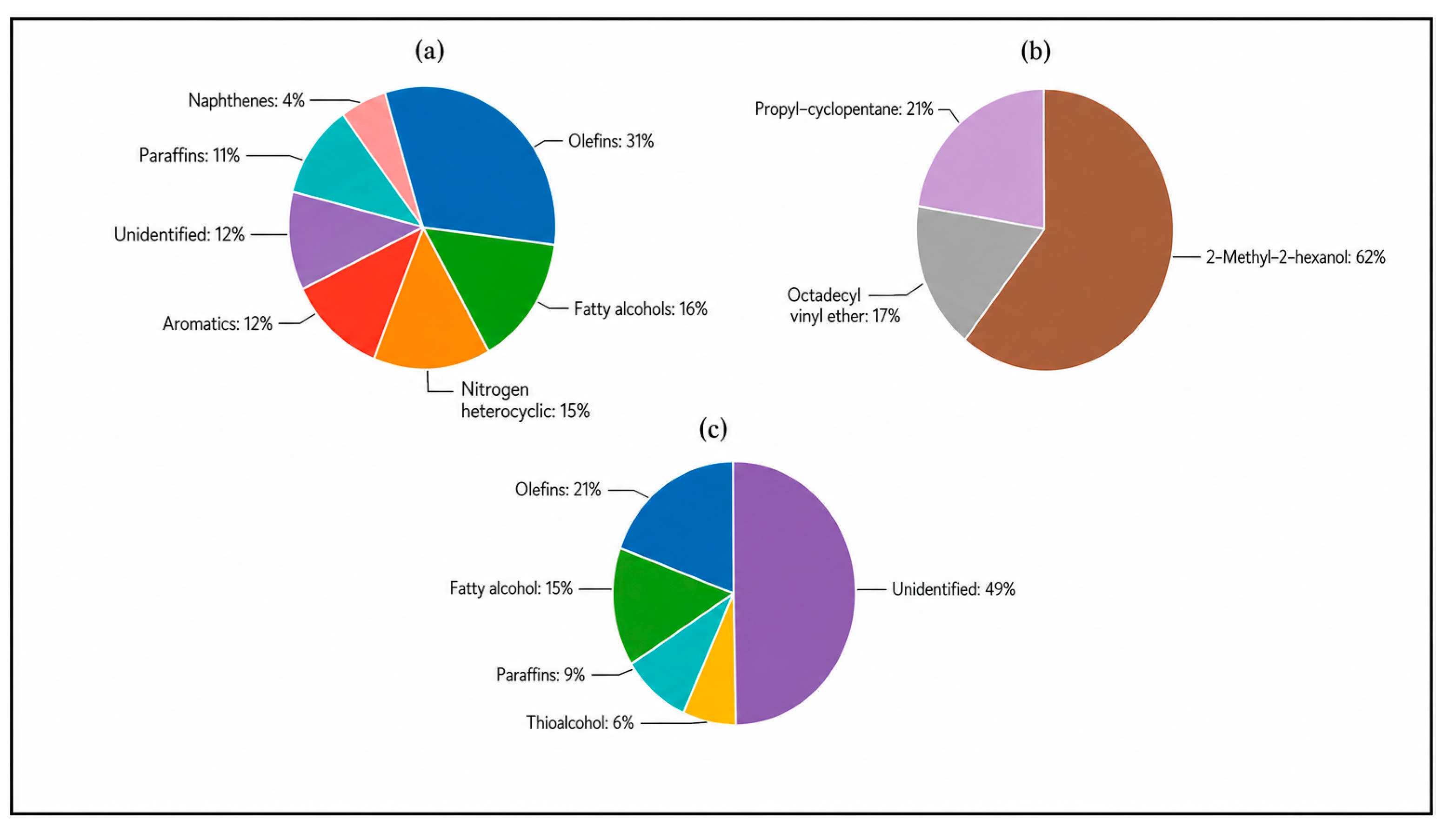
Figure 4.
Non-condensable gas composition produced in the pyrolysis process.
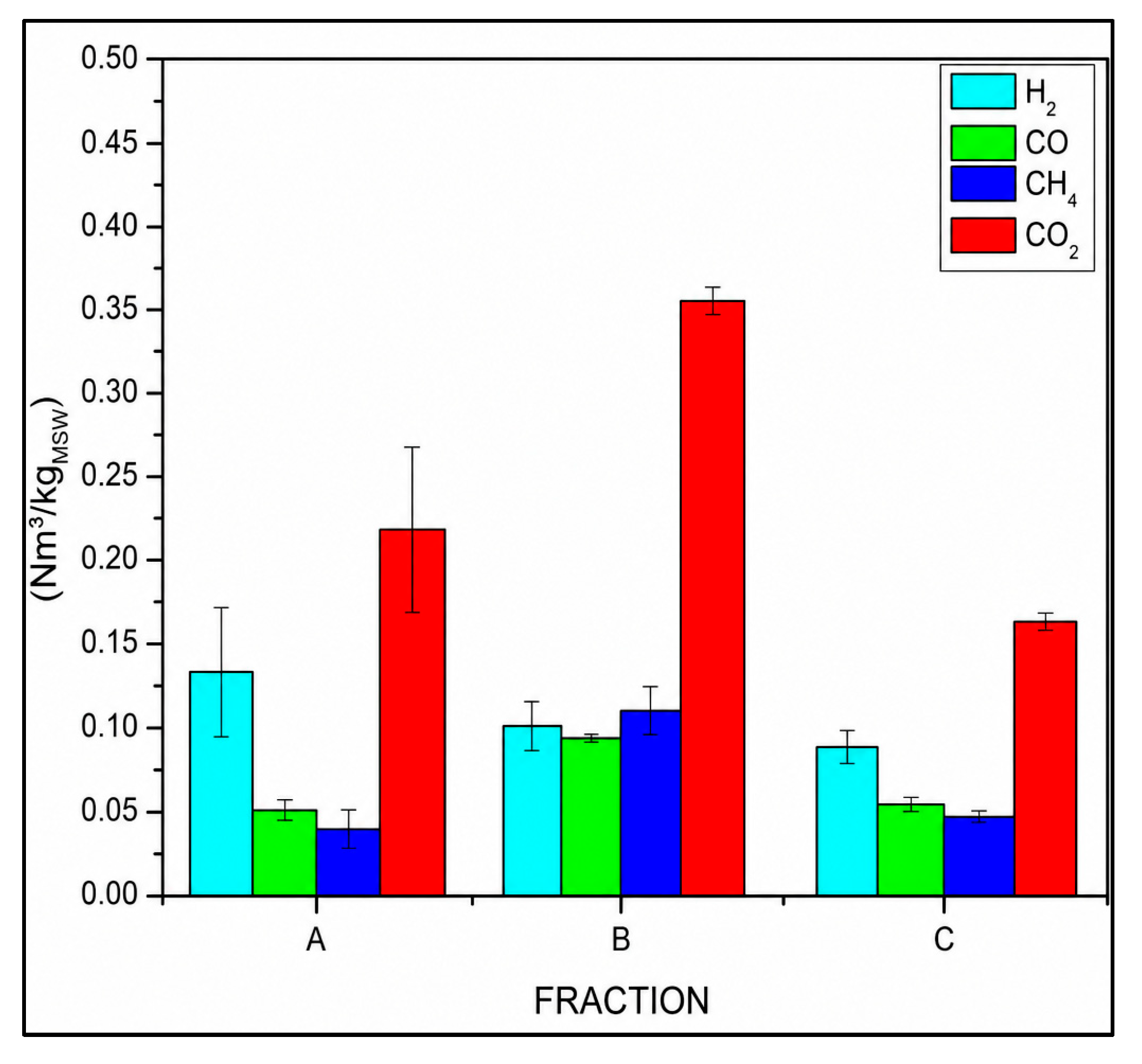
Figure 5.
Non-condensable gas yields (Ygas) from the pyrolysis (PYR) vs pyrolysis and steam reforming (PSR).
Figure 5.
Non-condensable gas yields (Ygas) from the pyrolysis (PYR) vs pyrolysis and steam reforming (PSR).
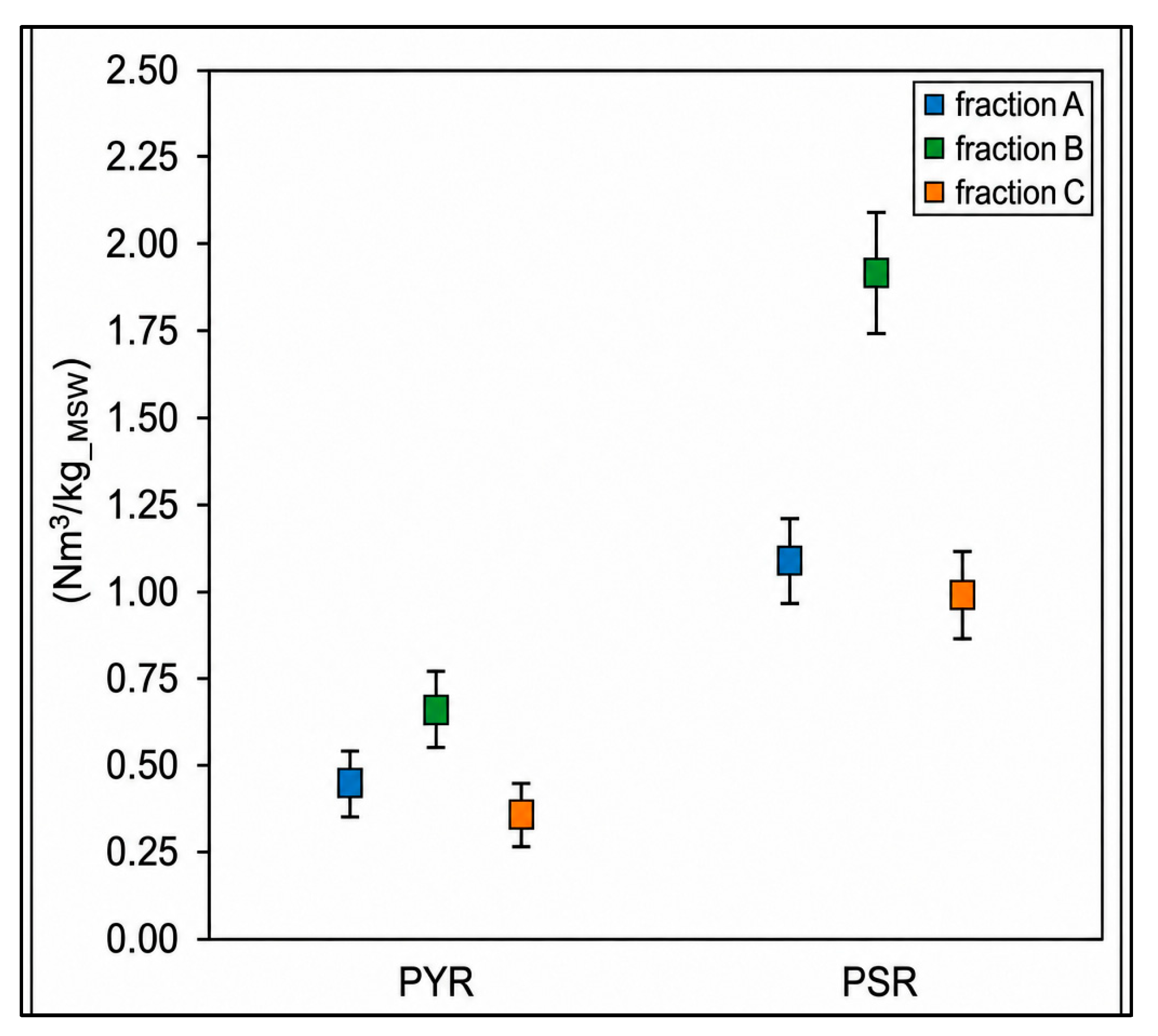
Figure 6.
Non-condensable gas composition from the pyrolysis (PYR) vs pyrolysis and steam reforming (PSR).
Figure 6.
Non-condensable gas composition from the pyrolysis (PYR) vs pyrolysis and steam reforming (PSR).
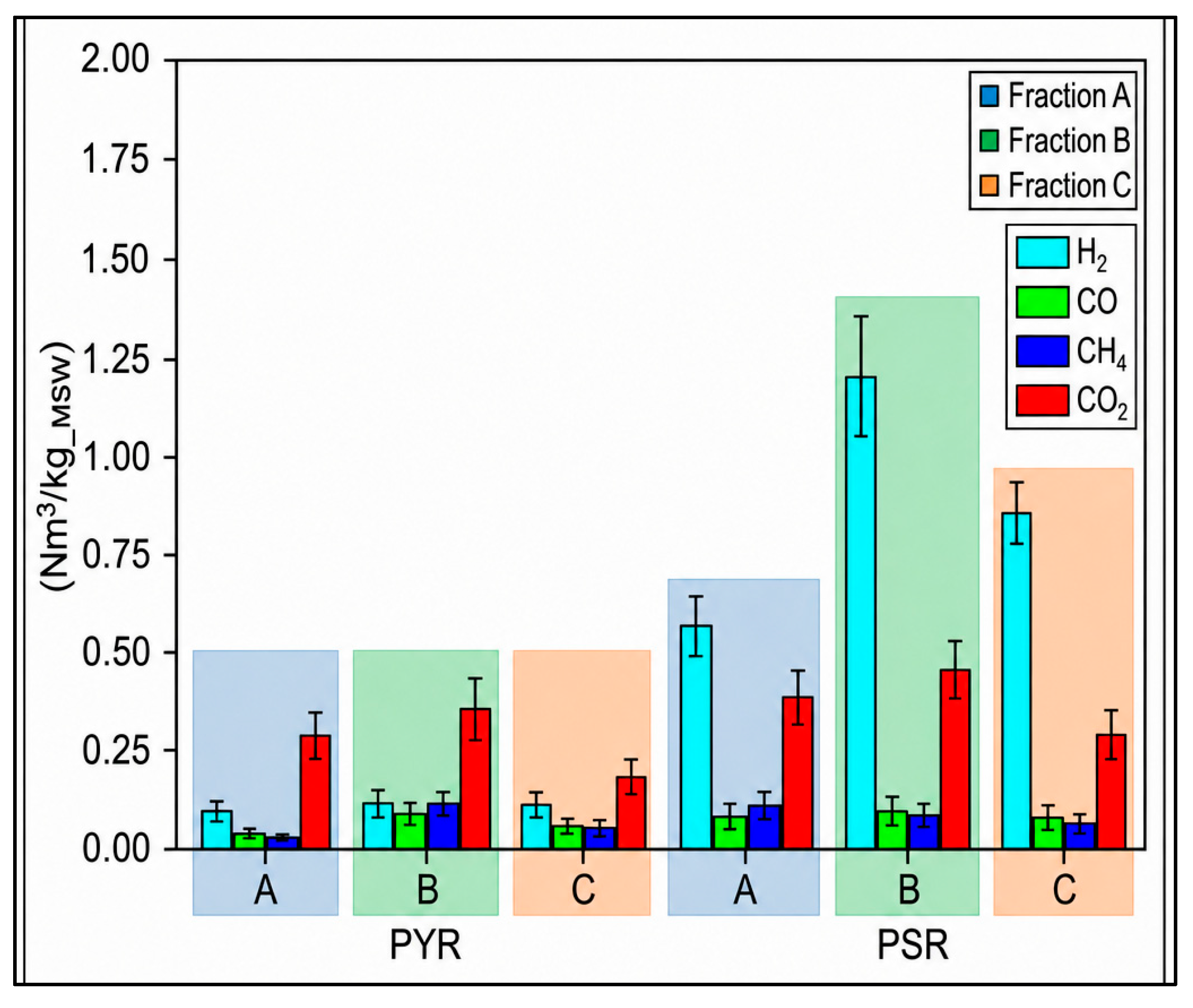
Figure 7.
Non-condensable gas yields (Ygas) from the pyrolysis (PYR) vs pyrolysis and catalytic steam reforming (PCSR).
Figure 7.
Non-condensable gas yields (Ygas) from the pyrolysis (PYR) vs pyrolysis and catalytic steam reforming (PCSR).
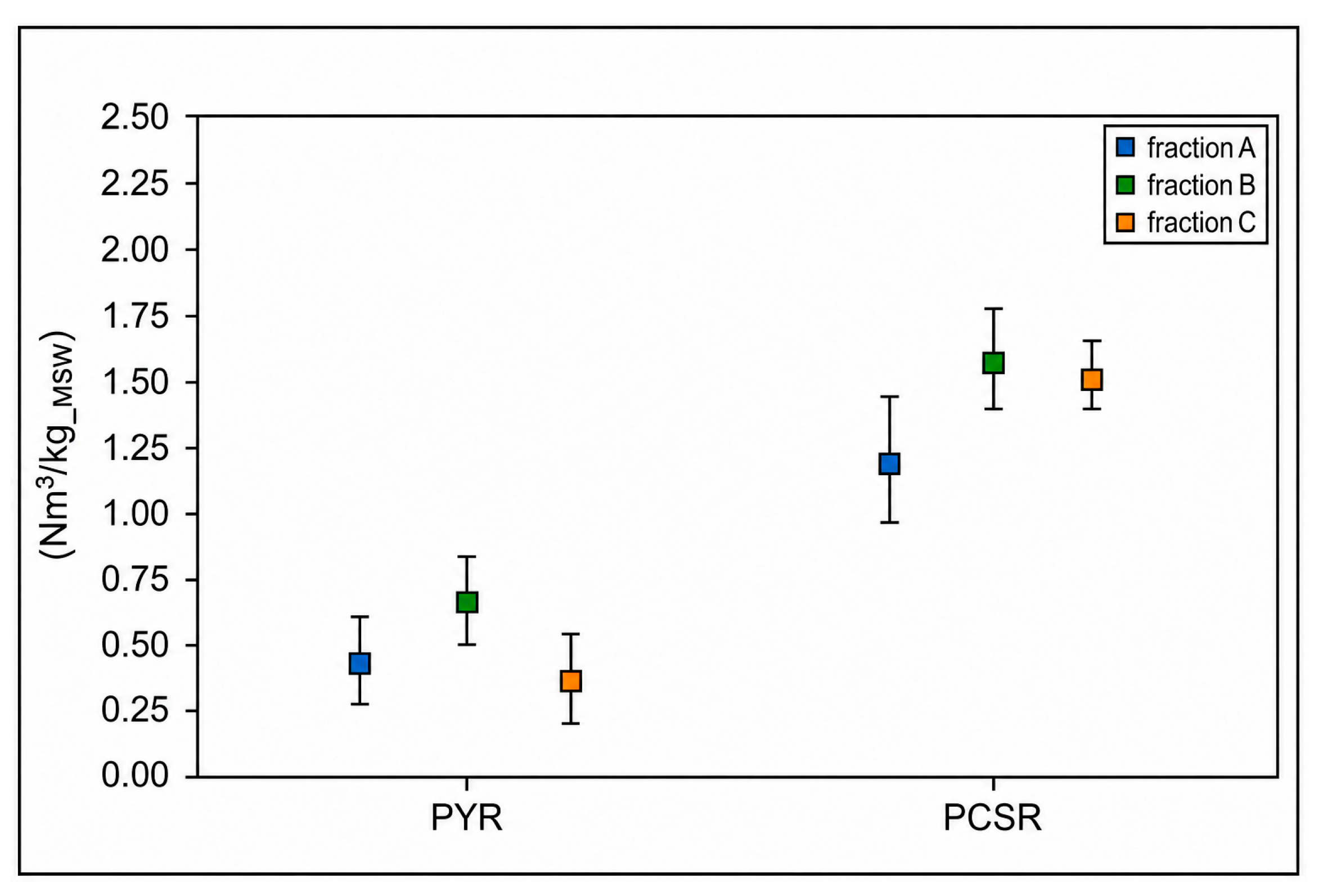
Figure 8.
Non-condensable gas composition from the pyrolysis (PYR) vs pyrolysis and catalytic steam reforming (PCSR).
Figure 8.
Non-condensable gas composition from the pyrolysis (PYR) vs pyrolysis and catalytic steam reforming (PCSR).
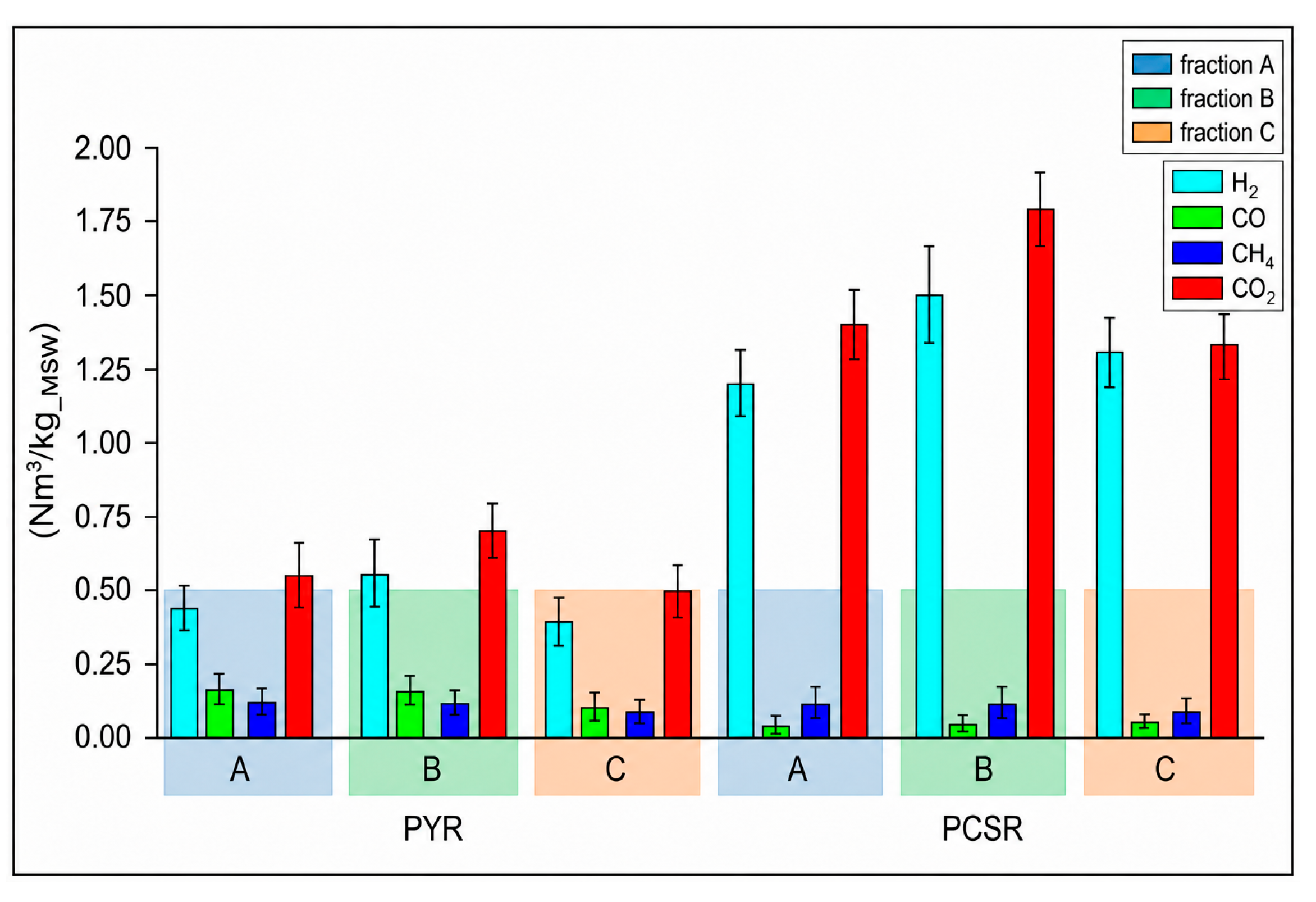
Figure 9.
Catalytic bed used in the experiments.
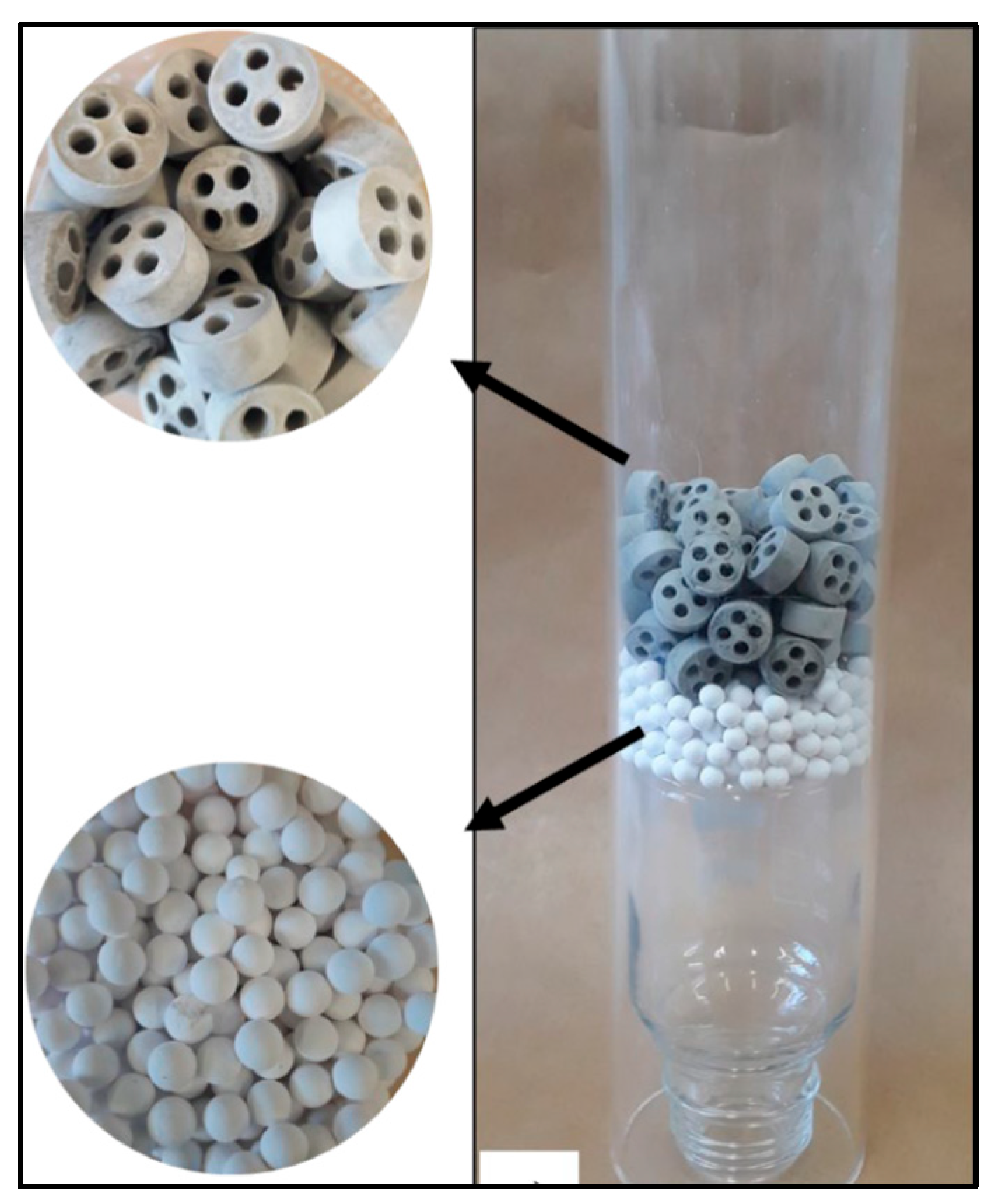
Figure 10.
Schematic technical drawing PSRPCSR process.
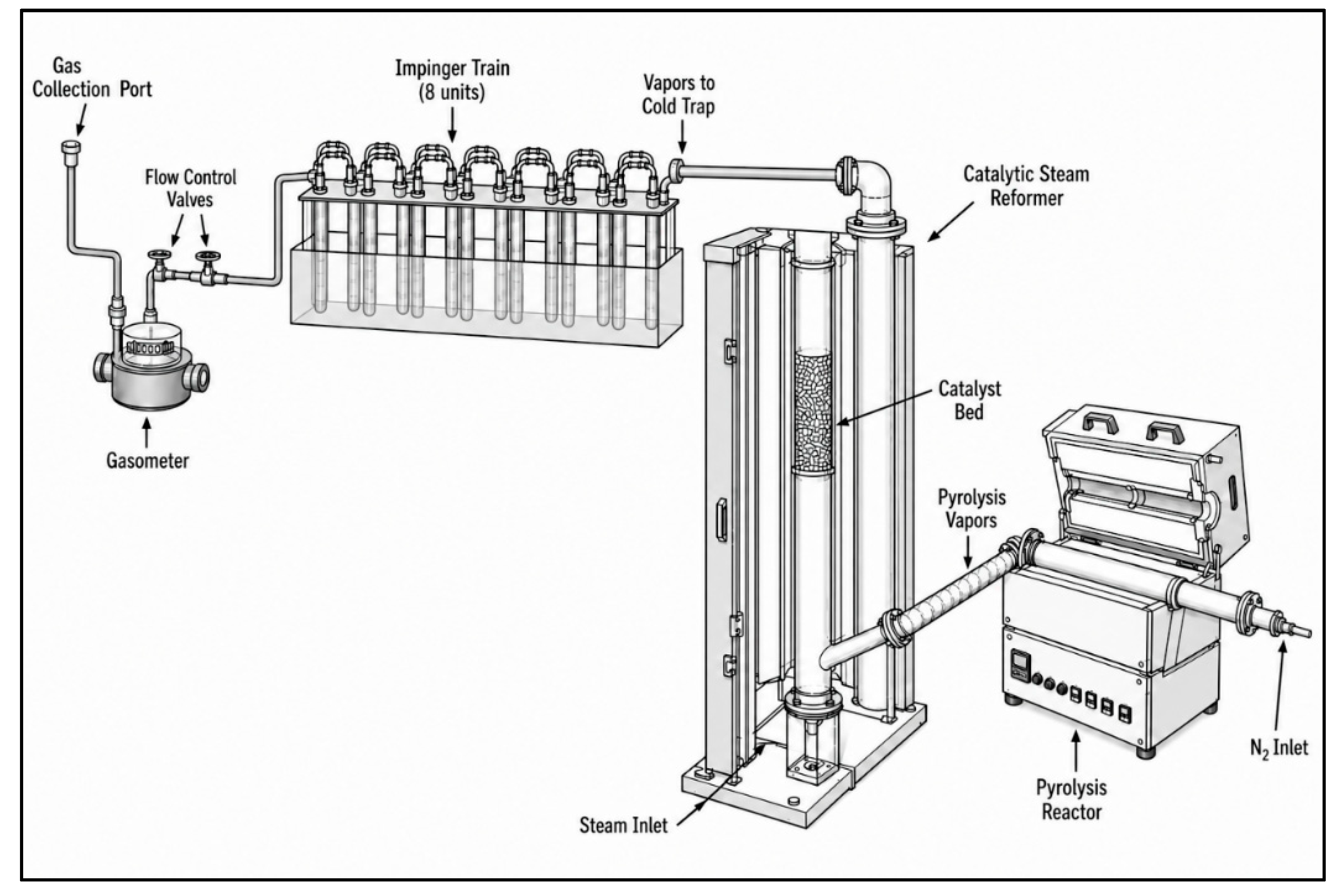

Table 1.
MSW proximate and ultimate analyses.
| Parameter | Fraction A | Fraction B | Fraction C |
| Proximate analysis | |||
| Moisture (g·100 g⁻¹) | 51.4 ± 2.2 | 6.5 ± 0.7 | 47.9 ± 3.6 |
| Volatile Matter (g·100 g⁻¹)¹ | 76.4 ± 2.0 | 84.4 ± 0.8 | 81.2 ± 0.8 |
| Ash (g·100 g⁻¹) | 15.5 ± 1.3 | 7.0 ± 0.6 | 8.7 ± 0.9 |
| Fixed Carbon (g·100 g⁻¹)² | 8.1 ± 1.9 | 8.6 ± 0.2 | 10.0 ± 1.4 |
| Ultimate analysis | |||
| Carbon (g·100 g⁻¹) | 40.64 | 84.75 | 43.84 |
| Hydrogen (g·100 g⁻¹) | 6.09 | 7.45 | 6.59 |
| Nitrogen (g·100 g⁻¹) | 1.56 | 5.48 | 1.62 |
| Sulfur (g·100 g⁻¹) | 0.16 | 0.09 | 0.16 |
| Chlorine (g·100 g⁻¹) | 1.28 ± 0.09 | 1.18 ± 0.11 | 1.22 ± 0.07 |
| HHV (MJ·kg⁻¹) | 17.84 ± 0.13 | 25.14 ± 2.89 | 19.03 ± 0.65 |
¹ Dry basis. ² Dry basis, obtained by difference.
Table 2.
Gas Yield and gas composition.
| Fraction | Process | Gas Yield (Nm³·kg⁻¹) | H₂ (% vol.) | CO₂ (% vol.) |
CO (% vol.) |
CH₄ (% vol.) |
| A | PYR | 0.44 | 30.1 | 49.2 | 11.6 | 9.1 |
| PSR | 1.08 | 52.9 | 33.1 | 5.5 | 8.5 | |
| PCSR | 1.18 | 38.1 | 59.5 | 0.5 | 1.9 | |
| B | PYR | 0.66 | 15.3 | 53.7 | 14.2 | 16.7 |
| PSR | 1.89 | 59.3 | 27.3 | 5.9 | 7.5 | |
| PCSR | 1.54 | 32.2 | 65.8 | 0.5 | 1.5 | |
| C | PYR | 0.35 | 25.1 | 46.0 | 15.5 | 13.4 |
| PSR | 0.97 | 55.5 | 27.8 | 6.0 | 8.7 | |
| PCSR | 1.50 | 39.9 | 56.2 | 0.5 | 3.4 |
*PYR: Pyrolysis; PSR: Pyrolysis and steam reforming; PCSR; Pyrolysis and catalytic steam reforming.
Disclaimer/Publisher’s Note: The statements, opinions and data contained in all publications are solely those of the individual author(s) and contributor(s) and not of MDPI and/or the editor(s). MDPI and/or the editor(s) disclaim responsibility for any injury to people or property resulting from any ideas, methods, instructions or products referred to in the content. |
© 2026 by the authors. Licensee MDPI, Basel, Switzerland. This article is an open access article distributed under the terms and conditions of the Creative Commons Attribution (CC BY) license (http://creativecommons.org/licenses/by/4.0/).
Copyright: This open access article is published under a Creative Commons CC BY 4.0 license, which permit the free download, distribution, and reuse, provided that the author and preprint are cited in any reuse.