
Submitted:
03 August 2026
Posted:
04 August 2026
You are already at the latest version
Abstract
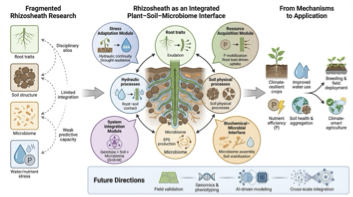
The rhizosheath is a dynamic plant–soil interface in which root traits, microbial activity, and soil physical properties jointly regulate plant adaptation to drought and nutrient limitation. Despite the growing interest in this field, it remains conceptually fragmented. This study mapped the development, structure, and emerging directions of rhizosheath research, with particular attention to plant–soil–microbiome interactions and stress responses. Bibliometric and science-mapping analyses were performed on 136 publications (2015–2026) retrieved from the Web of Science Core Collection. Using the Bibliometrix framework, we examined publication dynamics, collaboration networks, citation patterns, keyword co-occurrence, and thematic structures. The dataset comprised 136 publications, 6,366 citations, and 723 authors, with 54.41% international co-authorship. Logistic modeling identified a growth inflection in 2022.54 and a projected saturation of nearly 160% publications. Document coupling resolved nine clusters dominated by soil–root interface processes (n = 51; 1,358 citations) and plant–microbe interactions (n = 18; 895 citations). Thematic analysis positioned soil and rhizosheath as central domains and identified water stress as a key motor theme, whereas mucilage, hydraulic functioning, and microbiome assembly emerged as recent trends. Rhizosheath research is transitioning from descriptive characterization to integrative, mechanistic perspectives linking root traits, soil processes, and microbial dynamics. Progress will depend on resolving genotype × soil × microbiome interactions and advancing field-based cross-scale phenotyping to support climate-resilient cropping systems.
Keywords:
mucilage
; soil aggregation
; hydraulic conductivity
; microbiome
; genotype × environment interactions
; bibliometric analysis
1. Introduction
The rhizosheath, a layer of soil that remains physically attached to roots through the combined action of root hairs, mucilage, root exudates, and microbial adhesives, is increasingly recognized as a functional component of the rhizosphere rather than a passive by-product of root growth [1,2,3,4]. It is important to distinguish the rhizosheath from a broader rhizosphere. The rhizosphere encompasses the entire soil volume influenced by root activity, including chemical gradients, microbial communities, and nutrient depletion zones. In contrast, the rhizosheath refers specifically to the physically bound layer of soil particles that remains attached to the roots upon excavation [4,5]. This distinction is critical because the rhizosheath mass, the most used metric, captures a defined structural trait, whereas rhizosphere processes extend across a broader, more diffuse spatial domain. More importantly, the rhizosheath mass represents the amount of adhering soil and should not be interpreted as a direct measure of the hydraulic, nutritional, or microbial functions operating at the root–soil interface.
Over the past decade, the rhizosheath has emerged as a measurable root-associated trait that links rhizosphere structure to plant–water relations and nutrient acquisition under environmental stress [1,6,7,8]. Studies on cereals, legumes, and drought-adapted species have shown that rhizosheath development enhances root–soil contact, modifies water retention and rewetting, and improves access to poorly mobile nutrients, particularly phosphorus, under drying or nutrient-limited conditions [9,10,11,12]. These functions position the rhizosheath as part of an extended root phenotype, in which plant traits actively modify soil physical and biological processes to improve resource acquisition and plant performance [3]. Therefore, the rhizosheath is better understood as an emergent plant–soil phenotype than as an isolated morphological property of the root [13].
Mechanistically, rhizosheath formation results from tightly integrated interactions between root structural traits, rhizodeposition chemistry, soil physical properties, and the rhizosphere microbiota. Root hairs provide a structural framework that anchors the soil particles. In contrast, mucilage and root exudates act as physicochemical agents that promote soil aggregation, regulate moisture retention, and influence nutrient diffusion at the root–soil interface [2,14,15]. Mucilage and other rhizodeposits can also modify soil wettability, viscosity, pore connectivity, and the dynamics of drying and rewetting around the roots [16,17,18]. However, the magnitude and direction of these effects depend on soil texture, water content, root development, and physicochemical properties of the released compounds.
These processes are further reinforced by rhizosheath-associated microbial communities, whose extracellular polymeric substances enhance soil adhesion, stabilize aggregates, and contribute to nutrient cycling [7,10,19]. Rhizosheath-associated bacteria and fungi may also transform nutrients, modify plant hormonal signaling, and interact with root hairs and exudates. Studies in crops such as rice, barley, sorghum, pearl millet, and switchgrass indicate that soil drying and plant genotype can restructure rhizosheath microbial communities, while selected bacterial taxa can enhance rhizosheath formation through auxin- or ethylene-related pathways. Accordingly, rhizosheath development results from dynamic plant–soil–microbe interactions shaped by plant genotype, soil texture, and moisture regime, rather than being a purely structural property of the root [20].
These integrated processes are directly relevant to drought tolerance and nutrient acquisition, particularly under water-limited and low-soil-fertility conditions. Maintaining hydraulic continuity at the root–soil interface reduces air gaps and sustains water flow to the roots, thereby buffering plants against transient drought stress [1,12,21]. The chemically active microenvironment within the rhizosphere also promotes phosphorus mobilization through rhizodeposition and microbial activity, which is critical in soils with limited nutrients [11,22,23]. Moreover, evidence of genetic variation in rhizosheath traits across crops, such as wheat, barley, sorghum, and legumes, highlights their potential as targets for phenotyping and breeding aimed at improving resource-use efficiency under climate stress [20,24,25,26]. However, the functional and agronomic relevance of rhizosheath variation remains uncertain because rhizosheath mass is influenced by plant development, soil conditions, sampling procedures, and genotype × environment interactions. Consequently, a larger rhizosheath does not necessarily improve water or nutrient acquisition, stress tolerance, or productivity. Therefore, distinguishing structural expression from physiological function and breeding value is essential before rhizosheath traits can be reliably incorporated into phenotyping and climate-resilient crop improvement. Despite these advances, the conceptual understanding of rhizosheath biology remains fragmented across disciplines such as plant physiology, soil physics, and microbial ecology. In addition, commonly used metrics, such as rhizosheath mass, do not fully capture the structural and functional complexity of rhizosphere processes, particularly under heterogeneous soil conditions or when measured in disturbed systems [9]. This fragmentation limits the integration of rhizosheath traits into predictive frameworks and breeding strategies.
Bibliometric analysis provides a systematic approach to address this limitation by quantitatively mapping the development, structure, and thematic evolution of research fields. By combining performance indicators (e.g., publication output, citation impact, and collaboration networks) with science-mapping techniques (e.g., co-citation, bibliographic coupling, and keyword co-occurrence), these approaches reveal how knowledge domains are organized and how research priorities have evolved [27,28]. Such analyses enhance conventional reviews by pinpointing dominant research clusters, emerging topics, and underexplored areas that narrative syntheses alone may not easily detect. However, bibliometric networks alone cannot explain the biological significance of the relationships they reveal. Combining bibliometric mapping with thematic synthesis addresses this limitation by identifying influential publications, research communities, and emerging topics while clarifying their underlying mechanisms, applications, and knowledge gaps through a critical examination of the literature.
In this context, the present study conducted a bibliometric and thematic synthesis of rhizosheath research published between 2015 and 2026. It examined the development of the field through publication output, citation influence, source distribution, author contributions, and international collaboration. This study further mapped the intellectual and conceptual structure by identifying influential publications, dominant research clusters, and the evolution of themes related to root traits, soil physical processes, microbiome interactions, drought responses, nutrient acquisition, genetics, and breeding. Particular attention was given to the conceptual and methodological gaps that limit the translation of rhizosheath formation into measurable physiological functions, field-relevant phenotypes, and agricultural applications. By integrating performance analysis, science mapping, and content-based interpretation, this study provides a reproducible overview of the field. This review outlines the research priorities for incorporating rhizosheath-related traits into climate-resilient crop phenotyping and breeding.
2. Materials and Methods
2.1. Research Questions
This bibliometric study examined the development and structure of rhizosheath research, with an emphasis on rhizosheath–microbiome interactions and plant stress adaptation. A combined bibliometric and thematic synthesis design was employed. Performance analysis characterized research productivity and influence; science-mapping techniques examined the social, intellectual, and conceptual organization of the literature; and qualitative examination of titles, abstracts, and keywords interpreted the biological meaning of the resulting clusters.
Four questions guided this analysis:
(a) How did publication output, citation influence, source distribution, geographical contributions, and international collaboration evolve during the study period?
(b) Which authors, publications, journals, and collaboration networks shaped the intellectual and social structure of rhizosheath research?
(c) Which thematic clusters and conceptual structures characterized the field, and how did themes related to root traits, soil physical processes, microbial interactions, plant stress responses, nutrient acquisition, genetics, and breeding evolve?
(d) Which conceptual and methodological gaps constrain the translation of rhizosheath formation into functional phenotyping, field application, and climate-resilient crop improvement?
2.2. Data Source, Search Strategy, and Eligibility Criteria
The analysis was based on the Web of Science Core Collection (WoSCC; https://www.webofscience.com/). The search was conducted on March 10, 2026, using the following query: TS=(rhizosheath) AND TS=(microbiome OR microbiota OR bacteria OR fungi OR drought OR breeding OR genetics OR “root hair”). In WoSCC, the TS field searches the title, abstract, author keywords, and Keywords Plus fields. The search period extended from January 1, 2015, to March 10, 2026; consequently, the publication output for 2026 represented only a partial year and was interpreted accordingly. Citation counts were also recorded as they appeared in WoSCC on March 10, 2026, because citation indicators are dynamic and may change after the search date.
This strategy combined the core concept of rhizosheath with key biological, ecological, and stress-related terms to capture studies on root–soil–microbiome interactions and plant adaptive processes. The Boolean structure intentionally restricted the dataset to publications that contained “rhizosheath” together with at least one of the selected microbiological, stress-related, genetic, or root-trait terms. Therefore, it represents a focused subset of the broader rhizosheath literature rather than an exhaustive inventory of every publication mentioning rhizosheath.
We acknowledge that this keyword-based approach may have excluded relevant studies using alternative terminology such as mucilage, soil aggregation, root hydraulics, rhizodeposition, root–soil contact, water retention, or phosphorus dynamics. Conversely, records in which a search term appeared only in Keywords Plus could have been retrieved despite limited relevance to the study objectives. These limitations were addressed through title and abstract relevance screening and were considered when interpreting the resulting networks and research trends.
The search was limited to English-language publications from 2015 to 2026 and included original articles, reviews, and conference proceedings; other document types were excluded to ensure consistency. Records were eligible if their title, abstract, or keywords addressed at least one aspect of rhizosheath formation, function, measurement, microbial association, environmental response, genetic variation, or agricultural application. Records were excluded when the rhizosheath was mentioned only incidentally or when the study did not provide information relevant to the research questions.
The query retrieved 136 documents: 118 research articles, 17 review articles, and one conference proceeding. Records were exported in the BibTeX format with full metadata (authors, titles, abstracts, keywords, affiliations, cited references, publication year, source titles, and document types) in accordance with established bibliometric guidelines [25].
2.3. Data Processing and Bibliometric Analysis
Analyses were performed in RStudio (version 2026.01.1-403; RStudio Team, Posit, USA) using the Bibliometrix R package, a widely adopted open-source framework for bibliometric and scientometric analyses [29]. The BibTeX file was imported and converted into a structured data frame using the convert2df() function [30]. Preprocessing included verification of metadata completeness, harmonization of author names and keywords, and removal of duplicate or incomplete records. The outputs were tabulated and visualized using Microsoft Excel (Microsoft Corporation, Redmond, WA, USA).
Two complementary approaches were applied: performance analysis summarized annual publication output, leading journals, authors, and country contributions; science mapping explored the intellectual and conceptual structure through citation, co-authorship, and keyword co-occurrence networks [27,28]. Networks were built using co-occurrence and co-citation matrices, with frequency thresholds applied to reduce noise and improve interpretability. Normalization (association strength) and clustering (Louvain algorithm) followed the standard Bibliometrix procedures, enabling the identification of major thematic and intellectual structures.
2.4. Screening and Data Extraction
Retrieved records were screened against predefined inclusion criteria (publication year, language, and document type) following established guidelines for bibliometric and systematic analyses [1,2]. Duplicates, incomplete entries, and records lacking essential bibliographic information were removed prior to the analysis. Key metadata, including authorship, publication year, source, author keywords, institutional affiliations, document type, and citation counts, were extracted to compute descriptive indicators (productivity, citation impact) and to construct science-mapping networks (co-authorship, keyword co-occurrence) [3]. The original BibTeX dataset and analysis outputs were retained throughout the pipeline to ensure transparency and reproducibility [4].
3. Results
3.1. Dataset Overview and Growth Dynamics
The bibliometric dataset comprised 136 publications on rhizosheath research published between 2015 and 2026 across 60 sources, with 6,366 citations and 723 authors (Table 1). The annual publication growth rate during the study period was −3.62%, the mean document age was 4.29 years, and the average citation impact was 31.71 citations per document. Content analysis identified 501 Keywords Plus and 470 author keywords. Multi-author collaborations dominated, with only one document being single-authored, an average of 8.25 co-authors per document, and 54.41% of the international co-authorship.
The temporal distribution of rhizosheath publications followed a logistic growth pattern (Figure 1a), with a fitted carrying capacity (K) of 159.64 publications, an inflection point at 2022.54, and a life cycle duration (Δt) of 9.15 years. The estimated peak annual output (~19 documents) occurred around 2022–2023, with 10% and 99% cumulative development thresholds reached in 2017.96 and 2032.11, respectively. Cumulative output rose from 3 documents in 2015 to 136 by 2026, with model projections approaching the saturation level near 160 publications by 2029 (Figure 1b; R² = 0.587, RMSE = 4.86). Annual production began with one article in 2015, stabilized at eight publications per year between 2017 and 2019, increased to 14–15 in 2020–2021, peaked at 24 in 2022, and subsequently declined to 10 per year in 2023–2025 (Figure 1c).
Among the most productive authors, W. Xu and J. Zhang sustained continuous activity from 2019 to 2025, while J. Pang and M.H. Ryan published consistently from 2017 onward (Figure 1d). More recent contributors included A. Carminati (2023–2026) and I.C. Dodd (2021–2025), reflecting the field’s continued expansion.
3.2. Core Knowledge Sources and Leading Authors
Plant and Soil clearly dominated the field with 27 articles, followed by New Phytologist (7) and Journal of Experimental Botany (6). The second tier, Annals of Botany, Frontiers in Plant Science, Plant, Cell & Environment, Rhizosphere, and Scientific Reports, each contributed five articles (Figure 2a). Bradford’s Law analysis identified Plant and Soil, New Phytologist, Journal of Experimental Botany, and Annals of Botany as the core zone (Zone 1), beyond which the number of articles per journal progressively decreased (Figure 2b).
H. Lambers and W. Xu were the most productive authors, each contributing 15 publications (fractionalized 1.74 and 1.77, respectively), followed by J. Zhang (14; 1.34), J. Pang (12, 1.36), and M.H. Ryan (10; 1.28) (Table 2). I.C. Dodd showed the highest fractional contribution among mid-productivity authors (1.33 from 7 publications), indicating leading authorship roles.
3.3. Global Scientific Production and Collaboration
China led the field with 48 corresponding-author articles (35.29%; 30 SCP and 18 MCP), followed by Australia (23; 14 SCP and 9 MCP), the United Kingdom (11; 5 SCP and 6 MCP), and Germany (10; all MCP) (Figure 3a; Table 2). African and Latin American contributions were present but limited, with Ghana, Senegal, Brazil, and Nigeria each producing 1–3 articles, predominantly via international collaborations.
Citation impact, however, did not track productivity. Pakistan recorded the highest average citations per article (110.3), followed by Saudi Arabia (72.8) and the United Kingdom (57.4). Despite its leading output, China averaged 25.7 citations per article (Table 2). This pattern suggests that a small number of widely cited international collaborations have shaped the field’s intellectual core.
The collaboration network was centered on Europe, with Germany and Switzerland acting as hubs (Figure 3b). Germany’s strongest bilateral links were with Switzerland (8 collaborations), the Netherlands (5), and the United Kingdom and USA (3 each). The United Kingdom anchored cross-regional links to India, Pakistan, Japan, Kenya, Tunisia, and Saudi Arabia, whereas collaborations involving Africa, the Middle East, and Latin America remained sparser.
3.4. Intellectual Structure: Document Coupling
Document coupling resolved the literature into nine clusters (Table 3). The largest, Cluster 8 (n = 51; 1,358 citations), captured soil–root interface processes, aggregation dynamics, and ecosystem-level functioning, anchored by Pang et al. (2017), Brown et al. (2017), Marin et al. (2021), and Delhaize et al. (2015). Cluster 5 (n = 18, 895 citations) grouped studies on plant–microbe interactions and the functional rhizosphere (Naseem et al. 2018; Koebérnick et al. 2017).
Mechanistic dimensions of rhizosheath formation were distributed across three clusters: Cluster 1 (n = 6; 652 citations) focused on root trait regulation and rhizosheath formation (Wen et al. 2019, 2020; Pang et al. 2018); Cluster 4 (n = 8; 200 citations) addressed rhizosphere processes and root–soil interactions; and Cluster 2 (n = 2; 108 citations) covered rhizosphere microbiome interactions. The remaining clusters captured emerging or applied domains, including crop physiology and yield (Cluster 6), functional genomics (Cluster 7), soil management (Cluster 3), and agronomic applications (Cluster 9).
3.5. Global Collaboration: A Converging Network of Rhizosheath Science
High-frequency terms in rhizosheath research clustered around three conceptual domains (Figure 4a). Core terms, rhizosheath (60), soil (52), rhizosphere (49), and growth (46), dominated the dataset and occupied the largest treemap blocks. The second tier reflected crop and trait dimensions (wheat 22; tolerance 20; plant, root hairs, and traits each 19; phosphorus acquisition 18), while stress, nutrient, and microbial terms (water stress 16; responses 15; root 15; root hair length 14; phosphorus 13; drought 13; bacteria 12) formed a third tier. Lower-frequency terms (≤9) included mucilage, exudation, carboxylates, microbiome, microbial community, and soil aggregation, indicating finer-grained subtopics.
The keyword co-occurrence network resolved three clusters with distinct centrality patterns (Figure 4b). Cluster 1, the largest and most central, was dominated by rhizosheath (betweenness = 261.55; PageRank = 0.0903), tightly linked to soil (150.98; 0.0738) and rhizosphere (147.22; 0.0702), and included microbial and process-oriented terms (mucilage, exudation, microbiome, and arbuscular mycorrhizal fungi). Cluster 2 was centered on growth (115.72; 0.0687) and connected crop- and trait-related terms (wheat, tolerance, root hairs, phosphorus acquisition, and efficiency). Cluster 3 grouped stress- and morphology-related terms (water stress, root hair length, morphology, and rhizosheath formation), with water stress (betweenness = 10.63) and root hair length (PageRank = 0.0254) showing the highest connectivity within the cluster.
3.6. Intellectual Structure of Literature
Temporal analysis of the trend topics revealed a clear evolution in research priorities (Table 4). Early keywords (2016–2018) focused on phosphorus uptake, root hairs, and rhizosphere carboxylates. From 2019 onward, tolerance, acquisition, and soil gained prominence, while core terms (rhizosheath, rhizosphere, and soil) reached their median occurrence around 2022 and remained active through 2024. The most recent keywords concentrated on stress and water-related processes, responses (median 2023), drought (2023), mucilage (2023), water (2024), and stress (2024), signaling a shift toward the functional and hydraulic dimensions of rhizosheath research.
The thematic map organized the literature into seven keyword clusters spanning four quadrants (Figure 5; Table 4). The basic-theme quadrant was dominated by soil (centrality = 30.08; 381 keyword occurrences) and rhizosheath (20.68; 332), both of which anchored the conceptual core of the field. The motor-theme quadrant was led by water stress (centrality = 21.98; density = 89.85; 250 occurrences), confirming drought- and hydraulic-related processes as key drivers of recent research. Niche themes with high density but low centrality included root (density = 116.00), drought tolerance (100.92), and strategies (96.70), reflecting specialized but well-developed subdomains. Traits (centrality = 10.44; density = 90.94) occupied an intermediate position between the basic and motor themes. At the keyword level, the strongest network hubs were growth (betweenness = 1,353.90), responses (1,190.84), rhizosheath (1,187.44), rhizosphere (1,121.36), and soil (980.72).
4. Thematic Architecture and Way Ahead: A Synthesis of Rhizosheath Research
4.1. Conceptual Backbone: A Connected Rhizosheath–Soil–Rhizosphere System
The bibliometric synthesis of 136 publications and 6,366 citations (Table 1) revealed a highly interconnected research field anchored by a clear conceptual backbone. The dominance of rhizosheath, soil, rhizosphere, and growth in the treemap (Figure 4a) and their central positions in the keyword co-occurrence network (Figure 4b; rhizosheath betweenness = 261.55; soil = 150.98; rhizosphere = 147.22) demonstrate that the field now operates around a tightly coupled rhizosheath–soil–rhizosphere continuum rather than treating these elements as separate entities.
This interpretation was supported by document coupling: the two largest clusters, soil–root interface processes (Cluster 8; n = 51; 1,358 citations) and plant–microbe interactions (Cluster 5; n = 18; 895 citations), together represented more than half of the analyzed publications. Their prominence demonstrates that soil physical processes and biological interactions constitute the principal knowledge domains linking the literature.
Foundational contributions identified by these clusters [5,20,50] reframed the rhizosheath as a root-driven soil-engineering system rather than a passive adherent layer. Subsequent work confirmed that this interface emerges from the coordinated action of root hairs, mucilage, exudates, soil texture, moisture regime, and microbial communities [4,46,55,56]. However, recent evidence cautions that rhizosheath mass alone does not always capture broader rhizosphere structure or function across intact and disturbed soils [57]. Therefore, the conceptual backbone identified here should be interpreted as dynamic and environmentally contingent.
4.2. Functional Modules: Stress Adaptation, Resource Acquisition, and Microbial Interfaces
Building on this conceptual backbone, three interrelated functional modules emerged from bibliometric and thematic analyses.
First, stress adaptation was represented by the motor-theme position of the water stress cluster and the recent occurrence of responses, drought, water, and stress (centrality = 21.98; density = 89.85; Figure 5; Table 4), and was reinforced by the temporal rise of responses (median 2023), drought (2023), water (2024), and stress (2024) in trend topics (Table 4). Across cereals and legumes, water deficit promotes rhizosheath development through coordinated ABA–auxin regulation of root hair growth, mucilage production, and exudation [1,41,58,59,60], positioning the rhizosheath as a dynamic adaptive interface rather than a static structural response [55].
Second, root traits and resource acquisition formed a second module anchored in document coupling Cluster 1 (root trait regulation and rhizosheath formation; 652 citations; Table 3) and represented in the keyword network by phosphorus acquisition (PageRank = 0.067), root hairs, and efficiency (Figure 4b). Root hair architecture and carboxylate exudation jointly drive rhizosheath development and phosphorus mobilization, often enhanced by microbial activity [5,35,52,61]. The persistence of carboxylates as a trending topic from 2018 to 2023 (Table 4) reflects the durability of this research line.
Third, biochemical and microbial interfaces constitute a third module, captured by document coupling Cluster 2 (rhizosphere microbiome interactions; Table 3) and the recent emergence of mucilage (median 2023) as a trending topic. Polysaccharide-rich mucilage and exudates simultaneously structure the rhizosheath and selectively recruit microbial communities, including AMF and rhizobacteria, whose extracellular polymeric substances further stabilize aggregates and mobilize nutrients [10,23,46,62]. These reciprocal interactions identify the rhizosheath as a biologically active interface, rather than demonstrating that every rhizosheath necessarily functions as an equivalent microbial hotspot.
4.3. Integration Towards a System-Level Perspective
Although historically partitioned across root genetics, microbiome ecology, and soil physics, this field is converging toward an integrated, multi-scale perspective. This convergence is visible in the network structure (Figure 4b), where all three keyword clusters, rhizosheath/soil/microbiome, growth/traits/crop, and water stress/morphology, are linked through high-betweenness hub terms (growth = 1,353.90; responses = 1,190.84; rhizosheath = 1,187.44; Section 3.6). The thematic map (Figure 5) further illustrates that no single domain functions in isolation; traits occupy an intermediate position between basic (soil and rhizosheath) and motor (water stress) themes, indicating that crop trait research is actively bridging structural and stress adaptation perspectives.
At the process level, root-derived compounds alter microbial assembly and soil aggregation, and microbial products further influence aggregate stability and nutrient turnover, and the resulting root–soil structure affects water and nutrient transport [12,14,22]. Imaging and modeling approaches are beginning to connect these microscale interactions with whole-root hydraulics and plant performance [63,64]. Nevertheless, robust system-level predictions will require the explicit separation of rhizosheath structure, physiological function, and agronomic value.
4.4. Way Forward: Four Strategic Directions
The intellectual and thematic structures of the dataset identified four priorities.
4.4.1. From Structural Description to Mechanistic Understanding
The rhizosheath mass remains the most widely used descriptor; however, it does not distinguish among the contributions of root hairs, mucilage, rhizodeposition, microorganisms, and soil properties. The recent prominence of mucilage and the high density of root clusters indicate growing mechanistic interest. Future research should quantify the relative and interactive contributions of root hair genetics, mucilage properties, exudate composition, microbial activity, and soil structure [15,65,66].
4.4.2. From Isolated Traits to Integrated Root–Soil–Microbiome Systems
The strong connectivity among rhizosheath, soil, and rhizosphere themes supports an integrated framework in which structural and biological components act through coupled feedback [14,18,63]. Cross-scale imaging, chemical characterization, microbial profiling, and mechanistic modeling are required to establish how local processes influence whole-root water and nutrient acquisition.
4.4.3. From Controlled Experiments to Field Validation
Geographical and collaboration analyses revealed that research activity was concentrated in a limited number of countries and institutional networks. This concentration may restrict the range of soils, climates, crops, and management systems reported in the literature. Therefore, multi-location experiments and standardized field phenotyping are needed to quantify genotype × soil × microbiome interactions and test whether the responses observed under controlled conditions remain consistent in agricultural environments [67,68,69].
4.4.4. From Biological Understanding to Breeding and Agronomic Application
The relatively small document-coupling clusters associated with functional genomics and agronomic applications indicate an emerging but not yet mature translational frontier. Genetic variation in rhizosheath mass, root hairs, and associated traits provides opportunities for breeding under drought and phosphorus limitations [13,26,65,70]. However, the rhizosheath mass should be treated as a structural proxy, and its relationship with water uptake, nutrient acquisition, and yield must be validated rather than assumed.
Combining rhizosheath measurements with root hair traits, physiological indicators, microbial profiles, and soil properties may improve selection accuracy. Multi-environment validation is essential because soil texture, moisture, and management can modify both trait expression and its relationship with crop performance [56,71]. Integrating genetic selection with microbiome and soil management interventions could ultimately support the development of crop ideotypes adapted to defined target environments [1,68].
5. Conclusions
This bibliometric and thematic synthesis mapped the development of 136 publications and 6,366 citations. The analyses identified the rhizosheath–soil–rhizosphere interface as the field’s principal conceptual foundation, with water stress as a prominent and internally developed research theme. Temporal and network patterns further indicated increasing attention to drought responses, water relations, mucilage, and microbial interactions. The literature was structured around three interrelated themes: stress adaptation, root-mediated resource acquisition, and biochemical–microbial interactions.
Despite this progress, the synthesis revealed a persistent gap between structural measurements and functional interpretation. Although rhizosheath mass remains a dominant structural phenotype, it does not directly quantify water uptake, nutrient acquisition, microbial activity, stress tolerance, or crop productivity. It is considered a consistent indicator of physiological and agronomic performance. Genotype, root system size, soil properties, moisture regime, microbiome composition, plant developmental stage, and sampling procedures influence its expression and functional significance. Consequently, a larger rhizosheath should not be automatically interpreted as evidence of improved physiological performance or greater breeding value. Establishing these relationships will require standardized measurements that integrate rhizosheath structure with physiological, hydraulic, nutritional, microbial, and agronomic parameters.
These findings should be interpreted within the scope of this study. The analysis was restricted to English-language records indexed in the Web of Science Core Collection and retrieved using a focused keyword strategy; therefore, relevant studies employing alternative terminology may have been omitted. Citation indicators are database- and time-dependent, and the 2026 records represent only a partial publication year.
Despite these limitations, this study provides a reproducible map of the field and identifies priorities for further development. Multi-environment field experiments, standardized phenotyping, and the integration of genetics, plant physiology, soil physics, microbial ecology, and crop management are required to determine when and under which environmental conditions rhizosheath-related traits can reliably contribute to drought resilience, nutrient-use efficiency, and crop improvement.
Acknowledgments
The authors acknowledge the Department of Plant Breeding at the Swedish University of Agricultural Sciences (SLU) for their contributions to completing this work and for covering the open-access fee.
Author Contributions
Elshafia Ali Hamid Mohammed: Data curation, Formal analysis. Mahbubjon Rahmatov: Methodology, Writing – review & editing. Mohammed Elsafy: Methodology, Validation, Visualization, Writing – original draft, Writing – review & editing. Rodomiro Ortiz: Validation, Visualization, Writing – review & editing. Nataliya Bilyera: Methodology, Writing – review & editing. Michaela A. Dippold: Methodology, Visualization, Critical revision of manuscript. Tilal Abdelhalim: Conceptualization, Writing – original draft, Visualization, Validation, Writing – review & editing.
Funding
The authors declare that no funds, grants, or other support were received during the preparation of this manuscript. The last author, T.A., was supported by the Philipp Schwartz Initiative of the Alexander von Humboldt Foundation. The funder had no role in the study design, data collection and analysis, interpretation of the results, preparation of the manuscript, or the decision to submit it for publication.
Data Availability
The datasets generated and/or analyzed during the current study are available from the corresponding author upon reasonable request.
Conflicts of Interest
The authors declare no relevant financial or non-financial interests.
References
- Aslam, M.M.; Karanja, J.K.; Dodd, I.C. Rhizosheath: An adaptive root trait to improve plant tolerance to phosphorus and water deficits? Plant Cell Environ. 2022, 45, 2861–2874. [Google Scholar] [CrossRef] [PubMed]
- Bengough, A.G. Water Dynamics of the Root Zone: Rhizosphere Biophysics and Its Control on Soil Hydrology. Vadose Zone J. 2012, 11. [Google Scholar] [CrossRef]
- Cantó C de la, F.; Simonin, M.; King, E. An extended root phenotype: the rhizosphere, its formation and impacts on plant fitness. Plant J. 2020, 103. [Google Scholar] [CrossRef] [PubMed]
- York, L.M.; Carminati, A.; Mooney, S.J. The holistic rhizosphere: integrating zones, processes, and semantics in the soil influenced by roots. J. Exp. Bot. 2016, 67. [Google Scholar] [CrossRef] [PubMed]
- Pang, J.; Ryan, M.H.; Siddique, K.H.M.; Simpson, R.J. Unwrapping the rhizosheath. Plant Soil 2017, 418, 129–139. [Google Scholar] [CrossRef]
- Holz, M.; Zarebanadkouki, M.; Benard, P. Root and rhizosphere traits for enhanced water and nutrients uptake efficiency in dynamic environments. Front Plant Sci. 2024, 15. [Google Scholar] [CrossRef] [PubMed]
- Marasco, R.; Fusi, M.; Mosqueira, M.J. Rhizosheath–root system changes exopolysaccharide content but stabilizes bacterial community across contrasting seasons in a desert environment. Environ. Microbiome 2022, 17. [Google Scholar] [CrossRef] [PubMed]
- Mo, X.; Wang, M.; Zeng, H.; Wang, J. Rhizosheath: Distinct features and environmental functions. Geoderma 2023, 435, 116500. [Google Scholar] [CrossRef]
- Lucas, M.; Guber, A.; Kravchenko, A. Root-Pore Interactions, the Underestimated Driver for Rhizosphere Structure and Rhizosheath Development. Plant Cell Environ. 2025, 49. [Google Scholar] [CrossRef] [PubMed]
- Marasco, R.; Mosqueira, M.J.; Fusi, M. Rhizosheath microbial community assembly of sympatric desert speargrasses is independent of the plant host. Microbiome 2018, 6, 215. [Google Scholar] [CrossRef] [PubMed]
- Shoaib, M.; Banerjee, B.P.; Hayden, M.; Kant, S. Roots’ Drought Adaptive Traits in Crop Improvement. Plants 2022, 11. [Google Scholar] [CrossRef] [PubMed]
- Vetterlein, D.; Carminati, A.; Kögel-Knabner, I. Rhizosphere Spatiotemporal Organization–A Key to Rhizosphere Functions. Front. Agron. 2020, 2. [Google Scholar] [CrossRef]
- Hosseini, B.; Cheraghi, M.; Hiesch, S. Contrasting rhizosheath formation capacities in two maize inbred lines: implications for water and nutrient uptake. Plant Soil 2025, 509, 631–647. [Google Scholar] [CrossRef]
- Hallett, P.D.; Marin, M.; Bending, G.D. Building soil sustainability from root–soil interface traits. Trends Plant Sci. 2022, 27, 688–698. [Google Scholar] [CrossRef] [PubMed]
- Rahim, R.; Jahromi, O.E.; Amelung, W.; Kroener, E. Rhizosheath formation depends on mucilage concentration and water content. Plant Soil 2024, 495, 649–661. [Google Scholar] [CrossRef]
- Benard, P.; Zarebanadkouki, M.; Carminati, A. Impact of pore-scale wettability on rhizosphere rewetting. Front. Environ. Sci. 2018, 6, 16. [Google Scholar] [CrossRef]
- Carminati, A.; Benard, P.; Ahmed, M.A.; Zarebanadkouki, M. Liquid bridges at the root-soil interface. Plant Soil 2017, 417, 1–15. [Google Scholar] [CrossRef]
- Carminati, A.; Zarebanadkouki, M.; Kroener, E. Biophysical rhizosphere processes affecting root water uptake. Ann. Bot. 2016, 118. [Google Scholar] [CrossRef] [PubMed]
- Wang, Y.; Wu, M.; Wang, Y. Diversity and function of microbial communities in the sand sheath of Agropyron cristatum by metagenomic analysis. Can. J. Microbiol. 2022, 68, 177–189. [Google Scholar] [CrossRef] [PubMed]
- Ndour, P.M.S.; Heulin, T.; Achouak, W. The rhizosheath: from desert plants adaptation to crop breeding. Plant Soil 2020, 456, 1–13. [Google Scholar] [CrossRef]
- Affortit, P.; Ahmed, M.A.; Grondin, A. Keep in touch: the soil–root hydraulic continuum and its role in drought resistance in crops. J. Exp. Bot. 2024, 75, 584–593. [Google Scholar] [CrossRef] [PubMed]
- Wang, L.; Rengel, Z.; Zhang, K. Ensuring future food security and resource sustainability: insights into the rhizosphere. Iscience 2022, 25. [Google Scholar] [CrossRef] [PubMed]
- Xu, F.; Liao, H.; Yang, J. Auxin-producing bacteria promote barley rhizosheath formation. Nat. Commun. 2023, 14, 5800. [Google Scholar] [CrossRef] [PubMed]
- Adu, M.O.; Zigah, N.; Yawson, D.O. Plasticity of root hair and rhizosheath traits and their relationship to phosphorus uptake in sorghum. Plant Direct 2023, 7, e521. [Google Scholar] [CrossRef] [PubMed]
- Emebiri, L.; Rohan, M.; Hildebrand, S.; Pitt, W. Ability of wheat genotypes to form large rhizosheaths may enhance survival of false-break events in rainfed production. Aust. J. Agric. Res. 2024, 75. [Google Scholar] [CrossRef]
- Steiner, F.A.; Wild, A.J.; Tyborski, N. Rhizosheath drought responsiveness is variety-specific and a key component of belowground plant adaptation. New Phytol. 2024, 242, 479–492. [Google Scholar] [CrossRef] [PubMed]
- Hallinger, P. Bibliometric Review Methodology and State of the Science Bibliometric Review of Research on Problem-based Learning, 2017-2021. Interdiscip. J. Probl.-Based Learn. 2023, 17. [Google Scholar] [CrossRef]
- Lim, W.M.; Kumar, S. Guidelines for interpreting the results of bibliometric analysis: A sensemaking approach. Glob. Bus. Organ. Excell. 2023, 43. [Google Scholar] [CrossRef]
- Aria, M.; Cuccurullo, C. bibliometrix: An R-tool for comprehensive science mapping analysis. J. Inf. 2017, 11, 959–975. [Google Scholar] [CrossRef]
- Darvish, H. Bibliometric Analysis using Bibliometrix an R Package. J. Scientometr. Res. 2020, 8, 156–160. [Google Scholar] [CrossRef]
- Djaffardjy, M.; Marchment, G.; Sebe, C. Developing and reusing bioinformatics data analysis pipelines using scientific workflow systems. Comput. Struct. Biotechnol. J. 2023, 21, 2075–2085. [Google Scholar] [CrossRef] [PubMed]
- Donthu, N.; Kumar, S.; Mukherjee, D. How to conduct a bibliometric analysis: An overview and guidelines. J. Bus. Res. 2021, 133, 285–296. [Google Scholar] [CrossRef]
- Zupic, I.; Čater, T. Bibliometric Methods in Management and Organization. Organ. Res. Methods 2015, 18, 429–472. [Google Scholar] [CrossRef]
- Mohammed, E.A.H.; Kovács, B.; Kuunya, R. Antibiotic Resistance in Aquaculture: Challenges, Trends Analysis, and Alternative Approaches. Antibiotics 2025, 14, 598. [Google Scholar] [CrossRef] [PubMed]
- Wen, Z.; Li, H.; Shen, Q. Tradeoffs among root morphology, exudation and mycorrhizal symbioses for phosphorus-acquisition strategies of 16 crop species. New Phytol. 2019, 223, 882–895. [Google Scholar] [CrossRef] [PubMed]
- Wen, Z.; Pang, J.; Tueux, G.; Liu, Y.; Shen, J.; Ryan, M.H.; Lambers, H.; Siddique, K.H. Contrasting patterns in biomass allocation, root morphology and mycorrhizal symbiosis for phosphorus acquisition among 20 chickpea genotypes with different amounts of rhizosheath carboxylates. Funct. Ecol. 2020, 34, 1311–1324. [Google Scholar] [CrossRef]
- Tian, Y.; Ma, X.; Li, Y.; Cheng, C.; An, D.; Ge, F. Explore the Structural Changes of Nitrogen-fixing Microorganisms of Rhizosheath During the Growth of Stipagrostis Pennata in the Desert. 2019. [Google Scholar] [CrossRef] [PubMed]
- Wang, L.; Wang, T.; Yao, S.; Sun, H.; Zhang, B. Soil compaction development facilitated the decadal improvement of the root system architecture and rhizosheath soil traits of soybean in the North China Plain. Soil Tillage Res. 2024, 237, 105983. [Google Scholar] [CrossRef]
- Fu, M.; Xiong, P.; Zhang, Z.; Peng, X. Responses of root hairs to soil compaction: a review. Plant Sci. 2025, 355, 112461. [Google Scholar] [CrossRef] [PubMed]
- Cai, G.; Carminati, A.; Abdalla, M.; Ahmed, M.A. Soil textures rather than root hairs dominate water uptake and soil–plant hydraulics under drought. Plant Physiol. 2021, 187, 858–872. [Google Scholar] [CrossRef] [PubMed]
- Zhang, Y.; Du, H.; Gui, Y. Moderate water stress in rice induces rhizosheath formation associated with abscisic acid and auxin responses. J. Exp. Bot. 2020, 71, 2740–2751. [Google Scholar] [CrossRef] [PubMed]
- Zhang, Y.; Xu, F.; Ding, Y.; Du, H.; Zhang, Q.; Dang, X.; Cao, Y.; Dodd, I.C.; Xu, W. Abscisic acid mediates barley rhizosheath formation under mild soil drying by promoting root hair growth and auxin response. Plant Cell Environ. 2021, 44, 1935–1945. [Google Scholar] [CrossRef] [PubMed]
- Naseem, H.; Ahsan, M.; Shahid, M.A.; Khan, N. Exopolysaccharides producing rhizobacteria and their role in plant growth and drought tolerance. J. Basic Microbiol. 2018, 58, 1009–1022. [Google Scholar] [CrossRef] [PubMed]
- Koebernick, N.; Daly, K.R.; Keyes, S.D.; George, T.S.; Brown, L.K.; Raffan, A.; Cooper, L.J.; Naveed, M.; Bengough, A.G.; Sinclair, I. High-resolution synchrotron imaging shows that root hairs influence rhizosphere soil structure formation. New Phytol. 2017, 216, 124–135. [Google Scholar] [CrossRef] [PubMed]
- Robertson-Albertyn, S.; Alegria Terrazas, R.; Balbirnie, K.; Blank, M.; Janiak, A.; Szarejko, I.; Chmielewska, B.; Karcz, J.; Morris, J.; Hedley, P.E. Root hair mutations displace the barley rhizosphere microbiota. Front. Plant Sci. 2017, 8, 1094. [Google Scholar] [CrossRef] [PubMed]
- Galloway, A.; Akhtar, J.; Marcus, S.E. Cereal root exudates contain highly structurally complex polysaccharides with soil-binding properties. Plant J. 2020, 103. [Google Scholar] [CrossRef] [PubMed]
- Huang, F.; Chen, Z.; Du, D.; Guan, P.; Chai, L.; Guo, W.; Hu, Z.; Xin, M.; Peng, H.; Yao, Y. Genome-wide linkage mapping of QTL for root hair length in a Chinese common wheat population. Crop J. 2020, 8, 1049–1056. [Google Scholar] [CrossRef]
- Honvault, N.; Houben, D.; Firmin, S.; Meglouli, H.; Laruelle, F.; Fontaine, J.; Lounès-Hadj Sahraoui, A.; Coutu, A.; Lambers, H.; Faucon, M.P. Interactions between below-ground traits and rhizosheath fungal and bacterial communities for phosphorus acquisition. Funct. Ecol. 2021, 35, 1603–1619. [Google Scholar] [CrossRef]
- Aslam, M.M.; Karanja, J.K.; Yuan, W.; Zhang, Q.; Zhang, J.; Xu, W. Phosphorus uptake is associated with the rhizosheath formation of mature cluster roots in white lupin under soil drying and phosphorus deficiency. Plant Physiol. Biochem. 2021, 166, 531–539. [Google Scholar] [CrossRef] [PubMed]
- Brown, L.K.; George, T.S.; Neugebauer, K.; White, P.J. The rhizosheath – a potential trait for future agricultural sustainability occurs in orders throughout the angiosperms. Plant Soil 2017, 418, 115–128. [Google Scholar] [CrossRef]
- Marin, M.; Feeney, D.; Brown, L.; Naveed, M.; Ruiz, S.; Koebernick, N.; Bengough, A.G.; Hallett, P.; Roose, T.; Puértolas, J. Significance of root hairs for plant performance under contrasting field conditions and water deficit. Ann. Bot. 2021, 128, 1–16. [Google Scholar] [CrossRef] [PubMed]
- Delhaize, E.; Rathjen, T.; Cavanagh, C. The genetics of rhizosheath size in a multiparent mapping population of wheat. J. Exp. Bot. 2015, 66. [Google Scholar] [CrossRef] [PubMed]
- Hendriks, P.-W.; Ryan, P.R.; Hands, P.; Rolland, V.; Gurusinghe, S.; Weston, L.A.; Rebetzke, G.J.; Delhaize, E. Selection for early shoot vigour in wheat increases root hair length but reduces epidermal cell size of roots and leaves. J. Exp. Bot. 2022, 73, 2499–2510. [Google Scholar] [CrossRef] [PubMed]
- Cheraghi, M.; Motesharezadeh, B.; Mousavi, S.M.; Basirat, M.; Alikhani, H.A.; Zarebanadkouki, M. Application of silicon improves rhizosheath formation, morpho-physiological and biochemical responses of wheat under drought stress. Plant Soil 2024, 503, 263–281. [Google Scholar] [CrossRef]
- Addesso, R.; Sofo, A.; Amato, M. Rhizosheath: Roles, Formation Processes and Investigation Methods. Soil Syst. 2023, 7, 106. [Google Scholar] [CrossRef]
- Hallett, P.D.; Marín, M.S.; Bending, G.D. Building soil sustainability from root–soil interface traits. Trends Plant Sci. 2022, 27. [Google Scholar] [CrossRef] [PubMed]
- Lucas, M.; Guber, A.; Kravchenko, A. Root-Pore Interactions, the Underestimated Driver for Rhizosphere Structure and Rhizosheath Development. Plant Cell Environ. 2026, 49, 295–308. [Google Scholar] [CrossRef] [PubMed]
- Cheraghi, M.; Mousavi, S.M.; Zarebanadkouki, M. Functions of rhizosheath on facilitating the uptake of water and nutrients under drought stress: A review. Plant Soil 2023, 491, 239–263. [Google Scholar] [CrossRef]
- Karanja, J.K.; Aslam, M.M.; Zhang, Q. Abscisic Acid Mediates Drought-Enhanced Rhizosheath Formation in Tomato. Front. Plant Sci. 2021, 12. [Google Scholar] [CrossRef] [PubMed]
- Steiner, F.A.; Tung, S.Y.; Wild, A.J. Soil drying shapes rhizosheath properties and their link with maize yields across different soils. Plant Soil 2025, 514, 1241–1261. [Google Scholar] [CrossRef]
- Burak, E.; Quinton, J.N.; Dodd, I.C. Root hairs are the most important root trait for rhizosheath formation of barley (Hordeum vulgare), maize (Zea mays) and Lotus japonicus (Gifu). Ann. Bot. 2021, 128, 45–57. [Google Scholar] [CrossRef] [PubMed]
- Alahmad, A.; Harir, M.; Fochesato, S. Unraveling the interplay between root exudates, microbiota, and rhizosheath formation in pearl millet. Microbiome 2024, 12, 1. [Google Scholar] [CrossRef] [PubMed]
- Schnepf, A.; Carminati, A.; Ahmed, M.A. Linking rhizosphere processes across scales: Opinion. Plant Soil 2022, 478. [Google Scholar] [CrossRef]
- Xiong, P.; Zhang, Z.; Peng, X. Root and root-derived biopore interactions in soils: A review. J. Plant Nutr. Soil Sci. 2022, 185. [Google Scholar] [CrossRef]
- de la Fuente Cantó, C.; Diouf, M.N.; Ndour, P.M.S. Genetic control of rhizosheath formation in pearl millet. Sci. Rep. 2022, 12, 9205. [Google Scholar] [CrossRef] [PubMed]
- Zeng, D.; Ford, B.; Doležel, J. A conditional mutation in a wheat (Triticum aestivum L.) gene regulating root morphology. Theor. Appl. Genet 2024, 137, 48. [Google Scholar] [CrossRef] [PubMed]
- Achouak, W.; Wagon, S.; Basile-Doelsch, I. Land Use and Plant Genotype Modulate Rhizosheath Traits, Root-Associated Microbiota, and Soil Carbon Sequestration Potential. 2025. [Google Scholar] [CrossRef]
- Affortit, P.; Ahmed, M.A.; Grondin, A. Keep in touch: the soil–root hydraulic continuum and its role in drought resistance in crops. J. Exp. Bot. 2023, 75. [Google Scholar] [CrossRef] [PubMed]
- Bonkowski, M.; Tarkka, M.; Razavi, B.S. Spatiotemporal Dynamics of Maize (Zea mays L.) Root Growth and Its Potential Consequences for the Assembly of the Rhizosphere Microbiota. Front. Microbiol. 2021, 12. [Google Scholar] [CrossRef] [PubMed]
- Tracy, S.; Nagel, K.; Postma, J.A. Crop Improvement from Phenotyping Roots: Highlights Reveal Expanding Opportunities. Trends Plant Sci. 2020, 25. [Google Scholar] [CrossRef] [PubMed]
- Rongsawat, T.; Peltier, J.B.; Boyer, J.C. Looking for Root Hairs to Overcome Poor Soils. Trends Plant Sci. 2021, 26. [Google Scholar] [CrossRef] [PubMed]
Figure 1.
Publication dynamics of rhizosheath research (2015–2026). (a) Life-cycle curve: observed annual publications (points) with fitted logistic curve (line) and inflection point (dashed line); model parameters K = 159.64, t_m = 2022.54, Δt = 9.15. (b) Cumulative growth curve with observed values (points) and fitted logistic model (line); dotted lines indicate 50%, 90%, and 99% saturation thresholds. (c) Annual scientific production from WoSCC. (d) Top 20 authors’ publication output over time; bubble size = number of articles per year, intensity = total citations per year (TCpY).
Figure 1.
Publication dynamics of rhizosheath research (2015–2026). (a) Life-cycle curve: observed annual publications (points) with fitted logistic curve (line) and inflection point (dashed line); model parameters K = 159.64, t_m = 2022.54, Δt = 9.15. (b) Cumulative growth curve with observed values (points) and fitted logistic model (line); dotted lines indicate 50%, 90%, and 99% saturation thresholds. (c) Annual scientific production from WoSCC. (d) Top 20 authors’ publication output over time; bubble size = number of articles per year, intensity = total citations per year (TCpY).
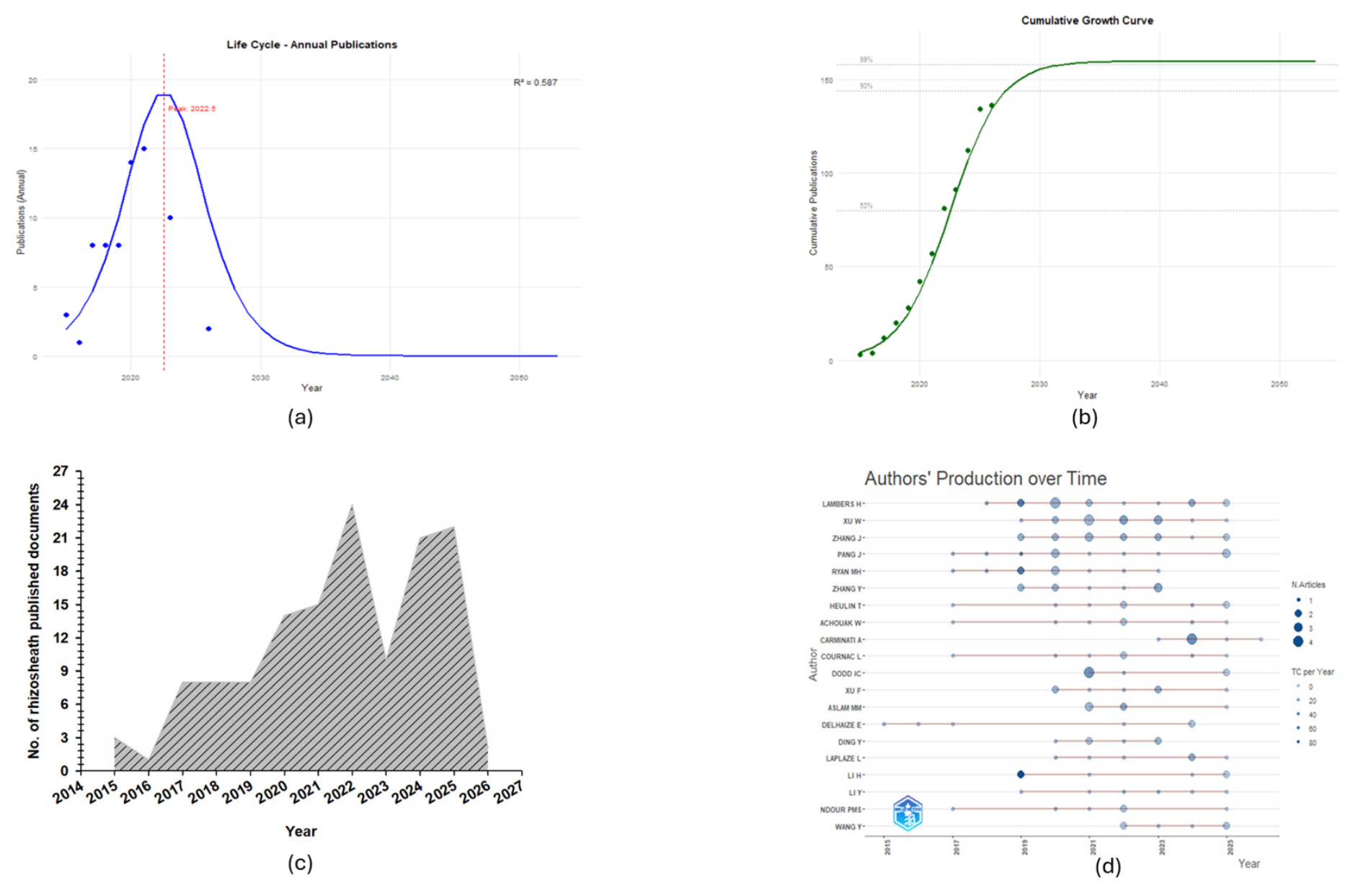
Figure 2.
Core scientific sources. (a) Distribution of rhizosheath-related publications across leading journals (2015–2026; N = 136). (b) Core journals identified by Bradford’s Law.
Figure 2.
Core scientific sources. (a) Distribution of rhizosheath-related publications across leading journals (2015–2026; N = 136). (b) Core journals identified by Bradford’s Law.
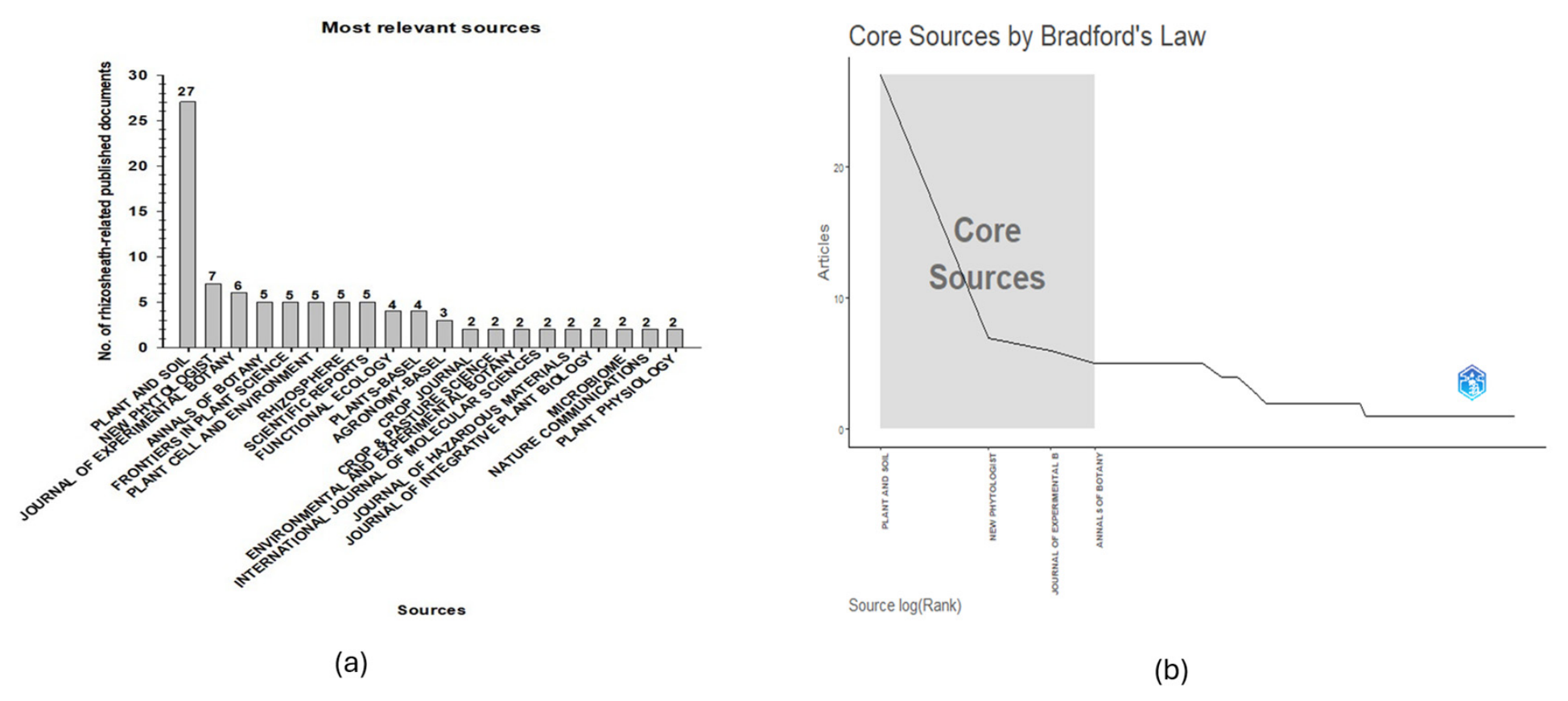
Figure 3.
Geographic structure of rhizosheath research. (a) Distribution of corresponding authors’ countries, showing single-country (SCP) and multi-country (MCP) publications. (b) Global collaboration network highlighting key hubs and inter-regional linkages.
Figure 3.
Geographic structure of rhizosheath research. (a) Distribution of corresponding authors’ countries, showing single-country (SCP) and multi-country (MCP) publications. (b) Global collaboration network highlighting key hubs and inter-regional linkages.
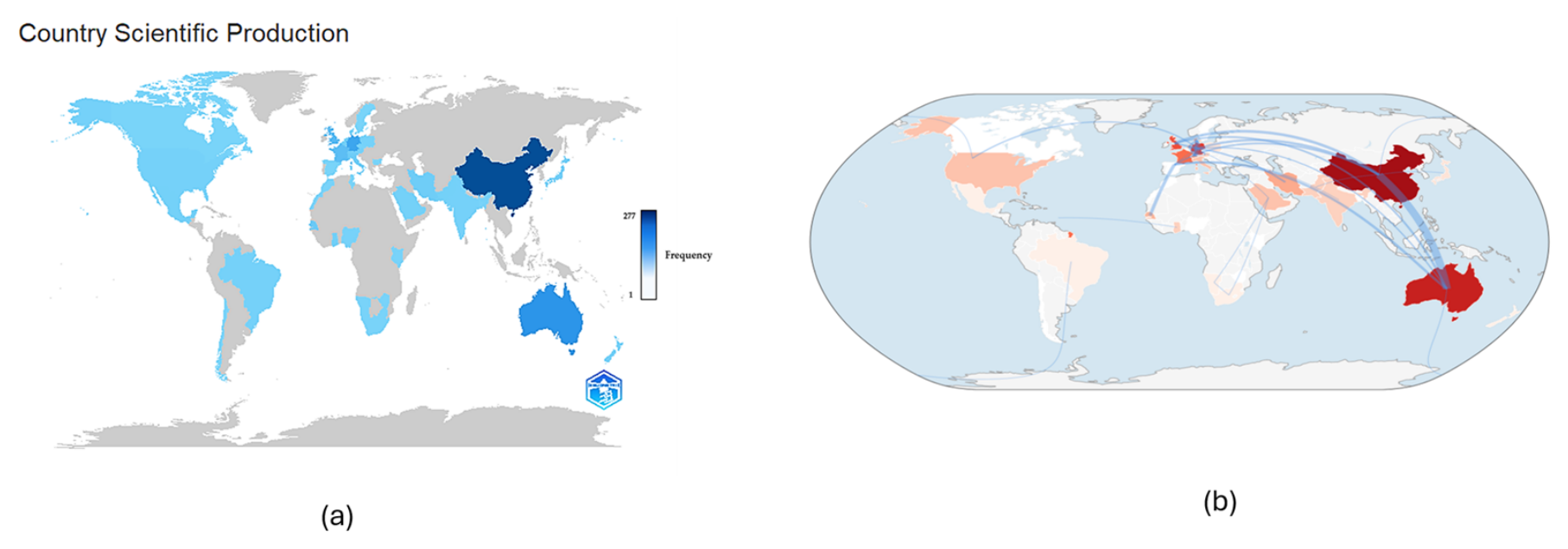
Figure 4.
Conceptual structure of rhizosheath research. (a) Treemap of high-frequency terms showing the relative dominance of core, crop/trait, and stress-related domains. (b) Keyword co-occurrence network resolving three thematic clusters; node size and color reflect betweenness centrality and cluster membership.
Figure 4.
Conceptual structure of rhizosheath research. (a) Treemap of high-frequency terms showing the relative dominance of core, crop/trait, and stress-related domains. (b) Keyword co-occurrence network resolving three thematic clusters; node size and color reflect betweenness centrality and cluster membership.
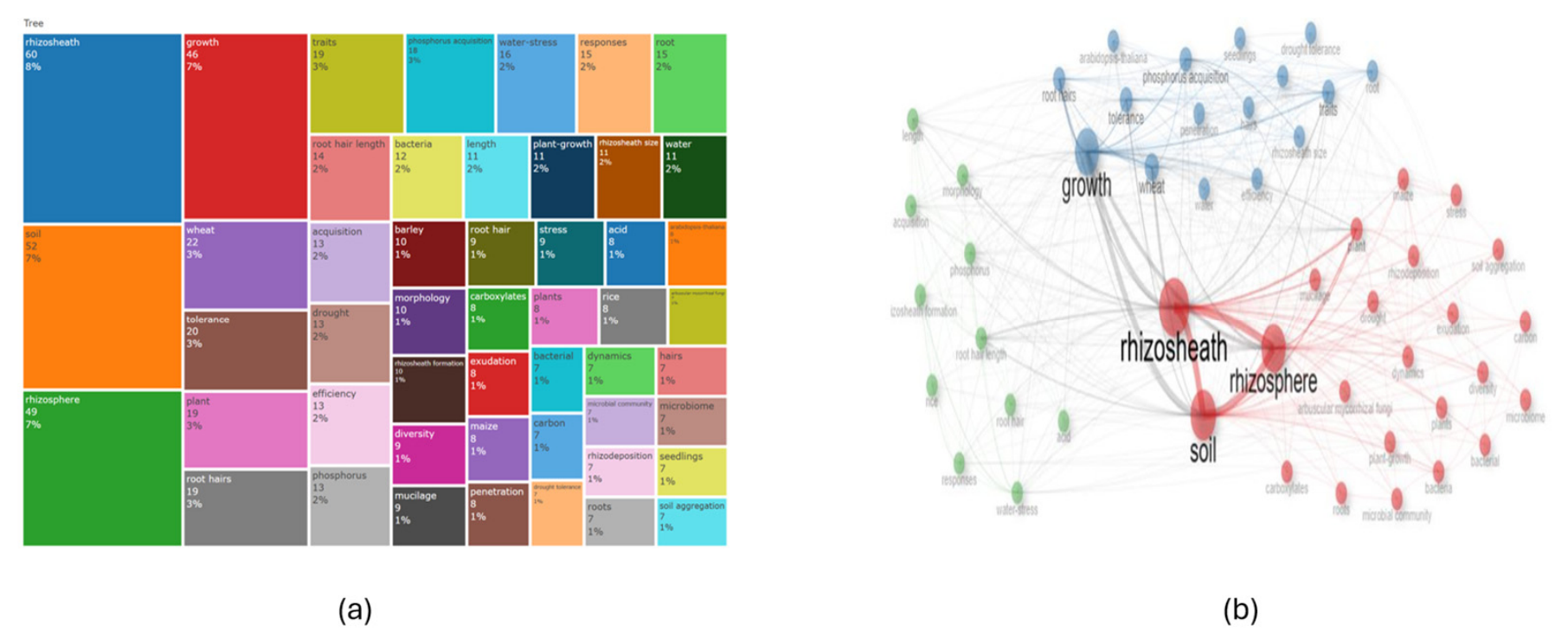
Figure 5.
Thematic map of rhizosheath research based on keyword co-occurrence (2015–2026), showing basic, motor, niche, and emerging themes. The bubble size reflects the cluster keyword frequency, and the position indicates Callon centrality (x-axis) and density (y-axis).
Figure 5.
Thematic map of rhizosheath research based on keyword co-occurrence (2015–2026), showing basic, motor, niche, and emerging themes. The bubble size reflects the cluster keyword frequency, and the position indicates Callon centrality (x-axis) and density (y-axis).
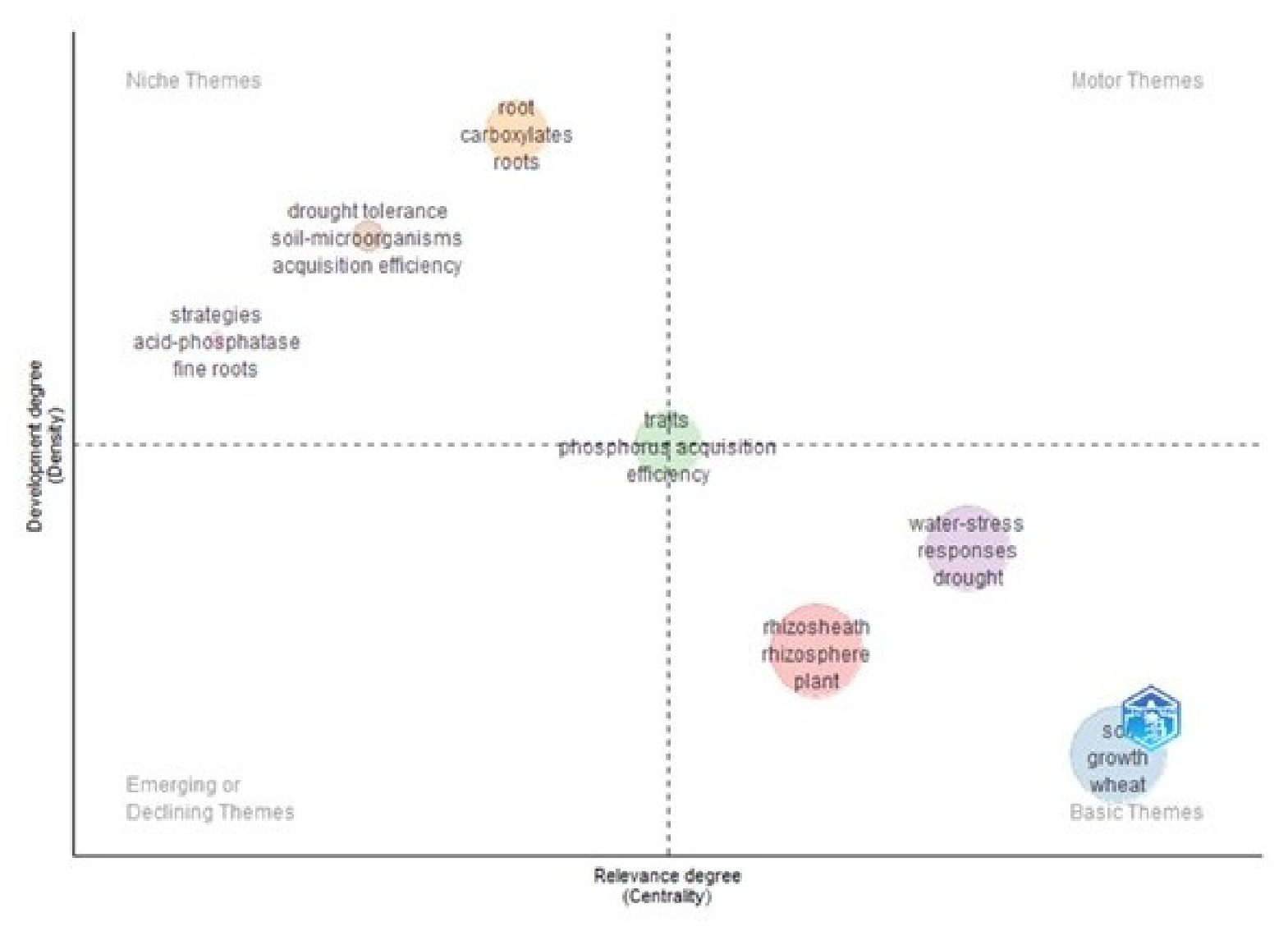

Table 1.
Presents the main bibliographic characteristics of rhizosheath publications (2015–2026).
| Category | Indicator | Value |
|---|---|---|
| Data coverage | Timespan | 2015–2026 |
| Sources (journals, books, proceedings) | 60 | |
| Documents | 136 | |
| References cited | 6,366 | |
| Publication dynamics | Annual growth rate (%) | −3.62 |
| Average document age (years) | 4.29 | |
| Average citations per document | 31.71 | |
| Content | Keywords-plus | 501 |
| Author keywords | 470 | |
| Collaboration | Authors | 723 |
| Single-authored documents | 1 | |
| Co-authors per document | 8.25 | |
| International co-authorship (%) | 54.41 | |
| Document types | Articles | 118 |
| Reviews | 17 | |
| Proceedings paper | 1 |
Table 2.
Key contributors to rhizosheath research: top authors by productivity and top countries by citation impact (2015–2026).
Table 2.
Key contributors to rhizosheath research: top authors by productivity and top countries by citation impact (2015–2026).
| Top authors | Articles | Fractionalized | Top countries | TC | Average citations/article |
|---|---|---|---|---|---|
| Lambers H | 15 | 1.74 | China | 1,235 | 25.7 |
| Xu W | 15 | 1.77 | Australia | 849 | 36.9 |
| Zhang J | 14 | 1.34 | United Kingdom | 631 | 57.4 |
| Pang J | 12 | 1.36 | Pakistan | 331 | 110.3 |
| Ryan MH | 10 | 1.28 | Saudi Arabia | 291 | 72.8 |
| Zhang Y | 9 | 1.01 | Germany | 243 | 24.3 |
| Heulin T | 8 | 0.85 | Iran | 179 | 29.8 |
| Achouak W | 7 | 0.77 | France | 130 | 18.6 |
| Carminati A | 7 | 0.74 | Brazil | 90 | 45.0 |
| Dodd IC | 7 | 1.33 | Senegal | 88 | 29.3 |
Table 3.
Document coupling clusters, citation strength, thematic domains, and key references in rhizosheath research (WoSCC, 2015–2026).
Table 3.
Document coupling clusters, citation strength, thematic domains, and key references in rhizosheath research (WoSCC, 2015–2026).
| Cluster | Docs (n) | Total citations | Theme | Key references |
|---|---|---|---|---|
| 1 | 6 | 652 | Root trait regulation and rhizosheath formation | [5], (348); [6], (184); [7], (59) |
| 2 | 2 | 108 | Rhizosphere microbiome interactions | [8], (92); [9], (16) |
| 3 | 3 | 21 | Soil management and tillage effects | [10] (15); [11]; (6) |
| 4 | 8 | 200 | Rhizosphere processes and root–soil interactions | [12] (57); [13] (47); [14] (29) |
| 5 | 18 | 895 | Plant–microbe interactions and functional rhizosphere | [15] (271); [16] (136); [17] (83) |
| 6 | 4 | 69 | Crop physiology and yield-related responses | [18] (55); [19] (11) |
| 7 | 3 | 55 | Functional genomics and molecular regulation | [20] (29); [21] (15) |
| 8 | 51 | 1,358 | Soil–root interface, aggregation, and ecosystem function | [6] (124); [22] (110); [23] (100); [24] (80) |
| 9 | 5 | 57 | Agronomic applications and sustainable systems | [25] (17); [26] (17) |
Table 4.
Thematic clusters and temporal trends in rhizosheath research.
| Cluster | Centrality | Density | Frequency | Trend keyword | Freq. | Q1 | Median | Q3 |
|---|---|---|---|---|---|---|---|---|
| Soil | 30.08 | 71.73 | 381 | Rhizosheath | 60 | 2020 | 2022 | 2024 |
| Rhizosheath | 20.68 | 75.54 | 332 | Soil | 52 | 2019 | 2022 | 2024 |
| Water stress | 21.98 | 89.85 | 250 | Rhizosphere | 49 | 2020 | 2022 | 2024 |
| Traits | 10.44 | 90.94 | 138 | Tolerance | 20 | 2019 | 2021 | 2024 |
| Root | 9.83 | 116.00 | 111 | Root hairs | 19 | 2017 | 2021 | 2024 |
| Drought tolerance | 5.41 | 100.92 | 35 | Responses | 15 | 2021 | 2023 | 2024 |
| Strategies | 1.28 | 96.70 | 21 | Drought | 13 | 2022 | 2023 | 2023 |
| Water | 11 | 2022 | 2024 | 2024 | ||||
| Mucilage | 9 | 2019 | 2023 | 2024 | ||||
| Stress | 9 | 2022 | 2024 | 2025 |
Centrality = degree of interaction with other themes; density = internal cohesion of the theme; frequency = total keyword occurrences within each cluster. Q1, Median, and Q3 indicate the quartile years of keyword occurrence; Freq. = total occurrences in the dataset.
Disclaimer/Publisher’s Note: The statements, opinions and data contained in all publications are solely those of the individual author(s) and contributor(s) and not of MDPI and/or the editor(s). MDPI and/or the editor(s) disclaim responsibility for any injury to people or property resulting from any ideas, methods, instructions or products referred to in the content. |
© 2026 by the authors. Licensee MDPI, Basel, Switzerland. This article is an open access article distributed under the terms and conditions of the Creative Commons Attribution (CC BY) license (http://creativecommons.org/licenses/by/4.0/).
Copyright: This open access article is published under a Creative Commons CC BY 4.0 license, which permit the free download, distribution, and reuse, provided that the author and preprint are cited in any reuse.


