

Submitted:
31 July 2026
Posted:
03 August 2026
You are already at the latest version
Abstract
Background: Negative workplace gossip is a common interpersonal phenomenon that may adversely affect employee well-being, workplace relationships, and organizational outcomes. Despite its importance, available measures are limited. Objective: To develop and validate the Negative Workplace Gossip Thermometer (NEWGOT), a brief single-item visual analogue instrument for assessing perceived negative workplace gossip. Method: A cross-sectional study was conducted between January and April 2026 among 432 employees working in the public and private sectors in Greece. The NEWGOT was developed as a single-item thermometer ranging from 0 to 10, with higher scores indicating more frequent experiences of being the target of negative workplace gossip during the previous six months. Concurrent validity was assessed through correlations with the Perceived Negative Workplace Gossip Scale (PNWGS), Workplace Incivility Scale, Quiet Quitting Scale, Single-Item Burnout Measure, Patient Health Questionnaire-4, and Utrecht Work Engagement Scale-3. Test-retest reliability was evaluated in a subsample of 50 employees using the intraclass correlation coefficient. Receiver operating characteristic analysis was conducted to identify an optimal cut-off score for the NEWGOT. Results: The NEWGOT demonstrated strong concurrent validity, exhibiting a high positive correlation with the PNWGS (r = 0.78, p < 0.001) and moderate positive correlations with workplace incivility (r = 0.62, p < 0.001), anxiety and depression symptoms (r = 0.32, p < 0.001), job burnout (r = 0.23, p < 0.001), and quiet quitting (r = 0.21, p < 0.001). Furthermore, NEWGOT scores were negatively correlated with work engagement (r = −0.24, p < 0.001). Test-retest reliability was excellent (intraclass correlation coefficient = 0.986, 95% confidence interval = 0.975-0.992, p < 0.001). ROC analysis identified a score of ≥3 as the optimal cut-off point for elevated levels of perceived negative workplace gossip, yielding the highest Youden index (0.267) and an area under the curve of 0.659. Conclusions: The NEWGOT is a valid, reliable, and easy-to-administer instrument for assessing perceived negative workplace gossip. Its brevity and strong psychometric properties make it a promising screening tool for organizational research, occupational health practice, and workplace well-being initiatives.
Keywords:
workplace gossip
; workplace incivility
; job burnout
; work engagement
; quiet quitting
; reliability
; validity
; thermometer
Introduction
Workplace gossip is a pervasive form of informal communication that occurs in virtually all organizational settings. Generally defined as evaluative discussions about an absent third party, gossip serves a variety of social functions, including information exchange, social learning, norm enforcement, and relationship maintenance.[1,2] Although gossip can have positive as well as negative consequences, increasing scholarly attention has focused on negative workplace gossip because of its potentially harmful effects on employees and organizations.[3,4]
Negative workplace gossip refers to informal and unfavorable evaluative communication concerning organizational members who are not present during the conversation.[1] Previous studies have demonstrated that employees who perceive themselves as targets of negative gossip are more likely to experience reduced psychological well-being, diminished organizational commitment, impaired workplace relationships, and poorer job performance.[3,4] Furthermore, negative workplace gossip has been associated with workplace stressors and dysfunctional interpersonal environments, potentially contributing to workplace incivility, emotional exhaustion, psychological distress, and decreased work engagement.[5,6]
Given its prevalence and consequences, the assessment of negative workplace gossip has become an important area of organizational and occupational health research. Existing instruments, such as the Perceived Negative Workplace Gossip Scale, have demonstrated satisfactory psychometric properties and are commonly used for measuring employees’ perceptions of negative workplace gossip.[7] The development of brief and efficient measures has attracted considerable attention in recent years. Single-item instruments have been successfully validated for several occupational and health-related constructs, including job satisfaction, burnout, and self-rated health.[8,9,10] Evidence suggests that well-constructed single-item measures can provide acceptable reliability and validity while minimizing participant burden and survey fatigue.[10,11] Similarly, visual analogue and thermometer-based measures have been widely used in health research because they provide intuitive response formats that facilitate respondents’ understanding and interpretation of a construct.[12]
Despite growing interest in workplace gossip, no thermometer-based single-item instrument currently exists for assessing employees’ perceived exposure to negative workplace gossip. Such a measure could provide researchers, occupational health professionals, and organizational leaders with a rapid, user-friendly, and psychometrically sound screening tool suitable for research and practice.
Therefore, the aim of the present study was to develop and validate the Negative Workplace Gossip Thermometer, a single-item visual analogue instrument designed to assess employees’ perceptions of negative workplace gossip during the previous six months.
Methods
Study Design
A cross-sectional study design was employed using an online survey, with data collection taking place between January and April 2026. Eligibility criteria included: (a) employees that have been working at least for the last year in public or private sector, (b) employees that have been working with at least two other coworkers, (c) age ≥18 years, and (d) provision of informed consent before enrollment in the study. Data were collected anonymously and on a voluntary basis. Prior to participation, individuals were provided with detailed information regarding the study objectives and methodology, after which informed consent was obtained. The study protocol received approval from the Ethics Committee of the Faculty of Nursing, National and Kapodistrian University of Athens (Approval No. 119390, October 10, 2025). Furthermore, all study procedures were conducted in accordance with the ethical principles outlined in the Declaration of Helsinki.[13]
The Negative Workplace Gossip Thermometer (NEWGOT) is a single-item measure designed to assess negative workplace gossip. The instrument utilizes an 11-point response scale ranging from 0 to 10, accompanied by verbal anchors that facilitate respondents' interpretation of the scale and provide a meaningful indication of the perceived extent of negative workplace gossip (Figure 1). The NEWGOT asks respondents to reflect on their work in the last 6 months and identify on the thermometer their level of negative workplace gossip. The NEWGOT asks respondents a simple question “Over the previous six months, how frequently have you perceived that your coworkers and/or supervisor gossiped about you?”.
Validity
We used seven scales to measure concurrent validity of the NEWGOT. In particular, we used the Perceived Negative Workplace Gossip Scale (PNWGS) to measure levels of negative workplace gossip in our employees.[7] The PNWGS score ranges from 1 to 5, with higher values indicate higher levels of negative workplace gossip. In this study, Cronbach’s alpha for the PNWGS was 0.9.
We used the Workplace Incivility Scale (WIS) to measure levels of workplace incivility.[14] The WIS score ranges from 0 to 4, with higher values indicate higher levels of workplace incivility. In this study, Cronbach’s alpha for the WIS was 0.89.
We used the Quiet Quitting Scale (QQS) to measure levels of quiet quitting in our sample.[15,16,17] The QQS score ranges from 1 to 5, with higher values indicate higher levels of quiet quitting. In this study, Cronbach’s alpha for the QQS was 0.84.
We used the single item burnout measure (SIB) to measure levels of job burnout in our sample.[18,19] The SIB score ranges from 0 to 10, with higher values indicate higher levels of job burnout.
We used the Patient Health Questionnaire-4 (PHQ-4) to measure levels of anxiety and depression.[20,21] Anxiety and depression scores range from 0 to 6, with higher values indicate higher levels of anxiety and depression-like symptoms. In this study, Cronbach’s alpha for the PHQ-4was 0.85, for the anxiety scale was 0.80, and for the depression scale was 0.76.
We used the Utrecht Work Engagement Scale-3 (UWES-3) to measure levels of work engagement.[22,23] The UWES-3 score ranges from 0 to 6, with higher values indicate higher levels of work engagement. In this study, Cronbach’s alpha for the UWES-3was 0.83.
Afterwards, we expected a positive correlation between the NEWGOT and the PNWGS, the WIS, the QQS, the SIB, and the PHQ-4. Moreover, we expected a negative correlation between the NEWGOT and the UWES-3.
Reliability
To assess the test-retest reliability of the NEWGOT, a subsample of 50 employees completed the instrument on two separate occasions, with a one-week interval between administrations. Reliability over time was evaluated by calculating the two-way mixed-effects intraclass correlation coefficient using the absolute agreement model for the overall NEWGOT score.
Cut-Off Point
Receiver Operating Characteristic (ROC) analysis was employed to determine the optimal cut-off point for the NEWGOT, using the Patient Health Questionnaire-4 and the Quiet Quitting Scale as external criterions. Dichotomous variables for PHQ-4 were created based on cut-off points recommended in the literature: 3 for anxiety, and 3 for depression. Additionally, a dichotomous variable was created for the QQS according to the suggested cut-off point (i.e., 2.06) by the developers of the scale.
We calculated sensitivity, specificity, and the Youden index. These measures take values from 0 to 1 with higher values indicating better diagnostic value of the NEWGOT. The Youden index defines an optimal cut-off point and is calculated as (Sensitivity + Specificity) – 1. Additionally, we calculated the area under the curve (AUC), 95% confidence interval (CI), and p-value. The best values for the Youden index and the AUC were produced by using the depression factor as the gold standard.
Statistical Analysis
Categorical variables are described using frequencies and percentages, whereas continuous variables are summarized by means and standard deviations. The normality of scale-score distributions was assessed using the Kolmogorov-Smirnov test in conjunction with visual inspection of Q-Q plots. Since scores in all scales were found to follow a normal distribution, Pearson’s correlation coefficient was employed to evaluate the correlation between these measures. Also, we calculated intraclass correlation coefficients (ICC) for the test-retest study. Statistical significance was established at a two-tailed p-value of < 0.05. Statistical analysis was conducted with IBM SPSS Statistics for Windows, version 28.0 (IBM Corp., Armonk, NY, USA).
Results
Participants
The study sample included 432 employees with a mean age of 39.3 years (standard deviation = 12.3), a minimum value of 18 years, and a maximum value of 18 years. Mean years of work experience was 15.5 (standard deviation = 10.7), while minimum value was one year, and maximum value was 42 years.
Concurrent Validity
The NEWGOT demonstrated very good concurrent validity through its alignment with established psychometric instruments. Specifically, a significant positive correlation emerged between the NEWGOT and the PNWGS (r = 0.78, p-value < 0.001), the WIS (r = 0.62, p-value < 0.001), the QQS (r = 0.21, p-value < 0.001), the SIB (r = 0.23, p-value < 0.001), and the PHQ-4 (r = 0.32, p-value < 0.001). In other words, participants that perceived higher levels of negative workplace gossip had also perceived higher levels of workplace incivility, experienced higher levels of quiet quitting and job burnout, and showed higher anxiety and depression-symptomatology.
Furthermore, we found a significant negative correlation between the NEWGOT and the UWES-3 (r = -0.24, p-value < 0.001) indicating that perceived negative workplace gossip is correlated with lower levels of work engagement in our sample.
Table 1 shows the results from the correlation analysis between the NEWGOT and the PNWGS, the WIS, the QQS, the SIB, the PHQ-4, and the UWES-3.
Reliability
Intraclass correlation coefficient for the NEWGOT was 0.986 (95% confidence interval = 0.975 to 0.992, p < 0.001). Thus, the reliability of the NEWGOT was very good.
Cut-Off Point
To determine the optimal threshold for the NEWGOT, a ROC analysis was conducted. Utilizing the depression subscale of the PHQ-4 as the reference criterion due to its superior discriminant capacity, the optimal cut-off score was established at 3 (Figure 2). Therefore, we considered employees with NEWGOT score ≥3 as those that perceived high levels of negative workplace gossip. This threshold was derived from the maximization of both Youden’s index (0.267) and the area under the curve (0.659). The 95% confidence interval for the AUC ranged from 0.069 to 0.711.
Discussion
The present study developed and validated the Negative Workplace Gossip Thermometer, a novel single-item instrument designed to assess employees’ perceptions of being the targets of negative workplace gossip. Overall, the findings support the psychometric adequacy of the instrument, demonstrating excellent temporal stability, strong concurrent validity, and practical utility as a brief screening measure.
The strongest evidence supporting the validity of the NEWGOT was its substantial positive correlation with the Perceived Negative Workplace Gossip Scale. This finding suggests that the NEWGOT effectively captures the core construct assessed by established multi-item measures of negative workplace gossip. The magnitude of this association is particularly noteworthy given the brevity of the instrument and supports recommendations that carefully designed single-item measures may provide valid assessments of well-defined constructs.[10,11]
Consistent with previous workplace gossip research, employees reporting higher levels of perceived negative workplace gossip also reported higher levels of workplace incivility, burnout, anxiety, and depression.[3,4] In particular, the strong correlation between the NEWGOT and workplace incivility aligns with evidence suggesting that negative workplace gossip and incivility often emerge within dysfunctional interpersonal environments characterized by disrespectful interactions, social exclusion, and reduced psychological safety.[5,6] Employees who perceive themselves as targets of gossip may be more vulnerable to experiencing an overall climate of interpersonal mistreatment.
The positive correlations observed between the NEWGOT and job burnout, anxiety, and depression further support the theoretical relevance of the instrument. Negative workplace gossip may function as a chronic social stressor that undermines employees’ psychological resources and contributes to emotional strain. Previous studies have shown that perceived negative workplace gossip adversely affects employees’ subjective well-being and organizational experiences.[3,4] The present findings extend this literature by demonstrating meaningful correlations between negative workplace gossip and common indicators of psychological distress measured through the PHQ-4.
Similarly, the positive correlation between the NEWGOT and quiet quitting suggests that employees exposed to greater levels of negative workplace gossip may be less willing to invest discretionary effort in their work roles. Although research examining the association between gossip and quiet quitting remains limited, theoretical perspectives on employee withdrawal behaviors suggest that adverse interpersonal experiences may diminish motivation and organizational attachment, thereby encouraging psychological disengagement from work.
As hypothesized, the NEWGOT demonstrated a significant negative correlation with work engagement. This finding is consistent with the broader occupational health literature indicating that unfavorable workplace environments undermine employee vigor, dedication, and absorption.[22,24] Employees who perceive themselves as targets of negative workplace gossip may experience reduced trust, social connectedness, and organizational identification, potentially translating into lower levels of work engagement.
The study also provided strong evidence regarding the reliability of the NEWGOT. The exceptionally high intraclass correlation coefficient indicates excellent test-retest reliability and suggests that respondents’ ratings remain highly stable across repeated assessments. This finding is particularly important because concerns regarding reliability are often raised when evaluating single-item instruments. Our results are consistent with previous validation studies demonstrating that concise measures can achieve psychometric performance comparable to longer scales when the construct being assessed is clearly defined.[10]
Several strengths should be acknowledged. First, to our knowledge, this is the first study to develop and validate a thermometer-based instrument for assessing perceived negative workplace gossip. Second, the NEWGOT combines exceptional brevity with strong psychometric performance, making it suitable for large organizational surveys where questionnaire length is a concern. Third, validation was conducted against multiple theoretically relevant constructs spanning interpersonal, occupational, and psychological domains. Finally, the inclusion of test-retest reliability and ROC analyses provides comprehensive evidence regarding the instrument’s measurement properties.
Several limitations should also be considered. The cross-sectional design prevents causal inferences regarding the observed associations. Additionally, all data were derived from self-report measures, raising the possibility of common method variance. The use of a convenience sample may also limit the generalizability of the findings. Future studies should examine the performance of the NEWGOT across different occupational sectors, countries, and cultural contexts. Longitudinal investigations would also help determine whether negative workplace gossip predicts subsequent burnout, disengagement, quiet quitting, and psychological distress.
In conclusion, the Negative Workplace Gossip Thermometer appears to be a valid, reliable, and practical instrument for assessing perceived negative workplace gossip among employees. Its brevity, ease of administration, and strong psychometric characteristics make it a promising tool for organizational research, occupational health surveillance, and workplace well-being initiatives.
Funding
none
Conflicts of Interest
none
References
- Brady, D.L.; Brown, D.J.; Liang, L.H. Moving beyond assumptions of deviance: The reconceptualization and measurement of workplace gossip. J. Appl. Psychol. 2017, 102, 1–25. [Google Scholar] [CrossRef] [PubMed]
- Greenslade-Yeats, J.; Cooper-Thomas, H.; Morrison, R.; Corner, P.D. How Workplace Gossip Shapes Interpersonal Relationships: A Qualitative Study from the Gossip Recipient’s Perspective. Group Organ. Manag. 2025, 50, 799–839. [Google Scholar] [CrossRef]
- Kong, M. Effect of Perceived Negative Workplace Gossip on Employees’ Behaviors. Front. Psychol. 2018, 9, 1112. [Google Scholar] [CrossRef] [PubMed]
- Cheng, B.; Peng, Y.; Zhou, X.; Shaalan, A.; Tourky, M.; Dong, Y. Negative workplace gossip and targets’ subjective well-being: a moderated mediation model. Int. J. Hum. Resour. Manag. 2023, 34, 1757–1781. [Google Scholar] [CrossRef]
- Cortina, L.M.; Magley, V.J.; Williams, J.H.; Langhout, R.D. Incivility in the workplace: Incidence and impact. J. Occup. Health Psychol. 2001, 6, 64–80. [Google Scholar] [CrossRef]
- Lim, S.; Cortina, L.M.; Magley, V.J. Personal and workgroup incivility: Impact on work and health outcomes. J. Appl. Psychol. 2008, 93, 95–107. [Google Scholar] [CrossRef] [PubMed]
- Chandra, G.; Robinson, S. They’re talking about me again: the impact of being the target of gossip on emotional distress and withdrawal. In Proceedings of the Annual Meeting of the Academy of Management, 2010. [Google Scholar]
- Wanous, J.P.; Reichers, A.E.; Hudy, M.J. Overall job satisfaction: How good are single-item measures? J. Appl. Psychol. 1997, 82, 247–252. [Google Scholar] [CrossRef] [PubMed]
- Nagy, M.S. Using a single-item approach to measure facet job satisfaction. J. Occupat Amp Organ Psyc 2002, 75, 77–86. [Google Scholar] [CrossRef]
- Dolan, E.D.; Mohr, D.; Lempa, M.; Joos, S.; Fihn, S.D.; Nelson, K.M.; Helfrich, C.D. Using a Single Item to Measure Burnout in Primary Care Staff: A Psychometric Evaluation. J. GEN INTERN MED 2015, 30, 582–587. [Google Scholar] [CrossRef] [PubMed]
- Bowling, A. Just one question: If one question works, why ask several? J. Epidemiol. Community Health 2005, 59, 342–345. [Google Scholar] [CrossRef] [PubMed]
- De Boer, A.G.E.M.; Van Lanschot, J.J.B.; Stalmeier, P.F.M.; Van Sandick, J.W.; Hulscher, J.B.F.; De Haes, J.C.J.M.; Sprangers, M.A.G. Is a single-item visual analogue scale as valid, reliable and responsive as multi-item scales in measuring quality of life? Qual. Life Res. 2004, 13, 311–320. [Google Scholar] [CrossRef] [PubMed]
- World Medical Association World Medical Association Declaration of Helsinki: Ethical Principles for Medical Research Involving Human Subjects. JAMA 2013, 310, 2191. [CrossRef] [PubMed]
- Dåderman, A.M.; Basinska, B.A.; Ragnestål-Impola, C.; Hedman, M.; Wicksell, A.; Lindh, M.F.; Cider, Å. Crafting an ultrashort workplace incivility scale and determining cutoffs for varied risk levels through item response theory. Curr. Psychol. 2024, 43, 31343–31357. [Google Scholar] [CrossRef]
- Galanis, P.; Katsiroumpa, A.; Vraka, I.; Siskou, O.; Konstantakopoulou, O.; Moisoglou, I.; Gallos, P.; Kaitelidou, D. The quiet quitting scale: Development and initial validation. AIMS Public Health 2023, 10, 828–848. [Google Scholar] [CrossRef] [PubMed]
- Galanis, P.; Katsiroumpa, A.; Vraka, I.; Siskou, O.; Konstantakopoulou, O.; Katsoulas, T.; Moisoglou, I.; Gallos, P.; Kaitelidou, D. Nurses quietly quit their job more often than other healthcare workers: An alarming issue for healthcare services. Int. Nurs. Rev. 2024, 71, 850–859. [Google Scholar] [CrossRef] [PubMed]
- Galanis, P.; Katsiroumpa, A.; Vraka, I.; Konstantakopoulou, O.; Moisoglou, I.; Gallos, P.; Kaitelidou, D. Quiet quitting among employees: a proposed cut-off score for the “Quiet Quitting” Scale. Arch. Hell. Med. 2024, 41, 381–387. [Google Scholar]
- Hansen, V.; Pit, S. The Single Item Burnout Measure is a Psychometrically Sound Screening Tool for Occupational Burnout. Health Scope 2016, 5. [Google Scholar] [CrossRef]
- Galanis, P.; Katsiroumpa, A.; Vraka, I.; Siskou, O.; Konstantakopoulou, O.; Katsoulas, T.; Gallos, P.; Kaitelidou, D. The single item burnout measure is a reliable and valid tool to measure occupational burnout. Arch. Hell. Med. 2024, 41, 245–250. [Google Scholar]
- Kroenke, K.; Spitzer, R.L.; Williams, J.B.W.; Löwe, B. An ultra-brief screening scale for anxiety and depression: the PHQ-4. Psychosomatics 2009, 50, 613–621. [Google Scholar] [CrossRef] [PubMed]
- Karekla, M.; Pilipenko, N.; Feldman, J. Patient Health Questionnaire: Greek language validation and subscale factor structure. Compr. Psychiatry 2012, 53, 1217–1226. [Google Scholar] [CrossRef] [PubMed]
- Schaufeli, W.B.; Shimazu, A.; Hakanen, J.; Salanova, M.; De Witte, H. An Ultra-Short Measure for Work Engagement: The UWES-3 Validation Across Five Countries. Eur. J. Psychol. Assess. 2019, 35, 577–591. [Google Scholar] [CrossRef]
- Katsiroumpa, A.; Moisoglou, I.; Kalogeropoulou, M.; Konstantakopoulou, O.; Gallos, P.; Tsiachri, M.; Galanis, P. Utrecht Work Engagement Scale (3 items version): Translation and validation in Greek. Int. J. Caring Sci. 2024, 17, 1342–1349. [Google Scholar]
- Schaufeli, W.B.; Bakker, A.B.; Salanova, M. The Measurement of Work Engagement With a Short Questionnaire: A Cross-National Study. Educ. Psychol. Meas. 2006, 66, 701–716. [Google Scholar] [CrossRef]
Figure 1.
Negative Workplace Gossip Thermometer (NEWGOT). Please circle the number (0–10) on the thermometer by answering the question “Over the previous six months, how frequently have you perceived that your coworkers and/or supervisor gossiped about you?”. The NEWGOT is a single-item visual analogue scale ranging from 0 to 10 that assesses the frequency with which employees perceive being the target of workplace gossip during the preceding six months. Higher scores indicate more frequent experiences of negative workplace gossip.
Figure 1.
Negative Workplace Gossip Thermometer (NEWGOT). Please circle the number (0–10) on the thermometer by answering the question “Over the previous six months, how frequently have you perceived that your coworkers and/or supervisor gossiped about you?”. The NEWGOT is a single-item visual analogue scale ranging from 0 to 10 that assesses the frequency with which employees perceive being the target of workplace gossip during the preceding six months. Higher scores indicate more frequent experiences of negative workplace gossip.
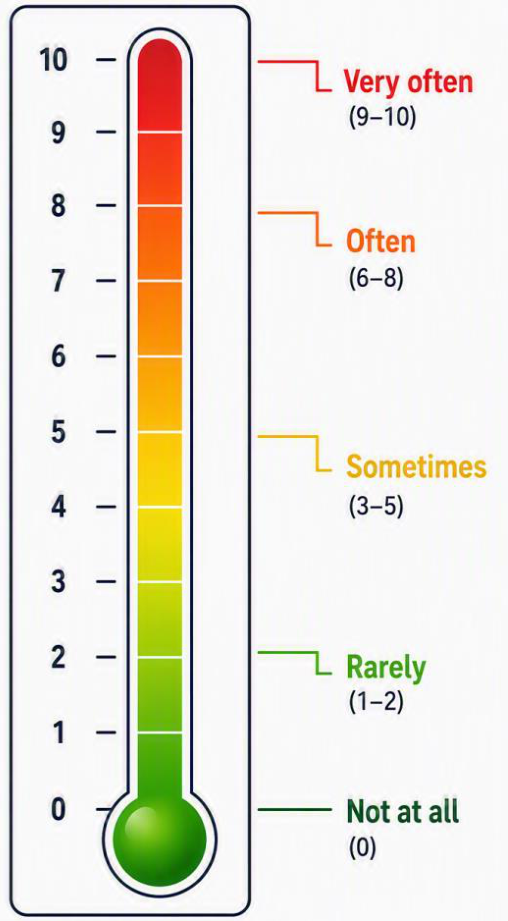
Figure 2.
ROC curve of the Negative Workplace Gossip Thermometer.
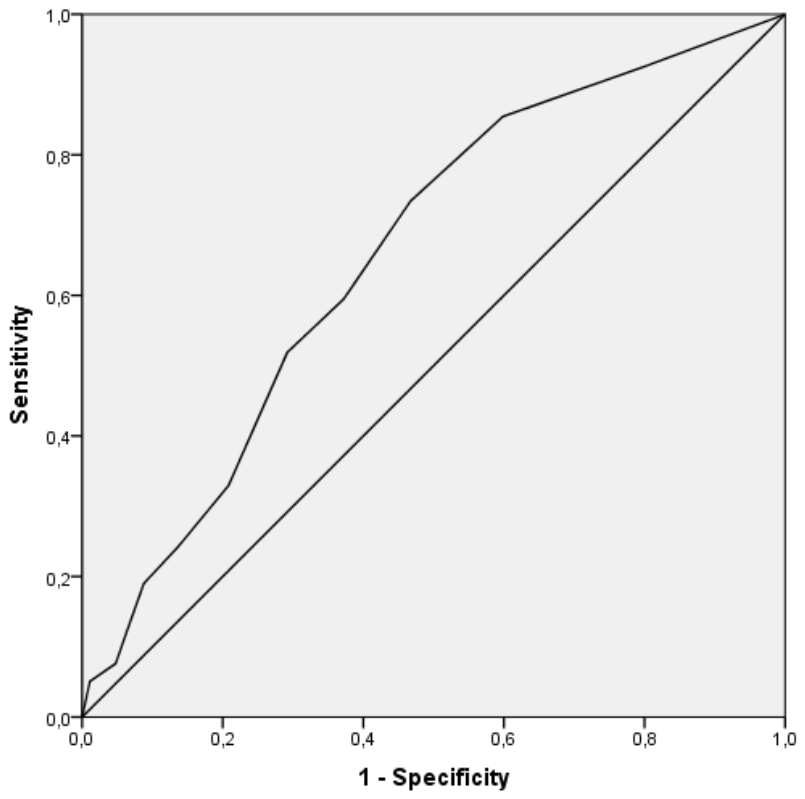

Table 1.
Pearson’s correlation coefficients between the Negative Workplace Gossip Thermometer (NEWGOT) and the Perceived Negative Workplace Gossip Scale (PNWGS), the Workplace Incivility Scale (WIS), the Quiet Quitting Scale (QQS), the single item burnout measure (SIB), the Patient Health Questionnaire-4 (PHQ-4), and the Utrecht Work Engagement Scale-3 (UWES-3).
Table 1.
Pearson’s correlation coefficients between the Negative Workplace Gossip Thermometer (NEWGOT) and the Perceived Negative Workplace Gossip Scale (PNWGS), the Workplace Incivility Scale (WIS), the Quiet Quitting Scale (QQS), the single item burnout measure (SIB), the Patient Health Questionnaire-4 (PHQ-4), and the Utrecht Work Engagement Scale-3 (UWES-3).
| Scale | NEWGOT | |
| Pearson correlation coefficient | P-value | |
| PNWGS | 0.78 | <0.001 |
| WIS | 0.62 | <0.001 |
| QQS | 0.21 | <0.001 |
| SIB | 0.23 | <0.001 |
| PHQ-4 | 0.32 | <0.001 |
| Anxiety | 0.27 | <0.001 |
| Depression | 0.31 | <0.001 |
| UWES-3 | -0.24 | <0.001 |
Disclaimer/Publisher’s Note: The statements, opinions and data contained in all publications are solely those of the individual author(s) and contributor(s) and not of MDPI and/or the editor(s). MDPI and/or the editor(s) disclaim responsibility for any injury to people or property resulting from any ideas, methods, instructions or products referred to in the content. |
© 2026 by the authors. Licensee MDPI, Basel, Switzerland. This article is an open access article distributed under the terms and conditions of the Creative Commons Attribution (CC BY) license.
Copyright: This open access article is published under a Creative Commons CC BY 4.0 license, which permit the free download, distribution, and reuse, provided that the author and preprint are cited in any reuse.