
Submitted:
30 July 2026
Posted:
31 July 2026
You are already at the latest version
Abstract
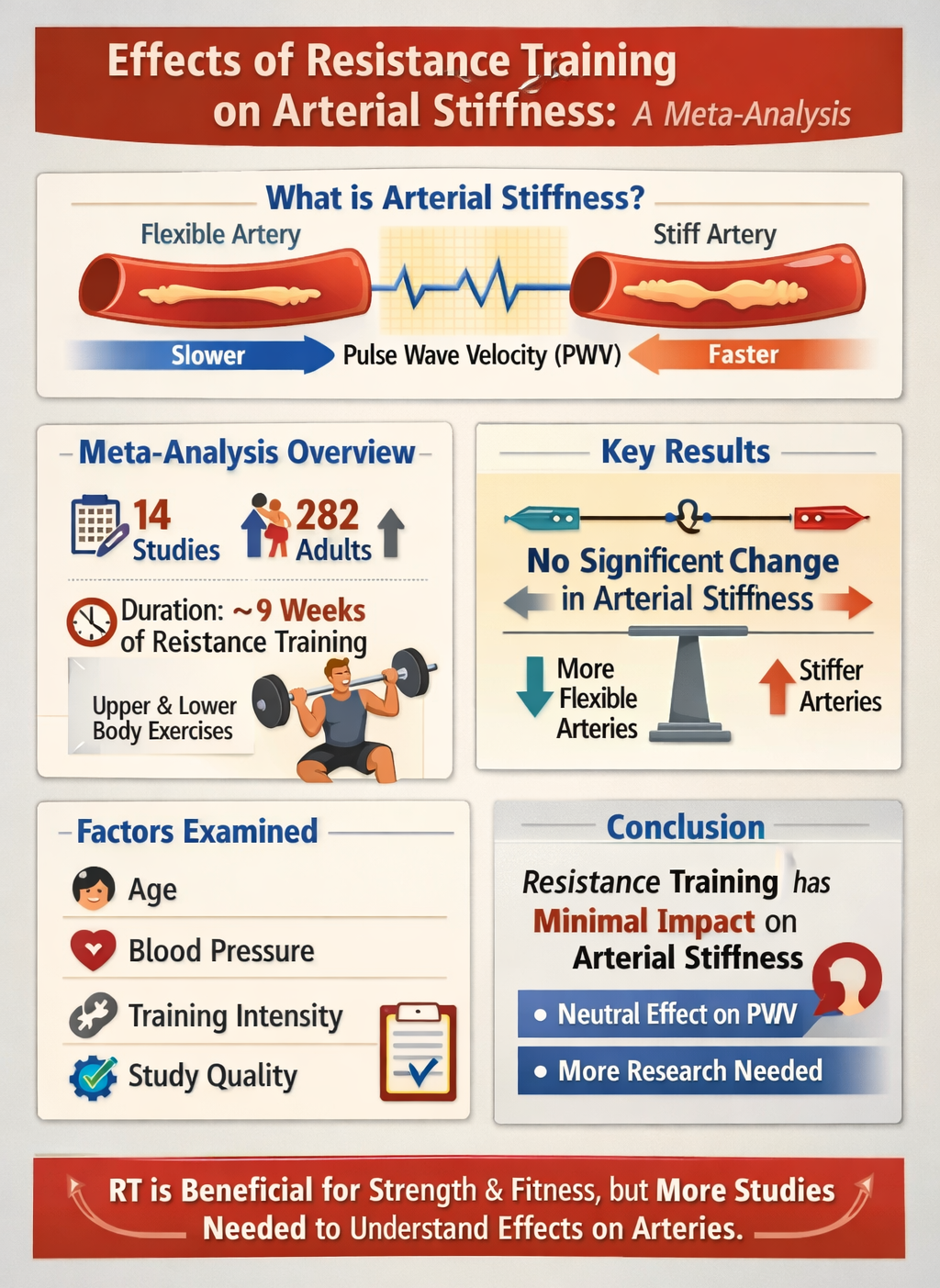
Arterial stiffness is a key determinant of cardiovascular risk, yet the chronic effects of dynamic resistance training (RT) remain unclear. This meta-analysis quantified the effects of RT on arterial stiffness assessed by pulse wave velocity (PWV) and explored potential moderators. Electronic databases were searched through July 2025. Eligible studies included adults (≥19 years) undergoing RT interventions with pre–post PWV data or sufficient information to compute Hedges’ g. Random-effects models were applied, with subgroup analyses conducted in the presence of heterogeneity. Fourteen trials (20 interventions; 10 controlled; n=282; mean age 36±14 years) were included. Most interventions consisted of whole-body RT performed ~3 times/week for ~9 weeks at moderate intensity (~68% 1RM). RT induced trivial and non-significant effects on central, mixed, and peripheral PWV (g ranging from −0.11 to 0.05). Heterogeneity was moderate to high (I² = 45-77%), but moderator analyses (age, blood pressure status, baseline PWV, study quality, and training characteristics) did not explain the variability. Overall, dynamic RT appears to be vascularly neutral, producing no meaningful changes in arterial stiffness across different arterial sites. These findings suggest that conventional RT prescriptions neither improve nor impair arterial stiffness. Future adequately powered and mechanistically oriented trials are required to determine whether specific RT configurations can induce clinically relevant vascular adaptations.
Keywords:
arterial stiffness
; resistance training
; pulse wave velocity
; vascular function
; exercise physiology
Copyright: This open access article is published under a Creative Commons CC BY 4.0 license, which permit the free download, distribution, and reuse, provided that the author and preprint are cited in any reuse.


