
Submitted:
24 July 2026
Posted:
24 July 2026
You are already at the latest version
Abstract
This article presents an experimental investigation into the mechanical properties of new laminated bamboo and bamboo-timber hybrid composite materials for construction. A total of thirty-six bamboo and bamboo-timber hybrid composite specimens were manufactured, which include a new configuration that integrates bamboo and pine strips in hybrid bamboo-timber composite members. An interleaved configuration of the hybrid bamboo–timber composites is proposed to enhance stress transfer and interfacial bonding. Such a design can mitigate global hygroscopic and thermal mismatch effects, including composites panel warping and continuous interfacial shear, through redistributing differential strains into small, localized scales. To minimize manufacturing energy demand, cold hydraulic pressing was used to prepare the specimens with bio-epoxy and polyvinyl acetate adhesives (PVA). The list of experimental tests includes compression parallel to the grain, compression perpendicular to the grain, and flexure. The experimental results revealed that the developed bamboo and bamboo-timber composites outperform the reference materials consisting of commercial engineered bamboo and natural softwood. In particular, the average modulus of elasticity of hybrid specimens bonded with bio-epoxy adhesive reaches 11.6 GPa (CoV = 13.8%), which is 40 percent greater than that of the tested commercial engineered bamboo specimens (CoV 15.7%), emphasizing a stiffer and more reliable engineered bamboo. In the case of flexural testing, hybrid bamboo-timber specimens reach the highest modulus of elasticity while the engineered bamboo bio-epoxy test series exhibited a modulus of rupture that was 36% higher than that of the commercial engineered bamboo material with CoV equal to 8%.
Keywords:
engineered bamboo
; bamboo–timber composites
; mechanical characterization
; bio-resins
; sustainable construction materials
1. Introduction
Bamboo is a highly renewable natural resource with a short growth cycle that reaches maturity in three to five years, unlike the rather long period that most species of wood take to reach maturity [1]. Bamboo is a viable substitute for conventional timber because it is a rapidly renewable material that promotes environmental sustainability. Bamboo also possesses a higher strength-to-weight ratio compared to timber [2]. Therefore, such characteristics can make bamboo a viable substitute for timber or conventional building materials that lack environmental sustainability, such as concrete, steel, and aluminum.
Despite the benefits of bamboo, raw bamboo also has some disadvantages that limit its application as a building material. Bamboo possesses varying mechanical properties depending on the species, the culm region, and the age of the bamboo; in addition, bamboo is strongly affected by preparation methods and moisture content [3]. Thus, parameters such as compressive strength, tensile strength, modulus of rupture (MOR), and modulus of elasticity (MOE) may vary depending on the species of bamboo, age, and processing and treatment methods [2,4,5]. Moreover, the hollow section of the bamboo tends to split and buckle when subjected to high loads [6,7]. These disadvantages are the main obstacles to making bamboo a mainstream structural material in modern construction.
To overcome these disadvantages, engineered bamboo is now being manufactured using techniques such as hot pressing and resin impregnation. These manufacturing techniques increase the dimensional stability and the mechanical strength of bamboo [8]. The main two recognized types of engineered bamboo materials are laminated bamboo and bamboo scrimber. The performance of the engineered bamboo materials significantly depends on the adhesive system and pressing techniques. Pressing temperature, time, and pressure are important parameters that affect the density and the mechanical strength of the bamboo [9]. Laminated bamboo tends to fail due to adhesive failure, while scrimber has the advantage of resin impregnation to prevent adhesive failure [4,10].
1.1. Research Gaps
While engineered bamboo has shown promising results in structural applications, studies on bamboo-timber hybrids are limited [11]. However, the potential to reduce timber consumption by partially substituting it with bamboo in engineered renewable construction materials provides strong motivation for further investigation of hybrid bamboo-timber composite members. Meanwhile, in bamboo-timber hybrids, incompatibilities in hygroscopic and thermal properties between bamboo and timber may lead to stresses and warping in the hybrid material.
At the moment, the existing engineered bamboo in the market is predominantly manufactured using petrochemical-based adhesives such as phenol–formaldehyde (PF) and urea– or melamine–urea–formaldehyde (UF/MUF) resins, raising concerns regarding adhesive sustainability and formaldehyde-related emissions [11]. Therefore, there is a notable gap in research on engineered bamboo manufactured using bio-based or formaldehyde-free resins.
Meanwhile, the anisotropy in bamboo is often overlooked. Bamboo’s properties vary depending on fibre orientation, however, in many studies, these effects are not reported. This leaves uncertainty about how changes in layup configurations or hybridization affect the material [12,13,14,15].
Addressing these gaps can be achieved if more bio-based or formaldehyde-free resins are utilized in the production of engineered bamboo, and more investigations focus on improving the understanding of bamboo-timber hybrids construction materials.
1.2. Research Objectives
This study focuses on the mechanical properties of newly developed bamboo and bamboo-timber composite materials through experimental investigations. Although previous studies have shown promising properties for engineered bamboo in structural applications, gaps remain regarding the environmental friendliness of adhesives, the use of bamboo and timber as hybrid construction materials, and numerical validation of engineered bamboo under structural loads.
In this study, 36 innovative samples of laminated bamboo and bamboo-timber composite materials using the cold hydraulic press process were designed and manufactured. Among the innovative samples, 12 unprecedented hybrid composite samples of bamboo-timber composite materials were developed by combining bamboo and pinewood strips in an alternating format. Hybrid materials composed of bamboo and timber may experience variations in hygroscopic expansion, shrinkage, and swelling, resulting in undesirable stress development, delamination, and cracking on the surface. Previous studies have established that the uneven and non-uniform processes of swelling and shrinkage result in tensile stresses on the surface and compressive stresses inside the bamboo structure, causing cracking and deformation [16,17]. The proposed interleaved pattern of bamboo and timber strips can provide a balanced structural design, thereby improving the transfer of stress, flexural performance, and dimensional stability (Figure 1). This arrangement of the hybrid material effectively can address the compatibility problems associated with hybrid bamboo-timber materials.
In addition, to reduce energy consumption during manufacturing, all newly developed specimens were manufactured using cold-setting resin cured under cold hydraulic pressing. The chosen resins for the manufacturing process are: 1) bio-epoxy with high bio-based contents: the bio-epoxy adhesive used in this study was a commercially available system from Entropy Resins ONE System, supplied as a two-part system mixed at a 2:1 ratio by weight, with approximately 30% bio-based content as specified by the manufacturer; and 2) PVA: the PVA-based adhesive chosen for this study was an X-PVA emulsion produced by The Gorilla Glue Company, used as a single-component water-based bonding system. To further investigate the sustainable approach of this manufacturing process, a detailed life-cycle carbon assessment of these specimens was conducted elsewhere [18].
2. Methodology
The following sections discuss the manufacturing process, experimental testing and discussions on the tested specimens in this study.
2.1. Specimen Manufacturing Process
As mentioned before, two different categories of specimens were manufactured as follows:
1) Engineered bamboo specimens, using eco-friendly resins and Phyllostachys edulis (Moso) bamboo strips with sustainable manufacturing process.
2) Hybrid bamboo–timber composites developed using an innovative arrangement of Moso bamboo and pine strips, combined with bio-based, low-emission resins and an energy-efficient, sustainable fabrication process.
To manufacture the specimens, the caramelized Moso bamboo was cut into accurate measurements of 8mm × 8mm × 155mm. There was a negligible error in cutting the materials while maintaining length tolerance within 0.2mm. After cutting the materials, the strips were sanded and air blown for a strong adhesive bonding. The same procedure was followed for pine strips.
After the bamboo and timber strips were cut into the required sizes, adhesives were then applied on the strips before placing them in the steel moulds. Figure 2 demonstrates the layout of three specimens in the steel mould.
In the next step, cold-pressing was performed using a 20-ton hydraulic press for 16 hours at room temperature. As illustrated in Figure 3, a constant uniform load of 98 kN was applied perpendicularly to the steel plate on top of the mould which resulted in a normal stress of approximately 5.2 MPa.
Figure 4 depicts photographs of the manufactured specimens.
2.2. Specimen Labeling System
Each specimen name followed the format XXX-YYY-Z, where label parts from left to right represent the test type, material (strips and resin) type, and specimen number, respectively.
- • Test Type (XXX)
The left part of the label indicates the type of mechanical test performed. The following codes were used:
COM – Compression parallel to the grain
CPD – Compression perpendicular to the grain
FLX – Three-point bending
- • Material Type (YYY)
The middle part identifies the material composition and the adhesive system used. The following codes were assigned:
BBE – Bamboo bonded using Bio-Epoxy
CBE – Composite bamboo-timber bonded using Bio-Epoxy
BPA – Bamboo bonded using PVA
CPA – Composite bamboo-timber bonded with PVA
SPF – Sawn pine lumber
PBO – Commercial engineered bamboo made by Plyboo®
- • Iteration (Z)
The right part of the label identifies the specimen number (1, 2, or 3), which implies that the test samples were subjected to similar testing conditions. This ensured consistency in the results obtained from our samples. For example, the FLX-CBE-3 identifies the third replicate of a composite bio-epoxy sample subjected to three-point bending.
2.3. Resin Content
The adhesive content in the manufactured specimens was determined by comparing the weight of the specimen with the combined weight of raw bamboo and timber strips before bonding. Based on the findings, as shown in Table 1, the adhesive content ranges from 14 to 21 percent of the total weight, depending on the type of specimen.
2.4. Experimental Testing Procedure
All tests were carried out using an Instron universal testing machine (UTM), as shown in Figure 5. The test conditions followed ASTM D143-14 [19] and ISO 22157 [20] standards with necessary adjustments to specimen dimensions and support span for flexural testing to align with the smaller scale of the laminated and hybrid composite specimens.
Before testing, precise centering of the specimen on the machine platens was ensured to prevent eccentric loading. All specimens were instrumented with 120 Ω linear resistance strain gauges to measure axial deformation during loading. The strain gauges were fixed on the outer surface of the finished specimens. In each specimen, strain gauges were attached to a central bamboo strip at mid-height to measure longitudinal strains under different loading configurations. The signals from the strain gauges were collected using a computer-controlled data acquisition system along with signals from load cells.
2.5. Moisture Content
Before mechanical testing, all specimens were stored under laboratory conditions at room temperature. Dedicated specimens for moisture content testing were weighed to obtain their initial wet mass and then dried in a ventilated oven at 103±2°C until fully dried. Moisture content was then determined according to ISO 22157 [20].
where is the wet mass and is the oven-dry mass.
2.6. Compression Tests
Compression tests were conducted in two orientations, parallel and perpendicular to the grain direction, to evaluate the anisotropic response of the materials. The loading rate was maintained at 2.4 mm/min among all tests to achieve specimen failure between 3 to 5 minutes based on the ASTM D143 standard [19].
2.6.1. Compression Parallel to the Grain
Compression tests parallel to the grain were performed according to ASTM D143 [19] to determine the mechanical properties of the specimens. The load was applied along the longitudinal axis of the specimens using a displacement-controlled setup.
The compressive stress was calculated as:
where F is the applied load and A0 is the area. Axial strain (ε) was measured directly using strain gauges installed at mid-height and aligned with the grain direction. This method minimized the effects of machine compliance and platen deformation, which led to an accurate stress–strain response being obtained. The measured data therefore represent engineering stress and strain values.
The modulus of elasticity in compression parallel to the grain (Ec,0) is calculated as follows:
In this equation, and represent the compressive stresses corresponding to 20% and 60% of the ultimate load (), respectively. Moreover, and are the corresponding measured axial strains. The modulus of elasticity Ec,0 is calculated as the slope of the line connecting these two points on the stress–strain curve, representing the average stiffness within the linear-elastic region.
The compressive strength was calculated as:
The experimental setup for compression parallel to the grain is shown in Figure 6.
2.6.2. Compression Perpendicular to Grain
Compression perpendicular to grain tests were carried out to evaluate the stiffness of the laminated bamboo and hybrid bamboo-timber composite specimens in transverse direction. This test was conducted in accordance with the ASTM D143 standard [19], with modifications made to suit the geometry of the manufactured specimens. The load was applied through displacement control at 2.4 mm/min. Figure 7 indicates the experimental setup utilized to conduct the compression perpendicular to grain test.
To determine the modulus of elasticity in compression perpendicular to the grain, the proportional limit load () was defined as the transition point, determined directly from the test results, from linear to nonlinear deformation on the load–displacement curve, and the modulus of elasticity perpendicular to the grain () was introduced to quantify the corresponding transverse stiffness. This adaptation provided a consistent analytical framework for evaluating mechanical properties in both loading directions. The following equation was used to calculate the MOE for these tests:
The compressive strength perpendicular to the grain () was calculated as the ratio of the proportional limit load to the loaded area:
where A is the bearing area of the specimen in contact with the platen.
2.7. Flexural Testing
The flexural behaviour of the specimens was evaluated using a three-point bending test following ASTM D143 [19]. Each specimen was supported by two cylindrical rollers with a span length of , as illustrated in Figure 8.
For the present work, the crosshead speed was adjusted to . The MOR and MOE were determined from the load–deflection data using the following equations:
where is the maximum load, L = 130 mm is the span, b = 40 mm and h = 40 mm are the width and height of the specimen, ∆d is the deformation in the linear zone of the load–deformation curve (mm) and ∆F is the load in the same linear zone of the load–deformation curve. It should be noted that the bending span was considered 80 mm for the PBO specimen, due to its shorter length, with a cross-section of 38 mm by 38 mm, as provided by the manufacturer.
Following the completion of all mechanical tests, the experimental data were analyzed for each specimen group, as summarized in Table 2. The mechanical data collected from the UTM were processed to generate stress–strain curves for each specimen.
3. Results and Discussion
3.1. Experimental Results
The main objective in this section is to assess how the proposed engineered bamboo and hybrid bamboo-timber specimens have performed under loading.
The key mechanical parameters, including MOE, MOEb, fc,0, fc,90, MOR, and Fult were studied for different specimens for each type of test. The following sections compare the stress-strain behaviour of the tested specimens to show how these specimens responded under different loading types. Four main cross-sectional configurations, BBE, BPA, CBE, and CPA, are compared to study both the influence of the adhesive type and the effect of the material composition (Figure 9).
To benchmark the results, the performance of the samples is also compared with two reference materials (SPF and PBO) tested under the same conditions. SPF is sawn pine lumber while PBO is engineered laminated bamboo produced industrially using a soy-based thermosetting adhesive system known as SoyBond, described by the manufacturer as a soy-based formaldehyde-free resin [21,22]. The manufacturing process of this commercial sample involves adhesive application to bamboo strips followed by hot-pressing to form engineered bamboo members [21,22].
The comparisons with PBO and SPF help place the performance of the new samples in perspective. To provide a consistent depiction of uncertainty, the standard deviation for these groups was estimated from the coefficient of variation reported in the literature for similar types of material and loading configuration [23].
3.1.1. Compression Parallel to Grain
The results in Table 3, Figure 10, and Figure 11 summarize the mean and standard deviation of the MOE, Fult and fc,0 for all compression-parallel-to-grain specimens. A noticeable improvement in both MOE and ultimate strength for the newly developed bamboo materials and hybrid bamboo-timber composites was observed when compared to the commercial materials and conventional timber. The MOE values for the novel manufactured materials ranged from 8.5 GPa to 11.6 GPa. The ultimate load and compressive strength varied between 72.9 to 81.2 kN, and 45.5 to 50.7 MPa, respectively.
The proposed hybrid specimens, COM-CBE and COM-CPA, recorded the highest MOE values of 11.6 GPa and 11.0 GPa, respectively (Table 3). The highest MOE observed in the bamboo-timber hybrid composites may be attributed to better interfacial bonding and a more uniform stress transfer along the grain. The adhesive penetration into the pine layers leads to enhanced mechanical interlocking, reduced interlaminar slip, and improved stiffness. On the other hand, COM-BBE exhibited the strongest compressive strength (50.7 MPa), which could be due to the fact that bamboo has higher fibre volume fraction than pine (Table 3). COM-BPA presented considerable compressive properties with a slightly lower MOE (8.5 GPa) and comparable compressive strength (48.6 MPa) to those of COM-BBE. For COM-SPF’s case, the measured MOE of 4 GPa is close to the 5th percentile modulus of elasticity (E05) of Grade No. 2 SPF post and timber according to CSA O86:24 [24] which indicates that the sample performs at the lower spectrum of its specified grade.
These results confirm that both the adhesive type and hybrid configuration influence the compressive performance of the material. Meanwhile, COM-PBO and COM-SPF recorded noticeably lower MOE and compressive strength. In particular, the commercial engineered bamboo achieved values of 8.3 GPa in MOE and 44.3 MPa in compressive strength, which is lower than the weakest properties measured for the proposed specimens. Compared to COM-SPF, the proposed specimens demonstrated a 100-200% increase in MOE and a 40-50% rise in compressive strength. The samples also outperformed COM-PBO by 10-40% across both mechanical properties.
The rather low standard deviations show that the new materials were manufactured with a high level of consistency. COM-CBE and COM-CPA displayed very low variation in both Ec,0 and fc,0, with standard deviations of 1.6 GPa for the CBE samples and 0.9 GPa for the CPA samples in Ec,0, and 1.4 MPa for CBE and 0.6 MPa for CPA in fc,0 (Table 3). This consistency validates the compatibility of the adhesive bonding and the uniform quality of the lamination. Slightly higher variability in the all-bamboo groups (COM-BBE and COM-BPA) could be due to the presence of nodes in bamboo strips when compared with timber.
The stress-strain curves in Figure 12 and Figure 13 demonstrate the mechanical response of all compression-parallel-to-grain specimens. In general, all newly manufactured specimens displayed a linear elastic region followed by a gradual transition to nonlinearity before reaching peak load. The post-peak behaviour varied depending on the adhesive and material type. The close agreement in the shape and trend of the replicate curves within each group confirms the consistency of the testing procedure and the reliability of the fabrication method.
COM-BBE demonstrated the highest compressive capacity and the most stable post-peak response among all series. Their stress-strain plots showed a gradual flattening rather than a sudden and brittle failure in a repeatable manner (Figure 12). This was not the case for the commercial engineered bamboo, COM-PBO. This behaviour by the COM-BBE series reflects a combination of high stiffness and strong interfacial bonding provided by the bio-epoxy adhesive as a compatible resin with Moso bamboo strips. The curves show that the specimens sustained compressive stresses above 50 MPa with little plastic deformation, which suggests effective load sharing among the bamboo fibres.
COM-CBE and COM-CPA exhibited the stiffest, and most consistent and repeatable responses across all series. Their curves showed high stiffness in the initial linear region which validates the contribution of the timber layers in stabilizing the structure and restraining local failure (Figure 12 and Figure 13).
COM-PBO and the COM-SPF demonstrated different patterns. COM-PBO showed a steeper initial slope and a higher peak stress than COM-SPF. Although COM-PBO performed better than COM-SPF, they both exhibited lower stiffness than the newly manufactured specimens with a brittle failure (Figure 12, and Figure 13).
The results of compression parallel to the grain tests show that the materials developed in this study have the potential to represent a suitable system of engineered bamboo composites under compressive load along the grain that combine sustainable adhesive systems with carefully controlled lamination and hybridization. The bio-epoxy engineered bamboo systems offer a bio-based alternative with strong mechanical properties and ductile performance, while the bamboo-timber hybrids provide enhanced stability and resistance to compressive failure along the grain.
3.1.2. Compression Perpendicular to Grain
Table 4, Figure 14, and Figure 15 present the mean and standard deviation of the MOE, Fpl, and fc,90 for the compression-perpendicular-to-grain specimens. CPD-BBE and CPD-BPA achieved the highest MOE and compressive strength, with mean MOE values of approximately 1025 MPa and 991 MPa, and corresponding mean compressive strengths of 37.1 MPa and 34.9 MPa, respectively. These results confirm that both bio-epoxy and PVA adhesives provided strong bonding between bamboo layers.
CPD-CBE and CPD-CPA specimens recorded lower stiffness and strength, with mean MOE values around 500-600 MPa and compressive strength between 21-23 MPa (Table 4). The difference between the laminated bamboo samples and hybrid composite samples is mainly due to the inclusion of the pinewood layer, which has lower density and compressive resistance perpendicular to the grain. This results in a lower overall stiffness perpendicular to the grain compared with the full bamboo specimens.
CPD-SPF had the lowest strength and stiffness, with an MOE of about 261 MPa and a compressive strength of 8.6 MPa. Moreover, CPD-PBO demonstrated results comparable to the hybrid composite specimens, with mean MOE of about 728.6 MPa and a compressive strength of about 23.4 MPa but exhibited noticeably lower strength and stiffness than the proposed engineered bamboo specimens (Table 4). These comparisons clearly demonstrate that the engineered bamboo composites have superior load-bearing capacity and stiffness compared to natural wood and the commercial bamboo samples when it comes to the compressive behaviour perpendicular to grain.
The stress-strain curves in Figure 16 depict the deformation behaviour of the specimens under perpendicular-to-grain compression. In all proposed engineered bamboo series, the response began with a linear region followed by a gradual reduction in stiffness. CPD-BBE and CPD-BPA specimens showed the highest initial slopes and the highest ultimate loads that are due to their high stiffness and bearing capacity compared with the other samples. The stable deformation and strong adhesive bonding between bamboo layers lead to their curves maintaining a smooth rise without major drops or softening.
Overall, Figure 16 confirms that the newly developed bamboo composites achieved remarkable stability, stiffness, and load-bearing capacity compared with CPD-SPF and CPD-PBO. The CPD-BBE and CPD-BPA groups displayed Ec,90 values of about 1025 and 991 MPa, respectively. These values are approximately 40% higher than those of CPD-PBO. Their compressive strengths of 37.1 and 34.9 MPa are, respectively, about 55% and 49% greater than CPD-PBO which showcases the superior load-bearing capacity of the proposed engineered bamboo specimens versus the commercial counterpart.
3.1.3. Flexural Testing
As summarized in Table 5, Figure 17, and Figure 18, the newly fabricated specimens showed bending strengths ranging from 47 MPa to 70 MPa and flexural moduli between 9.6 GPa and 10.9 GPa. Among all groups, FLX-BBE achieved the highest modulus of rupture (70.2 MPa) with a mean MOEb of 9.6 GPa. Moreover, FLX-BPA showed a lower average strength (54.1 MPa) and greater standard deviation of 12 MPa compared to FLX-BBE's 6 MPa which indicates the superior bio-epoxy resin performance compared to that of the PVA’s in flexure testing. Moreover, the results indicate a strong linear relationship between MOEb and Ec,0 across tested groups (Table 3 and Table 5).
FLX-CBE and FLX-CPA, demonstrated MOR of 51.4 MPa and 47.0 MPa, respectively, but maintained MOEb values close to 11 GPa (Table 5). The inclusion of timber layers reduced the overall bending strength of hybrid samples compared to engineered bamboo samples that lead to a more stable and uniform elastic response in engineered bamboo samples. The smaller variability of 2-3 MPa in FLX-CBE, and FLX-CPA compared to the 6-12 MPa in FLX-BBE, and FLX-BPA indicates consistent bonding performance and efficient load sharing between the bamboo and timber layers (Table 5).
FLX-PBO and FLX-SPF demonstrated reduced bending performance, characterized by lower MOR and MOEb values compared to the proposed specimens. The FLX-PBO reached a MOR of 51.7 MPa with an MOEb of 7.4 GPa, while the softwood sample recorded only 25.5 MPa and 4.8 GPa for MOR and MOEb, respectively (Table 5). These values indicate that the engineered laminates developed in this study provided higher MOEb of approximately 30-45 percent higher compared to FLX-PBO.
The load-displacement curves and stress-strain curves (Figure 19, Figure 20, Figure 21 and Figure 22) highlight the distinct mechanical responses of the two adhesive systems. FLX-BBE and FLX-CBE exhibited steeper initial slopes, higher peak loads, and gradual post-peak softening, indicating greater stiffness, improved load transfer, and ductile fracture behaviour. In contrast, FLX-BPA and FLX-CPA showed more irregular traces with sharper load drops, suggesting micro-slip and localized debonding during loading. Despite reaching similar maximum displacements, their less consistent peak loads confirmed weaker interlaminar bonding. However, both adhesive systems outperformed FLX-SPF and FLX-PBO.
3.2. Moisture Content
The measured moisture content of all specimens has been calculated based on ISO 22157 [20]. BBE and BPA showed average values around 9.3 %, while CBE and CPA had slightly lower values, between 6.97 % and 9.25 %. PBO-1 and PBO-2 recorded moisture contents close to 9 %, whereas SPF averaged about 10.5 %. The individual bamboo and pinewood strips used in lamination also showed similar moisture levels, ranging from 9 % to 11 %. These consistent values indicate that all samples were well-conditioned, and differences in mechanical performance were not affected by moisture variation. Table 6 indicates the values for the moisture content of all the tested specimens. The indoor equilibrium moisture content (EMC) during summer in the Niagara Region typically reaches approximately 10 % which is consistent with the moisture content observed in the samples [25].
3.3. Failure Analysis
The experimental testing of the specimens reveals different compressive failure modes. COM-BBE and COM-CBE mainly showed localized crushing, along with longitudinal splitting in areas where the axial load exceeded the internal bond strength (Figure 23 and Figure 24). COM-BPA and COM-PBO demonstrated more pronounced buckling and clear longitudinal fractures along the grain (Figure 25 and Figure 26). COM-CPA failed via a shear-driven mechanism caused by localized formation and crushing near the support (Figure 27).
4. Conclusions
This study experimentally investigated the mechanical behaviour of novel laminated bamboo and hybrid bamboo-timber composite specimens. The goal was to analyze the potential of these materials for sustainable structural applications. A total of thirty-six specimens were manufactured using cold press and hydraulic pressing techniques with two different adhesives, bio-epoxy and PVA. The cold hydraulic pressing technique was effective in achieving precise dimensions, smooth surface finishes, and uniform adhesive distribution, demonstrating the practicality of low-energy fabrication methods for bamboo-based composites.
The newly manufactured samples were tested under three different tests: compression parallel to the grain, compression perpendicular to the grain, and flexure. In compression parallel to the grain, the CBE group, composed of alternating bamboo and timber layers bonded with bio-epoxy, achieved the highest modulus of elasticity among all configurations and outperformed the commercial bamboo reference by approximately 35 percent. This verified the superior stiffness and bonding quality of the bio-epoxy adhesive and the efficiency of the hybrid configuration in transferring stress between bamboo and timber. The BBE specimens also exhibited strong stiffness and compressive strength, while the BPA and CPA showed more ductile behaviour with gradual failure and higher deformation tolerance.
Additionally, compression perpendicular to the grain tests demonstrated that BBE and BPA specimens have higher compressive strength and MOE values compared to the composite samples. The results indicated that BBE and BPA were more effective in distributing transverse loads, while CBE and CPA performed comparably with commercial bamboo. Moreover, flexural testing showed that the BBE blocks have higher bending strength and stiffness compared to all other samples. BPA, CPA, and CBE had results that were similar to those of the commercial engineered bamboo sample.
In conclusion, this study shows that the novel proposed laminated bamboo and bamboo-timber composites are promising sustainable alternatives to conventional construction materials. Their high stiffness, strength, and renewable nature support their application in modern green construction. Further research should examine their long-term durability, environmental resistance, and full-scale structural behaviour under different loading conditions.
Author Contributions
Conceptualization, A.M. and N.J.; methodology, Y.D., A.M. and N.J.; formal analysis, N.J.; investigation, Y.D., A.M. and N.J.; resources, N.J. and A.M.; data curation, A.M and N.J.; writing—original draft preparation, A.M. and N.J.; writing—review and editing, Y.D., A.M and N.J..; supervision, A.M.; project administration, A.M.; funding acquisition, A.M. All authors have read and agreed to the published version of the manuscript.
Funding
This research was supported by the Natural Sciences and Engineering Research Council of Canada (NSERC), which provided a Discovery Grant No. RGPIN 2023-05246 to Dr. Mofidi.
Data Availability Statement
The data generated and/or analyzed during this study are available from the corresponding author upon reasonable request.
Acknowledgments
The authors have reviewed and edited the output and take full responsibility for the content of this publication.
Conflicts of Interest
The authors declare no conflicts of interest.
References
- Drury, B.; Padfield, C.; Russo, M.; Swygart, L.; Spalton, O.; Froggatt, S.; Mofidi, A. Assessment of the Compression Properties of Different Giant Bamboo Species for Sustainable Construction. Sustainability 2023, 15, 6472. [Google Scholar] [CrossRef]
- Adier, M.F.V.; Sevilla, M.E.P.; Valerio, D.N.R.; Ongpeng, J.M.C. Bamboo as Sustainable Building Materials: A Systematic Review of Properties, Treatment Methods, and Standards. Buildings 2023, 13, 2449. [Google Scholar] [CrossRef]
- Padfield, C.; Drury, B.; Soltanieh, G.; Rajabifard, M.; Mofidi, A. Innovative Cross-Sectional Configurations for Low-Cost Bamboo Composite (LCBC) Structural Columns. Sustainability 2024, 16, 7451. [Google Scholar] [CrossRef]
- Wei, Y.; Zhou, M.; Zhao, K.; Zhao, K.; Li, G. Stress–Strain Relationship Model of Glulam Bamboo under Axial Loading. Adv. Compos. Lett. 2020, 29, 1–11. [Google Scholar] [CrossRef]
- Tang, S.; Zhou, A.; Li, J. Mechanical Properties and Strength Grading of Engineered Bamboo Composites in China. Adv. Civ. Eng. 2021, 2021, 6666059. [Google Scholar] [CrossRef]
- Huang, B.; Chen, L.; Wang, X.; Ma, X.; Liu, H.; Zhang, X.; Sun, F.; Fei, B.; Fang, C. Eco-Friendly, High-Utilization, and Easy-Manufacturing Bamboo Units for Engineered Bamboo Products: Processing and Mechanical Characterization. Compos. Part B Eng. 2023, 267, 111073. [Google Scholar] [CrossRef]
- Drury, B.; Padfield, C.; Rajabifard, M.; Mofidi, A. Experimental Investigation of Low-Cost Bamboo Composite (LCBC) Slender Structural Columns in Compression. J. Compos. Sci. 2024, 8, 435. [Google Scholar] [CrossRef]
- Li, Z.; Yang, G.; Zhou, Q.; Shan, B.; Xiao, Y. Bending performance of glubam beams made with different processes. Adv. Struct. Eng. 2018, 22, 136943321879432. [Google Scholar] [CrossRef]
- Chen, M.; Semple, K.; Hu, Y.; Zhang, J.; Zhou, C.; Pineda, H.; Xia, Y.; Zhu, W.; Dai, C. Fundamentals of bamboo scrimber hot pressing: Mat compaction and heat transfer process. Constr. Build. Mater. 2024, 412, 134843. [Google Scholar] [CrossRef]
- Wu, M.; Mei, L.; Guo, N.; Ren, J.; Zhang, Y.; Zhao, Y. Mechanical properties and failure mechanisms of engineering bamboo scrimber. Constr. Build. Mater. 2022, 344, 128082. [Google Scholar] [CrossRef]
- Jafarnia, N.; Mofidi, A. Engineered Bamboo for Sustainable Construction: A Systematic Review of Characterization Methods. Sustainability 2025, 17, 5977. [Google Scholar] [CrossRef]
- Harries, K.; Mofidi, A.; Naylor, J.; Trujillo, D.; López, L.; Gutierrez, M.; Sharma, B.; Rogers, C. Knowledge Gaps and Research Needs in Bamboo Construction, In Proceedings of the 18th International Conference on Non-conventional Materials and Technologies (NOCMAT 2022), 7–23 June 2022; Zenodo, 2022. Available online: https://doi.org/10.5281/zenodo.6569785 (accessed on 16 July 2026).
- Yang, D.; Li, H.; Xiong, Z.; Lorenzo, R.; Corbi, I.; Corbi, O. Fiber alignment angles effect on the tensile performance of laminated bamboo lumber. Eur. J. Wood Wood Prod. 2022, 80, 829–840. [Google Scholar] [CrossRef]
- Sylvayanti, S.P.; Nugroho, N.; Bahtiar, E.T. Bamboo Scrimber’s Physical and Mechanical Properties in Comparison to Four Structural Timber Species. Forests 2023, 14, 146. [Google Scholar] [CrossRef]
- Al-Rukaibawi, L.S.; Kachichian, M.; Károlyi, G. Mechanical properties of laminated bamboo lumber N-finity according to ISO 23478-2022. J. Wood Sci. 2024, 70, 1. [Google Scholar] [CrossRef]
- Ramful, R. Investigating the Fracture Mechanisms Arising from the Inhomogeneous Shrinkage Behavior in the Anisotropic Structure of Natural Bamboo via Experimental and Numerical Methods. Appl. Res. 2025, 4, e202400222. [Google Scholar] [CrossRef]
- Ramful, R.; Sunthar, T.P.M.; Zhu, W.; Pezzotti, G. Investigating the Underlying Effect of Thermal Modification on Shrinkage Behavior of Bamboo Culm by Experimental and Numerical Methods. Materials 2021, 14, 974. [Google Scholar] [CrossRef] [PubMed]
- Jafarnia, N.; Ding, Y.; Mofidi, A. Cold-Press Manufacturing of Laminated Bamboo and Bamboo–Timber Composites for Sustainable Construction: A Life-Cycle Carbon Assessment. Sustainability 2026, 18, 4834. [Google Scholar] [CrossRef]
- ASTM International. ASTM D143-22Standard Test Methods for Small Clear Specimens of Timber; ASTM D143-22; ASTM International: West Conshohocken, PA, USA, 2022. [Google Scholar]
- ISO 22157; Bamboo structures: Determination of physical and mechanical properties of bamboo culms — Test methods. 2019.
- Smith; Fong Company. Environmental Product Declaration: Plyboo® Bamboo Plywood, Smart EPD, Herndon, VA. https://www.plyboo.com/wp-content/uploads/2024/09/Plyboo%C2%AE-Bamboo-Plywood.pdf (accessed on 16 July 2026).
- Plyboo, Smith & Fong First to Commercialize Soy-Based Adhesive System Used in Bamboo Manufacturing, (2019). https://www.plyboo.ca/2019/12/18/smith-fong-first-commercialize-soy-based-adhesive-system-used-bamboo-manufacturing/ (accessed on 16 July 2026).
- Feujofack, B.V.; Loss, C. Experimental campaign on the mechanical properties of Canadian small clear spruce-pine-fir wood: Experimental procedures, data curation, and data description. Data Brief. 2023, 48, 109064. [Google Scholar]
- CSA (Canadian Standards Association). Engineering design in wood. CSA O86:24; Mississauga, ON, Canada, 2024.
- FPInnovations, BC Housing, Wood Construction Moisture Management Guide, BC Housing, Burnaby, BC, 2021. https://www.bchousing.org/publications/Wood-Construction-Moisture-Management-Guide.pdf (accessed on 16 July 2026).
Figure 1.
Schematic view of the alternating bamboo-timber composite block, where light-coloured strips represent bamboo and dark strips represent timber.
Figure 1.
Schematic view of the alternating bamboo-timber composite block, where light-coloured strips represent bamboo and dark strips represent timber.
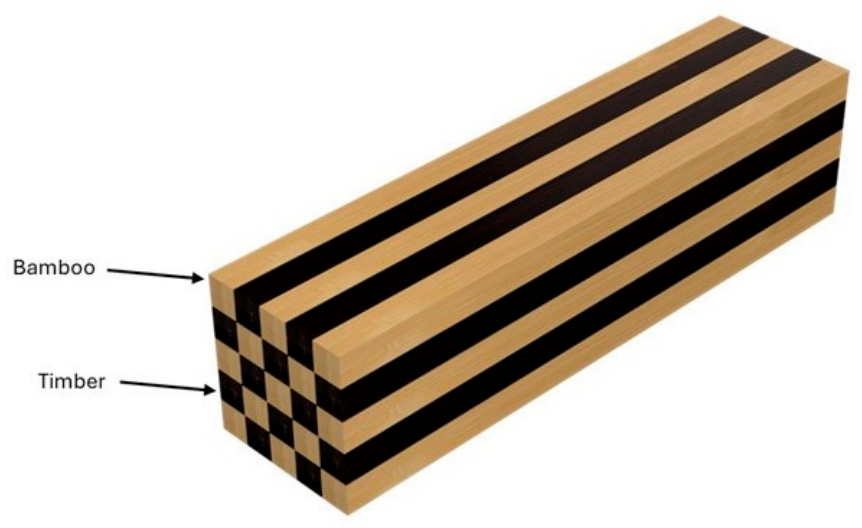
Figure 2.
Bamboo and timber strips of hybrid specimens installed inside the steel mould after the application of adhesives.
Figure 2.
Bamboo and timber strips of hybrid specimens installed inside the steel mould after the application of adhesives.
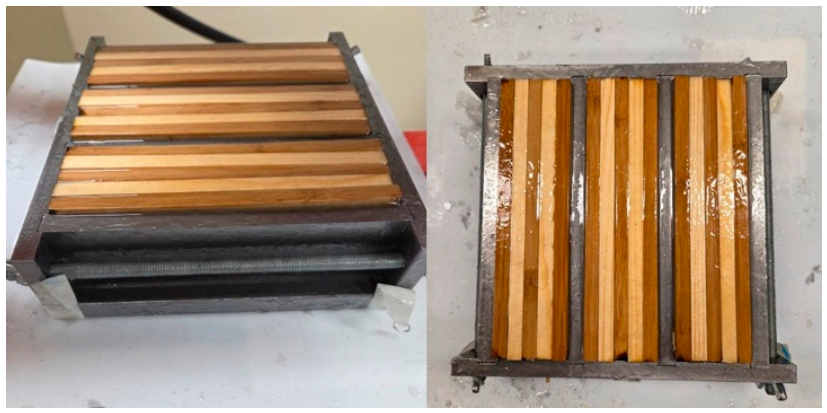
Figure 3.
Cold-press processing of the samples.
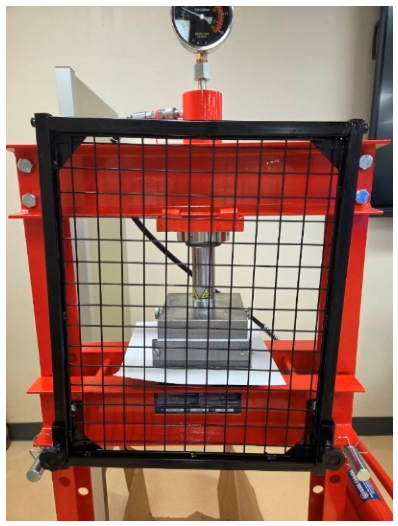
Figure 4.
Manufactured specimens: a) hybrid bamboo-timber composite, and b) laminated bamboo.
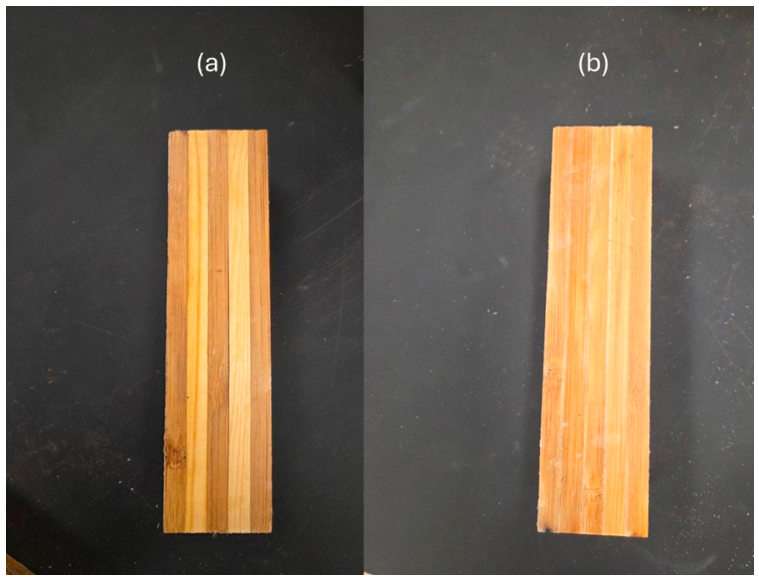
Figure 5.
Apparatus of mechanical tests.
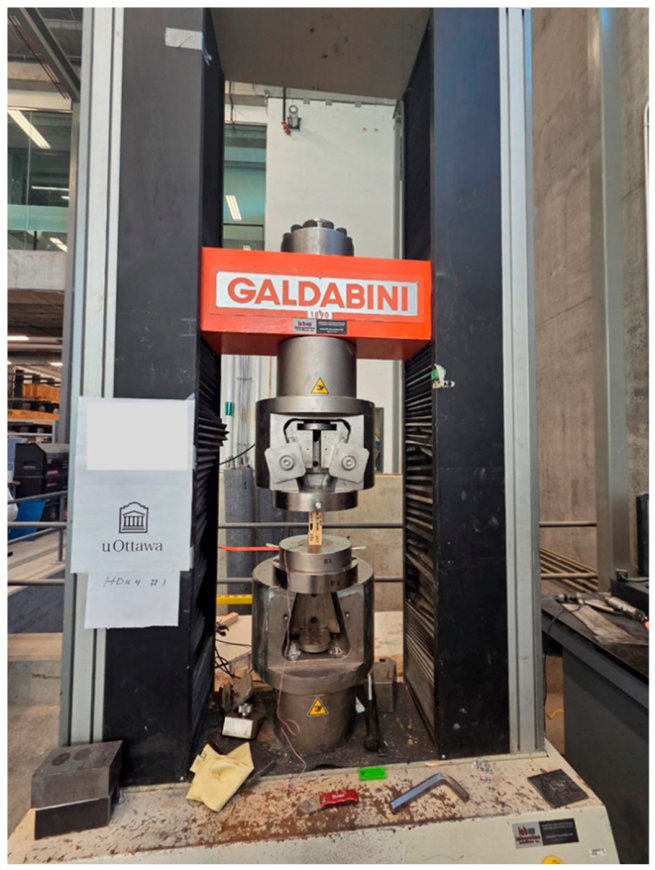
Figure 6.
Experimental setup for compression parallel to the grain tests.
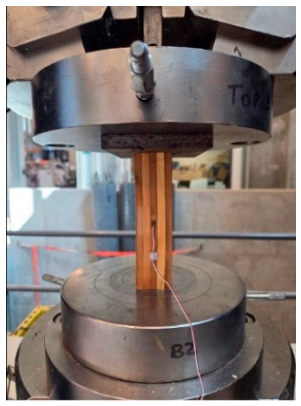
Figure 7.
Experimental setup for compression perpendicular to the grain tests.
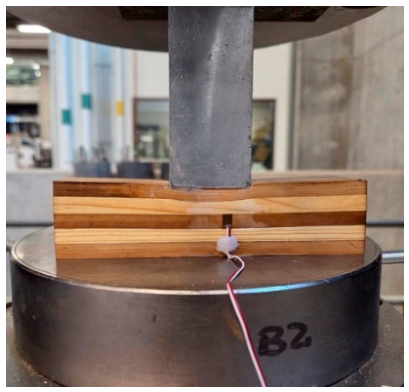
Figure 8.
Flexural test setup for three-point bending test.
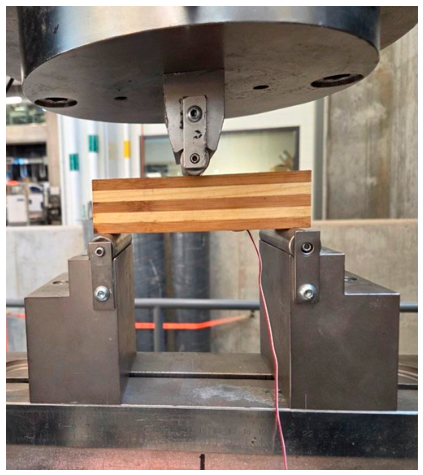
Figure 9.
Demonstration of the proposed and reference materials.
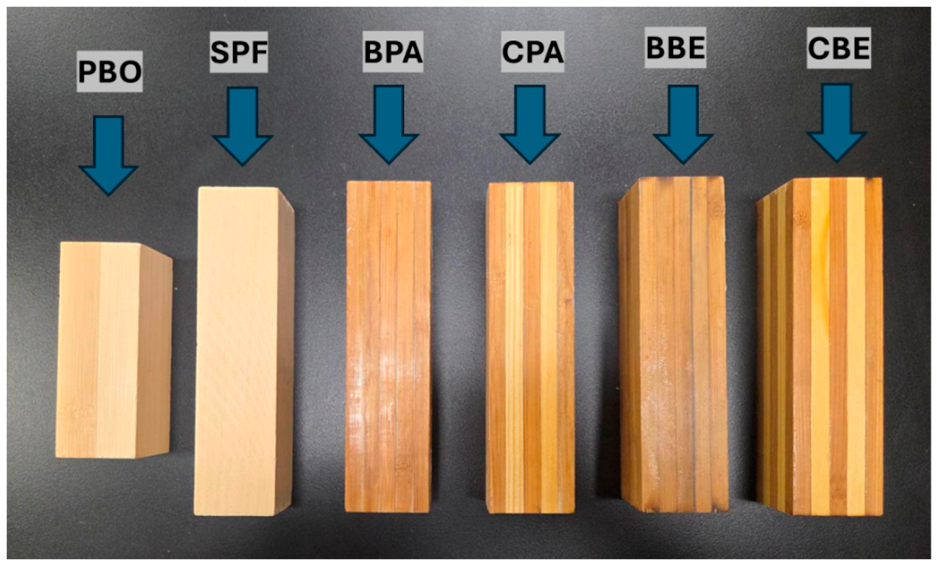
Figure 10.
Mean and standard deviation of the MOE for compression-parallel-to-grain specimens.
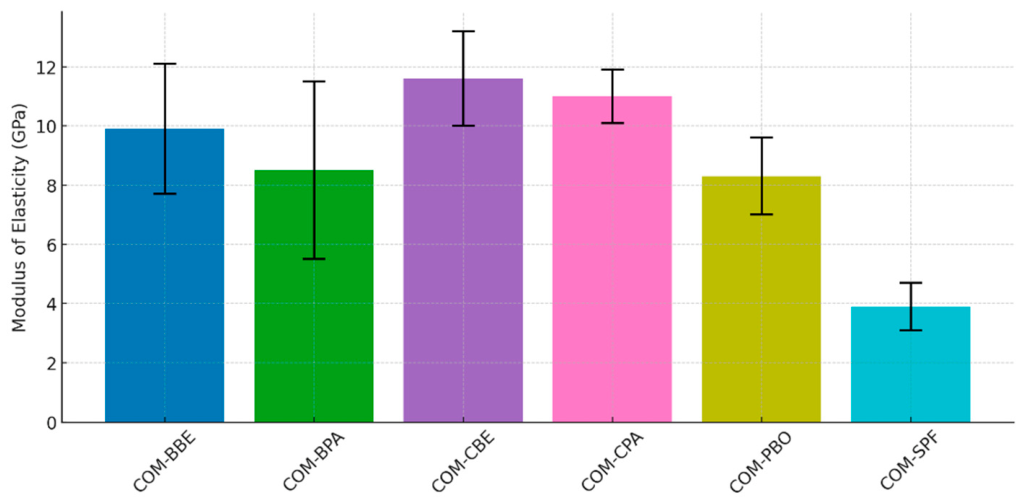
Figure 11.
Mean and standard deviation of the compressive strength for compression-parallel-to-grain specimens.
Figure 11.
Mean and standard deviation of the compressive strength for compression-parallel-to-grain specimens.
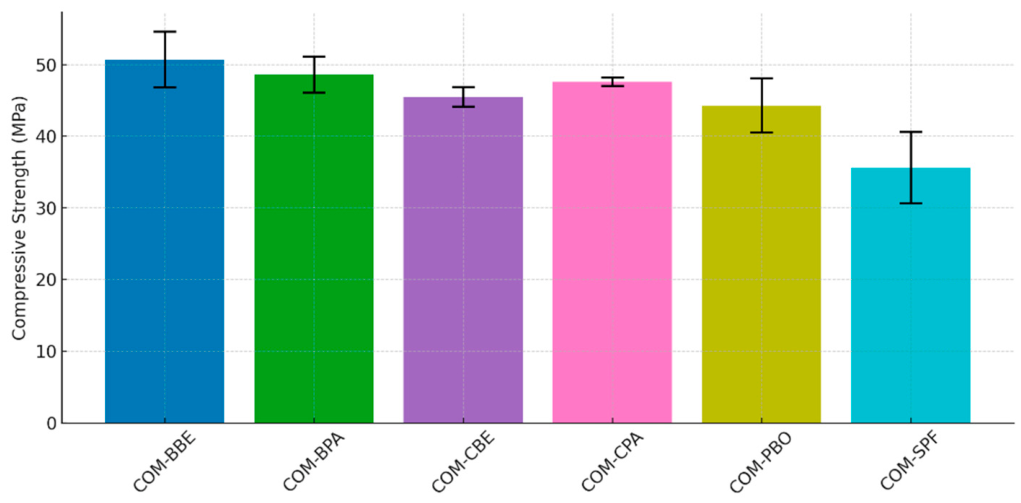
Figure 12.
Stress-strain curves for compression-parallel-to-grain of COM-BBE and COM-CBE groups compared with COM-SPF and COM-PBO.
Figure 12.
Stress-strain curves for compression-parallel-to-grain of COM-BBE and COM-CBE groups compared with COM-SPF and COM-PBO.
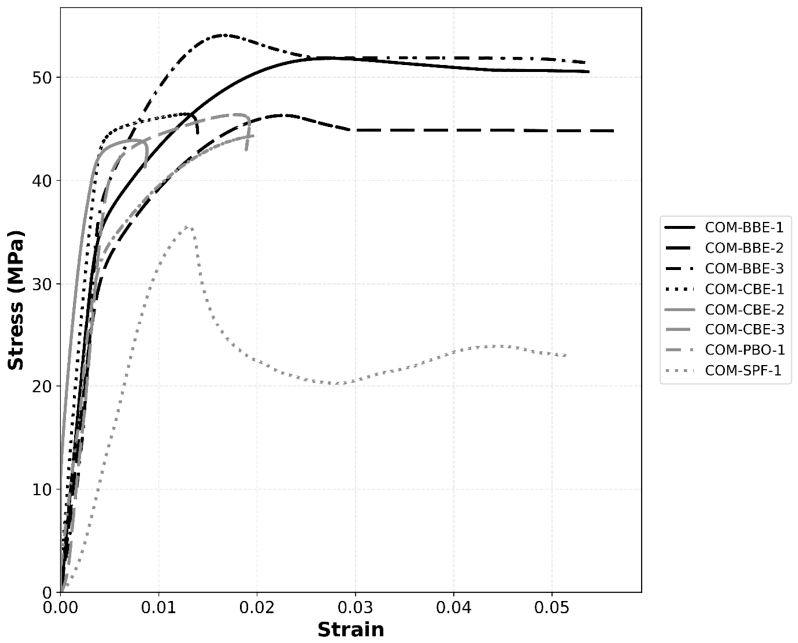
Figure 13.
Stress-strain curves for compression-parallel-to-grain of COM-BPA and COM-CPA groups compared with COM-SPF and COM-PBO.
Figure 13.
Stress-strain curves for compression-parallel-to-grain of COM-BPA and COM-CPA groups compared with COM-SPF and COM-PBO.
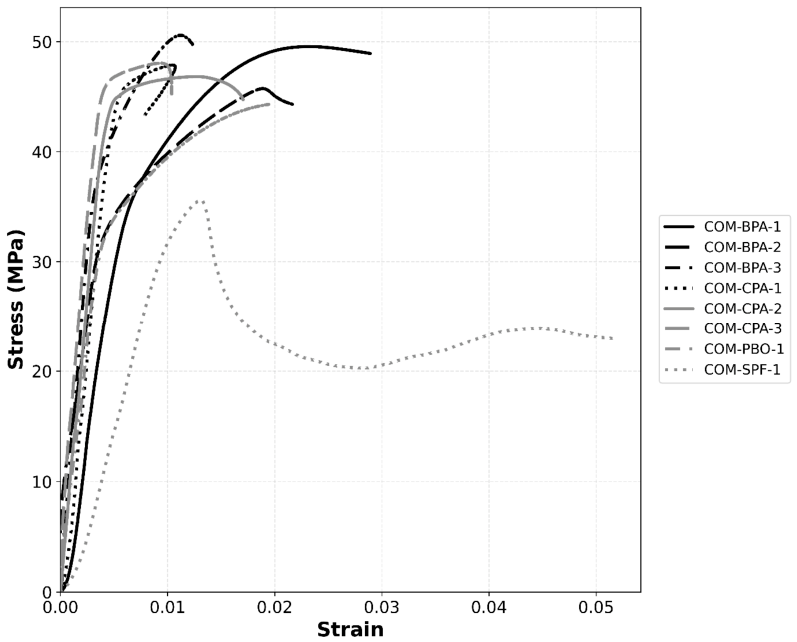
Figure 14.
Mean and standard deviation of the MOE for compression-perpendicular-to-grain specimens.
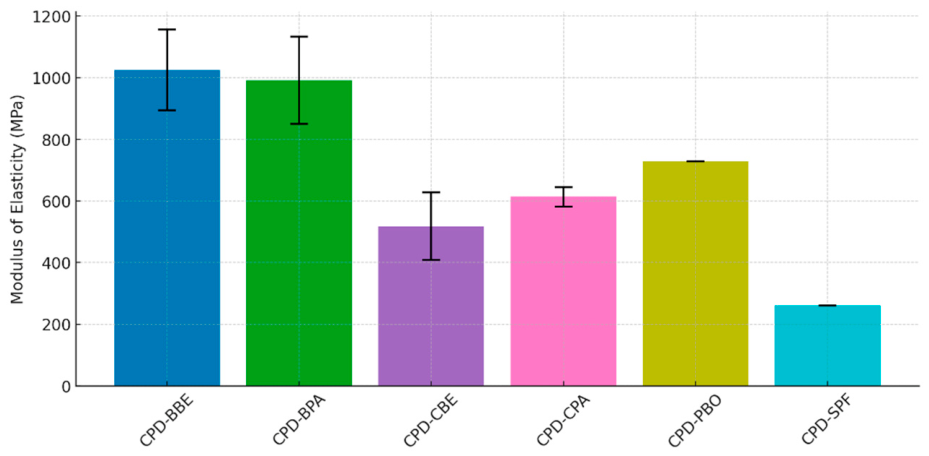
Figure 15.
Mean and standard deviation of the compressive strength for compression-perpendicular-to-grain specimens.
Figure 15.
Mean and standard deviation of the compressive strength for compression-perpendicular-to-grain specimens.
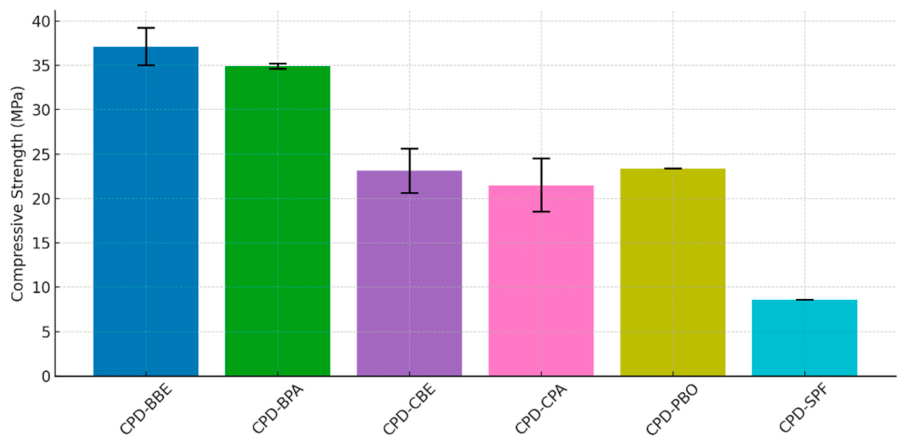
Figure 16.
Stress-strain curves for compression-perpendicular-to-grain of CPD-BBE and CPD-BPA groups with CPD-SPF and CPD-PBO.
Figure 16.
Stress-strain curves for compression-perpendicular-to-grain of CPD-BBE and CPD-BPA groups with CPD-SPF and CPD-PBO.
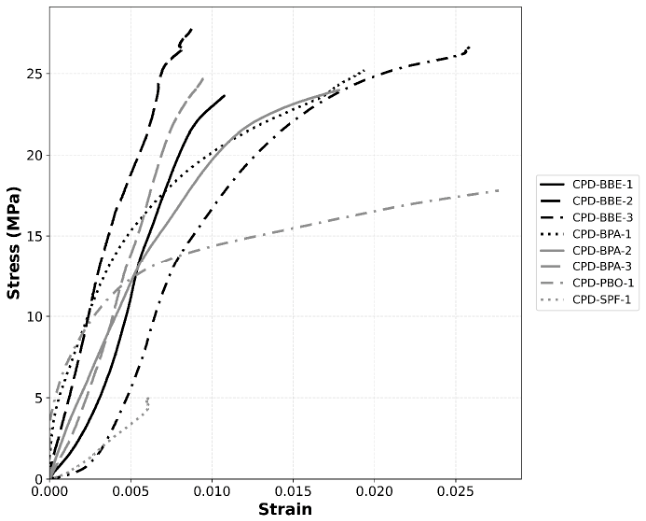
Figure 17.
Mean and standard deviation of the Modulus of Rupture for specimens tested in flexure.
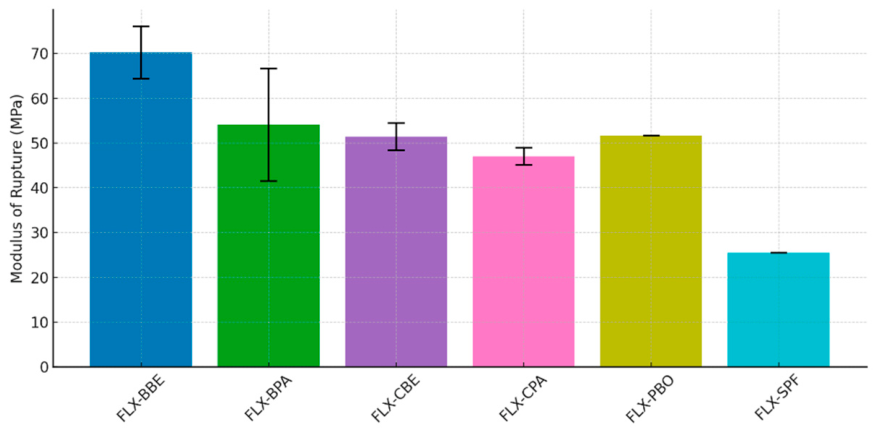
Figure 18.
Mean and standard deviation of flexural modulus for specimens tested in flexure.
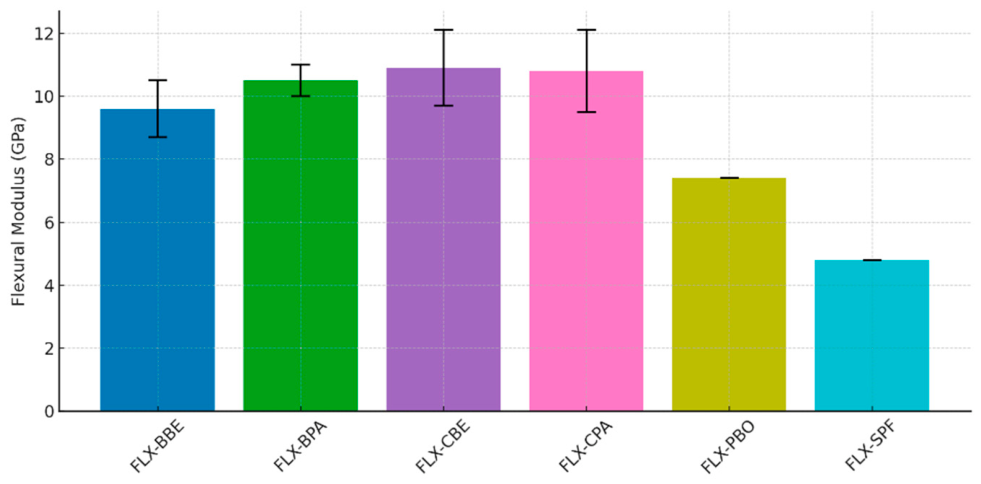
Figure 19.
Force-displacement curves for FLX-BBE and FLX-CBE under flexural testing compared with FLX-SPF and FLX-PBO.
Figure 19.
Force-displacement curves for FLX-BBE and FLX-CBE under flexural testing compared with FLX-SPF and FLX-PBO.
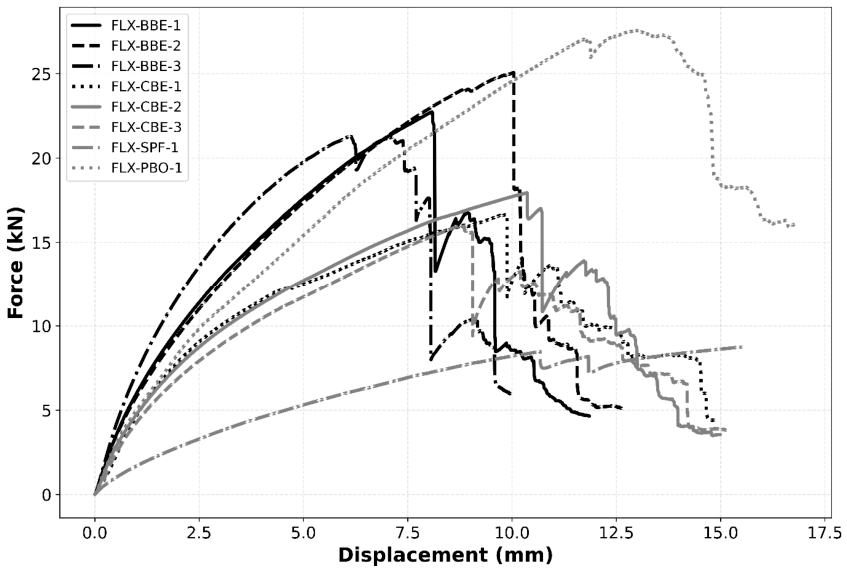
Figure 20.
Force-displacement curves for FLX-BPA and FLX-CPA under flexural testing compared with FLX-SPF and FLX-PBO.
Figure 20.
Force-displacement curves for FLX-BPA and FLX-CPA under flexural testing compared with FLX-SPF and FLX-PBO.
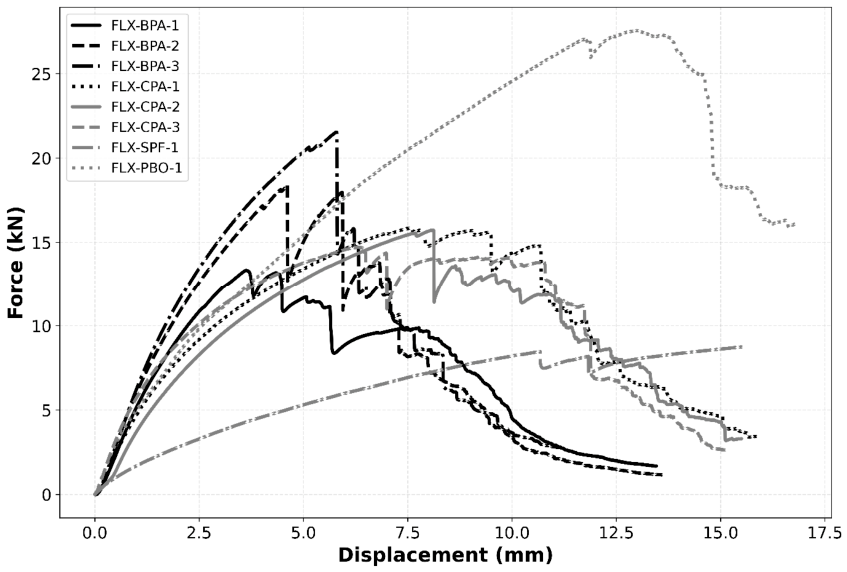
Figure 21.
Stress-strain curves for FLX-BBE and FLX-CBE under flexural testing compared with FLX-SPF and FLX-PBO.
Figure 21.
Stress-strain curves for FLX-BBE and FLX-CBE under flexural testing compared with FLX-SPF and FLX-PBO.
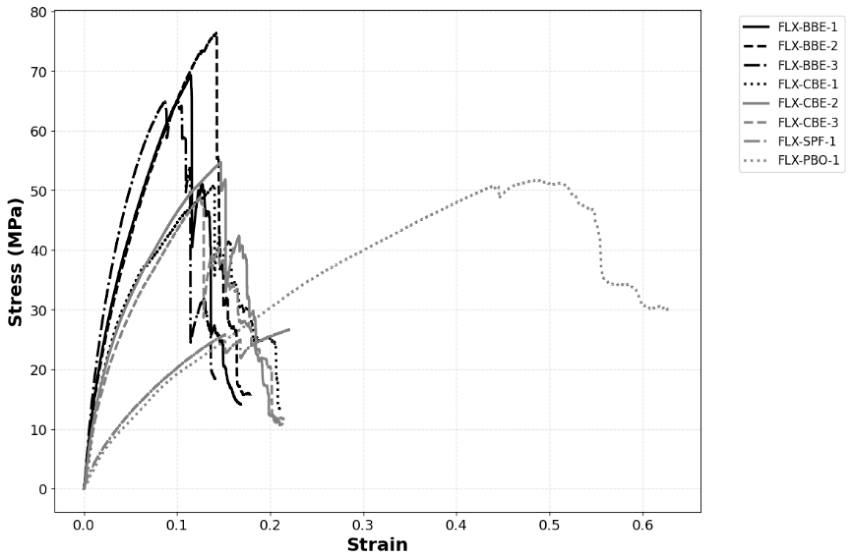
Figure 22.
Stress-strain curves for FLX-BPA and FLX-CPA under flexural testing compared with FLX-SPF and FLX-PBO.
Figure 22.
Stress-strain curves for FLX-BPA and FLX-CPA under flexural testing compared with FLX-SPF and FLX-PBO.
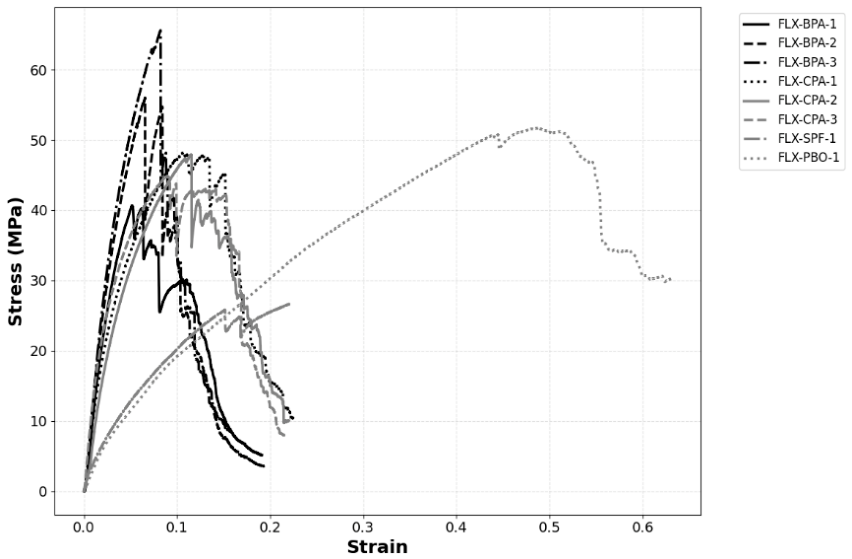
Figure 23.
Compressive failure of COM-BBE under axial loading.
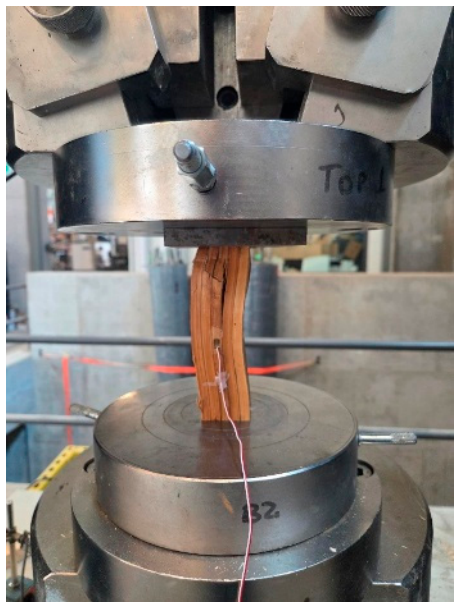
Figure 24.
Compressive failure of COM-CBE under axial loading.
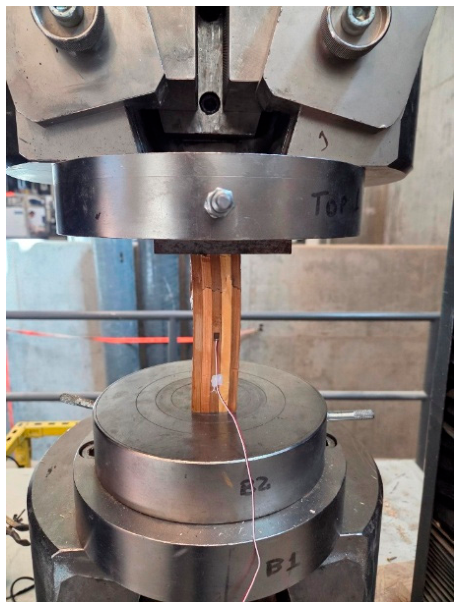
Figure 25.
Compressive failure of COM-BPA under axial loading.
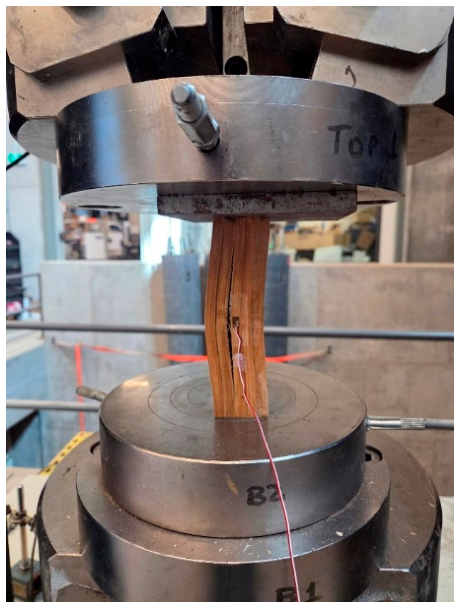
Figure 26.
Compressive failure of COM-PBO under axial loading.
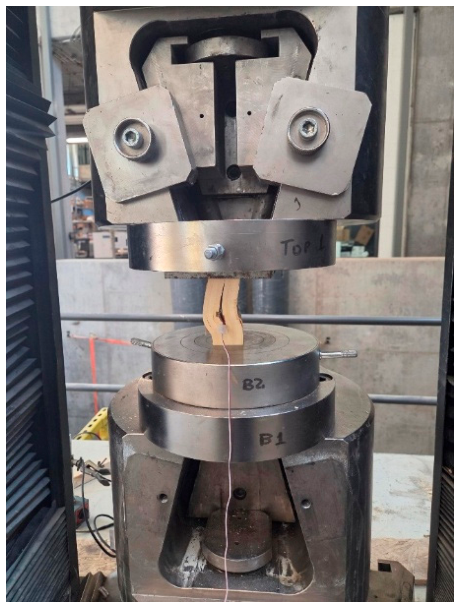
Figure 27.
Compressive failure of COM-CPA under axial loading.
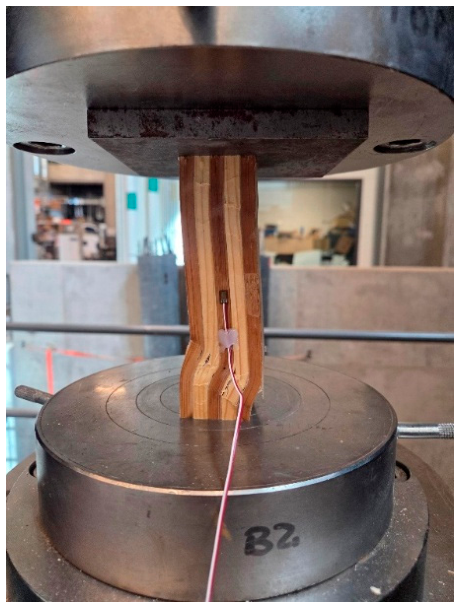

Table 1.
Average adhesive content as a percentage of total cured specimen weight.
| Sample Type | Average Adhesive Content (% by weight) |
|---|---|
| BBE | 20.90 |
| CBE | 14.43 |
| BPA | 19.88 |
| CPA | 15.03 |
Table 2.
Summary of tested specimen groups including specimen type, number of samples, test types, and specimen dimensions.
Table 2.
Summary of tested specimen groups including specimen type, number of samples, test types, and specimen dimensions.
| Group ID | Specimen Type | No. of Specimens | Test Types | Specimen Dimensions (mm) |
|---|---|---|---|---|
| BBE | Laminated bamboo using bio-epoxy adhesive | 9 | Compression parallel and perpendicular to grain, flexural | |
| BPA | Laminated bamboo using PVA adhesive | 9 | Compression parallel and perpendicular to grain, flexural | |
| CBE | Hybrid bamboo–timber using bio-epoxy adhesive | 9 | Compression parallel and perpendicular to grain, flexural | |
| CPA | Hybrid bamboo–timber using PVA adhesive | 9 | Compression parallel and perpendicular to grain, flexural | |
| SPF | Pinewood specimens (reference samples) | 3 | Compression parallel and perpendicular to grain, flexural | |
| PBO | Commercial bamboo–timber specimens | 3 | Compression parallel and perpendicular to grain, flexural |
Table 3.
Mean and standard deviation of the MOE, Fult and f(c,0) for compression-parallel-to-grain specimens calculated according to ISO 22157 [20].
Table 3.
Mean and standard deviation of the MOE, Fult and f(c,0) for compression-parallel-to-grain specimens calculated according to ISO 22157 [20].
| Group ID | (kN) | (MPa) | |
|---|---|---|---|
| COM-BBE | |||
| COM-BPA | |||
| COM-CBE | |||
| COM-CPA | |||
| COM-PBO | |||
| COM-SPF |
Table 4.
Mean and standard deviation of the MOE, Fult, and f(c,90) for compression-perpendicular-to-grain specimen.
Table 4.
Mean and standard deviation of the MOE, Fult, and f(c,90) for compression-perpendicular-to-grain specimen.
| Group ID | (kN) | (MPa) | |
|---|---|---|---|
| CPD-BBE | |||
| CPD-BPA | |||
| CPD-CBE | |||
| CPD-CPA | |||
| CPD-PBO | |||
| CPD-SPF |
Table 5.
Mean and standard deviation of the MOE, and MOR of specimens under flexural testing.
| Group ID | ||
|---|---|---|
| FLX-BBE | ||
| FLX -BPA | ||
| FLX -CBE | ||
| FLX -CPA | ||
| FLX -PBO | ||
| FLX -SPF |
Table 6.
Moisture content of the tested samples.
| Group ID | Wet (g) | Dry (g) | MC (%) | Material |
|---|---|---|---|---|
| CBE | 144.00 | 131.81 | 9.25 | Bamboo-Timber Composite |
| CPA | 132.00 | 123.40 | 6.97 | Bamboo-Timber Composite |
| BBE | 152.00 | 139.13 | 9.25 | Laminated Bamboo |
| BPA | 157.00 | 143.40 | 9.48 | Laminated Bamboo |
| PBO | 91.65 | 84.03 | 9.06 | Commercial Bamboo |
| SPF | 91.13 | 82.50 | 10.47 | SPF (Softwood Reference) |
| Pinewood | 4.83 | 4.35 | 11.03 | Pinewood Strips |
| Bamboo | 6.64 | 6.07 | 9.45 | Bamboo Strips |
Disclaimer/Publisher’s Note: The statements, opinions and data contained in all publications are solely those of the individual author(s) and contributor(s) and not of MDPI and/or the editor(s). MDPI and/or the editor(s) disclaim responsibility for any injury to people or property resulting from any ideas, methods, instructions or products referred to in the content. |
© 2026 by the authors. Licensee MDPI, Basel, Switzerland. This article is an open access article distributed under the terms and conditions of the Creative Commons Attribution (CC BY) license (http://creativecommons.org/licenses/by/4.0/).
Copyright: This open access article is published under a Creative Commons CC BY 4.0 license, which permit the free download, distribution, and reuse, provided that the author and preprint are cited in any reuse.


