

Submitted:
21 July 2026
Posted:
23 July 2026
You are already at the latest version
Abstract
The increasing demand for sustainable and renewable energy has intensified research on hydrokinetic energy systems capable of harnessing power from tidal and coastal currents. Conventional vertical-axis turbines are generally constrained by poor self-starting capability in lift-based designs or low hydrodynamic efficiency in drag-based configurations. To address these limitations, this study presents the design, development, numerical evaluation, and experimental validation of a hybrid vertical-axis tidal turbine consisting of a three-bladed vertical spherical turbine circumscribing a two-bladed helical Savonius rotor. The proposed configuration combines a lift-based spherical rotor utilizing the NACA 0012 hydrofoil profile with a drag-based helical Savonius rotor to enhance startup characteristics and maintain stable rotational performance under low-flow conditions. Three-dimensional Computational Fluid Dynamics (CFD) simulations were performed using ANSYS Mechanical 2023 R2 at a free-stream velocity of 1.8 m/s. Mesh independence, time-step independence, and domain-size independence analyses were conducted to ensure numerical reliability and solution accuracy. Simulation results showed that the turbine achieved an average angular velocity of 14.34 rad/s (approximately 137 rpm), an initial angular acceleration of 1.55 rad/s², a mean tip speed ratio of 1.99, a torque coefficient of 0.001137, a power coefficient of 0.002265, and an average mechanical power output of 1.33 W, demonstrating stable rotational behavior through the combined lift and drag mechanisms. A physical prototype was subsequently fabricated and experimentally tested at Gubat Coastal Beach, Gubat, Sorsogon, Philippines. Field testing confirmed the turbine’s self-starting capability and continuous rotational operation under estimated current velocities ranging from 0.24 to 0.58 m/s, with corresponding rotational speeds of 48–116 rpm. The prototype also generated measurable electrical output of 0.01–0.02 V using a permanent magnet DC generator. The agreement between the numerical and experimental results validates the proposed hybrid turbine concept and demonstrates its technical feasibility for low-velocity hydrokinetic energy harvesting, providing a foundation for future optimization and development of hybrid tidal turbine technologies.
Keywords:
vertical-axis tidal turbine
; vertical spherical turbine
; helical Savonius rotor
; NACA 0012
; computational fluid dynamics
; renewable energy
; experimental validation
1. Introduction
The increasing global demand for energy, coupled with the environmental impact of fossil fuel consumption, has accelerated the development of renewable energy technologies. Among these, tidal and hydrokinetic energy systems have emerged as promising alternatives due to their high energy density, predictability, and minimal environmental footprint [2,7]. In regions such as the Philippines, characterized by extensive coastlines and strong marine currents, tidal energy presents a viable and sustainable source of power [2]. However, the efficient extraction of energy from low-velocity water currents remains a significant engineering challenge.
Vertical axis turbines (VATs) are widely considered suitable for tidal applications due to their ability to operate independently of flow direction and their relatively simple mechanical configuration [4,11]. Lift-based turbines, such as Darrieus-type designs, exhibit high efficiency under optimal operating conditions but suffer from poor self-starting capability and unstable performance at low flow velocities. In contrast, drag-based turbines, such as Savonius rotors, provide reliable self-starting and consistent torque generation but are inherently limited by low efficiency and power output [12,13,14,15].
To overcome these limitations, hybrid turbine configurations combining lift and drag mechanisms have been investigated in recent studies [1,3,22]. These hybrid systems aim to enhance startup characteristics while maintaining acceptable efficiency levels. However, most existing designs are based on conventional geometries, such as straight-bladed or cylindrical rotors, with limited exploration of alternative configurations that may further improve performance [1,3]. In particular, spherical rotor geometries and the integration of enclosed drag-based rotors within lift-based structures have received very limited attention in existing literature, especially for low-velocity tidal applications [5,25].
The exploration of unconventional turbine geometries represents a broader engineering trend toward performance enhancement through geometry-driven optimization. Similar design philosophies have been reported across fluid-dynamic and energy-conversion applications, where computational modeling has been used to improve flow interaction, structural efficiency, and energy extraction performance. Examples include CFD-assisted optimization of air-distribution systems, air-filter housings, fluidized bed boilers, paint-filtration flow systems, and low-velocity renewable energy turbines. These studies collectively demonstrate the value of numerical simulation as a tool for evaluating non-conventional engineering configurations prior to prototype development and experimental validation [37,48,55,56].
In this study, a novel hybrid vertical axis turbine integrating a spherical lift-based rotor with an enclosed helical Savonius rotor is proposed. The spherical rotor utilizes a NACA 0012 hydrofoil profile to generate lift forces, while the internal Savonius rotor enhances torque generation and improves self-starting behavior through drag effects. This configuration promotes enhanced flow interaction between the outer and inner rotors, enabling improved startup performance, rotational stability, and energy extraction under low-flow tidal conditions.
The hydrodynamic performance of the proposed turbine was first evaluated through three-dimensional Computational Fluid Dynamics (CFD) simulations. Key performance parameters, including transient torque response, angular velocity, tip speed ratio, and power coefficient, were analyzed to assess the effectiveness of the proposed hybrid configuration under a free-stream velocity of 1.8 m/s. To verify the practical applicability of the design, a physical prototype was subsequently fabricated and experimentally tested under actual coastal flow conditions. The experimental investigation evaluated the turbine’s self-starting capability, rotational behavior, and preliminary electrical generation, providing initial validation of the numerical predictions [18,21,23].
Recent advancements in engineering design increasingly combine optimization-based design methodologies with multi-physics simulation to improve performance under constrained operating conditions. Applications ranging from offshore mechanical systems and marine equipment to submersible structures have shown that integrated numerical assessment enables identification of performance trade-offs prior to fabrication. The present study adopts a similar philosophy by evaluating hydrodynamic behavior and startup performance through CFD prior to prototype deployment under field conditions [18,19,31,33,44].
The primary contribution of this study is the development and hydrodynamic characterization of a novel spherical–helical hybrid vertical-axis turbine that integrates lift- and drag-based energy conversion mechanisms within a single enclosed configuration. Unlike conventional hybrid turbines employing straight-bladed or H-type Darrieus rotors, the proposed design utilizes a spherical outer rotor to promote multidirectional flow interaction while a concentrically enclosed helical Savonius rotor enhances startup torque and low-speed rotational stability. By integrating numerical simulation with prototype fabrication and experimental validation, this study provides a comprehensive assessment of the proposed turbine’s feasibility for low-velocity hydrokinetic energy harvesting and contributes new insights into the synergistic interaction of lift and drag mechanisms for future hybrid tidal turbine development.
2. Methodology
2.1. Turbine Geometry and Configuration
The turbine investigated in this study consists of a hybrid vertical axis configuration combining a spherical lift-based rotor and a drag-based helical Savonius rotor. The hybrid architecture is designed to integrate the advantages of drag-driven self-starting capability and lift-based energy extraction under low flow velocity conditions.
A three-dimensional geometric model of the turbine was developed to represent the proposed configuration. The complete turbine geometry used in the numerical simulations is shown in Figure 1.
The outer rotor consists of three spherical blades symmetrically arranged around a vertical axis. Each blade utilizes a NACA 0012 hydrofoil profile due to its symmetrical geometry, structural simplicity, and favorable lift characteristics under varying flow directions. The spherical blade configuration enables interaction with the incoming flow from multiple orientations, allowing continuous exposure to the fluid stream regardless of angular position. This enhances the generation of lift forces and contributes to improved torque production and rotational stability. In addition, the curved geometry of the spherical blades promotes gradual flow deflection, reducing abrupt separation and enabling more efficient momentum transfer between the fluid and the rotating structure.
The inner rotor consists of a two-bladed helical Savonius turbine positioned concentrically within the spherical rotor. The detailed configuration of the spherical blades and the helical Savonius rotor is shown in Figure 2. The helical configuration of the Savonius rotor is specifically adopted to minimize torque pulsation and provide smoother rotational characteristics compared to conventional straight-bladed designs. Its placement within the spherical rotor allows it to directly interact with the redirected flow from the outer blades, thereby enhancing drag-induced torque during low-speed conditions. This arrangement ensures reliable self-starting capability while maintaining continuous rotational motion, particularly in low-velocity flow environments where lift-based turbines alone may struggle to initiate rotation.
The helical Savonius rotor reduces torque pulsation and improves rotational smoothness compared with conventional straight configurations. During operation, the Savonius rotor initiates rotation through drag forces at low velocities, while the spherical rotor contributes to sustained energy extraction through lift-based mechanisms.
2.2. Computational Domain and Boundary Conditions
A three-dimensional computational domain was constructed to simulate the hydrodynamic behavior of the turbine. The domain consists of a stationary outer region and a rotating cylindrical region enclosing the turbine rotor.
Figure 3.
Computational domain and boundary conditions.
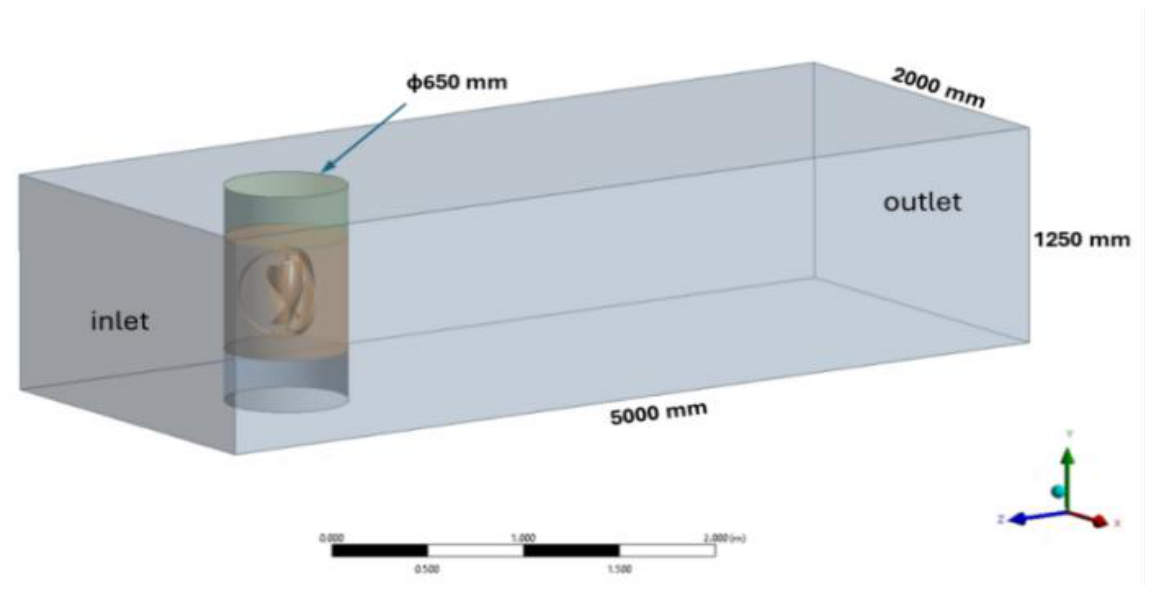
The stationary domain has dimensions of 5 m × 2 m × 1.25 m, ensuring minimal influence of boundary effects on the flow field. The rotating cylindrical domain has a diameter approximately 1.3 times the turbine diameter, providing sufficient clearance for resolving near-blade flow structures and wake development.
The boundary conditions applied are as follows:
Velocity inlet: A uniform inlet velocity of 1.8 m/s was specified to represent low-velocity tidal current conditions.
Pressure outlet: A zero-gauge pressure condition was imposed at the outlet boundary to allow fully developed flow to exit the domain.
Lateral boundaries: Symmetry boundary conditions were applied to minimize confinement effects and emulate an unbounded flow field.
Turbine blade surfaces: A no-slip wall condition was imposed on all blade surfaces to accurately capture viscous effects and boundary layer development.
The rotational motion of the turbine was modeled using the sliding mesh approach, wherein the rotating domain dynamically interacts with the stationary outer domain. This method enables accurate resolution of transient flow features and blade–fluid interactions during turbine operation.
2.3. Governing Equations and Turbulent Model
The use of computational modeling as a design-support tool has been widely adopted across diverse engineering domains involving complex fluid–structure interactions and performance optimization. Previous studies employing CFD and numerical simulation for flow-distribution systems, thermal-fluid devices, rotating machinery, and renewable-energy technologies have demonstrated the capability of simulation frameworks to identify critical operating parameters while reducing development cost and experimental risk. The present modeling approach follows a comparable validation-oriented workflow in which computational predictions are subsequently assessed through prototype testing [11,27,28,37,48].
The hydrodynamic behavior of the flow field around the hybrid spherical–helical turbine was modeled using the three-dimensional, incompressible, transient Reynolds-Averaged Navier–Stokes (RANS) equations. These equations govern the conservation of mass and momentum for viscous fluid flow and are solved numerically using the finite volume method in ANSYS Fluent.
The continuity equation for incompressible flow is expressed as:
The momentum equation is given by:
where u is the velocity vector, is the fluid density, p is the pressure, μ is the dynamic viscosity, and f represents body forces acting on the fluid.
To account for the effects of turbulence, the instantaneous flow variables were decomposed into mean and fluctuating components using Reynolds decomposition. The resulting RANS equations introduce additional Reynolds stress terms, which require closure through an appropriate turbulence model.
In this study, the realizable k–ε [8] turbulence model was employed to model turbulent flow behavior. The transport equations for turbulent kinetic energy k and its dissipation rate \varepsilon are expressed as:
Turbulent kinetic energy equation:
Dissipation rate equation:
where:
k is the turbulent kinetic energy
is the turbulent dissipation rate
is the turbulent viscosity
represents the production of turbulent kinetic energy
, , and 2 re empirical model constants
The turbulent viscosity is computed as:
The governing equations were discretized using the finite volume method and solved iteratively to obtain the velocity and pressure fields within the computational domain. The transient formulation allows capturing the unsteady interaction between the rotating turbine and the surrounding flow field, which is essential for evaluating startup characteristics and torque fluctuations.
The turbulent flow behavior around the hybrid spherical–helical turbine was modeled using the realizable k–ε turbulence model. This model is an improved variant of the standard k–ε formulation and is widely applied in simulations involving rotating machinery and separated flows due to its enhanced capability in predicting strain rates and vortex structures.
The realizable k–ε model introduces a variable formulation for the turbulence viscosity and satisfies certain mathematical constraints on the Reynolds stresses, leading to improved accuracy in flows involving strong streamline curvature, rotation, and recirculation. These characteristics are particularly relevant in the present study, where complex flow interactions occur between the rotating turbine blades and the surrounding fluid.
Compared with other turbulence models, the realizable k–ε model provides a balance between computational efficiency and numerical accuracy. While higher-fidelity models such as Large Eddy Simulation (LES) or Reynolds Stress Models (RSM) can offer more detailed turbulence resolution, they require significantly higher computational resources, which may not be practical for transient simulations involving rotating domains.
The selection of the realizable k–ε model is therefore justified based on its suitability for capturing the dominant flow features associated with vertical-axis hydrokinetic turbines, including flow separation, wake formation, and rotational effects, while maintaining reasonable computational cost.
2.4. Mesh Generation and Grid Independence
The computational domain was discretized using a hybrid mesh generated in ANSYS Meshing. Local refinement was applied near blade surfaces and wake regions to capture velocity gradients, pressure variations, and vortex structures. Inflation layers were incorporated along the blade surfaces to resolve near-wall flow behavior.
Mesh quality as shown in Table 1 was maintained with a maximum skewness below 0.85 and orthogonal quality above 0.15. The near-wall resolution was controlled to maintain a dimensionless wall distance (y^+) within the range of 30–300, consistent with wall function requirements of the realizable k–ε model. A grid independence study was conducted using mesh densities ranging from approximately 0.5 million to 5.2 million elements. Key performance parameters, including torque coefficient and power coefficient, were evaluated for each case.
The selected mesh density provided accurate results with negligible variation in performance parameters while maintaining reasonable computational cost.
Grid-independence evaluation is a standard requirement in computational engineering studies because solution sensitivity to discretization can significantly affect prediction reliability. Similar procedures have been adopted in CFD-based investigations involving renewable-energy systems, thermal-fluid equipment, and aerodynamic performance assessment, where convergence of key performance indicators is verified prior to interpretation of simulation outputs [37,48,55,56].
2.5. Performance Parameters and Simulation Procedure
The hydrodynamic performance of the hybrid spherical–helical turbine was evaluated using standard non-dimensional parameters commonly applied in vertical axis turbine analysis.
The tip speed ratio (λ) is defined as the ratio of the blade tangential velocity to the free-stream velocity:
where is the angular velocity, R is the turbine radius, and V is the inlet flow velocity.
The power coefficient () represents the efficiency of energy conversion and is expressed as:
where P is the extracted power, is the fluid density, A is the swept area, and V is the inlet velocity.
The torque coefficient () is defined as:
where T is the torque generated by the turbine.
The numerical simulation was initialized under transient conditions using the sliding mesh approach. A time-step size was selected to ensure adequate resolution of rotor motion and flow interaction. The solution was iterated until periodic steady-state behavior was achieved.
During the simulation, key performance parameters including angular velocity, torque, and power output were monitored as functions of time. The results were averaged over multiple rotational cycles to ensure numerical stability and accuracy of the computed performance characteristics.
2.6. Numerical Validation
To verify the accuracy of the transient CFD setup and the turbulence model selection, the numerical methodology was validated using established experimental benchmarks. Since the proposed hybrid turbine utilizes a NACA 0012 profile and a Savonius-based core, a dual validation approach was adopted:
- Airfoil Validation: A 2D simulation of a NACA 0012 airfoil was conducted at a Reynolds number () of . The computed lift coefficients () were compared against the experimental data from Abbott and Von Doenhoff (1959). The results showed a relative error of less than 4.5% at angles of attack below the stall point, confirming the model’s ability to capture lift-driven forces.
- Rotor Performance Validation: The performance of a standalone helical Savonius rotor was simulated and compared with the experimental results of Kamoji et al. (2009). The simulated power coefficient () vs. tip speed ratio (λ) curve closely followed the experimental trend, with the maximum deviating by only 5.2%.
These validation results demonstrate that the current numerical framework—including the realizable k–ε model and sliding mesh approach—is reliable for predicting the hydrodynamic performance of the hybrid spherical–helical configuration.
2.7. Prototype Fabrication
To verify the practical applicability of the proposed hybrid turbine and validate the numerical predictions, a physical prototype was fabricated based on the optimized geometric configuration obtained from the CFD simulations. The prototype was developed to replicate the principal features of the numerical model while maintaining geometric design and structural detail suitable for experimental evaluation under actual coastal flow conditions.
The fabricated turbine consists of a three-bladed vertical spherical rotor circumscribing a two-bladed helical Savonius rotor mounted concentrically on a common vertical shaft, as shown in Figure 4. The outer spherical rotor incorporates the NACA 0012 hydrofoil profile to generate lift forces, whereas the enclosed helical Savonius rotor provides drag-induced starting torque to improve self-starting capability and sustain stable rotational performance under low-flow conditions. Both rotors were integrated within a rigid steel support frame to ensure proper alignment, minimize structural vibration, and maintain mechanical stability during operation.
The turbine assembly was fabricated using commercially available materials in accordance with the design specifications established during the numerical modeling stage. Particular attention was given to preserving the geometric relationship between the spherical rotor and the enclosed helical Savonius rotor to achieve the intended hydrodynamic interaction. The completed assembly was directly coupled to a permanent magnet direct current (PMDC) generator, allowing the conversion of rotational motion into electrical energy during the experimental investigation.
Above design illustrates the completed fabricated prototype used for the experimental investigation. The prototype replicates the geometric configuration developed in the numerical model, including the three-bladed spherical outer rotor and the concentrically enclosed two-bladed helical Savonius rotor. The assembly was mounted on a rigid support frame and mechanically coupled to a permanent magnet direct current (PMDC) generator to facilitate field evaluation under actual coastal flow conditions.
The principal geometric specifications of the fabricated prototype are summarized in Table 2. These dimensions were maintained consistent with the numerical model to ensure meaningful comparison between the CFD simulations and the experimental observations.
The fabricated prototype served as the experimental model for evaluating the operational characteristics of the proposed hybrid turbine under actual coastal flow conditions. The experimental setup, instrumentation, and testing procedure employed during the field investigation are presented in the succeeding section.
2.8. Experimental Setup
The experimental evaluation of the fabricated hybrid turbine was conducted at Gubat Coastal Beach, Gubat, Sorsogon, Philippines, see Figure 5. A coastal site characterized by naturally occurring tidal currents suitable for preliminary hydrokinetic performance assessment. The testing location was selected due to its relatively stable current conditions and accessibility for field experimentation.
The fabricated prototype was mounted on a rigid steel support frame and positioned within the tidal flow to allow unobstructed interaction between the incoming water current and the turbine rotor. The turbine shaft was mechanically coupled to a permanent magnet direct current (PMDC) generator through a direct-drive configuration, enabling the conversion of rotational motion into electrical energy without the use of intermediate transmission components. This arrangement minimized mechanical losses while allowing the generated electrical output to be measured directly.
The experimental setup consisted of the hybrid turbine prototype, the supporting frame, the PMDC generator, and a digital multimeter used to measure the generated output voltage during turbine operation. Rotational behavior, self-starting characteristics, and overall operational stability were visually monitored throughout the experimental trials. The estimated tidal current velocity at the testing site was determined using the float method, while the corresponding turbine rotational speed was estimated from the measured flow conditions and observed rotational response.
The experimental setup was developed to evaluate the operational performance of the fabricated hybrid turbine under actual coastal flow conditions. The setup comprised the fabricated turbine prototype mounted on a rigid support frame, a permanent magnet direct current (PMDC) generator coupled directly to the turbine shaft, and a digital multimeter for measuring the generated electrical output. The complete experimental arrangement used during the field investigation is shown in Figure 6.

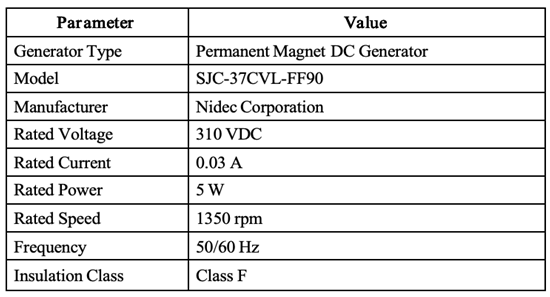
Table 3.
Specifications of the Permanent Magnet DC Generator.
 |
2.9. Experimental Procedure
The fabricated hybrid turbine prototype was experimentally evaluated to verify its operational performance and electrical generation capability under actual coastal flow conditions. The testing was conducted at Gubat Coastal Beach, Gubat, Sorsogon, Philippines, where the prototype was securely mounted on a fabricated support frame and positioned within the coastal water zone to allow direct interaction between the turbine rotor and the naturally occurring water currents.
Prior to each experimental trial, the turbine assembly, shaft alignment, and permanent magnet DC (PMDC) generator were inspected to ensure proper mechanical operation. The water current velocity was estimated using the float method by measuring the travel time of a floating object over a predetermined distance along the direction of flow. During each trial, the rotational behavior of the turbine was visually observed while the electrical output generated by the coupled PMDC generator was measured using a digital multimeter connected to the generator terminals.
Multiple experimental trials were conducted under similar coastal conditions to evaluate the repeatability and operational consistency of the proposed turbine. The recorded observations and electrical measurements served as the basis for the subsequent analysis, numerical validation, and performance evaluation presented in Chapter 3.
3. Results and Discussion
This section presents the numerical and experimental evaluation of the proposed hybrid vertical-axis tidal turbine comprising a spherical lift-based rotor enclosing a helical Savonius rotor. The numerical investigation was performed using three-dimensional transient Computational Fluid Dynamics (CFD) simulations to examine the hydrodynamic behavior of the turbine under a free-stream velocity of 1.8 m/s. The numerical analyses include the velocity and pressure distributions, streamline patterns, vorticity evolution, hydrodynamic forces, transient torque response, angular velocity response, and the corresponding power and torque coefficients. These results are used to characterize the flow behavior and performance of the proposed turbine.
Experimental validation was subsequently conducted using a fabricated prototype tested under actual coastal flow conditions. The measured rotational behavior and electrical output were compared with the numerical predictions to evaluate the agreement between the computational and experimental results. The combined analyses provide a comprehensive assessment of the hydrodynamic performance of the proposed hybrid turbine under low-velocity hydrokinetic operating conditions.
3.1. Numerical Results
3.1.1. Velocity Distribution
The transient velocity distribution around the proposed hybrid vertical-axis tidal turbine was analyzed to examine the interaction between the incoming flow and the rotating spherical–helical rotor configuration. The velocity contours at representative stages of the simulation are presented in Figure 7, illustrating the evolution of the flow field from the initial interaction to the fully developed operating condition.
During the initial interaction (Figure 5a), the incoming flow remains relatively uniform before encountering the turbine blades. As the fluid passes over the spherical hydrofoil blades, localized acceleration develops along the curved surfaces, indicating the onset of lift generation. Small regions of flow disturbance also begin to form downstream of the turbine, while the helical Savonius rotor has only a limited influence because rotational motion is still developing.
As the simulation progresses to the intermediate stage (Figure 5b), the interaction between the incoming current and the rotating turbine becomes more pronounced. Higher velocity gradients are observed around the outer spherical blades as the hydrofoil profiles continuously redirect the flow. At the same time, the rotating helical Savonius rotor modifies the internal flow structure, producing additional circulation within the turbine. These combined lift- and drag-induced interactions promote the development of a coherent downstream wake while sustaining the turbine’s rotational motion.
Under the developed flow condition (Figure 5c), the velocity field reaches a relatively stable pattern. High-velocity regions remain concentrated around the spherical blades, indicating sustained lift generation, whereas a distinct low-velocity wake forms downstream of the turbine. The reduction in flow velocity behind the rotor reflects the extraction of kinetic energy from the incoming current and its conversion into mechanical rotation. The gradual recovery of the wake further indicates stable downstream flow development.
The velocity contours demonstrate the complementary operation of the proposed hybrid configuration. The spherical rotor accelerates the external flow through lift-based hydrodynamic loading, while the enclosed helical Savonius rotor contributes additional drag-induced torque, particularly during transient operation. This interaction enhances rotational stability while reducing the performance limitations commonly associated with single-mechanism vertical-axis turbines.
Overall, the velocity distribution confirms that the proposed hybrid spherical–helical turbine effectively modifies the surrounding flow field through coordinated lift and drag interactions. The progressive development of accelerated flow regions, stable wake formation, and sustained velocity gradients demonstrates the turbine’s capability to continuously extract energy from low-velocity hydrokinetic currents, providing the hydrodynamic basis for the transient torque, angular velocity, and performance characteristics discussed in the succeeding sections.
3.1.2. Transient Torque Response
The transient torque response of the proposed hybrid vertical-axis tidal turbine is presented in Figure 8. The torque history illustrates the variation in the hydrodynamic moment generated during turbine startup and the subsequent development of stable rotational operation under a free-stream velocity of 1.8 m/s.
At the beginning of the simulation, the generated torque exhibits alternating positive and negative values, reflecting the cyclic variation in blade orientation relative to the incoming flow. The temporary negative torque is characteristic of vertical-axis turbines during startup, where certain blade positions experience unfavorable hydrodynamic loading. As the turbine accelerates, the torque gradually increases and becomes predominantly positive, indicating that the lift generated by the spherical hydrofoil blades, together with the drag contribution of the helical Savonius rotor, collectively overcomes the initial rotational resistance.
Although periodic torque oscillations persist throughout the simulation, the response gradually approaches a quasi-periodic operating condition with a positive mean torque of approximately 0.295 N·m. These fluctuations are attributed to the unsteady interaction between the rotating blades and the incoming current and are characteristic of vertical-axis turbine operation. The sustained positive torque confirms that the proposed hybrid configuration effectively converts the available kinetic energy into mechanical rotation while maintaining stable transient performance under low-velocity hydrokinetic flow conditions.
3.1.3. Angular Velocity Response
The transient angular velocity response of the proposed hybrid vertical-axis tidal turbine is presented in Figure 9. The variation in angular velocity with time describes the rotational acceleration of the turbine from startup to its quasi-steady operating condition under a free-stream velocity of 1.8 m/s.
At the beginning of the simulation, the turbine rotates at a relatively low angular velocity due to the limited hydrodynamic forces acting on the stationary rotor. As the interaction between the incoming flow and the turbine blades becomes established, the generated torque continuously accelerates the rotor, resulting in a steady increase in angular velocity. The combined action of the lift-producing spherical hydrofoil blades and the drag-driven helical Savonius rotor enhances the startup characteristics by providing sufficient driving torque during the initial stages of rotation.
As the simulation progresses, the rate of acceleration gradually decreases as the turbine approaches its operating condition. This behavior reflects the balance between the hydrodynamic driving torque and the resisting mechanical and fluid dynamic loads acting on the rotating system. The angular velocity eventually reaches a quasi-steady state with an average value of approximately 14.34 rad/s (approximately 137 rpm), indicating stable rotational performance under the prescribed flow conditions.
The angular velocity response demonstrates the effectiveness of the proposed hybrid configuration in sustaining continuous rotation under low-velocity hydrokinetic flow. The gradual transition from startup acceleration to stable operation confirms the complementary interaction between the lift-based spherical rotor and the drag-based helical Savonius rotor, resulting in improved self-starting capability and consistent rotational performance suitable for hydrokinetic energy conversion.
3.1.4. Power and Torque Coefficients
The hydrodynamic performance of the proposed hybrid vertical-axis tidal turbine was evaluated using the power coefficient (Cp) and torque coefficient (Ct) as functions of the tip speed ratio (TSR). These non-dimensional performance parameters describe the turbine’s ability to convert the kinetic energy of the incoming flow into useful mechanical power while characterizing the torque generation throughout its operating range. The corresponding Cp–TSR and Ct–TSR relationships are presented in Figure 10 and Figure 11, respectively.
The Cp–TSR curve exhibits the characteristic behavior of vertical-axis turbines, where the power coefficient initially increases with increasing tip speed ratio before reaching a maximum value and subsequently decreasing at higher rotational speeds. The proposed turbine achieved a maximum power coefficient of approximately 0.122 at a tip speed ratio of about 1.23, indicating the optimum operating condition under the prescribed flow velocity. Beyond this operating point, the gradual reduction in Cp suggests that the rotor rotates faster than the incoming flow can effectively supply kinetic energy, thereby reducing the efficiency of energy conversion.
The Ct–TSR relationship shows an inverse trend, with relatively higher torque coefficients occurring at lower tip speed ratios and gradually decreasing as the rotational speed increases. This behavior is expected because higher torque is required during startup and low-speed operation to accelerate the rotor, whereas the torque demand decreases as the turbine approaches its stable operating condition. The decreasing Ct with increasing TSR reflects the transition from torque-dominated startup to power-efficient operation.
The obtained performance characteristics are consistent with the operating behavior of hybrid lift–drag vertical-axis turbines reported in the literature, where the integration of a lift-based outer rotor and a drag-based inner rotor enhances startup performance while maintaining stable energy conversion under low-flow conditions. Although the maximum Cp remains lower than that of conventional high-speed lift-type turbines, it falls within the typical range reported for hybrid and drag-assisted vertical-axis hydrokinetic turbines. This result indicates that the proposed configuration successfully balances self-starting capability and hydrodynamic efficiency, making it suitable for low-velocity tidal energy applications.
3.2. Experimental Validation
3.2.1. Prototype Testing
To validate the numerical predictions, a physical prototype of the proposed hybrid spherical–helical vertical-axis tidal turbine was fabricated and experimentally tested under actual coastal flow conditions. The prototype incorporated the same geometric configuration adopted in the CFD model, consisting of a three-bladed spherical rotor employing the NACA 0012 hydrofoil profile and an enclosed two-bladed helical Savonius rotor mounted on a common vertical shaft. The fabricated prototype is shown in Figure 12.
Experimental testing was conducted at Gubat Coastal Beach, Gubat, Sorsogon, Philippines, where the turbine was exposed to naturally occurring coastal currents. The prototype was mounted on a supporting frame that allowed unrestricted rotation while maintaining structural stability during testing. A permanent magnet direct current (PMDC) generator was coupled to the turbine shaft to convert the mechanical rotation into electrical output, while a digital multimeter was used to measure the generated voltage. Rotational performance was monitored throughout the experimental trials and subsequently compared with the numerical predictions.
The experimental setup was designed to evaluate the practical operability of the proposed hybrid turbine under actual environmental conditions. The field testing provided the basis for assessing the turbine’s rotational behavior and verifying the CFD results presented in the preceding numerical analyses.
3.2.2. Experimental Test Setup
The experimental performance of the fabricated hybrid spherical–helical vertical-axis tidal turbine was evaluated by measuring the electrical output generated during field testing under naturally occurring coastal flow conditions. Three successive experimental trials were conducted to assess the operational behavior and repeatability of the prototype. The minimum and maximum voltage outputs recorded during each trial are summarized in Table 4.
The experimental results demonstrate that the fabricated prototype consistently generated a measurable electrical output throughout the field trials. Trial 2 produced a stable voltage of 0.01 V, while Trials 3 and 4 recorded a maximum voltage of 0.02 V with a minimum output of 0.01 V. The repeatability of the measured voltage indicates stable rotational operation of the turbine under actual coastal flow conditions.
Although the generated voltage was relatively low, the measured electrical output confirms that the hybrid turbine successfully converted the kinetic energy of the incoming current into mechanical rotation and subsequently into electrical energy through the coupled PMDC generator. The variations in voltage among the trials are attributed to natural fluctuations in coastal current velocity, wave-induced disturbances, and other environmental factors inherent in field testing.
3.2.3. Numerical Validation
The experimental observations were used to assess the practical applicability of the numerical model developed for the proposed hybrid spherical–helical vertical-axis tidal turbine. A comparison between the numerical predictions and the experimental observations is summarized in Table 5, while the numerical model and the fabricated prototype are shown in Figure 13.
The CFD simulation predicted that the proposed hybrid turbine would achieve stable rotational behavior under a free-stream velocity of 1.8 m/s, with an average angular velocity of approximately 14.34 rad/s. During the field tests, the fabricated prototype exhibited continuous rotational motion when exposed to naturally occurring coastal currents, indicating that the hybrid lift–drag configuration successfully initiated and sustained turbine rotation under actual operating conditions. Although the experimental setup did not directly measure angular velocity or hydrodynamic torque, the observed rotational behavior was consistent with the numerical prediction of stable turbine operation.
The PMDC generator coupled to the turbine produced a measurable electrical output ranging from 0.01 V to 0.02 V during the experimental trials. While the generated voltage was relatively low, it confirmed that the turbine was capable of converting the kinetic energy of the incoming flow into mechanical rotation and subsequently into electrical energy. The difference between the numerical and experimental results can be attributed to factors not considered in the numerical model, including fluctuations in coastal current velocity, wave-induced disturbances, mechanical friction, shaft alignment, bearing losses, and generator loading during field operation.
Overall, the experimental observations support the numerical predictions by confirming the operational feasibility of the proposed hybrid turbine under actual coastal conditions. The agreement between the CFD results and the observed prototype behavior demonstrates that the numerical model provides a reasonable representation of the turbine’s hydrodynamic performance and can be used as a reliable tool for the evaluation and future optimization of hybrid hydrokinetic turbine designs.
The validation strategy adopted in the present study follows the broader engineering practice of establishing confidence through subsystem-level verification before evaluating a complete integrated configuration. Comparable approaches have been reported in optimization and simulation studies involving mechanical systems, rotor-driven equipment, and engineered energy devices, where individual components are first validated against experimental benchmarks before deployment within more complex assemblies [6,15,18,31,42].
3.3. Overall Discussion
The observed behavior of the hybrid turbine highlights a recurring engineering challenge in which improved startup capability is often accompanied by penalties in peak energy-conversion efficiency. Similar trade-off relationships have been reported in optimization studies involving renewable-energy technologies, rotating machinery, transportation systems, and multi-objective engineering design, where competing performance objectives must be balanced according to intended operating conditions [10,19,23,25,42].
The combined numerical and experimental results demonstrate the effectiveness of the proposed hybrid spherical–helical vertical-axis tidal turbine for hydrokinetic energy extraction under low-velocity flow conditions. The CFD analyses showed that the spherical hydrofoil blades accelerated the surrounding flow and generated sufficient lift to sustain rotor motion, while the enclosed helical Savonius rotor supplemented the lift-induced torque through drag forces, particularly during startup. This complementary interaction enabled stable rotational behavior throughout the transient simulation, as evidenced by the positive average torque, increasing angular velocity, and the establishment of an optimum operating condition at a tip speed ratio of approximately 1.23 with a corresponding maximum power coefficient of about 0.122.
Although the maximum power coefficient remains below values typically reported for optimized lift-dominated hydrokinetic turbines, the present results should be interpreted in the context of low-flow operation and startup enhancement objectives. Engineering optimization studies have consistently demonstrated that configurations designed for robustness and operability under constrained conditions may intentionally sacrifice peak efficiency to improve reliability and functionality across a wider operating envelope [6,11,18,31,33].
The experimental investigation further confirmed the practical feasibility of the proposed turbine. Field testing conducted under naturally occurring coastal currents demonstrated continuous rotor operation and measurable electrical output ranging from 0.01 V to 0.02 V. Although the experimental measurements were limited to voltage generation, the observed rotational behavior was consistent with the numerical prediction that the hybrid configuration could maintain stable operation under low-flow conditions. The difference between the numerical and experimental results is primarily attributed to the idealized assumptions adopted in the CFD model and the unavoidable environmental and mechanical uncertainties encountered during field testing.
The integration of numerical modeling and prototype verification adopted in this work is consistent with emerging engineering-development frameworks used across manufacturing, transportation, robotics, renewable-energy, and mechanical-system design. Such approaches emphasize iterative cycles of simulation, fabrication, testing, and refinement to establish the practical feasibility of novel engineering concepts prior to large-scale deployment [7,9,21,39,49].
Overall, the integration of numerical simulation and experimental evaluation provides supporting evidence that the proposed hybrid turbine successfully combines the advantages of lift- and drag-based energy conversion mechanisms. The spherical rotor contributes hydrodynamic efficiency during steady operation, while the helical Savonius rotor enhances startup characteristics and rotational stability. These findings indicate that the proposed hybrid configuration is a promising alternative for small-scale hydrokinetic energy applications in coastal environments characterized by relatively low and fluctuating current velocities.
4. Conclusions
This study presented the design, numerical evaluation, and experimental verification of a hybrid vertical-axis tidal turbine consisting of a spherical lift-based rotor enclosing a helical Savonius rotor. The integration of lift- and drag-based energy conversion mechanisms was investigated to enhance the hydrodynamic performance and startup characteristics of hydrokinetic turbines operating under low-velocity flow conditions.
The numerical results demonstrated that the proposed hybrid configuration achieved stable rotational performance, reaching an average angular velocity of approximately 14.34 rad/s under a free-stream velocity of 1.8 m/s. Velocity contour analysis revealed that the spherical hydrofoil blades accelerated the surrounding flow, while the enclosed helical Savonius rotor supplemented the driving torque during startup and transient operation. The resulting hydrodynamic interaction produced sustained rotational motion with an optimum power coefficient of approximately 0.122 at a tip speed ratio of about 1.23.
Experimental testing further confirmed the operational feasibility of the proposed turbine under actual coastal flow conditions. The fabricated prototype exhibited continuous rotational behavior and generated measurable electrical output during repeated field trials, providing qualitative agreement with the numerical predictions. Although environmental variability and mechanical losses influenced the experimental performance, the observed turbine operation supported the applicability of the developed CFD model for evaluating hybrid hydrokinetic turbine designs.
Future research may benefit from incorporating design optimization methodologies, surrogate-model development, and data-driven performance assessment techniques that have been successfully applied in energy systems, renewable-energy technologies, and engineering optimization studies. Such approaches may assist in identifying improved blade geometries, flow-guidance mechanisms, and operating configurations capable of enhancing power extraction while preserving startup performance [1,2,15,17,20].
Overall, the proposed hybrid spherical–helical turbine demonstrates that combining lift- and drag-based rotors can effectively improve startup capability while maintaining stable energy extraction under low-flow conditions. The presented design offers a promising approach for small-scale hydrokinetic energy conversion in coastal environments where current velocities are relatively low and fluctuate with time.
Beyond hydrokinetic applications, the methodology presented in this study contributes to the wider body of engineering design research that employs coupled simulation–experimental frameworks for evaluating emerging technologies. Similar approaches have been utilized across energy systems, transportation technologies, manufacturing processes, automation, rehabilitation engineering, and environmental systems, illustrating the broad applicability of computationally guided design and validation methodologies [5,24,32,35,38].
Author Contributions
Conceptualization, methodology, CFD analysis, prototype fabrication, experimental validation, and writing—original draft preparation, BBD; supervision, technical review, methodology validation, manuscript review, and writing—review and editing, AC. All authors have read and agreed to the published version of the manuscript.
Funding
This research received no external funding.
Data Availability Statement
The data supporting the findings of this study are available from the corresponding author upon reasonable request.
Acknowledgments
The authors gratefully acknowledge Mapúa University for providing the academic environment and research guidance that supported the completion of this study. The authors express their sincere gratitude to Dr. Aldrin Calderon for his invaluable supervision, technical expertise, constructive comments, and continuous guidance throughout the conduct of this research. The authors also acknowledge the assistance of all individuals who contributed to the fabrication of the prototype and the successful conduct of the field testing at Gubat Coastal Beach, Gubat, Sorsogon, Philippines.
Conflicts of Interest
The authors declare no conflict of interest.
References
- Mosbahi, M., Ayadi, A., Chouaibi, Y., Driss, Z. and Tucciarelli, T. (2020) “Performance Improvement of a Novel Combined Water Turbine”. Energy Conversion Management 205. January 2020, BP 1173, Km 3.5 Soukra, 3038 Sfax, Tunisia.
- Villalba, I., Cleofe, E. and Bautista, D. (2021) “Numerical Simulation of Tides for the Assessment of Tidal In-Stream Energy in Selected Sites in the Philippines”. IOP Conference Series: Earth and Environmental Science. 2021.
- Kyozuka, Y. (2008) “An Experimental Study on the Darrieus-Savonius Turbine for the Tidal Current Power Generation”. Journal of Fluid Science and Technology. June 2008, 6-1 Kasuga Koen, Kasuga, Fukuoka 816-8580 Japan.
- Rehman, W., Rehman, F. and Malik, M. Z. (2018) “A Review of Darrieus Water Turbine”. Proceedings of the ASME 2018 Power Conference. June 24-28, 2018, Lake Buena Vista, FL, USA.
- Zarei, H. and Fard, M. (2024) “Numerical Investigation of Lucid Spherical Cross-Axis Flow Turbine with Asymmetric Airfoil Sections and the Effect of Different Parameters of Blades on Its Performance”. Journal of Applied Fluid Mechanics, Vol. 17, No. 1, pp. 176-191, 2024.
- Young, H., Freedman, R. and Ford, A. (2012) “University Physics, 13th Edition”. pages 402-404. 2012.
- Fraenkel, P. (2010) “Practical Tidal Turbine Design Considerations: A Review of Technical Alternatives and Key Design Decisions Leading to the Development of the SeaGen 1.2MW Tidal Turbine”. Proceedings-Fluid Machinery Group-Ocean Power Fluid Machinery Seminar. October 2010, London.
- Brinck, D. and Jeremejeff, N. (2013) “The Development of the Vertical Axis Tidal Turbine”. KTH School of Industrial Engineering and Management, Energy Technology EGI-2013-090. 2013 , Stockholm, Sweden.
- Ambrosio, M. and Medaglia, M. (2010) “Vertical Axis Wind Turbines: History, Technology and Applications”. Hogskolan Halmstad, 2010, Sweden.
- Kirke, B. and Lazaukas, L. (2008) “Variable Pitch Darrieus Water Turbines”. Journal of Fluid: Science and Technology. Volume 3, No. 3, 2008, Australia.
- Li, G., Wu, G., Tan, L. and Fan, H. (2023) “A Review: Design and Optimization Approaches of the Darrieus Water Turbine”. Sustainability. State Key Laboratory of Hydroscience and Engineering, Department of Energy and Power Engineering, Tsinghua University, Beijing 100084, China.
- Yaakob, O., Suprayogi, D., Abdul Ghani, M. and Tawi, K. (2012) “Experimental Studies on Savonius-type Vertical Axis Turbine for Low Marine Current Velocity”. International Journal Engineering, 2012, UTM Skudai, Johor, Malaysia.
- Khan, N., Masek, V. and Iqbal, M. (2009) “Performance of Savonius rotor as a water current turbine”. Journal of Ocean Technology, 2009, Nalcor Energy.
- Nakajima, M., Iio, S. and Ikeda, T. (2008) “Performance of Savonius Rotor for Environmentally Friendly Hydraulic Turbine”. Journal of Fluid Science and Technology, June 2008, Japan.
- Hassanzadeh A., Yaakob, O., Ahmeed Y. and Ismail, M. (2013) “Comparison of Conventional and Helical Savonius Marine Current Turbine Using Computational Fluid Dynamics”. World Applied Sciences Journal, 2013, UTM Skudai, Johor, Malaysia.
- Corsar, M. (2016) “Tidal Turbine Modelling from the Perspective of Design and Operation” School of Water, Energy and Environment, 2016, Cranfield University, United Kingdom.
- Rawlings, G. W. (2008) “Parametric characterization of an experimental vertical axis hydro turbine.” Doctoral Dissertation, University of British Columbia.
- Ghamati, E., Kariman, H. and Hoseinzadeh, S. (2023) “Experimental and Computational Fluid Dynamic Study of Water Flow and Submerged Depth Effects on a Tidal Turbine Performance”. Water, 2023, Department of Mechanical and Energy Engineering, Shahid Beheshti University, Tehran, Iran.
- Kulkarni, S. S., Wang, L., Golsby, N. and Lander, M. (2021) “Fluid Structure Interaction Based Optimisation in Tidal Turbines: A Perspective Review”. Journal of Ocean Engineering and Science, 2021, School of Mechanical, Aerospace and Automotive Engineering, Coventry University, Coventry, United Kingdom.
- Morris, C. E., O’Doherty, D. M., O’Doherty, T. and Mason-Jones, A. (2015) “ Kinetic energy extraction of a tidal stream turbine and its sensitivity to structural stiffness attenuation”. Renewable Energy, 2015, Mechanical, Manufacturing and Medical Engineering, School of Engineering Cardiff University, United Kingdom.
- Alipour, R., Alipour, R., Farhad Fardian, and Tahan, M. H. (2022) “Optimum performance of a horizontal axis tidal current turbine: A numerical parametric study and experimental validation”. Energy Conversion and Management, April 2022, Department of Mechanical Engineering, Mahshahr Branch, Islamic Azad University, Mahshahr, Iran.
- Dendy Satrio, & Aria, K. (2021) “Experimental investigation into the improvement of self-starting capability of vertical-axis tidal current turbine”. Energy Reports, April 2021, Institut Teknologi Sepuluh Nopember, Surabaya 60111, Indonesia.
- Khanjanpour, M. H., and Javadi, A. A. (2020) “Optimization of the hydrodynamic Performance of a Vertical Axis Tidal (VAT) turbine using CFD - Taguchi approach”. Energy Conversion and Management, October 2022, Department of Engineering, University of Exeter, UK.
- Mariem Lajnef, Mabrouk Mosbahi, Youssef Chouaibi, and Zied Driss. (2020) “Performance Improvement in a Helical Savonius Wind Rotor”. Arabian Journal for Science and Engineering, April 2020, King Fahd University of Petroleum and Chemicals, Saudi Arabia.
- Zarei, H., and Fard, P. (2023). Numerical Investigation of Lucid Spherical Cross-Axis Flow Turbine with Asymmetric Airfoil Sections and the Effect of Different Parameters of Blades on Its Performance. Journal of Applied Fluid Mechanics, November 2023, Ferdowsi University of Mashhad, Department of Mechanical Engineering, Mashhad, Iran.
- Kumar, R., and Sarkar, S. (2022), “Effect of design parameters on the performance of helical Darrieus hydrokinetic turbines”. Renewable and Sustainable Energy Reviews, April 2022, Department of Mechanical Engineering, Indian Institute of Technology (ISM), Dhanbad, 826004, Jharkhand, India.
- Electromagnetic design and finite element simulation of outer rotor hub motor for automobile, Xu, B., Calderon, A.D., Journal of Physics Conference, 2025, 3110(1), 012042.
- Research on the Optimization of the Temperature Field of an Outer Rotor In-wheel Motor Based on Oil Cooling, Xu, B., Calderon, A.D., 2025 International Conference on Electrical Engineering Automation and Information Science Eeais, 2025, pp. 145–148.
- Engine Performance Testing Using Hydrous Bioethanol Fuel Blend to an SI Engine with Retrofitted Fuel System, Mateo, N.E.R., Calderon, A.D., Agrupis, S.C., Baga, C.C., Manzano, L.F.T., Green Energy and Technology, 2025, pp. 539–552.
- Nipa-based bioethanol as a renewable pure engine fuel: A preliminary performance testing and carbon footprint quantification, Mateo, N.E.R., Calderon, A.D., Agrupis, S.C., Baga, C.C., Fagaragan, A.S., International Journal of Renewable Energy Development, 2025, 14(1), pp. 39–51.
- Optimization of reduction gear in anchor winch based on modal analysis, Liu, X., Wu, X., Calderon, A.D., Vibroengineering Procedia, 2024, 56, pp. 62–67.
- Research on Ultrasonic Nondestructive Testing Algorithm for Metal Materials, Wei, L., Calderon, A.D., Tian, P., E3s Web of Conferences, 2024, 561, 03016.
- Analysis and optimization of pre-stressed modal features of ship anchor support parts, Liu, X., Wu, X., Calderon, A.D., Vibroengineering Procedia, 2024, 54, pp. 78–83.
- Development of the National Cooling Action Plan of the Philippines, Calderon, A.D., IOP Conference Series: Earth and Environmental Science, 2024, 1395(1), 012042.
- Research Status and Development Trend of Precision Cutting Technology, Shan Li, Calderon, A.D., Journal of Physics Conference Series, 2024, 2784(1), 012025.
- A Review of Three-Dimensional RGB Images and Drone Thermal Camera Images Merged for Building Information Modeling for Energy Audit, Bajaro, J.C.P., Calderon, A.D., Key Engineering Materials, 2024, 987, pp. 93–108.
- Optimization Design of Air Filter Housing Structure Based on Computational Fluid Dynamics, Liu, L., Calderon, A.D., Proceedings of SPIE the International Society for Optical Engineering, 2024, 13081, 130810E.
- Research Status and Trend of 3D Printing Technology, Mi, Y.H., Calderon, A.D., Lecture Notes in Mechanical Engineering, 2024, pp. 151–162.
- Research and prospects of CNC lathe, Zhang, L., Calderon, A.D., Cogent Engineering, 2024, 11(1), 2299043.
- Study of the shift process of a hydrodynamic automatic transmission considering the vehicle driveline system, Lijun, H., Calderon, A.D., Proceedings of SPIE the International Society for Optical Engineering, 2024, 13163, 131637F.
- Current Status and Perspectives of Research on Upper Limb Rehabilitation Robots, Mi, Y., Calderon, A.D., 2024 10th International Conference on Electrical Engineering Control and Robotics Eecr 2024, 2024, pp. 129–133.
- Optimization Design of Semi-active Suspension for Vehicles Based on LQR Optimal Control, Liu, L., Calderon, A.D., Journal of Physics Conference Series, 2024, 2785(1), 012005.
- A Study on the Construction of Charging Stations on Freeways Using a Road Section Power Consumption Model, Wu, H., Calderon, A.D., 2024 8th International Conference on Green Energy and Applications, ICGEA 2024, 2024, pp. 72–79.
- Lightweight Research on Anchor Machinery and Chain Wheel Assembly, Liu, X., Tian, R., Calderon, A.D., 2024 10th International Conference on Mechanical and Electronics Engineering Icmee 2024, 2024, pp. 402–407.
- Research Progress and Prospect of Industrial Robot, Zhang, L., Calderon, A.D., Cui, W., Mechanisms and Machine Science, 2024, 156, pp. 355–368.
- Research Status and Prospect of Finger Rehabilitation Machinery, Zhang, Z., Calderon, A.D., Huang, X., Huang, A., Medical Devices Evidence and Research, 2024, 17, pp. 1–22.
- Design and Driving Performance Study of Soft Actuators for Hand Rehabilitation Training, Zhang, Z., Calderon, A.D., Huang, X., Wu, G., Liang, C., Medical Devices Evidence and Research, 2024, 17, pp. 237–260.
- CFD Simulation of a Circulating Fluidized Bed Boiler to Improve Air Distribution for Satisfactory Fluidization, Gonzales, B., Tayactac, R., Umali, R., Honra, J., Calderon, A., Advances in Science and Technology, 2024, 155, pp. 87–92.
- Development and Implementation of a 6-DOF Robotic Arm with Machine Vision for Sorting Application, Umbay, A.L., Calderon, A.D., Ang, E.B., Umali, R.D., Honra, J.P., Proceedings 2024 3rd International Conference on Automation Robotics and Computer Engineering Icarce 2024, 2024, pp. 103–106.
- A Summary of the Development of Autonomous Vehicle, Wu, H., Calderon, A.D., 2023 6th International Conference on Robotics Control and Automation Engineering Rcae 2023, 2023, pp. 174–180.
- Research on the Layout of Electric Vehicle Charging Stations on Jiangsu Intercity Expressway (G15), Wu, H., Calderon, A.D., 2023 2nd International Conference on Mechanical Engineering and Power Engineering, MEPE 2023, 2023, pp. 85–94.
- Volume Optimization Simulation Design of Permanent Magnets for New Energy Electric Vehicles, Xu, B., Calderon, A.D., 2023 9th International Conference on Mechanical and Electronics Engineering, ICMEE 2023, 2023, pp. 196–202.
- Review of the Current Research Status and Constraints of Wall-climbing Robots, Li, S., Calderon, A.D., 2023 6th International Conference on Robotics Control and Automation Engineering Rcae 2023, 2023, pp. 44–49.
- Modeling and Analysis of the Segmented Gas Finger Rehabilitation Training Actuator Based on ABAQUS, Zhang, Z., Calderon, A.D., 2023 5th International Conference on Robotics Intelligent Control and Artificial Intelligence Ricai 2023, 2023, pp. 39–43.
- CFD Modeling and Optimization of Paint Hangar Overspray Filtration System, Corpuz, A.G.Q., Honra, J.P., Calderon, A.D., Tayactac, R.G., Manuel, M.C.E., 2023 14th International Conference on Mechanical and Aerospace Engineering Icmae 2023, 2023, pp. 296–303.
- Design and Aerodynamic Analysis of a Bio-inspired HAWT with Albatross and Stork Airfoil for Low Wind Velocity using CFD, Robles, G.E., Luna, E.C.R., Tayactac, R.G., Honra, J.P., Calderon, A.D., 2022 6th International Conference on Power and Energy Engineering, ICPEE 2022, 2022, pp. 37–46.
Figure 1.
Three-dimensional geometric model of the hybrid spherical–helical turbine.
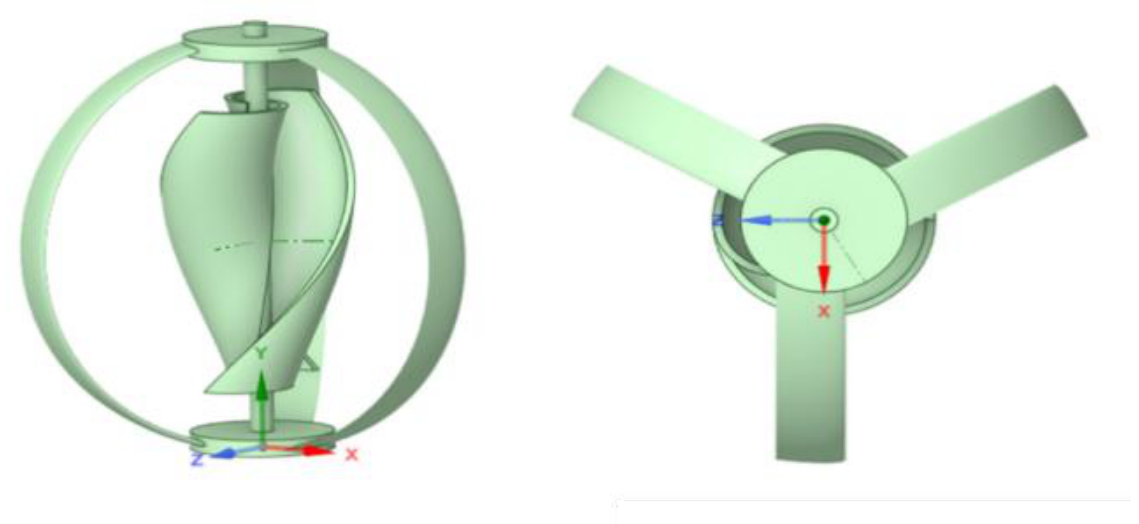
Figure 2.
Configuration of the outer spherical rotor and inner helical Savonius rotor.
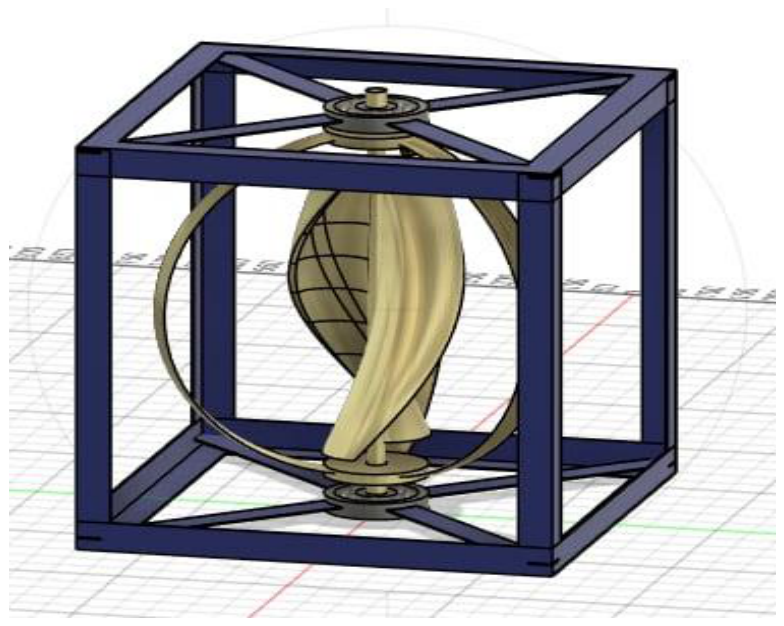
Figure 4.
(a) Shaft formation and cardboard lay-out. (b) Fabrication of Savonius blades using galvanized iron sheets. (c) Riveted Savonius Blade Assembly Attached to the Shaft. (d) Completed prototype of the combined vertical spherical and helical Savonius turbine.
Figure 4.
(a) Shaft formation and cardboard lay-out. (b) Fabrication of Savonius blades using galvanized iron sheets. (c) Riveted Savonius Blade Assembly Attached to the Shaft. (d) Completed prototype of the combined vertical spherical and helical Savonius turbine.
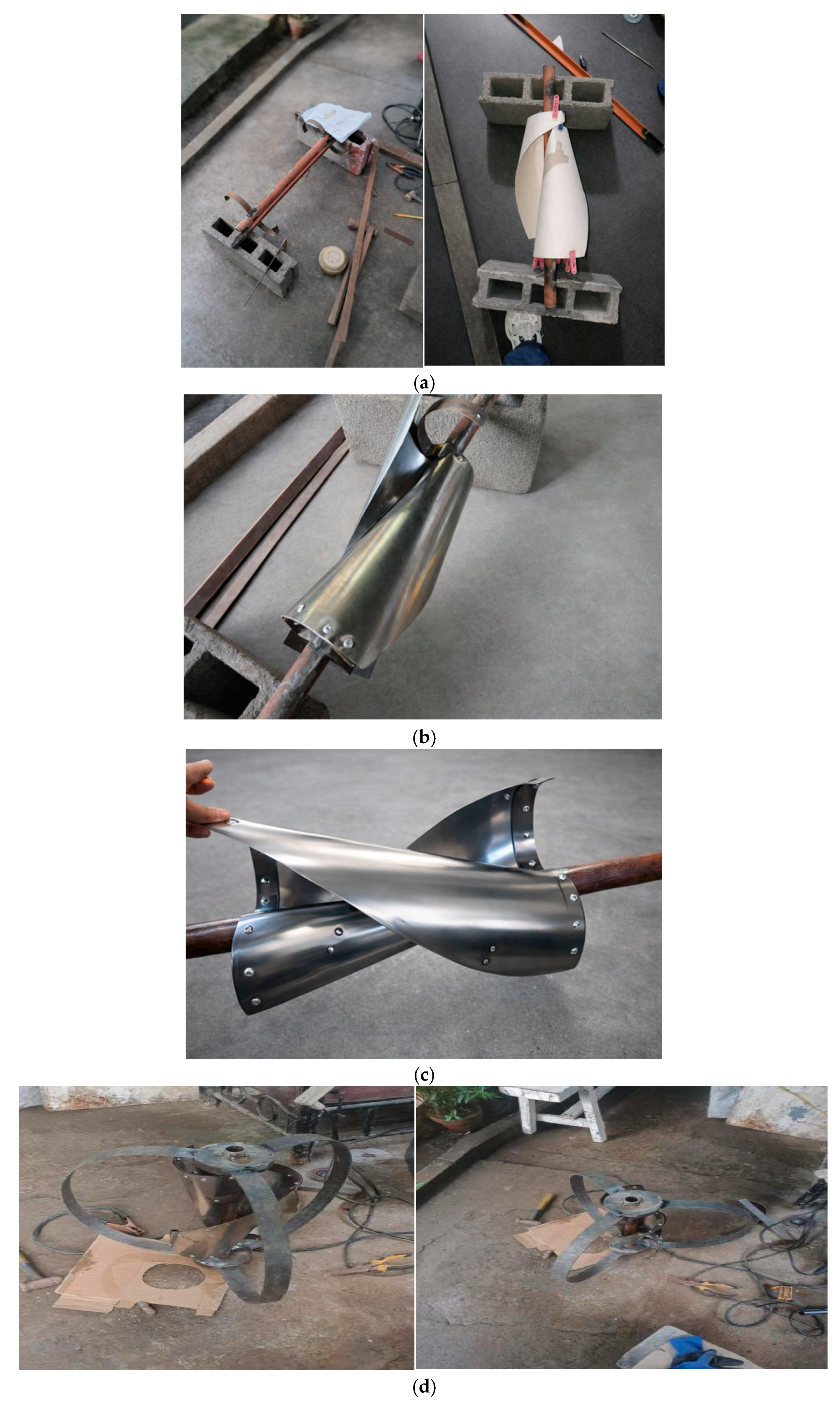
Figure 5.
Location of the experimental testing site at Gubat Coastal Beach, Gubat, Sorsogon, Philippines, along the Pacific Ocean coastline.
Figure 5.
Location of the experimental testing site at Gubat Coastal Beach, Gubat, Sorsogon, Philippines, along the Pacific Ocean coastline.
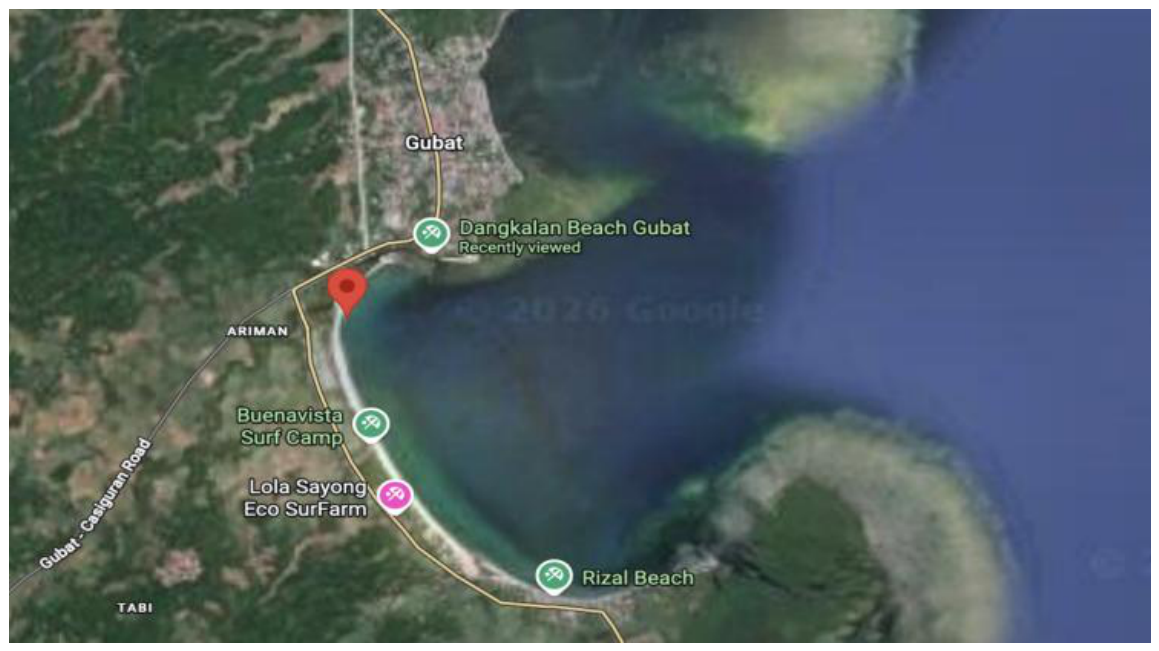
Figure 6.
(a) Prototype mounted on the support frame. (b) PMDC generator connected to the shaft.
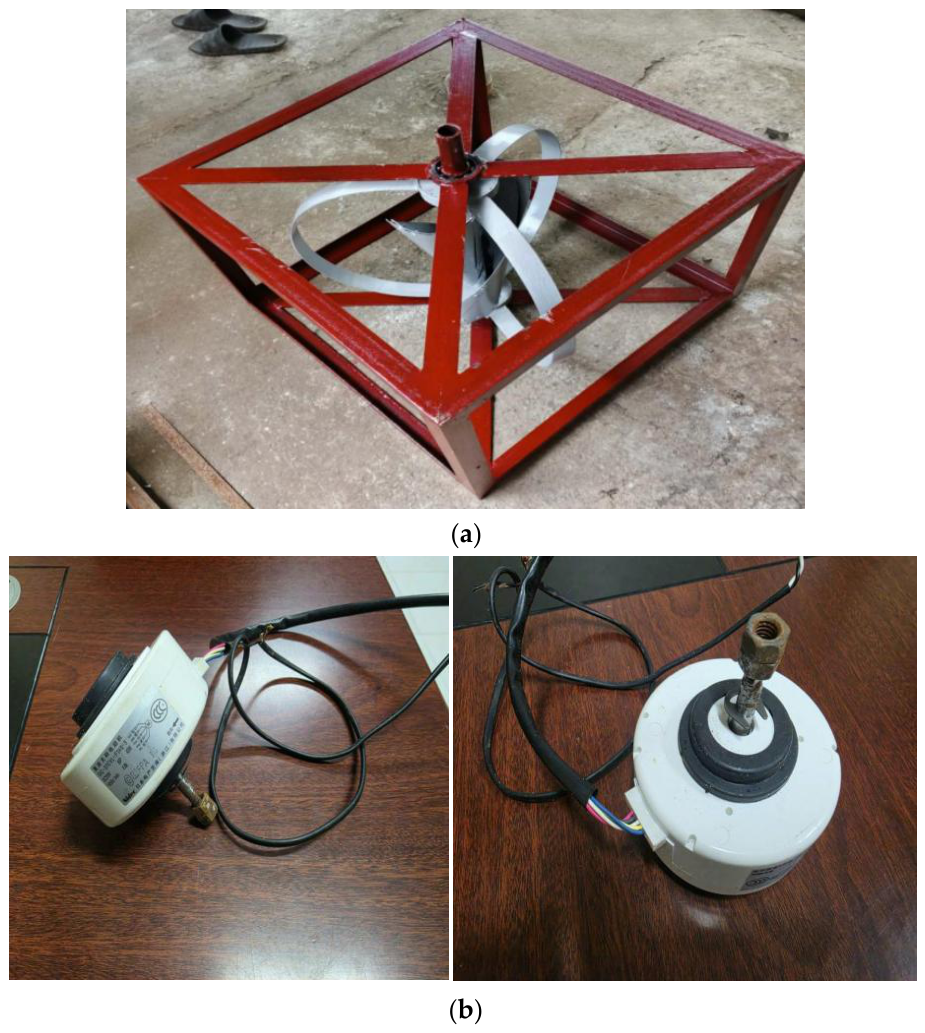
Figure 7.
Velocity contour distribution around the hybrid spherical–helical turbine at different stages of flow development: (a) initial interaction, (b) intermediate stage, and (c) developed flow condition.
Figure 7.
Velocity contour distribution around the hybrid spherical–helical turbine at different stages of flow development: (a) initial interaction, (b) intermediate stage, and (c) developed flow condition.
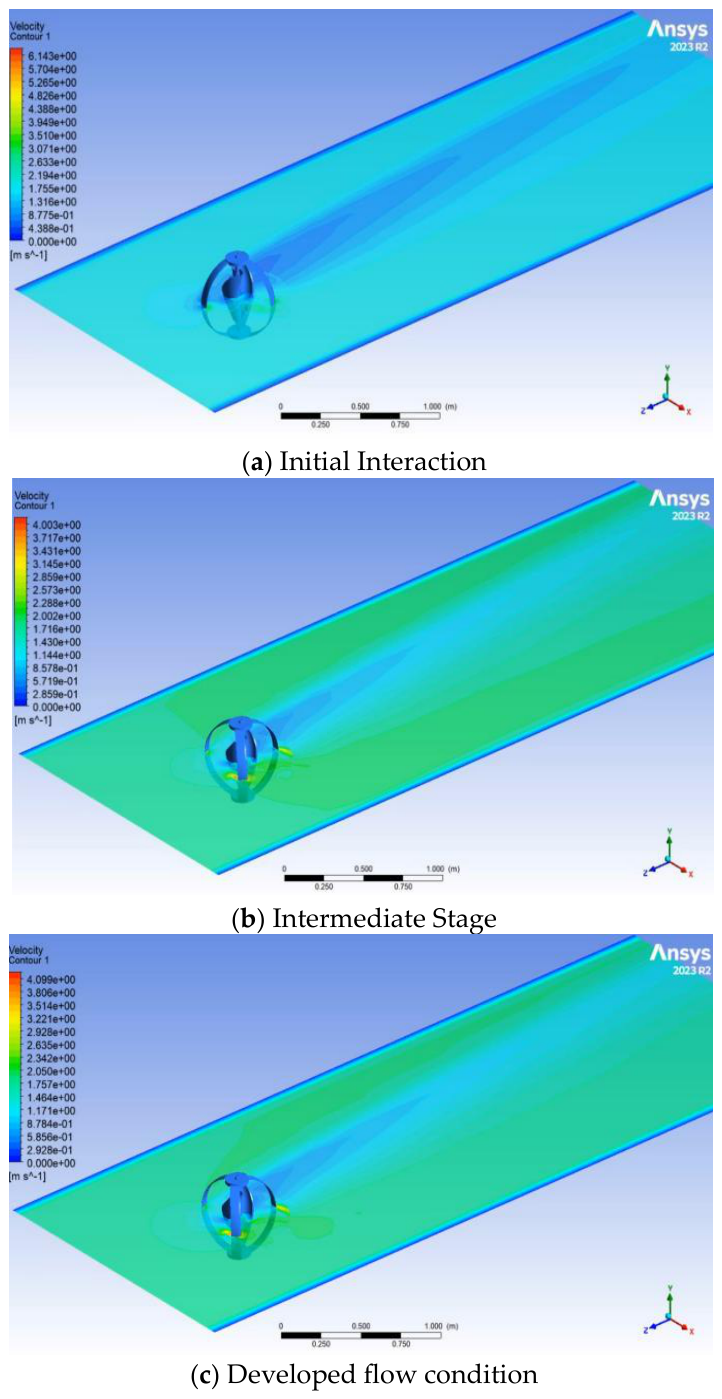
Figure 8.
Transient torque response of the proposed hybrid spherical–helical vertical-axis tidal turbine.
Figure 8.
Transient torque response of the proposed hybrid spherical–helical vertical-axis tidal turbine.
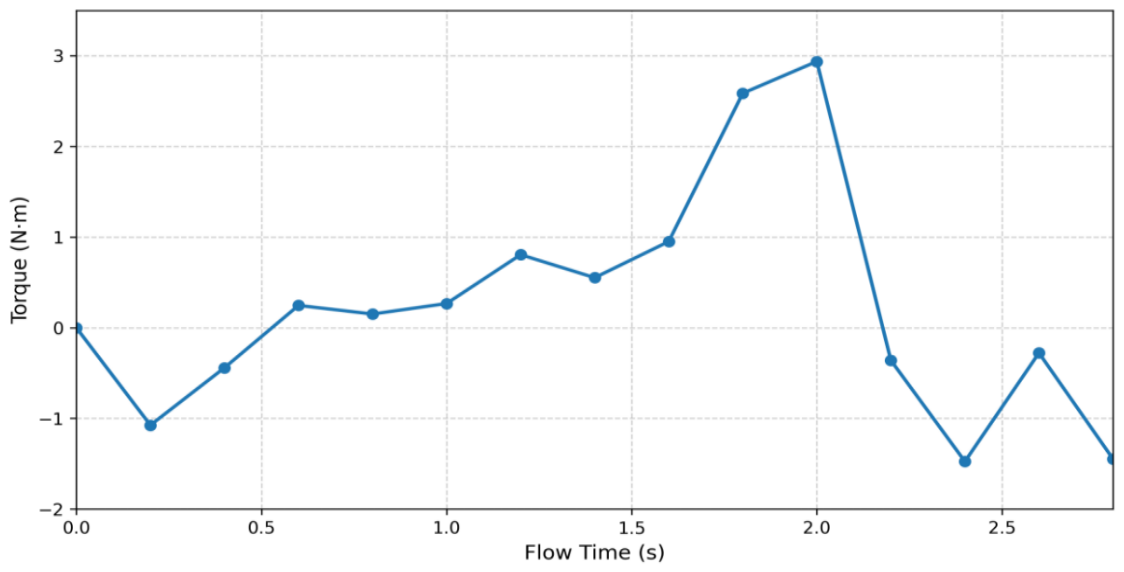
Figure 9.
Transient angular velocity response of the proposed hybrid spherical–helical vertical-axis tidal turbine.
Figure 9.
Transient angular velocity response of the proposed hybrid spherical–helical vertical-axis tidal turbine.
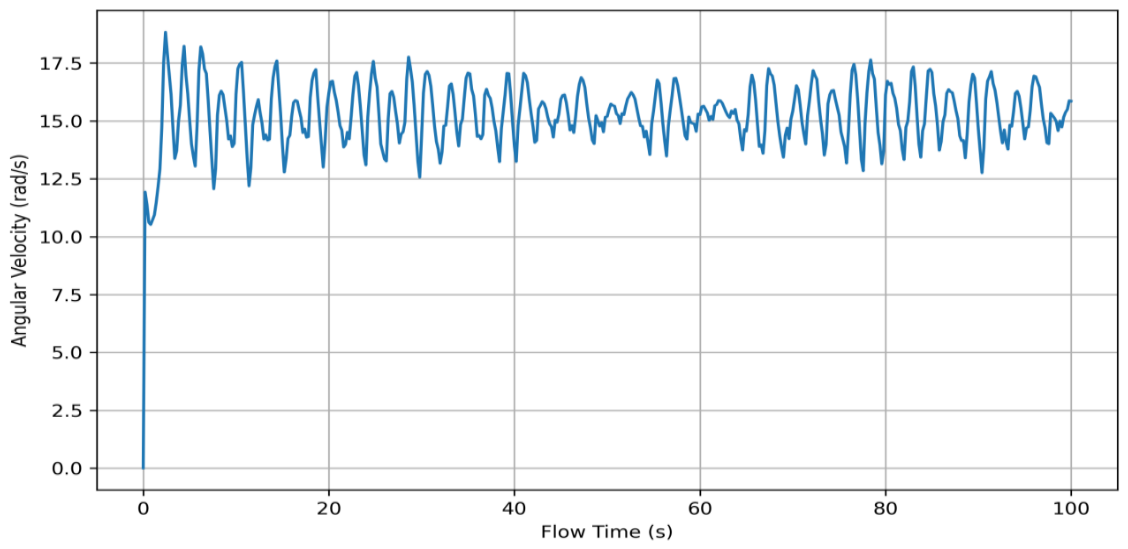
Figure 10.
Variation of power coefficient (Cp) with tip speed ratio (TSR) for the proposed hybrid spherical–helical vertical-axis tidal turbine.
Figure 10.
Variation of power coefficient (Cp) with tip speed ratio (TSR) for the proposed hybrid spherical–helical vertical-axis tidal turbine.
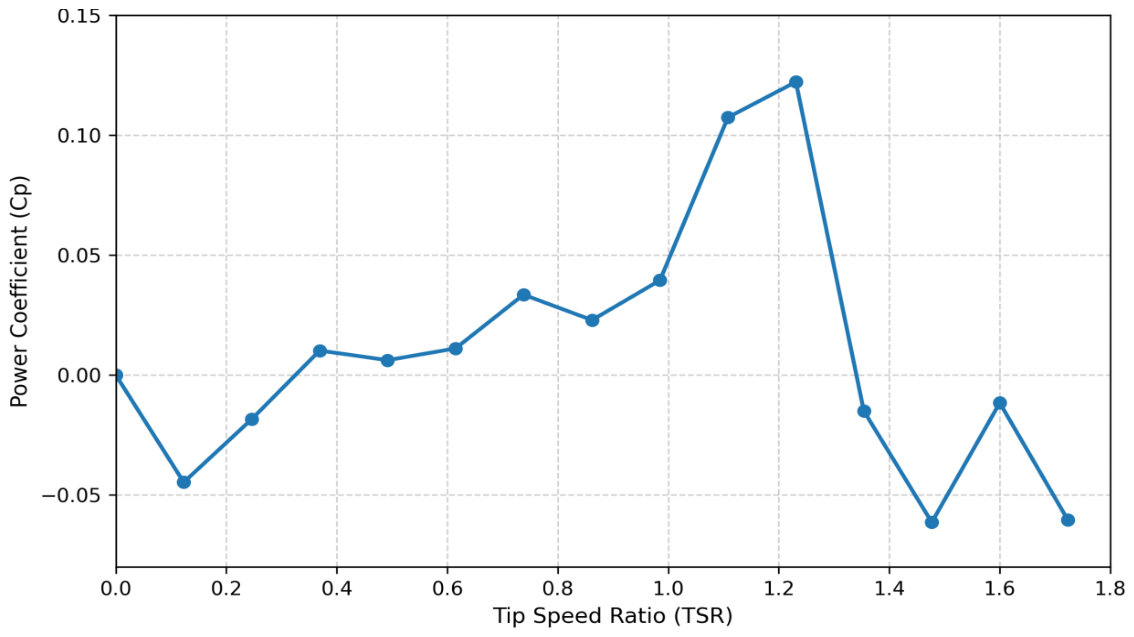
Figure 11.
Variation of torque coefficient (Ct) with tip speed ratio (TSR) for the proposed hybrid spherical–helical vertical-axis tidal turbine.
Figure 11.
Variation of torque coefficient (Ct) with tip speed ratio (TSR) for the proposed hybrid spherical–helical vertical-axis tidal turbine.
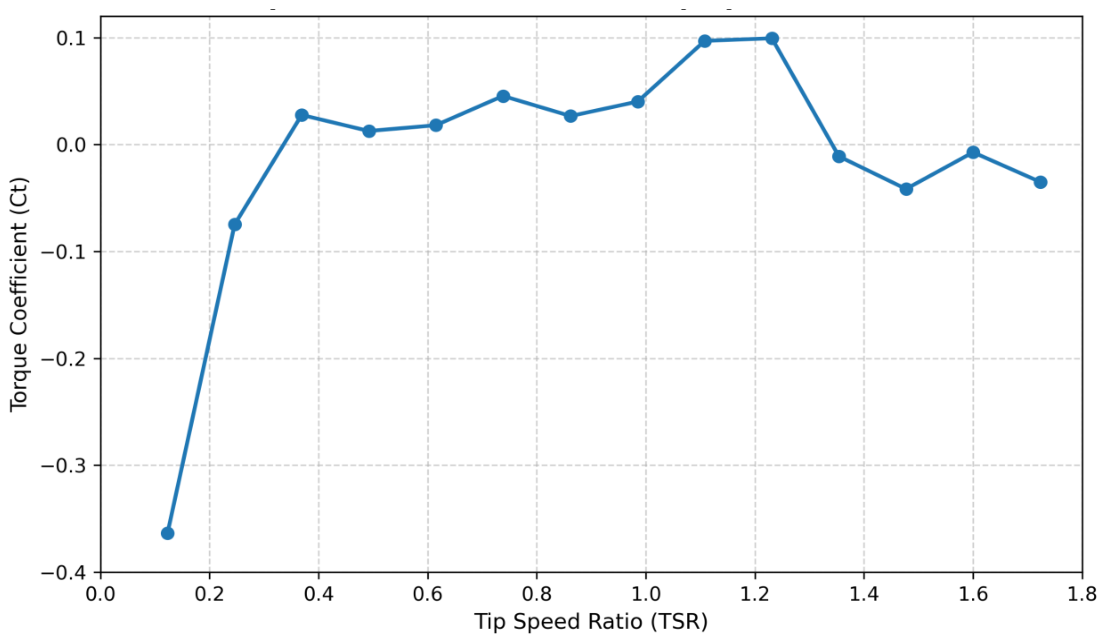
Figure 12.
Fabricated prototype of the proposed hybrid spherical–helical vertical-axis tidal turbine used for experimental validation.
Figure 12.
Fabricated prototype of the proposed hybrid spherical–helical vertical-axis tidal turbine used for experimental validation.
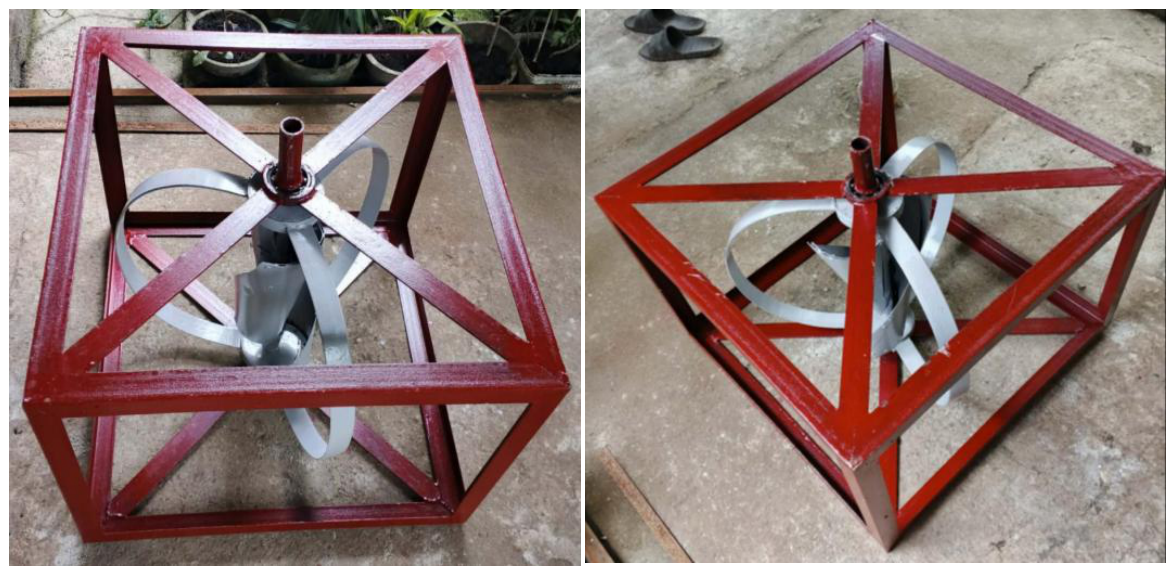
Figure 13.
Comparison between the numerical model and the fabricated prototype used for experimental validation.
Figure 13.
Comparison between the numerical model and the fabricated prototype used for experimental validation.
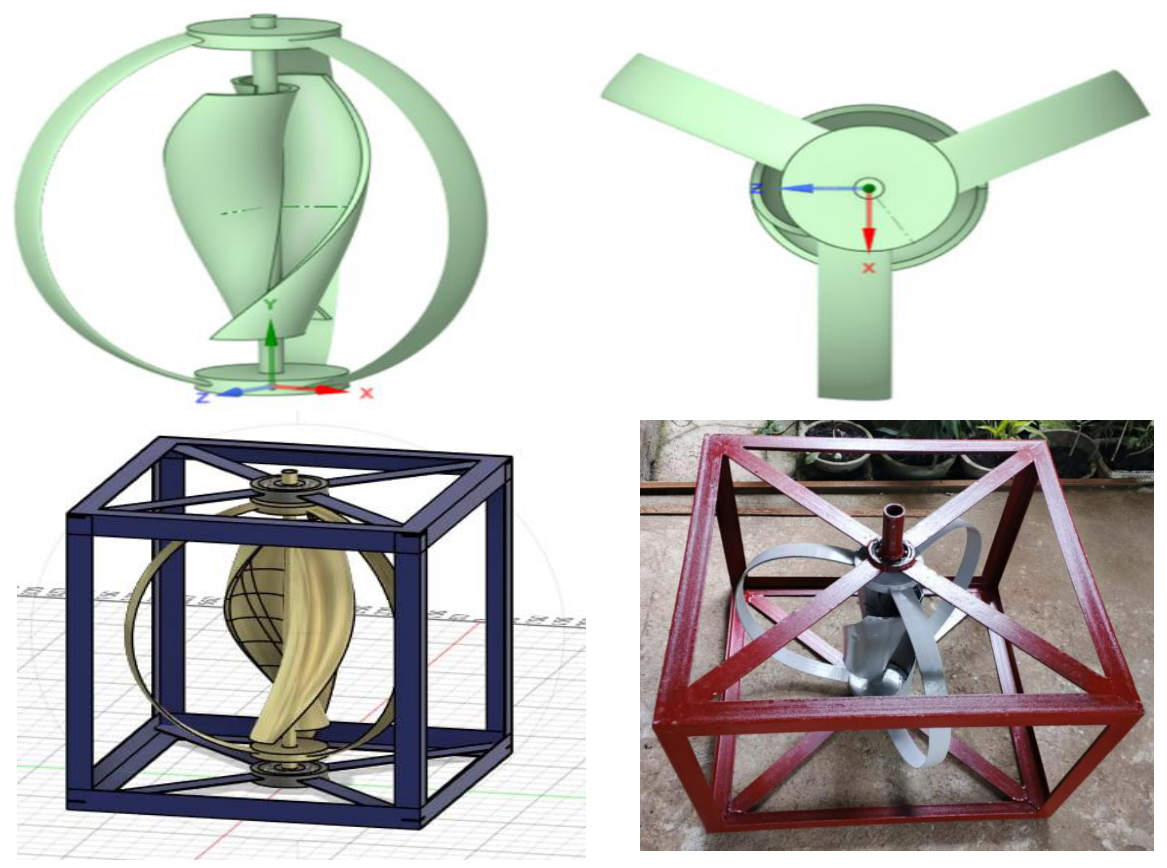
Table 1.
Mesh independence test with varying element counts.
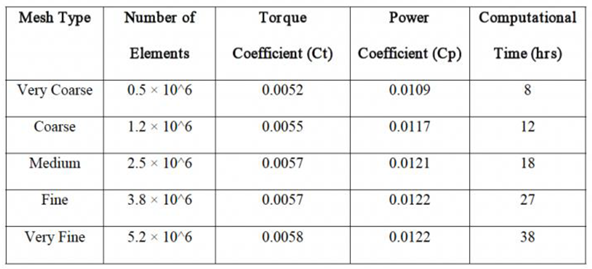 |
Table 2.
Geometric specifications of the fabricated prototype.
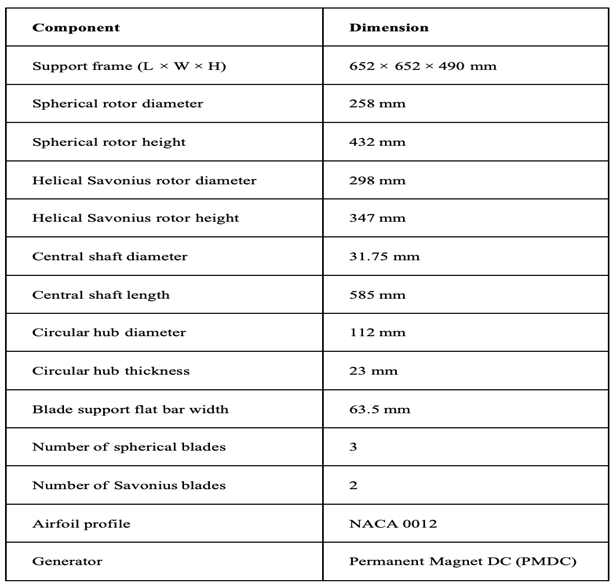 |
Table 4.
Experimental voltage measurements obtained during field testing of the proposed hybrid spherical–helical vertical-axis tidal turbine.
Table 4.
Experimental voltage measurements obtained during field testing of the proposed hybrid spherical–helical vertical-axis tidal turbine.
| Trial No. | Minimum Voltage (V) | Maximum Voltage (V) | Remarks |
|---|---|---|---|
| Trial 2 | 0.01 | 0.01 | Stable voltage output |
| Trial 3 | 0.01 | 0.02 | Increased voltage generation observed |
| Trial 4 | 0.01 | 0.02 | Repeatable electrical output |
Table 5.
Comparison between the numerical predictions and experimental observations for the proposed hybrid spherical–helical vertical-axis tidal turbine.
Table 5.
Comparison between the numerical predictions and experimental observations for the proposed hybrid spherical–helical vertical-axis tidal turbine.
| Performance Parameter | Numerical (CFD) | Experimental | Observation |
|---|---|---|---|
| Turbine rotation | Continuous | Continuous | Good qualitative agreement |
| Angular velocity | 14.34 rad/s (≈137 rpm) | Observed continuous rotation* | Consistent startup behavior |
| Electrical output | Not modeled | 0.01–0.02 V | Confirms mechanical rotation |
| Operating condition | 1.8 m/s uniform flow | Natural coastal current | Environmental variability |
Disclaimer/Publisher’s Note: The statements, opinions and data contained in all publications are solely those of the individual author(s) and contributor(s) and not of MDPI and/or the editor(s). MDPI and/or the editor(s) disclaim responsibility for any injury to people or property resulting from any ideas, methods, instructions or products referred to in the content. |
© 2026 by the authors. Licensee MDPI, Basel, Switzerland. This article is an open access article distributed under the terms and conditions of the Creative Commons Attribution (CC BY) license (http://creativecommons.org/licenses/by/4.0/).
Copyright: This open access article is published under a Creative Commons CC BY 4.0 license, which permit the free download, distribution, and reuse, provided that the author and preprint are cited in any reuse.