

Submitted:
20 July 2026
Posted:
21 July 2026
You are already at the latest version
Abstract
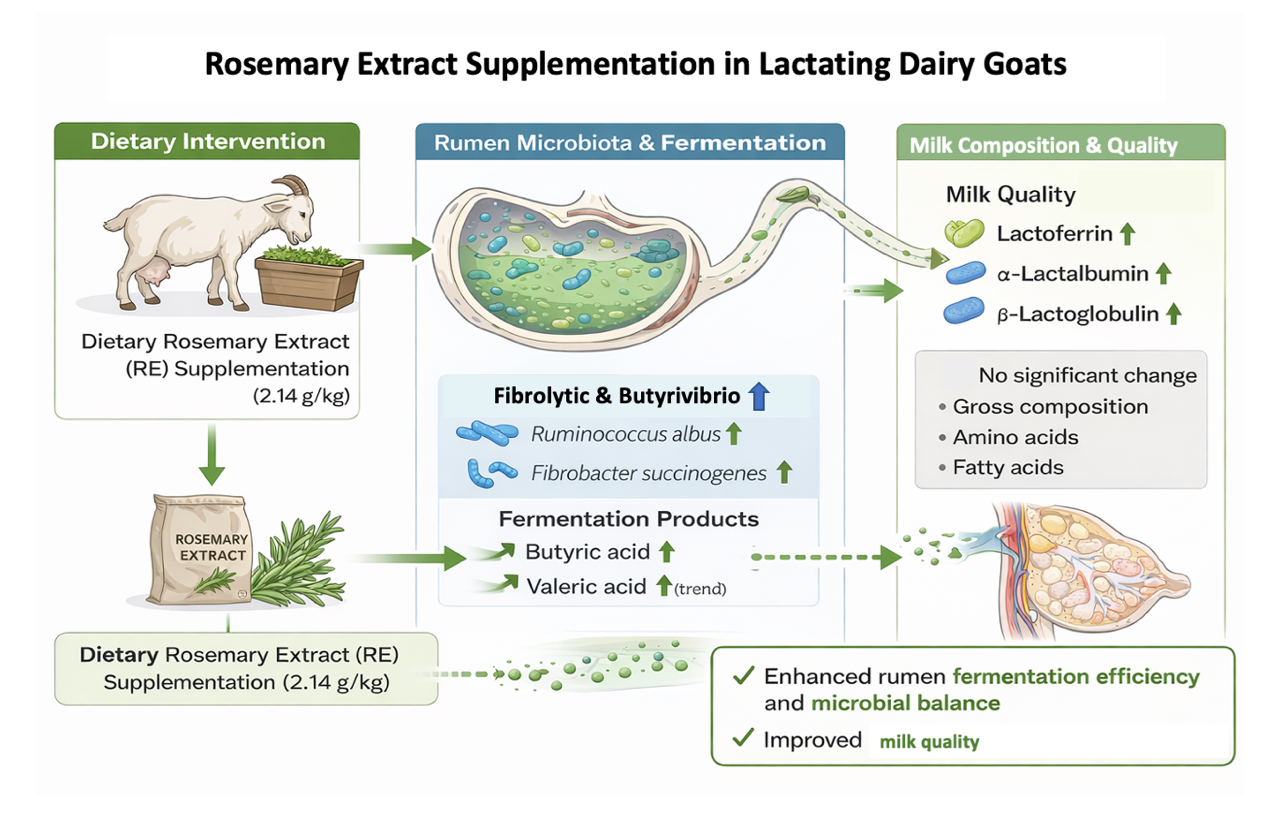
This study investigated whether rosemary extract (RE) supplementation selectively reshapes ruminal butyrate-producing microbiota and enhances functional milk properties in lactating dairy goats. Twenty-four goats were fed a control diet or a diet supplemented with 2.14 g/kg RE (n = 12) during a 42-day feeding trial. Rumen fermentation parameters, bacterial community composition, and milk quality indices - including bioactive proteins, amino acid and fatty acid profiles, and somatic cell count - were analyzed. RE supplementation significantly increased butyrate concentration and tended to elevate valeric acid. The relative abundances of fibrolytic bacteria (Ruminococcus albus and Fibrobacter succinogenes) and butyrate-producing taxa (i.e., Butyrivibrio) were significantly enriched (p < 0.05) in the RE group. Notably, dietary RE markedly elevated milk bioactive proteins, including lactoferrin, α-lactalbumin, and β-lactoglobulin (p < 0.05), and reduced somatic cell count (p < 0.05). These findings reveal a microbiota-mediated pathway through which RE enhances the functional quality of goat milk and support the potential of phytogenic feed additives.
Keywords:
rosemary extract
; milk quality
; rumen fermentation
; rumen microbial community
; dairy goat
; bioactive milk proteins
1. Introduction
Goat milk is recognized as a highly nutritious dairy source because of its superior digestibility, balanced fatty acid composition, and abundance of bioactive compounds, which provide significant functional and health benefits [1]. The dairy goat industry is transitioning from quantity-driven production to a quality- and functionality-oriented model, with increasing emphasis on the nutritional profile, bioactive constituents, and health-promoting attributes of goat milk [2]. Previous studies have demonstrated that the rumen bacterial composition of dairy cattle is closely linked to milk quality [3]. Therefore, it is necessary to develop viable strategies that improve rumen fermentation and milk composition to enhance both milk quality and production efficiency.
Plant-derived feed additives, such as mulberry leaf, rosemary extract (RE), garlic and citrus extract, have attracted growing attention as sustainable alternatives to antibiotics due to their natural bioactivity and multifunctionality [4,5]. Among them, RE is rich in polyphenolic compounds such as rosmarinic acid and carnosic acid, which exhibit strong antioxidant, anti-inflammatory, and antimicrobial properties [6]. These compounds can regulate rumen microbial ecology by suppressing methanogenic archaea and proteolytic bacteria while stimulating fibrolytic and propionate-producing microbes [7], resulting in improved overall fermentation efficiency and enhanced production of volatile fatty acids (VFAs) [8,9]. Several VFAs, such as acetate, propionate, and butyrate, are known to play a key role in milk fat and lactose synthesis [10]. Specifically, acetate and butyrate support de novo fatty acid synthesis, while propionate serves as the main glucose source for lactose production. Additionally, rosemary polyphenols and other phytobiotics can also enhance fermentation balance, improve nutrient utilization, and promote milk fat and protein synthesis in ruminants [11,12]. Previous studies showed that dietary supplementation of RE increased VFAs concentration, enhanced antioxidant capacity, and optimized milk fatty acid profiles [8,13].
Although rosemary extract has been reported to improve rumen fermentation and milk production in ruminants, little is known about whether it selectively modulates butyrate-producing microbiota and whether such microbial shifts are functionally linked to bioactive milk proteins and mammary health. The potential of RE to enhance the functional quality of goat milk through targeted ruminal microbial modulation remains poorly understood.
Therefore, this study aimed to investigate the effects of RE supplementation on rumen fermentation parameters, microbial community, and milk components in lactating dairy goats. We hypothesized that RE supplementation would improve rumen fermentation efficiency and microbial balance, thereby enhancing substrate availability for the synthesis of milk fat and lactose, and ultimately improving milk quality. This work provides new insights into how RE supplementation influences rumen metabolism and milk functionality through nutritional and microbial pathways, thereby supporting sustainable dairy goat production.
Functional milk proteins such as lactoferrin, α-lactalbumin and β-lactoglobulin possess recognized antimicrobial, immunomodulatory and nutritional benefits for human consumers [14,15]. Therefore, nutritional strategies that enrich these bioactive milk components may contribute not only to animal productivity and welfare but also to consumer health within the One Health framework. In this context, exploring how plant-derived feed additives modulate rumen microbiota to enhance functional milk properties represents a promising approach to sustainable dairy goat production.
2. Materials and Methods
2.1. Animal Ethics Statement
Experimental protocols were reviewed and approved by the Animal Care and Use Committee of the College of Animal Science and Technology, Hunan Agricultural University, Changsha, China (Approval No. 20190718001, approved on 18 July 2019).
2.2. Experimental Animals and Diets
The rosemary extract (RE) used in this study was a commercial standardized product supplied by Hunan Microlta Biotechnology Co., Ltd. (Changsha, China). The main constituents and their contents are as follows: rosmarinic acid 5%, moisture 5%, ash 10%, polyphenols 5%, and caffeic acid 1%.
Twenty-four healthy Xinnong Saneng dairy goats (24-28 months) with comparable parity, lactation stage, milk yield and body weight were randomly divided into two groups (n = 12 per group, 3 goats per pen, 4 pens total).
Each goat was individually identified and repeatedly sampled throughout the experiment. The control group was fed a total mixed ration (TMR) formulated according to the nutritional requirements for dairy goats established by the National Research Council (NRC, 2007). The composition and nutrient levels are provided in Table 1. The experimental group was fed the same TMR supplemented with 2.14 g/kg rosemary extract (RE) (Hunan Microlta Technology Co., Ltd., Changsha, China).
2.3. Animal Management
The experiment lasted for 52 days, including a 10-day preliminary trial period and a 42-day formal examination period. The dairy goats were raised in four pens of three animals each and fed TMR twice a day at 08:00 and 16:00, which ensured that there was 5% leftover feed in each pen. All goats had free access to feed and water. Milking was performed at 07:00 and 18:00 every day. All other management practices followed the original regulations of the goat farm. The feeding trial was conducted once using a single experimental cohort.
2.4. Collection of Blood Samples
Blood samples (10 mL) were collected from the jugular vein of each dairy goat prior to morning feeding on days 21 and 42 of the formal trial. Blood samples were collected repeatedly from the same individual goats at both sampling time points. Five milliliters were transferred into regular vacuum blood collection tubes, centrifuged at 633×g for 15 min, and 1 mL of serum was aliquoted into 1.5 mL centrifuge tubes and stored at -20°C for subsequent analysis of serum biochemical, antioxidant and immune indicators. The remaining 5 mL was placed in ethylenediaminetetraacetic acid (EDTA) anticoagulant tubes and stored at 4°C to determine blood cell parameters within 2 hours.
The serum total protein (TP), albumin(ALB), total cholesterol (TC), triglyceride (TG), high-density lipoprotein (HDLC), low-density lipoprotein (LDLC), glucose (GLU), urea nitrogen (UN) contents and aspartate aminotransferase (AST) and alkaline phosphatase (ALP) activities were measured using an automatic biochemical analyzer (Excellence 450, Shanghai Kehua, China). These indicators were estimated according to Ling [16].
2.5. Chemical Analyses of Milk
On days 21 and 42, an additional 100 mL milk sample was collected similarly from each goat during the scheduled milking period for chemical composition analysis. Milk samples were repeatedly collected from each goat throughout the experiment. After thorough mixing, a 50 mL subsample was taken, mixed with bronopol as a preservative in a 50 mL centrifuge tube, and stored at 4°C for routine chemical composition analysis. The remaining 50 mL was divided into 10 mL aliquots and stored at -80 ℃ for fatty acids, amino acids and bioactive compounds analysis in accordance with Ling [16].
Nutritional compositions of goat milk samples (lactose, fat, protein, urea nitrogen and non-fat solids) were determined using the FOSS milk composition analyzer (Milko ScanTM FT6000, FOSS, Denmark). Amino acids and fatty acids were analyzed according to Park [17] and Yin [18], respectively, using an amino acid analyzer (Hitachi L8900, Japan) and Agilent GC7890A (Agilent Technologies, USA). The contents of lactoferrin (LF), α-lactalbumin (α-La), and β-lactoglobulin (β-LG) in goat milk were determined using an enzyme-linked immunosorbent assay (ELISA) kit (Jiangsu Yutong Biotechnology Co., Ltd., Jiangsu, China). All ELISA measurements were performed in duplicate.
2.6. Collection of Rumen Fluid
On the morning of day 42 of the formal trial, six dairy goats were randomly selected from each group for rumen fluid collection. Rumen fluid samples were collected once from six randomly selected goats in each group on day 42. A soft catheter attached to an injection needle was inserted orally into the rumen of each selected dairy goat. The collected rumen fluid was filtered through four layers of gauze. The extracted rumen fluid was divided into two parts. One part was placed in a clean disposable paper cup for immediate pH measurement using a portable pH meter (AS700, Shanghai Sanxin Instrument Factory). The other part was aliquoted into five 2 mL cryotubes and stored at -80 ℃ for subsequent analysis of rumen fermentation parameters and rumen microorganisms, as described in the following section.
2.7. Measurement of Ruminal Fermentation and Microbial Community
Ammonia nitrogen (NH3-N) was determined using the colorimetric method described by Feng [19]. For analysis of VFAs, 1.5 mL of rumen fluid was mixed with 0.15 mL of 25% metaphosphate in a centrifuge tube and frozen at -20℃ overnight. After thawing, samples were centrifuged at a speed of 10000 × g for 10 min. Then, these samples were drawn using a 1 mL syringe filtered through a 0.45 μm microporous filter membrane (nylon series) and analyzed by gas chromatography (GC-2010 Plus, Shimadzu, Japan). All chromatographic analyses were performed in duplicate.
Initially, total microbial DNA was extracted from the rumen fluid samples. The quality of DNA extraction was assessed by 1% agarose gel electrophoresis (5 V/cm, 20 min). DNA purity and concentration were measured using a NanoDrop 2000 spectrophotometer (Thermo Fisher Scientific, USA). The V3–V4 regions of the 16S rRNA gene were amplified using primers 338F (5′ - ACTCCTACGGGAGGCAGCAG - 3′) and 806R (5′-GGACTACHVGGGTWTCTAAT-3′) on an ABI GeneAmp® 9700 thermal cycler. PCR conditions were as follows: initial denaturation at 95°C for 3 min; 27 cycles at 95°C for 30 s, 55°C for 30 s, 72°C for 45 s; followed by a final extension at 72°C for 10 min and holding at 10°C.
PCR products were pooled, confirmed on 2% agarose gel, and purified using the AxyPrep DNA Gel Extraction Kit (Axygen, USA). Final products were quantified using the Quantus™ Fluorometer (Promega, USA) and sequenced on the Illumina MiSeq PE300 platform. PCR amplification was performed in duplicate.
2.8. Statistical Analysis
Each biological sample represented one biological replicate. Repeated measurements were obtained from the same animals on days 21 and 42. Instrumental analyses were conducted according to the manufacturers' protocols, and duplicate technical measurements were averaged before statistical analysis.
Operational Taxonomic Units (OTUs, 97% similarity threshold) were clustered using UPARSE (v7.0.1090), and representative sequences were taxonomically classified using RDP Classifier (v2.11) with the 16S rRNA reference database. The community composition of the samples was statistically analyzed at the phylum and genus levels. The beta diversity distance matrix was calculated using QIIME (v 1.9.1) software and visualized using R software. Alpha diversity and functional predictions were performed using Mothur (v 1.30.2) and Tax4Fun (v 0.3.1) software, respectively.
Statistical analyses were performed using the PROC MIXED of SAS software (version 9.4; SAS Institute Inc., Cary, NC, USA).
For rumen fermentation parameters, serum biochemical indices, bacterial alpha-diversity indices, and predicted functional pathways, comparisons between the two groups were performed using independent-samples t-test after checking normality of data and homogeneity of variance. Beta diversity was evaluated using principal component analysis (PCA) based on Bray-Curtis distances generated in QIIME. Differences in bacterial relative abundance at the genus level were assessed using Welch's t-test or Wilcoxon rank-sum test, as appropriate. Spearman's correlation analysis was used to evaluate associations between ruminal bacterial taxa and fermentation parameters. Functional prediction analysis was conducted using Tax4Fun, and predicted pathway abundances were compared using Student's t-test.
Milk quality indices were analyzed using a linear mixed-effects model. Sampling day (Days 21 and 42) was treated as a repeated measure. Treatment, sampling day, and their interaction (treatment × sampling day) were included as fixed effects, while individual goats were included as a random effect.
The statistical model was:
where Yijk is the dependent variable; μ is the overall mean; Ti is the fixed effect of dietary treatment (i=1,2); Dj is the fixed effect of sampling day (j=21,42); Ti × Dj represents the interaction between treatment and sampling day; Gk (k=1,…,24) is the random effect of the individual goat; and εijk is the residual error.
Yijk=μ + Ti + Dj + (Ti × Dj) + Gk + εijk
Least-squares means were compared using Tukey's multiple comparison test. Results are presented as least-squares means ± SEM. Differences were considered statistically significant at p < 0.05, whereas 0.05 ≤ p < 0.10 was considered a statistical trend.
3. Results
3.1. Effects of RE Supplementation on Ruminal Fermentation Parameters in Dairy Goats
RE supplementation significantly increased butyrate concentration (p < 0.05), whereas valeric acid tended to increase (p = 0.05). No significant differences were observed for NH3-N, acetate, propionate, isobutyrate, isovalerate, total volatile fatty acids (TVFA), pH, or the acetate-to-propionate ratio (p > 0.05).

Table 2.
Effects of RE supplementation on ruminal fermentation parameters of dairy goats (n = 6).
| Items | CON | RE | SEM | p-value |
| pH | 6.83 | 6.79 | 0.06 | 0.57 |
| NH3-N, mg/100 mL | 17.42 | 16.80 | 0.50 | 0.40 |
| Acetic acid, mg/100 mL | 45.82 | 47.25 | 3.25 | 0.76 |
| Propionic acid, mg/100 mL | 15.42 | 15.31 | 0.78 | 0.92 |
| Butyric acid, mg/100 mL | 11.29a | 13.55b | 0.58 | 0.02 |
| Isobutyric acid, mg/100 mL | 1.33 | 1.54 | 0.10 | 0.16 |
| Valeric acid, mg/100 mL | 1.05 | 1.17 | 0.04 | 0.05 |
| Isovaleric acid, mg/100 mL | 2.31 | 2.47 | 0.13 | 0.40 |
| TVFA, mg/100 mL | 77.22 | 81.29 | 4.17 | 0.51 |
| Acetate/Propionate ratio | 2.99 | 3.06 | 0.11 | 0.64 |
CON = control, RE = rosemary extract supplementation, SEM = standard error of the mean. a, b Within a row, means with different superscript letters differ at p < 0.05.
3.2. Effects of RE Supplementation on the Rumen Microbial Community
The Venn diagram summarizes the the numbers of common and unique OTUs among the groups. A total of 2,335 operational taxonomic units (OTUs) were identified in the RE group and 2,039 in the control group, with 1,818 OTUs shared between the two groups (Figure 1A). The control group had 221 unique OTUs, representing 8.65% of its total OTUs, while the RE group exhibited 517 unique OTUs, accounting for 20.23% of its total.
As shown in Table 3, the RE group exhibited significantly greater bacterial richness and diversity, as indicated by elevated Shannon, ACE, and Chao indices (p < 0.05), whereas a decreasing trend was observed for the Simpson index (0.05 < p < 0.10).
Principal component analysis (PCA) revealed a clear separation between the control and RE groups based on microbial community composition (Figure 1B), indicating that RE supplementation effectively altered the rumen bacterial community composition. The proportions of variance explained by principal component 1 (PC1) and principal component 2 (PC2) for the differences in sample composition were 15.23% and 12.41%, respectively.
At the phylum level (Figure 1C), the dominant phyla in both groups included Firmicutes, Bacteroidota, and Proteobacteria, accounting for approximately 94.66% of the total bacteria. At the genus level (Figure 1D), 307 genera were identified, with 25 showing relative abundance above 1%. Compared to the control group, RE supplementation significantly increased the relative abundances of Succiniclasticum and norank_f__UCG-011 (p < 0.05) (Figure 2). In addition, there was a trend toward increased abundance of norank_f_norank_o_Clostridia_UCG-014 (p = 0.091) and decreased Ruminococcus abundance in the RE group (p = 0.075). No significant differences were observed in the relative abundances of other genera between the two groups (p > 0.05).
At the genus level, Welch’s t-test revealed significant differences in the relative abundance of multiple rumen bacterial taxa between the CON and RE groups (Figure 3). RE supplementation significantly increased the abundances of several fermentation-related genera, including Butyrivibrio, Saccharofermentans, Eubacterium_ruminantium_group, and multiple Lachnospiraceae-related taxa (Lachnospiraceae_XPB1014_group, Lachnospiraceae_AC2044_group, and norank_f__Lachnospiraceae) All of these differences were statistically significant (p < 0.05).
3.3. The Correlations Between Rumen Microbial Community and Fermentation Parameters
Correlation analyses were performed to elucidate the relationships between abundances at the phylum and genus level and key rumen fermentation parameters. At the phylum level, valeric acid concentration was positively correlated with Proteobacteria (r = 0.578, p < 0.05) and negatively correlated with unclassified_k__norank_d__Bacteria (r = -0.581, p < 0.05). The acetate-to-propionate ratio (A:P) was positively correlated with unclassified_k__norank_d__Bacteria (r = 0.741, p = 0.006) and WPS-2 (r = 0.705, p = 0.010). Rumen pH showed a positive correlation with Spirochaetota (r = 0.656, p = 0.020), while NH3-N concentration was negatively correlated with Actinobacteriota (r = -0.685, p = 0.014) (Figure 4A).
At the genus level, total VFA concentration was positively correlated with norank_f__Muribaculaceae (r = 0.622, p = 0.031) and unclassified_Clostridia_UCG-014 (r = 0.594, p = 0.042). Butyrate was positively correlated with unclassified_UCG-010 (r = 0.643, p = 0.024), while isobutyrate was positively associated with Acetitomaculum (r = 0.629, p = 0.028). Valerate correlated positively with unclassified_UCG-010 (r = 0.671, p = 0.016) and negatively with Prevotellaceae_UCG-001 (r = -0.601, p = 0.039). Isovalerate was negatively correlated with Prevotella (r = -0.620, p = 0.031). The acetate-to-propionate ratio (A:P) was negatively associated with Faecalibacterium (r = -0.762, p = 0.004) and positively with Succinivibrio (r = 0.609, p = 0.035). For NH3-N, negative associations were observed in multiple genera, including Christensenellaceae_R-7_group, Lachnospiraceae_NK3A20_group, Quinella, Rikenellaceae_RC9_gut_group, unclassified_Lachnospiraceae, and unclassified_Selenomonadaceae (p < 0.05) (Figure 4B).
3.4. Predicted Functional Profiles of Rumen Microbiota
Tax4Fun functional prediction analysis revealed that RE supplementation enriched several Kyoto Encyclopedia of Genes and Genomes (KEGG) pathways related to carbohydrate metabolism and butanoate metabolism. Notably, pathways associated with pyruvate metabolism, propanoate metabolism, and butanoate metabolism exhibited higher predicted abundances in the RE group, consistent with the observed enrichment of butyrate-producing taxa and the increased ruminal butyrate concentration. These predicted functional shifts support the hypothesis that RE selectively modulates microbial metabolic capacity toward enhanced short-chain fatty acid production.
3.5. Effects of RE Supplementation on Milk Quality
Supplementation with RE had no significant effects on milk fat (day 42), protein, lactose, non-fat dry matter, dry matter, or milk urea nitrogen on either day 21 or day 42 (p > 0.05). In contrast, somatic cell count (SCC) was significantly lower in the RE group compared with the control group at both sampling days (p < 0.001).
The contents of functional proteins in the milk of dairy goats were also shown in Table 4. On days 21 and 42, β-LG, α-La and LF were significantly higher in the RE group than in the control group (P < 0.05). An increase in the concentration of these functional proteins was observed between days 21 and 42. No significant interaction was observed between RE supplementation and sampling time for any of the measured variables (p > 0.05).
3.6. Effects of RE Supplementation on Fatty Acids Composition of Goat Milk
The fatty acid composition of goat milk was shown in Table 5. On day 21, the proportions of C18:0 and C20:0 were higher in the RE group than in the control group (p < 0.05), whereas C14:0 and C14:1 were lower(p < 0.05). On day 42, RE supplementation increased C4:0 and C6:0 compared with the control group. There were no significant differences in the proportions of other milk fatty acids between the two groups (p > 0.05).
3.7. Effects of RE Supplementation on the Amino Acid Profile of Goat Milk
As shown in Table 6, supplementation with RE had no significant effect on the amino acid content of goat milk on both sampling days (p > 0.05). No significant interaction was observed between treatment and sampling time (p > 0.05).
3.8. Effects of RE Supplementation on Blood Biochemistry
The biochemical indicators of goat blood serum are shown in Table 7. On day 42, the total protein content in the RE group was significantly lower than that in the control group (p < 0.05). No differences were observed in other biochemical parameters at either day 21 or 42 (p > 0.05).
4. Discussion
4.1. Effects of RE Supplementation on Rumen Fermentation and Microbiota
Butyrate serves as a primary energy source for rumen epithelial cells and plays a critical role in maintaining epithelial growth, tight junction integrity, and barrier function [20]. Beyond its local energetic effects, butyrate exerts systemic anti-inflammatory and immunomodulatory actions by inhibiting histone deacetylases and suppressing pro-inflammatory cytokine production [21]. In the present study, RE supplementation selectively increased ruminal butyrate and tended to elevate valeric acid, indicating targeted modulation of specific fermentation pathways rather than a non-specific enhancement of overall fermentation. This selective shift may be attributed to rosemary polyphenols, which can alter rumen microbial composition and metabolic networks. Multi-omics evidence suggests that rosemary extract reshapes acetyl-CoA–centered lipid metabolic pathways, preferentially promoting C4–C5 VFA production under stable overall fermentation conditions [22,23]. Furthermore, RE significantly enriched well-recognized butyrate-producing taxa, particularly Butyrivibrio and members of the Lachnospiraceae family. Butyrivibrio is a major butyrate producer in the rumen, actively involved in carbohydrate and fiber fermentation, and its enrichment may enhance epithelial energy supply and strengthen the gut barrier [24]. Overall, these results suggest that RE fine-tunes rumen fermentation toward improved epithelial health and barrier integrity, which may subsequently influence mammary gland status through the gut–mammary axis.
In addition, RE supplementation significantly altered ruminal microbiota composition by increasing bacterial diversity and selectively enriching genera associated with both acetate and butyrate metabolism, such as Succiniclasticum, Clostridia_UCG-014, and UCG-010. The increased abundance of Succiniclasticum, a succinate-utilizing bacterium, likely reflects higher succinate availability and a more stable fermentation environment. Succiniclasticum converts succinate into propionate, potentially improving glucose availability for lactose and protein synthesis [25]. However, the unchanged milk protein concentration in the present study suggests that the enhanced glucose supply was not sufficient to alter bulk protein synthesis under the current experimental conditions. The co-enrichment of butyrate producers and succinate utilizers suggests that RE promotes a functionally complementary microbial community rather than simply stimulating individual taxa. These microbial shifts may provide a plausible mechanistic link between RE supplementation and the elevated levels of α-La, β-LG, and LF observed in goat milk, potentially mediated through improved rumen epithelial health and reduced systemic inflammatory tone, rather than through direct substrate enhancement alone.
Furthermore, correlation analyses supported the functional link between microbial shifts and fermentation outcomes. Both butyrate and valerate were positively correlated with unclassified UCG-010, whereas valerate was negatively correlated with Prevotellaceae UCG-001, implying that RE favors specific microbial modules linked to C4–C5 VFA formation without disturbing dominant acetate- or propionate-related pathways. Importantly, the enrichment of butyrate-producing bacteria such as Clostridia_UCG-014 and UCG-010 may enhance epithelial integrity and exert anti-inflammatory effects via the gut–mammary axis [26,27,28]. Although direct microbial–mammary correlations were not established in this study, the concurrent reduction in somatic cell count and increase in bioactive milk proteins strongly suggest that ruminal microbial modulation may influence mammary health status through systemic mediators such as butyrate and reduced inflammatory tone. Although the concurrent increase in butyrate-producing taxa and milk bioactive proteins suggests a microbiota-mediated mechanism, causality cannot be established from the present dataset.
4.2. Effect of RE Supplementation on Milk Quality
Supplementation with RE exerted no significant effects on the major milk components, including fat, protein, and total solids, indicating that RE did not modify basal milk synthesis under physiological conditions, which is in line with studies showing that phytogenic feed additives often modulate milk biofunctionality rather than gross composition [29]. In contrast, Chiofalo [30] reported that RE supplementation in dairy sheep increased milk yield and the concentrations of fat, protein, casein, and lactose, highlighting that the effect of RE supplementation on milk products may depend on species, diet composition, and dosage. Mammary inflammation is associated with higher SCC because polymorphonuclear leukocytes could infiltrate the gland [31]. In this study, SCC was lower in the RE group, suggesting that RE may exert anti-inflammatory or antimicrobial effects in the udder, which may occur through immune system modulation or lowering the risk of subclinical mastitis [29].
Moreover, RE supplementation significantly increased the concentrations of α-La, β-LG, and particularly LF, which exhibited the most pronounced response among the bioactive proteins measured. The magnitude of the increase in lactoferrin was substantially greater than changes observed in other milk components, suggesting that lactoferrin may be a particularly sensitive biomarker of nutritional modulation by rosemary extract. Lactoferrin is a multifunctional glycoprotein with potent antimicrobial, anti-inflammatory, and immunomodulatory properties, and its enrichment substantially enhances the functional and nutritional value of goat milk for human consumers [15]. The marked increase in LF suggests that RE may improve the immunological quality of goat milk, potentially enhancing its value as a functional food within the One Health framework. The enhancement of these whey proteins may be attributed to polyphenols in rosemary extract, such as carnosic acid and carnosol, which activate the Nrf2 signaling pathway, increase antioxidant enzyme activities, and maintain mammary epithelial integrity [32]. Additionally, the reduction in SCC indicates decreased mammary inflammation, which may alleviate oxidative stress and create a favorable intramammary environment for bioactive protein synthesis. The co-occurrence of reduced SCC and elevated LF, α-La, and β-LG points toward a microbiota-gut-mammary axis mechanism, in which improved rumen barrier function and reduced systemic inflammation support enhanced mammary health and functional milk production.
4.3. Implications for Microbial Functional Potential
The Tax4Fun prediction results in the present study provided preliminary evidence that RE supplementation may enhance microbial metabolic pathways related to butyrate metabolism and carbohydrate utilization, consistent with the observed enrichment of Butyrivibrio and other butyrate-producing taxa. These predicted functional shifts align with the increased ruminal butyrate concentration and support the hypothesis that RE exerts targeted effects on microbial fermentation capacity. Nevertheless, Tax4Fun predictions are based on 16S rRNA gene profiles and should be interpreted with caution. Future metagenomic or metatranscriptomic analyses would be valuable to directly confirm whether RE supplementation upregulates specific genes involved in butyrate synthesis, such as butyryl-CoA : acetate CoA-transferase. To elucidate how these functional shifts interact with host metabolism, such multi-omics approaches would strengthen the causal inference between microbial modulation and enhanced functional milk properties.
4.4. Effect of RE on Amino Acid and Milk Protein Synthesis
In this study, RE supplementation did not significantly affect the amino acid composition of goat milk. Similarly, Kholif [33] observed that RE supplementation improved ruminal fermentation and milk yield without affecting the amino acid composition of milk, indicating that the metabolic balance of nitrogen and amino acids was maintained under RE treatment.
Milk amino acid composition is primarily controlled by mammary amino acid uptake and the tightly regulated processes of milk protein synthesis. These processes remain relatively stable unless systemic amino acid availability or nitrogen metabolism is substantially perturbed [34]. In our study, RE supplementation did not affect ruminal ammonia nitrogen concentration or blood biochemical indices related to protein metabolism, suggesting that amino acid supply to the mammary gland was largely maintained. Accordingly, although notable alterations in rumen microbial community structure and selective shifts in fermentation end products were observed, these changes were not sufficient to elicit detectable differences in milk amino acid composition. Thus, rosemary extract exerts its primary effects on milk functional attributes rather than on the quantitative incorporation of amino acids into milk proteins.
4.5. Effect of RE on Blood Biochemistry
According to the results of the present study, supplementation with RE had limited effects on serum biochemical indices of dairy goats, except that serum total protein was reduced on day 42. Chiofalo [11] reported that rosemary supplementation improved milk quality in dairy ewes without adverse impacts on serum biochemical indices. Similarly, Smeti [35] reported improved milk yield and antioxidant status in goats supplemented with RE while maintaining stable metabolic profiles. The reduced serum total protein in this study may be related to a more efficient nitrogen utilization, with amino acids being redirected toward milk protein synthesis rather than remaining in circulation [36].
4.6. Limitations and Future Perspectives
Several limitations should be acknowledged. First, although RE significantly modified ruminal microbiota and milk bioactive proteins, the relatively small sample size for rumen fluid collection (n = 6 per group) may limit the statistical power to detect subtle microbial differences. Rumen samples were randomly selected from the larger experimental population to represent within-group variation; nevertheless, future studies with larger microbiome sampling would enhance robustness. Second, the causal relationships between specific butyrate-producing taxa and mammary gland responses remain to be validated through multi-omics approaches, including metabolomic profiling of rumen fluid and transcriptomic analysis of mammary tissue. Third, direct correlations between ruminal bacterial abundances and individual milk bioactive protein concentrations were not established in this study. Network analysis integrating microbial, metabolic, and milk quality datasets would help disentangle the complex interactions within the microbiota-gut-mammary axis. Finally, the long-term effects of RE supplementation on milk functionality and animal health merit further investigation to assess the sustainability of this nutritional strategy.
5. Conclusions
Rosemary extract selectively enriched ruminal butyrate-producing microbiota, particularly Butyrivibrio and Lachnospiraceae-related taxa, and increased ruminal butyrate concentration in lactating dairy goats. These microbial and metabolic shifts were associated with elevated concentrations of bioactive milk proteins—notably lactoferrin—and reduced somatic cell count, indicating improved mammary health and milk functionality. These findings reveal a microbiota-mediated nutritional strategy for producing functionally enhanced goat milk and support the application of phytogenic feed additives in sustainable, One Health-oriented dairy production systems.
Author Contributions
Xinyi Lan: Conceptualization, Writing – original draft. Peihua Zhang: Conceptualization, Investigation, Supervision, Writing – review & editing. Hongyan Xiao: Investigation. Hui Yang: Formal analysis, Data curation. Renyu Zhang: Writing – original draft. Xin Peng: Writing – original draft. Xiaopeng An: Resources. Hongyun Liu: Resources. Shusong Wu: Supervision, Writing – review & editing. All authors have read and agreed to the published version of the manuscript.
Data Availability Statement
The data that support the findings of this study are available from the corresponding author upon reasonable request.
Acknowledgments
This research was supported by research programs from the National Key Research and Development Program (U25A20706).
Conflicts of Interest
We declare that we have no financial and personal relationships with other people or organizations that can inappropriately influence our work, and there is no professional or other personal interest of any nature or kind in any product, service and/or company that could be construed as influencing the content of this paper.
Abbreviations
| ADF | acid detergent fiber |
| ACE | abundance-based coverage estimator |
| A:P | acetate-to-propionate ratio |
| ALB | albumin |
| ALP | alkaline phosphatase |
| AST | aspartate aminotransferase |
| β-LG | β-lactoglobulin |
| α-La | α-lactalbumin |
| BUN | blood urea nitrogen |
| CP | crude protein |
| CON | control group |
| DM | dry matter |
| EDTA | ethylenediaminetetraacetic acid |
| EE | ether extract |
| GC | gas chromatography |
| GLU | glucose |
| HDL | high-density lipoprotein |
| LDL | low-density lipoprotein |
| LF | lactoferrin |
| MUN | milk urea nitrogen |
| NDF | neutral detergent fiber |
| NH3-N | ammonia nitrogen |
| OTU | operational taxonomic unit |
| PCA | principal component analysis |
| PCR | polymerase chain reaction |
| RE | rosemary extract |
| rRNA | ribosomal ribonucleic acid |
| SCC | somatic cell count |
| SEM | standard error of the mean |
| TC | total cholesterol |
| TP | total protein |
| TG | triglyceride |
| TMR | total mixed ration |
| TVFA | total volatile fatty acids |
| UN | urea nitrogen |
| VFA | volatile fatty acids |
References
- Gong, X.; Pan, T.; Xiong, T.; Zhu, Y.; Loor, J. J.; Han, C.; Li, Y.; Lei, H.; Luo, J.; Li, C. TRIB3 suppresses milk fatty acids metabolism by inhibiting p-AKT/PPARG signaling in goat mammary epithelial cells. Anim. Res. One Health 2025, 3(3), 268–277. [Google Scholar] [CrossRef]
- Sepe, L.; Argüello, A. Recent advances in dairy goat products. Asian-Australas. J. Anim. Sci. 2019, 32(8), 1306–1320. [Google Scholar] [CrossRef] [PubMed]
- Si, B.; Liu, K.; Huang, G.; Chen, M.; Yang, J.; Wu, X.; Li, N.; Tang, W.; Zhao, S.; Zheng, N.; Zhang, Y.; Wang, J. Relationship between rumen bacterial community and milk fat in dairy cows. Front Microbiol. 2023, 14, 1247348. [Google Scholar] [CrossRef] [PubMed]
- Liu, Y.; Li, Y.; Peng, Y.; He, J.; Xiao, D.; Chen, C.; Li, F.; Huang, R.; Yin, Y. Dietary mulberry leaf powder affects growth performance, carcass traits and meat quality in finishing pigs. J. Anim. Physiol. Anim. Nutr. 2019, 103(6), 1934–1945. [Google Scholar] [CrossRef] [PubMed]
- Khurana, R.; Brand, T.; Tapio, I.; Bayat, A.-R. Effect of a garlic and citrus extract supplement on performance, rumen fermentation, methane production, and rumen microbiome of dairy cows. J. Dairy Sci. 2023, 106(7), 4608–4621. [Google Scholar] [CrossRef] [PubMed]
- Luo, C.; Zou, L.; Sun, H.; Peng, J.; Gao, C.; Bao, L.; Ji, R.; Jin, Y.; Sun, S. A Review of the Anti-Inflammatory Effects of Rosmarinic Acid on Inflammatory Diseases. Front Pharmacol. 2020, 11, 153. [Google Scholar] [CrossRef] [PubMed]
- Zhang, X.; Lv, J.; Hui, J.; Wu, A.; Zhao, L.; Feng, L.; Deng, L.; Yu, M.; Liu, F.; Yao, J.; Lei, X. Dietary saccharin sodium supplementation improves the production performance of dairy goats without residue in milk in summer. Anim. Nutr. 2024, 18, 166–176. [Google Scholar] [CrossRef] [PubMed]
- Kong, F.; Wang, S.; Dai, D.; Cao, Z.; Wang, Y.; Li, S.; Wang, W. Preliminary Investigation of the Effects of Rosemary Extract Supplementation on Milk Production and Rumen Fermentation in High-Producing Dairy Cows. Antioxidants 2022, 11(9), 1715. [Google Scholar] [CrossRef] [PubMed]
- Ahmed, M. G.; Elwakeel, E. A.; El-Zarkouny, S. Z.; Al-Sagheer, A. A. Environmental impact of phytobiotic additives on greenhouse gas emission reduction, rumen fermentation manipulation, and performance in ruminants: an updated review. Environ. Sci. Pollut. Res. 2024, 31(26), 37943–37962. [Google Scholar] [CrossRef] [PubMed]
- Bauman, D. E.; Griinari, J. M. NUTRITIONAL REGULATION OF MILK FAT SYNTHESIS. Annu. Rev. Nutr. 2003, Volume 23, 203–227. [Google Scholar] [CrossRef] [PubMed]
- Chiofalo, V.; Liotta, L.; Fiumanò, R.; Riolo, E. B.; Chiofalo, B. Influence of dietary supplementation of Rosmarinus officinalis L. on performances of dairy ewes organically managed. Small Rumin. Res. 2012, 104(1), 122–128. [Google Scholar] [CrossRef]
- Iommelli, P.; Spina, A. A.; Vastolo, A.; Infascelli, L.; Lotito, D.; Musco, N.; Tudisco, R. Functional and Economic Role of Some Mediterranean Medicinal Plants in Dairy Ruminants’ Feeding: A Review of the Effects of Garlic, Oregano, and Rosemary. Animals 2025, 15(5), 657. [Google Scholar] [CrossRef] [PubMed]
- Zhao, R.; Sun, J.; Lin, Y.; Yan, H.; Zhang, S.; Huo, W.; Chen, L.; Liu, Q.; Wang, C.; Guo, G. Effects of Dietary Tannic Acid and Tea Polyphenol Supplementation on Rumen Fermentation, Methane Emissions, Milk Protein Synthesis and Microbiota in Cows. Microorganisms 2025, 13(8), 1848. [Google Scholar] [CrossRef] [PubMed]
- Lopez-Exposito, I.; Recio, I. Protective effect of milk peptides: antibacterial and antitumor properties. Adv. Exp. Med. Biol. 2008, 606, 271–293. [Google Scholar] [CrossRef] [PubMed]
- Gobbetti, M.; Carmela, A. P.; Di, M.; Minervini, G.; Rizzello, A.; Marco, F.; Maria, A. Functional properties and health benefits of bioactive peptides derived from milk proteins. Front. Nutr. 2020, 7, 578836. [Google Scholar] [CrossRef]
- Ling, H.; Xiao, H.; Zhang, Z.; He, Y.; Zhang, P. Effects of Macleaya Cordata Extract on Performance, Nutrient Apparent Digestibilities, Milk Composition, and Plasma Metabolites of Dairy Goats. Animals 2023, 13(4), 566. [Google Scholar] [CrossRef] [PubMed]
- Park, J. K.; Yeo, J. M.; Bae, G. S.; Kim, E. J.; Kim, C. H. Effects of supplementing limiting amino acids on milk production in dairy cows consuming a corn grain and soybean meal-based diet. J. Anim. Sci. Technol. 2020, 62(4), 485–494. [Google Scholar] [CrossRef] [PubMed]
- Yin, Q.; Jiang, X.; Liu, H.; Wang, P.; Su, X.; Zhang, J.; Lei, X.; Yao, J. Enhancing milk quality and modulating plasma lipid metabolism of lactating dairy goats: The impact of bile acid supplementation. Anim. Nutr. 2025, 22, 280–290. [Google Scholar] [CrossRef] [PubMed]
- Tian, K.; Liu, J.; Sun, Y.; Wu, Y.; Chen, J.; Zhang, R.; He, T.; Dong, G. Effects of dietary supplementation of inulin on rumen fermentation and bacterial microbiota, inflammatory response and growth performance in finishing beef steers fed high or low-concentrate diet. Anim. Feed Sci. Technol. 2019, 258. [Google Scholar] [CrossRef]
- Górka, P.; Kowalski, Z. M.; Zabielski, R.; Guilloteau, P. Invited review: Use of butyrate to promote gastrointestinal tract development in calves. J. Dairy Sci. 2018, 101(6), 4785–4800. [Google Scholar] [CrossRef] [PubMed]
- Vinolo, M. A.; Rodrigues, H. G.; Nachbar, R. T.; Curi, R. Regulation of inflammation by short chain fatty acids. Nutrients 2011, 3(10), 858–876. [Google Scholar] [CrossRef] [PubMed]
- Fu, R.; Han, L.; Li, Q.; Li, Z.; Dai, Y.; Leng, J. Studies on the concerted interaction of microbes in the gastrointestinal tract of ruminants on lignocellulose and its degradation mechanism. Front. Microbiol. 2025, Volume 16(Review). [Google Scholar] [CrossRef] [PubMed]
- Liu, Z.; Jiang, A.; Kong, Z.; Lv, X.; Zhang, J.; Wu, J.; Zhou, C.; Tan, Z. Multi-omics analysis reveals the mechanism of rosemary extract supplementation in increasing milk production in Sanhe dairy cows via the “rumen-serum-milk” metabolic pathway. Anim. Nutr. 2025, 23, 396–414. [Google Scholar] [CrossRef] [PubMed]
- Flint, H. J.; Bayer, E. A.; Rincon, M. T.; Lamed, R.; White, B. A. Polysaccharide utilization by gut bacteria: potential for new insights from genomic analysis. Nat. Rev. Microbiol. 2008, 6(2), 121–131. [Google Scholar] [CrossRef] [PubMed]
- Wei, X.; Han, N.; Liu, H. Supplementation of Methionine Dipeptide Enhances the Milking Performance of Lactating Dairy Cows. Animals 2024, 14(9), 1339. [Google Scholar] [CrossRef] [PubMed]
- Guilloteau, P.; Martin, L.; Eeckhaut, V.; Ducatelle, R.; Zabielski, R.; Van Immerseel, F. From the gut to the peripheral tissues: the multiple effects of butyrate. Nutr. Res. Rev. 2010, 23(2), 366–384. [Google Scholar] [CrossRef] [PubMed]
- Zhou, Y.; Ruan, Z.; Zhou, L.; Shu, X.; Sun, X.; Mi, S.; Yang, Y.; Yin, Y. Chlorogenic acid ameliorates endotoxin-induced liver injury by promoting mitochondrial oxidative phosphorylation. Biochem. Biophys. Res. Commun. 2016, 469(4), 1083–1089. [Google Scholar] [CrossRef] [PubMed]
- Akhtar, M.; Naqvi, S. U.-A.-S.; Liu, Q.; Pan, H.; Ma, Z.; Kong, N.; Chen, Y.; Shi, D.; Kulyar, M. F.-e.-A.; Khan, J. A.; Liu, H. Short Chain Fatty Acids (SCFAs) Are the Potential Immunomodulatory Metabolites in Controlling Staphylococcus aureus-Mediated Mastitis. Nutrients 2022, 14(18), 3687. [Google Scholar] [CrossRef] [PubMed]
- Li, F.; Zhang, B.; Zhang, Y.; Zhang, X.; Usman, S.; Ding, Z.; Hao, L.; Guo, X. Probiotic effect of ferulic acid esterase-producing Lactobacillus plantarum inoculated alfalfa silage on digestion, antioxidant, and immunity status of lactating dairy goats. Anim. Nutr. 2022, 11, 38–47. [Google Scholar] [CrossRef] [PubMed]
- Chiofalo, B.; Riolo, E. B.; Fasciana, G.; Liotta, L.; Chiofalo, V. Organic management of dietary rosemary extract in dairy sheep: effects on milk quality and clotting properties. Vet. Res. Commun. 2010, 34(1), 197–201. [Google Scholar] [CrossRef] [PubMed]
- Shangraw, E. M.; McFadden, T. B. Graduate Student Literature Review: Systemic mediators of inflammation during mastitis and the search for mechanisms underlying impaired lactation*. J. Dairy Sci. 2022, 105(3), 2718–2727. [Google Scholar] [CrossRef] [PubMed]
- Jaiswal, L.; Worku, M. Recent perspective on cow's milk allergy and dairy nutrition. Crit. Rev. Food Sci. Nutr. 2022, 62(27), 7503–7517. [Google Scholar] [CrossRef] [PubMed]
- Kholif, A. E.; Matloup, O. H.; Morsy, T. A.; Abdo, M. M.; Abu Elella, A. A.; Anele, U. Y.; Swanson, K. C. Rosemary and lemongrass herbs as phytogenic feed additives to improve efficient feed utilization, manipulate rumen fermentation and elevate milk production of Damascus goats. Livest. Sci. 2017, 204, 39–46. [Google Scholar] [CrossRef]
- Cant, J. P.; Kim, J. J. M.; Cieslar, S. R. L.; Doelman, J. Symposium review: Amino acid uptake by the mammary glands: Where does the control lie?1. J. Dairy Sci. 2018, 101(6), 5655–5666. [Google Scholar] [CrossRef] [PubMed]
- Smeti, S.; Hajji, H.; Bouzid, K.; Abdelmoula, J.; Muñoz, F.; Mahouachi, M.; Atti, N. Effects of Rosmarinus officinalis L. as essential oils or in form of leaves supplementation on goat’s production and metabolic statute. Tropical Anim. Health Prod.> 2015b, 47(2), 451–457. [Google Scholar] [CrossRef] [PubMed]
- Du, W.; Xu, W.; Hu, Y.; Zhao, S.; Li, F.; Song, D.; Shen, J.; Xu, Q. Editorial: Crosslinking of feed nutrients, microbiome and production in ruminants. Front. Vet. Sci. 2025, 12–2025. [Google Scholar] [CrossRef] [PubMed]
Figure 1.
Effects of RE supplementation on rumen bacterial community structure in dairy goats. (A) Venn diagram showing the shared and unique operational taxonomic units (OTUs) between the control (CON) and RE groups. (B) Principal component analysis (PCA) of rumen bacterial community composition, illustrating a clear separation between CON and RE groups based on beta diversity. (C) Relative abundance of dominant bacterial phyla in the rumen of dairy goats. (D) Relative abundance of dominant bacterial genera in the rumen of dairy goats. CON = control group; RE = rosemary extract supplementation group.
Figure 1.
Effects of RE supplementation on rumen bacterial community structure in dairy goats. (A) Venn diagram showing the shared and unique operational taxonomic units (OTUs) between the control (CON) and RE groups. (B) Principal component analysis (PCA) of rumen bacterial community composition, illustrating a clear separation between CON and RE groups based on beta diversity. (C) Relative abundance of dominant bacterial phyla in the rumen of dairy goats. (D) Relative abundance of dominant bacterial genera in the rumen of dairy goats. CON = control group; RE = rosemary extract supplementation group.
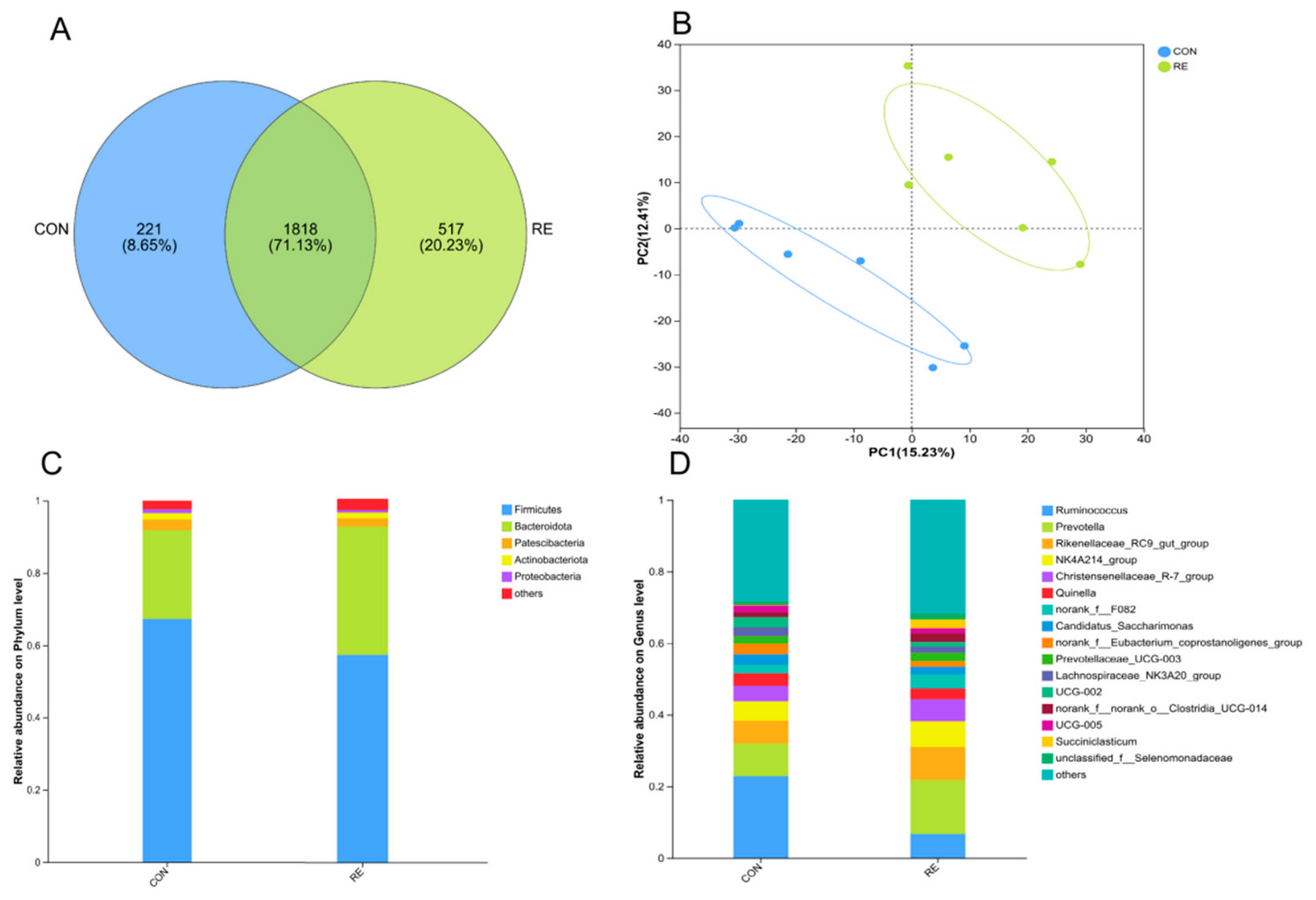
Figure 2.
Comparison of selected species at the genus level between the control group and RE supplementation group. CON = control group; RE = rosemary extract supplementation group.
Figure 2.
Comparison of selected species at the genus level between the control group and RE supplementation group. CON = control group; RE = rosemary extract supplementation group.
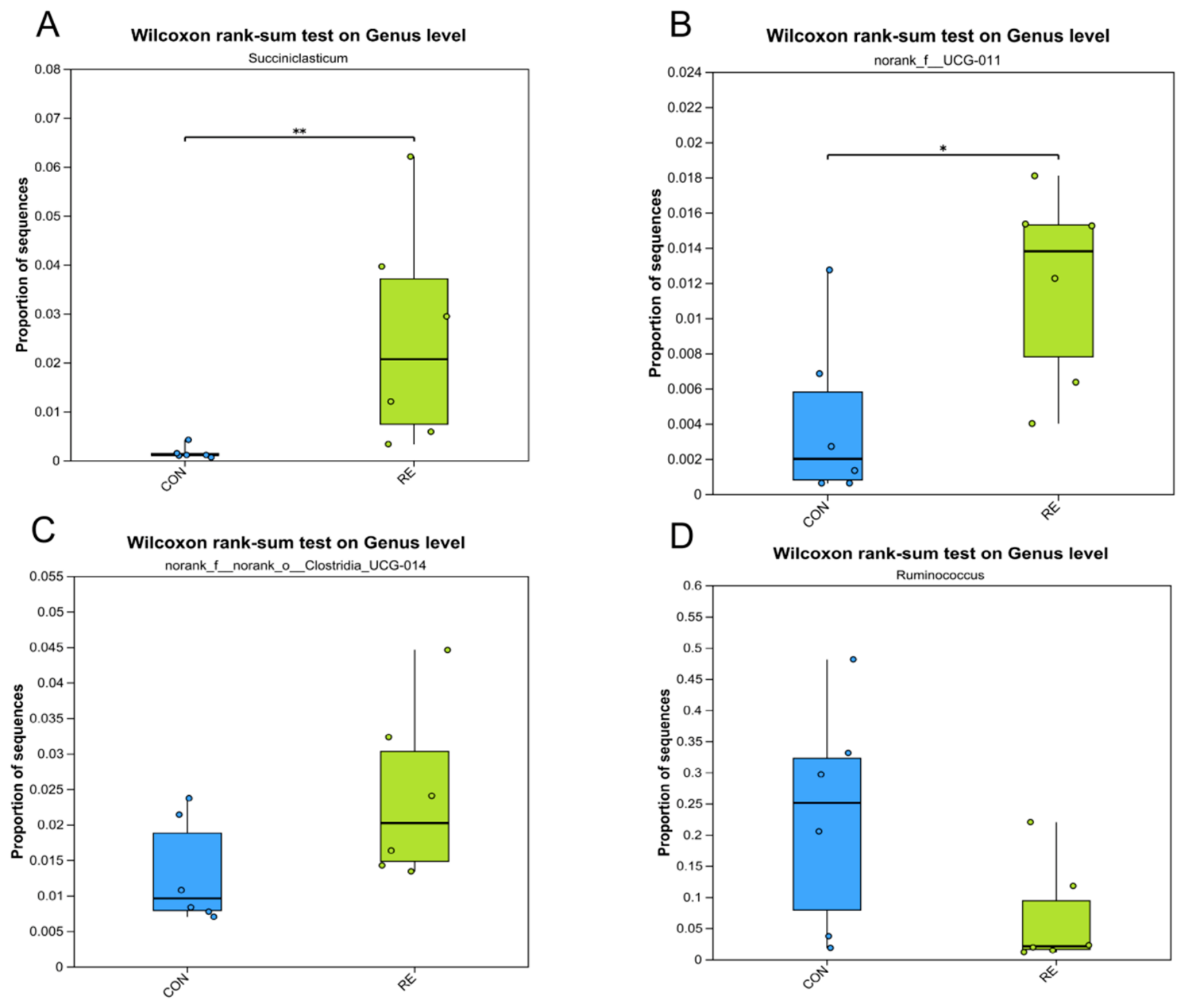
Figure 3.
Welch’s t-test–based comparison of rumen bacterial genera between control and RE supplemented dairy goats. CON = control group; RE = rosemary extract supplementation group.
Figure 3.
Welch’s t-test–based comparison of rumen bacterial genera between control and RE supplemented dairy goats. CON = control group; RE = rosemary extract supplementation group.
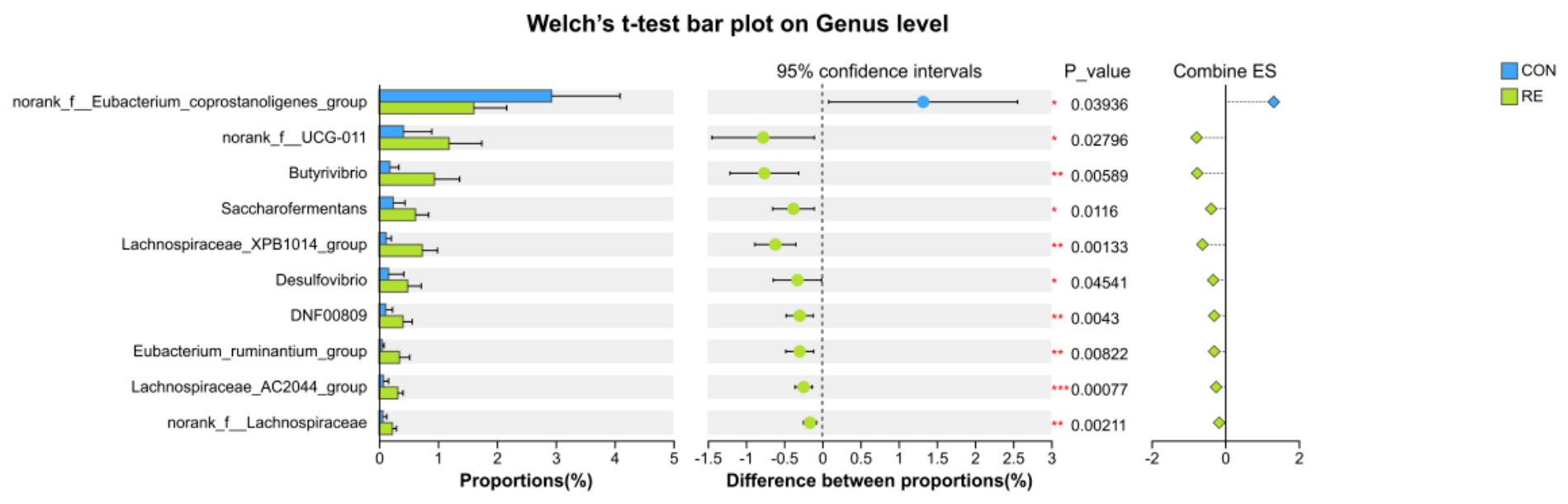
Figure 4.
Correlation between rumen bacteria and rumen fermentation parameters at the phylum (A) and genus (B) levels. A:P = acetate/propionate ratio in rumen fluid; TVFA = total volatile fatty acid.
Figure 4.
Correlation between rumen bacteria and rumen fermentation parameters at the phylum (A) and genus (B) levels. A:P = acetate/propionate ratio in rumen fluid; TVFA = total volatile fatty acid.
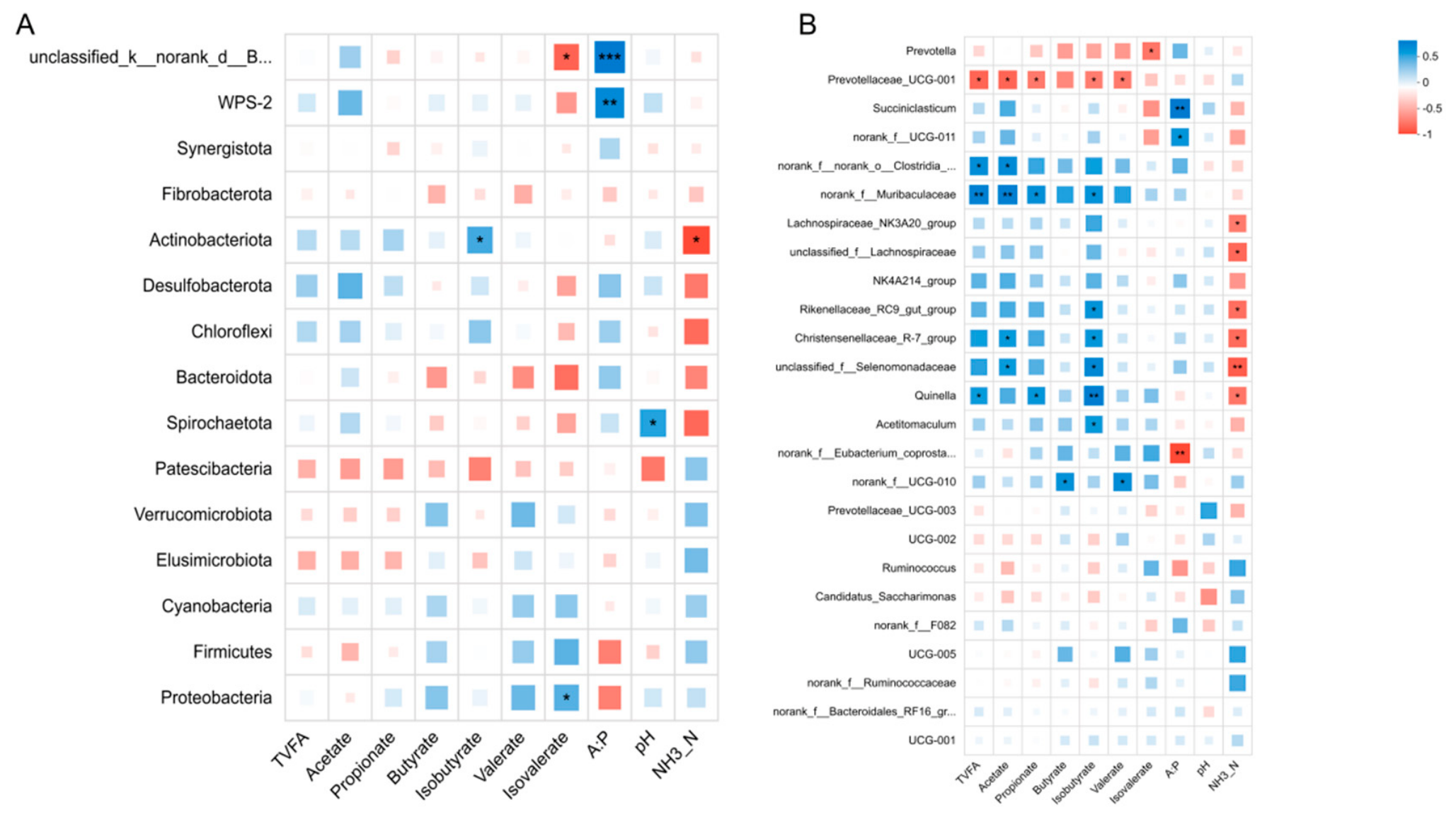
Table 1.
Composition and nutrient levels of basal diet (% dry matter basis).
| Items | Content | Items | Content |
| Ingredients | Nutrient levels1 | ||
| Oat hay | 28.00 | DM | 55.17 |
| Alfalfa hay | 28.00 | NEL/(MJ/kg)2 | 5.61 |
| Corn | 28.50 | CP | 16.25 |
| Soybean meal | 11.87 | NDF | 44.53 |
| wheat bran | 2.00 | ADF | 24.96 |
| CaHPO4 | 0.40 | EE | 4.49 |
| NaHCO3 | 0.30 | Ash | 8.82 |
| Limestone | 0.49 | Calcium | 0.62 |
| Premix | 0.44 | Potassium | 0.35 |
| Total | 100.00 | ||
DM = dry matter; CP = rude protein; NDF = neutral detergent fiber; ADF = acidic detergent fiber; EE = crude fat. 1 NEL was a calculated value according to the National Research Council (2007).
Table 3.
Effects of RE supplementation on rumen bacterial Alpha diversity in dairy goats (n = 6).
| Items | CON | RE | p-value |
| Shannon index | 5.04±0.39b | 5.69±0.18a | 0.004 |
| Simpson index | 0.022±0.015 | 0.009±0.003 | 0.082 |
| Ace index | 1275.70±178.28b | 1681.60±84.91a | <0.001 |
| Chao index | 1303.70±208.28b | 1705.20±65.50a | 0.001 |
| Coverage index | 0.991±0.001b | 0.989±0.001a | <0.001 |
CON = control group, RE = rosemary extract supplementation group. a, b Within a row, means with different letter superscripts differ at p < 0.05.
Table 4.
Effects of RE supplementation on milk composition and active protein of dairy goats (n = 12).
Table 4.
Effects of RE supplementation on milk composition and active protein of dairy goats (n = 12).
| Items | Days | CON | RE | SEM | p-value |
| Fat, % | Day 21 | 3.55 | 4.33 | 0.25 | 0.05 |
| Day 42 | 3.28 | 3.64 | 0.20 | 0.24 | |
| Protein, % | Day 21 | 2.94 | 2.86 | 0.08 | 0.51 |
| Day 42 | 2.98 | 2.91 | 0.08 | 0.56 | |
| Lactose, % | Day 21 | 4.37 | 4.31 | 0.04 | 0.35 |
| Day 42 | 4.34 | 4.34 | 0.05 | 0.98 | |
| Non-fat dry matter, % | Day 21 | 8.01 | 7.86 | 0.10 | 0.36 |
| Day 42 | 8.00 | 7.93 | 0.09 | 0.60 | |
| DM, % | Day 21 | 11.70 | 12.21 | 0.28 | 0.22 |
| Day 42 | 11.41 | 11.65 | 0.233 | 0.47 | |
| MUN, mg/100 mL | Day 21 | 35.84 | 35.87 | 0.90 | 0.10 |
| Day 42 | 36.18 | 36.52 | 0.92 | 0.80 | |
| SCC, ten thousand /mL | Day 21 | 126.62a | 87.06b | 4.00 | <0.0001 |
| Day 42 | 124.12a | 88.39b | 3.17 | <0.0001 | |
| β-LG, ug/mL | Day 21 | 23.11a | 25.97b | 0.56 | 0.004 |
| Day 42 | 24.25b | 28.64a | 0.65 | 0.001 | |
| α-La, ug/mL | Day 21 | 983.48b | 1405.03a | 51.27 | <0.001 |
| Day 42 | 1287.02b | 1735.95a | 48.66 | <0.001 | |
| LF, ug/mL | Day 21 | 124.62b | 227.86a | 10.29 | <0.001 |
| Day 42 | 181.09b | 282.39a | 11.87 | <0.001 |
CON=control, RE=rosemary extract supplementation, SEM = standard error of the mean; DM = dry matter; MUN = milk urea nitrogen; SCC = somatic cell count; β-LG = β-lactoglobulin; α-La = α-lactalbumin; LF = lactoferrin. a, b Within a row, means with different superscript letters differ at p < 0.05.
Table 5.
Effects of RE supplementation on fatty acid composition (% in total fatty acid content) in goat milk (n = 12).
Table 5.
Effects of RE supplementation on fatty acid composition (% in total fatty acid content) in goat milk (n = 12).
| Items | Days | CON | RE | SEM | p-value |
| C4:0 | Day 21 | 1.86 | 1.88 | 0.10 | 0.90 |
| Day 42 | 1.84 | 2.04 | 0.10 | 0.19 | |
| C6:0 | Day 21 | 2.99 | 3.10 | 0.13 | 0.56 |
| Day 42 | 2.77b | 3.24a | 0.08 | 0.002 | |
| C8:0 | Day 21 | 4.59 | 4.64 | 0.29 | 0.90 |
| Day 42 | 4.39 | 4.83 | 0.21 | 0.17 | |
| C10:0 | Day 21 | 16.41 | 15.60 | 0.85 | 0.52 |
| Day 42 | 15.88 | 16.31 | 0.69 | 0.66 | |
| C12:0 | Day 21 | 5.25 | 4.52 | 0.28 | 0.10 |
| Day 42 | 5.33 | 4.91 | 0.28 | 0.30 | |
| C14:0 | Day 21 | 9.16a | 8.19b | 0.25 | 0.02 |
| Day 42 | 9.19 | 8.60 | 0.23 | 0.10 | |
| C14:1 | Day 21 | 0.21a | 0.16b | 0.02 | 0.02 |
| Day 42 | 0.20 | 0.18 | 0.01 | 0.24 | |
| C16:0 | Day 21 | 24.61 | 24.10 | 0.64 | 0.59 |
| Day 42 | 24.55 | 23.72 | 0.55 | 0.31 | |
| C16:1 | Day 21 | 0.97 | 0.97 | 0.04 | 0.94 |
| Day 42 | 0.91 | 0.89 | 0.03 | 0.69 | |
| C18:0 | Day 21 | 6.92b | 8.51a | 0.38 | 0.01 |
| Day 42 | 7.53 | 8.24 | 0.46 | 0.30 | |
| C18:1 | Day 21 | 18.69 | 19.57 | 0.53 | 0.27 |
| Day 42 | 19.25 | 18.82 | 0.46 | 0.51 | |
| C18:2 | Day 21 | 4.78 | 5.07 | 0.19 | 0.31 |
| Day 42 | 4.63 | 4.63 | 0.20 | 0.98 | |
| C18:3 | Day 21 | 1.31 | 1.42 | 0.06 | 0.22 |
| Day 42 | 1.34 | 1.35 | 0.05 | 0.82 | |
| C20:0 | Day 21 | 0.14 | 0.16 | 0.01 | 0.05 |
| Day 42 | 0.15 | 0.15 | 0.01 | 0.79 | |
| C20:4 | Day 21 | 0.28 | 0.29 | 0.02 | 0.68 |
| Day 42 | 0.27 | 0.27 | 0.02 | 0.80 |
CON = control, RE = rosemary extract supplementation, SEM = standard error of the mean. a, b Within a row, means with different letter superscripts differ at p < 0.05.
Table 6.
Effects of RE supplementation on amino acids content (g/100 g) of goat (n = 12).
| Items | Days | CON | RE | SEM | p-value |
| Aspartic acid | Day21 | 0.20 | 0.19 | 0.01 | 0.11 |
| Day42 | 0.20 | 0.20 | 0.01 | 0.84 | |
| Threonine | Day21 | 0.14 | 0.14 | 0.00 | 0.11 |
| Day42 | 0.14 | 0.14 | 0.00 | 0.92 | |
| Serine | Day21 | 0.13 | 0.13 | 0.00 | 0.34 |
| Day42 | 0.13 | 0.13 | 0.00 | 0.57 | |
| Glutamic acid | Day21 | 0.56 | 0.53 | 0.02 | 0.24 |
| Day42 | 0.54 | 0.55 | 0.02 | 0.53 | |
| Glycine | Day21 | 0.05 | 0.05 | 0.00 | 0.18 |
| Day42 | 0.05 | 0.05 | 0.00 | 0.90 | |
| Alanine | Day21 | 0.10 | 0.09 | 0.00 | 0.26 |
| Day42 | 0.09 | 0.09 | 0.00 | 0.47 | |
| Valine | Day21 | 0.22 | 0.21 | 0.01 | 0.28 |
| Day42 | 0.21 | 0.21 | 0.01 | 0.86 | |
| Methionine | Day21 | 0.06 | 0.06 | 0.00 | 0.68 |
| Day42 | 0.07 | 0.07 | 0.00 | 0.75 | |
| Isoleucine | Day21 | 0.16 | 0.15 | 0.00 | 0.53 |
| Day42 | 0.02 | 0.15 | 0.00 | 0.58 | |
| Leucine | Day21 | 0.29 | 0.28 | 0.01 | 0.56 |
| Day42 | 0.03 | 0.28 | 0.01 | 0.79 | |
| Tyrosine | Day21 | 0.09 | 0.09 | 0.00 | 0.77 |
| Day42 | 0.08 | 0.08 | 0.00 | 0.23 | |
| Phenylalanine | Day21 | 0.15 | 0.15 | 0.00 | 0.68 |
| Day42 | 0.15 | 0.15 | 0.00 | 0.66 | |
| Lysine | Day21 | 0.25 | 0.24 | 0.01 | 0.34 |
| Day42 | 0.25 | 0.25 | 0.01 | 0.66 | |
| Histidine | Day21 | 0.08 | 0.08 | 0.00 | 0.43 |
| Day42 | 0.08 | 0.09 | 0.00 | 0.66 | |
| Arginine | Day21 | 0.09 | 0.08 | 0.00 | 0.08 |
| Day42 | 0.09 | 0.08 | 0.00 | 0.29 | |
| Proline | Day21 | 0.30 | 0.29 | 0.01 | 0.39 |
| Day42 | 0.29 | 0.30 | 0.01 | 0.71 |
CON=control, RE=rosemary extract supplementation, SEM = standard error of the mean.
Table 7.
Effects of RE supplementation on blood biochemical indices of dairy goats (n = 12).
| Items | Days | CON | RE | SEM | p-value |
| TP, g/L | Day21 | 78.50 | 77.92 | 1.44 | 0.78 |
| Day42 | 80.83a | 79.92b | 1.09 | 0.02 | |
| GLU, mg/100 mL | Day21 | 2.63 | 2.592 | 0.08 | 0.70 |
| Day42 | 2.79 | 2.79 | 0.05 | 1.00 | |
| TG, mg/100 mL | Day21 | 0.212 | 0.203 | 0.01 | 0.39 |
| Day42 | 0.20 | 0.23 | 0.01 | 0.10 | |
| ALP, U/L | Day21 | 142.33 | 156.25 | 63.84 | 0.88 |
| Day42 | 137.08 | 115.91 | 46.00 | 0.75 | |
| ALB, g/L | Day21 | 47.67 | 46.75 | 0.70 | 0.37 |
| Day42 | 48.67 | 48.41 | 0.71 | 0.81 | |
| TC, mg/100 mL | Day21 | 3.02 | 2.98 | 0.11 | 0.81 |
| Day42 | 3.24 | 3.29 | 0.15 | 0.82 | |
| BUN, mg/100 mL | Day21 | 6.63 | 6.66 | 0.20 | 0.93 |
| Day42 | 6.74 | 6.58 | 0.19 | 0.55 | |
| LDL, mg/100 mL | Day21 | 0.71 | 0.78 | 0.04 | 0.23 |
| Day42 | 0.76 | 0.80 | 0.05 | 0.58 | |
| HDL, mg/100 mL | Day21 | 2.02 | 1.92 | 0.09 | 0.45 |
| Day42 | 2.12 | 2.05 | 0.10 | 0.66 |
CON = control, RE = rosemary extract supplementation, SEM = standard error of the mean; a, b Within a row, means with different superscript letters differ at p < 0.05.
Disclaimer/Publisher’s Note: The statements, opinions and data contained in all publications are solely those of the individual author(s) and contributor(s) and not of MDPI and/or the editor(s). MDPI and/or the editor(s) disclaim responsibility for any injury to people or property resulting from any ideas, methods, instructions or products referred to in the content. |
© 2026 by the authors. Licensee MDPI, Basel, Switzerland. This article is an open access article distributed under the terms and conditions of the Creative Commons Attribution (CC BY) license.
Copyright: This open access article is published under a Creative Commons CC BY 4.0 license, which permit the free download, distribution, and reuse, provided that the author and preprint are cited in any reuse.


