

Submitted:
18 July 2026
Posted:
20 July 2026
You are already at the latest version
Abstract
Background: Despite growing awareness of environmental issues, younger adults often show limited engagement in practical sustainability initiatives. This study explored students’ perceptions, motivations, and behaviors regarding sustainability across the clothing lifecycle. Methods: Two complementary focus groups were conducted with 7 and 10 students, aged between 18 and 25 years old from a Portuguese higher education setting. Focus group interviews were analyzed using thematic analysis following an inductive approach, respecting emerging themes from the participant’s discourse. Re-sults: Participants expressed positive attitudes related to sustainability, despite their practices being constrained by informational, economic, and contextual barriers. The economic barrier was especially relevant for acquisition and maintenance of clothing, leading to necessary reflection on economic and environmental balance. Sustainability was perceived as a valued yet ambiguous concept, limiting its translation into action. Across the lifecycle, decisions were primarily driven by price, aesthetics, and conven-ience, with sustainability emerging as secondary. Participants also reported limited knowledge regarding care, repair, and disposal practices, alongside restricted access to sustainable alternatives. Conclusions: Findings suggest that the sustainability gap is sustained by phase-specific constraints: information and affordability at purchase, ca-pability and service access during care and repair, and infrastructure at disposal. In-terventions should therefore combine consumer information with practical capabil-ity-building accessible repair systems and collective forms of behavioral support to promote consistent and meaningful sustainable engagement.
Keywords:
sustainable behavior
; attitude-behavior gap
; textile product lifecycle
; young adults
; social engagement
; circular economy
1. Introduction
Despite a growing global awareness of environmental crises, younger generations frequently show limited involvement with pro-environmental initiatives, underlining a well-documented attitude-behavior gap, specifically when it concerns environmental engagement [1,2,3,4]. This phenomenon may be of particular interest within the fashion and textile sector, a context dominated by fast consumption cycles, aesthetic identity expression, and pervasive informational opacity regarding corporate practices [5,6]. Crucially, as younger generations are poised to become key influencers in future market dynamics, business innovation, and policymaking, addressing this behavioral gap is paramount for the long-term orientation of sustainable socio-economic and governmental practices. Consequently, sustainable behavior emerges from a complex, dynamic interplay of cognitive, emotional, and contextual factors. While youth are acutely aware of the current climate and ecological crisis, they seem to simultaneously experience increasing psychological distress and eco-anxiety regarding a sustainable future [7,8,9]. Thus, environmental distress functions as a psychological paradox: while it possesses the potential to motivate proactive engagement, it frequently induces emotional avoidance and disengagement when individuals perceive a lack of personal agency or confront unclear, inaccessible pathways for action.
Therefore, effectively promoting sustainable behavior requires transcending traditional awareness-raising campaigns, and instead holistic approaches that integrate emotional engagement, self-efficacy, and provide tangible and meaningful action facilitation. Therefore, the present study stems directly from a national initiative focused on the circular economy applied to textiles, which comprised a series of free, accessible, and skill-oriented workshops focusing on creative upcycling offered to the university community. However, these struggled to engage students, which led to the present study consisting of a qualitative exploratory study with Oporto University students. The primary goals were to explore how young adults conceptualize sustainability and to identify critical barriers and facilitators that drive or threaten sustainable choices within the textile industry.
1.1. Sustainability and Circular Economy
Sustainability may be defined as the endogenous capacity of a system to ensure a balanced, dynamic long-term viability of its resources, and is supported by preserving harmoniously the natural capital and managing wealth without jeopardizing the environment and natural assets [10]. Thus, sustainability and the prospect of providing a balanced use of environmental, social and economic resources for future generations has been a major concern in recent decades. Building on previous global initiatives, the United Nations (UN) have developed the Sustainable Development Goals (SDGs) with the aim of providing a universal framework and joint effort for sustainable development, addressing social, economic and environmental concerns. According to the UN report on 2023, while green investment is rising, environmentally harmful practices still outgrow these efforts, calling for higher government investment in decarbonization, decrease of fossil fuels, and nature-based solutions. In this same report, the industry is reported as a necessary and key-role stakeholder in transitioning to circular economy models [11]. Despite growing concern and efforts to achieve a “circular/greener economy”, a recent review underlined that current resource consumption patterns threaten the achievement of the SGD deadlines, along with social inertia and general industry resistance to fundamental realignment of corporate practices, new commercial models and governmental initiatives [12]. For several years the industry, namely the textile and clothing industry, has been known to be one of the largest polluters globally, consuming excessive resources, and generating large amounts of waste throughout its lifecycle of production, transportation and end-of-life processes, further exacerbating climate change [5,13]. While current guidelines have been calling out for improved circular processes and economy, the high costs associated with the textile industry, ineffective legislation and overall lack of government policies and support, limits adoption and further implementation of eco-friendly and circular practices [5,14]. On the other hand, the consumer has been recognized as a key stakeholder in supporting long-term change in consumerism patterns. However, cost, functionality and fashion trends are often prioritized over sustainable factors, for which further education on textile and associated sustainable practices are warranted, especially considering phenomena like greenwashing and lack of trustworthy and transparent information [9,15,16].
1.2. The Youth “Green Gap” and the Study Context
Despite increasing awareness of environmental issues, younger populations often show limited engagement in practical sustainability initiatives, such as textile reuse and upcycling. This gap between knowledge, awareness and actual behavior is especially evident in the textile and clothing sector, a context shaped by fast consumption cycles, identity expression, and limited transparency regarding sustainability practices [6,9,17,18]. As such, sustainable behavior cannot be understood as a simple outcome of knowledge or attitudes, but rather as the result of a dynamic interplay between cognitive, emotional, and contextual factors [3,7,11,19], that can be better understood in light of theoretical frameworks such as the Theory of Planned Behavior and Value-Belief-Norm frameworks [4]. While younger generations are aware of environmental challenges, they are also emotionally affected by them, with younger generations reporting increasing distress regarding a sustainable future [3,8,17,18,20]. Within a transactional framework, these emotional responses depend on how individuals appraise environmental threats and their capacity to cope with them [2]. From this point of view, this distress may function both as a motivator and a barrier. While it can promote engagement in sustainable behaviors, it may also lead to avoidance or disengagement when individuals perceive limited agency or unclear pathways for action [3,21]. Moreover, sustainability in the textile and clothing industry domain unfolds across a behavioral lifecycle (acquisition, use, care, and disposal), with different constraints and decision criteria at each stage. These processes are further shaped by structural factors, including access to clear information, affordability, and available infrastructures [16,19].
Following this framework, promoting sustainable behavior requires moving beyond awareness-raising towards approaches that integrate emotional engagement, perceived efficacy, and structural facilitation, enabling individuals to translate concern into consistent and meaningful action. Furthermore, younger generations are seen as future market relevant influencers, namely within business and policymaking areas [9,22], assuming a prominent role in future orientation of sustainable social, economic and governmental practices. In light of the above, the present study was developed following a bigger project comprising national collected data on textile consumption patterns [16], as well as university practical, skill-oriented initiatives on textiles upcycling [19], following a European-funded national circular economy textile focused project (be@t) . While this was aimed at university students and the general community, there was a substantial lack of engagement from university students in free and geographically accessible workshops involving upcycling techniques and creative work regarding end-of-life clothing. To better understand the lack of engagement despite the interest in such initiatives, we recruited a total of 18 students from Porto to explore main perceptions of what sustainability is, main obstacles and facilitators in pursuing more sustainable choices, namely within the fashion and clothing industry.
2. Methodology
This exploratory study adopted a qualitative descriptive design to explore university students’ perceptions, motivations, and behaviors regarding sustainability in the fashion and clothing industry. This approach was chosen to capture the nuanced, subjective experiences of participants within their social context, aligning with the principles of thematic analysis within qualitative methodology. Thus, the study focused on exploring university students’ perceptions, motivations, and behaviors related to sustainability in the fashion and clothing industry. Specifically, it sought to: (1) understand how students conceptualize sustainability and what motivates sustainable behavior; (2) identify barriers and facilitators to sustainable practices; and (3) examine decision-making processes across the lifecycle of clothing (purchase, use, care, and disposal). Data collection followed deontological and ethical guidelines, ensuring anonymity of the data and in conformity with the Declaration of Helsinki [20]. All participants signed an Informed Consent form before taking part in the study, which was approved by the Ethics and Research Committee of the Faculty of Psychology, Education, and Sports Sciences Blanquerna, Ramon Llull University (approval reference: 2324008D, date: May 1, 2024).
2.1. Sampling and Procedures
Two focus groups were conducted in 2025 winter season, with undergraduate and master students from Faculty of Education and Psychology at Universidade Católica Portuguesa (FEP-UCP) recruited at the Porto campus through an email invitation. Upon acceptance, an email containing a brief disclosure on the project and focus groups goals, time and participant’s rights, and a forward link to an online consent form and necessary sociodemographic information (gender, age, cycle of studies, and perceived economical comfort) was forwarded to all participants that agreed to take part. A total of 17 students aged between 18 and 25 years old participated in the study. The first focus group (n=7) included a total of 5 bachelor and 2 master students, with a total of 2 male (29%) and 5 female students (71%), and they unanimously identified with being “comfortable” with their current socioeconomic status. This first focus group focused on exploring general perceptions of sustainability, motivations, and perceived societal changes needed to support sustainable behavior. For the second focus group different participants were recruited, counting with a total of 10 participants (n=10), of which 8 bachelor and 2 master students, 2 male (20%) and 8 female students (80%), 7 (70%) declare to feel comfortable with their current socioeconomical status, 2 (10%) declare that the current income is enough to sustain household expenses, and 1 (10%) did not answer. This second focus group focused on examining sustainability across the lifecycle of clothing, including acquisition, care, repair, and end-of-life decisions. The sessions were video and audio-recorded, transcribed verbatim, and analyzed using thematic analysis by two peers, who compared themes, sub-themes, and conceptual codes until consensus was reached.
The focus groups followed semi-structured interview scripts, following systematic guidelines [24,25], and facilitators adopted a passive moderating presence, emphasizing a permissive, nonthreatening environment by fostering and promoting discussion between participants and stressing that the conversation was to explore honest perceptions with no right and wrong answer, in order to foster transparent participant insights. The interview started with a brief disclosure of the focus group goal, participants’ rights and consent in video and audio-recording, and general group interviewing rules (e.g., speaking one at a time). The interview began with broad conceptual questions, following to more specific and day-to-day examples (Appendix A1 and A2). No consensus was pressured, as the goal was to explore and capture the diversity of perspectives regarding sustainability and underlying practices, particularly applied to the fashion industry within university students. Themes and subthemes were organized following recommendations for thematic analysis, following the six-phase reflexive thematic analysis framework [26], to reflect complex and non-linear meanings in the participants’ discourse and contributions to the theme’s exploration.
2.2. Data Analysis
The study adopted a constructionist epistemological position, acknowledging that meaning and experience are socially produced rather than solely individual perception. Data analysis followed an inductive approach, allowing themes to emerge directly from the participant’s discourse without pre-existing theoretical constraints. To ensure methodological rigor, we adopted a systematic thematic analysis process, ensuring interpretative complexity [27,28]. Coding was performed independently by two researchers, and discrepancies in the initial coding were discussed among the researchers involved. The coding and theme development process was meticulously documented through a research log and an audit trail managed in Excel. The process involved data familiarization, initial codes and themes generation, thematic review and refinement, and final theme definition and naming. Themes were interpreted based on their conceptual significance and relevance to the research questions, rather than on their frequency of occurrence, adhering to the reflexive nature of thematic analysis [26,29].
3. Results
Thematic analysis revealed six main domains across the two focus groups, reflecting how participants understand and engage with sustainability in the textile and clothing industry context, highlighting both convergences and tensions across discourse and practice.
3.1. Focus Group 1: Sustainability Meaning, Barriers and Facilitators
Firstly, participants expressed a multidimensional conceptualization of what can be perceived as sustainability. This concept was often associated with positive behaviors related to sustainability, such as environmental protection, avoiding waste, and preserving resources without compromising future generations, stretching the definition across ecological, personal, and ethical domains. Sustainability was frequently defined as the active preservation of limited natural resources and the avoidance of waste to secure a viable future, conceptualizing the environment as an intergenerational responsibility and shared collective resources, that are currently being mismanaged by overproduction and hyper-consumerism. Moreover, participants understood sustainable-related practices as transversal, pragmatic, applied to the optimization of everyday resources, such as time, finances, and project management, rather than limiting it to strictly ecological concerns. For these university students, the concept of sustainability is heavily intertwined with financial and time sustainability, making the most efficient use of the perceived limited resources they possess, leading to a duality of “environmental vs economic” sustainability. Consequently, when applied to clothing purchase, a product is often deemed sustainable if its longevity justifies its financial cost. This multidimensionality also generates internal conflict, as participants realized that different dimensions of sustainability often clash, such as animal welfare and material durability. While some participants argued that buying real leather is more environmentally sustainable because it lasts a lifetime, preventing the continuous disposal of synthetic alternatives, others felt that true sustainability cannot involve animal cruelty, even if the vegan alternative degrades faster and requires more frequent replacement. This reveals that, for young adults, sustainability is not a straightforward option, but a complex matrix contemplating a delicate balance between ecological impact, financial survival, ethical beliefs, and material longevity.
Regarding main barriers and facilitators, participants identified several obstacles to pursuing more sustainable choices. Participants reported unanimous and frequent difficulty in identifying genuinely sustainable products, expressing confusion regarding labels, certifications, and pervasive greenwashing practices. Thus, the logistical and economic convenience of fast fashion seems to consistently overpower ethical intentions, with “sustainable options” being widely perceived as an expensive luxury. Sociocultural and aesthetic pressures emerged as an additional factor, as the need for personal affirmation through style drove participants toward more accessible and varied options available in fast fashion, while sustainable clothing was frequently deemed as failing to keep up with trends. This aesthetic friction builds upon the previously mentioned informational opacity (greenwashing practices and not knowing how to identify these), leading participants to report difficulty in identifying genuinely sustainable products, and as such opting to pursue clothing that expresses more directly their style and identity. Furthermore, contextual barriers, such as the geographical inaccessibility of second-hand stores compared to the widespread availability of fast fashion, heavily influenced their consumption patterns. Additionally, a significant psychological barrier emerged with participants reporting a perception of collective inefficacy. Concerning this, participants reported strong feelings of demotivation and frustration due to perceived inaction from close contexts , feeling that their individual sustainable efforts are meaningless if most of society does not reflect the same behavioral patterns, leading to feelings of frustration and a low perception of self-efficacy when attempting more sustainable behaviors, namely upcycling.
On the other hand, participants actively suggested several changes and initiatives to facilitate the adoption of more sustainable behaviors. At the foundational level, participants emphasized sociocultural dynamics as a key aspect to sustainable behavior, with participants noting that social influence from family and peers could help normalize sustainability as a trend /or as a rooted behavioral pattern. However, they stressed that the current available educational initiatives must evolve beyond the focus on “recycling” in schools to encompass broader, more practical sustainable habits. To achieve systemic change, participants stressed the need for governmental involvement. Rather than relying solely on individual motivation, they advocated top-down structural interventions, including improved legal regulation of sustainability practices in the clothing industry, corporate accountability, and implementation of production limits. Also, participants expected governments to somehow subsidize sustainable consumer choices and invest in social marketing supported on clear, public health-style campaigns to easily guide consumers. The need for structural and logistical support was highlighted as a critical facilitator, by providing proximity to disposal options and infrastructures, such as accessible physical spaces for clothing exchange and structured donation networks. Finally, providing a larger offer educational initiative, based on clear and standardized information on clothing origin, manufacturing processes, and care, could help boost knowledge on sustainable choices and reduce the “opacity” associated with greenwashing practices.

Table 1.
Thematic Analysis on Perspectives and Behaviors on Sustainability.
| Theme 1: Multidimensional Conceptualization of Sustainability | |||
| Sub-Theme | Conceptual Code | Description | Illustrative Quotes |
|
1.1. Meaning of Sustainability |
1.1.1. Environmental and Intergenerational Protection |
The future as a responsibility; Preservation of limited resources. |
“[I think it’s very connected to the future (...) being able to satisfy our present needs without compromising our future in a more general way.]” (P3) “[Thinking about the limited resources in the environment, I think that everything sustainable (...) comes precisely from not compromising our future, enabling us to use these resources in the present, replacing the use of resources that are limited.]” (P4) |
| 1.1.2 Optimization and Transversality | Sustainability beyond ecology and optimization of resources. | “[(…) it can even be two forms of sustainability, in this case, you are being sustainable with your money and at the same time with the paper.]” (P5) “[I think sustainability is about making the best use of resources. They don’t necessarily have to be environmental (...) It can be the best utility, in terms of savings and quality of a certain resource. I think for me that is sustainability.]” (P2) |
|
| Theme 2: Barriers to Sustainable Action | |||
| 2.1. Systemic and Lifestyle Factors | 2.1.1. Accessibility and convenience | Logistical convenience of fast fashion compared to lack of second-hand stores choices. |
“[It’s much more practical to go to a fast fashion store than to go to a second-hand clothing store.]” (P4) “[I also think we are more motivated by our comfort.]” (P5) |
| 2.1.2. Economic Constraints | Economic hegemony of fast fashion and sustainability as a luxury. | “[(...) in the long run I also don’t see that many consequences of buying something cheaper.]” (P2) | |
| 2.1.3. Quality and Illusion of Choice | Distrust of the corporate market; Loss of durability imposed by brands. | “[We are buying clothes of worse quality, worse manufactured, because we have no other choice (...) the companies themselves do not produce with as much quality or with as much concern.]” (P5) | |
|
2.2. Sociocultural and Aesthetic Pressures |
2.2.1. Aesthetic Identity and Fast Fashion Variety | Sustainable clothing is perceived as visually generic and fails to meet fashion trends. |
“[Today, there is a great need for personal affirmation through style (...) where it is easiest to find that variety (...) is in fast fashion.]” (P5) “[Regarding the design of brands that focus on sustainability, it is a very generic design and not very differentiated (...) people’s main concerns are regarding style.]” (P6) “If we see, for example, someone on social media wearing a piece of clothing and it looked good on them, then someone else will say ‘ah, I’ll buy it too because it looked good on them and it will look good on me’, and so on, it’s almost like a snowball effect.” (P7) |
| 2.2.2. Informational Opacity | Technical labels vs. clear communication | “[Based on the information on the label, we can’t figure out exactly if it’s sustainable or not (...) it should be like nutri-scores in food.]” (P6) | |
| 2.3. Psychological Discouragement | 2.3.1. Perception of Collective Inefficacy | Demotivation due to peer inaction. | “[We can’t put a goal in our heads which is to protect the environment (...) if we don’t see results, and if we don’t see people around us doing it too.]” (P4) |
| Theme 3: Facilitators and Behavior Catalysts | |||
| 3.1. Sociocultural Dynamics | 3.1.1. Social Influence | The role of family, peers and surrounding context making sustainability a trend. |
“[At home, it’s sustainable because they are the ones who [instill it in] me (...) it’s not me who has the initiative.]” (P1) “[Our children are going to be much more sustainable than us, because we are already more sustainable than our parents and our grandparents]” (P2) |
| 3.1.2. Educational Normalization | Confining the definition of sustainability to recycling in education. | “[While I was in school (...) the only thing I heard about sustainability was recycling, recycling, recycling (...) they should take advantage and do different things.]” (P1) | |
| 3.2. State and Higher-Government Involvement | 3.2.1. State Regulation and Corporate Accountability | Distribution laws and production control. |
“[The issue is that it’s also a problem that the state can’t exactly put its hand in that, right (...) We can only do things based on the rules that already exist in the state.]” (P2) “[I would regulate the number of collections and the clothing that can be produced per store.]” (P5) |
| 3.2.2. Government Investment | Governmental responsibility to normalize and subsidize sustainable choices; Public health-style campaigns for ecology. |
“[It is somewhat the role of the State to make this investment and show the population that this sustainable bet pays off.]” (P2) “[The issue is that it’s also a problem that the state can’t exactly put its hand in that, right? Because that is private, it’s individual. Imagine, there should be price controls, prices that are at least fair, but (...) we can only do things based on the rules that already exist in the state.]” (P2) |
|
| 3.2.3. Public Campaigns | Public health-style campaigns for ecology. | “[There could be greater intentionality (...) a governmental issue to guide people (...) just like warnings for the flu.]” (P6) | |
| 3.3. Structural and Logistical Support | 3.3.1. Proximity of Disposal Options | The need for accessible, physical spaces for clothing exchange. Reliance on community and family networks for end-of-life disposal. |
“[Creating spaces where this is possible (...) for example, in the university campus, having a space for clothes swapping (...) so it doesn’t just stay as an idea.]” (P3) “[(…) I can also choose to put it in clothing donation bins, use second-hand selling apps like Vinted, and nowadays there are also physical stores that allow us to sell clothes to the store itself, like Humana.]” (P7) |
| 3.3.2. Circular Infrastructures | Circular Infrastructures | “[One thing I actually do a lot, (…) is that I’m in the habit of reusing clothes from my family. So when something doesn’t fit (…) they automatically come to me, and then if I don’t wear them, they’re cut up for rags. Or, since I have a sewing machine, I also alter my clothes].” (P5) | |
3.2. Focus Group 2: Clothing Lifecyle
Within the lifecycle phases of textiles and personal clothing, in the purchase phase, choices were predominantly guided by price, aesthetics, convenience and availability. Sustainability considerations appeared to function as a secondary or conditional factor, becoming more relevant only when information was clear, price differences were minimal, or when products aligned with personal style and fashion trends. Moreover, once more, participants frequently cited a lack of trustworthy, clear information, expressing regular confusion over technical labels and a persistent distrust of brand greenwashing.
Regarding the use, care, and repair phase, participants reported relatively stable practices, often including emotional attachment to clothing and a tendency toward prolonged use. However, knowledge gaps were evident, and repair and reuse behaviors tended to be sporadic and skill-dependent rather than systematic or embedded in routine practices. Participants explicitly highlighted a “generational loss of knowledge” regarding basic sewing and repair skills, which frequently leads to the premature disposal of clothing items that could otherwise be transformed or reused. This lack of know-how directly feeds into frustration, low perceived self-efficacy and behavioral control, as some participants referred to attempts at manual repairs or upcycling. However, without proper guidance, it often leads to disappointing results, leaving them unable to identify their mistakes and ultimately demotivating further sustainable efforts in this regard. This psychological barrier is further exacerbated by the perceived high cost and increasing scarcity of professional repair services, such as shoemakers or seamstresses, driving consumers toward premature disposal.
Finally, end-of-life decisions revealed a similar pattern of intention–behavior discrepancy. While participants identified multiple sustainable disposal strategies (e.g., donating, repurposing, or discarding), actual practices were often constrained by convenience, perceived usability of items, and limited access to accessible and structured infrastructure alternatives, such as reliable collection bins or brand programs to take-back clothing items they no longer use or at its end-of-life. However, informal circular practices were frequently reported, such as donating clothes to shelters, selling on second-hand platforms, handing down clothes to family members (e.g., younger siblings and cousins), or repurposing heavily damaged clothes into utilitarian items like cleaning rags. A comprehensive overview of these perspectives and behaviors throughout the textile lifecycle is presented in Table 2.
4. Discussion
The present study explored university students’ perceptions, motivations, and behaviors regarding sustainability across the textile lifecycle, outlining an intention-behavior gap regarding textile and clothing sustainability among young adults frequenting the higher education context. While participants demonstrated high environmental awareness and concern, the translation of these values into sustained action is disrupted by a complex interplay of systemic deficits, psychological barriers, and informational opacity. Across both focus groups, there was a consistent emphasis on the importance of making sustainability more accessible, intuitive, and actionable, through individual, collective and governmental levels, rather than relying solely on individual motivation. Nonetheless, participants also consistently described a disconnection between these values and their everyday practices, suggesting that awareness alone is insufficient to sustain behavioral change.
Our findings reveal that young adults operate under a highly multidimensional, and sometimes conflicting, conceptualization of sustainability. While sustainability is often framed in the literature as managing wealth and natural capital while preserving the environment [10], our participants often understood sustainability as a form of pragmatic resources management, including time and financial sustainability. This resource optimization mindset often directly conflicted with ethical sustainability, as participants often debated the ethical dilemma of purchasing highly durable real leather versus less durable vegan alternatives. This demonstrates that, for younger consumers, sustainability is not a straightforward ecological imperative but a complex matrix where ethical beliefs frequently clash with material longevity and financial survival.
On the other hand, these findings seem to support the attitude-behavior gap described in the literature [4,9,18,30], and while environmental intentions may be strong, they are consistently overridden by systemic and psychological barriers, demonstrating that environmental awareness alone is insufficient to drive consistent action without structural facilitation, economic accessibility, and practical skill-building across the textile lifecycle, which have also been emphasized as needed pathways in previous studies [9,15,16].
Notwithstanding, the participants in our focus groups indicated perceived limited resources and courses of action, perceived lack of information regarding underlying processes and sustainable parameters concerning the textile industry, and relevance of collective efforts for higher engagement in pro-sustainable behaviors. Considering a transactional framework, when individuals encounter macro-level systemic factors that are perceived as out of their control, such as government policies and infrastructural options, without clear courses of action, it may create disengagement instead of pro-environmental and sustainable action [2,20,22]. This is described in the literature as the resilience paradox, which demonstrates that individuals with high environmental concern often display fewer pro-environmental behaviors when they feel they have limited resources and perceived efficacy [3]. Our data supports this idea as peer and family pro-environmental action are essential and determinant for their own involvement in such behaviors. This supports the idea that merely encouraging individual “resilience” is an inadequate solution for younger generations, and a need for more systemic, holistic and collective efforts that support youth involvement and action.
When mapping behaviors across the distinct lifecycle phases, the consumer’s path is locked by a “double economic barrier”. In line with previous literature, our participants also valued cost, functionality, or aesthetic trends over sustainable factors [9,16]. However, a recent study on generational differences found that while older generations treat sustainability as an additional requirement secondary to cost, younger generations seem to value eco-friendly choices but are routinely priced out of the market [18]. Our findings stress this at two separate phases. First, in the acquisition phase, the high cost of sustainable clothing garments, and second, via the cost and scarcity of professional tailor or cobbler services at the maintenance and end-of-life phase. This “double penalty” is further accelerated by a stark “generational loss of knowledge” regarding basic sewing, care, and repair manual skills, something perceived as out of reach and leading to perceived low efficacy that may trigger feelings of frustration and the disengagement. Consequently, this leads as well to premature disposal due to lack of further options. In order to “break this loop”, educational initiatives and curricular options since a young age must move away from the basic, theoretical focus on recycling, and educational and industry institutions must engage on practical, hands-on circular skills that empower consumer agency across the lifecycle [15].
Participants seemed to indicate the importance of the proximal social circle in the creation of their attitudes and the execution of their behaviors. While participants exhibited dismay and a sense of loneliness within the sustainability cause, stating that they feel their sustainable action is futile if the rest of society does not follow suit, they mentioned their proximal social circle’s pro-environmental action as a key factor in maintaining resilience in their own efforts. This heavily aligns with Bicchieri’s (2005) Social Norms theory [31], and Bourdieu’s (1984) [32] Social Habitus theory, in demonstrating how one’s community and social bonds build the norms, perceptions and attitude which create behavior, while adding nuance to the interpretation of results. It can be understood that not only does the social circle and the prescriptive and descriptive norms set within one’s own community help to build pro-environmental norms and attitudes, it may also be a mechanism for resilience in sustainable behavior.
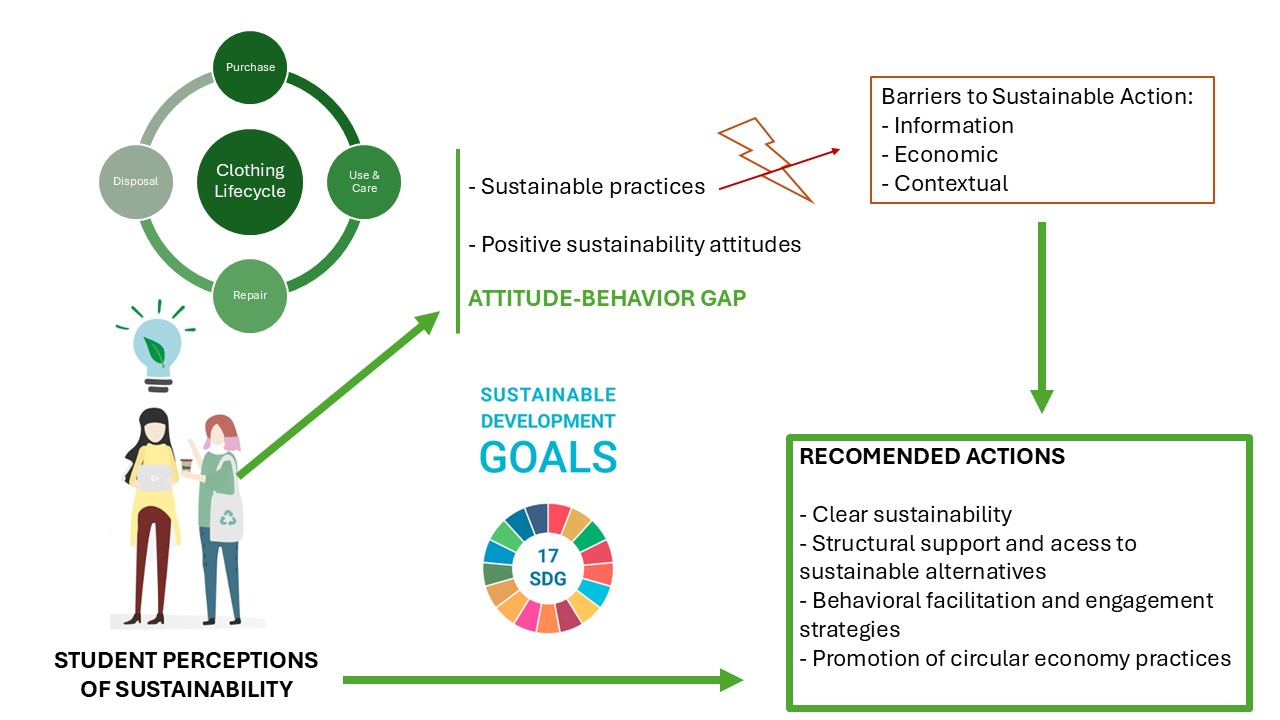
Overall, the findings call the attention to a complex and multidimensional conceptual approach, as well as an attitude–behavior gap in sustainability among university students, highlighting that awareness and positive attitudes do not necessarily translate into consistent practices. Thus, sustainability is constructed as a morally valued yet cognitively diffuse concept, limiting its operationalization in everyday decisions. Across the clothing lifecycle, sustainable behavior emerges as conditional and context-dependent, often secondary to factors such as cost, aesthetics, and convenience. Importantly, the results suggest that this gap reflects not only individual limitations, but also a lack of informational clarity, practical knowledge, and structural support. These findings point to the need to move beyond towards multilevel interventions that integrate clear information, behavioral facilitation, social norms, and accessible infrastructures. In this sense, promoting sustainable engagement requires aligning systems, contexts, and practices in ways that enable individuals to translate intention into sustained and meaningful action. Finally, public policies must coordinate to minimize economic and informational barriers, ensuring that the sustainable choice becomes the most intuitive, affordable, and actionable pathway for the consumer.
4.1. Limitations and Future Research
The conclusions drawn from this exploratory research must be evaluated within the scope of several methodological and demographic limitations. First, the sample was restricted to 18 university students from a single private institution in Porto who self-identified as possessing a “comfortable” socioeconomic status. This sociodemographic homogeneity restricts the immediate generalizability of the findings, although this was not the aim of the present study. In fact, this leads to a necessary reflection that if consumers with relative financial security already identify high prices and repair costs as obstacles for sustainable pathways, these economic barriers may be exponentially more prominent for lower-income demographic populations. Thus, future research should implement stratified sampling to examine these lifecycle choices and main barriers and facilitators across diverse socioeconomic levels.
Regarding our sample, while the sample size is standard for qualitative designs, the data gathering ceased at 18 because complete thematic redundancy and theoretical saturation were reached between the peers during analysis. Finally, the study relied entirely on self-reported perceptions, exposing the data to potential social desirability bias, where participants may overstate their circular behaviors due to the moral weight of the topic. Although the initial exploration of this topic was specifically catalyzed by a lack of student engagement in free, accessible workshops for upcycling techniques, the resulting findings provide a critical diagnostic foundation. At present, direct future steps derived from this project involve persisting with targeted literacy and practical, skill-oriented workshops, while scaling these efforts into a broader, systemic intervention focused on promoting sustainable, pro-environmental behavior. Future investigations could deploy mixed-method, multi-wave longitudinal panel designs or direct observational field data to more accurately monitor real-world purchasing, use and disposal behavior in real-world environments.
5. Conclusions
In summary, the qualitative findings illuminate a well-known phenomenon documented in the literature: a pervasive attitude-behavior gap among young adults regarding textile sustainability. While theoretical awareness and environmental concern are high, the translation of these values into sustained action is heavily disrupted by a complex interplay of systemic deficits, such as high costs and lack of infrastructure, and psychological barriers, namely low self-efficacy and perceived collective inaction. Across the entire lifecycle, convenience and economy consistently override environmental intentions, placing “clothing sustainability” as a secondary factor . Ultimately, these results suggest that fostering sustainable fashion behaviors requires moving beyond mere awareness campaigns, demanding for governmental and industry involvement, structural facilitation, skill-building, and accessible circular alternatives that make the sustainable choice the most intuitive one.
Author Contributions
Conceptualization, AFM, PRR, PB and POS; methodology, AFM, PRR and POS; formal analysis, AFM and PRR.; investigation, AFM and PRR; resources, POS; data curation, POS; writing—original draft preparation, AFM; writing—review and editing, AM, PRR, PB and POS; visualization, AFM and PB; supervision, POS and MP; project administration, POS and MP; funding acquisition, POS and MP. All authors have read and agreed to the published version of the manuscript.
Funding
This research was funded through the Portuguese Recovery and Resilience Plan in accordance with the grant: be@T—Bioeconomia para Têxtil e Vestuário, investimento TC-C12-i01— Bioeconomia Sustentável. Additional funding was provided by the Project “BioShoes4All, Innovation and capacity building of the footwear industry for a sustainable bieconomy“, framed in Notices number 01/C12-i01/2021 and number 02/C12-i01/2021. This project is currently being supported as well by the Post-Doctoral Fellowship Program in Integral Human Development from Universidade Católica Portuguesa/PORTICUS with reference GR-079979.
Institutional Review Board Statement
This study was conducted in accordance with the Declaration of Helsinki and approved by the Institutional Review Board (or Ethics Committee) of Blanquerna Universitat Ramon-Llull (01 May 2024).
Informed Consent Statement
Informed consent was obtained from all subjects involved in the study.
Data Availability Statement
Data available from authors upon reasonable request.
Acknowledgments
The authors would like to recognize the essential contributions of Inês Leite, whose work on data transcription and initial coding facilitated the completion of this paper. During the preparation of this manuscript/study, the author(s) used Gemini 3.1.for the purposes of proofing. The authors have reviewed and edited the output and take full responsibility for the content of this publication.
Conflicts of Interest
The authors declare no conflict of interest.
Appendix A
Appendix A.1 Semi-Structured Script for the First Focus Group: Meaning of Sustainability, Barriers, and Facilitators to Sustainable Decision-Making
- 1. Meaning of Sustainability
- 1.1. What does sustainability mean to you?
- 1.1.1. What does this concept mean regarding the consumption of clothing/fabrics? (Activity using post-its for participants to write down their ideas related to the topic)
- 2. Associated Values (20-25 minutes)
- 2.1. What motivates you the most to be more sustainable?
- 2.1.1. And specifically, regarding clothing/fabrics?
- 2.2. What aspects of sustainability do you value the most?
- 2.2.1. And particularly in clothing/fabrics?
- 3. Applied Behaviors (20-25 minutes)
- 3.1. What behaviors do you associate with sustainability?
- 3.1.1. And in clothing/fabrics?
- 3.2. To conclude, using the post-its again, what do you think should change in society for people to be more sustainable?
Appendix A.2c Semi-Structured Script for the Second Focus Group: Clothing Lifecycle Phases and Specific Sustainable Behaviors
- 1. Aspects to consider when acquiring products (PURCHASE)
- 1.1. Focusing on the first lifecycle phase of our clothing and footwear, what drives you to buy a specific clothing and/or footwear product? What do you value most?
- 1.1.1. Are sustainability issues relevant when you purchase these products? If so, which ones/what specifically?
- 1.1.2. Do you feel you have enough information about the “sustainability” of these products? What information do you consider to be most lacking regarding these issues?
- 2. Product Lifecycle (USE AND MAINTENANCE)
- 2.1. Continuing with the topic of accessible product information, do you consider the information regarding the washing and care of garments to be accessible/understandable? How could clothing brands improve this communication?
- 2.2. When a product gets damaged, do you repair it or find ways to restore it?
- 2.2.1. When is a product “too damaged” to be repaired? Does this differ depending on the product (e.g., denim, t-shirts, footwear, others)?
- 3. Product End-of-Life (DISPOSAL)
- 3.1. Following up on this, when do you realize you will no longer wear certain pieces of clothing and/or footwear?
- 3.2. Do you consider certain disposal or end-of-life options to be more sustainable than others?
- 4. Sustainability Conclusion
- 4.1. Finally, thinking broadly across all these different lifecycle phases of clothing and footwear we discussed today, how do your social circles—such as family, university, friends, colleagues, groups, social media, or others—influence your decisions and behaviors?
Conclusion and additional impressions
References
- Khurana, S.; Mannan, B.; Luthra, S.; Haleem, A.; Jain, V. Investigating Barriers of Sustainable Supply Chain in Apparel & Textile Sector for Realizing Net Zero Economy: An AHP Approach 2024, 177–185. [CrossRef] [PubMed]
- Orrù, L.; Taccini, F.; Mannarini, S. Worry about the Future in the Climate Change Emergency: A Mediation Analysis of the Role of Eco-Anxiety and Emotion Regulation. Behav. Sci. 2024, 14, 255. [Google Scholar] [CrossRef] [PubMed]
- Shao, L.; Yu, G. Media coverage of climate change, eco-anxiety and pro-environmental behavior: Experimental evidence and the resilience paradox. J. Environ. Psychol. 2023, 91, 102130. [Google Scholar] [CrossRef]
- Müller, J.; Acevedo-Duque, Á.; Müller, S.; Kalia, P.; Mehmood, K. Predictive Sustainability Model Based on the Theory of Planned Behavior Incorporating Ecological Conscience and Moral Obligation. Sustainability 2021, 13, 4248. [Google Scholar] [CrossRef]
- Naranjo; de la Torre, R.; Boza, A. “Sustainable Decision-Making in SMEs of the Textile Industry: Integrating Methodologies, Practices, and Barriers,” Bus. Strategy Environ. 2025, 34, 6385–6441. [Google Scholar] [CrossRef]
- Sharma, H.; Arya, B.; Bisht, V.; Kumar, H. Fashionably sustainable: extending the theory of planned behavior to predict intentions to purchase second-hand clothes. Front. Sustain. 2025, 6. [Google Scholar] [CrossRef]
- Pavani, J.-B.; Nicolas, L.; Bonetto, E. Eco-Anxiety motivates pro-environmental behaviors: a Two-Wave Longitudinal Study. Motiv. Emot. 2023, 47, 1062–1074. [Google Scholar] [CrossRef]
- Mosca, et al. Eco-Anxiety and Mental Health: Correlates of Climate Change Distress. Int. J. Environ. Res. Public Health 2025, 22, 1768. [Google Scholar] [CrossRef] [PubMed]
- Yamane, T.; Kaneko, S. Is the younger generation a driving force toward achieving the sustainable development goals? Survey experiments. J. Clean. Prod. 2021, 292, 125932. [Google Scholar] [CrossRef]
- Ruggerio, C. A. Sustainability and sustainable development: A review of principles and definitions. Sci. Total Environ. 2021, 786, 147481. [Google Scholar] [CrossRef] [PubMed]
- United Nations. Glocal Sustainable Development Report—Times of crisis, times of change: Science for accelerating transformations to sustainable development; 2023. [Google Scholar]
- Allen, C.; Malekpour, S. Unlocking and accelerating transformations to the SDGs: a review of existing knowledge. Sustain. Sci. 2023, 18, 1939–1960. [Google Scholar] [CrossRef] [PubMed]
- Sadhna; Mokanaasri, E.; Kumar, R.; Greeshma, S. Introd. Evol. Sustain. Text. 2025, 1–12. [CrossRef]
- Karim, Md. R.; Dulal, M.; Sakila, F.; Aditi, P.; Smrity, S. J.; Asha, N. N. Analyzing the factors influencing sustainable supply chain management in the textile sector. Clean. Logist. Supply Chain 2024, 13, 100183. [Google Scholar] [CrossRef]
- Vidal-Ayuso, F.; Jaca, C.; Akhmedova, A. The circular economy and the sustainable development goals: Strategies for consumer involvement in the textile industry. Clean. Responsible Consum. 2026, 21, 100415. [Google Scholar] [CrossRef]
- Ribeiro, P. R.; Batista, P.; Mendes-Palma, F.; Pintado, M.; Oliveira-Silva, P. Consumers’ Engagement and Perspectives on Sustainable Textile Consumption. Sustainability 2023, 15, 15812. [Google Scholar] [CrossRef]
- Raman, R.; Das, P.; Mandal, S.; Vijayan, V.; AR, A.; Nedungadi, P. The impact of Gen Z’s pro-environmental behavior on sustainable development goals through tree planting. Sustain. Futur. 2024, 8, 100251. [Google Scholar] [CrossRef]
- Urbánková, H.; Stávková, J. The Context of Sustainability and Generational Differences in Consumer Behaviour. Eur. J. Bus. Sci. Technol. 2026, 11, 206–219. [Google Scholar] [CrossRef]
- Batista, P.; Ribeiro, P.; Moreno, A.; Oliveira-Silva, P. Education for Sustainability: T heRoleofEducation and Neurosciences. MIND BRAIN Educ. 2024, 18, 2016–225. [Google Scholar]
- Brophy, H.; Olson, J.; Paul, P. Eco-anxiety in youth: An integrative literature review. Int. J. Ment. Health Nurs. 2023, 32, 633–661. [Google Scholar] [CrossRef] [PubMed]
- Kerse, Y.; Kerse, G. The effect of eco-anxiety on pro-environmental behaviors and mental well-being: a parallel mediation model. BMC Psychol. 2025, 13, 1155. [Google Scholar] [CrossRef] [PubMed]
- Independent Group of Scientists appointed by the Secretary-General, Global Sustainable Development Report 2023: Times of crisis, times of change: Science for accelerating transformations to sustainable development; New York, 2023.
- World Medical Association, World Medical Association Declaration of Helsinki. JAMA 2013, 310, 2191. [CrossRef] [PubMed]
- Krueger, R. A.; Casey, M. A. “FOCUS GROUP INTERVIEWING,” in Handbook of Practical Program Evaluation, Fourth Edition; Newcomer, K. E., Hatry, H. P., Wholey, J. S., Eds.; 2015; Volume ch. Chapter Twenty. [Google Scholar]
- Rabiee, F. Focus-group interview and data analysis. Proc. Nutr. Soc. 2004, 63, 655–660. [Google Scholar] [CrossRef] [PubMed]
- Braun, V.; Clarke, V. Using thematic analysis in psychology. Qual. Res. Psychol. 2006, 3, 77–101. [Google Scholar] [CrossRef]
- Ngulube, P. “Qualitative Data Analysis and Interpretation: Systematic Search for Meaning,” in Addressing research challenges: making headway for developing researchers; Mathipa, E., Gumbo, M.T., Eds.; Mosala-MASEDI Publishers & Booksellers: Noordywk, 2015; Volume ch. Chapter 8, pp. 131–156. [Google Scholar]
- Naeem, M.; Ozuem, W.; Howell, K.; Ranfagni, S. A Step-by-Step Process of Thematic Analysis to Develop a Conceptual Model in Qualitative Research. Int. J. Qual. Methods 2023, 22. [Google Scholar] [CrossRef]
- Vaismoradi, M.; Turunen, H.; Bondas, T. Content analysis and thematic analysis: Implications for conducting a qualitative descriptive study. Nurs. Health Sci. 2013, 15, 398–405. [Google Scholar] [CrossRef] [PubMed]
- Orrù, L.; Mannarini, S. Psychological impact of climate change emergency: an attempt to define eco-anxiety. Front. Psychol. 2024, 15. [Google Scholar] [CrossRef] [PubMed]
- Bicchieri, C. The Grammar of Society; Cambridge University Press, 2005. [Google Scholar] [CrossRef]
- P. Bourdieu, Structures, habitus, practices. In Distinction: A social critique of the judgement of taste; 1984.
Table 2.
Thematic Analysis on Perspectives and Behaviors throughout the Textile Lifecycle.
| Theme 1: Purchasing Decisions | |||
| Sub-Theme | Conceptual Code | Description | Illustrative Quotes |
|
1.1. Decision Factors |
1.1.1. Economy and Convenience | Price and cost-benefit ratio is more relevant than sustainable options. |
“I would never in my life pay 50 euros for a pair of pants, like, I don’t see the value, because I think it’s a lot of money.” (P2) “People have a lot of things to do and they just want the cheapest product.” (P1) |
| 1.1.2. Aesthetics and Social Influence | Purchases guided by personal style, fast fashion trends, and social media pressure. |
“People’s main concerns are regarding style.” (P6) “If we see someone on social media, for example, wearing a piece of clothing and it looked good on them, then someone else will say ‘ah, I’ll buy it too’.” (P7) |
|
| 1.2. Consumer Literacy | 1.2.1. Trustworthy and Clear Information | Difficulty in interpreting labels. Distrust regarding greenwashing practices by brands. | “I can’t detect and properly interpret what is sustainable or not through what is, hmm, what’s on the labels or tags.” (P7) |
| Theme 2: Use, Care, and Repair | |||
|
2.1. Maintenance Practices |
2.1.1. Garment Longevity | Active search for preservation methods . | “There are, for example, sprays that make certain shoes waterproof.” (P6) |
| 2.1.2. Prolonged use | Wearing items down to their physical limit. | “I wear my sneakers until they literally have a hole (...) I have 2 pairs of sneakers that I use for everything until they tear apart.” (P2) | |
| 2.2. Barriers to Repair | 2.2.1. Loss of Know-How | Generational loss of basic sewing and manual skills. | “I would like to be able to alter clothes, sew, etc. (...) but I also don’t know if I have the talent for it.” (P4) |
| 2.2.2. Self-Efficacy Perception | Frustration and perceived low self-efficacy, leading to premature abandonment of clothing items. |
“A lot of my sustainability behaviors come from this low perception of self-efficacy and, not perceiving myself as capable of reusing (...) the option was to discard.” (P8) “We try once and it doesn’t turn out as expected, we try again and it still doesn’t turn out as expected, and we can’t figure out where we went wrong.” (P10) |
|
| 2.2.3. Cost and Scarcity of Services | Occupations like shoemakers or seamstresses are seen as expensive or hard to find. |
“I can hardly find people to fix my shoes and when I do it costs a fortune, you can almost buy two new pairs.” (P3) “I know the profession of shoemaker still exists, but it’s a disappearing profession.” (P4) |
|
| Theme 3: End-of-Life and Disposal | |||
| 3.1. Informal Circular Economy | 3.1.1. Donation, Exchange, and Selling | Passing clothes down to relatives/institutions and strong adoption of second-hand platforms. |
“I always try to see if anyone here at home wants to wear it, because sometimes my sister steals my pants.” (P2) “I also use second-hand selling apps a lot, like Vinted.” (P8) |
| 3.1.2. Upcycling | Preference for transforming old fabrics into useful everyday items. |
“When a sweater gets stained or has holes (...) I cut it up and make cleaning rags.” (P1) “It would be important to make more practical everyday items here that people actually see utility in, not just decorative pieces.” (P6) |
|
| 3.2. Structural Disposal | 3.2.1. Disposal Insfrastuctures | Disposal motivated by irreversible damage to the product and the lack of clear collection bins or alternatives. |
“I leave them by the trash bins, but I don’t leave them inside the trash, I leave them on the side even in a little bag (...) to see if it can be useful to someone else.” (P4) “With sneakers sometimes they really get holes and then you can’t sew them anymore (...) I leave them in the trash bin.” (P1) |
Disclaimer/Publisher’s Note: The statements, opinions and data contained in all publications are solely those of the individual author(s) and contributor(s) and not of MDPI and/or the editor(s). MDPI and/or the editor(s) disclaim responsibility for any injury to people or property resulting from any ideas, methods, instructions or products referred to in the content. |
© 2026 by the authors. Licensee MDPI, Basel, Switzerland. This article is an open access article distributed under the terms and conditions of the Creative Commons Attribution (CC BY) license (http://creativecommons.org/licenses/by/4.0/).
Copyright: This open access article is published under a Creative Commons CC BY 4.0 license, which permit the free download, distribution, and reuse, provided that the author and preprint are cited in any reuse.