

Submitted:
19 July 2026
Posted:
20 July 2026
You are already at the latest version
Abstract
This study investigates the direct and indirect effects of mining activity on the Human Development Index (HDI) at the district level in Peru during 2009–2024. The research addresses whether mining activity contributes to local human development and whether its benefits extend beyond mining-producing districts through spatial spillover effects. Using a balanced panel dataset of 13,118 observations from 1,874 Peruvian districts, a spatial random-effects model based on a Spatial Durbin Model (SDM) specification is estimated. The empirical model incorporates the effects of mining activity, the State Density Index (IDE), and education, while controlling for spatial dependence among neighboring districts.
The results provide strong evidence that mining activity has both local and spatial effects on human development. The direct effect of mining activity is positive and statistically significant (0.0231; p< 0.001)), indicating that districts with mining activity tend to achieve higher HDI levels. Furthermore, the indirect spatial effect is also positive and significant (0.0428; p=0.001), demonstrating that mining generates benefits that extend to neighboring districts through regional economic linkages, infrastructure development, labor markets, and public investment channels. The model also reveals a strong spatial dependence of human development (0.811; p< 0.001), confirming that district-level development outcomes are geographically interconnected.
Additionally, state presence and education emerge as important determinants of human development. The State Density Index has a positive and significant effect on HDI (0.0418; p< 0.001)), while education presents the largest estimated effect ((0.2429; p< 0.001)). These findings indicate that mining activity contributes to human development, but its impact depends on the institutional capacity of the State and investments in human capital. The study concludes that mining should be understood as a territorial development factor whose benefits can spread beyond administrative boundaries, highlighting the importance of spatially coordinated public policies to transform natural resource revenues into sustainable improvements in human well-being.
Keywords:
mining activity
; human development index
; spatial spillovers
; spatial panel models
; state density
; Peru
1. Introduction
Natural resources have historically occupied a central position in the economic development strategies of resource-rich countries. The exploitation of mineral resources has generated substantial revenues, stimulated exports, promoted infrastructure investment, and contributed to fiscal capacity in many developing economies. However, the relationship between extractive industries and human development remains theoretically and empirically ambiguous. While natural resource abundance may provide opportunities for economic transformation and poverty reduction, several studies have documented that resource-dependent economies frequently experience weak institutional performance, limited diversification, social conflicts, and persistent territorial inequalities. This paradox, commonly referred to as the “resource curse”, suggests that the availability of natural resources does not automatically translate into improvements in human welfare (Auty, 1993; Sachs & Warner, 1995; Van der Ploeg, 2011).
The natural resource curse literature has emphasized several mechanisms explaining why extractive activities may fail to generate broad-based development. First, resource dependence can weaken institutional incentives and reduce governance quality by creating excessive reliance on resource rents (Acemoglu & Robinson, 2012; Ross, 2012). Second, mining activities may generate localized economic benefits while producing environmental externalities, social tensions, and unequal distribution of revenues (Arellano-Yanguas, 2011a; Bebbington, 2012). Third, the capacity of governments to transform extractive revenues into public goods, human capital accumulation, and productive investments becomes a crucial determinant of whether mining contributes to long-term development (Boschini et al., 2007; Mehlum et al., 2006a).
Recent research has moved beyond the traditional resource curse perspective by highlighting that the effects of extractive industries are highly dependent on institutional quality, governance capacity, and territorial characteristics. From the capability approach developed by Sen (1999) and operationalized through the Human Development Index (HDI) proposed by the United Nations Development Programme (UNDP), development should not be understood exclusively as economic growth but as the expansion of people’s capabilities, including health, education, and living standards. Consequently, evaluating the contribution of mining requires examining whether extractive activities improve multidimensional human well-being rather than merely increasing regional income or fiscal revenues.
The spatial dimension of development has become increasingly relevant in this debate. Economic activities, public investments, and institutional processes are geographically interconnected; therefore, development outcomes in one territory may influence neighboring areas. The assumption of spatial independence among geographic units may lead to incomplete or biased conclusions when analyzing regional development dynamics (Anselin, 1988; LeSage & Pace, 2009). In the context of mining, spatial interactions may operate through several mechanisms. Mining investments can generate regional labor markets, transportation infrastructure, supplier networks, and fiscal transfers that benefit surrounding territories. Conversely, environmental degradation, social conflicts, or unequal access to mining revenues may also generate spatial externalities. Therefore, understanding the relationship between mining and human development requires distinguishing between direct effects within mining districts and indirect spillover effects across neighboring districts.
Peru provides an important empirical context for examining these issues. As one of the world’s largest producers of copper, gold, silver, and zinc, mining represents a strategic sector of the Peruvian economy. The sector contributes significantly to exports, foreign exchange generation, and public revenues through mechanisms such as the mining canon, which transfers a share of mining revenues to regional and local governments. During the last two decades, mining expansion has been accompanied by substantial public investment in infrastructure and local development programs. Nevertheless, Peru continues to exhibit marked territorial inequalities, particularly between urban and rural areas and between regions with different levels of institutional capacity.
The coexistence of mining wealth and persistent human development gaps raises an important question: does mining activity effectively translate into improvements in human development at the local level? Previous studies on Peru have mainly focused on the economic effects of mining, fiscal decentralization, conflicts associated with extractive activities, or the effectiveness of mining revenues. However, less attention has been given to whether mining generates improvements in multidimensional human development and whether such benefits extend beyond mining-producing territories.
This gap is particularly relevant because mining activities rarely operate in isolation. Mining districts are embedded within broader territorial systems where economic, social, and institutional interactions occur across administrative boundaries. A mining project located in one district may influence neighboring districts through employment mobility, infrastructure networks, commercial linkages, and public investment spillovers. Consequently, conventional panel models that ignore spatial dependence may underestimate or misrepresent the overall contribution of mining activity to territorial development.
Another important factor is the role of state capacity. The transformation of natural resource revenues into human development improvements depends not only on the existence of mining activity but also on the ability of public institutions to provide effective services. The concept of the State Density Index (IDE) captures this dimension by measuring the effective presence of the State through access to essential services associated with human development, including education, health, sanitation, and electricity. Following the institutional perspective of development economics (North, 1990; Acemoglu & Robinson, 2012), stronger state capacity can enhance the ability of territories to convert economic resources into improvements in welfare outcomes.
Similarly, education represents a fundamental mechanism linking economic opportunities and human development. According to human capital theory (Becker, 1964; Schultz, 1961), investments in education increase individual capabilities, productivity, and income-generating opportunities. Therefore, mining-related development effects may depend on whether extractive revenues are accompanied by improvements in educational conditions and human capital accumulation.
Despite growing interest in the relationship between natural resources and development, three important gaps remain in the literature. First, much of the existing evidence examines national or regional aggregates, overlooking substantial heterogeneity at the local level. District-level analysis is essential in countries such as Peru, where socioeconomic conditions vary considerably within regions. Second, previous studies have rarely distinguished between the local impact of mining activity and its spatial spillover effects on neighboring territories. Third, limited empirical attention has been given to the interaction between mining activity, state presence, and education as complementary determinants of human development.
This study addresses these gaps by analyzing the direct and indirect effects of mining activity on the Human Development Index at the district level in Peru during 2009–2024. Specifically, the study investigates three research questions: Does mining activity generate positive direct effects on human development in mining districts?, Does mining activity produce spatial spillovers that improve human development in neighboring districts?, To what extent do state presence and education contribute to transforming mining activity into improvements in human development?
To answer these questions, this study employs a spatial random-effects model based on a Spatial Durbin Model (SDM) specification using a balanced panel dataset of 13,118 observations from 1,874 Peruvian districts. The model incorporates mining activity as the main explanatory variable, while controlling for the State Density Index, education, and spatial dependence among neighboring districts. Unlike conventional approaches, the spatial econometric framework allows the decomposition of mining effects into direct impacts occurring within districts and indirect effects transmitted through spatial interactions.
The contribution of this research is threefold. First, it extends the literature on extractive industries and development by providing district-level evidence on how mining activity affects multidimensional human development rather than only economic outcomes. Second, it contributes methodologically by applying spatial panel techniques to identify territorial spillovers associated with mining activity. Third, it provides policy-relevant evidence on the conditions under which natural resource wealth can be transformed into sustainable improvements in human well-being.
The empirical findings show that mining activity has both local and spatially transmitted effects on human development. The direct effect of mining is positive and significant, indicating that mining districts tend to achieve higher HDI levels. Furthermore, the positive indirect effect demonstrates that mining benefits extend beyond administrative boundaries through territorial spillovers. The results also reveal strong spatial dependence in human development, confirming that district-level welfare outcomes are geographically interconnected. Additionally, state presence and education emerge as key determinants, suggesting that institutional capacity and human capital are essential mechanisms for converting mining revenues into broader development gains.
The remainder of this paper is organized as follows. Section 2 reviews the theoretical and empirical literature on mining, natural resources, institutions, and human development. Section 3 presents the data, variables, and econometric methodology. Section 4 discusses the empirical results, including direct and indirect spatial effects. Finally, Section 5 presents the conclusions and policy implications.
2. Methodology
2.1. Empirical Strategy
This study examines the impact of mining activity on human development across Peruvian districts using a Spatial Random-Effects Panel Model with a Spatial Durbin Model (SDM) specification. Spatial econometric models are particularly appropriate because socioeconomic outcomes are rarely independent across geographical units. Human development in one district may be affected not only by its own socioeconomic characteristics but also by conditions prevailing in neighboring districts through regional spillovers, labor mobility, infrastructure connectivity, and public investment.
The empirical analysis is based on a balanced panel dataset comprising 1,874 districts observed annually during the period 2018–2024, resulting in 13,118 district-year observations.
The dependent variable is the Human Development Index (HDI), while the explanatory variables include the State Density Index (IDE), Education (EDU), and Mining Activity (MINING).
This study operationalizes human development using the Human Development Index (IDH) at the district level in Peru. The main explanatory variables include the State Development Index (IDE), education (edu), and a binary indicator of mining activity (dminero). Education and IDE are treated as continuous proxies of human capital and institutional development, respectively, while mining activity captures structural economic specialization. In addition, spatial dependence is incorporated through a spatial weights matrix, allowing for inter-district spillover effects in human development outcomes.

Table 1.
Operationalization of Variables.
| Variable | Operational Definition | Measurement |
|---|---|---|
| IDH | District-level human development proxy in Peru | Continuous index (0–1) |
| IDE | State capacity and development at district level | Continuous index (0–1) |
| Education (edu) | Human capital at district level | Continuous index or years of schooling |
| Mining activity (dminero) | Presence of mining activity in a district | Binary (1 = mining, 0 = non-mining) |
| Spatial dependence (W, ρ) | Interaction among neighboring districts | Spatial weights matrix and spatial parameter |
Figure 1 illustrates the spatial distribution of mining districts in Peru. Mining districts were identified in Ancash, Apurímac, Arequipa, Ayacucho, Cajamarca, Cusco, Huancavelica, Huánuco, Ica, Junín, La Libertad, Lima, Madre de Dios, Moquegua, Pasco, Puno, and Tacna. In contrast, no mining districts were recorded in Amazonas, Callao, Lambayeque, Loreto, Piura, San Martín, Tumbes, or Ucayali. Overall, the distribution reveals a pronounced spatial concentration of mining activity in the Andean regions of Peru, with limited or no presence in the Amazonian and northern coastal departments.
Figure 2 shows the correlation between the Human Development Index (IDH) and the State Development Index (IDE) across Peruvian districts. The results indicate a positive and statistically significant relationship, with a correlation coefficient of 0.6209 (p < 0.01), suggesting a moderately strong association between both variables. This implies that districts with higher levels of state development tend to exhibit higher levels of human development. However, the correlation also indicates that a substantial proportion of variation in human development is explained by other structural factors not captured by the IDE.
Figure 3 presents the correlation between the Human Development Index (IDH) and education across Peruvian districts. The results show a positive and statistically significant relationship, with a correlation coefficient of 0.6201 (p < 0.01), indicating a moderately strong association between both variables. This suggests that districts with higher levels of education tend to exhibit higher levels of human development. Nevertheless, the magnitude of the correlation also implies that education alone does not fully explain spatial variations in human development, highlighting the role of additional structural and regional factors.
2.2. Spatial Panel Model Specification
The Spatial Durbin Model with random effects is specified as
where
- i=1,…,N denotes districts (N=1,874));
- t=2018,…,2024
- represents the spatial weight between districts (i) and (j);
- is the spatial autoregressive coefficient;
- is the vector of regression coefficients;
- measures the spatial spillover effect associated with mining activity;
- represents district-specific random effects;
- denotes the idiosyncratic error term.
The model simultaneously incorporates spatial dependence in the dependent variable and spatial spillovers from mining activity, allowing both local and neighboring effects to be estimated within a unified framework. The model can be expressed more compactly in matrix notation as
where
- () is the (N x1) vector of HDI values;
- () is the matrix of explanatory variables;
- () denotes the spatial lag of the mining variable only;
- (W) is the spatial weights matrix.
Unlike the Spatial Autoregressive (SAR) model, the SDM specification allows explanatory variables to exert both direct effects within each district and indirect effects on neighboring districts.
2.3. Spatial Weights Matrix
Spatial interaction is represented by a spatial weights matrix
where each element (wij) measures the degree of geographical interaction between districts (i) and (j).
The matrix is row-standardized so that
while
Row standardization ensures that the spatial lag represents the weighted average value of neighboring districts, facilitating the interpretation of spatial effects.
Accordingly, the spatial lag of the dependent variable is defined as
whereas the spatial lag of mining activity is
The first expression captures spatial dependence in human development, whereas the second captures potential spillover effects generated by mining activity in neighboring districts.
2.4. Random Effects Structure
District-specific heterogeneity is incorporated through a random-effects specification,
while the idiosyncratic disturbance follows
The two stochastic components are assumed to be mutually independent,
This specification controls for unobservable district characteristics that remain constant over time while allowing efficient estimation of time-varying explanatory variables.
2.5. Estimation Method
The parameters of the SDM are estimated using the Maximum Likelihood Estimation (MLE) approach for spatial panel data with random effects.
The estimation jointly determines
by maximizing the log-likelihood function
Maximum likelihood estimation is preferred because it provides consistent and asymptotically efficient estimators under spatial dependence and allows simultaneous estimation of regression coefficients, spatial parameters, and variance components.
2.6. Direct and Indirect Effects
A distinctive feature of the Spatial Durbin Model is that changes in an explanatory variable produce both direct effects on the originating district and indirect (spillover) effects on neighboring districts.
Following the reduced-form representation,
the matrix
acts as a spatial multiplier that propagates local shocks throughout the spatial network.
Consequently, the total marginal effect of mining activity is composed of
This decomposition makes the SDM particularly suitable for assessing whether mining activity generates development benefits that extend beyond the district in which extraction takes place.
Research Hypotheses
The empirical model tests the following hypotheses:
indicating that greater state presence contributes positively to human development.
indicating that higher educational attainment improves human development.
indicating that mining activity has a positive direct effect on district-level HDI.
indicating that mining activity generates positive spatial spillover effects on neighboring districts.
indicating that human development exhibits significant spatial dependence across Peruvian districts.
Overall, the Spatial Durbin Random-Effects Model provides an appropriate framework for estimating both local and spatial effects of mining activity while controlling for unobserved heterogeneity and geographical interactions among districts.
3. Results
Table 2 presents the estimation results of the Spatial Random-Effects Panel Model with a Spatial Durbin specification. The model demonstrates satisfactory explanatory power, with a pseudo-(R^2) of 0.4173, indicating that approximately 41.7% of the variation in the Human Development Index (HDI) across Peruvian districts is explained by the included explanatory variables and the spatial dependence structure.
The overall Wald statistic is highly significant (χ2 = 1344.58, p < 0.001), confirming that the explanatory variables jointly explain district-level differences in human development. Moreover, the Wald test for spatial effects (χ2 = 5440.35, p < 0.001) strongly rejects the null hypothesis of no spatial dependence, supporting the use of a spatial econometric model. These findings indicate that HDI is spatially interconnected across districts and that ignoring spatial interactions would result in biased and inconsistent estimates.
3.1. Spatial Dependence of Human Development
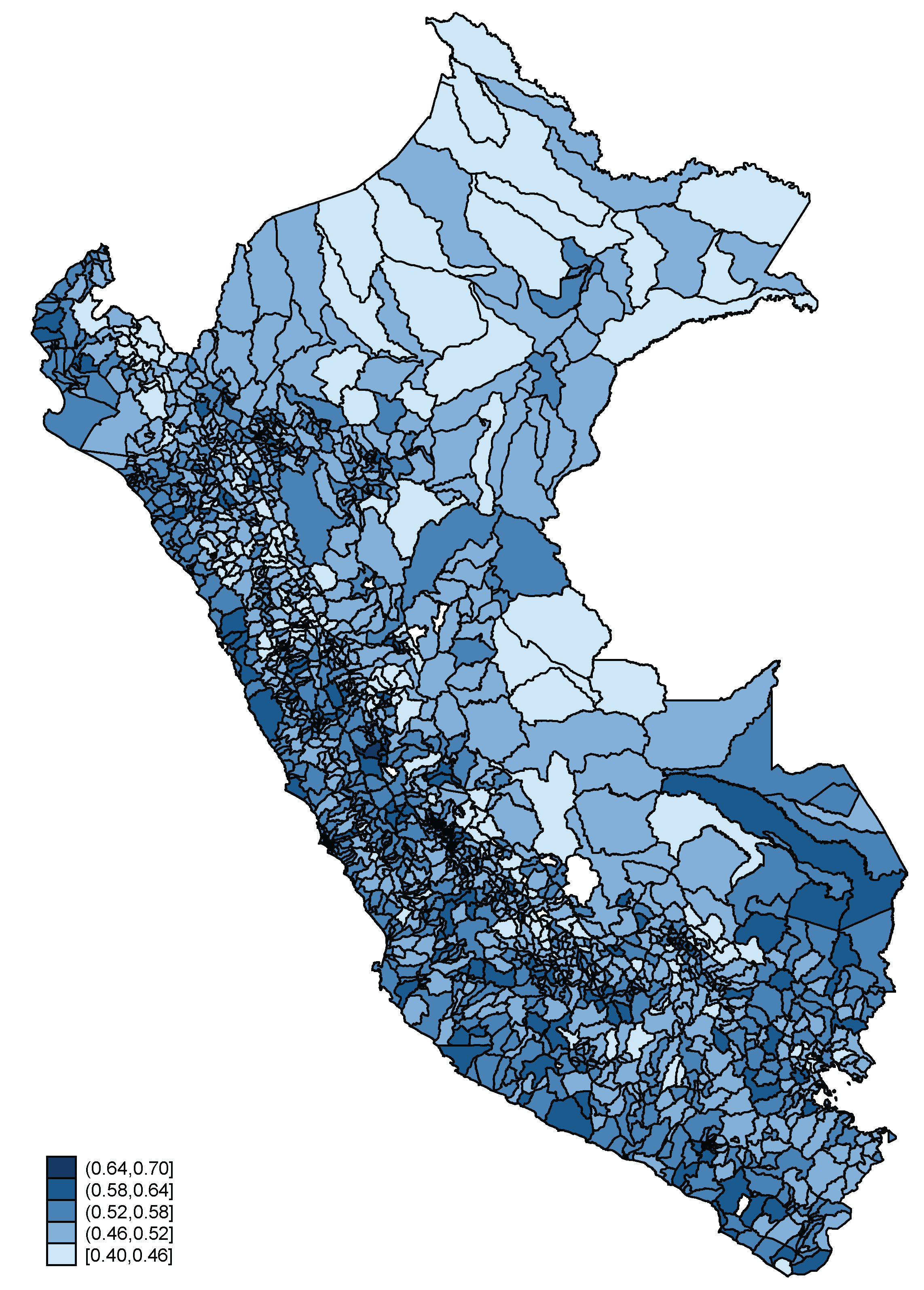
The estimated spatial autoregressive coefficient is 0.811 and is highly significant (p < 0.001), providing strong evidence of positive spatial dependence in human development. This result indicates that districts tend to exhibit HDI levels similar to those of their neighboring districts, revealing the presence of clear geographical clustering.
The magnitude of the coefficient suggests that human development is influenced not only by local socioeconomic conditions but also by regional dynamics. Districts surrounded by areas with higher levels of development are more likely to experience favorable development outcomes through shared infrastructure, labor mobility, market integration, and the diffusion of public services. Conversely, districts located within less developed regions tend to remain part of clusters characterized by lower levels of human development.
These findings emphasize that territorial development in Peru is inherently regional rather than purely local, reinforcing the importance of incorporating spatial interactions into development analyses.
3.2. Effect of State Density
The State Density Index has a positive and statistically significant coefficient of 0.0418 (p < 0.001), indicating that stronger state presence contributes positively to human development.
Specifically, a one-unit increase in the State Density Index is associated with an increase of approximately 0.042 points in the Human Development Index, holding other factors constant. This result suggests that greater access to public services—including education, healthcare, electricity, sanitation, and administrative capacity—improves living conditions and enhances overall human well-being.
The positive relationship highlights the importance of effective public institutions in transforming economic resources into improvements in social welfare. Consequently, strengthening state capacity appears to be a key component of territorial development policies.
3.3. Effect of Education
Education exhibits the largest direct effect among all explanatory variables, with a coefficient of 0.2429 (p < 0.001). This finding identifies education as the most important determinant of human development across Peruvian districts.
The magnitude of the coefficient indicates that improvements in educational attainment generate substantial gains in HDI. Better educational outcomes increase individuals’ capabilities, improve labor productivity, expand employment opportunities, and facilitate higher incomes, thereby contributing directly to improved living standards.
The results are consistent with human capital theory, which recognizes education as one of the primary drivers of long-term economic and social development. Compared with the remaining explanatory variables, education exerts the strongest influence on district-level human development.
3.4. Direct Effect of Mining Activity
Mining activity has a positive and statistically significant direct coefficient of 0.0231 (p < 0.001). This result indicates that districts with mining activity tend to achieve higher levels of human development than districts without comparable mining activity, after controlling for education, state presence, and spatial dependence.
Although the estimated effect is smaller than those associated with education and state density, it nevertheless suggests that mining contributes positively to local socioeconomic development. This relationship may reflect higher employment opportunities, increased household income, infrastructure development, business expansion, and fiscal transfers generated through mining revenues.
However, the relatively modest magnitude of the coefficient also indicates that mining alone cannot fully explain improvements in human development. Its developmental contribution depends on complementary investments in education, public services, and institutional capacity.
3.5. Spatial Spillover Effects of Mining Activity
One of the most relevant findings is the positive and statistically significant spillover coefficient associated with neighboring mining activity, estimated at 0.0428 (p = 0.001).
This result demonstrates that the benefits of mining extend beyond the districts where extraction occurs. Neighboring districts also experience improvements in human development through regional economic integration, labor mobility, transportation infrastructure, supplier networks, commercial linkages, and public investment financed by mining revenues.
Notably, the spillover effect is larger than the direct local effect of mining. This finding suggests that the regional benefits generated by mining may exceed the gains retained within producing districts themselves. Consequently, the developmental impact of mining should be understood from a territorial perspective rather than being limited to administrative boundaries.
The existence of significant spatial spillovers also implies that policies designed to promote regional coordination and infrastructure connectivity can amplify the developmental benefits associated with mining activities.
3.6. Unobserved District Heterogeneity
The estimated variance components reveal substantial heterogeneity across districts. The variance associated with district-specific random effects (0.0636) is considerably larger than the idiosyncratic error variance (0.0180), indicating that persistent structural characteristics continue to explain an important share of the observed differences in human development.
These characteristics may include geographical location, historical development patterns, institutional quality, productive specialization, and demographic composition. The presence of significant district-specific heterogeneity justifies the use of a random-effects specification to account for unobservable factors that remain relatively stable over time.
3.7. Overall Discussion
The empirical evidence indicates that human development in Peru is jointly determined by local socioeconomic conditions and spatial interactions among neighboring districts. The strong spatial dependence identified in the model confirms that development follows a territorial pattern, with improvements in one district influencing surrounding areas.
Among the explanatory variables, education emerges as the strongest determinant of human development, followed by state presence, highlighting the critical role of human capital and institutional capacity in promoting sustainable development. Although mining activity also contributes positively to human development, its direct impact is comparatively smaller.
A particularly important finding is the existence of positive spatial spillover effects associated with mining activity. The results demonstrate that mining generates regional benefits extending beyond producing districts, suggesting that its contribution to development operates through interconnected territorial networks rather than isolated local effects.
Overall, these findings support the view that mining can become an important driver of territorial development when accompanied by effective public institutions and sustained investments in education. Therefore, policies aimed at strengthening state capacity, improving human capital, and promoting regional coordination are likely to maximize the developmental benefits of mining while contributing to the reduction of spatial inequalities across Peruvian districts.
The variance decomposition indicates that spatial inequality in human development across districts in Peru is primarily driven by persistent district-level heterogeneity (σu = 0.0636), whereas idiosync|ratic shocks (σe = 0.018) play a comparatively minor role. This pattern suggests that development disparities among Peruvian districts are largely structural in nature, reflecting deep-rooted and time-invariant local characteristics rather than transitory fluctuations or short-term shocks (Figure 4).
Figure 4.
Direct and Spatial Effects of Mining on HDI.
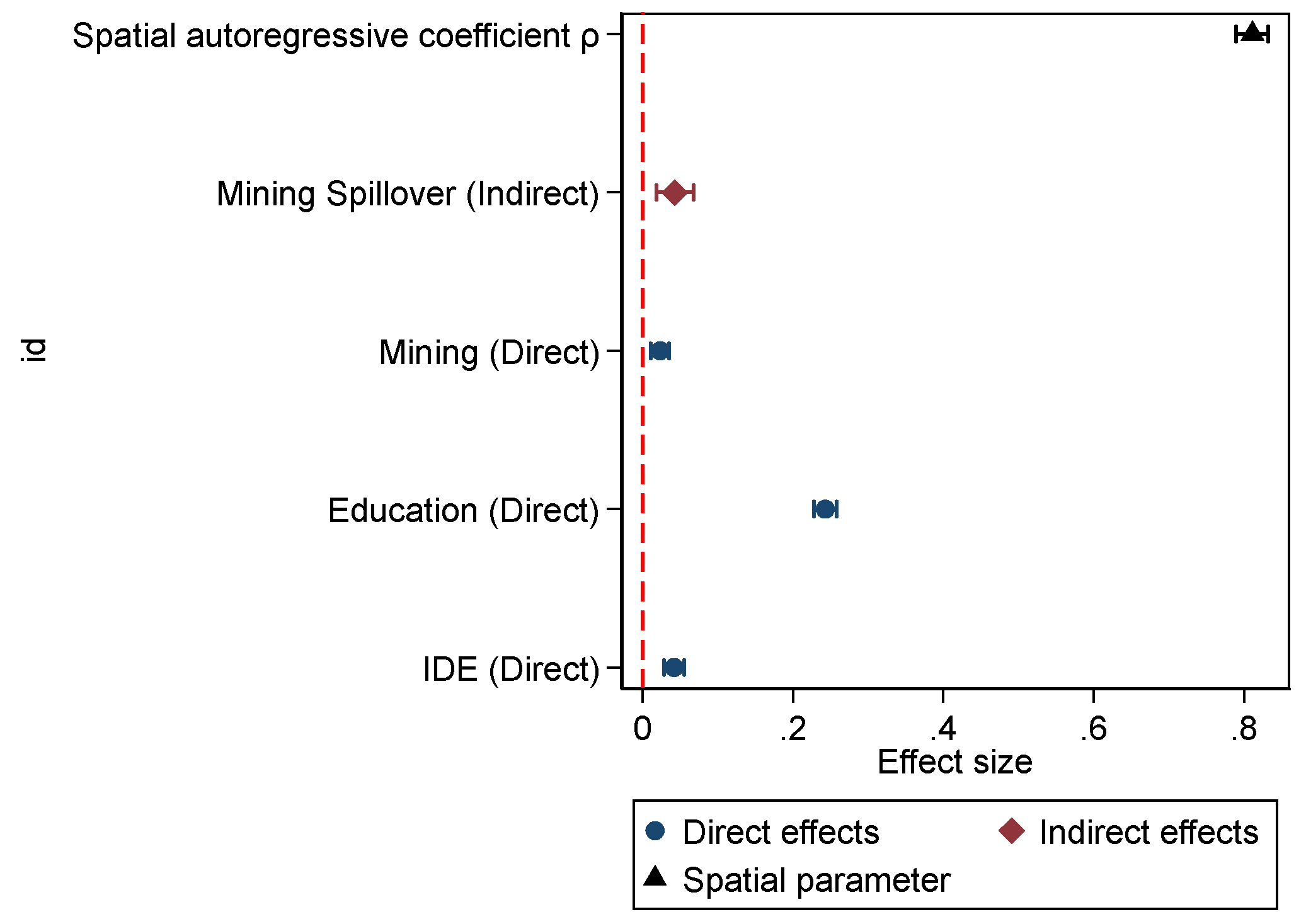
Figure 5.
Variance Components in Spatial Random-Effects Model.
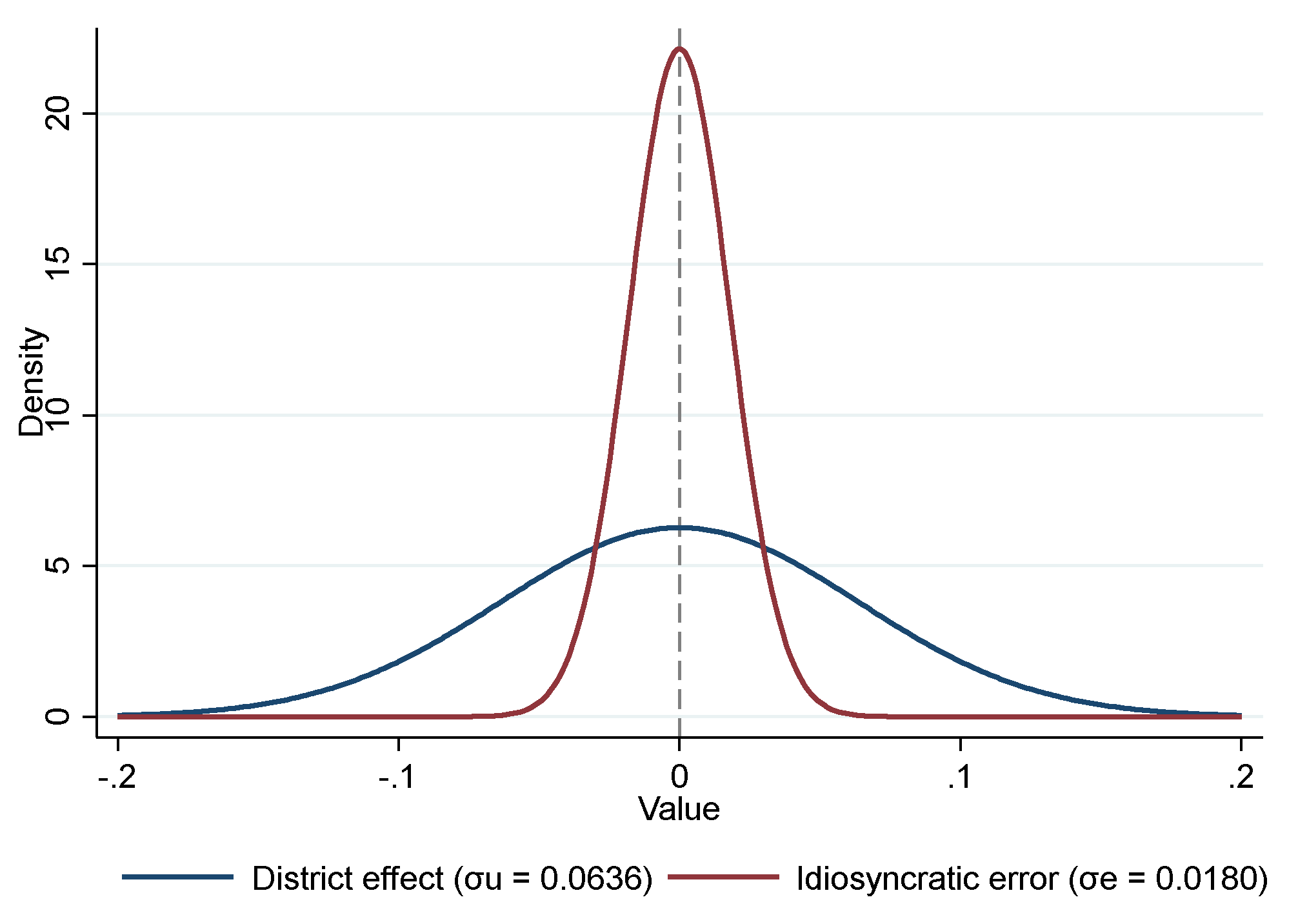
Figure 6.
Predicted Human Development Index in Peru: 2009-2024.
4. Discussion
The findings of this study contribute to the ongoing debate on whether extractive industries can generate broad-based improvements in human development. While the literature on natural resources has traditionally emphasized the risks associated with resource dependence, including institutional deterioration, inequality, and limited diversification Auty, 1993; Ross, 2012; Sachs & Warner, 1995), recent research suggests that the developmental consequences of mining are highly conditional on governance structures, institutional capacity, and territorial dynamics (Mehlum et al., 2006b; Van der Ploeg, 2011). The results obtained for Peruvian districts provide evidence that mining activity is associated with higher human development levels, but importantly, they demonstrate that these effects are not confined to mining-producing territories. Instead, mining generates spatial spillovers that influence neighboring districts, highlighting the importance of analyzing extractive activities within a territorial rather than purely local framework.
The first relevant finding is the strong spatial dependence observed in human development outcomes. The estimated spatial autoregressive coefficient ((\rho=0.811, p<0.001)) indicates that HDI levels are highly interconnected across Peruvian districts. This result is consistent with the spatial development literature, which argues that socioeconomic outcomes are shaped by geographical proximity, regional networks, infrastructure connectivity, and institutional interactions (Anselin, 1988; LeSage & Pace, 2009). Human development does not occur independently within administrative boundaries; instead, districts are embedded within broader regional systems where economic opportunities, public services, and social conditions diffuse spatially.
This finding extends previous evidence on territorial inequality by showing that disparities in Peru are not only differences between individual districts but also reflect regional development structures. Similar patterns have been identified in developing economies where poverty, education, and access to services tend to cluster geographically due to cumulative processes of advantage and disadvantage. Therefore, policies aimed at improving human development should consider regional interactions rather than focusing exclusively on isolated local interventions.
4.1. Mining Activity and Human Development: Beyond the Resource Curse Hypothesis
The positive direct effect of mining activity on HDI ((\beta=0.0231, p<0.001)) challenges the strongest version of the resource curse hypothesis, which argues that natural resource abundance systematically produces negative development outcomes (Sachs & Warner, 1995). Instead, the results support the more recent institutional perspective, which suggests that natural resources can become a development opportunity when appropriate institutional mechanisms allow resource revenues to be converted into public goods and productive investments (Boschini et al., 2007; Mehlum et al., 2006b).
In the Peruvian context, the positive association between mining activity and human development may be explained by several mechanisms. Mining operations generate employment opportunities, increase local demand for goods and services, stimulate infrastructure development, and generate fiscal resources through mining-related transfers. These channels can contribute to improvements in income levels and access to basic services, which are fundamental components of HDI.
However, the relatively smaller magnitude of the mining coefficient compared with education and state presence provides an important qualification. Mining activity alone does not guarantee substantial improvements in human development. This result is consistent with the argument developed by Van der Ploeg (2011), who emphasizes that natural resource wealth produces heterogeneous outcomes depending on institutional quality and the capacity to transform temporary resource rents into long-term productive assets. Therefore, the contribution of mining appears to be complementary rather than sufficient: mining generates resources, but institutions determine whether these resources translate into sustainable human development.
4.2. Spatial Spillovers of Mining Activity and Territorial Development
One of the main contributions of this study is the identification of positive spatial spillovers generated by mining activity. The coefficient associated with neighboring mining activity (0.0428, p=0.001) indicates that mining generates development effects beyond the districts where extraction takes place.
This finding expands previous studies that have mainly analyzed mining impacts within producing communities (Arellano-Yanguas, 2011b; Bebbington, 2012). The evidence suggests that the territorial effects of mining operate through broader regional mechanisms, including labor market integration, infrastructure networks, supplier relationships, commercial expansion, and public investment financed by mining revenues.
The fact that the spillover coefficient is larger than the direct mining effect is particularly relevant. It indicates that the regional benefits associated with mining may exceed the immediate gains captured by producing districts. This result supports the concept of territorial multiplier effects, where economic activities generate cumulative benefits through interconnected regional systems.
From a policy perspective, this finding implies that evaluating mining impacts exclusively at the district of extraction may underestimate its broader contribution to development. Regional planning strategies should therefore incorporate neighboring territories and promote infrastructure connectivity, economic integration, and coordinated public investment.
4.3. The Role of State Capacity in Transforming Mining into Development
The positive and significant effect of the State Density Index (IDE) ((\beta=0.0418, p<0.001)) provides strong evidence that institutional capacity plays a central role in converting economic opportunities into human development improvements. This result is consistent with institutional theories of development, which emphasize that effective institutions determine the ability of societies to transform available resources into welfare gains (Acemoglu & Robinson, 2012; North, 1990).
The IDE captures the effective presence of the State through access to essential services, including education, health, sanitation, and electricity. Therefore, its positive relationship with HDI indicates that territorial development depends not only on economic activity but also on the capacity of public institutions to provide basic capabilities.
This finding is particularly relevant for resource-rich regions, where mining revenues may coexist with limited improvements in social indicators. Previous studies on Peru have shown that decentralization and mining revenues do not automatically generate better development outcomes due to differences in local governance capacity and institutional effectiveness (Arellano-Yanguas, 2011b). The present results reinforce this argument by demonstrating quantitatively that state presence remains a fundamental determinant of human development even after controlling for mining activity and spatial dependence.
4.4. Education as the Main Driver of Human Development
Education exhibits the largest estimated coefficient among all explanatory variables (0.2429, p<0.001), confirming the central role of human capital accumulation in territorial development. This result is consistent with human capital theory, which identifies education as a key mechanism linking individual capabilities, productivity, income generation, and social mobility (Becker, 1964; Schultz, 1961).
The magnitude of the education effect suggests that long-term improvements in human development depend fundamentally on investments in population capabilities. While mining can generate financial resources, education determines the capacity of local populations to benefit from economic opportunities and participate in higher-productivity activities.
This finding also supports Sen (1999) capability approach, where development is understood as the expansion of people’s substantive freedoms and opportunities. From this perspective, mining revenues should be considered instruments that can support human development only when accompanied by investments in education and other capability-enhancing services.
4.5. Structural Heterogeneity and Persistent Territorial Inequalities
The variance decomposition indicates that district-level heterogeneity represents a major component of differences in human development. The district-specific variance (0.0636) is substantially larger than the idiosyncratic error variance (0.0180), suggesting that persistent structural characteristics explain a significant proportion of territorial disparities.
This result indicates that differences among Peruvian districts are not primarily driven by temporary shocks but by long-lasting factors such as geography, historical development trajectories, institutional conditions, productive specialization, and demographic characteristics. Similar evidence has been reported in regional development studies emphasizing path dependence and cumulative causation processes (North, 1990).
Consequently, policies designed to reduce territorial inequalities should recognize that disadvantaged districts require long-term institutional strengthening rather than short-term interventions. The persistence of structural heterogeneity implies that equalizing development opportunities requires sustained investments in infrastructure, education, governance, and connectivity.
Overall, the findings provide a more nuanced interpretation of the relationship between mining and human development in Peru. Rather than supporting a deterministic resource curse perspective, the evidence indicates that mining can contribute positively to human development when embedded within effective institutional and territorial frameworks.
The main contribution of this study is demonstrating that mining impacts operate through two complementary mechanisms: direct effects within producing districts and indirect spatial effects across neighboring territories. This highlights the importance of considering geographical interactions when evaluating extractive industries and development outcomes.
The results suggest that maximizing the developmental contribution of mining requires three complementary strategies. First, strengthening state capacity to ensure that mining revenues translate into effective public services. Second, prioritizing education and human capital investments to enhance local capabilities. Third, adopting regional development strategies that recognize spatial spillovers and promote coordination among neighboring territories.
Thus, mining should not be interpreted merely as an extractive activity but as a potential territorial development mechanism whose benefits depend on institutional quality, human capital formation, and spatial integration.
References
- Acemoglu, D.; Robinson, J. A. Why Nations Fail: The Origins of Power, Prosperity, and Poverty; Crown Publishers, 2012. [Google Scholar]
- Anselin, L. Spatial econometrics: methods and models. In Stud Oper Reg Sci; 1988. [Google Scholar] [CrossRef]
- Arellano-Yanguas, J. Aggravating the Resource Curse: Decentralisation, Mining and Conflict in Peru. J. Dev. Stud. 2011a, 47(4), 617–638. [Google Scholar] [CrossRef]
- Arellano-Yanguas, J. Aggravating the resource curse: decentralisation, mining and conflict in Peru. J. Dev. Stud. 2011b. [Google Scholar] [CrossRef] [PubMed]
- Auty, R. Sustaining Development in Mineral Economies: The Resource Curse Thesis; Routledge, 1993. [Google Scholar]
- Bebbington, A. Social Conflict, Economic Development and Extractive Industry. J. Dev. Stud. 2012, 48(3), 390–406. [Google Scholar] [CrossRef]
- Becker, G. S. Human Capital: A Theoretical and Empirical Analysis, with Special Reference to Education; University of Chicago Press, 1964. [Google Scholar]
- Boschini, A.; Pettersson, J.; Roine, J. Resource Curse or Not: A Question of Appropriability. Scand. J. Econ. 2007, 109(3), 593–617. [Google Scholar] [CrossRef]
- LeSage, J.; Pace, R. K. Introduction to Spatial Econometrics; CRC Press, 2009. [Google Scholar]
- Mehlum, H.; Moene, K.; Torvik, R. Institutions and the Resource Curse. Econ. J. 2006a, 116(508), 1–20. [Google Scholar] [CrossRef]
- Mehlum, H.; Moene, K.; Torvik, R. Institutions and the Resource Curse. Econ. J. 2006b, 116(508), 1–20. [Google Scholar] [CrossRef]
- North, D. C. Institutions, Institutional Change and Economic Performance; Cambridge University Press, 1990. [Google Scholar]
- Ross, M. L. The Oil Curse: How Petroleum Wealth Shapes the Development of Nations; Princeton University Press, 2012. [Google Scholar]
- Sachs, J.; Warner, A. Natural resource abundance and economic growth. In NBER Working Paper; 1995. [Google Scholar]
- Schultz, T. W. Investment in Human Capital. American Economic Review. 1961. [Google Scholar]
- Sen, A. Development as Freedom; Oxford University Press, 1999. [Google Scholar]
- Van der Ploeg, F. Natural Resources: Curse or Blessing? J. Econ. Lit. 2011, 49(2), 366–420. [Google Scholar] [CrossRef]
Figure 1.
Mining and Non-Mining Districts in Peru.
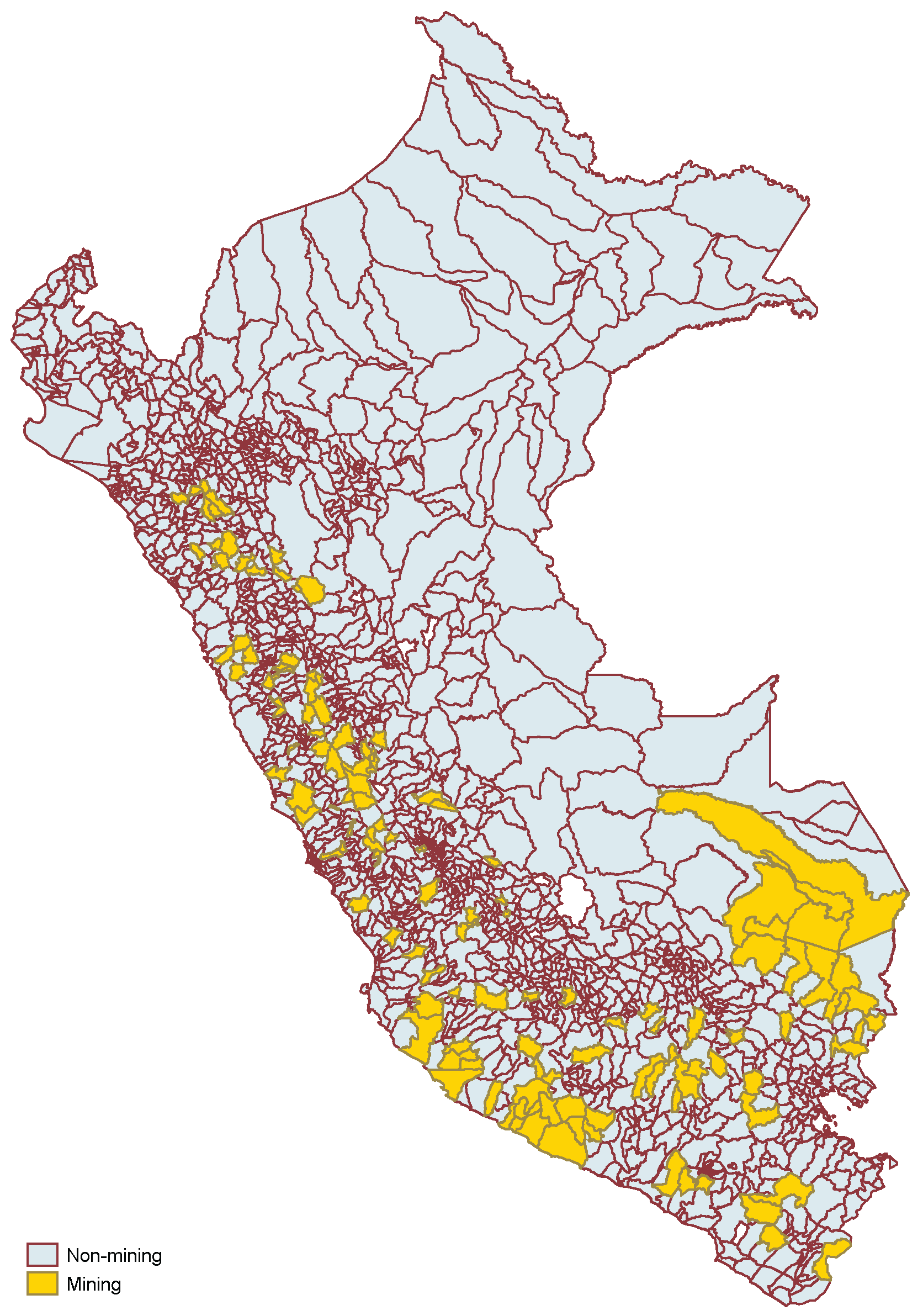
Figure 2.
Human Development and State Development Index (SDI) Across Peruvian Districts.
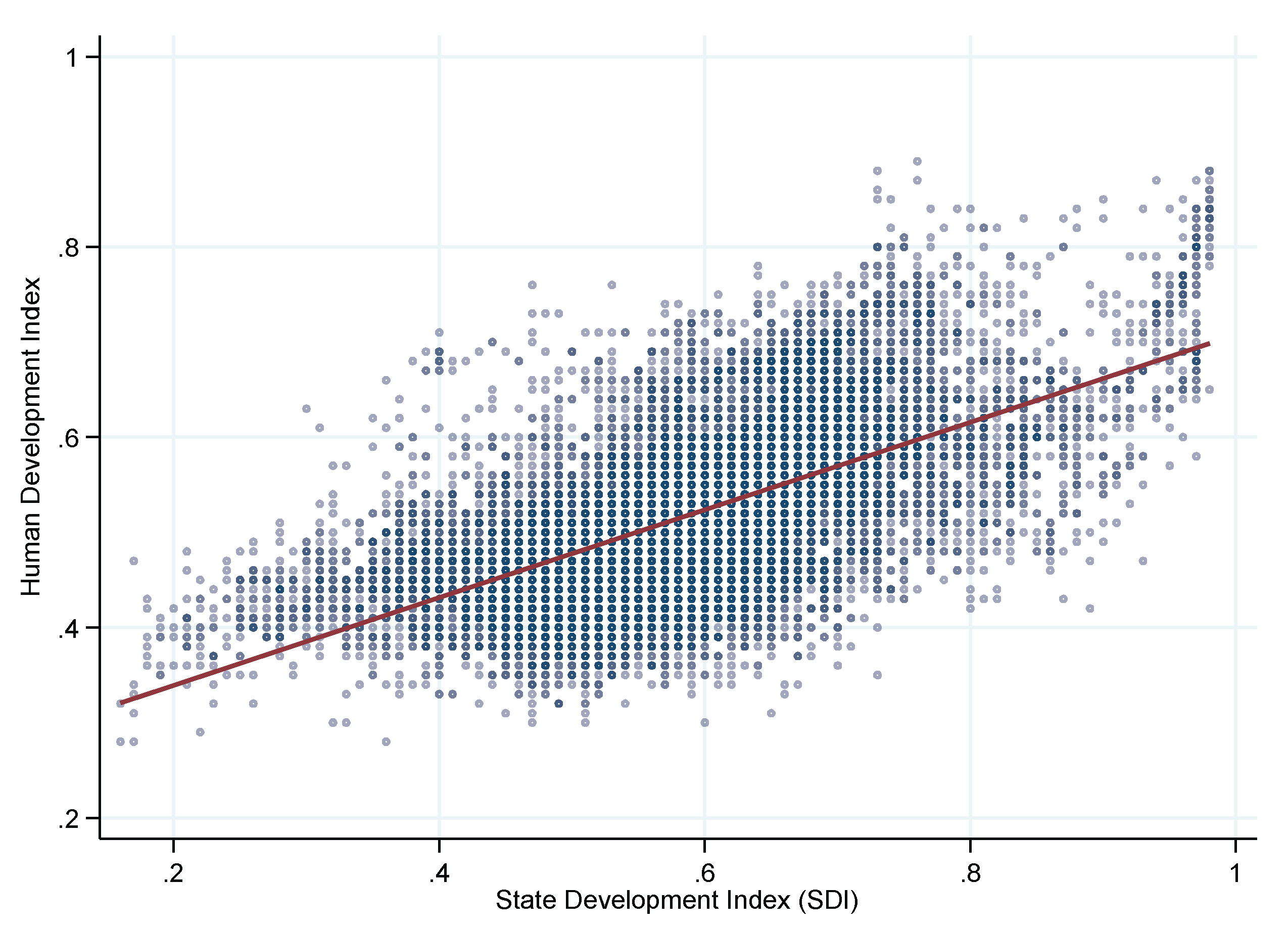
Figure 3.
Human Development and Years of Education Across Peruvian Districts.
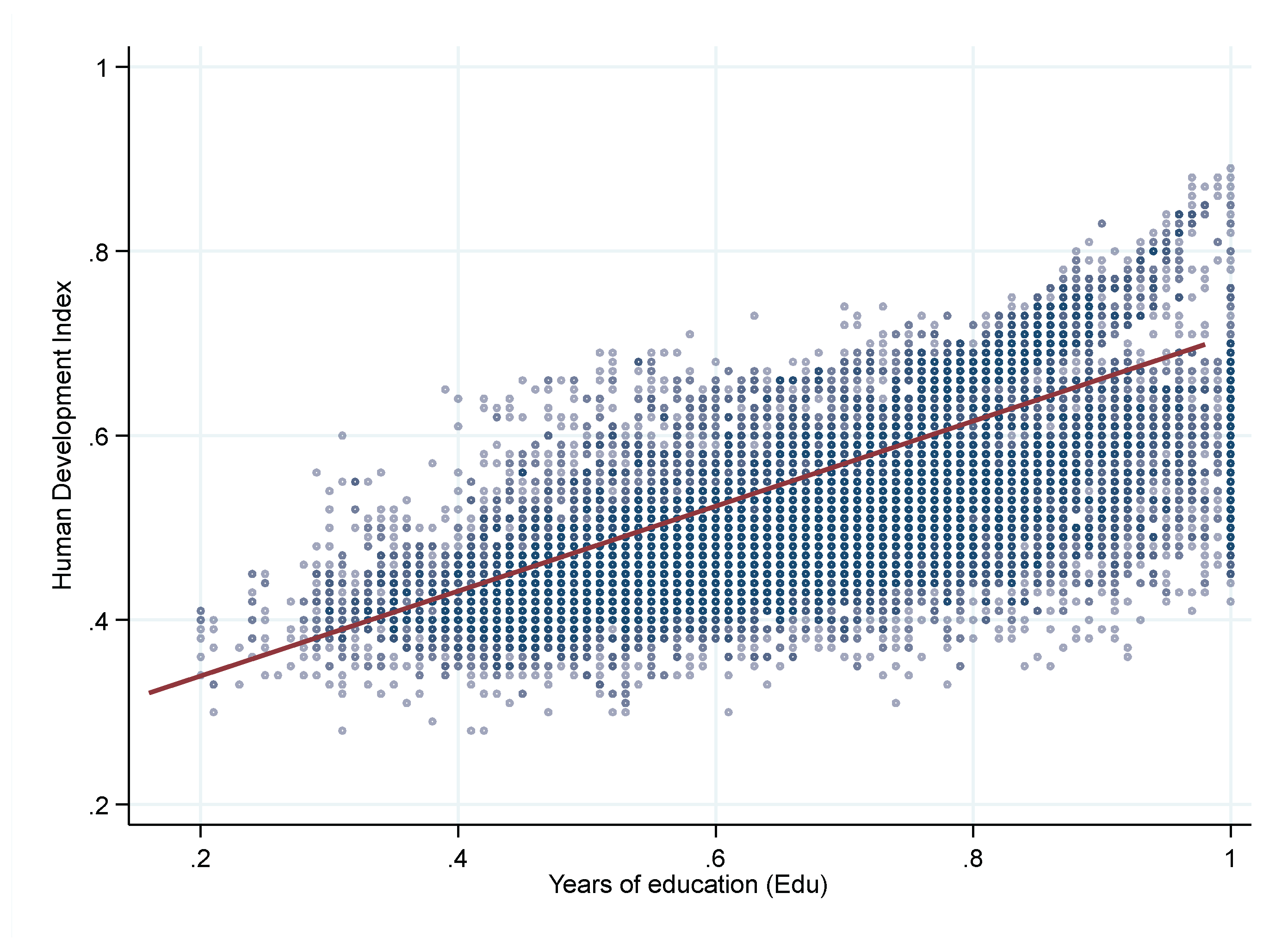
Table 2.
Spatial Random-Effects Panel Estimates of Human Development in Peru (2018–2024).
| Variable | Coefficient | Std. Error | p-value |
|---|---|---|---|
| Direct effects | |||
| State Density Index (IDE) | 0.0418*** | 0.0069 | <0.001 |
| Education (EDU) | 0.2429*** | 0.0077 | <0.001 |
| Mining Activity (MINING) | 0.0231*** | 0.0062 | <0.001 |
| Constant | 0.3250*** | 0.0058 | <0.001 |
| Spatial effects | |||
| Spatial lag of Mining Activity (W.MINING) | 0.0428*** | 0.0127 | 0.001 |
| Spatial autoregressive coefficient (ρ) | 0.8110*** | 0.011 | <0.001 |
| Variance components | |||
| District random effect (σu) | 0.0636 | 0.0013 | — |
| Idiosyncratic error (σe) | 0.018 | 0.0001 | — |
| Model Statistics | |||
| Statistic | Value | ||
| Number of observations | 13,118 | ||
| Number of districts | 1,874 | ||
| Time periods | 7 (2018–2024) | ||
| Log-likelihood | 29,216.68 | ||
| Wald χ2 | 1,344.58 | ||
| Prob > χ2 | <0.001 | ||
| Wald test of spatial effects | 5,440.35 | ||
| Prob > χ2 | <0.001 | ||
| Pseudo R2 | 0.4173 |
Disclaimer/Publisher’s Note: The statements, opinions and data contained in all publications are solely those of the individual author(s) and contributor(s) and not of MDPI and/or the editor(s). MDPI and/or the editor(s) disclaim responsibility for any injury to people or property resulting from any ideas, methods, instructions or products referred to in the content. |
© 2026 by the authors. Licensee MDPI, Basel, Switzerland. This article is an open access article distributed under the terms and conditions of the Creative Commons Attribution (CC BY) license (http://creativecommons.org/licenses/by/4.0/).
Copyright: This open access article is published under a Creative Commons CC BY 4.0 license, which permit the free download, distribution, and reuse, provided that the author and preprint are cited in any reuse.


