
Submitted:
13 July 2026
Posted:
15 July 2026
You are already at the latest version
Abstract
Liver transplantation remains a technically demanding procedure despite continued surgical advances. Successful outcomes depend on balancing donor selection with perioperative complexity, where each decision shapes graft and patient survival. Conventional scoring systems such as MELD-based prioritisation only partially explain differences in patient outcomes across transplant centres worldwide. Advances in artificial intelligence (AI) and machine learning (ML)—including longitudinal modelling of electronic health records, deep learning for imaging, and multimodal data integration—offer new opportunities to individualise risk stratification for graft selection, predict allograft dysfunction and rejection, and improve long-term survival. Clinically developed AI models may strengthen organ matching decisions and acceptance, while identifying candidates who require intensified immunosuppressant monitoring or targeted diagnostic testing in the postoperative period, without increasing rejection risk. However, the introduction of AI/ML systems demands thorough validation, careful calibration, and ongoing clinical audit to reduce bias, detect technical errors, and ensure reproducible performance. This review summarises current and emerging clinical applications of AI in liver transplantation and explores near-future directions. These include AI-driven graft evaluation during organ retrieval and normothermic machine perfusion, along with emerging evidence for the safety, reliability, and clinical utility of AI in transplantation practice.
Keywords:
artificial intelligence
; machine learning
; liver transplantation
; clinical decision support
; graft survival
; immunosuppression
Introduction
Artificial intelligence (AI) and machine learning (ML) are increasingly used for prediction, imaging interpretation, and clinical decision support in medicine. Liver transplantation (LT) is well suited to these approaches because outcomes depend on numerous factors, including donor quality, donor–recipient matching, perioperative risk, and long-term graft function. AI/ML can improve risk stratification, allocation decisions, intraoperative planning, and personalised post-transplant care for both adult and paediatric recipients. Modern transplant programmes generate large volumes of laboratory values, physiological measurements, donor and graft data, imaging results, pathology, and molecular information. The true clinical benefit of these advanced models emerges when they undergo external validation, are linked to clear clinical actions such as increased monitoring or biopsy, and are sufficiently interpretable to guide allocation and post-transplant decisions. This review summarises AI/ML applications across the transplant pathway—including imaging, digital pathology, graft viability assessment, waitlist mortality, donor–recipient matching, and complication prediction—and outlines key barriers to clinical implementation.
2. Fundamental Technologies and Methodology
AI/ML methods used in transplantation include supervised and unsupervised algorithms such as XGBoost, artificial neural networks (ANNs), random survival forests, graph neural networks, and ensemble models. XGBoost, in particular, has shown strong performance in predicting transplant outcomes [1]. Random survival forests support post-transplant survival modelling, while deep learning and graph neural networks can capture complex immunological features and donor–recipient compatibility patterns. For example, graph neural networks can analyse immunological and biological compatibility factors to refine organ suitability assessments beyond traditional matching [2]. Integrative modelling is also crucial: combining donor age, renal and liver function, cause of death, type of donation, cold ischaemia time, recipient age, and comorbidities has improved outcome prediction [2]. Figure 1 outlines the fundamental basis of AI.
3. Clinical Use Across the Transplant Pathway
3.1. Pre-Transplant Phase
3.1.1. Organ Allocation and Donor–Recipient Matching
LT organ allocation is determined by intricate interactions among donor, recipient, perioperative, and postoperative factors. The application of ensemble methods to large, integrated datasets may enhance organ allocation strategies and donor–recipient matching processes. For instance, a deep learning-based donor–recipient matching system has reported a 95.8% overall accuracy in predicting post-transplant survival, with 94.3% accuracy in forecasting in-hospital mortality [3]. Numerous studies demonstrate that artificial neural networks and random forests frequently outperform traditional statistical models in allocation tasks. Nevertheless, neural networks can exhibit high sensitivity to data quality, and random forests may become computationally infeasible for exceedingly large datasets. A recent systematic review has identified numerous machine learning applications for donor–recipient matching, post-transplant survival prediction, and organ supply–demand modelling. Importantly, the majority of these studies prioritised survival utility but lacked robust methodologies for modelling transplant urgency and evaluating transplant benefit [4].
3.1.2. Predicting Waiting-List Mortality and Disease Progression
Accurate waitlist mortality prediction is very important because the demand for organs always exceeds the supply. While MELD-based scoring has been a key tool for liver allocation, it might not fully capture all the complexities of a patient's journey and risk factors. By using AI and machine learning models, we can include a wider range of clinical histories and changing variables to better assess individual risks. [5]. Since the 2000s, neural network models trained on large transplant registry data, like UNOS/OPTN, have surpassed MELD in predicting waitlist mortality, showing improved sensitivity in identifying high-risk transplant candidates [6]. More recently, the GEMA-AI (Gender-Equity Model for Liver Allocation using AI) was developed and validated in UK and Australian populations. It combines INR, bilirubin, sodium, and a renal function measure (Royal Free GFR) within an interpretable neural network, performing better than earlier models (GEMA-Na and MELD-Na) in predicting waitlist mortality, especially for female and complex cases [7]. Disease-specific ML models can further enhance prediction accuracy for particular conditions. For instance, a random survival forest model for primary sclerosing cholangitis (PSC) outperformed MELD-Na and identified non-MELD predictors such as inflammatory markers, waiting time, platelet count, overlap with autoimmune hepatitis, AST, sex, age, history of biliary interventions, and body weight [8]. In metabolic-associated steatohepatitic cirrhosis (formerly NASH or MASH), a DeepHit survival model analysed competing risks of death versus transplant receipt. [9].
3.1.3. Preoperative Functional Status Assessment
Candidate evaluation prior to LT is increasingly focusing on functional status, as complications related to cardiovascular issues and frailty significantly impact early and late post-transplant morbidity and mortality [10]. AI/ML offers opportunities to enhance personalised preoperative functional assessments and risk stratification. Key aspects include:
• Conventional scoring systems: (see Table 1.) Traditional risk indices used for LT candidates, such as MELD, provide an objective framework for prioritising patients based on the severity of liver disease [11]. However, MELD can underperform in certain conditions (e.g., PSC), where comorbid factors and unique disease progression patterns are not fully captured. Other composite scores, such as the Survival Outcomes Following Liver Transplantation (SOFT) and the Balance of Risk (BAR) score, improve short-term outcome predictions, but their calibration declines over longer-term follow-up. In an analysis of 112,357 transplants, these scores best predicted short-term patient and graft survival but performed poorly at 3- and 5-year follow-up [12].
• Frailty and functional reserve assessment: Frailty is a clinical condition reflecting reduced physiological reserve and is an established predictor of postoperative mortality and prolonged hospitalisation after LT [13]. The Liver Frailty Index, based on objective measures like grip strength, chair stands, and balance, can quantify pre-transplant frailty. A meta-analysis of 55 studies found that frailty prevalence in LT candidates ranged from 2.8% to 70.1% and that frail patients had significantly higher waiting-list and post-transplant mortality [14]. The Multidimensional Prognostic Index (MPI) is an alternative comprehensive geriatric assessment tool that may provide comparable prognostic value for older transplant candidates by incorporating nutrition, cognition, and activities of daily living (ADL) measures [15].
• Sarcopenia assessment: Sarcopenia (generalised loss of skeletal muscle mass and strength) is commonly assessed by imaging-based metrics such as the skeletal muscle index on abdominal CT or MRI. Preoperative sarcopenia is an important marker of frailty; for example, in living donor LT, sarcopenia independently predict longer hospital and ICU stays and prolonged mechanical ventilation [16]. Recent deep learning techniques enable automated quantification of 3D muscle volume from preoperative CT scans, yielding results comparable to manual measurements while offering greater speed and consistency [17]. AI-driven sarcopenia assessment may enhance risk stratification, identify candidates for prehabilitation or nutritional optimisation, and inform perioperative planning. Key barriers remain, including standardising muscle mass cut-off values, addressing scanner variability, integration with radiology image viewing systems, and prospective validation in clinical settings.
3.2. AI in Donor Organ Assessment
3.2.1. Current Challenges in Donor Liver Assessment
To expand the donor pool, many transplant programmes now consider expanded criteria donors, including older donors, steatotic (fatty) grafts, and organs donated after circulatory death (DCD). However, assessing marginal grafts is challenging: it is often subjective and relies on clinical judgement, a surgeon’s experience, and limited biomarker data [18]. The widely used Donor Risk Index (DRI) incorporates donor age, race, height, DCD vs. brain death donor (DBD), cause of death, split vs. whole graft, cold ischaemia time, and organ sharing, but it does not account for recipient factors or some extended donor variables [19]. AI/ML approaches may improve the objectivity and precision of donor liver evaluation by integrating complex data from donors, grafts, and recipients.
3.2.2. AI/ML in Steatosis Assessment
Graft steatosis (fatty liver change) is a major reason for discarding donor livers and is associated with early allograft dysfunction, rejection, and worse long-term outcomes. Liver graft biopsy remains the gold standard for quantifying steatosis, but it is invasive and time-consuming; visual inspection of the liver is quicker but prone to variability and subjectivity. AI/ML techniques can support more standardised and reproducible assessment of steatosis:
• Photographic and image-based analysis: LiverColor is a recent platform combining colour and texture analysis of ex vivo graft photographs with supervised ML algorithms; it integrates donor characteristics, liver function tests, and graft images to estimate steatosis severity [20]. Additionally, near-infrared hyperspectral imaging coupled with one-dimensional convolutional neural networks (1D-CNNs) can classify the severity of steatosis and predict early allograft dysfunction. However, initial studies using this technology did not include paediatric donors, so further validation in broader cohorts is needed [21].
• Histopathology via deep learning: Foundation models such as Prov-GigaPath have been applied to quantify macrovesicular steatosis on frozen donor liver sections. In a recent study, this approach achieved 96.4% accuracy in categorising specimens above or below a 30% steatosis threshold [22]. While this method holds promise as a rapid, objective assessment of graft fat content, larger validation studies are required before routine clinical implementation.
• MRI and advanced imaging modalities: ML applied to magnetic resonance imaging (MRI)—specifically, measuring proton density fat fraction (PDFF)—allows non-invasive quantification of steatosis. This is particularly relevant in living donor LT, where pre-donation liver fat must be assessed without invasive biopsies. Convolutional neural networks (CNNs) and generative adversarial networks (GANs) have been investigated to improve PDFF accuracy, though current evidence is limited by small single-centre studies [23].
3.2.3. Graft Viability and Biomarker Assessment
Normothermic machine perfusion and other ex situ organ perfusion techniques enable viability testing by analysing biomarkers in the perfusate (circulating fluid). For example, elevated perfusate lactate levels are associated with post-transplant hepatic injury (transaminitis) and prolonged hospital stays. Other candidate biomarkers include flavin mononucleotide, arginase-1, interleukin-6, and syndecan-1. Integrating these measures with donor and graft features using ML models could help predict early graft dysfunction or provide automated decision support for transplant versus discard during organ perfusion [24]. While preliminary results are promising, substantial prospective validation is needed.
3.3. Intraoperative Applications of AI/ML
3.3.1. Intraoperative complication prediction:
ML models have been used to forecast and manage surgical risks. For example, a CatBoost model has been trained to predict the need for massive transfusion during LT using preoperative and intraoperative variables, including patient age, haemoglobin, platelet count, coagulation parameters, and liver disease severity [25]. Similarly, the AI-OLTRBC-1 platform uses an ML-based approach that incorporates preoperative lab values (albumin, bilirubin, creatinine, haemoglobin, INR, and aPTT) to optimise blood product allocation and reduce transfusion delays [26]. Intraoperative ML models have also been developed to predict acute kidney injury (AKI) during LT; explainable ML approaches using Shapley Additive Explanations (SHAP) have identified key risk factors (e.g., bilirubin, urine output, anaesthesia duration, platelet count, graft steatosis) to guide fluid management and improve perioperative decision-making [27].
3.3.2. Surgical Guidance Applications:
Beyond predictive analytics, AI and related technologies are being explored for surgical navigation. Mixed-reality systems (e.g., Magic Leap) can overlay 3D models of patient anatomy (such as liver vasculature) onto the surgical field to enhance intraoperative spatial awareness. In a study using a 3D-printed liver phantom, augmented reality (AR) guidance improved the precision of surgical resections, suggesting potential benefits for living donor or tumour resection procedures [28]. Another promising approach combines intraoperative ultrasound with laparoscopic or robotic visual cues. For example, Flag AR technology projects visual markers to highlight key anatomical structures (such as hepatic vessels) during minimally invasive donor hepatectomy, aiding surgeons in real time [29].
3.4. Postoperative Management
3.4.1. Early Allograft Dysfunction (EAD) and Graft Failure Prediction:
EAD is a serious complication linked to reduced graft survival and increased postoperative morbidity. The Liver Graft Assessment Following Transplantation (L-GrAFT) score is a validated model for predicting 90-day outcomes: it uses trends in AST, ALT, INR, bilirubin, platelet count, and creatinine over the first 7–10 post-transplant days to identify patients at risk of EAD and poor 3-month outcomes [30]. Additionally, novel biomarkers are under investigation: recent evidence suggests that neutrophil extracellular traps (NETs) contribute to early post-transplant complications through immune activation and thrombosis; these could be incorporated into future risk models [31].
3.4.2. Detection of Acute Rejection:
Acute rejection occurs in up to 30% of LT recipients within one year. AI-driven multimodal models are being developed to improve early diagnosis and characterisation of rejection. For example, by combining clinical variables with histopathology data, ML algorithms can classify T-cell–mediated rejections as steroid-responsive or steroid-resistant, which may guide therapy. Similarly, ML analysis of donor-derived cell-free DNA (dd-cfDNA) kinetics could improve rejection risk prediction, and CNN-based analysis of allograft biopsy slides can reduce inter-observer variability in applying the Banff classification for rejection severity [32].
3.4.3. Immunosuppression Monitoring:
AI/ML can support more objective, personalised immunosuppressive therapy after LT. Personalised dosing models integrate patient demographics, laboratory data, pharmacokinetic models, and time-series drug-level data to optimise tacrolimus dosing [33]. ML-based approaches have improved trough-level predictions and may reduce episodes of over- or under-immunosuppression. AI can also identify patterns of tacrolimus-associated nephrotoxicity, enabling earlier dose adjustments or conversion to mTOR inhibitor therapy [34]. Furthermore, ML has been used to stratify risk for opportunistic infections (e.g., cytomegalovirus disease or sepsis) using immune parameters and immunosuppressant exposure data. Outside the hospital, advanced monitoring tools such as wearable devices and “smart” medication dispensers can detect non-adherence, potentially predicting increased rejection risk [35]. ML models may even anticipate long-term metabolic complications associated with chronic immunosuppressive therapy.
4. Implementation Challenges
Most AI research in transplantation has been retrospective and usually conducted at single centres. When models are applied to different populations or healthcare settings, their performance and calibration often decrease due to variations in donor demographics, patient groups, and clinical protocols. For AI to be effective in clinical practice, models need to report essential metrics like discrimination and calibration, and their real-world usefulness should be thoroughly tested — miscalibrated predictions, for instance, can negatively influence organ acceptance decisions or patient care. The main challenges include:
• Data quality and heterogeneity: High-quality, harmonised data remain a major barrier to robust AI. A review of transplant AI literature found that only ~6% of studies addressed algorithmic fairness, and 41% of ANN studies lacked any described interpretability strategies [36]. Variation in data definitions, collection methods, and missing data across centres complicates model development and limits generalisability.
• Lack of external validation: Transplant populations, clinical practices, and allocation policies differ across regions and change over time. This “concept drift” can significantly decrease AI model performance on external datasets and emphasises the importance of ongoing retraining and validation [36]. Few AI models in LT have been prospectively or multi-centre externally validated, which is essential for proving their real-world applicability.
• Black-box models and explainability: Many high-performing ML models (notably deep neural networks and ensemble methods) are complex and lack transparent decision pathways. This limited explainability can undermine clinician and patient trust in AI-generated risk estimates or treatment recommendations. The “black-box” problem of AI is driving efforts to incorporate explainable AI techniques (such as SHAP or LIME) to elucidate how models arrive at their predictions, thereby improving acceptance in clinical settings [37].
• Organisational barriers: Smaller transplant centres often face shortages of technical and financial resources needed to develop, implement, and sustain AI systems. Even highly accurate models need to be integrated into existing workflows- such as electronic health records or organ allocation systems- along with user training and a strong data management infrastructure for model updates. These organisational hurdles currently restrict the broader adoption of AI in transplantation.
5. Ethical Considerations and Bias
The use of AI in LT also raises key ethical concerns such as bias, transparency, accountability, patient privacy, and trust. Existing clinical data may contain disparities or biases related to listing practices, risk assessment, and donor organ acceptance, which AI algorithms could inadvertently learn. For instance, if certain patient groups are underrepresented in training data, it could lead to biased model outcomes unless fairness measures are implemented. Black-box models offer limited explanations for their predictions, making it hard for clinicians or patients to understand or challenge AI-driven advice. Clear responsibility for decisions based on AI is essential. To address these issues, comprehensive bias monitoring, transparent reporting—including negative results or errors—strict privacy protections, and ongoing human oversight are vital for safe AI use in transplantation.
6. Conceptual Framework for Responsible AI Deployment
For safe and effective deployment of AI in liver transplantation, a structured, responsible AI framework is needed. This should span the entire process, from initial problem definition and data collection to model development, clinical integration, and continuous monitoring. Key principles include integrating interpretability, calibration, clinician oversight, and patient safety at each stage. A multidisciplinary governance approach is essential for responsible AI, involving transplant clinicians, data scientists, ethicists, regulators, and patient representatives. This ensures that AI supports—rather than supplants—clinical judgement. Figure 2 illustrates a stepwise approach to implementing AI in LT while adhering to these principles.
7. Future Directions and Enabling Technologies
7.1. Multimodal Data Integration:
Future predictive models for LT should integrate various data types, including genomic, immunologic, proteomic, imaging, clinical, and intraoperative parameters. Combining these data into single models may improve the accuracy and personalisation of risk predictions for transplant outcomes. Nonetheless, this approach depends on well-curated, standardised datasets and thorough validation across large, diverse patient groups.
7.2. Generative AI and Large Language Models:
Generative AI tools like large language models (LLMs) can help clinicians by summarising unstructured clinical data (such as narrative notes) and assisting with complex reasoning or decision-making. However, their use in the transplantation field is still mostly theoretical. Careful assessment is essential to confirm that these models deliver accurate, unbiased information and fit smoothly into clinical workflows without risking patient safety or care quality.
7.3. Federated Learning and Explainable AI Models:
Federated learning is a rising method that enables multiple institutions to collaboratively develop AI models using local data, without requiring the sharing of sensitive patient information across borders. This approach can support strong multi-centre AI systems while maintaining data privacy. Combining federated learning with explainability features or model-agnostic explanation techniques may also increase clinicians’ confidence and improve the interpretability of the predictions, which is essential for clinical use.
8. Recommendations for Implementation
8.1. Rigorous Validation:
AI models must undergo prospective and external validation across various transplant centres and patient groups. When presenting new models, include their performance metrics within relevant subgroups such as donor type, recipient demographics, and disease etiology. Additionally, assess their calibration over time to verify consistent reliability.
8.2. Governance and Ethics:
Implementing AI in transplantation requires a robust governance framework that includes stakeholders from clinical, data science, regulatory, and patient communities. This promotes ethical practices and transparency during development and deployment. It is also crucial to establish accountability and clear guidelines regarding the use of AI outputs in clinical decisions.
8.3. Clinician and Patient Engagement:
To facilitate adoption, AI systems should be developed with direct input from end-users. User-friendly interfaces and integration with existing clinical decision support tools are important. Clinicians and patients must be engaged in understanding how the AI’s recommendations are generated and their limitations, especially for sensitive decisions such as organ allocation or changes in post-transplant management.
9. Conclusions
AI and ML hold great promise to improve donor–recipient matching, immunosuppression control, and outcome forecasting in liver transplantation. To turn this potential into practice, careful implementation is needed: validating across different settings, ongoing calibration and updates, and strong oversight by clinicians to ensure patient safety and preserve trust. Progress in explainable AI, federated learning, and multimodal data integration supports the responsible application of AI in this field. Ultimately, using these technologies to support, not replace, clinician judgement can enhance personalised care and outcomes, as long as patient-centeredness, equity, and ethics stay prioritised.
Author Contributions
Conceptualisation: SC, EH; Writing—original draft preparation: SC, EH; Writing—review and editing: EH, VKK; Supervision: EH, VKK. All authors have read and agreed to the published version of the manuscript.
Funding
This research received no external funding.
Institutional Review Board Statement
Not applicable.
Informed Consent Statement
Not applicable
Data Availability Statement
No new data were created or analysed in this study. Data sharing is not applicable to this article.
Acknowledgements
We are thankful to Ms Sanghita Chakraborty, IT consultant at PwC Ireland, for her technical support in preparing the manuscript.
Conflicts of Interest
The authors declare no conflicts of interest.
Abbreviations
The following abbreviations are used in this manuscript:
- ADL: activities of daily living
- AI: artificial intelligence
- AI/ML: artificial intelligence/machine learning
- AKI: acute kidney injury
- ALT: alanine aminotransferase
- ANN: artificial neural network
- aPTT: activated partial thromboplastin time
- AR: augmented reality
- AST: aspartate aminotransferase
- BAR: Balance of Risk
- CNN: convolutional neural network
- CT: computed tomography
- DCD: donation after circulatory death
- dd-cfDNA: donor-derived cell-free DNA
- DRI: Donor Risk Index
- EAD: early allograft dysfunction
- EHR: electronic health record
- GEMA-AI: Gender-Equity Model for Liver Allocation using Artificial Intelligence
- GFR: glomerular filtration rate
- HPB: hepatopancreatobiliary
- ICU: intensive care unit
- INR: international normalised ratio
- L-GrAFT: Liver Graft Assessment Following Transplantation
- LIME: Local Interpretable Model-Agnostic Explanations
- LLM: large language model
- LT: liver transplantation
- MASH: metabolic dysfunction-associated steatohepatitis
- MELD: Model for End-Stage Liver Disease
- ML: machine learning
- MPI: Multidimensional Prognostic Index
- MRI: magnetic resonance imaging
- mTOR: mechanistic target of rapamycin
- NASH: non-alcoholic steatohepatitis
- NET: neutrophil extracellular trap
- NMP: normothermic machine perfusion
- OPTN: Organ Procurement and Transplantation Network
- PACS: picture archiving and communication system
- PDFF: proton density fat fraction
- PSC: primary sclerosing cholangitis
- SHAP: Shapley Additive Explanations
- SOFT: Survival Outcomes Following Liver Transplantation
- UNOS: United Network for Organ Sharing
References
- Olawade, D.B.; Marinze, S.; Qureshi, N.; Weerasinghe, K.; Teke, J. The impact of artificial intelligence and machine learning in organ retrieval and transplantation: A comprehensive review. Curr. Res. Transl. Med. 2025, 73, 103493. [Google Scholar] [CrossRef] [PubMed]
- Vivek, K.; Papalois, V. AI and machine learning in transplantation. Transplantology 2025, 6, 23. [Google Scholar] [CrossRef]
- Börner, N.; Schoenberg, M.B.; Pöschke, P.; Heiliger, C.; Jacob, S.; Koch, D.; Pöllmann, B.; Drefs, M.; Koliogiannis, D.; Böhm, C.; et al. A novel deep learning model as a donor–recipient matching tool to predict survival after liver transplantation. J. Clin. Med. 2022, 11, 6422. [Google Scholar] [CrossRef] [PubMed]
- Pruinelli, L.; Balakrishnan, K.; Ma, S.; et al. Transforming liver transplant allocation with artificial intelligence and machine learning: A systematic review. BMC Med. Inform. Decis. Mak. 2025, 25, 98. [Google Scholar] [CrossRef] [PubMed]
- Aghazadeh, M.; Azizmohammad Looha, M.; Khaleghjoo, Y.; et al. Mortality risk prediction in liver transplant candidates: A prognostic model using key clinical variables. BMC Gastroenterol. 2025, 25, 745. [Google Scholar] [CrossRef] [PubMed]
- Nagai, S.; Nallabasannagari, A.R.; Moonka, D.; Reddiboina, M.; Yeddula, S.; Kitajima, T.; et al. Use of neural network models to predict liver transplantation waitlist mortality. Liver Transpl. 2022, 28, 1133–1143. [Google Scholar] [CrossRef] [PubMed]
- Gómez-Orellana, A.M.; Rodríguez-Perálvarez, M.L.; Guijo-Rubio, D.; Gutiérrez, P.A.; Majumdar, A.; McCaughan, G.W.; et al. Gender-Equity Model for Liver Allocation Using Artificial Intelligence (GEMA-AI) for waiting list liver transplant prioritization. Clin. Gastroenterol. Hepatol. 2025, 23, 2187–2196. [Google Scholar] [CrossRef] [PubMed]
- Zhao, X.; Naghibzadeh, M.; Sun, Y.; Rahmani, A.; Lilly, L.; Selzner, N.; et al. Machine learning prediction model of waitlist outcomes in patients with primary sclerosing cholangitis. Transplant. Direct 2025, 11, e1774. [Google Scholar] [CrossRef] [PubMed]
- Punchhi, G.; Sun, Y.; Tan, E.; Hlaing, N.K.T.; Liu, C.; Asrani, S.; et al. Forecasting waitlist trajectories for patients with metabolic dysfunction-associated steatohepatitis cirrhosis: A neural network competing risk analysis. J. Med. Internet Res. 2026, 28, e68247. [Google Scholar] [CrossRef] [PubMed]
- Izzy, M.; VanWagner, L.B.; Lee, S.S.; Altieri, M.; Angirekula, M.; Watt, K.D. Understanding and managing cardiovascular outcomes in liver transplant recipients. Curr. Opin. Organ Transplant. 2019, 24, 148–155. [Google Scholar] [CrossRef] [PubMed]
- Latt, N.L.; Niazi, M.; Pyrsopoulos, N.T. Liver transplant allocation policies and outcomes in United States: A comprehensive review. World J. Methodol. 2022, 12, 32–42. [Google Scholar] [CrossRef] [PubMed]
- Shaffer, L.; Abu-Gazala, S.; Schaubel, D.E.; Abt, P.; Mahmud, N. Performance of risk prediction models for post-liver transplant patient and graft survival over time. Liver Transpl. 2024, 30, 689–698. [Google Scholar] [CrossRef] [PubMed]
- George, E.L.; Hwang, D.; Youk, A.; Chen, R.; Kashikar, A.; Trickey, A.W.; et al. Association between patient frailty and postoperative mortality across multiple noncardiac surgical specialties. JAMA Surg. 2021, 156, e205152. [Google Scholar] [CrossRef] [PubMed]
- Moosavi, S.A.; Mashhadiagha, A.; Taherifard, E.; Fallahzadeh, M.A.; Motazedian, N.; Sayadi, M.; et al. Frailty as a predictor of poor outcomes among patients awaiting liver transplant: A systematic review and meta-analysis. Gastroenterol. Hepatol. Bed Bench 2023, 16, 364–377. [Google Scholar] [CrossRef] [PubMed]
- Vogliotti, E.; Ceolin, C.; Valenti, M.; Vanin, J.; Campodall’Orto, C.; Tonon, M.; et al. Can the Multidimensional Prognostic Index (MPI) be a predictive instrument for mortality in older adult liver transplant candidates? Eur. Geriatr. Med. 2023, 14, 851–859. [Google Scholar] [CrossRef] [PubMed]
- Prakash, K.; Sam, A.F.; Kanamarlapudi, N.; Tandon, N. Effect of preoperative sarcopenia, malnutrition and functional status on postoperative morbidity following liver transplantation. Prog. Transplant. 2022, 32, 345–350. [Google Scholar] [CrossRef] [PubMed]
- Miller, W.; Fate, K.; Fisher, J.; Thul, J.; Ko, Y.; Kim, K.W.; et al. Comparison of sarcopenia assessment in liver transplant recipients by CT freehand region-of-interest versus an automated deep learning system. Clin. Transplant. 2025, 39, e70201. [Google Scholar] [CrossRef] [PubMed]
- Li, X.; Yin, X.; Xu, J.; Geng, L. Application of steatotic donor livers in liver transplantation. Korean J. Gastroenterol. 2025, 85, 160–169. [Google Scholar] [CrossRef] [PubMed]
- Jeddou, H.; Tzedakis, S.; Chaouch, M.A.; Sulpice, L.; Samson, M.; Boudjema, K. Viability assessment during normothermic machine liver perfusion: A literature review. Liver Int. 2025, 45, e16244. [Google Scholar] [CrossRef] [PubMed]
- Piella, G.; Ferrer, N.; Esono, D.; Cordobés, M.Á.; Vázquez-Corral, J.; Bilbao, I.; Gómez-Gavara, C. LiverColor: An artificial intelligence platform for liver graft assessment. Diagnostics 2024, 14, 1654. [Google Scholar] [CrossRef] [PubMed]
- Wang, Z.; Qu, Z.; Chen, C.; Du, J.; Zhang, J.; Li, T.; et al. Deep learning-enhanced quantitative evaluation of hepatic ischaemia–reperfusion injury and steatosis via near-infrared hyperspectral imaging. Int. J. Surg. 2026. [Google Scholar] [CrossRef] [PubMed]
- Koga, S.; Guda, A.; Wang, Y.; Sahni, A.; Wu, J.; Rosen, A.; et al. Accuracy of foundation artificial intelligence models for hepatic macrovesicular steatosis quantification in frozen sections. Arch. Pathol. Lab. Med. 2026, 150, 374–380. [Google Scholar] [CrossRef] [PubMed]
- Elhaie, M.; Koozari, A.; Koohi, H.; Alqurain, Q.T. Machine learning and deep learning approaches in MRI for quantifying and staging fatty liver disease: A systematic review. J. Med. Imaging Radiat. Sci. 2025, 56. [Google Scholar] [CrossRef] [PubMed]
- van Leeuwen, L.L.; Irizar, H.; Kim-Schluger, L.; Florman, S.; Akhtar, M.Z. The potential of machine learning to predict early allograft dysfunction after normothermic machine perfusion in liver transplantation. J. Hepatol. 2024, 81, e298–e300. [Google Scholar] [CrossRef] [PubMed]
- Chen, S.; Liu, L.-P.; Wang, Y.-J.; Zhou, X.-H.; Dong, H.; Chen, Z.-W.; et al. Advancing prediction of risk of intraoperative massive blood transfusion in liver transplantation with machine learning models: A multicenter retrospective study. Front. Neuroinform. 2022, 16, 893452. [Google Scholar] [CrossRef] [PubMed]
- Barouqa, M.I.; Gosnell, H.L.; Gil, M.R. Preoperative determination of red blood cell transfusion for orthotopic liver transplantation in the age of artificial intelligence. Am. J. Clin. Pathol. 2023, 160, S138. [Google Scholar] [CrossRef]
- Zhang, Y.; Yang, D.; Liu, Z.; Chen, C.; Ge, M.; Li, X.; et al. An explainable supervised machine learning predictor of acute kidney injury after adult deceased donor liver transplantation. J. Transl. Med. 2021, 19, 321. [Google Scholar] [CrossRef] [PubMed]
- Yang, A.; Beasley, M.; Taylor, C.; Guo, H. Mixed reality guidance of a surgical scalpel using Magic Leap: Evaluation on a 3D-printed liver phantom. arXiv 2025, arXiv:2510.03617. [Google Scholar] [CrossRef]
- Takamoto, T.; Kazami, Y.; Nishioka, Y.; Ichida, A.; Akamatsu, N.; Kawaguchi, Y.; et al. Visual marker-based augmented reality for intraoperative ultrasound in minimally invasive surgery. Surg. Endosc. 2025, 39, 8734–8740. [Google Scholar] [CrossRef] [PubMed]
- Agopian, V.G.; Markovic, D.; Klintmalm, G.B.; Saracino, G.; Chapman, W.C.; Vachharajani, N.; et al. Multicenter validation of the Liver Graft Assessment Following Transplantation (L-GrAFT) score for assessment of early allograft dysfunction. J. Hepatol. 2021, 74, 881–892. [Google Scholar] [CrossRef] [PubMed]
- Liu, Y.; Yan, P.; Bu, Y.; Qin, X.; Wu, Z. Neutrophil extracellular traps and complications of liver transplantation. Front. Immunol. 2022, 13, 1054753. [Google Scholar] [CrossRef] [PubMed]
- Bhat, M.; Rabindranath, M.; Chara, B.S.; Simonetto, D.A. Artificial intelligence, machine learning, and deep learning in liver transplantation. J. Hepatol. 2023, 78, 1216–1233. [Google Scholar] [CrossRef] [PubMed]
- Yoon, S.B.; Lee, J.-M.; Jung, C.-W.; Suh, K.-S.; Lee, K.-W.; Yi, N.-J.; et al. Machine-learning model to predict the tacrolimus concentration and suggest optimal dose in liver transplantation recipients: A multicenter retrospective cohort study. Sci. Rep. 2024, 14, 19996. [Google Scholar] [CrossRef] [PubMed]
- Noda, T.; Mizuno, S.; Mogushi, K.; Hase, T.; Iida, Y.; Takeuchi, K.; et al. Development of a predictive model for nephrotoxicity during tacrolimus treatment using machine learning methods. Br. J. Clin. Pharmacol. 2024, 90, 675–683. [Google Scholar] [CrossRef] [PubMed]
- Kalantarian, H.; Motamed, B.; Alshurafa, N.; Sarrafzadeh, M. A wearable sensor system for medication adherence prediction. Artif. Intell. Med. 2016, 69, 43–52. [Google Scholar] [CrossRef] [PubMed]
- Patel, K.; Connor, A.A.; Kodali, S.; Mobley, C.M.; Victor, D.; Hobeika, M.J.; Dib, Y.; Saharia, A.; Cheah, Y.L.; Simon, C.J.; et al. From prediction to practice: A narrative review of recent artificial intelligence applications in liver transplantation. Artif. Intell. Surg. 2025, 5, 298–321. [Google Scholar] [CrossRef]
- Hassija, V.; Chamola, V.; Mahapatra, A.; et al. Interpreting black-box models: A review on explainable artificial intelligence. Cogn. Comput. 2024, 16, 45–74. [Google Scholar] [CrossRef]
Figure 1.
Fundamental concepts of artificial intelligence.
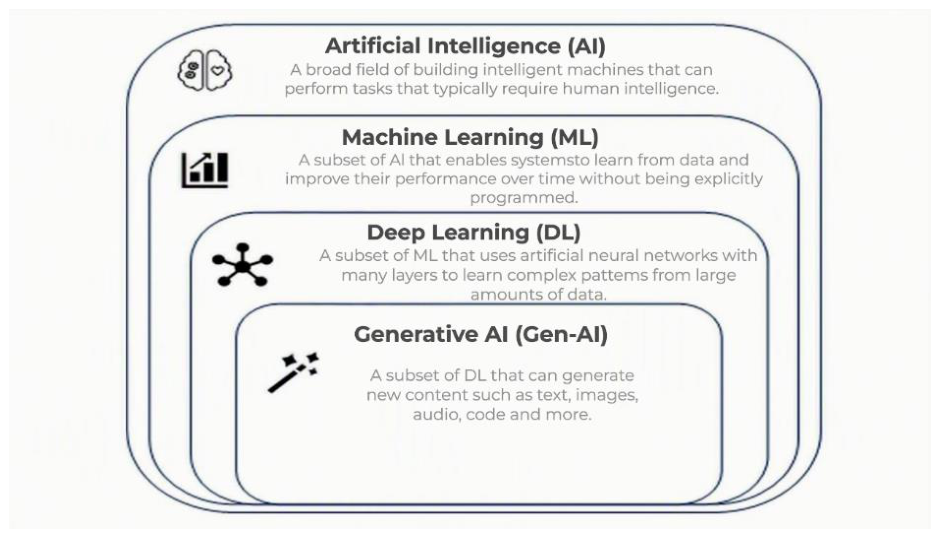
Figure 2.
Stepwise framework for responsible AI implementation in liver transplantation.
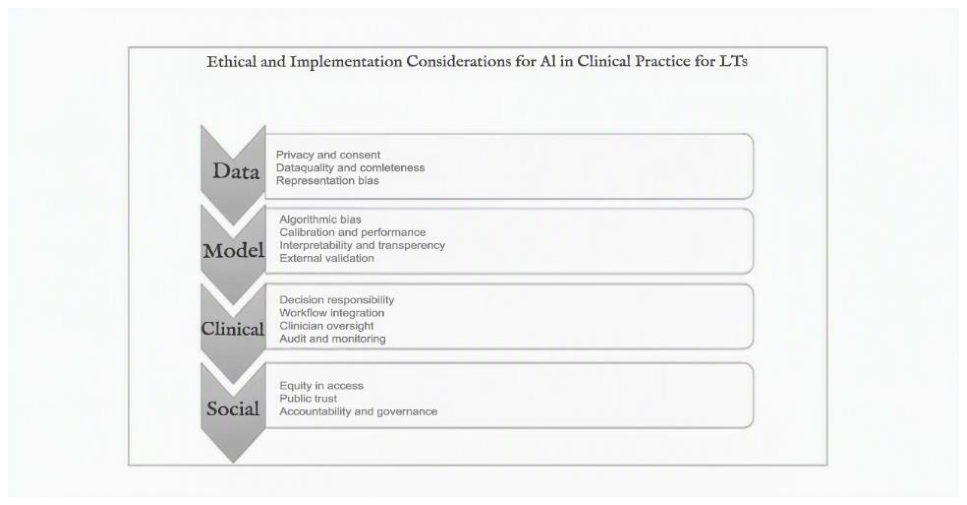

Table 1.
Conventional scoring systems in liver transplantation.
| Score | Variables Included | Reference / Normal Ranges | Clinical Use |
| MELD | Serum bilirubin, INR, serum creatinine (dialysis adjustment) | Bilirubin 0.3–1.2 mg/dL; INR 0.8–1.2; Creatinine 0.6–1.2 mg/dL; MELD score range: 6–40 | Predicts 90-day mortality; primary tool for liver transplant allocation |
| MELD-Na | MELD + serum sodium | Sodium 135–145 mmol/L (score caps at 125–137 mmol/L) | Improves mortality prediction in hyponatraemic patients; standard for transplant prioritisation |
| MELD 3.0 | MELD + albumin + sex coefficient | Albumin 3.5–5.0 g/dL; includes female sex coefficient | Reduces sex-based disparities; improves prediction especially in women and patients with preserved albumin levels |
| SOFT | Recipient age, MELD, life support requirement, previous transplant, portal vein thrombosis, donor age, cause of death, cold ischaemia time | Score ≥12 is associated with increased 3-month mortality | Predicts early post-transplant survival; supports donor–recipient matching decisions |
| BAR | Recipient age, MELD, retransplantation, life support, donor age, cold ischaemia time | Score range 0–27; BAR < 18 indicates low risk | Predicts 90-day post-transplant mortality; used for risk stratification and to assess transplant suitability |
Disclaimer/Publisher’s Note: The statements, opinions and data contained in all publications are solely those of the individual author(s) and contributor(s) and not of MDPI and/or the editor(s). MDPI and/or the editor(s) disclaim responsibility for any injury to people or property resulting from any ideas, methods, instructions or products referred to in the content. |
© 2026 by the authors. Licensee MDPI, Basel, Switzerland. This article is an open access article distributed under the terms and conditions of the Creative Commons Attribution (CC BY) license (http://creativecommons.org/licenses/by/4.0/).
Copyright: This open access article is published under a Creative Commons CC BY 4.0 license, which permit the free download, distribution, and reuse, provided that the author and preprint are cited in any reuse.


