

Submitted:
13 July 2026
Posted:
14 July 2026
You are already at the latest version
Abstract
Determining the construction age of vernacular buildings is essential for the conservation and documentation of historical and cultural heritage. Traditional approaches, however, rely heavily on questionnaire surveys and expert judgment, which are both inefficient and highly subjective. To overcome these limitations, this paper presents an automatic method for predicting construction age based on machine learning and architectural facade image features. First, we visited 29 villages in the Dezhou region of China and compiled 630 vernacular building cases, creating a facade image dataset that spans multiple periods and architectural styles, with construction ages labeled as time intervals. Random forest and decision tree models were then introduced to identify the core factors influencing age determination from a wide range of facade features and to establish their quantitative criteria. The results reveal that wall finishing materials, the presence of sunrooms, window materials, and wall body materials are the core factors affecting the judgment of construction age. Based on these factors, a decision tree model was constructed for age determination. This model achieved an accuracy of 98.92% on the test set, with both precision and recall exceeding 99% and an F1 score of 0.992, demonstrating the effectiveness and robustness of the proposed quantitative classification system. The method offers a highly interpretable and accurate technical pathway for identifying the age of vernacular architectural heritage.
Keywords:
vernacular architecture
; construction age
; random forest model
; decision tree model
; machine learning
1. Introduction
As an essential component of historical and cultural heritage, vernacular architecture embodies the social memory, construction wisdom, and cultural genes of specific regions [1]. Unlike official buildings, which benefit from relatively systematic documentary records and formalized regulations, vernacular buildings are typically constructed by local craftsmen relying on traditional experience and customs. Information about their construction age is often scattered across oral histories, genealogies, and local chronicles, or is preserved only in the material traces of the buildings themselves [2]. Accurately determining the construction period of vernacular buildings not only plays a fundamental role in value assessment, conservation strategy formulation, and restoration interventions for architectural heritage [3], but also provides key clues for understanding the evolution of regional settlements, socio-economic development, and changes in vernacular construction systems [4]. However, traditional methods, including documentary research, stylistic comparison, and carbon-14 dating [5], encounter problems such as data scarcity, insufficient sample representativeness, and high costs. When applied to vernacular building complexes that are widely distributed, large in number, and span a long time period, such as those in Dezhou City [6,7], these methods struggle to systematically support large-scale age determination. Therefore, developing an accurate and practical intelligent dating method for vernacular dwellings is not only a technical necessity in the era of digital humanities, but also an urgent requirement to address critical issues such as chronological misalignment in conservation practice.
In recent years, the interdisciplinary integration of architectural archaeology [8] with computer vision [9], machine learning [10], and related technologies has opened up new possibilities for dating vernacular buildings. As one of the most intuitive carriers of chronological information, building facades often encode the construction characteristics of specific historical periods through elements such as materials, masonry techniques, bay proportions, and decorative details. By collecting facade images on a large scale, extracting quantifiable morphological features [11], and employing highly interpretable machine learning models such as random forests and decision trees [12] for age classification, it becomes possible to reveal statistical regularities between architectural characteristics and age while also establishing a relatively low-cost and reusable inference pathway for vernacular building groups that lack written records.
2. Research Review
2.1. Different Methods for Determining Building Dates
The dating of vernacular architecture has drawn on an increasingly diverse range of methods, spanning historical documentary research, field surveys and interviews, and computational analysis techniques that have emerged in recent years. To clarify the scope and limitations of each approach, this paper classifies them into three categories, namely documentary analysis, field survey, and machine learning, and evaluates their respective advantages and disadvantages by drawing on existing studies (Table 1).
2.1.1. Documentary Analysis
Documentary analysis relies mainly on written materials such as local gazetteers, stone inscriptions, inscriptions on beams, genealogies, and related poetry and prose notes to infer the construction date of a building either directly or indirectly. It remains the most fundamental tool in traditional architectural historiography. Direct evidence includes records in local gazetteers specifying the construction date and scale of particular buildings. For example, the Zhangpu County Gazetteer records that after the 40th year of the Jiajing reign, coastal communities built large numbers of tulou, a reference that can be used to establish the upper chronological limit for a group of such buildings [20]. Many public buildings feature steles that record the year and month of their construction, such as bridge head steles and temple steles, thereby providing precise dates [19]. Scholars like Liang Sicheng found that the inscription on a beam in the East Hall of Foguang Temple and the text on the scripture pillar outside the hall corroborated each other, thus dating the hall to the 11th year of the Dazhong reign of the Tang dynasty, a classic case of mutual verification between documents and physical evidence [21]. Some literary works also preserve the renovation history of buildings. Fan Zhongyan’s Record of Yueyang Tower documents the year when Teng Zijing renovated Yueyang Tower, which is of considerable value for determining the construction and reconstruction periods of such famous structures [21]. Apart from direct records, documentary analysis frequently adopts indirect inference strategies, that is, deducing the date of the target building through the activities of related figures, genealogical lineages, or the construction dates of connected projects. For instance, if the wall of a vernacular dwelling rests on the steps of Tongji Bridge, whose construction date is known, the dwelling’s date can be inferred from the bridge stele that records the reason for and time of the bridge’s construction [22]. Such indirect textual research uses associated written records to establish upper or lower time limits for a building’s date, thereby expanding the application scope of the documentary method.
In terms of strengths, ancient books, steles, and gazetteers carry high authority and often provide precise dates or relatively reliable temporal cross-sections. The limitations of this method, however, are equally prominent. Official histories, gazetteers, and steles predominantly focus on official buildings or important public structures, while a vast number of scattered vernacular dwellings are virtually absent from written records [19]. Moreover, steles are susceptible to weathering, damage, or deliberate destruction, resulting in incomplete texts and loss of information [22]. Although indirect inference can overcome the dilemma of having no direct records, it is highly dependent on the complete preservation of related documents and physical remains. Once a link in the chain is missing, the inference lacks a solid foundation.
2.1.2. Field Survey
The field survey method relies primarily on interviews and questionnaires, collecting oral accounts of the construction and renovation history of buildings through face to face communication with local residents, craftsmen, or informants. Interviews are especially suitable for the numerous ordinary vernacular dwellings that have never left any written records, filling gaps in the literature and offering references for establishing the relative chronology of building dates [8]. Questionnaire surveys, on the other hand, are better suited to conducting large scale general surveys of vernacular architecture, allowing the rapid collection of batch information on the distribution of regional building dates and facilitating statistical analysis and comparison [25].
The key strength of the field survey method lies in its flexibility and directness, enabling the collection of living information not recorded in documents and holding considerable significance for the study of architectural history in nonliterate societies and marginal settlements. Its limitations, however, are equally evident. Oral accounts depend heavily on the memory and expression of interviewees, often suffering from memory biases, chronological ambiguity, and even the conflation of construction events from different periods. Questionnaire results are even more subjective, since the personal judgment and educational background of respondents can significantly affect the accuracy of chronological descriptions [25]. Consequently, the chronological information obtained through field surveys can typically serve only as clues or corroborative evidence and must be cross-verified with documents or other objective evidence through multi-source triangulation.
2.1.3. Machine Learning Method
In recent years, machine learning techniques, especially deep learning, have been introduced into the identification and dating of architectural heritage, aiming to achieve automated or semi-automated batch dating. Existing approaches can be broadly grouped into two categories. The first involves directly learning to classify building images. For example, researchers constructed a dataset of Longzhong vernacular architecture images spanning four periods and compared different algorithmic models, finding that EfficientNet performed best in the date classification task, with an accuracy of 85.1% and an F1 score of 81.1% [23]. The second approach builds an object detection and classification system upon a typological framework. For instance, researchers applied a machine learning clustering scheme to develop a vernacular architecture classification system comprising 9 major categories and 23 subcategories, and trained a recognition model using the YOLOv8 algorithm, achieving good accuracy and robustness [24].
The primary advantage of machine learning methods is their high efficiency. They can process massive quantities of building images in batches and detect morphological and stylistic features that are not easily discernible to the human eye, free from interference by subjective experience. However, these methods depend heavily on large volumes of high-quality, manually annotated data. The scale of the dataset, its geographic coverage, and the accuracy of the chronological labels directly determine model performance. Furthermore, vernacular architecture images commonly suffer from class imbalance and gradual stylistic transitions. Without targeted adjustments to training strategies, models tend to be biased toward the majority class, leading to systematic misjudgments for buildings of certain periods. Machine learning methods are therefore currently best suited as auxiliary tools, complementing documentary analysis and field surveys in the comprehensive assessment of building dates.
2.2. Factors Influencing the Dating of Vernacular Architecture
A building’s physical form and stylistic features carry distinct temporal information and provide the primary basis for inferring the construction date of vernacular architecture in the absence of direct written records. Based on existing research, these features can be categorized into three dimensions: structural form, building materials, and façade characteristics, which respectively reflect the temporal coordinates of building traditions, technological evolution, and aesthetic trends at different scales.
2.2.1. Structural Form
The structural system forms the fundamental skeleton of a building, and its evolution follows a clear technological trajectory. Traditional vernacular architecture has long been dominated by timber structures. For example, in the Longzhong region, farmhouses built before 1911 commonly employed a load-bearing system combining rammed earth walls and timber frames [23]. In the first half of the 20th century, hybrid structures began to emerge. The first multi-story residences in Shanghai in 1923 already used concrete block load-bearing walls [26], and during the same period, stone houses in northern Taiwan were retrofitted with light steel under Japanese rule, signaling the introduction of modern structural materials [27]. In rural Gansu, sporadic use of brick-concrete construction occurred between 1912 and 1949 but did not become widespread; brick-concrete structures gradually entered villages from 1950 to 1980, and after 1981 they extensively replaced traditional earth-wood structures [23]. In the rural areas of Hunan, the boom in two-story house construction around 1995 clearly witnessed brick-concrete structures replacing brick-wood ones [29]. In the villages of southern Jiangsu, self-built houses in the 1980s were mostly of mixed brick-wood construction and predominantly used hand-processed building materials, whereas after the turn of the 21st century they shifted entirely to cast-in-situ brick-concrete structures, with industrialized prefabrication and on-site pouring becoming the norm [25]. This orderly succession of structural forms provides a relatively reliable macro-level benchmark for dating vernacular architecture and also points to potential regional variations in structural preferences and evolutionary trajectories.
2.2.2. Building Materials
The emergence, spread, and combination of materials carry strong period imprints, making them the most intuitive material indicators for dating. Between the two world wars, new materials such as steel and concrete frames began to be gradually adopted by builders [26]. Coastal areas exhibited distinct regional and temporal characteristics. For instance, in self-built houses along the Quanzhou coast in the 1960s, both single-story and multi-story detached dwellings were entirely constructed of stone, with stone slab roofs becoming mainstream [28]. The evolutionary sequence of building materials in the rural Longzhong region of Gansu is particularly illustrative. Before 1911, rammed earth and wood predominated; over the following nearly half a century, brick gradually infiltrated; and it was not until after 1981 that brick and concrete completely replaced traditional raw earth materials [23]. After the 1990s, industrial building materials such as red brick, concrete blocks, steel reinforcement, and even glass spread rapidly in rural areas, replacing indigenous materials like earth, wood, and stone [32,37,41]. The choice of building materials in different periods not only reflects available construction resources and technological levels but also provides highly practical references for dating.
2.2.3. Façade Characteristics
The building façade offers a concentrated display of period style and regional customs, and its morphological elements play an important supporting role in dating. The form, color, and material of the roof directly reflect temporal shifts in aesthetics and craftsmanship [30]. The transition of windows from small wooden lattice types to large aluminum-alloy frames and glass curtain walls, in both material and shape, provides subtle clues for periodization [31,32]. The materials and decoration of doors likewise embody the craftsmanship characteristics of specific periods [32,33]. Façade decorations such as murals, wood carvings, and colored stones are often closely linked to the folk customs and artisan traditions of particular historical periods, and the rise and fall of styles and techniques can serve as dating references [33,35]. The evolution of spatial configuration, including the shift from single-bay to multi-bay plans, from single-story to multi-story buildings, and the increase in the number of floors, reflects the construction era in terms of overall volume [36]. The development of walls from traditional masonry walls to the appearance of glass curtain walls also marks the temporal boundary of construction technology and style [31,37]. Together with structural forms and materials, these façade features form a comprehensive basis for determining the age of vernacular architecture.
3. Research Methods
3.1. Research Process
The overall research workflow consists of four main stages, as illustrated in Figure 1. First, the research object and scope are defined. Given that architectural facade characteristics vary considerably across regions, a geographical unit with relatively homogeneous facade styles is selected to minimize the confounding effects of other factors on construction date prediction. Second, within the delineated study area, the facade features and construction dates of vernacular buildings are collected through fieldwork and interviews. Third, an automated inference model is built using machine learning techniques to predict construction dates. Finally, the model is applied to estimate the construction dates of vernacular buildings in the study area based on their facade features, and its predictive accuracy is verified.
3.2. Research Area
Dezhou is situated on the Northwest Shandong Plain. Its vernacular architecture integrates the dual influences of the vernacular dwellings of northwestern Shandong and the courtyard houses of Beijing as the imperial capital, resulting in a distinctive regional architectural character that makes it an ideal case for testing machine learning based dating methods. Drawing on facade images of 630 vernacular buildings in Dezhou as the data foundation, as summarized in Table 2, this study extracts the compositional elements of building facades and constructs a Random Forest model and a Decision Tree model. The aim is to explore the applicability, accuracy, and interpretability of machine learning methods in dating vernacular architecture on the North China Plain, thereby addressing gaps in existing research concerning regional coverage and methodological frameworks and providing technical support for the conservation and management of vernacular architectural heritage.
Figure 2.
The selection of the study area and its geographical location in China.
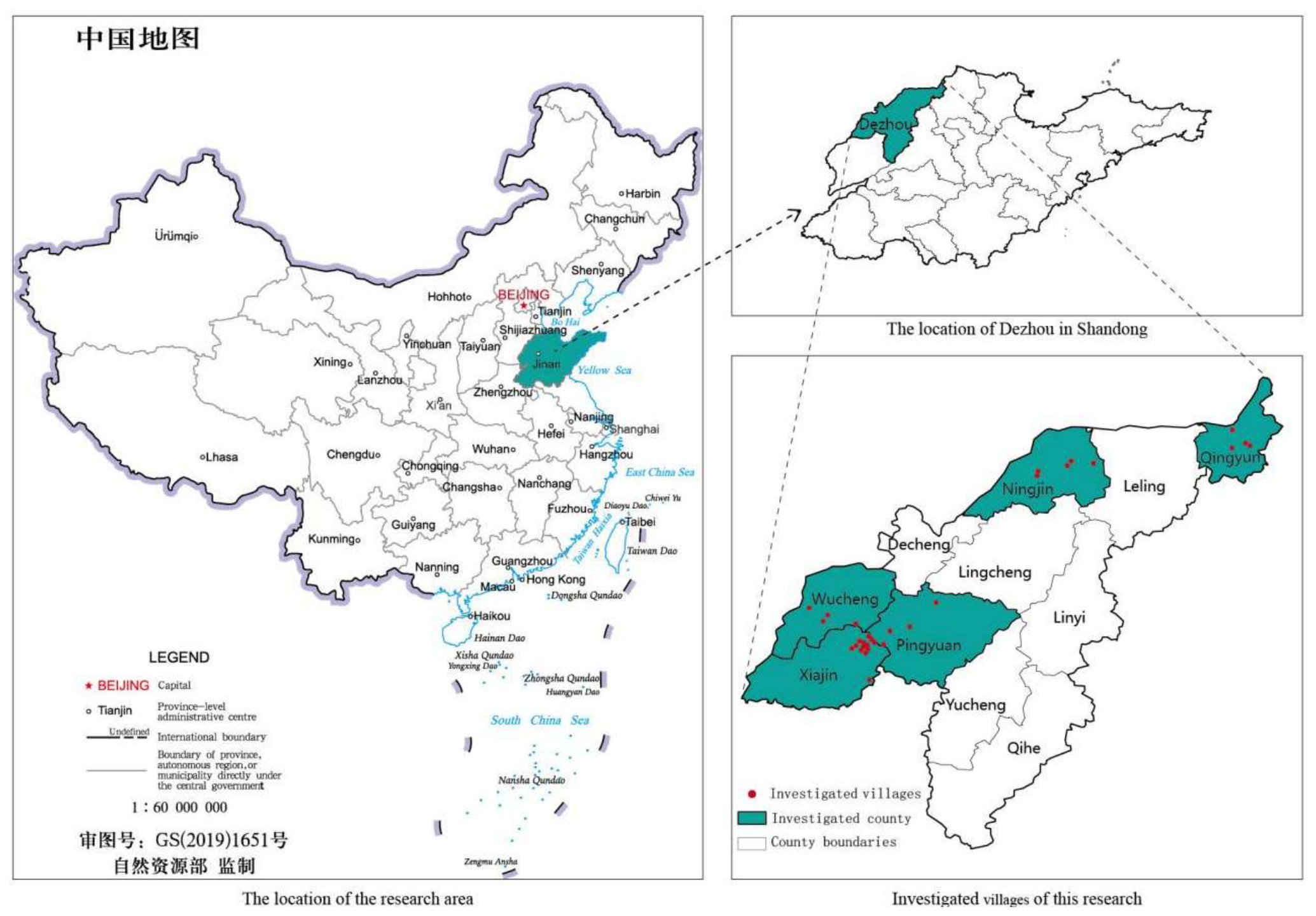
The research team conducted fieldwork from January to February 2026 in typical traditional villages across five counties under the jurisdiction of Dezhou City, Shandong Province, namely Ningjin County, Pingyuan County, Wucheng County, Xiajin County, and Qingyun County (Figure 2). A combined strategy of stratified sampling and convenience sampling was adopted. Vernacular buildings with explicit construction date information from inscriptions, genealogies, title deeds, and building inscriptions were selected as research subjects, with selection guided by the historical evolution of the villages, building preservation conditions, and geographical distribution. A total of 630 orthophotos of building façades were collected, each corresponding to a single vernacular building. The photographs were taken under even lighting conditions, with minimal obstructions and while maintaining the structural integrity of the main building. Each building was subsequently assigned a construction date label through documentary research and oral history interviews.
3.3. Data Collection
Drawing on a review of the building dating literature, the classification and summarization of field survey samples, and the historical periodization of vernacular architecture on the North China Plain together with the local architectural evolution patterns of Dezhou, this study extracted facade feature elements from the 630 samples and identified 14 facade elements that influence the determination of construction dates (Figure 3). These elements are wall material, roof material, door material, window material, floor material, bay, wall finish material, overhanging eaves and veranda, roof form, courtyard platform, chimney, sunroom, window lintel, and door lintel [42]. The construction dates of the surveyed samples were divided into six periods: the 1960s, 1970s, 1980s, 1990s, 2000s (including years prior to 2013), and 2010s (after 2013). After screening, a total of 630 valid samples were obtained. The number of samples in each period category is as follows: 137 from the 1960s, 91 from the 1970s, 156 from the 1980s, 73 from the 1990s, 159 from the 2000s (including years prior to 2013), and 14 from the 2010s (after 2013).
3.4. Information Extraction
When extracting feature element information from building facades, the element data of each sample are matched one-to-one with its construction period and case name and then represented by numeric codes, as illustrated in Figure 4. Quantifying facade element information avoids errors caused by raw text or special characters, thereby markedly improving model training speed and memory efficiency. The raw facade element data consist of Chinese character strings, for example, adobe wall, red brick, and blue brick, and some strings contain punctuation marks such as fair-faced red brick and whitewashed red brick separated by a slash. If facade elements are used directly as variable values after reading Excel files in RStudio, the random forest algorithm in the randomForest package coerces them into factors, which may lead to errors due to encoding issues or special characters. Although the decision tree algorithm in the rpart package can handle factors, memory or splitting performance problems can easily arise when there are too many levels. By assigning numeric codes, for instance 1 for pure wood windows and 2 for glass wood windows, the data become a clean integer vector and parsing errors are completely avoided. When searching for the best split point, the internal algorithm of random forest processes numeric integer variables in a manner that is generally simpler and more efficient than processing categorical factor variables.
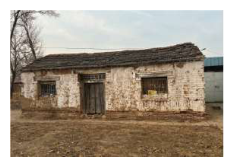
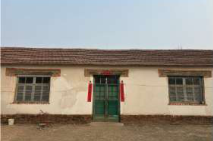
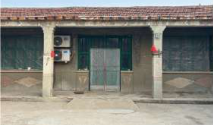
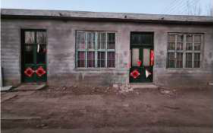
To ensure accurate correspondence among facade feature elements, construction periods, and case names, and to facilitate model input and result traceability, this study established a unified system of sample numbering and quantitative feature coding, together with a coding mapping table. Each surveyed sample was assigned a unique identifier, as shown in Table 3, and all facade features were converted to numerical values following this coding system. This approach enhances the interpretability of the final results.
3.5. Model Construction
This study adopts a data-driven approach, treating the construction period as the dependent variable and the 14 facade element features extracted from over 600 building samples as independent variables. A machine learning classification framework based on Random Forest and Decision Tree was constructed to perform this inference [43]. The underlying principles and specific steps of the analytical process are described below.
3.5.1. Data Preprocessing and Feature Attribute Definition
In the field survey data stored in Excel, attributes such as wall material are recorded numerically, for instance, 1 for adobe, 2 for red brick, and 3 for blue brick. However, these values represent nominal categorical variables with no inherent order, magnitude, or proportional relationship. At the initial stage of model execution, the code performs feature factorization, which prevents the algorithm from mistakenly treating these numbers as continuous variables for regression computation and ensures that each building material category is recognized as a parallel categorical feature.
To verify the model’s generalization capability, i.e., its accuracy when encountering unseen building samples, a cross-validation mechanism is introduced. The over 600 samples are randomly split at an 8:2 ratio into a training set of approximately 480 samples and a test set of approximately 120 samples. The training set is used for the model to learn the mapping patterns between facade elements and construction periods, while the test set serves as an independent benchmark to objectively assess the model’s true predictive performance and avoid overfitting.
3.5.2. Principles of Random Forest Classification Model Construction
The dependent variable in this study comprises six periods, from the 1960s to the 2010s, making it a typical multi-class classification problem. The relationship between architectural form and construction period is often not a simple linear mapping but a complex combination. For instance, a specific wall material combined with a specific wall finish material can clearly point to a particular period.
The random forest model builds 500 parallel decision trees, with the number of trees (ntree) set to 500, and uses the bootstrap resampling method to repeatedly draw data from the original samples for training. Each time a node is split, the algorithm randomly selects a subset of building elements, such as considering only wall finish material and sunroom, for evaluation. The final period determination for each sample is decided by majority voting among these 500 trees. This ensemble algorithm effectively mitigates data noise caused by later alterations or renovations of individual building samples and enhances the fault tolerance of period identification.
3.5.3. Design of the Model Evaluation System
For the prediction results on the test set, a confusion matrix is generated to output multi-dimensional evaluation metrics. Overall Accuracy reflects the overall proportion of buildings whose construction period is correctly identified among all test buildings, serving as a macro indicator of the model’s usability.
where TP stands for true positive, TN for true negative, FP for false positive, and FN for false negative.
Precision refers to the proportion of buildings predicted as belonging to a certain period that actually belong to that period. For example, when the model determines a building is from the 1990s, precision indicates how certain this judgment is. High precision means a low false positive rate.
Recall, also called Sensitivity, refers to the proportion of actual buildings from a certain period that are successfully identified by the model. For instance, it measures whether all buildings from the 1970s are recognized, or if some are missed and wrongly classified as belonging to another period. High recall means a low false negative rate.
Through the confusion matrix, one can intuitively observe the model’s confusion intervals. For example, if the model frequently confuses buildings from the 1980s with those from the 1990s, it indicates a high degree of convergence in facade characteristics or a transitional period in technological evolution between these two decades.
3.5.4. Evaluation of Feature Importance of Building Elements
This step addresses the core question of this study: which elements exert the greatest influence on the construction period. Two classic variable importance assessment methods within the random forest model are employed: Mean Decrease Accuracy (MDA) and Mean Decrease Gini (MDG). Since the evaluation logic of these two methods differs intrinsically, the ranking of variable importance may show some deviation.
For a node t with K classes, assuming the proportion of the k-th class samples is pk, the Gini index of this node is defined as:
The Gini index measures the impurity of a node. When all samples in the node belong to the same class, i.e., pk = 1 for one class and 0 for others, Gini(t) = 0, representing the purest state.
3.5.5. Decision Tree Dimension Reduction and Visualization Based on Core Elements
Although the random forest model achieves high accuracy, its structure is a black box consisting of 500 trees, which is not conducive to forming an intuitive architectural appraisal guide. The algorithm extracts the top five most influential core elements, referred to as the Top 5 Features, for period determination and uses these high-value features to construct a single classification decision tree, specifically a CART model.
This decision tree functions as a white box model. It transforms complex statistical patterns into a clear architectural period identification flowchart or logic tree based on If-Then rule sets. In subsequent research or engineering practice, even field surveyors without machine learning expertise can quickly and systematically infer the construction period of a target building by simply checking the on-site characteristics of these key elements along the branches of the decision tree. For example, the first step is to check whether the wall material is blue brick, the second step is to check the wall finish material, and so on.
4. Results and Discussion
4.1. Feature Importance Results
Based on the random forest model, the importance ranking of the factors influencing the determination of vernacular building construction age is presented in Figure 5 and Figure 6. A combined analysis using two variable importance measures, Mean Decrease Accuracy (MDA) and Mean Decrease Gini (MDG), reveals that wall finishing material, wall body material, window material, and the presence of a sunroom are the core factors. Among these, wall finishing material ranks first in both metrics, representing the most critical element reflecting chronological characteristics. Wall body material and window material also obtain high importance scores, demonstrating their significant discriminatory power in age classification. The sunroom ranks second in the MDA measure, indicating a pronounced impact on the overall predictive performance and serving as a key supplementary feature for distinguishing modern buildings.
MDA assesses variable importance by randomly permuting the values of a given variable and measuring the resulting decrease in overall prediction accuracy. This metric directly reflects the contribution of a variable to the final model output. MDG evaluates a variable’s discriminatory ability by averaging the reduction in Gini impurity across all tree splits where the variable is used, capturing its contribution to the tree building process. The consistent high ranking of wall finishing material, window material, and wall body material across both metrics confirms their crucial role in both predictive performance and classification discrimination. The ranking discrepancy observed for the sunroom variable suggests that its influence on overall prediction accuracy is greater than its contribution to node splitting. Integrating both measures provides a more comprehensive identification of key variables and mitigates the bias inherent in relying on a single metric.
4.2. Decision Tree Model Performance
The decision tree model achieves an accuracy of 98.92% on the test set, with precision and recall both exceeding 99%, and an F1 score of 0.992 (Table 4). These results confirm the effectiveness and robustness of the proposed quantitative classification system.
The splitting paths of the decision tree (Figure 7) illustrate a hierarchical screening process based on micro-morphological features. The variable used most frequently for splitting is wall finishing material, underscoring its central role in typological identification. The classification logic can be summarized as follows. If the wall body is blue brick, the building is directly classified as dating from the 1960s, indicating that blue brick is a highly distinctive material for early traditional dwellings. If the wall body is not blue brick, the decision tree further examines the finishing material. Adobe with white plaster combined with pure wood windows leads to a 1960s classification, whereas the same finishing with upgraded windows suggests a 1970s date. Fair-faced red brick or whitewashed red brick corresponds to the 1980s. Exposed aggregate or roughcast finishes correspond to the 1990s. Full cement or full white plaster finishes also map to the 1990s. The final finishing material, externally applied ceramic tiles, is a typical decorative feature of twenty-first century dwellings; in the absence of a sunroom, the building is assigned to the 2000s (including years prior to 2013), while the presence of a sunroom indicates a 2010s date (after 2013).
4.3. Discussion
The identification of wall finishing material, wall body material, and window material as core determinants is intrinsically linked to the evolution of building material technologies, construction techniques, and socioeconomic conditions across different periods. For instance, the combination of blue brick walls and pure wood windows is a typical feature of vernacular buildings from the 1960s and earlier, reflecting the dominance of traditional craftsmanship and locally sourced materials. During the 1970s to 1990s, with the spread of cement and red brick, wall finishes gradually transitioned from adobe with white plaster to fair-faced red brick and then to exposed aggregate or roughcast finishes. Window materials also diversified during this period, mirroring the impact of industrialization on vernacular architecture. These evolutionary patterns are well documented in studies of vernacular building materials across different regions of China. In the Longzhong area, for example, rammed earth and wood predominated before 1911, brick began to appear in the early twentieth century, and brick-concrete construction did not become widespread until after 1981 [23]. A similar trajectory was observed in southern Jiangsu, where hand-processed materials dominated in the 1980s and were replaced by cast-in-situ brick-concrete structures after the 2000s [25]. The pronounced transition from brick-wood to brick-concrete structures around 1995 in rural Hunan further corroborates this nationwide trend [29]. In coastal areas, locally specific material choices such as the extensive use of stone in Quanzhou’s self-built houses during the 1960s further illustrate the regional dimension of material chronology [28].
The emergence of the sunroom as a discriminating feature after the 2000s is directly associated with changes in residents’ lifestyles and the availability of new building materials such as aluminum alloys and glass. This finding aligns with observations that industrial materials including glass curtain walls and aluminum window frames have spread rapidly in rural areas since the 1990s, gradually replacing traditional materials like wood and earth [32,37]. The temporal correspondence between specific facade feature combinations and construction periods, as revealed by the decision tree, thus corresponds closely with the known development trajectory of vernacular architecture, lending strong empirical support to the model’s outputs.
Compared with traditional approaches, the proposed method demonstrates notable advantages in efficiency, coverage, objectivity, and scalability. Documentary analysis relies on the survival and accessibility of written sources, such as gazetteers, steles, and genealogies [19]. However, a vast number of ordinary vernacular dwellings lack explicit textual records, and the interpretation of available documents demands specialized historical expertise, making large-scale surveys time-consuming and impractical. Carbon-14 dating, while providing absolute dates, is costly and constrained by sample availability [5]. Field surveys based on oral interviews and questionnaires can supplement informal historical memory, but they are limited by the vagueness of interviewees’ recollections, generational discontinuity, and the inherent subjectivity of questionnaire responses, typically yielding only approximate time ranges rather than precise dates [8,25]. In contrast, the quantitative framework developed here transforms multidimensional features, including building form, construction details, materials, and decorative styles, into computable numerical indicators and leverages machine learning to automatically extract chronological information from facade images. This enables age inference for a single building within seconds, and its predictive accuracy within the covered time span can rival or exceed expert judgment based on experience. Crucially, this system does not entirely replace traditional methods but rather complements them. Documentary and oral historical sources can serve as verification for training labels, while the probabilistic output of the model can guide fieldwork by directing researchers’ attention to buildings with uncertain dates, thereby concentrating limited academic resources on key cases for in-depth investigation. This synergy facilitates a strategy of macro-level screening and micro-level confirmation, substantially improving the scientific rigor and systematic capability of vernacular building dating.
4.4. Validation of Prediction Accuracy
To further verify the reliability of the developed model, 18 building samples that had not participated in model training were randomly selected for age prediction. The results show that the predicted construction period matched the actual period for 17 of the 18 samples, yielding an accuracy of 94.44% (Figure 8). Only one sample, actually built in the 1970s, was misclassified as belonging to the 2000s, corresponding to an error rate of approximately 5.56%. These results confirm the robustness of the proposed machine learning model for predicting the construction age of vernacular buildings.
4.5. Limitations
Despite the promising outcomes, several limitations should be acknowledged. First, the sample dataset is concentrated in the Dezhou region, and the geographical generalizability of the model requires further validation. Regional differences in material availability, construction techniques, and facade characteristics may affect the model’s accuracy when applied to other areas [23,42]. Second, the present study relies solely on externally visible facade elements as predictors and does not incorporate hidden features such as structural systems, internal spatial layouts, or construction techniques. Future work could integrate data on structural components and craft practices to refine the dating framework [8]. Third, the uneven distribution of samples across certain periods and the incompleteness of facade elements in some cases may have introduced a degree of classification bias.
4.6. Original Contributions
This study makes several original contributions. It constructs a quantitative, machine learning based classification system for dating vernacular architecture by extracting and encoding 14 facade features. The combined use of random forest and decision tree models not only achieves high predictive accuracy but also preserves interpretability through a transparent rule-based decision tree, which can be directly applied by field surveyors without specialized computational training. Moreover, the integration of MDA and MDG metrics provides a more balanced assessment of feature importance than either measure alone. The resulting if-then classification logic, centered on wall finishing material, wall body material, window material, and sunroom, constitutes a practical and scientifically grounded dating tool for vernacular heritage on the North China Plain, bridging the gap between advanced machine learning techniques and everyday conservation practice.
5. Conclusion
This study proposes a machine learning framework that combines random forest feature selection with a single decision tree classifier to predict the construction age of vernacular buildings based on facade images. Through field surveys in Dezhou, Shandong Province, 14 facade features were extracted and encoded from 630 building samples. Wall finishing material, wall body material, window material, and sunroom emerged as the core determinants, and the decision tree model achieved 98.92% accuracy on the test set with a 94.44% accuracy in independent validation. The resulting if-then classification rules offer a highly interpretable, efficient, and low-cost pathway for age identification. This framework effectively complements traditional documentary and oral history methods and provides a transferable paradigm for the systematic dating of vernacular architectural heritage.
Author Contributions
Conceptualization, B.W.; methodology, L.L.; software, X.L.; validation, L.L. and Z. D.; formal analysis, L.L., X.L., X.Z. and Z.Z.; investigation, B.W. and H.C.; resources, L.L.; data curation, X.L., X.Z. and H.C.; writing—original draft preparation, L.L., X.L., writing—review and editing, L.L.; visualization, X.L., X.Z. and H.C.; supervision, B.W. All authors have read and agreed to the published version of the manuscript.
Funding
This research was funded by MOE Humanities and Social Sciences Grant, grant number 24YJC850004; National Natural Science Foundation of China, grant number 52578016; Natural Science Foundation of Hunan Province, grant number 2025JJ50234; Science and Technology Program Project of Hunan Province, grant number 2025RC3096.
Data Availability Statement
The original contributions presented in this study are included in the article. Further inquiries can be directed to the corresponding author.
Acknowledgments
The authors have reviewed and edited the output and take full responsibility for the content of this publication.
Conflicts of Interest
The authors declare no conflicts of interest.
References
- Ren, K.; Wu, T. Analyzing the Evolution of a Rural Construction Community in China from the Perspective of Cultural Landscape. Buildings 2024, 14, 97. [CrossRef]
- Liu, H. An Exploration of Architectural Images of Hanshan Academy Illustrations in the Yongzheng Haiyang County Gazetteer. Chaozhou Stud. 2025, 134–155, 183–184. (In Chinese).
- Taher Tolou Del, M.S.; Saleh Sedghpour, B.; Kamali Tabrizi, S. The Semantic Conservation of Architectural Heritage: The Missing Values. Herit. Sci. 2020, 8, 70. [CrossRef]
- Wang, D.; Lyu, Q.; Wu, Y.; et al. Regional Differentiation Characteristics and Formation Mechanisms of Traditional Chinese Vernacular Architectural Landscapes. J. Nat. Resour. 2019, 34, 1864–1885. (In Chinese). [CrossRef]
- Xu, Y. On the Basic Method of Carbon-14 Dating for Determining the Construction Age of Ancient Chinese Buildings: A Case Study of the Main Hall of Jiwang Temple in Wanrong, Shanxi. Cult. Relics 2014, 91–96, 70. (In Chinese).
- Liu, Q.; Shang, B.; et al. The Impact of Geomorphological Factors on the Distribution of Typical Dwellings in Northern China. Rev. Int. Contam. Ambient. 2019, 35, 177–188. [CrossRef]
- Song, W. Study on the Spatial Morphology of Traditional Villages in Shandong. Master’s Thesis, Dalian University of Technology, Dalian, 2021. (In Chinese).
- Ren, Y. Study on the Typological Chronology of Cantonese Palatial-Type (Diantang Shi) Timber Structures in Guangdong Province, China: An Interdisciplinary Approach of Building Archaeology. Buildings 2025, 15, 2447. [CrossRef]
- Liang, L.; Li, X.; Liu, S.; et al. Integrating Computer Vision and GIS for Large-Scale Morphological Mapping and Driving Force Analysis of Vernacular Courtyard Dwellings. Buildings 2026, 16, 1118. [CrossRef]
- Younesi, A.; Ansari, M.; Fazli, M.; et al. A Comprehensive Survey of Convolutions in Deep Learning: Applications, Challenges, and Future Trends. IEEE Access 2024, 12, 41180–41218. [CrossRef]
- Han, P.; Hu, S.; Xu, R. Formal Feature Identification of Vernacular Architecture Based on Deep Learning—A Case Study of Jiangsu Province, China. Sustainability 2025, 17, 1760. [CrossRef]
- Adnan, M.N.; Ip, R.H.L.; Bewong, M.; et al. BDF: A New Decision Forest Algorithm. Inf. Sci. 2021, *569*, 687–705. [CrossRef]
- Wang, S. Development of an Approach to Automated Acquisition of Static Street View Images Using Transformer Architecture for Analysis of Building Characteristics. Sci. Rep. 2025, 15, 29062.
- Ziegler, A.; König, I.R. Mining Data with Random Forests: Current Options for Real-World Applications. WIREs Data Min. Knowl. Discov. 2014, 4, 55–63.
- Ghosh, D.; Cabrera, J. Enriched Random Forest for High Dimensional Genomic Data. IEEE/ACM Trans. Comput. Biol. Bioinform. 2022, 19, 2817–2828. [CrossRef]
- Zhao, X.; Wu, Y.; Lee, D.L.; et al. iForest: Interpreting Random Forests via Visual Analytics. IEEE Trans. Vis. Comput. Graph. 2019, 25, 407–416. [CrossRef]
- Zeppelzauer, M.; Despotovic, M.; Sakeena, M.; et al. Automatic Prediction of Building Age from Photographs. In Proceedings of the 2018 ACM International Conference on Multimedia Retrieval (ICMR), Yokohama, Japan, 11–14 June 2018; pp. 126–134.
- Wang, M. Research on the Regional Culture of Vernacular Dwellings in Northwestern Shandong. Master’s Thesis, Shandong Jianzhu University, Jinan, 2014. (In Chinese).
- Lou, Q. Reflections on the Dating of Vernacular Architecture. Treatise Hist. Archit. 2000, *13*, 139–148, 230. (In Chinese).
- Lin, X.; Zhang, Y.; Wu, Y.; et al. Assessment of Architectural Typologies and Comparative Analysis of Defensive Rammed Earth Dwellings in the Fujian Region, China. Buildings 2024, 14, 3652. [CrossRef]
- Pei, X. Several Methods for Determining the Age of Ancient Buildings. Public Archaeol. 2023, 67–72. (In Chinese).
- Chen, Z. How to Determine the Construction Age of Vernacular Buildings. China Cult. Herit. Sci. Res. 2006, 48–50. (In Chinese).
- Miao, S.; Miao, Y.; Zhang, C.; et al. Dual-Branch EfficientNet Model with Hybrid Triplet Loss for Architectural Era Classification of Traditional Dwellings in Longzhong Region, Gansu Province. Buildings 2025, 15, 3086. [CrossRef]
- Bao, S.H.; Zhuo, X.L.; Tao, J. Using Semi-Supervised Machine Learning to Assist Classification and Recognition of Chinese Vernacular Architecture. J. Build. Eng. 2024, 98, 111327. [CrossRef]
- Xiao, B.; Ji, G.; Hong, X.; et al. Evolution and Construction Mechanisms of Rural Housing Models: A Case Study of Rural Southern Jiangsu. Mod. Urban Res. 2022, 88–94, 112. (In Chinese).
- Kubica, J. Development of Masonry Materials and Structures from Ancient Times, through the Present Times and the Future Perspective. J. Build. Eng. 2025, 116, 114682. [CrossRef]
- Wu, N.W.; Li, E.J. The Development and Changes of Vernacular Architecture: Exemplified by Stone Houses in North-Eastern Taiwan. J. Asian Archit. Build. Eng. 2025, 1–19.
- Miu, T.; Zhuge, J. Characteristics and Periodization of Self-Built Houses in the Quanzhou Coastal Area Based on Archaeological Typology Method (Late 19th Century to Early 21st Century). Front. Archit. Res. 2025, S2095263525000822. [CrossRef]
- Lu, J.; Jiang, M. Changes in Rural Housing from 1979 to 2009: A Case Study of Hunan Province. Archit. J. 2009, 74–78. (In Chinese).
- Qi, Y.; Ren, Y.; Zhou, D.; et al. Quantitative Analysis and Cause Exploration of Architectural Feature Changes in a Traditional Chinese Village: Lingquan Village, Heyang County, Shaanxi Province. Land 2023, 12, 886. [CrossRef]
- Jabłońska, J.; Telesińska, M.; Adamska, A.; et al. The Architectural Typology of Contemporary Façades for Public Buildings in the European Context. Arts 2022, 11, 11. [CrossRef]
- Raditya, M.Y.; Asano, J. A Study on Characteristics of Historical Heritage Buildings in Makassar, Indonesia: Form Approach from Past Photograph Information. J. Asian Archit. Build. Eng. 2026, 1–31. [CrossRef]
- Song, Y.; Liao, C. Research on the Architectural Features and Artistic Elements of Traditional Buildings in Different Regions of Jiangxi, China. Buildings 2023, 13, 1597. [CrossRef]
- Fan, Y.; Cai, J.; Jiang, L. The Decorative Art and Evolution of the “Xuan” in Ancestral Halls of Southern Anhui. Buildings 2025, 15, 3294. [CrossRef]
- Gao, L.; Wu, Y.; Yang, T.; et al. Research on Image Classification and Retrieval Using Deep Learning with Attention Mechanism on Diaspora Chinese Architectural Heritage in Jiangmen, China. Buildings 2023, 13, 275. [CrossRef]
- Chai, X.; Tian, Y.; Yang, S.; et al. Formation, Transformation and Inheritance of Dai Dwellings Through a Typological Lens: The Case of Nongme Village, China. Buildings 2026, 16, 1411. [CrossRef]
- Cucuzzella, C.; Rahimi, N.; Soulikias, A. The Evolution of the Architectural Façade since 1950: A Contemporary Categorization. Architecture 2022, 3, 1–32. [CrossRef]
- Yang, C.; Misni, A. Exploring Comfort and Efficiency: Comparing Vernacular and Modern Dwellings in Rural Handan, Northern China. Sustainability 2026, 18, 1575. [CrossRef]
- Soler-Estrela, A. Cultural Landscape Assessment: The Rural Architectural Heritage (13th–17th Centuries) in Mediterranean Valleys of Marina Alta, Spain. Buildings 2018, 8, 140. [CrossRef]
- Lin, X.; Wu, Y. Architectural Spatial Characteristics of Fujian Tubao from the Perspective of Chinese Traditional Ethical Culture. Buildings 2023, 13, 2360. [CrossRef]
- Jóźwik, A. Application of Glass Structures in Architectural Shaping of All-Glass Pavilions, Extensions, and Links. Buildings 2022, 12, 1254. [CrossRef]
- Lee, A.Y.; Oh, H.K. A Study on the Expression Characteristics of Korean Traditionality in Restaurants & Cafes which Adopted Thatched Roof & Shingle Roofed House. J. Korean Inst. Inter. Des. 2014, 23, 147–155. [CrossRef]
- Karabadji, N.E.I.; Amara Korba, A.; Assi, A.; et al. Accuracy and Diversity-Aware Multi-Objective Approach for Random Forest Construction. Expert Syst. Appl. 2023, 225, 120138. [CrossRef]
Figure 1.
The proposed research workflow of the study.
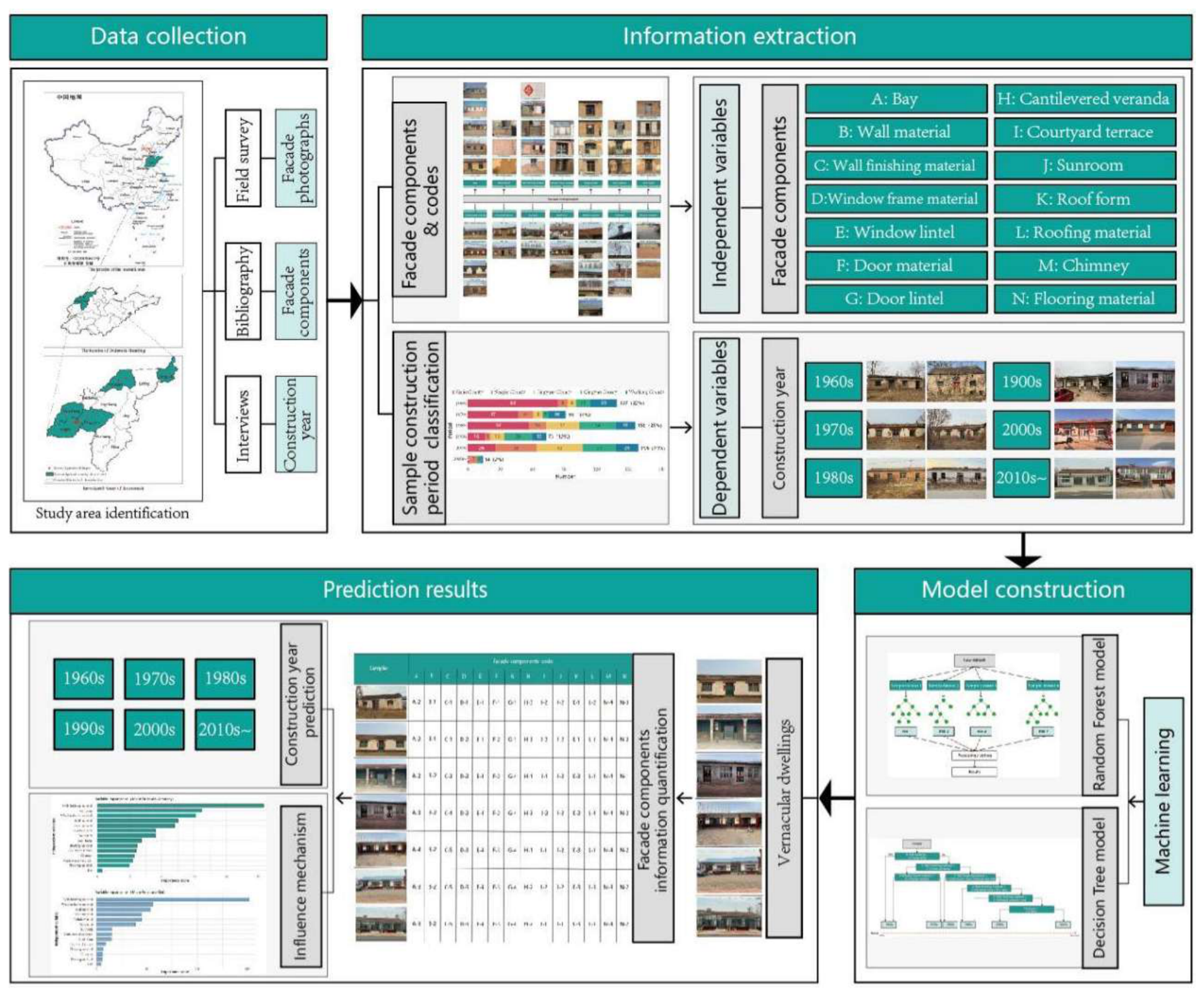
Figure 3.
Distribution of samples by construction period.
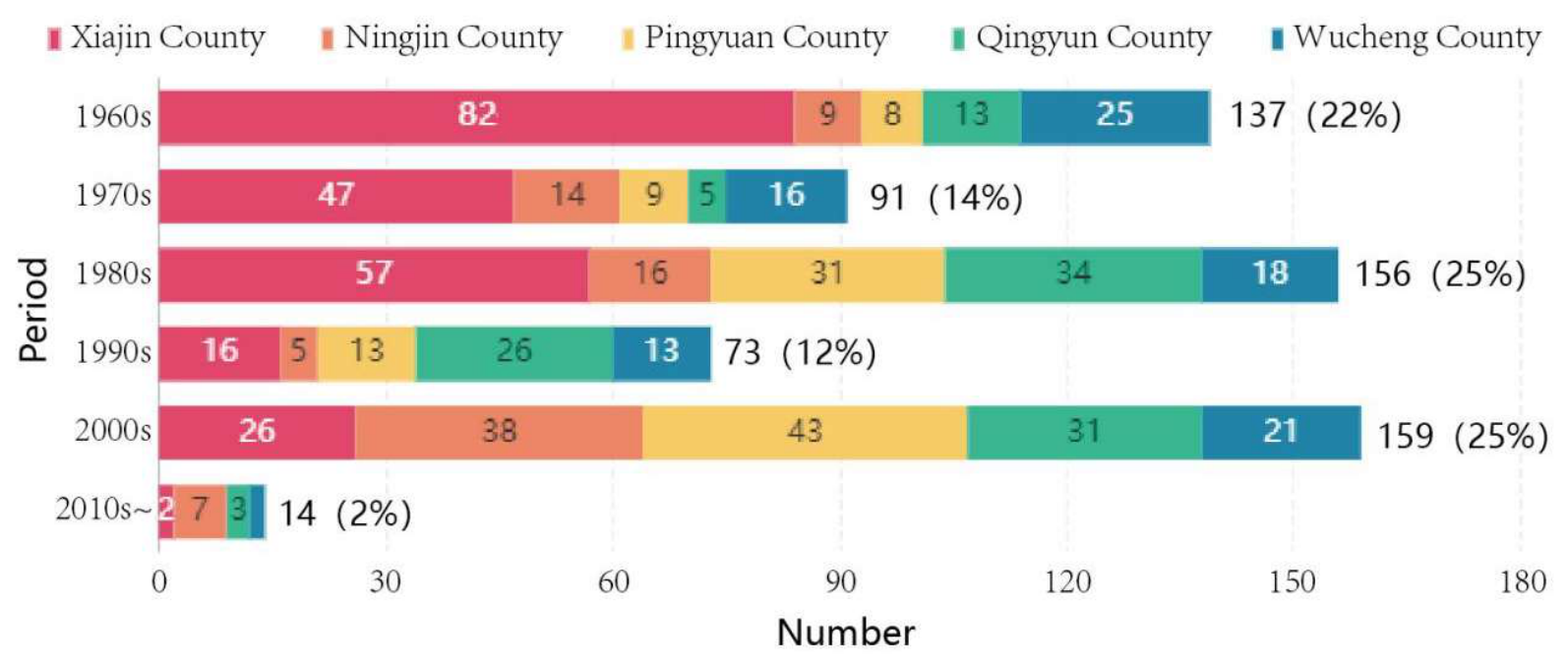
Figure 4.
Facade elements and their coding.
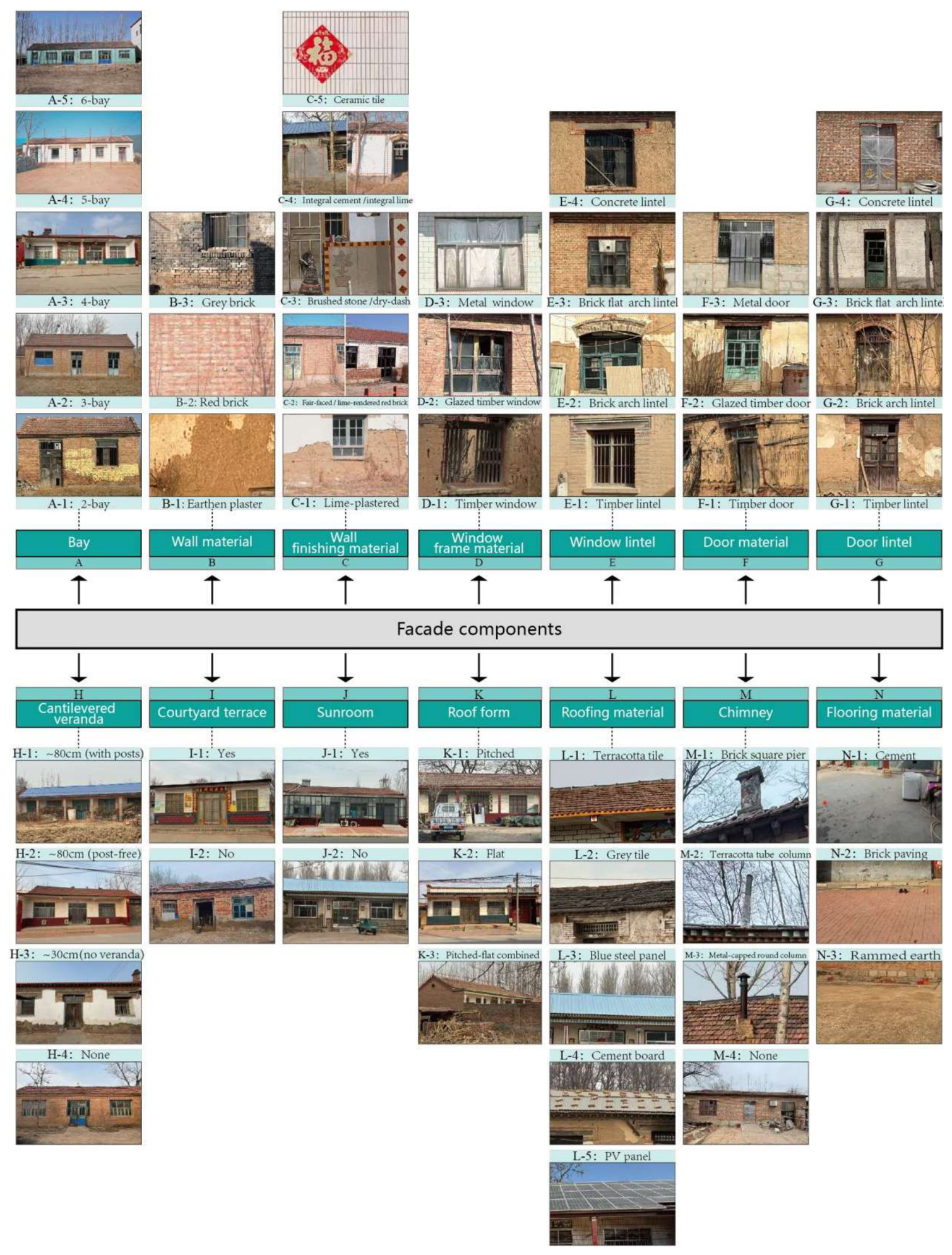
Figure 5.
Degree of Influence of Variables on Model.
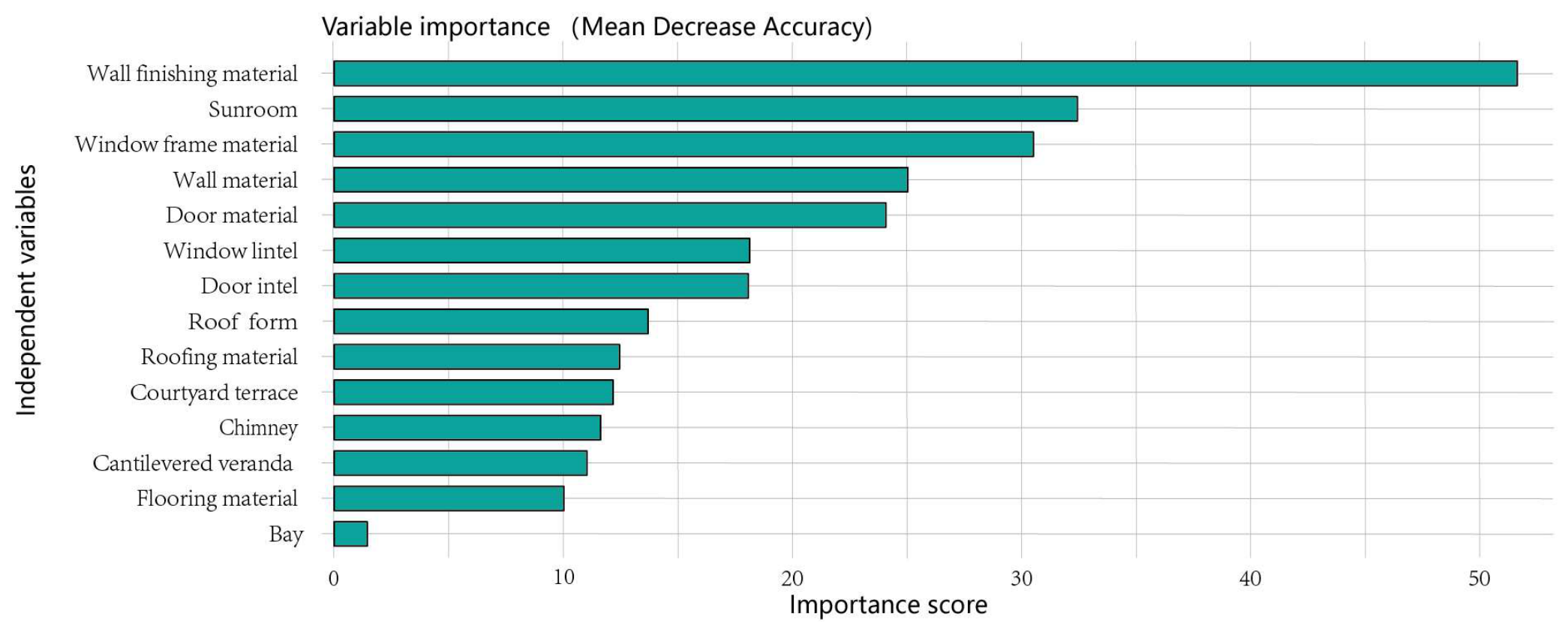
Figure 6.
Contribution of Variables to Node Splitting.
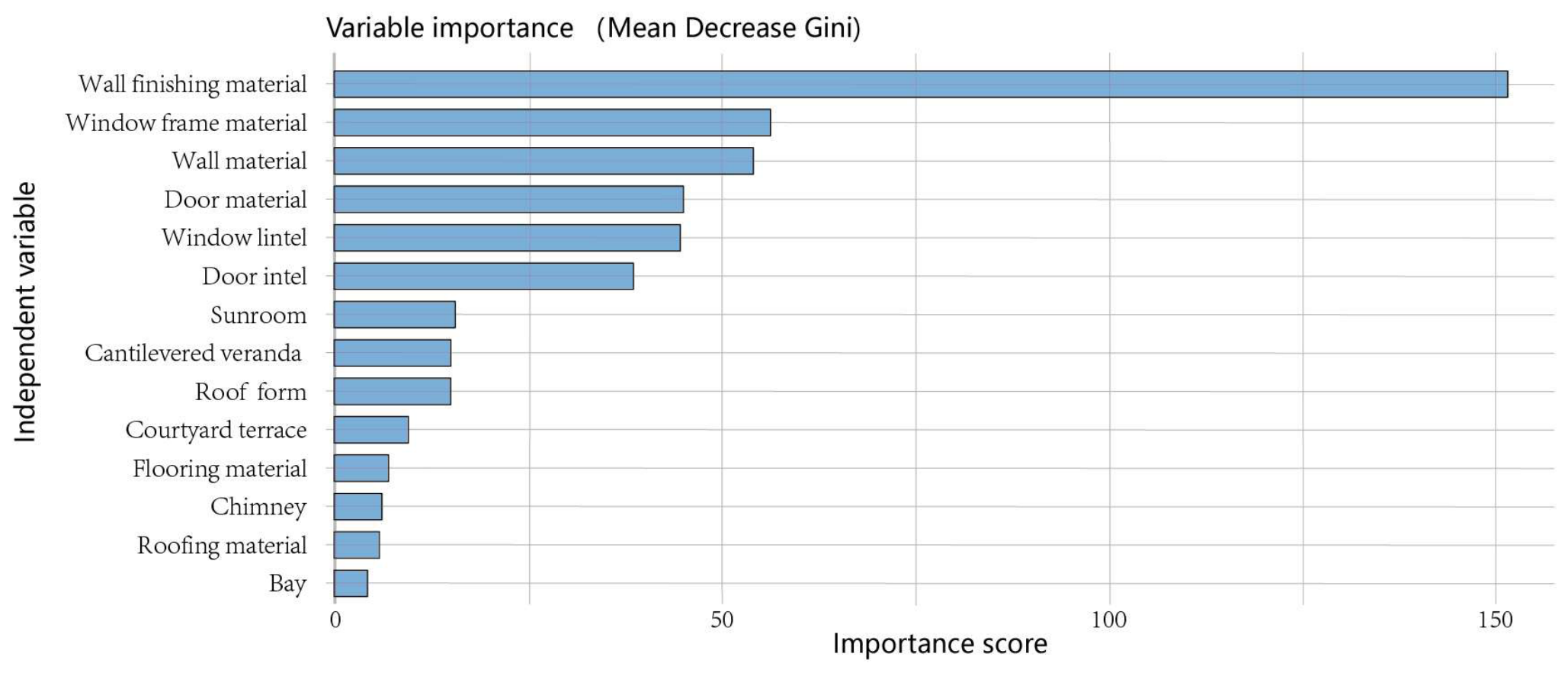
Figure 7.
The constructed decision tree model.
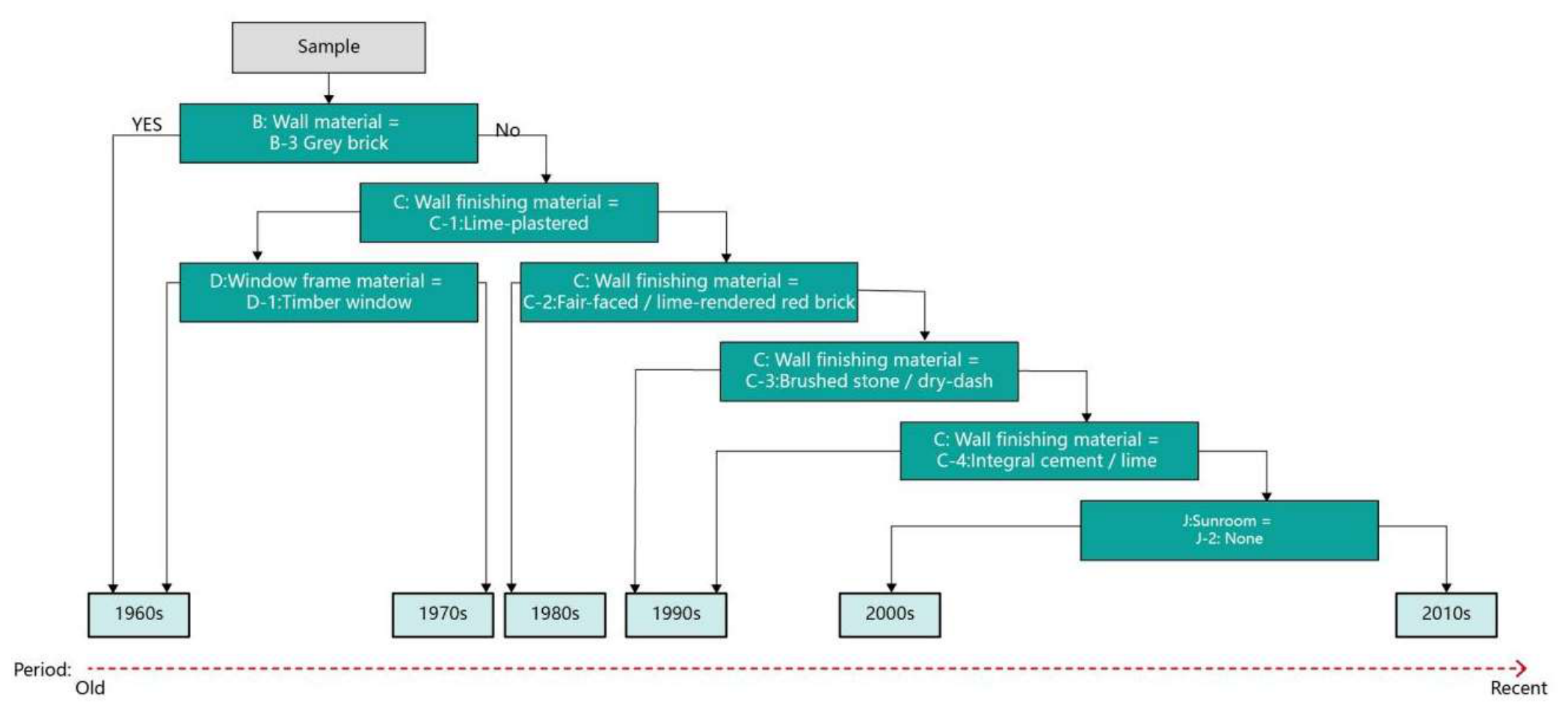
Figure 8.
Validation of the proposed model's prediction accuracy.
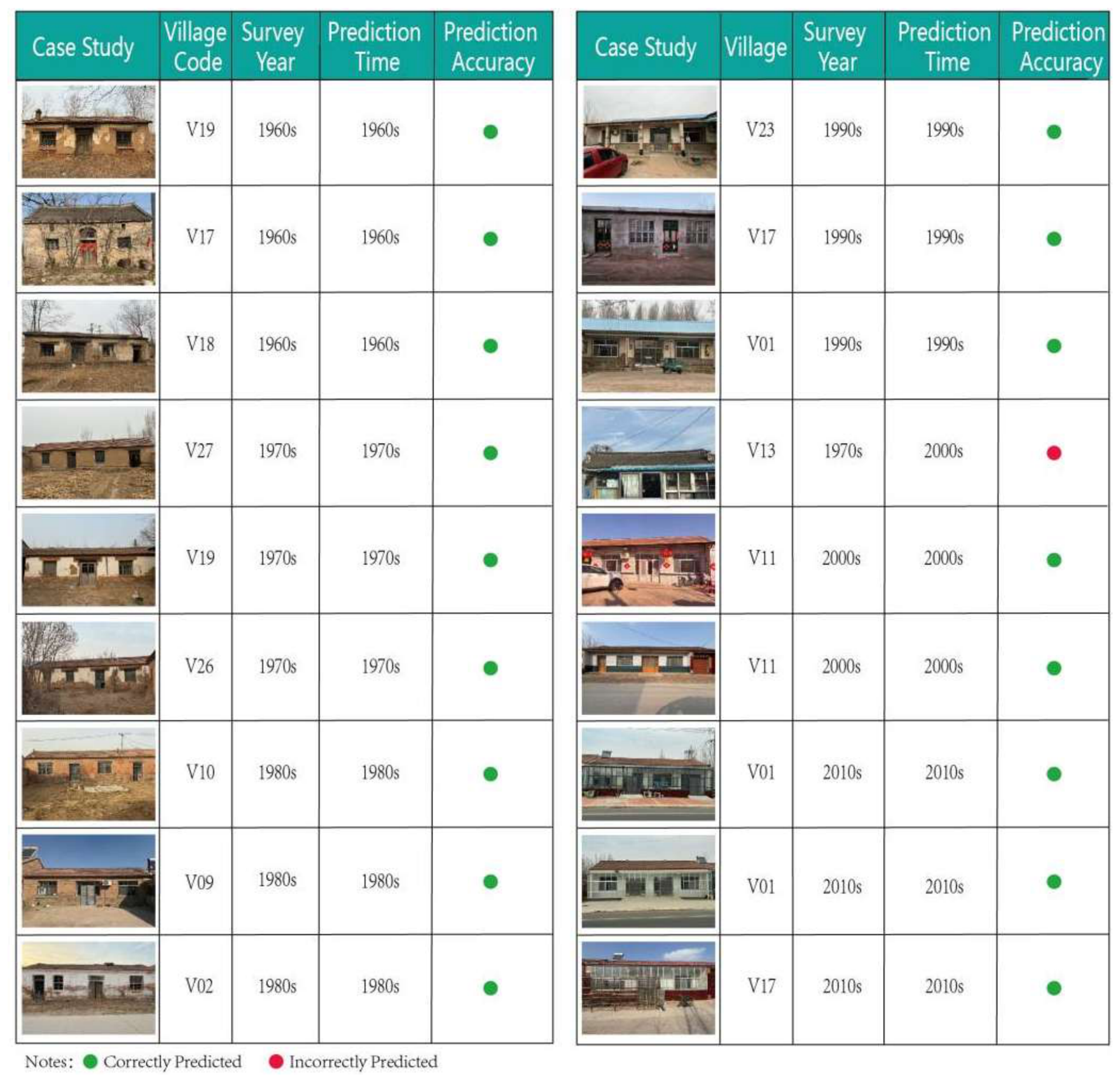

Table 1.
Comparison of different methods for determining building dates.
| Method | Strength | Weakness | Reference | |
| Documentary method | Ancient books | Strong authority, capable of tracing far back in time. | Biased towards official buildings; few records exist for vernacular and folk architecture. | [19] |
| Stele inscriptions | Mostly contemporary practical records offering precise dating. | Weathering, damage, and human destruction lead to incomplete texts. | [21,22] | |
| County gazetteers | Highly targeted, accompanied by regional cultural and clan information. | Focus on public buildings; scattered dwellings are virtually unrecorded. | [2,19] | |
| Field survey | Interview | Suitable for vernacular dwellings without any written records. | Memory bias and chronological ambiguity. | [1,8] |
| Questionnaires | Suitable for large-scale general surveys of vernacular architecture. | High subjectivity, easily influenced by the personal judgment of respondents. | [25] | |
| Machine learning | Deep learning models | High efficiency, capable of batch processing of building images. | Requires preliminary data collection and model training; highly dependent on high-quality annotated datasets. | [23,24] |
Table 2.
Distribution of surveyed village samples in Dezhou.
| InvestigatedVillages | Village Code | Sample size | InvestigatedVillages | Village Code | Sample size | ||
| Ningjin County | Cuizhuang Village | V01 | 20 | Xiajin County | Bianguanqiao Village | V17 | 13 |
| Duanzhuang Village | V02 | 20 | Houweizhai Village | V18 | 16 | ||
| Wuzhuang Village | V03 | 34 | Maguantun Village | V19 | 15 | ||
| Xiaohanzhuang Village | V04 | 15 | Qianweizhai Village | V20 | 13 | ||
| Pingyuan County | Encheng Town | V05 | 22 | Songzhuang Village | V21 | 12 | |
| Xiguan Village | V06 | 25 | Tianshuizhuang Village | V22 | 32 | ||
| Gengzhuang Village | V07 | 28 | Xiaozhuang Village | V23 | 13 | ||
| Wangdagua Village | V08 | 29 | Yaozhuang Village | V24 | 14 | ||
| Qingyun County | Dongzhang Village | V09 | 32 | Zhaozhuang Village | V25 | 15 | |
| Xizhang Village | V10 | 24 | Zhuzhuang Village | V26 | 16 | ||
| Chenyangzhuang Village | V11 | 29 | Suliuzhuang Town | V27 | 14 | ||
| Dongsanli Village | V12 | 27 | Renzhuang Village | V28 | 27 | ||
| Wucheng County | Houwangzhuang Village | V13 | 17 | Yangzhuang Village | V29 | 26 | |
| Houliangzhuang Village | V14 | 22 | |||||
| Liangzhuang Village | V15 | 30 | |||||
| Wangxiaotun Village | V16 | 30 | |||||
| Total | 630 | ||||||
Table 3.
Example of the building facade feature element information table.
| Samples | Village Code | Facade components code | |||||||||||||
|---|---|---|---|---|---|---|---|---|---|---|---|---|---|---|---|
| A | B | C | D | E | F | G | H | I | J | K | L | M | N | ||
 |
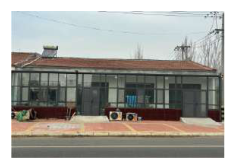
V23 | A-2 | B-1 | C-1 | D-1 | E-1 | F-1 | G-1 | H-3 | I-2 | J-2 | K-1 | L-2 | M-4 | N-3 |
 |
V19 | A-2 | B-1 | C-1 | D-2 | E-1 | F-2 | G-1 | H-3 | I-2 | J-2 | K-1 | L-1 | M-4 | N-2 |
 |
V19 | A-2 | B-2 | C-3 | D-2 | E-4 | F-2 | G-4 | H-1 | I-1 | J-2 | K-3 | L-1 | M-4 | N-1 |
 |
V17 | A-3 | B-2 | C-4 | D-2 | E-4 | F-2 | G-4 | H-3 | I-2 | J-2 | K-2 | L-4 | M-4 | N-2 |
 |
V10 | A-4 | B-2 | C-5 | D-3 | E-4 | F-3 | G-4 | H-1 | I-1 | J-2 | K-3 | L-1 | M-4 | N-2 |
 |
V01 | A-3 | B-2 | C-5 | D-3 | E-4 | F-3 | G-4 | H-2 | I-2 | J-2 | K-3 | L-3 | M-3 | N-2 |
 |
V01 | A-3 | B-2 | C-5 | D-3 | E-4 | F-3 | G-4 | H-2 | I-1 | J-1 | K-3 | L-1 | M-4 | N-2 |
Table 4.
Accuracy Metrics of Decision Tree Model.
| Model evaluation performance | Parameter | Value |
| Accuracy | 98.92% | |
| Precision (Overall) | 99.30% | |
| Recall Rate (Overall) | 99.16% | |
| F1-score | 0.992 |
Disclaimer/Publisher’s Note: The statements, opinions and data contained in all publications are solely those of the individual author(s) and contributor(s) and not of MDPI and/or the editor(s). MDPI and/or the editor(s) disclaim responsibility for any injury to people or property resulting from any ideas, methods, instructions or products referred to in the content. |
© 2026 by the authors. Licensee MDPI, Basel, Switzerland. This article is an open access article distributed under the terms and conditions of the Creative Commons Attribution (CC BY) license (http://creativecommons.org/licenses/by/4.0/).
Copyright: This open access article is published under a Creative Commons CC BY 4.0 license, which permit the free download, distribution, and reuse, provided that the author and preprint are cited in any reuse.


