

Submitted:
08 July 2026
Posted:
10 July 2026
You are already at the latest version
Abstract
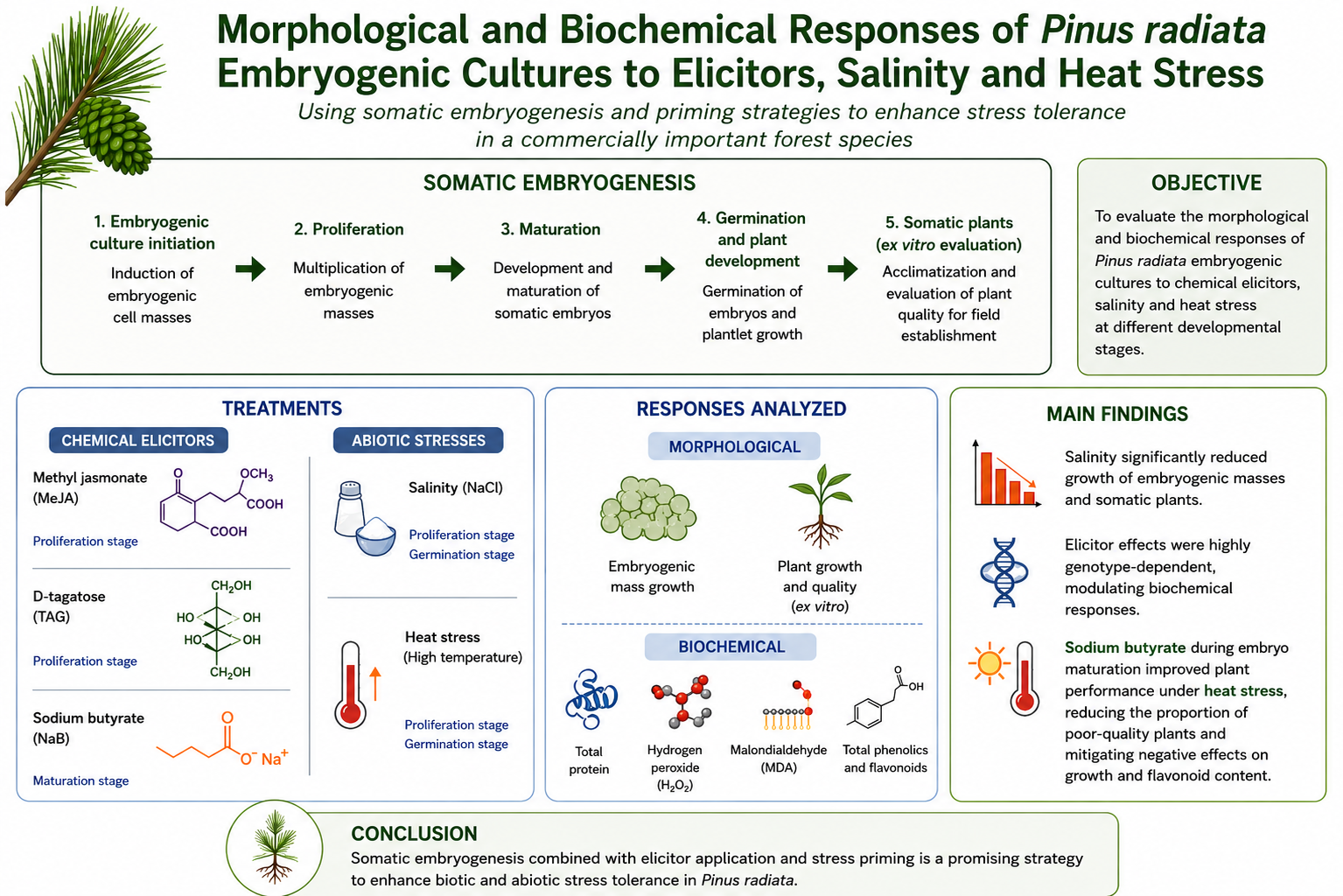
Pinus radiata is a commercially valuable forest species whose productivity is increasingly threatened by climate change-related biotic and abiotic stresses such as diseases, soil salinization and rising temperatures. Taking as a starting point a sufficiently optimized somatic embryogenesis propagation protocol for radiata pine, this study aimed to evaluate the morphological and biochemical responses embryogenic cell lines subjected to different elicitors such as methyl jasmonate and tagatose during proliferation or sodium butyrate at maturation stage. The effect of various stresses such as salinity and high temperatures was evaluated at proliferation and germination stages. Then, biochemical analyses (total protein, hydrogene peroxide and malondialdehide contents) were carried out in embryogenic tissues and plants and the growth was also assessed in these tissues and in somatic plants. This latter growth assessment led to a classification of plants depending on their suitability to be planted ex vitro. Several embryogenic cell lines were tested and the response to elicitation or stress was found highly genotype-dependent however some trends could be observed particularly when assessing growth. These results suggest that somatic embryogenesis combined with stress priming or elicitor application may be a viable strategy to enhance biotic and abiotic stress tolerance in radiata pine.
Keywords:
heat
; methyl jasmonate
; sodium butyrate
; sodium chloride
; tagatose
Copyright: This open access article is published under a Creative Commons CC BY 4.0 license, which permit the free download, distribution, and reuse, provided that the author and preprint are cited in any reuse.


