

Submitted:
09 July 2026
Posted:
10 July 2026
You are already at the latest version
Abstract
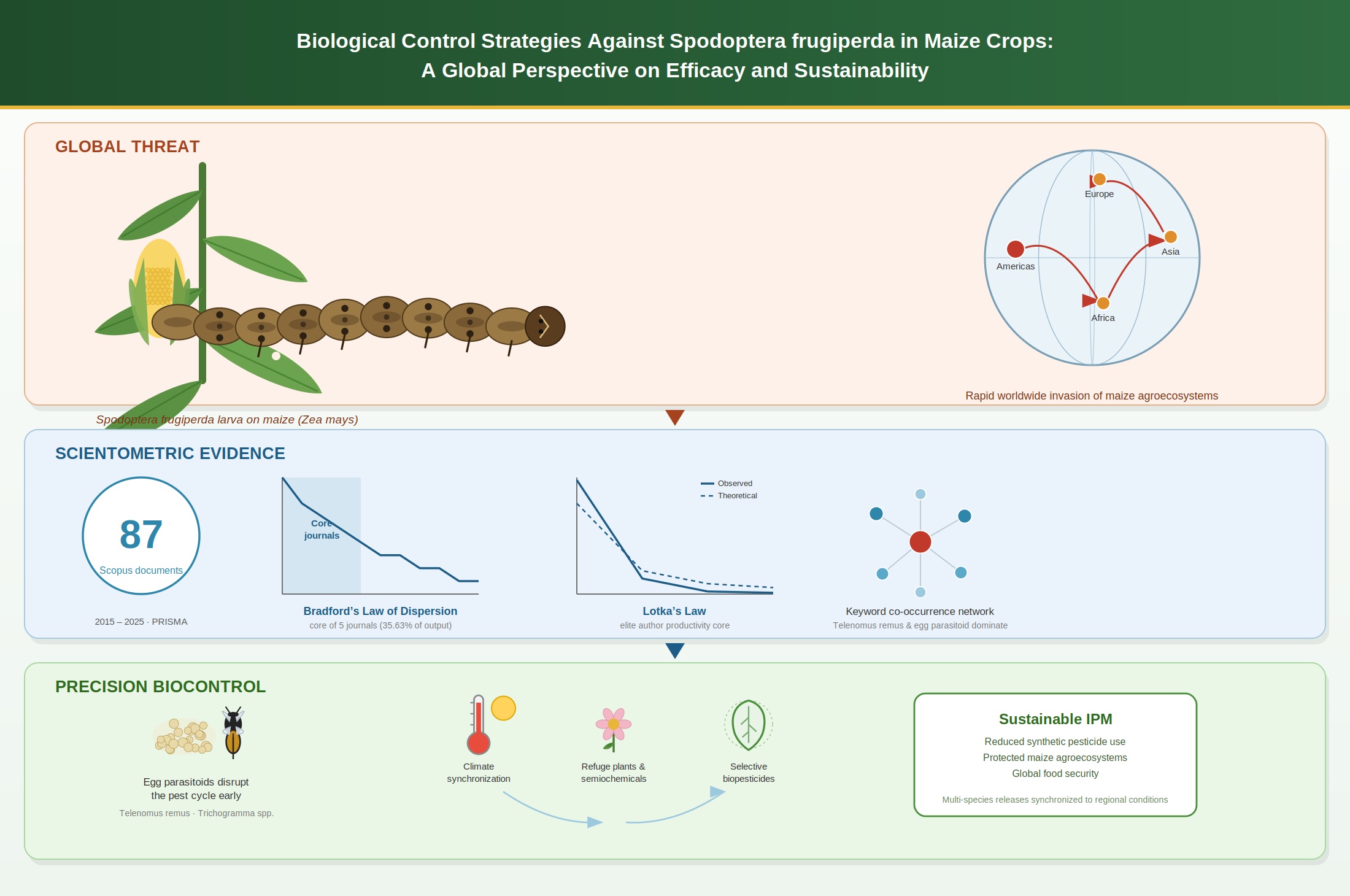
The rapid global spread of the fall armyworm, Spodoptera frugiperda, has severely threat-ened maize production, accelerating a critical shift in Integrated Pest Management (IPM) toward augmentative and conservation-based biological control using egg parasitoids. A retrospective bibliometric analysis mapped 87 Scopus-indexed documents (2015–2025) processed via the Bibliometrix package in RStudio following PRISMA protocol. Bradford's Law confirmed a specialized publishing core of five journals accounting for 35.63% of global output (χ² = 0.4828; p = 0.785). Lotka's Law revealed a significant asymmetric dis-tribution of author productivity (χ² = 72.86; p < 0.001), reflecting a discipline driven by a small expert core. Geopolitically, collaboration networks contrasted the research autono-my of emerging Asian powers (China, India) against the multilateral cooperation de-pendency of African nations. Keyword co-occurrence analysis confirmed significant lexi-cal polarization toward the pest–natural enemy pairing (χ² = 12.051; p = 0.0072), with Telenomus remus (22 occurrences) and "egg parasitoid" (21 occurrences) dominating the emerging thematic cluster. The global research frontier has shifted from descriptive ento-mology toward applied precision biological control, emphasizing combined parasitoid releases, climate synchronization, semiochemical manipulation, and selective biopesti-cide compatibility for the sustainable protection of maize crops.
Keywords:
bibliometric analysis
; Bibliometrix
; Telenomus remus
; Trichogramma
; fall armyworm
; Integrated Pest Management
1. Introduction
Maize (Zea mays L.) is one of the most important agricultural crops globally, playing a strategic role in global food security and the socioeconomic sustainability of agricultural systems [1,2]. However, the stability of its production is under constant threat from various insect pests, among which the fall armyworm, Spodoptera frugiperda (J.E. Smith) (Lepidoptera: Noctuidae), stands out as a critical threat. This species, characterized by high biotic potential, a high dispersal capacity, and a markedly polyphagous feeding habit, can cause severe economic losses by defoliating plants and destroying their photosynthetic and reproductive structures [3,4]. Over the past decade, S. frugiperda has evolved from being a regional concern in the Americas to becoming a global phytosanitary emergency, following its successful invasion and rapid establishment on the African and Asian continents and, more recently, in the agricultural regions of southern Europe [5,6,7]. The rapid spread of this pest not only causes hundreds of millions of dollars in yield losses but also poses a direct threat to global food security [8,9].
Historically, management of this pest has relied almost exclusively on the intensive use of synthetic chemical insecticides and the adoption of genetically modified crops that express Bacillus thuringiensis toxins (Bt maize) [10,11]. However, the selection pressure exerted by these tools has accelerated the evolution of genetic resistance in field populations of S. frugiperda, severely compromising the effectiveness of treatments and causing negative externalities such as environmental degradation and the elimination of beneficial fauna [12,13]. The frequent and intensive application of agrochemicals is unsustainable, as it drastically increases production costs and promotes the emergence of secondary pest outbreaks [8,14]. Given this scenario, exacerbated by growing international regulatory restrictions on synthetic pesticides, Integrated Pest Management (IPM) calls for an urgent transition toward biological and innovative tactics. Augmentative and conservation-based biological control, through the release and management of natural enemies, is emerging as the most viable path to restoring ecological balance in maize agroecosystems[15].
Among the diverse array of beneficial agents, parasitoids play a pivotal role in regulating S. frugiperda populations. Notably, the egg endoparasitoid Telenomus remus Nixon (Hymenoptera: Scelionidae) stands out for its remarkable searching efficiency and its ability to penetrate the dense layers of scales protecting the pest’s egg masses, thereby interrupting the reproductive cycle before larval damage occurs [16,17]. This species is particularly effective, capable of parasitizing eggs even in the innermost layers of the pest’s overlapping egg masses and achieving parasitism rates of up to 90% in inundative releases [8]. Similarly, micro-wasps of the genus Trichogramma (Hymenoptera: Trichogrammatidae)—such as Trichogramma pretiosum Riley—and larval parasitoids like Cotesia marginiventris (Cresson) and Eiphosoma laphygmae Costa Lima complement this biological control complex by targeting various developmental stages of the host across different regions of the world [18]. Recently, international research has expanded this biological complex with new findings on efficacy, documenting attacks on S. frugiperda eggs by other species within the same genus, such as Telenomus californicus and Telenomus dignus [14,19].
Despite the proven biofactory potential of these insects, their operational success in the field and their ecophysiological viability are strictly determined by abiotic variables, primarily temperature and relative humidity. Phenological synchrony between the parasitoid and the host depends on regional temperature conditions remaining within the optimal development thresholds of the beneficial species [20,21]. In the context of contemporary climate change, thermo-hygrometric fluctuations not only alter the development rate and fecundity of parasitoids but also reshape the geographical areas suitable for their establishment, opening new ecological windows in previously inhospitable latitudes or, conversely, disrupting existing trophic interactions [22,23]. To mitigate these fluctuations and enhance the conservation of parasitoids, habitat management using refuge plants (such as Turnera subulata) has proven to be a vital tactic; these flowering plants provide essential sources of carbohydrates and nectar and emit volatile compounds that guide parasitoids to their hosts, significantly increasing their effectiveness in the field [19].
Consequently, the use of predictive analytical tools is essential for designing biological control programs that are spatially precise and economically viable. The construction of fertility life tables under controlled thermal regimes allows for the modeling of key demographic parameters (such as the net reproduction rate R0 and the intrinsic growth rate rm), which constitute the fundamental input data for maximum entropy (Maxent) algorithms and geostatistical analyses applied in Geographic Information Systems (GIS) [24,25]. Through these technologies, it is possible to delineate areas of global and regional climatic suitability for the successful establishment of parasitoids.
Building on this integrative perspective, the present article, titled “Biological Control Strategies against Spodoptera frugiperda in Maize Cultivation: A Global Perspective on Efficacy and Sustainability,” critically examines the state of the art regarding the ecophysiological requirements, predictive distribution models, and zoning criteria for the pest’s main parasitoids. Its primary objective is to provide an analytical and quantitative framework that optimizes phytosanitary decision-making, promoting resilient agriculture adapted to climate change and oriented toward long-term sustainability.
2. Materials and Methods
2.1. Study Design and Approach
A quantitative retrospective bibliometric analysis was conducted using a dual methodological approach. This approach combined performance analysis to assess productivity and citation impact with scientific mapping of the intellectual structure, allowing us to delineate the frontiers of knowledge and trends regarding the biological control of Spodoptera frugiperda in maize cultivation [26,27].
2.2. Data Extraction Strategy in Scopus
Metadata collection was focused exclusively on Scopus, given its comprehensive indexing in agricultural and biological sciences [28]. A highly specific Boolean search query was designed, nested with parentheses and applied to the search field: ((TITLE-ABS-KEY (“Spodoptera frugiperda”) OR TITLE-ABS-KEY (“S. frugiperda”) OR TITLE-ABS-KEY (“fall armyworm”)) AND (TITLE-ABS-KEY (“Telenomus”) OR TITLE-ABS-KEY (“Trichogramma”) OR TITLE-ABS-KEY (“egg parasitoid*”)) AND (TITLE-ABS-KEY (“maize”) OR TITLE-ABS-KEY (“corn”) OR TITLE-ABS-KEY (“maíz”))). The syntax spanned three precise conceptual dimensions (pest AND biocontrol agent AND host crop), ensuring accurate retrieval, and minimizing documentary noise or false positives [27,29].
2.3. Metadata Refine and Quality Control
A rigorous refinement workflow was applied to ensure the viability of the scientometric networks. Starting with a raw retrieval of 130 records, a temporal filter (from 2015 to 2025) was applied, reducing the sample to 105 documents (Figure 1). Subsequently, a strict quality control process was carried out to exclude records with gaps in critical indexing fields (missing keywords, lack of a DOI, or no corresponding author), resulting in a definitive and robust corpus of 87 documents of high analytical quality [5].
2.4. Scientometric Processing
The structured metadata from the final corpus was exported for modeling in Bibliometrix (RStudio environment). The analysis was structured on two levels: 1) performance metrics (productivity and impact by author, journal, and institution), and 2) scientific mapping, using keyword co-occurrence analysis to identify emerging thematic clusters, and co-authorship analysis to reveal institutional and geopolitical collaboration networks in the analyzed domain [27,28].
3. Results
3.1. Key Information on the Bibliometric Analysis Data
The bibliometric analysis of the 87 retrieved documents (2015–2025) reveals a highly dynamic field of research, evidenced by an extraordinary annual growth rate of 52.29% and an average document age of just 3.33 years. This emerging body of literature, distributed across 47 journals, not only reflects the recency of the field but also demonstrates significant impact, with 16.05 citations per article. The predominance of original articles (87.3%), averaging 142 references per text, ensures methodological rigor. From a collaboration standpoint, the field requires a high degree of teamwork, averaging 6.61 authors per document. Of note is an international co-authorship rate of 34.48%, a critical indicator by Scopus standards that demonstrates this field’s ability to transcend borders, integrate global laboratories, and consolidate knowledge networks with high global scientific impact (Table 1).
3.2. Performance Metrics (Productivity and Impact by Author, Journal, and Institution)
The analysis of the scientific performance of the corpus under study allows us to quantify the publication effort and the level of influence and impact of the various actors (journals, authors, and affiliated institutions) within the field of biological control of Spodoptera frugiperda in maize cultivation.
3.2.1. Productivity and Impact of Scientific Journals (Sources)
The bibliometric analysis reveals a marked specialization of the literature in journals focused on entomology, plant health, and ecological pest control. The application of Bradford’s Law of Scattering allows for the identification of a core group (Zone 1) of sources that constitute the intellectual foundation of this field of study, comprising Insects, Biological Control, Indian Journal of Entomology, Egyptian Journal of Biological Pest Control, and Crop Protection.
Within this core, the journal Insects stands out as the most authoritative and productive platform, with 9 articles (Figure 2) and leading in absolute impact metrics with an h-index of 8 and 656 total citations (TC) since its first indexed publication in 2019. Beyond volume, this journal stands out for its extraordinary relative impact, averaging 72.9 citations per paper, which demonstrates the high penetration and visibility of its research within the scientific community.
In the second tier of productivity is Biological Control with 7 articles, demonstrating a solid, well-established impact (h-index = 5; TC = 90), closely followed by the Indian Journal of Entomology (6 articles) and the Egyptian Journal of Biological Pest Control (5 articles) (Figure 3). The performance of journals such as Crop Protection and the Journal of Plant Diseases and Protection is methodologically significant; although they have a lower number of articles (4 and 3, respectively), they demonstrate superior citation efficiency. With 111 and 85 total citations, they average around 28 citations per article, suggesting that they serve as channels for disseminating seminal research or studies with high agronomic applicability (Table 2).
- Bradford’s Law of Dispersion
To determine the structure of publishing concentration and the degree of dispersion in the scientific literature on the biological control of Spodoptera frugiperda in maize cultivation, Bradford’s Law was applied. This scientometric tool divides sources into three concentric zones of decreasing productivity, where Zone 1, or the “Bradford Nucleus,” represents specialized journals that are highly productive within the analyzed field of knowledge.
The analyzed corpus distributes its 87 articles across a total of 47 sources indexed in Scopus, revealing a theoretical pattern that conforms to scientometric mathematical regularity, establishing a structural ratio of sources by zone of 5:14:28.

Table 3.
Distribution of journals and articles according to the zones of Bradford’s Law.
| Zone | Journals (Sources) | Articles (Freq) | % Of total documents |
|---|---|---|---|
| Zone 1 | 5 | 31 | 35.63% |
| Zone 2 | 14 | 28 | 32.18% |
| Zone 3 | 28 | 28 | 32.18% |
| Total | 47 | 87 | 100.00% |
The core group (Zone 1) consists exclusively of 5 elite journals, which account for 35.63% of the total cumulative output (n = 31 out of 87 documents). The internal hierarchy of the core group highlights the clear leadership of the journal Insects (Rank 1, 9 articles), which has established itself as the platform with the greatest empirical influence within the domain. They are followed, in descending order of productivity, by: Biological Control (Rank 2, 7 articles), Indian Journal of Entomology (Rank 3, 6 articles), Egyptian Journal of Biological Pest Control (Rank 4, 5 articles), and Crop Protection (Rank 5, 4 articles). These five sources constitute the critical mass of the contemporary intellectual framework on egg parasitoids as a means of pest control.
Zone 2 acts as an intermediate transitional body where the number of sources doubles (14 journals) to achieve a similar volume of literature (28 articles). This segment features journals with regional specialization or related disciplines, such as CABI Agriculture and Bioscience, Journal of Pest Science, and Journal of Plant Diseases and Protection (all with 3 articles). Finally, Zone 3 represents the periphery or maximum dispersion of knowledge, consisting of 28 journals that each contribute a single article (such as Bragantia and Biosemiotics, among others), demonstrating that the biological control of S. frugiperda extends tangentially into journals of general ecology, botany, or agronomy.
To mathematically validate the correspondence of these findings with the ideal model, a Chi-square () goodness-of-fit test was performed. Under the assumption of a perfect tripartite theoretical distribution (where each zone should equally account for one-third of the total number of articles, that is, Ei = 29.00 articles per zone), the mathematical evaluation conclusively confirms the empirical fulfillment of Bradford’s Law in the analyzed corpus. Since the calculated test statistic ( = 0.4828 is substantially lower than the critical threshold established by the distribution () = 5.991), and supported by a p-value of 0.785, there is insufficient statistical evidence to reject the null hypothesis (H0). Consequently, this demonstrates the absence of significant divergences between the empirical bibliometric distribution of the sample and the ideal theoretical model, indicating a highly robust fit of the analyzed journals to the mathematical structure of a core and zones of dispersion dictated by Bradford’s original postulate.
3.2.2. Productivity and Leadership Among Authors
Assessing scientific leadership in the biological control of Spodoptera frugiperda requires going beyond a simple count of publications. When the corpus of 497 authors is analyzed using Lotka’s Law (the law of scientific productivity), a pronounced asymmetric distribution emerges—a characteristic of research areas responding to recent agronomic emergencies. An overwhelming majority of researchers (86.7%, equivalent to 431 authors) act as “transient authors” with a single contribution to the field, a figure that significantly exceeds the 70.2% estimated by the ideal theoretical model.
To statistically validate this behavior, the chi-square goodness-of-fit test was applied. The analysis revealed a statistically significant difference between the observed empirical productivity and the expected inverse-power mathematical distribution (= 72.86 > = 7.815; df = 3; p < 0.001), leading to the rejection of the null hypothesis of a good fit. This formal mismatch confirms that the sociometric structure of this discipline has not yet reached traditional organic maturity; on the contrary, sustained production and the advancement of the frontier of knowledge rest on an extremely limited core of specialists, while the base of the pyramid is broadened by a massive but temporary participation of researchers.
- Comparative Analysis of Leadership and Collaboration Dynamics
Within this elite core, a co-leadership in terms of absolute productivity is identified, headed by M. Kenis and O. Navik, each with four published articles. However, an analysis of the fractional authorship rate—which weights each researcher’s actual contribution by dividing authorship by the number of manuscript contributors—reveals distinct work dynamics. O. Navik has a value of 1.00, reflecting a dominant authorship position in smaller research groups; in contrast, M. Kenis’s rate of 0.45 suggests that his research is conducted within large collaborative networks or multicenter consortia (Figure 5).
The consistency observed in the productivity of the elite core is not an isolated phenomenon but aligns with their various collaboration strategies. The results of the chi-square independence test (χ² = 1.942; df = 6; p = 0.925) confirmed that the scientific output of the leading authors remained stable and consistent throughout the 2019–2025 period, unaffected by publication-trend fluctuations or the massive influx of transient authors into the field.
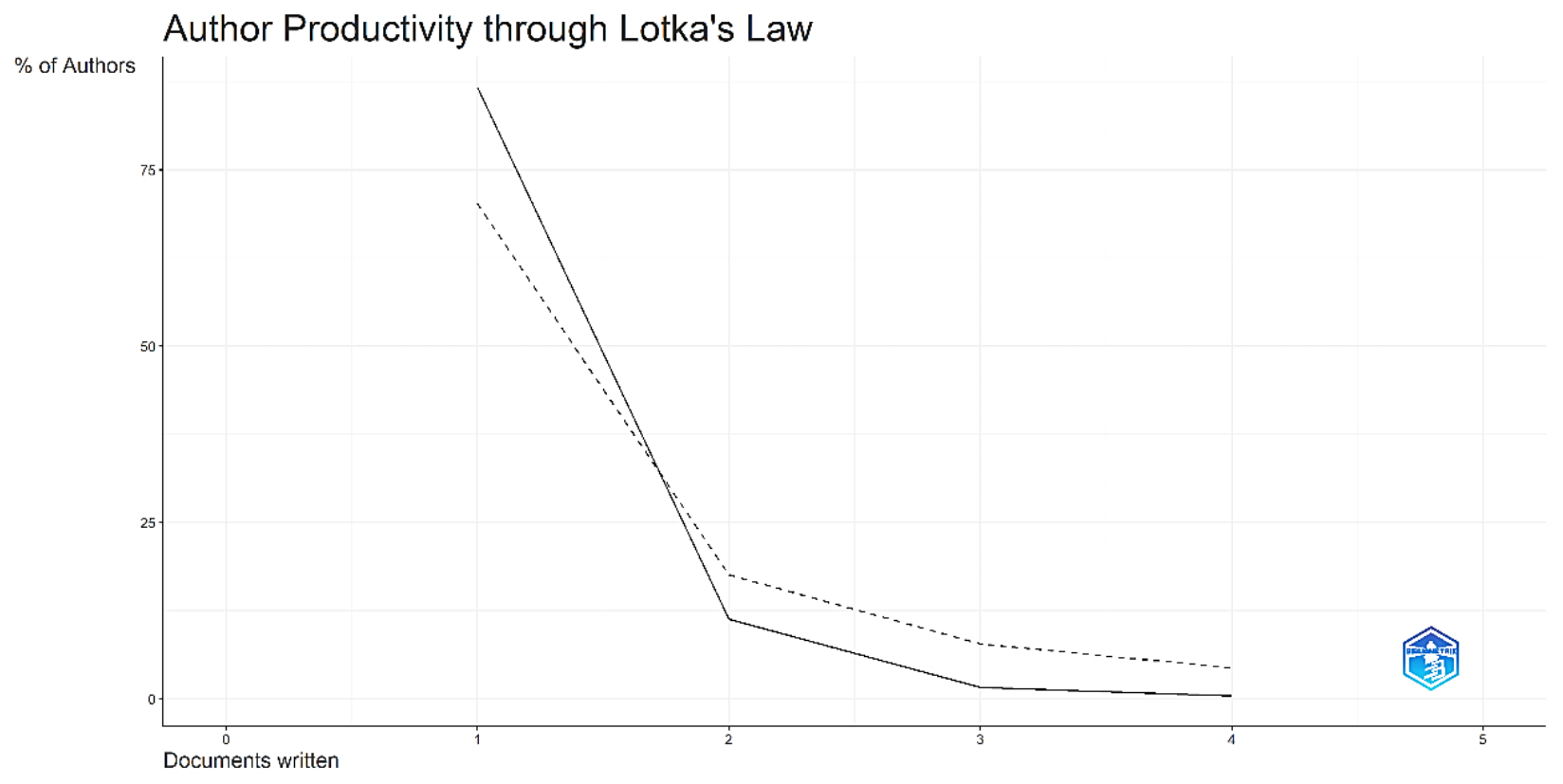
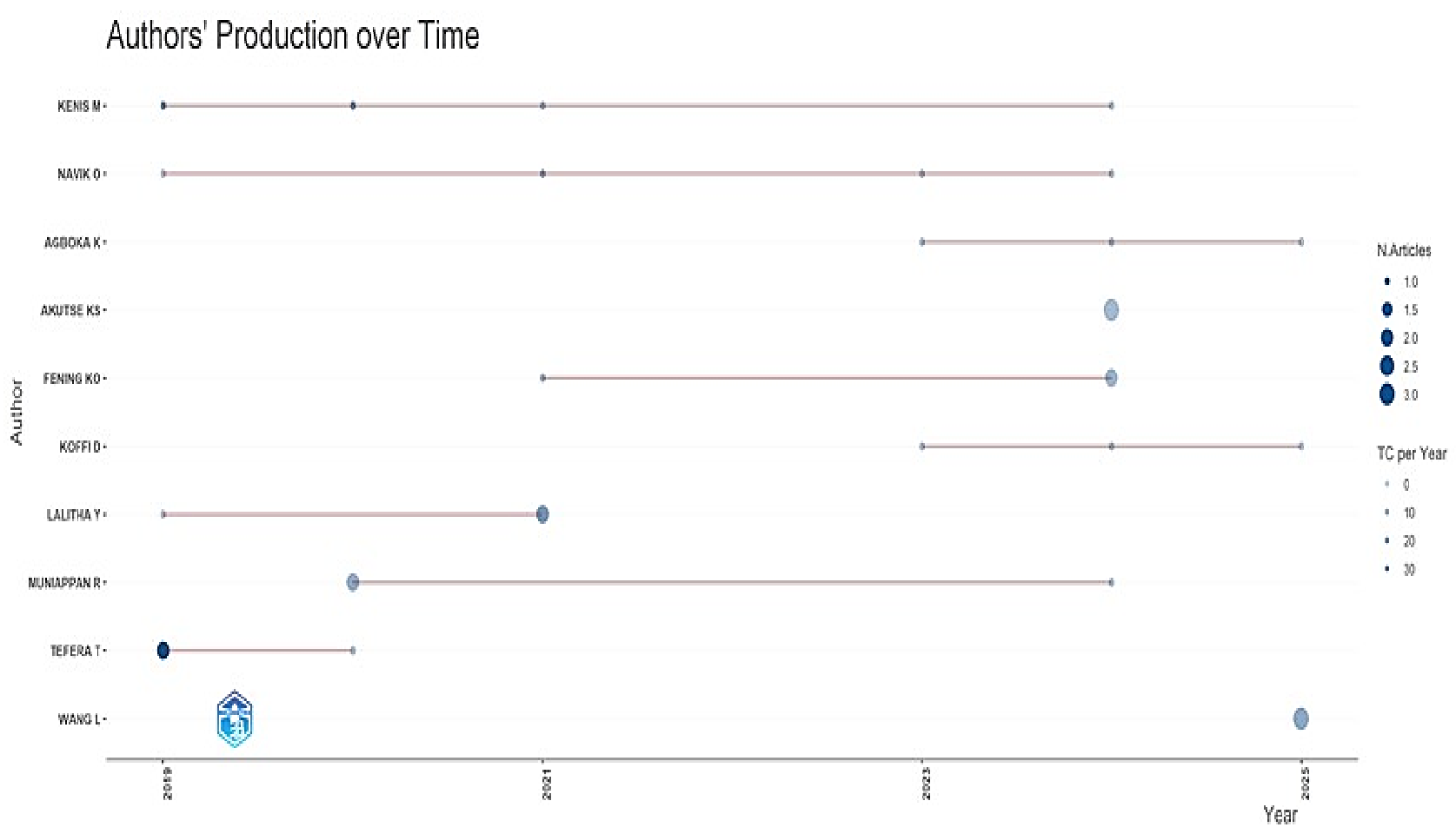
Figure 4.
Temporal evolution and citation magnitude of the core group of leading authors. Lotka’s Law.
Figure 4.
Temporal evolution and citation magnitude of the core group of leading authors. Lotka’s Law.
Figure 5.
Temporal evolution of scientific output and citation volume (bubble size) of the most relevant authors.
Figure 5.
Temporal evolution of scientific output and citation volume (bubble size) of the most relevant authors.
This stability, when considered alongside fractional authorship rates (where Navik O. maintains a profile of high individual centrality at 1.00, as opposed to the multicentric collaborative nature of Kenis M. at 0.45), suggests a resilient scientific structure. In bibliometric terms, this implies that progress in the biological control of S. frugiperda rests on two complementary pillars: highly central researchers who ensure disciplinary depth (such as Navik) and connecting nodes that facilitate the expansion of knowledge across global networks (such as Kenis). This combination of temporal stability and diversity in publication strategies is what allows the field to maintain scientific coherence in the face of the dispersion inherent in a growing research area.
- Determinants of Scientific Impact: Editorial Prestige or Thematic Relevance?
A highly productive subgroup consists of scientists such as K. Agboka, K. S. Akutse, K. O. Fening, D. Koffi, Y. Lalitha, R. Muniappan, and T. Tefera, all with 3 publications. It is essential to note that the bibliometric impact of these authors is closely linked to seminal milestones in recent literature. For example, the research led by Kenis et al. [30] in the journal *Insects* stands as the most cited work globally in the corpus, with a massive impact of 160 total citations (20 citations per year). This study, closely followed by the studies by Sisay et al. [31] with 155 citations and Agboyi et al. [32] with 130 citations—all originally published in “Insects”—forms the contemporary intellectual foundation regarding the biological response to this pest (Figure 6).
To gain a deeper understanding of the nature of this influence, we assessed whether global citation success is conditioned by a journal’s editorial prestige (by comparing the elite journals in the Bradford core with the rest of the corpus). Using a chi-square test of independence with Yates’ correction, we analyzed the association between source type and citation level (defined by the corpus median threshold: ≥ 60 citations).
The results (χ² = 3.150; df = 1; p = 0.076) suggest that, although there is a trend toward an association between publication in high-impact journals and the accumulation of citations, this trend does not reach the conventional threshold for statistical significance (α = 0.05). This finding is revealing regarding the dynamics of the field: the lack of a statistically conclusive association indicates that, in the biological control of S. frugiperda, the “publishing elite” does not act as an exclusionary filter for scientific success. On the contrary, the substantial accumulation of global citations stems from intrinsic factors of the research, such as the critical timing of the study considering the pest’s geographic expansion and the technical applicability of the evaluated control agents (e.g., Telenomus remus). In conclusion, global impact in this field is grounded in the operational utility of the knowledge generated, demonstrating a scientific meritocracy where the quality of the agronomic finding takes precedence over the prestige of the publication platform.
3.2.3. Analysis of Institutional Infrastructure and Scientific Centralization
The distribution of scientific output by affiliated institutions reveals a marked influence of research centers in Asia and Africa. This phenomenon is a direct result of the agronomic and economic impact of the recent biological invasion of the fall armyworm in these regions, contrasting with the lower representation of institutions from the Neotropics, the region where the pest is endemic (represented in this cluster solely by the Federal University of Paraná, Brazil, with 8 articles).
To determine the degree of concentration or dispersion in the generation of this knowledge, a chi-square test of independence was applied to evaluate the distribution of the number of articles by institutional profile. The results demonstrate a highly significant association between an institution’s level of leadership and its capacity for biological research output (χ² = 26.471; df = 1; p < 0.0001), categorically rejecting the hypothesis of a homogeneous or decentralized distribution.
This statistical finding confirms the existence of a “cluster of excellence” or oligopolistic concentration of research, where absolute institutional leadership rests with the Institute of Plant Protection (China) with 20 articles, closely followed by the ICAR-National Bureau of Agricultural Insect Resources (India) with 18 documents, thereby consolidating the strategic role of the Asian region in the widespread adoption of parasitoids. In Africa, the University of Lomé (Togo) ranks third with 14 publications, surpassing specialized institutions such as the Environment and Plant Protection Institute (13 articles) (Figure 7 and Table 4).
This strong mathematical polarization demonstrates that advancing the frontiers of knowledge in the biological control of S. frugiperda depends critically on the infrastructure and funding of a select group of highly specialized laboratories, which poses a challenge to technological sovereignty and the decentralization of biological control toward peripheral agricultural economies that directly suffer the impact of the pest.
3.3. Scientific Mapping, Using Keyword Co-Occurrence Analysis to Identify Emerging Thematic Clusters, and Co-Authorship Analysis to Reveal Institutional and Geopolitical Collaboration Networks in the Analyzed Domain
3.3.1. Conceptual Structure and Density of the Corpus
Keyword co-occurrence analysis, a fundamental tool for unraveling the conceptual architecture of a field of study, reveals that the research is not scattered but highly consolidated around a hyper-specialized thematic core (Figure 8). Lexical networks converge on an undeniable conceptual triad: the pest (Spodoptera frugiperda and fall armyworm, with 39 and 36 occurrences, respectively), the host crop (maize and Zea mays, totaling 45 occurrences), and the ecosystem-based mitigation strategy (biological control and integrated pest management).
However, the most significant finding from the perspective of the emerging cluster is the absolute predominance of the terms Telenomus remus (22 occurrences) and “egg parasitoid” (21 occurrences) over any other biological agent. This demonstrates that the current frontier of knowledge is not centered on general larval control, but rather that there is a mature thematic cluster specifically focused on the early interruption of the insect’s life cycle through egg parasitism. This biotechnological approach is establishing itself as the preferred tactic within Integrated Pest Management (IPM) programs globally.
To verify whether this thematic configuration reflects an intended hierarchical structure rather than a random distribution of descriptors, the corpus was subjected to a Chi-square () goodness-of-fit test, grouping the terms into four conceptual clusters: Target Pest, Control Strategy, Biological Agents, and Host/Crop. The results confirm a statistically significant deviation from a uniform distribution (χ² = 12.051; df = 3; p = 0.0072).
This rejection of the null hypothesis corroborates a polarization of scientific vocabulary, where the focus of research is predominantly concentrated on the taxonomic pair “pest–natural enemy,” with a markedly higher thematic density in the Biological Agents category (n = 86). This mathematical configuration demonstrates that the international literature prioritizes the resolution of biological specificity in insect-parasitoid interactions, to the detriment of other descriptors. The lower lexical density observed in the host crop categories suggests that, although the impact occurs in the agricultural environment, current scientific research operates under a reductionist model focused on direct biotechnological solutions, relegating the analysis of complex multitrophic ecological interactions within the agricultural ecosystem to a peripheral role.
3.3.2. Institutional and Geopolitical Collaboration Networks (Co-Authorship Analysis)
An analysis of scientific collaboration networks reveals two diametrically opposed geopolitical dynamics in the response to S. frugiperda, distinguished by their rates of Single-Country Publications (SCP) and Multi-Country Publications (MCP) (Figure 9).
On the one hand, there is a bloc of emerging powers led by Brazil (15 articles; 80% SCP), China (14 articles; 64% SCP), and India (11 articles; 82% SCP). These nations exhibit a highly endogenous and independent research model. In the case of Brazil, this autonomy stems from its history as an endemic area for the pest, which has allowed it to develop a solid local research infrastructure over decades. India and China, for their part, have rapidly mobilized their robust national agricultural research systems to generate local solutions to the recent infestation, requiring less foreign intervention.
In contrast, the analysis reveals a deep dependence on international cooperation on the African continent. Countries severely affected by the pest invasion, such as Togo and Ghana, record international collaboration rates (MCP) of 100% and 66.6%, respectively. This asymmetry indicates that research in sub-Saharan Africa does not take place in isolation but is organized through strong networks of multilateral cooperation. These African geopolitical hubs function as strategic platforms where local institutes carry out fieldwork, supported methodologically and financially by consortia from Asia or the Global North.
3.3.3. Thematic Map and Structural Dynamics of Knowledge
The analysis of spatial co-occurrence using the Thematic Map (structured around Callon’s centrality and density metrics) allows research frontiers to be classified into four analytical quadrants (Figure 10). This topological mapping reveals both the maturity of lines of study and current knowledge gaps within the scientific community: (i) Driving Themes (Upper Right Quadrant: High centrality and high density) The research ecosystem is indisputably driven by two highly developed macro-clusters: “Spodoptera frugiperda” (intrinsically linked to biological control, maize cultivation, and natural enemies) and “animal” (which encompasses the study of insect physiology, larvae, and parasitology). Their high-density indices (122.6 and 220.7, respectively) and centrality demonstrate that these concepts constitute the empirical core of the field. These are mature, strongly interconnected lines of research that dictate the discipline’s methodological framework and account for the bulk of the literature. (ii) Niche or Specialized Topics (Upper-Left Quadrant: High density, low centrality) In this region, nodes are identified that are strongly internally cohesive but have only marginal interconnections with the rest of the network. Notable examples include “damage” (focused on crop yield and seed treatment), the study of the specific parasitoid “Chelonus bifoveolatus,” and the comprehensive concept of “food security.” From a bibliometric perspective, these represent highly specialized research niches, developed by research groups focused on addressing localized taxonomic or agronomic issues, without yet permeating the literature across disciplines. (iii) Emerging or Marginal Topics (Lower Left Quadrant: Low density and low centrality) Clusters such as “risk assessment” (ecological risk assessment) and “identification” (early taxonomic or molecular processes) are positioned in this sector. In the context of a young body of literature, their nascent presence does not indicate obsolescence, but rather emergence or transition. These topics represent emerging frontiers; they suggest that rigorous environmental impact assessments and the analytical standardization of species are areas of strategic academic opportunity and highly fertile ground for future publications. (iv) Basic or Cross-Cutting Themes (Lower Right Quadrant: High centrality, low density) The network topology reveals a polarization that draws cross- cutting themes toward the driving macro-clusters. The literature in this field does not disperse into generalist basic concepts but rather applies knowledge directly and urgently to the pest matrix (Spodoptera)—a classic statistical pattern in reactive agricultural research addressing highly invasive species.
4. Discussion
4.1. Editorial Structure and Centralization of Plant Health Knowledge
The marked centralization observed in the Bradford cluster (Zone 1) has profound implications for the governance of plant health knowledge. The fact that only five sources (Insects, Biological Control, Indian Journal of Entomology, Egyptian Journal of Biological Pest Control, and Crop Protection) account for more than one-third of the global literature in this niche demonstrates that the global scientific debate on parasitoids of S. frugiperda eggs is highly institutionalized. This efficiency in editorial channeling indicates that researchers precisely direct their findings toward the platforms with the highest visibility within the biological control community [27].
This phenomenon is characteristic of research lines addressing critical international agricultural emergencies. The rapid spread of the pest directly threatens food security and could cause multimillion-dollar economic losses in maize production [33,34]. Given this scenario, research consortia prioritize high-circulation, high-impact-factor publication channels to accelerate the technology transfer of solutions based on Telenomus remus and Trichogramma spp. [30,35]. The urgency of publishing in this core group of journals is driven by the documented evolution of the pest’s
Furthermore, the presence of both well-established, broad-spectrum global journals (Crop Protection) and journals focused on specific biological control (Biological Control and the Egyptian Journal of Biological Pest Control) in the core group confirms that the field of study has successfully transitioned from purely descriptive or laboratory-based entomology to an ecosystem of applied science. This ecosystem is strongly focused on agricultural sustainability and precision food security, promoting Integrated Pest Management (IPM) strategies that evaluate biorational products and ensure compatibility with biological conservation practices in the field [36,37].
4.2. Global Recruitment and Dominance of Telenomus Remus and Trichogramma spp.
Bibliometric results reveal a geographic decentralization in research on Spodoptera frugiperda driven by its rapid global invasion [27,38]. As it has expanded beyond its native range in the Americas, the pest has interacted with local ecological communities, recruiting a wide diversity of natural enemies in Africa, Asia, and Oceania [34,39,40]. Within this complex, the egg endoparasitoid Telenomus remus and multiple species of the genus Trichogramma (e.g., T. chilonis, T. pretiosum, T. mwanzai) have emerged as the most dominant and ubiquitous biological control agents globally[41].
Comparative evaluations indicate that T. remus exhibits superior population performance across multiple scenarios; for example, studies show that T. remus has an intrinsic rate of increase (rm) 47% higher than that of Trichogramma atopovirilia, establishing it as a highly effective alternative [42]. The high adaptability of T. remus is evident in early reports of its natural occurrence parasitizing egg masses of S. frugiperda in ecosystems as diverse as Egypt, South Korea, and the state of Sarawak in Malaysia, where its suitability for mass release programs is currently being evaluated [39,43,44].
4.3. The Challenge of Physical Barriers and Interspecific Synergy
The main obstacle to the success of biological control lies in the morphological defenses of S. frugiperda egg masses. The pest protects its egg masses by stacking multiple layers on top of one another and covering them with dense scales, which constitutes a limiting physical barrier [38,41]. Laboratory trials demonstrate that parasitoids such as Trichogramma evanescens and Trichogramma chilotraeae experience a drastic reduction in their parasitism rates when faced with these barriers, consistently preferring single-layer egg masses without any covering[44,45]. However, selecting species based on their morphological and behavioral attributes is essential; wasps with longer ovipositors, such as T. chilonis and T. mwanzai, achieve greater success in penetration and parasitism compared to T. pretiosum [41]. Additionally, Trichogrammatoidea bactrae has demonstrated a remarkable ability to overcome scale thickness and the number of layers [46].
To optimize field control and reduce costs, recent literature proposes the integration of species through “composite parasitoid spheres.” The simultaneous release of T. remus (with high penetration capacity in multi-tiered clusters) and T. chilonis (cost-effective and prolific) in a 20:80 ratio has been shown to significantly increase parasitism rates and reduce crop leaf damage, achieving an optimal balance between cost and biological efficacy [35].
4.4. Toxicological Compatibility and Biosafety in IPM
For augmentative biological control to be sustainable, it must be compatible with the use of chemical and biological insecticides within an Integrated Pest Management (IPM) framework. Persistent toxicity assessments reveal that active ingredients such as chlorantraniliprole and indoxacarb are safe for immature and adult stages of egg parasitoids [47,48,49]. In contrast, insecticides such as spinetoram, chlorpyrifos, and emamectin benzoate are harmful, reducing emergence and shortening lifespan [50]. The development of innovative formulation systems, such as the use of zirconium metal-organic frameworks (MOFs) for the encapsulation of emamectin benzoate, has been shown to dramatically improve controlled release and biosafety against T. remus and other non-target organisms [51].
In the field of biopesticides, entomopathogenic fungi (EPFs) such as Beauveria bassiana and Metarhizium anisopliae have proven to be harmless to the immature stages of T. remus when they are protected within the host’s chorion, allowing for a synergistic application that simultaneously targets eggs and hatching larvae [36,52].
4.5. Habitat Manipulation and Semiochemical Signaling
The structuring of the agroecosystem is critical for the conservation of beneficial fauna. The use of intercropping and the establishment of floral refuge systems (e.g., Zinnia elegans, Turnera subulata) provide vital nutritional resources that increase parasitism rates by Trichogramma and Telenomus [53]. Likewise, the integration of nectar-producing plants such as Cnidium monnieri and Ocimum basilicum extends the longevity and fecundity of these wasps [54].
Semiochemical signaling plays an equally crucial role; planting essential oil-producing plants (Cymbopogon schoenanthus, Ocimum citriodorum, Baccharis spp.) interspersed with maize releases volatile compounds that act as repellents for S. frugiperda moths and attract populations of natural enemies [24,37]. Convergent to this, genetically modified corn (Bt and stacked events) can enhance this mechanism by emitting improved profiles of herbivory-induced volatiles (HIPVs) that are highly attractive to T.pretiosum foraging [55].
4.6. Abiotic Limitations and Preventive Biological Control
Finally, the success of release programs is strongly influenced by abiotic and climatic variables. Dynamic weather events, such as torrential rains, significantly reduce the survival of adult T. remus females within the first 24 hours and dislodge eggs from the host, indicating that flood-based releases must be strategically synchronized with weather forecasts [56]. In anticipation of the effects of climate change and the pest’s ongoing geographic expansion, ecological niche modeling and suitability assessments are driving the concept of “preventive biological control” in regions at high risk of invasion. In Europe and Slovenia, for example, native species such as Trichogramma brassicae, T. dendrolimi, and T. cacoeciae are already being evaluated and prioritized to establish an expedited response protocol that proactively mitigates agroecological damage in the face of imminent infestations [30,57].
4.7. Study Limitations
This bibliometric analysis has methodological limitations that must be considered. First, metadata collection was restricted exclusively to Scopus. Although it is a highly rigorous multidisciplinary platform [28], reliance on a single database and its Anglophone bias could underrepresent regional contributions published in the Neotropics or Africa, omitting studies from local repositories or gray literature [4,58,59]. Second, the final corpus analyzed is small (n = 87). While this sample size is consistent with a recent phytosanitary emergency, a limited dataset reduces statistical robustness for generalizing institutional indicators or applying scientometric laws [26].
Furthermore, the absolute impact metrics evaluated are subject to citation window bias [60,61]. Pioneering documents have an intrinsic temporal advantage in accumulating citations, which may underestimate the relevance of recent technological innovations. Finally, the accuracy of lexical networks depends on terminological standardization; despite data cleaning, algorithmic biases in the software and certain semantic variations can lead to thematic dispersion [27]. To mitigate these limitations, future studies should adopt a mixed-methods design and integrate additional databases such as Web of Science, thereby achieving a more comprehensive synthesis.
5. Conclusions
Research on the biological control of S. frugiperda has undergone an unprecedented structural transformation, evolving from a regional niche field of study (centered in the Neotropics) to a global scientific priority. Scientometric analysis reveals that the recent invasion of this pest catalyzed an accelerated response, currently led by emerging powers in Asia (China and India) that operate with a high degree of research autonomy, and by African countries that rely on strong multilateral (North-South) collaboration networks. This transition has consolidated a select group of journals (especially “Insects” and “Biological Control”) and a core group of elite authors who monopolize citation impact. The methodological conclusion is clear: global agricultural science has rapidly matured in the face of this crisis, mobilizing massive institutional infrastructures to generate biotechnological and ecological solutions applicable to global food security.
Mapping the intellectual structure (co-occurrence networks) demonstrates that the current frontier of knowledge has moved beyond traditional larval control to strategically focus on early disruption of the biological cycle using egg parasitoids (Telenomus remus and Trichogramma spp.). The literature concludes that the success or failure of this tactic no longer depends on the simple release of insects, but rather on the ability of these agents to overcome the formidable physical barriers (overlapping layers and dense scales) of the pest’s egg clusters. Consequently, the current paradigm calls for precision biological control: releases consisting of multiple species of parasitoids, synchronization with climatic factors, and rigorous integration with habitat conservation practices (refuge plants, volatile compounds) and highly selective biopesticides that ensure the biosafety of the maize agroecosystem.
Supplementary Materials
Supplementary data associated with this article will be available on Zenodo: https://doi.org/10.5281/zenodo.20973266.
Author Contributions
Conceptualization, V.A.Y. and V.G.R.; methodology, V.A.Y.; V.G.R. and A.C.L.; software, V.G.R and M.B.R.; validation, M.B.R. and U.A.H.; formal analysis, V.G.R. and M.B.R.; investigation, V.A.Y. and A.C.L.; data curation, V.G.R.; writing—original draft preparation, V.A.Y. and U.A.H.; writing—review and editing, M.B.R.; visualization, V.G.R.; supervision, V.A.Y. All authors have read and approved the published version of the manuscript.
Funding
This research did not receive any specific grants from public, commercial, or nonprofit funding agencies. The study was conducted using the authors’ own resources (self-funded).
Data Availability Statement
The data supporting the findings of this study consist of bibliographic metadata from scientific articles obtained from the Scopus database.
Acknowledgments
The authors wish to thank, first and foremost, God for the strength and the gift of life that have enabled them to continue their research in support of socio-environmental development.
Conflicts of Interest
The authors declare that they have no financial conflicts of interest or known personal relationships that could have influenced the work reported in this article.
Abbreviations
The following abbreviations are used in this manuscript:
| Bt | Bacillus thuringiensis |
| EPFs | Entomopathogenic fungi |
| GIS | Geographic Information Systems (SIG) |
| HIPVs | Herbivory-induced plant volatiles |
| ICAR-NBAIR | ICAR-National Bureau of Agricultural Insect Resources |
| IPM | Integrated Pest Management (MIP) |
| MCP | Multi-Country Publications |
| MOF | metal-organic frameworks |
| PRISMA | Preferred Reporting Items for Systematic Reviews and Meta-Analyses |
| R₀ | Net reproductive rate |
| rₘ | Intrinsic rate of increase |
| SCP | SCP: Single-Country Publications |
| SIG | Geographic Information Systems (Spanish acronym for GIS) |
| TC | Total citations. |
References
- Food and Agriculture Organization [FAO]. The State of Food Security and Nutrition in the World 2024; FAO; IFAD; UNICEF; WFP; WHO, 2024. [Google Scholar]
- Shiferaw, B.; Prasanna, B.M.; Hellin, J.; Bänziger, M. Crops That Feed the World 6. Past Successes and Future Challenges to the Role Played by Maize in Global Food Security. Food Secur. 2011, 3, 307–327. [Google Scholar] [CrossRef]
- CASMUZ, A.; JUÁREZ, M.L.; SOCÍAS, M.G.; MURÚA, M.G.; Prieto, S.; Medina, S.; Willink, E.; Gastaminza, G. Revisión de Los Hospederos Del Gusano Cogollero Del Maíz, Spodoptera Frugiperda (Lepidoptera: Noctuidae); 2010; Vol. 69. [Google Scholar]
- Baudron, F.; Zaman-Allah, M.A.; Chaipa, I.; Chari, N.; Chinwada, P. Understanding the Factors Influencing Fall Armyworm (Spodoptera Frugiperda J.E. Smith) Damage in African Smallholder Maize Fields and Quantifying Its Impact on Yield. A Case Study in Eastern Zimbabwe. Crop Prot. 2019, 120, 141–150. [Google Scholar] [CrossRef]
- Goergen, G.; Kumar, P.L.; Sankung, S.B.; Togola, A.; Tamò, M. First Report of Outbreaks of the Fall Armyworm Spodoptera Frugiperda (J E Smith) (Lepidoptera, Noctuidae), a New Alien Invasive Pest in West and Central Africa. PLoS ONE 2016, 11. [Google Scholar] [CrossRef] [PubMed]
- El-Gepaly, H.M.K.H.; Mohamed, S.A.; Obala, F.; Abdelall, M.F.; Yaseen, T. First Report of Telenomus Remus Nixon (Hymenoptera: Scelionidae) on Spodoptera Frugiperda Smith (Lepidoptera: Noctuidae) in Egypt. Egypt. J. Biol. Pest Control 2024, 34. [Google Scholar] [CrossRef]
- Hamza, P.F.; Abbas, A.; Ketting, P.; Etebari, K. Biosecurity Responses to Fall Armyworm (Spodoptera Frugiperda) in Ghana and Australia: Comparative Analysis and Practical Implications. NeoBiota 2026, 107, 155–174. [Google Scholar] [CrossRef]
- Colmenarez, Y.C.; Babendreier, D.; Ferrer Wurst, F.R.; Vásquez-Freytez, C.L.; de Freitas Bueno, A. The Use of Telenomus Remus (Nixon, 1937) (Hymenoptera: Scelionidae) in the Management of Spodoptera Spp.: Potential, Challenges and Major Benefits. CABI Agric. Biosci. 2022, 3. [Google Scholar] [CrossRef]
- Wyckhuys, K.A.G.; Akutse, K.S.; Amalin, D.M.; Araj, S.E.; Barrera, G.; Joy B. Beltran, M.; Ben Fekih, I.; Calatayud, P.A.; Cicero, L.; Cokola, M.C.; et al. Functional Structure of the Natural Enemy Community of the Fall Armyworm, Spodoptera Frugiperda in the Americas. Biol. Control 2024, 198. [Google Scholar] [CrossRef]
- Paredes-Sánchez, F.A.; Rivera, G.; Bocanegra-García, V.; Martínez-Padrón, H.Y.; Berrones-Morales, M.; Niño-García, N.; Herrera-Mayorga, V. Advances in Control Strategies against Spodoptera Frugiperda. A Review. Molecules 2021, 26. [Google Scholar] [CrossRef] [PubMed]
- Shikano, I.; Gutierrez-Coarite, R.; Streit, C.; Perez, E.; Fujitani, E.; Mau, R.F.L. Field Tests of Three Alternative Insecticides with Protein Bait for the Development of an Insecticide Rotation Program to Control Melon Flies, Zeugodacus Cucurbitae (Coquillett) (Diptera: Tephritidae). Insects 2022, 13. [Google Scholar] [CrossRef] [PubMed]
- Farias, J.R.; Andow, D.A.; Horikoshi, R.J.; Sorgatto, R.J.; Fresia, P.; dos Santos, A.C.; Omoto, C. Field-Evolved Resistance to Cry1F Maize by Spodoptera Frugiperda (Lepidoptera: Noctuidae) in Brazil. Crop Prot. 2014, 64, 150–158. [Google Scholar] [CrossRef]
- Tabashnik, B.E.; Brévault, T.; Carrière, Y. Insect Resistance to Bt Crops: Lessons from the First Billion Acres. Nat. Biotechnol. 2013, 31, 510–521. [Google Scholar] [CrossRef] [PubMed]
- Nivetha, T.K.; Manisegaran, S. RECORD OF TELENOMUS CALIFORNICUS ASHMEAD ON FALL ARMY WORM SPODOPTERA FRUGIPERDA (J E SMITH). Indian J. Entomol. 2022, 84, 132–133. [Google Scholar] [CrossRef]
- Madhuri, B.; Sridevi, G.; Vani Sree, K.; Nagesh Kumar, M. V.; Triveni, S. EFFICACY OF INSECTICIDES AGAINST FALL ARMY WORM SPODOPTERA FRUGIPERDA (J E SMITH) IN SWEET CORN AND ITS IMPACT ON TRICHOGRAMMA PARASITIZATION. Indian J. Entomol. 2025, 87, 177–180. [Google Scholar] [CrossRef]
- Nurkomar, I.; Putra, I.L.I.; Buchori, D.; Setiawan, F. Association of a Global Invasive Pest Spodoptera Frugiperda (Lepidoptera: Noctuidae) with Local Parasitoids: Prospects for a New Approach in Selecting Biological Control Agents. Insects 2024, 15. [Google Scholar] [CrossRef] [PubMed]
- Fortes, A. dos R.; Coelho, A.; Amorim, D.J.; Demetrio, C.G.B.; Parra, J.R.P. Biology and Quality Assessment of Telenomus Remus (Hymenoptera: Scelionidae) and Trichogramma Spp. (Hymenoptera: Trichogrammatidae) in Eggs of Spodoptera Spp. for Augmentative Biological Control Programs. J. Insect Sci. 2023, 23. [Google Scholar] [CrossRef] [PubMed]
- Abang, A.F.; Nanga, S.N.; Kuate, A.F.; Kouebou, C.; Suh, C.; Masso, C.; Saethre, M.G.; Mokpokpo Fiaboe, K.K. Natural Enemies of Fall Armyworm Spodoptera Frugiperda (Lepidoptera: Noctuidae) in Different Agro-Ecologies. Insects 2021, 12. [Google Scholar] [CrossRef] [PubMed]
- Bakti, D.; Cyccu Tobing, M.L.; Ubaidillah, R. Parasitism Capacity of Telenomus Sp. (Hymenoptera: Scelionidae) on Spodoptera Frugiperda, in Refugia System; 2024; Vol. 12. [Google Scholar]
- Ramos Aguila, L.C.; Li, X.; Akutse, K.S.; Bamisile, B.S.; Sánchez Moreano, J.P.; Lie, Z.; Liu, J. Host–Parasitoid Phenology, Distribution, and Biological Control under Climate Change. 2023, 13. [Google Scholar] [CrossRef] [PubMed]
- Becchi, L.K.; Barbosa, L.R.; Serrão, J.E.; Zanuncio, J.C.; Sampaio, M.V.; Domingues, M.M.; Wilcken, C.F. Thermal Requirements, Fertility Life Table and Biological Parameters of Cleruchoides Noackae (Hymenoptera: Mymaridae) at Different Temperatures. PeerJ 2023, 11. [Google Scholar] [CrossRef] [PubMed]
- Szanyi, S.; Barta, M.; Velchev, D.; Beshkov, S.; Mumford, S.; Todorov, I.; Nagy, A.; Varga, Z.; Tóth, M.; Toshova, T. First Report of a Migratory Pest, the Fall Armyworm, Spodoptera Frugiperda (JE Smith, 1797) (Lepidoptera, Noctuidae) from Bulgaria. Insects 2025, 16. [Google Scholar] [CrossRef] [PubMed]
- Walther, G.-R.; Post2, E.; Convey3, P.; Menzel, A.; Parmesank, C.; Beebee, T.J.C.; Fromentin#, J.-M.; Hoegh-Guldberg, O.; Bairlein, F. Ecological Responses to Recent Climate Change; 2002. [Google Scholar]
- Giraldi, G.T.; Zimmermann, R.C.; do Amaral, W.; Martins, C.E.N.; Schafaschek, A.M.; Maia, B.H.L.N.S.; Dos Santos, E.F.; Mazarotto, E.J.; da Silva, M.A.N.; Foester, L.A. Toxicity of Essential Oils from Baccharis Species on Spodoptera Frugiperda and Their Selectivity to the Parasitoid Telenomus Remus. J. Pest Sci. (2004) 2025, 98, 2247–2263. [Google Scholar] [CrossRef]
- Soares, A.P.; Zocolo, G.J.; Bueno, A. de F. The Overlooked Impact of Botanical Pesticides on Non-Target Organisms. Plants 2026, 15. [Google Scholar] [CrossRef] [PubMed]
- Kumar, M.; Kumari, S.; Guntipally, S.S.; Chhabra, A.; Kumar, A.; Kumar, P. A Step-By-Step Guide of Bibliometric Study for Healthcare and Allied Research. J. Pharm. Bioallied Sci. 2024, 16, S4114–S4116. [Google Scholar] [CrossRef] [PubMed]
- Passas, I. Bibliometric Analysis: The Main Steps. Encyclopedia 2024, 4, 0. [Google Scholar] [CrossRef]
- Gallo, E.B.R.; de la Cruz, S.G.T. Bibliometric Analysis of Publications in Scopus on the Evaluation of Patient Safety Culture. Enferm. Glob. 2025, 24, 1–13. [Google Scholar] [CrossRef]
- Rivera, V.H.G.; Guerrero, I.E.H.; Andrade Yucailla, V.; Guerrero, E.C.C.; Rivera, J.E.G. CCN-51 Cocoa Research (2008–2025): Output, Thematic Evolution, and Emerging Trends. J. Agric. Food Res. 2026, 29. [Google Scholar] [CrossRef]
- Kenis, M.; Zhong, Y.; Fontes, J.; Kenis, J.; Herz, A.; Babendreier, D. Pre-Emptive Augmentative Biological Control of Spodoptera Frugiperda in Europe Using Trichogramma Spp. CABI Agric. Biosci. 2024, 5. [Google Scholar] [CrossRef]
- Sisay, B.; Simiyu, J.; Mendesil, E.; Likhayo, P.; Ayalew, G.; Mohamed, S.; Subramanian, S.; Tefera, T. Fall Armyworm, Spodoptera Frugiperda Infestations in East Africa: Assessment of Damage and Parasitism. Insects 2019, 10. [Google Scholar] [CrossRef] [PubMed]
- Agboyi, L.K.; Layodé, B.F.R.; Fening, K.O.; Beseh, P.; Clottey, V.A.; Day, R.; Kenis, M.; Babendreier, D. Assessing the Potential of Inoculative Field Releases of Telenomus Remus to Control Spodoptera Frugiperda in Ghana. Insects 2021, 12. [Google Scholar] [CrossRef] [PubMed]
- Keerthi, M.C.; Suroshe, S.S.; Doddachowdappa, S.; Shivakumara, K.T.; Mahesha, H.S.; Rana, V.S.; Gupta, A.; Murukesan, A.; Casini, R.; Elansary, H.O.; et al. Bio-Intensive Tactics for the Management of Invasive Fall Armyworm for Organic Maize Production. Plants 2023, 12. [Google Scholar] [CrossRef] [PubMed]
- Winsou, J.K.; Tepa-Yotto, G.T.; Thunes, K.H.; Meadow, R.; Tamò, M.; Sæthre, M.G. Seasonal Variations of Spodoptera Frugiperda Host Plant Diversity and Parasitoid Complex in Southern and Central Benin. Insects 2022, 13. [Google Scholar] [CrossRef] [PubMed]
- Yuan, X.; Guo, Y.; Li, D. Field Control Effect of Telenomus Remus Nixon and Trichogramma Chilonis Ishii Compound Parasitoid Balls against Spodoptera Frugiperda (J. E. Smith). Insects 2024, 15. [Google Scholar] [CrossRef] [PubMed]
- Chepkemoi, J.; Fening, K.O.; Ambele, F.C.; Munywoki, J.; Akutse, K.S. Effects of Four Potent Entomopathogenic Fungal Isolates on the Survival and Performance of Telenomus Remus, an Egg Parasitoid of Fall Armyworm. Front. Cell. Infect. Microbiol. 2024, 14. [Google Scholar] [CrossRef] [PubMed]
- Koffi, D.; Agboka, K.; Adjevi, M.K.A.; Tounou, K.A.; Meagher, R.L. Integrating Plant Volatile Scents in Sustainable IPM Approaches for Fall Armyworm Control. J. Appl. Entomol. 2025, 149, 1304–1318. [Google Scholar] [CrossRef]
- Navik, O.; Yele, Y.; Kedar, S.C.; Sushil, S.N. Biological Control of Fall Armyworm Spodoptera Frugiperda (JE Smith) Using Egg Parasitoids, Trichogramma Species (Hymenoptera: Trichogrammatidae): A Review. Egypt. J. Biol. Pest Control 2023, 33. [Google Scholar] [CrossRef]
- Basheer, A.M.; Mohammed, E.M.; Soliman, S.M.; Naoof, M.A. Effectiveness of Some Natural Enemies in Limiting the Spread of Fall Armyworm, Spodoptera Frugiperda. Arab J. Plant Prot. 2024, 42, 349–354. [Google Scholar] [CrossRef]
- Pal, S.; Bhattacharya, S.; Dhar, T.; Gupta, A.; Ghosh, A.; Debnath, S.; Gangavarapu, N.; Pati, P.; Chaudhuri, N.; Chatterjee, H.; et al. Hymenopteran Parasitoid Complex and Fall Armyworm: A Case Study in Eastern India. Sci. Rep. 2024, 14. [Google Scholar] [CrossRef] [PubMed]
- Navik, O.; Dsilva, L.S.; Patil, J.; Sushil, S.N. Influence of Fall Armyworm Spodoptera Frugiperda Egg Mass Scales and Layers on the Performance of Three Species of Egg Parasitoid Trichogramma with Different Ovipositor Lengths. Egypt. J. Biol. Pest Control 2024, 34. [Google Scholar] [CrossRef]
- Gonzalez-Cabrera, J.; García-García, R.E.; Vega-Chavez, J.L.; Contreras-Bermudez, Y.; Mejía-García, N.; Ángeles-Chavez, E.; Sanchez-Gonzalez, J.A. Biological and Population Parameters of Telenomus Remus and Trichogramma Atopovirilia as Biological Control Agents for Spodoptera Frugiperda. Crop Prot. 2025, 188, 106995. [Google Scholar] [CrossRef]
- Cho, J.R.; Seo, B.Y.; Choi, J.Y.; Lee, G.S.; Seo, M.; Kim, J.H. First Report of Telenomus Remus Nixon (Scelionidae), an Egg Parasitoid of Spodoptera Frugiperda (J.E. Smith) (Noctuidae) in Korea and Its Biological Characteristics. Environ. Biol. Res. 2022, 40, 187–198. [Google Scholar] [CrossRef]
- El-Gepaly, H.M.K.H.; Abdelhameed, K.M.A.; Shakl, S.Y.E.; Saleh, A.A.; Hafez, E.E. Performance of Trichogramma Evanescens Westwood (Hymenoptera: Trichogrammatidae) on Spodoptera Frugiperda (J.E. Smith) (Lepidoptera: Noctuidae) Eggs at Laboratory and Field Conditions. Sci. Rep. 2024, 14. [Google Scholar] [CrossRef] [PubMed]
- Sari, L.; Maryana, N.; Hidayat, P. Biology and Life Table of Trichogramma Chilotraeae, Egg Parasitoids of Spodoptera Frugiperda (J. E. Smith) (Lepidoptera: Noctuidae). In Proceedings of the IOP Conference Series: Earth and Environmental Science; IOP Publishing Ltd, 16 December 2021; Vol. 948. [Google Scholar]
- Mohamed, H.O.; El-Heneidy, A.H.; Dahi, H.F. Impact of Egg Mass Layers and Scale Thicknesses of the Fall Armyworm, Spodoptera Frugiperda (Lepidoptera: Noctuidae), on the Parasitic Performance of Trichogrammatoidea Bactrae (Hymenoptera: Trichogrammatidae). Egypt. J. Biol. Pest Control 2023, 33. [Google Scholar] [CrossRef]
- Zhou, W.; Arcot, Y.; Medina, R.F.; Bernal, J.; Cisneros-Zevallos, L.; Akbulut, M.E.S. Integrated Pest Management: An Update on the Sustainability Approach to Crop Protection. ACS Omega 2024, 9, 41130–41147. [Google Scholar] [CrossRef] [PubMed]
- Torres, J.B.; Bueno, A. de F. Conservation Biological Control Using Selective Insecticides – A Valuable Tool for IPM. Biol. Control 2018, 126, 53–64. [Google Scholar] [CrossRef]
- Nchu, F. Sustainable Biological Control of Pests: The Way Forward. Appl. Sci. 2024, 14. [Google Scholar] [CrossRef]
- Li, H.R.; Li, C.Y.; Dai, P.; Zang, L.S.; Desneux, N.; Xu, W. Selective and Persistent Toxicity of Seven Insecticides to Five Egg Parasitoids of Spodoptera Frugiperda. CABI Agric. Biosci. 2024, 5. [Google Scholar] [CrossRef]
- Liu, Z.K.; Li, X.L.; Tan, X.F.; Yang, M.F.; Idrees, A.; Liu, J.F.; Song, S.J.; Shen, J. Sublethal Effects of Emamectin Benzoate on Fall Armyworm, Spodoptera Frugiperda (Lepidoptera: Noctuidae). Agriculture 2022, 12. [Google Scholar] [CrossRef]
- Putri, Q.S.; Oktapiani, W.; Herlinda, S.; Suwandi, S. Susceptibility of Immature Telenomus Remus, an Egg Parasitoid of Spodoptera Frugiperda (J.E. Smith), to Entomopathogenic Fungi from South Sumatra, Indonesia. Egypt. J. Biol. Pest Control 2024, 34. [Google Scholar] [CrossRef]
- Bakti, D.; Cyccu Tobing, M.L.; Ubaidillah, R. Parasitism Capacity of Telenomus Sp. (Hymenoptera: Scelionidae) on Spodoptera Frugiperda, in Refugia System; 2024; Vol. 12. [Google Scholar]
- Miao, Y.; Zhai, X.; Chen, H.; Xie, J.; Jin, M.; Lu, Y.; Lu, Z.; Zhu, P. Several Flowering Plant Species Enhance Parasitoid Performance without Benefiting Host Pests: Implications for Conservation Biological Control in Maize Agroecosystems. Biol. Control 2025, 210. [Google Scholar] [CrossRef]
- Nascimento, P.T.; Fadini, M.A.M.; Rocha, M.S.; Souza, C.S.F.; Barros, B.A.; Melo, J.O.F.; Von Pinho, R.G.; Valicente, F.H. Olfactory Response of Trichogramma Pretiosum (Hymenoptera: Trichogrammatidae) to Volatiles Induced by Transgenic Maize. Bull. Entomol. Res. 2021, 111, 674–687. [Google Scholar] [CrossRef] [PubMed]
- Yan, S.; Lyu, B.; Lu, H.; Tang, J.; Zhang, Q.; Jiao, B.; Zang, L.; He, X. Effects of Rainfall on Parasitism and Survival of Telenomus Remus, an Egg Parasitoid of Fall Armyworm. CABI Agric. Biosci. 2024, 5. [Google Scholar] [CrossRef]
- Žnidaršič, Z.; Pogačar, T.; Trdan, S.; Curk, M. Spodoptera Frugiperda (J.E. Smith) (Lepidoptera: Noctuidae): Risks for Slovenian Agriculture and Feasibility of Conducting Pre-Emptive Risk Assessment for Some of Its Natural Enemies. Biol. Control 2024, 197. [Google Scholar] [CrossRef]
- Ali Abaker Omer, A.; Dong, Y. Mapping the Use of Bibliometric Software and Methodological Transparency in Literature Review Studies: A Comparative Analysis of China-Affiliated and Non-China-Affiliated Research Communities (2015–2024). Publications 2025, 13. [Google Scholar] [CrossRef]
- Urrunaga-Pastor, D.; Bendezu-Quispe, G.; Dávila-Altamirano, D.; Asmat, M.N.; Grau-Monge, J. Bibliometric Analysis of Scientific Production on University Social Responsibility in Latin America and the Caribbean. F1000Res. 2023, 12, 1340. [Google Scholar] [CrossRef]
- Afrin, S.; Ara, R.; Saif-Ur-Rahman, K.M.; Petit, P.; Neeher, N.; Tanin, T.; Vuillerme, N.; Asaduzzaman, M. The Global Landscape of Planetary Health: A Bibliometric Analysis over the Last Decade (2015-2024) since Emergence. Environ. Sustain. Indic. 2026, 31. [Google Scholar] [CrossRef]
- Hoang, A.D. Evaluating Bibliometrics Reviews: A Practical Guide for Peer Review and Critical Reading. Eval. Rev. 2025, 49, 1074–1102. [Google Scholar] [CrossRef] [PubMed]
Figure 1.
Flowchart of the selection and refinement process for the bibliographic corpus based on the PRISMA statement.
Figure 1.
Flowchart of the selection and refinement process for the bibliographic corpus based on the PRISMA statement.
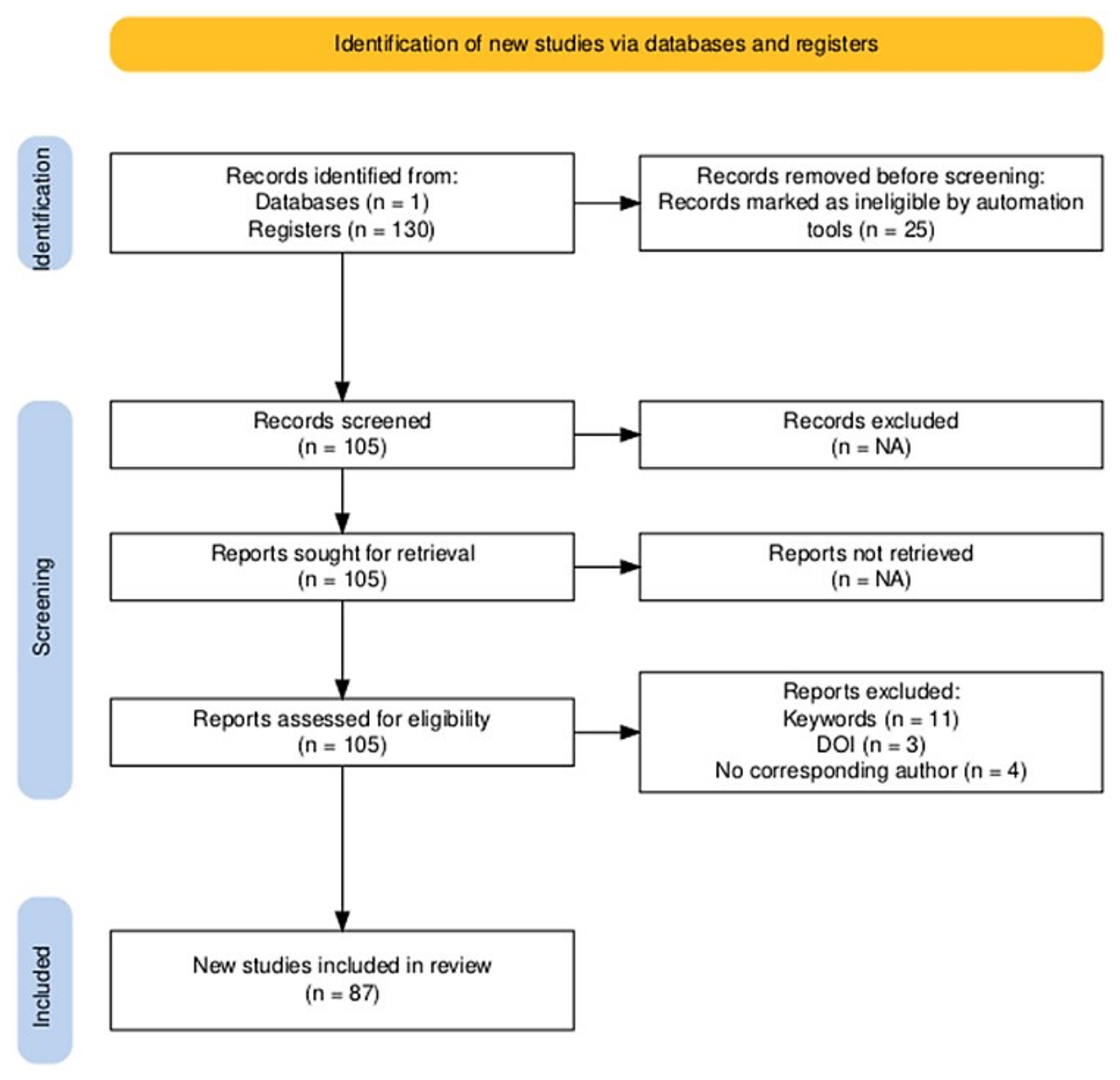
Figure 2.
Most relevant sources analyzed using Bibliometrix from RStudio.
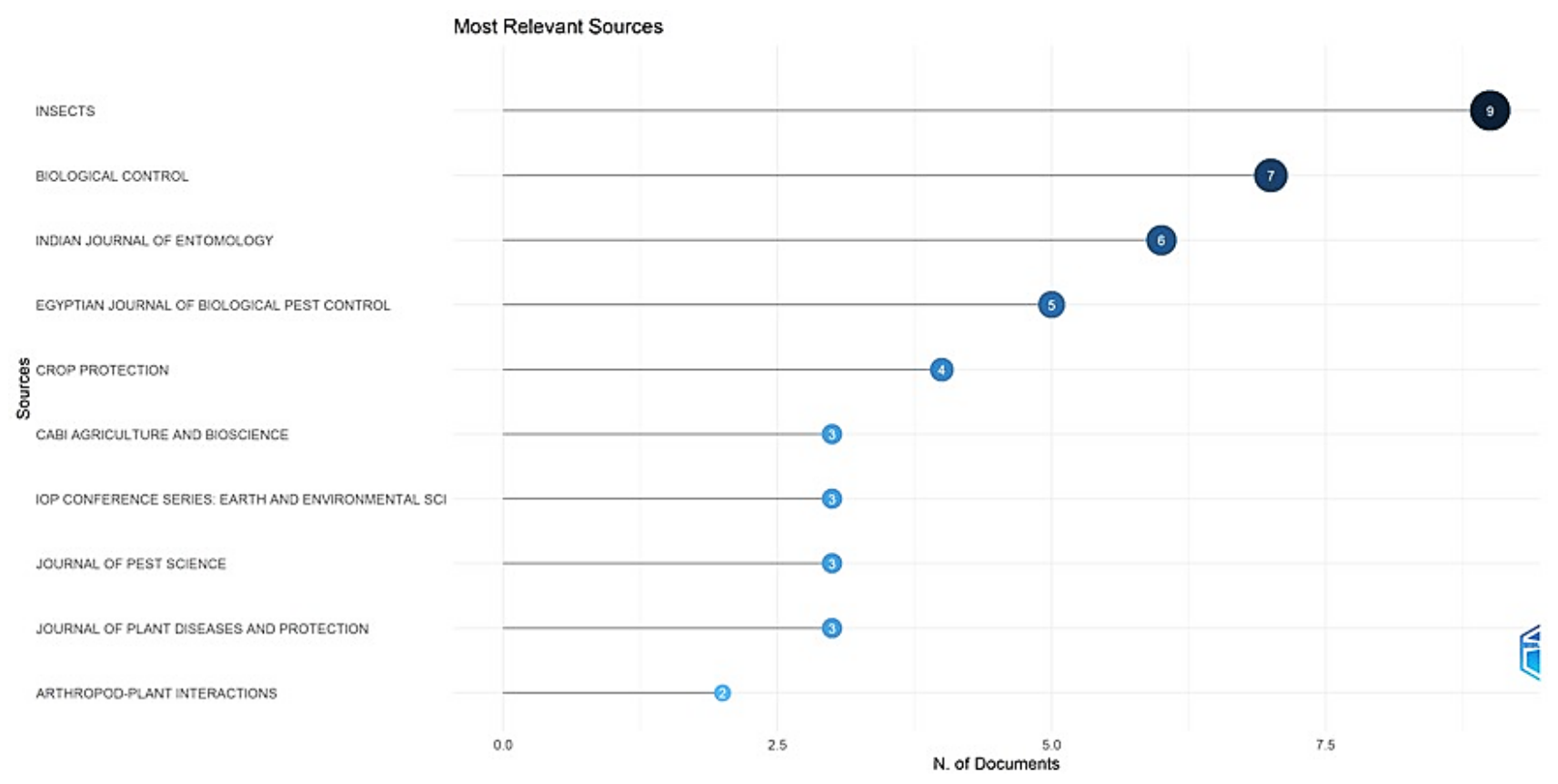
Figure 3.
Sources: Local impact according to the h-index.
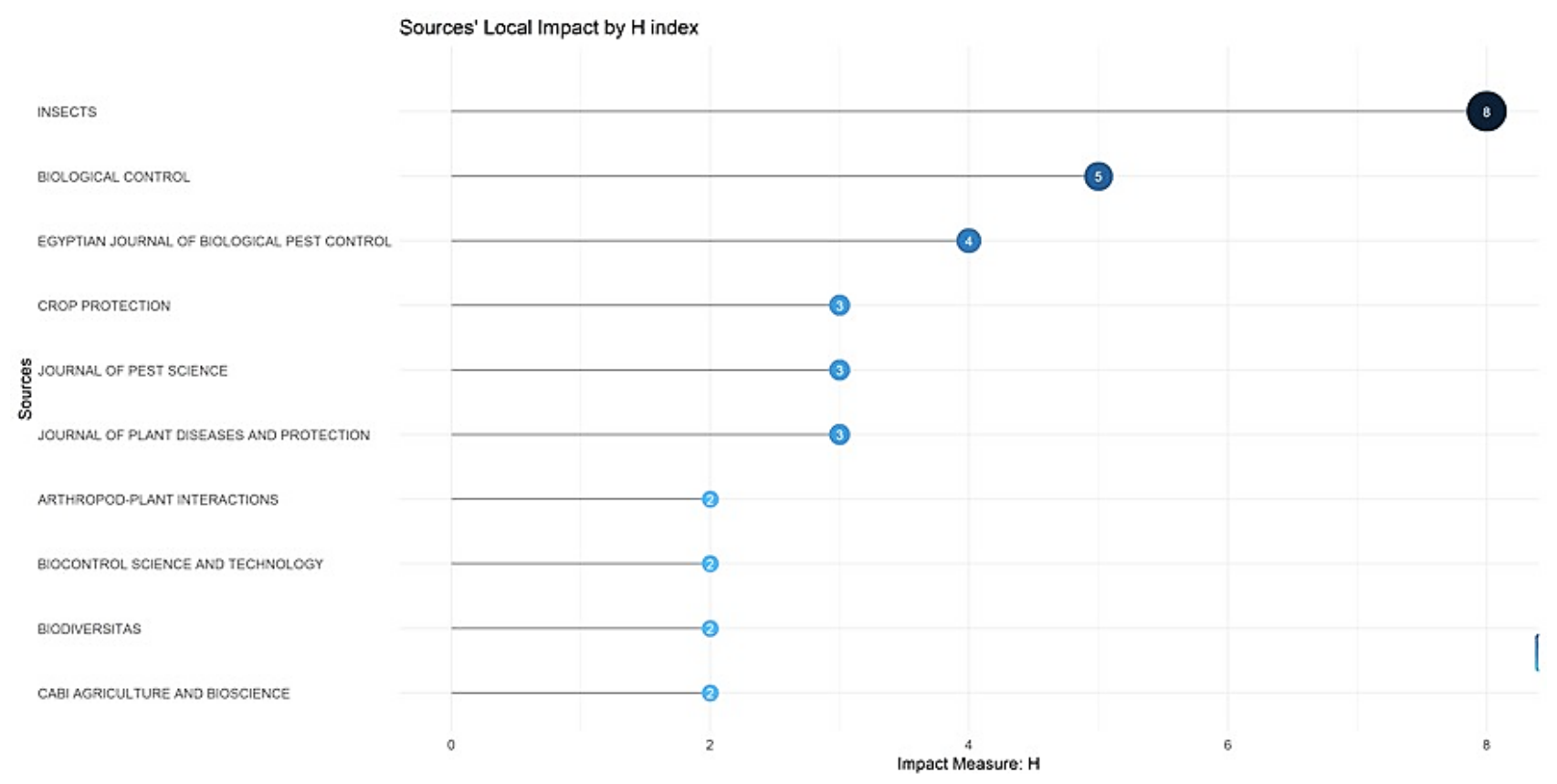
Figure 6.
Foundational papers with the highest global citation impact in the field of study.
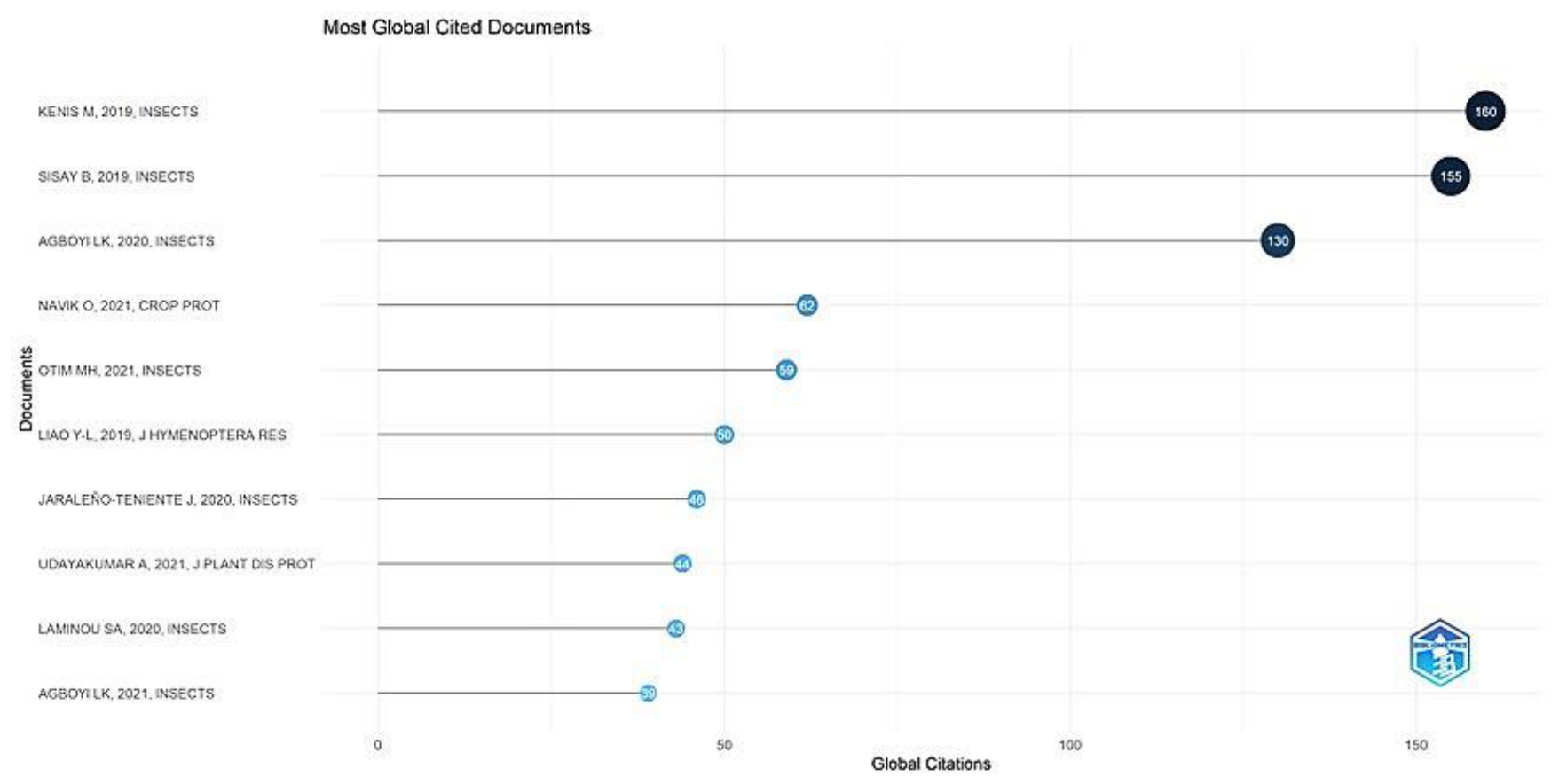
Figure 7.
Most relevant affiliations in scientific output on the biological control of Spodoptera frugiperda.
Figure 7.
Most relevant affiliations in scientific output on the biological control of Spodoptera frugiperda.
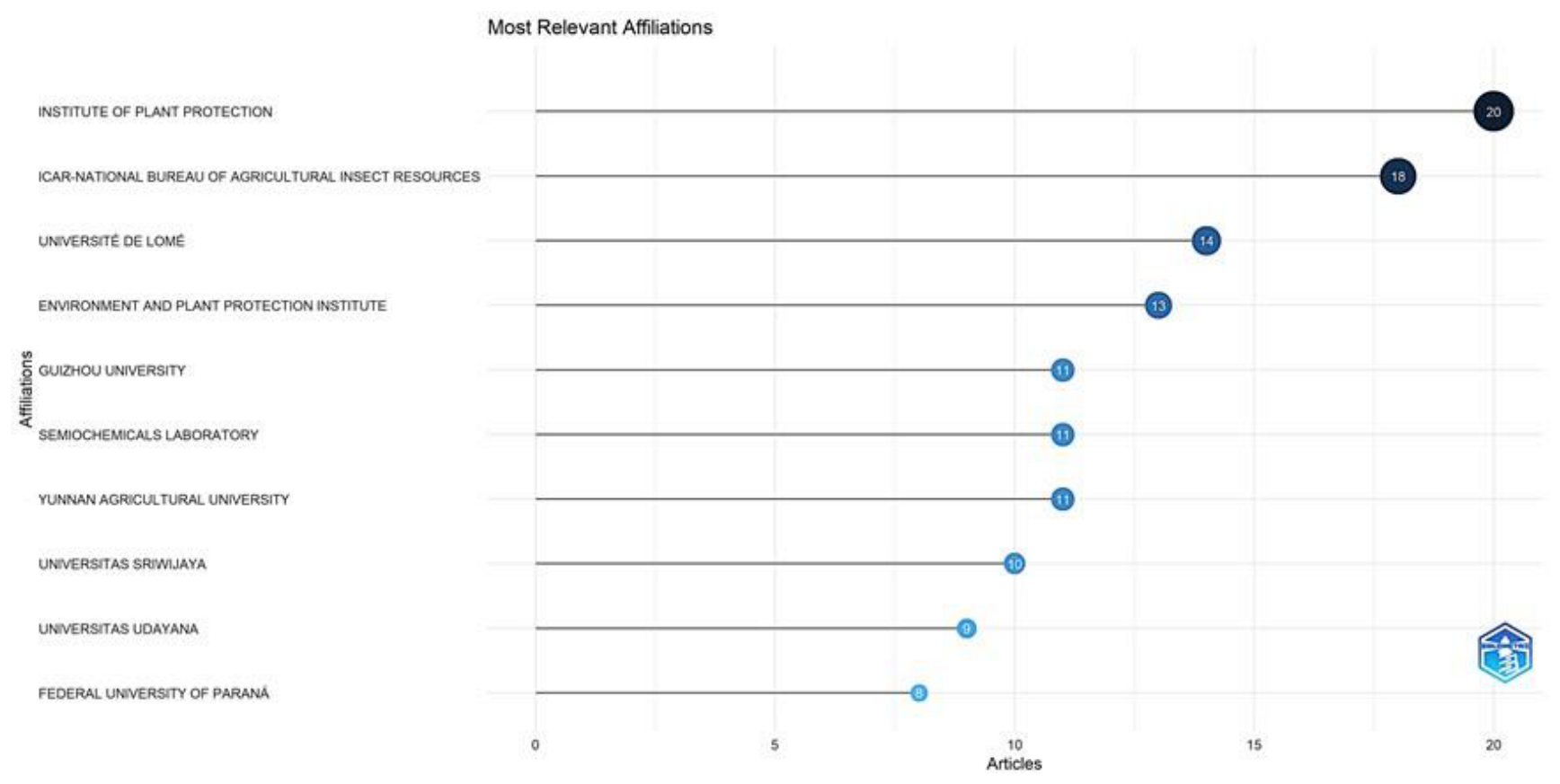
Figure 8.
Keyword co-occurrence network. The map visualizes the main thematic clusters and the centrality of egg parasitoids in the literature on S. frugiperda.
Figure 8.
Keyword co-occurrence network. The map visualizes the main thematic clusters and the centrality of egg parasitoids in the literature on S. frugiperda.
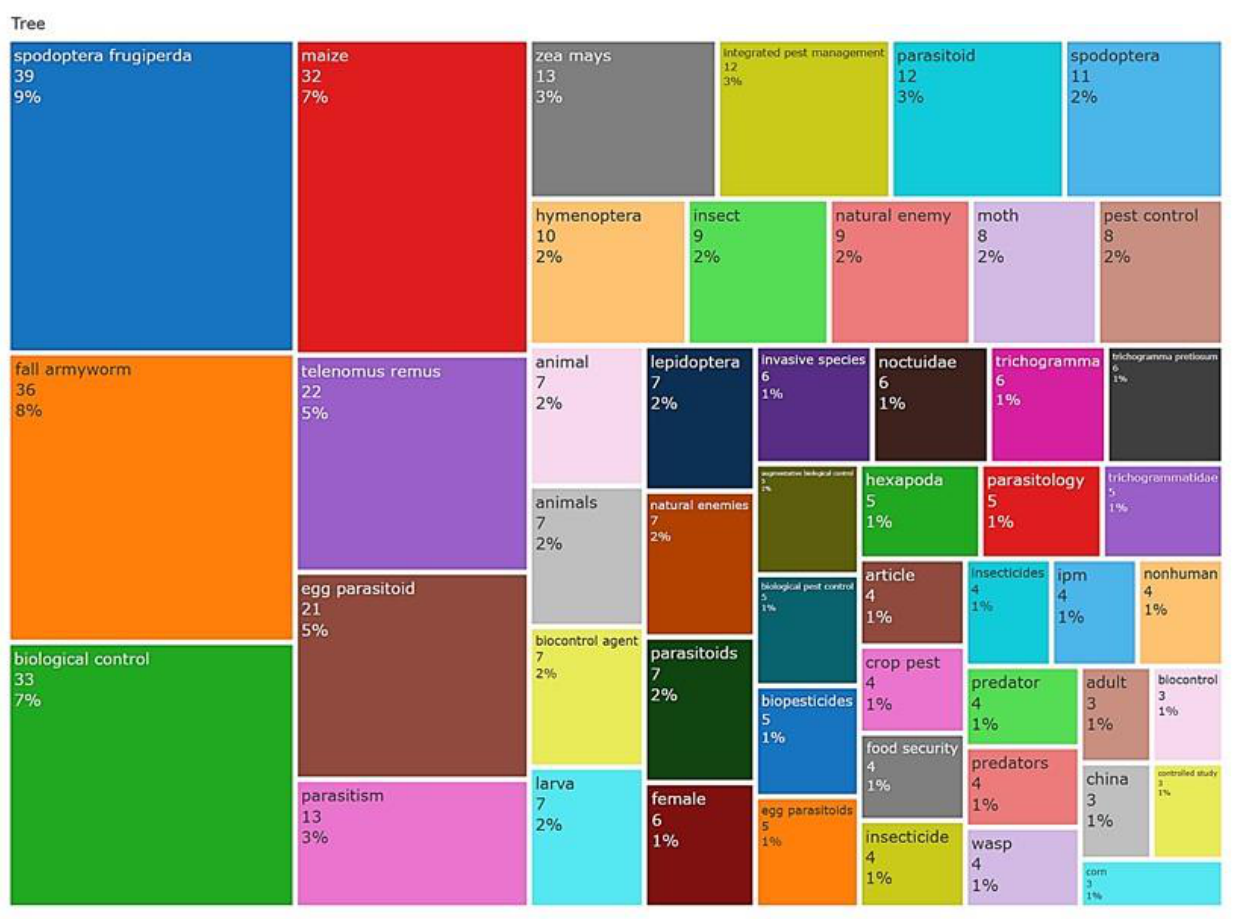
Figure 9.
International scientific collaboration network (Country Collaboration Map). The links (lines) and color intensity illustrate co-authorship ties, contrasting the research autonomy of emerging powers with multilateral collaboration on the African continent.
Figure 9.
International scientific collaboration network (Country Collaboration Map). The links (lines) and color intensity illustrate co-authorship ties, contrasting the research autonomy of emerging powers with multilateral collaboration on the African continent.
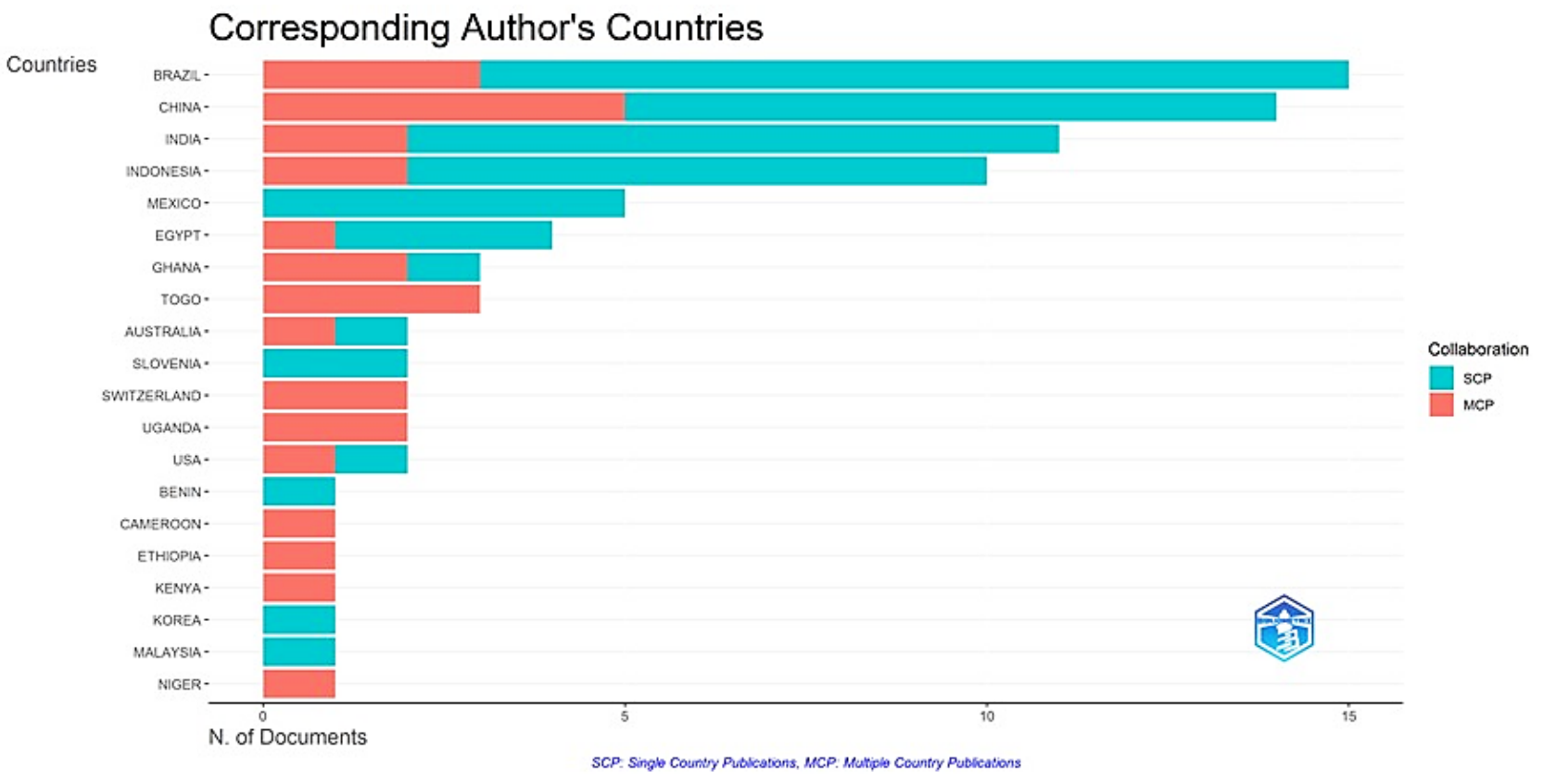
Figure 10.
Thematic map based on the co-occurrence analysis of keywords (2018–2025). The quadrant distribution assesses the maturity of research topics using Callon’s metrics of centrality (relevance in the network, X-axis) and density (internal development, Y-axis). The nodes represent the main conceptual clusters, where the size of the sphere indicates the frequency of mention in the literature. Notable is the consolidation of Spodoptera frugiperda as a central driving force within the discipline.
Figure 10.
Thematic map based on the co-occurrence analysis of keywords (2018–2025). The quadrant distribution assesses the maturity of research topics using Callon’s metrics of centrality (relevance in the network, X-axis) and density (internal development, Y-axis). The nodes represent the main conceptual clusters, where the size of the sphere indicates the frequency of mention in the literature. Notable is the consolidation of Spodoptera frugiperda as a central driving force within the discipline.
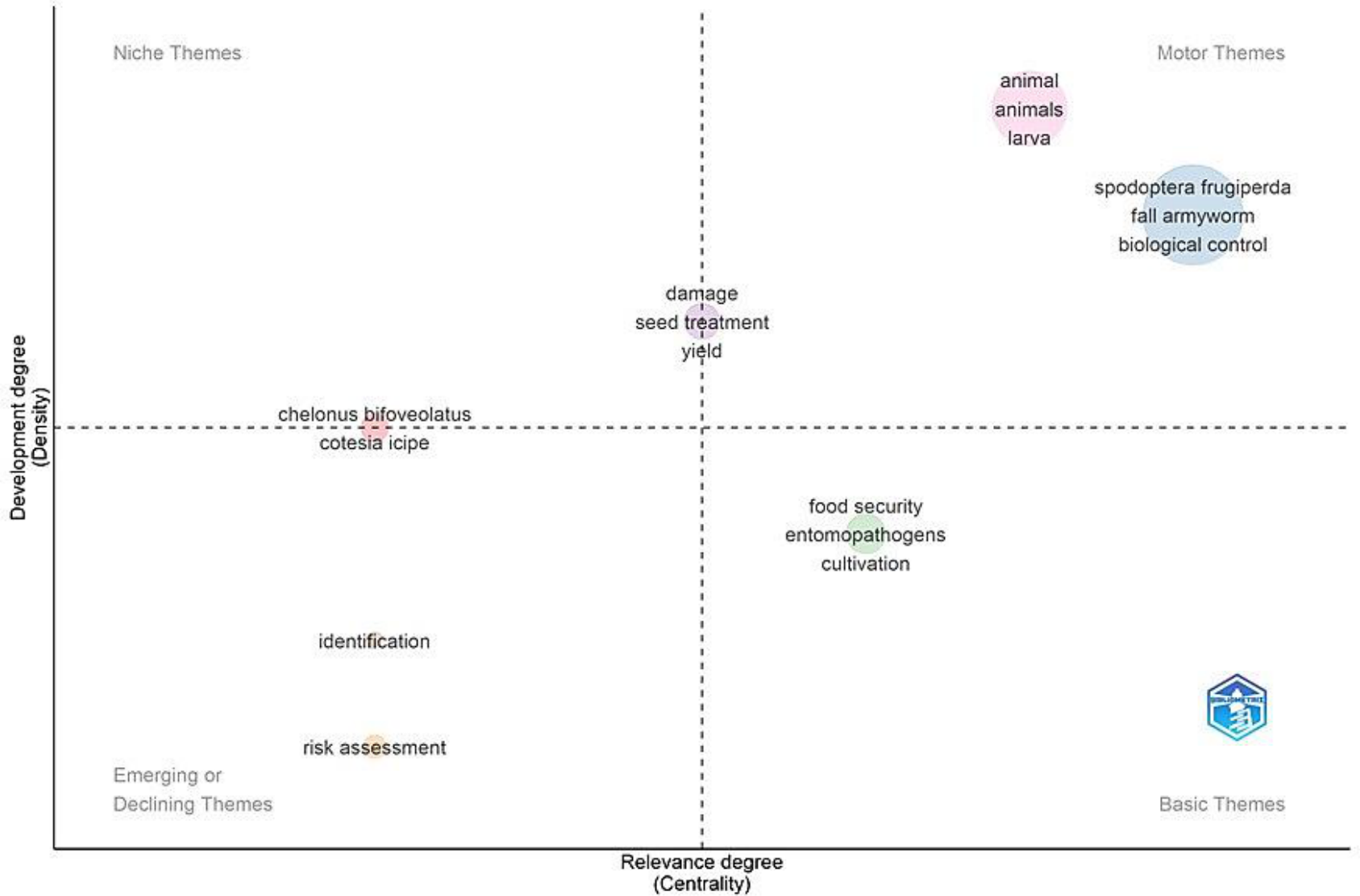
Table 1.
Key information on the bibliometric analysis data.
| Description | Results |
|---|---|
| Timespan | 2015:2025 |
| Sources (Journals, Books, etc) | 47 |
| Documents | 87 |
| Annual Growth Rate (%) | 52.29 |
| Document Average Age | 3.33 |
| Average citations per document | 16.05 |
| References | 12403 |
| Keywords Plus (ID) | 269 |
| Author’s Keywords (DE) | 283 |
| Authors | 497 |
| Authors of single-authored documents | 2 |
| Single-authored documents | 2 |
| Co-Authors per document | 6.61 |
| International co-authorships (%) | 34.48 |
| article | 76 |
| conference paper | 3 |
| review | 8 |
Table 2.
Leading scientific sources by output volume and impact indicators (h-index and total citations TC).
Table 2.
Leading scientific sources by output volume and impact indicators (h-index and total citations TC).
| Scientific journal |
Articles (NP) | h-index | Total citations (TC) | Start year (PY)* |
|---|---|---|---|---|
| Insects | 9 | 8 | 656 | 2019 |
| Biological Control | 7 | 5 | 90 | 2018 |
| Indian Journal of Entomology | 6 | 2 | 25 | 2020 |
| Egyptian Journal of Biological Pest Control | 5 | 4 | 41 | 2023 |
| Crop Protection | 4 | 3 | 111 | 2021 |
| Journal of Pest Science | 3 | 3 | 49 | 2019 |
| Journal of Plant Diseases and Protection | 3 | 3 | 85 | 2020 |
| CABI Agriculture and Bioscience | 3 | 2 | 15 | 2024 |
*Note: The start year corresponds to the first publication detected in the corpus.
Table 4.
Most relevant institutional affiliations in the study of biological control of S. frugiperda.
Table 4.
Most relevant institutional affiliations in the study of biological control of S. frugiperda.
| Position | Affiliated institution | Number of articles |
|---|---|---|
| 1 | Institute of Plant Protection | 20 |
| 2 | ICAR-National Bureau of Agricultural Insect Resources | 18 |
| 3 | Université de Lomé | 14 |
| 4 | Environment and Plant Protection Institute | 13 |
| 5 | Guizhou University | 11 |
| 6 | Semiochemicals Laboratory | 11 |
| 7 | Yunnan Agricultural University | 11 |
| 8 | Universitas Sriwijaya | 10 |
| 9 | Universitas Udayana | 9 |
| 10 | Universidade Federal do Paraná | 8 |
Disclaimer/Publisher’s Note: The statements, opinions and data contained in all publications are solely those of the individual author(s) and contributor(s) and not of MDPI and/or the editor(s). MDPI and/or the editor(s) disclaim responsibility for any injury to people or property resulting from any ideas, methods, instructions or products referred to in the content. |
© 2026 by the authors. Licensee MDPI, Basel, Switzerland. This article is an open access article distributed under the terms and conditions of the Creative Commons Attribution (CC BY) license (http://creativecommons.org/licenses/by/4.0/).
Copyright: This open access article is published under a Creative Commons CC BY 4.0 license, which permit the free download, distribution, and reuse, provided that the author and preprint are cited in any reuse.


