

Submitted:
07 July 2026
Posted:
08 July 2026
You are already at the latest version
Abstract
Background
The habit of reading is recognised as an essential element of academic learning and professional growth in higher education, especially in teacher education programs. Teachers are expected to engage critically with academic texts and cultivate enduring reading skills that will further influence their instructional methodologies and literacy modelling in educational settings. Empirical research is increasingly showing that digital-oriented, fragmented, and requirements-driven practices characterise student reading engagement.
Purpose
This study seeks to investigate the framework of teachers’ reading habits by defining the underlying characteristics of reading behaviour and studying the structural interactions among these dimensions. The study aims to ascertain the interplay of organised reading practices, motivation, reading intensity, and reading choices within a cohesive explanatory framework.
Materials and Methods
A quantitative cross-sectional survey was used, including 1,595 pre-service teachers enrolled in teacher education programs in one Indonesian province. Data were collected using a standard questionnaire graded on a four-point Likert scale. This research was carried out in several phases, including descriptive statistics, exploratory factor analysis, Confirmatory Factor Analysis, and path analysis.
Result
The results showed that teachers were mostly engaged in reading digital media and episodic academic texts. Factor analysis validated a four-dimensional framework consisting of organised reading and resource management, dual motivation, reading intensity and focus, and casual reading preferences. Structural studies show that structured reading practices and motivations indirectly affect reading engagement, whereas reading intensity and focus serve as the most significant direct predictors of long-lasting reading preferences.
Conclusion
Research shows that teachers’ reading habits are best understood as a behavioural system mediated by structural factors. Consistent reading engagement relies more on the frequency and concentration of reading activities than motivation alone.
Keywords:
reading practices
; pre-service educators
; reading engagement
; motivation
; teacher training
; structural framework
1. Introduction
Reading habits are a central mechanism through which higher-education students acquire disciplinary knowledge, develop critical thinking skills, and engage in sustained academic learning. Extensive research in literacy and higher education has consistently demonstrated that regular and focused reading is strongly associated with academic achievement, cognitive development, and long-term learning outcomes (Bohn-Gettler & McCrudden, 2022; Cantrell et al., 2022; Griffin & Mindrila, 2023). Within teacher education, the significance of reading habits extends beyond individual academic success, as pre-service teachers’ engagement with reading directly influences their future capacity to cultivate literacy practices among their students (Granado, 2014; Broemmel et al., 2019). Despite its well-established importance, contemporary studies increasingly report a decline in sustained academic reading among university students. The rapid expansion of digital technologies and visual-based learning environments has fundamentally reshaped students’ reading practices, privileging immediacy, accessibility, and multimodal content over deep engagement with extended texts (McGrath, 2021; Spjeldnæs & Karlsen, 2022). While digital platforms have enhanced access to information, they have also been associated with fragmented attention, superficial processing, and reduced capacity for critical reading, particularly in academic contexts that require sustained concentration and analytical depth (Bohn-Gettler & McCrudden, 2022; Lindh & Hiidenmaa, 2023). These shifts pose substantial challenges for teacher education programs, which rely on pre-service teachers’ ability to model reflective and disciplined reading practices.
In developing countries, including Indonesia, concerns regarding reading culture are further intensified by systemic and contextual constraints. International large-scale assessments, such as PISA, continue to indicate that Indonesian students perform below the global average in reading literacy, reflecting persistent challenges in cultivating effective reading engagement across educational levels (OECD, 2023). At the higher education level, regional disparities in access to reading resources, digital infrastructure, and institutional support contribute to uneven reading practices among university students (Mustafa et al., 2021; Naz et al., 2022). These conditions underscore the importance of examining reading habits not merely as individual preferences but as multidimensional constructs shaped by behavioural regulation, motivation, and structural support. Existing literature on university students’ reading habits has provided valuable insights; however, several conceptual limitations remain. A substantial proportion of studies conceptualise reading habits primarily in terms of behavioural frequency, such as time spent reading or the number of books read, offering limited explanatory insight into how reading practices are sustained over time (Owusu-Acheaw & Larson, 2014; Kim, 2016). Other studies emphasise motivational orientations, distinguishing between intrinsic and extrinsic drivers of reading engagement (Kambara, 2020; Griffin & Mindrila, 2023). While motivation has been shown to influence reading behaviour, evidence increasingly suggests that positive reading attitudes do not necessarily translate into consistent reading practice, particularly in digitally saturated learning environments (Schreuder & Savitz, 2020; Spjeldnæs & Karlsen, 2022).
A growing body of research highlights the role of institutional and cultural contexts in shaping reading engagement, emphasising access to libraries, reading programs, and academic role models (Loh et al., 2017; Herrera & Lambert, 2024). However, this strand of literature often treats reading culture as a contextual background rather than an empirically testable construct, thereby limiting its integration into explanatory models of reading behaviour. Consequently, the literature remains fragmented, with behavioural, motivational, and structural dimensions of reading habits frequently examined in isolation rather than as interrelated components of a coherent system.
Within teacher education specifically, empirical studies consistently report uneven reading engagement among pre-service teachers. While many demonstrate positive attitudes toward reading and engage in leisure or interest-driven reading, their engagement with academic and research-oriented texts tends to be sporadic and driven by requirements (Granado, 2014; Celik, 2019; Broemmel et al., 2019). This pattern raises critical concerns, as limited engagement with academic reading may hinder the development of professional knowledge, pedagogical reasoning, and disciplinary literacy, all of which are essential for effective teaching practice (Cantrell et al., 2022; Herrera & Lambert, 2024). From a theoretical perspective, these limitations point to the need for a more integrated conceptualisation of reading habits. Emerging evidence suggests that sustained reading engagement depends not only on motivation or access, but also on the presence of organised reading routines, systematic resource management, and consistent behavioural enactment (Barber et al., 2016; Griffin & Mindrila, 2023). However, few studies empirically test how these dimensions interact or examine the mediating mechanisms through which organisational practices and reading intensity translate motivation into sustained engagement.
Addressing these gaps, this study conceptualises reading habits among pre-service teachers as a structurally mediated behavioural system comprising organised reading and resource management, dual motivation, reading intensity and focus, and casual reading preferences. Using a large, geographically representative sample, this study integrated exploratory and confirmatory factor analyses and structural path modelling to identify latent reading habit dimensions and examine their interrelationships. This approach moves beyond descriptive profiling to offer an explanatory model of reading engagement that captures both direct and indirect effects among key constructs. Theoretically, this study advances the literature by reconceptualising reading habits in teacher education as an interaction between structure, motivation, and behavioural intensity, rather than a purely motivational phenomenon. Empirically, it provides one of the most comprehensive model-based examinations of pre-service teachers’ reading habits in the Indonesian context. Practically, the findings offer evidence-based guidance for institutions and policymakers seeking to strengthen the reading culture through targeted interventions that emphasise structured reading routines and sustained behavioural engagement. Guided by these objectives, the study addresses the following research questions: (1) What are the general profiles of pre-service teachers’ reading habits? (2) What latent dimensions underlie these reading habits? (3) How do demographic factors influence these dimensions? (4) How are the identified dimensions structurally related? and (5) What implications do these relationships hold for fostering a more inclusive and sustainable reading culture in teacher education?
2. Literature Review
2.1. Underpinning Theories
This study is primarily underpinned by Self-Regulated Learning (SRL) Theory, which conceptualises learning as an active process in which individuals deliberately regulate their cognition, motivation, and behaviours to achieve specific academic goals (Zimmerman, 2008). Within this perspective, effective reading extends beyond the frequency of reading activities and reflects learners’ capacity to organise reading schedules, manage learning resources, monitor progress, and adapt reading strategies according to academic demands. Previous studies have consistently demonstrated that self-regulated learners exhibit greater persistence, deeper cognitive engagement, and superior academic performance because behavioural organisation strengthens both motivational beliefs and learning effectiveness (Barber et al., 2016; Cantrell et al., 2022; Griffin & Mindrila, 2023). Supporting this argument in a digitally mediated learning context, Geng and Wei (2023) found a significant positive relationship between self-discipline and academic achievement among Chinese undergraduate students in an e-learning environment. Nevertheless, SRL theory primarily emphasises intentional behavioural regulation and motivational control, while providing a limited explanation for how repeated reading behaviours become stable, automatic habits over time. Consequently, although SRL offers an appropriate framework for understanding Organised Reading and Resource Management and Dual Motivation, it is insufficient to explain why some learners maintain sustained reading engagement, whereas others fail to translate positive intentions into consistent reading practices (Kim, 2016; Schreuder & Savitz, 2020).
To address this limitation, the present study draws on Habit Theory, which proposes that repeated behavioural enactment within stable contexts gradually develops into automatic behavioural patterns that require progressively less conscious effort (Wood & Rünger, 2016; Gardner et al., 2020). Unlike motivational perspectives that assume that behaviour is primarily driven by conscious intention, Habit Theory argues that long-term behavioural consistency depends on the repeated execution of behaviours until they become routine. This perspective is particularly relevant in contemporary higher education, where digital distractions and fragmented information environments frequently weaken the translation of reading motivation into sustained reading behaviour (McGrath, 2021; Spjeldnæs & Karlsen, 2022; Lindh & Hiidenmaa, 2023). Therefore, reading intensity and sustained behavioural engagement are expected to function as the primary mechanisms through which organised reading practices and motivational orientations are converted into enduring reading preferences. By integrating Self-Regulated Learning Theory with Habit Theory, this study conceptualises reading habits as a multidimensional behavioural system comprising organisational, motivational, and behavioural processes. This integrated theoretical perspective provides a stronger explanatory foundation than either theory alone and underpins the proposed structural relationships among Organised Reading and Resource Management, Dual Motivation, Reading Intensity and Focus, and Casual Reading Preference.
2.2. Conceptualising Reading Habits in Teacher Education
Recognising that reading habits are essential for academic learning and professional growth, previous research has thoroughly investigated student engagement with reading in higher education. Consistent and concentrated reading enhances comprehension, critical thinking, and information integration, whereas sporadic reading engagement correlates with superficial learning and inferior academic results (Owusu-Acheaw & Larson, 2014; Kim, 2016). These findings provide a crucial basis for understanding reading as a fundamental academic practice rather than a marginal learning activity. The significance of reading habits is particularly pronounced in teacher education. Pre-service teachers must interact with theoretical and research-oriented books that constitute the foundation of pedagogical expertise. Their individual reading practices influence their subsequent conceptualisation of literacy training and the modelling of reading behaviours in educational settings. Research indicates that educators who engage in regular reading are more inclined to appreciate reading and incorporate texts effectively into their instructional methods (Granado, 2014; Broemmel et al., 2019). Nevertheless, data suggest that many pre-service teachers engage in academic reading only when mandated, whereas reading for pleasure or personal interest prevails (Celik, 2019).
A substantial portion of the current literature has defined reading habits using behavioural metrics, such as reading frequency and length. While these measurements effectively illustrate overarching trends, they offer no insight into the mechanisms that sustain and govern reading practices over time (Owusu-Acheaw & Larson, 2014). The Introduction emphasises that such approaches may oversimplify reading habits by treating them as individual behaviours rather than as elements of a comprehensive learning system. In response, an alternative body of research has focused on the motivational aspects of reading, distinguishing between intrinsic motivation and extrinsic academic pressures. Intrinsic motivation correlates with enhanced reading attitudes and increased willingness to engage with the material (Kambara, 2020). Recent findings indicate that desire alone does not ensure consistent reading behaviour, especially in learning situations marked by significant digital exposure and competing distractions (Schreuder & Savitz, 2020). This observation substantiates the assertion in the Introduction that motivational considerations cannot fully explain reading habits. The growing dependence on digital resources has further altered pupils’ reading habits. A significant number of university students currently favour online resources and multimedia content over printed academic publications. Although digital reading improves accessibility, it may promote fragmented engagement and diminish prolonged concentration on intricate content (McGrath, 2021; Spjeldnaes & Karlsen, 2022). Research indicates that the influence of digitalisation is more contingent on the organisation and management of reading activities than on the medium itself, reinforcing the earlier emphasis on structured reading habits.
In addition to personal behaviour and motivation, institutional circumstances significantly influence reading engagement. Access to reading materials, curricular focus on reading, and exposure to academic role models have been shown to enhance reading habits among university students (Loh et al., 2017; Cantrell et al., 2022). Nevertheless, these characteristics are frequently described and rarely incorporated into explanatory frameworks that account for individual variations in reading behaviour. Evidence indicates that reading habits arise from the interplay of behavioural, motivational and structural factors. However, as indicated in the Introduction, these dimensions are often analysed in isolation, leading to fragmented explanations. Limited research has sought to amalgamate structured reading practices, motivation, and reading intensity into a unified analytical framework, especially in the context of teacher education.
In response to these deficiencies, the current study expands on earlier research by framing reading habits as a multifaceted system that includes structured reading and resource management, dual motivation, reading intensity and concentration, and informal reading preferences. This integrated perspective addresses the shortcomings noted in previous studies and establishes a coherent theoretical framework for subsequent empirical evaluations.
2.3. Hypotheses Development
Existing research suggests that organised reading practices provide the behavioural foundation for sustained academic engagement by facilitating planning, resource management, and self-regulated learning (Barber et al., 2016; Griffin & Mindrila, 2023). Students who systematically organise their reading activities are more likely to develop stronger motivation and engage in consistent reading behaviours. Accordingly, organised reading and resource management are expected to positively influence both motivational orientation and reading intensity.
H1.
Organised reading and resource management positively influence dual motivation.
H2.
Organised Reading and resource management positively influence reading intensity and focus.
Reading motivation has long been regarded as an important antecedent to reading engagement. Both intrinsic and extrinsic motivation encourage individuals to participate in reading activities and maintain positive attitudes toward learning (Kambara, 2020). Although previous studies suggest that motivation alone may not fully explain sustained reading behaviour, it is still expected to contribute positively to reading preferences.
H3.
Dual motivation positively influences casual reading preference.
Behavioural theories of habit formation argue that repeated and focused behavioural enactment is the primary mechanism through which stable habits are developed (Wood & Rünger, 2016; Gardner et al., 2020). Therefore, individuals who read more frequently and with greater concentration are more likely to cultivate enduring reading preferences.
H4.
Reading intensity and focus positively influence casual reading preference.
Previous research suggests that organised reading behaviours constitute an important behavioural foundation for sustained reading engagement because systematic planning, resource management, and self-regulated learning facilitate the development of stable reading routines (Barber et al., 2016; Loh et al., 2017; Cantrell et al., 2022). Students who consistently organise their reading activities and manage learning resources are generally more likely to engage in reading beyond immediate academic requirements, thereby fostering enduring reading preferences (Griffin & Mindrila, 2023; Herrera & Lambert, 2024). Therefore, it is reasonable to expect that organised reading and resource management exert a positive direct effect on casual reading preference.
H5.
Organised reading and resource management positively influence casual reading preference.
3. Methodology
This study employed a quantitative survey design to examine the reading habits of pre-service teachers and identify the underlying dimensions that structure their reading behaviour. The research was cross-sectional, with data collected at a single point in time to capture existing patterns of reading engagement and their associations with demographic characteristics. This design was selected to allow for large-scale data collection and multivariate statistical analysis aimed at modelling latent constructs and their interrelationships. The participants were 1,595 pre-service teachers enrolled in teacher education programmes at universities across one Indonesian province. The sample was obtained using a multistage random sampling procedure to ensure a broad representation of the target population. Sampling considered key demographic characteristics, including gender, academic performance (grade point average), region of origin, semester or year of study, and academic discipline. Respondents were drawn from all 14 regencies within the province, enabling the study to capture geographical and socio-educational diversity. While the sample size strengthens the reliability of the findings, the results are interpreted as representative of the surveyed participants rather than the entire pre-service teacher population.
Data were collected using a structured questionnaire designed to measure multiple aspects of reading habits. The instrument consisted of closed-ended items using a four-point Likert scale, ranging from strong disagreement to strong agreement. The questionnaire captured information related to reading preferences, reading intensity and focus, motivation for reading, systematic reading practices, management of reading materials, and follow-up activities after reading. The items were developed to reflect common reading behaviours observed in higher education contexts and aligned with the study’s research objectives. Before full-scale data collection, the questionnaire underwent preliminary testing to ensure clarity and comprehensibility. Minor revisions were made to improve item wording and ensure each item accurately reflected the intended reading-habit dimension. Data collection was conducted using both online and offline distribution methods. Offline data collection involved direct visits to participating institutions, whereas online data collection was conducted using digital survey platforms. This combined approach was used to maximise response rates and ensure accessibility for participants from different regions.
Data analysis was conducted in several stages to systematically address the research questions. Descriptive statistics were first used to present an overall profile of pre-service teachers’ reading habits, including reading preferences, frequency of reading, motivation, and follow-up activities. Percentages, means, and frequency distributions were used to summarise these patterns and provide contextual grounding for further analysis. An exploratory factor analysis was then conducted to identify the latent dimensions underlying pre-service teachers’ reading habits. Before factor extraction, the suitability of the data for factor analysis was assessed using measures of sampling adequacy and item intercorrelations. The analysis employed the maximum likelihood extraction method with Varimax rotation to obtain a clear and interpretable factor structure. Factors with eigenvalues greater than one were retained, and items with low factor loadings or substantial cross-loadings were excluded to improve construct clarity.
Confirmatory Factor Analysis was subsequently conducted to validate the factor structure identified through exploratory analysis. The CFA aimed to confirm the measurement model and assess the extent to which the observed variables adequately represented their respective latent constructs. Model fit was evaluated using multiple goodness-of-fit indices, and only indicators with satisfactory, standardised loadings were retained. The confirmatory analysis resulted in a parsimonious four-factor model representing organised reading and resource management, dual motivation, reading intensity and focus, and casual reading preferences.
To examine the relationships among the validated latent constructs, this study employed path analysis using a structural equation modelling approach. This analysis assessed both direct and indirect relationships among the reading habit dimensions and identified mediating effects within the model. Path coefficients, statistical significance values, and model fit indices were used to evaluate the strength and adequacy of the structural relationships. In addition, comparative analyses were conducted to examine variations in reading habit dimensions across demographic groups. Independent-samples t-tests and one-way analysis of variance were used to test differences across gender, academic performance, region of origin, semester, and academic discipline. Cross-tabulation and chi-square analyses were also applied to explore associations between demographic variables and reading habit dimensions, with effect sizes used to interpret the strength of these associations. Ethical considerations were observed throughout the research process. Participants were informed about the study’s purpose, the voluntary nature of their participation, and the confidentiality of their responses. Informed consent was obtained before data collection, and no personally identifiable information was recorded. The study received ethical clearance from the relevant institutional authority, and all data were used exclusively for academic research purposes.
4. Results
The descriptive study indicates that pre-service teachers’ reading habits are mostly influenced by digital interaction rather than structured academic reading. Figure 1 shows that the majority of respondents rely on online media and audiovisual resources for information, whereas traditional books are predominantly used for personal or interest-based reading. Interaction with academic materials, including research papers and scientific reports, is predominantly utilitarian and intermittent, occurring primarily in response to examinations, assignments, or thesis development. This trend suggests that reading is integrated into students’ academic routines but has not yet developed into a consistent scholarly practice informed by enduring reading techniques.
Table 1 presents the demographic characteristics of the 1,595 pre-service teachers included in the study. Female respondents constituted 65.6% of the sample, whereas male respondents accounted for 34.4%. Nearly half of the participants achieved a grade point average between 3.50 and 4.00, representing 46.2 per cent of the sample, followed by 38.4 per cent with a grade point average between 3.00 and 3.49. The distribution across years of study was relatively balanced, ranging from 19.9 per cent among first-year students to 27.6 percent among third-year students. More than half of the respondents originated from urban areas, accounting for 56.9 per cent, while 43.1 per cent came from rural areas. These findings indicate that the study used a diverse and representative sample, thereby providing a robust empirical foundation for examining the multidimensional nature of reading habits among pre-service teachers.
Table 2 presents the descriptive statistics of the four reading habit constructs. Dual Motivation recorded the highest mean score of 3.21, followed by Organised Reading and Resource Management (3.08), Reading Intensity and Focus (2.94), and Casual Reading Preference (2.76). Standard deviations ranged from 0.49 to 0.65, indicating moderate variation in responses. Skewness values ranged from -0.45 to -0.17, while kurtosis values ranged from -0.58 to -0.11. These values suggest that the constructs approximated normal distributions and were suitable for subsequent multivariate analyses.
Table 3 presents the results of the exploratory factor analysis. The Kaiser–Meyer Olkin value was 0.943, indicating excellent sampling adequacy, while Bartlett’s Test of Sphericity was statistically significant, with a chi-square value of 12,486.37 and a significance level below 0.001. The analysis retained a four-factor solution comprising Organised Reading and Resource Management, Dual Motivation, Reading Intensity and Focus, and Casual Reading Preference. The four factors explained 65.25% of the total variance, with individual factor loadings ranging from 0.708 to 0.861. These results provide strong evidence that reading habits among pre-service teachers are multidimensional rather than unidimensional, reflecting organisational, motivational, behavioural, and preference-based components.
Table 4 further confirms discriminant validity, as the square roots of the average variance extracted ranged from 0.794 to 0.819 and exceeded the corresponding inter-construct correlations, which ranged from 0.391 to 0.684. These findings demonstrate that the four-dimensional measurement model is psychometrically sound and appropriate for structural equation modelling.
Table 5 indicates that the four-dimensional measurement model achieved a satisfactory overall fit across multiple criteria. Although the chi-square statistic was significant, this was expected given the large sample size. Therefore, greater emphasis was placed on alternative fit indices. The normed chi-square value was 2.94, below the recommended threshold of 3.00, while the comparative fit index, Tucker–Lewis index, and incremental fit index reached 0.964, 0.958, and 0.964, respectively, exceeding the 0.95 criterion. The goodness-of-fit and adjusted goodness-of-fit indices were also acceptable at 0.943 and 0.924, while the root mean square error of approximation and standardised root mean square residual were low at 0.043 and 0.037, respectively. These results confirm that the proposed measurement model adequately represents the observed data and provides a sound basis for subsequent structural equation modelling.
The degree of additional reading indicates this inconsistent involvement. Figure 1 indicates that a minor fraction of pre-service teachers engage in concentrated reading every day, while the majority report reading with full attention weekly or less often. The lack of defined monthly reading objectives, as indicated by the descriptive findings, underscores the reactive characteristic of reading behaviour. These findings indicate that reading engagement exists but is poorly managed, exhibiting minimal evidence of systematic planning or behavioural consistency. Table 6 succinctly summarises the predominant patterns in the key markers of reading engagement, offering a comprehensive descriptive reading profile without the need for additional figures.
This summary indicates that pre-service teachers exhibit reading engagement marked by inconsistent access and participation, devoid of continuous management. Exploratory factor analysis demonstrated that reading habits are multidimensional rather than unidimensional. The scree plot in Figure 2 indicates the preservation of several latent factors that account for a significant percentage of the variance in reading behaviour. The preliminary factor structure encompasses variables about structured reading practices, motivational orientation, reading intensity, preference patterns, and post-reading activities. Nonetheless, the partial overlap across multiple dimensions, especially in motivation and reading goals, underscores the need for further structural refinement.
Confirmatory factor analysis enhanced the exploratory solution into a concise four-component measurement model. Figure 3 illustrates that the verified model comprises Organised Reading and Resource Management, Dual Motivation, Reading Intensity and Focus, and Casual Reading Preference. All retained indicators exhibited strong loadings on their corresponding latent constructs, and the model showed good fit indices. This outcome verifies that multiple exploratory dimensions coalesce into cohesive constructs that more precisely depict pre-service teachers’ reading behaviours.
The structural interactions among the four latent dimensions exhibit a hierarchical, mediated structure. The path model depicted in Figure 4 indicates that Organised Reading and Resource Management are fundamental requirements that indirectly influence total reading engagement. Its influence primarily operates through Dual Motivation and Reading Intensity and Focus, rather than directly affecting reading preference. Reading intensity and focus are the most significant direct predictors of casual reading preference, suggesting that habitual and concentrated reading practices are the primary means by which sustained engagement is cultivated. Dual motivation enhances reading engagement, albeit with a diminished direct impact, suggesting that motivation alone is insufficient unless translated into regular reading practice.
Table 8 succinctly highlights the principal pathways discovered in the structural model, elucidating the fundamental structural linkages without unnecessary visual intricacies.
The demographic analysis revealed consistent variations among the student subgroups. Female pre-service teachers exhibit more effective, organised reading practices and greater reading intensity than their male counterparts. Academic achievement correlates positively with reading organisation and motivation, as higher-achieving pupils demonstrate more systematic reading behaviour. Regional background also influences reading engagement, with students from urban areas exhibiting higher levels of casual and interest-driven reading than their rural counterparts. Conversely, the year of study did not distinguish reading habits to a marked degree, indicating that reading behaviours tend to remain consistent across academic advancement.
The findings indicate that pre-service teachers’ reading habits are best understood as a structurally mediated behavioural system. The patterns depicted in Figure 1, the confirmed factor structure in Figure 2 and Figure 3, and the structural relationships presented in Figure 4 demonstrate that organisational practices underpin reading engagement, motivation offers psychological support, and reading intensity and focus ultimately dictate sustained reading behaviour.
5. Discussion
This study offers an in-depth analysis of pre-service teachers’ reading habits, illustrating that reading engagement is not merely a straightforward result of motivation or access but a behaviourally controlled system with structural complexities. The patterns delineated in the Results section demonstrate that reading practices are progressively influenced by digital accessibility and immediacy, a trend extensively noted in higher education settings globally (Owusu-Acheaw & Larson, 2014; McGrath, 2021; Spjeldnaes & Karlsen, 2022). Although digital media has broadened access to information, the data indicate that this growth has not resulted in a parallel rise in sustained academic reading, especially among pre-service teachers.
The prevalence of online and audiovisual media, together with the diminishing frequency of concentrated reading, signals a significant shift in reading habits from prolonged, linear engagement to fragmented, task-driven interactions with texts. Prior research has indicated that these patterns may limit the likelihood of deep understanding and critical evaluation, which are vital for academic learning and the advancement of professional knowledge (Kim, 2016; Schreuder & Savitz, 2020; Bohn-Gettler & McCrudden, 2022). This tendency is particularly alarming in teacher education, as insufficient engagement with academic texts may hinder future educators’ capacity to model healthy reading practices and promote literacy among their students (Granado, 2014; Broemmel et al., 2019).
This study significantly contributes by validating reading habits as a multidimensional entity. The factor analysis results indicate that a single marker, such as frequency or enjoyment alone, cannot adequately represent reading engagement. The four latent dimensions identified: Organised Reading and Resource Management, Dual Motivation, Reading Intensity and Focus, and Casual Reading Preference, represent the interplay of behavioural, motivational, and structural components. This discovery builds upon previous studies that have frequently examined these characteristics in isolation, leading to disjointed interpretations of reading behaviour (Owusu-Acheaw & Larson, 2014; Kambara, 2020; Cantrell et al., 2022).
The structural links between these dimensions offer additional theoretical understanding. Organised Reading and Resource Management serves as a fundamental prerequisite that indirectly fosters reading engagement. This discovery corresponds with studies on self-regulated learning, highlighting that the planning, monitoring, and management of learning activities foster an environment conducive to sustained motivation and behaviour (Barber et al., 2016; Griffin & Mindrila, 2023). The lack of a direct correlation between structured reading practices and reading preference indicates that organisation alone does not ensure engagement. Conversely, structure must be converted into tangible reading behaviour.
Reading intensity and focus serve a pivotal mediation function in this process. The significant direct influence of reading intensity on reading choice suggests that prolonged engagement is primarily cultivated through frequent and concentrated practice of reading behaviour. This discovery aligns with habit formation theories, which contend that behaviours attain stability not only because of their value, but also through consistent enactment over time (Wood & Rünger, 2016; Gardner et al., 2020). In this context, reading intensity serves as the method by which organisational practices and motivational orientations are converted into lasting reading habits.
The rather little direct impact of Dual Motivation on reading preference further substantiates this interpretation. While motivation has traditionally been viewed as a crucial factor in reading engagement, increasing data indicate that favourable attitudes about reading do not necessarily lead to consistent reading activity (Schreuder & Savitz, 2020; Spjeldnæs & Karlsen, 2022). The current findings enhance this literature by empirically illustrating that motivation significantly influences reading engagement, particularly when integrated into organised routines and manifested through consistent, concentrated reading practice. This undermines linear, motivation-driven models of reading and endorses more process-oriented explanations.
Demographic differences in reading habits offer another background for understanding these findings. The enhanced structured reading behaviours and increased reading intensity noted among female pre-service teachers align with other research indicating gender disparities in reading engagement (Kim, 2016; Celik, 2019). The current findings indicate that behavioural management and consistency are crucial, rather than just attributing these variations to attitudinal issues. This perspective aligns with findings suggesting that variations in self-regulatory strategies frequently account for the observed gender differences in academic activities (Zimmerman, 2008; Barber et al., 2016). The favourable correlation between academic achievement and systematic reading practices underscores the need for structure in maintaining reading habits. Students exhibiting superior academic performance typically display more organised reading management and a greater congruence between motivation and behaviour, a trend corroborated by research connecting self-regulated learning strategies to academic success (Cantrell et al., 2022; Griffin & Mindrila, 2023). The lack of substantial change across years of study indicates that reading habits do not inherently improve as individuals progress through teacher preparation programs. This discovery corroborates previous studies suggesting that, in the absence of explicit instructional assistance, students’ learning techniques tend to remain consistent over time (Loh et al., 2017; Herrera & Lambert, 2024). Regional disparities in reading preferences, especially between urban and rural kids, underscore the persistent impact of access and exposure on reading engagement. Students from metropolitan environments exhibit increased engagement in casual and interest-based reading, presumably due to enhanced access to reading materials and digital tools. Nevertheless, the structural model suggests that just availability is inadequate to promote enduring academic reading. In the absence of structured reading habits and sustained reading intensity, heightened exposure may fail to result in enhanced engagement with academic texts (Naz et al., 2022; Lindh & Hiidenmaa, 2023).
The findings indicate that initiatives to enhance reading culture in teacher education must extend beyond mere motivational appeals or the provision of resources. Although these factors are significant, they are unlikely to yield enduring improvement without concurrent focus on behavioural management and reading intensity. Institutional interventions that prioritise structured reading routines, goal setting, and continuous engagement may be more efficacious in cultivating lasting reading habits among pre-service teachers (Loh et al., 2017; Cantrell et al., 2022; Herrera & Lambert, 2024). This study theoretically enhances the literature by reconceptualising reading habits as a behaviourally mediated structural system. The findings emphasise that reading intensity serves as a mediation mechanism connecting organisational practices and motivational orientations to sustained engagement, rather than establishing motivation as the primary driver of reading engagement. This comprehensive perspective enhances understanding of reading habits and lays the groundwork for future research on the systematic cultivation of reading practices in teacher education settings.
5. Conclusion
This study reconceptualised reading habits among pre-service teachers by proposing and empirically validating a multidimensional structural model that integrates Organised Reading and Resource Management, Dual Motivation, Reading Intensity and Focus, and Casual Reading Preference. Responding to the conceptual fragmentation evident in previous research, which has predominantly examined reading habits through isolated behavioural or motivational perspectives, this study advances a more comprehensive explanation that positions reading engagement as a structurally mediated behavioural system. Using data collected from 1,595 pre-service teachers in Indonesia, the proposed framework was evaluated through exploratory factor analysis, confirmatory factor analysis, and structural equation modelling, providing robust empirical evidence for the multidimensional nature of reading habits and the structural relationships among their underlying dimensions.
The findings demonstrate that sustained reading engagement cannot be adequately explained by motivation or reading frequency alone. Instead, reading habits emerge through the interaction of organisational practices, motivational orientation, and behavioural enactment, with Reading Intensity and Focus functioning as the principal mechanism through which structured reading practices are translated into enduring reading preferences. The absence of a significant direct relationship between organised reading and resource management and casual reading preference further suggests that structured routines alone are insufficient to foster sustainable reading engagement unless accompanied by consistent behavioural practice. These findings challenge conventional motivation-centred explanations of reading behaviour and provide empirical support for a process-oriented perspective, in which behavioural intensity mediates the transition from intention to habitual engagement. Consequently, the study extends the theoretical understanding of reading habits in teacher education while offering an evidence-based framework for designing interventions that prioritise systematic reading routines and sustained behavioural engagement to cultivate long-term academic reading practices.
5.1. Implications
This study offers a comprehensive explanation of reading habits among pre-service teachers, illustrating that reading engagement is not solely dependent on motivation or resource availability, but rather a behaviourally mediated structural system. The results indicate that while reading is a component of students’ academic experiences, it is predominantly defined by digital engagement, sporadic connection with academic materials, and restricted behavioural management. These patterns suggest that reading has not yet been established as a consistent academic habit among numerous pre-service instructors. This study enhances existing research by validating a four-dimensional model of reading habits that includes Organised Reading and Resource Management, Dual Motivation, Reading Intensity and Focus, and Casual Reading Preference, thereby addressing the previously fragmented or unidimensional treatment of reading behaviour. The structural analysis indicates that organised reading practices and motivation, although significant, do not directly influence prolonged reading engagement. Reading intensity and focus serve as the primary mechanisms by which organisational practices and motivational orientations are transformed into lasting reading habits. These findings challenge linear motivation-driven theories of reading behaviour and underscore the significance of behavioural enactment in habit building. The study highlights that reading habits among pre-service teachers remain consistently stable throughout their academic development, suggesting they do not inherently improve over time. Demographic disparities suggest that variations in reading engagement are more strongly linked to behavioural regulation and structure than to attitudinal characteristics alone. These findings indicate the need for deliberate, systematic interventions in teacher education programs to promote enduring reading engagement.
This research theoretically advances the literature by reconceptualising reading habits as an interplay among structure, motivation, and behavioural intensity, rather than as discrete behaviours or attitudes. It offers substantial empirical evidence underscoring the pivotal role of reading intensity as a mediating factor in reading engagement. The findings indicate that initiatives to enhance reading culture in teacher education should emphasise the establishment of systematic reading routines, goal-setting methodologies, and opportunities for regular, concentrated interaction with academic books. This study provides useful insights; however, its cross-sectional design and reliance on self-reported data limit causal inference. Subsequent research may expand upon this study by employing longitudinal designs, qualitatively investigating reading patterns, and conducting intervention-based studies to enhance reading intensity and organisational techniques among pre-service teachers. These initiatives would enhance understanding of how sustainable reading practices can be fostered in teacher education and beyond.
5.2. Limitations and Recommendations for Future Studies
This study has several limitations that provide directions for future studies. First, the cross-sectional design precludes causal inference among the proposed reading habit dimensions; therefore, longitudinal or intervention-based studies are recommended to examine how reading habits evolve. Second, reliance on self-reported measures may introduce response bias; future research should incorporate objective indicators, such as reading logs or digital learning analytics, to validate actual reading behaviour. Third, the sample was limited to pre-service teachers from one Indonesian province, which restricted the generalisability of the findings. Future studies should validate the proposed structural model across different educational levels, disciplines, institutions, and cultural contexts to enhance its generalisability. Finally, additional variables, including digital reading literacy, academic self-efficacy, and institutional reading support, should be incorporated to further refine the model of reading habits.
Supplementary Materials
The following supporting information can be downloaded at the website of this paper posted on Preprints.org.
References
- Barber, A. T.; Klauda, S. L.; Parsons, S. A. Young adolescents’ motivation to read: A social cognitive view. J. Adolesc. Adult Lit. 2016, 60(2), 129–140. [Google Scholar] [CrossRef]
- Bohn-Gettler, C. M.; McCrudden, M. T. Digital text comprehension and learning: Research-based insights. Educ. Psychol. Rev. 2022, 34(1), 1–28. [Google Scholar] [CrossRef]
- Broemmel, A. D.; Walsh, M. M.; Lester, J. N. Teaching literacy in the digital age: Understanding teacher reading identities. Teach. Teach. Educ. 2019, 85, 102–112. [Google Scholar] [CrossRef]
- Cantrell, S. C.; Rintamaa, M.; Anderman, E. M. Motivation and engagement in academic reading. Read. Res. Q. 2022, 57(1), 87–108. [Google Scholar] [CrossRef]
- Celik, B. A study on the reading habits of pre-service teachers. Int. J. Instr. 2019, 12(2), 1–16. [Google Scholar] [CrossRef]
- Creswell, J. W.; Creswell, J. D. Research design: Qualitative, quantitative, and mixed methods approaches, 5th ed.; Sage, 2018. [Google Scholar]
- DeVellis, R. F. Scale development: Theory and applications, 4th ed.; Sage, 2017. [Google Scholar]
- Field, A. Discovering statistics using IBM SPSS statistics, 5th ed.; Sage, 2018. [Google Scholar]
- Gardner, B.; Lally, P.; Wardle, J. Making health habitual: The psychology of habit formation. Br. J. Health Psychol. 2020, 25(4), 939–958. [Google Scholar] [CrossRef] [PubMed]
- Geng, H.; Wei, H. The relationship between self-discipline and academic achievement of Chinese undergraduate students in the e-learning environment. J. High. Educ. Theory Pract. 2023, 23(14), 112–121. [Google Scholar] [CrossRef]
- Granado, C. Teachers as readers: A study of reading habits of future teachers. Teach. Teach. Educ. 2014, 40, 44–53. [Google Scholar] [CrossRef]
- Griffin, B. W.; Mindrila, D. Reading motivation, engagement, and achievement. Educ. Psychol. 2023, 43(2), 123–139. [Google Scholar] [CrossRef]
- Hair, J. F.; Hult, G. T. M.; Ringle, C. M.; Sarstedt, M. A primer on partial least squares structural equation modeling (PLS-SEM), 3rd ed.; Sage, 2022. [Google Scholar]
- Herrera, L. J.; Lambert, M. D. Academic reading practices in teacher education. Stud. High. Educ. 2024, 49(1), 45–60. [Google Scholar] [CrossRef]
- Hu, L. T.; Bentler, P. M. Cutoff criteria for fit indexes in covariance structure analysis. Struct. Equ. Model. 1999, 6(1), 1–55. [Google Scholar] [CrossRef]
- Kambara, H. Motivation and reading behavior among university students. Int. J. Educ. Res. 2020, 102, 101578. [Google Scholar] [CrossRef]
- Kim, Y. S. Reading motivation and reading comprehension development. J. Educ. Psychol. 2016, 108(3), 359–376. [Google Scholar] [CrossRef]
- Kline, R. B. Principles and practice of structural equation modeling, 4th ed.; Guilford Press, 2016. [Google Scholar]
- Lindh, K.; Hiidenmaa, P. Reading in digital higher education environments. Learn. Media Technol. 2023, 48(1), 56–70. [Google Scholar] [CrossRef]
- Loh, C. E.; Sun, B.; Majid, S. Reading culture and reading habits in higher education. J. Acad. Librariansh. 2017, 43(5), 410–418. [Google Scholar] [CrossRef]
- McGrath, L. Reading practices in the digital university. J. Engl. Acad. Purp. 2021, 49, 100951. [Google Scholar] [CrossRef]
- Naz, F.; Rasheed, A.; Rasheed, T. Access to learning resources and reading engagement. Educ. Inf. Technol. 2022, 27(5), 6587–6604. [Google Scholar] [CrossRef]
- OECD. PISA 2022 results (Volume I): The state of learning and equity in education; OECD Publishing, 2023. [Google Scholar] [CrossRef]
- Owusu-Acheaw, M.; Larson, A. G. Reading habits among students and their effect on academic performance. In Library Philosophy and Practice; 2014; pp. 1–11. [Google Scholar]
- Schreuder, R.; Savitz, J. Digital distraction and academic reading. Comput. Educ. 2020, 151, 103857. [Google Scholar] [CrossRef]
- Spjeldnæs, I. O.; Karlsen, G. E. Reading practices in digital learning environments. High. Educ. Res. Dev. 2022, 41(5), 1533–1547. [Google Scholar] [CrossRef]
- Wood, W.; Rünger, D. Psychology of habit. Annu. Rev. Psychol. 2016, 67, 289–314. [Google Scholar] [CrossRef] [PubMed]
- Zimmerman, B. J. Investigating self-regulation and motivation. Educ. Psychol. 2008, 43(3), 166–183. [Google Scholar] [CrossRef]
Figure 1.
Reading preferences of pre-service teachers: percentage distribution of preferences for books, media, and reading formats. Source: Own Research.
Figure 1.
Reading preferences of pre-service teachers: percentage distribution of preferences for books, media, and reading formats. Source: Own Research.
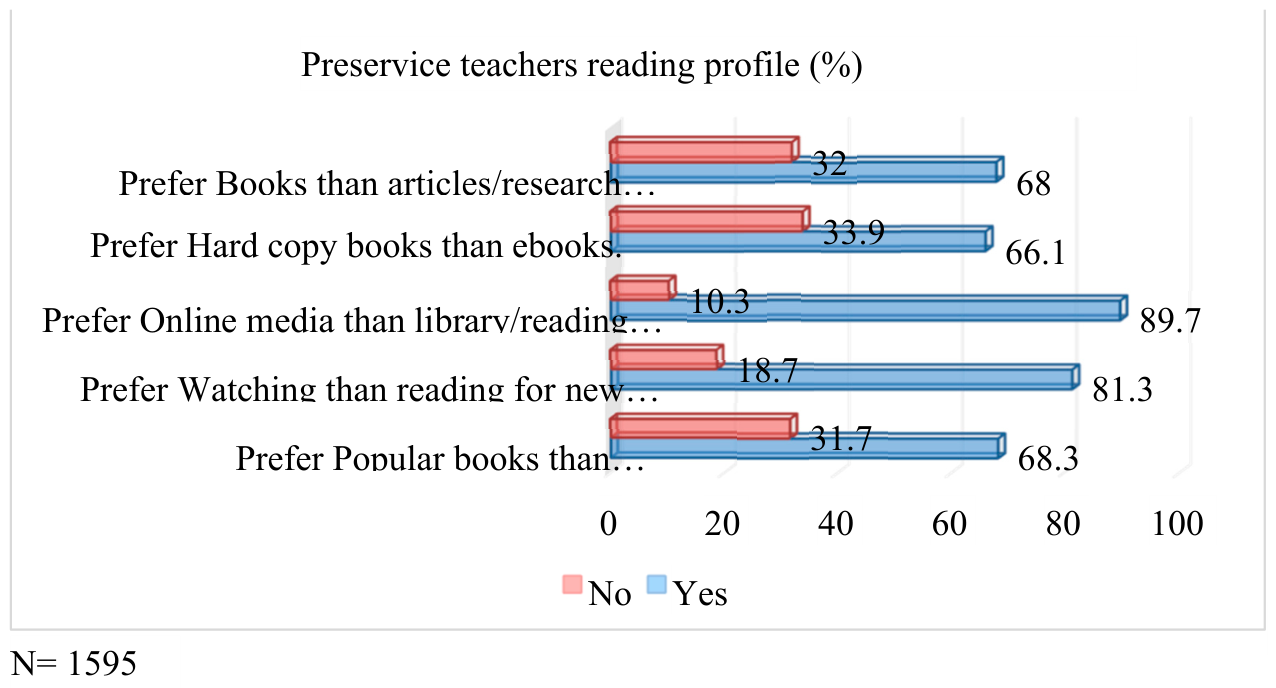
Figure 2.
Scree Plot of Exploratory Factor Analysis (EFA). Source: Own Research.
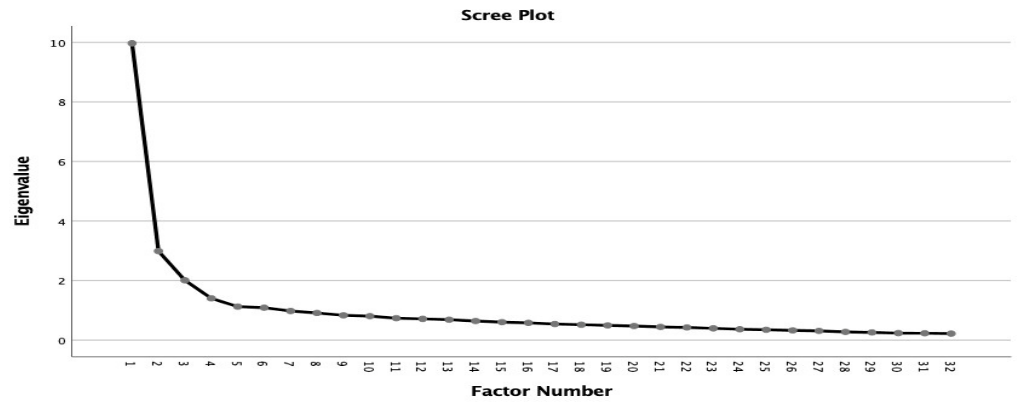
Figure 3.
Model Confirmatory Factor Analysis (CFA) Source: Own Research.
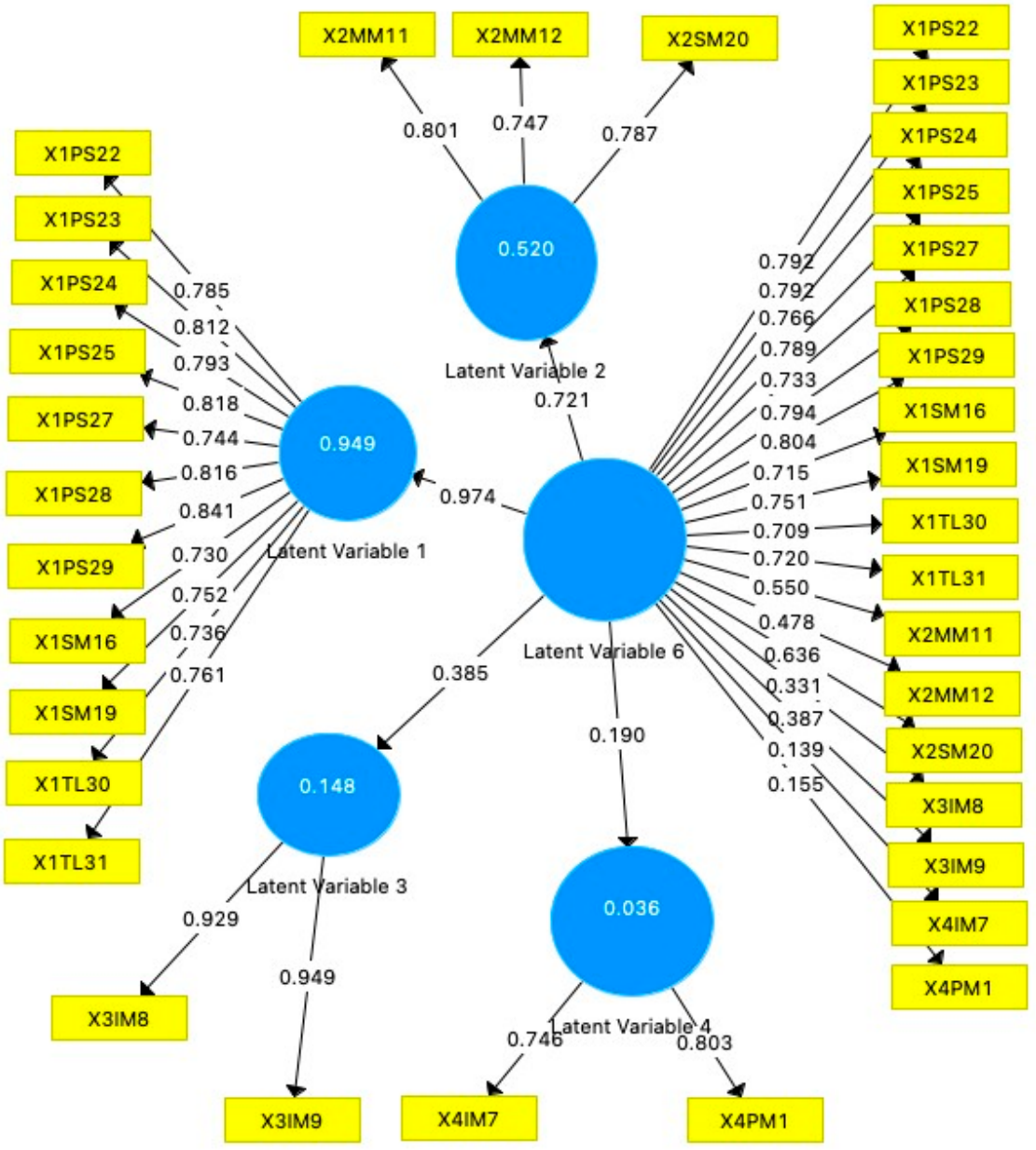
Figure 4.
Path analysis model of factors influencing pre-service teachers’ reading habits: relationships and factor loadings Source: Own Research.
Figure 4.
Path analysis model of factors influencing pre-service teachers’ reading habits: relationships and factor loadings Source: Own Research.
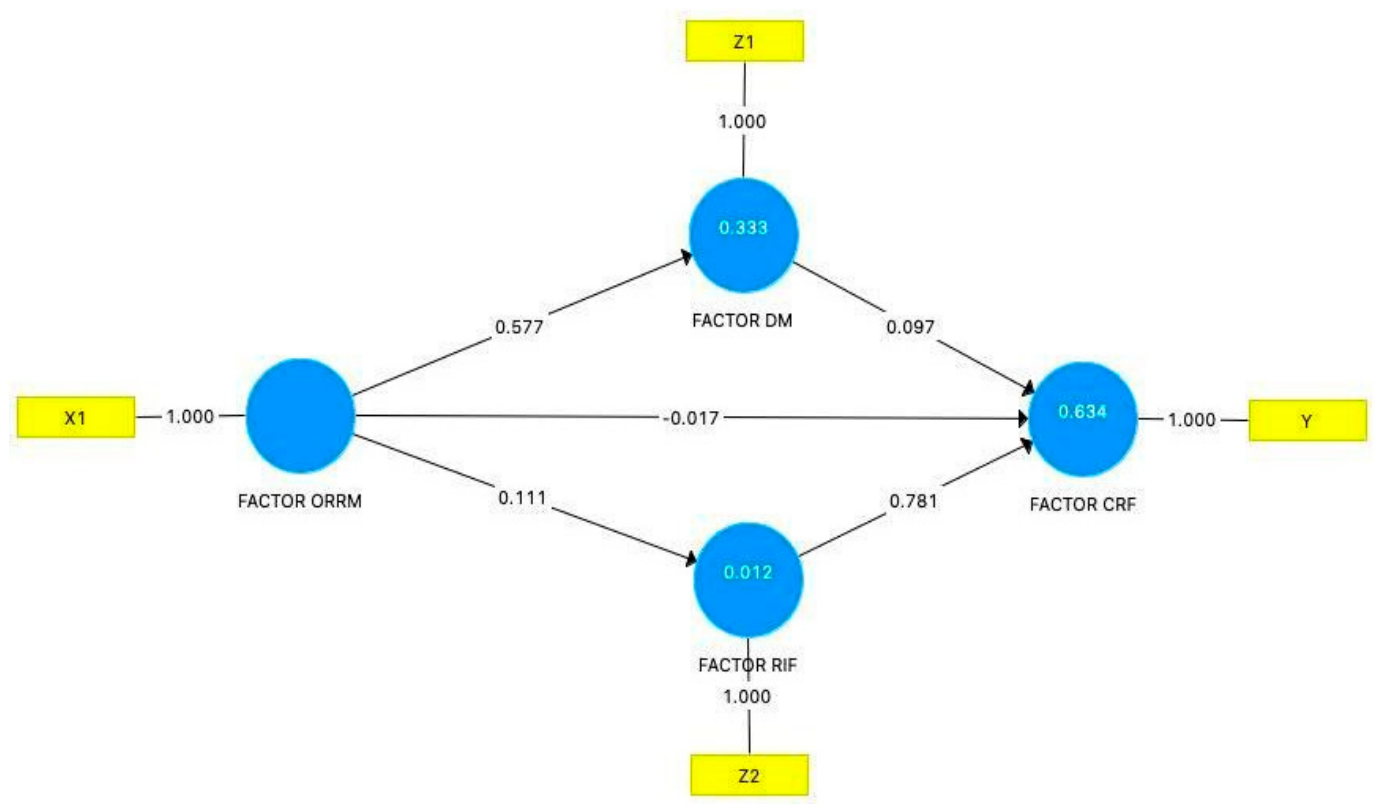

Table 1.
Demographic Characteristics of the Pre-service Teachers (N = 1,595).
| Characteristic | Category | n | % |
| Gender | Male | 548 | 34.4 |
| Female | 1,047 | 65.6 | |
| Grade Point Average (GPA) | < 3.00 | 246 | 15.4 |
| 3.00–3.49 | 612 | 38.4 | |
| 3.50–4.00 | 737 | 46.2 | |
| Year of Study | First Year | 318 | 19.9 |
| Second Year | 406 | 25.5 | |
| Third Year | 441 | 27.6 | |
| Fourth Year or Above | 430 | 27.0 | |
| Region of Origin | Urban | 908 | 56.9 |
| Rural | 687 | 43.1 | |
| Academic Discipline | Primary Education | 436 | 27.3 |
| Mathematics Education | 201 | 12.6 | |
| Science Education | 188 | 11.8 | |
| Indonesian Language Education | 174 | 10.9 | |
| English Language Education | 156 | 9.8 | |
| Social Science Education | 145 | 9.1 | |
| Early Childhood Education | 128 | 8.0 | |
| Other Teacher Education Programmes | 167 | 10.5 | |
| Total | 1,595 | 100.0 |
Note.GPA = Grade Point Average. Percentages may not total exactly 100% due to rounding errors. Participants were recruited from teacher education programmes across all 14 regencies in the province using a multistage random sampling procedure.
Table 2.
Descriptive Statistics and Distributional Properties of the Reading Habit Constructs.
| Construct | No. of Items | Mean | SD | Min | Max | Skewness | Kurtosis |
| Organised Reading and Resource Management (ORRM) | 6 | 3.08 | 0.56 | 1.00 | 4.00 | –0.38 | –0.29 |
| Dual Motivation (DM) | 5 | 3.21 | 0.49 | 1.20 | 4.00 | –0.45 | –0.11 |
| Reading Intensity and Focus (RIF) | 5 | 2.94 | 0.61 | 1.00 | 4.00 | –0.22 | –0.47 |
| Casual Reading Preference (CRP) | 4 | 2.76 | 0.65 | 1.00 | 4.00 | –0.17 | –0.58 |
Note. ORRM, organised reading and resource management; DM, dual motivation; RIF, reading intensity and focus; CRP, casual reading preference. The scores were measured on a four-point Likert scale, with higher values indicating stronger agreement. The skewness and kurtosis values were within the acceptable range (±2), indicating that the data approximated a normal distribution.
Table 3.
Exploratory Factor Analysis of Reading Habit Items.
| Item | ORRM | DM | RIF | CRP | Communality | ||
| Organise a regular reading schedule | 0.821 | 0.143 | 0.112 | 0.068 | 0.712 | ||
| Plan reading before academic tasks | 0.804 | 0.165 | 0.148 | 0.051 | 0.695 | ||
| Manage reading materials systematically | 0.779 | 0.124 | 0.172 | 0.084 | 0.673 | ||
| Keep records or notes after reading | 0.751 | 0.176 | 0.195 | 0.062 | 0.648 | ||
| Allocate dedicated reading time | 0.733 | 0.214 | 0.218 | 0.075 | 0.639 | ||
| Review previously read materials | 0.708 | 0.188 | 0.221 | 0.093 | 0.621 | ||
| Read because I enjoy learning | 0.176 | 0.839 | 0.143 | 0.126 | 0.756 | ||
| Read to improve professional knowledge | 0.192 | 0.812 | 0.181 | 0.105 | 0.731 | ||
| Read to achieve academic success | 0.203 | 0.784 | 0.214 | 0.098 | 0.704 | ||
| Read because lecturers require it | 0.141 | 0.731 | 0.188 | 0.114 | 0.655 | ||
| Feel motivated to explore new materials | 0.187 | 0.716 | 0.221 | 0.132 | 0.641 | ||
| Read with full concentration | 0.198 | 0.224 | 0.843 | 0.118 | 0.773 | ||
| Read consistently every week | 0.205 | 0.176 | 0.817 | 0.136 | 0.741 | ||
| Complete planned reading sessions | 0.231 | 0.182 | 0.793 | 0.142 | 0.719 | ||
| Spend sufficient time reading | 0.194 | 0.167 | 0.768 | 0.171 | 0.688 | ||
| Continue reading despite distractions | 0.216 | 0.201 | 0.742 | 0.184 | 0.664 | ||
| Read books beyond coursework | 0.121 | 0.165 | 0.204 | 0.809 | 0.725 | ||
| Read for leisure regularly | 0.098 | 0.172 | 0.214 | 0.786 | 0.701 | ||
| Prefer reading over other leisure activities | 0.086 | 0.143 | 0.181 | 0.758 | 0.669 | ||
| Frequently visit libraries or digital collections | 0.154 | 0.176 | 0.221 | 0.721 | 0.642 | ||
| Factor Statistics | ORRM | DM | RIF | CRP | |||
| Eigenvalue | 6.84 | 2.91 | 1.94 | 1.36 | |||
| Variance Explained (%) | 34.20 | 14.55 | 9.70 | 6.80 | |||
| Cumulative Variance (%) | 34.20 | 48.75 | 58.45 | 65.25 | |||
Note. Only factor loadings ≥ 0.50 were interpreted as substantial. Cross-loadings below 0.30 were considered negligible. ORRM = Organised Reading and Resource Management; DM = Dual Motivation; RIF = Reading Intensity and Focus; CRP = Casual Reading Preference.
Table 4.
Discriminant Validity Using the Fornell–Larcker Criterion.
| Construct | ORRM | DM | RIF | CRP |
| Organised Reading and Resource Management (ORRM) | 0.799 | |||
| Dual Motivation (DM) | 0.612 | 0.798 | ||
| Reading Intensity and Focus (RIF) | 0.548 | 0.583 | 0.819 | |
| Casual Reading Preference (CRP) | 0.391 | 0.467 | 0.684 | 0.794 |
Note. Diagonal elements (bold) represent the square root of the average variance extracted (AVE), whereas off-diagonal elements represent the inter-construct correlations. Discriminant validity is established when the square root of the AVE for each construct exceeds its correlations with all other constructs (Fornell & Larcker, 1981).
Table 5.
Overall Measurement Model Fit Assessment.
| Model Fit Index | Recommended Threshold | Obtained Value | Model Evaluation |
| Chi-square (χ²) | Smaller values indicate a better fit | 642.57 | Acceptable |
| Degrees of Freedom | 164 | ||
| Probability Level | > 0.05 desirable | < 0.001 | Sensitive to large sample size |
| Normed Chi-square (χ²/df) | < 3.00 | 2.94 | Good fit |
| Comparative Fit Index (CFI) | ≥ 0.95 | 0.964 | Excellent fit |
| Tucker–Lewis Index (TLI) | ≥ 0.95 | 0.958 | Excellent fit |
| Incremental Fit Index (IFI) | ≥ 0.95 | 0.964 | Excellent fit |
| Goodness-of-Fit Index (GFI) | ≥ 0.90 | 0.943 | Good fit |
| Adjusted Goodness-of-Fit Index (AGFI) | ≥ 0.90 | 0.924 | Good fit |
| Root Mean Square Error of Approximation (RMSEA) | ≤ 0.06 | 0.043 | Excellent fit |
| Standardised Root Mean Square Residual (SRMR) | ≤ 0.08 | 0.037 | Excellent fit |
Note. Greater emphasis was placed on incremental and absolute fit indices, all of which exceeded the recommended thresholds, indicating that the proposed four-factor measurement model adequately represented the observed covariance structures.
Table 6.
Summary of Pre-service Teachers’ Reading Habit Profile.
| Aspects of Reading Habit | Dominant Pattern Observed |
| Preferred information source | Online media and video-based content |
| Role of printed books | Mainly personal or leisure reading |
| Engagement with academic texts | Predominantly requirement-driven |
| Frequency of focused reading | Mostly weekly or less |
| Monthly reading targets | Largely absent |
| Reading volume | Low to moderate |
Source: Own Research.
Table 8.
Summary of Structural Relationships among Reading Habit Dimensions.
| Relationship | Direction of Effect | Interpretation |
| ORRM → DM | Positive, significant | Organised practices strengthen motivation |
| ORRM → RIF | Positive, significant | Structured reading supports reading intensity |
| DM → CRP | Weak, significant | Motivation alone has a limited influence |
| RIF → CRP | Strong, significant | Reading intensity drives sustained engagement |
| ORRM → CRP | Not significant | Organisation affects preference indirectly |
Source: Own Research.
Disclaimer/Publisher’s Note: The statements, opinions and data contained in all publications are solely those of the individual author(s) and contributor(s) and not of MDPI and/or the editor(s). MDPI and/or the editor(s) disclaim responsibility for any injury to people or property resulting from any ideas, methods, instructions or products referred to in the content. |
© 2026 by the authors. Licensee MDPI, Basel, Switzerland. This article is an open access article distributed under the terms and conditions of the Creative Commons Attribution (CC BY) license.
Copyright: This open access article is published under a Creative Commons CC BY 4.0 license, which permit the free download, distribution, and reuse, provided that the author and preprint are cited in any reuse.


