

Submitted:
07 July 2026
Posted:
08 July 2026
You are already at the latest version
Abstract
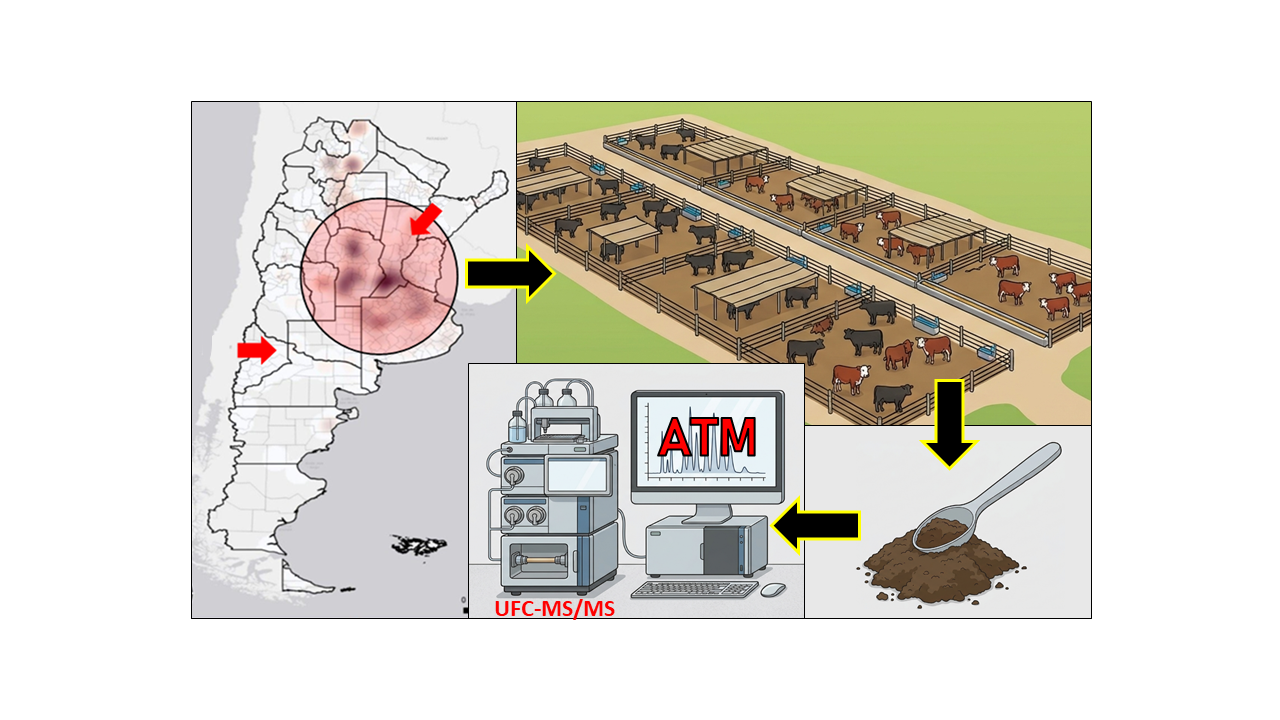
Background/Objectives: This prospective cross‑sectional study quantified veterinary antimicrobial residues in soils from 27 commercial beef feedlots across multiple regions of Argentina and production scales. Methods: Using a validated ultra‑fast liquid chromatography–tandem mass spectrometry (UFLC‑MS/MS) method, we measured 15 target antimicrobials in pooled corral soil samples. Results: Monensin was detected in all feedlots and showed the highest detection frequency and widest concentration range; peak concentrations exceeded 15,000 ppb in some sites. Oxytetracycline presented pronounced, site‑specific peaks (approaching 14,000 ppb), consistent with its strong adsorption to soil organic matter and limited biodegradation. These results indicate localized hotspots of antimicrobial loading in feedlot environments. These elevated concentrations signify substantial antimicrobial loading in confined animal environments and potential hotspots for environmental selection pressure. Compounds absent from farm treatment records were detected in 40.7% of feedlots, correlating with unreported residues including oxytetracycline, tulathromycin, cefquinome, enrofloxacin, and ciprofloxacin among others. Multiple non‑exclusive explanations are plausible (historical persistence, manure redistribution, incomplete records, off‑label use, or cross‑contamination). The detection of critically important antimicrobials (e.g., fluoroquinolones and advanced cephalosporins) in soils raises One Health concerns about environmental selection pressure and potential dissemination of resistance determinants. Conclusions: These findings underscore gaps in stewardship and the need for integrated environmental monitoring and improved antimicrobial usage traceability. These data provide a baseline for ecological risk assessment and resistome studies and can inform evidence‑based policy and stewardship interventions in Argentine feedlot systems.
Keywords:
antimicrobials
; feedlots
; environment
; soil
; residues
; One Health
1. Introduction
As livestock production has intensified, there’s been a steady rise in the use of antimicrobials (ATM) in beef cattle feedlots. This use sits at the crossroads of animal, environmental, and public health, which is why it is a major focus in the One Health approach [1]. When antibiotics are given to food animals, a significant portion is excreted into the environment through manure, contaminating the soil and water runoff. This creates a pathway for antibiotic residues to spread, which not only contaminates the ecosystem but also represents a selection pressure for antimicrobial resistance (AMR) in a wide range of bacterial species in the wider ecosystem [2,3,4]. Whenever antimicrobials are given to animals—whether to prevent (prophylaxis), control (metaphylaxis), or treat disease (therapeutic)—a significant amount passes through their bodies unchanged or as active metabolites. These drug residues accumulate in the soil when manure is spread [5,6]. In feedlots, where animals are managed at high stocking densities and antibiotic treatments are frequent, this can create hotspots of contamination. Soil is not a passive bystander; it holds onto antibiotics, where they stick to organic matter, break down only partially, or influence soil microbial population dynamics. Even low levels of antibiotics in the soil can encourage bacteria to exchange resistance genes, adding to the challenge of antimicrobial resistance [7,8]. The persistence and mobility of antibiotics in soil depend on their physicochemical properties, including solubility, pKa, and adsorption coefficients, as well as environmental variables such as pH, texture, temperature, and organic carbon content [6,9]. Tetracyclines, sulfonamides, macrolides, and β -lactams are among the most frequently used classes in beef production worldwide and are commonly detected in agricultural soils impacted by animal manure [4,6]. Previous studies conducted in North America, Europe, and Asia have reported detectable concentrations of veterinary antimicrobials in soils adjacent to intensive livestock operations [5,10]. Despite growing global evidence, data from South American beef-producing systems remain limited. Argentina ranks among the world’s leading beef producers, with feedlot finishing systems expanding considerably over the past decades. However, systematic environmental surveillance of antibiotic residues in Argentine feedlot soils is scarce. Existing regional research has predominantly focused on antimicrobial resistance phenotypes or water contamination [11]. However, quantitative assessments of soil residues remain largely unexplored. This lack of baseline data limits risk assessment and restricts the implementation of integrated One Health monitoring frameworks. Argentina own 50,000.000 head of cattle distributed mainly in the centre, and North- east of the country (Figure 1).
Beef cattle production is 3 million tons/year, coming from of a total of 12,100.979 head of cattle, being circa 2,000,000 head subjected to the feed lot system. Feedlots of cattle in Argentina vary from 1,000 to 90,000 heads according to the farm size. Most of those animals come from many different, independent breeding herds, often from a wide geographical region and function as working as “cattle hotels” for the fattening/finishing phase of the production cycle before being sold to slaughters. After weaning, growing calves with a body weight of approximately 120 kg entry the system staying roughly 3 months, gaining weight to be sold at 350-400 kg. Then be sold to slaughter, with the principal breeds being mainly Bos taurus, such as Aberdeen Angus, Shorthorn, Hereford, Polled Hereford in the central and southern provinces and with Bos indicus hybrids, such as the Brangus, in the North East of the country.
The present prospective cross-sectional study aimed to evaluate the occurrence and concentration of veterinary antimicrobial residues in soils from commercial feedlots in Argentina. A total of 27 feedlots were included, representing different regions and operational scales. Soil samples were analysed using validated Ultra-Fast Liquid Chromatography coupled with tandem mass spectrometry (UFLC-MS/MS) multi-ATM residues methods. We hypothesised that measurable concentrations of antimicrobial residues would be detected in a substantial proportion of evaluated feedlots, reflecting antimicrobial usage patterns in intensive beef production. By generating primary data from a major beef-producing country, this trial contributes to closing a significant regional knowledge gap and supports evidence-based environmental risk assessment within the One Health framework.
2. Results
2.1. Antimicrobial Use (AMU): Reported Antimicrobials
Monensin (MON) residues were detected in samples from all feedlots. Residues of other antimicrobial classes were detected in 70% (19 of 27) of the evaluated feedlots, with marked variability in both detection frequency and concentration among compounds and sites (Figure 2) with antibiotic residues of up to five different class detected in individual corrals.
MON, exhibited the highest overall detection frequency and the broadest concentration range, with multiple feedlots showing elevated levels. Peak concentrations were observed in ARG05 and ARG08, where values exceeded 10,000 ppb, reaching maximum levels close to 15,000 ppb. Additional high concentrations were recorded in ARG19 and ARG20, although at comparatively lower magnitudes.
Oxytetracycline (OTC) also showed notable site-specific peaks. A pronounced concentration spike was observed in ARG10, where levels approached 14,000 ppb. Moderate concentrations were detected in ARG05 and ARG06, whereas most remaining sites showed either low levels or non-detectable concentrations.
Tilmicosin (TIL) was detected at moderate concentrations in selected feedlots, particularly in ARG05 and ARG17, but exhibited a narrower distribution compared to MON and OTC.
Chlortetracycline (CTC) was present in fewer sites and generally at lower concentrations, with localised elevations observed in ARG09 and ARG22. Other antimicrobials—including β-lactams (penicillin –PEN-, ampicillin –AMP-, ceftioufur –CFT-, cefquinome –CFQ-), fluoroquinolones (enrofloxacin –EFX-, ciprofloxacin -CPX-), macrolides (tulathromycin-TUL-, gamithromycin –GAM-), and sulfonamides (sulfamethoxazole-SMX-, sulfadiazine-SDZ-)—were detected sporadically and predominantly at low concentrations, typically below 2,000 ppb, although concentrations enough for developing bacterial resistance
Overall, residue distribution was highly heterogeneous across feedlots, characterised by discrete high-concentration hotspots rather than uniform contamination patterns. The majority of sites exhibited low to moderate concentrations, while a small number of feedlots accounted for the highest residue burdens. MON residue concentrations were not consistently associated with corral type or annual reported level of AMU at the feedlot level. However, Tetracycline antibiotic residues were less ubiquitous across the population of feedlots but exhibited a clear pattern of higher concentrations in the younger age group corrals compared to all other corral types sampled. These also correlates with reported treatment patterns of tetracyclines in new arrivals as part of prophylactic transition protocols. A moderate positive correlation between both residue concentrations of any class and prevalence of multiple classes of antibiotic residues was observed with increasing feedlot size, as defined by annual cattle throughput.
2.2. AMU: Unreported Antimicrobials in Treatment Records
In 40.7% of feedlots, antimicrobial compounds were not documented in farm-level treatment records, nevertheless, ATM were detected in soil samples across multiple corrals (Table 1). These residues exhibited heterogeneous spatial distribution and variable concentration ranges. This correlated with the biggest farms located in the central region of Argentina (10,000-40,000 heads).
Among the most detected compounds, OTC, CFQ and TUL showed the highest frequency in 22% of recruited farms. EFX and CFX presented the most pronounced values, reaching concentrations close to 2000 ppb in specific corrals.
β-lactam antibiotics, including AMX and PEN, were identified sporadically across multiple corrals, typically at lower concentrations. Most detections for these compounds were below 200 ppb, although isolated peaks were observed in selected locations. Cefalosporins (3rd and 4th generation) were also detected at moderate to high levels in several sites, with concentrations generally ranging between 25 and 200 ppb.
Macrolides, particularly TUL, exhibited localised high-concentration occurrences, with maximum values approaching 600 ppb in 6/27 feedlots. Their distribution pattern was characterised by discrete hotspots rather than widespread presence.
Sulfonamides, including SFX and SFD, were detected less frequently and generally at low concentrations, commonly below 50 ppb.
Overall, the occurrence of these ATMs was highly variable, with most corrals showing either non-detectable levels or low concentrations, while a small subset of sites accounted for the highest residue values.
3. Discussion
The present study provides evidence of environmental contamination by veterinary antimicrobials in commercial feedlot soils in Argentina, revealing heterogeneous but measurable residue burdens across production systems. Residue distribution was characterised by marked spatial variability, with discrete high-concentration hotspots rather than uniform contamination patterns. Such heterogeneity has been consistently reported in intensive livestock environments and is attributed to localised manure deposition, treatment practices, and variability in antimicrobial administration across pens [10]. Among detected compounds, MON and OTC exhibited the highest concentrations and widest distribution ranges. Although ionophores such as MON are not classified as critically important antimicrobials for human medicine, their high environmental prevalence reflects intensive use in feedlot production and indicates substantial antimicrobial input into confined animal systems [13,14]. In contrast, tetracyclines remain widely used in both veterinary and human medicine and are known to persist in soil due to strong adsorption to organic matter and limited biodegradation [15]. The elevated concentrations observed in selected sites suggest accumulation processes and environmental persistence consistent with previous findings from manure-impacted soils [7,9]. A particularly notable finding was the detection of multiple antimicrobial residues that were not documented in farm-level AMU records. OTC and TUL were the most frequently detected among these compounds, followed by sulfonamides and several β-lactams and fluoroquinolones (Table 1). Although the present study was not designed to determine the origin of these discrepancies, several non-exclusive mechanisms may explain their occurrence, including environmental persistence from historical use, manure redistribution between pens, incomplete treatment documentation, extra-label administration, or transfer from adjacent production units. Similar inconsistencies between reported AMU and environmental residue detection have been documented in livestock production systems globally [4]. The environmental presence of critically important antimicrobials for human medicine—particularly fluoroquinolones and advanced cephalosporins—is of special concern within a One Health framework. These antimicrobial classes have high potential for resistance selection, and their detection in soil environments suggests possible selective pressure on environmental microbial communities. Numerous studies have demonstrated that even sub-inhibitory concentrations of antibiotics can promote horizontal gene transfer and enrich antimicrobial resistance genes in soil microbiota. Manure-impacted soils are recognised reservoirs and exchange hubs for mobile genetic elements, facilitating the persistence and dissemination of resistance determinants beyond the point of antimicrobial application [7,16]. Although resistome characterisation was beyond the scope of this study, the co-occurrence of multiple antimicrobial classes indicates environmental conditions conducive to resistance selection. From an ecological risk perspective, the magnitude of several detected concentrations suggests that environmental thresholds exceeded in some localised hotspots. Peak concentrations observed in this study fall within ranges previously associated with microbial community disruption and resistance selection in soils. Furthermore, simultaneous detection of multiple antimicrobial compounds highlights the importance of considering mixture toxicity, as combined exposure scenarios may result in additive or synergistic ecological effects not captured by single-compound assessments [9,17]. Comparison with international studies indicates that antimicrobial concentrations detected in Argentine feedlot soils are broadly consistent with global observations from intensive livestock production systems. Maximum tetracycline concentrations reported in European and Asian agricultural soils typically range between 1,000 and 20,000 ppb, values comparable to the highest levels observed in this study [10,18]. However, the relatively frequent detection of critically important antimicrobials for human medicine in Argentine feedlot soils contrasts with trends reported in some European surveillance programs, where stricter antimicrobial stewardship policies have reduced environmental exposure. These differences likely reflect variations in antimicrobial usage patterns, regulatory policies, and monitoring systems. The detection of residues not documented in AMU records highlights potential gaps in integrated antimicrobial stewardship and surveillance systems within livestock production. Effective stewardship requires accurate documentation of antimicrobial administration, traceability of treatments, and integration of environmental monitoring into national antimicrobial resistance action plans. Strengthening harmonisation between antimicrobial usage reporting and environmental residue surveillance could improve risk assessment and inform targeted mitigation strategies. In particular, site-specific interventions focusing on high-burden farms and manure management practices may represent efficient approaches to reducing environmental antimicrobial loading.
4. Materials and Methods
4.1. Study Design and Farm Recruitment
This prospective cross-sectional environmental study established baseline contamination levels and characterized spatial variability across commercial feedlot systems. The farm’s recruitment was undertaken prioritising the geographic location with the highest density of feedlots and antibiotic pressure was supposedly higher.
Farms were recruited between 2021 and 2023 via announcements on the Argentine Feedlot Chamber (CAF) website and through veterinarians affiliated with the National Institute of Agricultural Technology (INTA). The survey instrument is described by Bedford et al. (2024) [12].
Antibiotic purchase data was collected by self-reported purchase history for a minimum of the preceding 12 months, annualised and calculated using average animal numbers per farms to give mg/population corrected unit (PCU) using the European Surveillance of Veterinary Antimicrobial Consumption method (ESVAC). Usage of in-feed antibiotics including monensin was calculated from the ration in mg/kg PCU (ESVAC). Twenty-seven farms were selected to carry out the trial based on geographical distribution and large population size (10,000 over 40,000) in Buenos Aires, Cordoba, Santa Fe, San Luis y Chaco (21 farms), and small scale feedlots with <1,000 cattle, typical of Patagonian production systems (6 farms) (See Figure 1).
4.2. Sampling
At each feedlot, eight corrals were sampled representing different management categories: one sick-animal pen (S), one handling/treatment area (H), three pens with the most recently arrived animals (Y1–Y3), and three pens with the longest-residence animals (O1–O3). In each corral, five soil subsamples were collected with a clean spoon (Figure 3) and were combined to form a single pooled sample (one pooled sample per corral). Subsamples were placed into 50 mL plastic tubes, homogenized to create the pooled sample, and stored at −20 °C until analysis. The pooling strategy was chosen to capture corral-level average contamination while limiting analytical costs. Its limitations for detecting fine-scale heterogeneity is acknowledged.
Farm-level AMU data were obtained by standardized questionnaires covering at least the preceding 12 months. Reported purchases were annualized and converted to mg per population correction unit (mg/PCU), following ESVAC methodology. In-feed antibiotic use, including monensin, was estimated from feed rations and expressed as mg/kg PCU.
4.2.1. Antimicrobial Residue Quantification in Soil Samples
Soil samples were analyzed to quantify amoxicillin (AMX), penicillin (PEN), ampicillin (AMP), ceftiofur (CTF), cefquinome (CFQ), sulfamethoxazole (SMX), enrofloxacin (EFX), ciprofloxacin (CFX), tulathromycin (TUL), gamithromycin (GAM), tilmicosin (TIL), sulfadiazine (SDZ), oxytetracycline (OTC), chlortetracycline (CTC), and monensin (MON) using Ultra-Fast Liquid Chromatography (UFLC) coupled with tandem mass spectrometry (MS/MS) following a methodology developed in our laboratory.
4.2.2. Chemicals and Reagents
Antimicrobial reference standards (99% purity) were sourced from Sigma-Aldrich and prepared as 1,000,000 ppb methanolic stock solutions. HPLC-grade solvents and reagents were obtained from Sigma-Aldrich: Trichloroacetic acid (TCA) and ethylenediaminetetraacetic acid (EDTA); Baker: Acetonitrile (ACN), methanol (MeOH), and Ammonium formate; Merck: (hexane); Biopack: formic acid, and Agilent Technologies: Primary Secondary Amine (PSA). Working standards (10–100,000 ppb) were prepared weekly, and purified water was obtained via a Millipore Simplicity system.
4.2.3. Soil Sample Extraction
For AMX, PEN, AMP, CEF, CFQ, SMX, EFX, TUL, GAM, CFX, and SDZ residues, 0.1 g of soil underwent acidic extraction using water and ACN (2% formic acid) with 0.1 M EDTA. The mixture was vortexed (10 min), sonicated (30 min), and centrifuged (15,000 rpm at 1 °C). To extract OTC and CTC, 0.4 g of soil was treated with EDTA and a 5% TCA/ACN (1:1) solution, followed by shaking (45 min) and sonication (45 min); the supernatant was then cleaned using hexane and PSA (0.05 g) to remove interferences. TIL and MON were extracted from 0.1 g of soil using water and cold ACN, followed by shaking (45 min), sonication (30 min), and centrifugation. This supernatant was evaporated under nitrogen at 56 °C and re-suspended in an ACN:ammonium formate (60:40) mixture. Finally, all extracts were filtered (0.22 μm) prior to a 10 μL injection.
4.2.4. UFLC-MS/MS System and Chromatographic Conditions
Analysis was performed using a Shimadzu UFLC system coupled to an LCMS-8050 triple quadrupole mass spectrometer. Separation was achieved on a Shim-pack HR-ODS C18 column (15 cm x 3 mm, 2.6 μm) at 40 °C. The ESI source operated with interface, desolvation, and heat-block temperatures of 300 °C, 250 °C, and 400 °C, respectively. MRM transitions (quantifier and qualifier) and collision energies were optimized via direct injections (0.1 mg/mL) for each compound. Distinct gradient programs were used for each analyte group. For most residues (AMX through SDZ), a water/ACN (0.1% formic acid) phase at 0.2 mL/min was used, starting at 50% B and reaching 80% B by 3 min. For OTC and CTC, the flow rate was 0.4 mL/min with a 10% to 50% ACN gradient over 5 min. Finally, TIL and MON were separated using 5 mM ammonium formate and ACN (0.4 mL/min) with a 60% to 95% B gradient over 14 min.
4.2.5. Methodology Validation
The analytical method was fully validated for all 15 antimicrobials in soil, assessing linearity, recovery, precision, accuracy, stability, limit of quantification (LOQ), and matrix effects. Matrix-matched calibration curves showed high linearity (r≥0.985). Absolute recoveries exceeded 70%, and both intra-day and inter-day precision and accuracy met acceptable criteria (CV and RE within -40% to +20% for low levels; -20% to +10% for levels ≥ 100 ppb). Compounds were stable at –20 °C for 90 days (variation ≤ 15%). Matrix effects were negligible (80–120%), limit of determination (LOD) and LOQs ranged from 25-100 ppb (OTC, MON, TIL, PEN, CFT, GAM, EFX, SFD, CFX, SMX) to 200-400 ppb (AMX, AMP, CFQ, TUL). The LOD enabled scientific verification of whether the antibiotic was absent or remained below the instrument’s detection limit in specific samples. An analytical LOD sensitive enough to quantify sub-inhibitory antimicrobial concentrations is crucial, as even trace levels can exert selective pressure that promotes the emergence and dissemination of antimicrobial resistance genes. For this reason, this parameter was considered pivotal for determining soil ATM contamination [5].
5. Conclusions
This study documents the presence and spatial heterogeneity of veterinary antimicrobial residues in Argentine feedlot soils, including compounds of clinical importance. The findings identify discrete hotspots and highlight the need for improved AMU recordkeeping, targeted environmental monitoring, and interventions to reduce environmental loading. These data provide a baseline for future resistome analyses and One Health policy development.
Author Contributions
SSB: Principal Investigator (ARG)- Study Design, UFC-MS-MS validation method collaboration, data analysis Results Interpretations, Writing paper; LG: Surveys elaboration, Feedlots sampling, data interpretation; MGdY: Feedlots sampling, data interpretation; LS: Feedlots sampling, data interpretation and writing paper collaboration; MS: Data Interpretation and writing paper collaboration; LC: UFC-MS-MS multiresidue validation method- collaboration, data analysis; LMT: UFC-MS-MS multiresidue validation method- collaboration, data analysis and PD: Principal Investigator (UK)- Study Design, data analysis Results Interpretations and Writing paper.
Funding
The author(s) declare that financial support was received for the research, authorship, and/or publication of this article. This research in a bilateral agreement was co-funded by: Consejo Nacional de Investigaciones Científicas y Tecnológicas (CONICET), Argentina and, the UK Department of Health and Social Care as part of the Global AMR Innovation Fund (GAMRIF) Grant # BB/T00472X/1. The latter is a UK aid programme that supports early-stage innovative research in underfunded areas of antimicrobial resistance (AMR) research and development for the benefit of those in low- and middle-income countries (LMICs), who bear the greatest burden of AMR.
Institutional Review Board Statement
Not applicable.
Informed Consent Statement
All participants were asked to read a participant information sheet and sign, either in-person or online, to state that they consented to their data being used in an anonymised fashion in order to be included in the project. All data was anonymised and cleaned of identifying or personal details. Ethical approval was obtained from University of Liverpool and Universidad Nacional del Centro de la Provincia de Buenos Aires.
Data Availability Statement
The data that support the findings of this study are available from the corresponding author upon reasonable request.
Acknowledgments
Authors appreciated the full collaboration of Dr. Federico Iwan in collecting soil’s samples from Patagonia. We also thankful to the Cámara Argentina de Feedlot (CAF), which help us for broadcasting the surveys and recruiting farms.
Conflicts of Interest
The authors declare that the research was conducted in the absence of any commercial or financial relationships that could be construed as a potential conflict of interest.
Abbreviations
The following abbreviations are used in this manuscript:
| ATM | Antimicrobials |
| AMR | Antimicrobial resistance |
| UFLC-MS/MS | Ultra-Fast Liquid Chromatography coupled with tandem mass spectrometry |
| AMU | Antimicrobial use |
| PCU | Population corrected unit |
| MON | Monensin |
| OTC | Oxytetracycline |
| TIL | Tilmicosin |
| PEN | Penicillin |
| AMP | Ampicillin |
| CFT | Ceftioufur |
| CFQ | Cefquinome |
| EFX | Enrofloxacin |
| CPX | Ciprofloxacin |
| TUL | Tulathromycin |
| GAM | Gamithromycin |
| SMX | Sulfamethoxazole |
| SDZ | Sulfadiazine |
| TCA | Trichloroacetic acid |
| EDTA | Ethylenediaminetetraacetic acid |
| ACN | Acetonitrile |
| MeOH | Methanol |
| PSA | Primary secondary amine |
| LOQ | Limit of quantification |
| LOD | Limit of determination |
References
- Queenan, K.; Häsler, B.; Rushton, J.A. One Health approach to antimicrobial resistance surveillance:is there a business case for it? Int. J. Antimicrob. Agents 2016, 48(4), 422–427. [Google Scholar] [CrossRef] [PubMed]
- Marshall, B. M.; Levy, S. B. Food animals and antimicrobials: impacts on human health. Clin. Microbiol. Rev. 2011, 24(4), 718–733. [Google Scholar] [CrossRef] [PubMed]
- Robinson, T.P.; Bu, D.P.; Carrique-Mas, J.; Fèvre, E.M.; Gilbert, M.; Grace, D.; Hay, S.I.; Jiwakanon, J.; Kakkar, M.; Kariuki, S.; Laxminarayan, R.; Lubroth, J.; Magnusson, U.; Thi Ngoc, P.; Van Boeckel, T.P.; Woolhouse, M.E. Antibiotic resistance is the quintessential One Health issue. Trans. R Soc. Trop. Med. Hyg. 2016, 110(7), 377–380. [Google Scholar] [CrossRef] [PubMed]
- Singer, R.S.; Ward, M.P.; Maldonado, G. Can landscape ecology untangle the complexity of antibiotic resistance? Nat. Rev. Microbiol. 2006, 4(12), 943–952. [Google Scholar] [CrossRef] [PubMed]
- Hamscher, G.; Sczesny, S.; Höper, H.; Nau, H. Determination of persistent tetracycline residues in soil fertilized with liquid manure by high-performance liquid chromatography with electrospray ionization tandem mass spectrometry. Anal. Chem. 2002, 74(7), 1509–1518. [Google Scholar] [CrossRef] [PubMed]
- Sarmah, A.K.; Meyer, M.T.; Boxall, A.B. A global perspective on the use, sales, exposure pathways, occurrence, fate and effects of veterinary antibiotics (VAs) in the environment. Chemosphere 2006, 65(5), 725–759. [Google Scholar] [CrossRef] [PubMed]
- Cycoń, M.; Mrozik, A.; Piotrowska-Seget, Z. Antibiotics in the Soil Environment-Degradation and Their Impact on Microbial Activity and Diversity. Front Microbiol. 2019, 10, 338. [Google Scholar] [CrossRef] [PubMed]
- Heuer, H.; Smalla, K. Manure and sulfadiazine synergistically increased bacterial antibiotic resistance in soil over at least two months. Env. Microbiol. 2007, 9(3), 657–666. [Google Scholar] [CrossRef] [PubMed]
- Tasho, R.P.; Cho, J.Y. Veterinary antibiotics in animal waste, its distribution in soil and uptake by plants: A review. Sci. Total Env. 2016, 563-564, 366–376. [Google Scholar] [CrossRef] [PubMed]
- Zhang, Q.Q.; Ying, G.G.; Pan, C.G.; Liu, Y.S.; Zhao, J.L. Comprehensive evaluation of antibiotics emission and fate in the river basins of China: source analysis, multimedia modeling, and linkage to bacterial resistance. Env. Sci. Technol. 2015, 49(11), 6772–6782. [Google Scholar] [CrossRef] [PubMed]
- Prack McCormick, B.; Quiroga, M.P.; Alvarez, V.; Centrón, D.; Tittonell, P. Antimicrobial resistance dissemination associated with intensive animal production practices in Argentina: A systematic review and meta-analysis. Rev. Argent. Microbiol. 2023, 55(1), 25–42. [Google Scholar] [CrossRef] [PubMed]
- Bedford, C.; Galotta, M.L.; Oikonomou, G.; de Yaniz, G.; Nardello, M.; Sánchez Bruni, S.; Davies, P. A mixed method approach to analysing patterns and drivers of antibiotic use and resistance in beef farms in Argentina. Front Vet. Sci. 2024, 11, 1454032. [Google Scholar] [CrossRef] [PubMed]
- Carresi, C.; Marabelli, R.; Roncada, P.; Britti, D. Is the Use of Monensin Another Trojan Horse for the Spread of Antimicrobial Resistance? Antibiotics 2024, 13(2), 129. [Google Scholar] [CrossRef] [PubMed]
- Warsi, O.M.; Upterworth, L.M.; Breidenstein, A.; Lustig, U.; Mikkelsen, K.; Nagy, T.; Szatmari, D.; Ingmer, H.; Andersson, D.I. Staphylococcus aureus mutants resistant to the feed-additive monensin show increased virulence and altered purine metabolism. mBio 2024, 15(2), e0315523. [Google Scholar] [CrossRef] [PubMed]
- Zhang, Z.; Sun, K.; Gao, B.; Zhang, G.; Liu, X.; Zhao, Y. Adsorption of tetracycline on soil and sediment: effects of pH and the presence of Cu(II). J. Hazard Mater. 2011, 190(1-3), 856–862. [Google Scholar] [CrossRef] [PubMed]
- Zhu, Y.G.; Johnson, T.A.; Su, J.Q.; Qiao, M.; Guo, G.X.; Stedtfeld, R.D.; Hashsham, S.A.; Tiedje, J.M. Diverse and abundant antibiotic resistance genes in Chinese swine farms. Proc. Natl. Acad. Sci. USA 2013, 110(9), 3435–3440. [Google Scholar] [CrossRef] [PubMed]
- Kümmerer, K. Antibiotics in the aquatic environment--a review--part I. Chemosphere 2009, 75(4), 417–434. [Google Scholar] [CrossRef] [PubMed]
- Pan, M.; Chu, L.M. Transfer of antibiotics from wastewater or animal manure to soil and edible crops. Env. Pollut. 2017, 231 Pt 1, 829–836. [Google Scholar] [CrossRef] [PubMed]
Figure 1.
Distribution of recruited feedlots farms: a) Central area (n=21) 10,000 over 40,000 heads/farm, b) Patagonia (n=6) <500 heads/farm.
Figure 1.
Distribution of recruited feedlots farms: a) Central area (n=21) 10,000 over 40,000 heads/farm, b) Patagonia (n=6) <500 heads/farm.
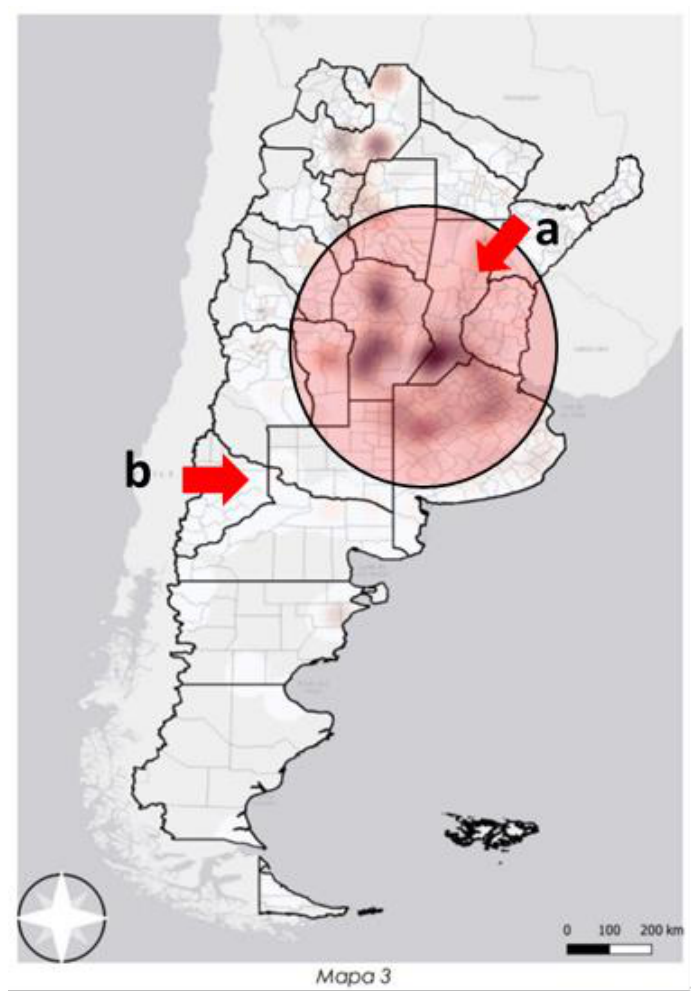
Figure 2.
Distribution of residue concentrations of monensin and tetracycline antibiotics (oxytetracycline and chlortetracycline) in soil samples from corrals in each farm. Outlier values for individual corrals are denoted by an asterisk.
Figure 2.
Distribution of residue concentrations of monensin and tetracycline antibiotics (oxytetracycline and chlortetracycline) in soil samples from corrals in each farm. Outlier values for individual corrals are denoted by an asterisk.
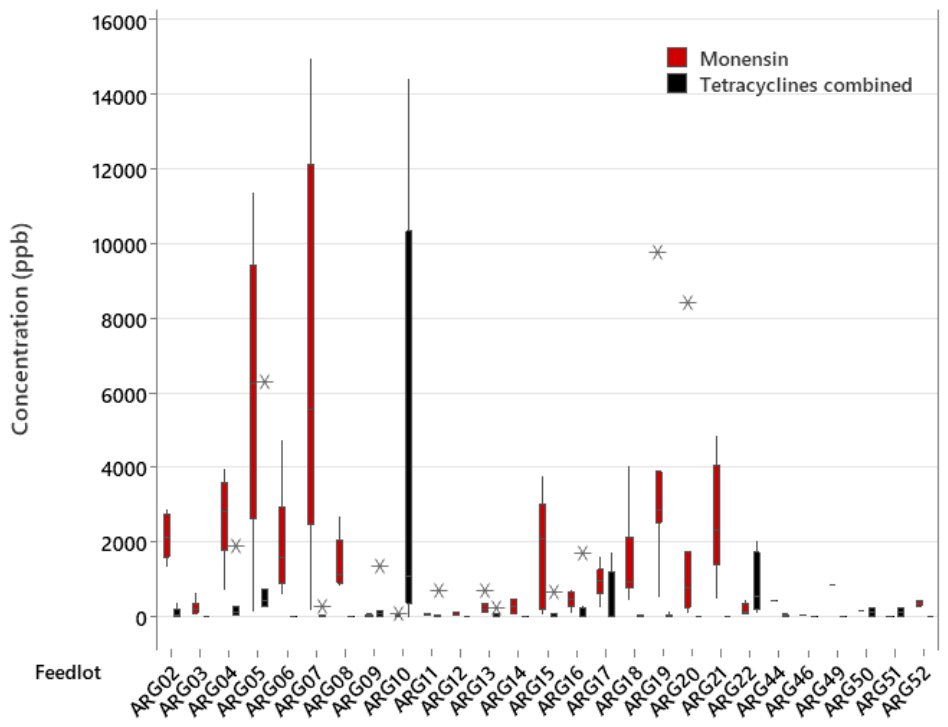
Figure 3.
Strategic distribution of soil sampling along whole trial.
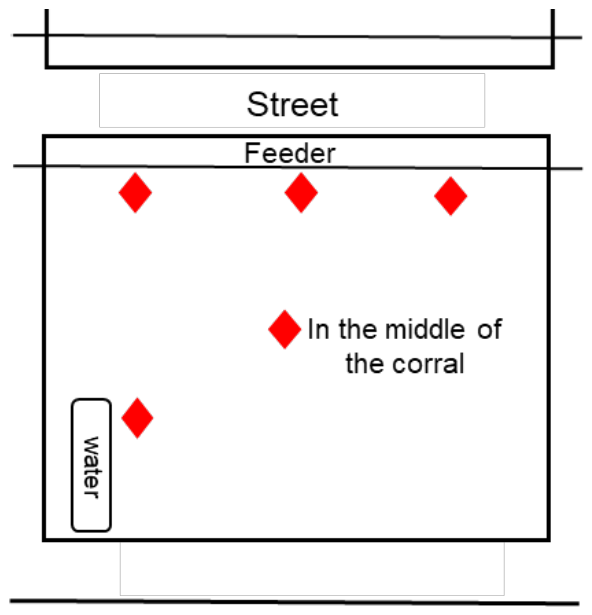

Table 1.
Concentrations (ppb) of ATM compounds not documented in farm-level treatment records found in corral’ soils. The distribution of combined ATM molecules found in 11/27 recruited farms were: Six different unreported ATMs in one farm, five different unreported ATMs in one farm, four different unreported ATMs in four farms, three different unreported ATMs in two farms, two different unreported ATMs in two farms and one different unreported in one farm.
Table 1.
Concentrations (ppb) of ATM compounds not documented in farm-level treatment records found in corral’ soils. The distribution of combined ATM molecules found in 11/27 recruited farms were: Six different unreported ATMs in one farm, five different unreported ATMs in one farm, four different unreported ATMs in four farms, three different unreported ATMs in two farms, two different unreported ATMs in two farms and one different unreported in one farm.
| ATM1 | Farms recruited | Farms with ATMs’unreported treatment records | Residues detected in soil (ppb) |
|---|---|---|---|
| OTC | 27 | 6 | 35-1217 |
| CLT | 27 | 1 | 26.5 |
| AMX | 27 | 4 | 200 |
| PEN | 27 | 4 | 25 |
| AMP | 27 | 0 | 0 |
| CFT | 27 | 5 | 25-50 |
| CFQ | 27 | 3 | 200 |
| SMX | 27 | 4 | 50 |
| SDZ | 27 | 1 | 50 |
| EFX | 27 | 2 | 134-925 |
| CFX | 27 | 2 | 369-2158 |
| TUL | 27 | 6 | 200-602 |
| GAM | 27 | 4 | 25 |
1amoxicillin (AMX), penicillin (PEN), ampicillin (AMP), ceftiofur (CTF), cefquinome (CFQ), sulfamethoxazole (SMX), enrofloxacin (EFX), ciprofloxacin (CFX), tulathromycin (TUL), gamithromycin (GAM), tilmicosin (TIL), sulfadiazine (SDZ), oxytetracycline (OTC), chlortetracycline (CTC), and monensin (MON).
Disclaimer/Publisher’s Note: The statements, opinions and data contained in all publications are solely those of the individual author(s) and contributor(s) and not of MDPI and/or the editor(s). MDPI and/or the editor(s) disclaim responsibility for any injury to people or property resulting from any ideas, methods, instructions or products referred to in the content. |
© 2026 by the authors. Licensee MDPI, Basel, Switzerland. This article is an open access article distributed under the terms and conditions of the Creative Commons Attribution (CC BY) license (http://creativecommons.org/licenses/by/4.0/).
Copyright: This open access article is published under a Creative Commons CC BY 4.0 license, which permit the free download, distribution, and reuse, provided that the author and preprint are cited in any reuse.


