

Submitted:
07 July 2026
Posted:
08 July 2026
You are already at the latest version
Abstract
Rubus ulmifolius Schott is a widespread bramble that behaves as an invasive shrub in many temperate and Mediterranean-type ecosystems, where dense thickets suppress native vegetation, restrict animal movement and impose recurrent management costs. At the same time, its leaves and young shoots are consumed by ruminants and contain nutrients and phytochemicals that may be relevant for low-input sheep systems. This review reframes R. ulmifolius not simply as an underutilized plant, but as a candidate for an invasive-shrub-to-functional-feed strategy. We integrate evidence on invasion ecology, biomass management, nutritional composition, seasonal variation, tannins, phenolic bioactivity, rumen fermentation, microbiome modulation, methane-related mechanisms, antiparasitic potential and practical feed-chain design. Available data indicate that R. ulmifolius can provide moderate dry matter, comparatively useful crude protein and fibre fractions compatible with browse use; however, its value changes markedly with season, plant fraction and lignification. Its condensed tannins and ellagitannin-rich phytochemical profile support plausible functional effects, including altered ruminal protein degradation, nitrogen partitioning, microbial ecology, oxidative status, biohydrogenation and parasite pressure. Nevertheless, direct controlled evidence in sheep remains scarce, and claims regarding performance, methane mitigation or microbiome benefits should be treated as hypotheses rather than established outcomes. We propose a staged validation pipeline including biomass mapping, no-spread harvest protocols, chemical standardization, in vitro rumen screening, dose-response sheep trials, microbiome and metabolomic endpoints, and farm-level economic assessment. Properly validated, R. ulmifolius could become a circular feed supplement that links invasive-plant management with climate-resilient sheep nutrition.
Keywords:
Rubus ulmifolius
; sheep nutrition
; invasive plants
; functional browse
; condensed tannins
; rumen microbiome
; methane mitigation
; circular bioeconomy
1. Introduction: Why a Bramble Deserves a Nutrition-Focused Review
Invasive alien plants are increasingly recognized as ecological and economic stressors rather than isolated weed-management problems. Their impacts include biodiversity loss, habitat transformation, reduced agricultural accessibility, increased control costs and altered ecosystem services. Global assessments indicate that biological invasions generate large and rising economic costs, while ecological reviews warn that invasive species are now a major component of global environmental change [1,2]. In this context, Rubus ulmifolius Schott, commonly known as elmleaf blackberry or wild blackberry, represents a particularly interesting case because it is simultaneously a problematic invader, an edible fruit-bearing shrub, a tannin-rich botanical resource and a plant already consumed by browsing ruminants.
The usual management logic for R. ulmifolius is elimination or suppression. Dense bramble patches are cut, sprayed, burned, grazed or biologically targeted, depending on regulatory and ecological context. On Robinson Crusoe Island, Chile, R. ulmifolius has been described as a major invasive threat to native vegetation, and rust-based biological control using Phragmidium violaceum has been evaluated as an alternative or complementary management tool [3,4]. In Argentina, herbicide-based control of elmleaf blackberry invasion has also been studied in natural reserves, emphasizing the recurrent problem of regrowth after intervention [5]. Such studies confirm the invasiveness of the species, but they rarely ask whether part of the repeatedly removed biomass could be safely valorized.
The present review proposes that the most promising novelty is not to claim that R. ulmifolius is simply a new forage. That statement would be too weak, because goats and sheep have browsed Rubus species for decades in mixed landscapes. The stronger contribution is to reframe this plant as an invasive-shrub-to-functional-feed candidate: a biomass generated by ecological management that could be transformed into a standardized complementary ingredient for sheep diets, provided that nutritional value, antinutritional thresholds, animal responses and biosecurity risks are rigorously evaluated. This perspective connects plant invasion ecology with ruminant nutrition, rumen microbiome science, methane mitigation, phytochemical functionality and circular bioeconomy.
The rationale is particularly relevant for sheep systems exposed to seasonal forage gaps. Climate variability can reduce pasture availability and alter forage nutritive value, with consequences for extensive and semi-extensive livestock systems [6,7,8]. Shrubs, tree leaves and non-conventional feeds can buffer seasonal scarcity, but their use requires careful interpretation because secondary metabolites may be beneficial at moderate doses and detrimental at high doses [9,10,11]. R. ulmifolius fits exactly within this tension: it contains useful nutrients and bioactive phenolics, yet tannins and lignification can constrain digestibility and intake.
This review therefore has four objectives. First, it synthesizes evidence supporting R. ulmifolius as a browse resource for ruminants, with special attention to sheep. Second, it evaluates nutritional and phytochemical mechanisms that could justify functional supplementation. Third, it identifies the methodological limitations that prevent immediate farm-scale recommendation. Fourth, it proposes a translational roadmap for converting invasive bramble biomass into a validated feed supplement without encouraging the spread of the species. The central thesis is cautious but constructive: R. ulmifolius is not yet a proven functional feed for sheep, but it is a scientifically plausible and strategically novel candidate that warrants structured validation.
Figure 1.
Proposed circular pathway for converting invasive R. ulmifolius biomass into a monitored functional browse supplement. The model emphasizes harvest biosecurity, processing, diet inclusion and evidence-based validation rather than simple opportunistic feeding.
Figure 1.
Proposed circular pathway for converting invasive R. ulmifolius biomass into a monitored functional browse supplement. The model emphasizes harvest biosecurity, processing, diet inclusion and evidence-based validation rather than simple opportunistic feeding.
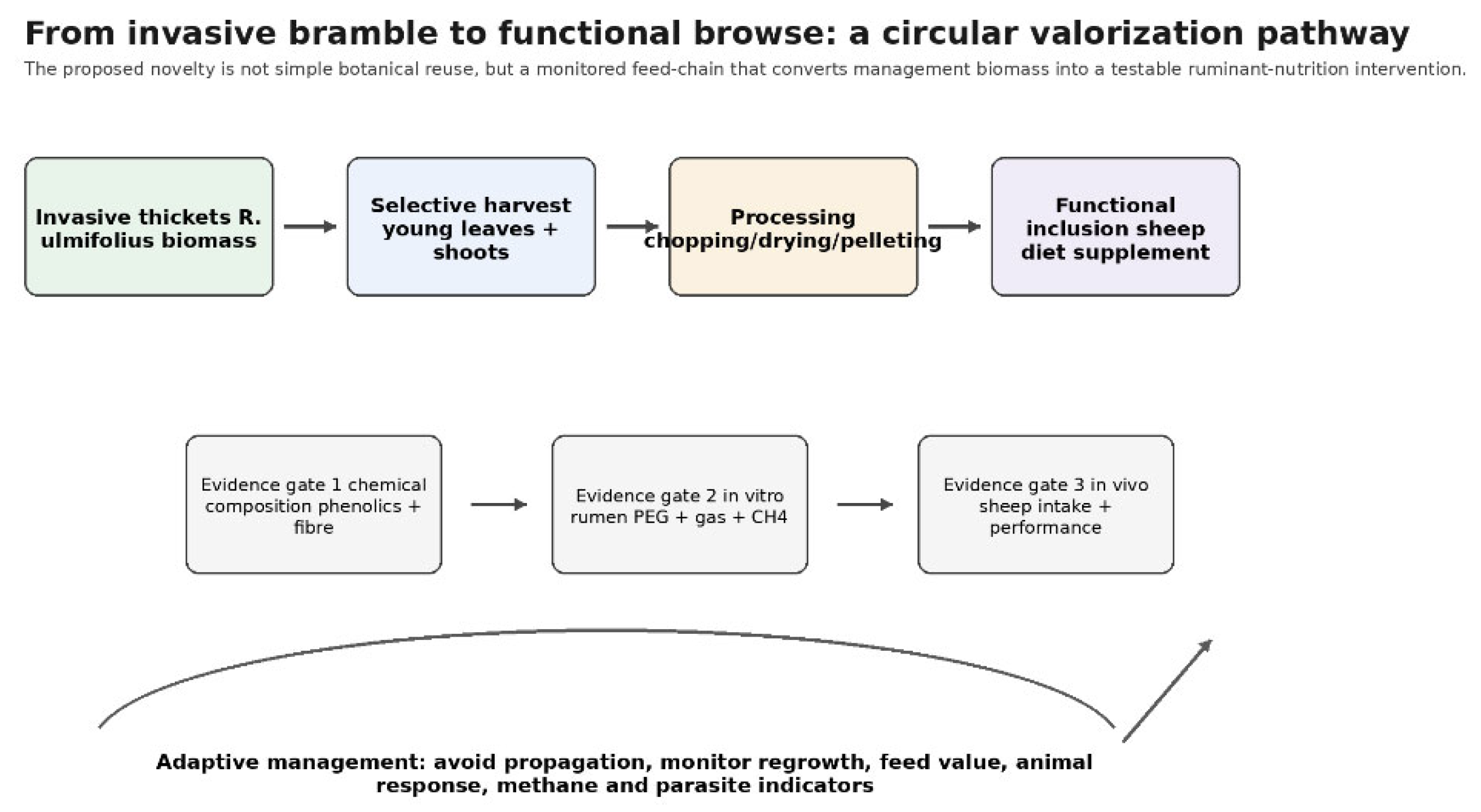
Finnally, this review does not recommend the direct use of R. ulmifolius as sheep feed; rather, it proposes a validation framework to determine whether selected, processed and biosecure biomass can become a functional supplement.
2. Review Scope, Evidence Logic and Novelty Position
The available literature on R. ulmifolius is fragmented across invasion biology, ethnobotany, phytochemistry, antimicrobial research, parasitology, goat browsing, silvopastoral management and rumen science. This fragmentation creates a publication opportunity, but also a risk: a manuscript can easily become a descriptive catalogue of unrelated uses. To avoid that weakness, this review is organized around a translational question: under what biological, nutritional and operational conditions could biomass from an invasive R. ulmifolius stand become a safe, functional and sustainable supplement for sheep?
This is a narrative and translational review, not a systematic review. The evidence was interpreted by hierarchy. Direct evidence on R. ulmifolius in sheep was considered strongest but remains limited. Evidence from goats browsing R. ulmifolius or Mediterranean shrubs was considered relevant but not fully transferable because goats differ from sheep in browsing behavior, salivary tannin-binding capacity, diet selection and tolerance of secondary metabolites [9,11,12]. Evidence from general tannin-rich feeds, rumen microbiome studies and small-ruminant meta-analyses was used to develop hypotheses, not to make definitive species-specific claims.
The review prioritizes five types of evidence. The first is botanical and ecological evidence describing invasiveness, regrowth and management constraints. The second is nutritional evidence describing dry matter, crude protein, fibre fractions, lignin and digestibility of R. ulmifolius or comparable browse species. The third is phytochemical evidence identifying tannins, ellagic acid derivatives, flavonoids and antioxidant or antimicrobial activities. The fourth is ruminant evidence showing how tannins and phenolics affect rumen fermentation, nitrogen partitioning, methane production, microbiome composition, parasites and product quality. The fifth is implementation evidence concerning harvesting, processing, inclusion rates, biosecurity and farm-level feasibility.
The main novelty proposed here is a decision framework rather than a single claim of feed value. In a high-quality MDPI review, novelty should emerge from conceptual integration, not only from accumulating references. The proposed framework treats R. ulmifolius as a boundary object between three systems: invaded landscapes, sheep production and microbial fermentation. The plant becomes scientifically interesting because any practical use must satisfy all three systems simultaneously: it must reduce or at least not increase invasion risk; it must contribute nutrients or functional metabolites without depressing performance; and it must produce measurable ruminal or animal-health effects that justify its handling costs.
For publication, this distinction is important. If the manuscript only states that blackberry contains phenolics and might be useful, reviewers will likely judge it as superficial. If instead it proposes testable hypotheses, evidence gates, inclusion scenarios and limitations, the review becomes a research agenda capable of supporting experiments, graduate theses and pilot-scale product development. The manuscript therefore uses cautious language: direct benefits in sheep are described as plausible, promising or hypothesized unless controlled in vivo evidence exists.

Table 1.
Evidence hierarchy used to interpret claims about R. ulmifolius as a sheep supplement.
| Evidence level | Type of evidence | Interpretation for this review | Examples of appropriate claims |
|---|---|---|---|
| High | Direct controlled studies in sheep fed R. ulmifolius biomass | Currently scarce; required before firm recommendations | Can define inclusion rate, intake, digestibility, performance and safety |
| Moderate | R. ulmifolius browsed by goats or included in ruminant browse studies | Relevant for nutritive potential but must be extrapolated cautiously to sheep | Supports palatability and potential browse value under field conditions |
| Moderate | Chemical, digestibility and PEG studies on R. ulmifolius | Useful for identifying nutrient value, tannin constraints and seasonal quality | Supports harvest timing and need for tannin-aware formulation |
| Indirect | Tannin and phenolic studies in sheep/goats using other plant sources | Mechanistic basis for hypotheses on rumen N, methane, microbiome and parasites | Supports mechanisms but not species-specific performance claims |
| Indirect | Pharmacological and antimicrobial assays of R. ulmifolius extracts | Evidence of bioactivity outside the feeding context | Supports nutraceutical plausibility, not immediate zootechnical efficacy |
| Implementation | Invasive-plant control, fuel use, herbicide constraints and circular-feed literature | Frames sustainability and logistics | Supports a circular bioeconomy rationale, pending farm-scale validation |
3. Botanical Identity, Invasiveness and Management Relevance
3.1. Botanical Traits That Matter for both Invasion and Feed Use
R. ulmifolius belongs to Rosaceae and forms perennial, thorny, arching canes with compound leaves, white to pink flowers and aggregate fruits. Its ability to reproduce by seeds and vegetative propagation allows it to persist in disturbed areas, field margins, riparian zones, forest gaps and abandoned lands. For feed valorization, the relevant plant fractions are not the mature woody canes but leaves, petioles and young shoots, because these fractions have lower lignification, higher crude protein and a more favorable ratio between nutrients and structural fibre. The same architecture that makes the plant difficult to access also creates handling challenges for cut-and-carry feeding.
From a botanical-resource perspective, bramble biomass is heterogeneous. A sample cut from a dense thicket may contain young leaves, old leaves, petioles, immature stems, lignified stems, flowers, fruits and dead material. Nutritional values therefore depend strongly on the harvested fraction. This matters because the published values for whole plant, browsed portions or leaves cannot be treated as interchangeable. If future studies analyze only young leaves, reported crude protein and digestibility will probably be higher than values obtained from mechanically shredded whole canes. Conversely, if stems dominate the harvested biomass, acid detergent lignin will increase and digestibility will decline.
The plant also contains thorns, which are not just a handling nuisance. Thorns may reduce voluntary intake in fresh form, promote selectivity, increase refusal rates and complicate mixing in total rations. Therefore, practical feed development should not assume that animals will consume mechanically harvested biomass in the same way they browse selectively in the field. This distinction between selective browsing and non-selective feeding is one of the most important methodological points for future trials.
3.2. Invasion Impacts and the Limitations of Conventional Control
R. ulmifolius forms dense thickets that can suppress native vegetation, limit forest regeneration, modify animal movement and generate repeated control costs. In Chile, evidence from Robinson Crusoe Island shows that invasive plant thresholds are closely linked to the regeneration of endemic forest species, and R. ulmifolius has been part of the invasive plant complex affecting conservation outcomes [4]. The pathogenicity of Phragmidium violaceum against R. ulmifolius has been evaluated in Chile, illustrating the need for alternatives to repeated mechanical or chemical control [3].
Conventional control options include cutting, burning, herbicide application, biological control and targeted grazing. Each option has limitations. Mechanical cutting may temporarily reduce above-ground biomass but often stimulates regrowth unless repeated. Herbicides such as glyphosate, metsulfuron, triclopyr or triclopyr-picloram mixtures may reduce cover, but they can be incompatible with organic production, sensitive habitats or public perception [5,13]. Biological control can reduce vigor but is usually slow, context-dependent and not designed to generate a usable biomass product. Targeted grazing can reduce shrub cover but requires animal management, fencing, timing and monitoring to avoid overgrazing or inadequate control.
The economic rationale for valorization emerges because control generates biomass repeatedly. In most management programs, cut biomass is treated as waste, mulch or an inconvenience. If a safe fraction of that biomass could be transformed into a feed ingredient, part of the control cost could be offset by feed value. However, valorization should never be confused with cultivation. The goal is not to promote R. ulmifolius planting or spread, but to create a biosecure use for biomass already removed as part of control programs.
A publication-quality argument must therefore include a no-spread principle. Any feed-chain proposal should require harvest before fruit maturation when feasible, prevention of seed dissemination, cleaning of machinery, avoidance of moving viable canes to uninvaded areas, and careful handling of residues. This is a critical point for reviewers: a manuscript that presents an invasive plant as a resource without addressing propagation risk will be vulnerable to ecological criticism.
3.3. Valorization is not Eradication: Defining the Realistic Management Claim
The strongest and most defensible claim is that feed valorization could complement invasive shrub management, not replace it. R. ulmifolius is difficult to eradicate because of its regrowth capacity and vegetative propagation. A sheep-feed strategy would not eliminate the species by itself. Instead, periodic harvesting could reduce standing biomass, improve access, lower fuel or herbicide dependence in selected contexts, and generate a local feed supplement. This is a biomass-use strategy embedded within integrated management.
The distinction matters scientifically. If the manuscript overstates that using R. ulmifolius as feed will control invasion, reviewers may reject the argument as ecologically naive. If it states that valorization can add value to biomass generated by existing management, the claim becomes much stronger. The appropriate hypothesis is: repeated removal of young R. ulmifolius biomass, when integrated with established control methods, may reduce management waste while generating a standardized browse supplement for sheep. This hypothesis is testable through paired field plots measuring regrowth, biomass yield, plant phenology, nutrient composition and animal response.
An additional advantage of this framing is that it converts the review from a literature summary into a research program. The plant is not merely described; it becomes the central element of an intervention pipeline. That pipeline can be evaluated through ecological, nutritional, microbiological and economic endpoints, making the manuscript more attractive for multidisciplinary MDPI journals such as Animals, Agriculture, Plants or Sustainability.
4. Sheep-Feeding Context: Forage Scarcity, Shrub Resources and the Browse Niche
4.1. Why Sheep Systems Need Locally Available Feed Buffers
Sheep production in pasture-based systems is vulnerable to seasonal feed gaps, drought, heat stress and fluctuations in forage quality. Climate change can affect livestock production through altered pasture growth, lower forage nutritive value, water limitation and increased heat load [6,8]. Forage quality can decline with rising temperature, with implications for digestibility and enteric emissions [7]. These pressures increase interest in locally available feed resources that can complement conventional pasture, hay or concentrates.
Non-conventional feed resources are most useful when they address a defined constraint. For sheep, the constraint may be lack of green biomass during dry periods, high feed costs, limited protein supply, parasite pressure, or the need to reduce reliance on imported ingredients. Shrub biomass can contribute to these goals, but its value is context-dependent. Shrubs often contain higher secondary-metabolite concentrations than herbaceous forages, and these metabolites can have both nutritional and antinutritional effects [10,11,14].
R. ulmifolius is relevant because it may remain available when herbaceous pasture declines, especially in margins or neglected areas. However, availability alone is not enough. A feed resource must be accessible, acceptable to animals, safe, nutritionally useful and compatible with farm logistics. The review therefore treats R. ulmifolius as a potential buffer ingredient rather than a basal feed. This conservative positioning is essential for scientific credibility.
4.2. Browse Use: Lessons From Goats, Sheep and Silvopastoral Systems
Most direct evidence for R. ulmifolius as a browsed resource comes from goat systems. Goats in Mediterranean forest rangelands select diverse woody and herbaceous species, including Rubus, and their browsing behavior changes seasonally with plant availability, palatability and nutritional value [12,15,16]. These studies are valuable because they show that R. ulmifolius is not inherently rejected by ruminants. Nevertheless, goats are more specialized browsers than sheep and usually tolerate woody diets and tannin-rich plants better. Extrapolation from goats to sheep must therefore be explicit and cautious.
Sheep evidence is more limited but still relevant. Understorey foraging by sheep in mixed Atlantic woodland has been documented, supporting the broader principle that sheep can use forest understorey resources under appropriate conditions [17]. In practice, sheep are generally less selective browsers than goats and more dependent on herbaceous forage. This does not exclude R. ulmifolius use, but it suggests that form of presentation, inclusion level and diet mixing will be more important for sheep than for goats.
The browse niche for sheep is therefore strategic. R. ulmifolius is unlikely to be ideal as a sole roughage, especially if harvested as a mature whole plant. It may be more appropriate as a moderate supplement mixed with hay, pasture, silage or concentrates. This mixed-feeding approach can dilute tannins and lignin while preserving potential benefits from protein, minerals and phenolics. The broader shrub-use literature supports this interpretation: shrub intake can be increased by managing animal experience, plant diversity, supplementation and availability of alternative feeds [9,18].
4.3. Functional Browse Rather Than Conventional Forage
The most useful conceptual category for R. ulmifolius is functional browse. Conventional forage value is judged mainly by digestible energy, protein, fibre and intake. Functional browse also includes secondary metabolites that may alter rumen fermentation, nitrogen partitioning, methane formation, parasite biology, oxidative balance or product quality. This category is appropriate for R. ulmifolius because its value is unlikely to be explained by crude protein alone. Its phenolic profile is central to any potential functional effect.
However, functional browse must be held to a higher evidentiary standard. A plant can be rich in phenolics and still fail to improve animal performance. Bioactivity in vitro does not guarantee efficacy after ingestion, ruminal transformation, absorption or interaction with the basal diet. Therefore, the review uses a two-level claim structure. First, R. ulmifolius has nutritional and phytochemical properties that justify investigation. Second, its functional benefits in sheep remain unproven until dose-response trials measure animal, ruminal, microbiome and health outcomes together.
This distinction strengthens the manuscript because it avoids promotional language. Reviewers are generally skeptical of manuscripts that list antioxidant and antimicrobial activities and then imply animal-health benefits without feeding evidence. Here, pharmacological evidence is used to define hypotheses, not conclusions.
5. Nutritional Composition and Forage Value of R. Ulmifolius
5.1. Chemical Composition and Seasonal Variation
The most directly relevant nutritional dataset currently available is the seasonal characterization of four browse lianas from northeastern Algeria, which included R. ulmifolius and evaluated chemical composition, secondary metabolites, digestibility parameters and the effect of polyethylene glycol on gas and methane production [19]. In that study, R. ulmifolius showed crude protein values ranging approximately from 14.8% to 18.9% of dry matter across seasons, moderate neutral detergent fibre and acid detergent fibre, and acid detergent lignin that increased markedly in summer. These values support the idea that the plant can be nutritionally relevant, especially when harvested at stages with higher protein and lower lignification.
The same study demonstrates why a fixed feed value would be misleading. Spring material showed a more favorable profile, with higher crude protein and lower lignin, whereas summer material had higher NDF, ADF and ADL. This pattern is consistent with the general biology of woody plants: maturation and dry-season stress tend to increase structural tissues and reduce digestible fractions. For practical use, season and plant fraction are therefore not secondary details but core determinants of feed quality.
When compared with typical roughages, the crude protein concentration reported for R. ulmifolius can be attractive. However, crude protein alone overestimates value if tannins reduce ruminal degradation or if lignin restricts cell-wall digestibility. In ruminant feeds, neutral detergent fibre relates to intake limitation, acid detergent fibre relates to digestibility, and acid detergent lignin represents an indigestible or slowly degradable barrier to microbial access [20,21]. Future work should therefore report not only CP but also NDF, ADF, ADL, in vitro digestibility, tannin fractions and protein-binding capacity.
Table 2.
Seasonal chemical composition of R. ulmifolius biomass reported by [19]. Values are expressed as % dry matter, except DM as % fresh matter.
Table 2.
Seasonal chemical composition of R. ulmifolius biomass reported by [19]. Values are expressed as % dry matter, except DM as % fresh matter.
| Season | DM | Ash | Crude protein | NDF | ADF | ADL | Interpretation |
|---|---|---|---|---|---|---|---|
| Autumn | 31.58 ± 0.71 | 5.70 ± 0.05 | 15.24 ± 0.25 | 37.84 ± 0.37 | 20.38 ± 0.14 | 6.19 ± 0.53 | Moderate CP and moderate fibre; potentially useful if mixed with basal roughage |
| Winter | 30.37 ± 5.52 | 5.35 ± 0.04 | 16.38 ± 0.11 | 32.49 ± 0.19 | 18.14 ± 0.93 | 6.28 ± 0.56 | Relatively favorable fibre profile, but field accessibility may be limiting |
| Spring | 22.80 ± 1.36 | 7.19 ± 0.04 | 18.88 ± 0.52 | 34.48 ± 0.37 | 19.48 ± 0.29 | 5.11 ± 0.77 | Best reported protein-lignin balance; priority harvest window |
| Summer | 31.63 ± 0.80 | 6.08 ± 0.16 | 14.81 ± 0.09 | 45.23 ± 2.92 | 27.63 ± 0.12 | 12.97 ± 1.94 | Higher lignification; risk of lower digestibility and intake |
| Abbreviations: DM, dry matter; NDF, neutral detergent fibre; ADF, acid detergent fibre; ADL, acid detergent lignin. Values adapted from Laadjal et al. (2023) and interpreted in the context of ruminant nutrition. | |||||||
5.2. Digestibility, Metabolizable Energy and the Role of Tannins
Digestibility is the central bottleneck for R. ulmifolius. Laadjal et al., reported that R. ulmifolius and Clematis cirrhosa had relatively favorable digestibility among the evaluated lianas, but the response to polyethylene glycol indicates that tannins can influence fermentation [19]. Polyethylene glycol binds tannins and is commonly used experimentally to reveal whether tannins constrain digestibility or gas production. A positive PEG response suggests that tannins are biologically active in the ruminal fermentation system.
Older Mediterranean shrub studies also support tannin-aware interpretation. Cabiddu et al., measured chemical composition and tannin content of Mediterranean shrubs browsed by Sarda goats, including R. ulmifolius [22], while Decandia et al., showed that polyethylene glycol could reduce the antinutritional effects of tannin-rich woody species [23]. These studies do not define sheep inclusion rates, but they demonstrate that the nutritional value of browse species depends on tannin concentration, diet context and animal adaptation.
The practical implication is that R. ulmifolius should not be evaluated only through conventional proximate analysis. A minimum nutritional panel should include total phenolics, total tannins, condensed tannins, hydrolysable tannins where possible, protein-precipitating capacity, in vitro dry matter digestibility, in vitro organic matter digestibility, gas production kinetics, methane production and response to PEG. Without these measurements, feeding recommendations will remain speculative.
5.3. Plant Fraction, Harvest Timing and Processing Form
For feed development, the key question is not simply whether R. ulmifolius is nutritious, but which fraction should be harvested. Browsing animals naturally select leaves and young shoots; mechanical harvesting may collect much more lignified stem. This mismatch can explain why field palatability does not necessarily translate to high intake in chopped biomass. Future studies should separate at least three fractions: leaves, young green shoots and mature woody stems. Each should be analyzed independently before mixed formulations are tested.
Harvest timing should prioritize early vegetative or spring regrowth stages when crude protein is higher and lignin lower. Repeated cutting could potentially generate regrowth with a more favorable leaf-to-stem ratio, but this must be studied. A provocative but testable hypothesis is that invasive-management cutting, if timed correctly, could generate nutritionally superior regrowth biomass compared with unmanaged mature thickets. This would transform a regrowth problem into a feed-quality opportunity, provided that repeated harvest does not spread the plant.
Processing form is equally important. Fresh long canes are difficult to handle and may be poorly consumed by sheep because of thorns. Chopping, drying, grinding, pelleting, ensiling or mixing with other ingredients could improve uniformity and reduce selective refusal. However, processing can also affect phenolics. Drying temperature, storage time and particle size may alter tannin reactivity and antioxidant capacity. Future studies should therefore evaluate not only fresh biomass but also dried meal, pelleted material and silage-type preparations.
5.4. Comparison with Other Browse and Conventional Feeds
R. ulmifolius should be compared with both conventional forages and other browse species. Against hay or pasture, its advantage may be local availability, protein content during certain seasons and phenolic functionality. Against leguminous shrubs or tannin-containing forages, its advantage may be that it is already present as an invasive biomass. Its disadvantage is heterogeneity, thorns, ecological risk and uncertain sheep performance. These trade-offs should be explicitly presented rather than hidden.
From a ration-formulation perspective, the plant is unlikely to compete with high-quality pasture or balanced concentrates. Its most realistic niche is as a partial supplement during forage scarcity, a component of diversified roughage, or a functional additive at low to moderate inclusion. This niche is scientifically more defensible than claiming that R. ulmifolius can replace conventional feeds. It also aligns with broader shrub-feeding literature emphasizing that shrubs become most useful when grass is limited, not when high-quality pasture is abundant [9].
For publication, the manuscript should avoid presenting R. ulmifolius as a universal solution. Its value depends on region, season, biomass availability, processing capacity, sheep class, basal diet and management objective. This context-dependent framing is more rigorous and more likely to withstand peer review.
5.5. From Whole Biomass to Leaf-Enriched Material: Why Fractionation Matters
A major weakness in many discussions of unconventional forage is the tendency to treat the whole plant as a single ingredient. For R. ulmifolius, this is scientifically inadequate. Leaves, petioles, young shoots, reproductive structures and mature canes differ in protein concentration, fibre composition, lignification, physical structure and likely phenolic profile. A sheep does not experience “Rubus biomass” in the abstract; it experiences a specific harvested fraction with a given particle size, thorn burden, tannin activity and digestibility. Therefore, the feed value of the species should be defined by fraction and process, not by botanical name alone.
Leaf-enriched material is likely to be the most promising fraction because it should contain more cellular nutrients and less structural lignin than mature stems. Young shoots may also provide useful nutrients but require special attention because thorns, epidermal toughness and moisture content can affect intake and processing. Mature canes, in contrast, are more defensible as a biomass-management residue than as a high-value feed fraction. They may still contribute physically effective fibre after chopping, but their lignin content and handling difficulty are expected to limit nutritional value. This distinction should guide future sampling strategies and should also be made explicit in the manuscript to avoid the impression that all R. ulmifolius biomass is equally useful.
A fractionation approach would also increase novelty. Instead of asking whether R. ulmifolius is “good forage”, future studies could ask which fraction, harvested at which phenological stage, processed in which way, and included at which level produces the best balance between intake, rumen fermentation, nitrogen use and animal health. This is a more publishable question because it transforms the review into a design framework for functional feed development.
The analytical standard for such work should include dry matter, crude protein, ash, ether extract, NDF, ADF, ADL, soluble protein, neutral detergent insoluble protein, acid detergent insoluble protein, condensed tannins, hydrolysable tannins, total phenolics, antioxidant capacity and in vitro digestibility. Van Soest fibre fractions remain essential for comparing forage value, while nitrogen fractionation is important because tannins may alter the ruminal availability of protein [20,24]. For functional claims, however, these classical measurements are not sufficient; they must be linked to rumen fermentation, microbial ecology and animal-level responses.
The processing form also needs to be defined. Fresh chopped material may be useful in cut-and-carry systems but difficult to standardize. Hay or dried leaf meal would reduce moisture and facilitate formulation, but drying may alter phenolic extractability. Pelleting could improve handling and reduce selectivity, although heat and pressure may modify bioactive compounds. Ensiling may be attractive for seasonal conservation, but fermentation quality, pH, effluent losses, mould risk and palatability must be evaluated before recommending it. Therefore, future work should compare processing forms rather than assuming that field-harvested biomass can be directly incorporated into practical diets.
Table 3.
Fraction- and process-specific interpretation of R. ulmifolius as a potential sheep-feed resource.
Table 3.
Fraction- and process-specific interpretation of R. ulmifolius as a potential sheep-feed resource.
| Fraction or product | Expected advantage | Main limitation | Minimum characterization needed |
|---|---|---|---|
| Fresh leaves and young shoots | Higher expected nutritive value and lower lignification than mature canes | Moisture, thorns, selectivity and rapid deterioration after harvest | DM, CP, NDF, ADF, ADL, tannins, total phenolics, in vitro digestibility |
| Leaf-enriched dried meal | More stable ingredient for ration formulation and experimental dosing | Drying may alter phenolic extractability and antioxidant activity | Particle size, storage stability, phenolic profile, microbial contamination |
| Chopped mixed biomass | Simpler field use and lower processing cost | Variable leaf:stem ratio and high physical heterogeneity | Leaf:stem ratio, fibre fractions, refusal rate and animal sorting |
| Pelleted blend with other forages | Improved handling, dose control and lower selectivity | Potential heat effects on bioactive compounds and higher processing cost | Pellet durability, intake, tannin activity after pelleting, digestibility |
| Ensiled Rubus-containing mixture | Seasonal conservation and possible softening of thorny material | Unknown fermentation quality and risk of poor ensiling from woody biomass | pH, lactic/acetic acids, ammonia-N, moulds, mycotoxins, aerobic stability |
5.6. Benchmarking Against Conventional and Alternative Feeds
R. ulmifolius should not be evaluated against grain or high-quality legume hay as if it were a direct substitute. A more appropriate benchmark is the set of low-cost roughages and browse resources available during pasture scarcity. Against straw or highly mature grass hay, young bramble leaves may offer more protein and bioactive compounds. Against high-quality pasture or alfalfa, its limitations are evident: variable composition, tannins, lignification, thorny morphology and limited direct performance data. The manuscript should present this comparison clearly because reviewers will reject exaggerated claims of superiority over conventional feeds.
The comparison is also functional rather than purely nutritional. Conventional feeds are usually formulated to meet energy and protein requirements; functional browse is included to diversify plant secondary metabolites, alter nitrogen partitioning, potentially reduce parasite pressure, or modulate rumen fermentation. This does not make R. ulmifolius more valuable than conventional feeds in a simple feed table. It means its value may emerge at moderate inclusion levels within mixed diets, especially where the biomass is locally abundant and otherwise treated as a management cost.
From a research perspective, the correct comparator depends on the objective. If the objective is nutritional replacement, the control should be a basal diet with equivalent crude protein and fibre. If the objective is functional supplementation, the control should be a diet matched for energy and protein but without the Rubus-derived phenolic fraction. If the objective is circularity, the comparator should include the current management pathway, such as mechanical removal or herbicide-based control, and the feed value of the harvested biomass. These alternative comparators lead to different conclusions and should not be mixed indiscriminately.
6. Phytochemical Architecture and Functional Potential
6.1. Phenolics, Flavonoids, Ellagitannins and Anthocyanins
R. ulmifolius is phytochemically rich. Leaves, fruits and roots contain phenolic acids, flavonoids, ellagic acid derivatives, ellagitannins, anthocyanins and other polyphenols, with profiles that vary among plant organs and extraction methods [25,26,27,28]. For animal nutrition, leaves and young shoots are more relevant than fruits, because they represent the main biomass fraction available for browsing or cut-and-carry use. The fruit literature is useful mainly because it confirms the bioactive potential of the genus and species.
Ellagitannins and ellagic acid derivatives are especially important. In human and biomedical research, R. ulmifolius extracts have shown antioxidant and antimicrobial activities, including activity against Helicobacter pylori and inhibition of Staphylococcus aureus biofilm formation [28,29]. These findings cannot be directly transferred to sheep performance, but they indicate that the species contains biologically active molecules capable of interacting with microbial systems. The rumen is also a microbial ecosystem, but its anaerobic, fermentative and highly buffered environment differs substantially from standard antimicrobial assays.
For a feed review, the key point is not that R. ulmifolius is medicinal for sheep. That would overstate the evidence. The stronger point is that its phytochemical architecture provides mechanistic plausibility for functional effects. These effects could include changes in ruminal proteolysis, ammonia production, microbial composition, fatty acid biohydrogenation, oxidative status and gastrointestinal parasite biology. Each proposed effect must be tested under feeding conditions.
Table 4.
Phytochemical and functional evidence relevant to the proposed use of R. ulmifolius as functional browse.
Table 4.
Phytochemical and functional evidence relevant to the proposed use of R. ulmifolius as functional browse.
| Evidence domain | Main findings in the literature | Potential relevance for sheep feeding | Strength of inference |
|---|---|---|---|
| Leaf phenolics | Blackberry leaves contain ellagitannins, flavonols and phenolic acids with antioxidant capacity | May contribute antioxidant potential and tannin-mediated rumen effects | Indirect; leaf chemistry supports hypotheses |
| Fruit bioactivity | R. ulmifolius fruits have nutritional, phenolic, anthocyanin and antimicrobial properties | Relevant to species bioactivity but less relevant to forage biomass | Indirect; fruit is not the main feed fraction |
| Antimicrobial assays | Leaf or root extracts inhibit selected bacterial targets and biofilm formation in vitro | Suggests microbial-interaction potential, but rumen effects require specific testing | Indirect; not equivalent to rumen modulation |
| Anthelmintic assays | R. ulmifolius extracts show activity against H. contortus in vitro | Suggests potential parasite-control value in small ruminants | Moderate mechanistic relevance; in vivo validation required |
| Tannin nutrition | Tannins can reduce ruminal proteolysis, alter N partitioning and affect methane or digestibility | Central mechanism for functional browse concept | Strong general mechanism; species-specific dose unknown |
| Microbiome modulation | Tannins and polyphenols can shift ruminal bacteria, protozoa and methanogens | Supports testing of R. ulmifolius effects on rumen ecology | Indirect; controlled sheep studies needed |
6.2. Antioxidant and Antimicrobial Evidence: Useful but not Sufficient
The antioxidant activity of R. ulmifolius is well supported in phytochemical studies. Ali et al., reported pharmacological activity of aerial parts, and Oszmiański et al., showed that leaves from wild Rubus species are rich in phenolic compounds associated with antioxidant capacity [27,30]. da Silva et al., characterized fruits as sources of nutritional and bioactive compounds [25]. These studies justify interest in the plant but do not establish that dietary supplementation improves oxidative status in sheep.
The antimicrobial literature is similarly promising but limited for animal-feeding claims. Martini et al., demonstrated antimicrobial activity of blackberry leaves and isolated compounds against H. pylori strains [29]. Quave et al., showed that ellagic acid derivatives from R. ulmifolius inhibit S. aureus biofilm formation and improve antibiotic susceptibility [28]. These are high-value mechanistic observations, but the rumen microbiome is not a pathogen culture. Antimicrobial activity can be beneficial, neutral or harmful depending on which microbial functions are affected.
Therefore, the manuscript should not claim that R. ulmifolius supplementation will improve sheep health because it is antimicrobial. A more rigorous statement is that its antimicrobial and antioxidant profile supports targeted evaluation of rumen microbial ecology, oxidative biomarkers and pathogen-related endpoints. This preserves novelty while maintaining scientific restraint.
6.3. Antiparasitic Potential and Small-Ruminant Relevance
Gastrointestinal nematodes are a major constraint in sheep systems, particularly under grazing conditions. The direct relevance of R. ulmifolius is strengthened by evidence that its extracts show anthelmintic activity against H. contortus, a key nematode parasite of small ruminants [31]. This finding is important because it is more directly connected to sheep and goats than many purely human-health phytochemical studies.
Tannin-rich plants can affect gastrointestinal parasites through multiple mechanisms, including direct effects on larvae or adult worms, interference with egg hatching, improved host protein nutrition, and enhanced resilience or immunity [32,33]. However, in vitro anthelmintic activity does not guarantee in vivo parasite control. Ruminal transformation, dose, feeding duration, parasite species, host immunity and diet quality can alter outcomes. Moreover, excessive tannins may reduce intake or digestibility, which could worsen resilience despite antiparasitic effects.
The most defensible hypothesis is that R. ulmifolius could be evaluated as part of integrated parasite management rather than as a replacement for anthelmintic drugs. Future trials should measure fecal egg counts, larval development, packed cell volume, body condition, growth or milk performance, and markers of protein nutrition. Such trials should compare low and moderate inclusion levels and include a tannin-control or PEG diagnostic component where feasible.
6.4. Bioactive Compounds, Meat Quality and Product Value
Dietary tannins and phenolics can influence product quality in ruminants by affecting fatty acid biohydrogenation, oxidative stability and nitrogen metabolism. A recent meta-analysis of dietary tannins in small ruminants reported effects on nutrient intake, nitrogen-related variables and meat fatty acid profiles, although responses depended on tannin dose and context [34]. Earlier work also emphasized that tannins can improve some product-quality traits while potentially compromising intake or digestibility if used poorly [11,35].
For R. ulmifolius, product-quality claims remain hypothetical. It is plausible that phenolics could improve oxidative stability of meat or alter ruminal biohydrogenation, but no direct feeding trials in sheep have demonstrated this. The review therefore proposes product-quality endpoints as future research outcomes: intramuscular fatty acids, oxidative stability, color stability, sensory attributes and shelf-life. These endpoints could increase the scientific and market relevance of R. ulmifolius supplementation if animal performance is maintained.
A useful publication angle is that R. ulmifolius may provide dual ecosystem-product value: a biomass removed from invaded areas that contributes to differentiated, locally produced sheep products. However, this remains a translational opportunity, not a proven claim.
6.5. From Nutraceutical Claims to Feed-Functional Mechanisms
A common problem in manuscripts on bioactive plants is the direct translation of pharmacological activity into animal-feeding claims. This review should explicitly avoid that error. Antioxidant, antimicrobial, anti-inflammatory or antiparasitic effects measured in extracts do not automatically imply that the intact plant will improve sheep health. Extract studies often use solvents, concentrations, exposure times and target organisms that do not resemble rumen conditions. Ingested plant material is also transformed by mastication, ruminal fermentation, microbial metabolism and intestinal absorption. Therefore, the correct claim is not that R. ulmifolius is a proven nutraceutical feed, but that its phytochemical profile generates testable feed-functional hypotheses.
The first plausible mechanism is ruminal protein protection. Condensed tannins can form complexes with dietary proteins, reducing ruminal degradation and potentially increasing post-ruminal amino acid supply when concentrations are moderate. This mechanism is well established for tannin-containing feeds, but it is still untested for R. ulmifolius in sheep. Demonstrating it would require measurements of ruminal ammonia-N, soluble protein, microbial protein synthesis, faecal nitrogen, urinary nitrogen and animal nitrogen retention. Without those endpoints, any claim about improved protein use remains speculative.
The second plausible mechanism is antiparasitic support. R. ulmifolius extracts have shown activity against H. contortus, and broader literature supports anthelmintic effects of some tannin-containing plants [31,32,33]. However, parasite control in vivo depends on parasite species, life stage, dose, host immunity, diet quality and grazing management. A robust sheep study would therefore need faecal egg counts, larval development assays, packed cell volume, body condition, clinical signs, pasture contamination and ideally parasite burden at necropsy in a controlled setting. The manuscript can propose this pathway, but it should not present it as established practice.
The third mechanism is oxidative and inflammatory modulation. Polyphenol-rich plants can alter oxidative status, but this is difficult to translate because biomarkers respond to stress, diet, health status and sample timing. Future trials should include a minimal panel such as total antioxidant capacity, glutathione-related enzymes, malondialdehyde or other lipid peroxidation markers, haptoglobin or acute-phase proteins, and perhaps immune cell phenotyping in more advanced studies. The key point is that a “high antioxidant capacity” in vitro is only meaningful for sheep nutrition if it predicts a measurable host response.
The fourth mechanism is microbial modulation. Phenolic compounds may inhibit or redirect selected microbial groups, but broad antimicrobial language is too vague for rumen ecology. The rumen is not an infection site to be sterilized; it is a symbiotic fermentation chamber. Thus, the desirable outcome is not nonspecific antimicrobial activity but selective modulation that preserves fibre degradation while reducing excessive proteolysis, ammonia loss, methanogenesis or pathogen-associated risk. This distinction is critical for raising the manuscript above generic nutraceutical writing.
Finally, feed-functional novelty requires dose-response thinking. Low inclusion may be biologically irrelevant, moderate inclusion may generate beneficial shifts, and high inclusion may depress intake or digestibility. This non-linear response is central to tannin nutrition and should be embedded throughout the manuscript. The most publishable conclusion is therefore conditional: R. ulmifolius may be valuable if harvested, processed and dosed to preserve benefits while avoiding the threshold at which tannins, lignin and physical structure reduce performance.
7. Antinutritional Constraints and Safety Boundaries
7.1. Tannins as a Dose-Dependent Benefit-Risk System
Tannins are the central benefit-risk factor in R. ulmifolius. Historically, tannins were viewed mainly as antinutritional because they bind proteins, reduce palatability and depress digestibility. Modern ruminant nutrition treats them more precisely: effects depend on tannin type, dose, molecular structure, protein affinity, basal diet, animal species and adaptation [10,11,36,37]. Low to moderate concentrations may reduce excessive ruminal protein degradation and shift nitrogen excretion from urine to feces, while high concentrations can reduce intake and fibre digestion.
This dose-dependent duality is exactly why R. ulmifolius should not be recommended without controlled inclusion studies. If harvested biomass has moderate tannin activity and is included at low levels in a mixed diet, it may improve nitrogen-use efficiency or provide functional effects. If mature, tannin-rich and lignified material is included at high levels, it may depress intake and digestibility. The same plant can be beneficial, neutral or harmful depending on how it is used.
Polyethylene glycol studies are useful because they reveal tannin activity, but PEG is mostly a research tool and not a routine farm solution. A positive PEG response should be interpreted as a warning and an opportunity: warning because tannins can constrain digestion; opportunity because controlled tannin activity may be responsible for functional effects. Future work should quantify not only total tannin concentration but also biological activity, because tannins with the same concentration can differ in protein-binding capacity.
7.2. Lignification and Physical Limitations
Beyond tannins, lignification is a major constraint. Acid detergent lignin in R. ulmifolius increased substantially in summer in the dataset of Laadjal et al. [19]. Lignin reduces microbial access to cellulose and hemicellulose, lowering fibre digestibility and increasing rumen fill. In practice, mature cane-rich biomass may behave more like low-quality roughage than functional forage. This is why plant fraction and harvest timing must be standardized.
Thorns and woody stems also create physical limitations. Sheep may refuse thorny material or selectively consume leaves, producing large refusals and a mismatch between offered and consumed composition. This can confound trials if researchers analyze the offered diet but not refusals. Any in vivo study should measure both offered and refused R. ulmifolius fractions to estimate actual intake. Particle size reduction may reduce selectivity, but excessive grinding can alter rumen function and may not remove all physical discomfort.
Processing could partly overcome these limitations. Drying and grinding young shoots could generate a meal suitable for mixing. Pelleting could improve uniformity but may require energy input and binders. Ensiling may soften structure, but phenolic stability and fermentation quality must be evaluated. The optimal processing method will depend on scale: small farms may use chopping and drying, whereas larger programs could explore pelleted supplements.
7.3. Toxicology, Residues and Ecological Biosecurity
No strong evidence currently indicates that R. ulmifolius is inherently toxic to ruminants at moderate browse exposure. Nevertheless, absence of evidence is not proof of safety. Toxicological assessment should consider tannin overload, mineral imbalances, pesticide residues from previously treated stands, fungal contamination during storage, and physical injuries from thorns. Biomass collected from roadsides, contaminated sites or herbicide-treated areas should not be used for feeding.
Ecological biosecurity is equally important. Because R. ulmifolius is invasive, feed use must avoid spreading seeds or viable vegetative fragments. Harvesting before fruit ripening, composting or destroying residues, preventing movement of viable canes, and cleaning equipment are essential. Dried or pelleted material may reduce propagation risk, but seed survival after processing should be tested if fruits are included. The review therefore recommends excluding fruits from feed material unless seed viability is demonstrably eliminated.
Regulatory aspects will differ by country. In some jurisdictions, moving invasive plant material may be restricted. In organic or agroecological systems, using local biomass could be attractive because herbicide use is limited, but organic certification may impose additional rules for feed sourcing, contamination and traceability. A future implementation plan should include regulatory review before farm-scale distribution.
Table 5.
Principal benefits, risks and mitigation strategies associated with R. ulmifolius supplementation.
Table 5.
Principal benefits, risks and mitigation strategies associated with R. ulmifolius supplementation.
| Dimension | Potential benefit | Main risk | Mitigation or research need |
|---|---|---|---|
| Nutrient supply | Moderate-to-high CP in young material; additional roughage source | Actual intake may be low if thorny or lignified | Use young leaves/shoots; measure refusals; process before feeding |
| Tannins | May reduce ruminal proteolysis, NH3-N and urinary N; possible parasite effects | Excessive tannins may reduce palatability and digestibility | Dose-response trials; tannin assays; PEG diagnostics in vitro |
| Fibre | Can contribute physically effective fibre if properly processed | High ADL in mature material reduces digestibility | Harvest early; avoid mature cane-rich biomass |
| Microbiome | Possible modulation of proteolytic microbes, protozoa and methanogens | Unwanted depression of fibrolytic bacteria | 16S/ITS/archaea sequencing plus fermentation endpoints |
| Methane | Tannin-rich feeds may reduce CH4 under some conditions | Lower digestibility can offset benefits per unit product | Measure CH4 per animal and per kg gain or product |
| Parasites | Extracts show anti-H. contortus activity | In vitro activity may not translate in vivo | Controlled parasite trials with fecal egg counts and health endpoints |
| Biosecurity | Uses biomass from invasive-plant control | Spread via seeds/canes if mishandled | No-spread harvest protocol; exclude fruit; process biomass |
7.4. Quality Control, Feed Safety and Biosecurity
Quality control should be treated as a core part of the proposal rather than as a minor practical detail. Because R. ulmifolius is an unmanaged invasive shrub, biomass may be exposed to soil contamination, faecal contamination, herbicide residues, heavy metals, road dust, fungal growth or variable moisture at harvest. These risks are not unique to bramble, but they are more likely when feed is collected from non-cultivated sites. A publishable review should therefore include a feed-safety framework and not merely celebrate local biomass availability.
The first biosecurity issue is propagule movement. R. ulmifolius spreads through seeds and vegetative structures, so harvesting and transporting fresh material could unintentionally move viable propagules to new areas. For this reason, any feed-use strategy must be designed so that it does not increase invasion. Avoiding ripe fruits in harvested feed, processing material near the collection site, drying or ensiling biomass, and cleaning equipment after harvest are practical safeguards that should be tested and formalized.
The second issue is residues. Plants collected from roadsides, industrial margins, orchards or previously treated areas may contain contaminants that are unacceptable in animal feed. This is especially relevant if sheep products enter human food chains. A practical Rubus-feed protocol should therefore define exclusion zones, require traceability of collection sites, and include residue screening when biomass is collected from areas with uncertain management history.
The third issue is microbial and fungal quality. High-moisture chopped material can heat, mould or ferment unpredictably if not used quickly. Dried material can also absorb moisture during storage. Because phenolic-rich plants are sometimes assumed to be self-preserving, this point deserves emphasis: antimicrobial activity in vitro does not eliminate the need for feed hygiene. Future studies should report storage conditions, water activity when possible, visible mould, mycotoxin screening in conserved material and microbial counts in feed batches intended for animal trials.
The fourth issue is physical safety. Thorny material can reduce intake, increase sorting and potentially irritate the oral mucosa if offered as coarse biomass. Chopping, grinding, pelleting or mixing with other ingredients may reduce this risk, but the effect should be measured rather than assumed. Refusals should be separated into leaf, stem and thorn-rich fractions to determine whether animals selectively avoid the most problematic components.
Table 6.
Feed-safety and biosecurity framework required before R. ulmifolius can be recommended as a practical sheep supplement.
Table 6.
Feed-safety and biosecurity framework required before R. ulmifolius can be recommended as a practical sheep supplement.
| Risk domain | Specific concern | Recommended control | Research endpoint |
|---|---|---|---|
| Invasion biosecurity | Movement of seeds or viable vegetative fragments | Avoid ripe fruit, process near harvest site, clean equipment | Seed viability after processing; regrowth from residues |
| Chemical residues | Herbicides, heavy metals, road dust or industrial contaminants | Use traceable collection zones and exclusion criteria | Residue screening in representative batches |
| Feed hygiene | Mould, mycotoxins or uncontrolled fermentation | Drying, ensiling validation, protected storage | Water activity, mould score, mycotoxin panel, aerobic stability |
| Physical safety | Thorns, woody stems and particle heterogeneity | Chopping, grinding, pelleting or leaf enrichment | Refusal composition, oral lesions, intake pattern |
| Nutritional imbalance | Excess tannins or lignified fibre | Moderate inclusion and mixed diets | DMI, digestibility, rumen NH3-N, faecal N, performance |
A rigorous safety section strengthens the manuscript because it shows that the proposed valorization pathway is not naïve. The goal is not to convert an invasive plant into a feed at any cost, but to create a controlled and traceable use pathway in which ecological and animal-health risks are lower than the benefits of resource recovery.
8. Rumen Ecology and Microbiome-Centered Hypotheses
8.1. The Rumen as the Key Translation Site
The rumen is the biological interface between R. ulmifolius chemistry and animal performance. Ruminants rely on bacteria, archaea, fungi and protozoa to ferment fibre and other substrates into volatile fatty acids, microbial protein and gases. Diet strongly shapes this ecosystem, and the rumen microbiome is increasingly linked to feed efficiency, nitrogen utilization, methane emissions and product traits [38,39,40]. Therefore, any functional-feed claim for R. ulmifolius should include rumen endpoints.
In sheep, rumen microbiome composition has been associated with feed efficiency phenotypes. McLoughlin et al., reported microbial differences in sheep divergent for feed efficiency, including archaeal and bacterial associations [41]. Zhang et al., also characterized relationships between rumen microbiota and residual feed intake in sheep [42]. These studies do not involve R. ulmifolius, but they show that microbiome variation is relevant to productive traits in the target species.
The central hypothesis is that phenolic and tannin compounds from R. ulmifolius could modulate ruminal fermentation by altering substrate availability, protein degradation, microbial enzyme activity, protozoal populations, methanogen-associated hydrogen flow and biohydrogenation pathways. This is plausible based on tannin literature, but it remains untested specifically for this plant in sheep.
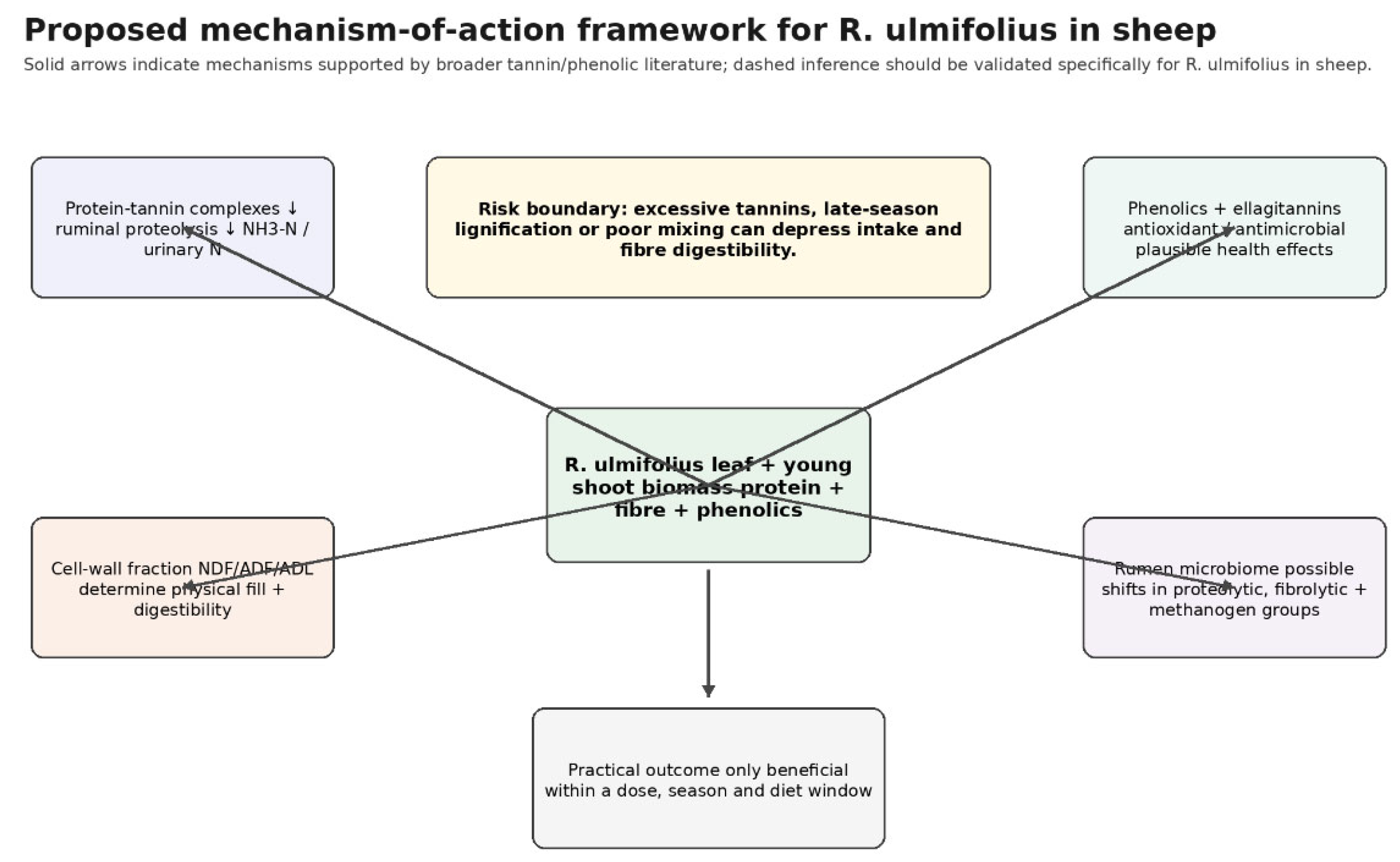
Figure 2.
Proposed mechanism-of-action framework linking R. ulmifolius biomass to rumen nitrogen metabolism, fibre digestion, microbial ecology, methane-related pathways and practical outcome boundaries. Dashed or inferred mechanisms require species-specific validation in sheep.
Figure 2.
Proposed mechanism-of-action framework linking R. ulmifolius biomass to rumen nitrogen metabolism, fibre digestion, microbial ecology, methane-related pathways and practical outcome boundaries. Dashed or inferred mechanisms require species-specific validation in sheep.
8.2. Protein Metabolism and Nitrogen Partitioning
Tannins can bind dietary protein at ruminal pH, reducing microbial proteolysis and ammonia formation. Some protein-tannin complexes dissociate at lower pH in the abomasum or small intestine, potentially increasing amino acid flow post-ruminally. This mechanism is one of the best-established beneficial pathways for moderate condensed tannin intake [11,14,37]. It may also reduce blood urea nitrogen and urinary nitrogen losses, with environmental benefits.
For R. ulmifolius, this mechanism is plausible but not quantified. The plant contains tannins and relatively useful crude protein, but the proportion of protein protected versus unavailable is unknown. Excessive binding could reduce total protein digestibility, whereas moderate binding could improve nitrogen-use efficiency. Therefore, future trials should measure ruminal ammonia nitrogen, blood urea nitrogen, urinary nitrogen, fecal nitrogen, microbial protein synthesis and apparent nitrogen digestibility.
The most informative design would compare a control diet, a low R. ulmifolius inclusion, a moderate inclusion and a protein-matched non-tannin control. Without protein matching, improved or reduced responses could be confounded by nutrient supply rather than tannin effects. This level of design rigor is necessary if the paper aims to lead to publishable experimental work.
8.3. Fibre Digestion, Fibrolytic Microbes and the Risk of Over-Suppression
Tannins can suppress some rumen microbes and enzymes, including fibrolytic activity when concentrations are high. McSweeney et al., emphasized that microbial interactions with tannins have nutritional consequences [43], and Salami et al., showed that hydrolysable and condensed tannins can affect ruminal fermentation and microbiome composition in lambs [44]. Mannelli et al., also demonstrated that chestnut tannin extract and related phenolics altered rumen liquor microbial community composition in vitro [45].
This matters because any reduction in methane or ammonia is not automatically beneficial. If R. ulmifolius reduces methanogenesis by depressing fibre degradation, animal performance may decline and methane intensity per kg of product may not improve. Therefore, future studies should measure methane alongside digestibility, volatile fatty acids and performance. A lower methane output per day can be misleading if dry matter intake or growth also decreases.
The ideal outcome would be selective modulation: reduced proteolysis, lower ammonia, stable or improved propionate proportion, no major depression of fibrolytic bacteria, maintained NDF digestibility and stable intake. This is possible for some tannin sources at moderate doses but cannot be assumed for R. ulmifolius. The paper should present this as a research target, not an established effect.
8.4. Methane Mitigation: Hypothesis, Not Marketing Claim
Plant secondary metabolites, including tannins, saponins, essential oils and flavonoids, have been studied as methane-mitigation tools in ruminants [46,47]. Meta-analytic evidence suggests that tannin level can be associated with methane reduction, but responses vary widely by tannin source, animal species, diet and methodology [48,49,50]. Recent sheep work with Caragana korshinskii tannin further supports the relevance of tannin supplementation for rumen fermentation, methane emissions, methanogens and rumen metabolome [51].
R. ulmifolius may have anti-methanogenic potential because Laadjal et al., evaluated gas and methane production and PEG effects for R. ulmifolius-containing browse systems [19]. However, the evidence remains in vitro and context-specific. Methane mitigation in sheep requires in vivo confirmation using respiration chambers, SF6 tracer methods, GreenFeed-type systems or validated in vitro-to-in vivo translation. Measurements should be reported per day, per kg dry matter intake and per kg product.
The manuscript should therefore avoid saying that R. ulmifolius reduces methane emissions. A stronger scientific statement is that R. ulmifolius is a candidate for methane-related screening because it combines tannins, digestible fractions and seasonal variation. If future trials show reduced methane without reduced intake or performance, the plant could gain substantial sustainability relevance.
8.5. Biohydrogenation, Fatty Acids and Product-Quality Microbiology
Rumen microbes also control lipid biohydrogenation, which affects the fatty acid profile of meat and milk. Francisco et al., reported relationships between rumen ciliate protozoa and biohydrogenation fatty acid profiles in rumen and meat of lambs [52]. Tannins can influence ruminal biohydrogenation by affecting microbial populations and enzyme activity, which may alter the deposition of beneficial fatty acids [34,35].
For R. ulmifolius, the link to meat quality is an attractive but unproven hypothesis. The appropriate research question is whether low or moderate inclusion modifies rumen protozoa, bacterial taxa involved in biohydrogenation, and lamb meat fatty acid profile without negative effects on growth. This would require integrated sampling of diet, rumen fluid, feces, blood and meat. Such studies could create a more original paper than a simple digestibility trial.
In a future experimental program, fatty acid endpoints should be secondary unless performance and safety are first established. Product-quality claims are valuable only if the feed is practical and animal productivity is not compromised.
8.6. Omics Endpoints that Would Convert The Hypothesis Into Mechanistic Science
A major opportunity for increasing novelty is to move beyond conventional feed evaluation and propose a microbiome- and metabolome-informed framework. Classical endpoints such as intake, digestibility and weight gain are essential, but they may not reveal why a tannin-containing browse succeeds or fails. R. ulmifolius is interesting precisely because its value may emerge through interactions among plant secondary metabolites, rumen microbes, nitrogen metabolism, fatty acid biohydrogenation and host oxidative status. These interactions require more than proximate analysis.
A minimal microbiome study should distinguish bacteria, archaea, protozoa and fungi. Bacterial 16S rRNA sequencing can detect broad shifts in fibrolytic, amylolytic, proteolytic and lactate-utilizing groups. Archaeal profiling is needed because methane production depends on methanogenic communities and hydrogen availability. Protozoa should not be ignored because they contribute to starch and protein turnover, interact with methanogens and participate in lipid biohydrogenation. Anaerobic fungi may also be relevant when woody or lignified substrates are included because they contribute to physical disruption of plant cell walls.
Metagenomics and metatranscriptomics would be stronger than amplicon sequencing when the objective is functional inference. If R. ulmifolius modifies methane, ammonia or fibre digestion, the key information is not simply taxonomic abundance but the functional potential and activity of microbial pathways. Genes related to methanogenesis, fibrolysis, proteolysis, amino acid deamination, tannin degradation and phenolic metabolism would be particularly relevant. These approaches are more expensive, but a review targeting MDPI can use them to define an ambitious research agenda.
The metabolome is equally important. Rumen metabolomics could identify changes in volatile fatty acids, phenolic metabolites, amino acid derivatives, biogenic amines, hydrogen sinks and lipid intermediates. Plasma metabolomics could help determine whether plant-derived metabolites or microbial products are associated with systemic antioxidant or inflammatory responses. Meat metabolomics and fatty acid profiling could be used if the study targets lamb product quality. These endpoints would transform the review from a descriptive feed-resource paper into a mechanistic hypothesis paper.
The strongest design would integrate plant chemistry, rumen fermentation, microbial ecology and host phenotype in the same animals. For example, a study could correlate the tannin activity and phenolic profile of a leaf-enriched Rubus supplement with ruminal ammonia-N, methane yield, bacterial and archaeal profiles, plasma oxidative markers, faecal egg count and average daily gain. Such integration would allow researchers to identify response signatures rather than isolated effects. It would also make negative results more informative because a lack of performance response could still be explained by intake limitation, insufficient dose, excessive lignin, microbial adaptation or absence of bioavailable metabolites.
Table 7.
Multi-layer endpoint framework for mechanistic studies of R. ulmifolius supplementation in sheep.
Table 7.
Multi-layer endpoint framework for mechanistic studies of R. ulmifolius supplementation in sheep.
| Layer | Suggested endpoints | Why it matters for the Rubus hypothesis |
|---|---|---|
| Plant chemistry | CP, NDF, ADF, ADL, soluble protein, CT, HT, total phenolics, flavonoids, antioxidant capacity | Defines the actual biochemical exposure rather than relying on the plant name |
| Rumen fermentation | pH, NH3-N, total gas, CH4, VFA profile, IVDMD, IVOMD | Tests whether tannins redirect fermentation without suppressing digestibility |
| Microbiome | 16S/ITS, archaeal markers, protozoal counts, metagenomics where feasible | Links fermentation changes to bacteria, archaea, fungi and protozoa |
| Host metabolism | Nitrogen balance, oxidative markers, acute-phase proteins, blood metabolites | Determines whether rumen effects translate to host physiology |
| Animal performance | DMI, refusals, ADG, body condition, wool or milk where relevant | Determines whether functional effects are useful in production |
| Product quality | Meat fatty acids, oxidative stability, sensory traits in lamb studies | Tests whether rumen lipid metabolism produces market-relevant outcomes |
The manuscript should also emphasize experimental reproducibility. Rubus biomass should be deposited or at least described through voucher specimens, collection coordinates, phenological stage, leaf:stem ratio, processing method and storage time. Without this information, results will be difficult to compare across regions. Reproducibility is particularly important because invasive plants are often chemically plastic: the same species may differ substantially according to climate, soil, season, disturbance and genotype.
9. Practical Inclusion Strategies for Sheep Diets
9.1. Strategic use scenarios
The most realistic practical scenarios are: (i) controlled browsing of invaded margins by sheep or mixed sheep-goat groups; (ii) cut-and-carry feeding of young leaves and shoots; (iii) dried R. ulmifolius meal mixed into a basal ration; (iv) pelleted supplements combining R. ulmifolius with energy or protein carriers; and (v) extract-based functional additives. Each scenario has different evidence needs, costs and biosecurity risks.
Controlled browsing is operationally simple but difficult to standardize nutritionally. Animals select plant parts, intake is hard to measure, and ecological effects depend on stocking density, timing and repeated access. Cut-and-carry systems allow better control of plant fraction and inclusion level but require labor and processing. Dried meal or pellets improve ration uniformity and reduce thorn problems but require equipment, drying energy and quality control. Extracts concentrate bioactive compounds but move away from the circular forage concept and require safety evaluation.
For sheep, the safest initial strategy is low-level inclusion of processed young biomass within a mixed diet. This approach minimizes refusal and reduces the risk of excessive tannin load. It also allows experimental control, because actual inclusion can be measured. Direct grazing may be useful for vegetation management, but feed-value claims should be supported by controlled pen or metabolism studies.
9.2. Inclusion rates: what can and cannot be recommended now
At present, no universal inclusion rate can be recommended for R. ulmifolius in sheep diets. This is a crucial point. The available evidence supports investigation but not definitive prescription. Any manuscript that proposes a precise farm inclusion rate without direct data would overreach. A responsible approach is to define experimental inclusion ranges to be tested, not to prescribe final recommendations.
For initial research, low inclusion could represent approximately 2.5-5% of diet dry matter, moderate inclusion 7.5-10%, and high exploratory inclusion 15% or more only under careful monitoring. These levels are not recommendations; they are proposed trial categories. The exact levels should be adjusted based on tannin activity, lignin, basal diet, animal class and ethics approval. Growing lambs, lactating ewes and maintenance animals may respond differently.
In trials, R. ulmifolius should be introduced gradually. Researchers should monitor dry matter intake, refusals, fecal consistency, body weight, body condition, rumination behavior and clinical signs. If intake declines, feces become abnormal, or digestibility drops, inclusion should be reduced. Feeding studies should also include chemical analysis of each batch because seasonal variability makes a single value unreliable.
Table 8.
Proposed research inclusion categories for controlled sheep trials. These are experimental categories, not final feeding recommendations.
Table 8.
Proposed research inclusion categories for controlled sheep trials. These are experimental categories, not final feeding recommendations.
| Category | Approximate dietary inclusion (% DM) | Primary objective | Required monitoring | Interpretation |
|---|---|---|---|---|
| Control | 0 | Basal comparison diet | DMI, digestibility, rumen and performance endpoints | Defines baseline response |
| Low | 2.5-5 | Test palatability and early functional signals | Refusals, rumen NH3-N, VFA, fecal score | Most likely first safe research level |
| Moderate | 7.5-10 | Test nutritional contribution and tannin effects | DMI, digestibility, N balance, microbiome, methane | Key level for dose-response interpretation |
| High exploratory | ≥15 | Identify upper tolerance boundary | Full welfare, intake and digestibility monitoring | Only under controlled conditions; not a farm recommendation |
| PEG diagnostic subgroup | Same inclusion plus PEG in vitro or selected in vivo designs | Determine tannin contribution to observed effects | Gas, methane, digestibility or N endpoints | Mechanistic tool, not routine farm practice |
9.3. Processing and preservation options
Processing should be chosen according to farm scale and research objective. Chopping is the simplest method and may reduce the physical barrier created by thorns, but it does not standardize nutrient composition if mature stems are included. Drying stabilizes biomass and allows storage, but high temperatures may alter phenolic compounds. Grinding improves mixing but can increase dust and reduce physically effective fibre. Pelleting improves handling and intake uniformity but adds cost. Ensiling could be explored if moisture and fermentable carbohydrate conditions are adequate, but tannins may affect fermentation microorganisms.
An attractive product concept is a dried young-shoot meal harvested after cutting-induced regrowth. Such material could have a higher leaf-to-stem ratio and more consistent quality than biomass from unmanaged thickets. A second concept is a mixed pellet containing R. ulmifolius meal, a low-tannin forage base and an energy carrier. A third is a targeted functional additive based on standardized phenolic extracts, but this would require more regulatory and safety work.
Quality control should include moisture, crude protein, NDF, ADF, ADL, ash, tannin activity, mold inspection and absence of herbicide residues. If the material is commercialized or distributed, traceability should document harvest location, date, phenological stage, processing method and storage conditions.
Table 9.
Processing options for R. ulmifolius biomass and their expected advantages and limitations.
Table 9.
Processing options for R. ulmifolius biomass and their expected advantages and limitations.
| Processing option | Advantages | Limitations | Best research use |
|---|---|---|---|
| Fresh controlled browsing | Low equipment demand; integrates vegetation management | Intake difficult to quantify; selective browsing; spread risk if fruiting | Field ecology and behavior studies |
| Fresh chopped biomass | Simple cut-and-carry approach; partial reduction of thorn barrier | Short shelf-life; refusals possible; variable composition | Pilot palatability trials |
| Dried meal | Stable, mixable and easier to dose | Drying costs; phenolic changes possible | Controlled dose-response trials |
| Pellet | Uniform intake; easier transport; lower selectivity | Higher processing cost; may require binders | Product-development studies |
| Silage/co-silage | Potential preservation for seasonal use | Unknown fermentation quality; tannins may inhibit fermentation | Exploratory conservation trials |
| Phenolic extract | Standardized bioactive dose | No longer whole-biomass circular feed; higher regulation | Mechanistic rumen or parasite studies |
9.4. Animal category and production objective
Not all sheep should be targeted first. Maintenance ewes or dry adult sheep may tolerate exploratory supplementation better than high-performing lambs or lactating ewes, but functional outcomes such as growth, meat quality or parasite resilience are more commercially relevant in lambs. Therefore, the research sequence should begin with safety and intake in adult sheep, then proceed to growing lambs and lactating ewes once inclusion levels are better defined.
For growing lambs, the key endpoints are dry matter intake, average daily gain, feed conversion, apparent digestibility, rumen fermentation, methane intensity and meat quality. For lactating ewes, endpoints include milk yield, milk composition, body condition, lamb growth and metabolic indicators. For parasite-challenged grazing sheep, fecal egg counts and resilience indicators become central. The feeding objective determines whether R. ulmifolius is evaluated as nutrient source, functional additive, parasite-management support or methane-mitigation candidate.
Farm implementation should start with animals at low nutritional risk and with close observation. The plant should be introduced gradually and never become the dominant roughage until controlled evidence supports higher inclusion. This practical caution does not weaken the paper; it makes the proposed strategy credible.
9.5. A decision framework for experimental and on-farm inclusion
Because direct sheep trials are still scarce, the manuscript should avoid prescribing a universal inclusion rate. A more scientifically responsible approach is to propose a decision framework. The first decision is whether the available biomass is suitable at all: it should come from uncontaminated sites, be free from ripe fruit when invasion risk matters, and have a sufficiently high leaf or young-shoot proportion. The second decision is whether the objective is nutritional supplementation, functional modulation or biomass control. The third decision is whether the farm has the capacity to process and store the material safely.
For experimental trials, inclusion should begin at low and moderate levels within balanced diets rather than as abrupt replacement of basal forage. The review can propose categories such as exploratory, moderate and high experimental inclusion, but these should be labelled as research categories rather than final feeding recommendations. This distinction is important because reviewers will challenge any specific dose that is not supported by direct sheep data.
The decision framework also needs an exit criterion. If the supplement reduces dry matter intake, increases refusals, depresses fibre digestibility, produces abnormal faecal consistency, or reduces average daily gain, the inclusion level is too high or the processing form is unsuitable. Conversely, a promising response would include maintained or improved intake, stable fibre digestion, reduced ruminal ammonia-N without loss of microbial protein synthesis, lower methane per unit of digestible organic matter, improved parasite indicators or improved oxidative status. These endpoints should be framed as measurable decision points rather than vague benefits.
In practical systems, R. ulmifolius may be most useful where it is already present and where removal is already planned. This avoids creating incentives to cultivate or spread an invasive plant. The supplement should be viewed as a by-product of control, not as a crop. This is an essential ethical and ecological boundary: valorization should reduce the net burden of invasion, not create a new production chain that maintains invasive stands for feed supply.
Table 10.
Decision framework for responsible experimental or farm-level use of R. ulmifolius biomass in sheep systems.
Table 10.
Decision framework for responsible experimental or farm-level use of R. ulmifolius biomass in sheep systems.
| Decision step | Question | Favourable answer | Unfavourable answer |
|---|---|---|---|
| Site selection | Is the biomass from an uncontaminated and traceable area? | Proceed to harvest planning | Do not use as feed; manage as waste/control biomass |
| Plant stage | Is the material leaf- or young-shoot-enriched and mostly fruit-free? | Proceed to processing | Avoid feed use or separate unsuitable fractions |
| Processing capacity | Can the farm chop, dry, ensile or mix the material safely? | Use controlled small batches | Avoid direct feeding of coarse thorny biomass |
| Diet objective | Is Rubus used as supplement rather than replacement? | Test moderate inclusion in mixed ration | Do not rely on it as sole forage |
| Animal monitoring | Are intake, refusals and health indicators acceptable? | Continue and collect performance data | Reduce inclusion or discontinue |
| Ecological outcome | Does use reduce standing invasive biomass without spreading propagules? | Valorization is defensible | Revise protocol; avoid perverse incentives |
This decision-tree approach improves the manuscript because it makes the proposal actionable while preserving scientific caution. It also helps distinguish the manuscript from a generic literature review: the review becomes a translational framework that tells researchers and producers what must be measured before the plant can move from “interesting” to “usable”.
10. Circular Bioeconomy and Sustainability Dimensions
10.1. Converting a control cost into a resource flow
The circular bioeconomy value of R. ulmifolius lies in converting a recurrent management cost into a resource flow. In invaded landscapes, biomass removal already requires labor, fuel, herbicides or grazing. If part of the removed biomass is usable as feed, the cost-benefit equation changes. This is not because R. ulmifolius becomes a high-value crop, but because waste biomass acquires a secondary function. Such logic is particularly attractive in low-input sheep systems where feed costs and seasonal scarcity are major constraints.
However, circularity must be quantified. A true sustainability analysis should compare business-as-usual control with valorization scenarios. Variables should include fuel consumption, labor, machinery depreciation, herbicide reduction, biomass yield, processing cost, storage loss, feed replacement value, animal performance and ecological outcomes. Without this quantitative layer, sustainability claims remain rhetorical.
Official emission factors indicate that diesel combustion produces substantial CO2 emissions per unit fuel, and machinery operations for brush control require energy inputs. Therefore, avoiding repeated mechanical passes or extracting feed value from a single pass could improve resource efficiency. Still, processing, drying and transport also consume energy. The net balance must be calculated rather than assumed.
10.2. Organic, agroecological and smallholder relevance
Organic and agroecological systems may be particularly interested in R. ulmifolius valorization because herbicide options are limited and consumers often value local resource use. Lorenz and Lal discussed environmental aspects of organic agriculture, and broader sustainability literature emphasizes reducing external inputs where feasible [53]. In this context, harvesting invasive biomass for local feeding could align with agroecological principles, provided that contamination and biosecurity risks are managed.
Smallholder relevance depends on practicality. If processing requires expensive machinery, the strategy may be unrealistic. If young biomass can be chopped and mixed with hay during shortages, it may be more feasible. Cooperative models could also be explored, where municipalities or farms managing invaded areas supply processed biomass to sheep producers. The manuscript should present these as implementation hypotheses, not established systems.
A specific opportunity exists in regions where R. ulmifolius is abundant near sheep farms. Proximity matters because transport can erase sustainability benefits. The most defensible model is local use of local biomass, with minimal transport and clear no-spread protocols.
10.3. Ecological safeguards and ethical framing
Valorizing invasive biomass can be controversial. Some ecologists may worry that assigning value to an invasive species could reduce motivation for control or encourage deliberate propagation. The manuscript must address this directly. The ethical framing should be: R. ulmifolius should not be cultivated, planted or spread for feed production. Only biomass from existing invaded stands under control or containment programs should be used.
No-spread safeguards should be treated as non-negotiable. Feed-chain protocols should prevent movement of viable seeds or stems, avoid harvest during fruiting unless seed viability is destroyed, and dispose of residues safely. If fruits are included in harvested material, processing methods must be validated for seed inactivation. If stems are transported fresh, containment is required. These details are not merely operational; they are central to the ecological acceptability of the strategy.
In review form, this ecological caution improves novelty. The paper becomes a responsible circular-bioeconomy proposal rather than an opportunistic feed-use article. That positioning is more likely to appeal to reviewers across plant science, animal science and sustainability.
10.4. Preliminary life-cycle thinking: what should be counted
A circular-bioeconomy claim is only defensible if the system boundary is clear. For R. ulmifolius, the boundary should include current control practices, harvesting operations, transport, processing, storage losses, feed replacement value, animal responses and ecological outcomes. If only the feed value is counted, the analysis will overestimate benefits. If only the control cost is counted, it will ignore nutritional uncertainty. A credible framework must compare “control and disposal” with “control plus feed valorization”, not with an unrealistic scenario in which Rubus biomass appears without collection or processing cost.
The first inventory category is avoided control burden. Mechanical cutting, shredding, herbicide application and repeated clearing have direct costs and environmental impacts. However, feed valorization does not eliminate all control costs; harvesting and processing also require labour and energy. Therefore, the benefit is not simply the diesel or herbicide avoided, but the net difference between the current management pathway and a valorization pathway that still requires safe biomass handling.
The second category is feed substitution. If R. ulmifolius replaces part of a purchased roughage or protein supplement without reducing animal performance, it may reduce feed costs and upstream impacts. If it reduces intake or digestibility, the system may require compensatory feed and lose its sustainability advantage. Thus, feed substitution must be performance-adjusted. The correct unit is not kilograms of Rubus biomass, but kilograms of digestible nutrient supplied, animal product maintained, or control biomass valorized per unit of environmental burden.
The third category is ecological consequence. Harvesting invasive biomass may reduce local thicket density, improve access, lower propagule pressure or support restoration, but it may also disturb soil, spread fragments, remove habitat used by wildlife or create incentives to maintain the invasive stand. These opposing possibilities mean that ecological indicators should be included in future pilots. A practical set could include standing biomass before and after harvest, regrowth rate, fruiting reduction, native vegetation recovery and evidence of propagule dispersal during handling.
The fourth category is animal efficiency. In ruminant systems, environmental intensity is strongly shaped by feed conversion, methane production and nitrogen losses. A Rubus supplement that modestly reduces methane but depresses growth could be environmentally neutral or negative per kilogram of lamb. Conversely, a supplement that maintains growth while reducing purchased feed or improving nitrogen partitioning could provide a more credible benefit. This is why life-cycle thinking must be connected to animal performance rather than treated as a separate narrative.
Table 11.
Minimum inventory for a preliminary life-cycle and techno-economic assessment of R. ulmifolius valorization.
Table 11.
Minimum inventory for a preliminary life-cycle and techno-economic assessment of R. ulmifolius valorization.
| Life-cycle domain | Variables to record | Interpretation for circularity |
|---|---|---|
| Baseline control pathway | Mechanical hours, fuel, herbicide, labour, disposal method, repeated interventions | Defines the cost and impact that valorization could partially offset |
| Harvest and processing | Labour, fuel/electricity, distance, equipment, drying or pelleting cost, storage losses | Prevents overestimating benefits by ignoring processing burdens |
| Feed substitution | Nutrient composition, digestibility, inclusion level, replaced feed, feed price | Determines whether Rubus supplies useful nutrients or merely dilutes the ration |
| Animal response | DMI, ADG, methane, nitrogen balance, health indicators | Converts feed use into performance-adjusted sustainability |
| Ecological outcome | Standing biomass reduction, regrowth, fruiting, native recovery, propagule risk | Ensures feed use contributes to management rather than spread |
| Economic adoption | Net cost per tonne DM, cost per animal/day, labour acceptability, equipment needs | Determines whether the pathway is realistic for producers |
This framework is intentionally preliminary. A full life-cycle assessment would require local emission factors, machinery data, transport distances, allocation rules and farm-level performance data. The review should not pretend that such data already exist. Instead, it should provide a structured inventory for future studies. That is a stronger and more novel contribution than making unsupported claims about carbon neutrality or sustainability.
10.5. Adoption, governance and producer behaviour
Even if R. ulmifolius proves nutritionally useful, adoption will depend on labour, equipment, safety and perceived reliability. Producers are unlikely to harvest thorny shrubs if the process is slow, dangerous or nutritionally uncertain. For this reason, the most realistic adoption pathway may involve organized biomass management rather than individual opportunistic cutting. Cooperatives, municipalities, restoration projects or farm-service providers could integrate shrub removal with feed processing if the product meets safety and nutritional standards.
Governance is also necessary to avoid perverse incentives. If an invasive plant acquires feed value, landholders might tolerate dense stands or even move biomass in ways that increase spread. A responsible valorization model should therefore be linked to control objectives, not cultivation objectives. Certification or local guidelines could specify that material must come from removal or containment activities, that fruiting material should be avoided or processed to eliminate seed viability, and that residues must be disposed of safely.
Producer adoption also requires a simple quality language. Laboratory values such as NDF, ADL and condensed tannins are essential for research, but farms need practical decision points: harvest before heavy lignification, favour leaf-rich material, avoid contaminated areas, chop or process before feeding, introduce gradually, combine with conventional forage and monitor refusals. The review can bridge these levels by translating analytical findings into operational rules while clearly stating that final thresholds require direct validation.
Finally, economic analysis should include labour opportunity cost. A free invasive plant is not free if harvesting takes time, damages equipment or requires transport. The value proposition becomes stronger when Rubus removal is already funded or necessary, when biomass is close to the animals, when equipment is available, and when the resulting supplement replaces purchased feed without reducing performance. These conditions should be stated explicitly to keep the manuscript credible.
Figure 3.
Proposed validation pipeline for converting R. ulmifolius from unmanaged invasive biomass into a defensible functional supplement for sheep. The scheme emphasizes that feed use requires sequential validation of biomass availability, chemical composition, rumen responses, animal performance, omics-based mechanisms, sustainability metrics and ecological safeguards.
Figure 3.
Proposed validation pipeline for converting R. ulmifolius from unmanaged invasive biomass into a defensible functional supplement for sheep. The scheme emphasizes that feed use requires sequential validation of biomass availability, chemical composition, rumen responses, animal performance, omics-based mechanisms, sustainability metrics and ecological safeguards.
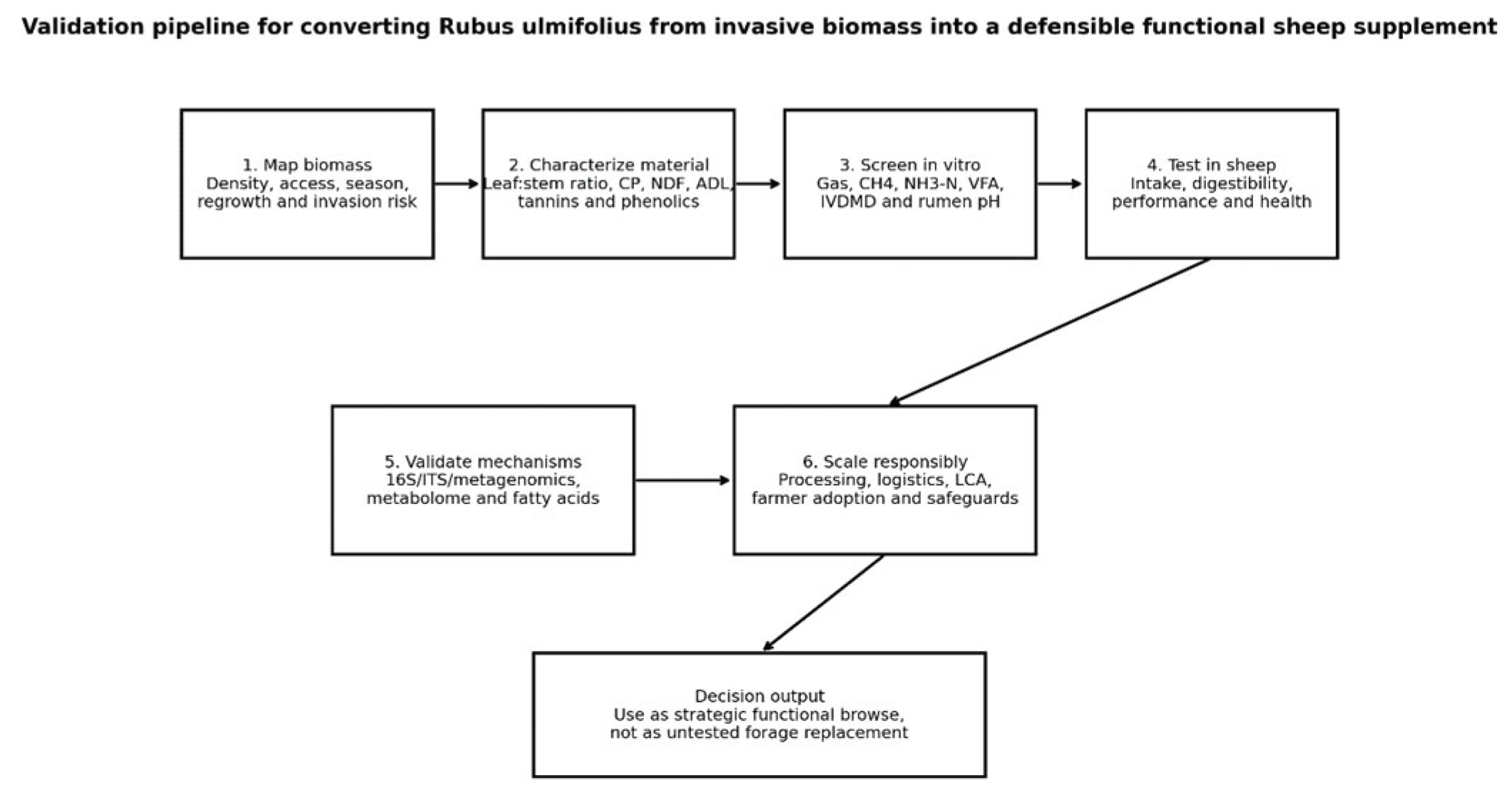
11. Research Roadmap for Making R. Ulmifolius Publishable as a Functional Sheep Supplement
11.1. Stage 1: Biomass Mapping and Harvest Standardization
The first research stage should quantify biomass availability and define harvest standards. Studies should map invaded areas, estimate seasonal biomass yield, separate plant fractions, record phenological stage and assess regrowth after cutting. Importantly, biomass estimates should distinguish total above-ground biomass from usable feed biomass. A thicket may produce large biomass, but only a fraction may be suitable for sheep after excluding mature woody stems, contaminated material and fruiting structures.
Harvest standardization should include date, regrowth age, cutting height, fraction retained, drying method and storage. Without standardization, nutritional results will be irreproducible. Future papers should also include photographs or detailed descriptions of harvested material. This will help readers understand whether the feed tested was leaf-rich, shoot-rich or stem-rich.
An ecological sub-study should examine whether repeated harvest reduces cover, increases native vegetation access or changes regrowth dynamics. This would connect the feed study with invasive management and increase manuscript originality.
11.2. Stage 2: analytical characterization
The second stage is chemical and functional characterization. A publishable analytical profile should include dry matter, organic matter, crude protein, ether extract, ash, NDF, ADF, ADL, minerals, total phenolics, condensed tannins, hydrolysable tannins or ellagitannin markers when feasible, antioxidant capacity, protein-precipitating capacity and microbial contamination. Standard fibre methods should be used because NDF, ADF and lignin are central to ruminant interpretation [20].
Because R. ulmifolius chemistry varies seasonally, analysis should be repeated across seasons and plant fractions. At minimum, spring, summer, autumn and winter samples should be collected from multiple sites. Multi-site sampling is important because soil, climate, shade and disturbance may affect composition. A single-site dataset is useful but insufficient for general recommendations.
Analytical results should be linked to practical thresholds. For example, high ADL would discourage use as a high-inclusion roughage, whereas high protein with moderate tannin activity might justify low-to-moderate supplementation. The goal is not to produce descriptive chemistry but to define decision rules.
11.3. Stage 3: in vitro rumen fermentation and methane screening
Before in vivo trials, in vitro rumen fermentation can screen inclusion levels and identify risk. Batch culture or gas-production systems should compare R. ulmifolius fractions and processed forms. Endpoints should include gas kinetics, methane, pH, ammonia nitrogen, volatile fatty acids, in vitro dry matter digestibility, in vitro organic matter digestibility and PEG response. Rumen inoculum should preferably come from sheep adapted to forage-based diets.
PEG inclusion is particularly useful because it distinguishes tannin-mediated effects from other plant characteristics. If PEG increases gas or digestibility substantially, tannins are constraining fermentation. If PEG increases methane, tannins may be contributing to methane suppression. However, PEG responses must be interpreted together with digestibility; a methane decrease driven by suppressed fermentation is not necessarily beneficial.
In vitro studies should also compare R. ulmifolius with a conventional forage control and a known tannin source. Without controls, results will be hard to interpret. The most publishable design would test season, plant fraction, processing and inclusion level in a factorial structure.
11.4. Stage 4: controlled sheep trials
Controlled sheep trials are essential. The first trial should be a palatability and short-term intake study using low and moderate inclusion levels of processed young biomass. The second should be a digestibility and nitrogen-balance trial. The third should evaluate performance in growing lambs or lactating ewes. Only after these stages should parasite or methane claims be tested at larger scale.
Experimental diets should be formulated to avoid confounding. If R. ulmifolius increases crude protein, a protein-matched control is needed. If it increases fibre, a fibre-matched control may also be appropriate. Diets should be isoenergetic when possible. Actual intake should be calculated from offered feed minus refusals, and refusals should be chemically analyzed because sheep may selectively avoid stems.
In vivo endpoints should include dry matter intake, apparent digestibility, rumen pH, ammonia nitrogen, volatile fatty acids, blood urea nitrogen, oxidative biomarkers, fecal egg counts where relevant, methane, weight gain or milk yield, body condition and welfare indicators. Microbiome endpoints should include bacteria, archaea and possibly protozoa and fungi. A combined microbiome-metabolome approach would provide the strongest mechanistic insight.
Figure 4.
Proposed evidence ladder for R. ulmifolius development as a sheep supplement. The sequence avoids premature farm recommendation and prioritizes measurable evidence gates.
Figure 4.
Proposed evidence ladder for R. ulmifolius development as a sheep supplement. The sequence avoids premature farm recommendation and prioritizes measurable evidence gates.
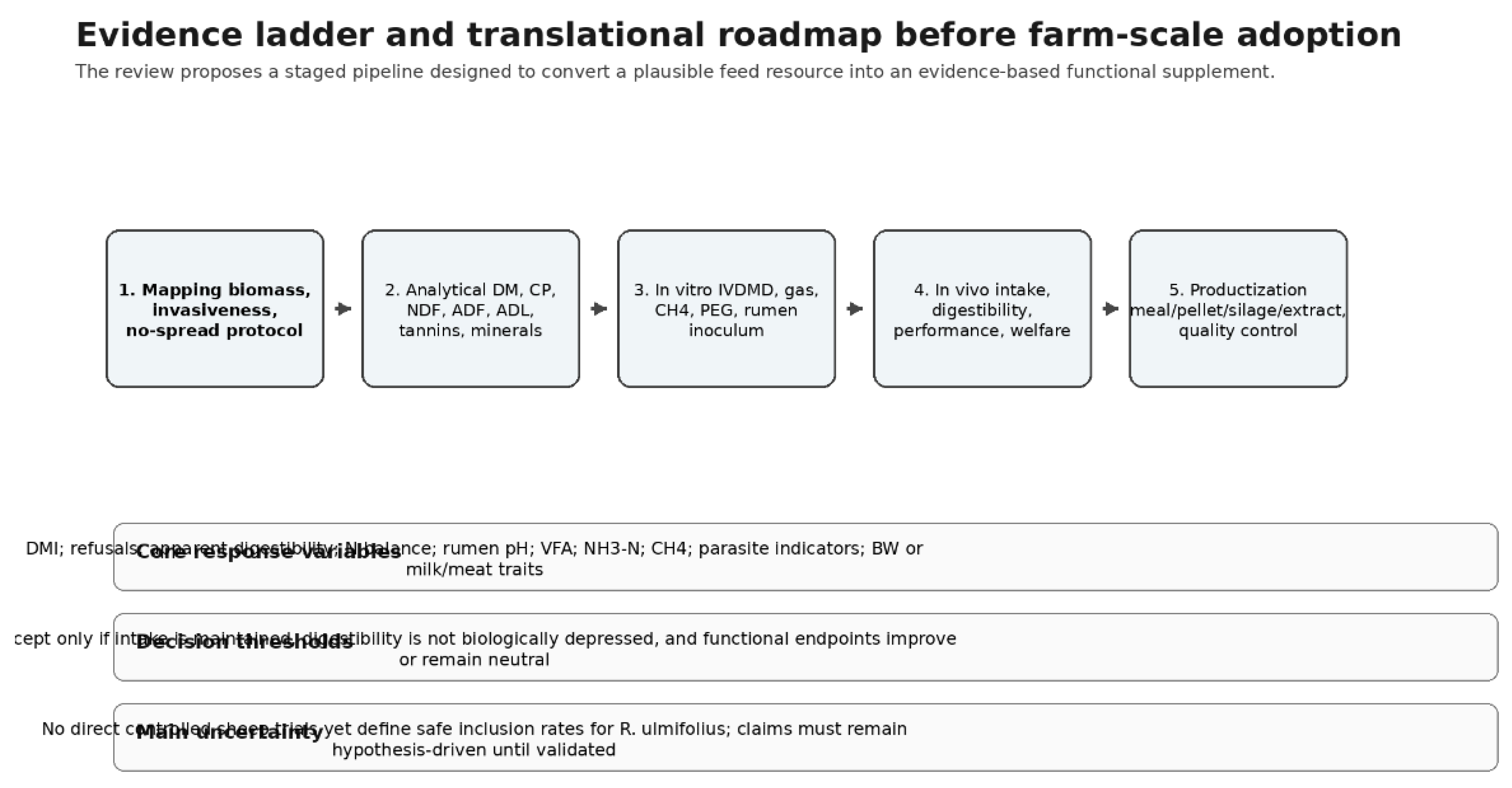
11.5. Stage 5: farm pilots and techno-economic assessment
After controlled trials, farm pilots should evaluate feasibility. Variables should include harvest labor, machinery, drying or processing cost, storage stability, acceptance by farmers, animal response under real conditions and ecological outcomes. Economic analysis should compare the feed replacement value with the cost of collection and processing. A feed ingredient that works biologically but is too expensive or difficult to handle will not be adopted.
Farm pilots should also evaluate social acceptability. Producers may be skeptical of feeding a weed, while conservation stakeholders may worry about propagation. Clear communication and biosecurity protocols are essential. Demonstration trials should emphasize that the goal is not to cultivate R. ulmifolius but to valorize biomass removed during control.
A strong final research product would be a decision-support tool indicating when R. ulmifolius biomass is suitable for feeding: acceptable season, plant fraction, tannin range, lignin threshold, processing method, animal category and maximum inclusion. Such a tool would represent a tangible output beyond the review.
Table 12.
Minimum dataset recommended for future R. ulmifolius sheep-feeding studies.
| Dataset component | Specific variables | Why it is needed |
|---|---|---|
| Plant identity and harvest | Location, season, phenology, plant fraction, regrowth age, presence/absence of fruit | Allows reproducibility and biosecurity assessment |
| Chemical composition | DM, OM, CP, EE, ash, NDF, ADF, ADL, minerals | Defines basal nutritive value and fibre constraints |
| Phytochemistry | Total phenolics, condensed tannins, hydrolysable tannins/ellagitannin markers, protein-precipitating capacity | Defines functional and antinutritional potential |
| Processing | Fresh/chopped/dried/ground/pelleted/silage; drying temperature; particle size | Explains palatability, storage and phenolic stability |
| Intake and digestibility | Offered feed, refusals, DMI, apparent digestibility, fecal output | Determines whether animals actually consume and utilize the biomass |
| Rumen fermentation | pH, NH3-N, VFA, gas, CH4, microbial protein proxies | Links chemistry to rumen function |
| Microbiome | 16S bacteria/archaea, protozoa or fungi when possible, alpha/beta diversity and taxa associations | Tests functional-feed mechanism |
| Animal outcomes | BW, ADG, BCS, milk or meat traits, oxidative biomarkers, welfare indicators | Determines practical value and safety |
| Parasite outcomes | Fecal egg counts, larval development, packed cell volume, clinical signs | Tests anti-H. contortus relevance |
| Sustainability and cost | Harvest cost, fuel, processing energy, replacement value, control effect, no-spread compliance | Determines feasibility and circularity |
11.6. Experimental design standards for future sheep trials
The most important next step is not another descriptive review but a sequence of controlled trials. A weak trial would simply offer chopped R. ulmifolius and measure body weight. A strong trial would define the harvested fraction, analyze each batch, formulate isoenergetic and isonitrogenous diets where possible, include at least two inclusion levels, measure refusals and digestibility, and connect animal responses to rumen and host biomarkers. This distinction should be explicit because it shows how the field can move from botanical promise to nutritional evidence.
The first design issue is the control diet. If Rubus supplementation changes both nutrient supply and secondary-metabolite exposure, interpretation becomes difficult. One control should match the basal diet without Rubus. A stronger design could include a nutrient-matched control using conventional forage or protein source, and a tannin-control treatment using polyethylene glycol in a subset or in vitro assay to test whether observed effects are tannin-mediated. Polyethylene glycol is not necessarily a field solution, but it remains valuable mechanistically because it helps separate tannin effects from other plant properties.
The second design issue is adaptation. Rumen microbes and animals can adapt to tannin-containing feeds over time. Short trials may overestimate negative palatability effects or miss longer-term microbial adaptation. Conversely, very long trials without intermediate sampling may miss early disturbances. A balanced design should include an adaptation phase, repeated sampling and clear stopping criteria. Intake should be measured daily during adaptation because refusal patterns often reveal practical failure before performance differences appear.
The third issue is animal category. Maintenance ewes, growing lambs and lactating ewes differ in nutrient demand and tolerance for variable feed quality. Early studies should probably begin with maintenance or growing animals under controlled conditions before moving to lactation or reproduction. If lamb growth or meat quality is the objective, carcass traits and fatty acid composition should be included. If ewe resilience during feed gaps is the objective, body condition, reproductive performance and health indicators become more relevant.
The fourth issue is statistical power and batch variability. Because plant composition varies by season and site, a study based on a single Rubus batch may not generalize. Future trials should either use a well-characterized composite batch or explicitly include harvest batch as a factor. At minimum, studies should report batch-level chemistry and preserve samples for later analysis. Reviewers are likely to ask whether a response reflects the species, the season, the processing method or a particular chemical profile.
Table 13.
Design standards that would make future R. ulmifolius sheep trials suitable for high-quality publication.
Table 13.
Design standards that would make future R. ulmifolius sheep trials suitable for high-quality publication.
| Design component | Weak approach | Publishable approach |
|---|---|---|
| Feed description | Plant identified only by species name | Voucher specimen, site, season, phenological stage, fraction, processing and batch chemistry |
| Control diet | Basal diet only | Basal control plus nutrient-matched and/or tannin-mechanism control when feasible |
| Dose selection | One arbitrary inclusion level | At least two levels with rationale based on tannin and fibre exposure |
| Adaptation | No adaptation or unspecified period | Defined adaptation with daily intake and refusal monitoring |
| Endpoints | Body weight only | DMI, digestibility, rumen fermentation, microbiome, nitrogen, methane, health and performance |
| Statistics | Simple comparison without batch information | Power-aware design with repeated measures and batch-level characterization |
A final recommendation is preregistration or at least a clearly stated analysis plan for animal trials. This is not yet routine in all animal nutrition studies, but it would improve transparency when multiple endpoints are measured. Because functional-feed studies can easily become selective reporting exercises, predefined primary outcomes such as dry matter intake, digestibility, methane yield, faecal egg count or average daily gain would strengthen credibility.
12. Proposed Conceptual Hypotheses for Future Studies
To move beyond a descriptive review, the following hypotheses can structure future research. Hypothesis 1: young, leaf-rich R. ulmifolius biomass harvested during spring or early regrowth provides a more favorable crude protein-to-lignin ratio than mature summer biomass. This hypothesis is supported by seasonal data but requires local validation across invaded regions.
Hypothesis 2: low-to-moderate inclusion of processed R. ulmifolius in sheep diets can reduce ruminal ammonia nitrogen without depressing dry matter intake or fibre digestibility. This is the core nitrogen-use hypothesis and should be tested with protein-matched controls and N balance measurements.
Hypothesis 3: R. ulmifolius phenolics can shift rumen microbial composition in a dose-dependent manner, with potential effects on proteolytic bacteria, fibrolytic taxa, protozoa and methanogen-associated pathways. This hypothesis should be tested using sequencing plus fermentation endpoints, because microbiome changes alone are not enough to infer function.
Hypothesis 4: R. ulmifolius supplementation can reduce methane yield only if tannin activity suppresses methanogenesis more than it suppresses digestibility. This hypothesis explicitly recognizes the risk that apparent methane reductions may reflect reduced fermentation. It requires methane measurements normalized to dry matter intake and animal product.
Hypothesis 5: R. ulmifolius may contribute to integrated parasite management against H. contortus, but only if in vivo supplementation reduces fecal egg counts or improves resilience without compromising nutrition. Extract bioactivity is not sufficient; feeding trials under parasite challenge are necessary.
Hypothesis 6: repeated harvest of R. ulmifolius regrowth can produce a more standardized feed biomass while contributing to integrated invasive-shrub management. This hypothesis connects ecology and nutrition and would make the research substantially more novel than a conventional feed-evaluation study.
These hypotheses create a coherent research program. They also make the review useful as the conceptual basis for thesis projects, grant proposals and future experimental papers.
Table 14.
Translational hypotheses and experimental tests proposed by this review.
| Hypothesis | Experimental test | Critical endpoint | Possible interpretation |
|---|---|---|---|
| Early regrowth has better feed value than mature thicket biomass | Compare fractions and seasons across sites | CP:ADL ratio; IVDMD; tannin activity | Defines optimal harvest window |
| Moderate inclusion improves nitrogen partitioning | Protein-matched sheep trial | Ruminal NH3-N, BUN, urinary/fecal N | Supports functional protein-protection effect |
| Phenolics modulate rumen microbiome | Dose-response trial with sequencing | Bacterial/archaeal shifts plus VFA and digestibility | Mechanistic evidence only if linked to function |
| Methane decreases without performance penalty | In vivo methane trial | CH4/kg DMI and CH4/kg gain or milk | Valid mitigation only if productivity maintained |
| Parasite resilience improves | Parasite-challenge grazing or pen trial | FEC, PCV, ADG, clinical signs | Supports integrated parasite-management role |
| Harvest valorization supports control | Field plots with repeated harvest | Regrowth, biomass yield, native cover, feed quality | Connects invasive management with feed supply |
13. Conclusions
R. ulmifolius is more than an invasive bramble and less than a proven sheep supplement. Its scientific value lies in the intersection between these two positions. The plant generates management problems, but its biomass contains nutrients and bioactive compounds that justify careful evaluation as a functional browse resource. Available evidence supports its potential as a complementary ingredient, especially when young leaves and shoots are harvested before advanced lignification. However, tannins, lignin, thorns, seasonal variability and ecological spread risk impose strict boundaries.
The most defensible conclusion is that R. ulmifolius should be developed through a staged validation pipeline rather than immediately recommended for broad feeding. Chemical characterization, in vitro rumen screening, controlled sheep trials, microbiome analysis, methane measurements, parasite endpoints and farm-level economics are all required. If these evidence gates are satisfied, R. ulmifolius could become a circular feed supplement that contributes to invasive-shrub management, local feed resilience and functional ruminant nutrition.
The proposed novelty is therefore not the mere use of blackberry as feed. The novelty is an integrated invasive-shrub-to-functional-feed framework that treats biomass removal, feed processing, rumen microbial mechanisms, animal performance, sustainability and biosecurity as one connected system. This framework can guide future experiments and improve the probability that the topic reaches a publishable standard in MDPI journals.
Author Contributions
Conceptualization, D.C.-B.; investigation, D.C.-B., J.Q.-D. and R.D.; writing-original draft preparation, D.C.-B. and J.Q.-D.; writing-review and editing, R.D., N.S.B., E.P.M. and A.M.-S.; visualization, A.M.-S.; supervision, D.C.-B., E.P.M. and N.S.B. All authors should review and approve the final submitted version. The author-contribution statement should be verified by all authors before submission.
Funding
This work was supported by DIUFRO DI 24-0004. This work was funded by the Agencia Nacional de Investigación y Desarrollo (ANID), FONDECYT Postdoctorado 3260421.
Acknowledgments
During the preparation of this manuscript, the authors used generative artificial intelligence tools for language editing, structural organization and reference-format assistance. The authors reviewed and edited the output and take full responsibility for the content of this publication. The authors acknowledge the support of the Agencia Nacional de Investigación y Desarrollo (ANID), FONDECYT Postdoctorado 3260421.
Conflicts of Interest
The authors declare no conflicts of interest.
References
- Pyšek, P.; Hulme, P.E.; Simberloff, D.; Bacher, S.; Blackburn, T.M.; Carlton, J.T.; Dawson, W.; Essl, F.; Foxcroft, L.C.; Genovesi, P.; et al. Scientists’ Warning on Invasive Alien Species. Biol. Rev. 2020, 95, 1511–1534. [Google Scholar] [CrossRef] [PubMed]
- Diagne, C.; Leroy, B.; Vaissière, A.-C.; Gozlan, R.E.; Roiz, D.; Jarić, I.; Salles, J.-M.; Bradshaw, C.J.A.; Courchamp, F. High and Rising Economic Costs of Biological Invasions Worldwide. Nature 2021, 592, 571–576. [Google Scholar] [CrossRef] [PubMed]
- Vargas-Gaete, R.; Doussoulin, H.; Smith-Ramírez, C.; Bravo, S.; Salas-Eljatib, C.; Andrade, N.; Trávníček, B. Evaluation of Rust Pathogenicity (Phragmidium Violaceum) as a Biological Control Agent for the Invasive Plant Rubus Ulmifolius on Robinson Crusoe Island, Chile. Australas. Plant Pathol. 2019, 48. [Google Scholar] [CrossRef]
- Vargas-Gaete, R.; Salas-Eljatib, C.; Gärtner, S.M.; Vidal, O.J.; Bannister, J.R.; Pauchard, A. Invasive Plant Species Thresholds in the Forests of Robinson Crusoe Island, Chile. Plant Ecol. Divers. 2018, 11, 205–215. [Google Scholar] [CrossRef]
- Mazzolari, A.C.; Comparatore, V.M.; Bedmar, F. Control of Elmleaf Blackberry Invasion in a Natural Reserve in Argentina. J. Nat. Conserv. 2011, 19, 185–191. [Google Scholar] [CrossRef]
- Godde, C.M.; Mason-D’Croz, D.; Mayberry, D.E.; Thornton, P.K.; Herrero, M. Impacts of Climate Change on the Livestock Food Supply Chain; a Review of the Evidence. Glob. Food Secur. 2021, 28, 100488. [Google Scholar] [CrossRef] [PubMed]
- Lee, M.A.; Davis, A.P.; Chagunda, M.G.G.; Manning, P. Forage Quality Declines with Rising Temperatures, with Implications for Livestock Production and Methane Emissions. Biogeosciences 2017, 14, 1403–1417. [Google Scholar] [CrossRef]
- Uddin, M.E.; Kebreab, E. Review: Impact of Food and Climate Change on Pastoral Industries. Front. Sustain. Food Syst. 2020, 4, 543403. [Google Scholar] [CrossRef]
- Estell, R.E.; Havstad, K.M.; Cibils, A.F.; Fredrickson, E.L.; Anderson, D.M.; Schrader, T.S.; James, D.K. Increasing Shrub Use by Livestock in a World with Less Grass. Rangel. Ecol. Manag. 2012, 65, 553–562. [Google Scholar] [CrossRef]
- Makkar, H.P.S. Effects and Fate of Tannins in Ruminant Animals, Adaptation to Tannins, and Strategies to Overcome Detrimental Effects of Feeding Tannin-Rich Feeds. Small Rumin. Res. 2003, 49, 241–256. [Google Scholar] [CrossRef]
- Waghorn, G. Beneficial and Detrimental Effects of Dietary Condensed Tannins for Sustainable Sheep and Goat Production—Progress and Challenges. Anim. Feed Sci. Technol. 2008, 147, 116–139. [Google Scholar] [CrossRef]
- Decandia, M.; Yiakoulaki, M.D.; Pinna, G.; Cabiddu, A.; Molle, G. Foraging Behaviour and Intake of Goats Browsing on Mediterranean Shrublands. In Dairy goats feeding and nutrition; CABI Books, 2008; pp. 161–188. ISBN 978-1-84593-348-7. [Google Scholar]
- Chalak, M.; Pannell, D.J. Optimal Integrated Strategies to Control an Invasive Weed. Can. J. Agric. Econ. Can. Agroecon. 2015, 63, 381–407. [Google Scholar] [CrossRef]
- Min, B.R.; Barry, T.N.; Attwood, G.T.; McNabb, W.C. The Effect of Condensed Tannins on the Nutrition and Health of Ruminants Fed Fresh Temperate Forages: A Review. Anim. Feed Sci. Technol. 2003, 106, 3–19. [Google Scholar] [CrossRef]
- Chebli, Y.; El Otmani, S.; Hornick, J.-L.; Keli, A.; Bindelle, J.; Cabaraux, J.-F.; Chentouf, M. Forage Availability and Quality, and Feeding Behaviour of Indigenous Goats Grazing in a Mediterranean Silvopastoral System. Ruminants 2022, 2, 74–89. [Google Scholar] [CrossRef]
- Chebli, Y.; Otmani, S.E.; Chentouf, M.; Hornick, J.-L.; Bindelle, J.; Cabaraux, J.-F. Foraging Behavior of Goats Browsing in Southern Mediterranean Forest Rangeland. Animals 2020, 10, 196. [Google Scholar] [CrossRef] [PubMed]
- Garin, I.; Aldezabal, A.; Herrero, J.; García-Serrano, A. Understorey Foraging and Habitat Selection by Sheep in Mixed Atlantic Woodland. J. Veg. Sci. 2000, 11, 863–870. [Google Scholar] [CrossRef]
- Provenza, F.D.; Villalba, J.J.; Dziba, L.E.; Atwood, S.B.; Banner, R.E. Linking Herbivore Experience, Varied Diets, and Plant Biochemical Diversity. Small Rumin. Res. 2003, 49, 257–274. [Google Scholar] [CrossRef]
- Laadjal, A.; Houd-Chaker, K.; Mebirouk-Boudechiche, L.; Selmi, H.; Dhifallah, A.; Rouissi, H. Nutritional Characterization and Digestibility Parameters of Four Browse Lianas of Ain Khiar Alder Grove (North-East of Algeria). Agrofor. Syst. 2023, 97, 1185–1197. [Google Scholar] [CrossRef]
- Van Soest, P.J.; Robertson, J.B.; Lewis, B.A. Methods for Dietary Fiber, Neutral Detergent Fiber, and Nonstarch Polysaccharides in Relation to Animal Nutrition. J. Dairy Sci. 1991, 74, 3583–3597. [Google Scholar] [CrossRef] [PubMed]
- Weiss, W.P.; Conrad, H.R.; St. Pierre, N.R. A Theoretically-Based Model for Predicting Total Digestible Nutrient Values of Forages and Concentrates. Anim. Feed Sci. Technol. 1992, 39, 95–110. [Google Scholar] [CrossRef]
- Cabiddu, A.; Decandia, M.; Sitzia, M.; Molle, G. A Note on the Chemical Composition and Tannin Content of Some Mediterranean Shrubs Browsed by Sarda Goats. Options Méditerranéennes 2000, 52, 175–178. [Google Scholar]
- Decandia, M.; Sitzia, M.; Cabiddu, A.; Kababya, D.; Molle, G. The Use of Polyethylene Glycol to Reduce the Anti-Nutritional Effects of Tannins in Goats Fed Woody Species. Small Rumin. Res. 2000, 38, 157–164. [Google Scholar] [CrossRef]
- Licitra, G.; Hernandez, T.M.; Van Soest, P.J. Standardization of Procedures for Nitrogen Fractionation of Ruminant Feeds. Anim. Feed Sci. Technol. 1996, 57, 347–358. [Google Scholar] [CrossRef]
- da Silva, L.P.; Pereira, E.; Pires, T.C.S.P.; Alves, M.J.; Pereira, O.R.; Barros, L.; Ferreira, I.C.F.R. Rubus Ulmifolius Schott Fruits: A Detailed Study of Its Nutritional, Chemical and Bioactive Properties. Food Res. Int. 2019, 119, 34–43. [Google Scholar] [CrossRef] [PubMed]
- Mehiou, A.; Alla, C.; Akissi, Z.L.E.; Lucau-Danila, A.; Bouanani, N.; Legssyer, A.; Hilbert, J.-L.; Sahpaz, S.; Ziyyat, A. Rubus Ulmifolius Schott: A Comprehensive Review of Its Botany, Traditional Uses, Phytochemistry and Pharmacological Effects. J. Berry Res. 2024, 14, 301–328. [Google Scholar] [CrossRef]
- Oszmiański, J.; Wojdyło, A.; Nowicka, P.; Teleszko, M.; Cebulak, T.; Wolanin, M. Determination of Phenolic Compounds and Antioxidant Activity in Leaves from Wild Rubus L. Species. Molecules 2015, 20, 4951–4966. [Google Scholar] [CrossRef] [PubMed]
- Quave, C.L.; Estévez-Carmona, M.; Compadre, C.M.; Hobby, G.; Hendrickson, H.; Beenken, K.E.; Smeltzer, M.S. Ellagic Acid Derivatives from Rubus Ulmifolius Inhibit Staphylococcus Aureus Biofilm Formation and Improve Response to Antibiotics. PLoS ONE 2012, 7, e28737. [Google Scholar] [CrossRef] [PubMed]
- Martini, S.; D’Addario, C.; Colacevich, A.; Focardi, S.; Borghini, F.; Santucci, A.; Figura, N.; Rossi, C. Antimicrobial Activity against Helicobacter Pylori Strains and Antioxidant Properties of Blackberry Leaves (Rubus Ulmifolius) and Isolated Compounds. Int. J. Antimicrob. Agents 2009, 34. [Google Scholar] [CrossRef] [PubMed]
- Ali, N.; Shaoib, M.; Shah, S.W.A.; Shah, I.; Shuaib, M. Pharmacological Profile of the Aerial Parts of Rubus Ulmifolius Schott. BMC Complement. Altern. Med. 2017, 17, 59. [Google Scholar] [CrossRef] [PubMed]
- Akkari, H.; Hajaji, S.; B’chir, F.; Rekik, M.; Gharbi, M. Correlation of Polyphenolic Content with Radical-Scavenging Capacity and Anthelmintic Effects of Rubus Ulmifolius (Rosaceae) against Haemonchus Contortus. Vet. Parasitol. 2016, 221, 46–53. [Google Scholar] [CrossRef] [PubMed]
- Hoste, H.; Torres-Acosta, J.F.J.; Sandoval-Castro, C.A.; Mueller-Harvey, I.; Sotiraki, S.; Louvandini, H.; Thamsborg, S.M.; Terrill, T.H. Tannin Containing Legumes as a Model for Nutraceuticals against Digestive Parasites in Livestock. Vet. Parasitol. 2015, 212, 5–17. [Google Scholar] [CrossRef] [PubMed]
- Athanasiadou, S.; Kyriazakis, I.; Jackson, F.; Coop, R.L. Direct Anthelmintic Effects of Condensed Tannins towards Different Gastrointestinal Nematodes of Sheep: In Vitro and in Vivo Studies. Vet. Parasitol. 2001, 99, 205–219. [Google Scholar] [CrossRef] [PubMed]
- Al Rharad, A.; El Aayadi, S.; Avril, C.; Souradjou, A.; Sow, F.; Camara, Y.; Hornick, J.-L.; Boukrouh, S. Meta-Analysis of Dietary Tannins in Small Ruminant Diets: Effects on Growth Performance, Serum Metabolites, Antioxidant Status, Ruminal Fermentation, Meat Quality, and Fatty Acid Profile. Animals 2025, 15, 596. [Google Scholar] [CrossRef] [PubMed]
- Jerónimo, E.; Pinheiro, C.; Lamy, E.; Dentinho, M.T.; Sales-Baptista, E.; Lopes, O.; Silva, F. Tannins in Ruminant Nutrition: Impact on Animal Performance and Quality of Edible Products; 2016. [Google Scholar]
- Mueller-Harvey, I. Unravelling the Conundrum of Tannins in Animal Nutrition and Health. J. Sci. Food Agric. 2006, 86, 2010–2037. [Google Scholar] [CrossRef]
- Patra, A.K.; Saxena, J. Exploitation of Dietary Tannins to Improve Rumen Metabolism and Ruminant Nutrition. J. Sci. Food Agric. 2011, 91, 24–37. [Google Scholar] [CrossRef] [PubMed]
- Matthews, C.; Crispie, F.; Lewis, E.; Reid, M.; O’Toole, P.W.; Cotter, P.D. The Rumen Microbiome: A Crucial Consideration When Optimising Milk and Meat Production and Nitrogen Utilisation Efficiency. Gut Microbes 2019, 10, 115–132. [Google Scholar] [CrossRef] [PubMed]
- Mccann, J.C.; Wickersham, T.A.; Loor, J.J. High-Throughput Methods Redefine the Rumen Microbiome and Its Relationship with Nutrition and Metabolism. Bioinforma. Biol. Insights 2014, 8, BBI.S15389. [Google Scholar] [CrossRef] [PubMed]
- Monteiro, H.F.; Zhou, Z.; Gomes, M.S.; Peixoto, P.M.; Bonsaglia, E.C.R.; Canisso, I.F.; Weimer, B.C.; Lima, F.S. Rumen and Lower Gut Microbiomes Relationship with Feed Efficiency and Production Traits throughout the Lactation of Holstein Dairy Cows. Sci. Rep. 2022, 12. [Google Scholar] [CrossRef] [PubMed]
- McLoughlin, S.; Spillane, C.; Claffey, N.; Smith, P.E.; O’Rourke, T.; Diskin, M.G.; Waters, S.M. Rumen Microbiome Composition Is Altered in Sheep Divergent in Feed Efficiency. Front. Microbiol. 2020, 11. [Google Scholar] [CrossRef] [PubMed]
- Zhang, Y.K.; Zhang, X.X.; Li, F.D.; Li, C.; Li, G.Z.; Zhang, D.Y.; Song, Q.Z.; Li, X.L.; Zhao, Y.; Wang, W.M. Characterization of the Rumen Microbiota and Its Relationship with Residual Feed Intake in Sheep. Animal 2021, 15, 100161. [Google Scholar] [CrossRef] [PubMed]
- McSweeney, C.S.; Palmer, B.; McNeill, D.M.; Krause, D.O. Microbial Interactions with Tannins: Nutritional Consequences for Ruminants. Anim. Feed Sci. Technol. 2001, 91, 83–93. [Google Scholar] [CrossRef]
- Salami, S.A.; Valenti, B.; Bella, M.; O’Grady, M.N.; Luciano, G.; Kerry, J.P.; Jones, E.; Priolo, A.; Newbold, C.J. Characterisation of the Ruminal Fermentation and Microbiome in Lambs Supplemented with Hydrolysable and Condensed Tannins. FEMS Microbiol. Ecol. 2018, 94, fiy061. [Google Scholar] [CrossRef] [PubMed]
- Mannelli, F.; Daghio, M.; Alves, S.P.; Bessa, R.J.B.; Minieri, S.; Giovannetti, L.; Conte, G.; Mele, M.; Messini, A.; Rapaccini, S.; et al. Effects of Chestnut Tannin Extract, Vescalagin and Gallic Acid on the Dimethyl Acetals Profile and Microbial Community Composition in Rumen Liquor: An In Vitro Study. Microorganisms 2019, 7, 202. [Google Scholar] [CrossRef] [PubMed]
- Ku-Vera, J.C.; Jiménez-Ocampo, R.; Valencia-Salazar, S.S.; Montoya-Flores, M.D.; Molina-Botero, I.C.; Arango, J.; Gómez-Bravo, C.A.; Aguilar-Pérez, C.F.; Solorio-Sánchez, F.J. Role of Secondary Plant Metabolites on Enteric Methane Mitigation in Ruminants. Front. Vet. Sci. 2020, 7, 584. [Google Scholar] [CrossRef] [PubMed]
- Patra, A.K.; Saxena, J. A New Perspective on the Use of Plant Secondary Metabolites to Inhibit Methanogenesis in the Rumen. Phytochemistry 2010, 71, 1198–1222. [Google Scholar] [CrossRef] [PubMed]
- Yanza, Y.R.; Fitri, A.; Suwignyo, B.; Elfahmi; Hidayatik, N.; Kumalasari, N.R.; Irawan, A.; Jayanegara, A. The Utilisation of Tannin Extract as a Dietary Additive in Ruminant Nutrition: A Meta-Analysis. Animals 2021, 11, 3317. [Google Scholar] [CrossRef] [PubMed]
- Jayanegara, A.; Leiber, F.; Kreuzer, M. Meta-analysis of the Relationship between Dietary Tannin Level and Methane Formation in Ruminants from in Vivo and in Vitro Experiments. J. Anim. Physiol. Anim. Nutr. 2012, 96, 365–375. [Google Scholar] [CrossRef] [PubMed]
- Orzuna-Orzuna, J.; Dorantes-Iturbide, G.; Lara-Bueno, A.; Mendoza-Martínez, G.; Miranda-Romero, L.; Hernández-García, P. Effects of Dietary Tannins’ Supplementation on Growth Performance, Rumen Fermentation, and Enteric Methane Emissions in Beef Cattle: A Meta-Analysis. Sustainability 2021, 13, 7410. [Google Scholar] [CrossRef]
- Niu, X.; Xing, Y.; Wang, J.; Bai, L.; Xie, Y.; Zhu, S.; Sun, M.; Yang, J.; Li, D.; Liu, Y. Effects of Caragana Korshinskii Tannin on Fermentation, Methane Emission, Community of Methanogens, and Metabolome of Rumen in Sheep. Front. Microbiol. 2024, 15, 1334045. [Google Scholar] [CrossRef] [PubMed]
- Francisco, A.E.; Santos-Silva, J.M.; Portugal, A.P.V.; Alves, S.P.; Bessa, R.J.B. Relationship between Rumen Ciliate Protozoa and Biohydrogenation Fatty Acid Profile in Rumen and Meat of Lambs. PLoS ONE 2019, 14, e0221996. [Google Scholar] [CrossRef] [PubMed]
- Lorenz, K.; Lal, R. Environmental Impact of Organic Agriculture. In Advances in Agronomy; Elsevier, 2016; Vol. 139, pp. 99–152. ISBN 978-0-12-804773-6. [Google Scholar]
Disclaimer/Publisher’s Note: The statements, opinions and data contained in all publications are solely those of the individual author(s) and contributor(s) and not of MDPI and/or the editor(s). MDPI and/or the editor(s) disclaim responsibility for any injury to people or property resulting from any ideas, methods, instructions or products referred to in the content. |
© 2026 by the authors. Licensee MDPI, Basel, Switzerland. This article is an open access article distributed under the terms and conditions of the Creative Commons Attribution (CC BY) license.
Copyright: This open access article is published under a Creative Commons CC BY 4.0 license, which permit the free download, distribution, and reuse, provided that the author and preprint are cited in any reuse.


