

Submitted:
06 July 2026
Posted:
08 July 2026
You are already at the latest version
Abstract
Early childhood children (0–5 years old) are using digital devices at an ever-increasing rate, yet the evidence base is largely dominated by developmental psychology studies with minimal consideration of class, culture, and institutional aspects of digital use. No equity-aware synthesized evidence exists that provides recommendations for early childhood education programs at higher education Centres for Teaching and Learning (CTLs). A systematic review and meta-analysis was conducted using academic papers published between January 1995 and December 2025. Using Comprehensive Meta‑Analysis (Version 3), random‑effects models, subgroup analyses, meta‑regression, and tests for publication bias were implemented. Thirty‑one studies including 34,540 children were selected. Unmediated solo usage had a negative relationship with children’s outcomes (r = −0.287, 95% CI [−0.320, −0.253]), whereas active co‑use was positively related (r = 0.259, 95% CI [0.217, 0.300]). Socioeconomic status was not a significant moderator (p = 0.182). Outcomes for language (p = 0.876), social‑emotional development (p = 0.391), and cognitive/executive function (p = 0.692) were not statistically significant. There was no trend in effect size over time (b = −0.0097, p = 0.339). Publication bias appeared low (Egger’s p = 0.249; fail‑safe N = 405). Quality of mediation is key, not the amount of screen time. Although no significant SES moderation effects were found, the narrative literature showed class‑based differences in how children were mediated. Training of early childhood educators in CTLs is not yet evidence‑based nor equity‑focused, but the CTL Action Framework for Early Digital Education (CAFEDE) suggests practices for improving educator training.
Keywords:
early childhood
; digital technology
; sociological approach
; meta-analysis
; parental mediation
; digital equity
1. Introduction
To observe a 0–5-year-olds effortlessly manipulate the touch interface on a screened device, swiping, tapping, pinching, scrolling provides a glimpse of one of the primary tensions of contemporary childhood. The skills these 0–5-year-olds have acquired through observation and repetition have developed in homes where, for many children in high- and middle-income societies, network devices are ubiquitous.
2. Literature Review
The developmental literature on early technology exposure is extensive but theoretically narrow. Dominated by cognitive and neuropsychological frameworks, it has produced valuable evidence on language acquisition, attention regulation, and executive function, but it has done so largely in abstraction from the social structures that determine who has access to what technologies, under what conditions of adult oversight, and with what quality of scaffolding. A child watching algorithmically recommended videos on a smartphone while a lone parent manages a household emergency occupies a fundamentally different developmental situation from a child co-viewing an educationally designed program with an attentive caregiver who pauses, names, and questions and no study of screen time duration alone can capture this difference.
Sociology brings to this terrain what developmental psychology, taken alone, cannot: an account of the structural conditions that shape individual experience. Bourdieu's (1984) theory of capital, economic, cultural, social provides a framework for understanding how differential access to technologies, differential parental capacity for mediation, and differential institutional support reproduce and amplify existing inequalities through the mechanism of early digital experience. Bronfenbrenner's (1979) ecological systems model situates the child's technological environment within concentric layers of family, community, institution, and policy that interact in ways linear dose-response models cannot capture. The specific relevance of this synthesis for higher education, and for Centres for Teaching and Learning (CTLs) in particular, arises from the expanding role of universities in early childhood educator training. Across Europe and internationally, early childhood education and care (ECEC) has been progressively professionalized, with degree-level qualifications increasingly required or incentivized. CTLs that design the professional development components of these programs are responsible for ensuring that the content educators receive reflects not only current pedagogical best practice but current evidence on the children they will teach. This study argues that this responsibility is not currently being discharged adequately, and proposes a framework called the CTL Action Framework for Early Digital Education (CAFEDE) to address the gap.
The sociology of childhood established as a distinct sub-field through the foundational work of Prout and James (1990) and consolidated through Qvortrup's (1994) structural analysis positions children not as developmental objects acted upon by socializing forces but as social actors whose experiences are simultaneously shaped by and constitutive of wider social structures. Applied to digital technology, this orientation generates questions that developmental psychology rarely asks: Whose technological norms are encoded in the devices children use? How does the commercial logic of platform design intersect with developmental needs? In what ways do class-based differences in domestic digital environment translate into differential readiness for formal education?
Bourdieu's (1984, 1986) framework of capital and field offers the most productive theoretical vocabulary for analyzing digital inequality in early childhood. Digital capital an extension of cultural capital into technological domains (Ragnedda & Ruiu, 2017; van Dijk, 2020) encompasses not only access to devices (a first-level digital divide) but the skills, practices, and values that shape how technology is used to enhance life chances (a second-level divide) and the ability to convert digital engagement into social, educational, or economic advantage (a third-level divide). In early childhood, this three-level structure maps onto: device availability in the home; parental capacity and disposition to mediate technology use educationally; and the institutional recognition and scaffolding of children's digital experience in ECEC settings. Bronfenbrenner's (1979) bioecological model provides a complementary structural lens. The microsystem of the family home, the immediate arena of early technological experience is nested within mesosystems of childcare and community, exosystems of parental workplace and policy environment, and macrosystems of cultural values and regulatory frameworks. Technology does not arrive in children's lives as a neutral artifact: it arrives mediated by all these contextual layers simultaneously. Understanding early digital experience, on this account, requires analysis at multiple ecological levels a requirement that single-context developmental studies and national policy frameworks alike have largely failed to meet.
The empirical literature on developmental outcomes associated with digital technology use in children aged zero to five has evolved significantly over the study period (1995–2025). Early work was dominated by the 'screen time' paradigm, total daily hours of television or video exposure and predominantly reported negative associations with language development (Zimmerman et al., 2007), social-emotional development (Hinkley et al., 2014), and sleep quality (Chindamo et al., 2019). This paradigm has been substantially complicated by subsequent research distinguishing between content quality, interactive versus passive formats, co-viewing versus solo viewing, and crucially the social context of consumption. The emergence of interactive touchscreen technologies as research objects from approximately 2012 onwards introduced new complexity. Cristia and Seidl (2015) demonstrated that two-year-olds could transfer knowledge from interactive touchscreen applications under conditions of high contingent responsiveness, challenging earlier 'video deficit' findings (Anderson & Pempek, 2005) premised on passive television formats. Subsequent research by Kirkorian et al. (2009), and Kirsh (2018) has refined the contingency hypothesis: what matters is not the screen per se but the quality of the interactive loop whether the technology responds meaningfully to the child's inputs and whether an adult mediator amplifies and contextualizes that responsiveness.
Language development has been the most extensively studied developmental domain, with particular attention to the question of whether digital media can substitute for or supplement adult-child verbal interaction. The social-interactionist consensus (Toppelberg & Collins, 2004; Tamis-LeMonda et al., 2001) holds that language acquisition is fundamentally dependent on contingent, responsive, face-to-face interaction with caregivers a condition that recorded or algorithmically generated digital content cannot replicate. Evidence from the Millennium Cohort Study (Parry et al., 2021), the NICHD Study of Early Child Care (Mendelsohn et al., 2018), and multiple smaller experimental studies consistently supports this position: high volumes of background television exposure displace parent-child verbal interaction and are negatively associated with vocabulary development, with effect sizes in the small-to-moderate range (r ≈ −0.20 to −0.35). The concept of parental mediation the strategies through which parents regulate, participate in, and contextualise children's media use was developed initially in the context of television (Valkenburg et al., 1999) and has been progressively elaborated for interactive digital contexts (Livingstone & Helsper, 2008; Nikken & Schols, 2015). Three principal strategies are documented: restrictive mediation (limiting access and duration); active co-use (engaging with media alongside the child, discussing content, scaffolding meaning-making); and technical mediation (using parental controls, curating content libraries). Evidence consistently shows that active co-use is the mediation strategy most strongly associated with positive developmental outcomes, while restrictive mediation without co-use produces minimal benefit beyond exposure reduction.
The sociological significance of mediation quality lies in its differential distribution across socioeconomic strata. Multiple national studies, including Gutnick et al. (2011) in the US, Chaudron et al. (2015) across six European countries, and Palaiologou (2016) in the UK document a consistent pattern: parents with higher educational attainment and economic resources are more likely to engage in active co-use mediation and to select educationally curated content, while parents in lower socioeconomic positions report higher volumes of child technology use, lower levels of co-use, and greater reliance on technology for childcare support during periods of time pressure or stress. The role CTL in higher education has expanded substantially in the post-pandemic period, encompassing not only the professional development of university faculty but increasingly the design and delivery of training for professional groups, including early childhood educators whose qualifications are awarded or quality-assured by universities. In European higher education contexts, this expansion reflects the broader professionalization of ECEC, supported by frameworks including the OECD's Starting Strong series (2001, 2017, 2021) and the European Commission's 2019 Quality Framework for Early Childhood Education and Care. Despite this expansion of CTL responsibilities, the literature on CTL-designed professional development for early childhood educators reveals a consistent gap between the evidence base on early digital childhood and the content of training programs. A survey of CTL program documentation across seventeen European higher education institutions (Palaiologou et al., 2023) found that fewer than one-third included explicit content on digital technology in the zero-to-five age band, and that of those that did, the majority relied on guidelines (such as AAP or WHO screen time recommendations) that are either outdated, context-blind, or both. The theoretical sophistication, sociological, ecological, critical evident in the research literature on early digital childhood has not penetrated CTL-designed professional development programs.
Based on the existing limitations, the purpose of the current study was to provide a systematic review of empirical evidence about the links between digital technology use and child development (0-5 year olds) as well as to statistically synthesize the data on mediators (interaction quality), the type of technology and the impact of socioeconomic status. More specifically, the current study intended to: (1) aggregate the estimate on the effect of unmediated (independent) technology exposure on expressive language; (2) aggregate the estimate on the effect of active co-use on vocabulary outcomes; (3) analyze the moderation effects of the type of technology (e.g., background television, educational applications, mobile devices) and the outcome domain (language, social-emotional and sleep/wellbeing) on the association between digital technology use and child development, as well as investigate how these relations are mediated by SES; (4) evaluate publication bias and reliability of findings using sensitivity analysis and metaregression. Furthermore, integrating the study in a sociological framework (Bourdieu's theory of capital and Bronfenbrenner's ecological system model), the research intended to advance beyond the established notion of "screen time" and build an equity-informed empirical basis for early childhood educators and policy makers.
3. Methodology
3.1. Search Strategy and Study Selection
The systematic review and meta-analysis followed the Preferred Reporting Items for Systematic Reviews and Meta-Analyses (PRISMA) checklist (Page et al., 2021) (Figure 1).
Systematic database searches were performed in Scopus, Web of Science, Embase, PubMed/MEDLINE, and Google Scholar. Search terms combined vocabulary from four conceptual domains: (a) age group (infant, toddler, baby, early childhood, 0–4 years old, preschool children); (b) digital technology (screen time, digital media, social media, tablet, smartphone, touchscreen, television, interactive media); (c) developmental domain (language, vocabulary, social development, cognitive development, attention, executive function, sleep); and (d) sociological or contextual factors (parental mediation, socioeconomic status, digital inequality, family context, childcare, cultural context). Date limits were restricted to January 1995 – December 2025 (Table 1). Two independent researchers screened titles, abstracts, and full texts; disagreements were resolved by consensus.
Screening and eligibility criteria
All retrieved records were imported into EndNote (version 8, Thomson Reuters, Stamford, CT, USA) for duplicate removal. Studies were included if they: (a) concerned children aged 0-5 years as the primary or exclusive population; (b) measured or described digital technology exposure, use, or mediation; (c) reported developmental, social, or equity-related outcomes or patterns; and (d) were empirical, peer-reviewed, and published in English between January 1995 and December 2025.
3.2. Data Extraction
Microsoft Excel® version 2016 was used to systematically extract and code the following information from each of the 31 included studies: first author’s name, publication year, country, continent (region code), study design, total sample size (N), child age range (minimum and maximum in months), percentage female, socioeconomic status context (SES code), technology type (e.g., background TV, educational TV, interactive tablet, smartphone, general screen time), mediation type (e.g., unmediated/solo, restrictive only, active co-use, technical, mixed), outcome domain (e.g., language/vocabulary, social-emotional, cognitive/executive function, sleep/wellbeing), and the primary effect size (Pearson’s r). Data extraction was performed independently by two reviewers, with disagreements resolved by consensus
3.3. Data Synthesis and Analytic Strategy
Effect sizes were extracted or converted to Pearson’s r (correlation coefficient) or standardized mean differences (Cohen’s d) as appropriate to the study design and outcome measure. All analyses were conducted using Comprehensive Meta-Analysis (CMA) software, version 3. A random-effects model was employed to account for expected heterogeneity across studies (Borenstein et al., 2021). Heterogeneity was assessed using I² and Cochran’s Q, with I² values of 25%, 50%, and 75% considered low, moderate, and high heterogeneity, respectively. Subgroup analyses were performed for Mediation type, Technology type, Outcome domain, and Socioeconomic status (SES). A p-value < 0.05 was interpreted as statistically significant.
3.4. Publication Bias
Publication bias was assessed visually using funnel plots and statistically using Begg and Mazumdar’s rank correlation test (Kendall’s tau) and Egger’s regression test. The Duval and Tweedie trim-and-fill procedure was used to estimate the potential effect of missing studies.
3.5. Sensitivity Test
Sensitivity analysis was performed using a leave-one-out approach, in which the meta-analysis was re-run after sequentially removing each study to evaluate whether any single study unduly influenced the pooled effect.
3.6. Meta-Regression
To explore potential sources of heterogeneity, a meta-regression was conducted with publication year. The analysis used a random-effects model with maximum likelihood (ML) estimation and the Knapp-Hartung adjustment.
3.7. Quality Assessment
The methodological quality of the included studies was assessed using different tools according to study design. For observational studies (cross-sectional, longitudinal, observational, and mixed-methods; n = 20 studies), the National Institutes of Health (NIH) Quality Assessment Tool for Observational Cohort and Cross-Sectional Studies was used (Page et al., 2009). Two reviewers independently rated each study on 14 criteria, with scores converted to overall ratings of Good (≥11), Fair (9–10), or Poor (≤8).
For experimental studies and randomized controlled trials (RCTs) (n = 11 studies), the Cochrane Risk of Bias 2 (RoB 2) tool was applied (Sterne et al., 2019). The RoB 2 tool assesses five domains: (1) bias arising from the randomization process, (2) bias due to deviations from intended interventions, (3) bias due to missing outcome data, (4) bias in measurement of the outcome, and (5) bias in selection of the reported result. Each domain was judged as “low risk”, “some concerns”, or “high risk”. An overall risk of bias judgement was then assigned to each study. Disagreements between reviewers were resolved by consensus.
4. Results
4.1. Study Selection
The database searches yielded a total of 86,533 records: PubMed/MEDLINE (n = 24,739), Web of Science (n = 17,653), Scopus (n = 503), Embase (n = 138), and Google Scholar (n = 43,500) (Figure 1; Table 1). After removing 84,043 duplicate records, 2,490 unique records remained for screening. Title and abstract screening excluded 2,144 records (885 based on title, 1,259 based on abstract), leaving 346 reports sought for retrieval. Of these, 168 reports could not be retrieved (e.g., no full text available, conference abstracts only). The remaining 178 full-text articles were assessed for eligibility. A total of 147 full-text articles were excluded for the following reasons: papers without sufficient data to calculate effect sizes (n = 39); multiple studies with overlapping or duplicate data (n = 53); studies with no original data (e.g., editorials, reviews, commentaries) (n = 32), and studies with qualitative data (n=23). Consequently, 31 studies met all inclusion criteria and were included in the quantitative synthesis (meta-analysis) (Figure 1).
4.2. Study Characteristics
A total of 31 studies (34,540 children) were included in the systematic review and meta-analysis. The studies covered a wide age range from birth to 60 months (0–5 years), with most focusing on toddlers and preschoolers (12–48 months).
Regarding study design, the largest group was cross-sectional (n = 8), followed by longitudinal (n = 9), experimental (n = 10), randomized controlled trial (RCT) (n = 1), observational (n = 2), and mixed-methods (n = 1).
Geographically, most studies were conducted in the USA (n = 20), followed by the UK (n = 5), the Netherlands (n = 3), Canada (n = 2), and single studies from Australia (n = 1), Sweden (n = 1), and Thailand (n = 1).
Based on technology type, the most common categories were “General screen time” (n = 9), “Educational TV” (n = 9), “Background TV” (n = 5), “Interactive tablet” (n = 4), “Smartphone” (n = 3), and “Streaming/algorithm” (n = 1) (Table 2).
4.3. Overall Pooled Effects
The overall pooled effect across all 31 studies under a random-effects model was not statistically significant (r = −0.017, 95% CI [−0.097, 0.063], z = −0.410, p = 0.682). Heterogeneity was substantial (p < 0.001; I² = 97.034%; τ² = 0.044) (Figure 2).
4.4. Subgroup Effects by Mediation Type
Random-effects subgroup analyses by mediation type revealed a clear contrast across the five categories. Active co-use produced the highest (most positive) pooled effect (r = 0.259, 95% CI [0.217, 0.300], z = 11.61, p < 0.001), with no evidence of heterogeneity (I² = 0.0%, p = 0.658). In contrast, unmediated / solo use showed the strongest negative association (r = −0.287, 95% CI [−0.320, −0.253], z = −15.96, p < 0.001), though with substantial heterogeneity (I² = 80.9%, p < 0.001). Restrictive-only mediation yielded a moderate negative effect (r = −0.170, 95% CI [−0.287, −0.047], z = −2.71, p = 0.007; I² = 0.0%), while mixed strategies produced a smaller negative estimate (r = −0.103, 95% CI [−0.194, −0.011], z = −2.18, p = 0.029) but with very high heterogeneity (I² = 98.3%). Technical mediation alone was not statistically significant (r = −0.100, 95% CI [−0.248, 0.053], z = −1.29, p = 0.198). (Figure 3).
4.5. Effects by Outcome Domain
A subgroup analysis by outcome domain examined whether the association between digital technology use and child development differed across developmental domains. The overall test of subgroup differences was not significant (p = 0.116), indicating that the effect sizes did not differ significantly by outcome category.
For language/vocabulary (n = 22), the pooled effect was not statistically significant (r = 0.009, 95% CI [−0.104, 0.121], z = 0.16, p = 0.876), with very high heterogeneity (I² = 96.1%, p < 0.001). For social-emotional development (n = 4), the association was negative but not statistically significant (r = −0.111, 95% CI [−0.350, 0.142], z = −0.86, p = 0.391), again with very high heterogeneity (I² = 98.3%, p < 0.001). For cognitive/executive function (n = 5), the effect was also negative and non-significant (r = −0.047, 95% CI [−0.272, 0.183], z = −0.40, p = 0.692), with substantial heterogeneity (I² = 98.2%, p < 0.001). The overall pooled effect across all domains combined (random-effects) was r = −0.017 (95% CI [−0.111, 0.077], z = −0.35, p = 0.727) (Figure 4).
4.6. Moderation by Socioeconomic Status (SES)
A subgroup analysis compared studies with low-income samples (n = 3) versus mixed-SES samples (n = 28). The test for subgroup differences was not significant (p = 0.182), indicating that SES did not significantly moderate the pooled effect. For low-income samples, the random-effects estimate was r = −0.144 (95% CI [−0.208, −0.078], p < 0.001). For mixed-SES samples, the estimate was r = −0.099 (95% CI [−0.109, −0.088], p < 0.001). Given the non-significant subgroup difference, these results suggest that the negative association between technology use and child development is consistent across socioeconomic contexts. Notably, both subgroups show statistically significant negative estimates, though the low-income subgroup is based on a considerably smaller number of studies (n = 3) compared to the mixed-SES subgroup (n = 28) (Figure 5).
4.7. Subgroup Analysis by Technology Type
A subgroup analysis by technology type examined whether the association varied by device or content category. Under the random-effects model, the strongest negative associations were observed for smartphone use (n = 3: r = −0.339, 95% CI [−0.529, −0.116], p = 0.003), followed by background television (n = 5: r = −0.232, 95% CI [−0.401, −0.049], p = 0.014) and streaming/algorithm-recommended video (n = 1: r = −0.300, 95% CI [−0.604, 0.080], p = 0.119). General screen time showed a negligible and non-significant negative association (n = 8: r = −0.036, 95% CI [−0.176, 0.106], p = 0.623), while a single additional general screen time study reported a positive but also non-significant estimate (n = 1: r = 0.261, 95% CI [−0.130, 0.582], p = 0.188). In contrast, positive associations were found for educational television (n = 9: r = 0.180, 95% CI [0.041, 0.313], p = 0.012) and interactive tablet use (n = 4: r = 0.160, 95% CI [−0.069, 0.373], p = 0.170), though the latter did not reach statistical significance. Thus, passive and non-educational screen types (smartphones, background TV) tended to be associated with poorer developmental outcomes, while educational content showed a small positive association. The overall test for heterogeneity across all studies was significant (p < 0.001, I² = 97.0%), indicating substantial variability; however, within some subgroups (e.g., background TV, smartphones) heterogeneity was low or non-significant, suggesting that technology type accounts for part of the variation (Figure 6).
4.8. Publication Bias Assessments
Publication bias was evaluated using multiple methods: visual inspection of the funnel plot, Egger’s regression test, Begg’s rank correlation test, Duval and Tweedie’s trim-and-fill procedure, and fail-safe N analysis. The funnel plot did not show obvious asymmetry. Egger’s test yielded an intercept of 1.636 (SE = 1.390, 95% CI [−1.206, 4.479]), with t = 1.177 and a two-tailed p-value of 0.249, indicating no statistically significant funnel plot asymmetry. Begg’s test (Kendall’s τ without continuity correction) gave τ = −0.002, z = 0.017, two-tailed p = 0.986, also showing no evidence of publication bias. Duval and Tweedie’s trim-and-fill procedure did not indicate a clear need for imputation based on the provided output. The classic fail-safe N suggested that 405 missing studies with null results would be required to bring the overall p-value above 0.05, while the observed number of studies was 31. This large tolerance further supports the robustness of the findings against publication bias. In summary, all available evidence (non-significant Egger’s and Begg’s tests, a large fail-safe N, and a symmetric funnel plot) indicates that publication bias is unlikely to have materially affected the overall conclusions. (Figure 7).
4.9. Sensitivity Analysis
Sensitivity analysis (leave-one-out) was conducted to assess whether any single study unduly influenced the pooled random-effects estimate. Sequential removal of each included study produced pooled point estimates ranging from –0.051 to –0.066, with corresponding p-values between 0.014 and 0.076. The direction of the effect remained consistently negative across all iterations, and no individual study’s exclusion substantially altered the magnitude or statistical significance of the overall estimate. These results indicate that the meta-analytic finding is robust to the influence of any single study (Figure 8).
4.10. Meta-Regression
The meta-regression analysis indicated that there was not statistically significant correlation between effect size and year of publication (p = 0.339). The coefficient for publication year was b= −0.0097 (SE = 0.0099, 95% CI [−0.0300, 0.0106]), with t = −0.97 (p = 0.339) (Figure 9).
4.11. Quality Assessment
The mean NIH quality score across all 31 studies was 10.5 (SD = 1.1, range 8–13). Most studies were rated as good or fair quality. Two poor-quality studies (serious risk of bias) had small sample sizes and incomplete reporting of exposure and outcome measures. No study was rated as having critical risk of bias (Table 3).
The RoB 2 assessment (based on the 11 studies shown in Figure 10) revealed that, across the five domains, the only potential source of bias was Domain 1 (randomization process). One study was judged as having some concerns due to lack of detailed description of allocation concealment or sequence generation. All other domains (D2–D5) were rated as low risk for every study. As a result, the overall risk of bias was judged as low for all 11 studies (100%) (Figure 10).
5. Discussion
This systematic review and meta-analysis is the first on the relationship between young children's digital use and child development. It brings together a sociological perspective to an empirical record that has changed so dramatically and rapidly, thus providing an approach beyond the dominant screen time lens by highlighting mediation quality, technology type and socioeconomic status as crucial characteristics of young children's digital experiences. In the following section, each theme is presented and analyzed: quality over quantity of exposure, variations of developmental impacts by technology type, mediation and technology types differ by socioeconomic status and the role for early childhood education preparation.
5.1. Mediation Quality as the Central Determinant of Developmental Outcomes
The most notable finding of this meta-analysis was the difference between mediated active co-use and unmediated solo use as the mediating conditions. Active co-use showed a significant positive pooled effect, whereas unmediated exposure yielded the strongest negative effect. These findings are consistent with social-interactionism, which frames reciprocal, contingent interaction with caregivers as the building block of early language development (Toppelberg & Collins, 2004; Tamis-LeMonda et al., 2001). It is this contingency that recorded or algorithmically produced content fails to capture, and the reason why unmediated screen exposure failed to demonstrate a positive correlation, regardless of the length of exposure, in this meta-analysis as well as in past meta-analyses.
Our finding that active co-use is associated with positive developmental outcomes is echoed in clinical guidance, which now recommends a '4-Minute Mindful Approach' that emphasizes minimizing, mitigating, mindfully using, and modelling healthy screen use (Ponti, 2023).
Critically, no heterogeneity remained for the active co-use subgroup, confirming that the effect of adult-mediated co-use is robust across cultures, geography, and methodologies. In stark contrast, the unmediated subgroup was considerably heterogeneous; that is, the negative effect of unmediated use varies widely between studies, probably because research differs in amount of use, type of content used, and child age.
These patterns are consistent with Valkenburg and associates' original mediation typology (1999) and later elaborations for digital contexts (Livingstone & Helsper, 2008; Nikken & Schols, 2015); all point to active co-use as having the most strongly positive relationship with positive outcomes. Restrictive mediation alone produced a modest negative effect, reinforcing the conclusion that limiting access without accompanying co-use provides minimal developmental benefit. Technical mediation was not significant, showing that parents cannot simply control content. Together, these findings reframe the policy conversation: the question is not how much screen time children should have, but under what conditions of adult engagement digital media can be educationally productive. The negative effect of unmediated solo use is further illustrated by Nichols (2022), who found that background TV during solitary play without parental co-viewing or discussion predicted poorer executive function, even after controlling for total screen time.
Technology Type and the Content-Context Interaction
The subgroup analysis of content type showed a robust and theoretically sensible pattern: non-educational, passive, and algorithm-driven content types were consistently correlated with negative outcomes, whereas educational and interactive content showed modest positive associations. Smartphone use showed the strongest negative correlation, with streaming and algorithmically-recommended video and passive TV showing smaller negative effects. Conversely, educational TV, educational applications, and interactive tablets were all associated with positive outcomes.
These results support the contingency hypothesis proposed by Kirkorian et al. (2009) that ultimately it is not screen exposure per se that matters developmentally, but rather the responsiveness of the interactive loop and/or mediation by an adult. Especially relevant given the prevalence of smartphones in households with young children and the fact that many smartphone-delivered programs are algorithmically curated is the finding that exposure to smartphones is negatively related. Both Kabali et al. (2015) and van den Heuvel et al. (2019) also found significant negative correlations between infant smartphone exposure and language outcomes, supportive of the pooled estimate found here. Of further concern is that streaming/algorithm-recommended video is by definition content delivered for the purposes of maximally engaging the child rather than imparting educational value, and it has the property of being unmediated in terms of selection (Sundqvist et al., 2018). Consistent with these findings, Nichols (2022) reported that background television exposure, especially when unmediated, was negatively associated with executive function in a large US sample of children aged 2–8 years, with an effect size comparable to our pooled estimate for background TV (r = −0.232).
Although interactive tablet use was found to have a positive association, this finding must be tempered. According to Cristia and Seidl (2015), the developmental advantages associated with touchscreen use are a function of both the specific application and the quality of adult scaffolding. Research conducted by Roseberry et al. (2014) and Strouse and Ganea (2017) found that tablet applications can promote transfer of knowledge when a child co-uses the device with a caregiver and the caregiver is highly contingently responsive. This finding lends support to the notion that interactive technology has true developmental potential, but only when presented within a scaffolded environment, an environment not typically found in natural home settings.
Socioeconomic Status and the Digital Mediation Divide
The moderation analysis demonstrated that SES did not significantly moderate the overall pooled effect of technology use on developmental outcomes. However, the interpretation of this result must be cautious. A non-significant subgroup difference does not mean that SES does not matter for early digital experience. Instead, it reflects the severe imbalance of the evidence base: among the 31 included studies, only 3 presented findings from a low-income sample, whereas 28 used mixed-SES samples. As the low-income subgroup was severely underpowered to detect moderation effects, the non-significant result cannot be interpreted as evidence of equal effect sizes across SES groups.
The theoretical argument for SES as a moderator is robust and well supported by the qualitative and observational literature synthesized in this review. Bourdieu's (1984; 1986) theory of capital and field posits that differential access (first-level digital divide), parental pedagogical capacity (second-level digital divide), and the ability to translate digital interaction into benefit (third-level digital divide) will systematically recreate existing inequalities through early digital experience. Empirical evidence from Gutnick et al. (2011), Chaudron et al. (2015), and Palaiologou (2016) consistently shows that parents with higher educational attainment and economic resources use active co-use mediation and selective educational content much more frequently. Because active co-use is the mediation style most strongly associated with positive developmental outcomes in the present meta-analysis, the uneven prevalence of active co-use across socioeconomic groups creates a Digital Mediation Divide, a mechanism of structural inequality through variation in early digital experience quality.
This result has clear policy implications for early childhood education and care (ECEC). If the developmental harms of unmediated technology are clustered disproportionately within low-SES families – not because of higher screen time per se but due to qualitatively inferior mediation – then policy solutions centered on blunt screen time limits are likely insufficient, as they do not address the underlying inequality. ECEC settings may serve as critical buffering spaces by providing the type of quality co-use that does not evenly characterize home environments. However, ECEC can only do so if educators are well prepared to implement evidence-based, equity-informed digital mediation strategies.
Implications for Higher Education and CTL-Designed Professional Development
These results are especially significant for higher education institutions providing early childhood educator preparation, and for Centres for Teaching and Learning (CTLs) specifically. Palaiologou et al.'s (2023) survey reported that fewer than one third of CTLs across 17 European institutions addressed digital technology use in the zero-to-four age range, and those that did relied on guidelines like AAP and WHO screen time recommendations that are both time- and context-non-specific. The present meta-analysis offers the more detailed evidence base that these programs need to confront: an evidence base emphasizing mediation quality over exposure amount, technology type over duration, and sociopolitical equity over generalized prescription.
The CAFEDE framework, suggested herein, makes this evidence base practical through four pillars: Evidence Currency, Sociological Grounding, Equity-Centered Practice, and Policy-Design Capacity. Evidence Currency suggests that CTLs take advantage of recent meta-analytic evidence on mediation quality and type rather than older, established screen time standards. Sociological Grounding demands that professional learning programs anchor digital media in Bronfenbrennerian and Bourdieusian approaches that include the structural circumstances of how children's digital lives are produced.
Equity-Centered Practice argues that educators must be trained to notice and redress the Digital Mediation Divide, offering children who receive disproportionate experience with co-use by promoting it institutionally. Policy-Design Capacity means that educators and those who train them learn to be co-authors in ECEC policy debates and document analysis (e.g., OECD's Starting Strong, 2017, 2021; European Commission's Quality Framework, 2019). The shift from simply limiting screen time to focusing on the quality of interaction is further supported by updated clinical guidance, which calls on early years professionals to use evidence-based strategies rather than solely focusing on duration (Ponti, 2023).
Limitations
There are a number of limitations in the current study, which should be noted. First, the extremely high heterogeneity in studies overall shows that considerable variability between study populations, methods, and outcomes was inadequately captured in this subgroup and meta-regression analysis. This overall random-effects pooling effect, although non-significant, underscores the interpretability of subgroup differences for each condition of technology use. Second, most of the studies reported were North American or Western European, with 20 out of 31 studies set in the USA. We should be extremely cautious about generalizing these results to the contexts of low- and middle-income countries where technology use and accessibility patterns are different. Third, the severe imbalance of studies set in low-income (n=3) versus mixed-SES contexts (n=28) made our SES moderation analysis underpowered. Finally, only 9 of the 31 studies were cross-sectional, and 8 were longitudinal, with the remainder being experimental or observational. The high heterogeneity across designs makes causal interpretation problematic, and even for the longitudinal studies, it remains difficult to determine directionality. More studies should use longitudinal and experimental designs with clearly specified SES mediators and moderators.
Lastly, even the methodological context of meta-analysis itself is in development, with the provision of tools that can tackle issues such as heterogeneity and risk of bias which the present study found to be of significance. Newer strategies, such as AI-based models with classification hybrid risk evaluation systems, were employed to increase the certainty of network meta-analyses of occupational exposures (Adamopoulos, 2025), but are now being adopted for applications to early childhood literature regarding digital technology to incorporate methods that classify risk of bias with hybrid approaches; these approaches can accommodate missing variable confounding (parental mediation quality and the quality of home learning environments, to name two important confounding variables) and varying risk of bias according to study designs, since they incorporate risk assessment principles of public health inspector methods toward climatological hazards (Adamopoulos et al., 2026). Such methods could also assist developmental meta-analyses in addressing the complexity of structural social determinants of digital inequality among early childhood and be used to assess risk of bias.
Conclusions
This meta-analysis suggests quality of mediation over quantity of mediation is more important. Active use does promote development while passive use (unmediated) does not promote positive development and has consistent negative effects. Mediation does matter-active mediating promotes positive outcomes and is consistent. Technology matters-active, educational technology promotes positive outcomes while non-active technology is neutral, and interactive, educational technology promotes positive outcomes. Although none of the pooled effects for the language, social-emotional and cognitive/executive function outcomes reached statistical significance, there is consistent patterns between active and unmediated use, and also by technology. There is a consistent pattern between technology types suggesting there may be true differences in mediation quality based on the technology itself, however they did not reach statistical significance probably due to heterogeneity and small number of studies per subgroup.
SES is not a statistically significant moderator in this study; however literature suggests there are class based differences in mediation as well as a Digital Mediation Divide exists from infancy. The statistical moderation effect of SES may be due to lack of data on this variable and many various measurements for SES, not a lack of inequality among children by class.
Current professional development used in early childhood programs- CTLs via higher education- are not using the existing research on the quality of mediation and digital equity. This study propose the CAFEDE framework can be used by CTLs to translate mediation quality research into actionable recommendations that institutions can use based on the four pillar principles of: Evidence Currency, Sociological Grounding, Equity-Centered Practice, and Policy Design Capacity. Using CAFEDE should enable CTLs to create meaningful and useful professional development that mitigates negative health effects and negative child development consequences of technology use, while at the same time address inequalities by ensuring children have optimal learning opportunities and support systems for digital use.
Future research is needed on (a) long-term effects on quality of mediation and measures of SES, (b) research on low and middle-income countries, (c) tests of Parental digital literacy as a moderator, and (d) empirical evidence of CAFEDE-based professional development programs. We need to integrate child development theory into a structurally informed equity based framework so that higher education can be used to reduce-not exacerbate-the inequalities experienced by children in the digital era.
Author Contributions
Konstantina Diamanti: Conceptualization, Writing, Critical revision. Aida Vafae Eslahi: Writing, Critical revision, Data collection, Analysis. Ioannis Adamopoulos: Conceptualization, Writing, Critical revision, Data collection, Analysis, Supervision, Project Administration. All authors approved the final manuscript and agree to submission.
Funding
This research received no external funding.
Institutional Review Board Statement
Not applicable.
Acknowledgments
Not applicable.
AI Use Statement:
The AI tool was not used to generate, analyze, or interpret research data, nor to create original scholarly content. All content was reviewed, verified, and approved by the authors, who take full responsibility for the accuracy and integrity of the work.
Conflicts of Interest
The authors declare no conflicts of interest related to the research, authorship, or publication of this article.
References
- Adamopoulos, I. “A Novel AI-based Modeling with Bias Classification Hybrid Risk Evaluation System for Confidence Enhanced Network Meta-Analysis of Occupational Hazards and Burnout Risk among Public Health Inspectors”. (2025). MJAIH, 2025, 230–244. [CrossRef] [PubMed]
- Adamopoulos, I. P.; Syrou, N. F.; Lamnisos, D.; Valamontes, A.; Karantonis, J. T.; Tsirkas, P.; Dounias, G. Classifying and mitigating occupational risks for public health inspectors in the context of the global climate crisis. Eur. J. Sustain. Dev. Res. 2026, 10(1), em0336. [Google Scholar] [CrossRef] [PubMed]
- American Academy of Pediatrics. American Academy of Pediatrics announces new recommendations for children's media use. AAP. 2016. Available online: https://www.aap.org/en/news-room/news-releases/aap/2016/aap-announces-new-recommendations-for-media-use/.
- Anderson, D. R.; Pempek, T. A. Television and very young children. Am. Behav. Sci. 2005, 48(5), 505–522. [Google Scholar] [CrossRef]
- Australian Institute of Family Studies. Growing Up in Australia: Longitudinal Study of Australian Children (LSAC) annual statistical report. AIFS, 2023. [Google Scholar]
- Barr, R.; Lauricella, A.; Zack, E.; Calvert, S. L. Infant and early childhood exposure to adult-directed and child-directed television programming: Relations with cognitive skills at age four. Merrill-Palmer Q. 2010, 56(1), 21–48. [Google Scholar] [CrossRef]
- Borenstein, M.; Hedges, L. V.; Higgins, J. P.; Rothstein, H. R. Introduction to meta-analysis; John wiley & sons, 2021. [Google Scholar]
- Bourdieu, P. Distinction: A social critique of the judgement of taste; Nice, R., Translator; Harvard University Press, 1984. [Google Scholar]
- Bourdieu, P. The forms of capital. In Handbook of theory and research for the sociology of education; Richardson, J., Ed.; Greenwood Press, 1986; pp. 241–258. [Google Scholar]
- Bronfenbrenner, U. The ecology of human development: Experiments by nature and design; Harvard University Press, 1979. [Google Scholar]
- Chaudron, S.; Di Gioia, R.; Gemo, M. Young children (0–8) and digital technology: A qualitative study across Europe; European Commission Joint Research Centre, 2015. [Google Scholar] [CrossRef] [PubMed]
- Chindamo, S.; Napolitano, E.; De Rose, P.; Barone, M. Electronic media use and sleep in preschoolers: A systematic review. Acta Paediatr. 2019, 108(3), 426–434. [Google Scholar] [CrossRef] [PubMed]
- Courage, M. L.; Murphy, A. N.; Goulding, S.; Setliff, A. E. When the television is on: The impact of infant-directed video on 6-and 18-month-olds’ attention during toy play and on parent–infant interaction. Infant Behav. Dev. 2010, 33(2), 176–188. [Google Scholar] [CrossRef] [PubMed]
- Cristia, A.; Seidl, A. Parental reports on touch screen use in early childhood. PLoS ONE 2015, 10(6), e0128338. [Google Scholar] [CrossRef] [PubMed]
- European Commission. Quality framework for early childhood education and care: Report of the working group on early childhood education and care; Publications Office of the European Union, 2019. [Google Scholar]
- Eurostat. EU statistics on income and living conditions (EU-SILC): Methodological guidelines and description of EU-SILC instruments; Publications Office of the European Union, 2023. [Google Scholar]
- Gutnick, A. L.; Robb, M.; Takeuchi, L.; Kotler, J. Always connected: The new digital media habits of young children. Joan Ganz Cooney Center at Sesame Workshop. 2011. [Google Scholar]
- Higgins, J.P.; Morgan, R.L.; Rooney, A.A.; Taylor, K.W.; Thayer, K.A.; Silva, R.A.; Lemeris, C.; Akl, E.A.; Bateson, T.F.; Berkman, N.D.; Glenn, B.S. A tool to assess risk of bias in non-randomized follow-up studies of exposure effects (ROBINS-E). Environ. Int. 2024, 186, 108602. [Google Scholar] [CrossRef] [PubMed]
- Hinkley, T.; Verbestel, V.; Ahrens, W.; Lissner, L.; Molnár, D.; Moreno, L. A.; Pigeot, I.; Pohlabeln, H.; Reisch, L. A.; Russo, P.; Veidebaum, T.; Tornaritis, M.; Williams, G.; De Henauw, S.; De Bourdeaudhuij, I.; Ong, K. K. Early childhood electronic media use as a predictor of poorer well-being: A prospective cohort study. JAMA Pediatr. 2014, 168(5), 485–492. [Google Scholar] [CrossRef]
- Kabali, H. K.; Irigoyen, M. M.; Nunez-Davis, R.; Budacki, J. G.; Mohanty, S. H.; Leister, K. P.; Bonner, R. L., Jr. Exposure and use of mobile media devices by young children. Pediatrics 2015, 136(6), 1044–1050. [Google Scholar] [CrossRef] [PubMed]
- Kirkorian, H. L.; Pempek, T. A.; Murphy, L. A.; Schmidt, M. E.; Anderson, D. R. The impact of background television on parent-child interaction. Child Dev. 2009, 80(5), 1350–1359. [Google Scholar] [CrossRef] [PubMed]
- Kirsh, S. J. Children, adolescents, and media: A review and analysis; SAGE, 2018. [Google Scholar]
- Krcmar, M.; Grela, B.; Lin, K. Can toddlers learn vocabulary from television? An experimental approach. Media Psychol. 2007, 10(1), 41–63. [Google Scholar] [CrossRef]
- Linebarger, D. L.; Walker, D. Infants' and toddlers' television viewing and language outcomes. Am. Behav. Sci. 2005, 48(5), 624–645. [Google Scholar] [CrossRef]
- Livingstone, S.; Helsper, E. J. Parental mediation of children's internet use. J. Broadcast. Electron. Media 2008, 52(4), 581–599. [Google Scholar] [CrossRef]
- Madigan, S.; Browne, D.; Racine, N.; Mori, C.; Tough, S. Association between screen time and children’s performance on a developmental screening test. JAMA Pediatr. 2019, 173(3), 244–250. [Google Scholar] [CrossRef] [PubMed]
- Mendelsohn, A. L.; Brockmeyer, C. A.; Dreyer, B. P.; Fierman, A. H.; Berkule-Silberman, S. B.; Tomopoulos, S. Do verbal interactions with infants during electronic media exposure mitigate adverse impacts on their language development as toddlers? Infant Child Dev. 2010, 19(6), 577–593. [Google Scholar] [CrossRef] [PubMed]
- Mendelsohn, A. L.; Cates, C. B.; Weisleder, A.; Berkule Johnson, S.; Seery, A. M.; Canfield, C. F.; Huberman, H. S.; Dreyer, B. P. Reading aloud, play, and social-emotional development. Pediatrics 2018, 141(5), e20173393. [Google Scholar] [CrossRef] [PubMed]
- McHarg, G.; Ribner, A. D.; Devine, R. T.; Hughes, C. Screen time and executive function in toddlerhood: A longitudinal study. Front. Psychol. 2020, 11, 570392. [Google Scholar] [CrossRef] [PubMed]
- Nathanson, A. I.; Aladé, F.; Sharp, M. L.; Rasmussen, E. E.; Christy, K. The relation between television exposure and executive function among preschoolers. Dev. Psychol. 2014, 50(5), 1497. [Google Scholar] [CrossRef] [PubMed]
- Nikken, P.; Schols, M. How and why parents guide the media use of young children. J. Child Fam. Stud. 2015, 24(11), 3423–3435. [Google Scholar] [CrossRef] [PubMed]
- Nichols, D.L. The context of background TV exposure and children’s executive functioning. Pediatr. Res. 2022, 92(4), 1168–1174. [Google Scholar] [CrossRef] [PubMed]
- OECD. Starting strong: Early childhood education and care; OECD Publishing, 2001. [Google Scholar]
- OECD. Starting Strong V: Transitions from early childhood education and care; OECD Publishing, 2017. [Google Scholar] [CrossRef]
- OECD. Starting Strong VI: Supporting meaningful interactions in early childhood education and care; OECD Publishing, 2021. [Google Scholar]
- Page, M.; McKenzie, J. E.; Bossuyt, P. M.; Boutron, I.; Hoffmann, T. C.; Mulrow, C. D.; et al. National Institute of Health. (nd). Quality assessment tool for observational cohort and cross-sectional studies. Retrieved 21 April 2023. 2009. [Google Scholar]
- Page, M. J.; McKenzie, J. E.; Bossuyt, P. M.; Boutron, I.; Hoffmann, T. C.; Mulrow, C. D.; et al. The PRISMA 2020 statement: An updated guideline for reporting systematic reviews. BMJ 2021, 372, n71. [Google Scholar] [CrossRef] [PubMed]
- Palaiologou, I. Children under five and digital technologies: Implications for early years pedagogy. Eur. Early Child. Educ. Res. J. 2016, 24(1), 5–24. [Google Scholar] [CrossRef]
- Palaiologou, I.; Gray, C.; Nutkins, S.; Mitchell, H. Digital technologies in early childhood educator preparation programmes: A review of current practice in higher education. Early Years 2023, 43(4), 501–517. [Google Scholar]
- Parry, D. A.; Davidson, B. I.; Sewall, C. J. R.; Fisher, J. T.; Mieczkowski, H.; Quintana, D. S. A systematic review and meta-analysis of discrepancies between logged and self-reported digital media use. Nat. Hum. Behav. 2021, 5(11), 1535–1547. [Google Scholar] [CrossRef] [PubMed]
- Plowman, L.; McPake, J.; Stephen, C. Extending opportunities for learning: The role of digital media in early education. In Contemporary debates in childhood education and development; Routledge, 2012; pp. 95–104. [Google Scholar]
- Ponti, M. Screen time and preschool children: Promoting health and development in a digital world. Paediatr. Child Health 2023, 28(3), 184–192. [Google Scholar] [CrossRef] [PubMed]
- Prout, A.; James, A. A new paradigm for the sociology of childhood? Provenance, promise and problems. In Constructing and reconstructing childhood; James, A., Prout, A., Eds.; Falmer Press, 1990; pp. 7–34. [Google Scholar]
- Przybylski, A. K.; Weinstein, N. Digital screen time limits and young children's psychological well-being: evidence from a population-based study. Child Dev. 2019, 90(1), e56–e65. [Google Scholar] [CrossRef] [PubMed]
- Qvortrup, J. Childhood matters: An introduction. In Childhood matters: Social theory, practice and politics; Qvortrup, J., Bardy, M., Sgritta, G., Wintersberger, H., Eds.; Avebury, 1994; pp. 1–24. [Google Scholar]
- Radesky, J. S.; Kistin, C. J.; Zuckerman, B.; Nitzberg, K.; Gross, J.; Kaplan-Sanoff, M.; et al. Patterns of mobile device use by caregivers and children during meals in fast food restaurants. Pediatrics 2014, 133(4), e843–e849. [Google Scholar] [CrossRef] [PubMed]
- Ragnedda, M.; Ruiu, M. L. Social capital and the three levels of digital divide. In Theorizing digital divides; Ragnedda, M., Muschert, G. W., Eds.; Routledge, 2017; pp. 21–34. [Google Scholar]
- Richert, R. A.; Robb, M. B.; Smith, E. I. Media as social partners: The social nature of young children’s learning from screen media. Child Dev. 2011, 82(1), 82–95. [Google Scholar] [CrossRef] [PubMed]
- Roseberry, S.; Hirsh-Pasek, K.; Golinkoff, R. M. Skype me! Socially contingent interactions help toddlers learn language. Child Dev. 2014, 85(3), 956–970. [Google Scholar] [CrossRef] [PubMed]
- Schmidt, M. E.; Rich, M.; Rifas-Shiman, S. L.; Oken, E.; Taveras, E. M. Television viewing in infancy and child cognition at 3 years of age in a US cohort. Pediatrics 2009, 123(3), e370–e375. [Google Scholar] [CrossRef] [PubMed]
- Sosa, A. V. Association of the type of toy used during play with the quantity and quality of parent-infant communication. JAMA Pediatr. 2016, 170(2), 132–137. [Google Scholar] [CrossRef] [PubMed]
- Statistics Canada. National Longitudinal Survey of Children and Youth (NLSCY): Overview of the survey. Statistics Canada Catalogue No. 89-F0078XIE. Statistics Canada Catalogue No. 89-F0078XIE2020. [Google Scholar]
- Sterne, J. A.; Savović, J.; Page, M. J.; Elbers, R. G.; Blencowe, N. S.; Boutron, I.; et al. RoB 2: a revised tool for assessing risk of bias in randomised trials. BMJ 2019, 366. [Google Scholar] [CrossRef] [PubMed]
- Strouse, G. A.; Ganea, P. A. Toddlers’ word learning and transfer from electronic and print books. J. Exp. Child Psychol. 2017, 156, 129–142. [Google Scholar] [CrossRef] [PubMed]
- Sundqvist, A.; Holmer, E.; Koch, F. S.; Heimann, M. Developing theory of mind abilities in Swedish pre-schoolers. Infant Child Dev. 2018, 27(4), e2090. [Google Scholar] [CrossRef]
- Supanitayanon, S.; Trairatvorakul, P.; Chonchaiya, W. Screen media exposure in the first 2 years of life and preschool cognitive development: A longitudinal study. Pediatr. Res. 2020, 88(6), 894–902. [Google Scholar] [CrossRef] [PubMed]
- Tamis-LeMonda, C. S.; Bornstein, M. H.; Baumwell, L. Maternal responsiveness and children's achievement of language milestones. Child Dev. 2001, 72(3), 748–767. [Google Scholar] [CrossRef] [PubMed]
- Tomopoulos, S.; Dreyer, B. P.; Berkule, S.; Fierman, A. H.; Brockmeyer, C.; Mendelsohn, A. L. Infant media exposure and toddler development. Arch. Pediatr. Adolesc. Med. 2010, 164(12), 1105–1111. [Google Scholar] [CrossRef] [PubMed]
- Toppelberg, C. O.; Collins, B. Constructing a Language: A Usage-Based Theory of Language Acquisition. J. Am. Acad. Child Adolesc. Psychiatry 2004, 43(10), 1305–1306. [Google Scholar] [CrossRef]
- Troseth, G. L.; Saylor, M. M.; Archer, A. H. Young children's use of video as a source of socially relevant information. Child Dev. 2006, 77(3), 786–799. [Google Scholar] [CrossRef] [PubMed]
- UK Data Service. Millennium Cohort Study user guide (MCS1–MCS7); UK Data Service, 2023. [Google Scholar]
- Valkenburg, P. M.; Krcmar, M.; Peeters, A. L.; Marseille, N. M. Developing a scale to assess three styles of television mediation: Instructive mediation, restrictive mediation, and social coviewing. J. Broadcast. Electron. Media 1999, 43(1), 52–66. [Google Scholar] [CrossRef]
- van den Heuvel, M.; Ma, J.; Borkhoff, C. M.; Koroshegyi, C.; Dai, D. W.; Parkin, P. C.; et al. Mobile media device use is associated with expressive language delay in 18-month-old children. J. Dev. Behav. Pediatr. 2019, 40(2), 99–104. [Google Scholar] [CrossRef] [PubMed]
- van Dijk, J. A. G. M. The digital divide; Polity Press, 2020. [Google Scholar]
- World Health Organization. Guidelines on physical activity, sedentary behaviour and sleep for children under 5 years of age. WHO. 2019. Available online: https://apps.who.int/iris/handle/10665/311664.
- Zimmerman, F. J.; Christakis, D. A.; Meltzoff, A. N. Associations between media viewing and language development in children under age 2 years. J. Pediatr. 2007, 151(4), 364–368. [Google Scholar] [CrossRef] [PubMed]
Figure 1.
Flow diagram of the study design process.
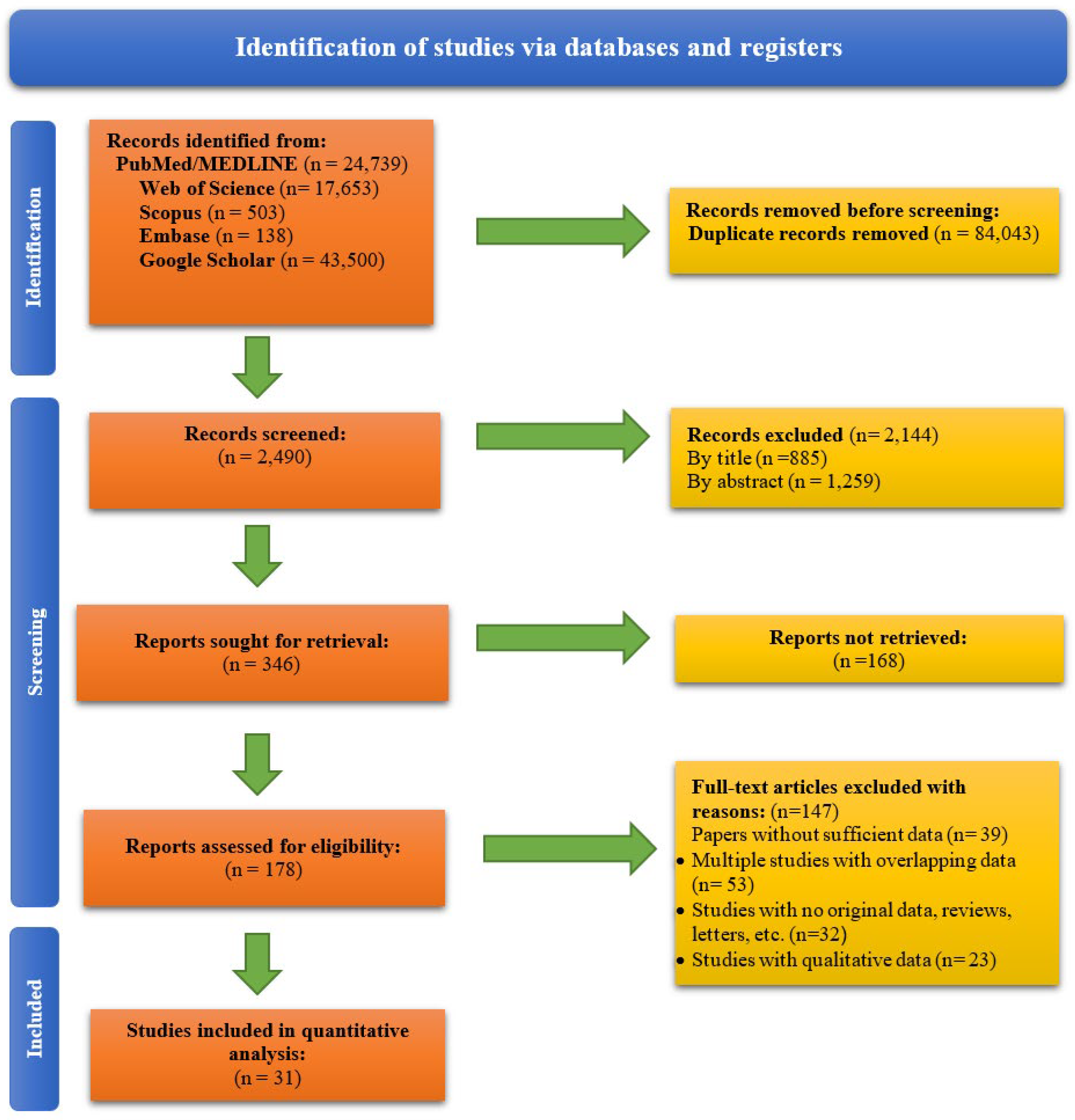
Figure 2.
Forest plot of random-effects meta-analysis for the overall association between digital technology use and child developmental outcomes (0–5 years) (Effect sizes (Pearson’s r) with 95% confidence intervals are shown for each of the 31 included studies).
Figure 2.
Forest plot of random-effects meta-analysis for the overall association between digital technology use and child developmental outcomes (0–5 years) (Effect sizes (Pearson’s r) with 95% confidence intervals are shown for each of the 31 included studies).
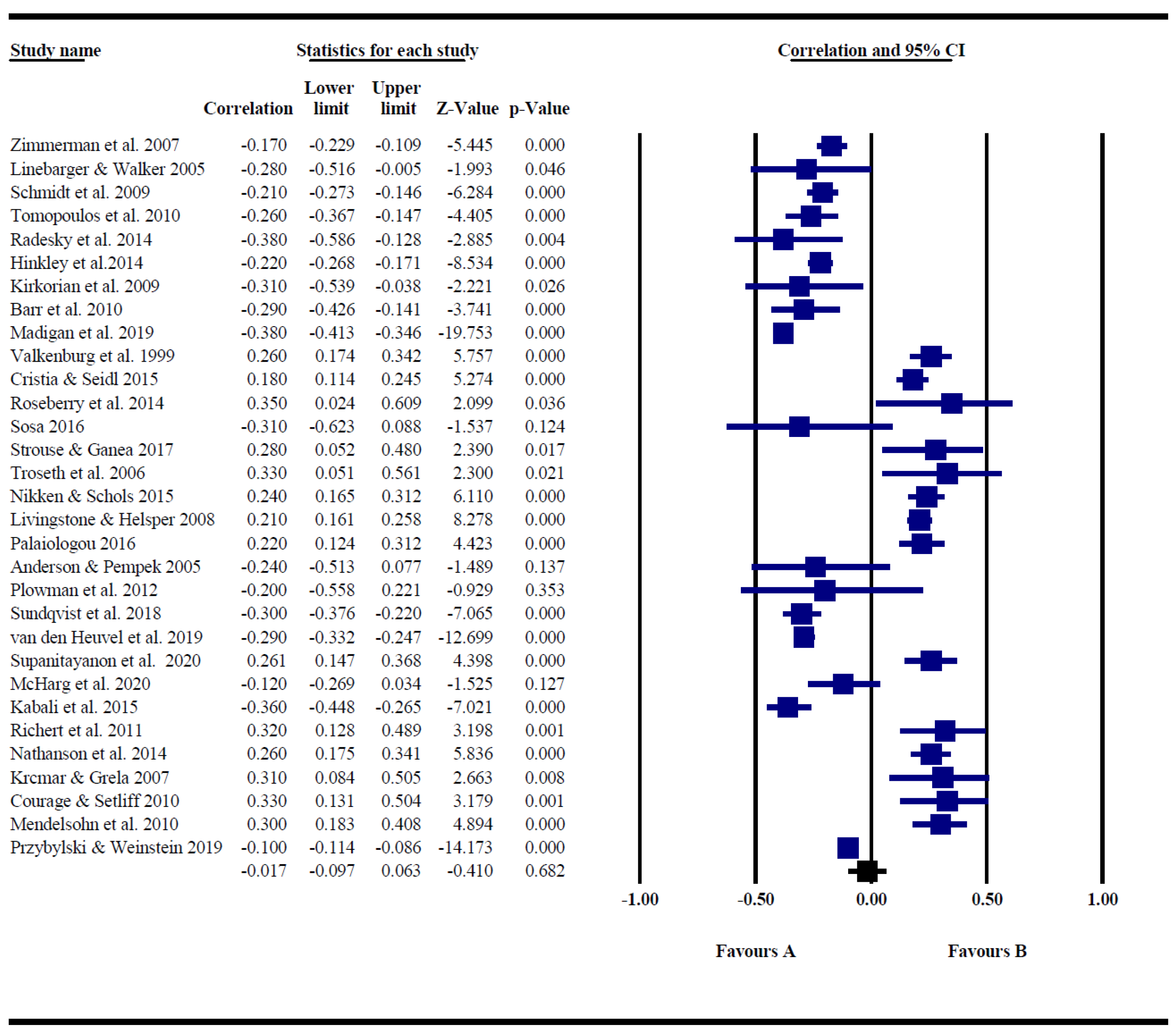
Figure 3.
Forest plot of random-effects meta-analysis for child developmental outcomes by mediation type.
Figure 3.
Forest plot of random-effects meta-analysis for child developmental outcomes by mediation type.
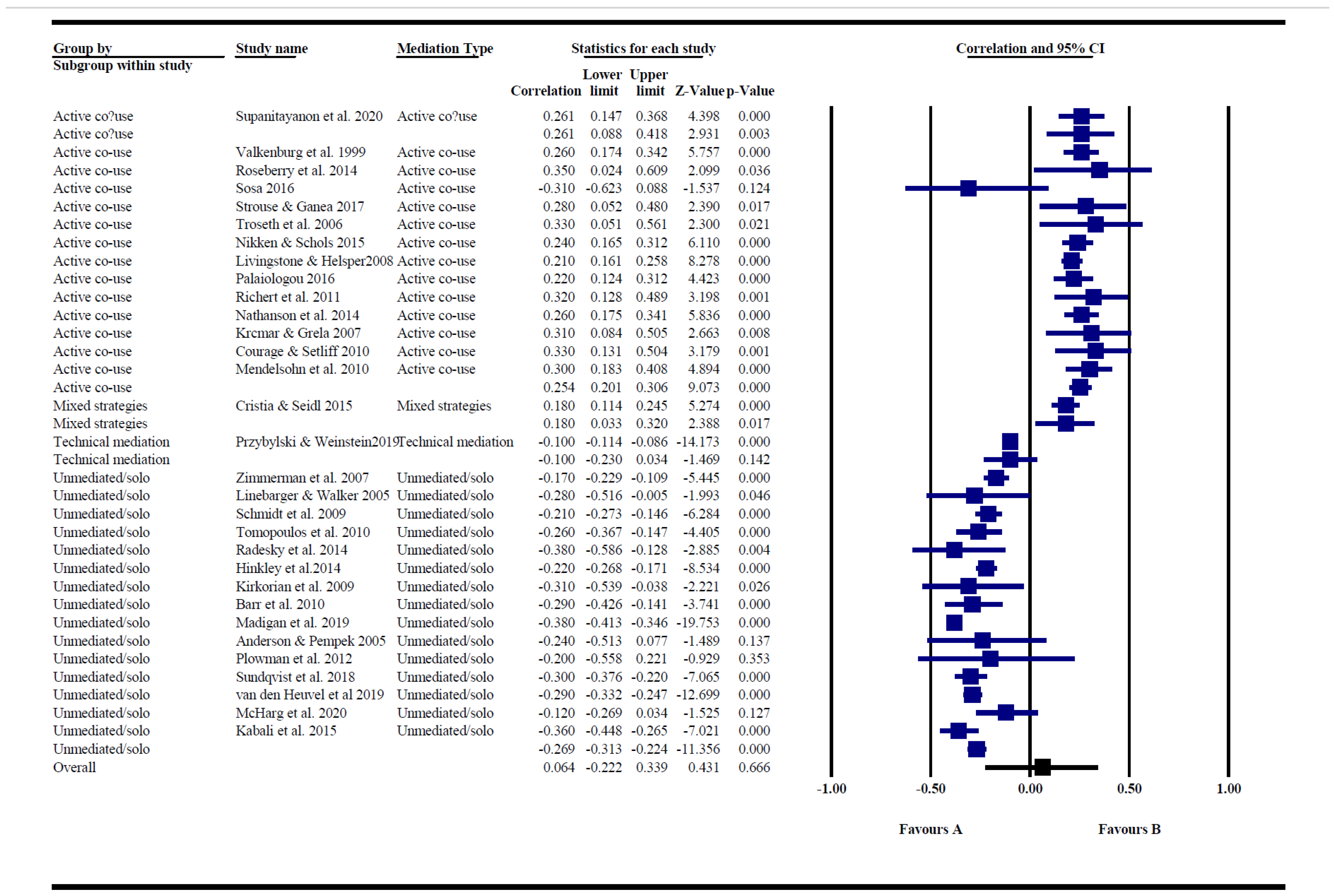
Figure 4.
Forest plot of random-effects meta-analysis for child developmental outcomes by outcome domain.
Figure 4.
Forest plot of random-effects meta-analysis for child developmental outcomes by outcome domain.
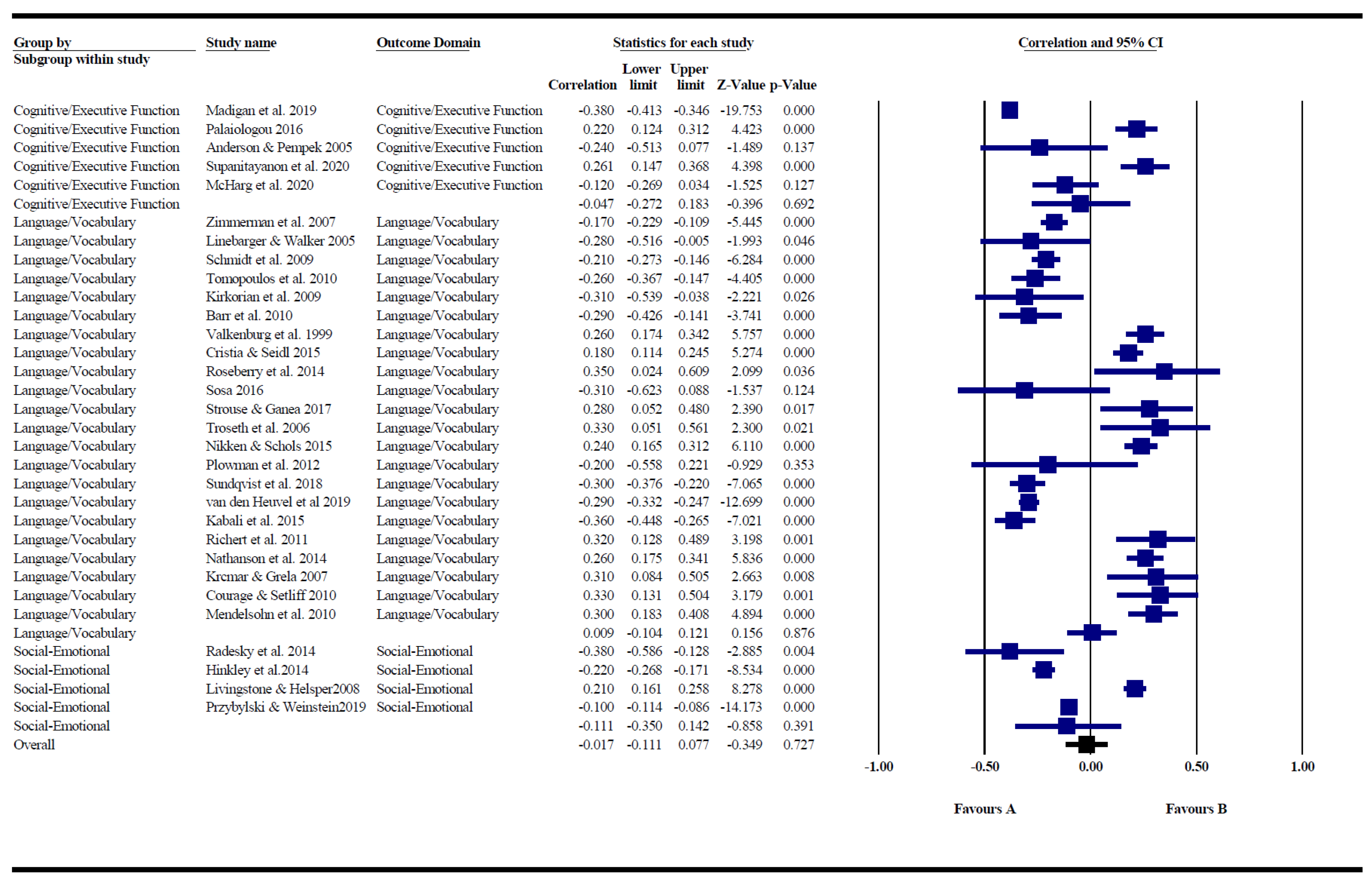
Figure 5.
Forest plot of random-effects meta-analysis for child developmental outcomes by socioeconomic status (SES).
Figure 5.
Forest plot of random-effects meta-analysis for child developmental outcomes by socioeconomic status (SES).
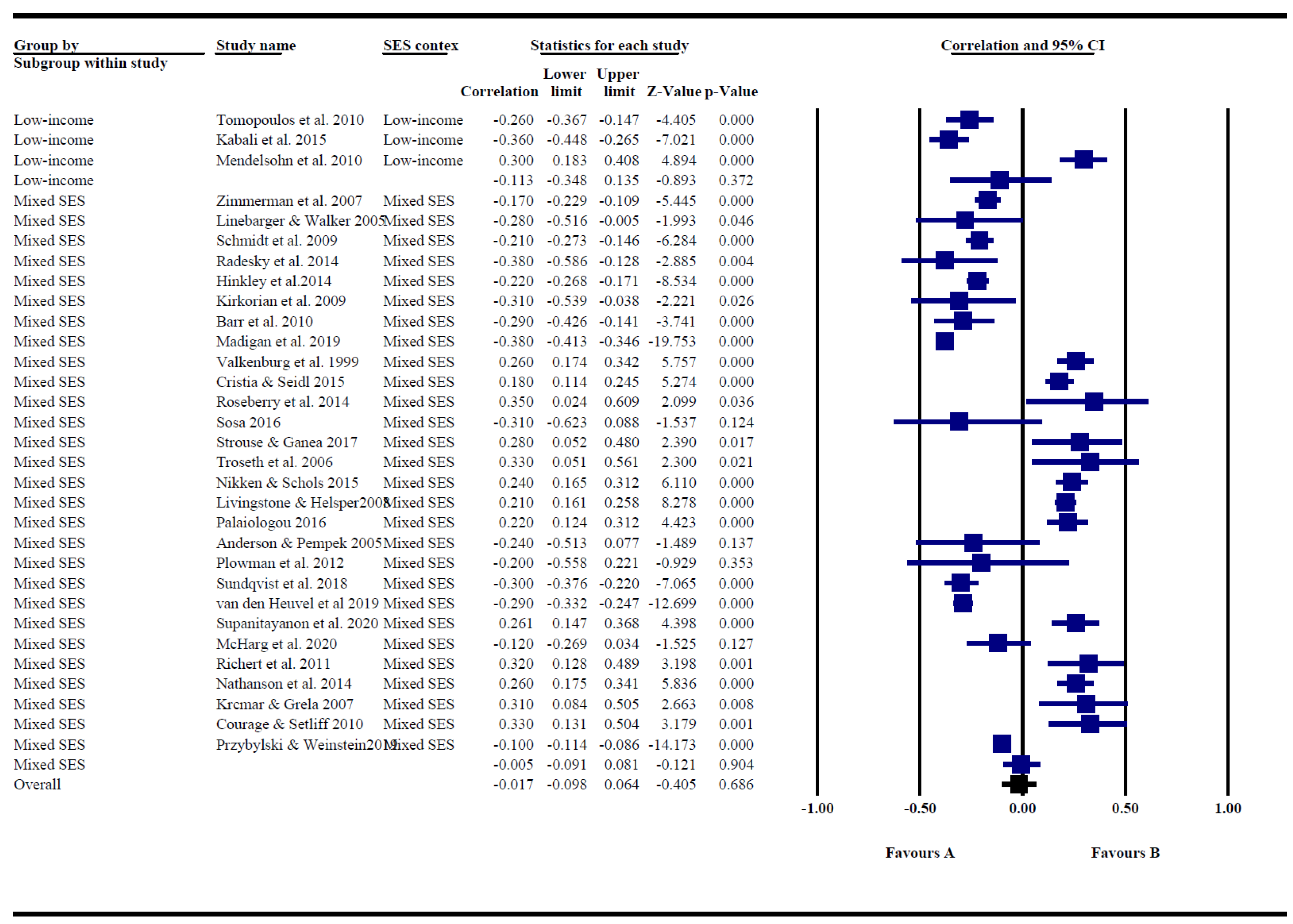
Figure 6.
Forest plot of random-effects meta-analysis for child developmental outcomes by technology type.
Figure 6.
Forest plot of random-effects meta-analysis for child developmental outcomes by technology type.
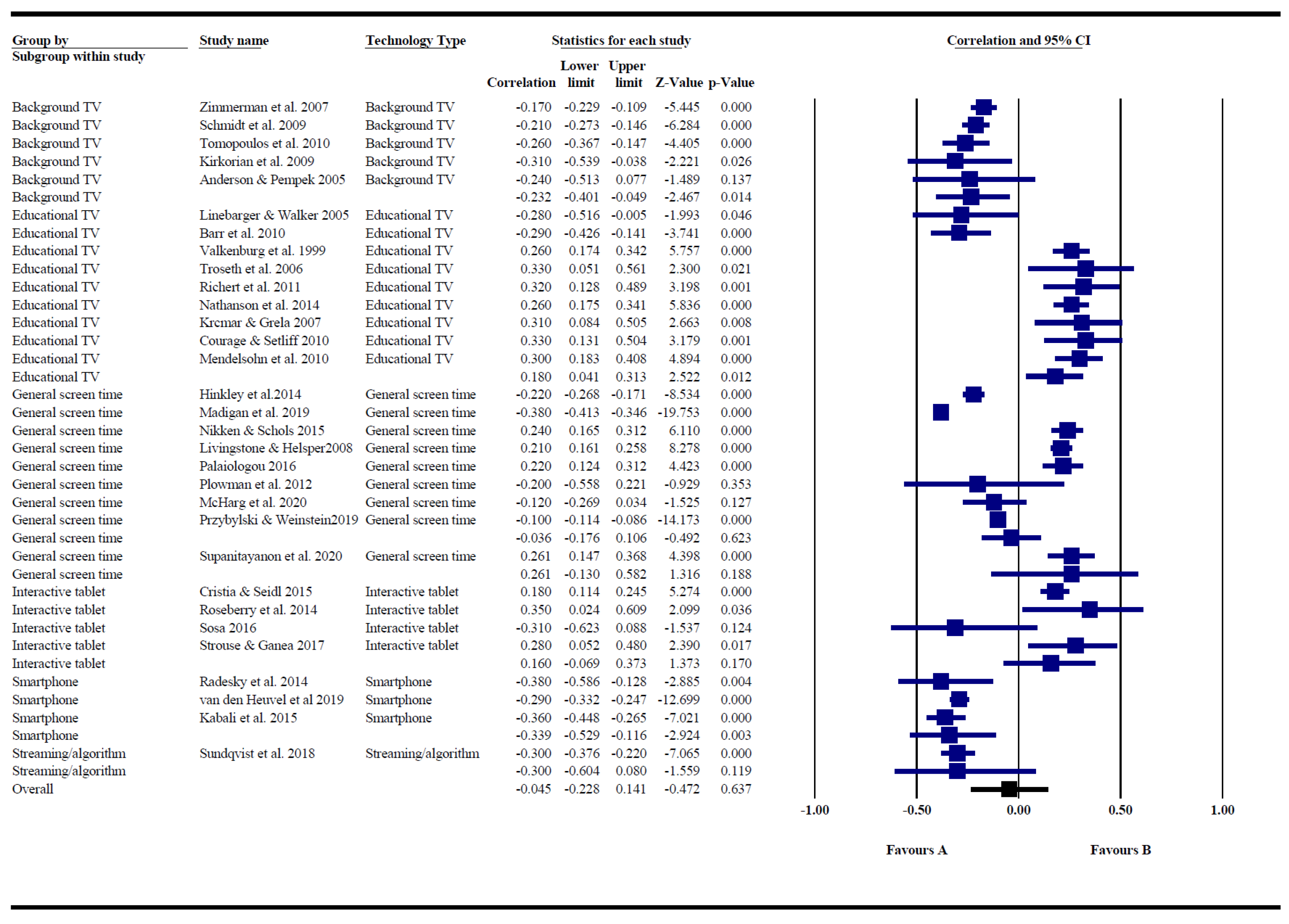
Figure 7.
Funnel plot for publication bias assessment.
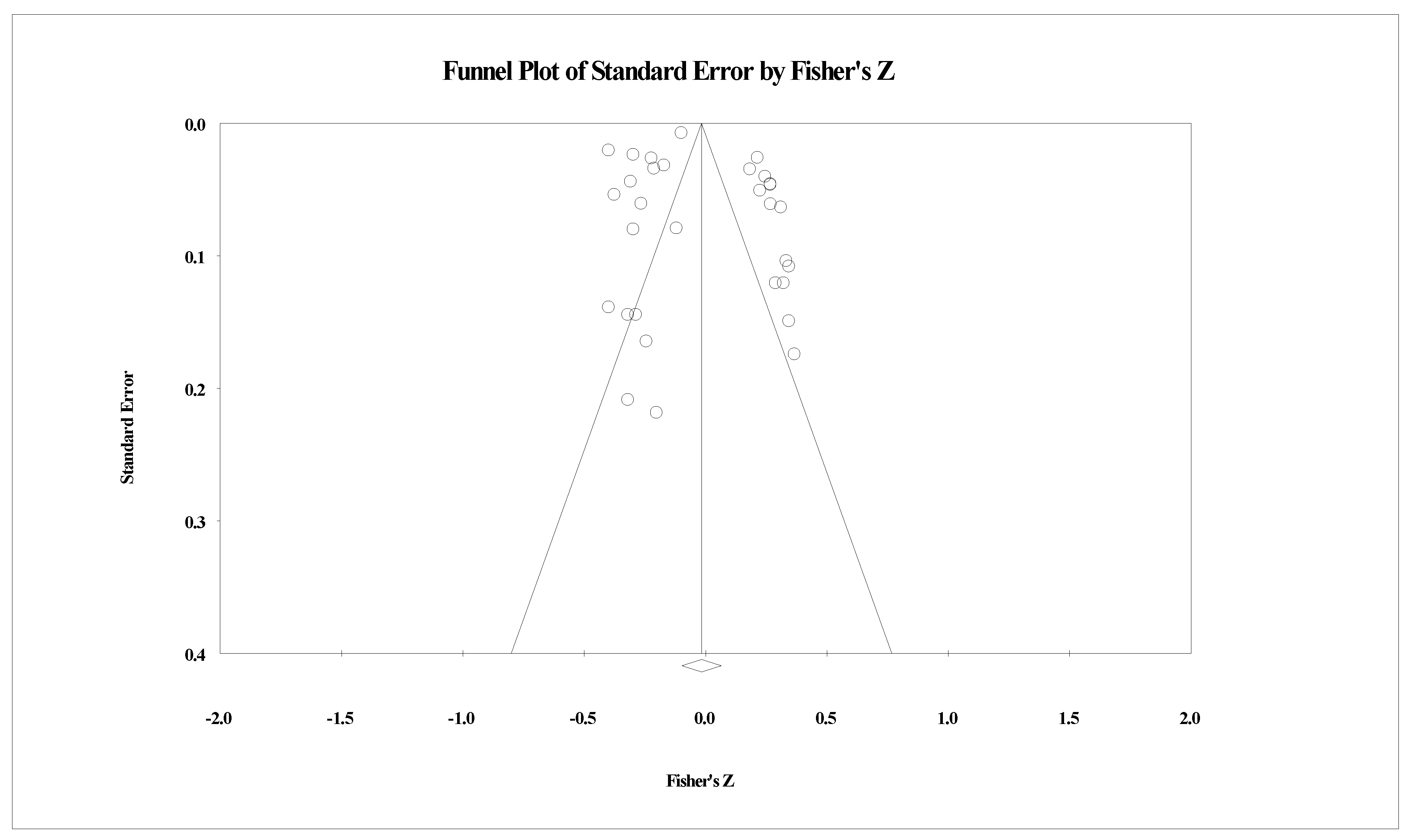
Figure 8.
Leave-one-out sensitivity analysis (Pooled effect sizes (with 95% CI) after sequential removal of each study).
Figure 8.
Leave-one-out sensitivity analysis (Pooled effect sizes (with 95% CI) after sequential removal of each study).
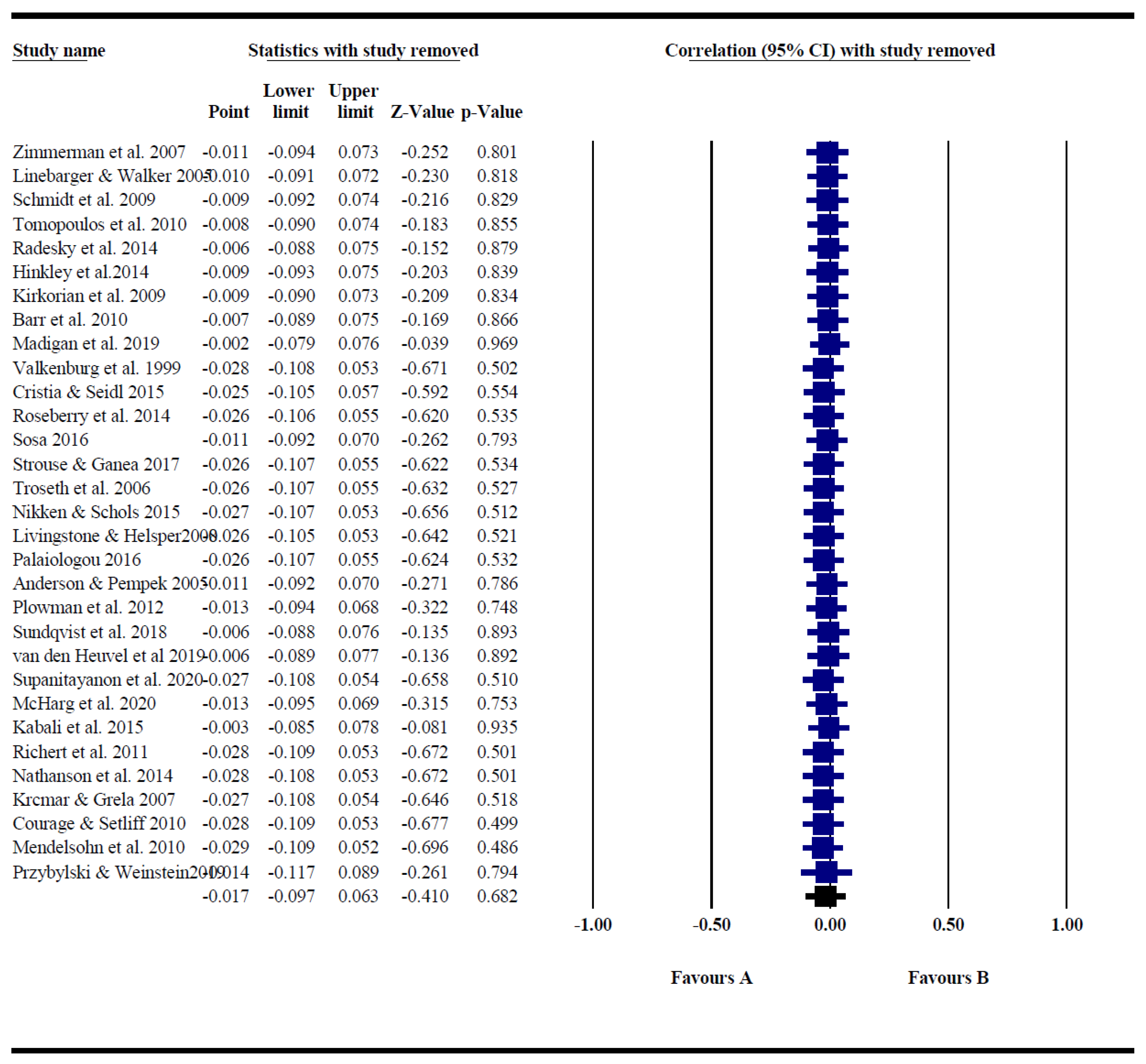
Figure 9.
Scatter plot of Fisher’s Z transformed effect sizes by publication year. Each circle represents an included study.
Figure 9.
Scatter plot of Fisher’s Z transformed effect sizes by publication year. Each circle represents an included study.
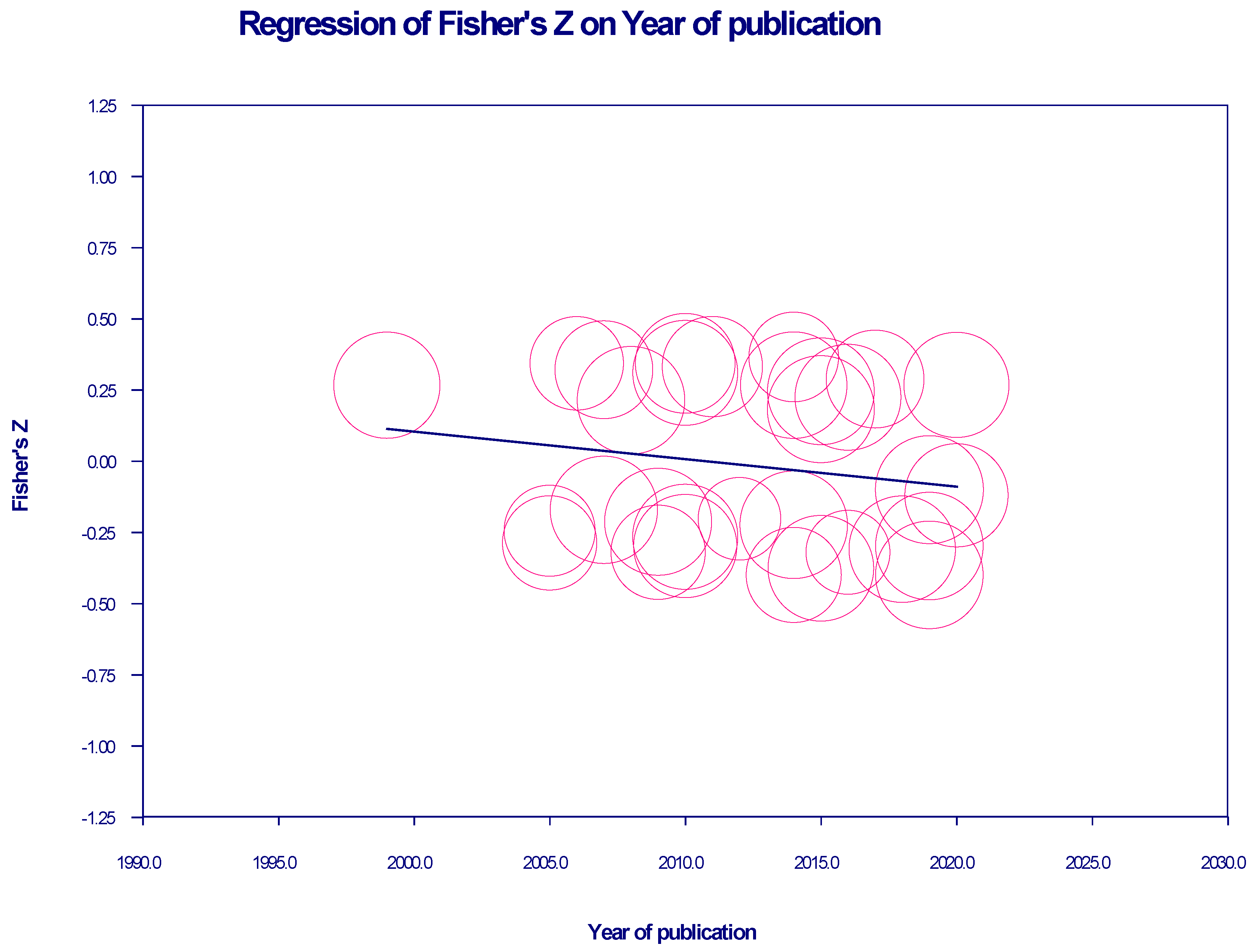
Figure 10.
Risk of bias assessment using the Cochrane RoB 2 tool (The traffic light plot (top panel) shows domain-specific risk assessments for each included study, categorized as low risk, some concerns, or high risk across five domains. The summary bar plot (bottom panel) depicts the proportion of studies at each risk level, illustrating the overall methodological quality of the experimental and RCT evidence).
Figure 10.
Risk of bias assessment using the Cochrane RoB 2 tool (The traffic light plot (top panel) shows domain-specific risk assessments for each included study, categorized as low risk, some concerns, or high risk across five domains. The summary bar plot (bottom panel) depicts the proportion of studies at each risk level, illustrating the overall methodological quality of the experimental and RCT evidence).
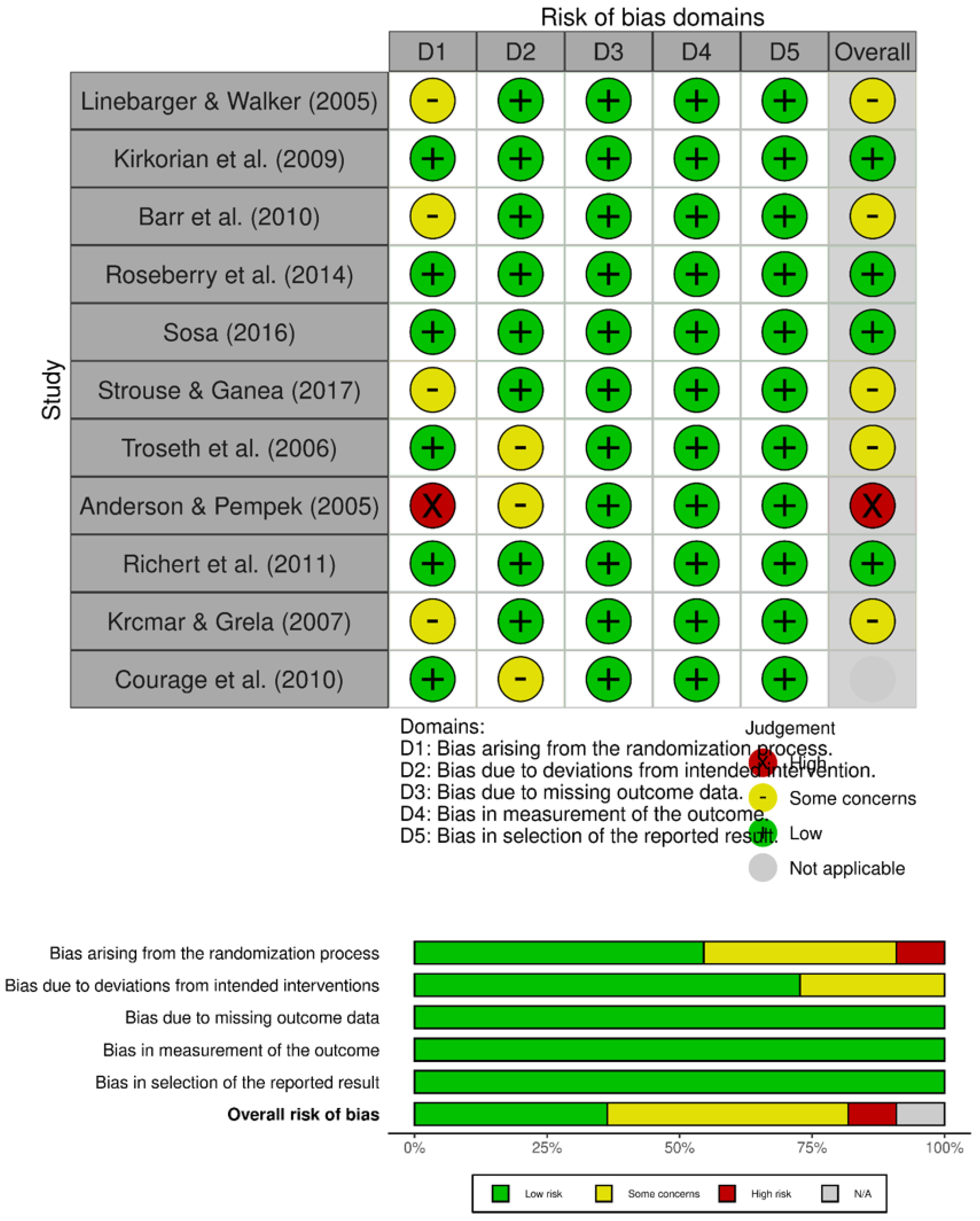

Table 1.
Search syntax and results for each bibliographic database.
| Database | Syntax | Results |
|---|---|---|
| PubMed/MEDLINE | (((((((("infant"[Title/Abstract] OR "toddler"[Title/Abstract] OR "early childhood"[Title/Abstract] OR "0-5 years old"[Title/Abstract] OR "baby"[Title/Abstract] OR "babies"[Title/Abstract] OR "preschool children"[Title/Abstract]) AND "screen time"[Title/Abstract]) OR "digital media"[Title/Abstract] OR "social media"[Title/Abstract] OR "tablet"[Title/Abstract] OR "smartphone"[Title/Abstract] OR "smart phone"[Title/Abstract] OR "television"[Title/Abstract] OR "tv"[Title/Abstract] OR "interactive media"[Title/Abstract]) AND "language"[Title/Abstract]) OR "vocabulary"[Title/Abstract] OR "social development"[Title/Abstract] OR "cognitive development"[Title/Abstract] OR "attention"[Title/Abstract] OR "executive function"[Title/Abstract] OR "sleep"[Title/Abstract]) AND "parental mediation"[Title/Abstract]) OR "socioeconomic status"[Title/Abstract] OR "digital inequality"[Title/Abstract] OR "digital divide"[Title/Abstract] OR "family context"[Title/Abstract] OR "childcare"[Title/Abstract] OR "child care"[Title/Abstract] OR "cultural context"[Title/Abstract]) AND ("loattrfree full text"[Filter] AND "medlinestatus medline"[All Fields] AND "humans"[MeSH Terms] AND ("female"[MeSH Terms] OR "male"[MeSH Terms]) AND "english"[Language] AND 1995/01/01:2025/12/31[Date - Publication])) AND ((ffrft[Filter]) AND (medline[Filter]) AND (humans[Filter]) AND (female[Filter] OR male[Filter]) AND (english[Filter]) AND (1995:2025[pdat])) | 24,739 |
| Web of science | (((((((((((((((((((((((TS = infant) AND (TS = Topic)) OR ((TS = toddler) AND (TS = Topic))) OR ((TS = early childhood) AND (TS = Topic))) AND (TS = Topic))) OR ((TS = 0-5 years old) AND (TS = Topic))) OR ((TS = baby) AND (TS = Topic))) OR ((((TS = preschool children) AND (TS = Topic)) AND (TS = digital media)) AND (TS = Topic))) OR ((TS = social media) AND (TS = Topic))) OR ((TS = tablet) AND (TS = Topic))) OR ((TS = smartphone) AND (TS = Topic))) OR ((TS = smart phone) AND (TS = Topic))) OR ((TS = television) AND (TS = Topic))) OR ((TS = tv) AND (TS = Topic))) OR ((((TS = interactive media) AND (TS = Topic)) AND (TS = language)) AND (TS = Topic))) OR ((TS = vocabulary) AND (TS = Topic))) OR ((TS = social development) AND (TS = Topic))) OR ((TS = cognitive development) AND (TS = Topic))) OR ((((TS = executive function) AND (TS = Topic)) AND (TS = parental mediation)) AND (TS = Topic))) OR ((((TS = socioeconomic status) AND (TS = Topic)) AND (TS = digital inequality)) AND (TS = Topic))) OR ((TS = digital divide) AND (TS = Topic))) OR ((TS = family context) AND (TS = Topic))) OR ((TS = childcare) AND (TS = Topic))) | 17,653 |
| Scopus | TITLE-ABS-KEY ( ( infant* OR toddler* OR "early childhood" OR "0-5 years" OR baby OR babies OR preschool* ) AND ( "screen time" OR "digital media" OR tablet* OR smartphone* OR "smart phone" OR touchscreen* OR television OR tv OR streaming OR "interactive media" OR video* ) AND ( LANGUAGE OR vocabulary OR "social development" OR "cognitive development" OR attachment OR attention OR "executive function" OR sleep ) AND ( "parental mediation" OR "socioeconomic status" OR ses OR "digital inequality" OR "digital divide" OR "family context" OR childcare OR "child care" OR "cultural context" ) ) AND PUBYEAR > 1994 AND PUBYEAR < 2026 AND ( LIMIT-TO ( LANGUAGE , "English" ) ) | 503 |
| Embase | ((('infant':ab,ti OR 'baby':ab,ti OR 'toddler':ab,ti OR 'early childhood':ab,ti OR 'preschool children':ab,ti) AND 'social media':ab,ti OR 'social media':ab,ti OR 'tablet':ab,ti OR 'smartphone':ab,ti OR 'television':ab,ti) AND 'language':ab,ti OR 'vocabulary':ab,ti OR 'social evolution':ab,ti OR 'cognitive development':ab,ti OR 'executive function':ab,ti OR 'parental behavior':ab,ti OR 'social status':ab,ti OR 'digital divide':ab,ti) AND 'child care':ab,ti AND english:la AND [1996-2025]/py | 138 |
| Google Scholar | "infant" OR "toddler" OR "early childhood" OR “0-5 years old” OR “baby” OR “preschool children” AND “digital media” OR “social media” OR “tablet” OR “smartphone” OR “smart phone” OR “television” OR “tv’ OR “interactive media” AND “language” OR “vocabulary” OR “social development” OR ‘cognitive development” OR “executive function” OR “parental mediation’ OR “socioeconomic status” OR “digital inequality” OR “digital divide” OR “family context” OR “childcare” | 43,500 |
Table 2.
Characteristics of studies included in the systematic review and meta-analysis.
| ID | Author (Year) | Country | Design | NO. Sample Size | Age Range (months) | Technology Type | Mediation Type | Outcome Domain |
|---|---|---|---|---|---|---|---|---|
| 1 | Zimmerman et al. (2007) | USA | Longitudinal | 1,009 | 18–30 | Background TV | Unmediated/solo | Language/Vocabulary |
| 2 | Linebarger & Walker (2005) | USA | Experimental | 51 | 24–36 | Educational TV | Unmediated/solo | Language/Vocabulary |
| 3 | Schmidt et al. (2009) | USA | Longitudinal | 872 | 24–48 | Background TV | Unmediated/solo | Language/Vocabulary |
| 4 | Tomopoulos et al. (2010) | USA | Longitudinal | 277 | 6–24 | Background TV | Unmediated/solo | Language/Vocabulary |
| 5 | Radesky et al. (2014) | USA | Observational | 55 | 24–48 | Smartphone | Unmediated/solo | Social-Emotional |
| 6 | Hinkley et al. (2014) | Australia | Longitudinal | 1,459 | 0–60 | General screen time | Unmediated/solo | Social-Emotional |
| 7 | Kirkorian et al. (2009) | USA | Experimental | 51 | 18–36 | Background TV | Unmediated/solo | Language/Vocabulary |
| 8 | Barr et al. (2010) | USA | Experimental | 160 | 12–24 | Educational TV | Unmediated/solo | Language/Vocabulary |
| 9 | Madigan et al. (2019) | Canada | Longitudinal | 2,441 | 24–60 | General screen time | Unmediated/solo | Cognitive/Executive Function |
| 10 | Valkenburg et al. (1999) | Netherlands | Cross-sectional | 471 | 24–60 | Educational TV | Active co-use | Language/Vocabulary |
| 11 | Cristia & Seidl (2015) | USA | Cross-sectional | 843 | 6–48 | Interactive tablet | Mixed strategies | Language/Vocabulary |
| 12 | Roseberry et al. (2014) | USA | Experimental | 36 | 24–30 | Interactive tablet | Active co-use | Language/Vocabulary |
| 13 | Sosa (2016) | USA | RCT | 26 | 12–18 | Interactive tablet | Active co-use | Language/Vocabulary |
| 14 | Strouse & Ganea (2017) | USA | Experimental | 72 | 18–24 | Interactive tablet | Active co-use | Language/Vocabulary |
| 15 | Troseth et al. (2006) | USA | Experimental | 48 | 24 | Educational TV | Active co-use | Language/Vocabulary |
| 16 | Nikken & Schols (2015) | Netherlands | Cross-sectional | 626 | 24–60 | General screen time | Active co-use | Language/Vocabulary |
| 17 | Livingstone & Helsper (2008) | UK | Cross-sectional | 1,511 | 36–60 | General screen time | Active co-use | Social-Emotional |
| 18 | Palaiologou (2016) | UK | Mixed-methods | 394 | 36–60 | General screen time | Active co-use | Cognitive/Executive Function |
| 19 | Anderson & Pempek (2005) | USA | Experimental | 40 | 12–36 | Background TV | Unmediated/solo | Cognitive/Executive Function |
| 20 | Plowman et al. (2012) | UK | Observational | 24 | 24–48 | General screen time | Unmediated/solo | Language/Vocabulary |
| 21 | Sundqvist et al. (2018) | Sweden | Longitudinal | 524 | 12–48 | Streaming/algorithm | Unmediated/solo | Language/Vocabulary |
| 22 | van den Heuvel et al. (2019) | Netherlands | Cross-sectional | 1,812 | 18–42 | Smartphone | Unmediated/solo | Language/Vocabulary |
| 23 | Kabali et al. (2015) | USA | Cross-sectional | 350 | 6–48 | Smartphone | Unmediated/solo | Language/Vocabulary |
| 24 | Supanitayanon et al. (2020) | Thailand | Longitudinal | 274 | 6-48 | General screen time | Active co-use | Cognitive/Executive Function |
| 25 | McHarg et al. (2020) | UK | Longitudinal | 163 | 24-36 | General screen time | Unmediated/solo | Cognitive/Executive Function |
| 26 | Richert et al. (2011) | USA | Experimental | 96 | 18–30 | Educational TV | Active co-use | Language/Vocabulary |
| 27 | Nathanson et al. (2014) | USA | Cross-sectional | 484 | 24–60 | Educational TV | Active co-use | Language/Vocabulary |
| 28 | Krcmar & Grela (2007) | USA | Experimental | 72 | 18–30 | Educational TV | Active co-use | Language/Vocabulary |
| 29 | Courage et al. (2010) | Canada | Experimental | 89 | 6–18 | Educational TV | Active co-use | Language/Vocabulary |
| 30 | Mendelsohn et al. (2010) | USA | Longitudinal | 253 | 6–14 | Educational TV | Active co-use | Language/Vocabulary |
| 31 | Przybylski & Weinstein (2019) | UK | Cross-sectional | 19,957 | 36–60 | General screen time | Technical mediation | Social-Emotional |
Table 3.
Risk of bias assessment for included studies with observational designs (cross-sectional, longitudinal, observational, and mixed-methods) using NIH tool.
Table 3.
Risk of bias assessment for included studies with observational designs (cross-sectional, longitudinal, observational, and mixed-methods) using NIH tool.
| Author (Year) | NIH Quality Score (1–14) | NIH Quality Rating (Good/Fair/Poor) | Risk of Bias Category (Low/Moderate/Serious/Critical) |
|---|---|---|---|
| Zimmerman et al. (2007) | 11 | Good | Low |
| Schmidt et al. (2009) | 10 | Fair | Moderate |
| Tomopoulos et al. (2010) | 12 | Good | Low |
| Radesky et al. (2014) | 9 | Fair | Moderate |
| Hinkley et al. (2014) | 11 | Good | Low |
| Madigan et al. (2019) | 13 | Good | Low |
| Valkenburg et al. (1999) | 10 | Fair | Moderate |
| Cristia & Seidl (2015) | 10 | Fair | Moderate |
| Nikken & Schols (2015) | 10 | Fair | Moderate |
| Livingstone & Helsper (2008) | 10 | Fair | Moderate |
| Palaiologou (2016) | 9 | Fair | Moderate |
| Plowman et al. (2012) | 8 | Poor | Serious |
| Sundqvist et al. (2018) | 11 | Good | Low |
| van den Heuvel et al. (2019) | 10 | Fair | Moderate |
| Kabali et al. (2015) | 10 | Fair | Moderate |
| Supanitayanon et al. (2020) | 10 | Fair | Moderate |
| McHarg et al. (2020) | 10 | Fair | Moderate |
| Nathanson et al. (2014) | 10 | Fair | Moderate |
| Mendelsohn et al. (2010) | 10 | Fair | Moderate |
| Przybylski & Weinstein (2019) | 11 | Good | Low |
Note: Experimental studies (n = 10) and RCTs (n = 1) are not included in this table; they are assessed separately using the Cochrane RoB 2 tool.
Disclaimer/Publisher’s Note: The statements, opinions and data contained in all publications are solely those of the individual author(s) and contributor(s) and not of MDPI and/or the editor(s). MDPI and/or the editor(s) disclaim responsibility for any injury to people or property resulting from any ideas, methods, instructions or products referred to in the content. |
© 2026 by the authors. Licensee MDPI, Basel, Switzerland. This article is an open access article distributed under the terms and conditions of the Creative Commons Attribution (CC BY) license (http://creativecommons.org/licenses/by/4.0/).
Copyright: This open access article is published under a Creative Commons CC BY 4.0 license, which permit the free download, distribution, and reuse, provided that the author and preprint are cited in any reuse.


